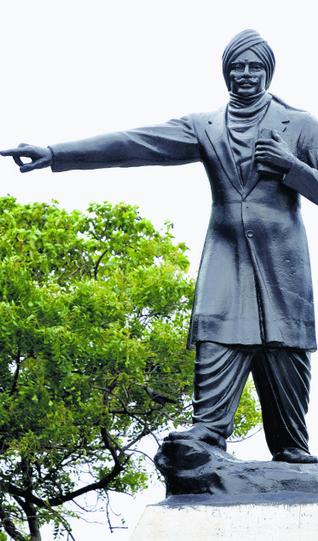
பாட்டிற்கோ பாரதியே தான்! (Post No 3145)

statue-bharati

Written by S NAGARAJAN

Date: 11 September 2016

Time uploaded in London: 21-24

Post No.3145

Pictures are taken from various sources; thanks.


செப்டம்பர் 11 : பாரதி நாள்!

.நாகராஜன்


bharati-malar

வெந்துயரில் வீழ்ந்திருந்த பாரதத்தை வாழவைக்கத்

தந்துயரம் பாராத சான்றோருள்இந்தியமா

நாட்டிற்கோ காந்தியெனில் நாமெழவே கூவிட்ட

பாட்டிற்கோ பாரதியே தான்


செய்யுநலம் சீரழிந்து செந்தமிழும் வாடுகையில்

உய்யுநலம் காட்டியவன் ஓர் கவிஞன்நெய்யுமொரு

கூட்டிற்கோ தேன்கூடு கொட்டுதமிழ்ச் சந்தமொழி

பாட்டிற்கோ பாரதியே தான்


வீட்டிற்கோ குலமகளிர் வீதிக்கோ நல்லோர்பள்ளி

காட்டிற்கோ உயிர்தருமொரு சஞ்ஜீவனிஇந்தியமா

நாட்டிற்கோ வேதரிஷிகள் கவிதையெனில் தமிழ்ப்

பாட்டிற்கோ பாரதியே தான்

வேறு

இந்தியர் தம் நெஞ்சினிலே தேசப்பற்றை ஊட்டினான்

வஞ்சக வெள்ளையரை நாட்டைவிட்டு ஓட்டினான்

தமிழர்க்குத் தமிழ் போற்றும் வழி காட்டினான்

புகழோங்கு பாரதத்தை நிலை நாட்டினான்

புதியதொரு பாதையைப் புவியினிலே காட்டினான்

புகழவோர் வார்த்தையிலை புகழுக்கே புகழ் ஊட்டினான்

புண்ணியன் சுப்பிரமணி பாரதியின் பெருமையினை

எண்ணியெண்ணி அவன்வழி நடப்போம் உயர்வோம்

********


‘பிறவிப் பெருங்கடல்’ பற்றி நம்பியும், வள்ளுவரும் (Post No. 3144)

tallship

Written by London Swaminathan

Date: 11 September 2016

Time uploaded in London: 21-00

Post No.3144

Pictures are taken from various sources; thanks.


வள்ளுவர் ஒரு கடைந்தெடுத்த இந்து என்பதற்கு  அவர் பாடிய 10 கடவுள் வாழ்த்துப் பாடல்களே சான்று பகரும்.


முதல் பத்து குறள்களில், ஏழு குறள்களில் பாதாரவிந்தம் பற்றிக் குறிப்பிடுகிறார். மலர் அடி, தாள் என்று இறைவனின் பாத கமலங்களைப் பாடுகிறார். இது வேறு எந்த மதத்திலும் கிடையாது; இந்துமதத்தில் மட்டுமே உண்டு. யாருடைய பாதாரவிந்தம் (பாத+ அரவிந்தம்= மலர்+அடி) என்று பிற்காலத்தில் எவருக்கும் சந்தேகம் வந்துவிடக்கூடாதே என்பதற்காக முதல் வரியிலேயே “கடவுள் வாழ்த்து” என்று தலைப்பும் கொடுத்து விடுகிறார். கடவுள் வாழ்த்து என்பது தொல்காப்பிய சொற்கள்!  கடவுள் பற்றியோ கடவுளின் பாதாரவிந்தம் பற்றியோ புத்த, சமண மதங்கள் பேசுவதில்லை. இரண்டு மதங்களும் கடவுள் பற்றி கதைப்பதில்லை.


மேலும் பத்தாவது குறளில் வரும் “பிறவிப் பெருங்கடல்” என்பது “சம்சார சாகரம்” என்பதன் மொழி பெயர்ப்பு. இது கிருஷ்ண பரமாத்மாவின் சொற்கள் (கீதை 12-7)


அதுமட்டுமல்ல கண்ணன் முதல் ஆதி சங்கரர் வரை எல்லா சமஸ்கிருத நூல்களிலும் ‘பிறவிப் பெருங்கடல்’ காணப்படுகிறது.

ஆதிசங்கரர் நூற்றுக் கணக்கான இடங்களில் சம்சார சாகரம் (பிறவிப் பெருங்கடல்) பற்றிப் பாடுகிறார். அவர் பாடிய விவேக சூடாமணியில் மட்டும் 9, 35, 37, 44, 136 எண் பாடல்களில் இந்தச் சொற்களைக் காணலாம்.


கடவுள் பற்றி  வள்ளுவர் சொன்ன எல்லா சொற்றொடர்களையும் தேவார, திருவாசக திவ்வியப் பிரபந்தங்களில் காணலாம். கம்பனும் இச்சொற்களை எடுத்தாள்கிறான்.


இரண்டே பாடல்களை மட்டும் பார்ப்போம்–

பிறவிஎனும் பொல்லாப் பெருங்கடலை நீந்தத்
துறவிஎனுந் தோற்றோணி கண்டீர் – நிறைஉலகில்
பொன்மாலை மார்பன்புனற் காழிச் சம்பந்தன்
தன்மாலை ஞானத் தமிழ்.
—நம்பியாண்டார் நம்பி 11-11 ஆளுடைய பிள்ளையார் திருமும்மணிக் கோவை

high-sea-e

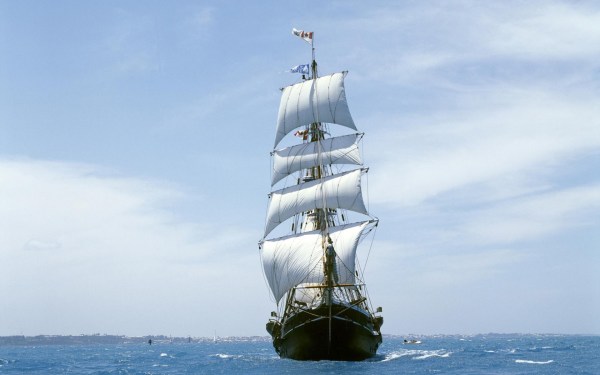
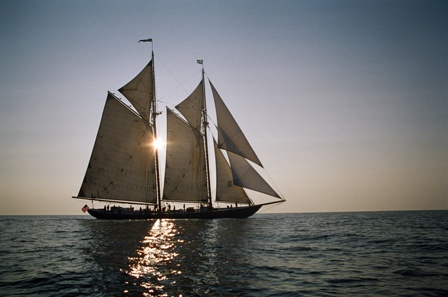
பிறவிப் பெருங்கடலைப் பார்ப்பதற்கு முன் வேறு இரண்டு விஷயங்களையும் கவனியுங்கள். தமிழுக்கு எத்தனை பெயர்கள்? என்ற எனது கட்டுரையில் ஞானத்தமிழ் என்பதற்கு மூன்று பாடல்களைக் காட்டியிருந்தேன் அதில் ஒன்றுதான் நம்பியின் பாடல். ஆக, ஞானத் தமிழ் என்ற அடைமொழி சுவைத்துப் பருகவேண்டியது. அதைவிட அருமையான உவமை ஒன்றையும் கவனித்தல் வேண்டும். பிறவிப் பெருங்கடலைக் கடப்பதற்கு ஞான சம்பந்ததர் பாடிய பாடல்கள் கப்பல் போல உதவும் என்கிறார். கடலைக் கடக்க கப்பல் தேவை; பிறவிக்கடலைக் கடக்க சம்பந்தர் தேவாரம் தேவை. அருமையான உவமை. அடுத்ததாக நாம் கவனிக்க வேண்டியது வள்ளுவர் பயன்படுத்தும் பிறவிப் பெருங்கடலை நம்பியும் பயன் படுத்துவதாகும்.


கடவுள் வாழ்த்தின் மூன்றாவது குறளில் மலர்மிசை ஏகினான் என்ற அடைமொழியை கடவுளுக்குச் சூட்டுகிறான் வள்ளுவன். தாமரை மலர் மீது வீற்றிருப்பவன் பிரம்மா. கடவுள் என்பதால் புத்தரையோ மஹாவீரரையோ அவன் குறிக்க முடியாது. மற்ற மதத்தினருக்கு உருவ வழிபாடு ஒவ்வாது; ஆகையால் அவர்கள் இ ந்தப் பத்துக் குறட்பாக்களையும் ஒதுக்கி விடுவர்.

மலர்மிசை ஏகினான் யார் என்று கம்பனும் புகல்வான்:-


கிஷ்கிந்தா காண்ட நட்புக் கோட் படலப் பாடல் ஒன்றில் அருங்கமலத்து அண்ணல் என்று பிரம்மாவை அழைக்கிறான் கம்பன்.

மராமரப் படலத்தில் வரும் பாடலைப் பாருங்கள்:-


கலைகொண்டு ஓங்கிய மதியமும் கதிரவந்தானும்

தலைகண்டு ஓடுதற்கு அருந்தவம் தொடங்குறும் சாரல்

மலைகண்டோம் என்பது அல்லது மலர்மிசை அயற்கும்

இலைகண்டோம் எனத் தெரிப்ப அருந்தரத்தன ஏழும்.


பொருள்

ஏழு மராமரங்களின் பெருமையை கம்பன் சொல்கிறான்:

அவற்றின் உயரம் சூரியனும் சந்திரனும் அவற்றின் உச்சியைத் தாண்டிச் செல்ல தவம் செய்ய வேண்டும்; தாமரை மலரில் வீற்றிருக்கும் பிரம்மாவும் அவற்றின் நுனியின் உள்ள இலையைப் பார்த்தேன் என்று சொல்லமுடியாத அளவுக்கு உயரமானவை.


இங்கே நாம் கவனிக்க வேண்டிய சொற்கள் மலர்மிசை அயன் = தாமரையில் அமர்ந்திருக்கும் பிரம்மா! வள்ளுவன் சொன்ன மலர்மிசை ஏகினான் பிரம்மா என்பதற்கு வேறு சான்றும் வேண்டுமோ?

–Subam–


13 Types of Hindu Temples in Bangladesh (Post No.3143)

img_7948

Compiled by London Swaminathan

Date: 11 September 2016

Time uploaded in London: 14-46

Post No.3143

Pictures are taken from various sources; thanks.

 
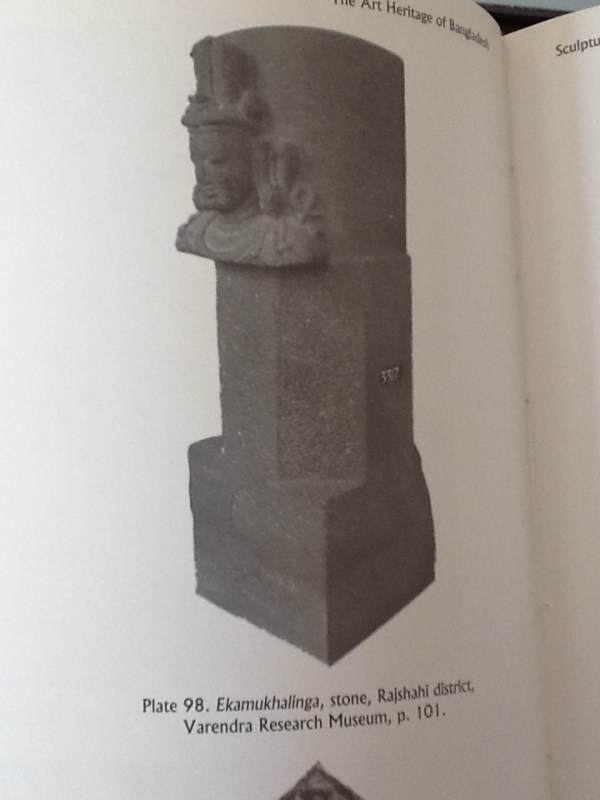
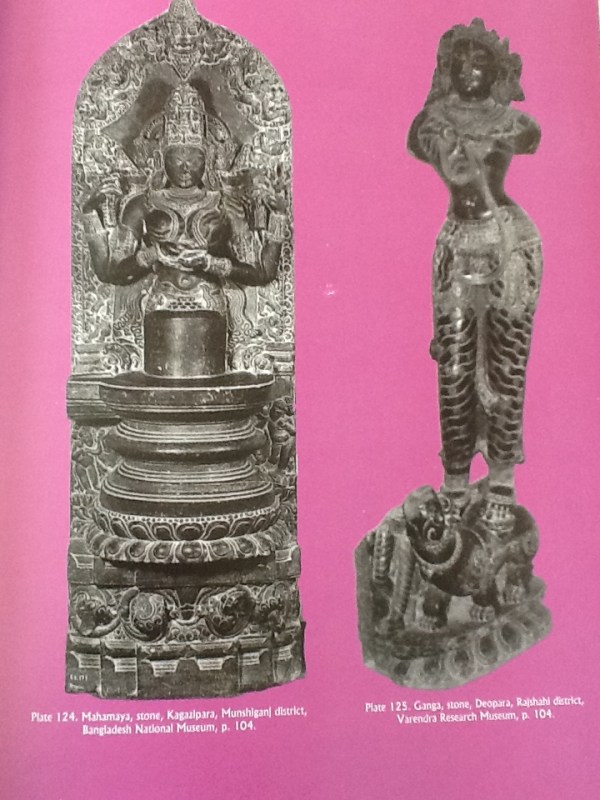
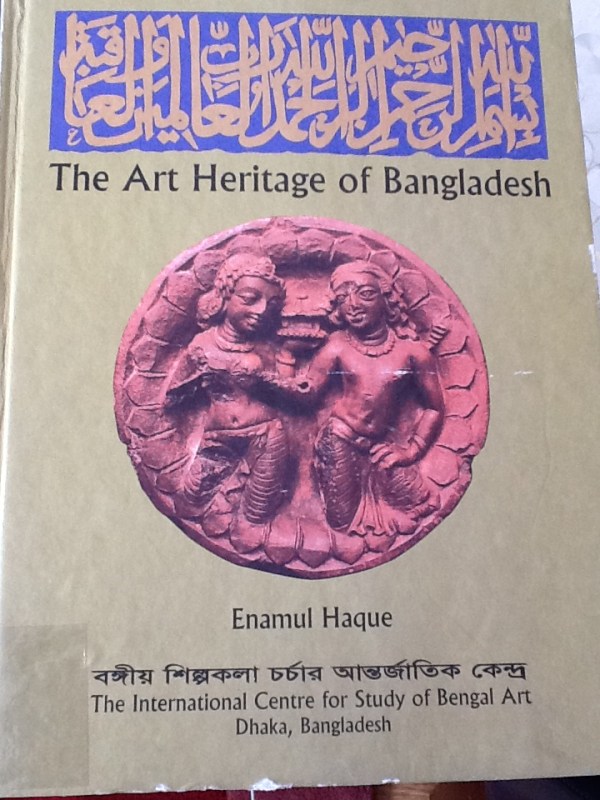
‘The Art Heritage of Bangladesh’ by Enamul Haque (The International Centre for Study of Bengal Art, Dhaka, Bangladesh, Year 2007) has lot of information about Hindu idols, statues and objects discovered in Bangladesh. It includes the latest discoveries. The book is worth buying; it has 536 illustrations.


“In an extraordinary study of the late medieval temples of Bangladesh and West Bengla, the temples of the Muslim period and colonial period taken together, David J.McCutchion (year 1972) offered a classification of thirteen major types and 60 sub-types. Most of these temples are made up of bricks, a few in lateritic stone in West Bengal. In Bangladesh, the temples, irrespective of their shapes, sizes, styles or uses are variously called Mandir, Deul, Math, Devalaya, Than, Domamacnha, Rasamancha etc. David have divided them in the following categories:-

Chala type, Bangla type, Ratna type, Shikhara type, Math type, Composite type, Rasamanchas/Dolmachas, Non-raditional type.

img_7956

Chala type

This type, called char chala or chau chala, consists of a shrine,square or rectangular, with a hut shaped roof of four sloping segments. Based on extant remains, the construction of the char chala type temples appar to be post-muslim tradition, as char chala vaulted domes are already in use in Shahid Gumbad Mosque (1450). The 18th century  Barashiva temple at Hatikumrul in Sirganj temple and Gopala temple at Puthiya, both with rich terracotta decorations belong to this type. Other examples: Math at Ujani, Kapileswara temple at Tarash, Madan mohana temple at Satrajitpur, Shiva temple atNandual. The four subsidiary shrines of the Dharakeswari temple, in Dhaka city stand on a raised plinth.


The other variety of char-chala temple is the at-chala or eight segmented.e. a temple with a further miniature char chala roof over the lower char chala sturucture. They aare more numerous in West Bengal. Examples of this type in Bangladesh are the

Shiva temple at Chanchra

Gunchanatha Shiva temple at Telkupi

Abhaynagar Shiva temple  in Jessore District

Rameshvari temple at Jhenidaha district

Raghunatha temple at Dhulgram

Jora Shiva temple at Chaigharia

Jora Shiva temple at Dohajari

Shiva temple at Chandina.
 

 img_7953

Bangla Type

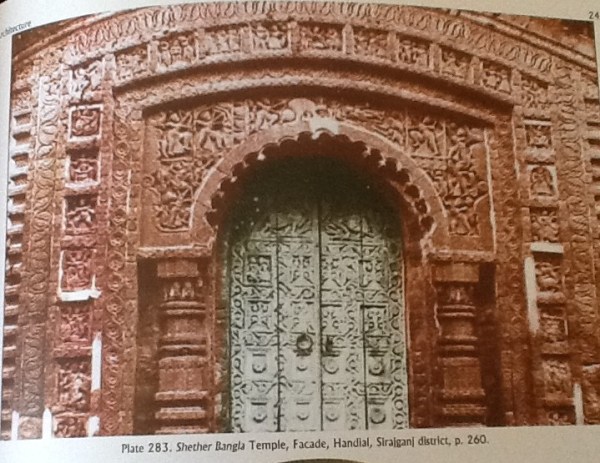
During the Sultanate period in Bengal while certain elements such as the curved chronicle of the village huts made of mud or bamboo with thatched roof was introduced in architecture, the Hindu temples beginning from the 17th century saw the entire hut structure translated into brick. Thus the popularly known do-chala or two segmented roof, sometimes called ek bangla, imitating the basic rural huts, soon became popular among the temple builders. They are comparatively more common I Bangladesh. Few examples:-

Chota Ahnik Temple at Puthia

Gopalbari  Temple at Naldanga

Narayana  Temple at Kaichal

Shether Bangla at Handial

An abandoned Temple at Pura


One of the best preserved specimens of Jor Bangla (twin hut temple) is at Bishnupur in West Bengal.

In Bangladesh,

Gopinathpur Temple at Dakshin Raghavpur

Narayana Temple at Lohagara

Govinda Temple at Kotakol

Jor Bangla Temple at Nalia
img_7958

Ratna Type

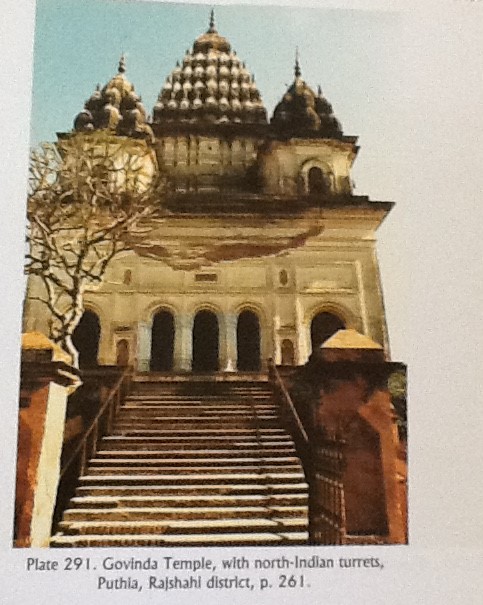
The Ratna type consists of a square shrine with an ambulatory around or with a verandah in front. The term ratna means gem/jewel, but in the context of architecture, it stands for a shikhara or tower.

Temples can be ek ratna (one towered)

Pancha ratna (five towered)

Nava ratna (Nine towered)

Ekadasha ratna (11 towered)

Trayadash ratna (13)

Saptadash ratna (17)

Ekush ratna (21) and pancha vimsati (25).


In Bangladesh, there is no ekratna temple, there being many in West Bengla.

Examples in Bangladesh:-

Pancha ratna type- Govinda temple at Puthia

The Kali Narayana Ray Shamsan Temple – Jeydevpur

Harekrishna Temple- Muhammadpur

Mahadeva temple at Naldanga

Prana Gopal Temple at Gopalganj

Shiva Temple at Sribari

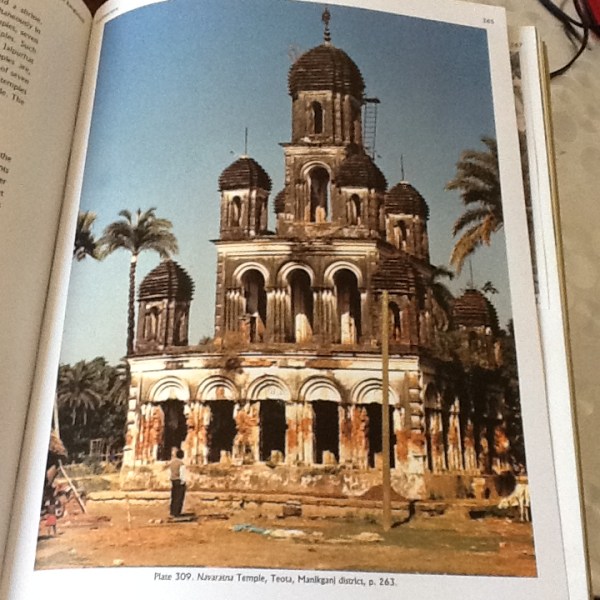
Navaratna type – Kantaji Temple at Kanatanagar built by Maharajas of Dinajpur

But all the 9 towers are lot due to the earthquake in 1897.

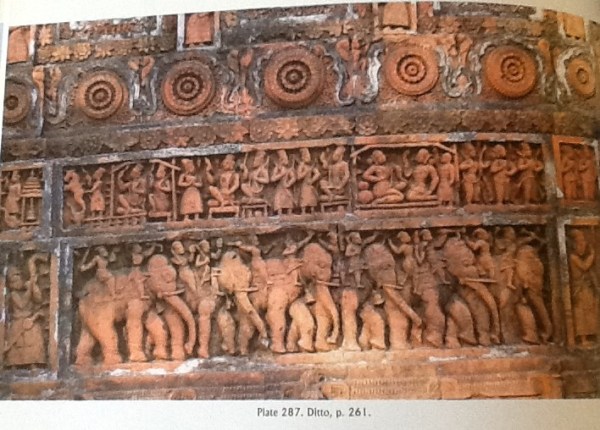
A wooden replica of the original temple is preserved in the Indian museum. The extraordinary feature of the temple is that every inch of the temple surfaceon all floors is covered by terracotta ornamentations, representing various mythological and social scenes of contemporary everyday life, punctuated by flora, fauna and geometric motifs.

Hatikumrul navaratna temple –  Sirajganj District

Ruined Navaratna temple at Potajia

Ruined navaratna temple at Nanikhir

Shyamsundara temple at Sonabaria

Navaratna Temple at Damreli

17 towered temple: Jagannatha temple – Comilla town

Documentary evidence for destroyed ekush ratna (21 towered) and ekadasha (11) temples at  Lakshmi Janardhana temple at Kishoreganj and Rajnagar.

Ruins of 25 towered temple at Gopalpur
 

img_7972

Shikhara Type

Mathurapur Deul – Madhukhali

Kodla math at Ayodhya , Bagherhat District


Math Type

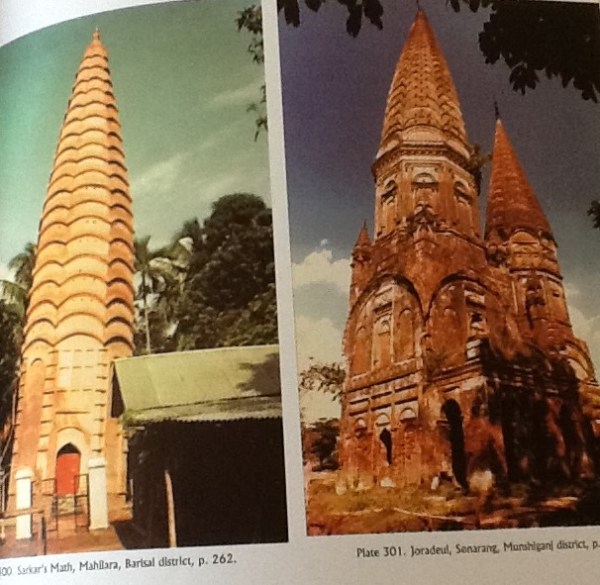
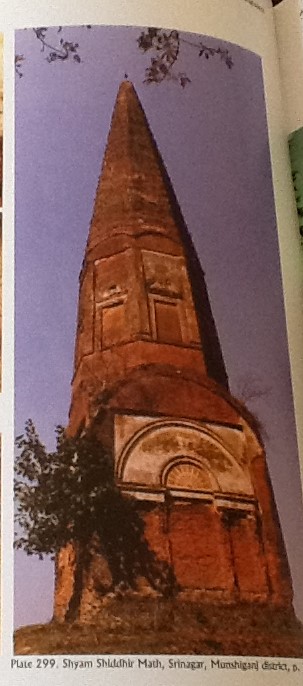
Under this type can be noticed a large number of square, octagonal or 12 sided temples with one tall slender tower. These are mostly found in S E Bangladesh.

Examples

Sarkar’s math – Mahilara

Twin towers at Sonarang

Kali temple with a height of 45-73 metres- Sonarang

Shyam Siddhir math at Srinagar

Sutalari math – Jhalakathi district

Newra math – Chandpur district

Jatramani math – Tulatuli
 

img_7969

Composite Type

Combinations of sevral types together

Jagaddhatri temple at Puthia

Rajaram  Temple – Khalia

Khelaram Datar Temple – Dhaka District

Rasamanchas/ Dolamachas

These are octagonal or square buildings related to the Krishna cult enabling the deity to be seen from all sides.

One temple in Bardhankuti is lost.

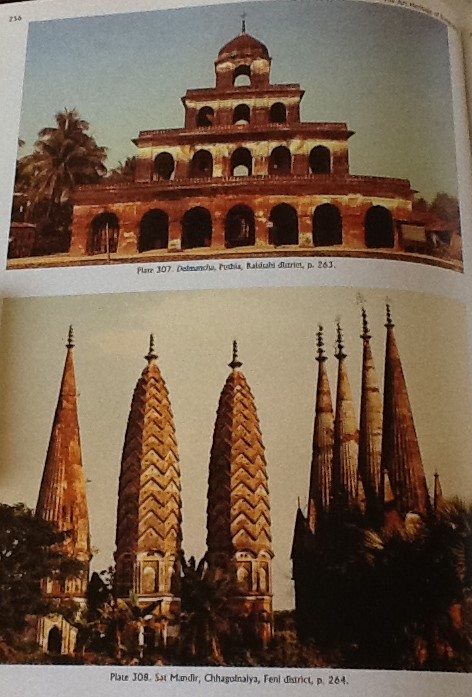
Dolmancha at Muhammadpur

Ratha mandira t Puthia

Dolmancha of Govinda – Salnagar


img_7966


Non traditional Type

Chanda Bhairava Temple – Ishvaripur, built in 16th century by Raja Pratapa Aditya.


Cluster of temples are built by succeeding gnerations. 4, 7, 9, 11 12, 108 temples are known.

A group of twelve char chala temples is in Belamla

Gropu of 7 temples called Satmandir is at Chagolnaiya.


It is only a short list. There are lot of temples in many other sub categories.
 img_7964

My Comments

1.It is heartening to note that most of the Bangladesh place names are still in Sanskrit in spite of Muslim rule

  1. It is a sad thing to hear about several ruined and lost temples
  2. Indian Government and Hindu organisations should renovate all the temples by mobilising Bangla Hindus with the help of Bangladesh Government.

4.The classification of temples by David or other foreigners is only on the basis of existing or recorded temples. But Bangladesh had temples for thousands of years or at least 1500 years. So we must gather all such details.

5. thousands of temples were destroyed by the invading Muslims and ruling Muslim kings. So Hindu scholars must collect all such vital information from recently discovered inscriptions and rewrite the History of temples in Bangladesh.
 

img_7968

–subham–

சாமுத்ரிகா லட்சணம்: கம்பன் தரும் தகவல் (Post No.3142)

sangu-chakra-reka

Written by London Swaminathan


Date: 11 September 2016


Time uploaded in London: 7-03 AM


Post No.3142


Pictures are taken from various sources; thanks.


உடலில் ஒவ்வொரு அங்கமும் எப்படி இருந்தால் அதனால் என்ன பலன் என்று கூறும் சாத்திரம் சாமுத்ரிகா லக்ஷண சாத்திரம் ஆகும். இது குறித்து வராஹ மிஹிரர் சொன்ன விஷயங்களை ஏற்கனவே எழுதினேன்.


கம்பனும் ராமாயணத்தில் இது பற்றி பல குறிப்புகளைக் கொடுக்கிறான். சம்ஸ்கிருதத்தில் ஆஜானு பாஹு என்பர். அதை அவன் நீண்ட நெடுந்தோள், தாள்தோய் தடக்கை என்றெல்லாம் வருணிப்பான்.

woman

இதோ ஒரு பாடல்:


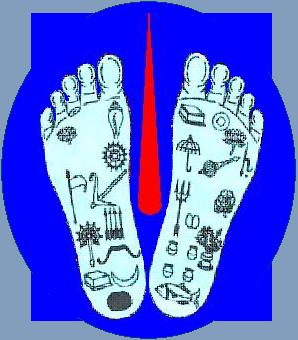
சங்கு சக்கரக்குறி உள தடக்கையில் தாளில்

எங்கும் இத்தனை இலக்கணம் யாவர்க்கும் இல்லை

செங்கண் விற்கரத்து இராமன் அத் திரு நெடுமாலே

இங்கு உதித்தனன் ஈண்டு அறம் நிறுத்துதற்கு இன்னும்.

-நட்பு கோட் படலம், கிஷ்கிந்தா காண்டம், கம்ப ராமாயணம்


பொருள்:–

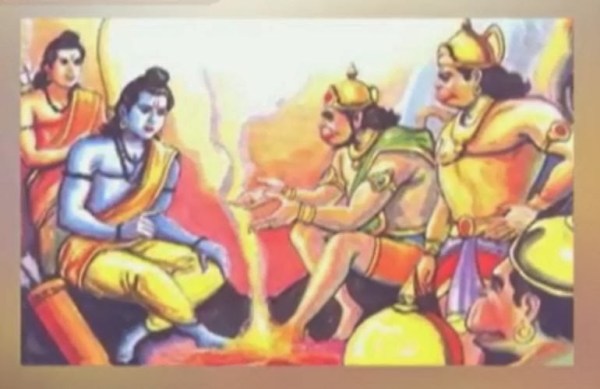
சுக்ரீவனிடம் அனுமன் சொல்லுகிறான்


இராமனுக்கு பெரிய கைகளிலும் கால்களிலும் சங்கு, சக்கர அடையாளங்கள் உள்ளன. இததகைய உயர்ந்த இலக்கணங்கள் எந்த உலகத்திலும் எவர்க்கும் இல்லை. ஆகையால் சிவ ந்த கண்களையும் வில்லை ஏந்திய கைகளையும் உடைய இராமன் இப்போது அறத்தை நிலை நிறுத்துவதற்கா க உலகில் அவதரிக்கும் திருமாலே ஆவான். மேலும்……………..


கைகளில் மட்டும் சங்கு ச்க்கர ரேகை இருப்பதே ஆபூர்வம்; இவனுக்கோ கைகளிலும் கால்களிலும் இப்படி சங்கும் சக்கரமும் காணப்படுகின்றன.


(எனக்கு ஒரு சிந்தனை: இப்படிக் கை, கால்களில் சாமுத்ரிகா லட்சண ரேகைகள் இருந்ததைத் தான் பிற்காலத்தில் உண்மையிலேயே கைகளில் சக்கரமும் சங்கும் இருப்பது போல உருவம் செய்துவிட்டார்களோ? ஆராய்ச்சிக்குரிய விஷயம்!)


ஐந்து உறுப்புகள் நீண்டதாக இருப்பது நல்லது என்று சம்ஸ்கிருத நூல்களும் மொழியும்:


பாஹூ நேத்ரத்வயம் குக்க்ஷிர்த்த்வே து நாசே ததைவ ச

ஸ்தனயோரந்தரம் சைவ பஞ்ச தீர்கம் ப்ரசக்ஷதே


பொருள்:-

நீண்ட கைகள், நீண்ட கண்கள், மூக்கு, வயிறு, முலைகள் இருக்க வேண்டும் என்று சொல்லப்படும்.


My earlier post:

Scientific proof for Samudrika Lakshanam

Posted by Santhanam Swaminathan on 18 Mar 2013


–Subahm–


தீப்போல தகிக்கும் ஐந்து விஷயங்கள் (Post No.3141)

copper-_copper

Written by London Swaminathan


Date: 10 September 2016


Time uploaded in London: 21-45


Post No.3141


Pictures are taken from various sources; thanks.


பார்யா வியோக: சுஜனா அபவாத:

ருணஸ்ய சேஷம் குஜனஸ்ய சேவா

தாரித்ரய காலே ப்ரியதர்சனம் ச

வினாக்னினா பஞ்ச தஹந்தி காயம்


பொருள்:–

தீ இல்லாமலே உடலை தகிக்க வைக்கும் ஐந்து விஷயங்கள்:–

மனைவியின் பிரிவு, நல்லவர்கள் செய்யும் தீய செயல், கடன் மிச்சம், கெட்டவர்களிடம் வேலை செய்தல், வறுமையில் வாடுகையில் விருந்தினர் வருகை ஆகிய ஐந்தும் உடலை தகிக்க வைக்கும் ஐந்து விஷயங்கள்.


Xxxx

cloth

பங்கிடக்கூடாதவை

வஸ்த்ரம் பாத்ரம் அலங்காரம் க்ருதான்னம் உதகம் ஸ்த்ரிய:

யோகக்ஷேமம் ப்ரசாரம் ச ந விபாஜ்யம் பஞ்சக்ஷதே மனு 9- 219


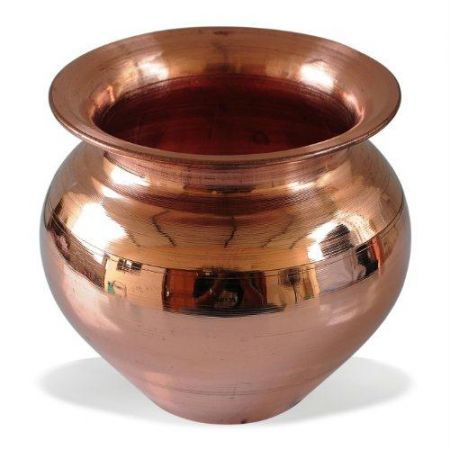
சொற்ப விலையுள்ள துணி

செம்பு (தான் பயன்படுத்தும் பாத்ரம்)

அலங்காரப் பொருட்கள் (தான் உபயோகிப்பவை)

சமைத்த உணவு (சாப்பிடுகையில்)

கிணறு (தன் வீட்டு)

வேலைக்காரிகள்

மந்திரி

புரோகிதன்

தெருக்குறடு

வழிநடை (ரேழி)


இவை அனைத்தும் ஒருவருடைய உபயோகத்தில் இருக்கையில் மற்றவர்களுடன் பகிர்ந்து கொள்வது ஆரோக்கியத்துக்கும் அமைதிக்கும் பங்கம் விளைவிக்கும்.


–Subham–


Hinduism in Bangladesh: from a new book (Post No.3140)

img_7528

Written by London Swaminathan


Date: 10 September 2016


Time uploaded in London: 10-38 AM


Post No.3140


Pictures are taken from various sources; thanks.


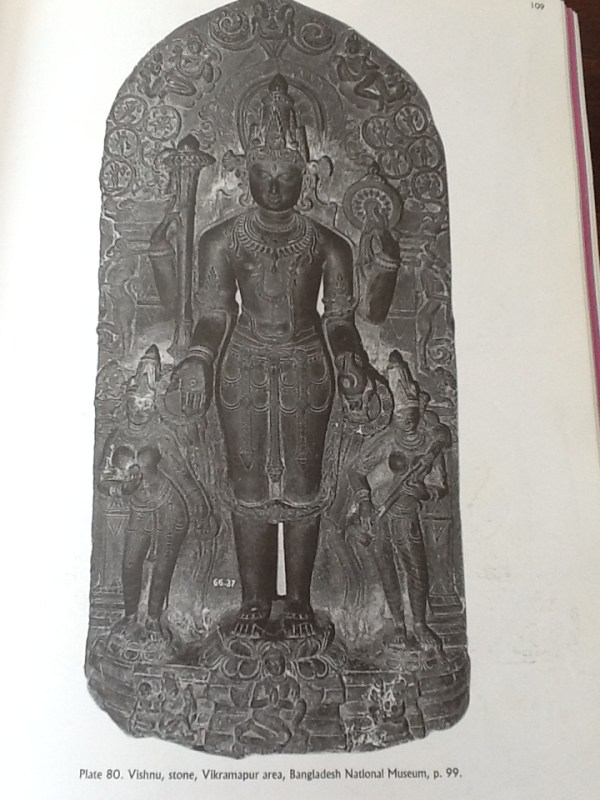
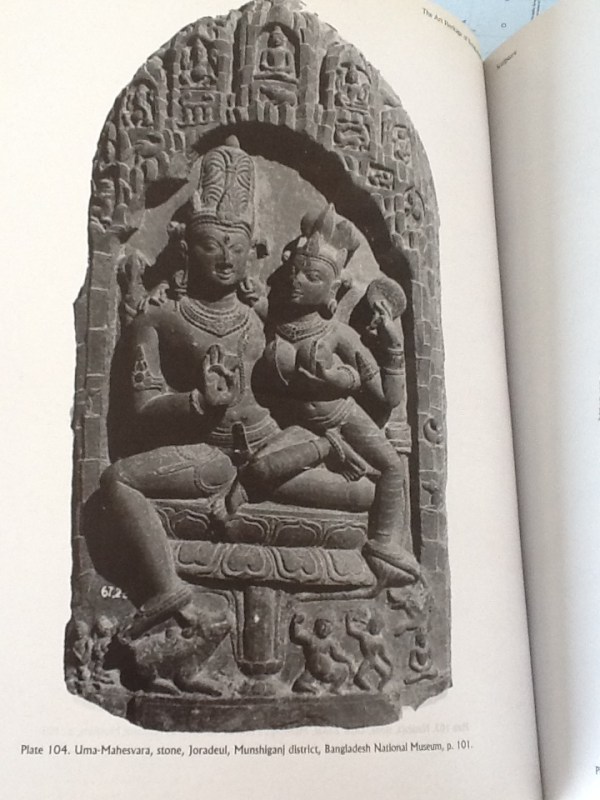
‘The Art Heritage of Bangladesh’ by Enamul Haque (The International Centre for Study of Bengal Art, Dhaka, Bangladesh, Year 2007) has lot of information about Hindu idols, statues and objects discovered in Bangladesh. It includes the latest discoveries. The book is worth buying; it has 536 illustrations.


Following is a brief account:-

Copper plate inscriptions of 5th to 13th centuries state the immigrations of Brahmins to various regions of Bangladesh from Madhyadesha (upper India) and under the patronage of the kings whether Brahmin or Buddhist.

(My Comments: There is no part of India which has not reported Brahmins coming from outside; it is simply transfer of 50 or 100 families to support a temple or a Yaga or Yajna (fire ceremony); people misunderstood it and interpreted as Brahmins migrating! Brahmins lived in every part of India and always on the move. Even when Vijaya went to Sri Lanka there were Brahmins already. Even when Buddha visited various parts of India, there were Brahmins according to their own records. 2000 year old Tamil literature has more poems by Brahmins than any other community. It shows that they were there from Himalayas to Kandy in Sri Lanka even before Buddha and Mahavira started preaching their religion!)

Vaishnavism or the worship of Vishnu seems to have established all over Bangladesh by 5th century. The early deities were Chakraswamin, Govindaswamin, Shveta Vrahasvamin, Kokamukhasvamin, Pradyumneshvara, Ananta Narayana etc. The Krishna legend formed an essential element of  Vaishnavism in Bangladesh in the 6-7th centuries. Jayadeva, the court poet of Lakshmanasena, was the first to give the widely accepted list of ten Avatars (1170 CE).

Other important feature of Bengal Vaishnavism is the large scale adoption of the cult of Radha Krishna.


Shaivism secured royal patronage from Vainyagupta (507 CE), Sasanka (594-637) and a number of Pala and Sena Kings. The popular Shiva representations referred to in the inscriptions were Mahadeva, Shiva, Shambu, Dhurjati, Ardhanarisvara, Sadahiva etc.


Several other Puranic gods and goddesses had votaries in Bangladesh. They were Kartikeya, Ganesha, Brahma, Agni, Kubera, Surya, Revanta,Durga, Lakshmi, Sarasvati, Gauri, Lalita, Chamunda, Manasa, Matrikas etc.


According to Chinese traveller Huen Tsang, that the followers of Brahmanical religion (Hinduism) outnumbered the total strength of Buddhists and Jains in Bangladesh.


Yakshi terracottas are found in West Bengal and Bangladesh


Maharaja Kantideva’s mother was ‘Shivapriya’ and an exponent of Ramayana- Mahabharata- Puranas.


img_7542

1000 TEMPLES!


Narayanapala was devoted to Vasudeva and claimed to have established one thousand temples, and his brother King Nayapala (1027-42 CE) is known for worshipping Shiva and establishing many images in temples.


King Mahipala I donated land to Brahmins after taking his ritual bath on the Visva Sankranti.

King Rampala, in hi capital city Ramavati, erected several temples dedicated to Shiva, Surya, Skanda and Ganapati.


MAHABHARATA RECITATION

King Madanpala’s queen Citramatika, had her husband donate land to Brahmin for recitation of Mahabharata.

Shri Chandra donated land to Brahmins.

King Ladahchandradeva of the same dynasty established a Vishnu image and named it after himself as Sri Ladhamadhava – Bhattaraka

The realization of tolerance and accommodation has been so perfectly depicted in the Mahavihara at Paharpur established by King Dharmapaladeva. In the cruciform temple complex at the centre of the court yard of the Buddhist monastery, on the walls of the lowermost circumambulatory path are fixed 63 stone sculptures, all except one representing Brahminical themes. These sculptures predate the monastery by about more than a century at least. They possibly belonged to an earlier Hindu temple.

The perpetual acceptance of Buddha as an incarnation of Vishnu (By Jayadeva) is perhaps the single major example of interaction between the Hindus and the Buddhists.

img_7538

Pig Vahana for Surya!


The interaction between the Buddhist and Brahminical arts had also other manifestations in Bengal. The Mahayanist answer to the Brahminical Surya was the goddess Marichi. She travels on a chariot drawn by seven pigs matching the seven horses of Surya (Sun).

Jambhala was created against the Hindu god Kubera, almost with identical characteristics.shasti has her parallel in Hariti, Manasa in Janguli.


But side by side these positive elements, there were a few attempts to ridicule some Hindu god like Ganesha. An image of Bhrikuti Tara, from Bhavanipur,Munshiganj District, depicts the eight armed goddess seated in Vajrasana with the representation of Ganesha, crawling on all fours, right below the seat. Similarly, there are two images of three headed six armed Parnashavari, one from Nayananda and other from Vajrayogini, both in Munshiganj district and both are now in Bangladesh National museum. In each case Ganesha is represented at the bottom prostate with a sword and a shield in hands, “evidently vanquished after a fight with the goddess.”

(My comments: Tibetan Buddhism has got very strange and grotesque figures. Buddhism degenerated and went down to the lowest level. Buddha fought against all rituals and meaningless worship; Tibetan Buddhism went against al that Buddha taught them. Even these statues may not be anti-Ganesha; they may mean different things. We have to look at them in the background of hundreds of figures they have.)

img_7551

–Subham–


Dictionary of 10,000 Kings -Part 22: Hindu Rulers of Bangladesh (Post No.3139)

img_7942

Written by London Swaminathan


Date: 9 September 2016


Time uploaded in London: 17-51


Post No.3139


Pictures are taken from various sources; thanks.


img_7941

I have already listed the Pala Vamsa (dynasty) kings of Bengal in part 15. Recent discoveries have revealed names of more kings who ruled Bengal area, now called West Bengal state of India and Bangladesh.


So let me add those kings to our 10,000 kings who ruled India from ancient days.


Source book

The Art Heritage of Bangladesh by Enamul Haque,Dhaka, 2007


Archeological materials are available from 450 BCE in Bangladesh

Tha Bodhayana Dharmasutra, Ramayana, Mahabharata and later books mentioned the Vangas and adjacent Lauhitya (Brahmaputra river).

Greek and Latin authors also mentioned these areas as Prasii and Gangaridai. Prasii is identified with Magadha. Market town Gange, Gangaridum are also found in their books. Gange is identified with Chandraketugarh in West Bengal (India).


Scholars think that the Greeks mentioned both Prasii and Gangadirai together because when Alexander invades India, these two empires formed joint command of their armies. Greeks say the two Indian Kingdoms had an army of

20,000 to 80,000 cavalry

200000 to 600 000 soldiers

2000 to 8000 chariots

4000 to 9000 elephants

Since various authors give different numbers approximate numbers are given. Having heard about the mighty Indian army Alexander turned back.

Vijaya, a banished king of Vanga established the first kingdom in Sri Lanka according to Mahavamsa and Dipavamsa.

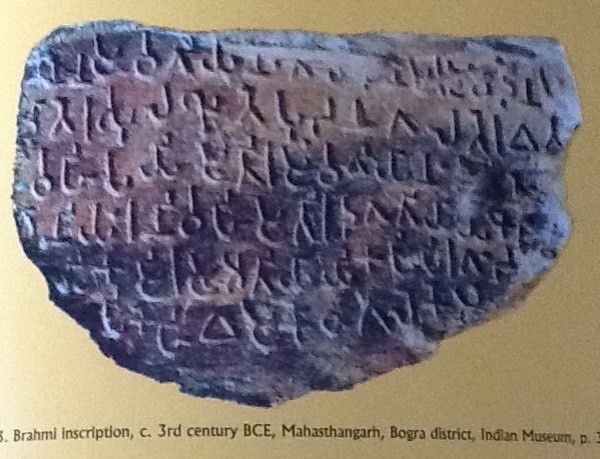
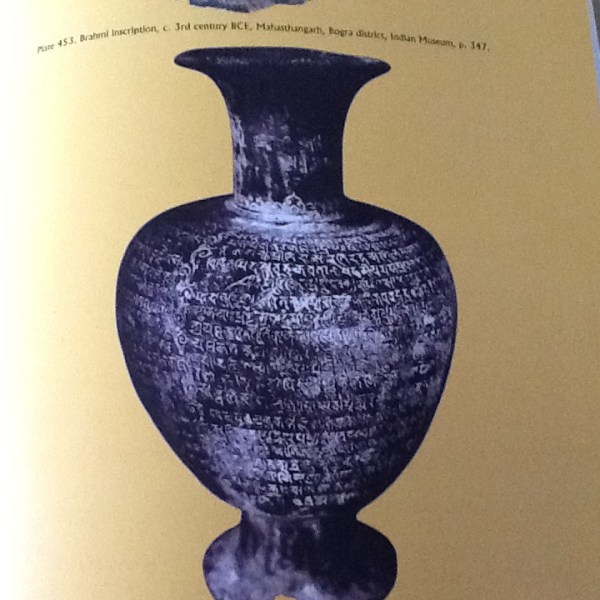
After Alexander’s departure Magadha kings might have ruled Bengal area. Indirect evidence comes from the 2nd century BCE inscription of Mahasthangarh (also known as Pundranagara).


Samudragupta inscription in Allahabad says that Vanga (Bangladesh) was part of his kingdom.

Probably it came under the Gupta Kings Chadragupta II and Samudra Gupta.

img_7945

New Kings discovered

1.Maharaja Vainyagupta (507 CE) according to Gunaighar copper plate grant (Comilla District)

2.Sasanka (594-637)

At least five copper plate inscriptions discovered in and around Kotalipara revealed three more kings

3.Gopachandra

4.Dharmaditya

5.Samacharadeva

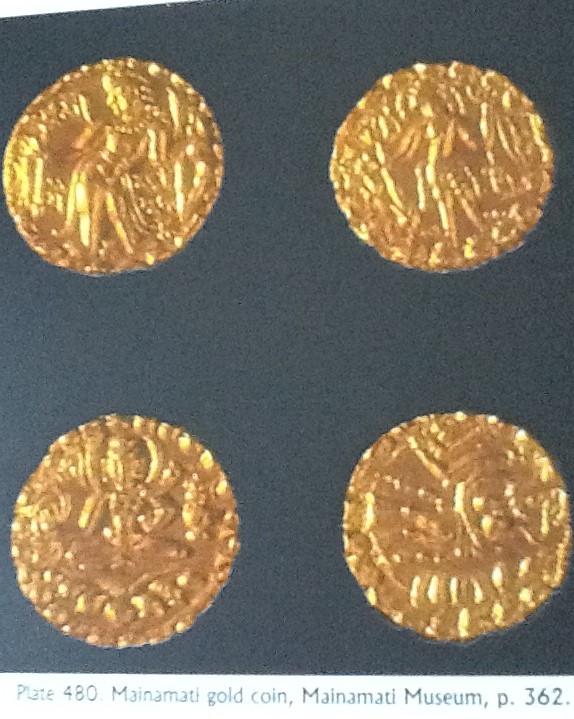
They had Maharajadiraja title and issued god coins

6.Tibetan king Srong-tsan invaded northern Bengal in the end of 7th Century CE

7.Yasovarman, King of Kanauj slayed King of Gaur (Gaur=Gauda=Bengal)

Following feudatory chiefs are also known from Comilla area

8.Samanta Lokanatha

9.Jivadharana Rata

10.Sridharana Rata (Samatatesvara)

11.Shrimad Devatideva Bhattaraka of Chittacong 715 CE

12.Kanti deva, Chittacong, 9th Century

Akara Dynasty kings came to light recently are

13.Lalitakara

14.Ramyakara

15.Pradyumnakara

16.Antakara


17.In 2007 a new copper plate inscription was discovered and a new king’s name Shriman Attakaradeva is found in it.

After this period, the area came under Harshavardhana and then Pala Dynasty began its rule

 img_7940

LOVE STORY

Kashmiri chronicler Kalhana gives an interesting story about Bengal. According to him Kashmiri Prince Jayanta came to Pundra nagar in Bengal and fell in love with a temple dancer named Kamala. Later, one night, when a man eater lion strayed into the city, Jayanta valiantly killed the beast. Soon his identity became known and the local king offered his daughter in marriage to the prince. It is told that the prince left for Kashmir with both the ladies. Two birds in one stone!


Later Pala kings ruled the area. Rajendra Choza from the South defeated one of the Pala kings in 1022.


Ramacharitam of Sandhyakaranandi gives a list of feudatory chiefs.

Before the Pala dynasty established their rule, Kadga, Deva, Chandra and Varman dynasties were ruling certain parts of Bengal. Following kings are known from newly discovered copper plates: –

18.Khadgodyama

19.Jatakhadga

20.Devakhadga (Queen Prabhavati)

21.Rajarajabhata

Excavations at Salban Monastery of Mainamati gave the names of unknown kings:-

22.Shri Santi Deva

23.Shri Vira Deva

24.Shri Ananda Deva

25.Shri Bhava Deva

The discoveries of the last fifty years or so now have clearly established genealogy of the kings of the Chandra Dynasty:-

26.Purnachandra

27.Suvarnachandra

28.Trilokyachandra (900-930)

29.Shri Chandra (930-975)

30.Kalyanachandra (975-1000)

31.Ladahachandra (1000- 1020)

32.Govindachandra (1020-1050)

Varmans supplanted the Pala kings in the last quarter of 11th century. The Varmans probably came from Orissa;

33.Jatavarman (who married Kalachuri King Karna’s daughter Virashri)

34.Harivarman


img_7938

SENA DYNASTY

35.Samanta sena (from Karnataka region)

36.Hemantasena

37.Vijayasena (who ruled for an amazing seventy-three years! From 1095-1168). If it is correct it is a world record!

38.Vallasena (1168-1178)

39.Laksmanasena

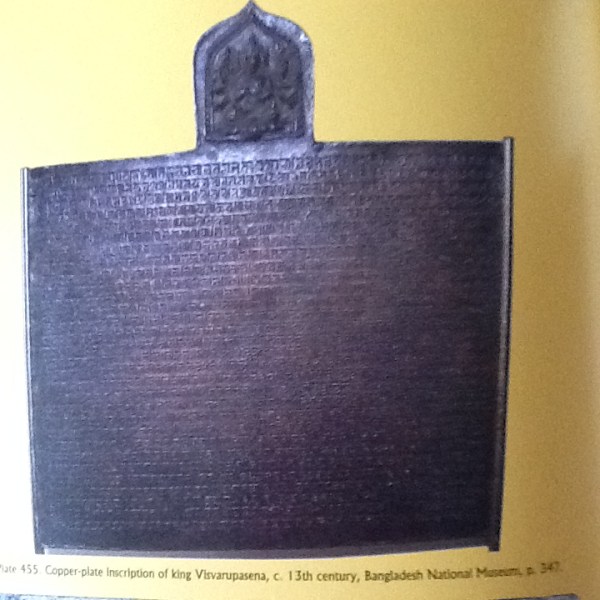
40.Vishvarupasena(1206-1220)

41.Keshavasena (1220-1223)


After this period, Muslims conquered large areas in Bengal.

From epigraphic record we get the names of following kings:

42.Purushottama

43.Madhusuthana deva

44.Vasudeva

45.Damodaradeva

46.Dasarathadeva

img_7560

A book worth buying!!!! 536 illustrations! 408 pages!!!

–subham–


Long Live Centenarians! (Post No.3138)

gandhi-2

Written by London Swaminathan


Date: 9 September 2016


Time uploaded in London: 9-14 AM


Post No.3138


Pictures are taken from various sources; thanks.


It is very interesting to note that centenarians get a positive reference in the world’s first law book Manava Dharmasasatra (Manu Smrti). This shows how much respect is given to old people in Hinduism and how much long life span is appreciated. Throughout the Vedas we find reference to man’s hundred-year life span.


Manu gives a list of people who spread positive vibrations in the place where they sit. He says that if one of them is sat in a row the entire row is purified and sanctified; though it is said in the context of twice born people, the respect to one’s age is referred in other slokas as well.


“Those who are pre-eminent in all the Vedas and the explanatory texts, and also those born into a line of priests who knew their Veda by heart, are known as purifiers of the ranks – Manu 3-184


A man who has studied the story of Naciketas (Katha Upanishad), or who keeps five sacrificial fires or has studied the three bird passage, or knows (tri suparna paasage in the Rig Veda 10-114-35), or knows all the six supplementary texts to the Veda, or is born out of a Brahma marriage or who can chant the most excellent chant (Jyeshta Samans or Tandya Brahmana 21-2-3) – Manu 3-185


Or those who know the meaning of the Veda, or can preach from the Veda, a chaste student of the Veda, one who has given away a thousand cows (at a sacrifice) or ONE WHO HAS REACHED THE RIPE AGE OF ONE HUNDRED YEARS are to be known as the people who purify the rows”.

mahatma-gandhi

Aagrayaa: sarveshu vedeshu sarvapravacaneshu sa

Srotriyaanvayajaasaiva vijneyaah panktipaavanaah -Manu 3-184


Vedaarthavit pravaktaa sa brahmachariisahasradah

Sataayussauva vijneyaa braahmanaah pakntipavanaah -Manu 3-186


Following quotations will show that the learned are respected as elders and elders are respected for their learning

1.Mere greying of hair does not make one old; the gods regard as an elder the man who, though young, has learned.–Manu Smrti 2-156

2.An assembly without the aged is not assembly at all

–Hitopadesa 3-61


3.Aged people are to be consulted about the stately path

–Satopadesa prabanda


4.Wisdom dawns with service to the elderly

–subashita ratna bandagaram 3-601


5.A courtesan though aged is sweet sixteen and the monk though young is a centenarian (Sanskrit proverb)


6.The king should adhere to the words of the wizened

—Brhat katha manjari

7.They are not really old who do not bespeak righteousness

Hitopadesam and Kahavatratnakar


happy-valmiki-day08


–Subham–

நடுங்கினர்க்கு அபயம் நல்கும் அதனினும் நல்லது உண்டோ: கம்பன் (Post No.3137)

sugreeva

Written by London Swaminathan


Date: 9 September 2016


Time uploaded in London: 9-04 AM


Post No.3137


Pictures are taken from various sources; thanks.


உலகம் முழுதும் அகதிகள் பிரச்சனை தலை விரித்தாடுகிறது. ஆயிரக் கணக்கானோர் வெளிநாடுகளுக்குச் சென்று அடைக்கலம் கோருகின்றனர். அவர்களுக்குப் பல நாடுகள் அடைக்கலம் தருகின்றன. இவையெல்லாம் சரணாகதி தத்துவத்தின் அடிப்படையில் அமைந்த கோட்பாடு. யாராவது ஒருவர் உன்னைச் சரண் அடைகிறேன் என்று மற்றவர் காலில் விழுந்துவிட்டால் அவரைக் காப்பாற்ற வேண்டும் என்பது இந்து தர்மக் கோட்பாடு. ராமாயணத்தில் மிகப் பெரிய அளவுக்குப் பேசப்படுவது சரணாகதி தத்துவம் ஆகும். இது ராமாயணத்தின் பிற்பகுதியில் விபிஷணன் சரண் அடையும்போது பெருமளவில் விவாதிக்கப்படுகிறது; விவரிக்கப் படுகிறது. அதற்கெல்லாம் பீடிகை போடும்படியாக கிஷ்கிந்தா காண்டத்திலேயே கம்பன் சில பொன்மொழிகளை உதிர்க்கிறான். இதோ இரண்டு பொன் மொழிகள்:–


ஒடுங்கல் இல்  உலகம் யாவும் உவந்தன உதவி வேள்வி

தொடங்கின மற்றும் முற்றத் தொல் அறம் துணிவர் அன்றே

கொடுங்குலப் பகைஞன் ஆகிக் கொல்லிய வந்த கூற்றை

நடுங்கினர்க்கு அபயம் நல்கும் அதனினும் நல்லது உண்டோ


பொருள்:-

பரந்த இந்த உலகத்தில் உயிர்கள் எல்லாம் விரும்பியவற்றை உதவி, வேள்வி, தவம் முதலியவற்றை நிறைவேற்றும்படி மேலோர் செய்வர் அல்லவா? அததகைய அறங்களுள், எமன் போன்ற எதிரிக்குப் பயந்து நம்மிடம் சரண் அடைந்தவர்க்கு அஞ்சாதே என்று அருள் காட்டுவதை விடப் பெரிய அறம்/தர்மம் வேறு ஏதாவது உளதோ?


இது யார் சொன்னது? எங்கே சொன்னது?


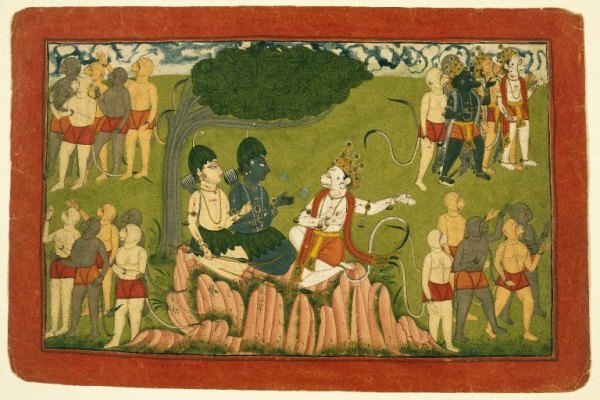
ராம லெட்சுமணர்களைச் சந்தித்த அனுமன் சுக்ரீவனுக்கு, வாலியினால் ஏற்பட்ட துனபங்களை விவரித்துவிட்டு சரண் அடைந்தவர்களைக் காப்பாற்ற வேண்டும் என்பது (இந்து) தர்மம் அல்லவா? என்கிறான்.

28_24_kishkinta_vali-fight-ground

சுக்ரீவன் இதைத் தன் வாயாலேயே சொல்லி காலில் விழும்  ஒரு பாடலும் வருகிறது:–


முரணுடைத் தடக்கை ஒச்சி முன்னவன் பின்வந்தேனை

இருள்நிலைப் புறத்தின் காறும் உலகு எங்கும் தொடர இக்குன்று

அரண் அடைத்து ஆகி உய்ந்தேன்  ஆர் உயிர் துறக்கலாற்றேன்

சரண் உனைப் புகுந்தேன் என்னைத் தாங்குதல் தருமம் என்றான்

பொருள்:-

என் அண்ணனான வாலி, தம்பியாகிய என்னை அடிப்பதற்காக ஓங்கிய கைகளுடன் இவ்வுலகத்துக்கு அப்பாலும் எல்லா உலகங்களிலும் என்னைத் துரத்தி வந்தான். இம்மலையே பாதுகாப்பான இடம் என்பதால் இங்கே வந்தேன்; உயிரை விடவும் மனம் இல்லை; உன்னை அடைக்கலம் அடைந்தேன். என்னைக் காப்பாற்றுதல் உனக்குக் கடமையாகும் – என்று சொன்னான் சுக்ரீவன்


என்னைத் தாங்குதல் தருமம் என்றான் என்ற வாக்கியத்தில்தான் இந்து தர்மக் கோட்பாடு பளிச்சிடுகிறது.


இன்று உலகம் முழுதும் அகதிகள் வாழ வழிவகுத்தது இந்து மதம். சுக்ரீவன், வாலி என்பவர்கள் ஓரிரு தனி நபர்கள். ஆயினும் போரில் சரண் அடைந்தவர்களையும் காப்பாற்றுவது நமது இதிஹாச புராணங்களில் உள்ளது. சரியான ஆயுதம் இல்லாதவர்ளையும், ஆயுதமே வைத்திராதவர்களையும் தாக்கக்கூடாது என்பதும் தெளிவாககக்  கூறப்பட்டுள்ளது.


புருஷோத்தமன் (போரஸ்) என்ற மன்னனை அலெக்ஸாண்டர் வென்று விட்டான். உனக்கு என்ன வேண்டும்? உயிர்ப்பிச்சை வேண்டுமா? இவ்வளவு சிறிய மன்னனாலும் என்னையே திணறடித்துவீடாய்! — என்றான். அவனோ சிறிதும் அஞ்சாமல் என்னை மன்னன் போலவே நடத்த வேண்டும் என்றான். அதன்படியே செய்தான் அலெக்ஸாண்டர். இது தர்மம் என்பதால் அப்படிக்கேட்டான் புருஷோத்தமன (போரஸ்). இந்துமதத்தின் பெருமையையும் பாரதத்தின் பெருமையையும் அறிந்து யோகிகளைச் சந்திக்கவே இந்தியாவுக்கு வந்தவன் அலெக்ஸாண்டர் என்பதால் உடனே அவனை மன்னன் போலக் கருதி அவன் ராஜ்யத்தை அவனிடமே ஒப்படைத்தான் என்பதை நாம் அறிவோம்.


வாழ்க சரணாகதி தத்துவம்!! வாழ்க அகதிகள்!!


நூறு வயதானவர்களின் மகிமை! (Post No.3136)

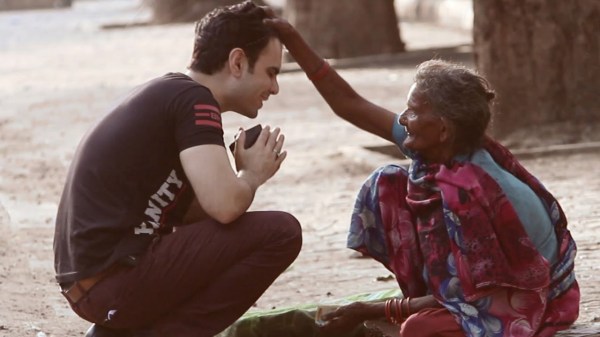
100-yr-old-berry-seller

100 year old lady sells berries on the road!

Written by London Swaminathan


Date: 8 September 2016


Time uploaded in London: 21-34


Post No.3136


Pictures are taken from various sources; thanks.

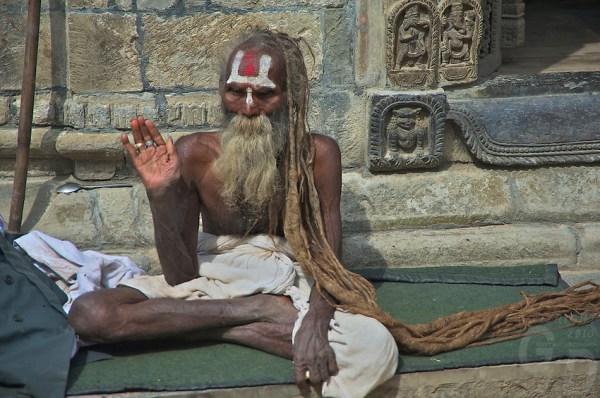
A over 100 year old Sadhu at the Shambhu Nath Hindu Cremation Area, Kathmandu Nepal

A over 100 year old Sadhu with his incredible long hair at the Shambhu Nath Hindu Cremation Area, Kathmandu Nepal

ஒரு பந்தியில் (வரிசையில்) யார் யார் உட்கார்ந்தால் அந்த வரிசையே தூய்மையாகிவிடும், புனிதமாகிவிடும் என்று மனுஸ்மிருதியில், மனு ஒரு பட்டியல் கொடுக்கிறார். அதில் 100 வயதுக் கார்களையும் சேர்த்திருக்கிறார். அவர்கள் அனுப்பும் VIBRATIONS வைப்ரேஷன்ஸ் — எல்லோரையும் உயர்த்திவிடும். அதுவும் அவர்களை யாருடன் சேர்த்து வைத்திருக்கிறார் என்பதைப் பார்க்கையில் 100 வயதானவர்களின் மதிப்பு இன்னும் உயர்கிறது!

அவர்களுக்கு “பங்தி  பாவனாள்” என்று பெயர்


ஆக்ரயா: சர்வேஷு வேதேஷு சர்வ ப்ரவசனேஷு ச

ஸ்ரோத்ரியான் அன்வயஜா: ச ஏவ விக்ஞேயா:  பங்க்திபாவனா:


வேதார்த்தவித்ப்ரவக்தா ச ப்ரஹ்மசாரி சஹஸ்ரத:

சதாயுஸ்சைவ விக்ஞேயா: ப்ராஹ்மணா:  பங்க்திபாவனா:


மனு 3- 184-186


வேதங்களைக் கற்றுத் தேர்ந்த அறிஞர்கள், அதன் ஆறு அங்கங்களையும் (ஷட்+ அங்கம்= ஷடங்கம்=சடங்கு) அறிந்தவர்கள், அவர்கள் வம்சத்தில் பிறந்தவரகள், ஆகியோர் வரிசையைப் புனிதப்படுத்துவர்.


குருவினிடத்தில் வேதப் பொருளை அறிந்தவன்,  அதைச் சொல்லிவைப்பவன், பிரம்மச்சாரி, ஆயிரம் பசுக்களை தானம் செய்தவன், நூறு வயதானவன் ஆகியோரும் எங்கே உட்காருகிறார்களோ அந்த வரிசையே தூய்மை ஆகிவிடும்!


மனு ஸ்மிருதியில் மூன்றாவது அத்தியாயத்தில் மனு இதைச் சொல்லுகிறார்.

0phil

இந்தப் பட்டியலில் உள்ள எல்லோரும் வேதம் கற்றவர்கள், தானம் செய்தவர்கள். ஆனால் இதில் வயதுக்கு மதிப்பு கொடுக்கப்பட்டிருப்பது விஷேஷமானது.  நூறு வயது ஒருவர் வாழ்கிறார் என்றால் அவர் வாழ்வு சுத்தமானதாக, ஆரோக்கியமானதாக இருக்க வேண்டும்; மேலும் வேத மந்திரங்களில்  நிறைய இடங்களில் “நூறாண்டுக் காலம் வாழ்க; நோய் நொடியில்லாமல் வாழ்க” என்ற பிரார்த்தனை வருகிறது.


வேதங்களின்படி ஒருவனுடைய ஆயுள் நூறு வயதுதான். ஆயுர்வேத, சோதிட சாத்திரப்படி ஒருவனின் வயது 120 ஆகும்.


வாழ்க நூற்றாண்டு கண்டோர்!