During my visit
to India in March 2019, I visited Samadhis of four great people
1.Sannu
Munivar Samadhi in Mel Malaiyanur Angala Parameswari Amman Temple
2.Karuvur
Siddhar Samadhi in Karur
3.Sadhasiva
Brahmendral Samadhi in Nerur
4.Saangu
Siddhalingar Samaadhi in Chennai.
I went to
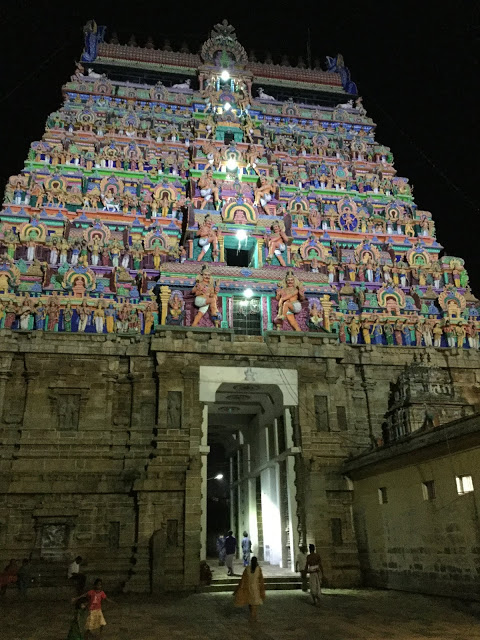
Siruvachur Mathura Kali Amman Temple with my brother. There was a big crowd and
a long queue. But we were told that was a less crowded day and normally one will
have to pay extra money to go through the special gate. It is near Perambalur
in Trichy district.
The temple
is open on Mondays and Fridays only. But during annual festival it is open
continuously.Other days the goddess is said to reside in the nearby hill.
People offer
Maa vilakku (Flour Lamp) prepared in the temple to the goddess. Maa Vilakku is
Rice Flour Mixed with jaggery and in the middle they light the ghee lamp. It is
done in front of the goddess shrine.
The temple
is connected with Kannaki of Silappadikaram epic and Choza kings. Swami Brahmendra
installed a Chakra (mysterious diagram drawn on a metal) here. The temple receives
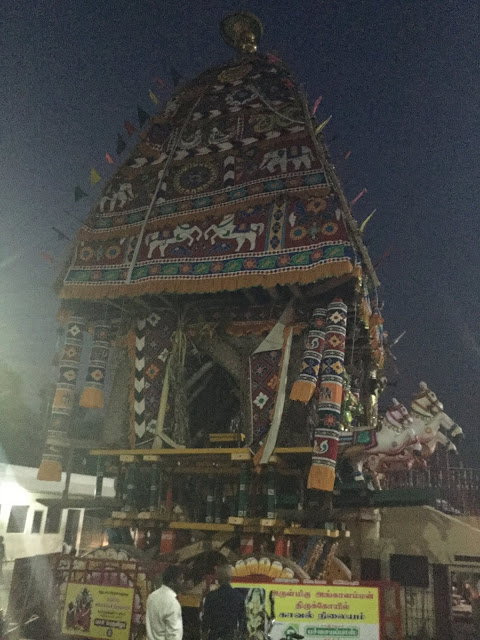
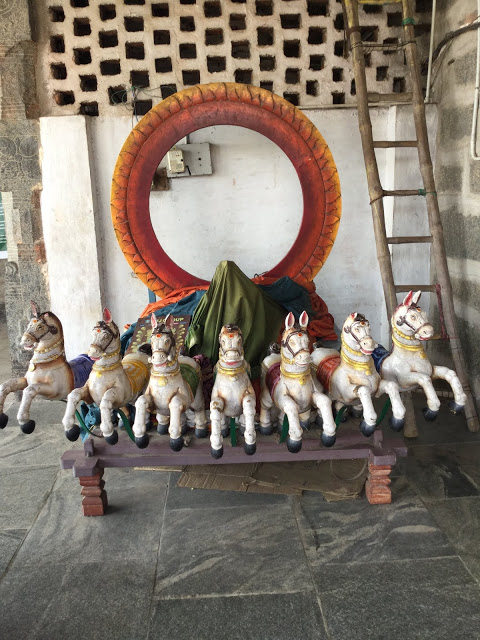
good income and it has got a golden chariot
Ghost busing slab
We went to
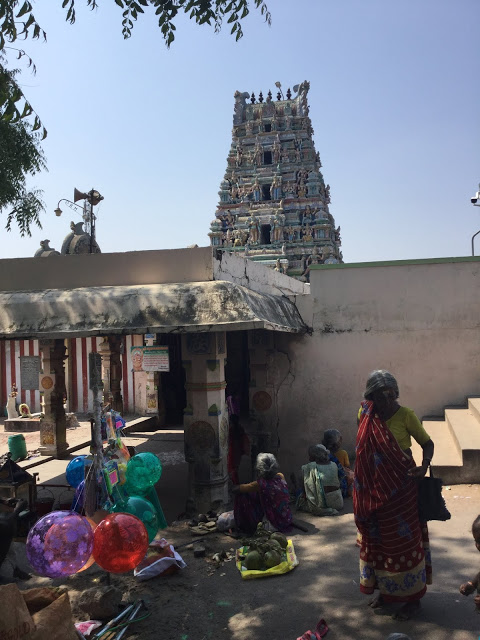
Angala Parameswaari Temple in Mel Malaiyanur after visiting Chenji Fort. The goddess
is in an ant hill. A long queue was there.
Just before
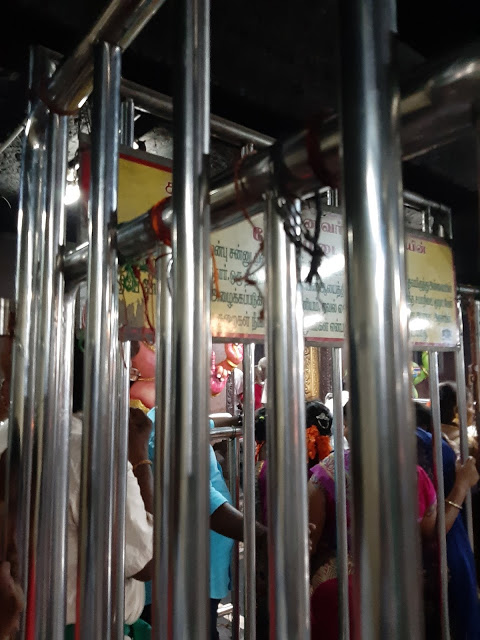
the main shrine I saw a marble slab with a special design and a display board. That
area was protected so that no one could step on it.
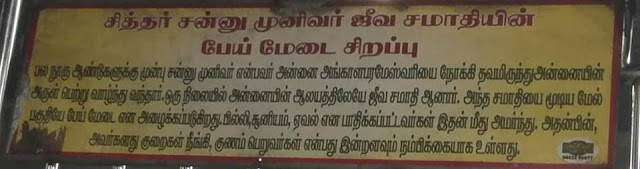
The message
on the board runs like this-
A saint named Sannu Munivar lived here many centuries ago. He attained Jeeva Samadhi in the temple here and on his Samadhi is Pey Medai. i.e Ghost busting Slab. (Jeeva Samadhi means one will enter the grave while the person was alive. Even after a building was erected over thee Samadhi he is supposed to live there for ever. That means anyone visiting the place will get his blessings). If any one possessed by evil spirits sits on it the person will be cured. This belief continues until today”—says the display board in Tamil. On the fence leading to the shrine I saw bangles offered to god.
I was wondering
about the design of the marble slab. later I saw it in another temple in Namakkal.
A Facebook friend also featured some Kolam (Rangoli) in the same pattern.
In both the
temples people offer clothes, bells, thread, swings etc to get issues. Young women
pray to get married quickly. One can feel the good and positive vibrations in
both the shrines. Villagers from the surrounding towns throng the place with
great faith and devotion. Lemon garlands and flower garlands are sold outside
the temples.
Sakti Kendras (Goddess Shrines) are situated throughout India from Kashmir to Kanyakumari. People believe goddess’ body parts fell in different places and they became Power (Sakti) Centres. Mel Malayanur is one such power centres according to local stories.
ADDRESS OF
THE TEMPLE
The Executive Officer,
Sri Angala Parameshwari Temple,
Melmalaiyanoor,
Gingee Taluk,
Villupuram District,
Tamilnadu – 604204.
Phone Number : +91 4145 234291
Email : mail@angalammantemple
In both the temples animals and birds are offered
to goddess.
ஆல்
இந்தியா ரேடியோ சென்னை வானொலி நிலையம் ஏ அலைவரிசையில் 9-3-2019 அன்று காலை சுற்றுப்புறச்
சூழல் சிந்தனைகள் பகுதியில் ஒலிபரப்பட்ட உரை
மாசுபடுத்தப்பட்ட காற்றினால் ஏற்படும் அவலம்!
ச.நாகராஜன்
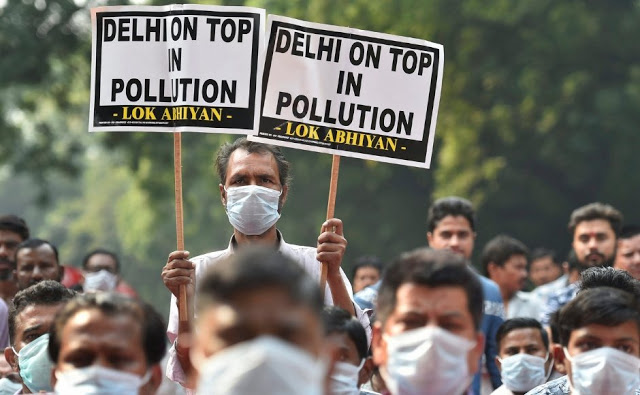
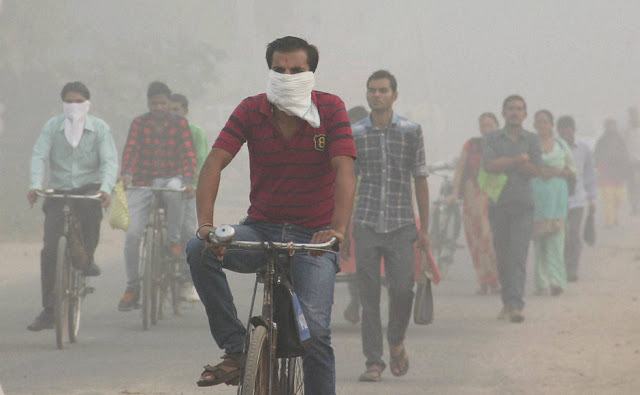
சுத்தமான காற்று ஆரோக்கிய வாழ்வைத் தரும் என்பதும் மாசு படுத்தப்பட்ட
காற்று ஆரோக்கிய சீர்கேட்டை உருவாக்கும் என்பதும் அறிவியல் போதிக்கும் உண்மைகள்.
சுத்தமற்று இருக்கும் காற்றை நாம் சுவாசிக்கும் போது மூளை தன்
இயல்பான செயல் திறனை இழக்கிறது; தொழிலாளர்கள்
உற்பத்தி செய்யும் செயல்திறனை இழக்கின்றனர்; மாணவர்களால் இயல்பாக படிக்க முடிவதில்லை
என்பன போன்றவற்றை ஏற்கனவே அறிவியல் ஆய்வுகள் தெளிவு படுத்தியுள்ளன.
இப்போது மசாசூசெட்ஸ் இன்ஸ்டிடியூட் ஆஃப் டெக்னாலஜி
(Masschusetts Institute of Technology – MIT) தனது ஆய்வு ஒன்றின் மூலம் மாசு படுத்தப்பட்ட
காற்று மனிதனின் சந்தோஷத்தையும் குறைக்கிறது என்பதை அறிவித்துள்ளது.
இதை இந்த ஆய்வைச் செய்த
இணைப் பேராசிரியரான சிகி ஜெங் (Siqi
Zheng), “சுற்றுப்புறச் சூழல் மாசுபடுத்தப்பட்டு பெருமளவில் காற்று அசுத்தமடைந்த நாட்களில்
அதை சுவாசிக்கும் மக்கள் பெருமளவு எரிச்சலுடன் இருப்பதோடு அபாயகரமான முடிவுகளைப் பல்வேறு
விஷயங்களிலும் எடுக்கின்றனர்” என்று கூறுகிறார். பின்னால் தாங்கள் எடுத்த முடிவுகளுக்காக
அவர்கள் வருத்தமும் அடைகின்றனர்.
இந்த ஆய்வானது 144 சீன நகர்களில் எடுக்கப்பட்டது. ஆயிரக்கணக்கானோர்
இதில் பங்கு கொண்டனர்.
காற்றின் தரத்தை அளக்க உதவும் அளவீடுகளில் நுண்மத் துகள்கள்
அதிகமாக இருக்கும் நாட்களில் இந்த ஆய்வுகள் நடத்தப்பட்டன.
இதில் பங்கு கொண்டோர் சமூக ஊடகங்களின் மூலமாகத் தங்களின் கருத்துக்களைப்
பதிவு செய்தனர்.
இதில் பெறப்பட்ட ஏராளமான தரவு எனப்படும் Dataக்களின் மூலமாக காற்று
மாசுக்கும் மனிதனின் மகிழ்ச்சியற்ற மனநிலைக்கும் நேரடி தொடர்பு இருப்பது கண்டுபிடிக்கப்பட்டுள்ளது.
World Health Organization எனப்படும் உலக சுகாதார நிறுவனம் ஆறு மாசுகள் மனிதர்களின் ஆரோக்கியத்தைச்
சீர்கேடு அடையச் செய்வதாக இனம் காட்டியுள்ளது. நுண்மத் துகள்கள், தரை மட்ட ஓஜோன், கார்பன்
மானாக்ஸைடு, சல்பர் ஆக்ஸைடு, நைட்ரஜன் ஆக்சைடு, காரீயம்
(Particle
pollution, ground-level ozone, carbon monoxide, sulfur oxides, nitrogen oxides,
and lead) இவற்றினால் சுவாசக் கோளாறுகள்,
இதயக் கோளாறுகள், நரம்பு மண்டல சீர்கேடுகள், கண்களில் எரிச்சல், தோல் வியாதிகள் உள்ளிட்ட
பல வியாதிகளும் உருவாகின்றன. ஆஸ்த்மா, நுரையீரல்
கான்ஸர், அல்ஜெமிர் மற்றும் பார்கின்ஸன் வியாதி,
மனக் கோளாறுகள் உள்ளிட்ட அனைத்திற்கும் மாசுபடுத்தப்பட்ட காற்றே காரணம் என்பது
அறிவியல் ரீதியாக நிரூபிக்கப்பட்டு விட்டதால் நாம் சுவாசிக்கும் காற்றை சுத்தமாக வைத்துக்
கொள்வது நமது இன்றியமையாத கடமையாக இன்று ஆகி விட்டது. இதை உணர்வோம்; உயர்வோம்!
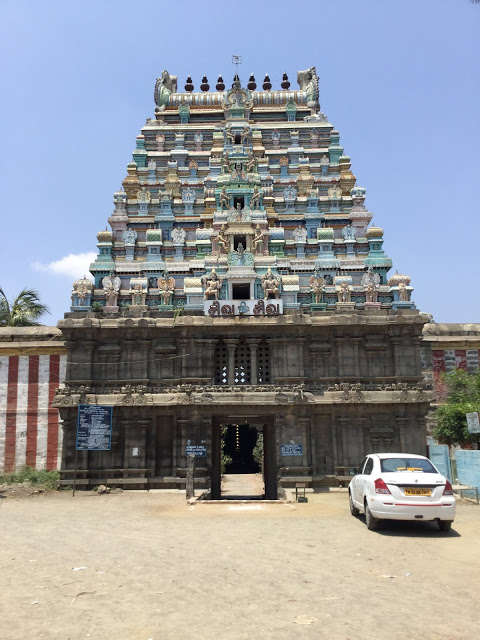
It is said
that Brahma hasn’t got many temples in Tamil Nadu. They say Pushkar in
Rajasthan and a few places got temples for Brahma, one among the trinity. But
to my surprise I saw a huge statue of Brahma thronged by a big crowd in
Thiruppattur Brahmapureeswar temple in Tamil Nadu. Though the main shrine is
devoted to Lord Shiva, Brahma was the sought after god there. The reason being
people believed that He will rewrite your bad fate in your favour.
Lot of
devotees came with their horoscopes written in note books and others came with A
4 size notes or Foolscap size note books. If some astrologers have written
something bad will happen to you during such and such period, you may give your
written prediction to the priest there. He collects and takes all of them to the God (in the form of statue)
and return them to the respective devotee after Puja. Scores of note books of horoscopes
changed hands during my short stay at the temple.
Apart from
this belief, the statue itself was big and beautiful with sandal paste applied
all over.
Where is
Tiruppattur?
It is near
Trichy. It is 34 kilometres from Trichy.Sa amyapuram is in between Trichy and
Tiruppattur. When you google for this place you will be misled easily to other
two Thiruppathurs in Tamil Nadu.
What is
there?
In addition to a huge Brahma statue, there are 12 lings believed to be installed by Brahma himself. He worshipped Lord Shiva to get out of the curse.
Everyone
must visit this beautiful temple. It was sung and praised by Saint Sundarar,
one of the great Four Saivite saints.
My visit to Kidney Stone Cure Temple
Strange are
the beliefs of Hindu devotees. They strongly believe that the stone Nataraja
and the water tank inside the temple will cure kidney stones. Faith can do
wonders. Probably some faithful got cured and spread the word.
Whether one
has got Kidney stone or not, this Nataraja is rare because it is made up of
stone. Other Natarajas (Dancing form of Lord Shiva) are made up of metals such
as Pancha loka (Five metal alloy).
Here the
Shiva Linga is in main shrine.
Where is it?
Just 43 kilometres
from Trichy.
Name of the Lord – Suddha Rathneswar
It must be
at least 1400 years old; Sung by Appar, one of the Four Great Saivite saints.
Why, Why,
Why?
What amazed
me and my brother who visited the temple in the last week of March 2019 is the
location of oottathur, Karkudi and Tiruppattur temples. Why did the Choza kings
chose some unknown distant locations and built temples in the middle of the
green fields?
How did they
bring huge stones into the middle of green fields?
Why did they choose such locations?
There is no
rocks or hills in the near vicinity. There must be some mysterious reasons to
choose such locations. Even my driver commented that the roads are zigzag like they
were thousands of years ago. That shows it was not planned like the Big Temple
of Thanjavur or Meenakshi Sundareswarar Temple of Madurai. These temples in the
remotest green fields came as Swayabmu Lingas (spontaneous growth) and were
appreciated by the kings because of their miraculous powers. Their survival for
1500 years or more itself is a proof of their mysterious powers!
நடராஜர் ஆனந்த தாண்டவம் புரியும் சிதம்பரத்தைக் கனக சபையாகச்
செய்ய நினைத்த ஆதித்தன் என்னும் அரசன் அதற்கான
தங்கத்தை எங்கிருந்து, எப்படி பெற்றான்?
இதற்கான பதிலை கொங்கு மண்டல சதகத்தின் 29ஆம் பாடல் தருகிறது.
பற்றறுத் தாளும் பரமனா னந்தம் பயினடஞ்செய்
சித்தம் பலத்தைப்பொ னம்பல மாகச் செயச்செலும்பொன்
முற்றிலுந் தன்னகத் தேவிளை வாவதை மொய்ம்பிறையுண்
மற்றும் புகழக் கொடுத்ததன் றோகொங்கு மண்டலமே
இந்தப் பாடலின் பொருள் : சிவபிரான் ஆனந்த தாண்டவம் புரிந்தருளும்
சிதம்பரத்தைக் கனகசபையாக்கத் தேவையான தங்கம் அனைத்தையும் தன்னிடத்தே விளைந்த பொன்னைக்
கொடுத்து அரசனும் வியக்கப் புகழை அடைந்ததும் கொங்கு மண்டலமே.
இந்தப் பாடல் கூறும் வரலாறு சுவையான ஒன்று.
கீழ்க்கரை பூந்துறை நாட்டின் இணைநாடு பருத்திப் பள்ளி நாடு ஆகும்.
அந்த நாட்டில் கஞ்சமலையில் ஒரு சிறு வாரி உற்பத்தியாகி வருகிறது. அது மகடஞ்சாலை இரயில்
நிலையம் ஓரமாகத் தெற்கு நோக்கிச் செல்லுகின்றது. அதனைப் பொன்னி ஆறு என்பர். அதிலுள்ள
மணலைக் கரைத்துப் பொன் சன்னம் எடுக்கிறார்கள். உழைப்புக்குத் தக்க கூலி போலப் பொன்
கிடைக்கிறதாம். அது எட்டரை மாற்றுத் தங்கம் ஆகும். இதே போல கொங்கு மண்டலத்தில் பொன் கிடைக்கும் இடம் பல உள்ளன என்பதால்
ஆதித்த மன்னன் என்னும் சோழ மன்னன் சிதம்பரத்தைக் கனகசபையாக்க முயன்ற சமயத்தில் அதற்குத்
தேவையான பொன் அனைத்தையும் கொடுத்தது கொங்கு மண்டலமே.
இதே வரலாற்றை நம்பியாண்டார் நம்பி திருவந்தாதியும் ஒரு பாடலில்
குறிப்பிடுகிறது.
ஆக சிதம்பரத்தின் கனகசபைக்குப் பொன் தந்து உதவியது கொங்கு மண்டலமே
என கொங்கு மண்டல சதகத்தை இயற்றிய கார்மேகக் கவிஞர் புளகாங்கிதம் அடைந்து கொங்கு மண்டலப்
பெருமையை இப்படி இந்தப் பாடலில் கூறுகிறார்.
So far, I have covered up to 106 slokas in the eighth chapter of Manu
Smrti. Now let me continue from sloka 8-107
MY COMMENTS
1This section shows the economic conditions that prevailed at least 2000
years ago in India.
2.Manu talking about depositing gold, silver and copper objects (and not
iron) also indicate ancient period- may be copper age
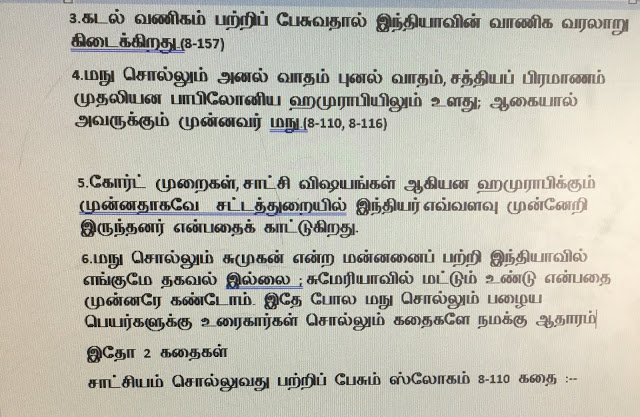
3. Fire ordeal, water ordeal and deciding by oath are in Hammurabi’s
Code of Law. This shows the value of truth. People feared God and never dared
to tell lies openly.
4.Manu gives the weight measurements of ancient days. 1000 Panaas is the
highest punishment.
5.Manu’s sloka on different types on interests, sea voyages etc. show
the adventurous foreign trade during those days. We have historical and
ARCHAEOLOGICAL evidence of sea trade for at least 2300 years.
6.See 8-108- disaster will fall on one who gives false evidence
Interesting Stories
8-110- Sapta Rishis (seven seers) swore against Indra who had stolen
lotus filaments (Mahabharata story)
Indra swore to escape punishments when he seduced Ahalya, wife of
Gautama Rishi
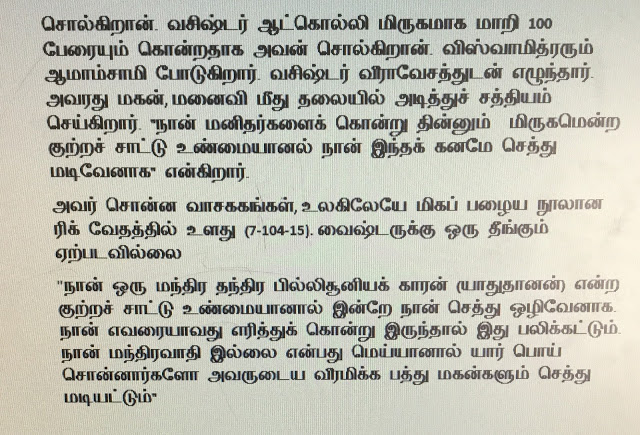
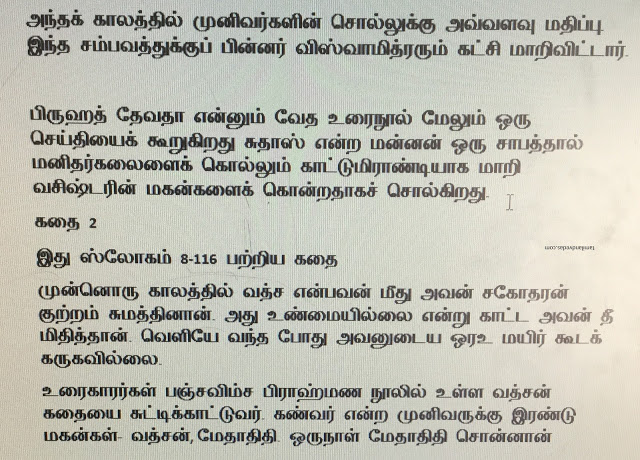
Rig Vedic King was Sudas, son of Pijavana. He killed Sakti, son of Vasistha.
But Viswamitra, official priest of Sudas, accused Vasishtaa of the murder. He
accused Vasishta a man eater. Then
Vasishta swore an oath by touching the heads of his wives and sons. Even today
Hindus talk of swearing by touching the head of his wife or son. Vasistha says,
‘ I may die if I am a man eating giant’- Rig Veda 7-104-15
The fact of the matter was Sudas killed 100 sons of Vasistha according to Brhaddevata (6-36)
7.See 8-116
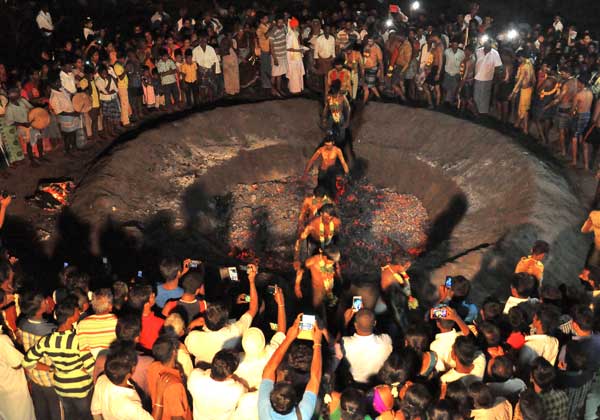
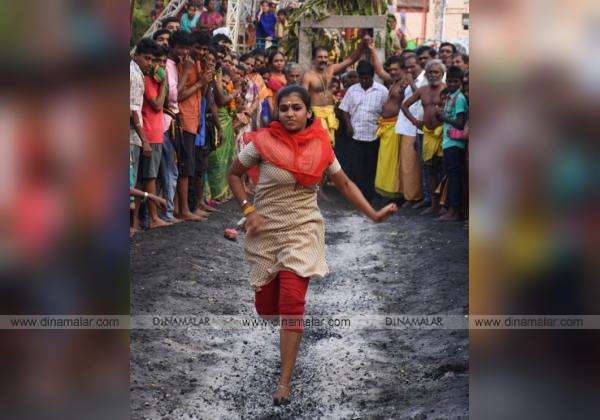
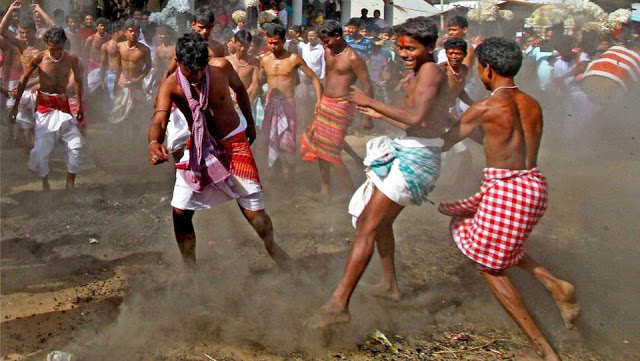
FIRE WALKING ceremony is in the Pancavimsa Brahmana. Even today fire
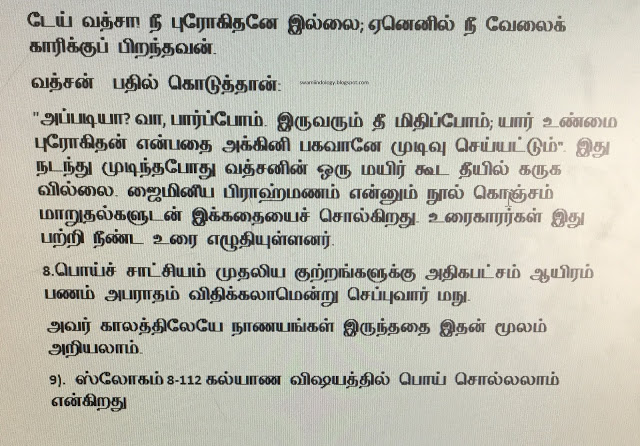
walking is practised in all the villages of South India. The story of Vatsa is
given in full detail in the commentaries of Manu. Kanva had two sons-
Madhatithi and Vatsa. Medhtithi reproached Vatsa saying ‘You are not a priest because you
are the son of a servant woman’.
Vatsa replied,
Let us walk through fire. Let it decide who is a true priest. At the
end, not even a single hair of Vatsa was burnt. It is in other Brahmana books
as well.
8.See 8-120 Thousand Panas is the maximum fine.
9.See 8-129 Four types of Punishment
10.See from 8-132 Hindu Weight Measurements. This shows Coin money
existed even during Manu’s time
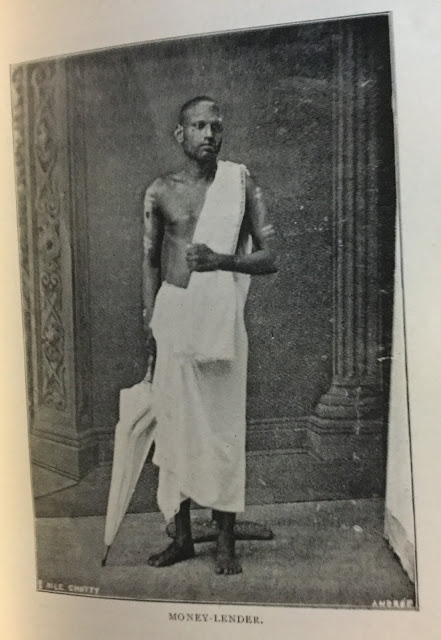
11. See 8-151 money lending and interest rates are discussed.
12.See 8-173 Be impartial like Yama.
8th chapter continued………….
FAILURE TO APPEAR IN COURT
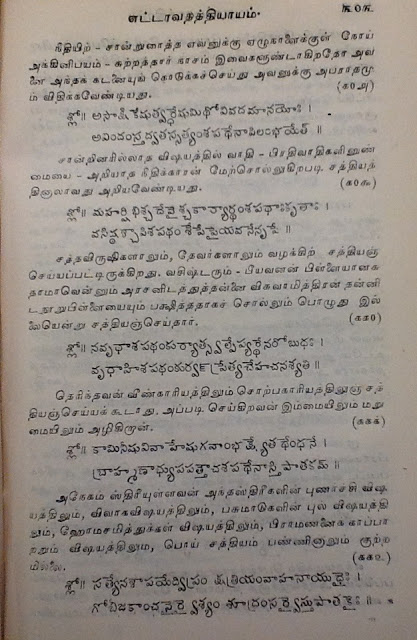
8-107. A man who, without being ill, does not give evidence in (cases
of) loans and the like within three fortnights (after the summons), shall
become responsible for the whole debt and (pay) a tenth part of the whole (as a
fine to the king).
108. The witness to whom, within seven days after he has given evidence,
happens (a misfortune through) sickness, a fire, or the death of a relative,
shall be made to pay the debt and a fine.
109. If two (parties) dispute about matters for which no witnesses are available, and the (judge) is unable to really ascertain the truth, he may cause it to be discovered even by an oath.
DECIDE BY OATH
110. Both by the great sages and the gods oaths have been taken for the
purpose of (deciding doubtful) matters; and Vasishtha even swore an oath before
king (Sudas), the son of Pijavana.
111. Let no wise man swear an oath falsely, even in a trifling matter;
for he who swears an oath falsely is lost in this (world) and after death.
112. No crime, causing loss of caste, is committed by swearing (falsely)
to women, the objects of one’s desire, at marriages, for the sake of fodder for
a cow, or of fuel, and in (order to show) favour to a Brahmana.
SATYA PRAMAANAM
113. Let the (judge) cause a Brahmana to swear by his veracity, a
Kshatriya by his chariot or the animal he rides on and by his weapons, a Vaisya
by his kine, grain, and gold, and a Sudra by (imprecating on his own head the
guilt) of all grievous offences (pataka).
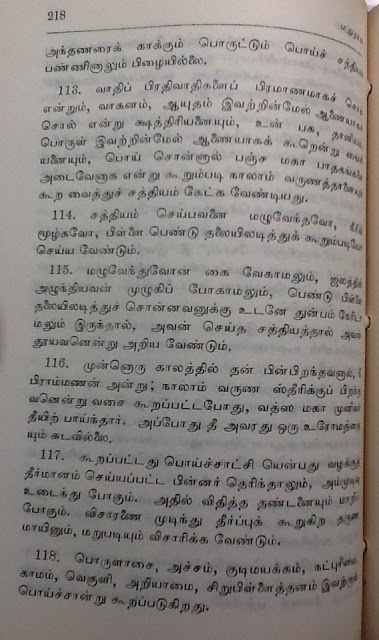
114. Or the (judge) may cause the (party) to carry fire or to dive under
water, or severally to touch the heads of his wives and children.
115. He whom the blazing fire burns not, whom the water forces not to
come (quickly) up, who meets with no speedy misfortune, must be held innocent
on (the strength of) his oath.
VATSA DID IT
116. For formerly when Vatsa was accused by his younger brother, the
fire, the spy of the world, burned not even a hair (of his) by reason of his
veracity.
117. Whenever false evidence has been given in any suit, let the (judge)
reverse the judgment, and whatever has been done must be (considered as)
undone.
118. Evidence (given) from covetousness, distraction, terror,
friendship, lust, wrath, ignorance, and childishness is declared (to be)
invalid.
119. I will propound in (due) order the particular punishments for him who gives false evidence from any one of these motives.
FINES FOR PERJURY
120. (He who commits perjury) through covetousness shall be fined one thousand
(panas), (he who does it) through distraction, in the lowest amercement; (if a
man does it) through fear, two middling amercements shall be paid as a fine,
(if he does it) through friendship, four times the amount of the lowest
(amercement).
121. (He who does it) through lust, (shall pay) ten times the lowest
amercement, but (he who does it) through wrath, three times the next (or second
amercement); (he who does it) through ignorance, two full hundreds, but (he who
does it) through childishness, one hundred (panas).
122. They declare that the wise have prescribed these fines for perjury,
in order to prevent a failure of justice, and in order to restrain injustice.
123. But a just king shall fine and banish (men of) the three (lower)
castes (varna) who have given false evidence, but a Brahmana he shall (only)
banish.
BRAHMINS EXEMPTED
124. Manu, the son of the Self-existent (Svayambhu), has named ten
places on which punishment may be (made to fall) in the cases of the three
(lower) castes (varna); but a Brahmana shall depart unhurt (from the country).
125. (These are) the organ, the belly, the tongue, the two hands, and
fifthly the two feet, the eye, the nose, the two ears, likewise the (whole)
body.
126. Let the (king), having fully ascertained the motive, the time and
place (of the offence), and having considered the ability (of the criminal to
suffer) and the (nature of the) crime, cause punishment to fall on those who
deserve it.
127. Unjust punishment destroys reputation among men, and fame (after death), and causes even in the next world the loss of heaven; let him, therefore, beware of (inflicting) it.
KINGS GO TO HELL FOR WRONG JUSTICE
128. A king who punishes those who do not deserve it, and punishes not
those who deserve it, brings great infamy on himself and (after death) sinks
into hell.
129. Let him punish first by (gentle) admonition, afterwards by (harsh)
reproof, thirdly by a fine, after that by corporal chastisement.
130. But when he cannot restrain such (offenders) even by corporal
punishment, then let him apply to them even all the four (modes cojointly).
131. Those technical names of (certain quantities of) copper, silver,
and gold, which are generally used on earth for the purpose of business
transactions among men, I will fully declare.
WHAT IS 1000 PANA? HINDU TABLES
132. The very small mote which is seen when the sun shines through a
lattice, they declare (to be) the least of (all) quantities and (to be called)
a trasarenu (a floating particle of dust).
133. Know (that) eight trasarenus (are equal) in bulk (to) a liksha (the
egg of a louse), three of those to one grain of black mustard (ragasarshapa),
and three of the latter to a white mustard-seed.
134. Six grains of white mustard are one middle-sized barley-corn, and
three barley-corns one krishnala (raktika, or gunga-berry); five krishnalas are
one masha (bean), and sixteen of those one suvarna.
135. Four suvarnas are one pala, and ten palas one dharana; two
krishnalas (of silver), weighed together, must be considered one mashaka of
silver.
136. Sixteen of those make a silver dharana, or purana; but know (that)
a karsha of copper is a karshapana, or pana.
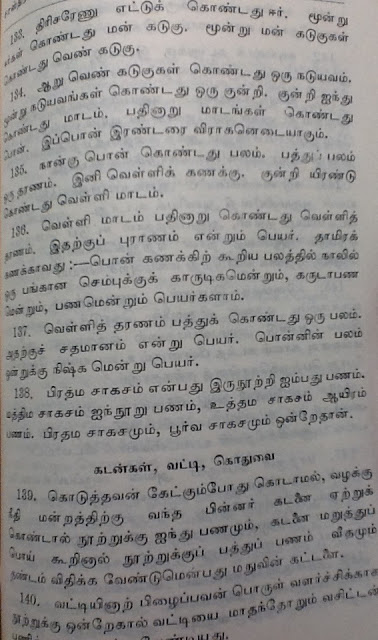
137. Know (that) ten dharanas of silver make one satamana; four suvarnas
must be considered (equal) in weight to a nishka.
138. Two hundred and fifty panas are declared (to be) the first (or lowest) amercement, five (hundred) are considered as the mean (or middlemost), but one thousand as the highest.
MONEY LENDING AND INTEREST
139. A debt being admitted as due, (the defendant) shall pay five in the
hundred (as a fine), if it be denied (and proved) twice as much; that is the
teaching of Manu.
140. A money-lender may stipulate as an increase of his capital, for the
interest, allowed by Vasishtha, and take monthly the eightieth part of a
hundred.
141. Or, remembering the duty of good men, he may take two in the
hundred (by the month), for he who takes two in the hundred becomes not a
sinner for gain.
142. Just two in the hundred, three, four, and five (and not more), he
may take as monthly interest according to the order of the castes (varna).
143. But if a beneficial pledge (i.e. one from which profit accrues, has
been given), he shall receive no interest on the loan; nor can he, after
keeping (such) a pledge for a very long time, give or sell it.
144. A pledge (to be kept only) must not be used by force, (the
creditor), so using it, shall give up his (whole) interest, or, (if it has been
spoilt by use) he shall satisfy the (owner) by (paying its) original price;
else he commits a theft of the pledge.
145. Neither a pledge nor a deposit can be lost by lapse of time; they
are both recoverable, though they have remained long (with the bailee).
146. Things used with friendly assent, a cow, a camel, a riding-horse,
and (a beast) made over for breaking in, are never lost (to the owner).
147. (But in general) whatever (chattel) an owner sees enjoyed by others
during ten years, while, though present, he says nothing, that (chattel) he
shall not recover.
148. If (the owner is) neither an idiot nor a minor and if (his chattel)
is enjoyed (by another) before his eyes, it is lost to him by law; the adverse
possessor shall retain that property.
149. A pledge, a boundary, the property of infants, an (open) deposit, a
sealed deposit, women, the property of the king and the wealth of a Srotriya
are not lost in consequence of (adverse) enjoyment.
150. The fool who uses a pledge without the permission of the owner,
shall remit half of his interest, as a compensation for (such) use.
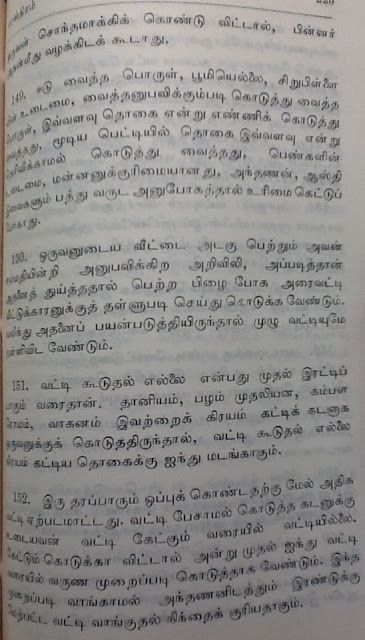
151. In money transactions interest paid at one time (not by
instalments) shall never exceed the double (of the principal); on grain, fruit,
wool or hair, (and) beasts of burden it must not be more than five times (the
original amount).
152. Stipulated interest beyond the legal rate, being against (the law),
cannot be recovered; they call that a usurious way (of lending); (the lender)
is (in no case) entitled to (more than) five in the hundred.
TYPES OF INTERESTS
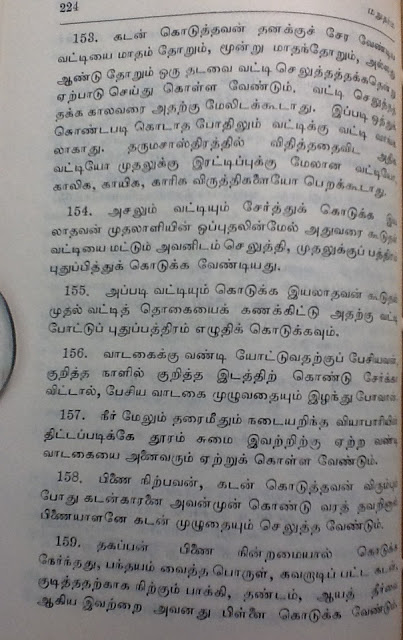
153. Let him not take interest beyond the year, nor such as is
unapproved, nor compound interest, periodical interest, stipulated interest,
and corporal interest.
154. He who, unable to pay a debt (at the fixed time), wishes to make a
new contract, may renew the agreement, after paying the interest which is due.
155. If he cannot pay the money (due as interest), he may insert it in
the renewed (agreement); he must pay as much interest as may be due.
156. He who has made a contract to carry goods by a wheeled carriage for money and has agreed to a certain place or time, shall not reap that reward, if he does not keep to the place and the time (stipulated).
SEA VOYAGES
157. Whatever rate men fix, who are expert in sea-voyages and able to
calculate (the profit) according to the place, the time, and the objects
(carried), that (has legal force) in such cases with respect to the payment (to
be made).
158. The man who becomes a surety in this (world) for the appearance of
a (debtor), and produces him not, shall pay the debt out of his own property.
159. But money due by a surety, or idly promised, or lost at play, or
due for spirituous liquor, or what remains unpaid of a fine and a tax or duty,
the son (of the party owing it) shall not be obliged to pay.
160. This just mentioned rule shall apply to the case of a surety for
appearance (only); if a surety for payment should die, the (judge) may compel
even his heirs to discharge the debt.
161. On what account then is it that after the death of a surety other
than for payment, whose affairs are fully known, the creditor may (in some
cases) afterwards demand the debt (of the heirs)?
162. If the surety had received money (from him for whom he stood bail)
and had money enough (to pay), then (the heir of him) who received it, shall
pay (the debt) out of his property; that is the settled rule.
INVALID CONTRACTS
163. A contract made by a person intoxicated, or insane, or grievously
disordered (by disease and so forth), or wholly dependent, by an infant or very
aged man, or by an unauthorised (party) is invalid.
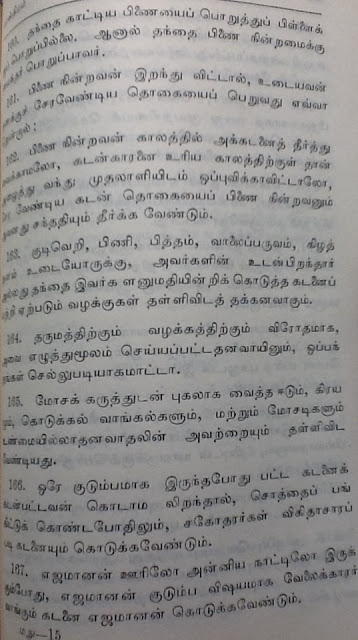
164. That agreement which has been made contrary to the law or to the
settled usage (of the virtuous), can have no legal force, though it be
established (by proofs).
165. A fraudulent mortgage or sale, a fraudulent gift or acceptance, and
(any transaction) where he detects fraud, the (judge) shall declare null and
void.
166. If the debtor be dead and (the money borrowed) was expended for the
family, it must be paid by the relatives out of their own estate even if they
are divided.
167. Should even a person wholly dependent make a contract for the
behoof of the family, the master (of the house), whether (living) in his own
country or abroad, shall not rescind it.
NO FORCE
168. What is given by force, what is enjoyed by force, also what has
been caused to be written by force, and all other transactions done by force,
Manu has declared void.
169. Three suffer for the sake of others, witnesses, a surety, and
judges; but four enrich themselves (through others), a Brahmana, a
money-lender, a merchant, and a king.
170. No king, however indigent, shall take anything that ought not to be
taken, nor shall he, however wealthy, decline taking that which he ought to
take, be it ever so small.
171. In consequence of his taking what ought not to be taken, or of his refusing what ought to be received, a king will be accused of weakness and perish in this (world) and after death.
KINGS MUST FOLLOW YAMA
172. By taking his due, by preventing the confusion of the castes
(varna), and by protecting the weak, the power of the king grows, and he
prospers in this (world) and after death.
173. Let the prince, therefore, like Yama, not heeding his own likings
and dislikings, behave exactly like Yama, suppressing his anger and controlling
himself.
174. But that evil-minded king who in his folly decides causes unjustly,
his enemies soon subjugate.
175. If, subduing love and hatred, he decides the causes according to
the law, (the hearts of) his subjects turn towards him as the rivers (run)
towards the ocean.
176. (The debtor) who complains to the king that his creditor recovers
(the debt) independently (of the court), shall be compelled by the king to pay
(as a fine) one quarter (of the sum) and to his (creditor) the money (due).
177. Even by (personal) labour shall the debtor make good (what he owes)
to his creditor, if he be of the same caste or of a lower one; but a (debtor)
of a higher caste shall pay it gradually (when he earns something).
178. According to these rules let the king equitably decide between men,
who dispute with each other the matters, which are proved by witnesses and
(other) evidence.
DEPOSITS, MORTGAGES
179. A sensible man should make a deposit (only) with a person of (good)
family, of good conduct, well acquainted with the law, veracious, having many
relatives, wealthy, and honourable (arya).
180. In whatever manner a person shall deposit anything in the hands of
another, in the same manner ought the same thing to be received back (by the
owner); as the delivery (was, so must be) the re-delivery.
181. He who restores not his deposit to the depositor at his request,
may be tried by the judge in the depositor’s absence.
182. On failure of witnesses let the (judge) actually deposit gold with
that (defendant) under some pretext or other through spies of suitable age and
appearance (and afterwards demand it back).
183. If the (defendant) restores it in the manner and shape in which it
was bailed, there is nothing (of that description) in his hands, for which
others accuse him.
184. But if he restores not that gold, as be ought, to those (spies),
then he shall be compelled by force to restore both (deposits); that is a
settled rule of law.
185. An open or a sealed deposit must never be returned to a near
relative (of the depositor during the latter’s lifetime); for if (the
recipient) dies (without delivering them), they are lost, but if he does not
die, they are not lost.
186. But (a depositary) who of his own accord returns them to a near
relative of a deceased (depositor), must not be harassed (about them) by the
king or by the depositor’s relatives.
187. And (in doubtful cases) he should try to obtain that object by
friendly means, without (having recourse to) artifice, or having inquired into
(depositary’s) conduct, he should settle (the matter) with gentle means.
188. Such is the rule for obtaining back all those open deposits; in the
case of a sealed deposit (the depositary) shall incur no (censure), unless he
has taken out something.
189. (A deposit) which has been stolen by thieves or washed away by
water or burned by fire, (the bailee) shall not make it good, unless he took
part of it (for himself).
190. Him who appropriates a deposit and him (who asks for it) without having
made it, (the judge) shall try by all (sorts of) means, and by the oaths
prescribed in the Veda.
191. He who does not return a deposit and he who demands what he never
bailed shall both be punished like thieves, or be compelled to pay a fine equal
(to the value of the object retained or claimed).
192. The king should compel him who does not restore an open deposit,
and in like manner him who retains a sealed deposit, to pay a fine equal (to
its value).
193. That man who by false pretences may possess himself of another’s
property, shall be publicly punished by various (modes of) corporal (or
capital) chastisement, together with his accomplices.
194. If a deposit of a particular description or quantity is bailed by
anybody in the presence of a number (of witnesses), it must be known to be of
that particular (description and quantity; the depositary) who makes a false
statement (regarding it) is liable to a fine.
195. But if anything is delivered or received privately, it must be
privately returned; as the bailment (was, so should be) the re-delivery.
196. Thus let the king decide (causes) concerning a deposit and a
friendly loan (for use) without showing (undue) rigour to the depositary.
197. If anybody sells the property of another man, without being the
owner and without the assent of the owner, the (judge) shall not admit him who
is a thief, though he may not consider himself as a thief, as a witness (in any
case).
198. If the (offender) is a kinsman (of the owner), he shall be fined
six hundred panas; if he is not a kinsman, nor has any excuse, he shall be
guilty of theft.
199. A gift or sale, made by anybody else but the owner, must be
considered as null and void, according to the rule in judicial proceedings.
8-200. Where possession is evident, but no title is perceived, there the
title (shall be) a proof (of ownership), not possession; such is the settled
rule.
‘மலைவையாவூரில்………..’. என்று துவங்கும் பாடல் வரிகளைக் கேட்டது
(SPB?) முதல்
அந்தத் தலத்துக்குச் சென்று பெருமாளைத் (விஷ்ணு) தரிசிக்க வேண்டும் என்ற ஆசை
எழுந்தது. ஆகையால் லண்டனிலிருந்து சென்னைக்குச் சென்ற அடுத்த நாள்
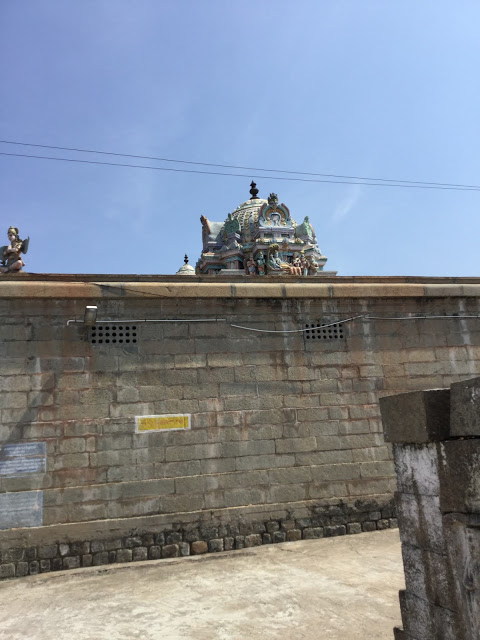
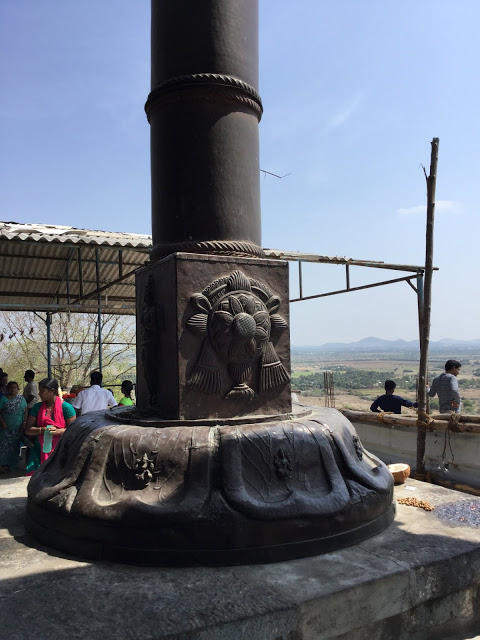
மலைவையாவூருக்குச் சென்றோம். சிறிய மலைதான். அதன் உச்சியில் வெங்கடேசப் பெருமாள்
எழுந்தருளி இருக்கிறார். அருகில் அலர்மேல் மங்கை சந்நிதி.
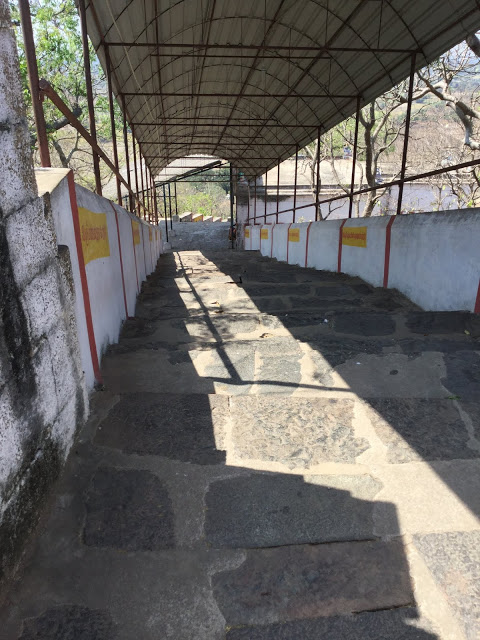
மலைக்குச்
செல்ல ரோடும், படிகளும் உள்ளன. நடந்து சென்றால்
அடிவாரத்திலிருந்து உச்சிக்குச் செல்ல சுமார் 500 படிகள். காரில் சென்றால் கோவிலுக்கு
மிக அருகில் காரை நிறுத்தலாம். மிகவும் சிறிய சந்நிதி.
இது
சென்னையிலிருந்து 70 கிலோமீட்டர் தூரத்தில் வேடந்தாங்கல் பறவைகள்
புகலிடத்துக்கு அருகில் உள்ளது. ஆகையால் வேடந்தாங்கல் செல்வோர் பெருமாளையும்
தரிசிப்பது வழக்கமாக உளது.
கோவிலை
ராமாயண ஹனுமானுடன் தொடர்பு படுத்தும் பல கதைகள் உண்டு. ஆயினும் அவை
தெரியாவிட்டாலும் மலையின் ரம்யமான சூழ்நிலையும், பெருமாளின் அருள் சுரக்கும் முகமும்
எவரையும் மகிழ்ச்சியில் ஆழ்த்தும்.
மழைக்காலம்
முடிந்து பல நாட்டுப் பறவைகள் வேடந்தாங்கலுக்குப் பறந்து வருகையில் இந்த இடம்
இன்னும் அழகாகக் காட்சி தரும் என்று ஊகிக்க (மார்ச் மாத வெயிலில்) முடிந்தது.
நான்
24-3-2019 எடுத்த புகைப்படங்கள் இத்துடன் இணைக்கப்பட்டுள்ளன.
பாக்யா
29-3-2019 இதழில் அறிவியல் துளிகள் தொடரில் வெளியாகியுள்ள ஒன்பதாம் ஆண்டு நான்காம் கட்டுரை – அத்தியாயம் 420
மூன் ரஷ்!
ச.நாகராஜன்
கோல்ட் ரஷ் – தங்க
வேட்டை என்பதைப் பற்றிக் கேள்விப்பட்டிருக்கிறோம். 1848ஆம் ஆண்டில் கலிபோர்னியாவில்
தங்கம் கண்டுபிடிக்கப்பட்டதை ஒட்டி அங்கு ஏராளமானோர் முகாமிட்டுத் தங்கம் கிடைக்கும்
இடம் தேடி அலைந்த கதை பெரிய கதை.
ஆனால் ‘மூன் ரஷ்’ என்பது பற்றி இப்போது தான்
கேள்விப்படுகிறோம். மூன் ரஷ் என்ற வார்த்தையை முதலில் உருவாக்கியவர் விண்வெளி இயல்
பொறியாளரான டென்னிஸ் விங்கோ (Moon Rush
by Dennis Wingo) என்பவர் தான். தனது ‘மூன் ரஷ்’ என்ற புத்தத்தில் பூமியின்
அருகில் இருக்கும் அண்டை கிரகமான சந்திரனில் என்னவெல்லாம் கிடைக்குமோ அதை முதலில்
‘அறுவடை’ செய்யத் துடிப்போர்
அங்கு செல்ல, போட்டி இடுவதையே அவர் மூன் ரஷ் என்றார். ஆம், சந்திர வேட்டை தான்!
2019, பிப்ரவரி
21ஆம் தேதி விண்ணில் ஏவப்பட்ட பால்கன் 9 (Falcon
9) ராக்கட் ஏப்ரல் மாதத்தில் சந்திரனில் இஸ்ரேலின்
ஒரு வாகனத்தை இறக்கும். இதற்கான ஒரு ஒப்பந்தம் இஸ்ரேலிய வணிக கம்பெனி ஒன்றுடன் செய்யப்
பட்டிருக்கிறது. இதன் மூலம் சந்திரனிலிருந்து முதல் வணிக ரீதியிலான பொருள் பூமிக்கு
வர இருக்கிறது. இதைத் தொடர்ந்து ஏராளமான கம்பெனிகள் சந்திரனுக்கு ராக்கெட்டுகளை அனுப்பத்
துடிக்கின்றன. ஜப்பானிய கம்பெனி ஒன்றும் இந்தப் போட்டிக்குள் குதிக்கிறது.
அமெரிக்கா, ரஷியா,
சீனா, இந்தியா, பிரிட்டன் உள்ளிட்ட பல நாடுகள் சந்திரனில் தங்கள் தளத்தை உருவாக்கி
மனிதர்களைக் குடி அமர்த்த திட்டம் தீட்டி வரும் வேளையில் முதலில் அதை யார் அடைகிறார்களோ
அவர்கள் எவ்வளவு ஆதிக்கத்தைச் செய்ய முடியுமோ அவ்வளவையும் செய்யவே துடிப்பார்கள்.
இரண்டு கோடி டாலரிலிருந்து
260 கோடி டாலர் வரை முதலீடு செய்ய பெரிய நிறுவனங்கள் தயாராகி விட்டன. 2021ஆம் ஆண்டில்
நாம் பார்க்கும் சந்திரன் வேறு விதமாக (எந்த தேசத்தின் பகுதி எது என்ற விவரணம் ஆரம்பிக்கும்)
விவரிக்கப்படுவான்!
அங்கு தண்ணீர் இருக்கிறதா,
அது ஐஸ் வடிவில் இருந்தால் பருகுவதற்கு உகந்ததாக இருக்குமா என்பது தான் அனைவரது கேள்வியும்!
அப்படி இருப்பின் அதை ஹைட்ரஜன் மற்றும் ஆக்ஸிஜனை உருவாக்கப் பயன்படுத்தலாம். ஆக்ஸிஜன்
மனிதர்களின் சுவாசத்திற்கு உதவும். பூமியிலிருந்து
நீரை சந்திரனுக்கு எடுத்துச் செல்ல வேண்டிய அவசியம் இல்லாது போய் விடும்; பெரும் பொருட்செலவு
மிச்சமாகும். சந்திரனில் தண்ணீரை எடுப்பதையே மிகப் பெரிய வாய்ப்பாக உலகின் மிகப் பெரிய
கம்பெனிகள் கருதுகின்றன.
ஆக்ஸிஜன், சிலிகான்,
இரும்பு, மக்னீஷியம், கால்சியம், அலுமினியம், மாங்கனீஸ், டைட்டானியம் உள்ளிட்டவை சந்திரனில்
இருப்பதாக இதுவரை மேற்கொண்ட ஆய்வுகள் உறுதிப்படுத்துகின்றன.
இன்னொரு மிகப் பெரிய
அதிர்ஷ்டப் பொருள் ஹீலியம் 3.இது மட்டும் நிறையக் கிடைத்தால் பூமியின் ஆற்றல் பற்றிய
நிலை முற்றிலுமாக மாறி விடும்.படிம எரிபொருள்களுக்கு – பெட்ரோல், டீஸல் உள்ளிட்ட அனைத்தின்
ஆதிக்கத்திற்கும் ஒரு முடிவு வந்து விடும்.
பல லட்சம் டன்கள்
ஹீலியம் சந்திரனில் இருப்பதாக சில விஞ்ஞானிகள் கருதுகின்றனர். உலகின் பொருளாதார நிலை
ஹீலியத்தின் அடிப்படையில் மாறி விடும்!
ஆகவே தான் இந்த
மூன் ரஷ்!
விலையுயர்ந்த பொருள்கள்
என்று பார்த்தால் பிளாட்டினம் குழுவைச் சேர்ந்த பொருள்களையும் சொல்லலாம். அது இருப்பதற்கான
சாத்தியக்கூறுகளும் சந்திரனில் உண்டு. இந்தப் பொருள்களின் இப்போதைய விலை ஒரு கிலோவுக்கு
20000 டாலரிலிருந்து 50000 டாலர் வரை இருக்கிறது. அதாவது ஒரு கிலோ சுமார் ரூ 14 லட்சம்
ரூபாயிலிருந்து 35 லட்சம் ரூபாய் வரை என்ற விலையில் விற்கப்படுகிறது. பல டன்களை முதலில்
வெட்டி எடுப்போரின் பொருளாதார நிலையை நாம் சுலபமாக ஊகிக்கலாம்.
ஆகவே முதலில் சென்று
ரொபாட்டை வைத்து முதலில் ஆராய்வோரே நிறைய ஆதாயத்தைப் பெற முடியும். ஆகவே தான் இந்த
சந்திர வேட்டை இப்போது சூடு பிடித்துள்ளது.
எங்கேயோ யாரோ ராக்கெட்
அனுப்புகிறார்கள் என்று நாம் சும்மா இருக்க முடியாது. இது நேரடியான விளைவை மனித குலத்தின்
மீது ஏற்படுத்தும்.
ஆகவே மூன் ரஷ் பற்றி
இனி அதிகம் தெரிந்து கொள்ள வேண்டிய நிலையில் அனைவரும் இருக்கிறோம்!
இது ஒருபுறமிருக்க
அளவற்ற – மிக மலிவாகக் கிடைக்கும் – ஆற்றலைத் தேடும் தனது முயற்சியில் வெற்றி பெற்று
விட்டதாக சீனா அறிவித்திருக்கிறது. இது சிக்கலான நியூக்ளியர் ஃப்யூஷன் (nuclear fusion) பற்றிய விஷயம்!.
இதை அணுச்சேர்க்கை என்று தமிழில் சொல்லலாம்.
சீனாவில் ஹெஃபியில்
(Hefei) உள்ள ரீ ஆக்டரில் ஹைட்ரஜனை ஒரு
செயற்கை சூரியன் மூலமாக 100 மில்லியன் டிகிரி செல்ஸியஸ் என்ற கற்பனைக்கும் அப்பாற்பட்ட
வெப்பநிலையில் வெப்பமடைய வைத்து பிளாஸ்மாவை உருவாக்கும் முயற்சியில் வெற்றி பெற்றுள்ளனர்.
நியூக்ளியர் ஃப்யூஷன்
என்னும் அணுச்சேர்க்கை ஆபத்தில்லாதது; பக்கவிளைவு இல்லாதது.
மாறாக நியூக்ளியர்
ஃபிஷன் என்ப்படும் அணுப்பிளவு ஆபத்தானது; ஏராளமான பக்க விளைவை உருவாக்கும்.
அணுச்சேர்க்கைக்கு
பூமியில் மிக அதிகமான உஷ்ணநிலை தேவைப்படுகிறது. ஆகவே தான் செயற்கை சூரியன் மூலம் இந்த
உயரிய உஷ்ணநிலையை உருவாக்கியதாக சீனா சொல்வதை விஞ்ஞானிகள் வியப்புடன் பார்க்கின்றனர்.
அதாவது அளப்பரிய
ஆற்றலை மிகவும் ‘சுத்தமான அணுச்சேர்க்கை’ மூலம் பெறுவதென்றால் அது அசாத்தியமான சாதனை தான்!
சந்திரன் மூலம்
பெரும் ஆற்றலைப் பெறப் போகிறோமா, அல்லது அணுச்சேர்க்கை மூலம் பெரும் ஆற்றலை பூமியிலேயே
பெறப் போகிறோமா?
இந்த விண்வெளிப்
போட்டியில் முதலில் வெற்றி அடைந்து உலகின் தலைமை விண்வெளி இயல் அரசாக மிளிரப் போவது
எந்த நாடு? சீனா, இந்தியா, அமெரிக்கா, ரஷியா?
காலம் விரைவில் அதிசயமான பதிலைச் சொல்லப் போகிறது! காத்திருந்து பிரமிப்படைவோம்!
அறிவியல் அறிஞர்
வாழ்வில் .. ..
ஜெனி ஷூமேக்கர்
என்று பிரபலமாக அறியப்படும் அமெரிக்க புவியியல் விஞ்ஞானி (Gene Shoemaker or Eugene Merie Shoemaker பிறப்பு 28, ஏப்ரல் 1928, மறைவு 18, ஜூலை 1997) ஷீமேக்கர் – லெவி 9 என்ற வால் நட்சத்திரத்தைக்
கண்டுபிடித்தவர். 1994இல் இது வியாழ கிரகத்துடன் மோதியது. இந்த காட்சியை உலகில் உள்ளோர்
வியப்புடன் தொலைக்காட்சியில் பார்த்தனர்!
இள வயதிலிருந்தே
விண்வெளி பற்றிய அனைத்து விஷயங்களிலும் ஆர்வம் காட்டி வந்தார் ஷூமேக்கர். எப்படியாவது
சந்திரனில் காலடி பதிக்க வேண்டுமென்பது அவரது தணியாத ஆசை. அபல்லோ பயணத்தில் சேர்வதற்கு
மிகவும் எதிர்பார்ப்புடன் காத்திருந்தார். ஆனால் அவருக்கு அட்ரினல் கிளாண்டில் ஏற்படும்
ஒரு வித வியாதியான அடிஸன் வியாதி இருப்பதாகத் தெரிய வந்ததால் அவரைப் பயணத்திற்கு சேர்க்க
முடியவில்லை. இதனால் மிகவும் மனமுடைந்து போனார்.
விண்வெளி வீரர்களைப்
பயிற்றுவிக்கும் பயிற்சியாளராக ஆனார். உலகெங்கும் உள்ள கனிம வளங்களை ஆராய்ந்தார். அமெரிக்காவில்
உடா மற்றும் கொலொரோடாவில் யுரேனியம் இருக்கிறதா என்பதை ஆராய்ந்தார்.
கோரமான ஒரு கார் விபத்தில் 1997இல் அவர் கொல்லப்பட்டது உலகையே அதிர்ச்சிக்குள்ளாக்கியது. அவரது தணியாத ஆசையை நிறைவேற்றும் வண்ணம் 1998இல் நாஸா சந்திரனுக்கு அனுப்பிய ப்ராஸ்பெக்டர் கலத்தில் அவரது அஸ்தியை ஒரு உலோகச் சுருளில் வைத்து அதை அனுப்பியது.
சந்திர தூசியுடன்
அவரது அஸ்தியும் கலந்தது.
பித்தளை உலோகச்
சுருளில் ஷேக்ஸ்பியரின் ரோமியோ ஜூலியட்டில் வரும் கீழ்க்கண்ட பிரபலமான மேற்கோள் பொருத்தமாகப்
பொறிக்கப்பட்டது:
“And, when he shall die
Take him and cut him out in little stars
And he will make the face of heaven so fine
That all the world will be in love with night
And pay no worship to the garish sun”
பூமி
வாழ் மனிதருள் வெளிகிரகத்திற்கு அனுப்பப்பட்ட
ஒரே மனிதரின் அஸ்தி ஷூ மேக்கருடையது தான்!

























 Tamil and Vedas