Pilgrim’s Lodge – The Inns of Old Tamil Nadu (Post No.3458)

Written by London swaminathan


Date: 17 December 2016


Time uploaded in London:- 13-59


Post No.3458


Pictures are taken from different sources; thanks.


contact; swami_48@yahoo.com


Choultry or Chatthiram or The Inn were wonderful institutions of ancient India. It served as the boarding and lodging place for the pilgrims as well as travellers.

I myself had arranged Bangur Dharmasala in Madurai for all the visitors from North India on their way to Kanyakumai when the Vivekananda Rock Memorial was opened. It was free. Once upon a time all the choultries gave free food and rooms. Even today we can see such places in North India. But in the south most of them were turned into hotels or converted into offices.


Chettiyars of Tamil Nadu established such choultries in various pilgrimage centres including Benares/Varanasi.


Several towns in Tamil Nadu still retain the name Chaththiram even after the Chaththirams had gone! The younger generation may not even understand this concept of giving everything free for the pilgrims and travellers. All the kings thought it was a great meritorious act (Punya Dharma). We can see references to choultries in all the ancient books of India – swami


Here is a piece written by T B Pandian in his book “Indian Village Folk” in 1897.


“The people who live in the Indian villages take delight in giving alms to the helpless and the needy, and also to the religious mendicants who go from place to place on pilgrimage, begging as they go. They have also provided suitable and convenient places in which travellers and strangers may rest, without any charge being made for their accommodation. These inns are called chatiram, oottoopuray and maddum (Mutt).

M T Chathram in Karnataka

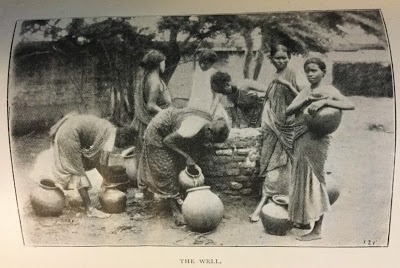
The chatiram is a place built by a Hindoo king or by one of the Hindoo governors of former times, or by some Hindoo man or woman, or by a certain class of the Hindoo community, and it is usually sufficiently endowed for its maintenance. These buildings are generally large and spacious having separate apartments for cooking and sleeping, etc They are placed outside the village, and usually near a stream.To provide bathing and cooking, the travellers, a well is dug by the side of the Chatttiram, and the grounds are planted with fruit-bearing trees and flowering plants.


In some of these chatirams the authorities engage Brahmin cooks who supply with food a certain number of Brahmin travellers only, each day free of charge. In some  chatirams the travellers are both fed and housed without charge, but in others the travellers get their lodging free, but have to provide their own food. When wealthy men or women find that there are no children to inherit their property, they lay out the whole, or at least the greater portion, in building and endowing chatirams for the public good. These charitable institutions may be numbered by the hundred in the country districts of India.


In the villages of Travancore, ‘the land of charity’, there are sixty four ways, i.e., feeding-houses,” established by the ancient Hindoo kings of Travancore, and still maintained by the Maharaja of Travancore in quite a grand style. In these feeding houses’ the Brahmins are fed by the hundred every day with sumptuous meals, and they are with comforts at the expense of the State Travancore. Many homeless and helpless Brahmins subsist by travelling from one feeding-house to another, and in this way they spend the whole year in quite an enjoyable manner, without any care as to what they shall eat, or what they shall drink, or wherewithal they shall be clothed.


The simplest and plainest kind of charitable public stances called the maddum (Mutt or Madam), and this is built in many instances at the expense of the villagers themselves. In these maddums a poor man, who has some reputation for piety,is engaged as manager by the villagers. This man gradually becomes an ascetic. He clothes himself in an orange-coloured tokai, and is called sannyasin by every villager. The duty of this sanniasin is to see that the village inn is kept clean, and lighted regularly every evening. He has also to beg meals from the villagers, both morning and evening. A certain portion of the meals thus collected by the innkeeper is taken for his own use, and with the remains the poor travellers are fed.
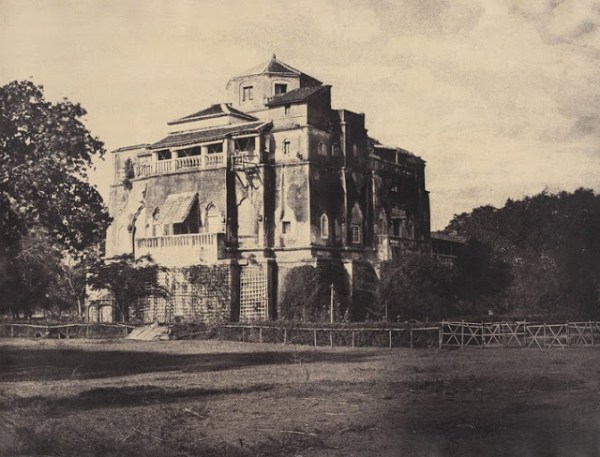
Chathram in Old Madurai


If any respectable travellers come in to rest, either for the day or for the night, the innkeeper gives them all necessary attention, and he will even at times induce some rich villager to feed the strangers who may have come in late at night. The lighting of the inn is left to the well-to-do villagers, and they supply the lamp oil by turns. The clothing of the innkeeper, which is, however, but a little matter, is provided from the village general fund.” The organization of the village inn is quite simple and inexpensive, and the benefit derived by the travellers is very great. During the hot summer months the innkeeper supplies butter milk or cold water to the thirsty travellers who are proceeding on their way.


There are a few famous and well-established maddums, with their madathipathies, i e., governors of inns,’ which were originally established on the simple principle of the village inn. Now these remarkable maddums have grown enormously, and are large establishments with numerous supporters and followers. The most prominent of these inns are called Dharmapura maddum, and Tiruvadoothuray. The governors of these celebrated Hindoo inns established a brotherhood of Hindoo monks, and these monks became the head of the respective inns; they are, as a rule, sound vernacular scholars, and well versed in Hinduism in all its phases. They maintain celibacy. These inns have four or five hundred men who feed in their respective places, where disciples and visitors flock together in large numbers. The heads of these are not Brahmins, and so they are not exclusively kept for that caste. The non-Brahmin community, indeed, form the bulk of their supporters. The insolvent and broken-down merchants, and those who have become disgusted with life through various disasters, forsake their homes and relations and enter this brotherhood of Hindoo monks; they are then cared for all the days of their life. Some of those who join this society are sent out by the head of the establishment to represent their cause at their branches. All who become governors of these inns are vegetarians by birth and Sivites by religion, and their successors are trained and kept in readiness by the governors. Although the governors themselves are bachelors who have not much earthly enjoyment, as they try to show, yet their relatives are greatly benefited by their honoured and exalted positions. They spend the money out of the treasury of the inn just as they please, and sometimes in very profligate ways. They live in princely comfort, and their intelligence and culture give them a high position and influence in the Hindoo community. Some of them are enlightened men, and these come to the front and sympathize with the public movements, more especially those of a religious and educational character.


There is no doubt that these inns and other charitable institutions of India will work wonders, if only the organizers of these institutions and their governors will recognise the fatherhood of God and the brotherhood of man.”

—-written in the year 1897.


–Subham–
Interesting Information about Indian WASHERMAN (DHOBY) (Post No.3454)

Compiled by London swaminathan


Date: 16 December 2016


Time uploaded in London:- 12-59


Post No.3454


Pictures are taken from different sources; thanks.


contact; swami_48@yahoo.com


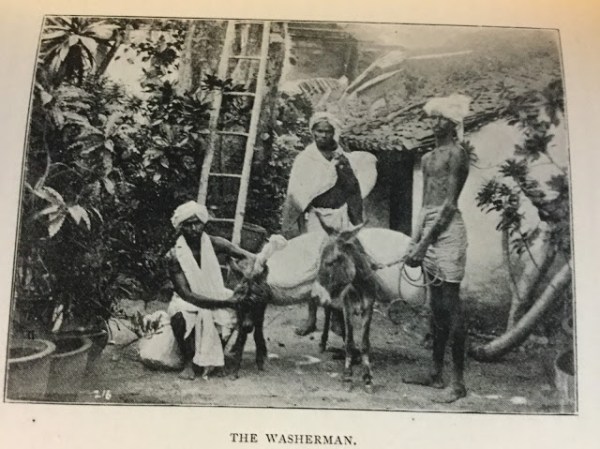
A Washerman is called Dhoby in North India and Vannan in Tamil Nadu. In Malabar the females this class wash the clothes and the men have taken to the trade of tailoring, or to the profession of devil dancing.


The Vannan is called, in consideration of his innumerable and unscrupulous services, ‘the son of the village’. He washes all the clothes of both the men and women, his wife assisting him in some parts of his work. When she goes to fetch the clothes from the women’s apartments, the women of the house receive the daughter of the village’ warmly, and entertain her with interesting conversation for a few minutes; then they give her a little oil with which to anoint her head, and feed her with a cold meal. Sometimes they also give her some home-made cakes to take back with her to her children. The washerwoman leaves the house highly pleased. She carries the soiled clothes of the women hooked on a stick, lest she should be contaminated by the touch of them. She takes the things to the fuller’s ground, at a pool, or river, or tank, and submits them to a regular process of cleansing. First she throws each article into the water and sets it aside. Then she herself plunges into the water, in order to remove any defilement which she may have contracted in graces. She then places all she has collected in the heap of other soiled clothes from the village which her husband had brought. The dhoby as a rule does not consider himself to be polluted in ordinay cases  when he carries the soiled clothes.


The dhoby has his house in some corner of the village, and it is built on a piece of ground belonging to the village. The walls of his house  are raised at the expense of the  village people, and they themselves pay for the thatched roof. They also contribute to the purchase of a spirited donkey or two.


Of useful household articles the dhoby has hardly any; only a few earthen vessels in which to cook his food, and to serve for washing purposes.


His business apparatus consists of only a few large earthen pots, and these are filled with water and placed on an oven, which is built of mud, and in a triangular shape. This oven is heated whenever he wants the soiled clothes to be steamed. Before they are steamed he dips them over and over again in the alkaline water, which is obtained by him at very little cost. This alkaline water is nothing more than a mixture of pure water with fuller’s earth, or washing soda. When the process of steaming is done, the dhoby and his children start off at about four o’clock in the morning to the fuller’s ground.


Donkey Work!


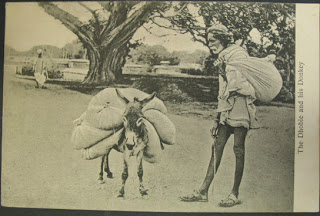
The poor, uncared-for donkeys move about in the dull streets and waste lands of the village all the other days and nights except the night in which the dhoby intends to start for his work. The unfed beasts are then made to carry the heavy loads of wet clothes. The moment they are loaded they start off in advance from the house of their unkind master as they know well the place of destination, and the way to it is quite familiar to them. The dhoby with his children follow them, each carrying a heavy load on his back, and even on his head. As the dhoby passes through the streets he cheers his beasts by whistling, and uttering encouraging words such as these Podaa saami ie, Go, master Maanam kappattudaa,’ i e., Save my reputation Karuttua  Dorai Ayya ie… black gentleman! Nadadaa  singam, ie,  Walk as a lion.’ When he reaches the water-side — this is often a good distance away — first he throws off his own load, removes the loads off the backs of his beasts and pasture.


In cases where there are fields in cultivation, one of the grown-up children of the dhoby minds the brutes while they are grazing. Then the dhoby unties the bundle of clothes. and keeps them within his reach near water, where the rough stones are kept, for bleaching. He takes up a cloth in his hand and dips it in the water, and beats it against the stone, with an invocation to his God, the common Father. Then he places the cloth on the stone raises his right hand to his forehead, as he stands in a bending attitude, in order to indicate that he seeks the benediction of the Heaven to rest upon the labours of the day.


The work of a dhoby in an Indian village is tedious and difficult. He has to cleanse from two to three hundred cloths of various lengths and breadths, many of them in an exceedingly dirty state. He beats in cloth after cloth with his full strength on the coarse stones. His children also share the work of their father, taking for their part the tiny clothes of children like themselves.

Composing and Singing Songs!

While he is beating the cloths he sings songs of his own making, or that were made by his forefathers. These are very peculiar in their composition, and they are quite uninteresting to anyone beside himself. There is in them no melody, and there is not even any beating of time. He sings in praise of his ass, or of his wife, or he narrates his love, patience, earnestness, in relation to his sweetheart before his marriage. Sometimes he sings in praise of father-in-law. Sometimes it is a mournful song about an old and faithful ass which he has recently lost.


While the dhoby is busily engaged with the  clothes, his wife will turn up carrying a potful of cold food, which she has been obtaining from the village folk during the previous night. Every house in the village is bound to give  twice daily a handful of cooked food, either made of rice, millet, maize or some other Indian grain. She also carries a second small vessel, which is filled with Indian vegetables and greens. These have also been given to her by the villagers.

Dhoby Wages!

A dhoby receives as wages from every village house an average of six pence per annum. If in the house there is a large family the wages are increased to a shilling per annum (written in the year 1897).


Besides this allowance, he gets a small gift of grains, probably  a few measures, at the time of harvest. If he goes to the fields when they gather the crops, he also will get a small bundle of ears. At wedding festivities and at funerals he is entitled to a fee of four pence. When the villagers offer a blood-sacrifice to the gods, they generally kill a fat ram by severing the head from the body, and this head goes to the waiting dhoby as a part of his wages. In some villages the dhoby is used as a messenger to communicate ominous intelligence to the parties concerned. For this he gets, in the form of gold and silver bangles, or a pair of new cloths, or a pagoda, about the value of four shillings. This is all that the dhoby receives in the form of wages.


Faithful Wife used as a Pillow!

Now let us turn back to the place where we left the dhoby washing the clothes. He has been beating them against the stone one after another, from early morning until 10 a.m., and he is now quite exhausted, and quite ready for his morning meal. The wife, who has brought his meal, joins her husband, and the children also partake of it. They all sit on the grassy slope of the riverside or pool. The dhoby and his children sit facing the woman, who holds the earthen pot in her hand. They fold their hands together, so as to serve them instead of a cup, and the watery meal is poured into their hands. The woman first stirs up the contents of the earthen pot with her right hand, and adds some butter milk and salt. This luxurious food satisfies the tired and hungry dhoby and his children, and refreshes them so that they cheerfully resume their work. The woman after serving the meal to her husband and children supplies her husband with betel-nut, chunnam, and tobacco to chew having received these, sits beside his wife, and gossips with her, while she helps herself to the remaining food. When she has done the dhoby lays his head on her lap and rests awhile.


She relates to him some incidents of the village life which have recently come to her knowledge. In half an hour the dhoby and his wife, with their children, get up to resume their work. They hurry on the bleaching of the clothes till 2 pm, then they begin to wash the beaten clothes in a large earthen pot, which is filled with pure water. In this small portion of indigo is dissolved, or a little piece of lime. In this mixture all the clothes are dipped and rinsed well. Then they undergo another process of dipping in a similar pot filled with water, in which a small quantity of starch, prepared from rice or other Indian grain, has been put. This process makes the clothes somewhat stiff. All these processes cleanse the clothes very thoroughly. If the clothes are new they have to go twice through all these processes, and in addition to this they are also dipped in water mixed with cow-dung or goat-dung. This process gives the clothes a smart appearance.


Most of the villagers wear white clothes, consisting of a pair of cloths of three or three and a half yards each. Some of them have also turbans or headpieces.


As the day is getting on the dhoby his wife and children now hurry off to dry the clothes either on grassy meads or sandy banks. At about three o’clock the dhoby and his family go up together to some shady banyan or margosa tree or tamarind tree; one or other of these is sure to be found near an Indian village. Here they partake remainder of the meal, seated in the manner which has been described. At about five o’clock they gather together the clothes and fold them up.


Now the children go to find the donkeys, who are to carry the loads of bleached clothes back again to their home. The dhoby and his wife bundles themselves carry bundles of clothes on their heads and on their backs; they go slowly back to their village.


The following morning the dhoby and his wife unloose the bundles of the  washed clothes, and arrange them for delivery; both of them are very busy making up the piles according to the marks on the clothes. As a rule, the dhobys are very skilful in sorting the clothes according to the marks given them. There is no such thing as the marking of the clothes by their owners with coloured threads or the initials of their names. All marks on clothes are made by the dhobys themselves, and they cannot usually write their own names. lf any one of the villagers is in a hurry for his bleached clothes he has to go to the door of the dhoby and fetch them for himself. Generally, the dhoby delivers at each house.


The Indian villagers never use linen or any form of dress that is made by tailors, and therefore there is no need for Ironing.


(This book was published in 1897)


Dhoby – the Torch Bearers!

The dhoby not only washes the clothes of the villagers, but he also provides them with torches, made out of the rags which he gathers and stores up from the worn-out clothes given to him. These torches are generally used in festival and marriage processions and he also renders service by holding the torches on such occasions. The poor people of the village, by courting his friendship, get from him Maathu, the loan of cloths for little or nothing. At the time of funeral processions he spreads cloths on the way leading to the cremation ground. His services are also sought to decorate with cloths the roof of the Marriage pandal or booth.


on all these occasions he uses the cloths of the villagers. When the village dramas are held in the open-air at night he spreads on the ground a few bleached cloths for the more respectable men of the village.


The “son of the village, who is fed by the villagers , has also the privilege of clothing himself, as well as his family, with the clothes of the villagers. To-day he turns up in a new attire which he has got from Mr. A ……for washing; similarly his wife shines in the borrowed feathers of Mrs. C……; To morrow he walks in the street with the clothes of Mr. C and likewise his wife appears smart and tidily dressed with a beautiful sari or draping belonging to Mrs. R.


On the following day the husband and wife will carry all the clothes in which they dressed themselves on the previous day to the fuller’s ground, and will cover themselves with their worn-out ordinary clothes in a state next to rags. If any of the owners see these common children of the village wearing their clothes they take no notice of it. The village dhoby, who has this privilege of wearing other people’s clothes, has also the free use of the village clothes as his bedding. It is evident, therefore, that it costs little or nothing to maintain himself and his family.


The fuller’s ground becomes the centre for several villagers, and to it the young unmarried men and the young maids go to wash the clothes of their respective villages. These young people have thus opportunities of knowing one another better, and of forming close friendships. They cannot, however, have private conversations about their matrimonial affairs. Supposing the young man A has a tender regard for the young maid C, he sings some love songs while beating the clothes, and in these he describes to the best of his abilities the position, parentage, and beauty of the girl who probably stands close beside him, also beating clothes.  These love songs of the young dhoby, who is quite taken up with the girl whom he has in his mind have a charming effect upon thegirl, and she in return raises her sweet voice with songs of allurement. She assures him in an indirect way of her appreciation, alluding to his personal beauty.


When the parents of these young folk see their attachment to each other, they arrange to have them settled in marriage, and to follow the profession of a Village dhoby.

The washer men are a distinct class or caste. The son of a washer man is a washer man by compulsion. He cannot follow any other trade but the trade of his forefathers. (in the year 1897, not any more).


Source book: Indian Village Folk by T B Pandian, Year of publication 1897.


–subham–


No Toilet, No Electric Light 150 year ago! What did they do? (Post No.3449)

Compiled  by London swaminathan


Date: 14 December 2016


Time uploaded in London:- 16-39


Post No.3449


Pictures are taken from different sources; thanks.


contact; swami_48@yahoo.com


The house of Mr Raman lies in the centre of a village called Puduppatti. Its walls are built of sunburnt bricks and clay, and its roof covered with palm leaves. It has got two outer pials facing the street, one on each side of the entrance. Immediately on entering we find an open hall , which is known as Koodam. In this hall male visitors are received, and the inmates of the house meet and chat together in leisure hours. It is also used a s abed room for the elderly members of the family. After an open space of about fifty feet in circumference we come to the house proper, which faces the north, and has a large hall, a store room and a kitchen. The hall is used both as a dining and sleeping room, and there is seldom any furniture to be seen in it, save a common village cot in one corner, pillows rolled up and kept in another corner.


In the store room are the provisions of living preserved in earthen vessels, and the clothes and other valuables of the inmates. In the kitchen are various earthen vessels needful for coking, and the brass pots and vessels which are used for eating and drinking.  Near the kitchen there is a door way which leads into the backyard.  This is used as a kitchen garden, and has in it drum stick trees, peas, greens, pumpkins, cucumbers, onions etc.

On the eastern side of the house a cattle-shed is placed, and in it this the cows, bullocks and buffaloes are sheltered. All these buildings are encircled with mud walls, in which there is only one opening, and this is available for both man and beast. The apartments kept for the use of inmates receive the light and air only through the doors as there is not a single window in the entire building. There is however, quite sufficient provision for free ventilation through the bottom of the roof.


The inmates of the house get up very early in the morning. The male members of the family go for their morning ablutions, and while they are away the female members sprinkle cow dung over the outer and inner yards, and occupy themselves in sweeping the house, clearing the cooking and eating vessels. They draw Kolams (Rangoli) at the entrance with flour.


In their turn they then march to the watering places, where they bathe themselves, and wash their clothes, and bring water home for family use. The morning bathing is not , however universal among all the classes of the village community. While at the watering place they exchange lot of information with others.


In the house of Raman there are two females, Raman’s wife and his mother. When they have returned from the watering place, they attend to the work of feeding the men, and preparing for the lunch time meal. About 8 o’clock in the morning Raman and his brothers come in for their morning meal, which is generally some cold rice soaked in water the previous night, with butter milk and some pickle or chutney or some cold sauce. Having taken their morning meal, the superiors in the house leave in order to attend to the cultivation of the land or other works. As soon as the men have finished their meal female members help themselves to what is left of the dishes.


In taking their meals they all use the floor as their table, plantain leaves or brass vessels as their plates and their hands as spoons.


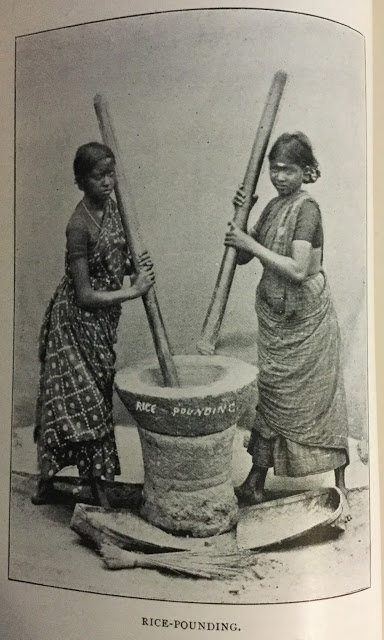
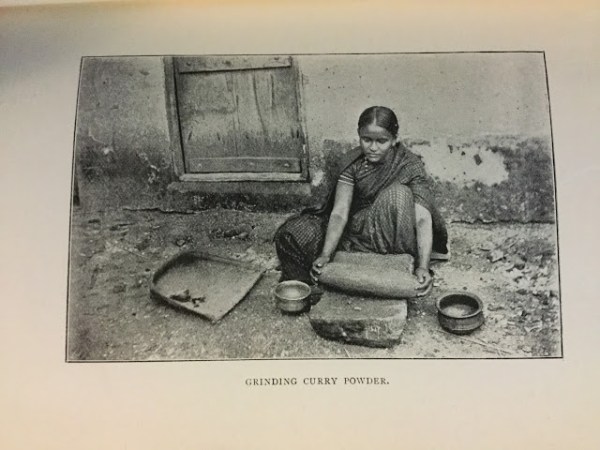
Following the female members in their daily routine, we find them busily engaged in pounding the rice and grinding the curry stuff, and dressing a few vegetables and greens in preparation for the lunch. Between twelve and one o’ clock the men return home hungry, and then there is placed before them a sufficient quantity of cooked rice, with some vegetable sauce, greens pulse – not to mention the attendant butter milk or curd/yogurt. The cooked food items are served very hot. The men cheerfully partake of this simple village meal, and then go to the outer hall and chew betel nut. Most of the times they sit on floor mats.

Then the females take their noontide meal; after which they rest for an hour, or even two, and during this time the men and the women converse together on common topics of the village. At about four o’ clock the female portion begin to occupy themselves with preparation for their evening meal, and in arranging the household things. At six o’clock Raman’s wife places a light in a hole, which is prepared for the purpose in the wall, and then prostates herself before the lamp, and smears a small quantity of ashes or kumkum on her forehead. The other members of the hose on first seeing the lamp do the same. Hurricane lamps and other portable lamps are used in different parts of the house.

About eight o’clock men take their supper, which usually consists of some pepper water (Rasam), rice and vegetables, and the remainder of the sauce that was prepared for the mid-day meal. Some people prefer light food like Uppuma, Idli or Dosa in the night. The female members follow the men in taking their supper, and all the eating for the day is over by nine o’clock and then they all retire to bed.

One day’s life of Raman and his family is a picture of all, for only slight differences are made even on festival days.


It is common among the women of the village to make their own fuel by making cow dung cakes. They use it in the fire place or mud ovens along with some fuel wood. Some are also engaged in in their leisure hours at the country spinning machine. Sometimes they go to the fields, and assist at the work which is being done by the labourers.


It is a very common thing to find uncomfortable relations prevailing among the village mothers-in-law and daughters-in-law. Perhaps ten out of hundred only have good relations and peace at home. Sometimes they may even be seen fighting like beats of the filed using vulgar village language, holding in their hands each other’s hair. Still, it must be understood they are not to be regarded as enemies until their death Today they fight one another, tomorrow they laugh together. One day’s fighting does not destroy another day’s peace.


observing the varied duties of and claims of our friend Raman, we cannot fail to admire the laborious spirit of this village cultivator. He is busy with many things. He has the care of his family, as he is the head of his house; and he has to direct his farm laborers and his brothers in attending to the work of the field. He must answer to the different calls of the village officers. He is invited to a wedding or to a funeral in his own village or to some distant village where he has relatives or friends. On some of these joyful or sorrowful occasions he takes his wife with him. Sometimes, if he is ill or otherwise engaged, he sends his wife or mother with one of his brothers to represent his family. There are many calls on Raman’s poor purse. The priest, the beggars, the poets, the pious, the guests, the village policemen, the medicine men, the weddings, the funerals of his relatives  — all of them have a share in Raman’s earnings. For all the transport between villages they use bullock carts. They are always kept ready for any emergency.

Source: Indian Village Folk by T B Pandian, Year 1897,London

–Subham–


Tamil’s Cruel Cock Fight! ( Post No.3442)

Written by London swaminathan


Date: 12 December 2016


Time uploaded in London:-19-59


Post No.3442


Pictures are taken from different sources; thanks.


contact; swami_48@yahoo.com


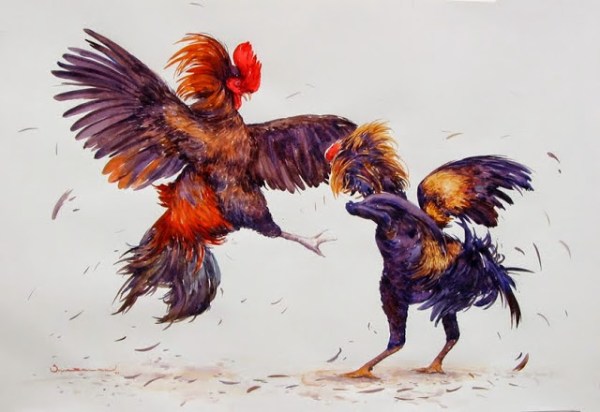
Tamils have been organising Ram fight, buffalo fight and cock fight for the past 2000 years ago. A poet by name garbage cock (Kuppaik koziyaar) had used a simile of fighting cocks in the garbage. The commentators described the cock fight organised for the public and the useless fight among cocks in the garbage. The heroine of the poem compares her condition to a cock which fights in the garbage Kuruntokai Verse No.305 by Kuppaik Koziyaar.

Kamban who wrote Ramayana in Tamil gives a list of recreational activities in the Kingdom of Kosala and one of them is cock fight. Actually, he attributed everything that was common in the Chola country to the Kingdom of Kosala. Kamban describes the cocks fitted with knifes fighting with one another in detail (Balakandam, Kamba Ramayan).

How the cocks are trained:

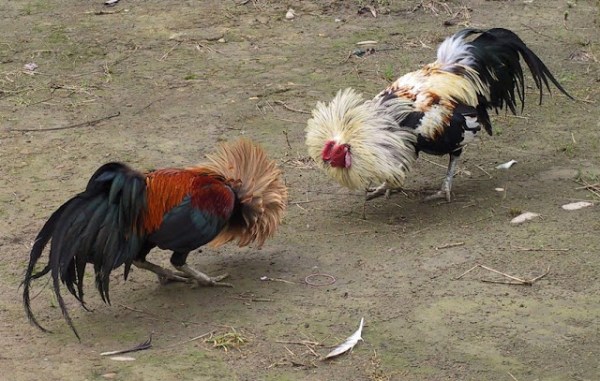
Probably there is not a people on the face of the earth, whether rich or poor, cultured or uncultured, white or black that does not find time for recreation or amusement. Tamils have several amusements and recreational activities and one of them is the barbarous and cruel cock fighting.  This is a common thing in almost all the villages. The fighting cocks are of two types – the country breed and the Moghul breed. the Moghul breeds are fine, strong and well-made birds. They are kept in separate places, and not allowed to see each other. if a villager is a well to do man, he keeps five or six of these cocks. if he is a big landlord, he keeps about a dozen, and he engages a special man to look after them. His duty is to feed them both morning and evening, and to give them water at noon. Besides this he must spend ten or fifteen minutes with each cock in the evening in wetting their necks well with cold water, and specially in pressing with both his hands the neck of each cock. He takes each cock to the tank, and dis the whole body well into water, and lets it swim for a while. This kind of preparation goes on for some time before the owner ventures to take them to the fighting ground. The country breeds are also prepared in the same manner, except for rubbing of the necks.


The spot for fighting will be fixed according to the convenience of the villagers. The parties always chose a place where there is plenty of water and shade, and as far as possible away from a village. To this fighting amusement the fair sex and the Brahmins do not go, but the men of all ages are exceedingly fond of it. Some of them travel miles in order to see the cock fight.


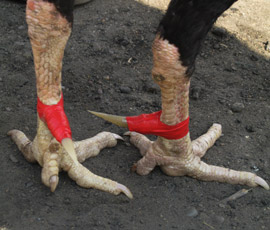
The fight commences at 10 O’clock in the morning. A pair of cocks is set up Each of these belongs to a different party, and generally they do not care to fix matches between cocks of the same village. One of these fights is known as Vetrukaal por; the other is called Kathi por. In the former the cocks are engaged in without having any double edged, small knife attached to their right legs; but in the latter kind they have the knives, and this makes it a most cruel and terrible scene.  Soon after these cocks are set up, they severely wound each other, and one of them dies or runs away, the fight is ended. The defeated cock is always presented to the owner of the conqueror.

In the case of the cocks fighting without a knife, one of the cocks either must die or run away. The owner of the cock which conquers its opponent is entitled to the defeated cock or to a certain sum of money.


If a man in a village has a champion cock, it rouses the envy of the people of other villages, who spends a lot of money in purchasing a proper match to it. There is a great deal of skill shown by the men who catch the cocks with knives, even while they are flying against each other. Sometimes, the men are severely wounded while thus attempting catch the cocks. This must be regarded as a most cruel and degrading way of getting amusement.

Source: Kamba Ramayanam, Sangam Literature, Indian Village Folk by T B Pandian, year 1897.

–Subham–


Eaten but Fasting! Had Sex but Celibate Story! (Post No 3445)

Compiled by London swaminathan


Date: 10 December 2016


Time uploaded in London: 6-18 am


Post No.3435


Pictures are taken from different sources; thanks.


contact; swami_48@yahoo.com


This story is available in Tamil in my blog.


“Once upon a time there was a king. The king had a bother. The brother had left the king long ago to go and become an ascetic. Having received blessings and powers through his tapasya(penance) he returned and lived on the other side of the river from the royal palace. He lived in a mud hut as an ascetic, as a sadhu.


The king’s wife became pregnant. Now, in India there is a tradition that a pregnant woman should spend her time in spiritual pursuit, so that a spiritually awakened child is born. As there are certain practises, certain things the woman does during pregnancy, which the family helps to make it possible. The king’s wife had the strong desire to sit at the feet of her husband’s brother the saint. She expressed this desire to her husband. “Oh yes”, he said, “go tomorrow and spend the day with my brother on the other side of the river.”


The tradition is that you never go to a holy man, empty handed, you always bring him some gift, some fruit, some such offering. So in the morning before leaving, the King’s wife prepared some food and was ready to go.


As she had to cross the river, she said to her husband, “Have you arranged a boat for me?”. He said, “What do you need the boat for?” She said, “to cross the river”. He said, “no you don’t need a boat. Jus go and standby the river and do a sacha kiriya, an act of truth. She said, “What act of truth? I don’t have any powers”. He said, “Take mine. Go, standby the river, close your eyes and say in your mind, since my husband the king was initiated by his Master three years ago, if my husband has never broken in celibacy, by the power of that truth. may the river part and let me go across dry.”


The king’s wife was very puzzled because she was carrying his child,but she went and stood by the river and made the act of truth. And right in front of her eyes the river parted and made way for her to cross. She could not understand it.


She went to the sadhu, served him, received his teachings, fed him the food she had prepared and in the evening it was time for her to return to the palace. But again she had no way to cross the river. The sadhu said, “Do a saccha kiriya, an act of truth. Stand by the river, close your eyes, and say in your mind, ‘if the sadhu, the Master whom I have served this day, has never since his initiation by his Master broken his fast, may the river part and let me go across.’


The king’s wife was again puzzled because she had been feeding him the whole day. But she went to the river and did the act of truth, for the second time, the river parted and she went across. . Now, really confused, she went to her husband and asked, “What is going on? I am carrying your child and you make me  swear by your three year celibacy. I fed the sadhu, your brother, the whole day and he makes me swear by his fast”.

Then the king, who was also a wise man, explained, “Lady mind is a vast force. If in one little corner of the ocean there is some small amount of dirt, the rest of the ocean is still clean and pure. Mind is even vaster and deeper than the entire ocean. Others live by only that little part of the mind, which is active. They see only that part of the ocean, the tiny corner where there is some dirt. So to them the mind has no fasting and the mind contains no celibacy because they have been breaking the vows. For them, that little portion of the sea dirty, the whole sea is dirty. Those who are on the part of enlightenment know the rest, the vast expanse, of the mind. And with that awareness the little indulgence in marital duties or the little eating in the day does not break their celibacy and does not break their fast. Myself and my brother, I as a king and he as an ascetic, have understood this and in the major portion of our minds we are always celibate, always fasting, always silent”.

What is sacha kiriya?


“There is a word in in Hindi, kiriya. It is used when someone swears by something. it is short for saccha kiriya, that is an “act of truth”. An act of truth is performed by using the accumulated power of  some form of secret you have kept for a long time. There are many stories about “acts of truth”.


Source: Five Pillars of Sadhana by Swami Veda Bharati (Formerly he was Prof.Ushar Budh, Head of the Department of Sanskrit, University of Minnesota,USA)


–Subahm–

Kurathi- Tamil Soothsayer and Bull Fighting Floats in Tamil Procession (Post No.3430)

Compiled by London swaminathan


Date: 8 December 2016


Time uploaded in London: 13-28


Post No.3430


Pictures are taken from different sources; thanks.


contact; swami_48@yahoo.com


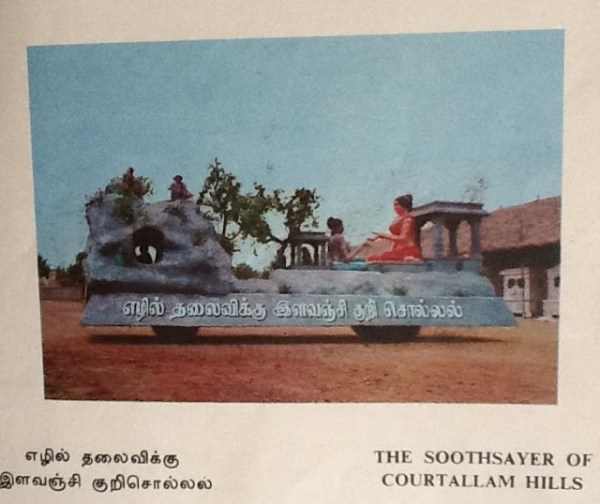
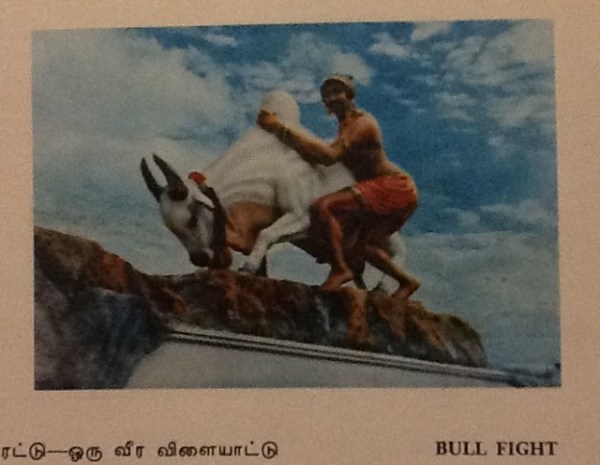
Following are the floats (tableaus) in the Fifth World Tamil Conference held in Madurai in 1981
THE SOOTHSAYER OF COURTALLAM HILLS

Kuravanchi is a conventional form of Tamil poetry which blends together some of the ways of life of the elites with those of the hunters. Tirukuta  Rasappa Kavirayar, a Tamil poet from Melakaram, near Tenkasi in Thirunelveli District, has composed Kutralakkuravanchi which is considered to be the supreme example of this genre of Tamil poetry.


It portrays Lord Siva coming in procession accompanied by his devotees against the background of the natural tapestries of the captivating hills of Courtallam, its flora and fauna and its beautiful waterfalls. With its excellent rhythmic beauty, sensuous style, flexible and tender poetic diction it also depicts the heroine Vasantha Valli falling in love with Lord Siva. She is so captivated by the charms of the handsome Lord that she suffers from insomnia and mental agony which a girl faces due to the pangs of separation from her lover. At this juncture, a woman soothsayer from the hunter’s tribe of Courtallam arrives there singing the beauty of Courtallam and the transcendental glory of the Lord. The words of the foreteller console Vasanthavalli and give her the hope of marrying the Lord. This tableau depicts the foretelling of the soothsayer.


xxxxx


KURINCHI


The ancient Tamils have classified the landscape into five divisions namely Kurinchi (Hilly region), Mullai (Pastoral), Marutam (Plain), Neytal (Coastal region) and Palai (Wilderness). While dealing with the poetic conventions of the love poems, they have assigned the Mutarporul (i.e. time and space), Karupporul (i.e. the flora and fauna) as well the Uripporul (i.e. the human drama which forms the poetic theme) for each division of lands. This tableau depicts an event wh ich normally happens in the ancient Kurinchi poems. In the human drama of love, Kurinchi depicts love at first sight. Eventhough the damsel is anxious to embrace the hero, out of her feminine quality namely “nanam” (shyness), she feels reluctant to come near the hero. At this juncture, a ferocious tiger comes on the spot. The fear of the tiger makes her cast away her shyness. Without any second thought she takes refuge in the broad chest of the hero, who protects her and drives away the tiger by his arrow.
xxxx

BULL FIGHT


Bull fight is one of the heroic sports of the Tamils and has its origin in a very hoary past. In Mullaikkali of Sankam anthology we come across some instances of the hero grappling with a bull and conquering it as a test of bravery. The damsels of the ancient Tamil pastoral used to bring up wild bulls. They were given in marriage to the suitors who successfully conquered their bulls.


According to Mullaikkali, the girl of the pastoral land would not even think of the defeated man as her husband in anyone of her various births. This scene depicts a hero who tries to conquer the bull and a heroine who waits anxiously to garland him after his victory. This sport is in vogue in many parts of Tamilnadu, especially in some parts of Madurai as a sport under the popular name Manchu Virattu.
xxxx


THE HERO AND THE LANCE

Thiruvalluvar, who glorified agriculture describes a heroic battle in one of his couplets as: “At elephant heads his lance, for weapon pressed He laughs and plucks the spear from his breast be Slaying the elephant in the battle is considered to a supreme kind of heroism by the Tamils. A hero who was nurtured in this heroic tradition fought with an elephant in a battle. He threw his lance on the frenzied elephant which fought fiercely with him. The elephant fell down. When he turned with pride, the victorious hero was hit by the spear of an enemy. At the same time, an elephant also attacked him. Finding no lance ready with him to attack the elephant, he removed the spear which had pierced into his body to throw it on the enemy elephant. Removing the spear, he gloats over the fact that he has a weapon to fight the elephant. Tirukkural describes this thrilling episode and the tableau depicts it.

–Subham–
A Fish Inspired Balamurali Krishna to compose a Krti (song)! (Post No.3417)

Written by London swaminathan


Date: 4 December 2016


Time uploaded in London: 15-13


Post No.3417


Pictures are taken by ADITYA KAZA; thanks.


contact; swami_48@yahoo.com


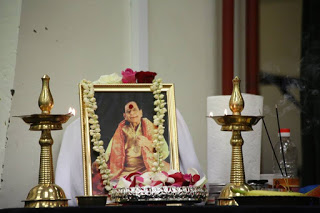
A Sraddhanjali meeting was organised by Violinist Mr Nagaraju and his team in London yesterday to pay homage to the departed musician Dr Balamurali Krishna. All the famous musicians of London were present and paid homage to the departed musician by singing his krtis. Dr Nandakumara, Director of London Bharatiya Vidhya Bhavan was the main speaker. Violinist Nagaraju, Mrdangist Karaikudi, Krishnamurthy London Swaminathan, Mr Prabhakar Kaza and Jagatheeswaran Pillai spoke on the occasion. Ms Bhanu sistla compered the programme. Young and budding artistes also participated in the event.


Now I give a gist of what I (London Swaminathan) said in my speech: –


Good Evening, Namste, Vanakkam, Namskaram


I recite Vishnu Shasranama everyday and my wife plays Lalitha Sahsranama everyday while she cooks. Today I listened to the Balamuralkrishna “Ashtottarm” (108 names) for the first time! Mr Nagaraju has ‘recited’ (actually recalled) all the titles of the great master Balamurai—so many titles and awards! – it is like an ashtottaram on a god! That shows how great he was.


Thank you Mr Nagaraju for inviting me to this event. I am neither a musician like Mridangist Krishnamurthy sir nor a musicologist like Dr Nandakumara. They gave us very interesting anecdotes though their personal contacts (the interesting titbits are at the end of this article). I am going to approach this matter as a layman. I will tell you one film song, two anecdotes and three couplets from the Tamil Veda Tirukkural and see where and how Dr Balamurali fits into it.


Dr Balamurali Krishna was known to every music lover in Tamil Nadu, but not to laymen. When his song Oru Nal Pothuma (Is one day enough) came in the Tamil Film TIRU VILAIYADAL, he became very famous and popular. A great lyricist Kannadasan wrote this film song and was sung by Blamurali Krishna. The lines in the song have come true today. Knowingly or unknowingly Kannadasan put some words in the mouth of Balamurali Krishna. Here are some lines from the song:-

Tamil Film Song Lines:
OrunaaLpothumA? Is a day enough?
Indr-oru naaL pothumA? Is this day enough?
Naan paada indr-oru naal pothumA?
Is this day enough for me to sing?
………

……….

Gaanam- ah? Deva gaanam-Ah?
Song? is it a heavenly song?

My comments: Very True. His songs are heavenly songs

Enn Kalai-kk indha thiru naadu samam aagumA?
Will this country ever be equal to my art?
Enn kalai-kk indha thir naadu samam aagum-ah?
Will this country ever be equal to my art?

My comments: Very true. Not even a country will be equal to his songs
KuLaL endrum yaaLl endrum silar kuruvar
Some describe it (voice) as a flute or YaLl
Enn kuraL kay-ta pinnalay avar maaruvar
They change (their opinion) after they  hear my voice
My comments: I am going to refer these lines in the Tirukkural next. Neither flute nor lute will come nearer to his divine voice.
ALiyatha kallai endru ennai paduvar
They praise me as an indestructible art
Isai kett-ka eLinth-thodi varuvarr endro
To hear (my) music (people) come running
ELinth-thodi varuvarr endro —- Come running
My comments: These lines also came true. He was listened to by thousands of people wherever he went. And Balamurali finished his gong in the film by saying ,

Issai theivam naan aDa           I am the god of music!


It is very true. Earlier speakers described Balamurali as an avatar (incarnation) and a Sangeetha Sarvapauman.


Now to the episodes which I read in Wikipedia


Balamuralikrishna learnt violin by listening to his father playing the instrument.

“Since my father was against me playing violin, I created my own instrument. Once I summoned courage and played his instrument in his absence. When questioned by my father I admitted and played Bhairavi ata thala varnam.  My father was impressed and allowed me to play the instrument,” he had recalled in his biography Sangita Perunkadal, penned by Ranimynthan.


When K. Balachander directed Apoorva Ragangal, he told M.S. Viswanthan to compose a song in a rare raga to justify the title of the film. It was Balmuralikrishna who helped him compose the song Athisaya Ragam in raga Mahathi. His other creations are raga Sarvashri, Lavangi, and Sumukham.

He also scored music for the first Sanskrit film Adi Sankarar


I wanted to quote

Three couplets from the Tamil Veda- Tirukkural written by Tiru Valluvar:-


1.ONLY THOSE WHO HAVE NOT HEARD THE MELODY OF THEIR CHILDREN’S LISPING PRATTLE, WILL SAY THE MUSIC OF FLUTE AND LUTE IS SWEET -66


2.THE JUST AND THE UNJUST COME TO BE KNOWN BY THE REPUTATION THEY LEAVE BEHIND -114


3.IF ONE TAKES BIRTH IN THIS WORLD ONE SHOULD COME WITH QUALITIES WHICH BRING FAME; IF NOT IT IS BETTER NOT TO APPEAR AT ALL -236


Let us see how great he is in the background of these 3 couplets:

He lived for 86 years. He learnt music when he was six and gave his first concert when he was nine years old! That means he dedicated 80 years of his life for music—for the development of classical music. We cant find a parallel to it in the music world.


He has garnered two National Film awards, the Sangeet Nataka Academy award and Padmavibhushan and many more awards. He gave 25,000 concerts in his life time which are available on records, tapes and You Tube. It will inspire generations to come. He spoke many languages in addition to his mother tongue Telugu.


WHAT DID HE LEVE US

Balamuralikrishna had over 400 compositions to his credit and is one of the very few people to have composed in all the 72 Melakarta Ragas and has created several ragas, with 4 notes and 3 notes and also has invented a new Tala system. His compositions encompass every facet in Carnatic Music that includes Varnas, Krithis, Thillanas.


So like Valluvar said, a man’s greatness is decided on the basis of what he leaves behind. He left us a big treasure. Valluvan said if you are born, lead a glorious life which Balamurali did.

People who listened to him wont praise flute or lute. Thus he justified the three couplets from Tirukkural.


Dr Nanda Kumara and Krisnamurthy (sir) told us interesting anecdotes. As soon as Dr Nandakumara finished his speech I requested him to write a book with these inspiring anecdotes for the benefit for the future generation. I request Sri Krishnamurthy sir also to write his experience.

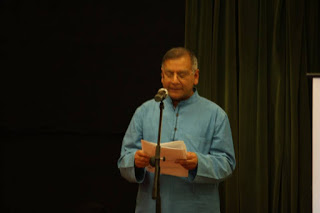
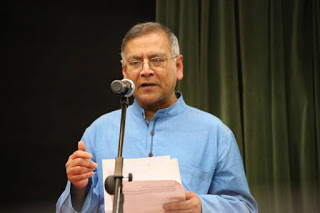
Picture: Dr Nandakumara speaking


Fish Yogurt inspired Balamurali Krishna!

Dr Nandakumara told the gathering the following interesting anecdote:-

Dr Balamurali Krishna travelled in Russia at one time. He could not have any proper vegetarian food for four days. He was staying in a hotel all alone. One day he asked the restaurant to give him at least curd (yogurt). At last they brought him Yogurt. He was surprised to see a thick fermented yogurt. He wondered how they were able to achieve it in that cold temperature. They told him,

“It is very simple sir. We put a fish in it for fermentation (as a curdling agent)!

Immediately Balamurali pushed it to one side and prayed to God.

He looked at outside through the window in the mid night. Sun shines during mid night in the northern most latitudes. When he looked at the sun he composed a Krti, Oh, Sun God you are my companion and helper (for ever).

Thus Fish Yogurt (curd) inspired Balamurali Krishna to compose a new song. Dr Nandakumara related many more anecdotes.

Picture: Mr Krishnamurthy paying homage

Mr Krishnamuthy was learning Mridangam under his Guru. His guru took many assignments but could not fulfil them due to poor health. He cancelled all those in time, but forgot his accompaniment for Dr Balamurali. The Sabha secretary came to him casually to remind him about the next day concert. My Guru told him that he could not come. When the Sabha secretary told that it was too late to approach anyone and asked whether me (MR Krishnamurthy) could accompany Balamurali on Mridang. My Guru told him that he had no objection but Balamurali must give his consent. Sabha (Music association) secretary came with the good news that I could play Mridangam for Balamurali sir. But I survived only with his (Balamurali’s) support on that day.


My comments

Later I also referred to it and said that Balamurali was a great supporter of young and budding artistes. Every day I see in Facebook one or the other, from great singers like Sudha Ragunathan to youngest artists pose with Balamurali sir and getting his blessings.


Thank you for the opportunity given to me to pay my respects.

Thank you.


Picture: Men behind the event: Violinist Mr Nagaraju and Mr Prabhakar Kaza.

–Subham–



Mirror Images in Hindu Literature (Post No.3413)

Research Article Written by London swaminathan


Date: 3 December 2016


Time uploaded in London:12-20


Post No.3413


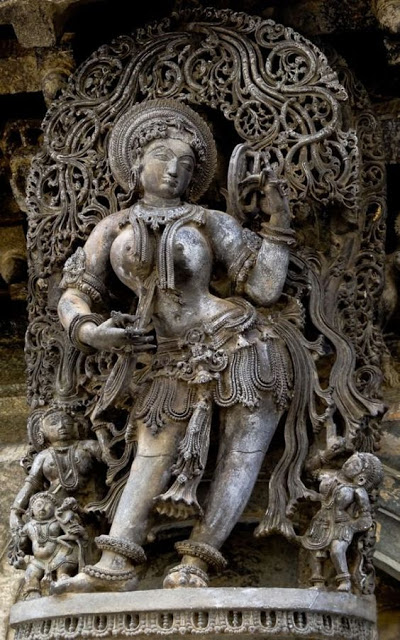
Pictures are taken from various sources; thanks. They are representational.


contact; swami_48@yahoo.com


Tamil version of this article is also posted.


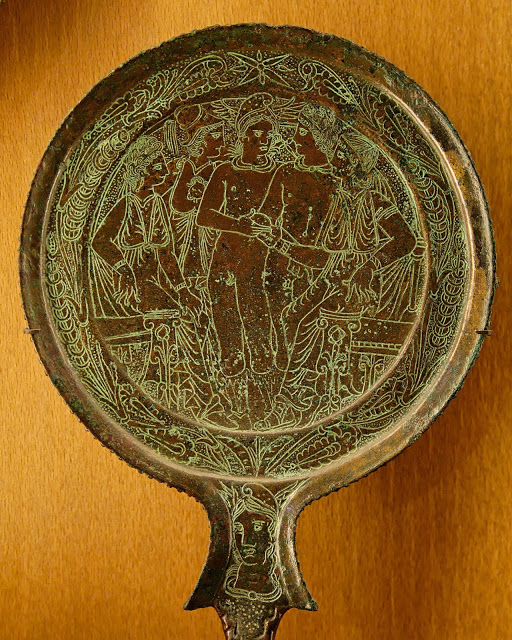
Mirrors have been used by us from time immemorial. it is found in all the ancient civilizations. Etruscan mirrors are famous for their engraved mythological scenes on the back of the mirror. In ancient Mexico Aztec god Tezcatlipoca was called smoking mirror.


The mirror has got special significance in the Shinto tradition of Japan. It is an attribute of the sun goddess Amaterasu. A sacred mirror is handed to each new emperor.


According to one tradition, the mirror bears the Hebrew inscription of “I am who am”.

Psychologists have different interpretations for mirror images.

In Hinduism mirror is considered one of the auspicious objects. As soon as they get up in the morning they look at their right-hand palm or a mirror. Young girls are invited to homes and mirror, comb and Kumkum are distributed them during Navratri festival period. On the new year day, they look at the mirror when they wake up. When the god’s statue is taken in palanquin procession through the city streets, a mirror is placed in front of the idol so that people can see it from different angles. If mirror is broken by fall they consider it as an ill omen.


Mirror in Gita and Kalidasa

Mirror is used as simile from the days of Mahabharata. Krishna, Adi Sankara, great poet Kalidasa, Tamil poets Tiruvalluvar, Tolkappiar, Kapilar and many more use it for imagery.


They send various messages through mirror imagery.

Lord Krishna says in Bhagavd Gita (3-38):

“As fire is enveloped by smoke, as a mirror by dust, as an embryo by the womb, so this wisdom is enveloped by that (desire or anger)”.


Swami Chinmayananda gave a detailed commentary on this couplet. He says though they look similar, they are not. Repetition is an unpardonable crime against the scriptural style and the Gita faithfully follows the immortal style common to all religious books. There is no redundancy or wasteful repetition in the Divine Song.

The first image ‘fire by smoke’ is sattvic/good. Even the sattvic desires veil the infinite glory of the Spirit.

The second image ‘ as dust on a mirror” illustrates the veiling  caused by agitations that cover the purer intellect due to our thick desires for glory and power. So it is Rajasic/passionate.


The last imagery, as the foetus in the womb imagery, is tamasic/bad. This is an illustration to show how completely the Diviner aspect in us is screened off by the low animal appetites and the vulgar desires for the sensuous.

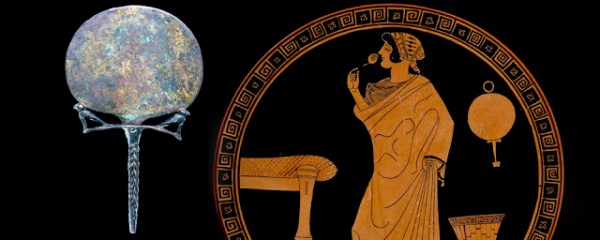
Picture of Greek Mirror

Kalidasa

In the Raghu vamsa, Kalidasa imagines the face of Indumati (7—68) to be like a mirror. The face of Indumati shone with joy when freed from the sadness arising from the adversary. The mirror also resumes its brightness by the disappearance of moisture.


When the wind, charged with rain drops blows, a mist like moisture gathers on the surface of the mirror which obscures in transparency, similarly the infamy of the acceptance of Vaidehi who had dwelt in the house of Ravana which is a stain now come upon the royal family sprung from the sun and pure by virtues of good conduct (Raghu vasa 14-37).

in Sakuntam drama also Kalidasa used this image (AS 7-32)


Adi Shankara says in his Viveka Cudamani (291):-

That in which there is this refection of the universe, as of a city in a mirror – that Brahman are you; knowing this you will attain the consummation of your life.


This refection of a big city or some object in a small mirror has been used by Tamil Poets Kapilar, Tolkappiar and Tiruvalluvar. It looks like it is popular imagery.


Famous Tamil poet Kabilar, in the laudatory verse Tiruvalluva malai, praised the book Tirukkural and compared it to a small dew drop on a grass tip reflecting a big tree nearby. Every couplet of Tirukkural reflects big things like this.

Picture of Etruscan Mirror

Face is the index of the mind!


Tiruvalluvar himself used the mirror image in his work Tirukkural:-

The mirror reflects nearby objects; even so the face indicates emotions throbbing in the mind (Kural 706).


Tolkapiyam, oldest Tamil book, also used similar image. When the author Tolkappiyar explained what a Sutra (an aphorism) is he used this beautiful simile (1425)

A sutra is like a big mountain reflected In a mirror, shows/explains everything.

There are innumerable works where we come across mirror or looking glass in Tamil and Sanskrit works. I have already written about the Mirror Temple constructed by Sri Narayana Guru, a social reformer of Kerala. Big temples in Tamil Nadu has a beautiful mirror room for god where the idol is reflected thousands of times. Though God is one we see him in 330 million ways- that is the message these mirror rooms convey.


Mirror Temples! Hindu Wonders!! (Posted on 3 October 2013)

—Subham–


Rapist on run gave up after being fed! Food + Kindness melt even Criminals! (Post No.3410)


Written by London swaminathan


Date: 2 December 2016


Time uploaded in London: 14-06


Post No.3410


Pictures are taken from various sources; thanks. They are representational.


contact; swami_48@yahoo.com


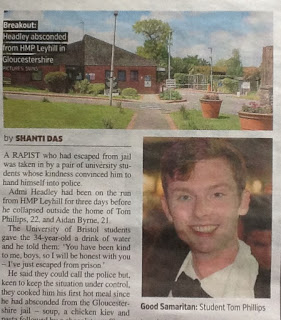
Rapist Admi Headley, 34, absconded from HMP Leyhill on November 13 

  • He later collapsed outside home of students Tom Phillips and Aidan Byrne 
  • The convict opened up to the two friends as they gave him a hot meal
  • Students later convinced him to turn himself in and took him to the station


Escaped rapist on the run from prison saw the error of his ways after he was taken in by students who gave him a chocolate muffin and a chicken kiev and listened to Jay Z with him.


A rapist who escaped from prison turned himself in after he was taken in by two university students.


Admi Headley, 34, collapsed outside the home of University of Bristol students Tom Phillips, 22, and Aidan Byrne, 21, on November 16, three days after he absconded from HMP Leyhill in Wootton-under-Edge, Gloucestershire (United Kingdom).


The students invited Headley into their flat and fed him soup, a chicken kiev and a chocolate muffin. They also put on rap music after Headley said he was a fan.


Over three hours, Headley opened up about his time in prison and the students were eventually able to convince him to hand himself into police.

They even accompanied Headley to the local station, where he hugged them before being taken into custody.


Mr Phillips, a physics and philosophy student, told student newspaper Epigram: ‘Any crime of that nature is horrific, however all we could see was the person in front of us.


‘The person that I saw was someone who I felt needed food and water, and that is what we gave him.’


The convict also told the friends he had not spoken to his ex-girlfriend or 12-year-old son in nine years.


He gave Headley his mobile phone and listened as he spoke to his son. Headley reportedly said: ‘Do you know who this is? It’s your father. I’m sorry that I haven’t been there for you, but when I come home I will do anything for you.’


A tearful Headley told the students how he had converted to Islam in prison and carried a set of prayer beads with him at all times.


They said that he also carried a contacts book with the name of every friend he had made in jail, and the address and phone number of the friend’s mum.


At one point Headley told the students that they could call the police but, keen to keep the situation calm and under control, they said they wouldn’t.


Instead they cooked for him, listened to music and chatted for hours.

Mr Phillips said: ‘I didn’t consider kicking him out but it was in the back of my mind that at some point he would have to leave.


‘I was desperately hoping that he would just go somehow, but he himself said, ‘I will be off in a minute’ – and he did eventually.’


He added: ‘He made the decision himself, although he asked us, ‘Do you think I should probably hand myself in?’ and we said yes.

‘I said, “The sooner you’re in, the sooner you’re out. The longer you leave it, the worse it will be”.


Avon and Somerset Constabulary confirmed that Headley attended a Bristol police station on the night of November 16 and handed himself in.

Mr Phillips added: ‘If he ever gets hold of this article, we want to thank him.

‘Now that I’ve reflected, I would like to thank him because he trusted us and he was honest with us and he gave in a very short time a huge amount to us.


‘He gave his life story. That is no small thing.’


My Comments:–


Hindus always do Annadhana (Serving food to all) in the temples and in the community on festive days. Some people used to criticise this good gesture as supporting lazy people. but the people who it believe that even if one good soul takes the food, that will help the entire town or community here in this story we see that even a rapist is moved after the kind food served by the students.


in Tamil these is a verse saying that when one is hungry one loses ten virtues. that also confirms when one is not hungry he can think logically.


moreover kindness always cure several problems. Tamil poet Tiruvalluvar says in his book Tirukkural


affection cannot be controlled by shutters;

uncontrollable tears will rolldown spontaneously

when one sees the sufferings and sorrows of the loved ones (Kural 71)


–Subham–



My Challenge to Dalits in Britain (Post No.3390)


Mr Krishna Ralleih speaks


Written by London swaminathan


Date: 26 November 2016


Time uploaded in London: 7-51 AM


Post No.3390


Pictures are taken by Mr Prabhakar Kaza and Mr Aditya Kaza; thanks.


contact; swami_48@yahoo.com


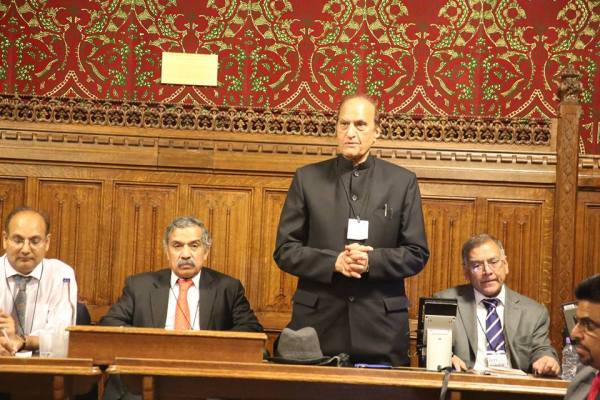
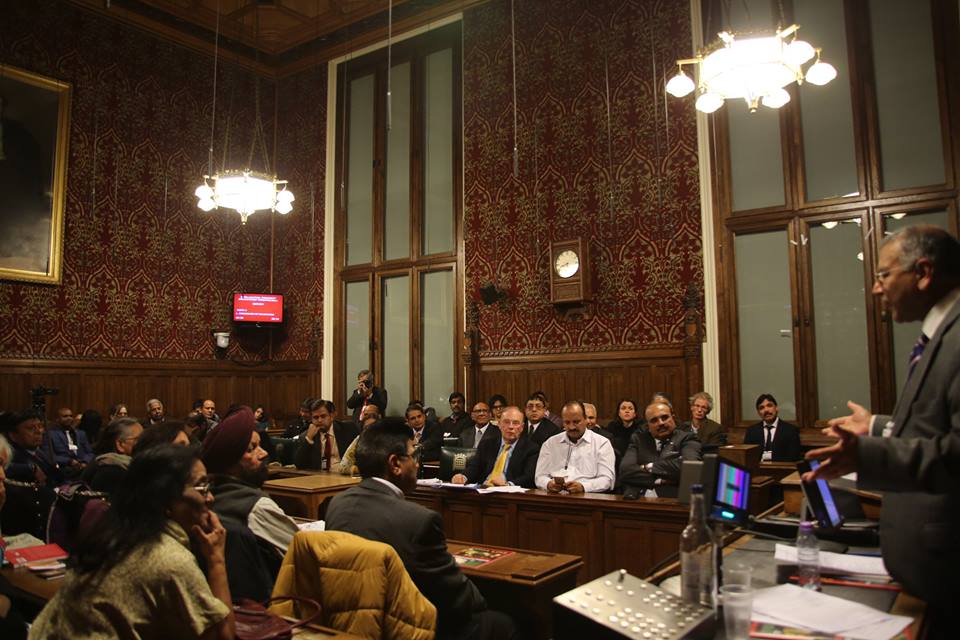
Part two of my speech at the British Parliament (Building, committee room 12, date 23-11-2016)


Please read the first part of my speech, posted here yesterday.

Friends,

What will happen if the word CASTE is included in the equality Law?

Christians will use it to convert the Hindus in Britain,

Solicitors will make money by inducing Dalits to file compensation cases. We see a very big compensation culture in this country.

Dalits will use this to get financial aid from some organisations. Domestic servants who came from India will use it to stay in the country permanently and get British citizenship.


Politicians will get more votes if there are more Dalits in their constituencies.

Society will be more divisive

There will be a permanent black spot on Britain

That will be the blackest day in British history because you yourself admit that there is a caste issue in this country.


My friends,

This is the only European country, nay, only country in the Western world that admits that you are suffering from caste discrimination. No other country in Europe has such a law.

There are one million Tamils living in and around Paris. All of them went from Pondicherry, from my part of the world. They did not enact any law regarding caste discrimination.


So if you enact a law like this, it will be a permanent black patch on British society, particularly Hindu community.


Like I said in my two stories, you can solve this problem like Lord Krishna or the King who ordered shoes for everyone in his kingdom.


What we need is change of attitude, change of mind set, education and creating awareness on this issue, where it exists, if it exits.


Now I throw you a challenge! Get out of this hall and ask 100 Hindu youths at random about caste discrimination. They will tell you they don’t know anything about it.

The younger generation do not know anything about it. If you include the word CASTE, you will be poisoning their minds.

Shout from the audience:

At this point, one gentleman in the audience raised his hand with a book, and said It is in this book.

Then I shut his mouth by saying “who wrote the book? It is we who write the book”.

Immediately others also pointed out, that there is Q and A Time and he has  to wait.

I continued…….


Right. You enact the law. What will be the result?

Did all the laws work in this country?

Anti -drug laws are there; but they are ineffective. We read news items that it did not work. Even inside prisons they can get drugs causing enormous problems. Drug abuse is even legalised in some countries.

There is anti- terrorism law; but the Metropolitan police chief himself issued a warning recently: if you hear any bomb explosion run as far as possible or hide yourself somewhere safe; don’t do any stupid things (like taking selfie pictures of pictures for Facebook) There is no guarantee for your safety.


That is why I tell you to change the attitude, mindset by educating them.

Let us spread the message of love and kindness.

Thank you.

(I was happy that they listened to me and gave me a big round of applause, though the hall had more Dalit supporters. They were very vociferous when the Dalits accused the caste Hindus)

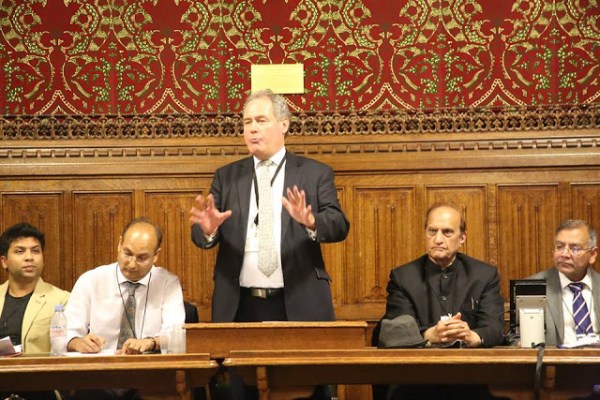
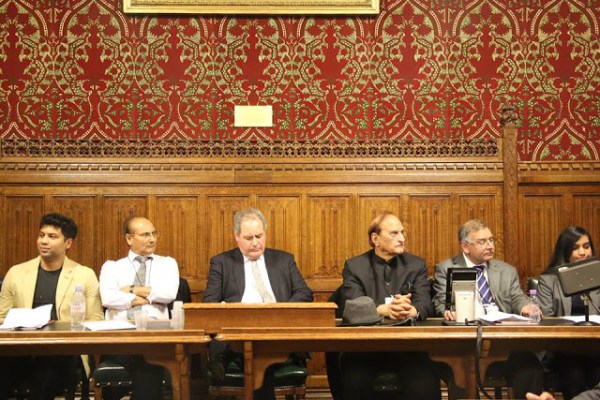
A great Friend of the British Hindus, Bob Blackman MP, speaking


There were other speakers: Mr Satpal Murman, Mr Ram Morla, Mr Saunvedan Aparanti and Mr Geaorge Kunnath who supported amending the law o include the word CASTE.


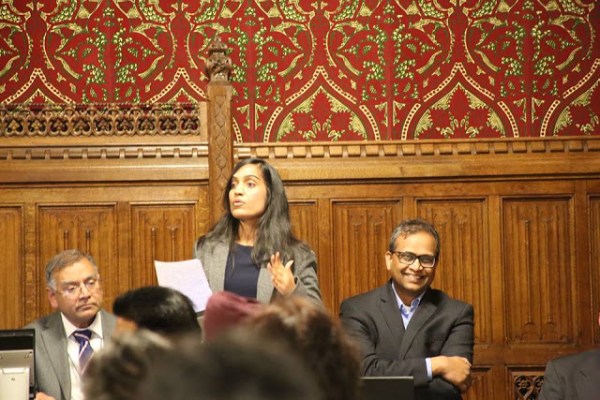
Miss Ridhi Vyas, myself Santanam Swaminathan, Mrs Trupti Patel and Mrs Satish Sharma opposed the inclusion of the word Caste.

Mr Bob Blackman MP and a great friend of the Hindus, opposed it. Mr Veerendra Sharma MP could not attend it due to some urgent work in his constituency.

Earlier Mr Prabhakar Kaza welcomed the gathering and Krishan Ralleih ,Founder of the IFBM, explained the activities of the organisation and the purpose of this meeting.

Ms Bhanu Sistla introduced the speakers and conducted the seminar.

It was well attended and well received.

Ms Ridhi Vyas speaking


What I did not say:

Though it was in my written notes, I didn’t say the following, for lack of time and propriety:

India is a land of wonders; not only for its natural beauty, cultural diversity and beautiful temple architecture. It is a land of wonders because of its castes. No one was able to tell us how and why the castes divided or multiplied into thousands. We see only four castes in the oldest book in the world- The Rig Veda. But now we have 40, 000 castes. How and why it happened, no one could tell us. Recently I have been doing some research about the Badaga community in Tamil Nadu. This small hill tribe has got 20 castes in the group! That is why I call it a land of wonders.

All of us want a society where there is no discrimination on the basis of one’s birth. “All are born equal but some are more equal than others”. Look at us. We all respect Her Majesty the Queen, whose post is decided by birth. Neither I nor you can become king or queen in this country. It is decided on birth in the royal family.  But we all accept it. Not only British, even the Australians voted for our queen. She commands so much respect from one and all. As long as it does not affect an individual or as long as the majority agree, we do such things.


–Subham–