Strange Bird Stories in Mahabharata!

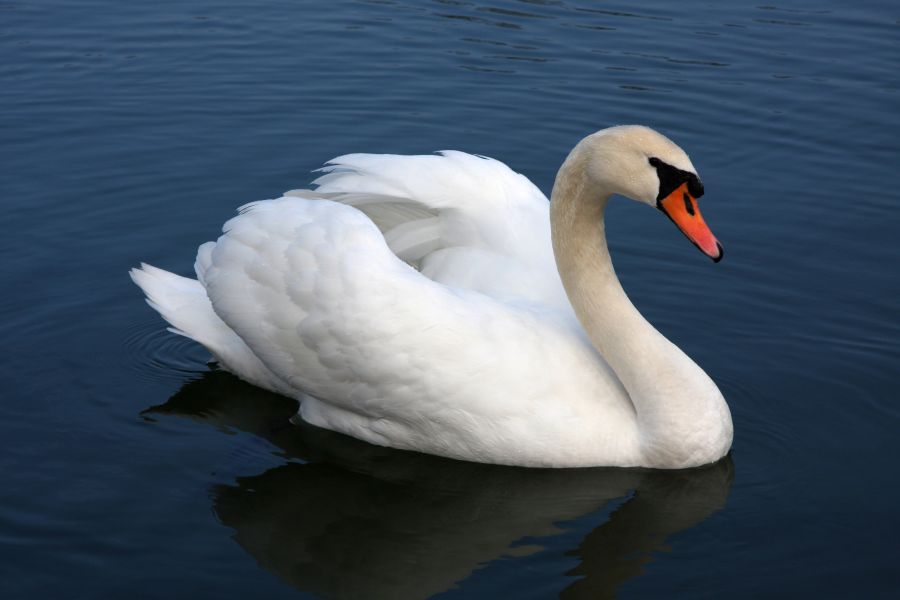
Swan

swan

Written by London swaminathan

Research Article no. 1711; dated 12 March 2015

Up loaded at 16-30 London time

Strange Animal Stories in Mahabharata! – Part 3

Part 1 and part 2 were posted yesterday and day before yesterday.

We have seen snakes, snake bites, crocodiles, and strange frog, fish and tortoise stories so far. Now let us look at some strange bird stories in the Mahabharata.


Swan

(1).Water birds appear in the Yaksha Prasna (Questions of a Ghost) story. The pond was located only when Bhima saw the water birds at a distance. Our forefathers observed nature very closely and found out lot of things through animal behaviour.

(2).Bird migration is also mentioned in the epic. When Bhisma was lying down on the Bed of Arrows, they noticed a kind of birds and commented Uttarayana is round the corner. Our forefathers found out the change of seasons by the appearance of different kinds of birds. Even today the monsoon birds appear every year in Kerala just before the beginning of monsoon on 1st or 3rd of June.

(3).Atreya, a great seer, assumed the form of a swan. Sadhya Gods approached them and asked the difference between righteous and unrighteous men. 5-36
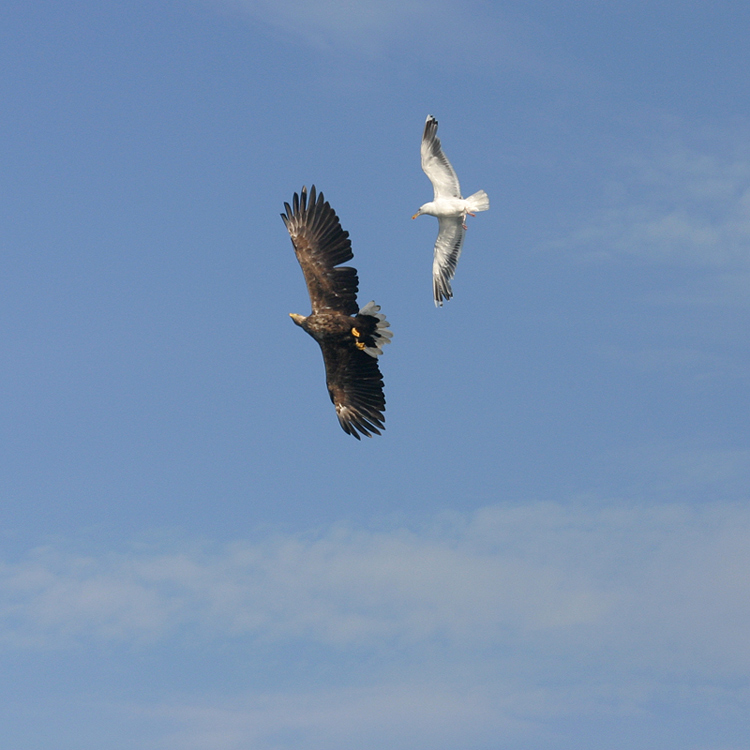
eagle-and-seagull

(4).Shibi story  (3-197 M.Bh.) is known throughout India. Purananuru, part of Sangam Tamil literature and Tamil epic Silappadikaram mentioned the story in several places and claimed that Shibi, King of North West India, was their forefather ((Read my earlier article Were Chozas Tamils?). In the story of Shibi we knew that Indra took the form of a hawk and Agni took the form of a dove. Buddhists pirated all the Hindu stories and included them in the Jataka Tales. Sibhi story is one of them.

Shibi’s son was called Kapotaroma (Dove feather) because he was made up of various fleshy parts of King Shibi (sounds like cloning or tissue culture!). King Shibi cut his body parts to save the dove from the hawk

(5).Shakuntala, who was protected by the birds, is found in Mahabharata (1-71) and Kalidasa’s most famous Shakuntalam drama.
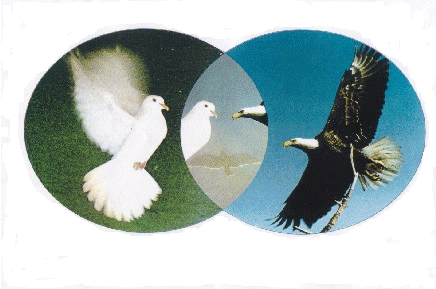
DOVE.eagle

Dove and Hawk

(6).Hindus believe that humans may be reborn as animals and birds depending upon their Karma in the previous birth. We have the story of Jarita in the Mahabharata (1-230).

Jarita (bird) was the wife of a male bird who was seer Mandapala in previous birth. She gave birth to four baby birds. Later Mandapala abandoned her and lived with another female bird known as Lapita. When Krishna and Arjuna burnt down the Khandava Vana (Gond+Vana= Gondwana ) forest Jarita escaped from the fire by flying out at the insistence of the baby birds. Baby birds also escaped miraculously from the fire. When Mandapala (in bird form) came to inquire about their welfare, Jarita ignored him and asked him to go back to his lady love Lapita. Mandapala explained that it was he who saved the baby birds from the fire and Lapita also worried about them. Then Jarita accepted Mandapala and they lived happily in another forest.

It may be just a story rather than a real life incident. But it has got many messages such as accepting a repentant and reformed husband, birds’ love and kindness, fire hazards etc. Husbands returning to their wives after spending time with another woman is a common theme in Sangam Tamil Literature. 279 verses out of 966 Tamil verses (in the love poems) are about visiting prostitutes. We should not take it literally, but the message must be understood!

(7).Asvattama set fire to Pandava’s camp at the dead of night after the war. He did this after watching owls attacking the crows in the night (10-1). The fight between the Owls and the Crows form the entire fifth book of Panchatantra fables.
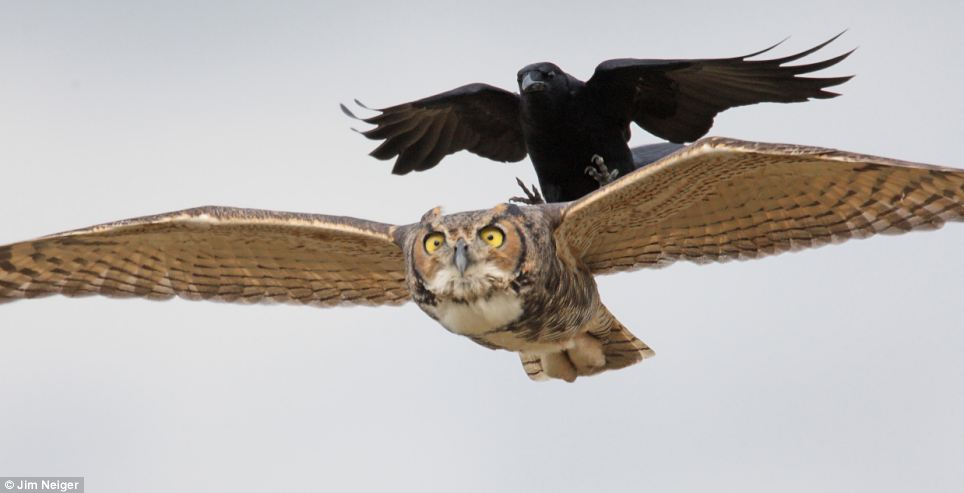
crow and owl

Owl and Crow fight

(8).Uluka (owl) was the name of emissary sent by Duryodhana to tell the Pandavas that their peace proposal is rejected. Seer Kausika (Visvamitra) also means owl. In Tamil also we have many poets with owl name (Pisir Anthai, Othal Anthai). People thought that they are the names of their towns. My view is that they actually mean the bird of wisdom owl, which is the vehicle of Lakshmi and Greek Goddess Athena. In western countries it is a very common logo in the educational institutions.

This confirms my view that most of the tribal names are totem symbols I have already given the names of Tamil poets with frog names like their counterparts in Sanskrit. Tortoise is also the name of several rishis/seers.
eagle

Eagle

(9)In the article on mysterious Sanskrit names in Sumerian books, I mentioned about Sumukha. Though Manu Smrti also mentioned the name of this king, nothing is found about King Sumukha in any Indian literature. But a Naga by name Sumukha appeared in Mahabharata (5-103). In fact it was not a snake (Naga), it was a human being with Naga symbol or tattoo.

Chikura was the father of Sumukha. He was killed by an eagle (man) before Matali chose Chikura’s son Sumukha to be the husband of his daughter Gunakeshi. The clash between the Naga tribes and the Eagle tribes is known throughout the world. We see it in the flags of Mexico, Emblem of USA and the Mayan stories.

When Sumukha got worried about an imminent attack from eagle (tribes), Indra came and protected Sumukha (Snake people). We see this clash of Nagas and Eagles in all the epic and Hindu Puranic stories.

(10).Eagle appeared in another story in Mahabharata (5-113). Shandili was a pious woman who lived on Mount of Rishaba. Once Galava and his friend, an eagle, came that way in search of good horses. When the eagle (in fact a man of eagle tribe) saw Shandili , he thought this virtuous woman should live in the heaven. The mere thought of carrying her away to heaven made the eagle’s wings to drop off. When he explained that the thought was not impure, Shandili forgave him and gave the eagle (man) more powerful wings.

flag-day-mexicol

Eagle- Snake clash

We have more such stories in the epic. Since thousands of years lapsed between the actual incidence and the writing, the original meaning was lost. Everything made to look like miracle stories.

I will conclude this series “Strange animal stories in Mahabharata” tomorrow.

swami_48@yahoo.com
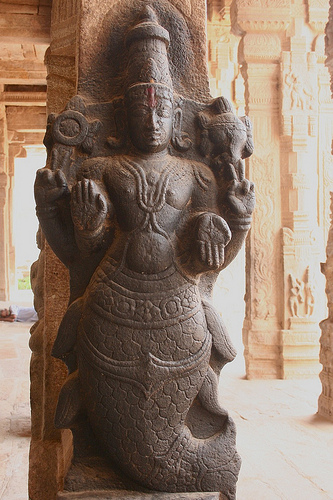
Fish, Tortoise and Crocodile Stories in Mahabharata

matya-sculpture

Matyavatar= Fish incarnation of Lord Vishnu

Written by London swaminathan

Research Article no. 1709; dated 11 March 2015

Up loaded at 20-35 London time

2.Strange Animal Stories in Mahabharata! – Part 2

Part 1 :Snakes and Snake bites in Mahabharata appeared yesterday.

(1).Fish

Adrika, an Apsaras, was cursed by Brahma to become a fish. She ate the ‘seed’ of human being and became pregnant. When it was caught by the fishermen, they saw two human beings in the womb of the fish 1-63

Fishermen gave the babies to the King of fishermen Dashraja. A boy fish Matsya was given to king. Girl fish Matsyaa was raised by Dashraja as Satyavati. Later Satyavati was married to King Shantanu 1-100

Shambara and Fish

Demon Shambara kidnapped Krishna’s son Pradyumna when he was only ten days old. He threw him into ocean and was swallowed by a fish. Later Pradyumna was recovered from the fish. When Pradyumna grew as an adult killed Shambara and married his widow Mayavati.

My comments: Fish devouring people and coming out alive from the stomach of the fish is a common theme in Indian literature. Fish becoming pregnant with human beings is also common.

Pradyumna marrying a demon’s widow shows that they are also as human as everyone else. We have several stories of inter marriages between the demons and angels. Dubbing one as Drvida and the other as Arya is absurd.

Shambara’s name is also common among demons. We have Shambara in the Rig Veda, Ramayana, Mahabharata and Bhagavata. In future we have to name them Shambara I, Shambara II, Shambara III, Shambara VI etc. Foreigners without knowing the number of people with the same name, wrote a confusing history.

crocodilefish

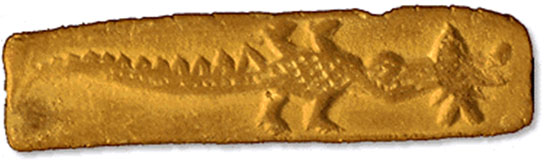
Indus seal of crocodile and fish

(2).Crocodile

Arjuna came across a region where there was a beautiful lake with crocodiles. Brahmanas migrated to different regions fearing those crocodiles. Arjuna purposefully bathed in the tank and caught a crocodile which turned into an Apsara called Varga. She asked Arjun to catch other 4 crocodiles. Arjuna caught those man eating crocodiles and they became Apsara women too.1-216

Crocodiles eating man or animals is a common theme in Tamil and Sanskrit literature. Adi Shankara of Kaladi in Kerala became an ascetic only after caught by a crocodile. Tamil saints revived boys eaten by crocodiles. Tamil poet Tiru Valluvar used the Crocodile’s strength in water as a simile. Gajendra Moksha sculpture is famous from the days of the Gupta dynasty in which the elephant caught by a crocodile was saved by Vishnu. India being a tropical country was infested with crocodiles and all the rivers from Tamil Nadu to Himalayas had crocodiles. Indus valley civilisation seals show a fish in the mouth of a crocodile.

tortoise mandapa, kanchi

Tortoise Mandapa in Kanchi

(3).Tortoise

Tortoise figures in Indradyumna story in the Mahabharata (3-199).

Indradyumna went to heaven, but had to come down to earth when he spent all the merits he earned through good deeds. He was going from place to place to see old faces who he could remember. At last he found an old tortoise in a Himalayan lake who recalled all the good deeds done by Indradyumna. He again ascended to heaven. Even a tortoise can help a king to ascend to heaven.

Tortoise and Fish form the earliest of the Ten Avatars (Incarnation) of Lord Vishnu. So both of them attained divine status.

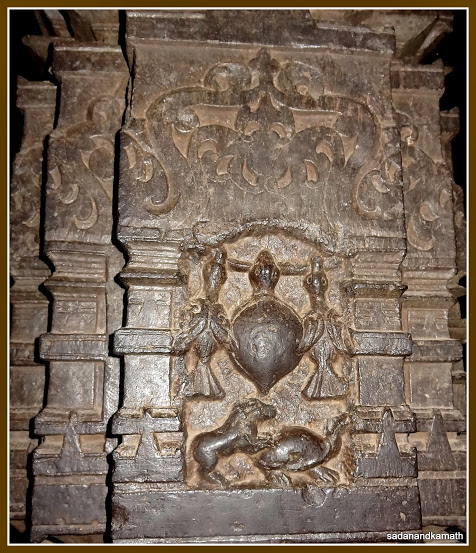
In Kerala temples the Dwajasthambas are on top of mysterious tortoise!

In Tamil Nadu,  Temple Mandapas are on tortoise in Kancheepuram, Tirukkazukundram, Tiruchengodu and many other places.

Tortoise was the foundation when Devas and Asuras churned the ocean in Hindu mythology.

Panchatantra fables have several stories of intelligent and stupid tortoises.

panchatantra story, kopeshwar temple

Tortoise story in Panchatantra

Tomorrow we will see the birds in the Mahabharata

Mystery of ‘J’and ‘Y’ in literature!

JJJJJ

Written by London swaminathan

Article No 1697; Dated 7th march 2015

London Time 14-08

The history of letter ‘J’ is mysterious. It is also very confusing. If you read the history of this letter in encyclopaedias you can see how confused the linguists are. They have used all the terms in linguistics that are available to describe the letters: vowel, consonant, fricative, post alveolar fricative, palatal approximant, voiced, voiceless alveolar plosive, diphthong, pronunciation shift etc. They have linked various languages such as Latin, Greek, Hebrew, Arabic and Romance languages. These languages belonged to different families, not at all related! In short they are confused and they would confuse you!

Strange Facts: Most famous Samuel Johnson’s English dictionary (1775) had only 24 letters! No J, No V! Later dictionaries such as Webster only used 26 letters! Then the English were forced to use 26 letters. Samuel used the letters J and V in the spelling of words, J for y or I;  V was used for u.

YY22

Ancient Latin had no sound ‘J’, hence no letter for it. Ancient Romans of 100 CE had 23 letters only; no J, no V and no  W!

–from the book The Alphabet by David Sacks

Look at the following words; which is correct?

Yesu = Jesus

Yuda/Yehudim = Jew

Yasmin = Jasmin

Yulius = Julius

Yusuf = Joseph

Yitro = Jethro (crescent)

Yatra = Jatra

TAMIL = SANSKRIT

Yama = Jama

Yava = Java ( Savakam in Tamil)

aYan = aJan ( AJAN means Brahma;Than+Mal+ Ayan;Suchindram)

vYira = vaJra (Porunthal Inscription)

gaYamukasura = gaJamukasura

RamaDan = RamJan = RamaLan (D=J=L)

JJ2

YYY!

Nowhere in the encyclopaedia had they mentioned Tamil and Sanskrit, two ancient languages. My research shows that their theories are wrong. Since they don’t know Tamil and Sanskrit, they have come to wrong conclusions. Those who study Tamil and Sanskrit and compare them with other languages will rewrite linguistic theories.

Letter ‘J’ is used as ‘Y’ in many languages now. The origin of this change lies in Tamil and Sanskrit literature.

Oldest Sanskrit Inscription in India!

Sometime ago a fifth century BCE inscription was discovered at Porunthal near Palani in Tamil Nadu. It has a Brahmi inscription with the Sanskrit word “Vayira”. This is a Sanskrit word used for diamond = VaJra. Here also we see the J=Y change. Tolkappiam , the oldest Tamil book gives the rules for borrowing Sanskrit words. So this vaJra is a Sanskrit word borrowed and changed to vaYira. If the dating of this inscription ( Fifth Century BCE) is correct, then  we see the change in the oldest inscription in Tamil Nadu. When the archaeologists sent the paddy found in the place it was dated 490 BCE by American laboratories.

Sanskrit word Vayira is used in Sangam Tamil literature in many verses. Poet Markandeya used it in Purananuru verse 365. The verse is full of stories from Sanskrit scriptures. Rig Vedic Purusha sukta descrition of the universe, Kalidasa’s story of cursing Bhumadevi to be a spinster for ever, Bhumi being the wife of Hindu kings, Vajra Suci (Diamond needle) etc are found in the verse. Sangam poet name is also in Sanskrit!

language problem

Now we know how Yeshu changed to Jesus and Yusuf changed to Joseph. It happened even before Latin literature appeared in the world in 3rd century BCE.

Yama is a unit of time; one fourth of the day. It is written as Jama. Vajra (vayira) and Yama (jama) are found in ancient Tamil literature. Tamil and Latin have contemporary literature. Even without the Palani Brahmi inscription, we can prove that J=Y from Tamil and Sanskrit literature.

The conclusion is that there is no truth in the explanations given in encyclopaedias for many pages about “spelling shift or pronunciation shift” Y=I=J. It is all happened in ancient India. Since Tamils and Sanskrit speakers spread to different parts of the world they took it with them. We can trace back most of the ancient words to Tamil and Sanskrit. I already gave the example Number ‘One’ and ‘Eight’ in English are from Tamil (Ondru, Ettu) where as other English numbers are from Sanskrit. We can see it English numbers from 21, 31, 41 etc. They are done in the Tamil way: twenty + one, thirty+one (in Tamil irupaththu ondru, muppathu ondru etc). The English numbers before twenty are done as in Sanskrit: 3+10= thirteen, 4+ten= Fourteen, Five+ Ten = Fifteen etc.

All the ancient languages in the world develop either the Tamil way or the Sanskrit way. In English we see both the trends.

In short, all the ancient languages have come from Tamil and Sanskrit. There are thousands of Tamil words in English. The long list was given by Sathur Sekaran 40 years ago, who I interviwed in the BBC Tamil Service in London in 1988.

If we go deeper still, we can see both Tamil and Sanskrit have the same roots and same grammar rules; Sandhi (Punarchi in Tamil) rules or Joining of words rules are followed until today only in two languages Tamil and Sanskrit. Some of the vestiges we can still see in European languages which have come from Sanskrit! (Or cal it Indo-European!)

Tamil is closely related to Sanskrit. There is no other language that comes this closer. This did not happen because of geographical proximity; it happened because of internal thinking process. Both languages evolved from the same source and diversifies or branched out 2500 years ago.

accent

swami_48@yahoo.com

MEMORY QUEEN DRAUPADI

Draupadi

Written by S Nagarajan

Research Article No. 1689; Dated 4 March 2015.


Memory:Queen Draupadi of Mahabharata and Emperor Napoleon of France

Emperor Napoleon had an excellent memory. He memorized the rosters of his units and used to call the soldiers by name. It is estimated more than one lakh soldiers were in his army. Baron Meneval, Napoleon’s secretary, wrote in his memoirs that his memory had been described as ‘astonishing’. Various biographers describe his memory as ‘very retentive’, ‘near photographic, ‘prodigious’, and ‘phenomenal’.

Cyrus had a memory so prodigious that he knew by heart the names of all the officers and soldiers of his armies. Emperor Otho, the successor to Galba had learned the names of all the soldiers of his army. He used to call everyone by his proper name.

stamp-napoleon-france-

Similarly Mithridates , the famous king and emperor Adrianius knew by heart the names of all their soldiers. Themistocles was able to remember thirty thousand citizens of Athens by name. Xerxes was reputed to be able to recall the names of the one lakh soldiers in his armies. We believe all these statements without raising any question.


Let us compare these interesting facts with the photographic memory of Queen Draupadi of Mahabharata. She revealed her very rare qualities to the Queen Sathyabama, the wife of Lord Krishna in an intimate chat. She informed Sathyabama that one lakh sixty thousand Brahmanas (priestly class) were daily fed in the palace of Yudhishthira. He also had a hundred thousand well-dressed serving maids with bracelets on arms and golden ornaments on necks, and decked with costly garlands. They were all skilled in singing and dancing. Draupadi knew the names and features of all those girls, as also what they are and what they were, and what they did not.

Yudhishthira had also a hundred thousand maid-servants. These servants daily used to feed guests, with plates of gold in their hands. And while Yudhishthira lived in Indraprastha a hundred thousand horses and a hundred thousand elephants used to follow in his train. These were the possessions of Yudhishthira while he ruled the earth. It was Draupadi, however, who regulated their number and framed the rules to be observed in respect of them; and it was she who had to listen to all complaints about them. Indeed she knew everything about what the maid-servants of the palace and other classes of attendants, even the cow-herds and the shepherds of the royal establishment, did or did not! We are astonished with the statements of Draupadi.

draupadi2

When we compare these statistics with that of Napoleon and other kings we are compelled to admire how sharp was her intellect and memory!While we are ready to believe historians like Pliny, the same way we have to believe the statements of the great Queen Draupadi also. This astonishing memory is one of her qualities only. The women of the world should learn more about Draupadi and should follow her footsteps by developing rare skills.

Note:  The original Sanskrit slokas of Mahabharata were translated by sri Ganguly in 1873-1886. The English version has been taken from public domain and for authenticity sake used here. Readers could download the full Mahabharata from net.

Pushthakam Hastha Lakshanam

girl-carrying-books-236x300

Written by London swaminathan

Research Article No. 1680; Dated 27 February 2015.

“Pusthakam hastha lakshanam” is a golden saying in Sanskrit. The meaning is that “the beauty or merit of a hand is enhanced by a book”. A hand looks beautiful holding a book.  India is the only ancient country which produced more books than any other country in the world. If you draw a line in 1000 BCE, there was no ‘book’ except India. We had Vedic Samhitas, Brahmanas, Aranyakas and Upanishads by that time. So this saying has more meaning into it.

(Pusthakam = book, Hastha = hand, lakshana = quality, beauty)

India is the only country in the world which has got more holy books than any other country in the world. If we go to North India we can see Ramayana and Bhagavad Gita in the Puja (Prayer) room on special wooden boards or platforms with flowers on them. They are worshiped. If we come down to the south we see Thevaram, Tiruvasagam and Divya Prabandham in Tamil worshiped in the same way. The authors of these books claim that these are Vedas in Tamil. It is very true.

family-motorcycle-india

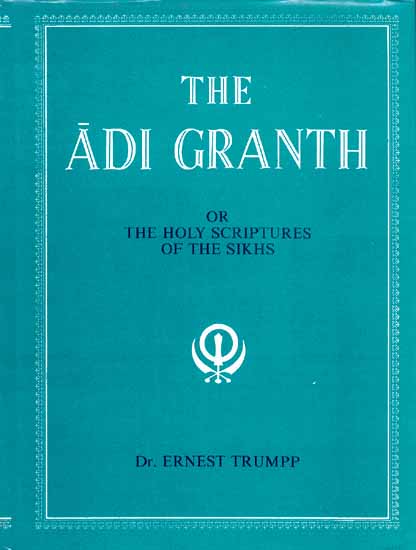
If we go to Amritsar, the holy city of the Sikhs, we see a book occupying the status of god in the Golden Temple. After ten holy teachers of Sikhism, the book was elevated to the status of Guru- –spiritual teacher. The book is given all reverence like a god’s statue. It contains all the holy teachings of their Gurus.

India is the only country in the world where a book’s birth day is celebrated every year. The Gita Jayanti in the month of Margasirsha (December- Tamil month Markazi) is celebrated on the 11th day of Marhasirsha –Shukla Ekadasi – to mark the birth anniversary of the Bhagavd Gita. The gist of Hindu thoughts is given in just 700 couplets in the book.

Bhagavad_gita_As_It_Is_Books

Manu’s Beautiful Quote on Books

Manu, the greatest law giver of the world, whose name figured in the oldest religious book Rig Veda, says:-

“Those who read the book are better than those who do not know them; those who remember them are better than those who read them; those who understand them are better than those who remember them; and those who put them into action are better than those who understand them” (Chapter 12- Sloka 103- Manu Smrti)

The book here meant the Vedas.

Famous Tamil poetess Avvaiyar says that one’s knowledge and wisdom depends upon the books one has learnt. She illustrated her point with a beautiful simile. A water lily’s height is determined by the depth of the water in the pond; a person’s wisdom is decided by the books one learnt.

the_adi_granth_

There is a popular Sanskrit couplet:-

Pustakesu cha yaa vidyaa parahastesu yad dhanam

Utpannesu cha kaaryesu na saa vidhyaa na tad dhanam

Rough translation of this verse is “ the knowledge printed in the book and the money given to others are useless when you need them; they are neither knowledge nor wealth”.

Learning must be practised. There is an equivalent saying in Tamil – Ettu Suraik kay Karikku Uthavathu – meaning “The word bottle gourd written on a palm leaf cannot be cooked as curry”. No practical use!

books

Sutra(Sanskrit) = Surah(Arabic) = Torah(Hebrew)

The word Torah in Hebrew, Surah in Arabic (Quran) mean religious teachings or chapters containing religious teachings. My research shows that these words are derived from the Sanskrit word Sutra (Aphorisms, formulas, pithy sayings). Letters S and T are inte rchangeable; e.g. Tion in English is pronounced Sion in hundreds of words)

Moreover Tamil and Sanskrit were born in India and spread to different parts of the world. The word Sutra (Nuul in Tamil) means a thread as well as a book both in Tamil and Sanskrit.

Tamil Nul  = Sutra in Sanskrit

Nul = Book; thread

Sutra = thread (Mangala sutra), book (Patanjali Yoga Sutra, Paninian Sutra).

ramayan

Long Live the Holy Books!

31 Quotes on Worldly Wisdom

holi

Calendar of Golden Sayings, March 2015

Important Days:  Festivals:  5 Holi, 4 Masi Makam, 8 International


Women’s Day, 21 Ugadi, 28 Sri Rama Navami.


Auspicious days: 2,4,8, 9, 12, 22, 25, 30;


Ekathasi- 1, 16 31; Amavasya – 20; Pournami-  5

Compiled by London Swaminathan

Post No.1676; Dated 25th February 2015.

31 Quotations on Factual Knowledge from Sanskrit  Literature

ramnavami

March 1 Sunday

If one could procure honey from the sun who would bother climbing up the mountain?

Arkecen madhu vindeta kimartham parvatam vrajet

2 Monday

When the cloud of ego vanishes, the Sun of Truth shines – Yoga Vasistha 5-64-45

Ahankaaraambhude ksiine drsyate ciddivaakarah

3 Tuesday

The ego, I, itself is bondage and its very absence, Liberation – Yoga Vasistha 7-25-20

Ahamityeva bandhaaya naahamityeva muktaye

4 Wednesday

Everything endears itself for the joy of the self

Aatmanstu kaamaaya sarvam priyam bhavati

5 Thursday

How can a fallen man uplift others? –

Aatmaanam paatayedyastu sonyaanuddhharate katham

ugadi

6 Friday

Sugarcane juice is cooked in its own fuel — Kahavatratnakar p.57

Iksoo rasah pachyata indhanaih svaih

7 Saturday

Hundred turbans can be got if only the head exists.

Usniisaanaam satam labhyam sthiramasti siro yadi

March 8 Sunday

One is born alone and departs alone

Ekah prajaayate jantureka eva viliiyate

9 Monday

There is no sound that is not a sacred chant (mantra), nor a root that is not medicine — Subhasitaratnabandakara 3- p.158 & Ratnasamucchaya

Amantaram aksharam naasti naasti muulam anaushadham

10 Tuesday

The blind led by another blind will also falter at every step – Kahavatraakar p 100

Andhasyevaandhalagnasya vinipaatah pade pade

PHOTO CAPTION

Ugadi in Mangalore

11 Wednesday

When moon light streams, is not the lamp redundant? – Vikrmorvasiya.3. P 56

Abhivyaktaayaam candrikaayaam kim diipikaapaunnarukteyena

12 Thursday

The water feels cold when in hand, but not so when one is immersed in it – Rajatarangini 8-1097

Karaksiptam yathaa siitam majjane na tathaa payah

13 Friday

Who can illuminate the rising moon? – Padataditaka

Ka candrodayam parakaasayati

14 Saturday

Can one whose head is severed, live with gifted heads, a hundred though they be? – Kathasaritsagara

Kim jiivati ciraschinno dattairuta sirassataih

March 15 Sunday

Who knows what happens to whom in the other world? — Brhatkathamanjari

Ko jaanaati pare loke kasya kim nu bhavisyati

masimagam malaysia

Masi Magam in Malysia

16 Monday

Who can measure the sky and the ocean with one’s fingers? — Vikramacarita 3-925

Ko miyedangulairvyom ko vaa niram samudrajam

17 Tuesday

Who can turn a midget into a tall man? – Kathasaritsagara

Ko hi kubjamrjuukartum sakunyaadiha maanusam

18 Wednesday

Who can sleep in the embrace of a sleeping lion? Brhatkathamanjari

Ko hi suptena simhenakrtakanthagrahah svapet

19Thursday

Ants can terrify even elephants? –  Kahavatraakar p 34

Gajamapi trasyanti pipiilkaah

20 Friday

An elephant is never seen tethered to an Arka

(Calotropis) plant? – Kahavatraakar p16

Gajo navaarkavrksesu addah kvacana drsyate

ram_navami_016

21 Saturday

The wrist is more honourable than the five fingers

Gururiha manibandho bhaati pancaangulibhyah

March 22 Sunday

Trees grow when watered, but not heaps of stone – Kahavatraakar p.342

Jalasekena vardhante taravo naasmasancayaah

23 Monday

Fie on transience of the lives of men – Raguvamsa 8-51

Dhigimaam dehabhrtaamasaarataam

24 Tuesday

The moon’s effulgence cannot be blocked by throwing dust – Kahavatraakar p.62

Dhuulipraksepato naiva candrajyotsnaavarudhyate

25 Wednesday

The binding strengthens only when the broken pieces are glued together perfectly Kahavatraakar p110

Trutitaanaam susandhaane drdhaa grathih prajaayate

holi2

26 Thursday

The moon can never emit scorching beams – Yoga Vasistha 1-9-3

Na kadaacanajaayante siitaamsorusnaarasmayah

27 Friday

A banyan tree will never sprout from the Kutaja (Wrightia antidysentrica)

Na khalu kutajabijaadvataankuro jaayate

28 Saturday

An eagle does not target flies

Na khalu syeno makshikaam grhnaati

29 Sunday

Lions do not slay foxes

Na khalu simhaah srgaalaannighnanti

30 Monday

A lamp does not search for fire – padmaprabhtka

Na diipena agnimaarganam kriyate

masi.ratham.2012

Masi Makam in Tiruchendur

31 Tuesday

For how long can anyone save a tree precariously perched on a river bank? Kahavatraakar  p133

Nadyaastate sthitam vrksam kah kiyadraksayisyati

Note: I have been publishing quotations for the past 15 months in the monthly sheets. So far I have compiled over 450 quotations from Tamil and Sanskrit books. You can see all the quotes in this blog.

ugadi_pachadi_ingredients_

Ugadi Pachadi ingredients.

Rain Bows: Ancient Beliefs!!

rainbow 1

Written by London swaminathan

Research Article No.1673 Dated 24th February 2015.

Varahamihira, who lived 1500 years before our time was a great scientist. He wrote about everything under the sun, shaming Learnado da Vinci and Thomas Alva Edison. Both of them were famous for their inventions and ideas. But Varahamihira who authored the Sanskrit encyclopaedia – Brhat Samhita talks about medicines for trees, predicting earth quakes and recipes for sex!

He was a compiler of ancient beliefs. Here is his chapter on Rainbows (Chapter 35 in Brhat Samhita):

“The multi coloured rays of the sun, being dispersed by the wind in a cloudy sky, are seen in the form of a bow which is called the rainbow”.

The author knows that the sun ray is composed up of seven colours. Sanskrit books called them seven horses figuratively.

rainbow2

Varahamihira adds

“Some sages like Kashyapa declare that the rainbow is caused by the breadth of descendants of Ananta, the king of serpents. The rainbow appearing in front of the marching kings causes their defeats.

“If a rainbow is unbroken, bright, glossy, thick, multi-coloured and touching the earth at both extremities, and if it appears double and behind persons, it is auspicious, and will yield good rains.

india-pretty-rainbow-sky-water-

“A rainbow seen in the intermediate quarter, will destroy the Lord of that particular region; one seen in cloudless sky will cause pestilence, and one that is pink, yellow and blue will create troubles from war, fire and famine respectively.

(The Lords of the quarters mentioned are are King, Prince, Leader, Emissary, Merchant, Spy, Brahmana and Master of the Royal Elephants – It is in chapter-86)

A rainbow seen in the middle of water leads to drought; on land, to destruction of crops; on a tree to diseases; on an ant hill, to danger from wars and weapons; and at night to the minister’s murder.

Kalidasa alludes in his Megaduta to this phenomenon of a rainbow being observed on the tip of ant hill. A rainbow in the east will cause trouble (ill health) to the king; and in the south west and the north it will destroy in order the commander in chief, a great leader and the minister.

“A Rainbow seen at night with white, red, yellow and

Dark hues causes trouble to Brahmanas, Kshatrias, Vaisyas and Sudras respectively. It will also destroy before long the prominent kings in the particular wherein it was sighted.

What Varahamihira said was the reflection of his time and society. And the society is changing for ever. Hindus’ presentation of the facts also changed according to times. They presented the facts in different symbolical or allegorical stories.

Double-alaskan-rainbow.jpgwiki

Rainbow in Sangam Tamil Literature

The rainbow in not mentioned frequently in the 2000 year old Tamil literature. In one of the poems, It is compared to the garland worn on the chest of Vishnu (Akananuru 175). Another poet compared it to the colour of the neck of a parrot (Aka.192).

Katiyalur Uruttiran Kannanaar was the author of two long poems in Pathupattu— Pattinappalai and Permpaanaatru ppatai. He compared the different colour flowers in a tank to a rainbow (Lines 292-294 in Peum)

Ulocanar compared a shark killed by a fisher man to a rainbow. The fish is fatally wounded and it leapt into the sky flashing blood all over the water which reminded the poet of a rainbow.

A rainbow seen after rain and thunder was described in Aka.147.

mumbai rainbow

Kalidasa’s Reference to Rainbows

Kalidasa mentioned the Indra Dhanus in several places: Raguvamsam  3-53, 4-16, 7-4, 11–80 and Vikra. 4—43

When Kalidasa described the fight between the King Ragu and Indra, he compared the bow of Indra with the rainbow.

In another place he compared the ornamental arches constructed in the city to a rainbow. It was during the swayamvara of Indumathy.

Kalidasa was a nature lover. He says the clouds are beautiful indeed. When it is joined with a rainbow who can describe it. This is a simile used to compare Rama who took Parasurama’s bow after his defeat. Here black colour Rama is compared to the cloud and Parasurama’s bow is compared to rainbow (Ragu 11-80.

rainbow3

Epics and later post Sangam Tamil literature have got a lot of references to the rainbow.

Billion Dollar Big Birth Day Parties: Hindus Taught the World!

Greetingcardsretaildisplay

Written by London swaminathan

Research Article No.1668; Dated 22 February 2015.

Birth day cards, birth day parties, birth day decorations and birth day gifts —  is a billion dollar business in the world. But not many people know that Hindus taught the world this Birth day Celebrations!!

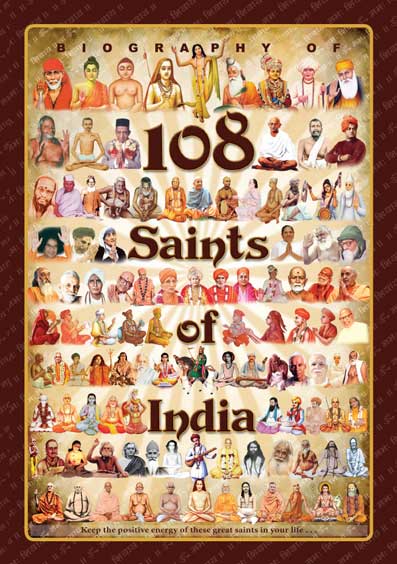
Celebrating one’s birth day is a Vedic custom. We know about Krishna Jayanti (Janmashtami), Rama Jayanti (Rama Navami), Hanuman Jayanti, Buddha jayanti (Vesak/VIsakam/Vaikasi Viskam), Jesus Jayanti (Christmas), Shankara Jayanti, Mohammad Jayanthi (Milad un Nabi), Ramana Jayanthi, Ramakrishna Jayanthi and 100 more Jayantis!

Jayanti here means the anniversary of a birth day. We started with Rama and Krishna and spread it to the world. Followers of Buddha and Jesus also celebrate it now. Hindus extended it to all the philosophers like Ramanuja, Madhwa, Vallabha, Ramadas and many more saints.

Hindus did not stop there, they extended it to national leaders too! Gandhi’s Birth day on 2nd October (Gandhi Jayanti), Nehru’s Birth day on 14th November (Children’s Day), Dr Radhakrishnan’s Birth day on 5th September (Teachers day). They did not stop with human beings. They are celebrating the birth of a book—Gita jayanti (the day Bhagavad Gita was told to Arjuna!). This is very unique – birth day celebration for a book!

happy-birthday-balloons-27

When a boy or girl is born in a family, it leads to big celebrations. On the first birth anniversary, they do special type of Pujas in the temple or at home: Ayush Homam for the long and healthy life of the child. They make sweets, invite close relatives and feed them. If it is a king the celebrations are bigger. Great Tamil king Raja Raja Choza, made his birth day a national festival by celebrating is as Sathaya Viza (Sathabishak was the Nakshatra/asterism under which he was born). The whole Choza country celebrated it!

When princes were born, the kings released all the prisoners according to Hindu epics and Puranas/mythologies! So it all started from India and spread to the world! But Change is inevitable. The world has changed it to according to the needs. Now with the birth day cards, cakes and birth day balloons, it has become a billion dollar business. In big cities like London and New York there are special shops for birth day materials. There are event managers who arrange surprise parties, magic shows, musical treats etc.

108 saints

Famous Birth Days (Jayanthis)

Janmashtami or Krishna Jayanthi (Birth day of Krishna):– It is celebrated on the eighth day (Ashtami) of the Krishna Paksha (dark fort night) of Shravana corresponding to August/September. This is the most famous birth day in India.

Rama Navami (Birth day of Sri Rama): — Rama’s birth day is celebrated on the ninth day (Navami) of bright fort night (Shukla Pakksha)in the month of  Chitrai corresponding to April.

Shankara Jayanti is celebrated every year in April or May corresponding to Vaishaka Sukla Paksha Panchami Thithi (Fifth day of waxing moon in the month of Vaishak)

Buddha Jayanthi :–Full Moon Day of Vaishak (Corresponding to April/May)

Madhwa jayanthi:– Vijaya Dasami Day: Dasami Titi of Ashwin Sukla Paksha (Tenth day of the waxing moon in the month of Ashwin corresponding to October)

Ramanuja Jayanthi:–Chitra month Arudra star (asterism) day corresponding to April/May

Hanuman Jayanthi:– Chitra Pournami (Full Moon Day of Chitrai corresponding to April/May )

Gita Jayanthi:– Sukla Ekadasi of Margasirsha corresponding to November/December every year.

It is a strange coincidence that many of the birth days of famous people fall in April/May.

bday-cake1

Hindus go one step up!

Hindus don’t stop celebrating it till their death. There are

Birth day celebrations at the

60th year –Shasti Apta Purti,

at the 70th year Bhima ratha shanti

at 77th year Vijaya ratha Shanti

at 80th year Sathabisheka

at the 100th year Purnabhishekam / Centenary.

Though Vedas repeatedly say that a person should live for 100 years, Hindus wish that they live up to 120 years. Hindus have a 60 year cycle. They would have seen it two times if they live for 120 years.

They celebrate it with the recitation of Rudram from the Yajur Veda. 11 people recite it 11 times.

Sixtieth birth day is celebrated as second wedding at a temple. Tamil Hindus celebrate it in famous temples like Tirukkadaiyur temple.

Sathabisheka is celebrated for a person who had seen (the Darshan of ) 1000 crescent moons. Hindus believe seeing the crescent moon on the third day after New Moon is an auspicious one. A person can see the crescent moon every 29th day and it would take approximately 81 years to see it one thousand times.

all-saints

Shanti in general means Peace. Here it means peace of mind, good health, avoiding bad influence of planets and evil forces:

A Tamil book written by Chellamani Bhattar of Vikramasingapuram gives the year of celebration of several birthdays:

Bhima Shanti -55th year beginning

Ugra ratha shanti 60th year beginning

Shastitama apta purthi-61st year beginning

Pitha ratha s – 70th year beginning

Ratha shanti –72 year beginning

Vijaya shanthi – 78th year beginning

Prapauthra shanti:  As soon as a male child is born to one’s grandson.

Kanakabhisheka—The above one.

Satabhishek  – after 80 year 8 months

Mrtyunjaya shanti – between 85 and 90.

Purnabhisheka – at the age of hundred.

Let us all live up to 100 years and celebrate Purnabishekam!!

card-display

Who did Krishna Worship?

ராதா கல்யாணம், ஆலங்குடி

Radha Kalyanam, Alangudi

Written by London swaminathan

Article No.1663; Dated 20th February 2015.

We all worship Lord Krishna with several hymns; but who did Krishna worship? This question was asked by his own wife Rukmini; Krishna answered her question at once without any hesitation!

The answer is in a simple Sanskrit sloka (couplet):

Nithyaanadhaathaa  tarunaagnihotri

Vedhaantha vidh chandrasahasra darsii

Maasopavaasiisa pathivrathaa cha

Shad vandhaniiyaa mama jiivaloke

I worship the following six people: Those who provide food every day, who are well versed in the Vedas, who do fire ceremony, who observe regular fasting every month, who have seen at least 1000 crescent moon in their life time and those women who are chaste.

அக்னியில் க்ருஷ்ணன்

Krishna appeared in Yaga Fire!

Explanation:

(1)Nithyaannadhata: Those who provide food to the needy every day. In those days, people used to do Pancha Maha yajna (Five Daily Sacrifices): They worshipped and “fed” their ancestors, family, guests, close relatives and animals.

They divided their income or the harvest into six portions and gave one sixth as the tax to the king or the government. Other five parts were used to look after the relatives, guests and the priests and the temples. Even today the tax in many countries is around that figure.

Vedas said Athithi devo bhava (guests are equal to gods)

Krishna worshipped such people. (Nithya = everyday+ anna = food+ dhata = provider).

Tamil poet Tiruvalluvar also says it in his Tirukkural (43)

(2)Taruna agnihotri: Who does fire ceremony every day from his early years; in those days Brahmin boys were initiated at the age of seven and then they started doing Samidhadanam (putting peepal sticks into fire with ghee reciting Mantras) every day. When they became adult (taruna), they were married and they started doing Agnihotram. Agnihotram is a daily ritual. Krishna worshipped such people.

(3)Vedhanta vidh: Those who have mastered Vedas and its meaning (Vedanta is the end of the Vedas. That meant the Upanishads. In those days if one is introduced as a learned man, it meant that he followed whatever he learnt. Nowadays we see lot of learned people imprisoned for their immoral activities. They may be bandits but not Pundits.

Krishna worshipped Vedic scholars whose word, deed and thought were one.

Marble_Krishna_

(4)Sahasra Chandra darsi: Those who have seen 1000 crescent moons in their life time. The crescent moon on the third day after new moon day is considered auspicious. It is also seen on the head of Lord Shiva. So they saw the crescent moon and then had dinner. Seeing the moon was a Hindu custom. Later other religions followed the Hindu custom. Crescent moon can be seen every 29th day. A man has to live 81 years to see 1000 crescent moons. Living 81 years is easy nowadays. But seeing the moon without a miss needs dedication. Krishna worshipped such dedicated devotees.

(5) For the followers of other religions fasting is a one off event in a year. But for the Hindus Ekadasi is a must. Ekadasi means 11th day immediately after New moon or Full moon day. It happens twice a month. A lot of Hindus observe fasting on the day. Apart from Ekadasi day, there are many more days for fasting. Krishna worshiped those who follow fasting rules strictly.

wax museum, near kolhapur

Krishna listens to blind poet Surdas! Wax museum.

6.Pativrataa: Those who are loyal only to their husbands. Pativrata meant chaste women. Hindus believe in three types of chastity or purity; it is called Trikarana suddhi- thought word and deed. It is very difficult in modern days. Tamils and others believed such women can control natural forces. She could even make the rain fall. Tamil poet Tiruvalluvar said it in his Tirukkural (55). Other Tamil poets like Ilango and Siltalai sattanar repeated it in their epics. Krishna worshipped such chaste women.

If Krishna worshipped such great people, can we fall behind him?

Let us salute those six types of people every day.

Contact swami_48@yahoo.com

Lord Shiva and Panini, the Greatest Grammarian!

maheswara-sutrani

Lord Nataraja Shiva with 14 Sutras

Research Paper written by London swaminathan

Research Article No.1657; Dated 17th February 2015.

Vakyakaram Vararuchim, Bhashyakaram Patanjalim

Paninim Sutrakaram cha pranatosmi Munitrayam

Let us bow to the great three seers Vararuchi, Patanjali and Panini.

Two thousand seven hundred years ago, there lived a man in India who is considered the father of grammar in the world. His name was Panini. He lived before Buddha and other great philosophers of sixth century BCE. Though he mentioned several great grammarians before his time, we don’t know anything about them. We could not get their books. Panini’s grammar book Ashtadyayi was the first in the world.

Here is a story of a person who gained the greatest knowledge in the world of languages by the grace of Lord Shiva! Tamil Hindus in South India and their counter parts in North India consider Lord Shiva was the one who gave them the language and the grammar.

nataraja (1)

The world is not celebrating Panini’s work Ashtadyayi or Paniniyam just because it was the first grammar book known in any language, but because of its amazing structure. He constructed a grammar for Sanskrit which shows the greatest height to which human thought can raise. This marvellous thing happened 2700 years ago!

Homer’s Iliad was just 100 years old by that time. Other languages except Sanskrit did not have any literature at all! Moses could repeat only Ten Commands of the God! Of course we have Gilgamesh in the Middle East and some other writings in Hieroglyphs (Book of Dead) in Egypt. But they are all museum materials and that too primitive thinking without any higher thoughts. They are not literature. But Sanskrit had huge volume of literature by then. The world’s greatest literary wonder Rig Veda was reverberating in the nook and corner of Asia. Turkey had Rig Vedic Gods in Cuneiform letters. And Rig Veda is still preserved in its pristine form without a change of single syllable. All this is done by word of mouth!! That is another world wonder. Nowhere in the world a literature of that size is preserved without writing till today!

cola1

Lord Shiva’s Grace!

Panini was a student of Guru (teacher) Varsha. He was the dullest student in the group. Guru (teacher) was not happy. Guru’s wife also told him to go out into the world and learn the basics. He went to the Himalayas and did penance. Lord Shiva appeared before him and told him that he was fully satisfied with his prayer and was ready to give him whatever he wanted. Panini was very intelligent. He did not ask for gold coins or beautiful women or a kingdom. He asked Lord Shiva to bestow him knowledge in the language. Shiva was very happy started to dance. His kettle drum boomed and the Himalayan Mountains echoed it.

Paninni was so focussed he could get only 14 beats from the drum called ‘Damaruka’ in Sanskrit. Based on the fourteen sounds he wrote the most famous grammar book in the world called Eight Chapters (In Sanskrit Ashta+Adhyayi). It contains 3959 Sutras. Sutra means formulas. He wouldn’t waste a single space. Even if he could avoid a full stop or a comma he would feel as if he had saved one million dollars. But his grammar was complete, no gap, no incoherency.

  1. a i u ṇ
    2. Ṛḷ k
    3. e o ṅ
    4. ai au c
    5. ha ya va ra ṭ
    6. la ṇ
    7. ña ma ṅa ṇa na m
    8. jha bha ñ
    9. gha ḍha dha ṣ
    10. ja ba ga ḍa da ś
    11. kha pha cha ṭha tha ca ṭa ta v
    12. ka pa y
    13. śa ṣa sa r
    14. ha l

This contain all the letters of Sanskrit language.

 cola2

He mentioned 500 towns in his work. This shows his vast geographical knowledge. He talks about 51st generation of Bharadwaja etc. This shows his knowledge in the ancient history of India. People erected a statue for him in his birth place, now in Pakistan. Chinese traveller Huan Taang saw the statue 1400 years ago. Patanjali who wrote a commentary praised him as Bhagavan Panini. Like Divine Homer and Divine Tiruvalluvar he was called Divine Panini. He was considered a seer – a Maharishi.

Patanjali says that holding the holy grass Dharba in his hand, facing East, he wrote the marvellous grammar in the world. I will explain the 14 sounds he heard in another article. They are called Maheswarani Sutrani. Brahmins repeat the 14 sutras every year on the day they change their sacred thread and start the Vedic studies again. Great Sanskrit scholars say that his grammar is closer to Vedic language than classical Sanskrit. He never mentioned Buddha or Mahavira. He lived well before their time.

Panini mentioned the grammarians before his time: Upavarsha, Parasarya, Karmanda, Sakatayana, Apitali and Sakalya. When he was going into a jungle with his students, there came a tiger! All the students ran away. But Panini stared at the tiger and analysed the word Vyagra, Sanskrit word for tiger.

Western linguists wonder how a person can write a grammar in such a scientific way at that period. Most of the world was uncivilised at that time. But India had produced wealthy literature, quantitatively and qualitatively very high.

In Kashmir a king passed an order that everyone must learn Ashtadyayi and those who passed in it were awarded 1000 gold coins each!

nata2

Panini died on a Trayodasi day (13th day either after the full moon or new moon). Even today traditional learners of Sanskrit in North India declare holiday for the studies on 13th day. Unlucky number 13!! Author of Panchatantra Vishnusarman said that Panini was killed by a lion. We know that his town was Salaturya in Pakistan and his mother was Dakshi. All other details and stories about him are just hearsay!

The name Panini is synonymous with the words WONDER, MARVELLOUS and AMAZING. Those who study his grammar will understand it.

Panini of Seventh Century

Indologist Goldstucker placed him in the seventh century BCE and Max Muller in the sixth century BCE. Dr Radha Kumud Mukerjee, Bhandarkar and Pathak thought that Goldstucker was correct. VS Agrawala, the author of a monumental work “India as Panini knew it” —dated him to fifth century.

A.Kalyanaraman in his book Aryatarangini rightly points out, “A language takes a long time to develop. European languages took several hundreds of years in this process. Modern grammar in English began only under the Stuarts. The earliest grammatical treatises in Sanskrit were written around 1000 BCE.  Had Panini lived in fourth century BCE, then there would not be any commentaries by Vararuchi and Patanjali within a short period. Patanjali was placed in 150 BCE or before. Other languages in the world show a big gap between the original work and the commentaries. In Tamil the commentaries came 1300 years after the original grammar book Tolkappiam. In other languages also there is a 500 to 1000 year gap. So we can boldly say that Panini existed at least 500 years before the commentators.

tanjur1

Let us sing the glory of Lord Shiva and his disciple Panini on this Shivaratri day (17 February 2015).

Pictures were taken from Sangatham.com and other sites;thanks.