YUPA- SACRIFICIAL POST- PART 2 (Post No.5186)

RESEARCH ARTICLE by London swaminathan


Date: 6 JULY 2018


Time uploaded in London –   5-53 am

 (British Summer Time)


Post No. 5186


Pictures shown here are taken from various sources such as Facebook friends, Wikipedia, Books, Google and newspapers; thanks. Pictures may be subject to copyright laws.


We have already seen the references to Yupa, the sacrificial post, in the Rig Veda, Tamil Sangam Literature and 19 Yupa inscriptions found in India and Indonesia.


An interesting nomenclature concerning Yupa is found in Brahmana Adhyaya of the Bhumiknda of Yadhavaprakasa’s Vaijayanti, a well known Sanskrit lexicon.

While Yupa is a consecrated sacrificial post, Homayupa is one that is set up at sacrifices only for the decoration. The two Yupas that flank every fire at sacrifices are known by the name Upastha. Whatever, Yupa and the like, stands in front of the fire, is called Agnishta. The middle and the top of Yupa are called Samaadaana and Tarman respectively. The ring near the top is called Chasthaala. The rough unhewn bottom part of a Yupa is called Tuupara. Its girdle is known as Parivyaana, and wrappings Kumbaa.


Number 17

If the Yupa is seventeen cubits long, these seventeen cubits, from bottom upwards are designated, Methika, Uttraasa, Svarumochana, Anjana, Vaiyathita, Kshaalana, Savasiirshaka, Sudhanva, Rathagaruta, Saikhaalika, Karanjaka, Vaasava, Vaishnava, Tvaashtra, Saumya, Maadhura and  Vejana respectively.

During the Vajapeya Yaga, a race of 17 chariots was held.

Prajapati is represented by Number 17.

Number 17 is a mysterious number in the Hindu Vedas. I have already explained it  in my article (see below)

Mysterious Number 17 in the Vedas! (Post No.3916) | Tamil and …

tamilandvedas.com/2017/05/17/mysterious-number…

Research article Written by London Swaminathan Date: 17 May 2017 Time uploaded in London: 19-46 Post No. 3916 Pictures are taken from various sources such as Face …


From the above description, we come to know that there was one post for symbolically tying the victim and other posts to decorate the Yajna Bhumi.

An idea of the picturesque view of the Yajna Bhumi can be gathered from the Asvamedha Sacrifice scene in Valmiki Ramayana (Bala Kanda 14-22/27):–


We are told that 21 Yupas were erected and every one of them was octagonal and 21 cubits long. They are draped each in a cloth and adorned with fruits, foliage and flowers. The 21 Yupas were likened to  the Seven Rishis (Sapta Rsi= Ursa Major Constellation). The idea is that each of the sacrificial fires, ie. Gaarhapatya, Aahavaniiya and Dakshinaagni was allotted seven posts. There were thus three groups of seven each.


The elaborate descriptions, exact size and naming of the different parts show they were not pillars or posts for animal sacrifice or tying of the victim of the Yaga. All these explain the philosophy, some of which is already lost, behind the Yupa.


Ravana’s son Meghanaada is credited with a number of sacrifices. His sacrificial grove is described in the Ramayana to be bristling with hundreds of Yupas. The vast number only denotes their decorative role (Uttarakanda 25-3)


Regarding the inscriptions on Yupas, all are dated and this shows the historical sense of Hindus that existed 2000 year ago. We find Vikrama era, Kushana era and Krita era.

I have already given the names of Sangam Age Tamil kings and the Indonesian Kings in the first part. In North Indian Yupa inscriptions we come across:

Kushana

Maalava

Mokhari.

The Yagas performed were

Dvaadasa raatra,

Sapta soma samsthaa

Ekashasti raatra

Tri raatra,

aptoryaaman,

Pundariika etc.


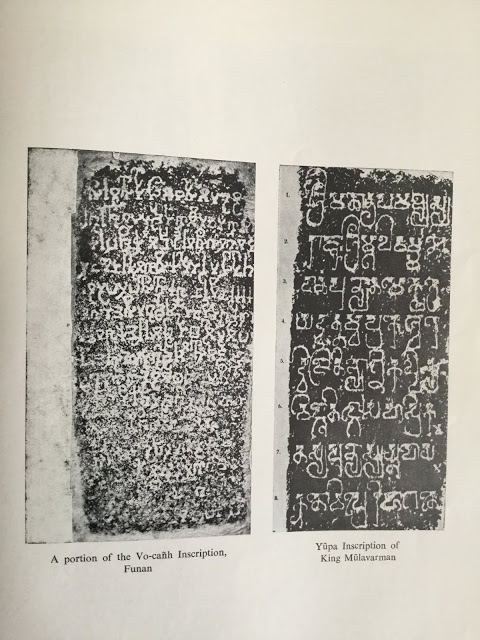
Another interesting information available from the Indonesian Mulavarman’s Yupa is that he did ‘Bahusuvarnaka Yaga’.

It is also known as Bahu Hiranya (lot of gold)

Bahusuvarnaka is mentioned in Valmiki Ramayana (Balakanda 1-95).

Now we know from Uttarakanda that Meganada did the following seven sacrifices:

agnishtoma

Asvamedha

Bahu suvarnaka

Rajasuuya

Gomedha

Vaishnava

Mahesvara.


Thus Mulavarman proved tht Ramayana gives historical information and Ramyana proved that Mulavarman did a sacrifice which was famous from the Ramayana days.

In other words Ramayana and Sanskrit inscriptions corroborate the details of Yagas.

( I have given lot of Yaga names in my article about ‘400 types of Yagas’. We may add the details found here as well.)

Source: Ramayana, Sangam Tamil Literature, Rig Veda and ‘Indian Antiqua, Kern Institute, Leyden, 1947’.

–Subham–


AMAZING RIG VEDIC YUPA IN SANGAM TAMIL LITERATURE (Post No.5183)

RESEARCH ARTICLE by London swaminathan


Date: 5 JULY 2018


Time uploaded in London –   2-09 (British Summer Time)


Post No. 5183


Pictures shown here are taken from various sources such as Facebook friends, Wikipedia, Books, Google and newspapers; thanks. Pictures may be subject to copyright laws.


AMAZING RIG VEDIC YUPA IN SANGAM TAMIL LITERATURE (Post No.5183)

Sangam Tamil Literature is at least 2000 years old; Rig Veda came several thousand years before that. Vyasa divided them into four Vedas 5100 years before our time according to tradition.


Rig Veda has used Yupa in two meanings

Sacrificial post-5-2-7

A pillar or a post-1-51-14

2000-year-old Tamil Literature used the same Sanskrit word in several places in two meanings; sacrificial pot or just a post.

Let me explain the places where it is used in the meaning of a sacrificial post; in addition to the Sanskrit word Yupa, it has beautiful translated it as Velvi Thun in a few other verses. Velvi = Yaga and Thun= post or pillar.


Tamil kings are well versed in Yagas and Yajnas. Under the guidance of able Brahmins, they did Rajasuyam and Asvamedham.


Sangam Literature consists of 18 books. Of them Purananuru is the encyclopedia of Tamil community.

Following are the very important references of YUPA:-

Purananuru  verse 224- line 1

Purananuru  15-21

Velvi Thun (Yaga Post)- Purananuru verse 400

Perumpanatruppadai- Lines 315-318

Akananuru – Velvi Nedunthun -220

Purananuru- 400

In addition to the above verses, we come across a reference to Rajasuyam in Purananuru verse 367. The Rajasuyam was performed by the Choza king Perunarkilli and attended by Ukkra Peruvazuth and Chera king Mari Venko. Avvaiyar, the mst famou Tamil poetess was over the moon to see all the three kings in unity. Tamils were notorious fighters who fought with one another for 1500 years continuously. That was the reason for Avvaiyar’s great jubilation.

From the above Yupa or Velvi Thun references we come to know that the kings who did Yaga and ereced Yupa post were:

1.Greatest of the Choza kings Karikalan

2.Greatest of the Pandya Kings Mudu Kudumi Peruvazuthi

3.Choza Nalamkilli

4.Sellur Kosar Community

5.Thondaiman Ilanthiraiyan

6.perhaps Rajasuyam performer PerunaR Killi


Some interesting details about them are:

Kadiyalur uruttiran Kannan (Rudraksha of Kadiyalur) sings about King Thondaiman Ilanthiraiyan—

“A king fisher coloured like a  sapphire seeking for prey took the jewel of  in its bill, and instead of going to the leaf of the Palmyra tree filled with birds, sat on the YUPA at which learned finished their sacrifice; it looked like a swan lamp on the mast of the boat of the Yavanas and twinkled like Venus which heralds dawn” (Perum Panatruppatai)


In the Puram verse 15, poet Nettimaiyar is wondering about the powerful Pandya Mudukudumi , whether his enemies are more in number or the Yupa post more in number. The emperor as performed so many yagas.

Kalidasa also confirms it in his Raguvamsa Kaya. When the Panady king was introduced to Indumati, her maid says this king always appear in wet cloth worn during Asvamedha Yajna (actual verse mentioned only Avabruda Snana done during Asvameda). Recent discoveries include the kings name in Tamil on a coin with Ava/horse image.


Before going into the details available in Hindu scriptures about the appearance and significance of Yupa, let me list the famous 19 Yupa posts discovered so far:-

1.Isapur, Mathura in Uttarpraesh, dated 102 CE

2.Kosam, Prayag, U.P. – 125 CE

  1. and 4.Naandsaa, Udaipur, Rajas. – 225 CE

5.Barnaala, Jaipur, Rajs.- 227 CE

6-9.- Badvaa- Kotah, Rajas.- 238 CE

10.Nagar, Jaipur, Rajas.- 264 CE

11.Barnaala, Jaipur- 278 CE

  1. Bijayagarh, Bharatpur, Rajas.- 71 CE

13-19- Kotei, Borneo, Indonesia- Seven Sanskrit Inscriptions on Yupa Stone Pillars- King Mulavarman 400 CE.

( This is not a comprehensive list)

Yupa inscriptions in Sanskrit


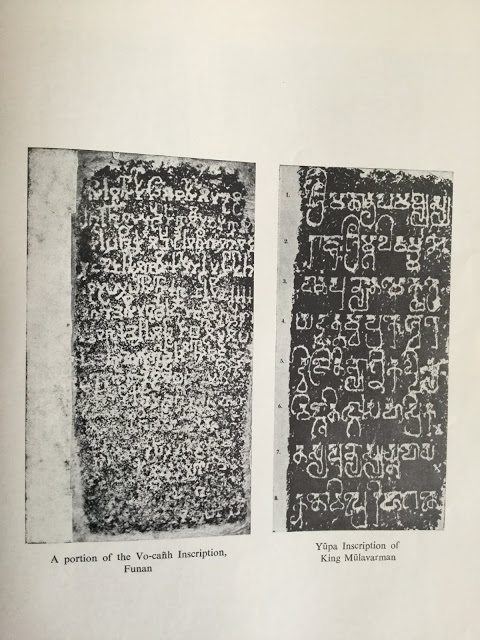
In Borneo scattered undated materias are found near Kapuas, Rata and the Mahkam rivers or in isolated pockets, the earliest epigraphic data from the island refer to Kotei at Muarakaman, on the Mahakam river in Borneo dated 400 CE.

The Kutei inscriptions are seven in number, of which four were found in 1879 and the rest in 1940. The inscriptions belong to Mulavarman, son of Asvavarman and grandson of Kundungga.

The inscriptions engraved on stone Yupas or sacrificial posts, refer to the performance of certain rituals and offerings of various kinds.

Mulavarman Sanskrit Inscription in Bangkok Museum.

In the second part let us look at the appearance of Yupa.


–to be continued…………………….


HOW DID SHIVA GET TIGER SKIN? (Post No.5177)

Compiled by London swaminathan


Date: 3 JULY 2018


Time uploaded in London –   18-52 (British Summer Time)


Post No. 5177


Pictures shown here are taken from various sources such as Facebook friends, Wikipedia, Books, Google and newspapers; thanks. Pictures may be subject to copyright laws.

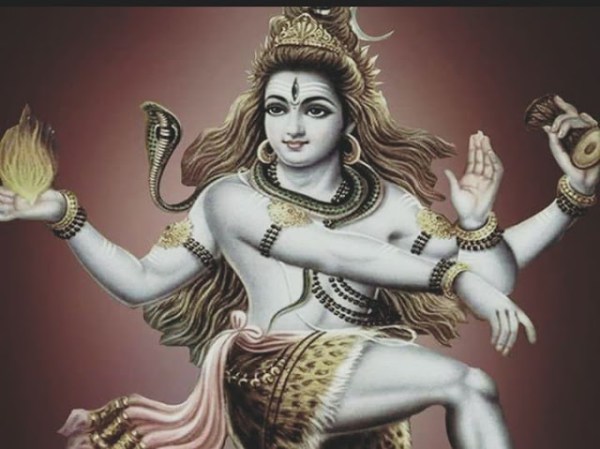
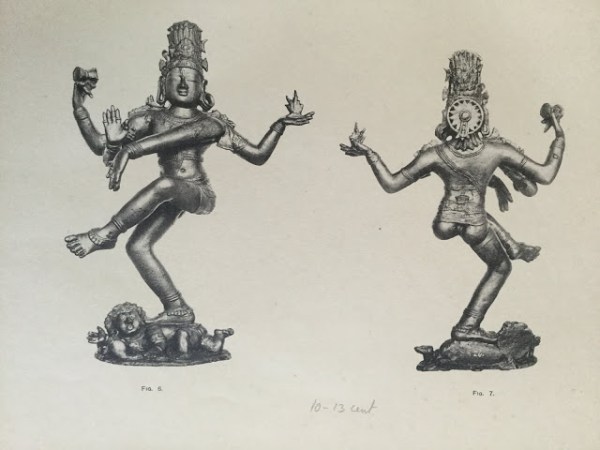
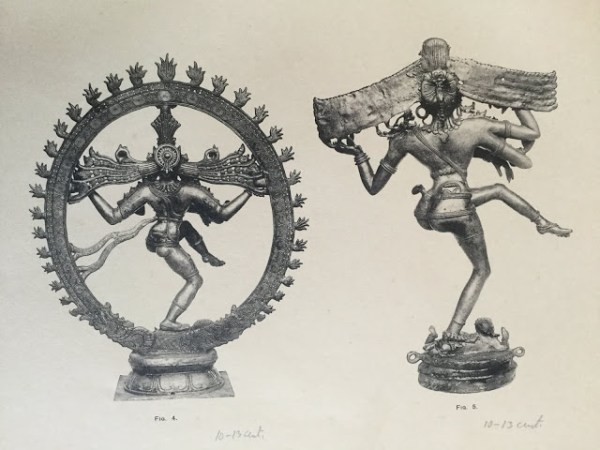
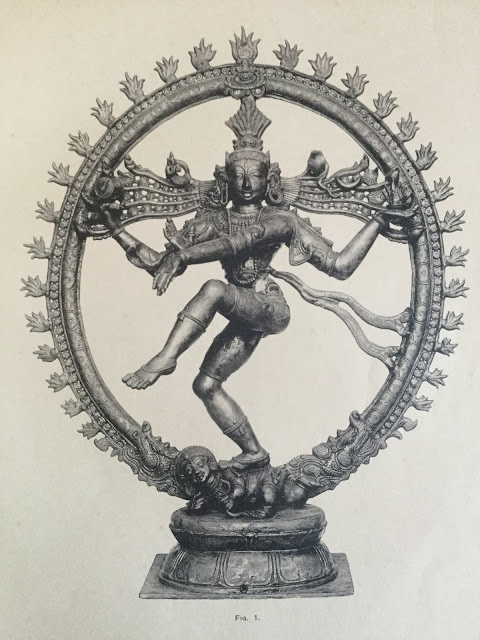
NATARAJA is the cosmic dancer. Shiva is represented in dancing form. He is four armed and has flowery braided locks ending in tight curls and whirling in the dance.


On the proper right side, In the flying hair, is a figure of Ganga represented as a ‘nagini’, on the left a cobra and the crescent moon. The head dress contains a skull and terminates in a fan of cassia leaves.; a pearl fillet encircles the forehead. a man’s earring is worn on the proper side and a woman’s on the left.


Of the four hands the rear right holds a drum (udukkai), the rear left a flame in a dish. The front right is in ‘Abaya mudra’ (do not fear gesture), the front left hand points to the lifted foot. Amongst the many ornaments are small bells tied round the calf of the leg. The whole figure is enclosed in a fiery arch (tiruvaasi), arising from the mouths of a pair of addorsed makaras, established on a lotus pedestal (padmasna).

Why?

“A legend is told in explanation of this dance (in the Tamil Peria Puranam) as follows:

In the forest of Taaragam there dwelt multitudes of heretical rishis, followers of the Mimaamsa. Siva proceeded there to confute them, accompanied by Vishnu disguised as a beautiful woman, and by Vishnu’s servant Aati Sesan, the naga Ananta.


The sages were at first led to dispute amongst themselves, but their anger was soon directed against Lord Siva, and they endeavoured to destroy Him by incantations
A fierce tiger was produced in the magic fires, and rushed upon Him. But he seized it in his hand stripped off its skin with the nail of his little finger, and wrapped it himself about as a garment.


The sages renewed their offerings , and produced a monstrous serpent , which Siva took in His hands and wreathed about his neck like a garland. Then he began to dance, but there rushed upon Him a last monster in the shape of a malignant dwarf, Muyalaka. Upon him the god pressed his the tip of his foot, and broke the creatures back, so that it writhed upon the ground, then he resumed the dance, beheld of God’s and Rishis.
On this occasion. Ati sesan obtained the boon to behold the dance again in Tillai, sacred Chidambaram, the centre of the universe.”
Symbolic Representation


More significant than the details of this legend, are the interpretations constantly referred to in the Saiva hymns. The dance called ‘Naadaanta’, represents the movement of energy within the universe. It is Siva’s Five Activities, ‘Creation, Preservation, Destruction, Embodiment and Release’. The drum is for Creation, through sound which for Hindus has always a moulding force on the material environment, the flame for Destruction by fire. The dwarf is Illusion, Plural Perception , the fetters of Time, Space and Casuality, the sense of Egoity, in general ‘Avidya’.


–Ananda Coomaswamy about the Museum pieces in Colombo Museum, Year 1914.


–Subham–

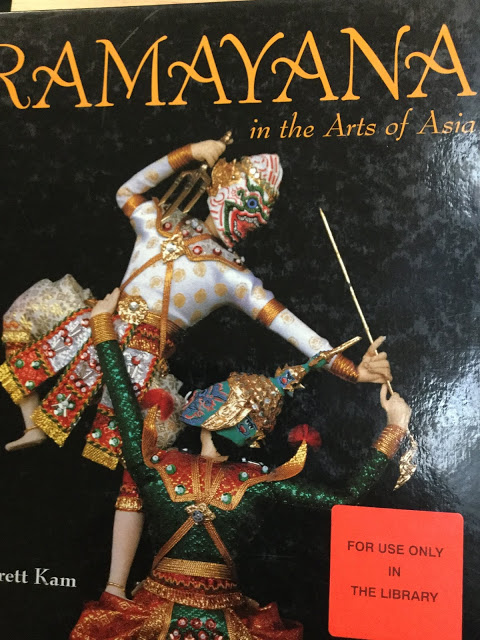
RAMAYANA IN ARTS OF ASIA BY GARRETT KAM (Post No.5166)


RAMAYANA IN ARTS OF ASIA BY GARRETT KAM (Post No.5166)


Written by LONDON SWAMINATHAN


Date: 30 JUNE 2018


Time uploaded in London –  13-56 (British Summer Time)


Post No. 5166


Pictures shown here are taken from various sources such as Facebook friends, Wikipedia, Books, Google and newspapers; thanks. Pictures may be subject to copyright laws.


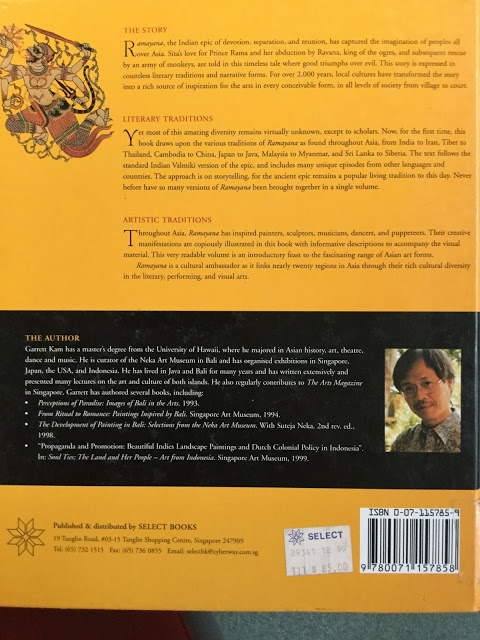
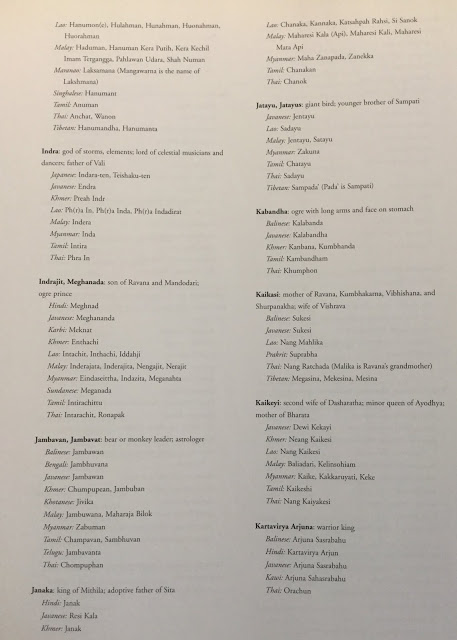
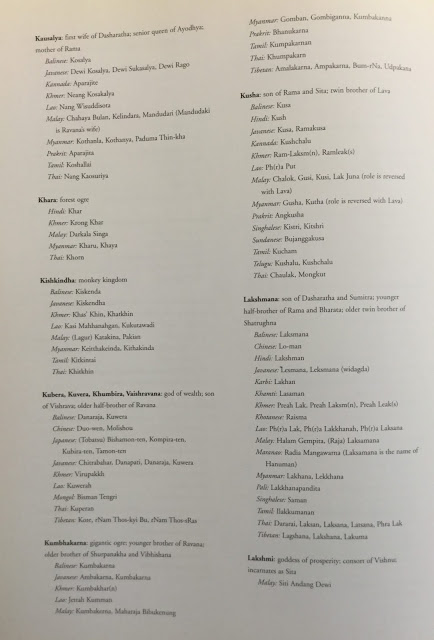
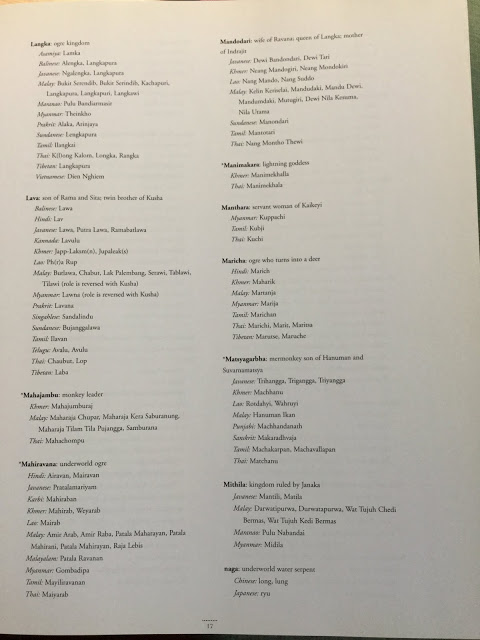
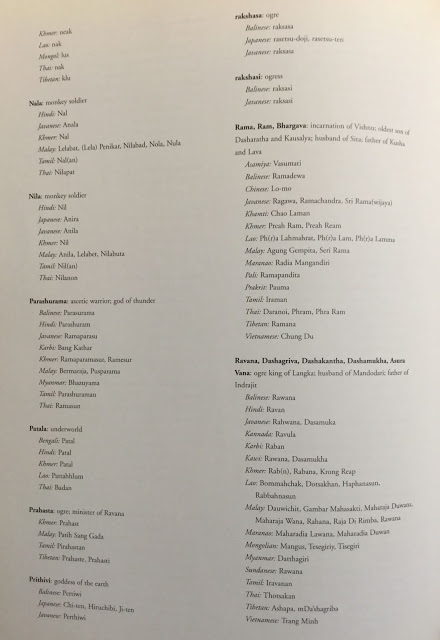
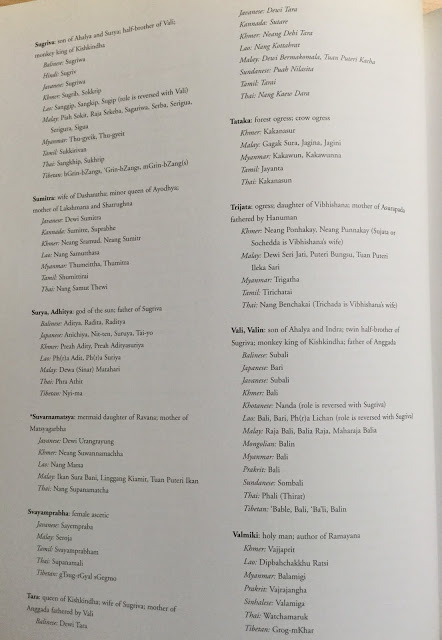
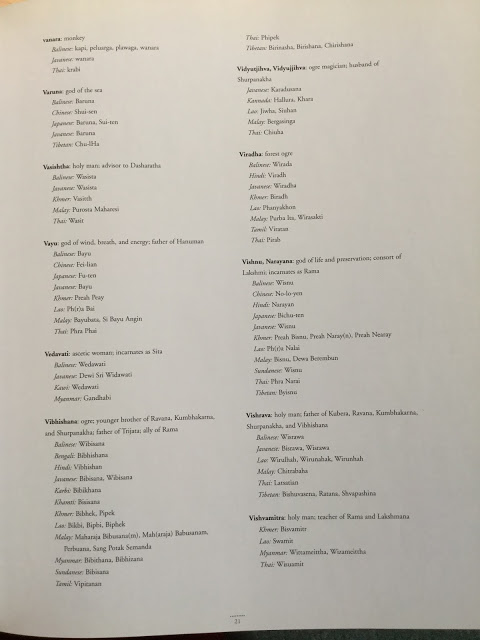
Ramayana in the Arts of Asia is a wonderful book with lot of information with particular reference to South East Asia. Author Garrett Kam is a scholar in the art history. I have found some useful information and pictures which I have never seen in any other book on Ramayana.


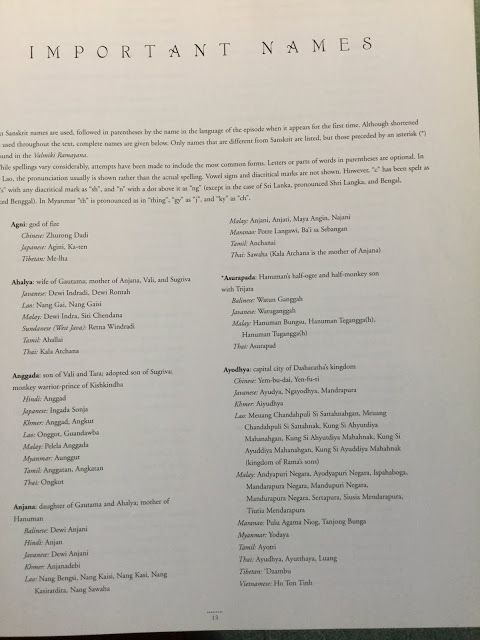
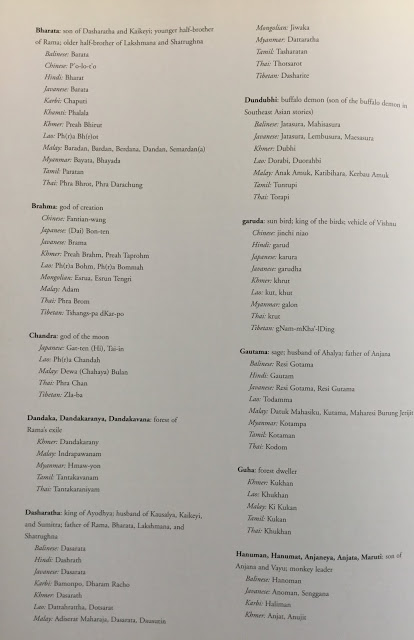
Ramayana character names change in all languages This is very useful for researchers. With is as a guide we can figure out the names of Hindu Gods in different countries. The pictures from private collections and museums are not available in other books. The display of important points in boxes is very attractive. I am just reproducing some pages which shows the Ramayana names in different cultures. Please enlarge the pages and read.


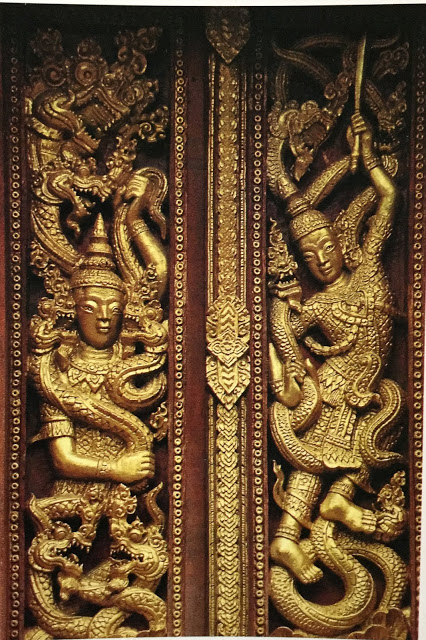
Nagapasa binds Rama and Lakshmana.


Everyone must buy this Encyclopaedia on Ramayana.


–subham–

HARE KRISHNA RATHA YATRA IN LONDON ON 24 JUNE 2018 (Post No.5149)

Written by LONDON SWAMINATHAN


Date: 26 JUNE 2018


Time uploaded in London –  7-51 am (British Summer Time)


Post No. 5149


Pictures by London swaminathan


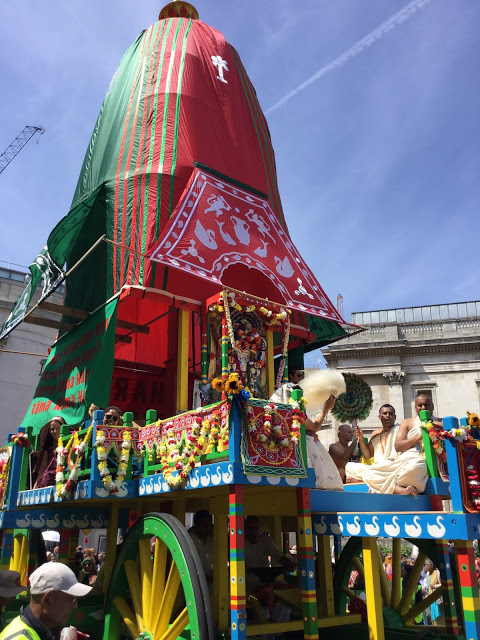
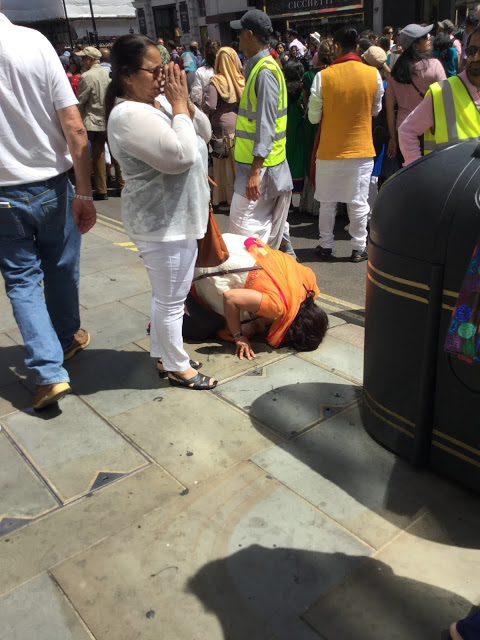
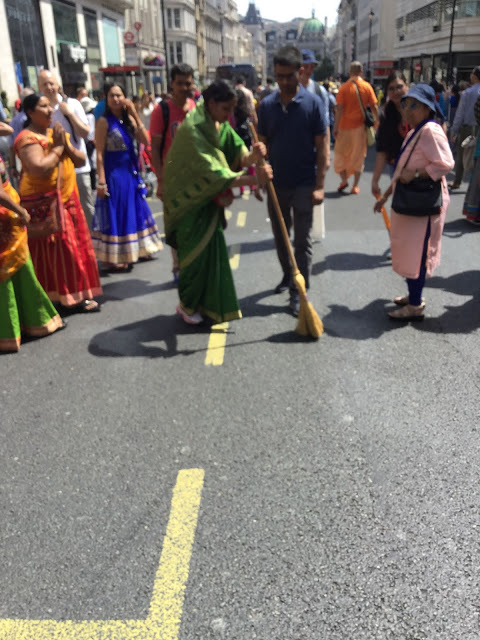
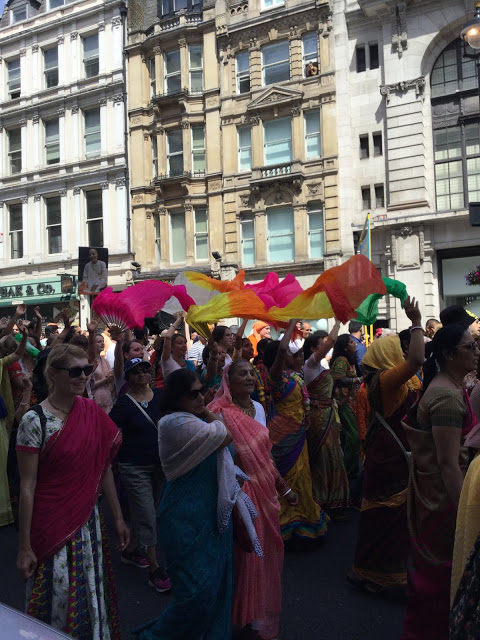
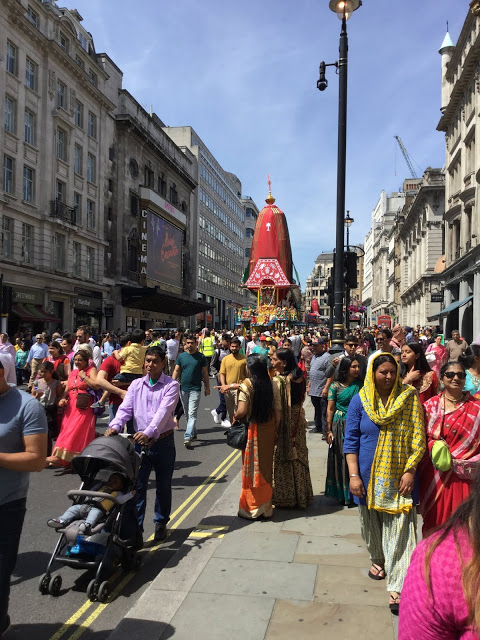
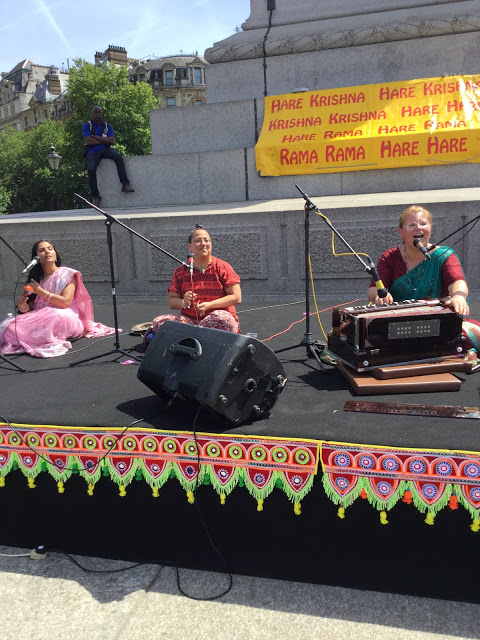
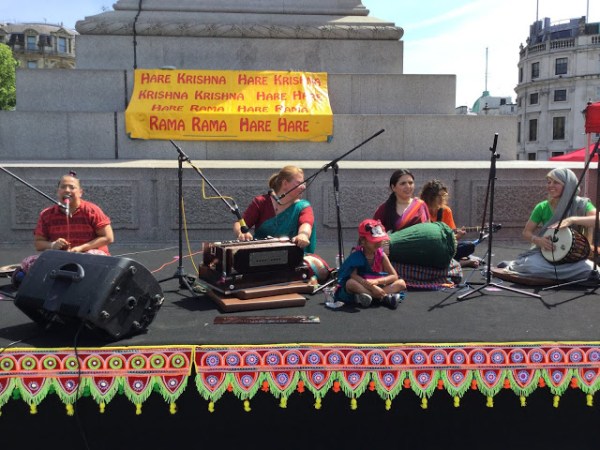
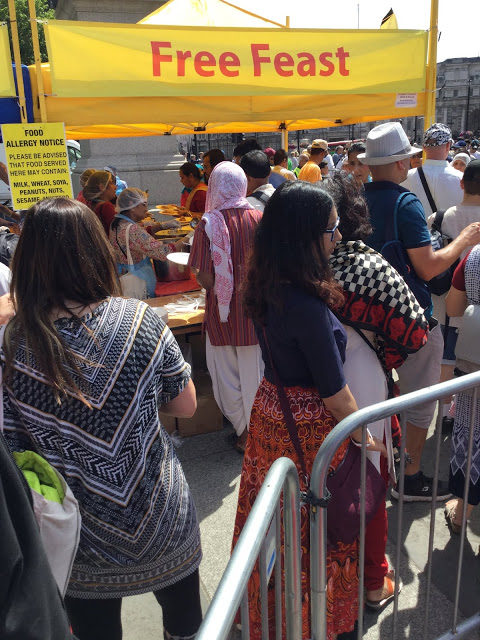
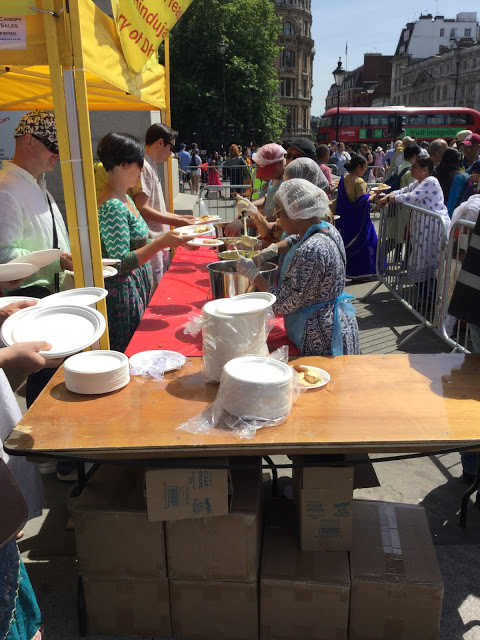
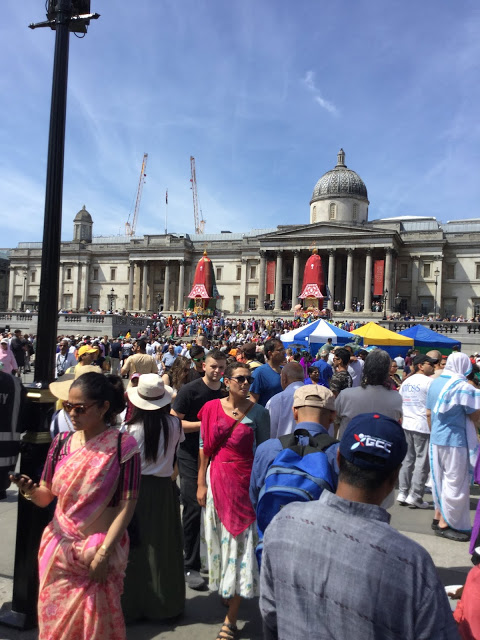
International Society for Krishna Consciousness (ISKCON), also known as Hare Krishna movement, conduct annual Chariot Procession in all the major cities of the world every year. Chariot Procession (Ratha Yatra) of Lord Krishna and Balarama took place on 24 June 2018. The devotees gathered in thousands and they came from far off places. The procession went through the heart of London where millions of pictures were taken by the tourist as well as devotees. It started from Hyde Park and finished at Trafalgar Square where all had free vegetarian meals given by the Hindujas.


The devotees followed all the nine attributes of a true devotee and the pictures prove it


Nine Sadhanas

In a sloka in the Bhagavata, Prahlada explains to Hiranyakasipu that there are nine sadhanas to foster Bhakti, namely,

Sravana = Listening to the stories of God’s Lilas,

Kirtana = Singing  His praises

Smarana = Constantly remembering them

Padasevana = Serving him and his disciples

Archana= Worshipping him with flowers

Vandana = Saluting him and taking refuge in him

Dasya = Treating him as our boss and obey his commands

Sakya = Treating him as his life time friend

Atmanivedana = Dedicating oneself to Him (Ultimately comes the stage when one offers himself up to God effacing his self completely)


Please see the pictures below taken by me:–


-Subham-

Proverbs on God (Post No.5138)

Compiled by LONDON SWAMINATHAN


Date: 22 JUNE 2018


Time uploaded in London –  18-51  (British Summer Time)


Post No. 5138


Pictures shown here are taken from various sources such as Facebook friends, Wikipedia, Books, Google and newspapers; thanks. Pictures may be subject to copyright laws.

1.Man proposes, God disposes
The greatness of the Almighty is beyond the ken of one’s comprehension

acintaniiyo mahimaa paresithuh- Kahaavatratnaakar (Sanskrit).


Who can comprehend the ways of God?- viramaorvasiiya of Kalidas

ko devata rahasyaani tarkayisyati


Tamil also has this proverb—Thaan ondru ninaikka Deivam ondru ninaikkum

2.God helps them that help themselves


God is the right hand of the diligent.


nityam prayatammaanaanaam sahaayah paraleswarah

3.God hath leaden feet but iron hands

Tamil- Arasan Andre Kolvaan, Deivam nindru kollum

God pays back the dimwit in his own coin

devopi mandaaya dadaati mandam

4.God provides for him that trusteth


Those devoted to Narayana know no fear

naraayanaparaah sarve no kutacana bibhyati -Bhagavata Purana


Never does anyone who does good, tread the path of woe- Bhagavad Gita 6-40


na hi kalyaanakrt kascid durgatim taata gachchati – BG 6-40

My devotee perishes neve- Bhagavad Gita 9-31

na me bhakta pranasyati -9-31

5.God shapes the back for the burden


What is impossible for the Creator?

Dhaaruh kim naama durghatam- Brhat kathaa Manjari

6.God tempers the wind to the shorn lamb


Nectar turns into poison and poison turns into nectar, if the Lord so chooses- Raguvamsa of Kalidasa


visamapyammrtam kvacidbhavedamrtam vaa visamiisvarecchayaa

7.Gods mill grind s slow but sure
Tamil- Arasan Andre Kolvaan, Deivam Nindru Kollum
Lord Krishna gave 99 chances to criticise him. When he did it for 100th time he was done away with.


8.When need is highest, God’s help is nighest

Draupadi was helped by Lord Krishna;


Elephant Gajendra was helped by Lord Vishnu;


Prahlada was helped by Narasimha;


With the Lord’s grace, the negative traits convert into positives -Subhasita Ratnabhandaagaara


9.Whom god would ruin, he first deprives of reason
Vinasa kale Vipareeta Buddhi

Samsayaatmaa vinasyati – BG 4-40

Doubting Thomasses perish

10.Every man for himself, and god for us all 
Tamil- Dikkatravarkku Deivamee Thunai


What is impossible with the unfailing benediction of the gods?- Kathaa sarit saagara


Four kinds of people worship me: the distressed, seeker of wealth, the wise and the seeker of knowledge; the wise is dear to me.- BG 7-16

11.There is no going to heaven in a sedan
God’s will is formidable- Mahabharata
12.Ye cannot serve god and mammon


No ills of life ever touch those that alone cling to the feet of Him who is beyond the world of likes and dislikes

13.Short prayers rise up to heaven


The power of God is so great that it opens doors everywhere- Ramayana manjari

14.Bells call other’s but themselves enter not into the church


Not the fishes in holy Ganges go to heaven- Ramakrishna Paramahamdsa
15.The nearer the church the farther from the God


The head which bows not at the feet of God of eight attributes is as worthless as organs which do not perform their proper functions -Tirukkural -9

16.Like priest like people

Lord Krishna says that people follow good people in the Bhagavad Gita

Whatever action a great man performs common man follows- BG 3-21

17.He that would learn to pray let him go to sea.
Deeds, good or evil, that spring from darkness shall not affect those who gloriously sing the praise of theLord – Tiruvalluvar, Kural 5


Lord Krishna also say that those who are in trouble pray to him in Bhagavad Gita (Sea Travel is such a difficult one)


18.Faith can remove mountains 


Padmapada walked on water when his Guru Adi Shankara called him from the other side of the Ganges

Dumb becomes eloquent and lame cross the mountains with the grace of God- Muka Kavi


Muukam Karoti vaachaalam, Pankum langrte Girim


19.The just shall live by faith

Truth is dear to God


Isvarah satyavaak praiyah- Kahaavatratnaakar

-subham-


Ganesh and Navagraha in Japan!! (Post No.5125)

Compiled by LONDON SWAMINATHAN


Date: 18 JUNE 2018


Time uploaded in London –  16-26  (British Summer Time)


Post No. 5125


Pictures shown here are taken from various sources such as Facebook friends, Wikipedia, Books, Google and newspapers; thanks. Pictures may be subject to copyright laws.


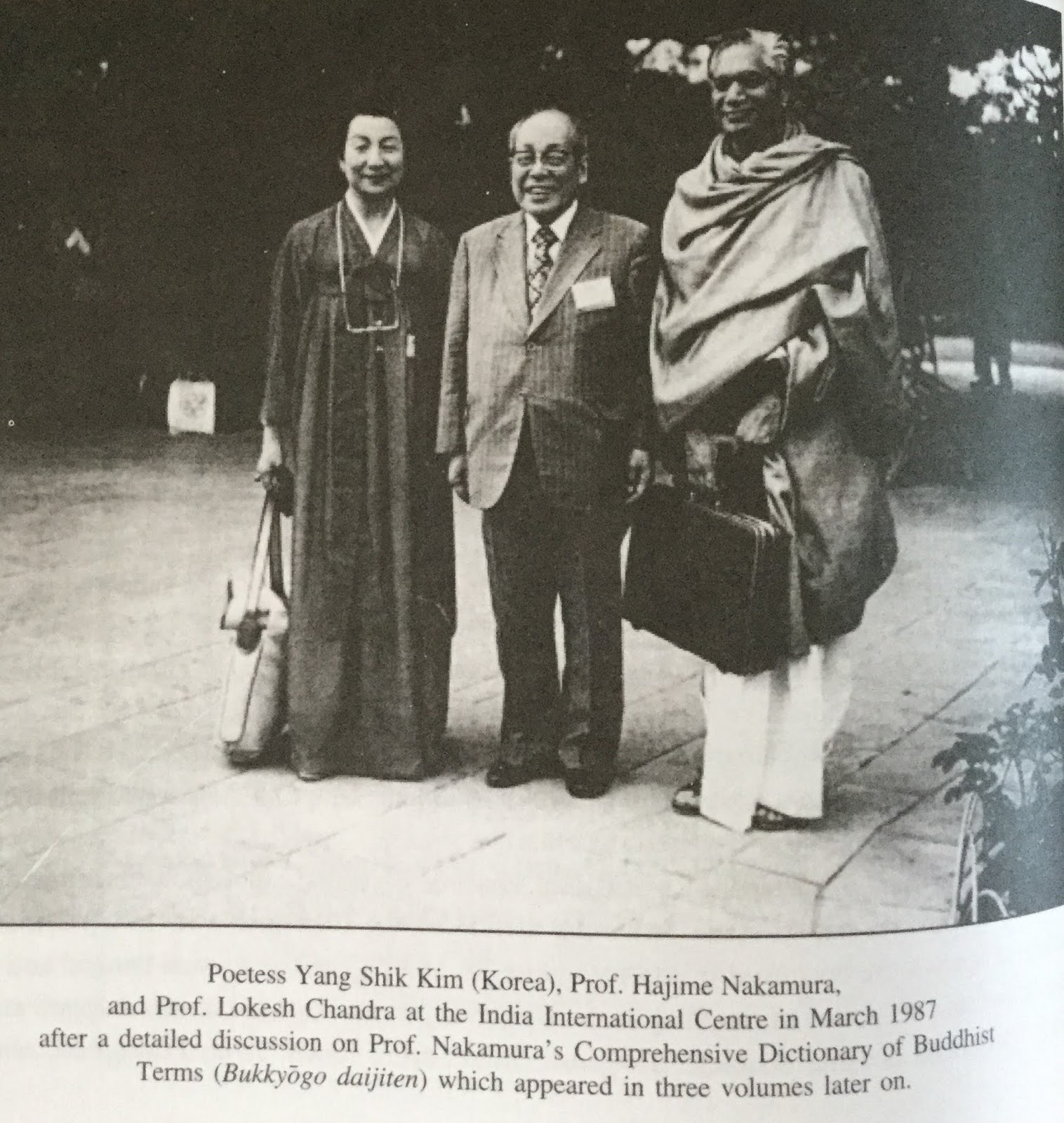
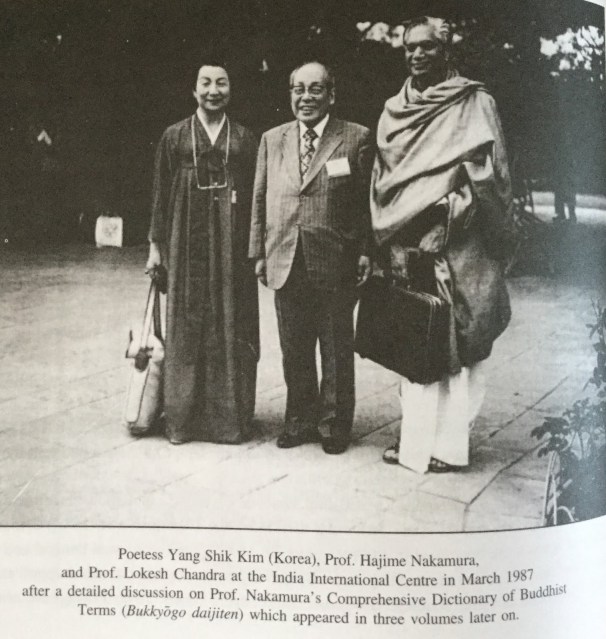
Those who are interested in the ancient history of India and Japan must buy Lokesh Chandra’s book
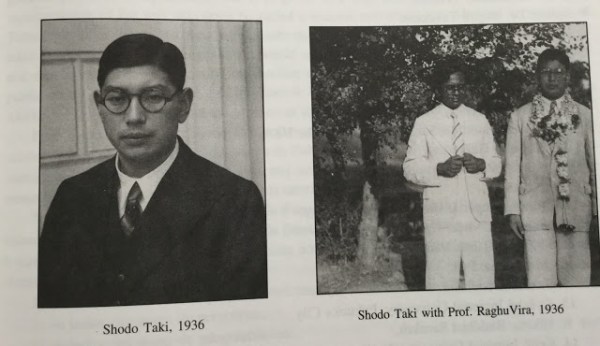
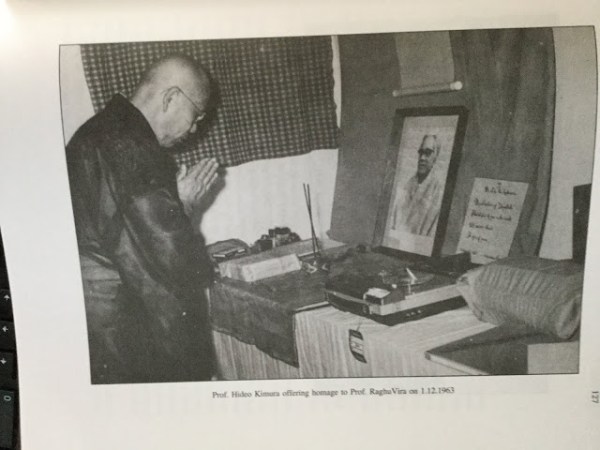
‘Cultural Interflow Between Indian and Japan’ (published by International Academy of Indian Culture and Aditya Prakashan , New Delhi, 2014) It is in A 4 size with lots of pictures an diagrams. It contains lot of information which is not known to the outside world. Mr Lokesh Chandra and his father Dr Raghuvira are renowned scholars and authority on Indo- Japanese relations of ancient periods.


I am going to give you some interesting information only in bullet points; for full information one must read the book.
Mahbaharata in the Kabuki Theatre

The well known kabuki drama Naru-kami is derived from the legend of Rsyasrnga known in Japanese as Ikkaku Sennin, that is Ekasrnga. The whole legend has been translated from Chinese into French by Edouard Chavanes. Hsuan tsang mentions a hermitage in Gandhara where Ekasrnga lived near the foot hills of Swat mountains

Homa and Homa Kundas in Japan

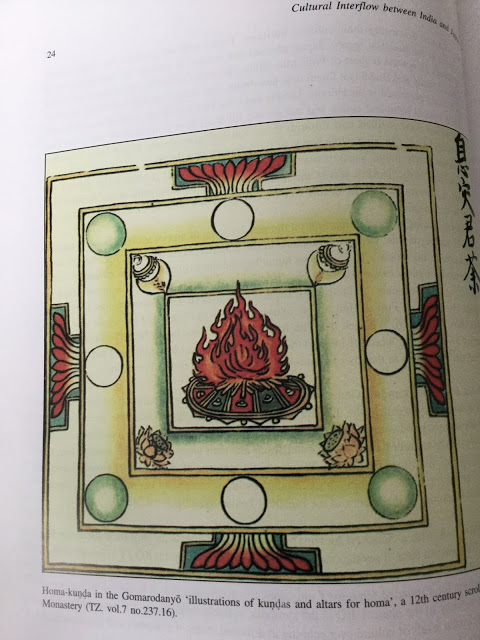
Goma (homa in Sanskrit) is lit in metallic vessel on a wooden altar. A ninth century scroll in the Toji monastery has different homa altars for the worship of planets (Nava Graha) and 28 constellations (naksatra- isti). This Goma- ro – dan -yo scroll has coloured illustrations of the planets, constellations and their altars. Goma is the esoteric fire, the calm and the fury of the ritual rhythms in the cosmic counterpoint of invocations with Sanskrit mantras.
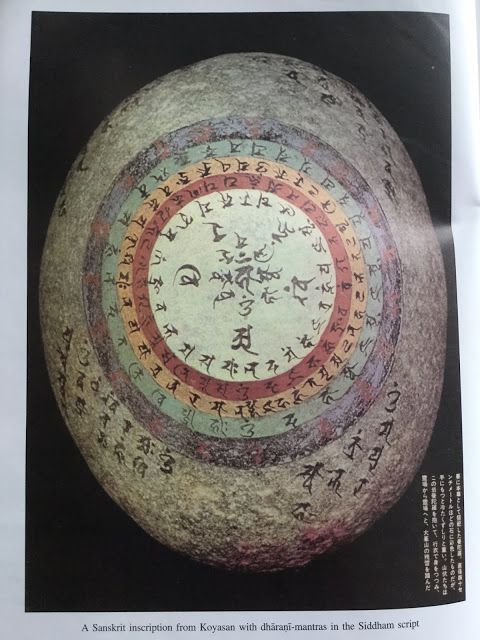
Gigantic Rock with Sanskrit hieronym

Along a road stands an oval rock about ten feet high on flat roundish base of another rock, with the Sanskrit monogram RO. Sanskrit letters implying deeper levels. A modern Japanese girl in mini, her hair dyed blonde and perhaps with a styrene injection for a round feminine form, stops by, graciously puts a tangerine on a piece of paper, as an offering to the planets. RO is the symbolic syllable of the Biijaakshara for Nava Graha Puja (Nava Graha= Nine Planets). Such are the frozen levels of culture ever echoing at different strata of existence and consciousness.

Bugaku and Gigaku

Bugaku and Gigaku dances are performed on the occasion of the Great Consecration ceremony at the Todaiji temple. Indian cultural influence is very easily recognised in bugaku’s structure. For instance one of the popular stories of Bugaku is the Bali Dance, which reproduces Ramayana’s famous story of the fight between Vali and Sugriva in the Kishkinda forest.

Gigaku, introduced twelve centuries ago, reproduces Indian legendary stories. Gigaku was also performed at the Great Buddha Consecration ceremony and moved spectators to laughter. Gikaku, masked comical dance, was believed to have been very popularly performed at the Todaji and other temples in Nara in those times.
 

Biwa= Veena

The largest lake in Japan, Lake Biwa,  is named after its close resemblance to the shape of a biwa. Thus, the Indian Viina, became the origin of Japan’s largest lake.

Buddhism in Japan

In 552 CE, the monarch of Paekche (Kudara/Korea) presented a gilt bronze image of Saakyamuni, Sutras, banners and umbrellas to the Japanese emperor Kimmei. The emperor replied that, “never from former days until now have we had the opportunity of listening to so wonderful a doctrine”.

Korea sent monks, a nun, a Buddhist image maker and an architect to the Japanese emperor in 577.

In 584, a stone image of Maitreya was brought from Paekche.

Dharmabodhi

Indian monk Dharmabodhi (Hoodoo) came via China and settled in Hokkezan.
The Brahmin Archbishop

Floating in a sea of verdant woods in the golden ornament of the imposing roof of the Daibutsu-den “Hall of the Great Buddha” of the Todaiji temple. It enshrines the Viraat Rupa of Rocana, in the form of a gigantic statue, in the national temple eighth century Japan. Emperor Shomu had vowed to raise this statue to a height of 48 feet to symbolise the power of the profane and profound. Twelve years and immense materials were spent in casting the Daibutsu.


on 9th April 752 it was consecrated in a sumptuous ceremony, which was presided over by Bodhisena, the first historic Indian to have visited Japan. He was a Brahmin of Bharadvaja Gotra. Inspired by Manju Sri, he went to China to Wutai shan mountains sacred to Manju sri. At Imperial invitation, he arrived in Japan in 736 CE where he was warmly welcomed. The people knew him as the Baramon(Brahmin) Archbishop. He attained Samadhi on 25 February 760.


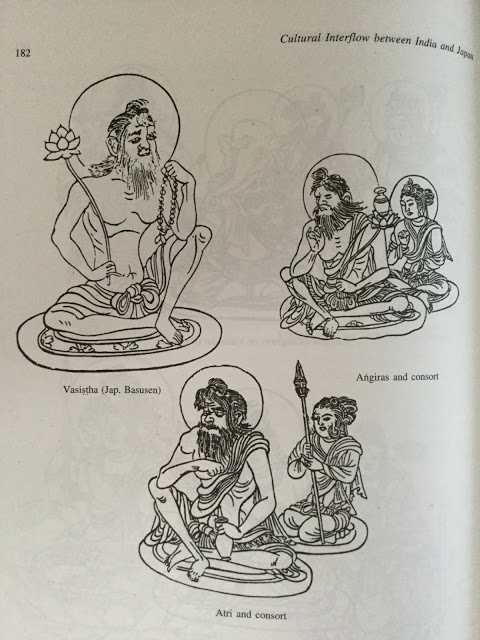
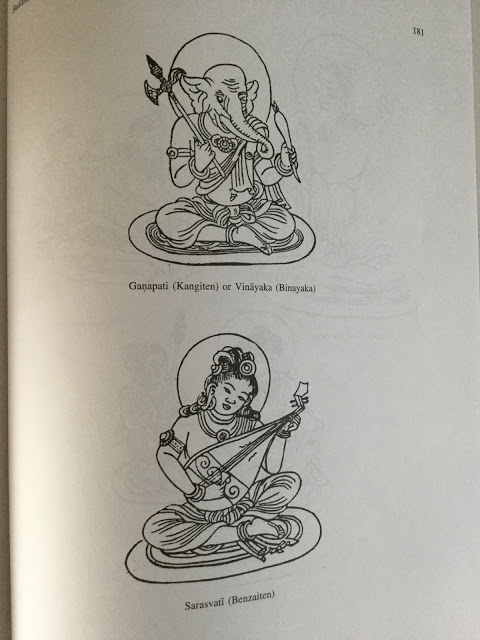
In Todaiji temple consecrated by the Brahmin Archbishop, we can view an expressive range of Nara sculptures of Brahma, Indra, Four Lokapaalass, Surya, Candra, Sarasvati and Sri Mahaadevi. Among them is a Krishna like figure playing the flute.


In front of the Great Hall of Buddha stands the eighth century octagonal bronze lantern adorned with musicians.


Largest Buddha statue in the largest wooden building is found here.


Bodhisena had rescued a  monk shipwrecked in the ocean on his way to China. This monk came to Japan along with him where he received a cordial welcome from monk Gyogi and was taken to the capital Nara in 736. His name was Buttestu (Buddhasthira??) He introduced music from his native land of Champa. He introduced Hindu- Buddhist music dances and dramas in Sanskrit.


Indian Cotton

Praajnaa (born 744 CE) was a monk from Kapisa who had studied at Nalanda University. In 781 he went to China and translated several Sutras. His writings in palm leaves were brought to Japan


In 799 an Indian was washed ashore somewhere in the Makawa province. A young man of twenty years, with nothing to cover his body except a straw coat and short drawers, he was stranded in a country where none understood him. Years later when he became conversant with Japanese, he said that he had come from India. He had seeds of cotton with him. He lived at the Kawadera temple at Nara. Two ancient chronicles Nihon -koki, and Ruiju-kokushi mention that he introduced the cultivation of cotton which became the most important clothing material. The Japanese words WATA or HATA for cotton are derived from Sanskrit ‘Pata’.
Ka, ka, ki, ki, ko, ku


India and Japan drink from common springs of culture. I go to children’s school and hear the Goju-on

a i u e o

ka ki ke, ke ko

It reminds me of my childhood when I recited, in like manner, the syllabary

Ka, Kaa, Ki, Kii, Ku, Kuu, Ke Kai …..

The Japanese language is written in the kana syllabary along with Kanji or Chinese characters. The kanji unites India and Japan at the deepest levels.
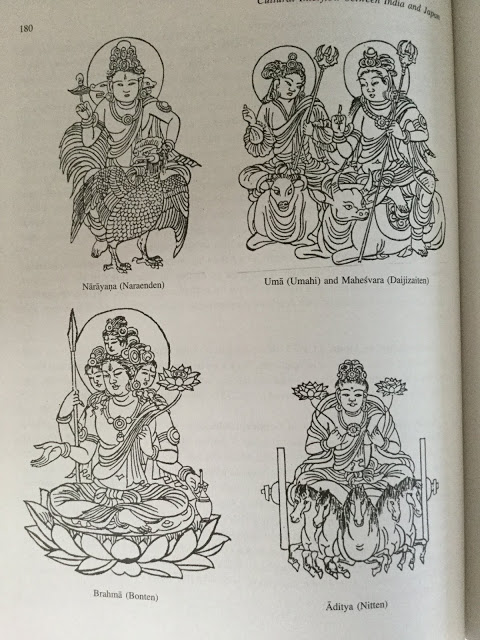
A Japanese child recites the IROHA poem, which has all the fifty sounds of the alphabet and every syllable occurs only once It is called Citrakaavya in  Sanskrit.

When many decades have passed, the child now matured, realises that he had sung impermanence in the IROHA, as he saw the cherry blossoms fade and fly away. It is a free translation of the Sanskrit poem.


One of the greatest poems in Japanese language, it was inspired by the Sanskrit work, Mahapari nirvana Sutra. To this day every Japanese child begins his education with this IROHA poem. Japan has preserved this stanza in original Sanskrit. It has been lost in India.
Ganesh Temples in Edo

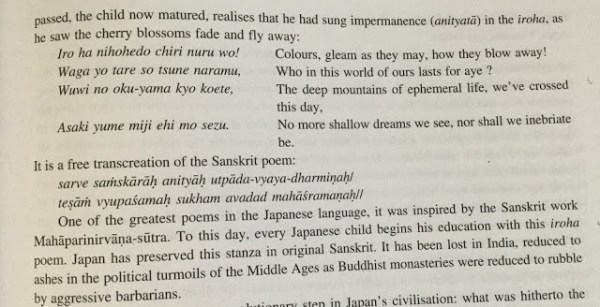
The German doctor Phillip Franz von Siebold lived in Edo, Japan during he years 1823-28. He wrote Pantheon von Nippon (1832). He notes that Ganapati was popular among the masses in the Edo period, and there were several temples. The area is known as  Shoten Choo, Ganapati Township, to this day. I visited the Ganapati Temple Shotengu in the frequented area of Asakusa.  In 1970 I saw a huge gathering of young boys and girls who had come to pray for success in their courtship as he is Nandikesvara (Kangiten). Senior people too thronged for all kinds success.

There were 131 shrines to Sarasvati. The German text deserved to be translated into English to get vivid picture of vibrant Buddhism in Edo. In 1836 a shrine to Varuna was consecrated to prevent typhoons. The Japanese worshipped Indra for long life, Brahma to succeed in Imperial service, Varuna for rain, Garuda to cure poisoning and Mahaa  kaala (Good Time) for good business and for victory in war. Japan has the oldest functioning temple of Ganapati in the world.


My comments

The book by Lokesh Chandra has about 400 pages. It is an encyclopaedia on Indo-Japanese Cultural Links. If I give all the information in the book, it will be a gross violation of copyright rules. Everyone must buy the book and read it.


After reading the book, I feel Japan is a fertile field for spreading Hinduism. There we see a mixture of Hindu and Buddhist beliefs.
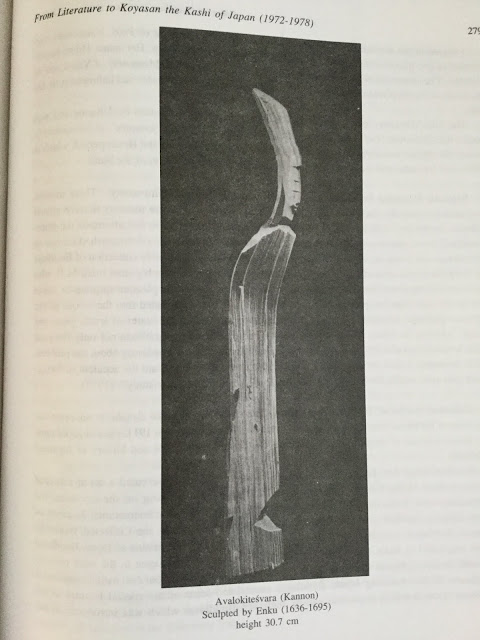


Enku made 100,000 Chip Buddhas (see my article posted yesterday)
–Subham–


One Lakh Buddhas in Wood by Enku!(Post No.5122)

Compiled by LONDON SWAMINATHAN


Date: 17 JUNE 2018


Time uploaded in London –  20-13  (British Summer Time)


Post No. 5122


Pictures shown here are taken from various sources such as Facebook friends, Books, Google and newspapers; thanks. Pictures may be subject to copyright laws.


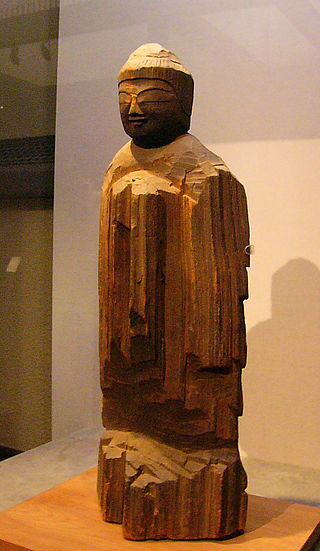
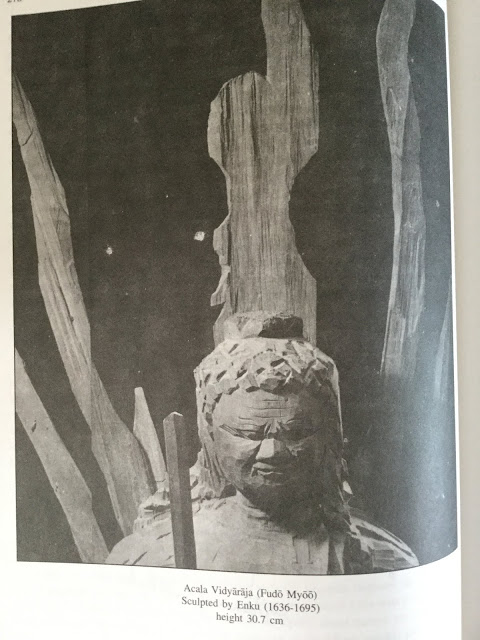
Like Hindus do Laksha archanai (Laksha= 100,000, Archanai- Puja with flowers), like some devotees write name of Ram or Siva 100, 000 times, Enku (1632-1695) made 100,000 wooden sculptures of Buddha. Japanese monk Enku did ‘Chip Buddhas’ with the stroke of a chisel. They were carved on chips and splinters of wood and were known as ‘koppa bustu’ (chip buddhas). In the economy of strokes and a rough and direct style they seem extremely modern.

Enku took 28 years to fulfil his vow of making 100,000 Buddhas. He was 59 when he finished the last Buddha and he wrote on the last Buddha- ‘one hundred thousand Buddhas completed’.


This was his first part of worship ’Saakaara’. It had to culminate in the Niraakaara -an iconic of Samadhi. Enku asked a hole to be dug in the ground beside the Nagara river. He sat in it, had it covered thick with earth, and put a bamboo tube to breathe. Fasting, chanting prayers, ringing a bell he remained interred and passed away. He attained supramundane Samadhi of Suunyataa, animitta and nirvana.


Tall oak and cherry trees entwined with wisteria vines stand at the spot. People in the village say that these wines will bleed if anyone cuts them.

To cite monk Enku himself:

“Each day the mind grows purer

The moon in the sky and myself

Round and full”

Japanese Saint learnt Sanskrit from Saraswati

In the eighteenth century lived a saint of noble virtue and great learning whom the tradition has honoured with the highest epithet of ‘sonja’ ‘aarya’, ‘arhat’.

He was Jiun Sonja (1718-1804), the last Sanskritist in the traditional style’. He planned a corpus of all Sanskrit texts found in Japan in 1000 fascicules, of which 300 fasciculi are preserved in his Kokiji monastery. He tried to reconstruct the Nayasuutra in Sanskrit. He collected palm leaves preserved in the Horyuuji, Kairyuoji, Shoryoji, Zuissenji and other monasteries. I published 59 Sanskrit texts from his writings in Sanskrit Manuscripts from Japan Parts 1 and 2—writes Lokesh Chandra in his book


Jiun Sonja used to say, “Sarasvati had manifested Herself to teach me Sanskrit and I have heard Sanskrit pronounced by  her. When I take up my pen, it is very likely that I am scribling in Sanskrit”.

Sanskrit was the waves of Dharma and Jiun Sonja the shore, the shadow of palm leaf sutras falling in his scriptorium, his mind dancing on the ripples of Bongo (Sanskrit) and  Sanskrit  words blooming in the serenity of his calamus in the flow and flourishes of the Siddham script: all unified India and Japan in the glimmer of the divine.

He undertook the 1000 fasciculed encyclopaedia of texts ‘Bongaku Shinryo’. Tradition has it that goddess Sarasvati had herself appeared to the sage Jiun and initialled him into the mysteries of the divine language Sanskrit. He spent his 30 years at the Kokiji Monastery to deepen his moral excellence to cultivate Dharma. No wonder Sarasvati is the presiding deity of the Kokiji where annual prayers are offered to Her.


–SUBHAM–


HINDU AND BUDDHIST WONDERS IN JAPAN (Post No.5118)

Bodhi Daruma doll

Compiled by LONDON SWAMINATHAN


Date: 16 JUNE 2018


Time uploaded in London –  18-36  (British Summer Time)


Post No. 5118


Pictures shown here are taken from various sources such as Facebook friends, Books, Google and newspapers; thanks. Pictures may be subject to copyright laws.


SUGAR
Sugar was invented by Ikshvaku dynasty, Ikshvaku means sugarcane. Sugar was found in the Sarasvati -Indus Valley civilisation . Sugar went to to China from India. It was brought to Japan by Chinese priest Gangin of the Tang Dynasty in 753. Kobo Daishi brought sweets from China. From 15th century sweets of all kinds were manufactured in Japan.

Uruchi
India and Japan shared uruchi I.e. rice which is ARISI (in Tamil).
Oryza sativa in botanical term= Vrihi in Sanskrit.
xxx


Daruma Doll
Bodhidarma who introduced Zen Buddhism to China in early part of sixth century lives in the daily life of Japan as Daruma doll.


In 1978 the Conservative Yukon Hayashida won the gubernatorial election in Kyoto ending 28 years of communist administration in their traditional stronghold. As a sign of victory, he daubed in the other eye of Daruma doll, and one eye had already been painted before the elections.


On 21 February 1990, prime minister Toshiku Kaifu inked an eye to a huge Daruma doll, to celebrate the victory of the ruling Liberal Democratic Party in the National elections.

The stylised mask of Daruma-san emphasises the fierce mien of Bodhidharma . From the fire of his meditation arose the martial arts as well as from his training as a young prince Kanchi .
The roundish Daruma doll is a must for success in life. Bodhidaruma spent eight years in uninterrupted meditation. At last when he tried to stand up, he found that his legs atrophied. That is how the round doll came up.


Margaret Thatcher and Bodhi Daruma Doll

British Prime Minister David Cameron has praised Nissan’s production of their new 100% Electric car, the Nissan LEAF, at its Sunderland plant. The Japanese company has invested £420million in the production of the car, which will support 2,000 jobs in the UK’s automotive industry.

David Cameron also got the chance to take part in a traditional Japanese ceremony, when he coloured in the eye of a Daruma doll, which late former Prime Minister Margaret Thatcher had done when the plant first opened in 1986. Since then the plant has went on to produce over seven million cars.

Xxx

Lakshmi came to Japan

Japanese Lakshmi in British Museum
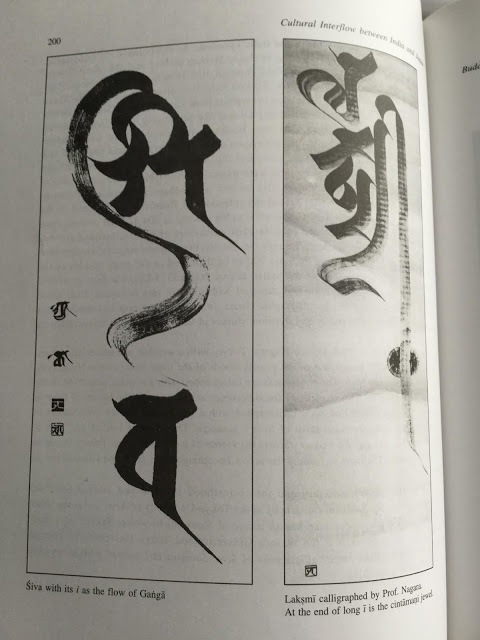
The British museum sent 300 treasures to Japan in celebration of the 50 years of India in independence in 1997. A star attraction of the e hibition was the eleventh century Heian wooden image of Kichijoten or Lakshmi. She wore the robe s of the Heian period, her right hand in Varada Mudra of granting affluence, and the left hand held a Cintamani jewel.


Lakshmi in Japan

Source Lokesh Chandra Book- CULTURAL INTER FLOW BETWEEN INDIA AND JAPAN

–subham-

EFFECTIVE MEDICINE TO KILL YOUR MOTHER IN LAW! (Post No.5067)

Written by London Swaminathan 


Date: 1 JUNE 2018


Time uploaded in London – 13-25


Post No. 5067


Pictures shown here are taken from various sources such as Facebook friends, Books, Google and newspapers; thanks. Pictures may be subject to copyright laws.


WARNING: PLEASE SHARE MY ARTICLES; BUT DON’T SHARE IT WITHOUT AUTHOR’S NAME AND THE BLOG NAME. BE HONEST; OTHERS WILL BE HONEST WITH YOU


VERY EFFECTIVE MEDICINE WHICH KILLS MOTHERS IN LAW IS AVALABLE AROUND THE WORLD AND THE SURPRISING THING IS THAT IT IS FREE!  t


The following anecdote is the proof; I will narrate it very briefly.


A newly married couple enjoyed their life for the first one year and there came a thorn in the beautiful rose plant- that is the mother in law thorn! The thorn became sharper and stronger every time the husband called his wire @  Hi, Honey!”.


Mother in law was boiling when he heard her son saying, ‘Hi Honey I have never tasted such a tasty food in my life’ (about her cooking). Now the jealousy mother in law was fed with more fuel. She used all that fuel to torture her daughter in law. Every evening when her son came back from the office she boy’s mother submitted a list of the ‘crimes’ she did on that day; but he never listened to them; just ignored his mother.

In the meantime, the torture of mother in law went beyond the tolerance level and so the daughter in law approached a spiritual Guru. Guru listened to her patiently and said to her,

“This is no problem; I have solved lot of cases like yours. I will give a bottle of medicine. But keep it away from children; it is a slow killing poison; it will solve the problem in nine months; just add one drop of this medicine to her favourite food. and it is absolutely free. You may come to my Ashram whenever you need my help”.


She was very happy and literally snatched the medicine from the Guru and was about to rush outside. Guru called her and said to her there two important conditions which she must strictly follow them:

  1. She must prostrate to her Mother in Law every morning and cook her favourite dish

2.She must ask her the favourite dish and then cook it.

Guru told her to pretend like a very kind and caring person so that mother in law wont suspect her. Daughter in law said to swamiji:-


“Guru! you don’t need to worry about me. I have been watching  lot of T V Serials and films; So I can easily act like a good girl.”


Months went by. The mother in law started praising her sky high to every one who visited the house. Friends of the daughter in law phoned her and asked about the secret potion which made her mother in law soft. But she did not tell anyone the 9 month project.

One day mother in law called her daughter in law and praised her as ‘Maha Lakshmi (Goddess of wealth)’, most beautiful girl she ever saw and her son was lucky to get her. She also whispered into her ear that she asked her son to give her a diamond necklace very soon. She sent her old jewellery for recycling into a diamond necklace.

Now the daughter in aw felt very guilty for mixing the slow killing poison in her food. Next day she ran to Guru’s ashram and started talking. Guru interrupted, “I knew everything; the medicine is working very well; she will have to wait for a few more months to finish her off”.


But the girl said, No, Guruji, I don’t want to kill my mother in law.

Guu said to her that he cant stop it half way through. It would create more problems for her, because the poison has already started working. When she felt sad, Guru promised her to give her a better medicine which will make her happier and take away her guilt after ‘project mother in law’ finish . Half heartedly she went back.

In course of time, she got her diamond necklace  and there was a big function to celebrate her birth day—it was a surprise party!


Now she felt guiltier. Next day she ran to her Guru and told him in stronger terms. She even threated the Guru that if he did not stop the slow killing poison she would commit suicide on the day her mother in law dies and both the sins would come to the Guru.

As soon as the Guru heard this, he burst into laughter.- Big laughter- It went through the roof. And he said

Hello, my girl! your mother in law will never die; she will for long. The medicine—the slow killing poison- was nothing but sugar syrup. The real medicine was given to you (the girl)  in the form of two conditions to prostrate to mother in law every morning and cook her favourite dish. Actually, that was the medicine which worked very well”. Saying this, Guru gave her Kunkum, flowers and blessings to her.

Tears of Joy rolled over her cheek. She couldn’t speak a single word.

Be the change you wish to see in others- Mahatma Gandhi.

( This story was told by Mr M K Angajan in a spiritual talk held yesterday in London; I have given it in my words)

–subham–