Adi Sankara, Andal and Alangium hexapaetalum (Post No.4825)

Written by London Swaminathan 


Date: 17 MARCH 2018


Time uploaded in London – 13-52


Post No. 4825

Pictures shown here are taken by London swaminathan


WARNING: PLEASE SHARE MY ARTICLES; BUT DON’T SHARE IT WITHOUT AUTHOR’S NAME AND THE BLOG NAME. BE HONEST; OTHERS WILL BE HONEST WITH YOU.


Great men think alike! So, no one would believe that one copied it from the other. But there is a strange coincidence between Andal and Adi Shankara. Andal has composed two poems Thiruppavai and Nachiar Thirumozi. Adi Shankara mentioned a plant known as Azinjil in Tamil and Ankola in Sanskrit, in his hymn Sivananda Lahari. Though Andal did not mention this plant in her hymn Nachiar Thirumozi, a commentator has mentioned the plant and its strange properties.

In the commentary to Nachiar Thirumozi (4th Thirumozi, Fourth poem), Periyavachan Pillay says the following:
“The Kadamba tree which was burnt down due to the poison spit by the Kaliya snake, came back to life at the touch of Krishna’s feet. One may wonder how was it possible. Don’t you know that the mango seed smeared with Ankola (tree) oil becomes a tree at once and bears fruits? If it is so, cant Vishnus’s feet which secretes Amrita (elixir of life, ambrosia) for ever revive a tree?


The common belief is that the seeds of the Ankola (azinjil in Tamil) tree falls on the ground and when the lightning strikes the seedS go and stick to the tree. If the seeds (fruits) are collected at that time and crushed into oil and used on the mango seed, it would sprout into a full tree IMMEDIATELY and bear fruits. Another example is Rama’s feet turned a stone into a woman ( Ahalya)…… The commentary continues……………


So the miraculous properties of the Ankola tree are used by the commentators and composers for at least 2000 years.


My Visit to Singaperumal Koil

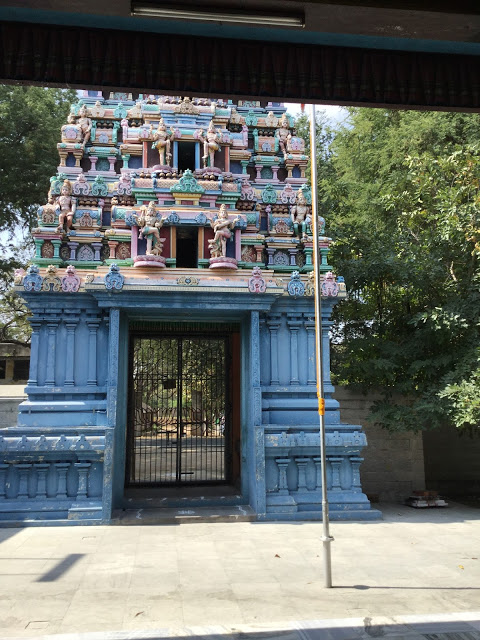
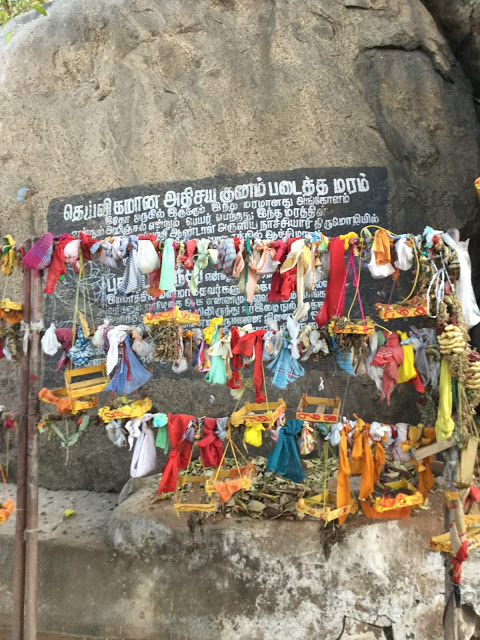
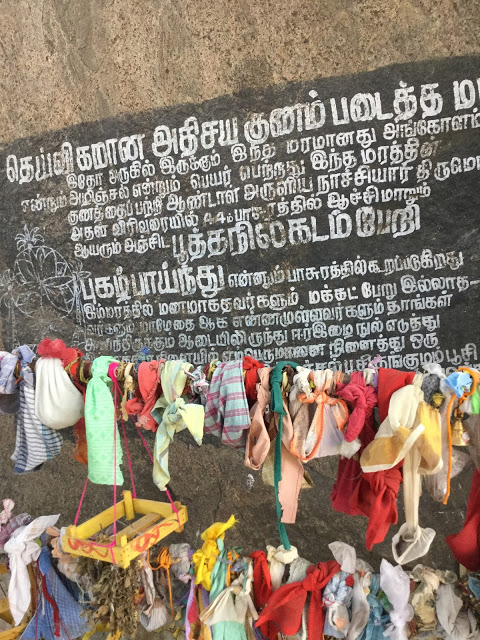
When I went to Singaperumal Koil in the first week of March 2018, I was surprised to see this tree in the hillock around the temple. It was written on the rock that Nachiar Thirumozi commentary speaks about the miraculous property of this plant. It also says that those wanted to become a genius or those who wanted to get married quickly or get an issue, have to take a thread from their clothes and hang it on the tree! As soon as I saw the tree, I remembered my old article about this plant (Please see below)


Following is my research article published in this blog on 21st August 2013.

Adi Shankara & Alangium hexapetalum
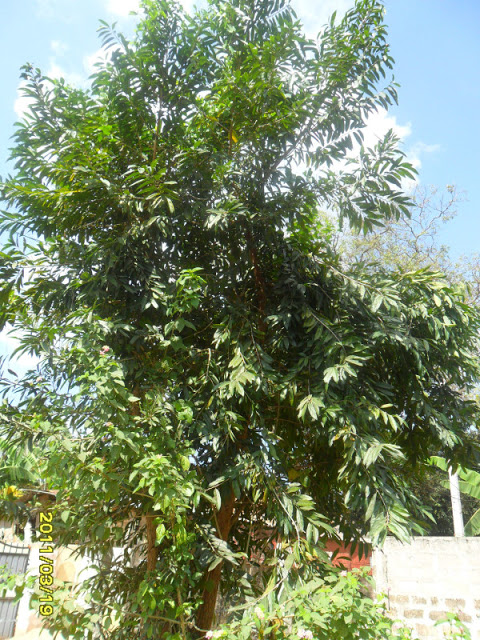
 

Adi Shankara, the greatest philosopher of India uses lot of similes from nature to illustrate Advaita philosophy. In one sloka he used four birds. I have written about it in my earlier post. One of his interesting observations is about a tree called Ankola in Sanskrit, Alinjil in Tamil and Alangium hexapetalum in botanical term. Its other variety is Alangium salvifolium.


‘’ True Bhakti or devotion is explained with the help of Ankola tree and magnet in Sivananda Lahari and Viveka Chudamani of Adi Shankara.

Ankolam nijabeejasanthathi syaskanthopalam suchika………… (Sivananda Lahari, verse 61)


Sri Shankara has explained what real Bhakti is. The relation between the devotee and Iswara(God) is explained with reference to five examples. They are the tree known as Ankolam and its seeds; the magnet and the needle; a chaste woman and her husband; a creeper and a tree; and a river and the ocean.


The ankola tree (Azinjil in Tamil) is found in the forest. It is said that when its fruits fall to the ground, the seeds, liberated from the fruit by some compelling force within, move close to the trunk of the tree, gradually climb up, and get inseparably attached to the tree. During my travels, I was shown this tree in a forest. I saw the seeds sticking o the trunk of the tree, though I was not able to observe the actual movement of the seeds from the ground to the tree. This example of the seeds which fall away from the tree struggling back and attaching themselves to the tree, is denoted by the words ‘’aankolam nija beeja santatih’’.

—- Kanchi Paramacharya’s Talk on February 8, 1958 in Madras (Page 90/91 ‘Acharya’s Call Part 2)


Later Tamil literature Seevaka Chintamani refers to this tree. This tree and its parts have got medicinal properties. It has got anti microbial activity. It is traditionally used for tonic and treatment of haemorrhoids (Piles complaint).

Andal posted by Ponnambalam Stapathy

Hindu Saint Gnanananda and Planet Mars! (Post No.4822)


Written by London Swaminathan 


Date: 16 MARCH 2018


Time uploaded in London – 13-35


Post No. 4822

Pictures shown here are taken by London swaminathan


WARNING: PLEASE SHARE MY ARTICLES; BUT DON’T SHARE IT WITHOUT AUTHOR’S NAME AND THE BLOG NAME. BE HONEST; OTHERS WILL BE HONEST WITH YOU.


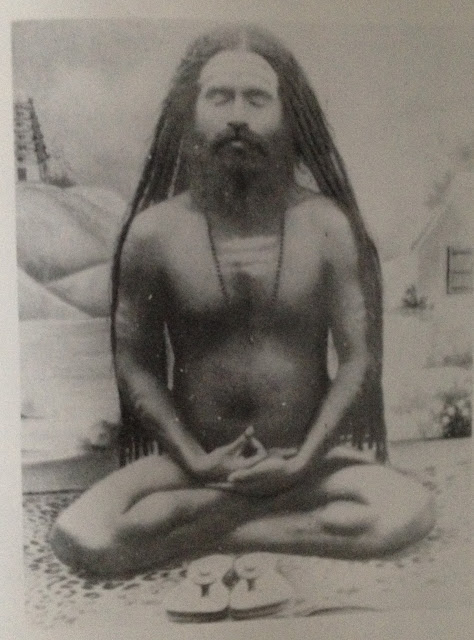
It is a strange link indeed! Swami Gnanananda was born in Mangalore and became the Head of Jyotir Mutt, one the Mutts established by Adi Shankara. After some time, he relinquished that post and did penance in the Himalayas. He travelled from Tibet and Nepal to Sri Lanka in the south. He established his own Ashrams in various places in Tamil Nadu, but settled in Thiukkoilur, where he established a temple and Tapovanam (Forest of penance). It is said that he lived for 150 years and he was a contemporary of Vadalur Vallalar- Sri Ramalinga Swamikal. Gnanananda attained Samadhi in 1974. No one knew the exact year of his birth.


My connection with Thirukkoilur

Tirukkovilur or Kovalur is on the banks of Pennai River, located about 30 kilometres from Viluppuram or Tiruvannamalai.

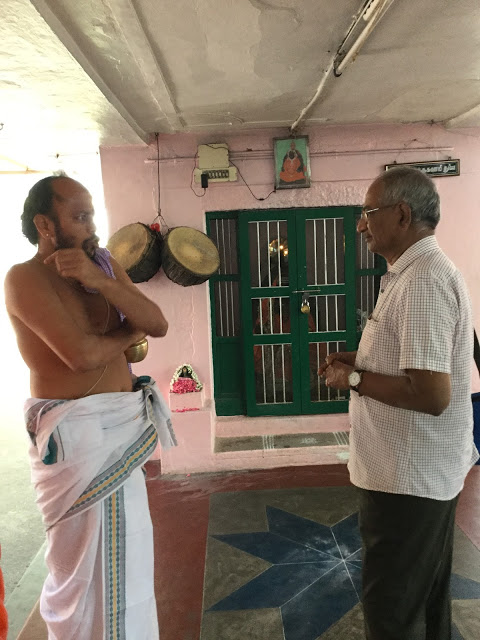
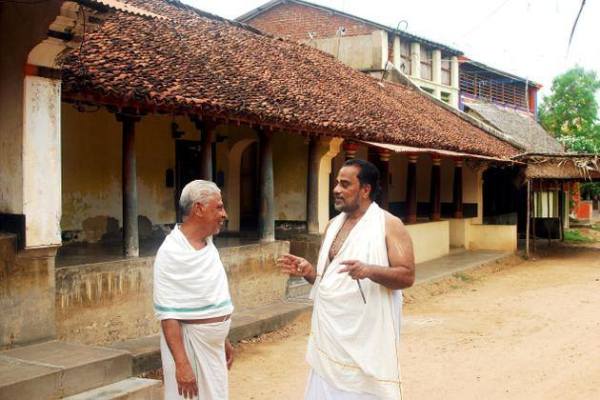
My brother Prof Suryanarayanan is talking with the priest.

When I was a school boy, my father took us (the family) to Tirukkovilur after performing Punul (sacred thread) ceremony to my older brothers. I don’t remember much now. But we had a picture of Swami Gnanananda at home in Madurai and we worshipped him along with other saints’ pictures. His disciple Haridas came to Madurai and spread his message through Bhajans. He himself wrote about the greatness of Swamiji.


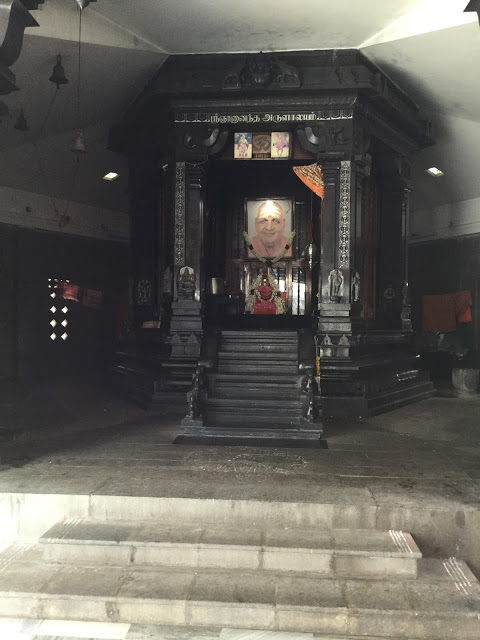
When Swami Gnanananda came to Madurai, Pazakkadai/Fruitshop Thangavelu invited us to have his darshan. It was arranged on the top floor of the fruit shop itself. My father had a chat with him and all other members of the family were just observers. When Swamiji attained Siddhi, I was working as a Senior Sub Editor in Madurai Dinamani newspaper. I wanted to visit the Tapovanam for very long. When I went to attend the Fifth World Saiva Siddhanta Conference in Chennai in March 2018, I targeted three new places and successfully finished them: Madurantakam Rama Temple, Vadalur Vallalar  Ashram and Tirukkovilur Tapovanam.

It is situated in a quiet place and anyone can feel the divine vibrations. It is closed at 10-30 am in the morning after Puja and opens in the evening. Fortunately, I and my brother reached the place at 10 am ad had the darshan of the Samadhi.


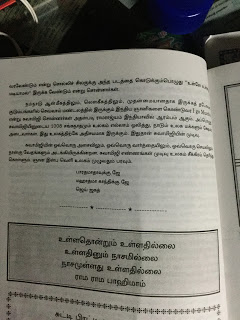
I bought two books so that the money would benefit the ashram. One of the books is a souvenir published in 1999. It has very good articles. Though I did not go for any miracles or anecdotes about miracles, one of the articles had a strange information of Swamiji speaking about the Saints of  Mars zone. But it came through the writing of another hand. So I did not know how far the information is correct and what he meant by that (see the version in Tamil posted here):

A rough translation of the last paragraph of the article written by A R P N Raja Manikkam is as follows:

“To make our country stand first in spiritual and mundane things, I go to Mumbai to bring the Jnanis/saints from Mars zone to Tapovanam; then swamijis 1008 conch shells will sound; Ramarajyam will begin; the world will be a prosperous place. It will be a great wonder to everyone. This is Swamiji’s resolve/ conclusion.”


Since Swamiji is no more, we don’t know what he meant by saints in planet Mars.


But the visit to the ashram will be a great experience. And this holy town has two more famous temples of Shiva and Vishnu. Viluppuram district has many more temples in the surroundings. It is worth visiting the town; better stay for a whole day or stay overnight.


Swamiji’s teachings are very simple and universal; anyone can follow them irrespective of one’s faith.

-Subham–

Short Story-Fate can be changed by Good Action! (Post No.4815)

Written by London Swaminathan 


Date: 14 MARCH 2018


Time uploaded in London – 16-40


Post No. 4815

Pictures shown here are taken from various sources such as Facebook friends, Books, Google and newspapers; thanks.


WARNING: PLEASE SHARE MY ARTICLES; BUT DON’T SHARE IT WITHOUT AUTHOR’S NAME AND THE BLOG NAME. BE HONEST; OTHERS WILL BE HONEST WITH YOU.


Great Tamil Hindu saints like Alvars and Nayanmars say that one’s fate can be changed to good by God. Manikkavasagar, Andal, Tirumular,  Sambandar and Appar say it in very clear words that the previous Karma (action and reaction) will be powdered or  will be burnt to ashes. Hindus generally believe that Karma/action done by one will have definite after effect. Good Karma (action) will bring good things and bad karma will bring bad things to the doer. But one’s intense devotion to god can change one’s fate. There is a short story to illustrate this point.

It is similar to Pusalar Nayanar story who built a temple mentally.

There was a poor man in a village. All his efforts to earn his livelihood failed miserably. One day his close friend asked him to see an astrologer in a nearby village. When he went to see him, the astrologer looked at his horoscope and was shocked. But he did not show it to the customer. He asked the poor man to come tomorrow, ‘if it is possible’. The poor man told the astrologer that he would come next day. Astrologer was laughing inside and pitied that man.


When the villager was returning to his home town, heavy rains poured down. He ran to a dilapidated building and took shelter. To his surprise it was an ancient but disused temple. He felt very sorry to see the condition of the temple. Various thoughts ran into his mind. He thought, “If I win a lottery prize tomorrow, first I will build a huge hall and then I will build a tall tower on top of it. Then I will install the golden statues of the gods inside and celebrate the consecration. If there is money, I will do Anna Dhanam to all the poor people (Anna Dhanam= Food donation). When the rain stopped, he returned home and felt very happy. He slept thinking of the temple.

Next day he went back to the astrologer according to the plan. The astrologer was greatly surprised to see him. He asked what he did in the past 24 hours. he said that he went back home after taking shelter in the huge rain previous night. The astrologer was not satisfied with his answer; so he asked to relate minute by minute account. Then he told the astrologer he stayed in a temple. Even then astrologer wasn’t satisfied. He asked him whether anything happened like seeing a holy man or any miracle. The poor man said, N I was only thinking about renovating the temple.

At the point the astrologer got a grip over the matter and asked the poor man about everything he thought. Then the astrologer realised that he built a golden temple in his mind and that only saved him; because according to his horoscope he should have died already. That is why the astrologer told him the first place “to come tomorrow, if possible”.


Then the astrologer explained to him everything that should have happened to him astrologically, but God changed his fate. Even Yama would fail in his arithmetic if God interferes!


One can change his bad days into good days with good thoughts.


Purity in mind, word and deed (Three way purity= Mano, Vak, Kayam) is called Tri Karana suddhi. If one has it permanently one can do miracles.


–Subham–

CHANAKYA ON VEDIC INTERPRETATION (Post No.4809)

Compiled by London Swaminathan 


Date: 4 MARCH 2018


Time uploaded in London – 7-57 am


Post No. 4809

Pictures shown here are taken from various sources such as Facebook friends, Books, Google and newspapers; thanks.


WARNING: PLEASE SHARE MY ARTICLES; BUT DON’T SHARE IT WITHOUT AUTHOR’S NAME AND THE BLOG NAME. BE HONEST; OTHERS WILL BE HONEST WITH YOU


Chanakya’s views on Vedas in Chanakya Niti,


Interpreting the scholarship in Veda in a different manner, as also the conduct prescribed in Sastras, speaking bad words for no reason to a peaceful person, people needlessly subject themselves to torment.

–Chanakya Niti 5-11


Success, Accomplishment


The study of the Veda has no meaning without the performance of the sacrifices, the sacrifice has no meaning without the gifts, without intent there is no success or accomplishment. Hence intent is the root cause of all types of success or accomplishments.

8-10


The homes that do not have the mud caused by the washing of the feet of the Brahmins, where there is no roaring sound of the Vedas and Sastras (Vedic recitation), nor are the sounds of Svaahaa and Svadhaa, are like cremation grounds.

12-10


Numbers

Penance is performed by all by oneself, study by two together, singing by three in the same way, travel by four in the same manner, cultivation likewise with five and battle with so many put together.

4-12


–SUBHAM–


CHANAKYA’S PRAISE FOR BRAHMINS! (Post No.4771)

Picture posted by V Krishna Ganapatigal


Date: 21 FEBRUARY 2018


Time uploaded in London- 16-49


Written by London swaminathan


Post No. 4771


PICTURES ARE TAKEN from various sources. They may not be directly related to the article. They are only representational.


WARNING: PLEASE SHARE MY ARTICLES; BUT DON’T SHARE IT WITHOUT AUTHOR’S NAME AND THE BLOG NAME. BE HONEST; OTHERS WILL BE HONEST WITH YOU.


Chanakya, the Hindu genius, who lived 2300 years ago, praises the Brahmins; he says that the strength of the Brahmins is knowledge and the proof for their intelligence is the prediction of the solar and lunar eclipses. He also says that Brahmins are lovers of food and feeding them is great Punya (merit). He warns that  the Brahmin haters would perish with their families. But it is all about the true Brahmins who lived with character and self- less service.

Chanakya says,

“There is no emissary in the sky, neither is any talk going on, nor was it spoken about earlier, nor was there any contact. The great Brahmin who knows the eclipse of the sun and moon taking place in the sky, how come he cannot be a scholar?”

duuto na sancarati khe na caleecca vaartaa

puurvam na japitamidam na ca samsagamosti

vyomni sthitam ravi sasi grahanam prasastam

jaanaati yo dwijavaraha sa katham na vidwaan

Chanakya Niti 9-5

xxx

Brahmin Tree

“The Brahmin is the tree, its root is the morning, noon and evening prayer, the Vedas are the branches, the spiritual activities are the leaves. Hence it is the root that needs to be protected with care. With the root gone, there will be neither branch nor the leaf.”

vipro vrukshastasya muulam na sandhyaa

vedaahaa saakhaa dharmakarmaani patram

tasmaanmuulam yatnato rakshaniiyam

chinne muulee naiva saakhaa na patram

10-13


Picture posted by Lalgudi Veda

xxx

Four types go to Heaven


There are four marks on the body of the people in this world that go with those who have their abode in heaven: devotion/ commitment to charity, sweet speech, worship of gods and feeding the Brahmins to full.

Swarga sthitaanaam iha jiivaloke

catwaari cihnaani vasanti dehe

daanaprsango madhuraa ca vaanii

devaarcanam braahmana tarpanam

7-16

xxx

Brahmin Haters Perish


Hatred to oneself leads to death;

to another person loss of wealth;

to the king to destruction and

to a Brahmin to the destruction of the family

–Chanakya Niti, chapter 10, sloka 11


aatmadveshaad bhavenmrtyuh paradveshaad dhanakshyah

rajadveshaad bhavennaaso brahmadveshaat kulakshayah


xxx

Brahmins delight in Food


Brahmins get delight in meals, the peacocks in thunder of clouds, the good people in the prosperity of others and the wicked people in the adversity of others.

tushyanti bhaojane vipraa mayuuraa ghanagarjate

saadhavaha parasampattau khalaha paravipattishu

7-6

xxx

Brahmin’s Strength

The prowess of arms is the strength of the king, that of a Brahmin versed in Veda is in knowledge, beauty, sweetness and youth are the unsurpassed strength of women.

Baahuviiryam balam raaknjobraahmano brahmavid bhalii

Ruupayauvanamaadhuryam striinaam balamanuttamam

Chapter 7, sloka 11


xxx


Picture from Tindivanam Patasala

knowledge is the strength of the Brahmins, army is that of the kings

vidhyaa balam vipraanaam, raaknjaam sainyam balam tathaa

2-16

xxx

Contented Brahmins

Brahmins not having the sense of fulfilment, kings having the same, harlots feeling shy and high born women with no sense of shame come to naught.


asantushtaa dwijaa nashtaa santushtaasca mahiibujaha

salajjaa ganikaa washtaa nirlajjaasca kulaanganaahaa

8-18


Source Book: Canakyaniti, Translated by Satya Vrat Shastri


xxx SUBHAM xxxx


‘I AM YOUR TREASURE, PRESERVE ME’- VEDAS SAID TO BRAHMINS (Post No.4764)

Date: 19 FEBRUARY 2018


Time uploaded in London- 16-58


Written by London swaminathan


Post No. 4764


PICTURES ARE TAKEN from various sources. They may not be directly related to the article. They are only representational.


WARNING: PLEASE SHARE MY ARTICLES; BUT DON’T SHARE IT WITHOUT AUTHOR’S NAME AND THE BLOG NAME. BE HONEST; OTHERS WILL BE HONEST WITH YOU.


The second chapter of Manu Smrti, also known as Manava Dharma Shastra, contains very interesting details on various topics; I am summarising it with my comments below:


What did Vedas say to the Brahmins?

2.114. Sacred Learning approached a Brahmana and said to him: ‘I am thy treasure, preserve me, deliver me not to a scorner; so (preserved) I shall become supremely strong.’

2.115. ‘But deliver me, as to the keeper of thy treasure, to a Brahmana whom thou shalt know to be pure, of subdued senses, chaste and attentive.’

2.116. But he who acquires without permission the Veda from one who recites it, incurs the guilt of stealing the Veda, and shall sink into hell.

2.113. Even in times of dire distress a teacher of the Veda should rather die with his knowledge than sow it in barren soil.


My comments:

The greatness of Vedas is explained here. It is a treasure to be preserved by the Brahmins; but if there is no worthy hand to receive it, beter die than to give to irreverent people.

It is also interesting that the Brahmins first refused to teach the Mlechas (foreigners like Max Muller, Wilson etc). When a few greedy Brahmins violated their code of conduct, the Mlechas got it and interpreted it to according to their whims and fancies. Like no two clocks agree, no two Mlechas/ barbarians agree!


Don’t Talk, Don’t Argue, Act like an Idiot!

There is very interesting advice to the students of Vedas:

2.110. Unless one be asked, one must not explain anything to anybody, nor must one answer a person who asks improperly; let a wise man, though he knows the answer, behave among men as (if he were) an idiot.

2.111. Of the two persons, him who illegally explains anything, and him who illegally asks a question, one or both will die or incur the other’s enmity.


Ten Types of People are fit to Learn Vedas

2.109. According to the sacred law the following ten persons, viz. the teacher’s son, one who desires to do service, one who imparts knowledge, one who is intent on fulfilling the law, one who is pure, a person connected by marriage or friendship, one who possesses (mental) ability, one who makes presents of money, one who is honest, and a relative, may be instructed in the Veda.


2.106. There are no forbidden days for the daily recitation, since that is declared to be a Brahmasattra (an everlasting sacrifice offered to Brahman); at that the Veda takes the place of the burnt oblations, and it is meritorious even, when natural phenomena, requiring a cessation of the Veda-study, take the place of the exclamation Vashat.


Three Beautiful Similes

2.99. But when one among all the organs slips away from control, thereby man’s wisdom slips away from him, even as the water flows through the one open foot of a  leather water-carrier’s skin.

2.94. Desire is never extinguished by the enjoyment of desired objects; it only grows stronger like a fire fed with clarified butter.

2.113. Even in times of dire distress a teacher of the Veda should rather die with his knowledge than sow it in barren soil.

Om and Gayatri

2.74. Let him always pronounce the syllable ‘Om’ at the beginning and at the end of a lesson in the Veda; for unless the syllable Om precede the lesson will slip away from him, and unless it follow it will fade away.

2.78. A Brahmana, learned in the Veda, who recites during both twilights that syllable and that verse, preceded by the Vyahritis, gains the whole merit which the recitation of the Vedas confers.

2.79. A twice-born man who daily repeats those three one thousand times outside the village, will be freed after a month even from great guilt, as a snake from its slough.

2.80. The Brahmana, the Kshatriya, and the Vaisya who neglect (the recitation of) that Rik-verse and the timely performance of the rites prescribed for them, will be blamed among virtuous men.

2.81. Know that the three imperishable Mahavyahritis, preceded by the syllable Om, and followed by the three-footed Savitri are the portal of the Veda and the gate leading (to union with) Brahman.

2.82. He who daily recites that (verse), untired, during three years, will enter (after death) the highest Brahman, move as free as air, and assume an ethereal form.

2.83. The monosyllable (Om) is the highest Brahman, three suppressions of the breath are the best (form of) austerity, but nothing surpasses the Savitri truthfulness is better than silence.

2.84. All rites ordained in the Veda, burnt oblations and othe) sacrifices, pass away; but know that the syllable (Om) is imperishable, and it is Brahman, and the Lord of creatures (Prajapati).

2.85. An offering, consisting of muttered prayers, is ten times more efficacious than a sacrifice performed according to the rules of the Veda; a prayer which is inaudible (to others) surpasses it a hundred times, and the mental recitation of sacred texts a thousand times.


–Subham–


Sin and Sinners Anecdotes (Post No.4759)

Date: 18 FEBRUARY 2018


Time uploaded in London- 17-41


Written by London swaminathan


Post No. 4759


PICTURES ARE TAKEN from various sources. They may not be directly related to the article. They are only representational.


WARNING: PLEASE SHARE MY ARTICLES; BUT DON’T SHARE IT WITHOUT AUTHOR’S NAME AND THE BLOG NAME. BE HONEST; OTHERS WILL BE HONEST WITH YOU.


Some religious anecdotes from an old book:-

1.Prohibitions and restrictions

A little lesson in morality was imparted to the youngster who asked his father

What is a necessary evil?

One that we like so much we don’t want to abolish it, replied his parent.


Xxx

2.Sin and Sinners

An old Negro preacher, wearied of the many complaints he heard about the temptations placed in the paths of the members of his congregation by Satan:

“Folks is all de time making out dat Satan is running after them fo’ to tempt them. De truth is , dere is so many people pulling at the Debil’s coattails, he ain’t got de time to chase nobody”.


Xxx

God can see all the Doors!

In the days of the great Edwin Booth, most ministers considered it a sin to attend theatrical performances. However, one clergyman, anxious to see the great actor  perform, sent Mr Booth a letter asking if he might be permitted to enter the theatre by a private door as he did not wish anyone to see him going into such a place.

Booths’s reply

“Sir, there is no door in my theatre through which god cannot see”.


Xxxx

Prayers

Bion was sailing in a vessel, when great storm came on. The mariners, who were wicked and dissolute fellows, called upon the gods; but Bion said,

“Peace; let them not know you are here”.


Xxx


Tell God that I did it!

After the capture of Ticonderoga, Ethan Allan, the American patriot, hurried home to his family in Bennington, Vermont, and while there attended a Thanks giving service at the old First Church.  Town history says during the long prayer in which the Rev Mr Dewey was giving all the credit for the victory to the Lord, Allen interrupted:

“Parson Dewey, Parson Dewey!”

At the third call, the minister paused and opened his eyes.

“Please, said Allen, mention to the Lord about my being there”.


Xxxx Subham xxxx


Isavasyam Idam Sarvam Story (Post No.4752)

Date: 16 FEBRUARY 2018


Time uploaded in London- 20-52


Written by London swaminathan


Post No. 4752


PICTURES ARE TAKEN from various sources.


WARNING: PLEASE SHARE MY ARTICLES; BUT DON’T SHARE IT WITHOUT AUTHOR’S NAME AND THE BLOG NAME. BE HONEST; OTHERS WILL BE HONEST WITH YOU.


There is a famous Upanishadic couplet saying that everything is controlled and owned by God. One should not be greedy to take other’s property.


There is a story to illustrate this point. There was a king who had some ego problem. He gave lot of gifts to the poets and bards and expected everyone to praise him as the Anna Data (Giver of Food). Once he called two of his beneficiaries and asked them who gave them money and everything. One of them was a sycophant and replied immediately,

Oh, My Lord, You are the one who helped me and without you people would have died of hunger.

The other person, who is a great scholar said, everything is given by God. Isavasyam Idam sarvam.


The king did not like this answer. He wanted to hear the praise of every one. But he did not dare to say it in public. The king wanted to teach him a lesson. He sent them home.


Later the king filled the inside of a big pumpkin  with costly gems and sent it to the person who praised the king. The scholar who praised god instead of the King was given two small coins. They were not of big price.


The person who received the pumpkin did not know what was inside and so he decided to sell the pumpkin. He was very dissatisfied with the king. At that time the scholar who got two coins was passing his house. The person with a big pumpkin told the scholar to take the pumpkin. He readily agreed and gave his two coins to him.


When the scholar went home, opened the pumpkin and found it was full of costly gems. Then he ran to the king and told that he got a treasure from a pumpkin. The person who sold the pumpkin was also there and he told the king that he sold it to him for two coins of lesser denomination.


The king realised his mistake and felt everything in the world was done by God and controlled by God. The king’s vanity was completely cured by this occurrence.

Unassisted by the hand of Providence, human endeavours are fruitless.


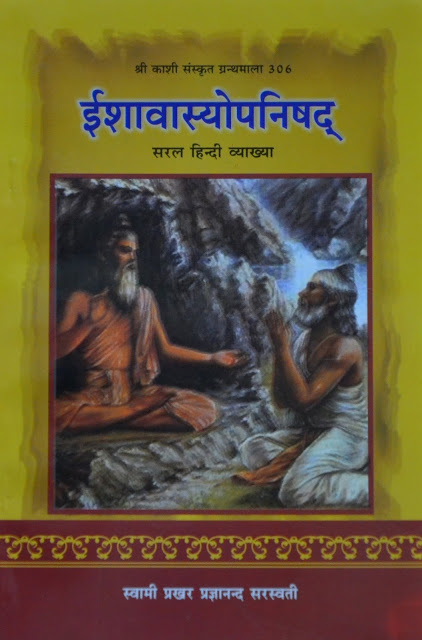
He remembered the famous first couplet of Isavasyopanishad:


Isavaasyamidam sarvam yathkinchajagathyaam jagath
Thena thyakthena bhunjeethaah, maa gridhah kasyaswid-dhanam

“All things of this world, the transitory, the evanescent, are enveloped by the Lord who is the real Reality of each. Therefore, they have to be used with reverent renunciation, without covetousness or greed for they belong to the Lord and not to any one person”.


–Subham–

IF YOU DON’T FIND GOD, YOU MUST LEAVE THE COLLEGE! (Post No.4716)

Date: 8 FEBRUARY 2018


Time uploaded in London- 19-54


Compiled by London swaminathan


Post No. 4716


PICTURES ARE TAKEN from various sources; may be subject to copy right laws.


WARNING: PLEASE SHARE MY ARTICLES; BUT DON’T SHARE IT WITHOUT AUTHOR’S NAME AND THE BLOG NAME. BE HONEST; OTHERS WILL BE HONEST

WITH YOU.


Agnostic and Atheist Anecdotes!

The late Dr Jowett, the famous master of Balliol College, Oxford, was met one day in the “quad” by an undergraduate who informed him that he, for his part, could find no positive evidence of the existence of God.

Well, Mr B, said Dr Jowett tartly,

“If you don’t find a god by five o clock this afternoon, you will leave this college!”


Xxx


Voltaire’s Fear

One day. When D’Alambert and Condorcet were dining with Voltaire, they proposed to converse of atheism, but Voltaire stopped them at once.

Wait, said he, till my servants have withdrawn. I do not wish to have my throat cut tonight.


Xxx


No Religion

During the riots of 1780 most persons in London, in order to save their houses from being burnt or pulled down, wrote on their doors,

No Popery!

Old Grimaldi, to avoid all mistakes, wrote on his,

‘No religion ‘

(The Gordon Riots of 1780 began as an anti-Catholic protest in London against the Papists Act of 1778, which was intended to reduce official discrimination against British Catholics. The protest evolved into riots and looting.)

Xxx

Is Christ All Powerful?

The Little Louise Napoleon did not respond with particular susceptibility to his religious education. In the course of it, he stumbled upon one of the puzzling problems which is remarked upon by many young theological students.

His instructor had portrayed with great melodrama the anguish and suffering of Christ. Louise manifested little reaction

“Aren’t you grieved ?” demanded his teacher, “to think how these wicked men behaved to our Lord.”

“Well”, objected, Louise

“If he was all powerful, why did he let them?”

Xxxx Subham xxxx


‘SHOCKING’ BLESSING OF LIVING BUDDHA! (Post No.4713)

Date: 7 FEBRUARY 2018


Time uploaded in London- 16-18


WRITTEN by London swaminathan


Post No. 4713


PICTURES ARE TAKEN from various sources; may be subject to copy right laws.


WARNING: PLEASE SHARE MY ARTICLES; BUT DON’T SHARE IT WITHOUT AUTHOR’S NAME AND THE BLOG NAME. BE HONEST; OTHERS WILL BE HONEST

WITH YOU.


Pagan Gods

According to a story told by Roy Chapman Andrews, the famous explorer, the Living Buddha of Mongolia, a personage only a stage less exalted than the Great Lama of Tibet, was a man of original ideas. One of the regular ceremonies of his office was the laying on of hands to many worshippers and lesser priests who came daily for his blessings. The Buddha conceived a mass blessing. He had a small American Delco generator in his palace. This he rigged up with a wire stretching down a long area way. The many pilgrims would line up clutching the wire and each received a memorable blessing as the Living Buddha threw the switch by his throne.

Dr Andrews was invited to partake of the blessing, which courtesy he could not refuse. He reports that the shock nearly knocked him over.


Xxx

Atheists and Agnostics Anecdotes

The noted agnostic Colonel Robert Ingersoll, during a visit with Henry Ward Beecher, noted a beautiful globe portraying the constellations and stars of the heavens.

This is just what I have been looking for, he said after examining it. Who made it?

Repeated Beecher in simulated astonishment,

Why Colonel, nobody made it; it just happened.


Xxx

Doubtful Agnostic!!

Someone once charged David Hume , the agnostic, being inconsistent because he went to hear the orthodox, Scotch minister, John Brown.

Hume replied, “I don’t believe all that he says, but he does. And once a week I like to hear a man who believes what he says”.


Xxx

Sculptor Recognised his God!

A Portuguese SCULPTOR, upon his death bed, had a crucifix placed before his eyes by a confessor, who said,

“Behold the god whom you have so much offended.”

“Do you recollect him now?”

“Alas! Yes, Father”, replied the dying man.

“It was I who made him”.


Xxx


Permission only to Ingersoll!

When Philips brooks was recovering from an illness, and was denying himself for all visitors, Robert G Ingersoll , the agnostic called. The bishop called him at once.

I appreciate this very much, said Mr Ingersoll, but why do you see me when you deny yourself to your friends?


It is this way, said the bishop, I feel confident of seeing my friends in the next world, but this may be my last chance of seeing you


Xxx

Did a whale swallow Jonah?

Once while addressing an open air meeting, an atheist asked Bishop Carpenter f he believed that Jonah was swallowed by the whale.

When I get to heaven, I will ask Jonah , said his lordship.

But supposing, the other persisted, he is not there?

Then you will have to ask him,was the quick retort.


Xxx Subham xxxx