Origin of Sri= Sir = Thiru (Sanskrit/English and Tamil) – Post No. 3479

Research Article Written by London swaminathan


Date: 24 December 2016


Time uploaded in London:-  15-22


Post No.3479


Pictures are taken from different sources; thanks.


contact; swami_48@yahoo.com


Believe it or not, the Sanskrit word ‘Sri’, English honorific title ‘Sir’ and Tamil word ‘Thiru’ all mean the same. Sir and Thiru came from the Sanskrit word Sri.

Sri is written as ‘Siri’ (as in Sirimao Bhandaranayake) in Sri Lanka and ‘Sere’ in South East Asia.


In India, Sri is also written as Shree, Sree, Shri and Sree. Sri means wealth and Goddess Lakshmi. Sri also means light, resplendent etc.


In the name of a country Sri Lanka , the meaning of Sri is ‘replendednt’.


Nowadays Hindus use it before a male’s name to give him respect. It is used as Mr and in Tamil Tiru. If it is a woman, then Srimati (in Tamil Tirumati) is used. It may mean respectful or enlightened.


Sri= Lakshmi, Wealth, Fortune, Prosperity, Light, Resplendent (nowadays Mr)


Tamil word Thiru or Tiru is also derived from Sanskrit Sri. In Tamil also the meaning is similar to Sanskrit.

According to linguistic rules ‘S’ and ‘T’ are interchangeable. That is why all the English words with ‘TION’ ending is pronounced ‘SION’ ((E.g) Education, Fruition, Cognition. Even in Tamil literature Tamil saints changed Vithyai as Viccai (Vidhya=Vithyai- vicchai) in Tevraram and Tirvasagam and Divya prabandham. The oldest portion of these Tamil devotional literature is at least 1500 year old.

Sir—Honorific Title

English people who are knighted are given the title ‘Sir’. In India scientists like Sir C V Raman, Sir Jagadish Chandra Bose, Literaturs like Ravindranatha Tagore and judges like Sir C Ramaswami Iyer, sportsmen like Sachin Tendulkar were awarded this ‘SIR’ title by the British Queen.


The etymology of the word according to Oxford dictionary is as follows:-

The word Sir derived from the Middle English ‘Sire’ according to the dictionary. It was first used in 1297. All these are forced etymology, because it doesn’t explain where the Old French or Latin got it. As everyone knows that Germanic languages and Romance languages are derived from Sanskrit , the root of Sir can be easily traced.


Sri is found in the Vedas. There is a Suktam (Poem/verse/hymn) named after Sri. Names such as Srimati, Sri, Sridharan, Srinidhi, Srinivas are common even today. Oldest Shasranama Vishnu sahasranama has several names beginning with Sri. Several town names (Srisailam, Sriperumpudur) and book names (Sri Bhagavata, Srimad Bhagavd Gita) also have the Sri as prefix.

Following the Hindus, the world used sir(i) in other European langauges. We have proofs for such usage even today in Sri Lanka (Siri) and South East Asia (sere). Change in the position of the letter ‘I’ or change in the position of sound cause such spellings. For instance Dharma is written as Dharam in Hindi. The famous city of Tamil Nadu Madurai is pronounced as Marudai and Kuthirai (horse) is pronounced as Kuruthai. No wonder Sri ischanged to Sir or Siri or Sere in other languages!


–Subham–


Kalidasa and Tamil Poets on God! (Post No.3476)

Written by London swaminathan


Date: 23 December 2016


Time uploaded in London:- 18-23


Post No.3476


Pictures are taken from different sources; thanks.


contact; swami_48@yahoo.com


Kalidasa, the greatest poet of India, believed in the concept of One God. Like every Hindu, he also worshipped him in various forms through his poems and yet he made it very clear that God is one echoing the thought of the Rig Vedic seer: Ekam sat vipraa: Bahuta vadanti.He refers to all the important gods and goddesses in his seven works; His list includes Brahma, Vishnu, Siva and Vedic Gods Indra, Agni, Yama, Tvastra, Rudra, Surya, Prajapati,Varuna, Kubera, Kartikeya and Goddesses Kali, Lakshmi, Sarasvati, Uma, Sapta Mata and demi gods.


After referring to various Gods in various places in his works, he says:

Siva is divided threefold (Brahma, Vishnu and Siva) which points to Monism.

“May the Eternal One who is attainable by firm faith and meditation; who is hailed as the Supreme Spirit in the Vedanta, who pervades and is present in the whole of heaven and earth; to whom alone the name of Lord, not signifying any other being, is properly applied; and who is sought within themselves by those desirous of salvation by restraining the vital breaths, Prana and others, bestow upon you the highest bliss (Vikramorvasia 1-1)

The two other plays of Kalidasa open with similar benedictory stanzas in praise of Shiva.  The Raghuvamsa too opens with a salutation to Shiva. In the Megaduta and Kumarasambhava also, we come across several appreciative references to Siva (This shows he lived long before the Gupta Kings who were Parama Bhagavatas (Worshippers of Vishnu).

All these show that he was a great devotee of Lord Siva. But we must remember that he praised Brahma and Vishnu as well.


In Kumarasambhava (7-44), he praised Siva as: “That was but one form which divided itself in three ways. Their seniority or juniority is common (interchangeable); sometimes Siva is prior to Vishnu or Vishnu to Siva; sometimes Brahma to them both; and sometimes the two to Brahma”.

This sloka shows his understanding of oneness. People of his days believed in such oneness. That is why he makes a passing remark in the middle of the Kavya without much empahsis.


In the Sakuntala (1-1) he praised Siva as follows:-

“The First Creation of the Creator;

The Bearer of oblations offered with Holy Rites;

That one who utters the Holy Chants;

Those two that order Time;

That which extends, World-Pervading

in which sound flows impinging on the ear;

That which is proclaimed the Universal Womb of Seeds;

That which fills all forms that that breathe with the Breath of Life.

May the Supreme Lord of the Universe

who stands revealed in these Eight Forms

perceptible preserve you.

The most popular prayer of Kalidasa in the Raghuvamsa is taught to every child on the very first day when they go to learn Sanskrit:-


Vagarthaviva sampriktau vagarthah pratipattaye | Jagatah pitarau vande parvathiparameshwarau || – Raghuvamsha 1.1


I pray to the parents of the world, Lord Shiva and Mother Parvathi, who are inseparable as word and its meaning to gain knowledge of speech and its meaning.


Tamils followed Kalidasa

Tamils also followed Kalidasa. Sangam Literature which was nearly 2000 year old has more praise for Shiva in the Prayer. These prayers were added when they compiled the anthology in the fourth or fifth century CE, that is after Kalidasa who lived in the First Century BCE. Purananauru, Akananauru, Ainkurunuru, Pathtrupathu and Kalitokai beging with an invocation to Lord Siva. Kuruntokai has a prayer for Lord Skanda and Natrinai has a Vishnu Sahasranama Sloka (in Tamil) as its prayer. Paripatal begins with a poem on Lord Vishnu and Pathupattu begins with a poem on Lord Skanda (Murugan in Tamil). Most of the prayer songs were done by on Mr Mahadevan who translated Mahabharata in Tamil. His name in tamil is Bharatam Patiya Perunthevan (Mahadevan who sand Bharata).


Since Sangam period Tamil Poets used over 200 similes of Kalidasa (out of 1200) ,Kalidasa must have lived in first century BCE or earlier (Please see my research paper written a few years ago and posted here).

–Subham–

Know Thyself first!(Post No.3471)

Written by S NAGARAJAN


Date: 22 December 2016


Time uploaded in London:- 6-10 am


Post No.3471


Pictures are taken from different sources; thanks.


contact; swami_48@yahoo.com


Know Thyself first!


Santhanam Nagarajan


It is very interesting to note that the world best teachers preach the same doctrine.


Know thyself first; everything follow suit!


This is the final teaching given by the sages of the past.


In Bhagavatam, the Hindu Scripture, there is an interesting dialogue take place between Sage Narada and Sanatkumara.


Narada asked Sage Sanatkumara to teach him.


Sanatkumara said : ‘Say what you know: I will say what you do not’

Narada said: ‘Lord, I know Rig Veda, Yajur Veda, Sama Veda, Atharvana Veda, history and tradition called the fifth Veda, grammer,  ritual, mathematics, astrology, mineralogy, logic, economics, physics, meta-physics, zoology, politics, astronomy, ,ecjamocs, fine arts.    ‘Lord, yet these things are but elementary knowledge; I do not know the Self. I have heard from masters, that he who knows Self, goes beyond sorrow, I am lost in sorrow. Help me to go beyond’.


So in order to go beyond sorrow one has to know oneself.


The same doctrine was emphasized by Socrates also.


Socrates asked the king Euthydemus, ‘Tell me, have you ever been to Delphi?’


“Yes, certainly, twice’ replied Euthydemus.


“And did you notice an inscription somewhere on the temple?’


“I did”.


“Did you possibly pay no regard to the inscription? Or did you give it heed, and try to discover who and what you were?’


“ I can safely say I did not’, he answered. That  must I made quite sure I new, at any rate; since if I did not know even myself, what in the world did I know?”


This easy supposition ruined Euthydemus.


Socrates always empahasised on his first commandment , ‘Know Thyself.’


According to Socratic discipline this first commandment promise the desired result.


The play of our intelligence is the beginning of wisdom. Any true admission of ignorance, the faintest consciousness of having been on the wrong path, can, form the starting-point f a truer method of search.


The sage of Arunachala, Ramana maharishi of Thiruvannaamalai, Tamilnadu, India also emphasized  to enquire oneself, Who am I? This enquiry of Who am I means  finding the source of ‘I’. When this is found, that which you seek is accomplished.


This means the ultimate goal of a human being is achieved.


Be it the teaching of Sanatkumara, or Socrates, or Ramana maharishi, the point is the same.


First one hast to enquire himself and find out Who he is.


The starting point is enquiry. Who am I?


If this is found, everything is accomplished. This is the great secret.


Published in www.ezinearticles..com

http://ezinearticles.com/?Know-Thyself-First&id=9600903


*******

SWAMI VIVEKANANDA ON OMKARA! (Post No.3464)

Compiled by London swaminathan


Date: 19 December 2016


Time uploaded in London:- 20-23


Post No.3464


Pictures are taken from different sources; thanks.


contact; swami_48@yahoo.com


Every idea that you have in the mind has a word; the word and the thought are inseparable. The external part of one and the same thing is what we call word, and the internal part is what we call thought. No man can by analysis, separate thought from word.


The idea that language was created by men–certain men sitting together and deciding upon words — has been proved to be wrong. So long as man existed there have been words and language. What is the connection between an idea and a word? Although we see that there must always be a word with a thought, it is not necessary that the same thought requires the same word.


The thought may be the same in twenty different countries, yet the language is different. We must have a word to express each thought, but words need not necessarily have the same sound. Sounds will vary in different nations.

One commentator says, “Although the relation between thought and word is perfectly natural, yet it does not mean a rigid connection sound and one idea.” These sounds vary, yet the relation between sounds and the thoughts is a natural one. The connection between thoughts and sounds is good only if there be a real connection between the thing signified and the symbol; until then the symbol will never come into general use.


A symbol is the manifestor of the thing signified, and if the thing signified has already an existence, and if, by experience we know that the symbol has expressed that thing many times then we are sure that is a real relation between them. Even if the things are not present, there will be thousands who will know them by their symbols. There must be a natural connection between the symbol and the thing signified; then when the symbol is pronounced, it recalls the thing signified.


The commentator says the manifesting word of God is OM. Why does he emphasize this word? There are hundreds of words for God. One thought is connected with a thousand words; the idea, God, is connected with hundreds of words and each one stands as a symbol for God. Very good, but there must be generalisation among all these words, some subsratum, some common ground of all these symbols and that which is the common symbol will be the best, and really will represent them all.


In making a sound we use the larynx and the palate as a sounding board. Is there any material sound of which all other sounds must be manifestations, one which is the most natural sound? Om (Aum) is such a sound, the basis of all sounds. The first letter, A, is the root sound, the key, pronounced without touching any part of the tongue or palate. M represents the last sound in the series, being produced by the closed lips, and the U rolls from the very root to end of the sounding board of the mouth. Thus, Om, represents the whole phenomena of sound-producing. As such, it must be the natural symbol, the matrix of all the various sounds. It denotes the whole range and possibility of all the words that can be made.


Apart from these speculations we see that around this word om are centred all the different religious ideas in India, all the various religious ideas of the Vedas have gathered themselves round this word Om.


What has that to do with America and England or any other country? Simply this, that the word has been retained at every stage of religious growth in India and it has been manipulated to mean all the various ideas about God. Monists, dualists, mono-dualists, separatists, and even atheists took up this Om. Om has become the one symbol for the religious aspiration of that vast majority human beings. Take, for instance, the English word God. It covers only a limited function, and if you go beyond it, you have to add adjectives, to make it Personal, or impersonal, or Absolute God. So with the words for God in every other language their signification is very small. This word

Om however, has around it all the various significances. word om, how. significances. As such it should be accepted by everyone.


Source: Selections from The Complete works of swami Vivekananda, Advaita Ashrama, Calcutta 700 014

–Subham–

Gayatri mantra – 24 syllables and Governing Devatas (Post No.3456)

Compiled by S NAGARAJAN


Date: 17 December 2016


Time uploaded in London:- 5-37 AM


Post No.3456


Pictures are taken from different sources; thanks.


contact; swami_48@yahoo.com


Gayatri mantra – 24 syllables and Governing Devatas


  1. Nagarajan


The Gayatri mantra consists of 24 syllables.


The Tantra Sara of Madhwa  indicates that these 24 letters are called Varnas.


The Tantra Sara sloka describes thus:-


Veda mata tu gayatri dvikunana dvadashaksharan

Chathurvishathi murthiyosya kathitha varnadvatha


These 24 Varnas have corresponding governing forms of God – viz Kesava upto Srikrishna.


Given below is the list of governing devatas of the 24 syllabels.


T             kesava

Tsa          Narayana

Vi            Madhava

Tuh         Govinda

Va          Vishanu

Re           Madhusudna

NI           Trivikrama

Yam        Vamana

Bha          Sridhara

Rgo          Hrisikesa

De            Padmanabha

Va            Damodara

Sya           Sankarsna

Dhi           Vasudeva

Ma            Pradyumna

Hi             Aniruddha

Dhi           Pusushottama

Yo           Adoksaja

Yo           Narasimha

Nah          Aeyuta

Pra           Janardana

Cho          Upendra

Da            Hari

Yat           Srikrishna


So one who recites Gayatri mantra automatically worships all the 24 devatas..


Gayatri Varnamala Stotram  indicates the colour of each varna and the good effects of chanting these letters

*********


Aristophanes, Vashistha and the Frog Song in the Rig Veda ( Post No.3452)

Research Article written by London swaminathan


Date: 15 December 2016


Time uploaded in London:- 14-32


Post No.3452


Pictures are taken from different sources; thanks.


contact; swami_48@yahoo.com


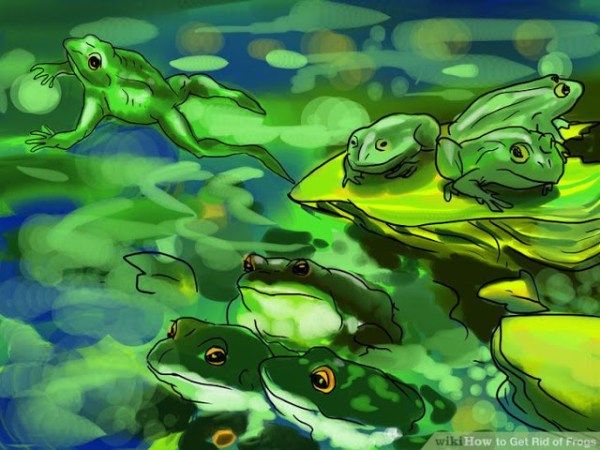
Frog song in the Rig Veda, the oldest religious book in the world, is echoed in Greek Aristophanes’ work and Kamba Ramayana in Tamil. These works span at least 3000 years. Croaking of frogs as inspired three great writers!


The seventh Mandala of Vashistha is placed third in the chronological order of ten mandalas. This means it forms the oldest section of the Rig Veda. Greek writer Aristophanes wrote The Frog in 405 BCE. Kamban wrote his verse on frog 1000 years after the Greek author.

Max Muller says that the panegyric of the frogs in the Rig Veda, is a satire on the priests; and it is curious to observe the same animal was chosen by the Greek satirist Aristophanes.


Following is the translation of Ralph T H Griffith:

1.They who lay quiet for a year, the Brahmans who fulfil their vows,

The Frogs have lifted up their voice, the voice Parjanya hath inspired.


2.What time on these, as a dry skin lying in the pool’s bed, the floods of heaven descended,

The music of the Frogs comes forth in concert like the cows lowing with their calves beside them.


3.When at the coming of the Rains the water has poured upon them as they yearned and thirsted,

One seeks another as he talks and greets him with cries of pleasure as a son his father.


4.Each of these twain receives the other kindly, while they are revelling in the flow of waters,

When the Frog moistened by the rain springs forward, the Green and Spotty both combine their voices.


5.When one of these repeats the other’s language, as he who learns the lesson of the teacher,

Your every limb seems to be growing larger as ye converse with eloquence on the waters.


6.Oneis Cow bellow and Goat-bleat the other, one Frog is Green and one of them is Spotty.

They bear one common name, and yet they vary, and, talking, modulate the voice diversely.


7.As the Brahmans, sitting round the brimful vessel talk at he Soma rite of Atiratra,

So, Frogs, ye gather round he pool to honour this day of all the year, the first of Rain-time.


8.These Brahmans, with the Soma juice, performing their year long rite, have lifted up their voices;

And these Adhvaryus, sweating with their kettles, come forth and show themselves, and none are hidden.


9.They keep the twelve month’s God appointed order, and never do men neglect the season.

Soon as the Rain-time in the year returneth, those who were heated kettles gain their freedom.


10.Cow-bellow and Goat-bleat have granted riches, and Green and Spotty have vouchsafed us treasure.

The Frogs who give us cows in hundreds lengthen our lives in the most fertilizing season.

This poem gives additional information such as

1.There was year long Fire ceremonies and Brahmins observed silence or something like that.

2.The 12 month a year was our contribution to the world. The Pancha Bhutas (five elements), the six seasons all show that Hndus were far advanced in every filed before the Greeks, Sumerians and the Egyptians.

3.The decimal system is also our gft to the world; it is used in hundreds of hymns in the Rig Veda

4.This is a beautiful poem on nature and it shows how much the Vedic Hindus loved the nature.

5.In the poem Brahmins and frogs are interchangeable.

6.We don’t fully understand this poem now. Even with Sayana’s commentary we cant understand it completely.

Kamba Ramayanam

Kamban was a great poet who translated Ramayana in tamil. He used the simile of Frog in the Kishkanda Canto. He says,

The frogs are making loud noise in the rainy season and became quiet when the rains stopped. It is like the children who learn from the teacher making loud noise and the intellectuals keeping quiet in the assembly of fools.


Bharti, the greatest Tamil poet of modern era also was influenced by this hymn.

Bharati on Cats

The greatest of the modern Tamil poets Subramanya Bharati says in his beautiful poem Tom Tom:
We have in our home
A pet, a white cat,
She gave birth to kittens
Each of a different hue.

Ash coloured was one kitty,
Jet black was another;
A third vivid like a viper;
Milky-white was a fourth.

Skin colours do vary
But they are of the same stock.
Can you call one colour superior
And another inferior?

Complexions may vary
But all men are one.
We are all uniformly human
In our thoughts and deeds.


Greek Frogs

Aristophanes was the greatest comic playwright of ancient Greece. His comedies are the earliest roots of the film, theatre and television comedies we enjoy today. Other ancient writers list 40 plays by Aristophanes; only 11 of these have survived to the present. He wrote The Frogs in 405 BCE.


Frogs, or The Frogs is one of Aristophanes’s greatest comedies and is justly celebrated for its wit and keen commentary on Athenian politics and society. It is the last surviving work of Old Comedy and is thus also notable for heralding a passing era of literature. While it is a comedy, it is also a trenchant political satire and expresses Aristophanes’s views on Athenian democracy, the value of poetry


Born in the city of Athens he started writing before he was 20.  Aristophanes lived through a period of great political and social change. For 27 years Athens fought a war against its arch rival Sparta. The eventual defeat of Athens brought to an end the greatest of ancient Greek civilization and was followed by a time of political instability during which Athens was ruled by dictators and corrupt governments.


Aristophanes wrote plays about the changes he saw going around him.


Many of Aristophanes’ plays are satires. He criticizes political leaders by making them seem ridiculous; often the leaders are out witted by the hero of the play, who is portrayed as an ordinary citizen.

Aristophanes also made fun of people such as philosophers, teachers and lawyers, whom he felt corrupted society. Nobody was shape from his sharp words even the most respected figures of the time are made to look foolish.


In his play the great Greek Philosopher and teacher Socrates is portrayed as a mad man who has an evil influence on the young people of Athens.


–Subham–


Foreign Scholar who studied Tamil Language for 63 years! (Post No.3397)

Written by London swaminathan


Date: 28 November 2016


Time uploaded in London: 18-32


Post No.3397


Pictures are taken from various sources; thanks.


contact; swami_48@yahoo.com


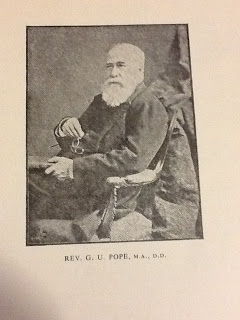
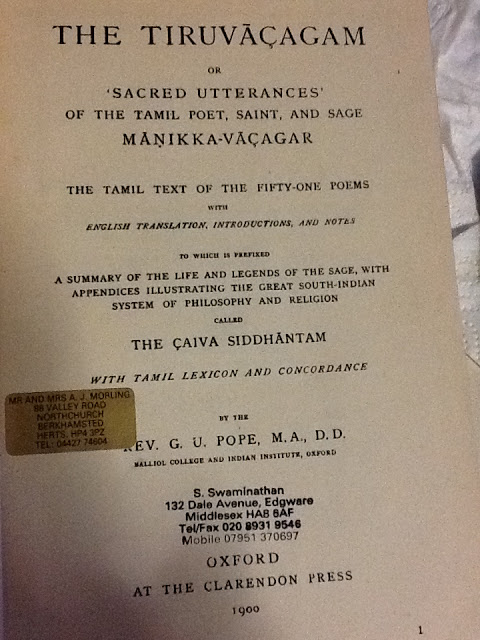
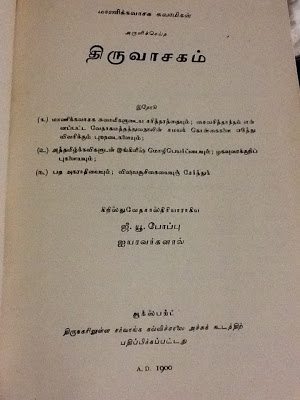
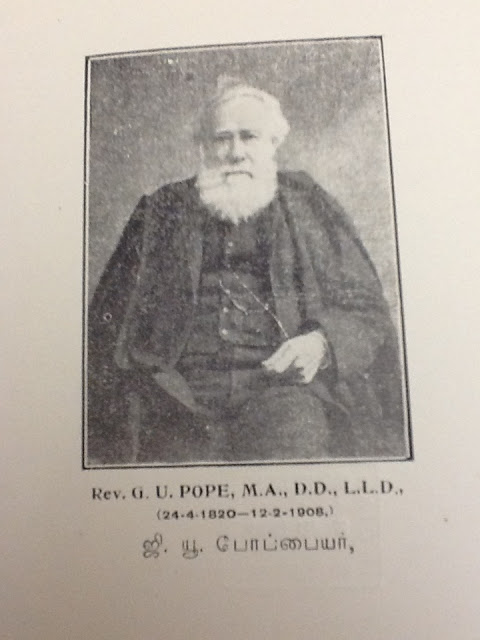
I have the translation of TIRUVACAGAM published by Rev.G.U.Pope. Tiruvacagam is the sacred utterances of the Tamil poet, saint and Sage Manikkavacagar. It has fifty one poems. Dr G U Pope of Oxford wrote a lengthy introduction to Caiva Siddhantam and the life history of Manikkavacagar.


Max Muller started studying Sanskrit with a different motive but was absorbed by Indian culture later. in the same way DR GU Pope started studying Tamil with a different motive but was absorbed by the Hindu culture.

His preface to the book is very interesting; I give below the second part of his preface:

“I date this on my eightieth birth day. I find, by reference, that my first Tamil lesson was in 1837. this end, I suppose a long life of devotion to Tamil studies. it is not without deep emotion that I thus bring to a close my life’s literary work.


Some years ago, when this publication was hardly projected, one evening, after prayers, the writer was walking with the late Master of Ballilol College in the quadrangle. The conversation turned upon Tamil legends, poetry and philosophy.   At length, during a pause in the conversation, the Master said in a quick way to peculiar to him, ‘You must print it”. to this natural answer was, “Master! I have no patent to immortality, and the work would take very long’. I can see him now, as he turned around – while the moonlight fell upon his white hair and kindly face, — and laid his hand upon my shoulder, saying, ‘To have a great work in progress is the way to live long. You will live till you finish it. I certainly did not think so then, though the words have often come to my mind as a prophesy, encouraging me when weary; and they have been fulfilled, while he has passed out of sight.

to the memory of Benjamin Jowett, one of the kindest and best, and most forbearing of friends, — to whom I owe, among much else, the opportunity of accomplishing this and other undertakings, – I venture to inscribe this volume with all gratitude and reverence.


may the blessing of his Master and mine crown the very imperfect work!

Ballilol College                                 G.U.Pope

April 24, 1900


—Subham–


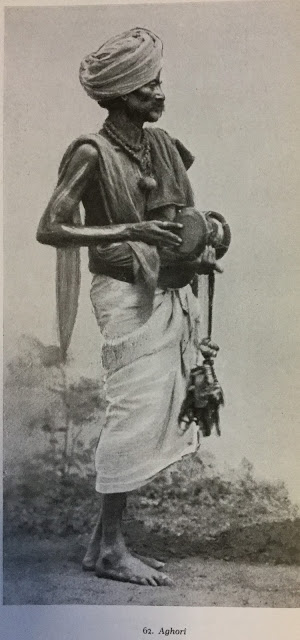
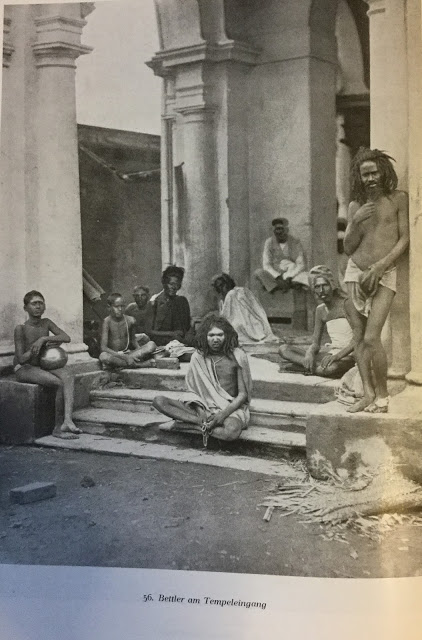
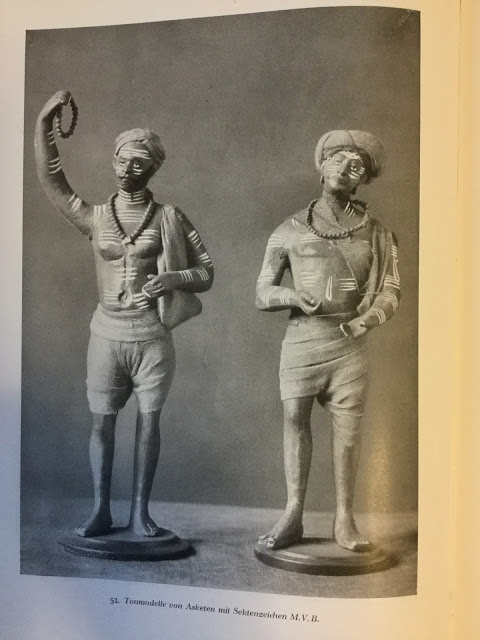
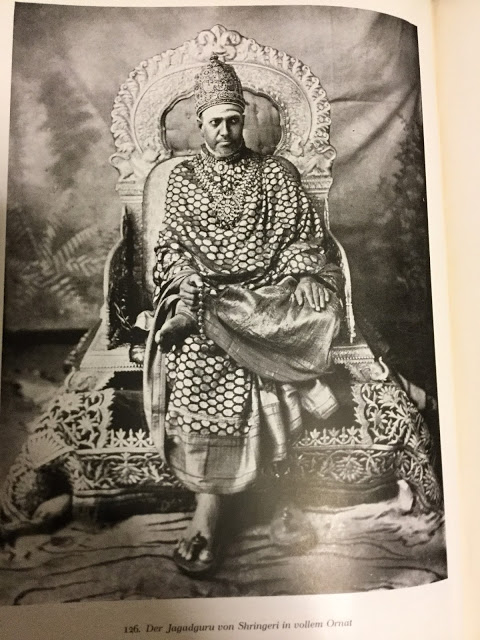
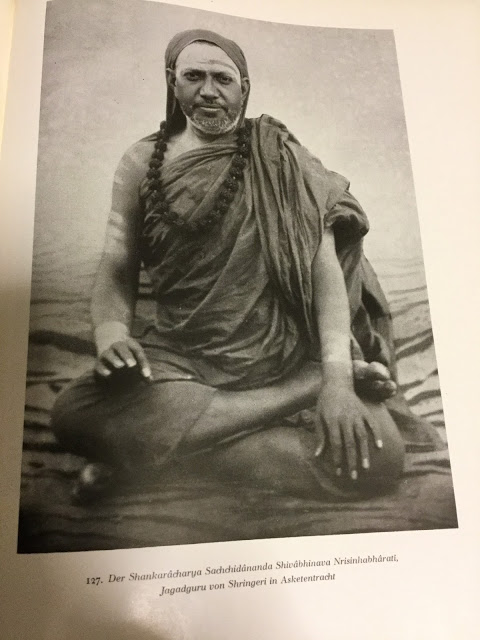
Rare Pictures of Hindu Yogis, Saints, Aghoris, ascetics from a German book (Post No.3346)

Compiled by London Swaminathan


Date: 12 November 2016


Time uploaded in London: 6-16 AM


Post No.3346


Pictures are taken from various sources; they are representational only; thanks.


contact; swami_48@yahoo.com


\


Hindu Fire Ceremonies: 7 Paka Yajnas and 14 Srauta Yajnas (Post No.3310)

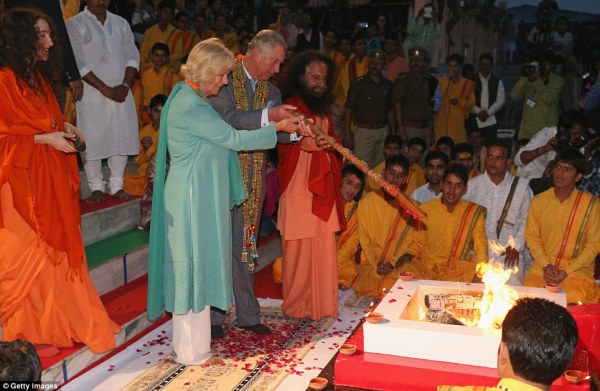
Picture: Prince Charles doing Yajna in Rishikesh, India


Compiled  by London Swaminathan


Date:1  November 2016


Time uploaded in London: 19-51


Post No.3310


Pictures are taken from various sources; thanks.


(Read the following and you will agree with me on these points: 1. Nobody follows Manu Smrti now and then why do you criticise it? 2.Hindus are the only people in the world who included feeding the guests and animals as part of their religious duties. 3.If Hindus have come to India from outside, at least a few of these rites must be found outside India. None of these and several hundred other rituals are never found in other cultures. That explodes the myth of Arya-Dravidian race theory. Following is the list of Yagas given in “An Advanced Text Book of Hindu religion and Ethics” published in 1905)


“Man is not an isolated creature, and his whole well-being depends upon his co-operation with nature, which not so much for the exaltation of individuals as for the steady evolution of all creation. The sacrifices prescribed by Hindu law-givers are nothing more than an enumeration of the duties which thus devolve on every man. They embrace all the planes of his existence and are therefore conducive to his highest growth.

There are thus five Maha yajnah, Five great sacrifices, to be offered every day, and seven Paka  Yajnah, literally ‘cooked sacrifices’, occurring at stated intervals. In addition to these, there are the fourteen Shrauta sacrifices, divided into Havir yajnah, offerings of grains, etc., and  Soma yajnah, offerings of Soma. Some of these are of daily, others of occasional, obligation.


The five great sacrifices are as follows:

1.Brahma-yajnah, called also Veda-yajnah,Sacrifice to Brahman or the Vedas.

  1. Deva-yajnah, Sacrifice to Devas
  2. Pitri yajnah, Sacrifice to Pitris (departed souls).
  3. Bhuta yajnah, Sacrifice to Bhutas (animals and other spirits).
  4. Manushya-yajnah, Sacrifice to men (feeding the poor and the guests)


These are laid down by Manu among the duties of the householder.

Picture of Swami Ganapati Sachidananda


“Teaching is the Brahma sacrifice, Tarpana (the offering of water) is the Pitr sacrifice, Homa (the pouring into the fire) the Deva sacrifice, Bali (food) is the Bhuta sacrifice, hospitality to guests the Manushya sacrifice.


“They call the five sacrifices Ahuta, Huta, Pra- huta, Brahmya huta, and Prashita.


“Japa is Ahuta, Homa is Huta, the Bali given to Bhutas is Prahuta, respectful reception of the twice-born is Brahmya-huta, and the Pitri tarpana is Prashita.

“Let a man ever engage in Veda study, and in the rites of the Devas; engaged in the rites of the Devas, he supports the movable and immovable kingdoms”.

Manusmriti. iii. 70,73 75.
And again–
“The Rishis, the Pitris, the Devas, the Bhutas guests expect (help) from the householders and hence he who knows should give to them.


“Let him worship, according to the rule, the Rishis with Veda study, the Devas with Homa, the pitris with Shraddha, men with food, and the Bhutas with Bali”.

– Manusmriti iii. 80

We have here very plainly indicated the nature of the sacrifices to be offered; the sacrifice to Brahman, called also that of the Vedas and the Rishis, is study and teaching this is a duty every man owes to the Supreme-to cultivate his intelligence and to share his knowledge with others. Every day one should devote a portion of time to study; the man who lives without daily study becomes frivolous and useless. This duty is enjoined by the first of the great sacrifices.

Picture of Sathya Sai Baba doing Ati Rudra Yaga

Then comes the sacrifice to the Devas-the recog- nition of the debt due to those who guide nature, and the feeding them by pouring ghee into the fire, the Homa sacrifice. The Devas are nourished by exhalations as men by food, their subtle bodies needing no coarser sustenance.


Hindus are so kind they feed not only pilgrims (guests) but also animals. Manu says

“Let him gently place on the ground food for dogs, outcasts (Patitaanaam), shvapachas (dog eaters), those diseased from sins, crows and insects.”


It is not to be thrown down carelessly and contemptuously, but put there gently, so that it may not be soiled or injured. It is a sacrifice to be reverently performed, the recognition of duty to inferiors, however degraded.


Lastly comes the sacrifice to men, the feeding of guests:

The Bali offering made, let him feed  first the guest, and let him give food, according to rukle, to a beggar and a student. (Manu 3-94)

Man’s duty
In this man is taught his duty to his brother- men, his duty of brotherly help and kindness. He feeds humanity in feeding some of its poorer members, and learns tenderness and compassion. The giving of food is illustrative of all supply of human needs.


Manushya-yajna includes all philanthropic actions. As in the old days, want of food was the chief want of man, that is mentioned prominently. The com plexities of life have given rise to other wants now. But they are all included in the Manushya yajna, provided they are legitimate wants, and it becomes the duty of each man to remove them, so far as lies in his power.


Thus these five great sacrifices embrace man’s duty to all the beings round him and the man who truly performs them in spirit as well as in letter, day by day, is doing his share in turning the wheel of life and is preparing for himself a happy future.


We may glance briefly at the other sacrifices.

The Paka-yajnas are seven in number

I.Pitri shraddham

2.Trkorwne Parvana-shraddham

3.Ashtaka.

4.Sravani.

5.Ashvayujih.

6.Agrahayani

7.Chaitri.

The first two of these are ceremonies in honour of the Pitris. The remainder except the fourth, are now rarely met with’


The fourteen Shrauta sacrifices are as follows:

The seven Haviryajnas:

1.Aguyadheyam.

2.Agnihotram.

3.Darsha-purna masam.

4.Agrayanam.

5.Chaturmasyam.

6.Nirudha-pashu-bandh

7.Sautra manih.


In these milk, ghee, grains of various kinds, and cakes were offered, and Manu says that a Brahmana should daily offer the Agnihotra in the morning and evening, the Darsha and Purnamasa at the end of each fortnight, the Agrayana with new grain — before which the new grain should not be used —  the Chaturmasya at the end of the three seasons, the Nirudha-pashu-bandha at the solstices (Manuamriti. iv. 25, 26).
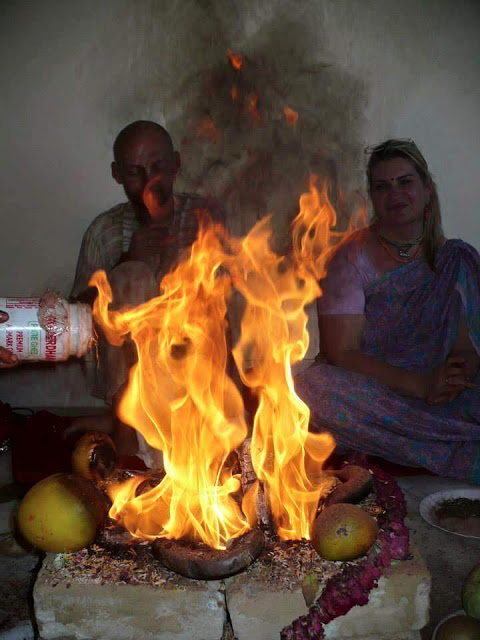
Radha Krishna figures are seen in Yajna Fire

The seven Somayajnas are

1.Agnishtomah t

2.Atyagnishtomah

  1. Ukthyah

4.Shodasi

5.Vajapeyah

6.Atiratrah

7.Aptoryamah


THREE FIRES

In these sacrifices Brahmana priests must be employed, the number varying with the sacrifice, the man on whose behalf they are offered being called Yajamanah; the husband and wife light the three sacred fires—

The Ahavaniya fire on the east for offerings to Devas

The Dakshina fire on the south, for performing duties to Pitrs (Departed souls)

The Garhapatya fire on the west.

Sometimes a fourth is mentioned, the Anvaharya – these are not allowed to go out; this is the Agniyadhana ceremony. All these Shrauta sacrifices are offered in these.

According to some authors he domestic or household – the Avasathya or Vaivahika – fire is lighted by the student on his return home when his pupillage is completed, but on this point there are many varieties of custom. The Paka-yajnas are offered in the household fire.


Please read my earlier article:

400 Types of Yagas (Fire Ceremonies),By London Swaminathan,Post No. 891 dated 6th March 2014.


-SUBHAM–


Three Kinds of Gifts/Dhanam/Donation (Post No.3291)

krishnan-barbeque

Compiled by London Swaminathan


Date: 26 October 2016


Time uploaded in London: 6-06 AM


Post No.3291


Pictures are taken from various sources;thanks


Gifts to the poor not only help the poor but help the givers. He who gives receives.


English word Donate is derived from the Sanskrit word Dhana.


Liberality is a virtue that has been placed by Hinduism in the very first rank.


Gift, has always been an essential part of every sacrifice, and the feeding and supporting of the poor and the true and learned Brahmanas has been no less essential.


By these rules men were trained to sacrifice part of their wealth for the benefit of others, and thus were led onwards to a true understanding and acceptance of the great Law of Sacrifice.


Manu says: “Let him diligently offer sacrifices and oblations with faith; these, if performed with faith and with rightly earned wealth, become unperishing.


“Let him always observe the duty of charity, connected with sacrifices and oblations with a contented mind, having sought with diligence a worthy recipient.


“Something verily ought to be given ungrudgingly by him who has been asked, for a worthy recipient will surely arise who will save him from all (sins).” Manu  iv. 226-22.

 
The way in which charity should be done is laid down by Shri Krishna, who divides gifts, according to their nature, into sattvic, rajasic and tamasic.


The gift given to one who does nothing in return,saying, ‘It ought to be given’ at right place and time and to a worthy recipient, that gift is accounted sattvic (Good).


“That verily which is given for the sake of receiving in return or again with a view to fruit, or grudgingly, that gift is accounted rajasic (Not so good).


“That gift which is given at unfit place and time and to unworthy recipients, disrespectful and contemptuously, that is declared tamasic.”(Bad)

Bhagavad. Gita, xvii. 20-22.

That charity should be done with courtesy and gentle kindliness is a rule on which much stress is laid. We often read in the Itihasa directions to show careful respect in the making of gifts; charity should ever be gracious, for even a trace of contempt or disrespect makes it, as above said, tamasic.


The idea of showing to weakness the same courtesy that is extended to rank and superiority, a tender deference and consideration, comes out strongly in the following shloka:


“Way should be made for a man in a carriage, for one who is above ninety years old, for a sick person, for one who carries a burden, for a woman, a Snataka, a king and a bridegroom.” Similarly we find, when directions are being laid down as to the giving of food to people in the due order of their position, preference over all is given to the weak

Manusmriti, ii .138.
“Let him without making distinctions, feed newly-married women, young maidens, the sick, and pregnant women, even before his guests.”

Manusmriti iii. 114.


Source: An Advanced Text Book of Hindu Religion and Ethics, Benares, Year 1905


–Subham–