Only Religion where Woman is worshiped!

goddess

Research Article written by London swaminathan

Post No. 1775; Date 4th April 2015

Uploaded from London at  22-02


“ Yatra naryast pujyante ramante tatra devatah

Yatraitastu na pujyante sarvastatraphalah kriyah”

Manu smriti 3-56, Mahabharata 13-45-5

‘Where women are worshipped, there the gods are delighted; but where they are not worshipped, all religious ceremonies become futile’—Manu Smriti.

One acharya/Guru excels ten Upadhyayas/teachers in glory; a father excels 100 acharyas/Gurus in glory; but a MOTHER excels even a thousand fathers in glory (Manu 2-145)
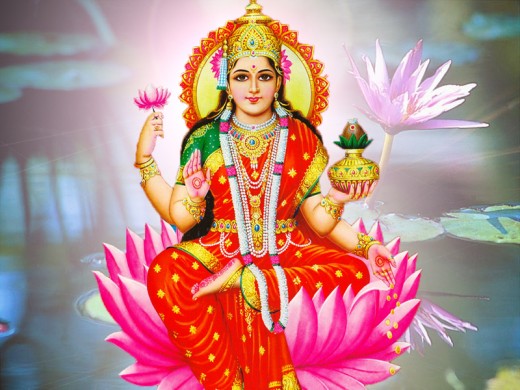
lakshmi

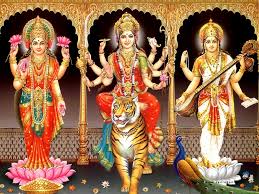
Hinduism is the only religion in the world where woman is worshipped as Goddess from the days the oldest Veda until today. In other religions God is He, but in Hindu religion God is worshiped as He and She from the Vedic days. The beauty of Hindu religion is that the same goddesses are worshiped continuously until today. Though we heard many names of goddesses in in the Middle East, Egypt and Europe (Greek and Rome) all those goddesses were sent to Museums. The most powerful mantra Gayatri is in all the three Vedas. Goddesses Gayatri, Savitri and Sarasvati are worshipped from Vedic days and they are very popular names of girls from Northern Himalayas to Southern Most parts of Sri Lanka.

Here is a list of Goddesses from the Vedas:–

1.Usas (dawn)—Most beautiful description of Usas is found in the Vedas in many hymns.

2.Sarasvati — River and Goddess; praised in many hymns

3.Prithivi  – Earth (Greeks and others followed this Hindu concept)

4.Ratri (RV 10-107) – Called daughter of Heaven

5.Vac (personified speech) – RV 10-125

6.Purmandhi (Goddess of Plenty)  – Her name occurs nine times in the Oldest Book Rig Veda

7.Parendi(Goddess f Riches and abundance) –

8.Dhiisanaa  (Goddess of Abundance) – mentioned at least 12 times

9.Ilaa (Goddess of Nourishment) Personification of the offering of milk and butter, meaning plenty. Her name is very common among girls. She is mentioned at least 10 times in the Rig Veda. She is also known as the daughter of Manu or Mitra- Varuna in the Satapata Brahmana
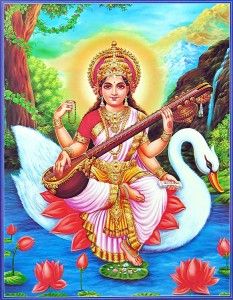
sachu

10.Brhaddivaa- Occurs at least four times. She is called mother and mentioned with Ila (RV 10-64-10), Sarasvati and Raka.

11.Raka – Bountiful goddess Raka is mentioned at least twice (RV 2-32-7, 5-42-17)

12.Sinivaali _ She is mentioned in two hymns (2-32; 10-184). She is invoked with Sarasvati and called as wife of Vishnu. She is sister of the gods, broad hipped, fair armed, prolific and a mistress of the family. She is implored to grant off spring.

13.Kuhu (Personification of New Moon). Raka and Sinivaali are also connected with the phases of the moon

14.Prsni – The mother of Maruts

15.Saranyu (10-17-2)- Occurs once in the RV; Tvast’s daughter married to Visvat

16.Indrani – Wife of Indra

17.Varuni- Wife of Varuna

18.Agnayi – Wife of Agni

19Rudrani

(This type of Sanskrit naming exists until today among Hindu families: Bhava=Bhavani, Shiva= Shivan, Vishnu=Vasihnavi etc)

20.Asvini= Wife of Asvins is mentioned once

21.Suryaa is also mentioned

22.Bharati

23.Mahi

24.Aditi:Aditi is an ancient Goddess to express the infinite and boundlessness. She is mentioned about eighty times in the Rig Veda. The concept of her motherhood is found in many words such as dyaur-aditih, aditeh putrah. Her children were Adityas. Aditi is connected with light.

God and Goddess sharing (Ardhanaree)
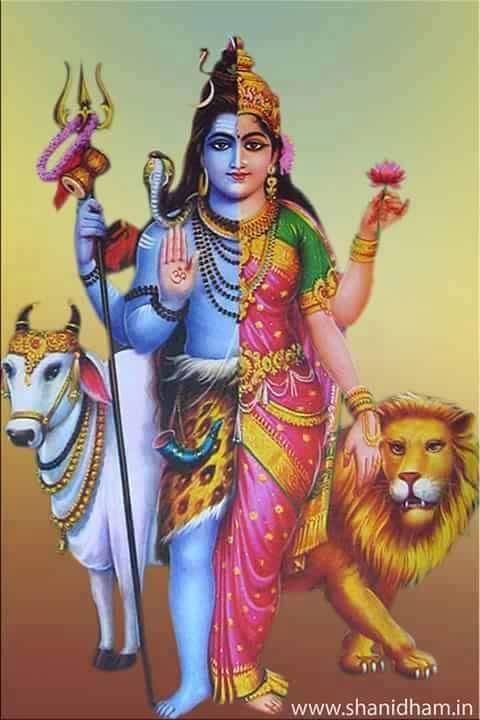
ardhanaree with two vahanas

Ten Mandalas of the Rig Veda have Apri Suktas where Bharati, Sarasvati and Ila are invoked. In some, Bharati is replaced with Mahi.

Al other are invoking Bharati, Sarsvati and Ilaa.

There are over twenty poetesses among the Rig Vedic poets or “composers” ( Vedas are “heard” like we hear radio wavelengths on the receivers; not “composed”. Like Newton’s Laws of Motion, they exit whether we discover them or not. Vedas are eternal)

Along with the names of poetesses, the goddesses form the biggest group of esteemed women in any known ancient civilization. The latest date accepted for the Rig Veda is 1700 BCE. We have not heard such a big group of women in any other civilization around that time. All the Vedic metres are given women’s names. All the rivers are given women’s names in the Vedas: Ganga Sindhu, Sarasvati and Yamuna etc. All the good virtues are given the names of women in the Vedas such as Kirti, Karunaa and Shanti.

And of feminine forms I am fame(Kirti), prosperity (Sri), speech (Vac), memory (Smrti) , intelligence (Medha), firmness(Dhrti) and patience (Kshama).—Bhagavad Gita—X-34
sivauma

Jagata Pitarau Parvati Paramesvarau (Father and Mother of Universe– Kalidasa)
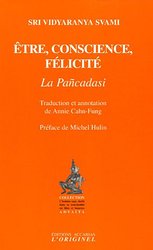
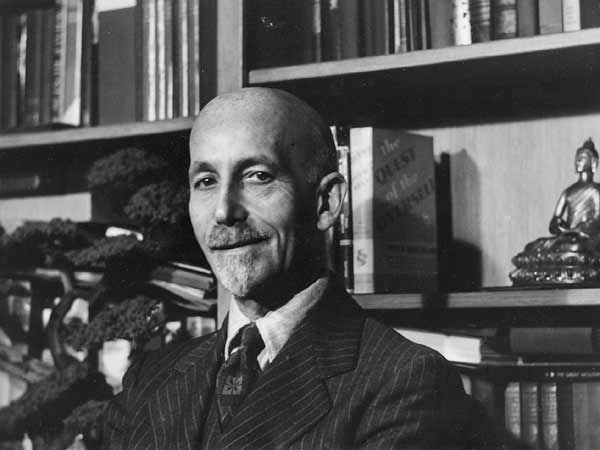
Paul Brunton – by Annie Cahn Fung

annie1annie1

Post No 1773; Date 4th April 2015

uploaded from London at 7-44 am

BOOK REVIEW

Paul Brunton – by Annie Cahn Fung

Santhanam Nagarajan

The book under review, ‘Paul Brunton’ is written by Annie Cahn Fung. It is a thesis of seven long years presented by the author to the Department of Religious Anthropology, University of Paris, Sorbonne.

Written in a lucid style the book covers all aspects of the great life of Paul Brunton, the mystic writer (1898-1981). It consists of two parts, Prelude to a Quest and The Quest for Truth.

The research led the research scholar to Switzerland, India and The United States.  Brunton died in Switzerland in 1981 and he spent many years in India where he met very many great souls. Brunton’s friends and students founded Wisdom’s Goldenrod center for Phillosophic Study in US and Anne Cahn Fung has collected all important information about Brunton, here.

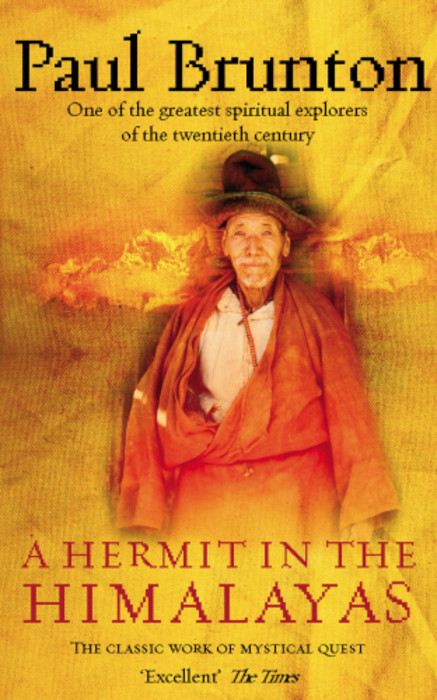
a-hermit-in-the-himalayas

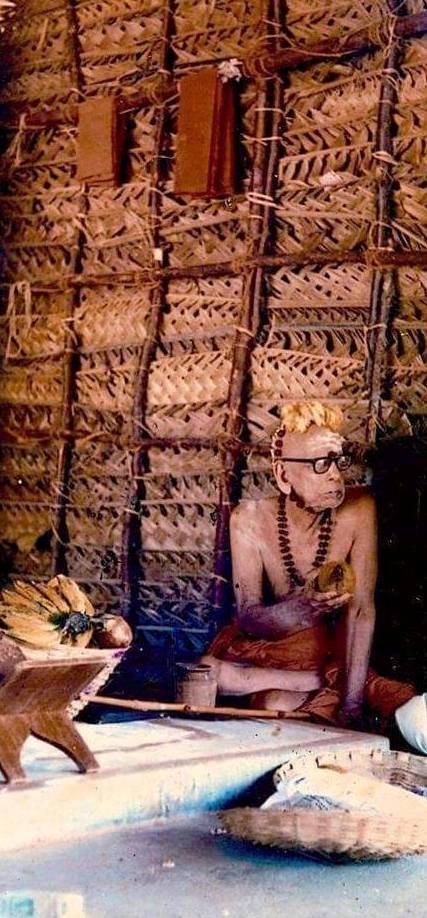
Paul Brunton’s real name was Raphael Hurst. He was born in London on November 27, 1898. He came to India in 1930 and met the great Sankaracharya of Kanchi mutt and the sage of Thiruvannamalai Ramana Maharishi. In 1931, during his second stay at Thiruvannamalai he encountered many mystical experiences taking him to a new sprititual hight. Due to some unexpected financial and professional reasons he was forced to return back to London.

His second visit to India was in 1935. He stayed in Thiruvannamalai and published his famous book, ‘A message from Arunachala’. He spent four months in the heart of Himalayas.

He passed the winter, 1937-1938 in London and then returned to India for the third time in 1939.

The author explains in detail the various incidents that led Brunton to many cities of the world and the mystical experiences he encountered therein.

PaulBruntonRamanaMaharshi1

His friendship with Maharaja of Mysore is very interesting. It is in Mysore he met the learned guru, Sri Subrahmanya Iyer, The guruji of Maharajah of Mysore.

His day to day discussions with Mr Iyer gave him a fresh insight in all of his research. Under Iyer’s influence, Brunton had written the book, ‘The Hidden Teaching Beyond Yoga’.

Due to some ‘deplorable situation’ in Ramanashramam, he had to return back to Mysore from Thiruvannamalai and he never saw Ramana maharishi again.

But his faith in Ramana’s teachings was unshattered. After spending many months in the company of Sri Iyer, he retruned to London.

The first part of the book explains all these in detail and the second part explains the intricate perception, space and time, casuality, karma, evolution, mind and brain, symbolism of numbers, inner divinity etc.

Brunton’s view of the “Hinduized” West will make us an interesting reading.

message from arunachala

The author concludes the book with two chapters titled, ‘Brunton’s work’ and ‘The man who bridged the East and West’.

The book is very interesting as it covers many hitherto untold happenings in Paul Brunton’s life.

We heard all about Brunton’s active years in India. But after that we are not aware of any thing about his exclusive last years.

The book gives all about Paul Brunton, and I recommend very strongly all Ramana devotees and Brunton admirers to read this book.

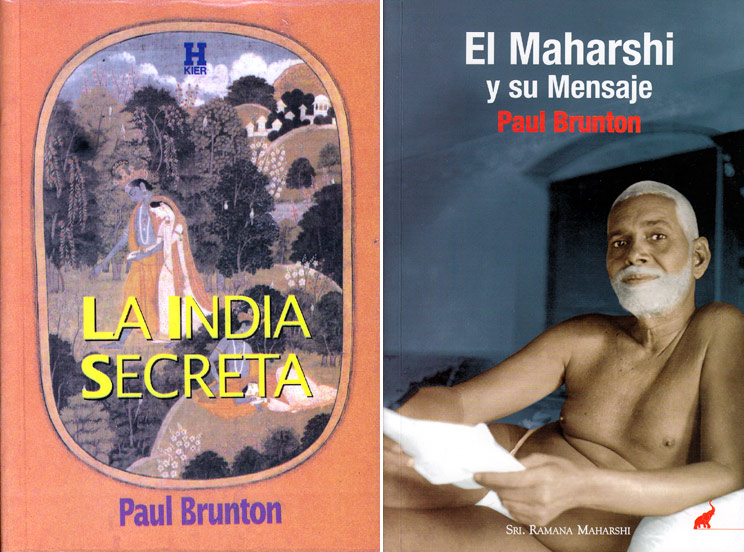
search in secret india

Words fail me in congratulating the author who took a very rare subject for her thesis.

After reading this book, I am sure, the reader will be ‘reborn’ again knowing many secrets of life.

I suggest the author Annie to write more about Brunton’s life and his views on Vedanta as her seven long years’ research will certainly reveal more interesting information.

notebooks of Paul

**********

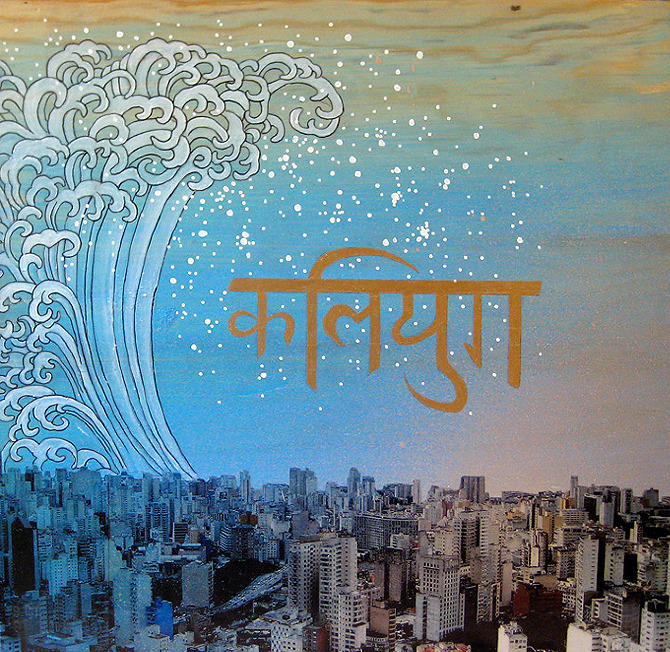
Fake Ascetics (GURUs) of Kaliyuga !!

kaliyuga_spencer_sass

Research Article No.1772; Date:- 3 April, 2015

Written by London swaminathan

Uploaded at London time – 20-55

When I went to the British Library in London last week, I read an interesting book on Kaliyuga. The title of the book is ‘KALKI PURANA’. The Sanskrit text was translated into Tamil by K Ananthacharyar. The date of Publication was 1903, Price 12 Annas.

One of the signs of Kaliyuga was a riddle to me. It said,

“In Kaliyuga, some Gurus will forget all the daily religious rituals, but advise others to do those and go around (fly)  preaching like Kulinga birds.

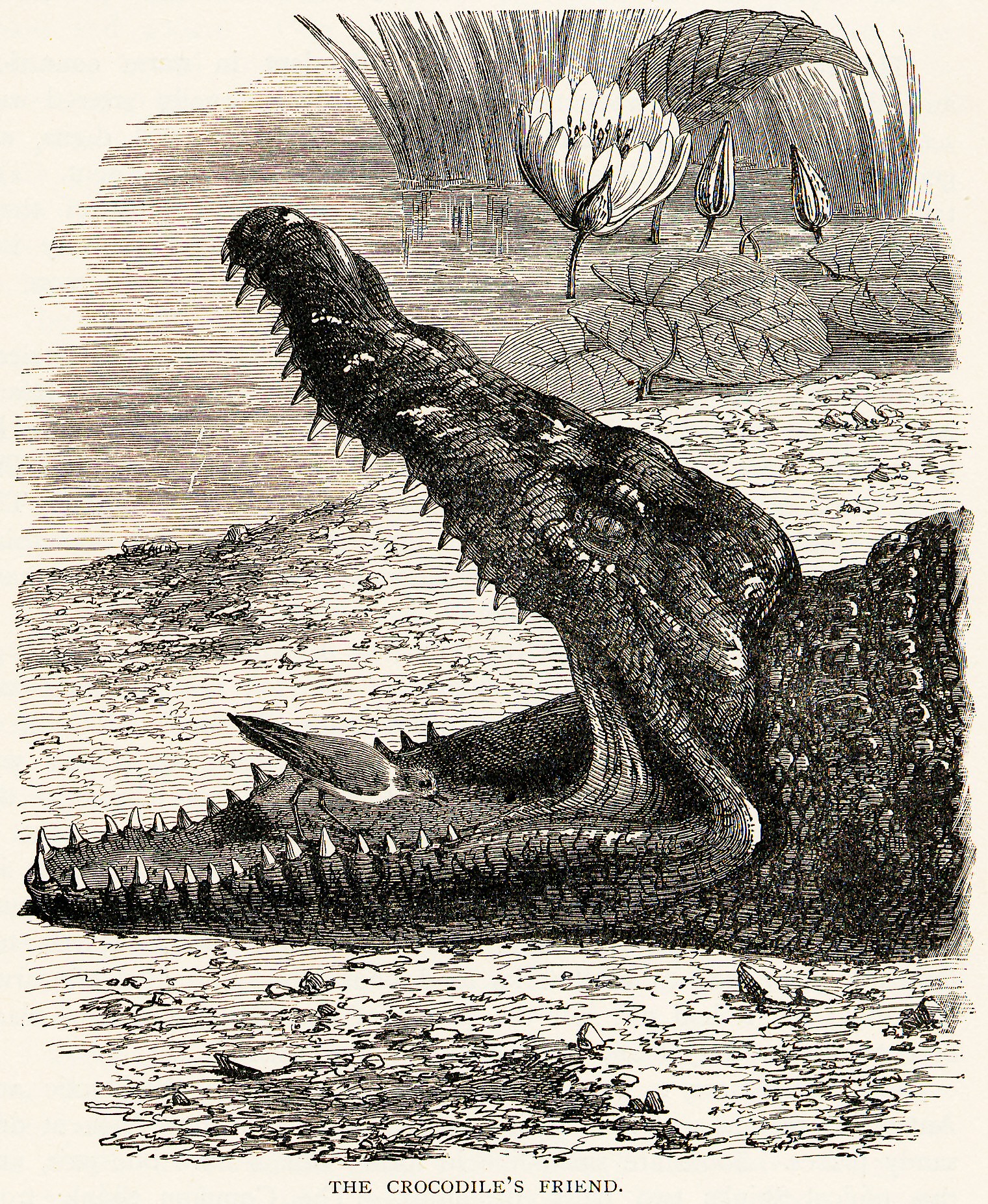
I can understand the meaning. They will teach morals to others but they would not follow their own teachings. But why did he compare them to Kulinga birds? There are one or two references to Kulinga birds in the Bhagavata and Mahabharata. That also did not make any sense. When I searched for the Kulinga bird I came across the beautiful ‘Daya Satakam’ of Sri Vedanta Desikan which throws light on the adventurous Kulinga bird (It is similar to my research article on the mysterious Bhulinga bird of Mahabharata). It looks like both Kulinga and Bhulinga birds are one and the same.

It is said that its cry sounds like “Maa Saahasam Kuru = Don’t do adventurous acts”. Here is Vedanta Desika’s verse and its commentary:-

PloverCrocodileSymbiosis

Plover is like Kulinga/Bhulinga bird (Picture from Wikipedia)

Vedanta Desika in his famous hymn ‘Daya Satakam’ says

Maa saahasokti gana kanchuka vanchitaaniyah

Pashyastu thesu vidadhaamyathy saahasaani

Padmaa sahaaya karune na runasti kim tvam

Ghoram kulingam sakuneriva cheshtitam me

Meaning:

O, Daya Devi! I preach to others not to engage in terrible acts that are against the scriptures. After giving advice like this, I myself engage in such shameful acts in front of them. After the Upadesa (discourse) I travel in the opposite direction, cheating them. My act is like the acts of Kulinga bird which warns others not to involve in dangerous acts. But what does the bird do? When the lion yawns before going to sleep and has its carnivorous mouth open wide, the Kulinga bird dashes in and tries to pull out the pieces of meat that stuck to its teeth. Any moment, the bird runs the risk of being killed by the closing of lion’s mouth. O, Daya Devi, it is your duty to prevent me from performing such dangerous acts that I preach against. Why are you watching my destructive behaviour without intervening? You must come to my recue and send me forward on the right path-

Sloka 94 of Daya Satakam by Sri Vedanta Desikan

Vedanta Desikan, Vaishnavite Guru of Kancheepuram area, 1268-1370. Sri Vedanta Desikan was a great saint. When he compared himself to Kulinga bird, it does not mean that he was really like a Kulinga. This is to warn us about fake Gurus. Poets and philosophers always feel humble and compare themselves to the lowest creature. Great Tamil saint Manikkavasagar compared himself to a dog in over hundred places in his Tiruvasagam.

So, please beware of ANANDAS, BABAS, GURUS, SWAMIJIS, SWAMINIS, ACHARYAS, RELIGIOUS SPEAKERS and UPANYASAKS!

First find out their personal life first and then use your discretion before accepting them as GURUs.

symbiosis

Birds clean the skin of the animals. This cooperation is called symbiosis.

There are more interesting information about the signs Kaliyuga in the Kalki Purana:

1.Girls will give birth to children at the age of eight. They won’t follow any rules for their sexual behaviour.

2.People who were 30 measures in Krta Yuga will take the size of three measures in the Kali Yuga ( It is interesting to compare it with a verse in Manu Smrti (1-83). He says that the age of human beings was 400 years in Krta Yuga and it would be only one fourth of that in Kali)

3.High class will become the low class and low class people will become high class people.

4.The rich will be dubbed as high class people and the poor will be dubbed as low class people

5.Women will give birth to 8 or ten children like pigs. They are going to scratch their head with both hands (I don’t understand this phrase.)

6.People will sell food, Brahmins will sell the mantras and women their chastity.

7.More married women will live like widows after fighting with their husbands (Probably it means divorced women)

8.Brahmin women will sell Milk, Butter Milk and Curd/Yogurt and the Vaisyas (business community) will sell meat.

9.There will be reduced rain and less harvest. People will be afflicted with diseases.

10.People will swear that truth is untruth and untruth is truth.

11.Brahmins and other two Varnas (Kshatriyas and Vaisyas) will forget their own Dharma (swadharma).

12.At the end of Kali Yuga, people will give birth to animals.

13.Brahmins will be namesake Brahmins, eating meat and drinking liquor. They will argue a lot.

14.The character (sexual behaviour) of students and teachers will be at a very low level.

15.Women will have dinner first and go to bed before their husbands.

16.Everyone will be preaching Dharma, but none would understand its meaning.

(The original book is in Sanskrit. The Sanskrit verses are also given in the book with Tamil translation. I have given a rough translation from the Tamil version. Some are general comments like there will be famine, diseases, less morality etc. But a few comments like women fighting with their husbands, are very specific that make us wonder how they came to know about it thousands of years before our time. The statistics on divorce in India shows that 6000 to 8000 women file for divorce in each of the four major cities in India!)

How Paul Brunton was directed to go to Bhagavan Ramana Maharishi – Part II

kanchi kudisai

Written by S NAGARAJAN

Article No.1767;  Dated 2April 2015.

Uploaded at London time 5-55 (GMT 4-55)

This is in continuation of the first part of the article published in EzineArticles.com earlier.

Paul Brunton came to Madras (now named as Chennai) in January 1931. He met the great author          Mr K.S.Venkataramani. It was Mr Venkataramani who took Paul Brunton to the great sage of Kanchi, His Holiness Sri Chandrasekharendra Saraswathi Swami.
After the interview at Chingleput, Paul Brunton returned to Madras.

That night he saw the great sage in his vision.

He has narrated his experience in his own words:

“My astounded gaze meets the face and form of His Holiness Shri Shankara. It is clearly and unmistakably visible. He does not appear to be some ethereal ghost, but rather a solid human being. There is a mysterious luminosity around the figure which separates it from the surrounding darkness.
Surely the vision is an impossible one? Have I not left him at Chingleput? I close my
eyes tightly in an effort to test the matter. There is no difference and I still see him quite
plainly!

Let it suffice that I receive the sense of a benign and friendly presence. I open my eyes
and regard the kindly figure in the loose yellow robe.

The face alters, for the lips smile and seem to say: “Be humble and then you shall find
what you seek!”

ramanapaul

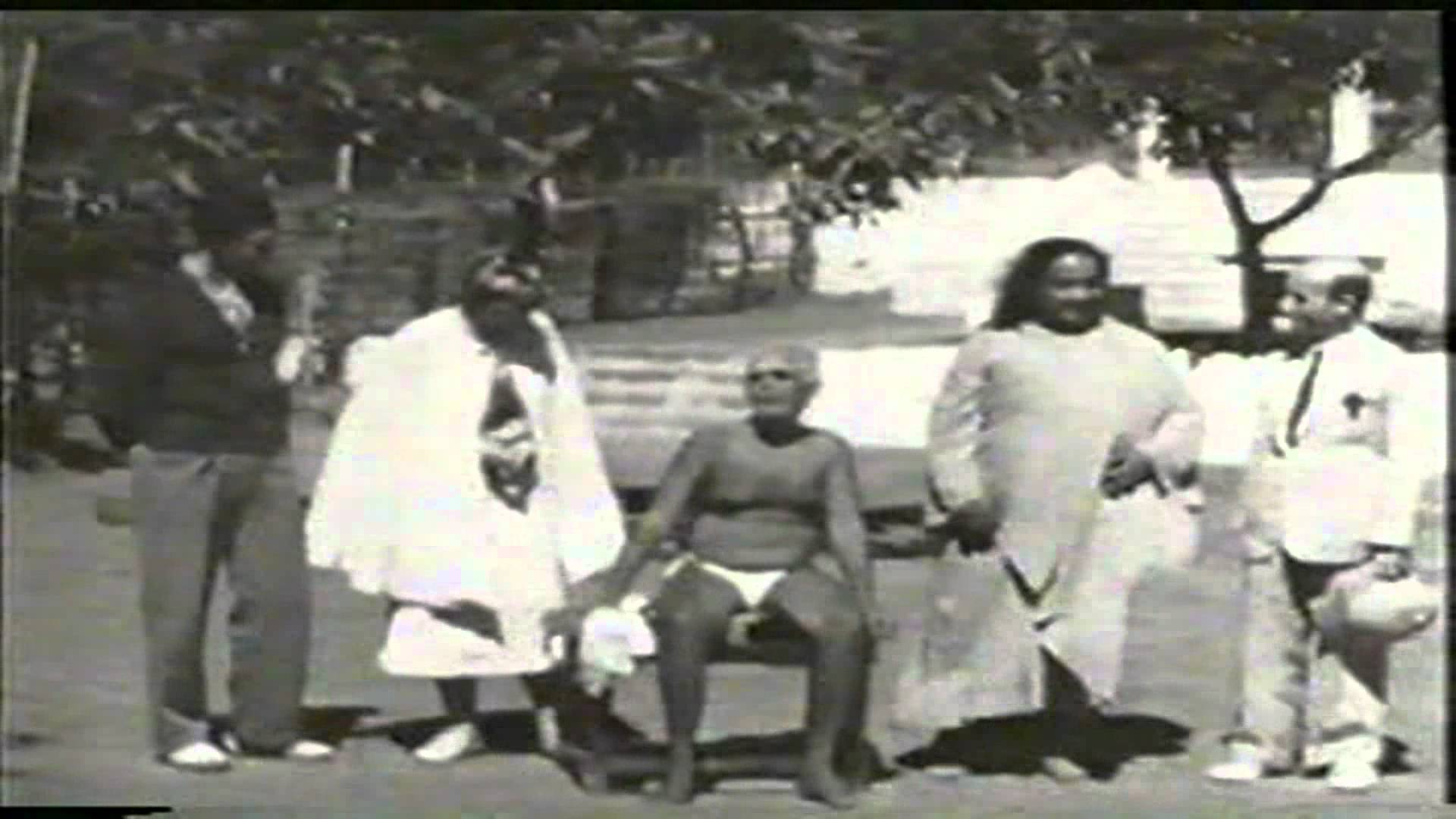
Ramana Maharishi, Yogananda, Paul Brunton

The vision disappears as mysteriously as it has come. It leaves one feeling exalted, happy and unperturbed by its super-normal nature. Shall I dismiss it as a dream? What matters it?”

Paul Brunton went to Thiruvannamalai and met Maharishi Ramana. He was attracted by Bhagavan Ramana. He stayed there. He started asking various questions.

It was at Thiruvannamalai he understood the mysteries of the Holy Hill Thiruvannamalai.

On the twenty third of January 1936 he asked very many questions to Bhagavan Ramana.

Mr Brunton asked Bhagavan if the Hill here is hollow.

Maharishi : The puranas ( Hindu sacred scriptures) says so. When it is said that the Heart is a cavity; penetration into it proves it to be an expanse of light. Similarly the Hill is one of light. The caves etc. are covered up by that Light.

Brunton: Are there caves inside?

Maharishi: In vision I have seen caves, cities with streets etc., and a whole world in it.

Brunton: Are there Siddhas (Holymen of highest order) too in it?

Maharishi: All the Siddhas are reputed to be there.

Brunton: Are there only Siddhas or others also?

Maharishi: Just like this world.

Brunton: Siddhas are said to be in the Himalayas.

Maharishi: Kailas is on the Himalayas; it is the abode of Siva. Whereas this Hill is Siva Himself. All the para-phernalia of His abode must also be where He Himself is.

Brunton: Does Bhagavan believe that the Hill is hollow, etc.?

Maharishi: Everything depends on the viewpoint of the individual. You yourself have seen hermitages, etc., on this Hill in a vision. You have described such in your book.

Brunton: Yes. It was on the surface of the Hill. The vision was within me.

Maharishi: That is exactly so. Everything is within one’s Self. To see the world, there must be a spectator. There could be no world without the Self. The Self is all comprising. In fact Self is all. There is nothing besides the Self.

Brunton: What is the mystery of this Hill?

Maharishi: Just as you have said in Secret Egypt, “The mystery of the pyramid is the mystery of the Self, so also the mystery of this Hill is the mystery of the Self.”

Brunton understood the mystery of the Holy Hill Arunachala. He introduced Bhagavan Ramana to the west in his book ‘A search in secret India’ published in 1935.

He had spent several months at Ramanasramam. His next book The Secret path outlined the Maharishi’s “Who Am I” technique of self enquiry.

****************

How Paul Brunton was directed to go to Bhagavan Ramana Maharishi – Part I

paul brunton

Post No.1764; Date 1 April 2015

Santhanam Nagarajan

Uploaded at London Time 8-39 am

Paul Brunton was a British philosopher, mystic, and traveler. He was born in London in 1898. He dedicated his entire life to an inward and spiritual quest. He specialized in research into the subject of Yoga and traveled widely throughout India, Tibet, Japan, China, and Egypt.

He came to Chengleput, a small city near Chennai to meet the great sage of Kanchi, His Holiness Sri Chandrasekharendra Saraswathi Swami.

Brunton asked the sage,” What is the most practical course for me to take?”

Paramacharya, as he is being called, replied thus: “Go on with your travels. When you have finished them, think of the various Yogis and holy men you have met; then pick out the one who makes most appeal to you. Return to him and he will surely bestow the initiation upon you.”

When Brunton asked him whether he could turn to him for assistance the great sage of Kanchi replied: “I am head at the head of a public institution a man whose time no longer belongs to himself! My activities demand almost all my time. For years I have spent only three hours in sleep each night. How can I take personal pupils? You must find a master who devotes his time in them.”

Then Brunton asked him for guidance to find out a master.

The great sage recommended him to go to Maharishi Ramana.

He told him:” Promise me that you will not leave South India before you have met the maharishi.”

The sage assured him:” Do not be anxious. You shall discover that which you seek.”

He met the great sage Ramana. His experiences with Maharishi Ramana inspired him and he has written a book, ‘A Message from Arunachala’.

In our next article we will read about the strange dream of Paul Brunton.

Twenty Types of Temples in Ancient India!

meeenakshi

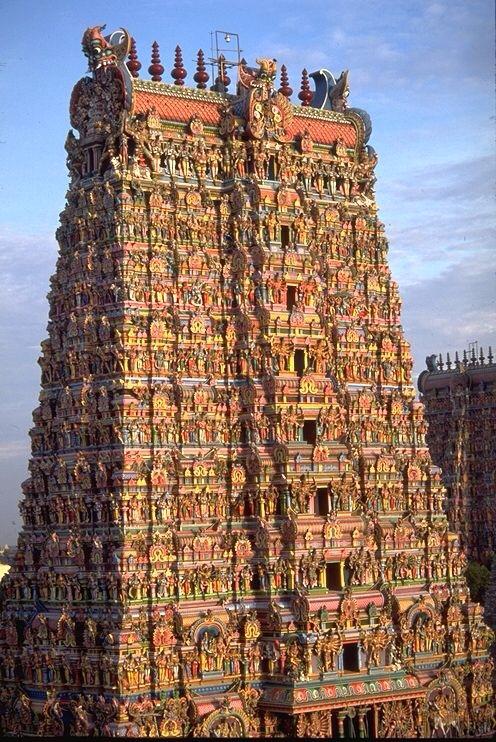
Madurai Meenakshi Temple

Written by London Swaminathan

Research Article No.1760;  Dated 30 March 2015.

Uploaded at London time 20-55 (GMT 19-55)

Varahamihira of sixth century CE and Tamil saint Appar of seventh century CE give us valuable information about the different types of temples that existed in ancient India. Though Earlier Sanskrit literature and Sangam Tamil literature give us lot of information about temples for different deities, we don’t know the structure or the types of temples (I have already listed all the temples form the Tamil epic Silappadikaram in one of my research articles)

Varahamihira has devoted one full chapter (56) in Brhat Samhita  for the description of temples. In the first verse he says that one should build a temple in order to enhance one’s fame and religious merit. He also insisted that there should be abundant supply of water through tanks and lakes and gardens around it. All the south Indian temples are with tanks and gardens. But in course of time the gardens were left uncared for.

tv malai

Tiruvannamalai Temple

He says that by building temples one gets the merits (Punya) of both performing sacrifices and sinking wells. He wrote it 1500 years before our time. That shows that building temples were very popular.  But Hindus used wood and brick (like we see in today’s Kerala temples) and they were destroyed by invading Muslims and weather. Later Hindus started building with stones. First they started by excavating rocks and then built with granite stones. Some of them are engineering marvels. In today’s costs they will cost us billions of rupees to build such a massive structure.

Appar alias Tirunavukkarasu, one of the Four Great  Saivite Tamil saints sings about

“If the seventy eight great temples of the Lord

Whose matted crest is adorned with the great flood

KARAKKOYIL, GNAAZHARKKOYIL  girt with well protected

Groves, the hill like KOKUDIKKOYIL of  Karuppariyal

ILANGKOYIL where with the chanting of the Rig Veda

The Brahmins hail and adore the lord MANIKKOYIL

AALAKKOYIL  and every TIRUKKOYIL where Siva abides

Are circumambulated and hailed in humble

Adoration, evil Karma will get annulled “

(Sixth Tirumurai, Adaivu Tiru Thandakam of Appar)

Translated by Dr T N Ramachandran

mamallapuram

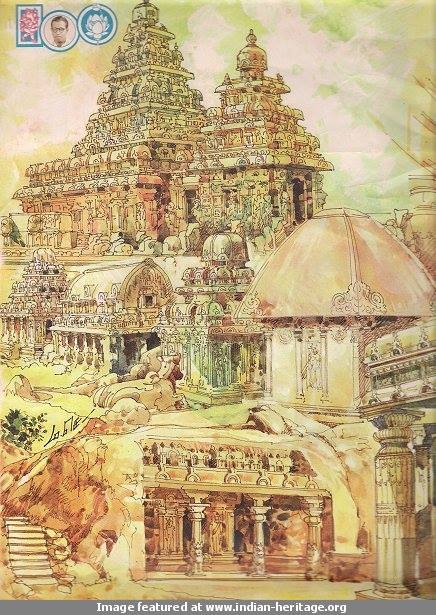
Mamallapuram Cave Temples

Eminent archaeologist and historian Dr R Nagasamy in his scholarly article ( Second World Tamil Conference Souvenir, 1968) on the development of temples has listed all the terms for temples in Tamil in addition to the above types (KOYIL=temple). He has also quoted the verse from Pingalandai Nikandu (Dictionary of Tamil Synonyms) the ten materials used for making temple sculptures and idols. Stone is just one of them. So ancient temples used other nine perishable materials 2000 years ago.

Varahamihira gives more information about the 20 types:

“Deities reside with pleasure in places which abound in water and gardens, whether natural or otherwise”. He gives a list of places of natural beauty where god prefers to reside.

Then he describes in detail the height, length and width of the temples. It shows how advanced was temple building around 500 CE.

28BG_HAMPI_2327026f

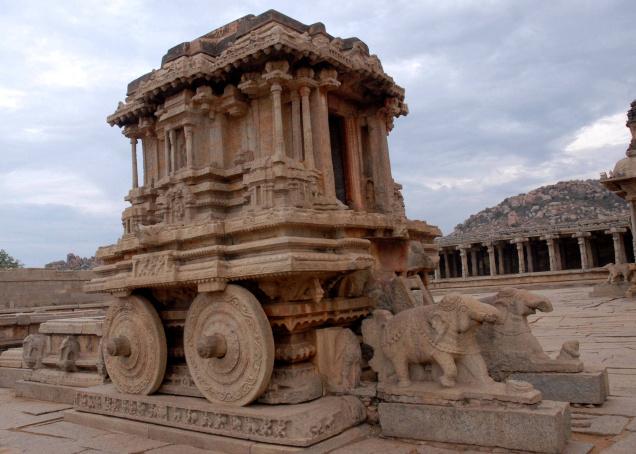
Hampi Temples

There are twenty types of temples enumerated here

Meru , Mandara, Kailasa, Vimanachchanda, Nandana, Samudga, Padma, Garuda, Nandhivardhana, Kunjara, Guharaja, Vrsa, Hamsa, Sarvatobhadraka, Ghata, Simha, Vrtta, Catuskona, Sodasari and Astasri.

Meru type has twelve storeys and hexangular in shape. The dimensions are – breadth 32 cubits, height 64 cubits, sanctum sanctorum 16 cubits. He gives the dimensions for all the 20 types and finishes the chapter with the following statement!!

“Thus I have briefly explained the characteristics of temples. All that had been expounded by sage Garga has been incorporated in this chapter”. He has also seen the large works of Manu and others on this subject.

One must compare this twenty types listed by Varahamihira with later works. It will give us some idea about the temples that were destroyed by the invaders and the monsoon weather.

gopura darsan

One Minute Mahabharata! One Minute Bhagavatha!!

IMG_2558

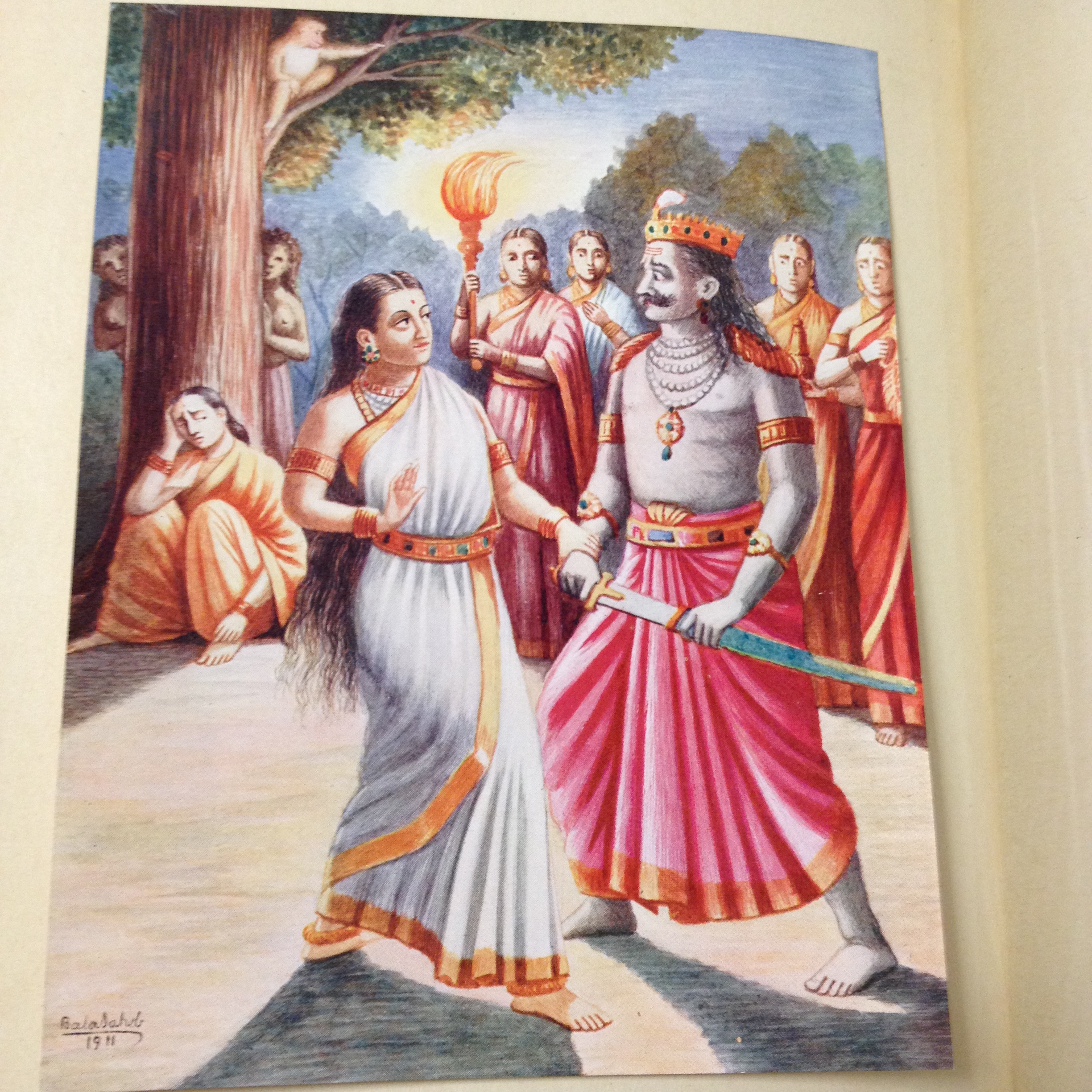
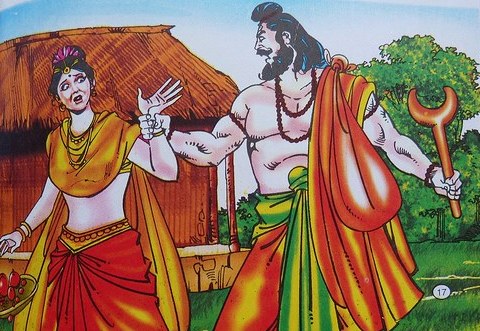
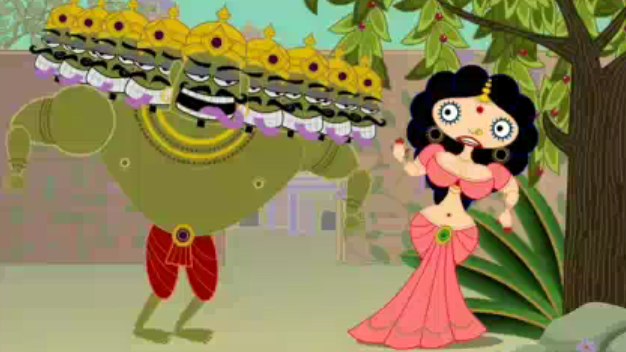
Ravana dragging Sita (from Picture Ramayana)

Article No.1753; Date:- 27  March, 2015

Written by London Swaminathan

Uploaded at London time  19-42 (GMT)

A few days ago we saw One Minute Ramayana. Ramayana in just four lines:

Here is One Minute (Eka Sloka) Ramayana in just four lines:–

Adhau Rama Tapovananaadhi gamanam, Hatva mrugam kaanchanam,

Vaidehi haranam, Jataayu maranam, Sugreeva sambaashanam

Vali nigrahanam, Samudra taranam, Lankaapuri Dahanam

Paschaad Raavana Kumbakarna hananam cha etat iti Raamaayanam 


hanuma crossing

In the beginning Rama went to the forest

He killed the Golden Deer

Sita/Vaidehi was kidnapped

Jatayu was killed

Sugreeva had talks with Rama

Vali was killed

Sea was crossed (by Hanuman)

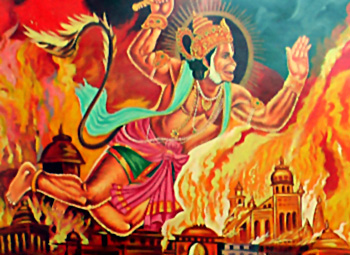
Lanka was burnt

Later Ravana and Kumbakarna were too killed

This is Ramayana!

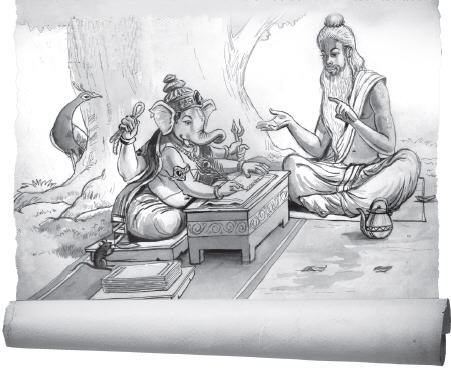
ganesh writing

One Minute Mahaa Bhaaratham !

Let us look at another Sanskrit Sloka which summarises 200,000 line Mahabharata Epic in just FOUR lines!

Adhau Paandava Dhaartharaashtra Jananam Laaksha Grham Dhaahanam

Dyuute Sriharanam Vane vicharanam Maatsaalaye varthanam

Leelaa go grahanam Rane viharanam Sandhikriyaa jrubanam

Paschaad Bhisma suyodhanaadhi nidhanam hyetan Mahabhaaratam

pandavas

In the beginning,

Panadava , Dhrtaraashtras were born

House of Lac was burnt down

In the gambling the kingdom was lost

They roamed in the forest

In the Matsya Kingdom lived

Cattle were taken

In the battle field (Kauravas were) killed

Peace treaty was violated

Later Bhisma Duryodhanas died

This is mMhabahratam!

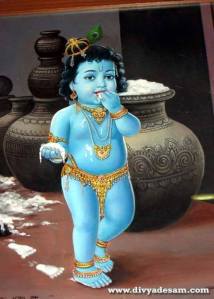
butter krishna

One Minute Bhagavatham !

Bhagavatha Purana is also available in one Sloka that gives the life story of Lord Krishna. The original Bhavata Purana is in 18,000 verses (36,000 lines). Now we can summarise it in four lines!

Adhau Devaki Devagarbha jananam Gopigrhe vardhanam

Maayaa Putana Jiivita apaharanam Govardhana Udhdhaaranam

Kamsa chedhanam Kauravaathi haranam Kuntisudhaa paalanam

Chaitat Bhaagavaham Puraana katitam Sri Krishna Leelaamrtam

36,000 lines summarised in four lines!

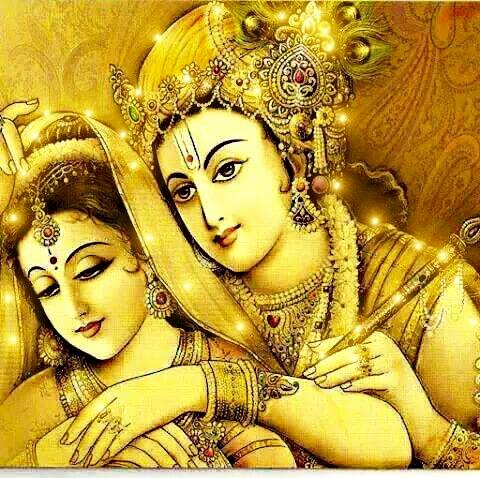
krishna yellow

In the beginning

Devaki gave birth (to Lord Krishna)

Was brought up in Gopi’s house

Demoness Putana’s life was taken

Gowvdhana Mountain was lifted

Kamsa was destroyed

Kauravas were killed

Kunti’s son was supported

This is Krishna’s great play

And is called Bhagavata Purana!

Children must be taught these hymns as nursery rhymes. That will imbed in their mind the stories for ever. It will create interest in them to read the scriptures in full. These Slokas or Verses are like newspaper story sub headings. They will kindle interest.

Hindu scriptures are vast like Pacific Ocean. No one can read all of them in one life time. Mahabharata has the summary of other stories as well. So one of the above three is enough to understand the Hindu religion.

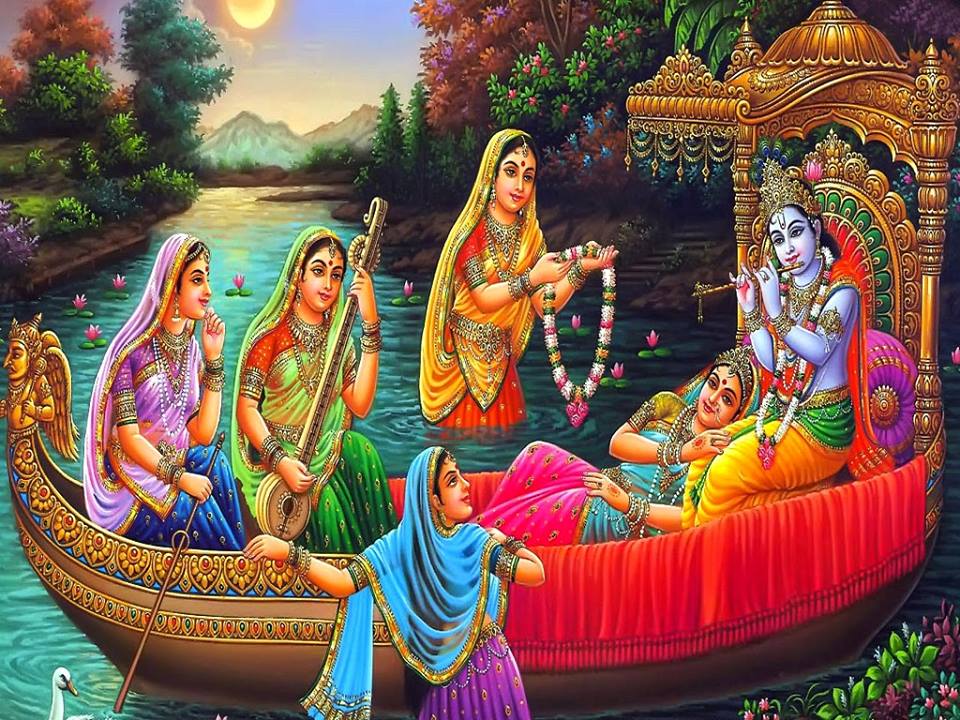
krishna boat

ONE MINUTE RAMAYANA!

20Ramayana

Article No.1749; Date:- 25  March, 2015

Written by London swaminathan

Uploaded at London time  21-10 GMT

Lord Rama’s Birth Day – Sri Rama Navami- falls on 28th March 2015. Some decades ago all children were taught by their parents or grandparents a simple Ramayana hymn. This made the Ramayana impressed in their minds like an inscription on a stone. With Ramayana strongly imbedded in their mind, they remembered the great values Rama stood for.

The rhyme and rhythm in the Sanskrit verse made it easy to remember. Moreover it was taught in a particular tune. When elders or guests visit the house, parents used to ask their children to recite it to get a big applause from the visitors.

Let those golden days come back once again!

rama in forest

Here is One Minute Ramayana in just four lines:–

Adhau Rama Tapovanan adhigamanam, Hatva mrugam kanchanam,

Vaidehi haranam, Jatayu maranam, Sugreeva sambashanam

Vali nigrahanam, Samudra taranam, Lankapuri Dahanam

Paschad Ravana Kumbakarna hananam cha etat iti Ramayanam

In the beginning Rama went to the forest

He killed the Golden Deer

Sita/Vaidehi was kidnapped

Jatayu was killed

Sugreeva had talks with Rama

Vali was killed

Sea was crossed (by Hanuman)

Lanka was burnt

Later Ravana and Kumbakarna were too killed

This is Ramayana!

ramayana-aranya-kanda-1

Nama Ramayana

If the children have more time they can learn another simple Ramayana called Nama Ramayana:

Sudha Brahma Paratpara Ram

Kalatmaka Parameswara Ram

Sesha talpa sukha nidrita Ram

Brahmadya apara prartita Ram

Candaki ranakuma mandana Ram

Srimad Dasaratha nandana Ram

Kausalya sukha vardhana Ram

Visvamitra priya dhana Ram

Gora tadakadhataka Ram

Marichathi nipataka Ram

sita-sings-the-blues1

Kausika maka samrakshaka Ram

Srimad Ahalyao Udhdharaka Ram

Gautamamuni Sampujita Ram

Suramuni varaghana samstuta Ram

Navika dhavita mrdupada Ram

Mithilapura janamodada Ram

Videhamanasa ranjaka Ram

Trayambaka karmukabhanjaka Ram

Sitarpita vara malika Ram

Kruta vaivahi kakautuka Ram

Bharghava darpa vinasaka Ram

Srimad Ayodhyanandaka Ram

RAMA RAMA JAYA RAJARAM

RAMA RAMA JAYA SITA RAM

RAGUPATI RAGHAVA RAJA RAM

PATITA PAVANA SITA RAM

LankaDahan_22716

This is the summary of Baklakanda. They have to go for Ayodhya, Aranyaka, Kishkinda, Sundara, Yuddha  and Uttara Kanda verses as well.

Pictures are used from various sites; thanks

The True Friend Who Comes Along With You after Your Death

3 friends

Article No.1737; Date:- 21  March, 2015

Written by S Nagarajan

Uploaded at London time 12-35 pm

BY Santhanam Nagarajan

I read an interesting story which I would like to share with the readers.

A person had three friends. But he felt more attracted towards the two and as to the third he did not bother much, was rather indifferent to him. Once he was in deep distress. He went to his first friend and told him, “I shall have to appear in a court in connection with a charge against me. I am in great difficulty. So you please help me and accompany me to the court?” The friend’s reply was very curt and straight. He said, “what to speak of a court, I can’t go with you a single step even.”

Thus disappointed by the friend this person felt very sad and approached his second friend and explained to him his distress and difficulty and requested him to accompany him to the court. And the second friend said, “You are in distress. Well, I shall only go along with you some distance. But I can’t help you going inside the court and assist you in the case.”

The person grew sadder and when he felt absolutely helpless he went to his third friend of whom he did not so long care to take notice. He spoke out to him about the distress he was in and everything about his friends. The third friend listened to him and not only went to the court along with him but cited such irrefutable proofs of his innocence as a witness in the court that the person was released.

The person then felt that the friend whom he had so long neglected had really rendered him the most sincere service at the time of his danger and distress.

And who are these three friends. Wealth, Relations and virtuous deeds. After death when a person goes to the next world his wealth (the first friend) will be of no avail. The second friend (Relations) will accompany the person only up to the burning ghat or burial ground. But the third friend is a real friend because he was a friend in need and was his savior.

Man’s only friend is his righteous deeds which alone follows him after death. Everything else perishes with his body when the man dies.

The Hindu scriptures emphasize on virtuous deeds. In order to merge with the Brahmam or Supreme Reality, Yoga Vasistha shows the way very simply.

In order to destroy the sins, associate with virtuous people and good deeds. By this, your mind will be purified.

Let the mind be led to the state of purity or righteousness through the study of scripture and by the association of virtuous people.

Three Musketeers

The scriptures or Shastras will teach you relating to the three classes of the objects of human life namely virtue, wealth and enjoyments.

The mind will be purified through the study of scripture and the application of repeated practice.
From the scriptures the knowledge of one’s own self flowing forth from the meanings of the great sayings contained therein, is obtained through one’s own experience, like the sweetness from the juice of the sugarcane.

Once the mind is purified, the Self or Supreme Reality will be realized through oneself through the power of Swabodha or one’s own enlightenment from those precepts.

The Yoga Vasishtha way is a simple way for salvation. The Hindu doctrines are so simple to follow.
**************

Date of Kalki Avatar!

kalki

Research Article No.1735; Date:- 20th March, 2015

Written by London swaminathan

Uploaded at London time 9-23 am

We all know that Lord Vishnu will reincarnate himself as Kalki Avatar at the end of Kali Yuga for “Paritraaya Saadhunaam and Vinaasaaya sa dushkrtaam” (to protect the good and destroy the wicked). Then he will establish righteousness (Dharma sam sthaapanaarthaaya) .

When will this happen? Is there any indication in our scriptures?

Yes, there is a ‘sloka’ (couplet) which clearly tells us the date of his arrival here on earth.

For all the Ten Avatars we have information in the traditional hymns:

அவதாரங்கள்

TEN INCARNATIONS OF VISHNU

Fish – Matsya Avatar/ incarnation – Month Chitra – 13th day in bright half

Tortoise – Kurma Avatar/ incarnation – Month Jyeshta – 12th day in dark half


Boar – Varaha Avatar/ incarnation – Month Chitra – 5th day in dark half

Man Lion– Narasimha Avatar/ incarnation – Month Vaisaka – 14th day in bright half of the month – (Sukla Paksha)

 பரசுராம

PARASU RAMA AVATAR (RAMA WITH AXE)

Short man – Vamana Avatar/ incarnation – Month Bhadrapatha – 12th day in bright half of the month – (Sukla Paksha)

Rama with axe – Parasurama Avatar/ incarnation – Month Margasirsha – 2nd day in dark half of the month/ Krishna paksha.

Rama  – Rama Avatar/ incarnation – Month Chitra – 9th day in bright half

Man with a plough – Balarama Avatar/ incarnation – Month Vaisaka – 3rd  day in bright half of the month

balarama

BALARAMA= HALAYUDHA= RAMA WITH A PLOUGH = AGRICULTURAL ENGINEER

Blackman  – Krishna  Avatar/ incarnation – Month Sravana – 8th  day in dark half of the month/ Krishna paksha.

Tenth Avatar


Man on a White Horse – Kalki Avatar/ incarnation – Month Bhadrapatha – 2nd  day in bright half of the month – (Sukla Paksha) at the end of Kali Yuga

Masi Bhadrapathe sukla dwitiyaayaam Janardhana:

Mlechaakraantha kalavanthe Kalki rupo bhavishyati

—is the traditional sloka/couplet.

கல்கி

KALKI AVATAR- MAN ON A WHITE HORSE; MLECHAS WILL BE DESTROYED

But nobody knows when the current Kaliyuga will come to an end. Mlechas are interpreted as anti- Hindu or Anti religious.

The foreigners who translated Manu Smrti (Hindu law Book) translated Mlechas as barbarians.

2000 year old Sangam Tamil literature used this word for Romans and Greeks. Tamil commentators are very clear about it.

In Mahabharata , Shalva was a Mlecha king who fought on the side of Kauravas. There was another Shalva who invaded Dwaraka when Krishna was away, but he was defeated by Krishna’s son.

The engineers who built the inflammable House of Lac to kill the Pandavas are described as Mlechas in Mahabharata. Duryodhana borrowed foreign (Greek) ideas to destroy Pandavas.

Anga was another Mlecha in Mahabharata who fought on the side of Kauravas.

Later Sanskrit literature used it for Muslim invaders and British rulers because they were killing cows and eating beef.

The greatest of the modern Tamil poets Subramanya Bharati used the term for Muslim invaders who destroyed Hindu temples.

Tamil Encyclopedia Abidhana Chinatamani gives two more meanings:

1.Arabians

  1. Descendants of Durvasu, Son of Yayati; they were described as Mlechas because they were characterless.

In short Mlechas are those people who are against Hindu Dharma.

நரசிம்மர்

NARASIMHA = MAN LION = DESTRUCTION OF THE WICKED

Foreigners concocted a story saying that Mlechas were the occupants of Indus Valley. But actually those Mlechas were worshippers of Molek. Israelites sacrificed their children to Moloch by burning (Bible- 1 Kings 11-7 and 2 Kings 23-10)

Please read my article:

MLECHA: Most Misunderstood Word (Posted on 3 September,2012)

Swami_48@yahoo.com