தமிழ், சம்ஸ்கிருத மொழிகளின் அழகே அழகு!

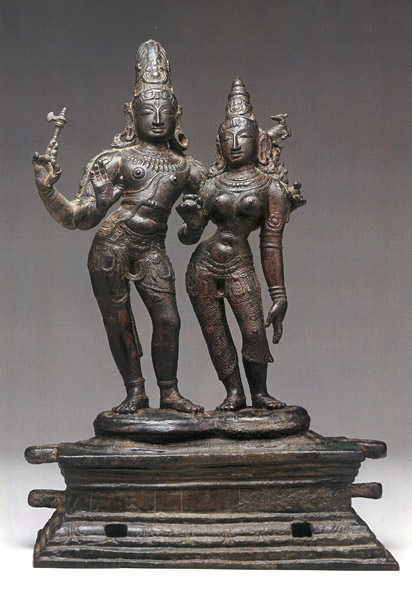
siva uma

Lord Shiva with Uma (Parvati)

கட்டுரையாளர்: லண்டன் சுவாமிநாதன்
கட்டுரை எண்: 942 தேதி 30 மார்ச் 2014.

மலையாளத்தில் ஒரு பழமொழி உண்டு: ‘நெய்யப்பம் தின்றால் ரெண்டுண்டு காரியம்’; அதாவது நெய்யப்பம் சாப்பிட்டால் சுவையான அப்பத்தை சாப்பிட்ட பலன் ஒன்று. இரண்டாவது பலன் என்ன? மீசையுள்ள ஆண்பிள்ளைகள் அந்த நெய்யை மீசையில் உரசும்போது மீசை அழகாக கண்ணங்கரேல் என்று வளரும்! அதே போல தமிழனாகப் பிறந்தவனுக்கும் இரண்டு பலன்கள் கிடைக்கின்றன. சம்ஸ்கிருத மொழியின் அழகை ரசிக்கும் போது அதை தமிழுடன் ஒப்பிட்டுப் பார்த்து இரு மடங்கு இன்பம் எய்தலாம்.

வடமொழியும் தென் மொழியும் நம் இரு கண்கள். இந்த இரண்டையும் அறிந்த ஒருவனால் மட்டுமே பாரதீய கலாசாரத்தை நூறு விழுக்காடு அறிய முடியும். தமிழில் இருண்ட மேகம் மழை பொழிவதைப் போல கவி மழை பொழிந்தவர் காளமேகப் புலவர். அவர் வாயைத் திறந்தாலே, சிலேடை மழை பொழிவார். எல்லாம் இரட்டுற மொழிவார். சில நேரங்களில் புகழ்வது போல இருக்கும் ஆனால் அது இகழ்ச்சியாக இருக்கும். சில நேரங்களில் இகழ்வது போல இருக்கும் ஆனால் அது புகழ்ச்சியாக இருக்கும்.

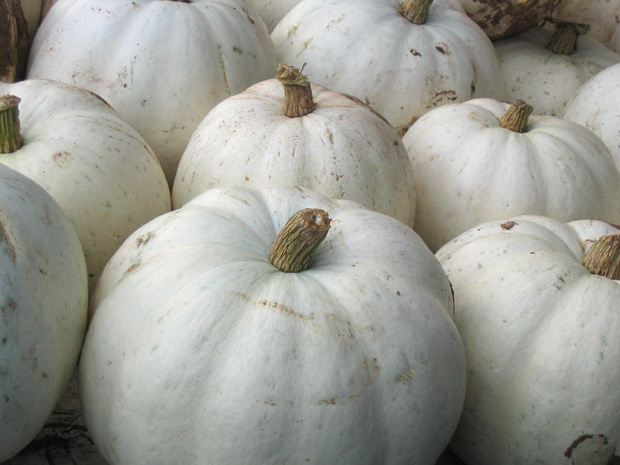
WhitePumpkins

இதோ ஒன்று:-

சிவ பெருமானும் பூசுணிக்காயும் ஒன்றே !!
அடி நந்தி சேர்தலால் ஆகம் வெளுத்துக்
கொடியும் ஒரு பக்கத்தில் கொண்டு — வடிவுடைய
மாசுணத்தைப் பூண்டு வளைத்தழும்பு பெற்றதனால்
பூசுணிக்காய் ஈசனைப் போன்று.

பொருள்:- பூசணிக்காய்க்கு அடியில் காம்பு உடையது. மேல் பாகம் வெள்ளை நிற சாம்பல் பூசப்பட்டது போல இருக்கும். கொடியில் படர்வது. வளைந்த தழும்புகளுடன் அதன் உடல் இருக்கும்.(மாசுணம்=சாம்பல்).

சிவன் தன் கால்களை நந்தியின் மீது (காளைவாகனம்) வைத்திருப்பார். திரு நீறு பூசி உடல் வெளுப்பாகக் காணப்படுவார். பூங்கொடி போன்ற உமை அம்மையை ஒருபுறம் வைத்திருப்பவர். வளைந்த பாம்பை (மாசுணம்=பாம்பு) அணிந்தவர். காஞ்சி காமாட்சியின் வளைத் தழும்பை உடலில் தாங்கியவர். ஆகையால் பூசணிக்காயும் சிவனும் ஒன்றே!!

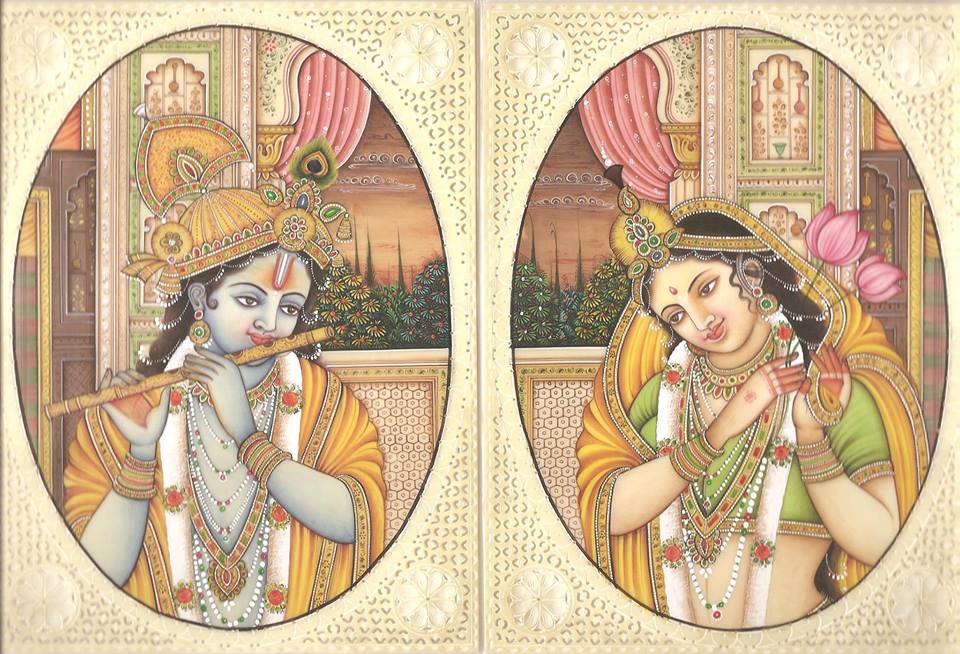
rada krisna

இதோ ஒரு சம்ஸ்கிருத சிலேடைக் கதை:

ராதா ராணி வீட்டுக்கு கிருஷ்ணன் வந்தார். இருவரும் ஒருவர் மீது ஒருவர் கொண்ட அன்புக்கு எல்லையே இல்லை என்பதை உலகமே அறியும். இருந்தபோதிலும் உடனே கதவைத் திறந்துவிட்டால் காதலின் சுவையே போய்விடும் அல்லவா! ஆகையால் ராதா ஒரு நாடகம் ஆடினாள்:–

ராதா: யாரது? கதவைத் தட்டுவது?
கண்ணன்: நான் தான் ஹரி (வந்திருக்கிறேன்).

ராதா: இங்கு நீ சாப்பிடக் கூடிய மிருகங்கள் எதுவும் இல்லை. இங்கு ஏன் வந்தாய்? (வடமொழியில் ஹரி என்றால் சிங்கம் என்ற பொருளும் உண்டு)

க: — அட என்னைத் தெரியவில்லையா? நான் மாதவன்.
ரா:– வசந்த காலம் வர இது உரிய தருணம் இல்லையே? (மாதவ என்றால் வசந்த காலம் என்ற பொருளும் வடமொழியில் உண்டு)

க:- ராதா! நான் ஜனார்தனன். உனக்கு என்னை நன்றாகத் தெரியுமே!
ரா:– உன்னைப் போன்ற ஆசாமிகளுக்கு எல்லாம் காடுதான் லாயக்கு. போய் யாரை வேண்டுமானாலும் தொல்லைப் படுத்து.

(ஜனார்தனன் என்றால் அஞ்ஞானத்தையும் அநீதி செய்வோரையும் அழிப்பவன் என்று ஒரு பொருளும் அநாவசியமாகத் தொல்லை கொடுப்பவன் என்று ஒரு பொருளும் உண்டு. விக்ன விநாயகனைக் கூட கஷ்டங்களைப் போக்குபவன், தீயோருக்கும் தன்னை வணங்காதோருக்கும் கஷ்டம் கொடுப்பவன் என்று நாம் சொல்லுவோம். முப்புரம் எரி செய்த அச்சிவன் உறை ரதம் அச்சது பொடி செய்த அதி தீரன் என்று அருணகிரி பாடியதையும் அறிவீர்கள்))

க: இளம் கன்னியே! தயவு செய்து கதவைத் திற. நான் மதுசூதனன் வந்திருக்கிறேன்.
ரா:- ஓஹோ! நீதான் த்விரேபனா? ( மதுசூதனன் என்ற பெயர் மது என்ற அரக்கனைக் கொன்றதால் கண்ணனுக்கு வந்தது. இன்னும் ஒரு பொருள் மதுவை உண்ணும் தேனீ. கிருஷ்ணன் ராதாவிடம் மட்டுமின்றி மற்ற கோபியருடனும் போவது ராதாவுக்குப் பிடிக்காது. ஆகையால் தருணம் பார்த்து இப்படி வடமொழியில் தாக்கினார். ‘த்விரேப’ என்ற வடமொழிச் சொல்லுக்கு தேனீ என்றும் ஜாதியைவிட்டு விலக்கப்பட்டவன் என்றும் பொருள். அதாவது உன்னை வீட்டை விட்டு விலக்கிவிட்டோம். வீட்டின் கதவு திறக்காது, போ, போ!!

(அம்மா, அப்பாவுக்குப் பிள்ளைகள் மீது கோபம் வந்தால் சீ, வெளியே போ! என்று சொல்லிவிட்டு, பின்னர் கொல்லைப்புறம் வழியாக வந்தாலும் ‘உள்ளே வந்து சாப்பிடு, சனியனே!’ என்று அன்பு காட்டுவது போல ராதாவும் கொஞ்சம் ‘பிகு’ செய்துகொண்டாள்).

தமிழிலும் சம்ஸ்கிருதத்திலும் உள்ள பழைய நூல்கள் அனைத்தையும் ஒருவர் படித்து முடிக்க நூறு பிறவிகள் எடுத்தாலும் போதாது. சரஸ்வதி தேவி சொன்னாள், “கற்றது கை மண் அளவு; கல்லாதது உலக அளவு” என்று. நாம் எல்லோரும் சொல்லலாம், ”கற்றது கடுகு அளவு; கல்லாதது இமய மலை அளவு” என்று!

contact swami_48@yahoo.com

“Buddha made one false step in stopping Sanskrit”: Swami Vivekananda

my_tattoo_by_kiyannaori

New Quotes on Sanskrit Language
Compiled by London Swaminathan
Pot No 938 dated 27th March 2014.

If I was asked what is the greatest treasure which India possesses and what is her finest heritage, I would answer unhesitatingly — it is the Sanskrit language and literature and all that it contains.
—Jawaharlal Nehru, First Prime Minister of India

Three people composed Ramayana in the Language of the Gods (Deva Bhasa) and I adapted the version of the earliest composer (Deva Bhasa=Sanskrit, earliest composer= Valmiki).
—Great Tamil poet Kamban (Twelth Century AD)

“Lord Shiva gave us both Sanskrit and Tamil”.
—Kachiappa Swamikal & Paranjothy Muni (authors of Puranas in Tamil)

sanskrit-tattoo

“ The Vedic language is not Sanskrit but Chandas. Chandas means not only metre but also the Vedas in which are metrically composed as well as the language of the Vedas. The language used in ordinary speech, poetry the Puranas , the epics, other writings is Sanskrit. The Vedic language alone is Chandas. When Panini makes a reference to the Vedas he says “iti chandasi” and when he refers to any question relating to Sanskrit he says, “iti loke”.

Sanskrit, which evolved through a constant process of ‘samskara’ or refinement, contains many words drawn from the Vedic language. But if there is a language that is based entirely on sounds meant for the well being of mankind it is Chandas. ‘Krtam ‘means created; ‘samskrtam’ means well created it would thus mean that the language called Sanskrit was created with great effort and care.
———-Kanchi Paramacharya Swamikal (1894 – 1994)

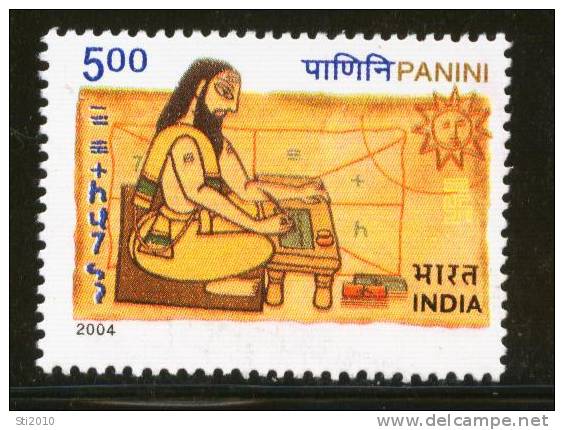
paninin big
Stamp on Panini, the oldest and the greatest grammarian the world has ever produced.

“My idea is first of all to bring out the gems of spirituality that are stored up in our books, and in the possession of a few only, hidden, as it were in monasteries and forests to bring them out. In one word, I want to make them popular. The ideas must be taught in the language of the people; at the same time, Sanskrit education must go along with it, because the very sound of Sanskrit words give a prestige and a power and a strength to the race. Ramanuja, Chaitanya and Kabir — they all raised the lower classes. Their teachings stopped almost within a century of the passing away of these great masters. The secret is here. They did not apply their energies to the spreading of the Sanskrit language among the masses. Even the great Buddha made one false step when he stopped the Sanskrit language from being studied by the masses .He wanted rapid and immediate results and translated and preached in the language of the day, Pali. That was great. Knowledge came but the prestige was not there, culture was not there. It is culture that which with stands shocks, not a simple mass of knowledge; you can put a mass of knowledge into the world, but that will not do much good. There must come culture into the blood…….. The only safety I will tell you men who belong to the lower castes , the only way to raise your condition, is to study Sanskrit.
Sanskrit and prestige go together in India; as soon as you have that none dares say anything against you. That is the one secret; take that up.
— Swami Vivekananda

sanskrit comparative chart

Sanskrit, which is recognized as one of the oldest living languages of the world, is often misunderstood as only a language of religious hymns and rituals. Such an understanding does injustice to the great genius of this language and betrays ignorance of the work of great writers, thinkers, sages and scientists like Kautilya, Charaka, Sushruta, Aryabhata, Varahamihira, Brahmagupta, Bhaskaracharya and many others. Indeed, Sanskrit is much more than a language. It is a complete knowledge system that embodies the great learning traditions of ancient India.

Sanskrit has not only some of the greatest classics of world literature, but also a treasure of knowledge in mathematics, medicine, botany, chemistry, arts and humanities. If we provide the missing links and establish the required inter-disciplinary approaches, the wisdom of Sanskrit has the potential of enriching the present-day knowledge systems and Indian languages immensely.

The Sanskrit language has also been the source of values and ideals that have sustained India through the ages. Like the great civilization of India, Sanskrit does not belong to any particular race, sect or religion. It represents a culture that is not narrow and sectarian but open, tolerant and all-embracing. The open-minded seers and thinkers who spelt out their vision and philosophy in the sacred Vedas and the Upanishads were able to balance the opposites in their life and in philosophy. It is this spirit of liberalism and tolerance imbedded in Sanskrit that we must inculcate in our present-day life. The message of the ancient sages of India, who gave us the concept of ‘vasudhaiva kutumbakam’, the world as one family, continues to be of great significance to the world even today.
———–Prime Minister Dr Manmohan Sing at the World Sanskrit Conference on 5-1-2012

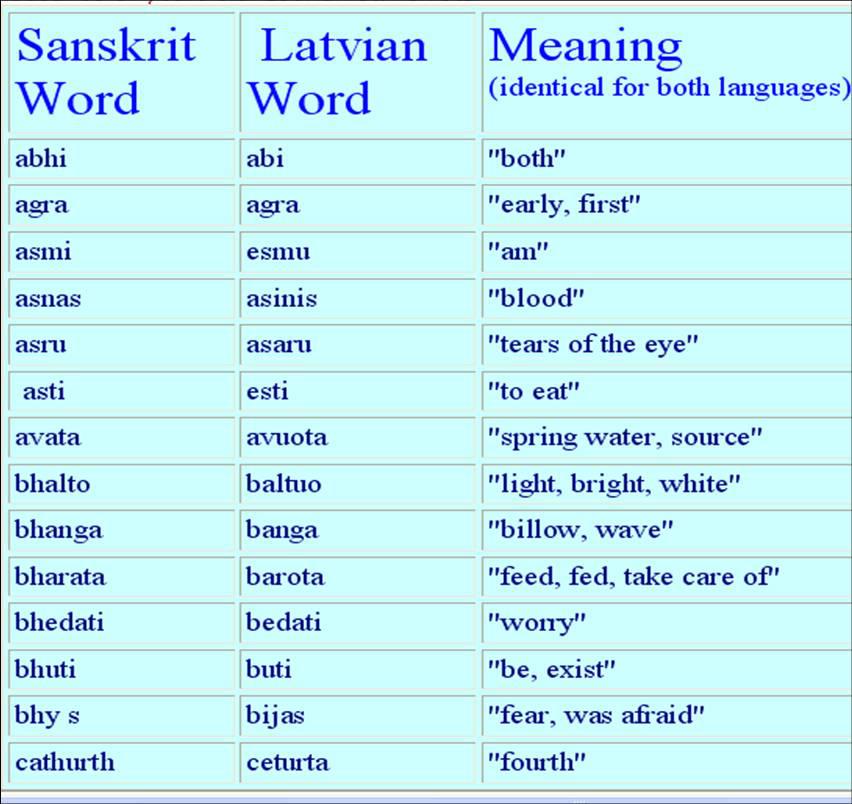
sanskrit-latvian similar words

“The Sanskrit language, whatever be its antiquity, is of a wonderful structure; more perfect than the Greek, more copious than the Latin, and more exquisitely refined than either, yet bearing to both of them a stronger affinity, both in the roots of verbs and the forms of grammar, than could possibly have been produced by accident; so strong indeed, that no philologer could examine them all three, without believing them to have sprung from some common source, which, perhaps, no longer exists; there is a similar reason, though not quite so forcible, for supposing that both the Gothic and the Celtic, though blended with a very different idiom, had the same origin with the Sanskrit; and the old Persian might be added to the same family.”
–William Jones(1746-1794)Philologist

sound creation

“The ancient classical creations of the Sanskrit tongue, both in quality and body and abundance of excellence, in their potent originality and force and beauty, in their substance and art and structure, in grandeur and justice and charm of speech, and in the height and width of thr reach of their spirit stand very evidently in the front rank among the world’s great literatures. The language itself, as has been universally recognised by those competent to form a judgement, is one of the most magnificent, the most perfect and wonderfully sufficient literary instruments developed by the human mind; at once majestic and sweet and flexible, strong and clearly formed and full aand vibrant and subtle.
—–Maharishi Sri Aurobindo

sanskrit-letters

Contact swami_48@yahoo.com

‘Kaa te Kaantaa ? Kaste Putraha?’ Who is Wife? Who is Son?

shadow family

By London Swaminathan
Post No 922 Date 21st March 2014.

Hindus have been taught the purpose of life from the very beginning. Dharma, Artha, Kama, Moksha are the four values and Brahmacharya, Grihastha, Vanaprastha and Sanyasa are the four stages of life. I believe that the following verses are in support of the Vanaprastha (Forest life) stage. We must leave all the attachments at one stage. We can’t keep on worrying about our family forever. We see how all our politicians are entangled in the power struggle for getting their family members big posts or big businesses. We also see our poor friends are abused by their family members as baby sitters or care takers for life. This is the attachment we must get rid of.

When Valmiki hunted animals and robbed the passersby, Narada asked him why he did it. He told him that it was to support his family. But he agreed with Narada on one point: it is sin to rob and kill people and animals. Immediately Narada asked him whether his family members would share the sins he committed. Valmiki, the hunter, told Narada that it was a thought provoking question and he would run home and find the answer. He came back very soon saying neither his wife nor his children were ready to share his sins. Narada taught him the Mantra ‘Rama’ to escape from the sins he committed for his family. That changed his life. He attained wisdom sooner than the Buddha. A sinner turned in to a saint! He got rid of the attachments with the magic word RAMA and became an enlightened soul.

Shadow of family holding hands in park

Adi Shankara advises us to come out of attachments in Bhaja Govindam:–

Kaa te kaantaa kaste putrah
Samsaaroyam ateeva vichitrah
Kasya tvam kah kuta aayaatah
Tattvam chintaya tadiha bhraatah (8)

Who is your wife? Who is your son? Supremely wonderful, indeed, is this empirical process! Of whom are you? Who are you? From where have you come? O brother, think of that Truth here.
Dr T M P Mahadevan comments on this sloka:

“Family relations and institution of the household have only a limited value. They have value in so far as they serve to liberate the individual from ego-centred existence. But when they have served their purpose, they must be left behind. Family is the home of trial and testing; it is not one’s destination. This does not mean that he should be cruel to them or hate them; nor even that he should be callous to their interests. What it means is that he should no longer regard them as his property, nor himself as their property”.

swasthi_family_img

Another verse from Bhaja Govindam runs like this:
Ka te kanta – dhana – gata – cinta
Vatula kim tava nasty niyanta
Trijagati sajjana – sangatir eka
Bhavati bhavarnava tarane nauka (13)

Why worry about wife, wealth etc, O, Crazy one; is there not for you the one who ordains? In the three worlds, it is only the association with good people that can serve as the boat that can carry one across the sea of birth.
Bhaja Govindam, verse 13, by Adi Shankara.

Lord Krishna in the Bhagavad Gita (13-9) says

Non- attachment, non-identification of the self with son, wife, home and the rest and constant even mindedness on the attainment of the desirable and the undesirable (is good)
Appar questions family attachments in a Thevaram Hymn:–

indian falily

One of the Four Great Tamil Saivite Saints, Appar alias Tirunavukkarasu, lived in the seventh century AD. His 4900 verses are part of the Thevaram anthology. Following verse is the echo of Adi Shankara’s Bhaja Govindam:

Who is father? Who indeed is mother? Who are our
Co- siblings? Who is wife? Who are sons? Who indeed
Are ourselves? How did we come into being?
How do we depart? This is sheer gramarye; At this
Feel not happy; O ye that think on these, listen to what
I say He sports in his crown the lovely crescent
And the bright serpent; He is our father; His holy name is
Namasivaya. They that chant this name
When they rise up, will abide in the empyrean. — 6-919,Thevaram

( N.B.I have already argued in one of my posts, that Adi Shankara lived before Christ and the later Abhinava Shankara was confused with Adi Shankara by the scholars. I have given enough proofs from Tamil literature to support my argument. The above verse also shows that he copied it from Adi Shankara. I am following Kanchi Paramacharya in dating Adi Shankara. My main evidence comes from the Rope/Snake analogy which was copied from Shankara by a Greek philosopher of First Century AD).

family 2

Pattinathar

Another Tamil saint Pattinathar also sang on the same theme:

1.Like the woodcutter felling a tree, if Time should
Fell the body, the woman that hugged it in the past
And the children also bewail vociferously;
They will come as far as the crematory;
Will they take a step beyond it,
Oh Lord, Kachi Ekampa? (verse2, Tiruvekampamalai)

2.Wife, children, happiness of domestic life
Stop at the doors, the kinsfolk, at the crematory;
What may the help on your way? (verse 12, General)

3.My mother – the one that bore me – called me a corpse
And forsook me; my wife around whose neck
I have strung the golden Taali lamented and said:
“Let it go away”. My sons who received all from me,
Made circumambulations at the crematory
And broke the ritual pot.
And there is none save Yours, oh Lord! (verse 28)

Tamil hymns were translated in to English by ‘Sekkizar Adippodi’
Dr T N Ramachandran of Thanjavur.

Tamil Film Song

Famous Tamil poet and lyricist Kannadasan wrote a song for the film ‘Pada Kanikkai ‘with Bhagavad Gita, Adi Shankara, Appar and Pattinathar in mind. He gave the gist of these hymns in his film song “All Relationship ends at home, it is your wife who comes up to the street corner, your son up to the crematorium and who comes with you until the end of your journey? In Tamil Veedu Varai Uravu, Veethi Varai Manaivi, Kaadu Varai Pillay, Kadaisi Varai Yaaro?

Contact swami_48@yahoo.com

Blind Men and the Elephant: Known Story, Unknown Facts!

SAMSUNG DIGITAL CAMERA

Compiled by London Swaminathan
Post No. 907 Dated 14th March 2014.

It is a popular story known to most of the Asians because Hindu, Buddhist, Jain and Sufi poets sang about it. But not many people knew that is a story from Tirumantiram sung by the Tamil Siddha Tirumular. Even an English poem is written by an English poet about this anecdote.

A king sends six blind men to examine an elephant. Each one touches and feels only one part of the elephant’s body and jumps to a conclusion which is partly right and not the whole truth. One who felt

The leg thought it was a pillar
The belly thought it was a wall
The ear thought it was a fan/ winnowing pan
The tusk thought it was a snake or tree branch
The tail thought it was a rope
The tusk thought it was a solid pipe

The story changes slightly in each version. Tirumular was a North Indian who came to Tamil Nadu, probably from Kashmir, learnt Tamil and composed 3000 verses. It is included in the Saivite canon as Tenth Tirumurai. His poems are full of symbolism. Tirumandiram has lot of secrets about Yoga and Mantra Sastra. In one of his verses he also sang about six blind men feeling an elephant. He compared it to six sects outside the pale of Saivism.

According to him the blind man who felt the back thought it was a hill, tail a broom stick, tusk a tree stem, ear a winnowing pan trunk a pestle and leg a mortar. They quarrelled among themselves about what they thought it was. Six sects are fighting like this.

blind elephant

English poet John Godfrey Saxe (1816-1887) composed the following poem about this story:

It was six men of Indostan, to learning much inclined,
who went to see the elephant (Though all of them were blind),
that each by observation, might satisfy his mind.

The first approached the elephant, and, happening to fall,
against his broad and sturdy side, at once began to bawl:
‘God bless me! but the elephant, is nothing but a wall!’

The second feeling of the tusk, cried: ‘Ho! what have we here,
so very round and smooth and sharp? To me tis mighty clear,
this wonder of an elephant, is very like a spear!’

The third approached the animal, and, happening to take,
the squirming trunk within his hands, ‘I see,’ quoth he,
the elephant is very like a snake!’

The fourth reached out his eager hand, and felt about the knee:
‘What most this wondrous beast is like, is mighty plain,’ quoth he;
‘Tis clear enough the elephant is very like a tree.’

The fifth, who chanced to touch the ear, Said; ‘E’en the blindest man
can tell what this resembles most; Deny the fact who can,
This marvel of an elephant, is very like a fan!’

The sixth no sooner had begun, about the beast to grope,
than, seizing on the swinging tail, that fell within his scope,
‘I see,’ quothe he, ‘the elephant is very like a rope!’

And so these men of Indostan, disputed loud and long,
each in his own opinion, exceeding stiff and strong,
Though each was partly in the right, and all were in the wrong!

So, oft in theologic wars, the disputants, I ween,
tread on in utter ignorance, of what each other mean,
and prate about the elephant, not one of them has seen!

blind and elephant

Sri Ramakrishna’s Chameleon Story

Sri Ramakrishna Paramahamsa, Guru of Swami Vivekananda, related another story to show the fallacy in such superficial differences through another example:

Two persons were hotly disputing over the colour of a chameleon. One said, “The chameleon on that palm tree is of a beautiful red colour”. The other contradicted him saying, “You are mistaken, the chameleon is not red, but blue.” Being unable to settle the matter through argument both went to a man who always lived under the tree and had watched the chameleon in all its phases. One of the disputants asked ,”Sir, is not the chameleon, on the tree, of a red colour?” the man replied ,”Yes,sir”. The other disputant said, “What do you say? How is that possible, Surely it is not red, but blue.” The man again humbly replied, “Yes, sir”. He man knew that the chameleon constantly changed its colour. So he said “Yes” to both the conflicting views. God who is Sat Chit Ananda- ( Existence-Knowledge-Bliss Absolute), has likewise various forms. The devotee who has seen God in only one aspect knows that and that aspect alone. None but who has seen him in manifold aspects can say .“ All these forms are of the one God, for God is multiform”. God is formless and with form, and many are his forms which no one knows about.

blindmen-elephant

Why We Disagree: Swami Vivekananda

Swami Vivekananda expressed the somewhat a similar theme through his story Frog in the Well in the very second lecture in Chicago about 125 years ago:

I will tell you a little story. You have heard the eloquent speaker who has just finished say, “Let us cease from abusing each other,” and he was very sorry that there should be always so much variance.

But I think I should tell you a story that would illustrate the cause of this variance. A frog lived in a well. It had lived there for a long time. It was born there and brought up there, and yet was a little, small frog. Of course the evolutionists were not there then to tell us whether the frog lost its eyes or not but, for our story’s sake, we must take it for granted that it had its eyes, and that it every day cleansed the water of all the worms and bacilli that lived in it with an energy that would do credit to our modern bacteriologists. In this way it went on and became a little sleek and fat. Well, one day another frog that lived in the sea came and fell into the well.

“Where are you from?”

“I am from the sea.”

“The sea! How big is that? Is it as big as my well?” and he took a leap from one side of the well to the other.

“My friend,” said the frog of the sea, “how do you compare the sea with your little well?”

Then the frog took another leap and asked, “Is your sea so big?”

“What nonsense you speak, to compare the sea with your well!”

“Well, then,” said the frog of the well, “nothing can be bigger than my well. There can be nothing bigger than this. This fellow is a liar, so turn him out.”

That has been the difficulty all the while.

I am a Hindu. I am sitting in my own little well and thinking that the whole world is my little well. The Christians sit in their little well and think the whole world is their well. The Muslims sit in their little well and think that is the whole world. I have to thank you of America for the great attempt you are making to break down the barriers of this little world of ours, and hope that, in the future, the Lord will help you to accomplish your purpose.

elephant-with-blind-men
Bharati on Cats

The greatest of the modern Tamil poets Subramanya Bharati gave the same message through his beautiful poem Tom Tom:
We have in our home
A pet, a white cat,
She gave birth to kittens
Each of a different hue.

Ash coloured was one kitty,
Jet black was another;
A third vivid like a viper;
Milky-white was a fourth.

Skin colours do vary
But they are of the same stock.
Can you call one colour superior
And another inferior?

Complexions may vary
But all men are one.
We are all uniformly human
In our thoughts and deeds.

Tamil References:

முதலொன்றாமான் ஆனை முதுகுடன் வாலும்
இதமுறு கொம்பு செவி துதிக்கை கான்
மதியுடன் அந்தகர் வகை வகை பார்த்தே
அதுகூறல் ஒக்கும் ஆறு சமயமே (திருமந்திரம்– 1507)

Bharati Poem

வெள்ளை நிறத்தொரு பூனை
எங்கள் வீட்டில் வளருது கண்டீர்
பிள்ளைகள் பெற்றதப் பூனை
அவை பேருக்கொரு நிறம் ஆகும்

சாம்பல் நிறத்தொரு குட்டி,
கரும் சாந்தின் நிறம் ஓரு குட்டி
பாம்பின் நிறமொரு குட்டி
வெள்ளை பாலின் நிறம் ஓரு குட்டி

எந்த நிறமிருந்தாலும்
அவை யாவும் ஓரே தரம் அன்றோ
இந்த நிறம் சிறிதென்றும்
இஃது ஏற்றம் என்றும் சொல்லலாமோ

வண்ணங்கள் வேற்றுமை பட்டால்
அதில் மானுடர் வேற்றுமை இல்லை
எண்ணங்கள் செய்கைகள் யாவும்
இங்கு யாவர்க்கும் ஒன்றென காணீர்!

contact swami_48@yahoo.com
Art of Public Speaking: Views of Adi Shankara & Valluvar

lecture

By London Swaminathan
Post No 886 Dated 4th March 2014

Public speaking is an art. In the olden days, ministers and ambassadors are praised for their skill in speaking and presentation of facts. The virtues and qualities of Hanuman (Anjaneya) are praised sky high by Valmiki, Kamban (Tamil) and Tulsidas (Hindi) for his skill in speaking. Tamil poet Kamban praised him as Master of Words (Sollin Selvan). Maruti was praised as an expert in Grammar ( Nava Vyakaran).

Adi Shankara in his Question and Answer Hymn ‘Prasnottara Ratnamalika’ says the following about speaking:
Q:-What is unitelligence?
A:-Not repeating what is learnt ( Sloka 10)

If one is not able to say what s/he learnt, s/he is like a flower without fragrance. Tamil poet Valluvan says,
“Those, who cannot express thought acquired after deep study
Are like a bunch of flowers without fragrance “–(Kural 650)

Who is Dumb?
Adi Shankara says,
Q.Who is a dumb?
A.He who cannot speak comforting words at proper time (verse 21)

Valluvan also echoes this,
“Using harsh words, when pleasing words are available,
Is like eating green fruits while there are ripe ones” – Kural 100

Shankara’s next question on the related topic is
Q.Who can make this world as his slave?
A.He who speaks sweet words, make this world as his slave.

lecture

Valluvan says on the same subject,
“If there are men capable of speaking on affairs cogently and with charm, the world will listen to them eagerly” – Kural 648

Q.What is embellishment of speech?
A.Truth (sloka 22)

All the Indian poets hail Truth as the highest virtue. ‘Sathyam Vatha= Speak Truth’ — is a Vedic command. ‘Satyameva Jayate= Truth alone triumphs’– is the motto of Government Of India which is taken from the Mundaka Upanishad. Valluvan has done ten couplets on it.

It will be relevant to quote on Rama from my earlier post Lord Shri Rama – The Best PR man:
Valmiki praised the way Sri Rama spoke to people. The way Valmiki described him showed Sri Rama was the best PR Man. The best company would have hired him as a Public Relations Officer with the highest pay. Why? He was Srutha Bhashi, Hitha Bhashi, Mitha Bhashi and Purva Bhashi according the Adi Kavi Valmiki.

 Srutha Bhashi: Rama always spoke truth
 Hitha Bhashi: He spoke whatever was pleasant to hear.
 Mitha Bhashi: He spoke very little.
 Purva Bhashi: He did not wait for others to open a dialogue. He opened the conversation.

Brevity is the soul of wit
Valluvan also adds a valid point on the art of public speaking:
A few faultless words, who have not learned to speak
At inordinate length, they love to squeak. – Kural 649

seminar1a-resized

Related topic

Adi Shankara advises everyone should listen to the discourses of the wise:
Q: What should be considered as nectarine words by the ears?
A: The advice of holy elders (sad upadesah).

It is interesting to see his expression ‘nectarine’. Valluvar goes one step further and says one must have food only when there is nothing to listen to:
“When food for thought is not available through instructions from the learned
The stomach too may be provided some food” – Kural 412

Who is Deaf?
Shankara condemns those who don’t listen to good as deaf
Q: Who is a deaf man ?
A: That one who does not listen to advice given for his good.
Valluvan agrees with him one hundred percent, when he says,

“Ears that have not been penetrated by words of instruction from the learned
Will be effectively deaf, even if functionally in order” – Kural 418.

It is a pleasure to study the thoughts of great people and it gives more pleasure to see the same thoughts in Sanskrit and Tamil, the two great languages of India.

Contact swami_48@yahoo.com

The More you Bow, The More you Grow: Adi Shankara

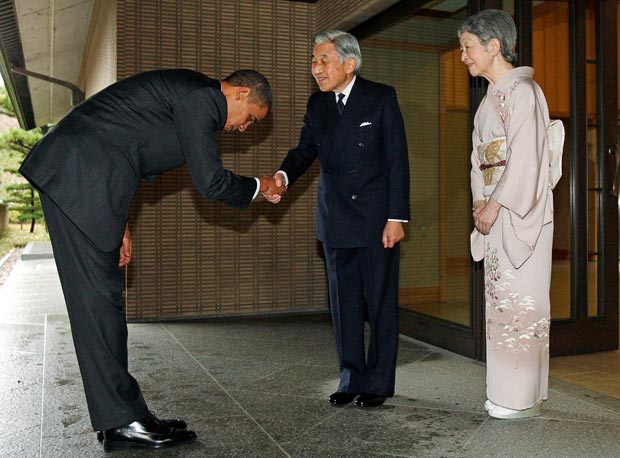
Obama_bowing_in_Tokyo

President (USA) Obama bows to the Emperor of Japan

Post no. 874 Dated 28th February 2014
By London Swaminathan

Adi Shankara, in one of his verses says those who are humble grow and those who are conceited degenerate. This is a beautiful concept. Physically you bow before every one. But mentally you grow and go higher and higher. Shankara’s Q & A hymn is very unique in the realm of spiritual hymns. In fact he came down to our level from the Spiritual Everest! He is very practical in many of his advices in the Prasna Uttara Ratna Malika or Questions and Answers Garland of Gems.

He raises approximately 200 questions and answers them.

In verse 46, the question Shankara puts is

Who grows?
Answer: The humble (Vineeta:)

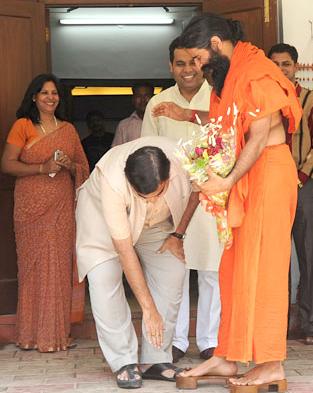
Touching-Feet
Prime Minister of India Manmohan Sing bows to a Hindu Swamiji

Tamil poet Tiruvalluvar says
No jewels are more befitting a man than humility and pleasing speech – Kural 95

Good name is gained by modesty in manners – Kural 960

It is well for everyone to be meek, but for those who have wealth, meekness is an added possession – Kural 125

Empty vessels make noise is a proverb in almost all the languages of the world. Educated are always humble. Those who got money only behave badly. Such people will perish.

Who degenerates?
‘The conceited’ is the short answer.

baba-ramdev-nitin-gadkari
Bjp Leader Nithin Gadkari bows to Yoga Guru Baba Ramdev

Ramakrishna Paramahamsa says in a story:

“A disciple, who had firm faith in the infinite power of his Guru, walked over the river by simply uttering his name. Seeing this, the Guru thought,” Well, is there such a power in my mere name? Then how great and powerful must I be”. The next day, the Guru also tried to walk over the river uttering “I, I ,I”, but no sooner did he step into the water than he sank down and was soon drowned; for the poor man did not know how to swim even.
Faith can achieve miracles while vanity or egotism brings about the destruction of man”.

How vanity turns a person’s head

“Those who have read a few books cannot get rid of conceit. Once I had a talk with Kalikrishna Tagore about god. At once he said, “ I know all about that”. I said to him, “Does a man who had visited Delhi brag about that? Does a gentleman go about telling everyone that he is a gentleman?”
Oh, how vanity turns person’s head! There was a scavenger woman in the temple garden at Dakshineswar. And her pride! And all are for a few ornaments. One day a few men were passing her on the path and she shouted to them, “Hey! Get out of the way, you people!” if a scavenger woman could talk that way, what can one say about the vanity of others?”

Source: Tales and Parables of Sri Ramakrishna, Sri Ramakrishna Math, Mylapore, Madras, 1947 publication.

The great Tamil saint Valluvar also said the same about humility:
Self control places a man among gods; want of it will plunge one into utter darkness – Kural 121

baba- kalam

Abdul Kalam Ex President of India, with Sri Sathya Sai Baba

Dr S. M Diaz in his commentary on this couplet gives two quotaions from the Bible:
Before destruction a man’s heart is haughty,
And before honour is humility – Proverbs 18:12
Blessed are the meek for they shall inherit the earth – Matt 5:5

Tamils always compare the learned people to a fully grown paddy plant. The more the grains in a plant more it lowers its head(crown).

In verse 17 of Prasnottara Ratnamalika there is a question

Whose self (Atma) can never be chastened (subdued or restrained) even at the cost of life?
Answer: The unintelligent, Ungrateful, Cheerless and doubting (person).

We know that a fool or a dull person cannot be changed that easily.
Doubting Thomas can never progress. ‘Samsaya Atma Vinasyati’- says Lord Krishna in Bhagavad Gita (4-40)
“The man who is ignorant, who has no faith, who is of a doubting nature, perishes. For the doubting soul there is neither this world nor the world beyond nor any happiness “(4-40).

Tamil poet Tiruvalluvar says

“To those who have conquered doubts and reached the truth,
The heavens are nearer than this earth itself “ — Kural couplet 353

In another couplet, he says

“Trusting untried persons and doubting tested aides,
Will both lead to endless ills “— Kural 510

Lord Krishna’s List (Bhagavad Gita 16: 1 to 3)

Krishna gives a long list of qualities of people born with Divine Nature:
1.Feralessness (Abhayam)
2.Purity of mind (satvasamsuddhi:)
3.Wise apportionment of knowledge & concentration(Jana yoga vyavastithi)
4.Charity (Dhanam)
5.Self control (Dama:)
6.Sacrifice (Yajna:)
7.Study of the scriptures (Svadhyaya:)
8.Austerity (Tapa:)
9.Uprightness (Arjavam)
10.Non violence (Ahimsa)
11.Truth (Satyam)
12.Freedom from anger (Akrodha:)
13.Renunciation (Thyaga:)
14.Tranquillity(Santi:)
15.Aversion to fault finding (Apaisnam)
16.Compassion to living beings(Buteshu Daya)
17.Freedom from covetousness (aloluptvam)
18.Gentleness (Mardavam)
19.Modesty (Hri:)
20.Steadiness (absence of fickleness/Acapalam)
21.Vigour(Teja:)
22.Forgivness (Ksama)
23.Fortitude (Druti:)
24.Purity (Saucam)
25.Freedom from malice (Adroha:)
26. Absence of excessive pride (Na Atimanita)
Great men think alike!
Contact swami_48@yahoo.com

Adi Shankara on Wives and Friends !

lady in bloom - Copy

By London Swaminathan
Post No. 866 Date: 25th February 2014

Adi Shankara was a philosopher. His hymns such as Viveka Chudamani, Bhaja Govindam, Guru Ashtakam, and Dakshinamurti Hymn are purely religious. But his Question and Answer hymn known as Prasnaottara Ratnamalika is different from others. He talks about secular subjects in addition to spiritualism. (Prasna means Question and Uttar means Answer). The question and answer format was used in the Upanishads. Dialogues are in the Vedas. Socrates borrowed it from India and used it in the West. The Western scholars named it Socratic Method. But it has become popular after Yaksha Prasna in Mahabharata. Buddhists copied it in their Milinda Panha.

(Socrates used the Upanishad command Know Thy Self. Paramahamsa Yogananda in his Autobiography of a Yogi gives more details about Socrates’ encounter with a Hindu Yogi in page 367 which I have already published in this blog)

Let us look at a few secular questions and answers from Shankara’s Prasnaottara Ratnamalika:

About Government Service!
In Sloka 37
And what assembly is to be shunned?
That which is devoid of elder councillor.

Here in what should a man be conscious?
Verily in the service of the king
(King= governments)

In Sloka 30
Which place is to be shunned?
One abounding in wicked people and ruled by a greedy king

Add Sloka 32
What is the cause of ignominy?
Currying the favour of unregenerate people.

In Sloka 57
Who is a king?
One who makes others happy.

On Wives and Friends

Equally interesting is his views on wives, women and friends. Before looking at his answers we must remember the age he lived in and the views of other cultures around the world at that time.

What attracts the mind of a wise man?
Good poems and a wise lady. ( Sloka 28)

It is a beautiful answer of a man with a very good taste. But we would’t have expected from a philosopher like Shankara. He has met one of the wisest ladies of ancient India Sarasavani, wife of Mandana Mishra and defeated her in arguments. He wrote commentaries to all the major Upanishads where he had come across the wisest ladies Gargi and Maitreyi .No wonder he gave such an answer!
I have dealt with Mandana misra – Adi Shankara clash in “Lie Detectors in the Upanishads”– posted on 27 June 2012.

If we believe the arguments of Kanchi Paramacharya, Shankara lived a few centuries before Christ. I have also proved that Paramacharya was right by quoting verses from 2000 year old Sangam Tamil literature. The majority view placed him in the eighth century. They were confused because of Abinava Shankara ( Abi nava shankara means ONCE AGAI N A NEW SHANKARA. He was a ditto of Adi Shankara). So we have to take into account the age he lived in before scrutinising his answers.

1503397_667583999959381_1664619135_n

In verses (slokas) 9, 15, 23, 31, 38 and 49 he makes interesting comments on women and wives:

What is inscrutable? (kim gahanam?)
The conduct of woman (Stri Charitham)
(Inscrutable= impossible to understand or interpret!)

Q: What activities should one resist from doing ?
(avadhirana kva karya?)

A: Association or indulgence with the unscrupulous, others’ women and others’ wealth.
(khala, para-yosit and para-dhana respectively)

What is momentary like lightning?
Bad company and young women.

By what means can a person be griefless?
By obedient wife and undiminishing wealth.

It is strange that Adi Shankara talks about wealth.
But Tamil poets Valluvar also said the same. His wife Vasuki was an obedient wife who put her husband above everything. Valluvan also said that such a woman can make rain pour down. Valluvan also said that there is no other world if you don’t have god’s grace (Arul) and there is no life in this world if you don’t have money (Porul).

What is to be well protected?
Good name, devoted wife and discernment

Who is the friend of a house holder?
His wife

In this answer, he follows Yudhitra in Yaksha Prasna of Mahabharata.
Yudhistra described wife a a friend, philosopher and guide.

Q: Who is the clever man ? (kah caturah)
A: One who does not become the slave of the influence of females.

The finale comes in his answer to the question
Who is the perceptible Goddess? (Prathyaksha Devata Ka?)
Mother (Matha)
This is the same answer we have been getting from the days of Vedas: “Matha, Pitha, Guru ,Deivam!”

shanakara face

About Friends

He gives his views on friendship in slokas 13, 16 and 22:
What bestows happiness?
Friendship with good people.

This he repeats for the umpteenth time; in his Bhajagovindam hymn he sang about Sath Sangam. All the Hindu sages repeated it hundreds of times.

What is to be cultivated with affection?
Compassion towards the helpless and friendship with the good.

Where should we live?
Near good people.

But the finale on this subject comes in his answer to
Who is a friend?
He who prevents us from doing sin (one who saves from sin).

English people knew that
A friend indeed is a friend in need.

Valluvar says lot of things about friendship. But Adi Shankara is unique in giving this answer. A lot of people are spoiled by their friends. They make them do bad things for the sake of giving company. Probably Adi Shankara knew what is going to happen in 20th and 21st centuries. So imagined this question and gave an appropriate answer!

Contact swami_48@yahoo.com

சூரிய உதயம், அஸ்தமனம் கண்டு உத்வேகம் பெறலாம்!

Please click here for the article:
சம்ஸ்கிருத செல்வம் 24

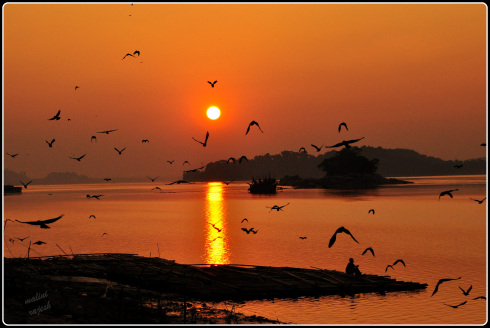
sunset birds,assam

Who are Yakshas?

Please click here for the article:

Who are Yakshas

yakshi6

214px-Didarganj-Yakshi-3bc-Patna

chandraketugarh,WB,Yaksha

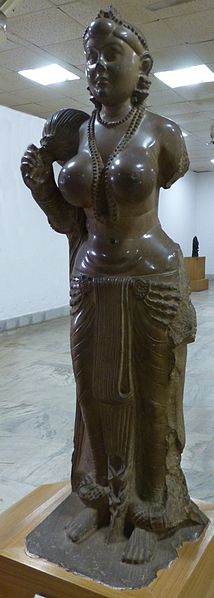
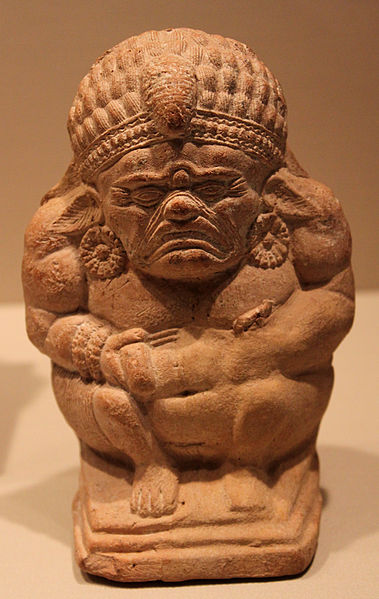
Images of Yakshinis and Yakshas.

New Research on Origin of Words: Bengal, Bangladesh & Vanga

chola-flag-2

bengal map

TAMRALIPTI

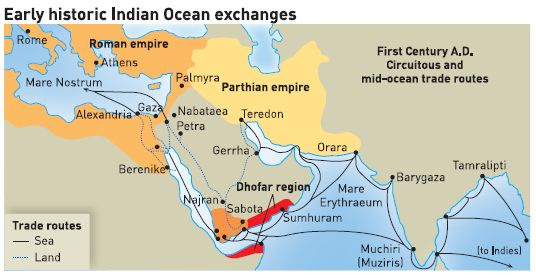
Tamralipt in Bengal is an ancient port.

Please click here for the article:
New Research