Alexey Pavlovich Kulaichev on the Secrets of Sri Yantra (Post No.3637)

Written by S NAGARAJAN


Date: 15 February 2017


Time uploaded in London:-  5-50 am


Post No.3637


Pictures are taken from different sources; thanks.


contact: swami_48@yahoo.com


By S. Nagarajan


In my previous article titled ‘The Secret of Sri Yantra, I have given the basic points about the complicated Divine Geometry of Sri Yantra.

In this article we will see the Yantra as per famous scientist Alexy Pavlovich Kulaichev’s perspective views.


He made a thorough research on Sri Yantra in 1987 and published his paper in Russian language. This was endorsed duly by a referee as per customary practice. The paper attracted worldwide response and caused a most lively interest from readers and received more than a hundred responses. Today his paper is considered to be one of the best scientific paper on the complicated Divine Geometry.


He has drawn Sri Chakra as per the stipulated rules and three more similar yantras were also drawn for comparing with the original.


Volunteers were asked to fix their attention for one minute at chosen parts of the test pictures. There were three test pictures along with the real one. 1) A coloured picture of Sri Yantra 2) A coloured drawing produced by a random intermixing of the Sri Yantra elements, that is to say, a  pseudoyantra 3) A black and white picture with concentric drawn according to the levels of the Sri Yantra circles. 4) A set of black rays on white background intersected in the common centre.


The persons selected for these experiments had no practice in relaxation and meditation techniques. They were not informed about either the aim of the experiments or the significance of the experiments.

The results were astonishing. The reaction to the original Sri Chakra was unique. Those who concentrated that felt tranquil effect. During gazing the alpha-rhythm appeared in the EEG more quickly as compared to while gazing at the other pictures. It was observed that the Yantra effectively changes the basic psychophysiological state of the person and ensures relaxation and peacefulness. While the original one even cures the psychological defects the pseudo yantras could not effect the same cure.


After publishing the first paper, one more paper on its mathematical properties was also published after twelve years by Kulaichev.


A very high complicated explanation with formulas put forth in that paper could be understood by only   mathematical experts.

The base angle of Sri Yantra is 51.5032 degrees and the base angle of Great Pyramid of Gizeh in Egypt is also 51.5032.  Very many such never ending wonders can be enumerated.


There are negative energies around us. These are stumbling blocks to achieve greater success, peach, health, wealth. Once the Sri Yantra is worshiped with concentration, all the negative energies are driven away automatically ensuring peace, health, wealth etc.


This secret was found out by the ancient Hindu Sages and they advised the worship of Sri Yantra. Now modern day scientists are also agreeing with the views of the sages after conducting their scientific experiments.

Those who have a high mathematical background and are interested in knowing more about the secrets could read the original paper of Alexey Kulaichev.

****


Thousand Pillar Hall – An Acoustic Marvel in Madurai Meenakshi Temple(Post No.3632)

Written by S NAGARAJAN


Date: 13 February 2017


Time uploaded in London:-  5-27 am


Post No.3632


Pictures are taken from different sources; thanks.


contact: swami_48@yahoo.com


  1. Nagarajan

India is very famous for its temples. Thousands and thousands of temples were built and maintained from time immemorial. The sculptures and the building techniques will speak itself the glory of the great tradition.

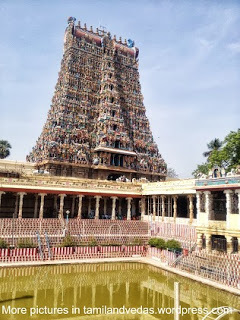
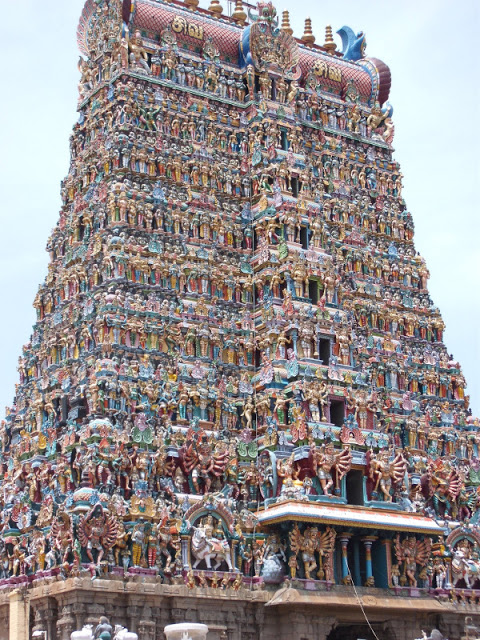
Madurai is situated at 462 kilometers south of Chennai (Madras as it was known in earlier times). The famous Meenakshi Amman Temple is located in the centre of the city. Inside the temple there are famous halls like Marriage Hall, Thousand Pillar Hall etc.

The Thousand Pillar Hall is very famous for its beautiful construction.

The hall, even though called as thousand pillar hall, it has only 985 pillars. The pillars are erected in such a way as to fall in line from any angle we view. .

In the year 1983, an expert team from audiology department went in to the hall and carried out an extensive study. They have used latest scientific gadgets and found that there is absolutely no echo in any part of the temple even with all the crowd around the sound level seldom exceed 80 dB (decibel)

Naturally the noise level in a quiet surrounding will be 40 dB, in a crowded street about 80-85 dB and at the airport when a jet aircraft takes off, it will be about 100 dB.

According to the team headed by Dr Kameswaran, an ENT specialist, there appears to be a built in mechanism in the precincts of Madurai temple for containing the echo. The total noise does not exceed a specific level which would make it unpleasant to the visitors.

The temple is an acoustic marvel, observed the experts. Near the road there is one Ashta Shakti Hall. There the noise level is only 40 dB.


The team members said that with this ambient noise it is possible for a person to contemplate and meditate the Divinity.

Roughly about 5000 to 6000 people visit the temple daily. And the sound level recorded during the peak hours is of the order of 70 dB to 80 dB.

It implies that the artisans were aware of the basic principles of acoustics. The huge icons on the unpolished pillars, the distribution of vents, the allocation of open space all around, are all mechanisms to contain the noise level. The arrangements are so made that is not crude but there is an artistic planning combining utility with beauty. This arrangement strangely contrasts with arrangement made in certain modern buildings where instruments for breaking noise and absorbing sound are hung from the roof in a very clumsy and unartistic manner.

This hall is a classic example of perfect sound engineering technique. The average height of each pillar is about 12 feet. The pillars depicts four kinds of motifs, one consisting of moulded squares, the other with rampant dragon, the third with a figure of a deity and the fourth that of a donor or his family. The unpolished pillars of exactly of same size and shape are placed at mathematically accurate positions. These aspects have made the hall echo resistant.

In addition, the pillars are so peculiarly arranges that anyone sitting at a specific spot could view a central figure without any obstruction in any position. At any position inside the hall, in consequence to the arrangement of the pillars, there open up around us 16 colonnades of varying width and such length of each side that the perspective afforded by them is simply marvelous.

The expert team rightly described the thousand pillar hall as an acoustic marvel.

Thousands of such intricate wonders are hidden in these Indian temples.

***

Warning! Your Xerox may also be reading this article right now in Parallel Universe! (Post No.3613)

Written by S NAGARAJAN


Date: 7 February 2017


Time uploaded in London:-  6-50 am


Post No.3613


Pictures are taken from different sources; thanks.


contact: swami_48@yahoo.com


  1. Nagarajan


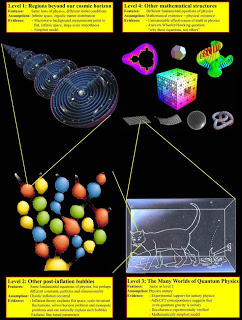
Warning! When you are reading this article, your Xerox may also be reading this article in Parallel Universe. It is not a joke. The great scientist Max Tegmark exactly starts his article in Scientific

 
American May 2003 issue with these words only.

“Is there a copy of you reading this article? A person who is not you but who lives on a planet called Earth with misty mountains, fertile fields and sprawling cities, in a Solar system with eight other planets? The life of this person has been identical to yours in every respect” – These are his exact words.


Is there a Parallel Universe? The theory ‘Nothing Dies’ has been proposed long back.


Take the Hindu Scriptures. Krishna studied as per the age old system staying in his Guru Sandeepany’s hut along with other students. Once the stipulated period was over, the parting day arrived. Krishna wanted to offer ‘Guru Dakshina’ meaning offerings to the Master. But the great saint told him no such thing is required. But the saint’s wife who stood by the side of him was looking sad. Krishna asked the reason. She told Him that her only son was met with untimely death at the age of five and whether Krishna could bring him back. Krishna was pleased very much. He had an opportunity to pay his debt back to the great guru. He immediately went out and after some time brought back the saint’s son. The child was exactly the same boy when died.


Sandeepany and his wife praised Krishna for achieving this impossible task.

Now let us think for a moment, Lord Krishna’s extraordinary feat. How could He bring a dead boy? Where was the boy with flesh and blood? The answer which was not possible hitherto  is possible now with ‘Parallel Universe’ theory.


Yes, He went to a parallel Universe and brought the identical person from there.

Same explanation could be given when Saint Gnanasambandar brought back the young girl named Poombavai in Mylapore, Chennai India. When asked by him, where was Poombavai, the girl’s father wept and told him that she was dead. Gnanasamandar immediately brought and spread the remainings of the girl and sung ten verses. On completing the last verse, Poombavai came alive. Everybody was wonderstruck. They danced with immense joy.


Where was the dead Poombavai all along and how was she brought back?

The answer lies in the new scientific finding – Parallel universe!

The ten verses are inscribed in the outer wall of the Kapaleeswarar Temple in Mylapore, Chennai, India. Even today all the devotees are reciting these ten verses with great devotion.


This new theory explains the impossible happenings recorded in the Hindu history.

What is parallel universe and who first proposed this theory? Hugh Everett was the first scientist who proposed this theory of multiple universe.

In the next article we may study this great theory in detail!

***

The Secret of Sri Yantra (Post No.3571)

Written by S NAGARAJAN


Date: 24 January 2017


Time uploaded in London:-  7-26 am


Post No.3571


Pictures are taken from different sources; thanks.


Contact: swami_48@yahoo.com


Santhanam Nagarajan


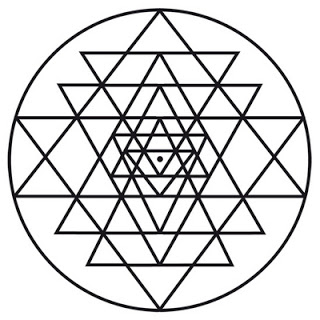
Yantra can be simply explained as a divine geometry. There are many yantras. The most powerful yantra is called as Sri Yantra. It is also called as Sri Chakra.

This has been worshipped in a specified manner from time immemorial in India. This is a symbol of both the Universe and its cause.

Sir John Woodroffe (1865-1936) in his book, Shakti and Shakta has explained it in detail thus:

It is composed of two sets of Triangles. One set is composed of four male or Shiva triangles called Shrikanthas denoting four aspects of evolved or limited Consciousness-Power, and the five female or Shakti trainagles denote the five vital functions, the five senses of knowledge, the five senses of action, and the five subtle and the five gross forms of matter.

These two sets of triangles are superimposed to show the union of Shiva and Shakti. As so united they make the figure within the eight lotus petals in the full Yantra. Outside these eight lotuses there are sixteen other lotuses. There are some more lines which is called as Bhupura. It serves as a fence.

The Sri Yantra should not be hanged on a wall. It must be kept flat or horizontal to the ground and must be worshipped daily with due offerings. It should not be drawn on ground, wall, or plank.

Even there is a prescribed way to draw the Yantra to the correct proportion.

Sri Chakra drawn on a plate, foil or disc of gold, silver, copper or any other material can be worn on person as talisman.

Sri Chakra can be worshipped by one and all irrespective of religion, caste or creed, sex or age, young or old, high or low, the learned or ignorant and the rich or poor.

The secret of Sri Yantra worship is that It will bestow wealth, health and above all salvation.

We may find Srichakra in all states of India, namely Andhra Pradesh, Assam, Gujarat, Himachal Pradesh, Kerala, Karnataka, Madya Pradesh, Pondicherry, Tamilnadu, Uttar Pradesh etc.


Swami Pranavananda has visited almost all the places where Sri Yantra has been installed. He has given details of one hundred and eighty places in detail in his fantastic book titled ‘A Treatise on Sricakra’

It is interesting to note that Sankara the great master of advaita visited Kashmir and built a temple there on a hillock. He has installed one Srichakra also there after which the capital of Kashmir was named Srinagara another name of Srichakra.

Knowing the full details of all the one hundred and eighty places where these capsules of cosmic energy were installed will inspire each and every one.

Whoever interested in Sri Yantra should also read the findings of the scientist Alexi Kulaichev.

In my next article I will explain the scientific findings as well as the Scriptures version

***********                                                                                                                                                                          Note: This article first appeared in http://www.ezinearticles.com  on 22-1-2017

Who invented Camouflage Technique? (Post No.3569)

Written by London swaminathan


Date: 23 January 2017


Time uploaded in London:- 10-37 am


Post No.3569


Pictures are taken from different sources; thanks.


contact: swami_48@yahoo.com


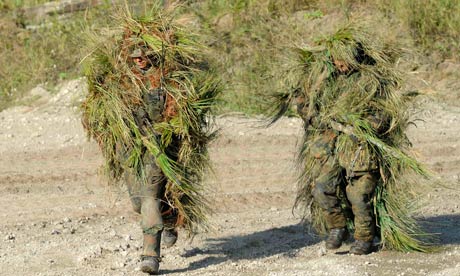
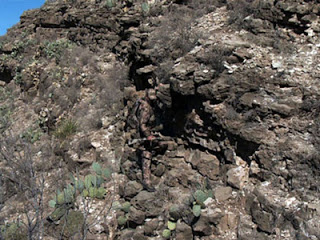
Hindus invented the Camouflage technique and taught the world. As keen observers of animals, they watched them  and used their camouflage wherever necessary. Colour changing chameleon and crocodile are part of their literature and proverbs.

Camouflage means colours or structures that allow an animal or structures to blend with its surroundings to avoid detection by others. Camouflage can take the form of matching the background colours. It is widely used in military as a technique disguising either an equipment, troops or a position in order to conceal them from an enemy- Hutchinson Encyclopaedia


Aristotle (Born in 384 BCE) referred to it. But We have older references in our literature. The greatest poet of India Kalidasa (First or Second Century BCE) has referred to it in at least two places in his Raghuvamsa. Let us look at it :


ग्रथितमौलिरसौ वनमालया तरुपलाशसवर्णतनुच्छदः।
तुरगवल्गनचञ्चलकुण्डलो विरुरुचे रुरुचेष्टितभुमिषु॥ ९-५१

grathitamaulirasau vanamālayā tarupalāśasavarṇatanucchadaḥ |
turagavalganacañcalakuṇḍalo viruruce ruruceṣṭitabhumiṣu || 9-51

grathitamaulirasau vanamAlayA tarupalAshasavarNatanucChadaH |


9-51. vana-mAlayA grathita mauliH = with garden, creepers, intertwined, headgear; taru palAsha sa-varNa tanu cChadaH= trees, leaves, equalling, body, covered – hisbodycovered  with agarment  having the colour of theleavesof trees;  turaga valgana ca~ncala kuNDalaH= by horses, galloping, moving, eardrops – one who has such ear-ornaments;  asau= he that Dasharatha;  ruru-ceShTita-bhumiShu= black-striped antelopes, moving, in such places;  vi-ruruce = shone forth.

This King Dasharatha camouflaged with his headgear tied up with a string of wild flowers and leaves,his body covered with a garment having the colour of the leaves of trees, and while his earrings moving about by the galloping of his horse, shone forth on the hunting grounds frequented by the ruru antelopes. [9-51]

–sanscritdocuments.com

Though Kalidasa came after Aristotle, he said that Dasaratha adopted this technique and we knew for sure that Dasaratha lived thousands of years before Aristotle.


Kalidasa also spoke about Animal Camouflage in another place:


Like the crocodile merges with its surroundings and waits to attack its prey, Aja’s enemies gave him prizes merging with the happy atmosphere, but was waiting to attack him.

लिङ्गैर्मुदः संवृतविक्रियास्ते ह्रदाः प्रसन्ना इव गूढनक्राः।
वैदर्भमामन्त्र्य ययुस्तदीयाम् प्रत्यर्प्य पूजामुपदाछलेन॥ ७-३०

liṅgairmudaḥ saṁvṛtavikriyāste hradāḥ
prasannā iva gūḍhanakrāḥ |
vaidarbhamāmantrya yayustadīyām
pratyarpya pūjāmupadāchalena || 7-30

li~NgairmudaH sa.nvR^itavikriyaaste hradaaH
prasannaa iva guuDhanakraaH |
vaidarbhamaamantrya yayustadiiyaam
pratyarpya puujaamupadaaChalena || 7-30

7-30. mudaH li~NgaiH= smiles, [as an outward] mark – hence with pseudo smiles; sa.nvR^ita vikriyaaH= concealed, change of feeling – wrath; prasannaa= [outwardly] unruffled – lake; guuDha nakraaH= with hidden, alligators; hradaaH iva = lake, as with; [sthitA= those kings who are there]; te= those kings; vaidarbham aamantrya= from king of Vidarbha, taking leave; tadiiyaam puujaam= his – Bhoja’s, hospitality by presents and gifts etc; upadaaChalena= by return gifts; pratyarpya= by requiting; yayuH= went away.

As with a lake hiding alligators under its serene sheet of waters, those suitor-princes concealing their irritation with feigned expressions of joy, bade farewell to the Lord of Vidarbha and went away, but only after having requited the worth of honour done to them, in the pretext of wedding presents. [7-30]


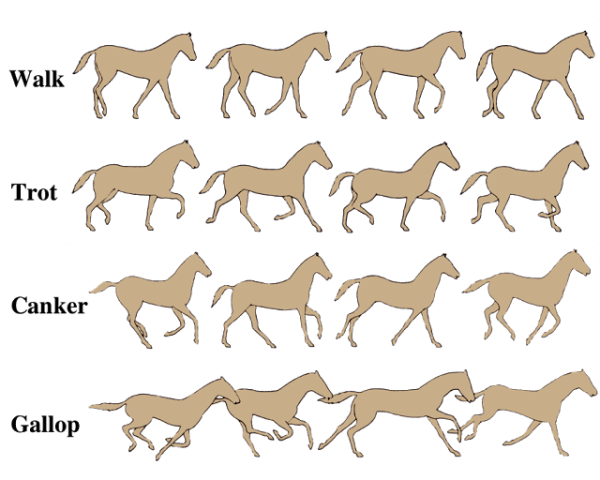
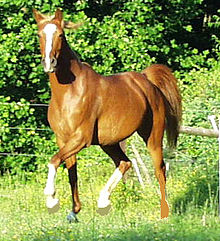
1cb16-horsegaits_med_hr

Gaits of Horses

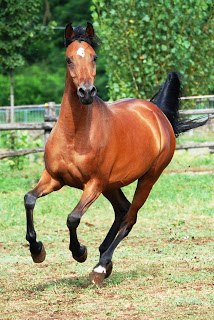
In the first verse (quoted above) Kalidasa (Rv 9-51) used beautiful words to describe the gait of Dasaratha’s horse: Turaga Valgana Sanchala Kundala. Valgana is one of the five gaits of horse. Horse and cow are biggest contribution of Hindus to the civilization. Both figured in the Rig Veda, the oldest scripture in the world (dated between 6000 BCE and 1500 BCE). Latest discoveries show that horse and rhino originated in India illions of years ago. Hindus domesticated themand trained the entire world.Hindu Yakshas (Hyskos) took it to Egypt and from where It spread to other civilised parts of the world. Kikkuli’s training Horse training manual in Sanskrit was discovered in Turkey. It is dated 1300 BCE.


Following couplets show that Hindus were well advanced in the Horse training. The very word Horse came from Sanskrit Hrasva=Asva. Since Indian horse has different number of ribs, which is clearly mentioned in the Rig Veda, the Aryan migration was also thrown into dustbin by the latest research.


ed4ae-galloping_arabian_front_view_stock_by_folipoo-d4v84dz

Asvagati

Aaskanditam – Leaping

Dhoritakam – Trot

Recitam -Canter

Valgitam – Space

Plutam – Caper

asskanditam dhoritakam recitam valgitam plutam gatayo amuuh pancha dhaara  – Amarakosham 2-8-48


Asvakrama (Training of Horse)

Mandala – circular

Caturasra – square

Gomutra – cow urine shaped

Ardhacandra- Crescent shaped

Naagapaasa – Snake shaped


mandalam caturasranca gomutrancardhacandrakam

nagapasakramenaiva bramayet katapanchakam

-Vasishta Dhanurveda Samhita page 72

e95ca-220px-trot

Asva Types in Mahabharata

Saibya; Sugriiva, Meghapuspa, Balaahaka


vajibhih saibyasugrivameghapuspabalahakaih

snatah sampadayamasuh sampannaih sarvasampada- M.Bh.(Udyogaparva 4-21)


–Encyclopaedia of Numerals, Vol.1, Kuppuswami Sastri Research Institue, Chennai, 600004, Year 2011

–subham–


The Wonders of Sound (Post No.3568)

Written by S NAGARAJAN


Date: 23 January 2017


Time uploaded in London:-  6-15 am


Post No.3568


Pictures are taken from different sources; thanks.


Contact: swami_48@yahoo.com


by S.Nagarajan


The ancient Hindu sages or ‘rishis’ used the sound for attaining higher status. They have understood the power of sound and effectively used it for healing various mental and physical diseases.


The mantras which are basically sound waves aligned and arranged in a mysterious way resulted in bestowing whatever one wants. In order to get rain, invoking rain God through mantras which is called as ‘Varuna Japa’ was performed. Similarly each and every mantra, when recited properly for obtaining a particular result resulted in the specific intended benefit.


The wonders of sound was scientifically researched for the past two hundred years. Ernst Florens Friderich Chladni, (birth 30-11-1755 death 3-4-1823) a German physicist and musician carried out very many experiments.


When a violin bow was drawn vertically across the rim of a metal plate the sound waves produced certain patterns in sand sprinkled on the plate. Different musical tones would cause the sand particles to move into geometric patterns.


In recent years, further research on this was carried out by Fabien, a musician, along with French scientist Joel Sternheimer. He discovered that elementary particles vibrate according to musical laws.


The vibration of sound make forms. These musical vibrations as well as forms produced by them can be made visible to the eye by ingenious experiments, by throwing the images on the screen.


Sound is defined as any pressure variation in air, water or some other medium that the human ear can detect.

The number of pressure variations per second is called frequency of the sound. This is measured in cycles per second or Hertz (Hz).


The range of human hearing extends from approximately 20 Hz to 20000 Hz. Just for comparison sake, it may be noted that the range of lowest to highest note of a Piano is 27.5 Hz to 4186 Hz

The speed of sound is 340 meters per second. There is one more scale used to measure the sound – the decibel. An average man can hear zero decibel and consistent noise above 80-90 decibels in an 8-hour workday is considered hazardous.


Sound can build forms and can also destroy or disintegrate them.

The ancient sages of India have very clearly analyzed each and every letter and the corresponding sound. They have given the specific color, form and characteristics of the basic 51 letters in Tantra books.


For example the text, ‘Kamadhenu Tantra’ gives the description of the letter A.

‘A’ means Krishna, Siva, Brahma, Indra, Soma, Vayu, Agni, a happy man, a tortoise, a court yard etc.

By aligning the letters properly and assigning the correct intonation one could gain very many benefits. These sonic wonders were given in the form of hymns to the humanity by the sages. Hindus recite these mantras till this day.


Science also throws more light on sonic wonders.

Now Sound Therapy is being advised for speed healing. Dr Jason W. Busse, of Ontario has found that using ultrasound waves will speed up the healing process.

The wonders of sound is an interesting subject and one could learn a lot by studying it deeply.


This article can be read in the following link also:

http://ezinearticles.com/?The-Wonders-of-Sound&id=9625344


Feet are ruled by Brahma, Heart is ruled by Rudra (Post No.3511)

Compiled by London swaminathan


Date: 3 January 2017


Time uploaded in London:-  19-14


Post No.3511


Pictures are taken from different sources; thanks.


contact; swami_48@yahoo.com


Medical Astrology says which planet rules which part of the body. Though there is no scientific evidence for that, astrologers believe in it and ‘treat’ their customers accordingly. In the same way Hindu scriptures gives details about the body parts and their rulers and the respective mantras.

The following chart gives the details:

1.Region in Body –   Elements—  Deity—  Bija Mantra

Feet to Knees –                  Earth —        Brahma—lam

Knees to Generative organ-    Water –   Vishnu—vam

Generative organ to Heart    —  Fire      —  Rudra – ram

Heart to Eye Brows          — Air          — Maruta  — yam

Eye brows to Head         — Space    — Sankara  — ham


2.Five Jnanendriyas  – Sense Organs

Naasikaa-Nose, Jihvaa- Tongue, Caksuh- Eye,

Tvak- Skin, Srotra- Ear


3.Five Karmendriyas- Motor Organs

Vak-Tonge, Paani- Hand, Paada- Feet, Paayu- Organ of excretion, Upastha- Organ of Creation

4.Pancha Bhutas – Five Elements

Prithvii- Earth, Ap- Water, Tejas- Fire, Vayu- Air, Aakaasa – Space

5.Five Tanmatras – Subtle Elements

Gandha- Smell, Rasa- Taste, Ruupa – Vision/colour, Sparsa – Touch, Sabda- Sound.

Source: sankhya sanketa kosa (Encyclopaedia of Numerals) , Volume-1, The Kuppuswami Sastri Research Institute, Chennai-600 004, Year 2011


-Subham-

Why do Hindus stop the Funeral Procession at Three Places? (Post No.3362)

Compiled  by London Swaminathan


Date: 17 November 2016


Time uploaded in London: 10-08 am


Post No.3362


Pictures are taken from various sources; they are representational only; thanks.


contact; swami_48@yahoo.com


ADULTS ONLY: THIS SHOULD BE READ ONLY BY THOSE WHO HAVE LOST THEIR FATHER OR MOTHER OR BOTH. YOUNGSTERS SHOULD NOT READ THE FUNERAL POSTS.


13 Day Hindu Funeral Rites- Part 2


Recorded by The Rev. J E Padfield B.D., year 1908, in his book The Hindu at Home.


The wailing of eastern women is proverbial, but must be witnessed or heard to be fully understood. The men are quiet in their grief for it is not seemly for a man to weep and wail; but the females abandon themselves completely to their sort and their lamentations are both loud and long. They  tear their hair, beat their chests and foreheads, roll  their bodies about as if in great agony, when they utterance to their sorrow for the dead.
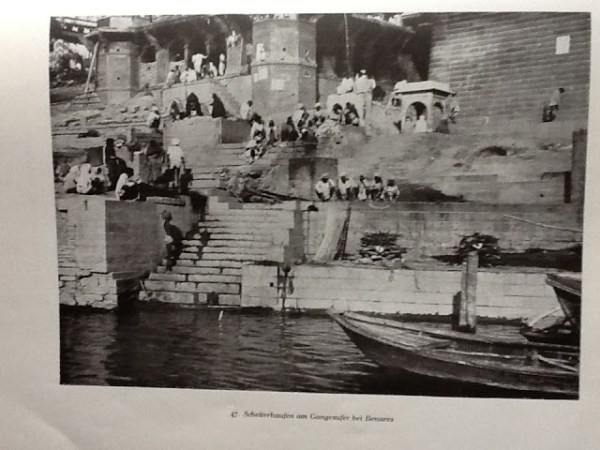
 

Light at the head of the Dead body


As soon as death has taken place, a light is put at the head of the body and preparations are at once made for the funeral. The chief person present at it is the near relative, who has to perform the necessary rites, and who is called the karma karta or the one who performs. This is the eldest son, if there is one who is old enough to have received upanayanam. Failing such a son, the ceremonies are performed by the following persons:-

if the dead person is a woman her husband; if a man, his father; if the father is dead, the next brother and so on in order of nearest relationship.


(My comments: Even today Christians follow this Hindu custom. They light the candles at the place of death. I have written a few articles already about the significance of Number 3 and Number 7 in Hinduism and Indus valley Civilization. Please read them to understand this part of the article.)


Usually only a few hours elapse after death before the funeral takes place but there is no fixed rule on this point it seems to depend on circumstances. The dead body is now washed and adorned with the pundrams/ sacred marks, and then, clothed in one long white cloth only, it is put in a sitting posture, leaning against the wall the head alone being uncovered. The karta now performs a mam sacrifice in front of the dead. The fire for the homam is brought from the house fire, and the sacrifice consists of dropping into it ghee, rice, and the green twigs of the peepul tree. Mantrams like this are repeated the while:


O fire do thou turn towards me; look kindly towards me with thy seven tongues (spoken of in the vedas), graciously partake of my offering.
Number Seven!

After the homam, the body, enveloped in cloth, is placed upon the bier. The bier is formed construction of two long bamboos, with seven pieces of wood tied across. It is said that that seven cross pieces are used to represent seven upper worlds. Some of the fire from the homam is placed in a new earthen pot, to be carried in the procession by the chief mourner. The body, wrapped in the new cloth and fastened to the bier has the two thumbs, and the two great toes also tied together with cords. The bier carried by several of the relatives or at least by persons of the same caste.


The procession consists of few of the friends, sometimes even females, with the men carrying bier and the chief mourner, or karta, carrying the pot of fire. Where music is employed, the musicians playing their wild music also form part of the procession. Those who bury their dead always have music; those who cremate have it sometimes.


Three stops on the way! Why?


On the way to the cemetery or crematorium, the procession is stopped three times and the bier is placed on the ground. The face is then uncovered and a mantram is said. This is done from the fear that, owing to the speedy funeral the person may not be really dead after all.

The mantram used is this:

o spirit hast thou returned?

Aum, jiiva punaragacasivaa


The cemetery (shmashanam) is a vacant spot set for this purpose, usually situated to the north east of the town or village. It is generally a mere waste, barren, neglected spot with nothing to distinguish it from any other waste, except here and there a few blackened patches, from the recent or more ancient fires. These blackened places and a few broken pots are generally all there is to mark the “God’s acre” (Shiva Bhumi).


In villages, in the case of poor people, each house- holder gives a little fuel to help to form the funeral pile. This is collected by the vettian who splits the wood and prepares the pyre. He is a kind of public messenger and low official drudge attached to each village. He is always a Pariah. He generally holds a small piece of land which, with certain fees, forms his remuneration. For funerals, part of his fee is the sticks of the cloth wound round the corpse and the sticks of which the bier is made.

Naked we came, Naked we Go!


On arriving at the spot the bier is set down, and the body is put on the pile. The cloth in which it the body was wrapped is then taken off. Any jewels in the ear or elsewhere, the sacred thread and the waist cord are also removed. The body must be completely naked.  As it came into the world so it must depart. The corpse is laid on the pile with its head towards the south and its legs to the north. It is placed on its back, but the face is slightly turned towards the east, In some parts, the body is laid with its head facing the Himalayas.


Why three holes in the Water Pot?

The karta now performs the pradakshina ceremony in the anti clockwise direction. For all auspicious things it is clockwise. For death ceremony it is opposite direction.  He takes an earthen pot full of water and makes a small hole in the bottom of it from which water slowly trickles out. With his hair all hanging down his back he takes the pot of water on his shoulder and, as the water slowly runs out, he walks round the pile, having his right shoulder towards it. It is done three times. Before the second round second hole is made in the pot and in like manner a third hole is made before the third round. After  the three circumambulations, he throws the pot over his head behind him and dashes it to pieces. This is supposed to assuage the thirst the préta (disembodied spirit) during the fiery ordeal.


The karta now performs a homam/ fire sacrifice and then, taking some of the sacred fire, applies it to the right side, breasts and shoulders of the body as it on the pile. Then the supreme moment arrives when, taking some of the sanctified fire, he applies it to the pile, near the head of the body and sets it alight during which all time the priest repeats mantrams of which the following are specimens:


After performing the préta homam, he (the karta), takes brands from the homam, and standing with his face towards the south, places a brand on the right side,breasts and shoulders (of the corpse).


O Fire do not regret that thou art consuming this dead one. Do not sorrow whilst thou art consuming his skin and his whole body.”


After setting fire to the pile the mourners sit somewhat apart, whilst who carried the bier stay near to adjust the fire, until the skull is heard to burst.
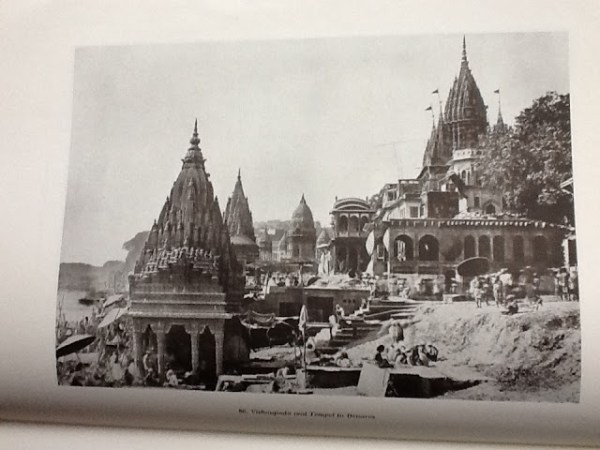
The mourner then pours water upon it to cool the spirit. The karta is then shaved by the barber. After this he bathes His head and face must be completely shaved except the sacred top-knot; but  should the deceased be younger than he is, then shaving is put off until the tenth day.


Stone for the Dead!


The chief mourner now returns to the house with his friends, but they do not enter it. The simply go there to get the materials for the nitya karma sacri fice, which must now take place, and before doing of which the karta should not re-enter the dwelling. If it should be dark before the karta arrives, the nitya karma ceremony does not take place until the following morning. This ceremony can never be done after darkness has set in. The karta, accompanied by the purohita and many relatives or friends now takes some fire and fuel, rice, ghee, curds and pulse for a sacrifice. He also receives from the purohita, a small round stone called préta shila, which, when the consecration ceremony is performed with reference to it, supposed to become the personification of the disembodied spirit of the deceased. This stone the karta ties up in a strip of cloth previously torn from the winding sheet of the deceased. This strip of cloth he wears over the right shoulder, during the performance of the nitya karma ceremonies for the ensuing ten days. During all these ceremonies this stone is honoured and treated as though it were really the spirit of the dead.


(Throughout ancient Tamil literature, south is described as the direction of the departed souls. This shows that the culture is one throughout the country. Tamils have Hero Stones for people who did heroic deeds. Brahmins also lay a stone for the dead at the backyard or somewhere in the house. Now a days for lack of space they leave it somewhere. For the saints who are buried they place a Lingam or Tulsi plant on the  place of burial. This is also worshipped like the Tamil Hero Stones).


(The Hindu believes that when the soul leaves the body it assumes the little feeble mannikin,’ exposed to injuries of all kinds. In order to protect it, it is necessary to furnish it with a sort  of intermediate body, interposed, as it were,  between the gross body and the new body which under the law metempsychosis it will by and by assume. If it is not furnished with this intermediate body it will it wander about in the form of a preta or evil spirit. The rites by which the body is prepared are known as sraddha. They usually last ten days—- From Natives of Northern India by Crooke p. 218)

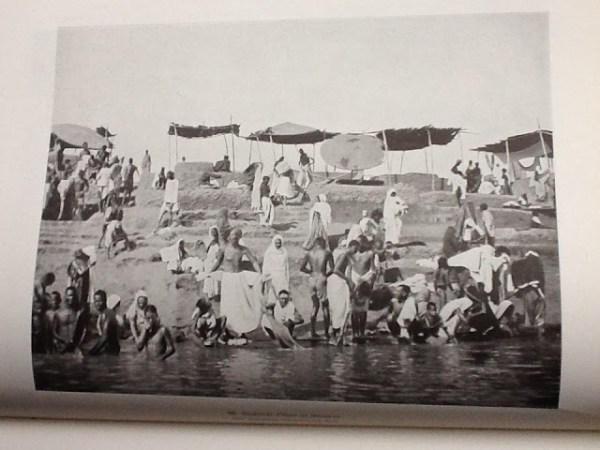
Pictures are from Benares/Kasi/Varanasi

to be continued………………


Hindus’ belief in Gem Stones (Post No.3356)

Compiled  by London Swaminathan


Date: 15 November 2016


Time uploaded in London: 9-12 am


Post No.3356


Pictures are taken from various sources; they are representational only; thanks.


contact; swami_48@yahoo.com


Recorded by The Rev. J E Padfield B.D. year 1908 in his book The Hindu at Home.


It is an old world notion that magic properties are attached to certain gems, and this idea has been systematized by the Hindus. It is called “The Test of Precious Stones” (Ratna Pareeksha). But the testing is largely confined, to the luckiness or otherwise of the particular gem and has nothing to do with its intrinsic value, nine kinds of precious stones are enumerated and mention is made of the  deity, or planet with which each is connected.


It is stated that the wearer of a particular gem receives the blessing of the patron deity. Thus rubies are the favoured gems of the sun; diamonds of Venus; pearls the moon; emeralds of Budha, the son of the moon. sapphires of Saturn; cat’s eye of the dragon’s tail, or descending node of the moon (Rahu); topaz of Jupiter; coral of the ascending node of the moon (Ketu) and the agate of Mars.


Faulty Gems!

Six kinds of rubies with flaws are enumerated, each of which is said to bring misfortune to the wearer. A ruby, with milky layers enveloping it, is said to bring poverty to the wearer; one with a broken ray in it will cause quarrels and disputes; one chipped will make enmity between relatives; one full of cracks will plunge the wearer into sorrows for ever; one with many flaws will endanger the life of the wearer one rough and dark in colour will be sure to cause evils. It is advisable to avoid either of these six kinds. It is also said that rubies containing two or three round spots are not lucky. It is not advisable to cast one’s eyes upon such a stone on awaking in the morning. It is most lucky to wear good and pure rubies; the sun, their patron, will bless the wearer with wealth and prosperity castes.

diamond

Diamonds are divided into four classes or castes. Those that are pure white are said to be of Brahmin caste, and bestow great benefits upon of wearer. Those that are red, are of the Kshatriya caste, and bestow upon the wearer the power. Those that are yellow are of the Banya caste, and bestow prosperity generally. Those that are black, are of the Sudra caste, and mean ruin to the wearer.


When a diamond contains shining streaks, resembling the feet of a crow, it will cause death of the wearer. If a pure diamond is worn, Venus, its patron, will bless the wearer with the comforts of life.


There are said to be nine places in which pearls are found. In the clouds; this kind said to be oval in shape, and to be worn by the gods. In the of a serpent; these are said to be like small seed, and to have the quality of relieving the wearers from all troubles. In the hollow of a bamboo; these are said to be black in colour, and give the wearer certain attractions. In a fish; these are white in colour, and protect the wearer from danger by fire. In the head of an elephant ; these are yellowish green and should be worn by king. In a sugarcane, this kind is of reddish colour and is said to have the power of causing all , even and queens, to be subjected to be subjected to the will of the wearer. In a conch shell; these are said to be like a dove’s egg, but they cannot be obtained by ordinary men. it requires a knowledge of mantrams, or of magic, to get them. In the tusk of a wild boar; this kind is red in colour, and is in size like the regu fruit (ziziphus jujuba); it will bring fame to the wearer.

pearl

In the pearl oyster; of these there are said to be three kinds, of a reddish, a golden, or a white colour. The moon, the patron of pearls, will bless a wearer of pure pearls with fame and the pleasures of life.

emerald

Emeralds are said to be of eight classes according to their colour. Poisons have no power over those persons who wear a good emerald. It gives protection against the power of the evil eye and develops the mental faculties. Emeralds also have the power of protecting the wearer of one from the designs foes, from sorrows, madness, internal pains, swoon and various diseases of the liver. A sure access to heaven is promised to that one who freely gives emerald to a Brahmin.


sapphire

Sapphires are divided into three classes according to the depth of their colour. There are also six kinds (with flaws) that are said to bring evil to the wearer; such evils as quarrels with relatives, loss of children, hazard to life, certain death within a year. A sapphire is purest when, if placed in milk it gives to the milk a bluish tinge. It is then a true sapphire. A sapphire is said to be electric, when a blade of grass will adhere to it though blown upon. Such a stone is said to bring lustre to the wearer. The Saturn, the patron of sapphires, will bless the wear of a true sapphire with prosperity and immunity from death.


The topaz is described as having a colour like a drop of dew on a flower, and its patron deity, Jupiter will bless the wearer with immense wealth.


Four kinds of coral (with flaws) are enumerated that will cause evil to the wearer, troubles, grief, disease, and death. There are six kinds of good coral mentioned, according to the colour, and the wearer of such is promised the pleasures of life and the accomplishment of his designs.

agate


The blessing of Mars is promised to the wearer of an agate, which blessing ensures wealth and prosperity.


The details given in this chapter, have, I think, served to show how strong the passion for jewels amongst the Hindus.

(My comments: Being a Christian preacher, Rev. Padfield had criticized the Hindus for their beliefs at the end of each chapter; that is why he gave more information about flawed (bad) gems than good gems. I have already written about the good gems mentioned by Kalidasa and Varahamihira (Brhat Samhita). Manu also advise that gems should be worn by the kings (7-218)


–Subham–

Why do Hindus say ‘Idam Na Mama’/ It is Not Mine? (Post No. 3309)


Written  by London Swaminathan


Date:1  November 2016


Time uploaded in London: 10-28 AM


Post No.3309


Pictures are taken from various sources; thanks to Facebook friends.


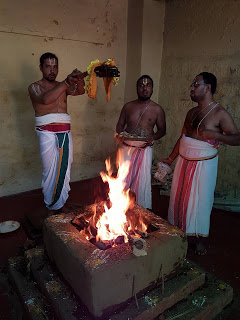
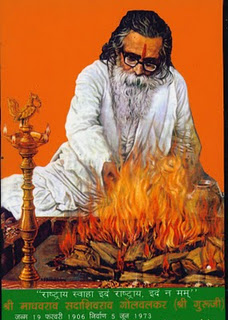
Hindu youths and rationalists may wonder why orthodox Hindus “waste” precious materials like rice, ghee, milk and clothes by throwing them into fire when they  perform fire ceremonies. The fire ceremonies are broadly classified into Homas, Yanjas and Yagas (Havan).


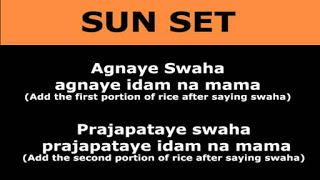
People who do Agnihotram put rice, ghee and milk into fire every day and the mantras end with the words IDAM NA MAMA. The meaning of these Sanskrit words is IT IS NOT MINE.

Since Hindus have been performing Pancha Yajnas (Five Ceremonies) from the days of Manu, it is considered one of the five duties of a Hindu to propitiate God. This is to give our thanks to five groups of living beings. This type of Yajnas teach them the concept of sacrifice. That is we have to share with others what we have and we have to thank the beings concerned for the provision of these materials.


I have already written about the Pancha Yanjas. But very briefly it means

Brahma yanjnah – sacrifice to Brahman or the Vedas

Deva yajnah – sacrifice to Devas

Pitru yajnah – sacrifice to departed souls

Manushaya yajnah –sacrifice to men (feeding the poor and guests)

Bhuta yajnah – sacrifice to all living beings (animals, birds and spirits)

(Manu- 3-70, 73, 74, 75; 3-80; 3-92, 94)


In Tamil literature a king known as Pari gave his golden chariot as a support to a jasmine creeper. When the creeper was dancing in the breeze, he thought that it was struggling for a support. Another Tamil king Bekan gave his costly shawl to a peacock when it was dancing. He thought that it was shivering in the cold. These and other five great Tamils are praised in Sangam literature as Seven Great Philanthropists. No body criticised them as idiots for giving valuable chariot and shawl. In the Tamil hagiology Periyapuranam we see lot of saiva devotees did sacrifice their wives, sons and body parts to propitiate God Siva or to entertain his devotees. People saw in them a great devotion and sacrifice. In the Mahabharat we have the example of Karna. In the Ramyana we have the example of a little squirrel which “helped” Rama to build a bridge to Ravana’s Sri Lanka. In the same way, people saw great sacrifice when they threw useful materials into fire. There are other side benefits like getting the rain (using the scientific technique of seeding carbon di oxide ice in the clouds) and killing the germs. When Bhopal Poisonous Gas killed 3000 people, only the Agnihotri house was spared. So much power is in the Agnihotram fire ceremony.

So sacrifice and thanks giving are the basis of these fire ceremonies with the side benefits of attracting rain and killing the germs and insects.


I always wonder why the rationalists never criticise Cigarette smokers who also do a sort of “Fire ceremony”, but harmful to them and to the passive smokers like us. Vedic fire rites made our forefathers live hale and healthy for 100 years. These modern Cigarette smoking kill people causing cancer.


So, whether we do Yagas or Yajnas, at least we can learn the concept of sacrifice by saying Idam Na Mama and parting some cash or kind for good causes.

Idam Na Mama= It is Not Mine!

–Subham–