Who is a Good Wife ? and the Pigeon said…….Part 7 (Post.14,979)

Written by London Swaminathan

Post No. 14,979

Date uploaded in London –  13 September 2025

Contact – swami_48@yahoo.com

Pictures are taken from various sources for spreading knowledge.

this is a non- commercial blog. Thanks for your great pictures.

tamilandvedas.com, swamiindology.blogspot.com

xxxx  

A famous story of two pigeons Kapota and Kapoti is in the Shanti Parva of Mahabharata. Hindus are the only people who treat birds and animals as their own kith and kin. This is in all the stories of Panchatantra and before that, in Ramayana and Mahabharata. Aesop and Jataka stories copied Hindus and changed it slightly to hide their copying act.

India is full of temples associated with animals and birds. Those who study place names will come across such stories. In Tamil Nadu, temples are linked with Ant to Elephant. Other parts of India have stories connected with snakes. Hindus feed the ants and elephants without any discrimination.

What state of being does a person achieve in giving protection to the one who seeks it? was the question put to Bhishma and he answered the question:

A cruel hunter went to a dense forest for hunting. His job was to catch birds and sell them to the village folks. They were all flesh eaters. While he was hunting on a particular day a storm broke out. The forest was flooded. Sun was setting. All the animals and birds were running for shelter. Because it was cold all were shivering. And the hunter was also suffering from cold. at that time, he saw a female pigeon lying in the grass and caught it and put it in his cage. He also took shelter under a tree where many birds were living.

He heard a bird saying,

“Today there was a storm, and it rained heavily. My wife has not yet returned. that was the kapota, Sanskrit word for a female pigeon.

Where is she? Without her, my nest is desolate. Having a son, grandson, daughter in law, servants, a householder’s home is still desolate without his wife.

A house is not home. It is from the wife that the home derives its name. A household without wife is only wilderness.

With one’s wife it is home even under a tree; without the wife even, a palace is wilderness; there is no doubt about it.

For a man there is no wealth greater than his wife. Should he have no support in the whole world, his wife will be his support.

To a man ravaged by illness, and forever in deep trouble, there is no healing greater than the wife.

There exists no friend such as wife, no recourse such as the wife nor there exists a companion such as a wife who helps one in the ordering of one’s life”.

This is in chapter 144 of Shanti Parva and the story continues……………………..

Having heard her husband’s moan, Kapoti spoke from the cage,

“What I will now say to you is to your good, and please do think what you should. Offer protection to this bird catcher, who is feeling cold and hungry. Do your dharma as a householder. You should not worry about me. To live your earthly life you can aways find another wife”.

Immediately her husband pigeonKapota said to the bird catcher,

“Even if one’s enemy come’s to one’s home, one should receive one with hospitality. A tree does not deny its shade even to the person who has come to cut it.” (Shanti Parva-146-6) .

The hunter said that he was hungry. Husband bird gathered some bush near the tree and took a fire burning charcoal from an Ironsmith in the village and lighted the bush fire. He threw himself into the fire so that the hunter could eat its flesh.

Like Valmiki, the heartless hunter’s mind changed, and he threw away all the hunting tools and opened the cage and released Kapota’s wife Kapoti. As a transformed man he walked away. The released Kapoti felt that her husband sacrificed his life to protect the person who came to his house. Kapoti, the female pigeon, happily threw herself into the same fire and perished.

Kapota and Kapota might have perished in body. But their name and fame ill last as long as the Sun and Moon shine on this earth.

***

My comments

Sanskrit and Tamil have come from Lord Shiva according to three Tamil poets Paranjoti, Sivagnana Munivar and the greatest of the modern Tamil poets Subrahmanya Bharati. Both the languages have same concept of Home and Wife.

Home – Gruham- Il

Wife – Gruhini- Illaal

Both the languages have Pancha Yajnam (five tasks)  that a man should do every day. Hospitality towards visitors is one of them and it is called Athithi Yajna. Sita Devi and Tamil Kannaki lamented that they were going to lose the duty of hospitality while they were away from home.

Since we do not see these virtues anywhere in the world except Hindus speaking Sanskrit and Tamil, we may conclude that they are one and the same. Those who have studied ancient Sanskrit and Tamil literature can give hundreds of quotations on this topic Hospitality.

(This blog has such quotations listed separately)

–subham—

Tags – Good wife,  Part 7, Mahabharata, sacrifice , two pigeons, Kapota, Kapoti, Shanti Parva.

Washerman knows the Poor, Goldsmith knows the Rich in the Town (Post No.14,963)- Part 2

Written by London Swaminathan

Post No. 14,963

Date uploaded in London –  10 September 2025

Contact – swami_48@yahoo.com

Pictures are taken from various sources for spreading knowledge.

this is a non- commercial blog. Thanks for your great pictures.

tamilandvedas.com, swamiindology.blogspot.com

xxxx  

Proverbs on Gold- Part 2

1053. இரும்பு செம்பானால் திரும்பிப் பொன் ஆகும்.
If iron can be converted into copper, Copper may be reconverted into gold.

1103. இழை ஆயிரம் பொன் பெற்ற இந்திரவர்ணப்பட்டு.
A scarlet cloth each thread of which is worth a thousand gold pieces.

1262. உதாரிக்குப் பொன்னும் துரும்பு.
Even gold is a thing of nought to the generous.

1406. ஊசி பொன்னானால் என்ன பெறும்?
Though made of gold what will a needle fetch?
1421. ஊதாரிக்குப் பொன்னும் துரும்பு.
Even gold is a thing of nought to the spendthrift.

1442. ஊரில் எளியாரை வண்ணான் அறிவான் சாதிப்பொன் பூண்டாரைத் தட்டான் அறிவான்.
The washerman knows the poor of a village, the goldsmith knows whose ornaments are made of fine gold.

1496. எடுத்தாலும் பங்காருப்பெட்டியை எடுக்கவேண்டும் இருந்தாலும் சிங்காரக் கழுவில் இருக்கவேண்டும்.
If you steal, take away a golden casket; if you are impaled, endure the punishment on an ornamented stake.


1549. எதிர்வீடு ஏகாலி வீடு, பக்கத்து வீடு பணி செய்பவன் வீடு, அடுத்த வீடு அம்பட்டன் வீடு.
The opposite house is the washerman’s, the adjoining house is the goldsmith’s, and the next to mine is that of the barber.

1553. எத்தனை புடம் இட்டாலும் இரும்பு பசும்பொன் ஆகாது.
Though iron may be heated never so much, it will not become gold.


1554. எத்தனை ஏழை ஆனாலும் எலுமிச்சங்காய் அத்தனை பொன் இல்லாமற்போமா?
However poor one may be, will he not possess gold, at least of the value of a lemon?

1635. எல்லாரும் கப்பல் ஏறியாயிற்று இனி அம்மானார் பொற்பட்டம் கட்டப்போகிறார்.
All have embarked, my uncle is about to receive a golden mark of
distinction. Spoken of aspirations beyond one’s merits.


1706. என்னுடைய வீட்டிற்குப் பூவாய் வரப் பொன்னும் துரும்பாச்சு.
Since the woman came to my house, even gold has become a common thing.

1811. ஒரு காசு கொடாதவன் ஒரு வராகன் கொடுப்பானா?
Will he who refuses to give a cash, give a pagoda?
A Pagoda is a gold coin worth about seven shillings.( in 1842)

2203. கலப்பானாலும் பூசபூசப் பொன்னிறம்.
Though not pure, repeated gilding will give it the colour of gold.

2340. கனக மாரி பொழிந்தது போலே.
As it rained gold.

2367. காகத்தின் கண்ணுக்குப் பீர்க்கம்பூ பொன் நிறம்.
To the eye of a crow the flower of the gourd is tinged with gold.

2375. காக்காய்க் குஞ்சு ஆனாலும் தன் குஞ்சு பொன் குஞ்சு.
Though but a young crow, it is a golden one to its mother.

2574. குடத்தில் பொன் கூத்து ஆடுமா?
Will gold in a pot dance?

2591. குடிக்கிறது காடி நீர்அதற்குத் தங்கவட்டிலா ?
What you drink is sour gruels, do you require a cup of fine gold for it?

2648. குத்தி வடித்தாலும் சம்பா குப்பையிலே போட்டாலும் தங்கம்.
Though pounded and boiled it is samba-superior rice-though cast on the rubbish heap it is gold.

2892. கை நிறைந்த பொன் இல்லா விட்டாலும் கண் நிறைந்த கணவன் இருக்கவேண்டும்.
Though not possessed of a handful of gold, one should have a husband that fills the eye.

To be continued…………………

Tags- Proverbs, Gold, Part 2 

Beat the woman to drive Seven Devils out of her- part 3 (Post No.14,827)

Written by London Swaminathan

Post No. 14,827

Date uploaded in London –  3 August 2025

Contact – swami_48@yahoo.com

Pictures are taken from various sources for spreading knowledge.

this is a non- commercial blog. Thanks for your great pictures.

tamilandvedas.com, swamiindology.blogspot.com

xxxx  

One Thousand Proverbs on Woman, Wife, Daughter– Part 3

41.A petted woman does not spin.

42.A house without a woman is a well without a pail.

43.A woman keeps secret only her age and what she does not know.

44.Woman opens up a home but does not close it down.

45.Beat the woman to drive Seven Devils out of her.

King James Version Mark 16:9 “…he appeared first to Mary Magdalene, out of whom he had cast seven devils.” In J.B. Phillips the interpretation of the seven devils are seven evil spirits.

(In Luke 8:2, the Bible mentions Mary Magdalene being delivered from “seven devils”. This has been interpreted in various ways, including: literal demon possession, severe mental or physical illnesses, or a symbolic representation of multiple vices or sins. Some interpretations link it to the seven deadly sins or the seven adversaries of the soul).

46.The pretty woman wants three husbands: one rich to support her; one handsome, to love her; one brigand to beat her.

47.A woman without a husband is a horse without a bit.

48.Do not trust the winter sun or a woman’s heart.

49.If women did not sin,  there would be no priests to confess them

50.Water and women go as you direct them.

—Bulgarian proverbs

51.When girls whistle the devil laughs outright.

52.A good housewife’s skirt is longer than her petticoat.

–Jesey proverbs

53.Heaven has scattered on earth twelve ounces of honesty and woman has picked up eleven

–Corsican proverb

54.Confide in an aunt and the whole world will know.

(My comments: I worked with a woman in the BBC Bush House in London; My boss used to tell me, Swaminatha! tell this lady anything; you don’t need a mukkkat thuddu / 5 paisa letter. The whole bush house will know it. Now I laugh remembering it)

55.Comb your daughter’s hair until she is twelve; safeguard her until she is sixteen; after sixteen, say ‘thank you’ to whomsoever will wed her (take her off your hands)

56.Praise the horse after a month and a woman after a year.

57.Do not choose your wife at a dance, but on the field amongst harvesters.

58.Take a wife from near, but steal from afar.

59.Young wife, old husband – children a certainty; old wife, young husband- beating a certainty.

60. Smoke, a leaking roof, and a nagging wife—these three drive the farmer away from his home

To be continued………………..

–subham—

Tags- 1000 proverbs on woman, wife, daughter, aunt, part 3, beating, 

Books Indians Should Read, Chapter – 1 – Part 2 (Post No.8435)

WRITTEN BY R. NANJAPPA                        

Post No. 8435

Date uploaded in London – – – 1 August 2020   

Contact – swami_48@yahoo.com

Pictures are taken from various sources for spreading knowledge; this is a non- commercial blog. Thanks for your great pictures.

Books Indians Should Read, Chapter – 1 – Part 2
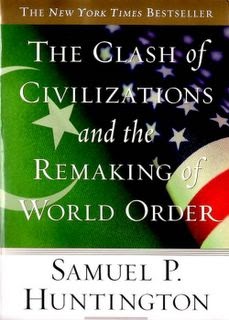
    The Clash of Civilizations

R. Nanjappa

Post cold war: new powers

In the post-cold war age, Huntington notes 6 powers that will dominate: America, Europe, China, Russia, Japan, India. But behind them are the civilizations! [Sinic= Chinese-Confucian, Hindu, Japanese, Islamic, Orthodox Christian, Western, Latin American, African] Though the Muslim nations do not act as a bloc, they do wield considerable influence.

The Cold War as it was known before the collapse of the Soviet Union might have ended. But Russia and China are now big powers on their own, challenging the West. The ideological war might have ended, with all countries adopting capitalist methods in varying degrees, but political differences are significant. Behind them is the pull of civilizations.


West and Islam: undying antagonism

There are some basic conflicts. What we call the “West”- the US, Canada, Western Europe, Australia, New Zealand share certain characteristics: separation of church and state, democratic representative bodies, predominantly market economies, rule of law, individual freedoms, secularisation of life and admission of social and cultural pluralism. These  are all emphatically opposed by the Muslim countries! In the Islamic state, everything has to be ordered in the name of Allah: there can never be the separation of religion from the affairs of the state! This is not just an extremist view, but  the very normal Islamic position according to sane and sober Islamic judgement. Hence, the conflict between the West and Islam can never be reconciled. (The conflict between Christianity and Islam is another matter.) This is seen in the increasing social tension created by the influx of Muslim refugees (immigrants) into Western Europe! The problem is not due to Islamic extremism, but the very nature of Islam itself!


Western politicians simply ignore this basic fact. The basic animosity between the secular West and Islam cannot be reconciled or wished away. 

It is to be observed that though there are several big Muslim countries, no one is in a position to speak as “the Muslim” country or for all Muslims! This makes the situation rather dangerous for world peace. Muslim demographic growth is also extraordinary, and is leading to large scale immigration! But it is all to non-Muslim countries and not to other Muslim countries! This poses its own problems. This reveals the basic ethnic tensions among the Muslims!

Western countries are experiencing slow economic growth, decline or stagnation in population growth, debt burden due to big government and a lifestyle involving consumerism and low savings. The Asian economies are experiencing an upswing at the same time!

Neither the Muslim countries, nor all the other non-Western countries including former colonies have  accepted all the features of the West, though many of them have generally adopted Western ways in the name of modernisation! 

Rising world powers

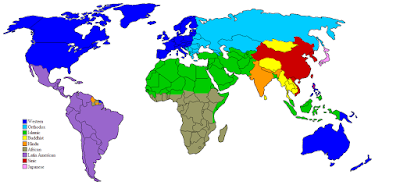
The following map makes clear the divisions which can be easily perceived:

By en:en:User:Kyle Cronan and en:en:User Olahus in /Commons.wikimedia.org/W/Index.php?curid=18187203

Buddhism has been an important religion, but according to Huntington, it has not been the basis of a large civilization. 

China: giant of Asia

China is sitting as the giant of Asia. It is in a position to virtually overrun the whole of Asia. It has already swallowed Tibet, a Buddhist country. No other Buddhist country in Asia can stand up to China, which has a large ethnic presence in several countries!

                                                                         to be continued

tags – to read, books

Don’t lend Books, Money and Woman! (Post No.2959)

IMG_4530

Article Written by London swaminathan

Date: 10 July 2016

Post No. 2959

Time uploaded in London :– 18-39

( Thanks for the Pictures)

DON’T REBLOG IT AT LEAST FOR A WEEK!  DON’T USE THE PICTURES; THEY ARE COPYRIGHTED BY SOMEONE.


(for old articles go to tamilandvedas.com OR swamiindology.blogspot.com)


Wisdom literature in Sanskrit is great. If a person is well versed in Sanskrit he will be using hundreds of Subhasitams (Golden sayings) in his daily conversation. It is a great pleasure to listen to such people. Tamils cant speak without using a proverb. Villagers use Tamil proverbs more than the city dwellers. They may illiterate but they will use apt proverb at the right place at the right time.

Here are some Sanskrit couplets which anyone will enjoy:–


Pustakam, Vanita Vittam parahastam gatam gatam!

Athavaa punaraagacceet jeernam brashtaa sa khandasah


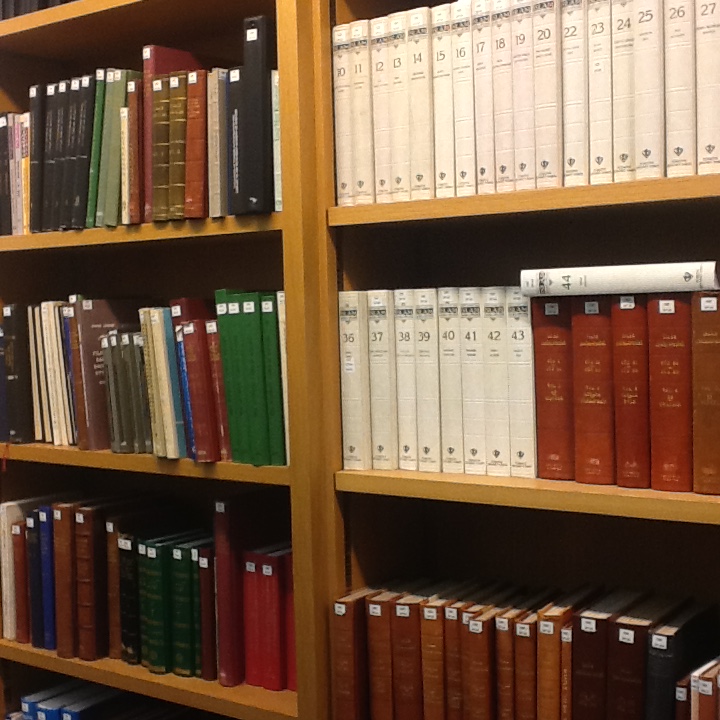
If book, money and woman go to another hand that is gone for ever.

Or If it comes back they are spent, spoiled or torn


This couplet needs no explanation.

books, BL

Xxx

What can you sacrifice

Tyajet kulaarthe purusam graamasyaarthe kulam tyajet

Graamam janapadasyaarthe hyaatmanaarthe pruthviim tyajet

–Sabaaparvam, Mahabharatam


One can sacrifice a man for the sake of his clan

To save the entire village, a clan may be sacrificed

To save the country a village may be sacrificed

But for the sake of the Self, the entire may be sacrificed.


The meaning is that you can leave everything to attain spiritual benefits.

Xxx


Ruupa yauvana sampannaa visaalakulasambavaah

Vidyaahiinaa na sobante nirgandhaa iva kimsukaah


Even if one is born in a good family with beauty and youth, one would not shine in life without education/learning. He will look like the bright coloured Kimsuka flower sans fragrance.


Tamil poets Tiruvalluvar also use a similar simile:–

Those who are unable to elucidate their learning are like the cluster of blossoms without fragrance – Kural 650


–Subham–