All posts in category Indus Valley Civilization
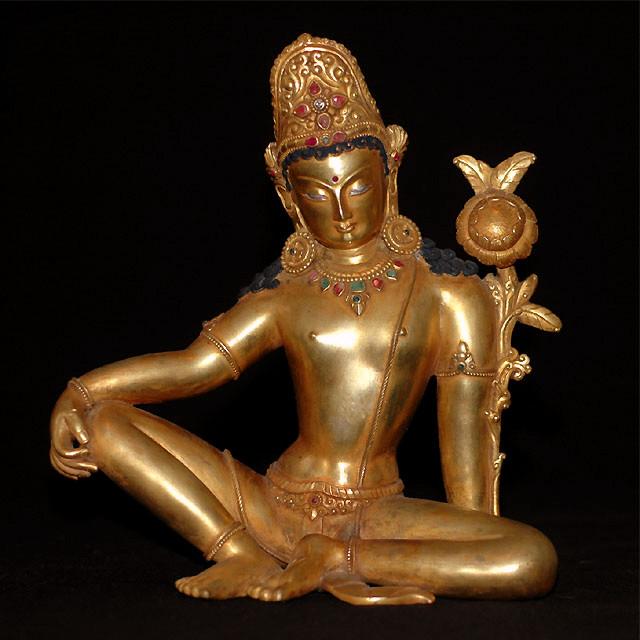
‘திராவிடர் கொலை வழக்கு: இந்திரன் விடுதலை’
Posted by Tamil and Vedas on December 28, 2013
https://tamilandvedas.com/2013/12/28/%e0%ae%a4%e0%ae%bf%e0%ae%b0%e0%ae%be%e0%ae%b5%e0%ae%bf%e0%ae%9f%e0%ae%b0%e0%af%8d-%e0%ae%95%e0%af%8a%e0%ae%b2%e0%af%88-%e0%ae%b5%e0%ae%b4%e0%ae%95%e0%af%8d%e0%ae%95%e0%af%81-%e0%ae%87/
‘எள்’ மர்மம்: ரிக் வேதம் முதல் சிந்து சமவெளி வரை!

By London swaminathan; Post No 755 dated 23rd December 2013
இந்துமத சடங்குகளில் பயன்படுத்தப்படும் எள், ரிக் வேதத்திலும், சிந்து சமவெளியிலும் காணப்படுகிறது. இதை வேத கால மக்கள் பயன்படுத்தி வந்ததால், சிந்து சமவெளி நாகரீகமும், வேதகால நாகரீகமும் வேறு வேறல்ல என்பதும் தெளிவாகின்றது.
இந்துமத நூல்கள், ‘எள்’ என்னும் தானியத்தை மஹா லெட்சுமியுடனும், மஹா விஷ்ணுவுடனும் தொடர்புபடுத்துகின்றன. தீபாவளி அன்று எண்ணை தேய்த்துக் குளிப்பத்தால் மஹாலெட்சுமி நம்மிடம் என்றும் வாசம் செய்வாள் (செல்வம் நிலையாகத் தங்கும்) என்ற நம்பிக்கையும் தென் இந்தியாவில் உண்டு.
போதாயன தர்மசூத்திரம், க்ருஹ்ய சூத்திரம், ஜைமினீய க்ருஹ்ய சூத்திரம் ஆகியவற்றில் எள் பற்றிய குறிப்புகள் வருகின்றன. தைலம் (எண்ணை) பற்றிய குறிப்புகள் அதர்வ வேதத்திலும், சாங்காயன ஆரண்யகத்திலும் காணப்படுகின்றன. ஜாடிகளில் எண்ணையைச் சேமித்து வைப்பது, எண்ணை தேய்த்துக் குளிப்பது ஆகியன பற்றி அவை பேசுகின்றன.(a few Grhyasutra references: Asva. GS1-9-6; Sanka. GS 1-28-6; Pa GS 1-15-4; there are many more in the same Grhyasutras; Panini in his Paniniyam V-2-4, V-i-7)
பிராமணர்கள் மாதந்தோறும் செய்யும் நீத்தார் கடன் ‘தில தர்ப்பணம்’ என்று அழைக்கப்படும். ‘திலம்’ என்றால் எள் என்று பொருள். இந்த சம்ஸ்கிருத சொல்லில் இருந்துதான் ‘தைலம்=எண்ணெய்’ என்ற சொல் வந்தது. இதேபோல தமிழிலும் எள்ளில் இருந்து எடுக்கப்படும் நெய் ‘எள்+நெய்’=எண்ணெய்=எண்ணை என்று ஆகியது. இந்த எள்ளை ஏன் இறந்து போனவர்களுக்குக் கொடுக்கிறோம்? எள்ளை ஏன் சனைஸ்வர பகவானுக்கு நைவேத்தியம் செய்கிறோம்? என்று ஆராய்வதே இக்கட்டுரையின் நோக்கம்.
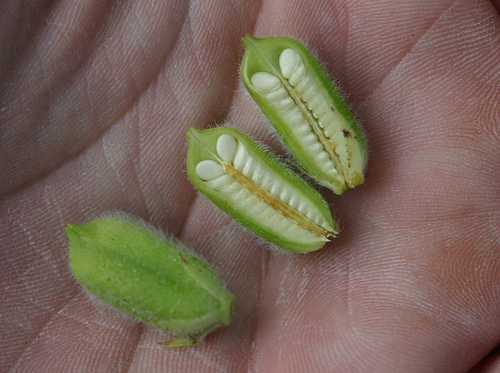
(திலம் என்பதில் இருந்துதான் திலகம் (பொட்டு) என்பதும் வந்தது போலும்! ‘தில’த்தை பூதக்கண்ணாடியின் கீழே வைத்துப் பார்த்தால் திலகம் உருவத்தில் திகழும்!!)
எள் என்னும் எண்ணை வித்து வேதத்தில் இடம் பெறுகிறது. 3000 ஆண்டுகளுக்கு முன், சிந்து சமவெளியிலும் காணப்படுகிறது.. கறுப்பு, வெள்ளை, பழுப்பு நிறத்தில் இது கிடைக்கும். ஆப்பிரிக்காவிலும் மத்தியக் கிழக்கிலும் எள் காணப்படுகிறது. அசீரிய, எகிப்திய நாகரீகத்திலும் எள் பற்றிய குறிப்புகள் உள்ளன. ஆயினும் இந்தியாவில் காணப்படும் எள் தனி ரகம். இதன் தாவர இயல் பெயர். சிசேமம் இண்டிகம் Sesamum indicum.
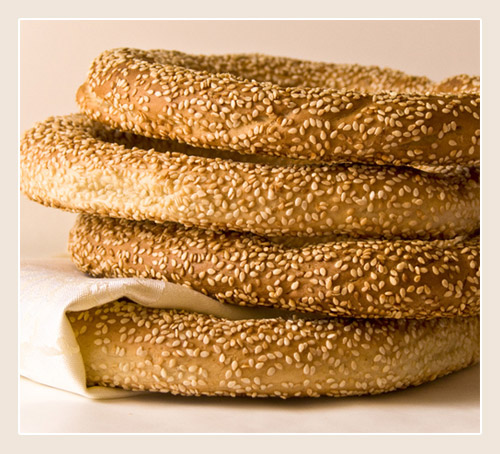
Bread with sesame
எள் பற்றி கருட புராணத்தில் வரும் குறிப்பை அபிதான சிந்தாமணியில் காண்கிறோம்: “ இது ஒரு சிறு செடி. இதன் வித்தில் எண்ணெய் எடுப்பர். விஷ்ணுவின் வியர்வையில் உண்டானது ( பாமர மக்களுக்குப் புரிவதற்காக இப்படிச் சொல்லுவதுண்டு. அதன் உருவம் வியர்வைத் துளி போல தோன்றும்) ஆகையால் மிகத் தூய்மையானது. இதனைக் கண்டால் அசுரரும் பூதப்பிரேத பைசாச முதலியோரும் வெகுண்டு ஓடுவர். இந்த எள் கருப்பும் வெண்மயுமென இரு வகைத்து. எந்த நிறமுள்ள எள்ளையேனும் தானங்களோடு சேர்த்துக் கொடுப்பின் அதிகப் பயனுள்ளதாகும் சிரார்த்தத்தில் கறுப்பு எள்ளைச் சேர்த்தால் பிதுர்தேவர்கள் அதிகக் களிப்படைவர்—(கருடபுராணம்)
எள்ளும், சனைஸ்வர பகவானும், சனியின் வாகனமான காகமும் கறுப்பு நிறத்தவை. மரணத்துக்கு அதிபதியான எமனும் அவனது வாகனமான எருமையும் கறுப்பு நிறத்தவை. ஆக மரணத்துக்கும் கறுப்பு நிறத்துக்கும் உள்ள தொடர்பு காரணமாக நீத்தார் கடன்களில் எள் பயன்படுத்தப்படுகிறது என்றும் கொள்ளலாம். சனிக்கிழமைகளில் சனி பகவானுக்கு எள்ளுஞ் சாதம் படைக்கப்படுகிறது.
மனிதர்கள் நாகரீகம் அடைவதற்கு முன், இறந்தோருக்கு மாமிசத்தைப் படைத்து வந்தனர் என்றும் பிற்காலத்தில் மாமிசத்துக்குப் பதிலாக எள் கொடுக்கப்பட்டது என்று கூறுவாரும் உளர். உண்மையில் எள்ளில் தாவர வகை புரத்ச் சத்து அதிகம். எண்ணையில் கொழுப்பு சத்தும் அதிகம்.
காஞ்சி பரமாசார்ய ஸ்வாமிகள் உபந்யாசம் (16-11-1932, சென்னை)

“ ஆவணி அவிட்டத்தன்று எள்ளு மாத்திரம் சாப்பிட்டு அன்று முழுதும் பட்டினி இருந்து மறுநாள் 1008 ஸமித்தால் ஹோமம் பண்ணவேண்டும். அந்த ஹோமம் ஸ்வர வர்ண லோபங்களுக்காகச் செய்ய வேண்டும் அதை ஒவ்வொரு வருஷமும் பண்ணவேண்டும்”.
ஷட் தில ஏகாதசி:
மாசி மாத கிருஷ்ண பட்சத்தில் வரும் ஏகாதசி ஆறு எள் (ஷட் தில= ஷடில) ஏகாதசி என்று அழைக்கப்படும். அன்ன தானம் செய்யாத ஒரு பெண் எள் மட்டும் கொடுத்து சுவர்க்கம் புகுந்த கதை இந்த ஏகாதசிக்கு அடிப்படையாக அமைந்தது. அவரைச் சோதிக்க விஷ்ணு, ஒரு பிச்சைக்காரர் வேஷத்தில் வந்தார் என்றும் அப்போது அவர் மண் உருண்டை ஒன்றை மட்டுமே கலயத்தில் போட்டார் என்றும் கதை. அவர் சொர்க்கம் புகுந்தபோதும் தானம் என்ற ஒன்றைச் செய்யாததால் பூமிக்கு அனுப்பப்பட்டார். அவர் வறட்டி தட்டியதில் எள்ளும்கலந்ததாகவும் அது ஹோமத்தில் பயன்படுத்தப்பட்ட போது அந்தப் புண்ணியமே அவரைக் காப்பாற்றியது என்றும் கூறுவர்.
அன்றைய தினம் ஆறு விதத்தில் எள் பயன்படுத்தப்படுகிறது. ஆறு வகை உபயோகங்கள்: இறந்து போன உறவினருக்கு நீருடன் அளிப்பது, தானம் செய்வது, உணவில் சேர்ப்பது, எண்ணை தேய்த்து குளிப்பது, மசாஜ் செய்வது, யாகத்தில் பயன் படுத்துவது.
மகர சங்கராந்தி, சகட் சௌத் பண்டிகைகளில் எள் உருண்டை கொடுக்கும் பழக்கமும் மஹாராஷ்ட்ரம் முதலிய மாநிலங்களில் உண்டு. அவ்வாறு கொடுக்கும் போது “ இந்த எள் உருண்டையை ஏற்றுக் கொண்டு இனிய சொற்களைக் கூறுங்கள்” என்று சொல்லும் வழக்கமும் இருக்கிறது. அதாவது பழைய மோதல் சம்பவங்களை மறந்து நட்புடன் வாழத் துவங்குவோம் என்பது இதன் பொருள். இதனால் மகர சங்கராந்தியை தில (எள்) சங்கராந்தி என்றும் அழைப்பர்.
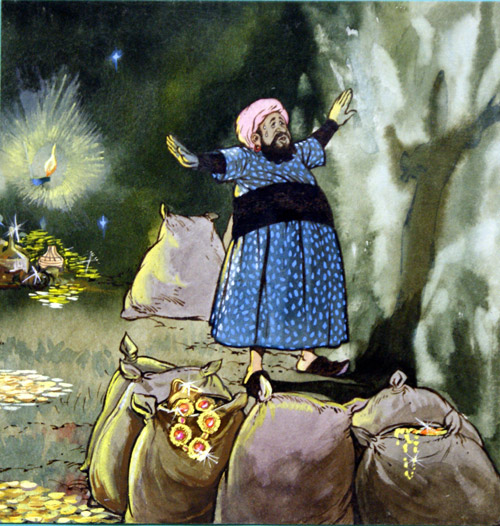
அலிபாபாவும் நாற்பது திருடர்களும் கதையில் “ஓப்பன் சிசேம்” என்று சொன்னவுடன் குகையின் வாயில் திறக்கும். இந்த சொற்றொடரை இப்போது ஆங்கிலத்தில் காணலாம். ஆனால் இதன் மூலமோ காரணமோ யாருக்கும் தெரியாது. ஒருவேளை இது இந்துமததில் இருந்து சென்றிருக்கலாம். ஏனெனில் சுவர்க்கத்தின் வாயில் திறக்கவும், இறந்தோர் வாழும் இடத்துக்கு நமது மதிப்பையும் மரியாதையையும் அனுப்பவும் எள் மட்டுமே பயன்படுத்தப்படுகிறது (ஷடில ஏகாதசி கதையில் விவரம் காண்க).
தென் இந்தியாவில் எல்லா சமயச் சடங்குகளிலும் நல்லஎண்ணைதான் பயன்படுத்தப்படுகிறது எள்ளில் ஏராளமான வகைச் சத்துகள் இருக்கின்றன. எள் செடியின் எல்லா பாகங்களும் மருத்துவத்தில் பயன்படுகின்றன. (விக்கிபீடியா முதலிய கலைக் களஞ்சியங்களில் கண்டு கொள்க)
சங்க இலக்கியத்தில் எள்
தமிழில் சங்க காலம் முதலே எள் பற்றிய குறிப்புகள் உண்டு. எள் பற்றிய வினைச் சொற்கள், பெயர்ச் சொற்கள், பழமொழிகள் ஆகியவற்றைப் பார்க்கையில் தமிழர்களின் வாழ்வில் எள் 2000 ஆண்டுகளுக்கு முன்னரே இரண்டறக்கலந்த ஒரு பண்டம் என்பதும் புலனாகிறது. கீழே விவரங்களைக் காண்க:
எள்ளல்= கேலி செய்தல், மட்டம் தட்டுதல்
எள்ளி நகையாடுதல்= நகைப்புரியவனாக்குதல், அவமானப்படுத்தல்
எள் அளவும் சந்தேகம் இல்லை= ஒரு துளியும் சந்தேகம் இல்லை
ஏழைக்கேற்ற எள்ளுருண்டை= மிகவும் மலிவான பொருள்
கூட்டத்தில் எள் போட இடம் இல்லை= நெருக்கமான கூட்டம், கொஞ்சமும் இதம் இல்லை
அவ்வளவு கூட்டம்! எள்ளுப் போட்டால் எண்ணெய் ஆகிவிடும்!= எள் நசுக்கப்படு எண்ணை வெளியேறும்.
இப்படி எத்தனையோ சொற்களும் சொற்றொடர்களும் இருப்பதைக் காண்கையில் இந்த தானியம் பாரத நாட்டிலேயே தோன்றியிருக்க வேண்டும் என்பதும் தெளிவாகிறது. ‘தில’ என்ற சம்ஸ்கிருத சொல் மூலமோ ‘எள்’ என்ற சொல்லின் மூலமோ வேறு மொழிகளில் இல்லாததால் வெளி தேசத்தின் செல்வாக்கு நம் மீது இல்லை; எள் என்பது இறக்குமதியான பொருள் இல்லை என்பதும் விளங்கும்.
பிராமணர் வீட்டு திதிகளிலும் எள்ளுருண்டை பயன்படுத்தப்படுகிறது மத்தியக் கிழக்கில் கிறிஸ்தவர்கள், முஸ்லீம்கள், யூதர்கள் ஆகியோர் எள்ளைக் கொண்டு செய்யப்படும் இனிப்பு முதலியவைகளைச் சாப்பிட்டாலும் இந்துமதம் ஒன்றில்தான் இது சமயச் சடங்குகளில் பயன்படுகிறது. பொதுவாக வேற்று நாட்டுச் சரக்குகள் சமயச் சடங்குகளில் இடம்பெறாது. பிராமணர்கள், திவசங்களில் மிளகாய் முதலிய இறக்குமதிப் பண்டங்களையோ, முட்டைக்கோசு, காலிபிளவர், முதலிய வெளிநாட்டுக் காய்கறிகளையோ இன்றுவரை திவசத்தில் சமைக்கமாட்டார்கள். ஆகவே எள் எனபதை இந்தியர்களுக்கு யாரும் அறிமுகப் படுத்தவில்லை. இந்தியர்கள்தான் மற்றவர்களுக்கு அறிமுகப் படுத்தினார்கள் என்றால் மிகை இல்லை.
சங்க இலக்கியத்தில் எள் :– அகம்-71, கலி-35-23, குறுந்த்- 112, புற—174, 246, 313, 321, மலை-562.. இதுதவிர, எள்ள, எள்ளப்படு, எள்ளல், எள்ளலன், எள்ளலான், எள்ளார், எள்ளி, எள்ளிய, எள்ளினும், எள்ளீயும், எள்ளு, எள்ளுக, எள்ளுதல், எள்ளுநர், எள்ளுபு, எள்ளும், எள்ளுமார், எள்ளுவாய், எள்ளுற்று என்று பல வினை சொற்களும் 2000 ஆண்டுகளுக்கு முன்னரே தமிழில் இருப்பதால் எள் என்பது இந்தியாவில் தோன்றி வெளிநாடுகளுக்குச் சென்றிருக்கவேண்டும் என்பது என் முடிவு. எள் என்பதில் இருந்தே எளிய, எளிமை முதலியன வந்ததா என்பதும் ஆய்வுக்குஇய விஷயங்கள்.
திருவள்ளுவரும் 281, 470, 1298 முதலிய குறள்களில் எள்ளைப் பயன்படுத்துகிறார்.
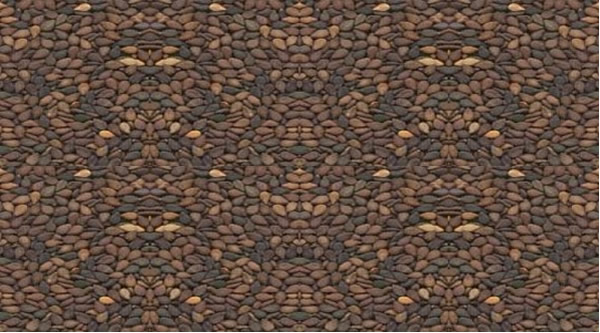
புறநானூற்றில் எள் துவையல்
பூதப் பாண்டியன் இறந்தவுடன் கணவனின் சிதைத் தீயில் பாய்ந்து உடன்கட்டை ஏறமுயன்ற கோப்பெருந்தேவியை (மஹா ராணியை) சான்றோர்கள் தடுத்து நிறுத்தமுயன்றனர். இதனால் மிகவும் கோபம் அடைந்த தேவியார் ஒரு அழகான பாட்டைப் பாடி அவர்களை நிந்தித்துவிட்டு தீயில் பாய்ந்தார். அந்தப் பாட்டில் “ என்னை நெய் இல்லாத தண்ணீரில் ஊறவைத்த சோறும், புளிச்ச கீரையும், எள்ளுத் துவையலும் சாப்பிடும் பெண் என்று நினத்துவிட்டீர்களா?” என்று சாடுகிறார். இதிலிருந்து அக்கால உணவுப் பழக்கங்களும் தெரியவருகிறது.
சூடாமணி நிகண்டு எள், நூ, எண் ஆகிய மூன்று பெயர்களை எள்ளுக்குத் தருகிறது. எள் என்ற சொல்லின் அடிப்படையில் பிறந்த எல்லா வினைச் சொற்களும் மட்டமான பொருளிலேயே (எ.கா. எள்ளி நகையாடுதல்) வரும். ஆனால் எள்ளின் மகிமை தெரிந்த பின்னர் இனிமேல் எள்ளை மதிப்புடன் நடத்துவோம்!!
Please read my earlier post The Sugarcane Mystery: Indus Valley and the Ikshvaku Dynasty. Contact swami_48@yahoo.com
Posted by Tamil and Vedas on December 23, 2013
https://tamilandvedas.com/2013/12/23/%e0%ae%8e%e0%ae%b3%e0%af%8d-%e0%ae%ae%e0%ae%b0%e0%af%8d%e0%ae%ae%e0%ae%ae%e0%af%8d-%e0%ae%b0%e0%ae%bf%e0%ae%95%e0%af%8d-%e0%ae%b5%e0%af%87%e0%ae%a4%e0%ae%ae%e0%af%8d-%e0%ae%ae/
சிந்து சமவெளியில் அரசமரம்
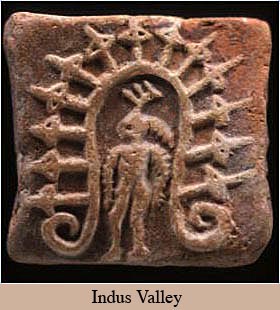
வ்ருக்ஷ ராஜன்—by London swaminathan
சிந்து சமவெளியில் பல விநோதமான விஷயங்களைப் பார்க்க முடிகிறது. புலிப் பெண் முத்திரை, பேய் முத்திரை, ஆடு, நரபலி முத்திரை, சப்தமாதா முத்திரை, மிருகங்கள் சூழ்ந்து நிற்கும் (பசுபதி) ஒரு கடவுள் முத்திரை, யானை மீது இந்திரன் போல நிற்கும் ஒருவர்/ஒருத்தி முத்திரை , ஆட்டுமுக அசுரன் அல்லது தேவன் முத்திரை, மஹிஷாசுரமர்த்தனி போல எருமையை துவம்சம் செய்யும் ஆண் முத்திரை எனப் பல முத்திரைகள்.
இவைகளில் பல முத்திரைகளுக்கு ஒரே நூலிலிருந்து விளக்கம் சொல்ல முடியவில்லை. ஆனால் பல சம்ஸ்கிருத நூல்களில் இருந்து விளக்கம் சொல்ல முடிகிறது. யாருக்கும் புரியாத மர்மமான ஒட்டக எலும்புக்கூடு, ஒட்டக முத்திரை ஆகியனவும் கிடைத்தன. இந்த ஒட்டக விஷயம் ஆரிய-திராவிட வாதத்துக்கு எதிராக இருப்பதால் அறிஞர்கள் ஒரே அமுக்காக அமுக்கிவிட்டனர். எந்த அறிஞரும் அது பற்றி பிரஸ்தாபிப்பதே இல்லை.
இதே போல எலும்புக்கூடு விஷயங்களையும் அமுக்கிவிட்டனர். ஏனெனில் இதில் ஆரிய திராவிட எலும்புக் கூடுகள் என்று இனம் காட்ட முடியவில்லை. அப்படியே காட்டப் போனால் எல்லாம் பஞ்சாபியர் எலும்புக் கூடுகள் போலவே தோற்றம் இருக்கின்றன!!!
சிந்துவெளி முத்திரையில் பலவிதமான மரங்கள் காணப்பட்டாலும் அரமரம் கொஞ்சம் தூக்கலாகத் தெரிகிறது. இதைப் பார்த்தவுடன் பலருக்கு ஒரே மகிழ்ச்சி. அப்பாடா, திராவிடப் பொன்னாட்டை தொடர்புபடுத்த ஒரு விஷயமாவது கிடைத்ததே என்று. உண்மையில் இதுவும் பிழை. தன்னை ஆரியன் என்று அழைத்துக் கொண்ட புத்த பிரான உட்கார்ந்து ஞானோதயம் பெற்றது அரச மரத்துக்கடியில் தான். அவர் ஏன் அரச மரத்துக்கு அடியில் உட்கார்ந்தார் என்றால் அந்த மரம் வேத காலத்தில் இருந்து புனிதமாக கருதப்பட்டது. பிராமணர்கள் அரச மரக் குச்சிகள் இல்லாமல் தங்கள் யாக யக்ஞங்களைச் செய்ய முடியாது.
மூலதோ ப்ரஹ்மரூபாய மத்யதோ விஷ்ணு ரூபிணே
அக்ரதச் சிவ ரூபாய வ்ருக்ஷ ராஜாய தே நம:
பொருள்: அடியில் பிரம்மனும் நடுவில் விஷ்ணுவும், நுனியில் சிவ பெருமானும், நிலைபெற்ற அரச மரமே உனக்கு நமஸ்காரம். இது ஒரு பழைய ஸ்லோகம். இந்துக்கள் வழிபடும் மரம்–அரச மரம்.
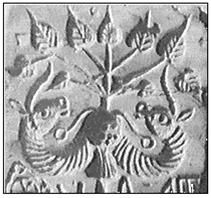
அரச மரம் மட்டுமின்றி அந்தக் குடும்பத்தைச் சேர்ந்த அத்தி, ஆலம் ஆகியனவும் இந்துக்கள் வழிபாட்டில் இடம் பெற்றன. தாவரவியல் கணக்குப்படி மூன்றும் ‘பைகஸ்’ என்னும் பிரிவைச் சேர்ந்தவை, ஒரே குடும்பத்தைச் சேர்ந்தவை. (இந்திய அதிசயம் ஆலமரம் என்ற எனது கட்டுரையில் மேல் விவரம் காண்க)
அரச மரத்தைக் குறிக்கும் பிப்பலாடன், அச்வத்தன் என்ற மனிதர்களுடைய பெயர்கள் இதிஹாச உபநிஷத்திலும் இருக்கின்றன.
விஷ்ணு சஹஸ்ரநாமம்
விஷ்ணு சஹஸ்ரநாமம் மிகவும் பழமையான ஒரு ஸ்லோகம். அது மஹா பரதத்தில் இருக்கிறது. அதில் பல வேதகாலப் பெயர்கள் இருக்கின்றன. அதில் மூன்று மரங்களின் பெயர்களும் விஷ்ணுவின் பெயர்களாக வருகின்றன. அதற்கு ஆதி சங்கரர் எழுதிய விளக்கங்களையும் கீழே காணலாம்.
822.ந்யக்ரோதாய
823.உதும்பராய
824.அஸ்வத்தாய
822.கீழேயுள்ள பிரபஞ்சத்துக்கெல்லாம் மேலாயிருப்பவர் அல்லது தமது மாயையினால் எல்லாப் பிராணிகளையும் கீழே வைத்து மறைப்பவர்
823.ஆகாயத்திற்கு மேற்பட்டவர்
824.அரசமரம் போலிருப்பவர்.
கீதையில் அரசமரம்
புத்தருக்கெல்லாம் மிகவும் முந்தியவர் கிருஷ்ண பரமாத்மா. அவர் சொன்ன பகவத் கீதையில் மரங்களில் தான் அரச மரம் என்றே கூறுகிறார்.
‘’எல்லா மரங்களுள்ளும் நான் அரச மரமாயிருக்கிறேன்’’ (கீதை 10-26)
ஊர்த்வ மூலமத: ஸாகமஸ்வத்தம் ப்ராஹுரவ்யயம் (கீதை 15.1) என்ற இடத்திலும் அரச, ஆல மரங்களின் பெருமை பேசப்படுகிறது.
பிராமணர்கள் தினசரி சமிதாதானத்திலும் ஹோமத்திலும் பயன்படுத்துவது அரச மரக்குச்சிகளே. அர மரக் குச்சிகள் (ஸமித்து) இல்லாமல் அவர்கள் அடிப்படை ஹோமங்களைக் கூட செய்ய முடியாது. அவ்வளவு முக்கியம். புத்தர் அரச (போதி) மரத்துக்கடியில் உட்கார்ந்ததற்கும் இதுவே காரணம்.
இவ்வளவு புகழ் பெற்ற அரசமரத்துக்கும் திராவிட முத்திரை குத்தி சில அரை வேக்காடுகள் மகிழ்கின்றன.மகிழட்டுமே, நமக்கென்ன நஷ்டம்!
அரச மரமும் பிள்ளைப்பேறும்
பிள்ளை பெற தயாராக இருப்பவர்களும் மகப்பேறு கிடைக்காதவர்களும் அரசமரத்தைச் சுற்றினால் குழந்தை பிறக்கும் என்பது தமிழர்களின் நம்பிக்கை. இதனால்தான் பிள்ளையார் சிலைகளை அரச மரத்துக்கு அடியில் வைத்தனர்.
‘’அரச மரத்தைச் சுற்றிவிட்டு அடிவயிற்றில் கை வைத்தாளாம்’’– என்ற பழமொழியும் இதனால்தான் வந்தது. உடனே பிள்ளை பிறந்துவிடும் என்ற நம்பிக்கை!
வேதத்தில் அரசமரம்
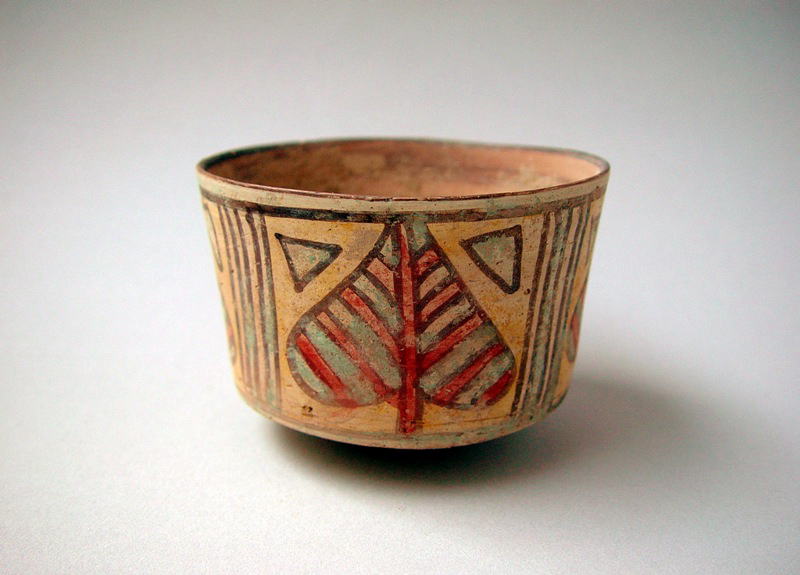
அரச மரம், ஆலமரம் ஆகியவை பற்றிய குறிப்புகள் வேதத்திலும் சங்க இலக்கியத்திலும் வருகின்றன. உலகிலேயே பழமையான சமய நூல் ரிக் வேதம். அதில் பத்தாவது மண்டலத்தில் பலன் தரும் மூலிகைகள் என்ற பாடலில் (10-97) அரச மரம் பற்றி வருகிறது : ‘’உனது வீடு புனிதமான அரச மரத்தில் உள்ளது. இலைகளுடைய பர்னா (பலாச) மரத்தில் உன் வீடு கட்டப்பட்டுள்ளது. இந்த மனிதனைக் காப்பாற்றினால் உனக்கு ஒரு பசு கிடைக்கும்’’.
யாகத்தில் பயன்படுத்தப்படும் பாத்திரங்கள், கரண்டிகள் ஆகியன இந்த 2 மரங்களினால் செய்யப்படுகின்றன.
ஐயவி புகைத்தல்
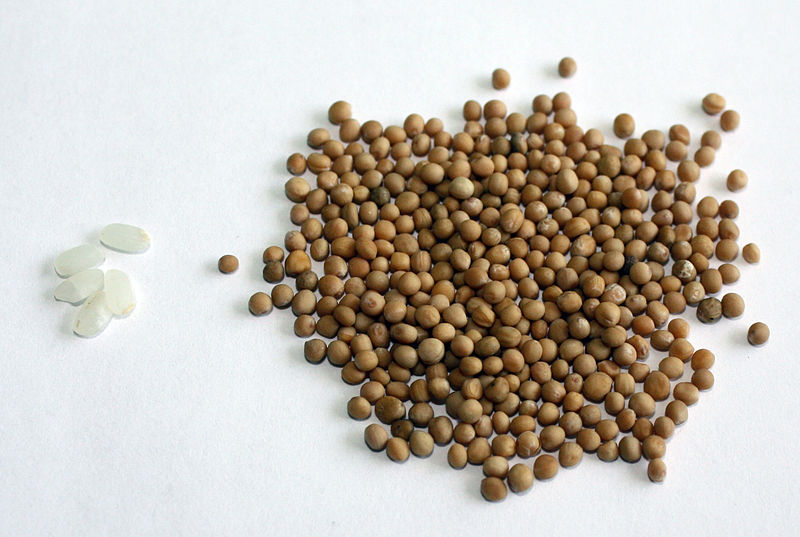
பேயை விரட்ட ஐயவி என்னும் வெண் கடுகின் புகையை சாம்பிராணி புகை போல போடுவது சங்க கால வழக்கம். இதுவும் வடக்கிலும் இருப்பதை ஒரு சம்ஸ்கிருத நூல் கூறுகிறது. அமோகவஜ்ரர் என்பவர் எழுதிய வடமொழி நூலில் இது துர்தேவதைகளை விரட்டப் பயன்படும் என்று எழுதப்படிருக்கிறது. ஐயவி பற்றிய குறிப்புகள் சங்க இலக்கியத்தில் பல இடங்களில் வருகிறது (எனத் ‘’தமிழில் பேய், பூத, பிசாசு’’ என்ற கட்டுரையில் விவரங்கள் கிடைக்கும்.
Please read my earlier articles:
1.Serpent Queen: From Indus Valley to Sabarimalai 2.Sugarcane Mystery: Indus valley and Ikshvaku Dynasty 3. Vishnu seal In Indus Valley 4. Indus Valley –New Approach required 5.Indra in Indus valley seals+ Symbols for Vedic Gods and 6.Ghost in Indus seals 7. Bull Fighting: From Indus Valley to Spain via Tamil Nadu 8.The Great Scorpion Mystery in History 9. (In Tamil) சிந்து சமவெளியில் புலிப்பெண் 10. சிந்து சமவெளியில் பேய் முத்திரை 11. Ramayana Wonders part 5: Indus Valley Cities in Ramayana 12.Tiger Goddess in Indus seals 13.Aryan Chapatti and Dravidian Dosa 14.Sex Worship in Indus Valley 15.சிந்து சமவெளியில் செக்ஸ் வழிபாடு 16.Indian Wonder: The Banyan Tree + 600 articles on Tamil Sanskrit Literature and Indian Culture.

To get the above articles, type any of the article titles and add ‘from tamilandvedas.wordpress.com or from swamiindology.blogspot.com
For further list contact swami_48@yahoo.com
Posted by Tamil and Vedas on August 16, 2013
https://tamilandvedas.com/2013/08/16/%e0%ae%9a%e0%ae%bf%e0%ae%a8%e0%af%8d%e0%ae%a4%e0%af%81-%e0%ae%9a%e0%ae%ae%e0%ae%b5%e0%af%86%e0%ae%b3%e0%ae%bf%e0%ae%af%e0%ae%bf%e0%ae%b2%e0%af%8d-%e0%ae%85%e0%ae%b0%e0%ae%9a%e0%ae%ae%e0%ae%b0%e0%ae%ae/
‘Sex Worship’ in Indus Valley

By London Swaminathan
Religious belief of Indus valley people remains a puzzle until today. John Marshal, Director General of Archaeology made some sweeping statements about certain objects he discovered in Mohenjo-Daro and misled the world. He was very unprofessional and forgot to mention where these objects were discovered. Archaeologists have to record the layers or the areas from where the objects were recovered.
He described some objects as symbols of phallic worship. He said the circular stone objects were representations of female genital organs (Yoni) and lingam shaped objects were male organs. Those were up to two feet in height. Marshal classified these objects into three groups: Lingas, Baetylic Stones and Ring Stones. No information is published to show where they were found. Neither Mackay nor Vats (later excavators) gave any information or new finds in their reports.
Since Marshal and Mortimer Wheeler saw everything through the coloured glasses fitted with Aryan-Dravidian lenses, their vision was distorted.
Later scholars pointed out the linga stones may be gamesmen or weights. Ring Stones might have been used to erect pillars or used for astronomical calculations. Since they did not find anything like this anywhere else in further excavations they even questioned the statement ‘’Phallic worship was an important element of Harappan religion’’.
Baetylic stones are roughly shaped stones held sacred or worshipped as of divine origin Marshal’s categorization of some stones as Lingas and some others as baetylic stones was not accepted by other scholars. Indus Valley had no temples where as other ancient civilizations had places of worship. Vedic civilization had no temples. Mortimer Wheeler and others also said that this type of Linga- Yoni worship is Non Aryan. Strange thing about this is all the words such as Linga, Yoni, Pasupati are all Sanskrit words. In Sangam Tamil Literature there was no mention of Shiva, Linga or Yoni. Words such as Shiva, Linga came very late in Tamil literature. Tamil saints addressed Shiva as ARYAN and called him Oh, Reddish one! Going by this no one will call him a Dravidian! Scholars who said that they were practised more in South India left a wrong impression. In fact Tamils followed and translated verbatim whatever said about Shiva in Vedas. Ancient Tamil literature did not use the word Shiva or Pasupati, but used the Vedic expressions such as blue throated, three eyed etc. They also did not fail to say that Shiva lived in Himalayan Kailash! All these things came as slap on the faces of supporters of the racist theory.
More Sex Symbols
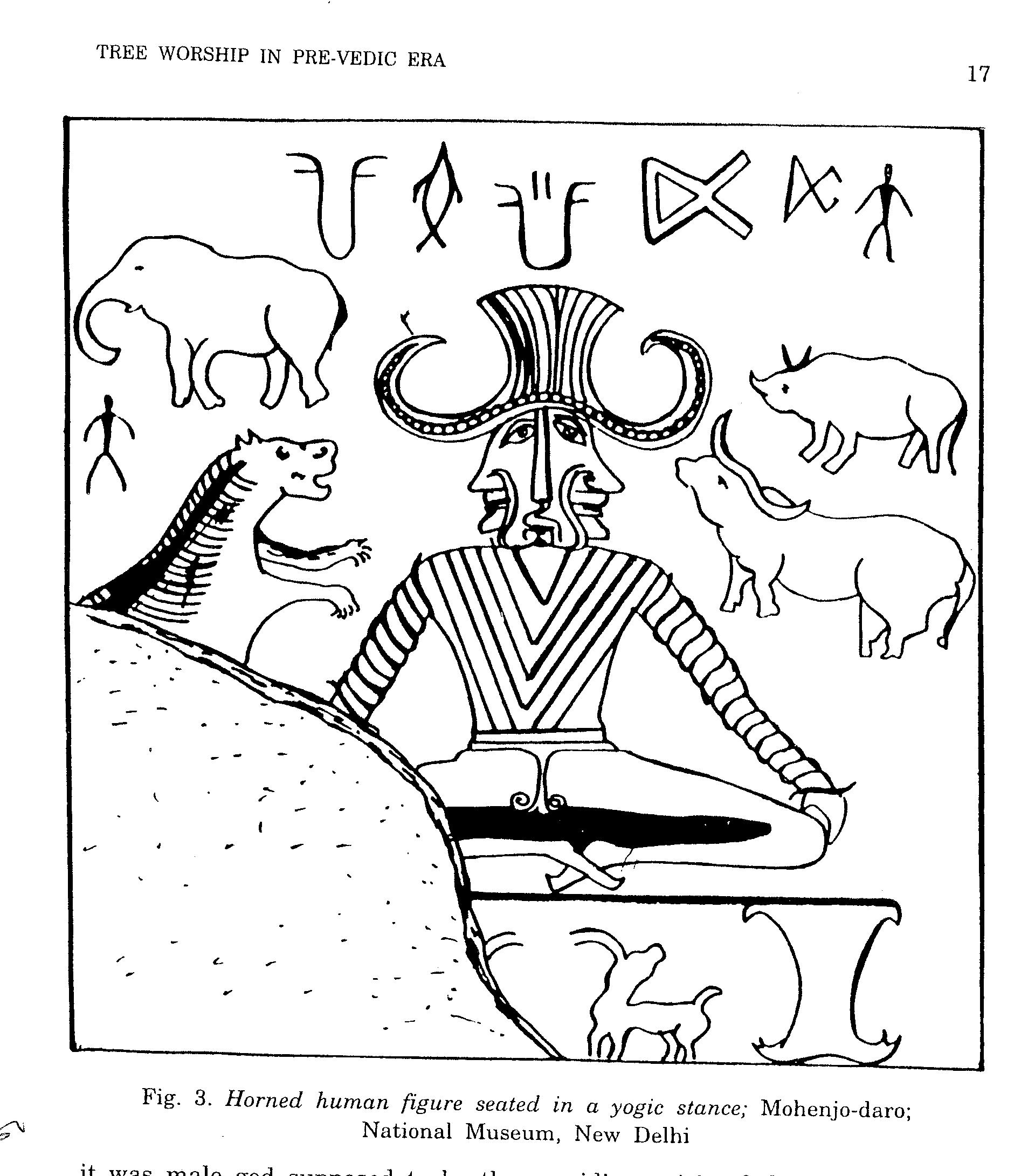
Even the Pasupati seal discovered by the early researchers are found in Bahrain and Gundestrup cauldron found in Denmark. It is not unique to Indus Valley.(See my early posts for details and pictures).Marshal’s hypothesis on Proto Shiva seal was wrong. The figure in the Harappan seal is ithyphallic, sitting cross legged and wide armed in the yogic Padmasana.
A female deity is shown in one of the Harappan seal with a tree issuing out of her womb and two rampant tigers standing as guards on either side. P Jayakar has described this seal in a nice way:

‘’From her womb a plant springs, straight and lithe, with its fine leaves uprising and auspicious. The earth is the great yoni. The woman’s body in the Indus seal is the earth bound root, the fecundating source. The arms of the inverted figure are stretched to touch the knees as in yogasanas. The rampant tigers, guardians of initiation, protect the mysteries and the immense magic creation. The tigers are separated from the Earth Mother by the Indus valley script, a mantra or protection.
Some scholars have identified this deity with Lajja Gauri worshipped in different parts of India. Nude goddess legs apart showing her vulva as an invitation to sexual act is a universal representation in the civilizations of the fertility cult.
Unlike other ancient civilizations, Indus valley had no temples or places of worship. It was like temple less Vedic civilization. Pupul Jayakar in her book ‘The Earth Mother’ interpreted the fish symbol with a dot as Yoni in the seal where a big goat was brought in front of a deity probably for sacrifice.
Marshal jumped to a conclusion that linga –yoni shaped stone objects are sexual symbols. But throughout his report he confused everyone saying ‘’may be they are’’, ‘’may be they are all not sexual objects’’. This is a cunning way of creating doubts in the minds of people—similar to divide and rule policy of the foreigners!

Lajja Gauri from Nepal
Tamils who write about Indus Valley in their blogs do not know much about other seals where lot of rituals are depicted with tiger goddess and others. Sangam Tamil literature mentions Himalayas and Ganges as holy places. They never said anything about Indus River or Punjab. All their expeditions were to the Himalayas. They knew Kailash, abode of Lord Shiva, very well. It is doubtful that the ancient Tamils knew about Indus valley at all. Though we find the word Yavana, it meant only Romans in ancient literature. Later the meaning slightly changed to mention Greeks and Arabs or anyone from the West.
Contact swami_48@yahoo.com
 Indus seal of sacrifice
Posted by Tamil and Vedas on July 26, 2013
https://tamilandvedas.com/2013/07/26/sex-worship-in-indus-valley/
சிந்துசமவெளியில் ‘செக்ஸ்’ வழிபாடு
எழுதியவர்: லண்டன் சுவாமிநாதன்
சிந்து சமவெளி பற்றி தமிழர்களின் புலம்பல் நாளுக்கு நாள் அதிகரித்து வருகிறது. ‘‘தடி எடுத்தவன் எல்லாம் தண்டல்காரன்’’ என்று தமிழில் ஒரு பழமொழி உள்ளது. ‘’பேனா எடுத்தவன் எல்லாம் ‘பிளாக்’காரன்’’ என்பது புதுமொழி. சிந்து சமவெளி நாகரீகம் பற்றி ‘பிளாக்’கில் எழுதுபவர்கள் எவ்வளவு தூரம் படித்துவிட்டு எழுதுகிறார்கள் என்பது ஆண்டவனுக்கே வெளிச்சம். இது பற்றி எழுதுபவர்கள் முதலில் அங்கே பின்பற்றப்பட்ட மதத்தையும் அவர்களுடைய நம்பிக்கைகளையும் அறியவேண்டும். அதுவும் ஊகம்தான். ஏனெனில் படத்தில் உள்ள எழுத்துக்களை இதுவரையும் யாராலும் படிக்க முடியவில்லை. அவரவர்கள் தங்கள் கருத்துக்களை மனம்போல போக்கில் எழுதிவருகிறார்கள்.
மனம்போன போக்கில் எழுதுபவர்களில் மிகப்பெரிய சேதத்தை உண்டாக்கியவர் மார்ஷல் என்னும் தொல்பொருட் துறை இயக்குநர் ஆவார். இவர் அங்கே கிடைத்த சில பொருட்கள் ஆண்குறி வடிவில் இருக்கவே அதை லிங்க வழிபாடு என்று சொல்லிவிட்டார். நடுவில் துளைகளுடன் வட்டவடிவில் கிடைத்த கற்களை பெண்குறி (யோனி) என்று சொல்லிவிட்டார். அவை மொஹஞ்சதாரோவில் எங்கே கிடைத்தன என்பதைச் சொல்லவில்லை. அது போன்ற கற்கள் வேறு எங்கேயும் கிடைக்கவும் இல்லை. இவர் செய்த தவறுகள் மகத்தான தவறுகள். தொல்பொருட் துறையினரின் அடிப்படைக் கொள்கைகளைப் பின்பற்றத் தவறிவிட்டார். பெரிய வெள்ளைக்கார அதிகாரி சொல்கிறார் என்பதால் அப்போது கேள்வி கேட்க நாதி இல்லை.
தற்கால வெளிநாட்டு ஆராய்ச்சியாளர்கள் இந்த லிங்கம்-யோனி கற்கள் பற்றிப் பல கேள்விகளை எழுப்புகின்றனர். உலகிலேயே மிகப்பெரிய சிந்துவெளி நாகரீகத்தில் மற்ற இடங்களில் இது ஏன் கிடைக்கவில்லை? 4000 முத்திரைகளில் இப்படி ஒரு வழிபாடு பற்றி ஏன் படமே இல்லை? புலி தேவதை, பேய் முத்திரை, ஆடு நரபலி முத்திரை, பசுபதி முத்திரை, பெண்குறியிலிருந்து மரம் வெளிவரும் முத்திரை, கொம்பன் முத்திரைகள், ஆட்டுக் கொம்பு தெய்வ முத்திரை, பல மிருகங்கள் ஒட்டிக் கிடக்கும் பலமிருக முத்திரை இப்படி எவ்வளவோ கிடைத்த இடத்தில் லிங்க வழிபாடு பற்றி ஏன் ஒன்றுமே இல்லை?
(இலக்கியத் திருடர்களுக்கு அன்பான வேண்டுகோள். இந்தக் கட்டுரையை வேறு எங்காவது வெளியிடுகையில் லண்டன் சுவாமிநாதன் எழுதியது என்றோ அல்லது பிளாக் பெயரையோ வெளியிட்டு தமிழ் எழுத்தாளர்களை ஊக்குவிக்கவேண்டுகிறேன்)
மார்ஷலை மாஹா ‘பிராட்’ (மோசடிக்காரன்) என்று இதுவரை யாரும் சந்தேகிக்கவில்லை. ஆனால் தொல்பொருட் துறை ஊழியர்கள் பின்பற்றும் அடிப்படைக் கொள்கைகளைக் கூடப் பின்பற்றவில்லை என்று மட்டும் குற்றம் சாட்டுகின்றனர்.
ஒரு யோகி போல அமர்ந்திருக்கும் ஒரு கடவுளைச் சுற்றி பல மிருகங்கள் இருப்பதைப் பார்த்தார். இது பசுபதி என்றும் சிவனுக்கு முந்திய ஒரிஜினல் சிவன் என்றும் சொல்லிவைத்தார். இந்த உருவத்தின் ஆண்குறி எடுப்பாக வெளியே நீண்டிருக்கும் (ithyphallic). அவருக்குத் தமிழ் தெரியாது. அப்போது தமிழ் தெரிந்த ஆட்களுக்கு சிந்து சமவெளி தெரியாது. ஆரிய திராவிட வாதம் என்னும் விஷச் செடி மட்டும் கொஞ்சம் வளர்ந்திருந்ததால் அதைப் பற்றித் தமிழர்களுக்கு தெரியும். இந்த விஷ வித்தை ‘’ஈஸ்ட் இந்தியா கம்பெனி’’யிடம் (East India Company) மானிய உதவி பெற்று வேதங்களை மொழிபெயர்த்த மாக்ஸ்முல்லர் என்ற ஜெர்மானியர் விதைத்திருந்தார். பின்னர் சிந்து சமவெளி நாகரீகத்தைத் தோண்டி எடுத்தவர்கள் அந்த விஷச் செடிக்கு நீர் பாய்ச்சி மரமாக வளர்த்தனர்.
சிவன் என்ற தெய்வம் தொல்காப்பியத்தில் இல்லையே? சிவன் என்ற சொல்லே தேவார காலம் வரை தமிழில் இல்லையே? சங்க இலக்கியத்தில் வரும் சிவனை முக்கண்ணன், நீலமணிமிடற்றோன் என்று வேதகால தெய்வமாக மட்டுமே புறநானூறு வருணிக்கிறதே? தேவார மூவரும் திருவாசக மாணிக்கவாசகரும் சிவனை திராவிடனே என்று சொல்லாமல் ஆரியனே என்று மட்டும் சொல்கிறார்களே? சிவனை கருப்பன் என்று சொல்லாமல் செம்மேனி அம்மான் என்று மட்டும் சொல்கிறார்களே? என்றெல்லாம் கேள்வி எழுப்பி மார்ஷலை மடக்க ஆட்கள் இல்லை. நான் இப்போது டென்மார்க்கிலும் (Gundestrup Cauldron) பஹ்ரைனிலும் பசுபதி முத்திரை இருப்பதை படத்துடன் வெளியிட் டிருக்கிறேன். சிந்து சமவெளி பற்றி எழுதும் எவருக்கும் நான் பஹ்ரைனில் இருந்து வெளியிட்ட முத்திரை இருப்பது கூடத்தெரியாது. பசுபதி, சிவன், லிங்கம், யோனி இவை எல்லாம் சம்ஸ்கிருதச் சொற்கள் ஆயிற்றே? இவைகளை திராவிட என்று எப்படி சொல்லலாம்? திராவிடர்களை ஆரியர்கள் ஓடஓட விரட்டியதாக எழுதி திராவிடர்களைக் கோழைகளாக, பயங்கொள்ளிகளாகச் சித்தரிக்கிறீர்களே என்று கேட்கவும் அப்பொழுது நாதி இல்லை.
பசுபதி உருவத்தில் ஆண்குறி (ithyphallic) நீட்டிக்கொண்டு இருப்பதாகச் சொன்னதோடு, அவர் எங்கோ கண்டு எடுத்த கற்களை லிங்கம்—யோனி என்று வருணித்ததோடு, ஆரிய திராவிட வாதத்தையும் புகுத்தி சிந்து சமவெளி நாகரீகத்தையே திசை திருப்பிவிட்டார்.
இப்போதைய ஆராய்ச்சியாளர்கள் அவை லிங்கமும் இல்லை, யோனியும் இல்லை, அவை விளையாட்டுப் பொருட்கள் (செஸ் விளையாட்டு சிப்பாய், யானை, குதிரை Gamesmen) போன்றவை என்றும் அவை எடைக் கற்கள் என்றும் யோனி போன்ற வட்டக் கற்கள் தூண்களை எழுப்பப பயன்பட்டக் கற்கள் என்றும், அவை காலம் அறியப் பயன்படுத்தப்பட்ட கற்கள் (astronomical) என்றும் பல ஆய்வுக் கட்டுரைகள் எழுதி வருகின்றனர்.
மேலும் பல ‘செக்ஸ்’ முத்திரைகள்
ஒரு முத்திரையில் இரண்டு பக்கம் பாயும் புலிகளும் நடுவில் சித்திர எழுத்துக்களும் ஒரு பெண்ணுடைய உறுப்பிலிருந்து ஒரு மரம் வெளிவரும் படமும் உள்ளது. இதை பூமாதேவி என்றும் தாவரங்கள் வளருவதை இது குறிப்பதாகவும் ‘அறிஞர்கள்’ விளக்குவர்.
வட இந்தியாவில் பல இடங்களிலும் ‘’லஜ்ஜ கௌரி’’ (Lajja Gauri) என்ற சிலைகள் உண்டு. இவையும் இதே போல காலை அகட்டி பெண் உறுப்பு தெரியும் வகையில் இருக்கும். இவை எல்லாம் ‘’பதினாறும் பெற்றுப் பெரு வாழ்வு வாழ வேண்டும்’’ என்ற வளப்பத்தைக் (Fertility) குறிக்கும் என்று அறிஞர் பெருமக்கள் பகர்வர்.
பலி ஆட்டுடன் தோன்றும் ஒருவன் ஒரு தலையை (நரபலி) தெய்வத்தின் முன்பு வைத்திருக்கும் முத்திரையில் ஒரு மீன் வடிவ எழுத்தில் ஒரு பொட்டு வைத்திருக்கும். இதைக் கூட பெண்குறி என்று ஆய்வாளர்கள் எழுதுவர். சுருங்கச் சொல்லின் சிந்து சமவெளியில் கற்பனை சிறகடித்துப் பறக்கிறது!!!
‘தில்முன்’ எனப்படும் பஹ்ரைனில் பல செக்ஸ் காட்சி முத்திரைகள் கிடைத்திருக்கின்றன. அவை வேறு வகையானவை.
சிந்து சமவெளி பற்றிப் பேசும், எழுதும் தமிழர்கள் முதலில் அந்தக் கால மத நம்பிக்கைகளை அறியவேண்டும். சிந்து நதி, பஞ்சாப் சமவெளி பற்றித் தமிழர்கள் ஏன் ஒன்றுமே சொல்லவில்லை? சங்க இலக்கியத்தில் கங்கையையும் இமயத்தையும் புனிதமானவை என்று போற்றிப் புகழ்ந்தவர்கள் ஏன் சிந்து பற்றி மவுனம் சாதித்தனர்? என்றெல்லாம் சிந்திக்கவேண்டும்.
Lajja Gauri from Nepal
சிந்து சமவெளி பற்றிப் புத்தகம் எழுதிய எல்லோரும் ஏன் சம்ஸ்கிருத நூல்களைப் பக்கத்துக்குப் பக்கம் மேற்கோள் காட்டுகின்றனர்? மீன் உருவத்தைத் தவிர வேறு எதற்கும் தமிழில் ஏன் உதாரணம் காட்டமுடியவில்லை என்றும் மதத் தொடர்பான முத்திரைகளுக்கு ஏன் தமிழில் எடுத்துக்காட்டுகளுடன் விளக்கம் சொல்ல முடியவில்லை என்றெல்லாம் சிந்திக்கவும் வேண்டும். 1960ஆம் ஆண்டுகளில் இந்த எழுத்துக்களை திராவிட அமைப்புடையவை என்று சொன்ன பின்லாந்துக்காரர்கள், இந்த ஆய்வில் ஏன் ஒரு அங்குலம் கூட முன்னேற முடியவில்லை என்பதையும் எண்ணிப் பார்க்கவேண்டும்
சிந்து சமவெளி பற்றிய என்னுடைய கீழ்கண்ட கட்டுரைகளையும் படிக்க வேண்டுகிறேன்:
Please read my earlier posts: 1.Serpent Queen: From Indus Valley to Sabarimalai 2.Sugarcane Mystery: Indus valley and Ikshvaku Dynasty 3. Vishnu seal In Indus Valley 4. Indus Valley –New Approach required 5.Indra in Indus valley seals+ Symbols for Vedic Gods and 6.Ghost in Indus seals 7. Bull Fighting: From Indus Valley to Spain via Tamil Nadu 8. The Great Scorpion Mystery in History 9. (In Tamil) சிந்து சமவெளியில் புலிப்பெண் 10. சிந்து சமவெளியில் பேய் முத்திரை 11. Ramayana Wonders part 5: Indus Valley Cities in Ramayana + 575 articles on Tamil Sanskrit Literature and Indian Culture.
To get the above articles, type any of the article titles and add ‘from tamilandvedas.wordpress.com or from swamiindology.blogspot.com
For further list contact swami_48@yahoo.com
Posted by Tamil and Vedas on July 26, 2013
https://tamilandvedas.com/2013/07/26/%e0%ae%9a%e0%ae%bf%e0%ae%a8%e0%af%8d%e0%ae%a4%e0%af%81%e0%ae%9a%e0%ae%ae%e0%ae%b5%e0%af%86%e0%ae%b3%e0%ae%bf%e0%ae%af%e0%ae%bf%e0%ae%b2%e0%af%8d-%e0%ae%9a%e0%af%86%e0%ae%95%e0%af%8d%e0%ae%b8/
Indus Valley Cities in Ramayana
Ramayana Wonders Part 5
Indus Valley Cities in Ramayana
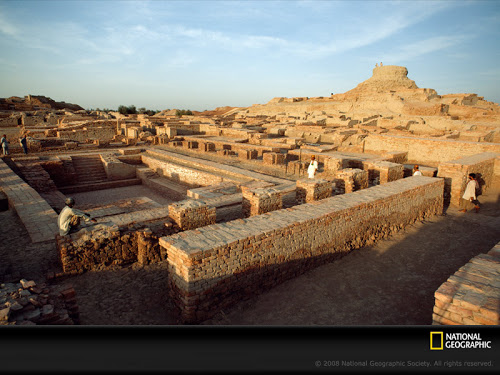
The “destruction of Indus Valley cities” was debated by scholars at one time. The latest theory is that the civilisation declined not because of attacks by foreigners but by natural catastrophes. The changing course of Sarasvati river and the resultant drought may be one of the causes. Ramayana gives valuable information about Indus valley. It was ruled by the Gandharvas and Rama sent Bharata to conquer the cities. The description of the Indus cities by Valmiki matches very well with Harappa and Mohanjo Daro. Gargya says these words:
“There is a country of Gandharvas, rich in fruits and roots, situated on the banks of Sindhu river; that the country is extremely fertile. The Gandharvas, armed and skilful warriors , defend it. When you have conquered them and destroyed their magnificent CITADELS, take possession of their CITIES, which are WELL CONSTRUCTED , none other can achieve this; the country is extremely beautiful.(Uttara Kanda, chapter 100)
Rajavalia, Sri Lankan history book, puts Rama’s date as 1844 years before the Buddha. This means Rama lived in2500 BC which coincides with the Indus Valley Civilization. Since information given by Rajavalia and Valmiki coincides we may consider it authentic.
Mahabharata war took place after Ram’s time. Mahabharata also has lot of references to Indus Kingdom. Jayadratha was called Sindhuraja and Saindharva. He was the husband of Duryodhana’s sister Dushala. He was one of the eleven commanders of Kaurava army. He fought valiantly, but killed by Arjuna. Jayadratha’s father was Vridhakshetra. He ruled Indus valley area.

Legendary Lovers
Laila and Majnu, Anarkali and Salim, Romeo and Juliet, Antony and Cleopatra, Ambikapathy and Amaravathy, Shah Jahan and Mumtaj, Adhimanthi and Attnathi (Tamil), Kovalan and Madhavi, Radha and Krishna
We know a list of popular legendary lovers or couples. But Valmiki gives another list of ideal couples (Sundara Kanda ,chapter 24):
Sita told the Rakshasa women, “I will follow Rama
As Suvarchala follows the Sun (Surya)
Sachi follows Indra
Arundhati follows Vashista
Rohini follows Sachin (Moon)
Lopamudra follows Agastya
Sukanya follows Syavana
Savitri follows Satyavan
Shrimati follows Kapila
Madayanti follows Sandasa
Keshini follows Sagara
Damayanti follows Nishada (Nalan)
Swaha follows Agni”.
This stanza throws light on ancient Indian society. Women were very intelligent and well informed. The way Sita argued in Ramayana and Draupadi argued in Mahabharata showed that they were well educated. They believed in values such as chastity and husband is god like.

Diplomatic Immunity
In the modern world embassies are given special rights. The embassy building is considered part of that particular country. No one can enter it without the country’s permission. Diplomatic staff have immunity. Unless it is a serious criminal offence they can’t be detained, they can only be deported. This was applicable to messengers in the olden days. We have more information about the rules governing ambassadors in Mahabharata and Arthashastra. Krishna has acted like messenger several times. In the Ramayana, when Ravana passed death sentence on Hanuman, Vibhishana pointed out to him how an ambassador should be treated. After listening to him, Ravana changed his mind and commuted death sentence to the punishment of setting fire to his tail.
Vibhishana pointed out:
1.No envoy is put to death 2.Mutilation of the body, the whip, the stripes, shaving of the head, branding ,one or all of these can be inflicted on a messenger. 3.The virtuous do not give way to wrath 4. It is on those who sent him must be punished, not the messenger. Whether he be honest or not, the responsibility lies with them.
Big, Big Numbers
Some Tamils have been circulating big numbers as Tamil numbers. They are not. They are Sanskrit numbers. We have been reading about them from the beginning of Vedic literature. They are not found in Sangam Tamil literature, but in early Sanskrit literature. Commentators on Tamil work Paripatal refers to big numbers, but gives only Sanskrit words such as Sangam, Padmam, Samudram etc. Valmiki also speaks of big numbers Yuddha Kanda chapter 28:
“O King, a hundred thousand multiplied by a hundred is called a Koti
Hundred thousand such Kotis make one Shanku
A hundred thousand such shankus make one Maha Shanku
A hundred thousand such Maha Shankus make one Vrinda
A hundred thousand such Vrindas make one Maha Vrinda
A hundred thousand such Maha Vrindas make one Padma
A hundred thousand such Padmas make one Maha Padma
A hundred thousand such Maha Padmas make one Kharva
A hundred thousand such Kharvas make one Samudra
A hundred thousand such Samudras make one Ogna
A hundred thousand such Ognas make one Maha Ogna
When we read the number of monkeys that marched to Lanka, it may sound a big exaggeration. What Valmiki wanted to emphasize is that they knew huge numbers and huge army of monkeys took part in the war.
Earlier Vedic literature also speaks about huge numbers which is a proof for mathematical genius of Indians. Other cultures could speak only in 40s or multiple of 40s at the time.
Contd. ……………….. in Ramayana Wonders part 6
Please read other posts by Santanam Swaminathan : 1. Ram –the Best PR Man 2. தியாகராஜ சுவாமிகளுடன் 60 வினாடி பேட்டி 3.நாமும் அனுமார் ஆகலாம் 4.கம்பனுடன் 60 வினாடி பேட்டி 5.ராமாயண வினா-விடை (க்விஸ்) 5.Where is Rama Setu (Rama’s Bridge) ? 6.Did Sita Devi Die in Earth Quake? 7. Ramayana Wonders Part1 (8) . Ramayana Wonders Part2 :How many miles did Rama walk? (9) Ramayana Wonders Part 3: Rama and Sanskrit G’ramma’r 10) Part 4: Who can read all 300 Ramayanas?
Contact swami_48@yahoo.com
Posted by Tamil and Vedas on December 18, 2012
https://tamilandvedas.com/2012/12/18/indus-valley-cities-in-ramayana/
சிந்து சமவெளி & எகிப்தில் நரபலி
English Version of this article is posted yesterday: London Swaminathan, swami_48@yahoo.com
உலகில் நரபலி இல்லாத நாகரீகம் இல்லை, நரபலி இல்லாத மத நூல்கள் இல்லை. சிந்து சமவெளி நாகரீகத்திலும் எகிப்திலும் ஒரு நரபலிக் காட்சி ஒரே மாதிரி வருணிக்கப்படுவது வியப்பூட்டுகிறது. ராமாயணத்தில் ராம பிரான் தனது வாழ்க்கையை முடித்துக் கொள்வதற்காக சரயு நதியில் குதிக்கிறார். அவருடன் ஆயிரக் கணக்கான மக்களும் குதிக்கின்றனர். புண்ய ஆத்மாவுடன் போனால் சொர்க்கத்துக்கு நேரடி ‘டிக்கட்’ வாங்கியதற்குச் சமம். இதே போல எகிப்திலும் மன்னர் இறந்தவுடன் அவருடைய நெருங்கிய அதிகாரிகள், சேவகர்கள், ராணிகள் ஆகியோரும் உயிருடன் புதைக்கப்பட்டனர். ஆயினும் இப்படிப் புதைக்கப்பட்ட சடலங்களின் முகத்தில் அமைதியே தவழ்கிறது. ஆகையால் முதலில் போதை மருந்தோ விஷமோ ஏற்றியபின்னரே அவர்கள் புதைக்கப் பட்டார்கள்.
வேதத்தில், பைபிளில், யூத மத நூல்களில் உயிர்ப்பலி குறிப்புகள் உள்ளன. பஹ்ரைன் நாட்டில் உலக மஹா இடுகாடு (கல்லறை) இருக்கிறது. அங்குள்ள பல்லாயிரக் கணக்கான சடலங்களில் ஏராளமான குழந்தைகள் சடலங்கள் இருப்பது பலருடைய புருவங்களை வியப்பால் உயர்த்துகிறது. இது மாபெரும் குழந்தை பலியோ என்று!
இப்போதெல்லாம் மாயா நாகரீகம் பற்றி எழுதுவோருக்கு நரபலியைக் குறிப்பிடுவது ஒரு ‘பாஷன்’ ஆகிவிட்டது. அதைவிட மோசமான கொடுமை எல்லாம் மறைக்கப்படுகிறது.
சிந்து சமவெளி முத்திரைகள்
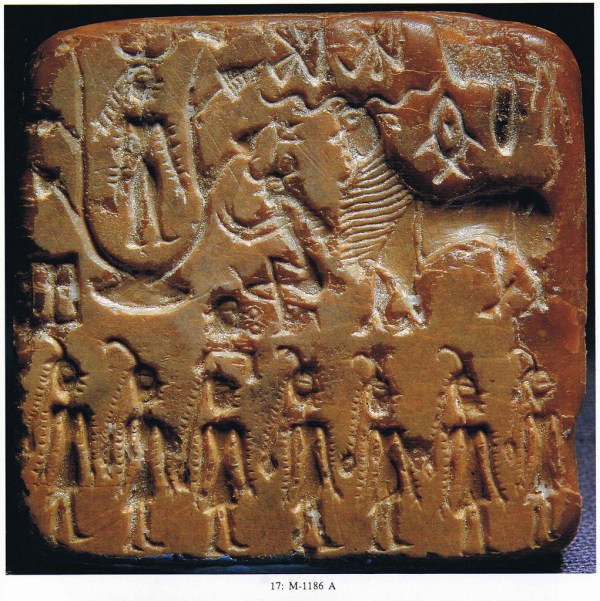
சிந்து சமவெளியில் ஒருமுத்திரையில் ஒரு ஆள் ஒரு தெய்வத்தின் முன்னால் மண்டிபோட்டு உடகார்ந்திருக்கிறார். அவர் பக்கத்தில் பூதாகரமான ஒரு ஆடு நிற்கிறது. அதன் முகம் கிட்டத்தட்ட ஒரு மனித முகம் போல இருக்கிறது. அவருக்குப் பக்கத்தில் ஒரு ஸ்டூல் இருக்கிறது. அதன் மேல் ஒரு மனித தலை இருக்கிறது. அவருடைய தலை மயிர் இரட்டைக் கொண்டையாக முடியப் பட்டிருக்கிறது (டபுள் பன்). இதே போலத்தான் மத்திய கிழக்கு நரபலி சிலைகளிலும் கொண்டை இருக்கும். இது மொஹஞ்சதாரோ முத்திரை.

காளிபங்கன் என்ற இடத்தில் இன்னும் ஒரு முத்திரை கிடைத்தது. அதில் விநோதமான புலி உருவ தெய்வத்துக்கு முன்னால் இரண்டு வீரர்கள் ஈட்டிச் சண்டை போடுகின்றனர். ஒருவர் உடலை மற்றொருவர் ஈட்டி துளைக்கிறது. இதே காட்சி எகிப்தில் ஒரு தந்த சிற்பத்தில் இருக்கிறது அது டஜேர் (Pharoah Djer) என்ற மன்னனுடையது.
சுமேரியாவில் ஜில்காமேஷ் (2700 BC) காலத்தில் இருந்து கல்லறையில் அதிகாரிகளும் புதைக்கப் பட்டனர்.
இந்தியாவில் பழங்காலத்தில் சதி என்னும் உடன் கட்டை ஏறும் வழக்கம் இருந்தது. கணவன் இறந்த பின்னர் அவனுடன் மனையும் எரிக்கப்பட்டாள். ஆனால் இதில் கட்டாயம் ஏதும் இல்லை. பாண்டுவின் மனைவி குந்தி, கணவன் இறந்த பின்னரும் பஞ்ச பாண்டவர்களைப் போற்றி வளர்த்தாள். புறநானூற்றில் ஒரு பாடல் வருகிறது. பாண்டிய மன்னன் பூதப் பாண்டியன் இறந்தபின்னர் அவன் மனைவி தீயில் பாய முனைகிறாள். மந்திரிமார்கள் எவ்வளவோ தடுத்தும் அவள் தீயில் பாய்ந்து உயிர் நீத்ததைப் பார்க்கிறோம்.
மஹா பரதத்தில் கள பலி
மகாபாரதப் போர் துவங்குவதற்கு முன்னால் அர்ஜுனன்–உலூபி மகன் அறவான் களபலி கொடுக்கிறான். அவனது தலை இன்றும் வட தமிழ் நாட்டில் பல கோவில்களில் வழிபடப்படுகிறது. ராஜஸ்தான், நேபாளம், தென் கிழக்கு ஆசிய நாடுகளிலும் அவன் போற்றி வழிபடப் படுகிறான்.


தமிழ் நாட்டில் நவகண்டம்
போருக்கு முன்னால் வீரர்கள் காளியின் சிலைக்கு முன்னால் தலையை அறுத்து நவகண்டம் கொடுப்பது தமிழ் நாட்டிலும் கர்நாடகத்திலும் நடந்தது. மக்களுக்கு தியாக உணர்வையும் தேசபக்த வீர உணர்வையும் ஏற்படுத்த இப்படிக் கள பலி கொடுத்தனர். உடலில் ஒன்பது இடங்களில் கத்தியால் வெட்டி உயிர் கொடுக்கும் நவகண்ட வீரர்களை மக்கள் சிலைவைத்து வழிபட்டனர். தமிழ் நாட்டில் பல பகுதிகளிலும் இப்படிப்பட்ட நவகண்ட சிலைகள் உள்ளன.
தொல்காப்பியம், மணிமேகலை, கலிங்கத்துப் பரணி ஆகிய நூல்களில் இந்தப் பழக்கம் வருணிக்கப்படுகிறது. ராமாயண காலத்தில் இலங்கையில் இந்த வழக்கம் இருந்ததை ராவணன் புதல்வர்களான மேகநாதன், இந்திரஜித் ஆகீயோர் பயங்கரமான நிகும்பிளா குகையில் நடத்திய சடங்குகள் காட்டுகின்றன.
இதுதவிர பலவிதமான உயிர்த் தியாகங்கள் இலக்கியத்திலும் வரலாற்றிலும் காணக் கிடக்கின்றன. முஸ்லீம் படையெடுப்பு, வெள்ளைக்காரர் படை எடுப்பு காலத்தில் அவர்களை அச்சுறுத்தவும் மக்களை வீறு கொண்டு எழச்செய்யவும் கோபுரத்திலிருந்து குதித்து உயிர் நீத்தனர். அலாவுதீன் கில்ஜியின் கையில் சிக்கி காமவெறிக்கு ஆளாக விரும்பாத ரஜபுதனப் பேரழகி சித்தூர் ராணி பத்மினி நூற்றுக் கணக்கான அழகிகளுடன் தீப்பாய்ந்தாள்.
குருகோவிந்த சிம்மன்
முஸ்லீம் படை எடுப்பாளர்களின் கொடுமையிலிருந்து சீக்கியர்களைக் காப்பாற்ற குருகோவிந்த சிம்மன் ஒரு தந்திரம் செய்தார். காளி தேவி உயிர்ப் பலி கேட்கிறாள் எனக்கு ஐந்து வீரர்கள் தேவை என்று அறிவித்தார். கூட்டத்தில் இருந்து ஒவ்வொரு வீரராக முன்வந்தனர். ஒவ்வொரு வரையும் ‘பலி கொடுத்த’ ரத்தம் சிந்தும் கத்தியைக் காட்டிய பின்னரும் மேலும் மேலும் வீரர்கள் உயிர்ப் பலி தர முனவந்தனர். ஆனால் அவர் வெட்டியது மனிதனை அல்ல. மிருகங்களை வெட்டி அதன் ரத்தத்தையே காட்டினார். உயிர்ப் பலி தர முன்வந்த ஐவரையும் சீக்கிய குருமார்களாக ஆக்கினார். பாரதியார் குருகோவிந்தர் என்ற தலைப்பில் பாடிய அருமையான கவிதை இந்த ‘உயிர்ப் பலி காட்சியை’ வருணிக்கிறது.
என்னுடைய பிற கட்டுரைகள்: Read my other posts on Indus and Egypt:
1.The Sugarcane Mystery: Indus Valley and the Ikshvaku Dynasty
2.Ghosts in Indus Seals and Indian Literature
3.Flags: Indus Valley- Egypt Similarity
4.Bull Fighting: Indus Valley to Spain via Tamil Nadu
5.Tiger Goddess of Indus Valley: Aryan or Dravidian?
6.Indra on Elephant Vahana in Indus Valley
7.Vishnu Seal in Indus Valley Civilization
8.Indus Script Deciphered
9.Tamil articles: சிந்து சமவெளியில் பேய் முத்திரை
10.சிந்து சமவெளியில் ஒரு புலிப் பெண்
11.கொடிகள்: சிந்து சமவெளி- எகிப்து இடையே அதிசய ஒற்றுமை
Posted by Tamil and Vedas on November 1, 2012
https://tamilandvedas.com/2012/11/01/%e0%ae%9a%e0%ae%bf%e0%ae%a8%e0%af%8d%e0%ae%a4%e0%af%81-%e0%ae%9a%e0%ae%ae%e0%ae%b5%e0%af%86%e0%ae%b3%e0%ae%bf-%e0%ae%8e%e0%ae%95%e0%ae%bf%e0%ae%aa%e0%af%8d%e0%ae%a4%e0%ae%bf%e0%ae%b2%e0%af%8d/
Human Sacrifice in Indus Valley and Egypt
 Picture shows a man’s head on the stool by the side of a kneeling person.
Human sacrifice was practised by various cultures at various levels. We have references to sacrifice of human beings in the Vedas and Tamil literature and sculptures. In fact there is no religious book which has not got a reference to it. There is no civilization where it was not practised. Historians only talk about Mayans nowadays. But it was practised on a large scale in the Middle East. We have unusually, disproportionately large number of children graves in Bahrain. It was practised in the early dynasties of Egypt. When the pharaoh died, lot of his servants, officials, queens were buried with him. They were administered with quick acting poison or a tranquilizing drug. They all did in an orderly manner. Bible and Jewish literature refers to it a number of places.
It is also known from Sumer, where the death pits of ur and kish contained rich burials of royal or sacred personages attended by dozens of retainers, guards and courtiers. Even during the death of Gilgamesh, his intimates were sacrificed around 2700 BC.
In some places, like Mayans, it was done ritually. Hindu Heroes sacrificed themselves to infuse heroism and patriotism before wars. They cut their heads by their own hands. We have sculptures depicting this scene. Hindu ladies threw themselves in husband’s pyre (called Sati) even when others stopped them. Sangam Tamil literature has a beautiful verse in Purananauru sung by the wife of Pandyan King. Bhutapandyan Devi simply ignored the requests of all the ministers and threw herself in the fire. But it was not compulsory. Even when the Pandava king Pandu died, his wife Kunti did not die by Sati. When Rama went in to the Sarayu River, thousands of his followers followed him into the river, says Ramayana. But we can see a clear dividing line between voluntary sacrifice and forced human sacrifice.
In Sri Lanka, Ravana’s sons Meghanada and Indrajit did human sacrifice in the cave of Nikhumbila according to Ramayana.

Picture shows Kalibhangan Spear Fight.
Same scene in Egypt and Indus
An ivory label from Djer’s reign has two figures facing each other. One seems to be plunging a knife into the other’s breast.;he holds ready a vessel, of a typically elegant first dynasty form, in which presumably, he will catch his victims blood. It seems certain that what is shown here is a rite of human sacrifice (page 121, Egypt’s Making by Michael Rice).
Indus valley has two or three human sacrifice scenes. On a seal we see two warriors piercing each other’s body in front of a god, similar to scenes in Egypt. A cylinder seal from Kalibhangan shows two soldiers spear each other. They have their hair tied into double bun
In another seal we have a man bowing before a goddess with a big animal. In the fig deity seal of Mohanjo- daro (M1186) a human head was placed on the altar beneath the fig tree. The hair on this head is bound at the back into a double bun. This suggests that the human head on the fig deity seal belonged to a warrior.


Pictures of Navakandam from Tamil Nadu and Karnataka
Human Sacrifice in Mahabharata
Another type of human sacrifice is offering one’s life for the success in a war. This is first seen in Mahabharata and then in Tamil literature. Rajasthani flk literature also has got such tales. This is a self motivated sacrifice. No one puts anyone to death. Aravan also known as Irawan, son of Arjuna and Naga princess Ulupi offers his head for the success of Pandavas. This tradition is well known in South East Asia and Northern parts of Tamil Nadu. A lot of temples have Aravan’s head. In Rajathan the same story is told about Khatusyamji, also known as Barbarika (Belar Sen). In Nepal, he is known as Yalamabar. So we can conclude sacrificing one’s head for the success in war is as old as Mahabharata.
Navakandam (Nine Cuts) In Tamil Nadu
Navakandam means Nine Cuts. A heroic soldier ritually cuts himself in nine places and dies in front of Goddess Durga also known as Kotravai just before a war. He does it for the welfare and success of the king and kingdom. This was a great patriotic act. The people who have sacrificed their lives for sake of the country are honoured by the Tamils. They install statues for them and do Puja. We have got beautiful sculptures depicting this heroic deed.
Jayamkondar, author of Kalingatuparani, wrote songs about this practice of Navakandam in 9th century AD. Oldest Tamil book Tolkappiam and Manimekalai, one of the five epics, also mention it. Maravars of Tamilnadu and Nayars of Kerala practised this ritual.
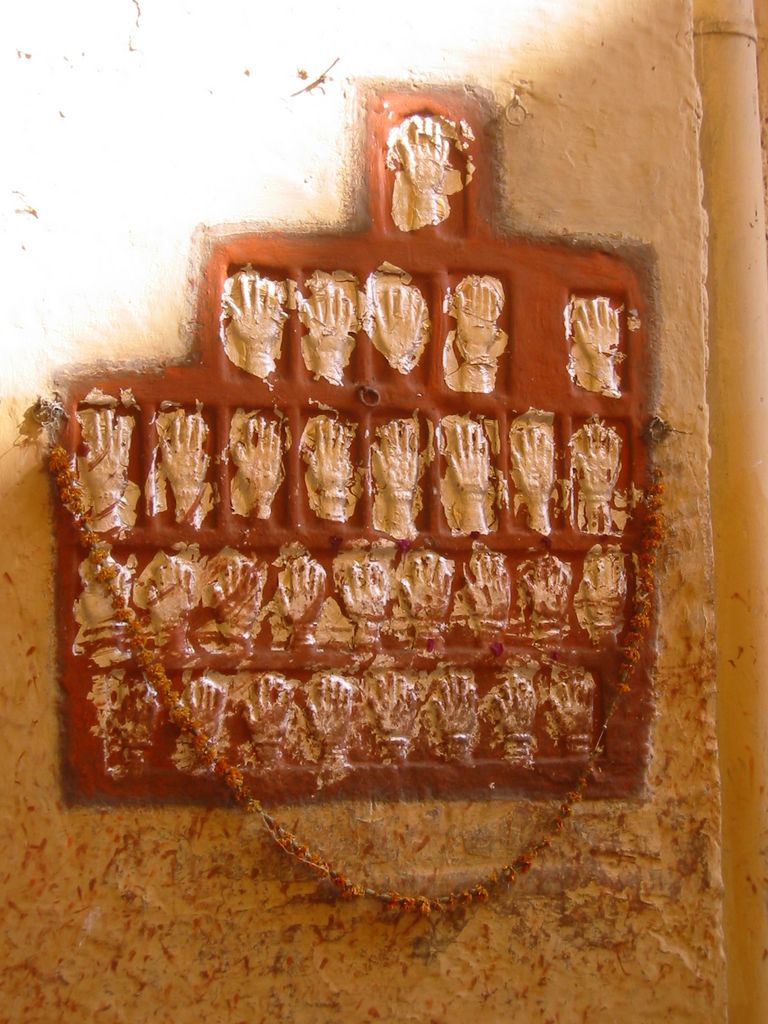

Pictures of Hand Prints by women who committed Sati in Jodhpur Rajasthan & a Navakandam
Following are the places where Navakandam happened:
Thanjavur—for the success of a Choza king
Mahabalipuram fifth ratha of Kali—
Madurai Madapuram mariammn temple—Siththira sarithan & Vallabhan
Thenkarai village— Near Sholavandan
Mallal, Ilaiyangkudi—Prayer to Kali for the welfare of the king
Sathipattu near Panrutti—for ruler Athirajamangalyapuram
We have statues of the heroes in Navakandam pose.
Kundrakudi temple wall- For Durga
Mannarkottai—for the welfare of his master.
Tirupparankundram—to save the temple from invading army jumped from the tower. Strictly speaking it was not Navakandam, but a sort of ritual sacrifice.
Human Sacrifice in Sikhism
Different types of suicides or sacrifices are known through historical documents. When the Sikh leader Guru Gobinda Simhan asked for five volunteers who can sacrifice their lives against foreign invaders, five people came forward. Though he did not kill them he pretended as if he had already sacrificed them by showing blood stained sword. All the five were declared as Sikh leaders. This shows that sacrifice for the country or religion existed in all parts of India. He asked them to come forward for sacrificed at the altar of Goddess. Tamil poet Bharathiyar has sung beautifylly about this under Guru Govindar.
Chittoor Rani Padmini entered fire with hundreds of her women colleagues to avoid molestation by foreign invaders.
Read my other posts on Indus and Egypt:
1.The Sugarcane Mystery: Indus Valley and the Ikshvaku Dynasty
2.Ghosts in Indus Seals and Indian Literature
3.Flags: Indus Valley- Egypt Similarity
4.Bull Fighting: Indus Valley to Spain via Tamil Nadu
5.Tiger Goddess of Indus Valley: Aryan or Dravidian?
6.Indra on Elephant Vahana in Indus Valley
7.Vishnu Seal in Indus Valley Civilization
8.Indus Script Deciphered
9.Tamil articles: சிந்து சமவெளியில் பேய் முத்திரை
10.சிந்து சமவெளியில் ஒரு புலிப் பெண்
11.கொடிகள்: சிந்து சமவெளி- எகிப்து இடையே அதிசய ஒற்றுமை

Posted by Tamil and Vedas on October 31, 2012
https://tamilandvedas.com/2012/10/31/human-sacrifice-in-indus-valley-and-egypt/
Flags: Indus Valley-Egypt similarity
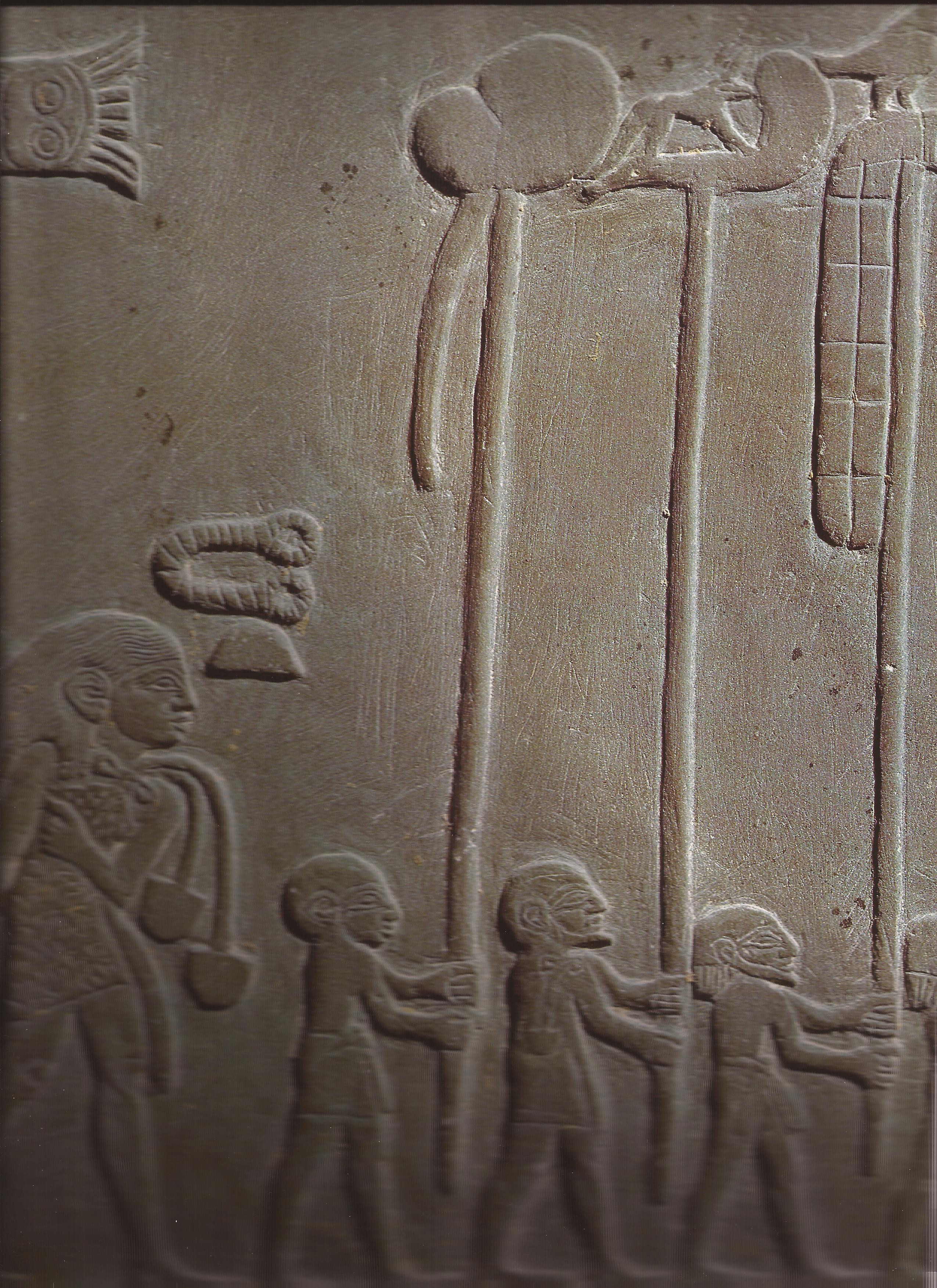
Picture shows Egyptian standards from Narmer palette
( Tamil version of this article is already posted in the blogs: swami )
Carrying flags and standards in a king’s procession or God’s (statue) procession is practised even today in India. In Tamil Nadu, the emblems of Shiva or Vishnu are taken in the procession during the annual temple festivals. We are fortunate to have one seal or tablet showing a procession that went through an Indus Valley city thousands of years ago. Egypt has provided us still an older picture of a procession.
Narmer (Nara Meru also known as Menes/Manu) ruled Egypt in the Pre Dynastic period, 5000 years before our time. His palette shows four people carrying standards. The first two carry long poles with bird figures on the top. Next person carried a pole with the wolf God (Wepwawet) and the last one carried a bundle or a cloth. The king is walking behind the sandal bearers.
Indus valley seal of a procession is not complete. We could see only three people carrying three different things. The first one carried a cloth or a festoon like thing hanging from the top of the pole. This is similar to the first two poles of Egypt. The middle one carried a calf (Heifer). This is very clear. Israelites did this till Moses revolted against it. People who have watched films like Ten Commandments may remember the scene of breaking such golden calf statues.
The last person in the Indus procession carried a cult object. Many scholars have identified it with the vessels for extracting Soma Juice. Rig Veda has hundreds of hymns in praise of Soma. A whole Mandala is devoted to Soma Rasa. So it may be something to do with the Soamrasa. A lot of seals with the one horned animas have this symbol. Others think this is a cage with a live bird in it. In Egypt, the first two poles have bird figures. Whatever it may be, there is amazing similarity between Indus Valley and Egyptian standards.

If the cult object is Soma filter or extractor then it must be a Vedic civilization. But nothing is proved beyond doubt. I have made it amply clear in my earlier posts that the Indus civilization was influenced by Middle East and other neighbouring civilizations if we accept the current chronology. A god surrounded by many animals, one hero fighting two animals, the circular stone structures, the snake queen and many others have similarities with older cultures including Minoan civilization.
Please read my other articles on Hindu-Egypt links, Indus Valley seals, Hindu and Tamil flags. Out of my 300 plus articles, there are more than ten posts on Indus Valley and Egypt.
Contact swami_48@yahoo.com
Posted by Tamil and Vedas on October 15, 2012
https://tamilandvedas.com/2012/10/15/flags-indus-valley-egypt-similarity/
கொடி ஊர்வலம்: சிந்து சமவெளி எகிப்து அதிசய ஒற்றுமை!
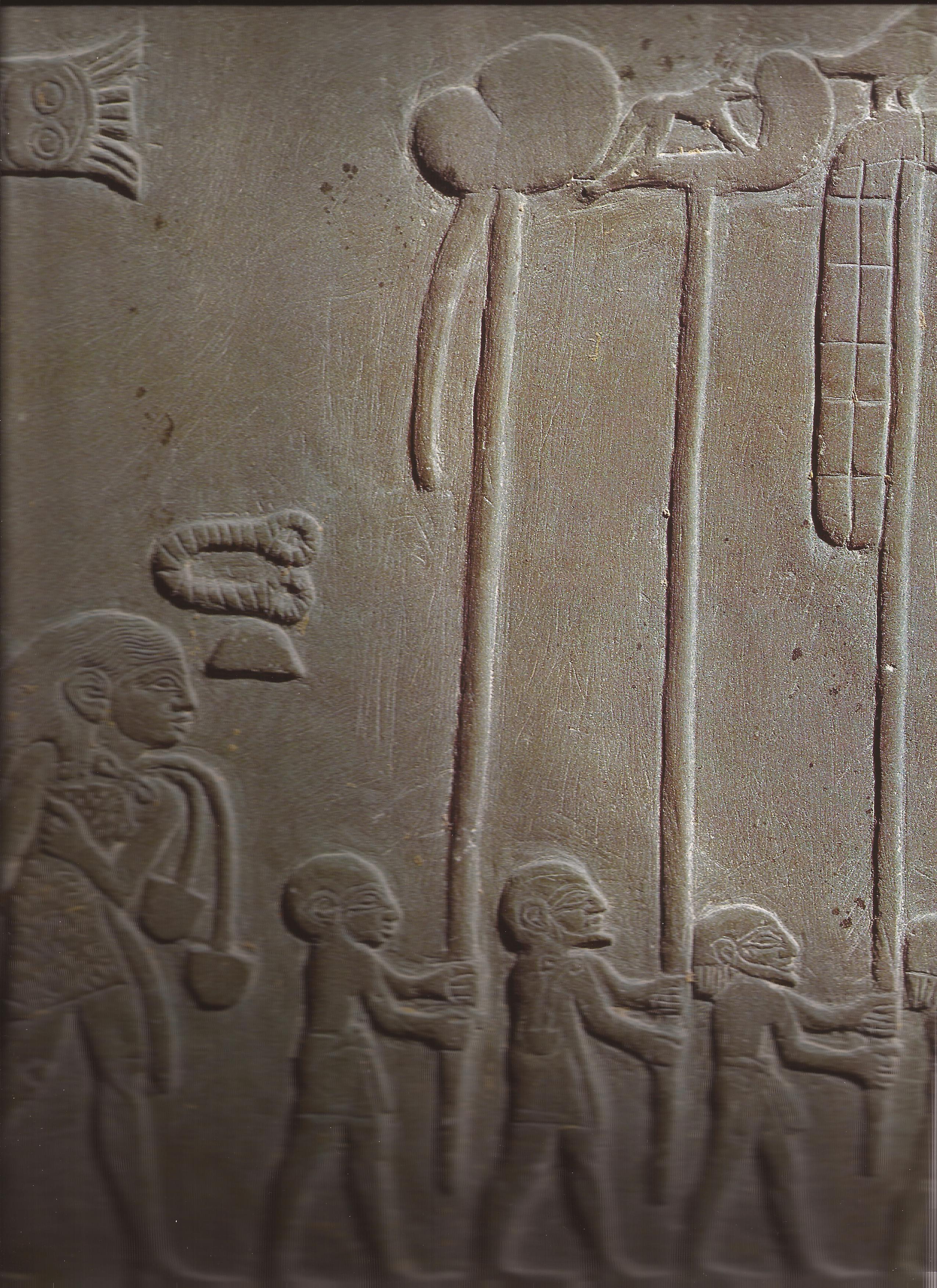
Picture shows Egyptian Standards
(English version of this article is also available: London swaminathan)
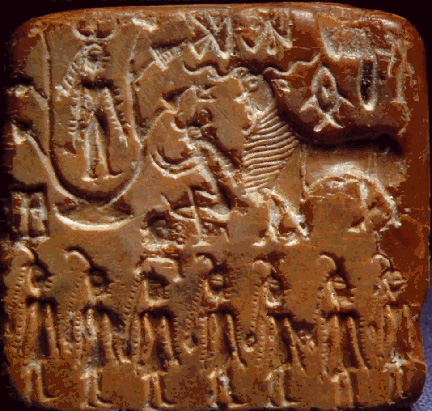
சிந்து சமவெளி முத்திரை ஒன்றில் ஒரு ஊர்வலக் காட்சி பதிவு செய்யப்பட்டுள்ளது. இந்த ஊர்வலத்தில் என்னதென்று இனம் காணப்படாத ஒரு பொருளையும், ஒரு மாடு அல்லது கன்றின் உருவ பொம்மையையும், மூன்றாவதாக ஒரு துணியையும் தூக்கிச் செல்கின்றனர். இதே போல எகிப்திலும் ஒரு ஊர்வலக் காட்சி பதிவு செய்யப்பட்டுள்ளது. இரண்டுக்கும் சில அதிசய ஒற்றுமைகள் இருக்கின்றன.
சிந்து சமவெளியில் தூக்கிச் செல்லும் முதல் பொருள் பற்றிப் பல கருத்துக்கள் இருக்கின்றன. சிலர் இதை சோமரசம் பிழியும் வடிகட்டிப் பாத்திரம் என்று நினைக்கின்றனர். இன்னும் சிலர் இந்த முதல் பொருள் ஒரு பறவைக் கூண்டு என்றும் அதற்குள் உயிருள்ள பறவையை எடுத்துச் சென்றனர் என்றும் கருதுகின்றனர். நடுவிலுள்ள கன்றுக் குட்டி பற்றி யாருக்கும் சந்தேகம் இல்லை. படம் தெளிவாகவே இருக்கிறது.
எகிப்தில் நரமேர் (நர மேரு) என்பவருடைய சின்னத்தில் இப்படி ஒரு காட்சி இருக்கிறது. அதில் நான்கு பேர் உயர்ந்த கொடிக் கம்பில் நான்கு உருவங்களைத் தூக்கிச் செல்கின்றனர். முதல் இருவர் இரண்டு பறவைகள் உடைய கம்பத்தைத் தூக்கிக் கொண்டிருக்கின்றனர். அதிலிருந்து தோரணம் போல ஏதோ தொங்குகிறது. மூன்றாமவர் ஓநாய் வடிவ தெய்வத்தைத் தூக்கிச் செல்கிறார். நாலாமவர் ஏதோ ஒரு மூட்டை மாதிரி ஒன்றத் தூக்கிச் செல்கிறார்.
நரமேருவின் மற்றொரு பெயர் மனு.அவர் 5000 ஆண்டுகளுக்கு முன் எகிப்தை ஆண்ட முதல் மன்னர். எகிப்திய ஒநாய் தெய்வத்தின் பெயர் வெபாவெட்.
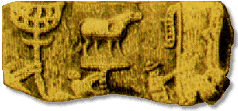
Picture shows Indus Valley procession
முதல் இரண்டு கம்பங்களில் தொங்கும் தோரணம் அல்லது துணி போலவே சிந்துவெளி ஊர்வலத்திலும் உள்ளது. ஆனால் சிந்துவெளி ஊர்வலக் காட்சி முழுதாக இல்லை. ஆக முதல் கொடி எகிப்தைப் போலவே இருந்திருக்கலாம். இதை அடுத்து வருபவர் கன்றுக்குட்டியைத் தூக்கிவருவதை எகிப்தின் ஒநாயுடன் ஒப்பிடலாம். அடுத்ததாக வரும் சிந்துவெளி ஆள் ஒரு பொருளைத் தூக்கிவருவதை சிலர் சோம பானம் பிழியும் கருவி என்றும் மற்றும் சிலர் உயிருடன் பறவை உள்ள கூண்டு என்றும் கருதுகின்றனர்.
ரிக்வேதத்தில் ஒரு மண்டலம் முழுதும் சோமப்பானத்தைப் பற்றிய பாடல்கள் இருப்பதை அறிஞர் உலகம் அறியும். சரஸ்வதி நதியின் தடயங்கள் கண்டுபிடிப்பு, சோமபானப் பாத்திரம் ஆகியவை வேத காலத்தை நோக்கி சிந்துவெளி நாகரீகத்தைத் தள்ளுகிறது. ஒரு ஆள் தூக்கி வரும் இந்த சோமபான பாத்திரம், ஒரற்றைக்கொம்பு மிருகம் காணப்படும் நூற்றுக் கணக்கான முத்திரைகளில் காணப்படுகிறது. இதை ஊதுபத்தி அல்லது சாம்பிராணி ஸ்டாண்டாக இருக்கலாம் என்று முன்னர் கருதி வந்தனர்.
சிந்து சமவெளி மற்றும் எகிப்து-இந்திய கலாசார உறவு பற்றிய ஏனைய பத்து கட்டுரைகளையும் இதே “பிளாக்” கில் படிக்கலாம்.
Contact for further information: swami_48@yahoo.com
Posted by Tamil and Vedas on October 14, 2012
https://tamilandvedas.com/2012/10/14/%e0%ae%95%e0%af%8a%e0%ae%9f%e0%ae%bf-%e0%ae%8a%e0%ae%b0%e0%af%8d%e0%ae%b5%e0%ae%b2%e0%ae%ae%e0%af%8d-%e0%ae%9a%e0%ae%bf%e0%ae%a8%e0%af%8d%e0%ae%a4%e0%af%81-%e0%ae%9a%e0%ae%ae%e0%ae%b5%e0%af%86/
 Tamil and Vedas
You must be logged in to post a comment.