Seven Pillars of the World (Post No.2885)


myth-1-21


Article written by London swaminathan


Date: 10 June 2016


Post No. 2885


Time uploaded in London :– 15-16


( Thanks for the Pictures)


DON’T REBLOG IT AT LEAST FOR A WEEK!  DON’T USE THE PICTURES; THEY ARE COPYRIGHTED BY SOMEONE.


(for old articles go to tamilandvedas.com OR swamiindology.blogspot.com

The earth is supported by seven types of people or virtues; without their support earth won’t be in its orbit!


The seven pillars are:

1.Cow

2.Brahmins (those who recite Vedas)

3.Vedas

  1. Chaste women

5.Those who speak truth

6.Philanthropists

7.Those who are not greedy


Gobiirvipraisca vedaisca satiibih satyavadibih

Alubdhaidaanasiilaisca saptabirdhaaryate mahii


Without cow’s milk it is difficult to survive. No other animal milk can replace cow’s milk. This is the closest to mother’s milk. Brahmins mean the learned people in modern interpreting. Vedas are eternal truths that floats in the air and it is heard by the saints. Other four don’t need any explanation. We knew how greedy people caused world wars. Dishonesty and characterlessness will result in utter chaos.

atlas

Tamil Purananuru


Ancient Sangam Tamil literature has also a similar verse:

A Pandya King by name Ilamperuvazuthi says: The world exists because of selfless people. They wont take it alone even if they get Amrita/ ambrosia from Lord Indra. They will do anything that brings fame; they would not do any bad things even if they will get the entire earth; they never sit idle. They fear to do what good people fear to do. They are great because they are not selfish; they always work for others welfare. The world is in its place because of them – Puram verse 182.


Why doesn’t the earth fall down?


Ancient lore

If we ask the question Why doesn’t the earth fall down to a science student, s/he will say that it is gravity that makes the earth to stand in its orbit.


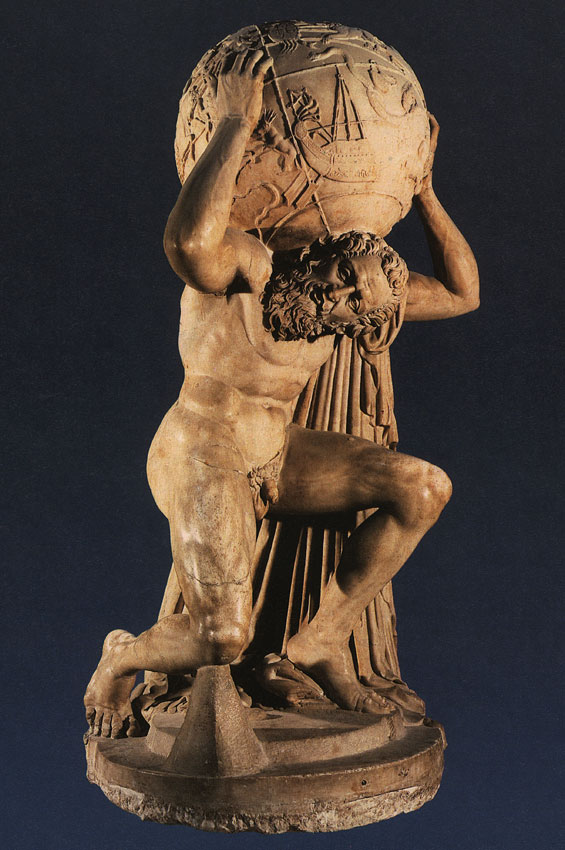
Had we asked the ancient Greeks, they would have said that it was Atlas who bears the world. Atlas was the brother of Prometheus, a king of the island nation of Atlantis. When the army of Titans was defeated in a battle, Atlas was condemned to carry the heaven and Earth on his shoulder.


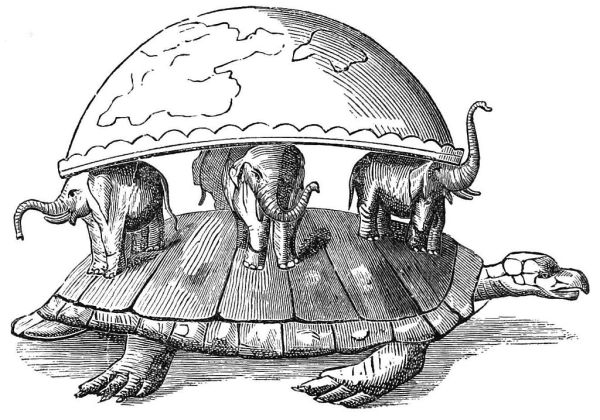
In ancient Chinese cosmology we find mention of the primordial Ao, a sea turtle of cosmic dimensions; it carries the world on its back. Mayans believed that there were four pillar trees on four corners of the earth and they were made up of Ceiba trees.


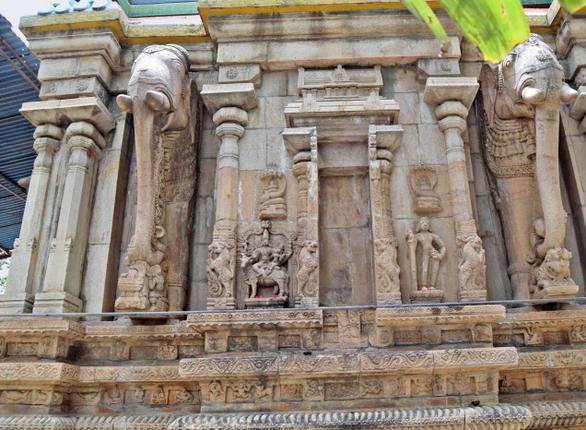
Hindus thought that the earth is on the head of a Big snake called Adi Sesha. They also believed that eight elephants known as Asta Dig Gajas in the eight directions support the earth.

ashta dik gaja

We may not believe all the above mythological explanations, but all of us will agree that virtues and virtuous people maintain order on earth. If we are led by the selfish, dishonest and greedy leaders we will face another world war.

–subham–


Efficacy of Vishnu Sahasranamam (Post No.2868)

vishnu sahas

Article written by S.NAGARAJAN


Date: 5 June 2016


Post No. 2868


Time uploaded in London :–  6-32 AM


( Thanks for the Pictures)


DON’T REBLOG IT AT LEAST FOR A WEEK!  DON’T USE THE PICTURES; THEY ARE COPYRIGHTED BY SOMEONE.


(for old articles go to tamilandvedas.com OR swamiindology.blogspot.com)


Contact swami_48@yahoo.com


  1. Nagarajan

Sri_Vishnu_Sahas_4f3cd95c2dbd5

Sri Kulkarni, an ardent devotee of Vishnu is collecting all information regarding Vishnusahasramam.


He contacted me for any useful information


For the benefit of all, LIFCO, Chennai -17, have published Vishnusahasramam along with  meaning. The efficacy of Vishnusahasramam has been given in detail in this TAMIL book.

(The price is also very reasonable and all can buy this easily)


I am giving below one portion of the above details for the benefit of all.


Education : to gain knowledge

Vedo veda-vidha-vyango vedango veda-vit-kavih ||  Sloka 14


To cure stomach ache

Bhrajishnu rbhojanam bhokta sahishnu rajaga-dadijah |   Sloka 16


For enthusiasm

Ateendriyo maha-mayo mahotsaho maha-balah ||   Sloka 18


To get shukshma buddhi

Maha-buddhir-maha-veeryo maha-shaktir-maha-dyuthih |   Sloka 19


Eys sight improvement

Sahasra-moordha vishvatma saha-srakshah saha-srapat ||    Sloka 24


To gain great respect

Satkarta satkruta-sadhuh jahnur-narayano narah ||  Sloka 26


To fufill one’s desires

Siddhar-thah siddha-sankalpah siddhida siddhi-sadhanah ||  Sloka 27


For Marriage

Kamaha-kama-krutkantah kamah kama-pradah prabhuh ||  Sloka 32


Great job

Vyava-sayo vyava-sthanah sams-thanah sthanado dhruvah | Sloka 42


To get over Fear of Deatth

Vaikunthah purushah pranah pranadah pranavah pruthuh | Sloka 44

Sri_Vishnu_Sahas_4c53f65c0d0a3

To gain Wealth

Artho-nartho maha-kosho maha-bhogo maha-dhanah || Sloka 46


To have good mind (Buddhi)

Sarva-darshee nivru-tatma sarva-gno gnana muttamam ||  Sloka 48


To have Ananda (pleasure)

Anando nandano nandah satya-dharma trivi-kramah ||  Sloka 56


For Kshemam

Anivarthee nivru-ttatma samkshepta kshema-krutchhivah | Sloka 64


To get away from all Shoka (pain, difficulties)

Bhooshayo bhooshano bhooti vishoka shoka-nashanah ||  Sloka 67


To cure diseases

Poornah poorayita punyah punya-keerti rana-mayah ||  Sloka 73


For Liberation (Moksha)

Sadgati satkruti-satta sadbhooti satpa-rayanah | Sloka 75


Chhatru jayam (Victory over enemies)

Sulabha suvratah siddhah shatruji chhatru-tapanah | Sloka 88


To distance oneself from all accidents

Amoorti ranagho chintyo bhaya-krudbhaya-nashanah ||  Sloka 89


For Mangalam

Svastida svasti-krut svasti svastibhuk svasti-dakshinah ||   Sloka 96


To avoid bad dreams

Uttarano dushkrutiha punyo dussvapna nashanah | Sloka 99


For Papa nasam

Devakee nandana srashta kshiteeshah papa-nashanah ||  Sloka 106


Our sastras/ scriptures like Siddhisaram  karma vibhaga samuchchayam etc have prescribed Vishnusahasranamam for  pariharams ( to remove various illness/thoshas)


We will see some of them in my next article.


****************

What is Rare? Views of Three Great Poets! (Post No.2784)

evolution

Written by london swaminathan


Date: 5 May 2016


Post No. 2784


Time uploaded in London :– 13-54


( Thanks for the Pictures)


DON’T REBLOG IT AT LEAST FOR A WEEK!  DON’T USE THE PICTURES; THEY ARE COPYRIGHTED BY SOMEONE.


(for old articles go to tamilandvedas.com OR swamiindology.blogspot.com)


What is rare? It is very interesting to see how Adi Kavi Valmiki, great philosopher Adi Shankara and Tamil poetess Avvaiyar answered this question.

Valmiki said in his Ramayana,

Speaker of unpleasant truth and listener of unpleasant truth are rare.

“sulabaa purushaa raajan satatam priyavaadinah

Apriyasya ca pathyasya vaktaa srotaa ca durlabhah

–Valmiki Ramayana, Aranya Kanda, 37-2

It is easy to find the speakers of pleasant things. But pathyasya vaktaa (speaker of unpleasant truth) and pathyasya srotaa 9listener of unpleasant truth are rare to find.


Easy death is also rare!


There is another Sanskrit saying that says easy death and life without misery are rare:-

“Anaayaasena maranam vinaa dainyena jiivanam”

Anaayaasena maranam = easy death

Vina dainyena jiivanam = life without misery

We see our friends and relatives suffer in the hospital for a long time before death. It has become very common nowadays to stop the life supplying machine at our will and pleasure. In the olden days all good souls died peacefully in their sleep. That is ‘anayesena maranam’.

rarerarerrarest

Following is from my old article:–


‘Jantunam Narajanma Durlabatha:’


Human Birth is difficult to obtain (21 October 2013)
wriiten by london swaminathan

Human birth is difficult to obtain is a famous saying from northern Himalayas to Southern Kanyakumari. It is in ancient Tamil and Sanskrit literature. The above quote is from Viveka Cudamani of Adi Shankara. Let us look at the full sloka:

“ For all beings a human birth is difficult to obtain, more so is a male body; rarer than that is Brahmnahood; rarer still is the attachment to the path of Vedic religion; higher than is erudition in the scriptures; discrimination between the Self and not-Self, Realization, Identity with Brahman—these come next in order. Mukti/liberation is not to be attained except through the well earned merits of a hundred crores of births (1000 million births!)”.

In the next sloka he says three things are rare:Human birth, the longing for liberation and protective care of a greatman (mahapurusha).
Tamil literature explains the same thing in a beautiful way. One of the five Tamil epics is Jeevaka Chintamani which gives the story of Udayana and Vasavadatta. The author Thiruththakka devar says human birth is rare. It is like one yoke floating in southern sea coming next to another yoke floating in northern sea and a pole is inserted into it. Human birth is rarer than this.

sheep_thumb1

Avvai answers Lord Skanda’s question
Another famous episode in Tamil is about the grand old lady of Tamil literature Avvaiyar meeting Lord Skanda. Skanda asked her several thought provoking questions just to enjoy her beautiful Tamil. He asked her what is bigger, sweeter, crueler and rarer. When she answered his question about rarer things in the world she says human birth is rarer. Let us look at the beautiful Tamil poem in full:

“ Rare is human birth, Vadivel (Skanda/Subramanya)! Rarer is birth as a male with perfect limbs and with full use of all the senses. Rarer still is attainment of knowledge and wisdom. Rarer than this is the tendency to give and serve; and rarest of all is a life dedicated to spiritual enlightenment, for when one reaches the end the heavens will open to welcome that person—the perfect of all human beings”.

I consider this as an echo of Adi Shankara’s three slokas 2, 3 and 4 of Viveka Cudamani. It is not uncommon to see the same thoughts in all saints of India whether they speak Tamil or Sanskrit. Great men think alike. We see the same thought in all the hymns of Thevaram,  Thiruvasagam and Divya Prabandham.


–subham–


‘Hitch your wagon to a star’ – Ralph Waldo Emerson (Post No 2771)

hitch-wagon-star

Compiled by london swaminathan


Date: 1 May 2016


Post No. 2771


Time uploaded in London :– 9-59 AM


( Thanks for the Pictures)


DON’T REBLOG IT AT LEAST FOR A WEEK!  DON’T USE THE PICTURES; THEY ARE COPYRIGHTED BY SOMEONE.


(for old articles go to tamilandvedas.com OR swamiindology.blogspot.com)


American essayist and poet Ralph Waldo Emerson (1803-1882) said in one of his essays:

“Now that is the wisdom of a man, in every instance of his labour, to hitch his wagon to a star, and see his chore done by the gods themselves. That is the way we are strong, by borrowing the might of the elements. The forces of steam, gravity, galvanism, light, magnets, wind, fire, serve us day by day and cost us nothing”.

It means always aspire to do great things. Do not set pessimistic goals. Set in the footsteps of great men and use their wisdom and experience.


HitchYourWagonToAStar-jpg


AIM HIGH: HINDU PHILOSOPHY

Aim high is one of the concepts or ideas that Hindu saints put forth before their disciples. First we found it in the great scripture Bhagavad Gita and then in a Sangam Tamil verse. Later Tamil poet Tiruvalluvar also repeated this.

Let a man lift himself by himself; let him not degrade himself, said Lord Krishna in the Bhagavad Gita (6-5)

Buddha also said the same in the Dhammapada: The Self is the Lord of the Self (verse 380)

Every one of us has the freedom to rise or fall and our future is in our own hands. Tamil poet Tiruvalluvar said: The stalk of a lotus blossom grows long enough to project the pretty flower out of water, so too, a man’s level of greatness is determined by his own will.


Rajaji, first Governor General of India, commenting on this said: Think of ever rising higher. Let it be your only thought. Even if your object be not attained, the thought itself will have raised you.”

Dr S M Diaz added: If a man constantly aspires, is he not elevated? The well-known expression of “hitching your wagon to the stars”, has, therefore some special meaning. You may not reach the stars. You may fall short of it. Even so, the effort involved in the process has certainly involved in the process has certainly served to elevate and enrich you, well above the ordinary run of human beings.


hitch star

I wrote the following in 2013:–

ZEAL
“One should not pursue goals that are easily achieved. One must develop an instinct for what one can just barely achieve through one’s greatest efforts.” —Albert Einstein.
All thought should be the thought of rising high though it fails; it is the nature of success. Your aspirations keep you on a higher plane (Tirukkural 596)

Though wounded with arrows, the elephant stands firm in his greatness; he who has spirit never loses heart when he fails (Tirukkural 597)

Let a man lift himself by himself; let him not degrade himself; for the self alone is the friend of the self and self alone is the enemy of the self. (Bhagavad Gita 6-5)
Purananuru verse 214 of Kopperum Chozan also advises everyone to Aim High. “A person who wanted to hunt an elephant will come with an elephant after a successful hunt. A person who wants to hunt quails may come even without a single bird. So aim high in life”.

Kopperum Chozan, the Choza king continues, “In the case of the superior persons who are inspired by higher desires if you admit that they experience the fruit of their deeds they may enjoy pleasures in the next world. If they do not enjoy them in the next world they will attain joys in the next re-birth; if even that is not admitted, it is an excellent thing to die after having planted one’s good name as high as the lofty Himalayas.” (Karma Theory)

(From my post : Albert Einstein and Thiruvalluvar; Post No. 749 dated 17th December 2013)


English Proverbs on ‘Aim High’:-


There are some interesting English proverbs echoing the same theme:-

He who aims at the moon may hit the top of a tree; he who aims at the top of a tree I unlikely to get off the ground.

Nothing crave, nothing have

Nothing seek, nothing find

Seek and ye shall find – Mathew 7:7

See mickle, and get something; seek little and get nothing (mickle = much)

He begins to die that quits his desires

There is always room at the top.

–subham–

Rama’s Vow and Arjuna’s Vow (Post No 2770)

arjuna, bali, indonesia

Compiled by london swaminathan


Date: 30 April 2016


Post No. 2770


Time uploaded in London :– 11-53 AM


( Thanks for the Pictures)


DON’T REBLOG IT AT LEAST FOR A WEEK!  DON’T USE THE PICTURES; THEY ARE COPYRIGHTED BY SOMEONE.


(for old articles go to tamilandvedas.com OR swamiindology.blogspot.com)


There are two beautiful sayings in Sanskrit about Arjuna and Rama, covering two Hindu epics Mahabharata and Ramayana.


Arjuna of Mahabharata is famous for his valour. He was a great archer. Since he was the best student among the royals, Drona, the teacher of Pandavas and Kauravas, taught him all the tricks of the trade. He has made two vows, never to beg to anyone to save his life and never to run away from a battle.

In Sanskrit:-

Arjunas pratiknjaa (Arjunas vow)

1)Na Dainyam
Never to be reduced to a pitiable state
2)Na palaayanam
Never run away from war
“Arjunasya pratikjne dve na dainyam na palaayanam”

 RAMA ARCH

Rama’s Vow

Rama stood for all the good virtues enumerated in the Hindu scriptures but yet he is more famous for his two vows:

He never shoots an arrow at his enemy for the second time; that means there was no need; he was so focussed and skilful that his first arrow would definitely hit the target. He had never missed it.

The second vow is he speaks only once about any issue; if he gives a word he would never go back. He had given words to Kaikeyi, Sita, Bharata, Guha, Sugreeva and Vibhisana. He had never gone back.

He promised Kaikeyi that he would abide by what Dasaratha ordered him to do i.e. 14 years stay in the forest.
He told Sita that he would not even think of any other woman; that is why there is a saying in Sanskrit ‘ Where is Rama, there is no Kama/desire.

He even rejected the golden Lanka. He handed it over to Vibhisana after the fall of Ravana; when his brother Lakshmana remarked that Sri Lanka was a golden land, Rama said to him, “mother and motherland are greater than the Heaven” (Janani Janama bhumisca Swargadapi gariyasi). He said that Guha was his fifth brother in the very first meeting. Rama was a prince and Guha was just a hunter!

In Sanskrit :-

Tad bruuhi vacanam Devi raaknjaa yadabikaankshitam
Karishyee pratiknjaate ca raamo dvirnaabhibhaasate

—from Valmiki Ramayana

The same is in Mahanatakam as well:–

Dvissaram naabhi sandhatte raamo dvirnaabhibhaasate
–Mahaanaatakam
Dvi saram = two arrows

Na Abhisandatte = never shoots

Dvi = two times

Na Abbhibhasate = never speaks

Let us keep these ideals before us and try to follow in the footsteps of Rama and Arjuna.


Read also my previous posts:

Five heroic qualities of Lord Rama; post no. 2006; posted on 20th July 2015

Lord Shri Rama- the world’s Best PR Man; posted on 17 November 2011

–subham–


Description of Mela and “loathsome” Hindu Sadhus by Murray (Post No.2718)


mela 1

Written by london swaminathan

Date: 12 April, 2016


Post No. 2718


Time uploaded in London :– 21-14


( Thanks for the Pictures  ) 


DON’T REBLOG IT AT LEAST FOR A WEEK!  DON’T USE THE PICTURES; THEY ARE COPYRIGHTED BY SOMEONE.


(for old articles go to tamilandvedas.com OR swamiindology.blogspot.com)


Read also

1.Prayag- the meeting place of Ganga and Jumna – posted on 10th April, 2016

2.To rule India by the heart — posted on 11th April, 2016


mela 2

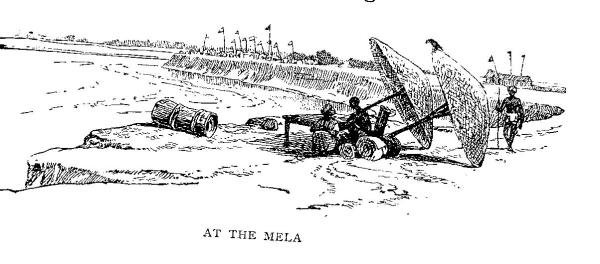
“From the ramparts of the Fort (in Prayag called Allahabad now), we looked down over the river, with its many strange craft, and the little temples on the brink, and saw immediately at our feet a very interesting and characteristic scene. The great “mela”, or religious festival to which Allahabad probably owes its origin, was just beginning. The cold blue waters of the Jumna wash the Fort walls, and after flowing for about half a mile fall into the muddy Ganges; this tongue of land, between the two sacred rivers, was covered with grass and palm huts and booths of manifold shape and height, the encampment of the pilgrims who come from the ends of India – Srinagar or Ceylon, Kabul or Calcutta – for cleansing and purification.


From time immemorial, many points on the ever swelling stream of the mighty Ganges have been held sacred; the source Gangotri, and the issue into the plains Hardwar, Deo Prayag, Benares and Sagar, where it enters the sea, have always been the scene of crowded religious festivals, to which mutitudes throng. But the place of pilgrimage, par excellence- to which literally hundreds of thousands repair, to wash away the stains and defilements contracted in the turmoil of life and its illusions – is where the waters of the clear  and rapid Jumna meet  the slow and stately stream of  the beneficent  benefactress, Mother Ganges, and, as they believe, the still more sacred waters of the Saraswati.

ganges-route-510x348

Source to Sea: Six Year Pilgrimage!

Not many or devout or adventurous enough to undertake the six year’s pilgrimage to all the holy spots  from source to sea, though the passion, which glows beneath the calm impassive exterior of a Hindu, moves some intense and fervent  souls to accomplish the  endless penance of measuring their length the whole weary way. But every year hundreds of thousands flock here to bathe and pray, and there are many whose fervour lead s them to devote a full month in all solemnity and earnestness, to fasting and religious excise.  Then the strings of priest led pilgrims, with banners floating from long bamboos, return home bearing pots of holy water from the sacred stream with reverent care. Water from the Ganges is prescribed by  the ritual for use in many domestic rites.


Everyone who bathes is also shaved, and widows travel hundreds of miles to have their hair cut off here, as an offering to the sacred stream. The barbers have each to pay a tax of four rupees for a licence  to practise at the mela; the revenue netted at Allahabad (Prayag) in this way  has amounted to 16,000 rupees in the season – this gives one some idea of  the size of the gatherings at its height.


They had not yet come in very great numbers; nothing like the whole concourse of eager , patient, saffron robed pilgrims, seeking redemption, had yet arrived, but, nevertheless, there was already a regular city by the river side, and the swarms of people were quite sufficient  to give us a very good idea of the scene later on when the authorities would have some anxious hours, supervising the thousands who encamp on the bank of the stream, to wash away their sins in the sacred waters of healing.


Of Couse a religious festival involves a fair and to the strain and stress of religious emotion, and all the danger involved by it, where so many differing faiths  are concerned, are added the rowdiness and excitement which accompany such gatherings all the world over.


We went down and walked along the lines of booths and huts, all surmounted by long bamboos with bright fluttering flags at the top; the whole scene, with busy crowds of people formed a very piquant prospect. In one part of the mela were men, seated on the ground, preparing the colours with which they sign the caste marks on the fore heads of those who have worshipped and bathed; further on were groups selling garlands of white flowers which, strung flower by flower, with threads of tinsel, and worn as necklaces and fillets for the head, recall the Greek custom of coming to sacrifice crowned with flowers. The scene, with its millions of twinkling lights, is most striking at night, but the early morning is naturally the moment when the throng is at its busiest and noisiest, and then the air is full of discordant cries and deafening shouts, all the yogis, Brahmans and worshippers clamouring  loudly jai ram or jai Vishnu, as they perform their devotions, and their dark foreheads barred with white, or smeared with bold patches of ochre, in the shape of Shiva’s eye, or Vishnu’s trident.


ganges-map-simple1

The weird and horrible forms of the fanatical yogis repelled and fascinated our attention at the same time; with bodies smeared with ashes, and barred with paint  – yellow, red or white- with dusty matted hair: many of them were most loathsome objects, as they sat counting heir beads before their huts, or the grass umbrellas which served the  same purpose. Before each acetic was a cloth, spread on the ground, and on this the passers-by, as a tribute to his supposed sanctity, threw offerings – often simply cowrie shells , which pass as current coin, of such infinitesimal value, that sixty two make only a farthing; those, who have appeared to have gone through a long course of austerity and penance had the richest harvest, as they are presumably those gifted with the highest occult power.


I called down the wrath of a holy man by putting my foot on the boards in front of his booth, which I imagined to be a kind of shop; but when he swore vehemently and horribly, and sprinkled the place with water, I discovered that it was considered a holy spot. I believe the chief yogis or gurus, occupy a throne or a seat, called gadi. It is placed under a pavilion, and sometimes even roped round to ensure respect for the sanctity which attaches to it from its occupant, whether present or absent. Those, whose position and power are less universally acknowledged, have to content themselves with an umbrella and small ma, tiger skin, or a boarded space, marked off as a sacred precinct.


Any pretensions the yogis might have to spirituality to be in the greater number of cases, clearly unfounded.  Heir evil faces were boldly streaked with pigment under matted locks, coiled in ropes on their heads, or crowned with fantastic head dresses; and the wild and swollen, bloodshot eyes, which add to their repulsive aspect, are the result of different preparations of opium or hemp with which they intoxicate themselves, hoping thus to deaden their nerves to the self-inflicted tortures, which they believe will give them supernatural power over gods and men.


There are about five and half a millions of these men in India, who have given up all earthly employment, and live apart as ascetics; they spend their time chiefly in roaming the country and begging. Some belong to more or less well organised communities, called akharas, of which at least ten varieties were represented at the Allahabad ‘mela’ and some are free -lances.


The evening, after we visited the ‘mela’ we dined with the chaplain of All Saints Church, where Father Benley, of Cowley, had been holding a Quiet Day, and had given some addresses, which I was told, were very interesting. “In India may be found, at the same moment, all the various stages of civilization through which man has passed from pre historic ages until now.”

–subham-

This was written in THE HIGH-ROAD OF EMPIRE by A H Hallam Murray in 1905.


Classification of Women according to Age (Post No 2709)

amma ponnu

Compiled by london swaminathan

Date: 9 April, 2016


Post No. 2709


Time uploaded in London :–  14-17


( Thanks for the Pictures  ) 


DON’T REBLOG IT AT LEAST FOR A WEEK!  DON’T USE THE PICTURES; THEY ARE COPYRIGHTED BY SOMEONE.


(for old articles go to tamilandvedas.com OR swamiindology.blogspot.com)

alankaram girl

1.Classification

Baalaa (age 11 to 16)- girl

Tarunii (age 17 to 30)- youth

Praudhaa (age 31 to 55) – Middle aged

Vrddhaa (age 55 and above) – Old aged


Yaavatsodasa sankyamabdamuditaa baalaa tatastrimsatam

Yaavatsyaattaruniiti bhaanavisikhaprakyam tu yaavatbhavet


Saa praudetyamidhiiyate kavivarairvrudhdhaa tadhuurdhvam smrtaa

Nindhyaa kaamakalaakalaapavidhishu tyaajyaa sadaa kaamibhih

–anangaranga 4-1

Xxx

azaki beauty old

2.Not eligible to claim women’s Property

Bhartaa – husband

Bhraatarah – brothers

Sutaah – sons

Pitaa – father

Na bhartaa naiva ca sutaa pitaa bhraataro na ca

Aadaanae vaa vasarge vaa striidhane prabhavishnavah

Xxx


IMG_3356


3.Adornment of women

Kacadhaarya – hair dress

Dehadhaarya – make up

Paridheya – attire

Vilepana – unguents

Kacadhaaryam dehadhaaryam paridheyam vilepanam

Caturdhaa bhuushanam praahuh striinaamanyacca daisikam


Xxx

chat ht 14

4.Women who attained realisation

Maitreyii

Sulabhaa

Saarngii

Saandilii


Maitreyii sulabhaa saarngii saandilii ca tapasvinii

Striitvepraaptaah paraam siddhimanyajanma samaadhitah

Xxx


ac17chhatfestivalmumbai05

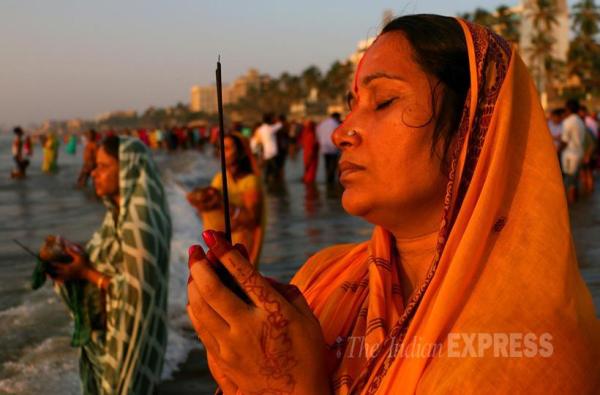
People offering prayers to Sun God during Chhat festival at Juhu Beach Mumbai . Express Photo by Amit Chakravarty 17-11-15, Mumbai

5.Things forbidden for Women

Vapanam – tonsuring of head

Gaamanuvrajanam – following a cow

Raatrau gosthe vaasah – staying in a cow-pen at night

Vaidikii-suukta paatha – reciting Vedic mantra

Na striinaam vapanam kuryaat na ca saa gaamanuvrajet

Na ca raatrau vasegoshthe na kuryaat vaidikiim srutim

Xxx

bihar voting1

6.Women to be remembered in the morning

Ahalyaa

Draupadii

Seetaa

Taaraa

Mandodari


Ahalyaa, Draupadii, Seetaa, Taaraa, Mandodari tathaa

Panchakanyaah smaren nityam sarva mahaapaataka nasanam


Meaning:

By remembering the Five Pure Women Ahalya, Draupadi, Sita, Tara and Mandodari all the great sins are wiped out or destroyed.


Xxx

flower picking

7.Five Mothers

Following five women are considered equal to mothers:

Raja patnii – king’s wife

Guru patnii –  teacher’s wife

Bhraatpatnii – brother’s wife

Patniimataa –mother-in-law

Svamaataa – one’s own mother


Raaja patni Guroho patni bhraatru patni thadaiva cha

Patnimaathaa svamaathaa panchaitaa maatara smrutaahaa

–Chanakya Niti

Queen (King’s wife), Teacher’s wife, Brother’s wife, own mother and wife’s mother (Mother in law) are considered mother.


holi,ht3

Source :-

Sankhya sanketa kosa, Volume 1,The Kuppusswami Sastri Research Institute, Chennai.

–subham—


Monkey Temple of Benares and Durga Puja: A Foreigner’s Account (Post No 2697)

benares ghats

Benares Ghats, sketch by A H Murray


Compiled by london swaminathan

Date: 5 April, 2016


Post No. 2697


Time uploaded in London :–  18-42


( Thanks for the Pictures  ) 


DON’T REBLOG IT AT LEAST FOR A WEEK!  DON’T USE THE PICTURES; THEY ARE COPYRIGHTED BY SOMEONE.


(for old articles go to tamilandvedas.com OR swamiindology.blogspot.com)

benares ekka

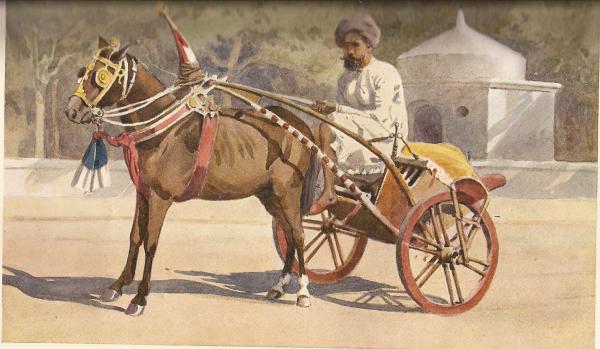
Benaress ekka; sketch by Murray


I gave the description of Benares from A H Hallam Murray’s book The High-Road of Empire (London, year 1905 yesterday. The book contains his water colour and pen and ink sketches in India.

Here I continue with his observation in Benares, the holiest of the holy cities in India:-

“Early on the morning of February 6, we started to drive to the Temple of Durga, sometimes called the ‘Monkey Temple’, at the far west extremity of the town. Durga, or Kali the terrible, is one form of Shiva’s wife, and worshipped over the greater part of the peninsula. The Thugs and Dacoits, now happily practically suppressed, were devotees of Kali, in her most terrible aspect. An unfortunate traveller, once marked down by them would be followed for days or even weeks, before the fitting occasion for the climax offered; but the Thug never lost his quarry, and the fatal noose ended the victim’s life at last.

No religious festival I so popular in Hindu homes, especially in Bengal, as the milder Durga Puja in October. A small plantain tree covered with straw and clay is painted with vermilion, n silk saree adorned with tinsel ornaments, and, being consecrated, is believed to be the habitation of the goddess. After a solemn procession to the river, it is brought to the house of the devotee who had it made, and is, for a month, venerated and worshipped, with fasts by day and feasting by night, finally, Mai Durga is said to be “going to the house of her father in law” – like Persephone:- the image is again carried on a bamboo stage to the river side, and amidst shouts and dancing is thrown into the stream. The ceremonies usually terminate with drunken bacchanalia and disgraceful scenes.

IMG_1791

There is nothing particularly remarkable about this temple of Durga (in Benares), though its architecture is simple and graceful, and it has some fairly elaborate carving round the inner colonnade. It is painted red and stands beside a tank, overshadowed by some fine peepul trees, which, as usual in India, are held sacred.


There are groves of trees in India held so sacred that, though timber and firewood are in great request, no stick is ever cut, nor is even the dead wood picked up. The sacred character of this site probably dates back to a dim period, when these trees, or their predecessors, were venerated, in connection with the tree worship of the aboriginal tribes, as sheltering the spirits whose good will had to be secured, by sacrifices and oblations, to ensure good harvest. In these trees the tribe of sacred monkeys swarms and breeds, and chatters incessantly, descending at intervals to take their share of the offering.


In the temple are also number of monkeys, climbing and leaping about everywhere; and as many beggars and other creatures, worry you to look at this, or that, or press you to buy food to feed the monkeys. Though the monkeys have no respects for persons- the boldest of them actually jumped upon us – yet I greatly preferred the monkeys to their masters.


After a sketch at the Golden temple, we made our way to the Man Mandir Ghat, chose by Raja Jaisingh’s lofty seventeenth century observatory. Old travellers tell us that the Brahmans whose business it was to calculate the eclipses of sun and moon were trained in astronomy and astrology in Benares.. here we embarked in a barge with a house upon it, on the roof of which we sat, and were slowly rowed up the Ganges as far as Ashi Ghat, and down again to the Mosque.

comme  ca

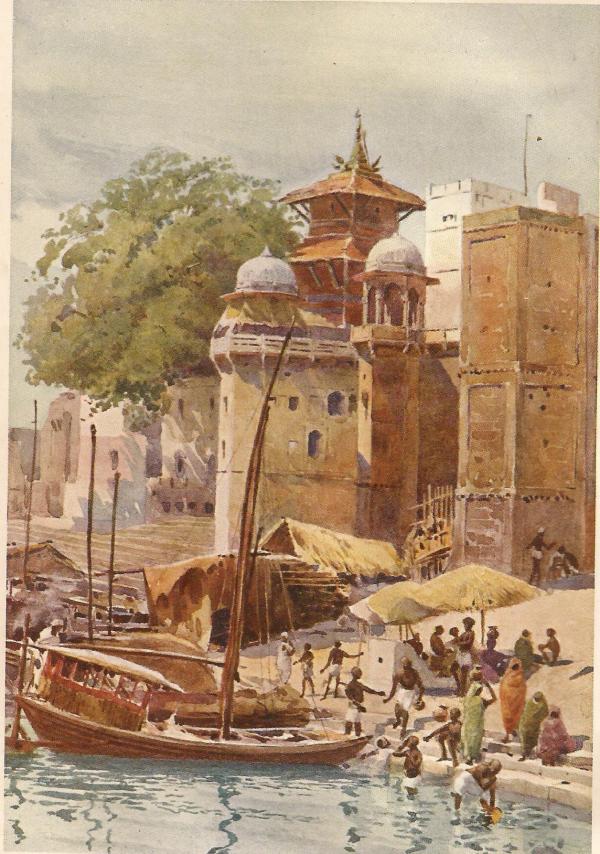
The river bank is a marvellous sight. The Ghats, in flight after flight of irregular steps, descend the broken  precipitous cliff a hundred feet to the water’s edge, amongst temples and shrines of all sorts and sizes. The cliff is crowned by high houses and palaces pierced with deep archways, which give access to the narrow streets of the town, and culminate in domes and minarets. The effect is enhanced by the sweep of the river, which bends in a crescent shape facing the rising sun.


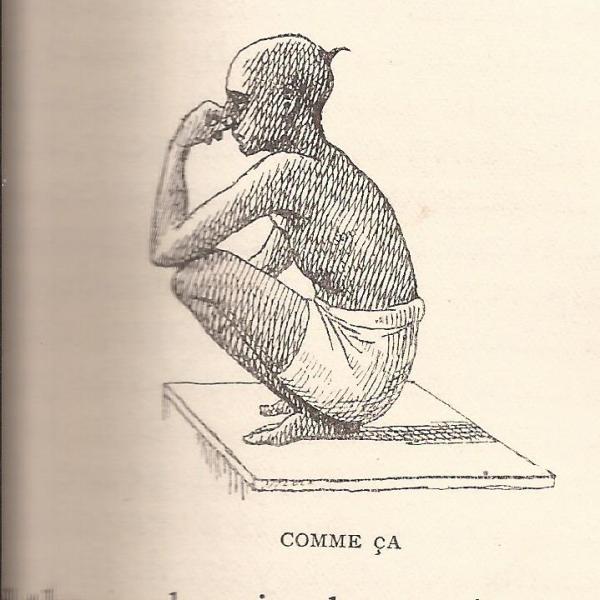
A stream of bathers and devotees, in the most brilliantly coloured garments, continually ascends and descends the steps; issuing from the dark arch ways and lanes above, they collect below on the brink of the water, under huge straw umbrellas; and behind tall screens, which protect them from the heat of the sun, they proceed by one operation to wash away their sins, to wash their bodies, and their simple and scanty clothing as well. They then grind themselves in clean attire; and afterwards return to one of the terraces to have their caste marks replaced upon their foreheads, by an official of the temple; he is provided with a number of little saucers filled with coloured powders for the purpose. This done, they sit on a plank over the water to meditate and bask in the sun shine. The pose is a squat, and the devout appear to hold their noses comme ca.


I was charmed by one scene in particular which we watched. Two graceful women in bright coloured silk saris came down the steps, each carrying on her arm a folded sari of a different hue. Leaving this on the brink, they stepped down as they were into the sacred water and drank and dipped. Coming back to the step in the wet garments, they wound them off, simultaneously, by the same mysterious movement, clothed themselves in the fresh silk drapery with which they had come provided. The process of transformation was as elusive and complete, as that by which a snow capped mountain is changed at the after-glow. The taking the strip of wet drapery, and deftly gathering it in narrow folds crosswise in either hand, they went back to their daily occupations.


The worshippers, standing waist-deep in the river, pour libations into the water, murmuring as they do so the words from the Vedas prescribed by the sacred ritual, and also cast in wreaths of jasmine flowers.

ghat

(After this he described the burning of the dead bodies on the banks)

Next day, Sunday, after church and lunch, I made a sketch of a Benares ekka – a very picturesque conveyance with double shafts on either side, drawn together on the top of the pony’s back and fastened to a saddle. The trappings of some of these ekkas are very bright and gay, and have some canopy like a bird cage on the top. This ‘machine’ holds, besides the driver, two persons, who sit sideways, and hang their legs over the wheels.

–Subham–


“Aladdin destroyed 1000 Hindu shrines in Benares alone” – A.H.HALLAM MURRAY (Post No.2694)

benares street

Narrow alleys of Benares/Kasi, painting by Hallam Murray

Compiled by london swaminathan

Date: 4 April, 2016

Post No. 2694

Time uploaded in London :– 19-25

( Thanks for the Pictures )

DON’T REBLOG IT AT LEAST FOR A WEEK! DON’T USE THE PICTURES; THEY ARE COPYRIGHTED BY SOMEONE.

(for old articles go to tamilandvedas.com OR swamiindology.blogspot.com)
(Benares= Varanasi= Kasi)
“It was cold in the train in the early morning; we had been travelling all night, and had exchanged the coast-climate of Calcutta for the colder plains. We were an hour late when we reached Mogul Serai station, and had barely time to catch the Benares train. By 2 p.m. we were in Clark’s Hotel, Benares, a clean, comfortable bungalow in the Cantonment, but unfortunately three mils from the old city.

As soon as we had time to turn round we made our way to the centre of the native quarters, and were enchanted with the novelty and vivid interest of the scene. There is no doubt about it, Benares is wonderful; it is marvellously picturesque and as for sketching, a life time would not exhaust the subjects. It is a long narrow town extending in a crescent along the left bank of the Ganges for two miles, overlooking, on the opposite side of the river, a flat and monotonous expanse of cultivated plain; the bank is steep, and about 100 feet high, and is clothed, as it were, with staircases coming down to the water’s edge in wide irregular flights, quite unconnected with one another. Above these flights of steps, or ghats, are huge houses and palaces, temples and the great mosque of Aurangazeb, packed close, with narrow alleys between them. All this, in spite of its attraction, is comparatively modern, and except a few buildings, that is nothing earlier than the time of Akbar (sixteenth century); for like many Eastern towns Benares has shifted its site from time to time, and has left traces of its “dead self” for miles along the Ganges.

 
No one knows the story of its beginning, at the time of the very earliest Aryan settlement in India, but Benares was the religious centre of India as far back as the sixth century B.C., when it was chosen by Sakya Muni as the first place in which to preach his doctrine of Nirvana. It then had become a strong hold of Buddhism for many centuries, but in the fourth century A.D. reverted to the Hindu faith. In the twelfth century came the Mohammedeans, who conquered it, and converted its temples into mosques, and the story goes that Alu-ud-din boasted of having, here alone, destroyed 1000 Hindu shrines.
After 600 years of Moslem prominence Benares returned to its old faith, and has since continued the sacred city par excellence of the Hindu.

mosque

Picture shows Aurangazeb’s mosque over Hindu Temple

 
In Calcutta and Bombay – though one cannot fail to notice the enormous predominance of the natives over Europeans – yet owing to the modern aspect of the greater part of those cities, with their wide streets and broad spaces, and their law-abiding inhabitants, the Indian population does not impress one by its vast numbers. To all this the appearance of crowded Benares forms a striking contrast. Here is the very heart of India. Here, in this fountain of Hindu fanaticism, beats the quick pulse of the people. To this sacred spot, from the utmost corners of the land, stream in endless pilgrimage thousands upon thousands of devout Hindus, who, through the narrow alleys and dark passages of the city, constantly course along, jostling one another in a seething flow, towards the temples, or the sacred river, to drink or in bathing to wash away their sins, or to die, if need be, in the arms of the od gages, the mother of life.


SHIVA WORSHIP IN ISRAEL!
Here then, above all other places, in this swarming mass of humanity, is one forced to realise, the depth and strength of the national life of India. This was specially impressed upon us in the first place we visited; the Golden Temple dedicate to Bisheshwar, or Shiva, as the Poison God, the spiritual ruler of Benares. In this form Shiva appears with a blue throat, the result of his having magnanimously swallowed the poison evolved in one of the processes of creation. But this deity is worshipped probably by more than half the Hindus as the reproductive power of nature, in the form of a symbol, the lingam. Is there perhaps, some remote connection between this cult and the calf and pillar worship of the Israelites? Shiva’s temple, this holiest of holy places in the sacred city, is in the heart of the town, surrounded by a network of narrow alleys thronged with people, and crowded between other buildings. The roofed quadrangle where it stands is itself crowded with worshippers, jostling one another, sprinkling holy water, and carrying votive offerings of flowers to hang upon the upright black stone, tapering to a cone shape, the symbol of Shiva. Cows are admitted on equal terms, and roaming lazily along have to be passed and to pass; every now and then a palanquin comes along and one has to flatten oneself against the walls of the narrow passages to let it go by.

Shrines, figures of cows, shapeless masses – representing Ganesh, Shiva’s son, the god of good luck, with elephant’s trunk painted red – met our gaze on all sides, and every turn in a bewildering confusion.


ghat

 
PLANET SATURN!
One very curious object of worship specially caught my eye. It was a silver disk with a red apron hanging below it,and represents the planet Saturn, an imporatant object in this city of astrologers.
The gates or the doors of the Golden temple are of beautifully wrought brass, but it takes it name form the fact that one of its conical flame-like towers, and a dome, are covered with plates of gilded copper; we mounted a narrow stair in a side building, in which are kept the great tom-toms, and where temple flowers were being sold, and looked at these towers, and the red conical tower of Mahadeo’s temple from the first floor. The so called priest, with a view to baksheesh, told me that he would pray the gods to give me a son. When I told him I had one already, he kindly offered to pray that I might have five.


Round the court of an adjoining temple are a number of sacred cows in close quarters; this they call the Cow Temple, and a little further on, round the corner of a narrow alley, is the Temple of Annapurna, goddess of daily bread. All along these lanes are small shops for the sale of images and rosaries, and of the celebrated brass work of Benares, especially of ‘lotas’, which are as essential to the existence of a Hindu as a cigarette to a Spaniard. A ‘lota’ is a spherical wide mouthed vessel  — of brass for a Hindu, of copper for a Mohammedean- from which the owner never seems to be separated, and to which he clings with tenacity when he has given up all other worldly possessions. Out of it he drinks; with the aid of it, and a bit of soft stick, and much ritual observance, he washes his teeth – a favourite occupation and pastime, especially out of the railway carriage window when travelling – and with the help of it he cooks.

Before dusk we had time to explore some high, narrow streets in the thick of the town; they reminded me of Genoa, but are far more picturesque. The rich colouring (chiefly a deep red), the overhanging storeys, and an occasional bridge thrown over from one side of the street to the other, combine all the elements which an artist could desire.


Every empty space on the brightly painted facades is occupied by a fantastic representation of Hindu mythology, with all its many- handed, many -headed, many- weaponed gods and goddesses in endless variety; and besides the regular temples and shrines with which the town bristles, an uncouth image, or a squarely hewn sacred stone, it is set up at every vacant corner.

To be continued…………


bathing ghats


SOURCE:

THE HIGH-ROAD OF EMPIRE

BY

A.H.HALLAM MURRAY

LONDON, YEAR 1905


–subham–


Four Benefits of Breath control/ Pranayama! (Post No 2681)

_pranayam

Compiled  by london swaminathan

Date: 31 March,2016


Post No. 2681


Time uploaded in London :–  15-16


( Thanks for the Pictures  ) 


DON’T REBLOG IT AT LEAST FOR A WEEK!  DON’T USE THE PICTURES; THEY ARE COPYRIGHTED BY SOMEONE.


(for old articles go to tamilandvedas.com OR swamiindology.blogspot.com)


There are some slokas/couplets to explain the benefits and types of Yoga in Sanskrit. When one reads it in verse form, it is easily remembered and retained.

pranayama

1.Types of Breath Control (Pranayama):

Recaka – Exhalation

Puuraka – Inhalation

Kumbhaka – Retention

Suunyaka – only Retention

Recaka Puurakascaiva Kumbhaka Suunyakastathaa

Evam caturvidhah proktah Praanaayaamo maniishibhih

–Brhannaradiya Puranam

Xxx

2.Effects of Pranayama

Saanti – Peace

Prasaanti – Tranquility

Diipti – Splendour

Prasaada – Calmness

Prayojanaani catwaari  praanaayaamasca viddhi vai

Saanti Prasaantirdiipti sca prasaadasca cathustayam

Xxx


krishnamacharya-pranayama

3.Four types of Yoga

Mantrayoga,

Layayoga

Raajayoga

Hathayoga

Mantrayogo layascaiva raajayogastritiiyakah

Hathayogascaturthah syaat praaninaam mokshadaayakah

–Hatharatnaavali

Xxx

4.Krishna on True Yogi

Arjuna, he who looks on all as one, on the analogy of his own self, and looks upon he joy and sorrow with a similar eye – such a Yogi is deemed the highest of all (Bhagavad Gita 6-32)

Aatmaupamyena sarvatra samam pasyati yoarjuna

Sukham vaa yadi vaa dukham ca yogii pramo mathah (B G 6-32)

Xxx

113474-299x401-Pranayama4

5.Yoga is Difficult

Yoga is difficult of achievement for one whose mind is not subdued; by him, however, who has the mid under control, and is ceaselesley striving, it can be easily attained through practice. Such is my conviction ( B G 6-36)

Asamyataatmanaa yogo duspraapa ite me matih

Vasyaatatmanaa tu yatataa sakyo vaaptumupaayatah

-Bhagavad Gita 6-36)

–subham–