Three Books on a ‘Deity with a Thousand Names’: Vishnu Sahasranama

Compiled from London swaminathan

Post No 1806; Date 17th April 2015

Uploaded in London at 15-24

The first book review is from my old paper cuttings file; before I destroy the paper cuttings, I want others to read it. Published on 9-11-99; probably in The Hindu

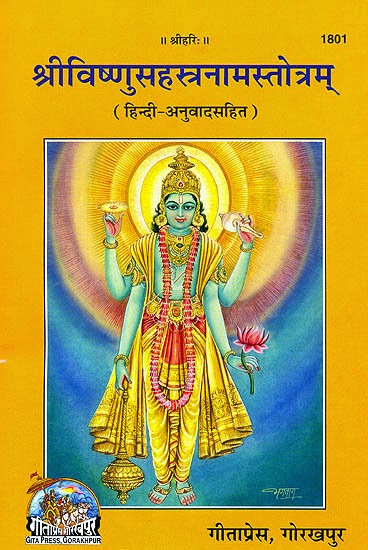
Sree Vishnu Sahasranama – A Treatise: Kalluri Suryanarayana;Sankhyayana Vidhya Parishad, H No.2-12-34, Annapurna Colony, Uppal, Hyderabad- 500039, Rs.153

The religious importance of Vishnu Sahasranama can be gauged from the nearly forty commentaries by saints and scholars for this most popular hymn; three of them have been rendered by the leaders of the three different systems of Hindu philosophy.

Of them Adi Shankara’s was the first and a version says how when he wanted to write his commentary on another Sahasranama, this work was placed before him.

His was based on Advaita, while the Dwaita approach was by Sri Satya Sandha Tirtha whereas the “Bhagavad Guna Darpana” was by Parasara Bhattar as per Vishishtadwaita school. The entire work, as contained in the Mahabharata, refers to the glory of Vishnu.

The treatise by the author, with Sanskrit text and English annotation, explains the significance of the 1000 names. Since the English meaning of this hymn is given in this work, many in this country and those living abroad, will welcome it. The author points out that the commentary of Sankara is like that of River Ganges, of Bhattar’s like Yamuna of the Madhwa saint’s as Saraswati. Every name is a mantra by itself, some with two and some ranging up to eight words. The hymn is an antidote for all ills.

The author mentions the benefits which will accrue by  by reciting the various name of Vishnu. One gets immortal ecstasy by chanting the names.  He connects twenty four Bhijaksharas of Gayatri mantra to the 24 names of Vishnu. In his commentary, Sankara has explained the glory of Visnu in Saguna and Nirguna forms, fit for meditation to attain the merger of Jeeva with the Paramatma.

The brief meaning of each name is simple as for instance for “Kshamaya”, the author says that for devotees who could not realise him earlier, Vishnu will confer liberation immediately when they start meditating on Him. The hymn can be chanted by everyone and for this, , no special ritual is prescribed. The book will quench the thirst of people who wish to achieve progress in the realm of spiritualism. The name of Koorattazhwan has been mis-spelt in the book giving an unsavoury meaning—DVV
Two More Books on Sahasranama

Thousand Ways to the Transcendental by Swami Chinmayananda

Central Chinmya Trust, Mumbai -400 072, 2009, Price Rs 115

“There is a deep connection between the name and the named. The name brings to our mind the image of the person thought of and the more one thinks, the more consistent the impressions. Eg. When I say flower, you immediately conceive a mental picture of the flower. This is the sole principle behind association.

“The 1000 names of Lord Vishn are meant to invoke a sense of bonding with the Lord, who’s the most intimate one, whether we recognise it or not. Yet how often and how deeply do we call out to him? The meanings of the names given out here will help in understanding the magnitude and depth of Godhood.

Vishnu Sahasranama was taught by Bhisma lying on a Bed of Arrows to Yudhisthira. It bought joy and solace to both. May t do the same to you as well”

“In the Thousand Names, 90 names have been repeated; and of them 74 are repeated twice, 14 are repeated thrice, and again two of them repeated four times.

“There are exactly 1031 single “Names” of Lord in the 1000 Name Chant (Sahasranama). The extra 31 names to be considered each as an adjective qualifying (vishesana) the immediately following noun”.

(This book contains how to use the names in Archana)
SRI VISHNU SAHASRANAMAM by Swami Tapasyananda, Sri Ramakrishna Math, 16 Ramakrishna Math Road, Mylapore, Madras – 600 004

From Introduction:

Vishnu Sahasranama is part of the Santi Parva of the Mahabharata. Tradition says that it was composed by Sanaka, one of the Kumaras (eternal living youths) and was transmitted to Bhisma who recied in the presence of Sri Krishna to the Pandava brothers when he was questioned by Yudhisthira “Who is the Being who is the Supreme Lord of all and by praising and worshipping whom man gains what is good and attains salvation?” The Thousand Names of Mahavishnu is the answer Bhisma gives to this enquiry. Besides its inherent quality, the importance of the Stotra is enhanced by the fact that no less than a personage than the great Sri Sankaracharya thought it worthwhile to write a commentary on it, expounding the meanings of the various names that find a place in it.

My comments: Read Vishnu Sahasranama every day and solve all your problems the easy way!

Baffling Questions and Beautiful Answers in Spirituality Part III

Namste photos

Post No.1805; Date: 17th April 2015

Written by S NAGARAJAN

Uploaded from London at  8-36 am

By Santhanam Nagarajan

Here is a new Question – Answer series for the benefit of all.

From time to time we have baffling questions.  But there is nobody to answer them.

But here is an effort to compile the answers from the great scholars, sages and saints of India. This is in continuation of the earlier article.

05) How is that our faith in him not enduring?

A devotee went and met M who has jotted down all the happenings of Sri Ramakrishna Paramahamsa’s life. He put forth his question like this:

Well Sir!  Even knowing a man to be good, through reason, by his deeds, knowing that he always does good, never does any harm, how is that our faith in him is not enduring?   Why does doubt linger in the mind?

M (Mahendranath Gupta Birth: 14-7-1854 Death 4-6-1932) answers his question:

It is nature that does so.  Whatever Karma resides in a man’s nature makes him do it.  But one must pray to Him alone, secretly and longingly.  And one must keep company of the holy men.  Then alone all obstacles will vanish.

Devotee: If the prayer does not emanate from within, longingly, what then to do?

M – In the beginning, let one force oneself to pray verbally.  Practicing in this way, at last one achieves longing.

Source: M – The Apostle & the Evangelist, Page 60

06) How many kinds of Liberation are there?

Lord Rama put forth this question to Sage Vanish and he answers thus:

Sinless one! The state of liberation of two kinds occurs in the world.  One is with the body and the other, without the body.  This is their division.  Hear this:

Know that state as one of liberation while living here, (in which) there is no desire in the taking or the leaving of activities for one who has an unattached mind.

Rama! On the dissolution of the body, that (state of liberation while living) alone is described as the state of liberation without the body, destitute of rebirth.  Those existing in that state do not become visible.

There is not even a little difference between the one liberalized with the body and the one liberated without the body, as wind is only air whether it is with motion or without motion.

Source: The Vision and the Way of Vasistha by Samvid P 405

Photos are from my face book friends;thanks;london swaminthan

Summary

Here is a new Question – Answer series for the benefit of all.

From time to time we have baffling questions.  But there is nobody to answer them.

But here is an effort to compile the answers from the great scholars, sages and saints of India. 05) How is that our faith in him not enduring? Mahendranath Gupta answers.

06) How many kinds of Liberation are there? Lord Rama put forth this question to Sage Vasistha and he answers.

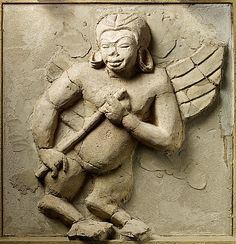
Gandharvas in the Vedas!

celestials

Gandharvas in Mamallapuram sculptures, Tamil Nadu

Research Paper No.1803; Date: 16th April 2015

Written by London swaminathan

Uploaded from London at 10-55 am

Summary of the Article

1.Gandharvas were the dominant community in the Indus/Sarasvati valley civilization 2.They were well versed in music and dance 3. They were in charge of Soma plants and Soma juice production 4.Indus valley had other communities and sects like modern day Hinduism. They had fights and peaceful existence with them 5.Ramayana and Mahabharata give lot of information about Gandharva territories (Indus/Sarasvati valley) 6.Now we know the full significance of the filter like emblem found in most of the Indus seals. Those seals belong to the Gandharvas. Other seals belong to other sects of the Indus valley 7.The dancer statue of Indus valley belongs to the Gandharvas 8.Scholars who were misled by the Aryan Dravidian racist theory failed to understand the multi-cultural, multi ethnic fabric of the Indus/Sarsvati valley. It was NOT a homogenous community.

I have a strong suspicion that the Indus valley Civilization was a Gandharva Civilization or dominated by the Gandharvas who lived along with other sects. I have already written two posts showing the link between the civilization and the Gandharvas:

Haha and Huhu: Famous Celestial Musicians, Posted on 27 October 2014

Indus Valley Cities in Ramayana, posted on 18 December 2012

Gandharvas were celestial musicians and their marriages were love marriages. Of the eight types of marriages mentioned in Manu Smrti and oldest Tamil book Tolkappiam, love marriage is called Gandharva type. Indus Valley people probably led a free life like the Gandharvas. The famous dancing statue stands as a proof for this.

Here are more references from the Vedas which also prove that they were popular during Vedic times which nearly coincides with the Indus valley period according to latest accepted date for the Rig Veda (1700 BCE):

Indus Seal2 002

Soma filter in front of the animal in Indus seals

1.Consorts of Gandharvas were called Apsarasses.

2.In the later Samhitas Gandharvas forms a distinct class by the side of gods, Fathers and Asuras (AV 11-5-2; TS 7-8-25-2) (Like in today’s India they might have co-existed with others such as Asuras, Devas, Humans in the Indus Valley)

3.Their number is fixed as 27 in some Yajus texts and even said to be 6333 in the Atharva Veda (11-5-2)

4.Rig Veda has only few references: in books 2 and 7, while in book 8 it occurs twice.

5.In one place they are shown hostile to Indra (but I will treat it as an insignificant fact. Indra was hostile to every one: Brahma, Vishnu, Siva, several Vedic seers such as Agastya, Gautama, Krishna, Vedic Brahmins Trisiras, Vrtra etc Since Indra is a title like King, we would never know which Indra did what).

6.Gandharvas were associated with Sky or higher areas. (Probably they lived in hills and mountains or they came from higher areas).

7.He is a measurer of space (RV 10-139-5).He is found in the fathomless space of  air (8-66-5).He stands erect on the vault of heaven(RV 10-123-7)

8.He is the lover on whom the Apsaras smiles (RV 10-123-5).His abode is heaven(AV 2-2-1-2) and the blessed live with them (AV 4-34-3)

9.They are connected with celestial light. He is brought into relation with the sun- the golden winged bird), the messenger of Varuna.

10.He is further connected with rainbow in one hymns(RV 10-1-23). In post Vedic literature, one of the names of the mirage is ‘’City of Gandharva’’.

11.He is connected with Sun bird, Sun Steed, 27 stars, particularly Rohini Star. (Rohini’s closeness to moon is in many mythological stories. Tamils and north Indians celebrated marriages on Rohini star day).

kinnara-in-thailand-musuem

Kinnara in Thailand Museum (aasociates of Gandharvas)

12.Gandharva is associated with Soma.He guards the place of Soma and protects the race of the Gods (RV 9-83-4;9-85-12;9-113-3). Through Gandharva’s mouth Gods drink Soma (AV 7-73-3)The Maitrayani Samhita says that Gandharvas kept Soma for the Gods ((3-8-10)

(My comments: INDUS VALLEY AND SOMA CULT– The mysterious figure in a lot of Indus seals is interpreted as a Soma rasa filter. These hymns linking Gandharvas with the Devas confirm my view that the Gandharvas were the dominating people of the Indus valley. Others might have co-existed with them. When I say Gandharvas, it was a tribe who identified themselves with the heavenly Gandharvas; they need NOT be actual Gandharvas of the heaven).

13.Gandharvas knows plants(AV 4-41). Soma was stolen by Gandharva Visvavasu, but was brought back.

  1. Gandharvas are fond of females (AB 1-27;TS 6-1-6-5,MS 3-7-3); Gandharvas in the waters (RV 10-10-4; RV 9-86-36;AV 2-2-3; 4-37-12)
  1. Gandharvas are connected with Hindu weddings: The unmarried maiden is said to belong to Gandharvas as well as to Soma and Agni( RV 10-85-40 and 41)
  1. Gandharvas’ physical appearance: They are wind haired (RV 3-38-6) and have brilliant weapons (RV 10-123-7). The Atharva Veda is more definite (4-37-8-6-1ff). Here they are said to be shaggy and to have half animal forms, being in many ways antagonistic to men. Elsewhere they are spoken of as handsome (SB13-4-3-7). The RV mentions that Gandharvas wears a fragrant (surabhi) garment (10-123-7), while in the Atharvaveda (12-1-23) the odour (gandha) of the earth is said to have given rise to the Gandharvas.

(Source: A Cultural Index to Vedic Literature by N N Bhattacharya with my comments)

soma filter

Soma filter on Indus seals

Gandharva Desa = Indus Valley

17.Varahamihira’s Brhat Samhita adds:–

Gandharva desa seems to be the original name (Ramayana 7-101-11) of Gandhara which is extended from Kabul Valley to Taxila (Takshasila) and comprised the Rawalpindi and Peshawar districts in Pakistan. Varahamihira mentioned two towns of Gandhara viz. Takshasila and Puskalavati (modern Charsadda) situated to the east and west respectively of the Indus River ( Souce:-Brhat Samhita translated into English by Prof.Ramakrishna Bhat)

Mahabharata and Puranas on Gandharvas

18.Mahabharata says that Shantanu’s elder son Chitangada was killed by a Gandharva by the same name on the banks of River Sarasvati. In another episode Arjuna fought with the Gandharvas and released Duryodhana who was earlier captured by them.

Mahabharata says about a 12 year long drought in the Sarasvati River area and Brahmins all forgot the Vedas during that period. Others migrated to different areas and those Brahmins are called Sarasvats. Son of Dadhichi only remained there and taught the Vedas to the seers when they returned to Sarasvati basin. His name was Sarasvata. (This shows that there was an exodus from Sarasvati River (Indus Valley Civilization area) at one time. Probably that was the reason for empty Indus cities).

19.Gandharvas’ names have the word CHITRA more often. If we are able to decipher this word in the Indus script we can make a breakthrough in deciphering the script.

19.Since Gandharvas are said to live in the sky and their main job was to prepare Soma juice for the Gods, we can assume that they lived in mountains where Soma plant was grown. Vedas always say everything in a secret language (in the sky= high mountains, preparing juice for Gods= bringing soma for Yajnas)

soma filter 2

The mysterious emblem infront of the animal is the Vedic device to extract Soma juice

  1. Later Puranas gave different accounts: Vishnu Purana says that they were born from Brahma’s nose. Chitraratha was the chief of Gandharvas. The cities of the Gandharvas are often referred to as being very splendid (probably they mean Cities of Indus valley). The Vishnu Purana has a legend of the Gandharvas fighting with the Nagas, whose dominions they seized and whose treasures they plundered. Nagas sent Narmada to Purukutsa (Vishnu in disguise)) who was led by Narmada to Gandharvas. Purukutsa destroyed them. This shows that they extended their sway up to Narmada River at one time and Purukutsa defeated them. Purukutsa may be one of the kings of rival groups of Indus Valley.

There is more scope for research into GANDHARVAS.

Pictures are used from different sites;thanks

swami_48@yahoo.com

Baffling Questions and Beautiful Answers in Spirituality –Part II

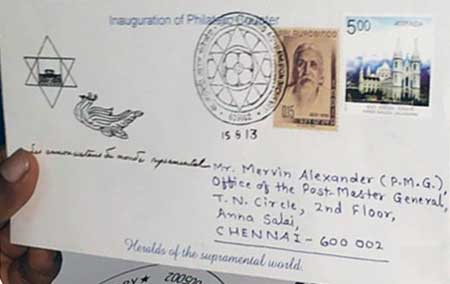
sri-aurobindo-society-

Written by Santhanam Nagarajan

Post  No.1802; Dated 16th April 2015

Uploaded at London Time: 7–54 am

Baffling Questions and Beautiful Answers in Spirituality Part II

Here is a new Question – Answer series for the benefit of all.

From time to time we have baffling questions.  But there is nobody to answer them.

But here is an effort to compile the answers from the great scholars, sages and saints of India. This is in continuation of the earlier article.

aurobindoashramppc150813

03) Are there various forms of Matter?

Maharishi Aurobindo answers:

There are various forms of Matter.  What we know is the grossest form but there are other subtler ranges of Matter, and each form has its own properties.  There are seven earths mentioned in Indian mythology; also according to the Veda, there are three earths.  Kartavirya, the king, is reported to have conquered fourteen earths!

Source: Reminiscences and Anecdotes of Sri Aurobindo, compiled by M.P.Pandit

Page 103

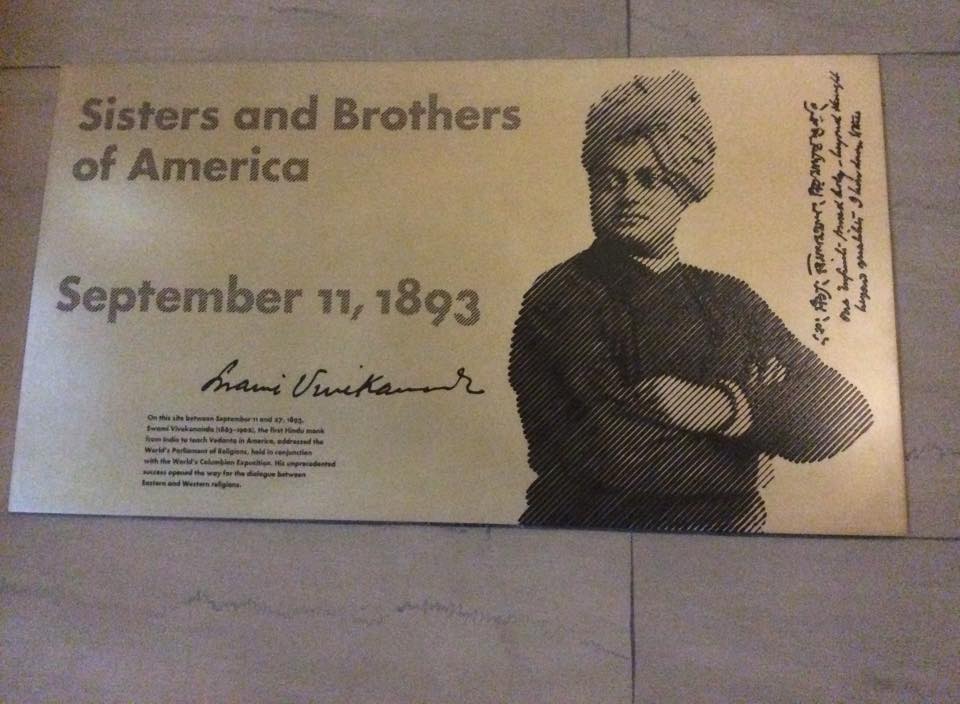
chicago1

Photo taken by Santhanam Srinivasan in Chicago

04) What is the true meaning of the statement that the Vedas are beginning less and eternal? 


Does it refer to the Vedic utterances or the statements contained in the Vedas?  If it refers to the truth involved in such statements, are not the sciences, such as Logic, Geometry, Chemistry, etc equally beginning less and eternal, for they contain an everlasting truth?

This question is reported in The Hindu, Madras, February, 1897 under the Heading, ‘An hour with the Swami Vivekananda at Madura.’

Swami Vivekananda answers:

There was a time when the Vedas themselves were considered eternal in the sense in which the divine truths contained therein were changeless and permanent, and were only revealed to man.  At a subsequent time, it appears that the utterance of the Vedic hymns with the knowledge of its meaning was important, and it was held that the hymns themselves must have had a divine origin.  At a still later period the meaning of the hymns showed that many of them could not be divine origin, because they inculcated upon mankind performance of various unholy acts, such as torturing animals, and we can also many ridiculous stories in the Vedas.  The correct meaning of the statement ‘The Vedas are beginning less and eternal’ is that the law or truth revealed by them to man is permanent and changeless.  Logic, Geometry, Chemistry, etc., reveal also a law or truth which is permanent and changeless, and in that sense they are also beginning less and eternal.  But no truth or law is absent from the Vedas, and I ask any one of you to point out to me any truth which is not treated of in them.

Source: The Complete Works of Swami Vivekananda Volume V Page 135

Summary

03) Are there various forms of Matter? Amharic Aurobindo answers.  04) What is the true meaning of the statement that the Vedas are beginning less and eternal?  Swami Vivekananda answers.

auro folder    vivek

Baffling Questions and Beautiful Answers in Spirituality –Part I

ramana drawing

Compiled by Santhanam Nagarajan

Post No:1800;  Date 15th April 2015

Uploaded from London at 8—15 am

Here is a new Question – Answer series for the benefit of all.

From time to time we have baffling questions.  But there is nobody to answer them.

But here is an effort to compile the answers from the great scholars, sages and saints of India.

01) Whether the person who attains Nirvana exists or not?

In fact when Lord Buddha was specifically put the question whether the person who attains Nirvana exists or not, Buddha refused to answer the question and later told his disciple, who asked him as to why he did not answer such a clinching question, that if he said he existed he would have to explain to him as to how he existed in the world and if he said he did not exist he would be confronted with the question as to why should one then bother himself about it at all.

Reference Book:-   Isavasya Upanishad – Kamakshi  Dasa

isavasya-upanishad

02) We find one sage advocating Bhakthi ( Devotion) another Gnana (Wisdom) etc. leading thus all sorts of quarrels? Why?

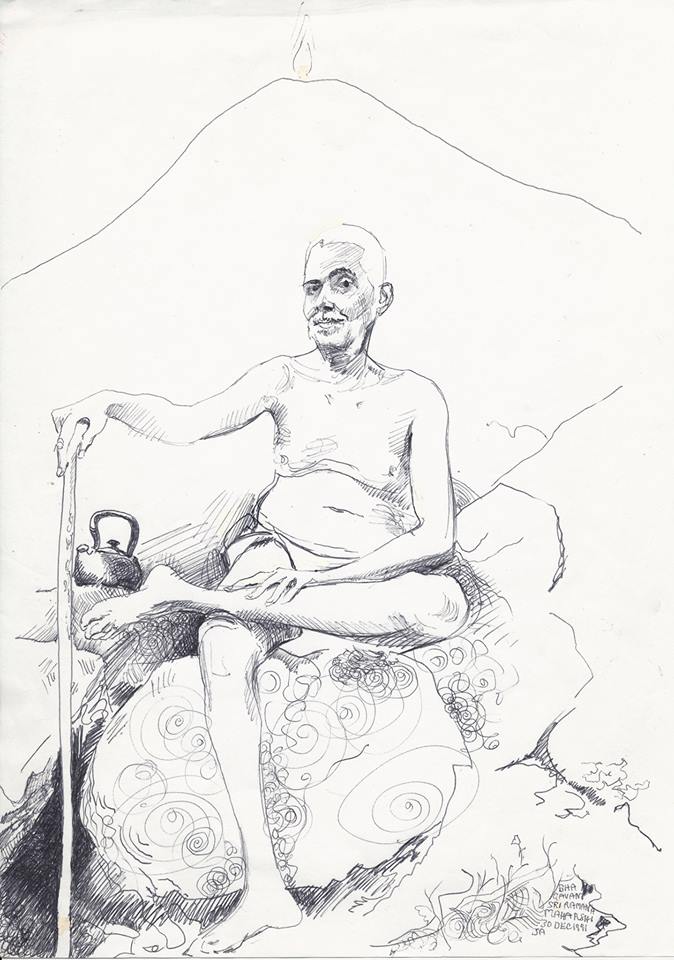
On 29th October 1945 (afternoon) Dilip Kumar Roy, singer and author, who is on a visit to Ramanashram from Sri Aurobindo Ashram, asked Ramana Maharishi, “According to the ‘Maha Yoga’ you say that the sages have not said anything to contradict each other.  Yet, we find one advocating bhakthi, another jnana, etc. leading thus to all sorts of quarrels.”

Bhagawan Ramana replied thus:

There is really nothing contradictory in such teachings.  When for instance a follower of bhakthi marga (Devotion Path) declares that bhakthi is the best, he really means by the word bhakthi what the jnana marga man calls janana.  There is no difference in the state or its description by attributes or transcendence of attributes.  Only different thinkers have used different words.  All these different margas, or paths or sadhanas (practices) lead to the same goal.  What is once a means becomes itself the goal.  When that happens, dhyana, bhakthi, or janana, which was at one time a conscious and painful effort, becomes the normal and natural state, spontaneously and without effort.

Day by day with Bhagawan  – From a diary of  A.Devaraja Mudaliyar

Two Stories: Guru and Parrot; Guru and Birds

parrot_reflection

Parrot before a Mirror

Compiled by London swaminathan

Post No. 1797: Dated 13th April 2015

Uploaded at London time 21-25

God and Guru are one

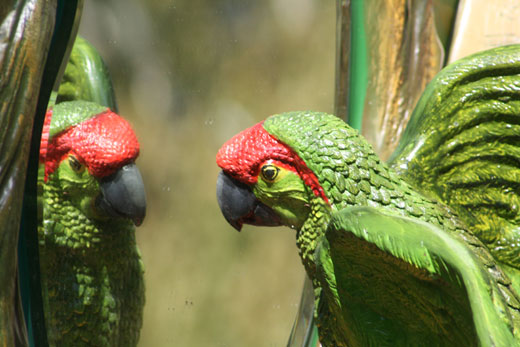
The method by which a parrot is taught to speak is unique. The trainer places a big mirror in front of the newly caught parrot and talks to it from behind the mirror. The parrot thinks that another parrot is teaching it to talk and imitates the voice of the trainer. Trained in this manner, the parrot, picking up the language of the trainer, begins to talk fluently in the human language.

This is how a saint teaches his disciples. Apparently it is human being who is instructing them, but, verily, it is God hidden in the Guru that gives illuminating advice to the disciples. So, whenever the aspirant receives instructions from the Guru, he should consider that such instructions come from God himself. Truly, God and Guru are one.

mirror parrot

guru3

Freedom is the Goal

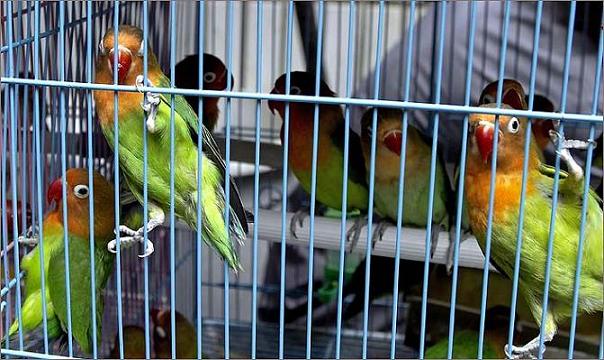
In a war in Europe, a sailor was captured by the enemy and was put into prison. After fifteen years he was released, as the warring countries contracted an alliance through a treaty. On the day of release, a friend placed in his hands a purse containing £50/- When the sailor was passing through the streets, he saw a shop in which he saw various species of birds in cages kept for sale. He went up to the shop and bought all the cages from the money he possessed and, by opening the trap doors of the cages, set free the imprisoned birds one by one. The shop man was astounded at this. He asked why the sailor having bought the birds at such high prices, released them all.

The sailor replied, “You see, I alone know what it is to be in prison, being denied the privilege of freedom. For fifteen years I have suffered prison life. I could not bear to see these birds unhappy in their cages”.

Similarly, a saint having attained spiritual liberation himself is eager to release others from the bondage of ignorance.

Source : Stories as told by Swami Ramdas, B V Bhavan, Mumbai, 1969

caged-parrots2

Tamil saints shout at the top of their voice, in the Saivaite and Vaishnavite hymns, “I have found out an ocean of happiness. Please join me. I have seen the sweetest; please join me”. Another saint says, “Oh my God! What a shame, I have opened the shop; no one comes to buy the valuable goods”.

Sri Ramakrishna Paramahamsa also says that there are two types of saints. The first type merges into the ocean of bliss like a salt doll. As soon as they see a big ocean full of bliss they simply jump into it. Another type of saints, control their enthusiasm, go back and shout to their disciples, “Come on let us all enjoy the most wonderful things”. Because of those saints only we know what is there at the highest level. They take all their disciples to higher stage along with them.

happy-guru-purnima-2012

Swami_48@yahoo.com

Who are Vratyas (outlaws)?

ascetic2

Written by London swaminathan

Research Article No. 1794; 11th  April 2015

Uploaded from London at   21-37

“Persons whom the twice born (Brahmins, Kshatriyas and Vaisyas) beget on women of their own classes, but who omit the prescribed rites and have abandoned the Gayatri, are to be designed as Vratyas” – Manu 10-20.

In the days of Manu, people belonging to three castes Brahmins (Priests), Kshatriyas (Rulers) and Vaisyas (Business community) were reciting the most powerful and most respected Vedic mantra Gayatri (Rig Veda 3-62-10). Today not even all the Brahmins recite it three times a day. They have to do it before the sun rise, before the sunset and at noon.

In an earlier chapter Manu says the three castes must be initiated into the recitation of Gayatri before the age of 16 for Brahmins, 22 for Kshatriyas and 24 for Vaisyas. If they don’t do it then they are called Outlaws/Vratyas (Manu 2—38 and 39). In fact they were initiated well before this age. This was the maximum limit.

In another chapter he gives a long list of tribes who became Vratyas in course of time by dropping their prescribed rites.

Sangam Tamil literature also gives some details about Vratya Brahmins who were involved in conch and bangle making industries. Famous Brahmin poet Nakkirar belonged to this sect.

joeylholymen-9

Vratyas in the Vedas

Atharva Veda, the Panchavimsa Brahmana and the Sutras describe certain rites intended for the Vratyas. They are used for the purification of Vratyas.

Panchavimsa Brahmana (17-1-4) says that there are four types of Vratyas:

1.The ‘hina’ who are described as depressed

2.Those who have become outcasts for some sin (nindita)

3.Those who have become outcasts at an early age, apparently by lving among outcasts or foregoing the prescribed rites

4.Those oldmen who, being impotent (sama-niicamedhra) have gone to live with the outcasts.

For all these four categories some “scholars” have given interpretations according to their whims and fancies without any rhyme or reason. They have no proof for their statements from any other sources. Foreigners have included Aryan and Non Aryan wherever they wanted, once again without any proof!!! They are notorious for their Divide and Rule Policy.

Manu is very clear and say that they all belong to three castes. In the Yajur Veda, Vratya is one of the victims in Purushameda Yajna (VS 30-8, TB3-4-5-1), where nobody knew what the term meant. What we gather from the descriptions of Vratyas in Tamil and Sanskrit sources is that they did not follow the scriptures and lead nomadic life. Vedas are very clear that they can become twice born again by performance of the ritual prescribed (Vratystoma like todays Ghar Vapasi rituals). This provision and Manu’s description clearly show that they are all children of the same family and not foreigners or outsiders.

When their group became big, they themselves elected a leader who wore a turban, carried a whip and a kind of bow. It looks like they had black uniform and owned a rough wagon. They wore silver jewellery. All these were handed over to the priests once they were taken back into the mainstream religion. This shows that the Vedic society was very democratic and had flexi rules for their children; they were not rigid even when their children went astray. They can be compared to Tamil Siddhas who were iconoclastic in their approach. But they had very high philosophy. They worshiped Shiva but did not follow the Agamic rituals. Orthodox Tamil Saivites treated them like outcasts.

The Atharva Veda (15-1-1) description of Vratyas is different. Fifteenth book of Atharva Veda deals with the Vratya, which is of mystical character, exalts the converted Vratya as a type of the perfect Brahmacharin and, in so far, of the divinity.

joeylholymen-5

Brahmanas associate Vratyas with Rudra. They are described as wandering ascetics, but who don’t follow the scriptures.

Now we see Brahmin wrestlers in Gujarat, Brahmin actors in Kerala and Brahmins practising different professions in different parts of India. They were supposed to do only six things in the olden days 1.Performing fire sacrifices for others 2.for themselves 3.Accepting religious Dhana (donations, gifts) and 4.giving donations 5. Learning Vedas and  6.Teaching Vedas. Throughout 2000 year old Sangam Tamil literature, they are called performers of six tasks/jobs (Aru Thozilor).

A Kalyanraman, a scholar who have written two volumes of Aryatarangini with new interpretations on many subjects says, ”There was, in the region now known as North Punjab, Kashmir and Afghanistan, a powerful and enterprising community, ethnically and by broad religious heritage Aryan, but afflicted with impious practices, devious commercial methods and excessive materialistic outlook on life. The Panis were, what were technically known to Rishis as Vratyas, i.e. fallen Aryas. They could be reclaimed by a process of purification and conformist oath taking, known as Vratyastoma, whose details are elaborated in the sastras (scriptures).

Brahmin families, who for three generations, had failed to recite the Gayatri mantra became Vratyas – The Athrva Veda (XV-1) gives some lovely pictures of vagabond Vratyas “travelling in a bullock cart with concubines and musicians, messengers and footmen and professing Saivaite magic with fluency” (Page 99, Aryatarangini)

nomads

Source books

Vedic Index of Names and Subjects (Vol.II), Keith and Macdonell

Manu Smrti

Aryatarangini (Vol.I) by A Kalyanaraman

Cultural Index to Vedic Literature by N N Bhattacharya

swami_48@yahoo.com

Do your Good Acts Now! Yudhistira Story!!

sand

Compiled  by London swaminathan

Article No. 1790;  Date 9th April 2015

Uploaded from London at   20–35

What is the most wonderful thing in the world? That was the question put by the Tree Spirit (Yaksha) to Yudhistira. And he answered the question:-

“The fact that people thinking themselves as stable and permanent, in spite of seeing several deaths daily is surprising”.

(Vana Parva, Mahabharata)

But he himself contradicted this at one time which surprised his brothers. There is an interesting story told by Swami Ramdas of Anandashram:-

“Once a poor man approached King Yudhistira, who was also called Dharmaraja, who strictly followed the path of virtue. He asked the king for some help.  Yudhistira said, “Come tomorrow, I will give you what you want”.

Yudhistira’s brother Bhimasena overheard this and at once ran to the place where a huge bell was hanging, and which was rung only when there was something important or in a matter of urgency. Bhimasena straightway rang the bell (Since India has only one culture from Himalayas to Kanyakumari we have a famous bell story in Tamil literature as well. I have given it already where a cow rang the bell at the palace of Manu Neethi Choza)

impermanence

The ringing of the bell created great commotion everywhere. All the people assembled in front of the bell tower to ascertain the reason. Yudhistira was also surprised. Report came to him that Bhimasena had rung the bell. Bhimasena was called and asked for an explanation.

He replied, “We have gained a great victory today, victory over death for 24 hours. My brother Yudhistira asked a man to come tomorrow, saying that he would give him what he wanted.  It means till tomorrow Yudhistira is not going to die – which is triumph over death. This is a great victory”.

Yudhistira was awakened. He called the poor man back, gave him what he wanted and sent him away without waiting for the next day.

 Big_Bell_Bhaktapur_GP4

Tamil poet Valluvar wonders,

“The one, who was here yesterday, is no more today and

That is matter for great wonderment, in this world” – Tirukkural 336

Almost all the Indian poets have sung about the impermanence of life. In Tamil Brahmin houses, mothers would warn children if they say, “Mum, I want to eat it tomorrow or Make me this sweet tomorrow”. Mothers would say, “No don’t say that. You have to say if I live tomorrow” (similar to Insah Allah of Muslims= God Willing).

We are not sure if we shall live the next instant; what then is the meaning of all fancies and fantasies? Shakespeare apparently had the same thought in mind when he wrote about the momentariness of life thus:

“We are such stuff

As dreams are made on and our little life is rounded

In a sleep”

This-transient-world

Indian Plane Accident

Dr S M Diaz in his commentary on the Tirukkural chapter – “Impermanence of the World” adds a sad story:–

“The circumstances of the gruesome Caravelle aircraft on the night of 11th October 1976 illustrates the point the poet had in mind. A hundred and nine passengers from Mumbai to Chennai were already air borne at 6 pm, when their aircraft was hit by a kite and had to return to base. After several hours a Caravelle aircraft was arranged to take only 89 passengers, leaving behind a protesting 20, because of smaller capacity. As the scheduled pilot did not possess a Caravelle licence, another one who had it, was pulled out of bed.

About 1-30 pm soon after taking off, the engine caught fire and the plane had to crash land at Santacruz airport (Mumbai) itself. All the 89 passengers and 6 members of the crew lost their lives.  The twenty who considered themselves unfairly left out escaped. That is life. The co- pilot who was pulled out of bed never knew he was going to die the next minute. It is as if the poet’s words had come true in a dramatic fashion over this unfortunate incident.

Thoughts such as Valluvar’s must have agitated Dag Hammarskjold (Secretary General of United Nations who died in a plane crash) when he recorded in his Markings published posthumously the following lines :-

“Tomorrow we shall meet

Death and I –

And he shall thrust his sword

Into one who is wide awake

But in the meantime how grievous the memory

Of hors frittered away”

Our bank balance (of life span) is depleted every second. No scientific instrument can regain the lost minute. Every minute before us is a bonus. We have to spend it wisely  — is the message of all the poets of the world from Vyasa to Valluvar, from Shakespeare to UN Secretary General.

contempalte.impermanence

Sources:

Tirukkural, Volume 1, Dr S M Diaz

Stories As tod by Swami Ramdas, B V Bhavan,Mumbai, 1969

Four Indian Kings who did not want to Rule!

Puhar-ILango

Picture of Tamil Prince Ilango

Research Article written by London swaminathan

Post No. 1778; Date 5th April 2015

Uploaded from London at  22-03

We have stories of at least four ancient Indian kings who sacrificed their right to rule. Because of their great sacrifice their names are entered into our literature and remembered for ever.

Devapi of Rig Vedic Period

Dustaritu Paumsayana of Vedic Period

Bhisma of Mahabharata Period

Ilango of Tamil Sangam Period

The interesting stories about these people are as follows:-

Devapi (RV 10-98) abdicated the throne in favour of his brother. According to the Nirukta (2-10), Devapi was the elder Kuru prince, but his younger brother Santanu became the king. There was a prolonged drought in the kingdom and Devapi acted as the priest of the king and brought rain by performing a sacrifice. The Brhaddevata gives us the same story but adds that Devapi abdicated because of his skin disease.

King Dustaritu Paumsayana, a king of the Srnjayas had to abdicate for his misrule (Satapata Brahmana 12-9-3-1). We have the stories of Vijaya who was banished from Kalinga/Vanga region who established a new kingdom in Sri Lanka. Other kings thrown out were Vena, Nahusa and Sumuka. But theirs was not abdication; they were driven out from their kingdoms.

title_bhishma_

Bhishma’s Great Sacrifice

Bhishma’s sacrifice was highly praised by the epic. His name was Devavrata. He sacrificed his right to rule for the sake of his father. His father Shantanu fell in love with a fisherwoman (Satyavati). Her father insisted that Shantanu could marry her only when he promised him that her child would succeed him to the throne of Hastinapura. When Shantanu was not ready to give such a promise, Devavrata came to know about his father’s love for Satyavati. He renounced the throne of Hastinapura. The entire country praised him for his sacrifice and then he was called Bhishma (man of terrible vow).

King Edward VIII of Britain wanted to marry a divorced American woman Wallis Simpson; it was opposed on moral, political and legal grounds. He renounced the throne in 1936 and married the woman.

bhisma

Tamil Prince Ilango

Ilango (also written Ilanko) was the younger son of King Ceralatan who ruled the western coastal area (Kerala) of South India. His elder brother was Senguttuvan. He was celebrated in the Tamil epic Silappadikaram written by his brother Ilanga. They lived in the Second century CE.

One day, when the king Ceralatan was sitting in the audience hall, there came to the court an astrologer who predicted the immediate death of the reigning king and the passing of the throne to his younger son (Ilango). It was an age of faith in Astrology. The prediction was a rude shock to Senguttuvan, brother of Ilango. He was the elder son and heir apparent to the throne. Ilnago noticed this, and in order that his brother might enjoy the kingdom, he became a monk. Once he became a monk, he could not be a king. The assumption of holy orders was to assure his brother that he would not stand to the way of his brother’s hopes and aspiration. He left the palace immediately and lived in Gunavayir Kottam, a temple.

swarna-vrsti  shankara

Pictures of Vidyaranya and Adi Shankara

Hindus believed that once a person becomes a monk, astrological predictions won’t come true. It is a way out or an exit strategy to defeat the fate or to beat the Karma theory. When Adi Shankara was caught by a crocodile, he told his mother that his present life was finished, but once his mother allowed him to become a monk, he would live. His mother said yes and the crocodile left him. That was like his “second birth”.

When Vidyaranya prayed for immense wealth, goddess appeared before him and told him that he couldn’t become rich in that birth, he immediately became a monk. Later he realised that Hindu monks couldn’t touch money. He gave all the gold bars given by the Goddess to  Harihara and Bhukka to establish the Vijanagara Empire. In the same way, by taking a “second birth” as ascetic, Ilango wiped out his first existence. He beat astrology by becoming an ascetic.

Source books:

Who is Who in the Mahabharata by Subash Mazumdar

A cultural Index to Vedic Index, Edited by N N Bhattacharya

The Cilappatikaram by Prof. V R Ramachandra Dikshitar

What you have learnt is Handful, what you haven’t learnt is…………

IMG_2785

What we have learnt — picture
Article written by S NAGARAJAN
Post No. 1776; Date 5th April 2015
Uploaded from London at  12–48

Hindu Vedas, Vedangas and the Great Sages Associated With the Vedas

By Santhanam Nagarajan

The primary scriptures of Hinduism are the Vedas.

They are beginning less, endless. They are eternal in nature.

The Vedas are not composed by any man. They are ‘apaurseya’ (meaning not man made).

They are called ‘Sruthi’ (meaning ‘heard’).

The Vedas were revealed to the sages after the creation of the Universe for the benefit of mankind. These have been handed down from generation to generation in the teacher -disciple tradition orally because the method of chanting cannot be mastered otherwise.

The oral method of instruction has ensured that there has not been any distortion.

The Vedas are four namely Rik , Yajur , Sama  and Atherva Veda.

These Vedas consist of thousands of mantras so to say countless. The mantras  are vibrations which are very potent.

Each of the four Vedas has further been divided into various branches. The Rik has 21 branches, the Yajur has 101 branches, the Sama has 100 branches and the Atharva Veda has 9 branches.

But at present some of the branches alone exist. Thus we have only one branch in Rik Veda. This is called pauzhiyam.

We have three branches in Yajur Veda namely Tatittriya, Kanva and Madhyandina,  only two branches in Sama  namely Chandoga and Talavakara and only one branch in Atharva Veda. This is available in Northern part of India.

Krishna Dwaipayana also known as Vyasa divided Vedas into four parts. He selected four of his intelligent disciples to study these diligently.

He taught Rig  to Paila, Yajur  to Vaisampayana, Sama  to Jaimini and Atharva Veda to Sumantu.

He also taught the 18 Puranas and Idihasa (meaning great epics) to Romoharshana.

Then again Paila has divided Rig Veda into two parts and imparted its teachings to two of his disciples – to Indrapramiti and Baspala. Baspala has divided his own branch to four parts and taught them to his pupils Bodhya, Agnimadaka, Yagnyavalkya and Parasara. Indrapramiti has taught his own branch to his son Mandukya.

One should not take the outward meaning of the mantras. Each and every word has ten meanings. Not by scholarly reading buy by intuition only one could understand these.

From time immemorial till modern days many have revealed the fantastic sciences that are potent in these which include vedic mathematics, the science of building planes, the ways to enhance one’s life span etc.

Swami Vivekananda, Maharishi Dayanada Saraswathi, Aurobindo, Swami Bharathi Krishna Tirtha are some of the great men who revealed the greatness of Vedas.

book line1

What we have not learnt – picture

What you have learnt: Bharadwaja Story

Vedas are countless and one cannot master it completely.

An interesting story with regard to mastering of Vedas is worth reading.

The great sage Bharadwaja started studying the Vedas. One purusha ayus (meaning a full span of life for human which is one hundred years) was completed. Still there was a lot to learn. He prayed Indra for another purusha ayus. Indra granted. One more hundred years passed. But Bharadwaja found that a lot more to learn. He again prayed and Indra again granted another 100 years. Thus 300 years passed. After 300 years Indra appeared and Bharadwaja was proud that he completed Vedas fully. Indra made three huge mountains before him. He took a handful of the earth from each of the mountains and told the sage, “Oh, Bharadwaja, what you have learnt so far is equivalent to these three handfuls of the earth only and whatever Vedas you are yet to learn are equivalent to these three huge mountains.” Thus Vedas are endless.

Sage Vaisampayana, the disciple of Ved Vyas has compiled twenty seven branches of Yajur Veda.

Sukarna was the son of Sumanthu and the grand son of sage Jaimini; they have studied one branch of Sama Veda. Sumanthu divided Sama Veda samhitha into one thousand branches. Kaysaly, Hiranyanabha, Pauspincha are his disciples. Hiranyanabha had 500 disciples for himself. One disciple Kruthi has studied twenty four Samhithas of Sama Veda.

Maharishi Maunchakesh have compiled Nakhyatra, Veda kalpa, Samhitha kalpa, Agnirakshya kalpa and Santi kalpa. These five bikalpas are the important parts of Atharva Veda Samhitha.

The Vedas are also called as Veda purusha. He has got six different organs or limbs namely 1) Shiksha 2) Vyakaranam (meaning Grammar) 3) Chandas (meaning Sconce of Prosody) 4) Niruktam (Science of etymology) 5) Jyotisham (Astronomy and Astrology) 6) Kalpam

These six are called as Vedangas.

Shiksha is that work which helps us to obtain the full results of Vedas. It is found that there are 35 of them. Shiksha tells us about the various aspects of letters. Details are not enumerated here.

Vyakarana helps us in understanding the Vedas by analyzing the words and their meanings.

Chandas tells us about the various meters such as Gayatri, Trishtub etc.

Niruktam gives a detailed exposition about the Vedic words and their meanings.

Jyotisha is based on Jyothis Lord namely the sun. This tells us the proper timings for the performance of various Vedic rituals.

Kalpa means the performance or practice of something. It tells us the method of practicing the various sacrifices and other karmas (or duties) mentioned in the Vedas.

IMG_2789

*****************