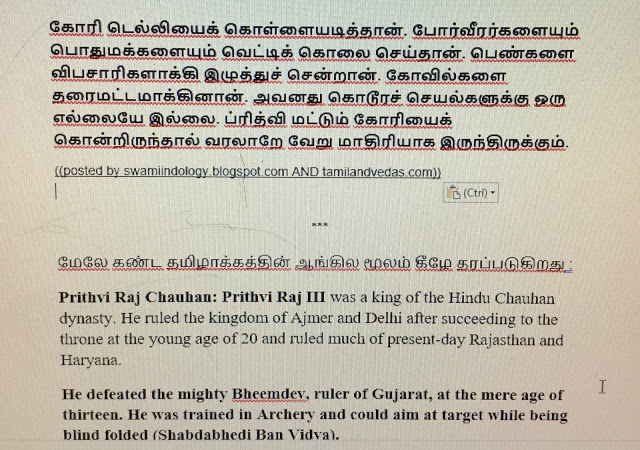
Prithviraj is considered to be the greatest warrior of India, and also one of the greatest in the world. He succeeded to the throne of Ajmer at the age of thirteen, in 1179, when his father died in a battle. His grandfather Angam, ruler of Delhi, declared him heir to the throne of Delhi after hearing about his courage and bravery. He once killed a lion on his own without any weapon. He was known as the warrior king. Chauhan was the last independent Hindu king, before Hemu, to sit upon the throne of Delhi. He succeeded to the throne in 1169 CE at the age of 20, and ruled from the twin capitals of Ajmer and Delhi.
His love story with his enemy, Jaichand’s daughter, Samyukta/Sanyogita is very famous. He rode off with her on the day of her ‘Swayamwara’.
Prithviraj Chauhan pardoned Mohammad Ghori when he asked for pardon though the latter attacked him several times. At one instance Prithviraj saw Ghori fleeing from the battlefield but he did not attack the running enemy. On the final (16th according to few sources) attack, Ghori defeated Prithviraj. Did Ghori pardon Prithviraj? No! He raped the king’s wife Sanyogita in front of him several times and took him prisoner to Ghor where he tortured him to death. Ghori plundered Delhi, slaughtered to death soldiers and civilians, took women as sex slaves, destroyed temples, and the list of atrocities is endless. Had Prithviraj killed Ghori, history would have been different.
நன்றி: ட்ரூத் ஆங்கில வார இதழ் – தொகுதி -86- இதழ் 35 ; 28-12-2018 இதழ்
Date: 27 JANUARY 2019
GMT Time uploaded in London -18-49
Post No. 5996
Pictures shown here are taken from various sources including google, Wikipedia,
Facebook friends and newspapers. This is a non- commercial blog.
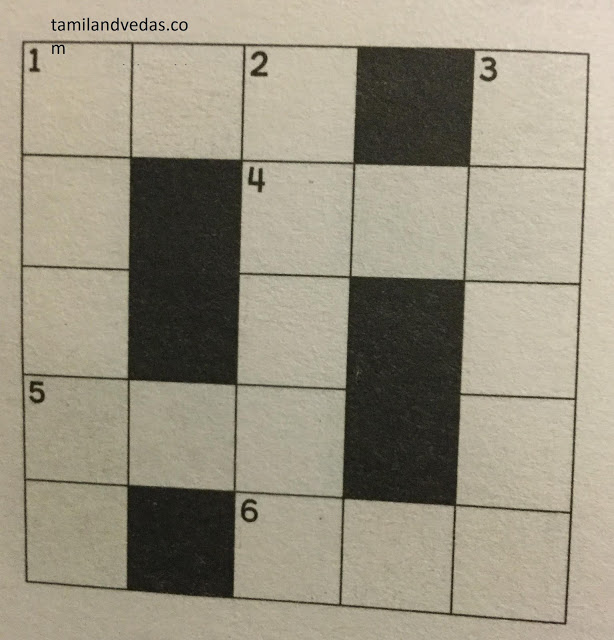
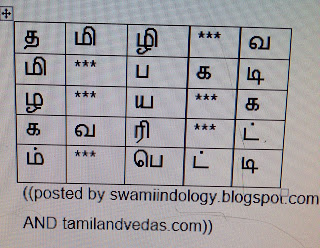
குறுக்கே
1. பிராமி மொழியின் தமிழ்நாட்டு வடிவம்
4.கேலி, கிண்டல் செய்தல்
5. – மயிர்நீப்பின் வாழாத மான்
6. – சாமான்களைப் பாதுக்காக்கஉதவும் ; பயணத்தின்போது பொருட்களை எடுத்துச்
செல்ல உதவும்
கீழே
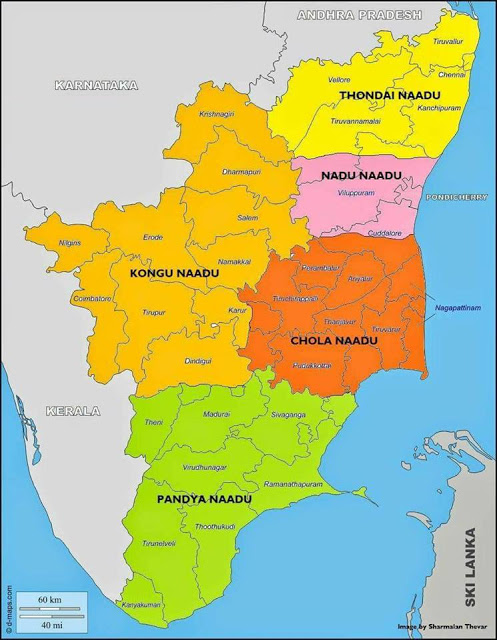
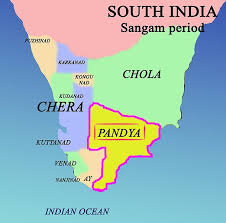
1. வடவேங்கடம் முதல் தென்குமரி வரையுள்ளஉள்ள நிலம்
2. கீழிருந்து மேலே செல்க- பெரிய
குற்றச்சாட்டு
3. தண்ணீரை, காய்ச்சியநெய்யை, ரசாயனப் பொருட்களை, அசுத்தப் பொருட்களிலிருந்து பிரிக்க உதவும் சாதனம்
கட்டத்தில் உள்ள 7 சொற்களைக்
கண்டு பிடிக்கவும். விடையும் கீழே தரப்பட்டுள்ளது
Date: 27 JANUARY 2019 GMT Time uploaded in London –18-00 Post No. 5995 Pictures shown here are taken from various sources including google, Wikipedia, Facebook friends and newspapers. This is a non- commercial blog.
WAGING WARS
On 30-12-2018 I covered up to160
slokas of seventh chapter of Manu Smrti. Today we will deal with the rest of
the slokas in seventh chapter.
Though the concluding part deals mainly with waging wars, making alliances and maintaining personal safety there are some interesting points (see below):
TWO, TWO, TWO
1.In the beginning he divided
everything into Twos.
Two kinds of wars, two kinds
of all; alliances and two kinds of marching and camping.
2.Sloka 7-180 is an advice; A
quotation on Political Wisdom
3. Sloka 7-182 specifies good
months for an attack or invasion; commentators say that the Indian weather
would be good and there would be plenty of food supply.
4.Sloka 7-185 talks about
three kinds of roads.
Army Formations
5.Sloka 7-187 says about army
formations; We see the importance of several Vyuhas/ formations in the
Mahabharata war as well.
6.Sloka 7-193 says which
country people must be placed in the front. Commentators say those soldiers are
taller than others.
7.Sloka 7-210 describes the worst
enemy.
8.Sloka 7-218 is about wearing
jewels to nullify poison. He also deals with personal safety. Everything must
be examined.
9.Sloka 7-223 is about Spy
Report.
10.Last part is about the day
to day schedule of a king.
11.Sloka 7-206 lists the Three Fruits of War.
7-161. Having carefully
considered the business (in hand), let him resort to sitting quiet or marching,
alliance or war, dividing his forces or seeking protection (as the case may
require).
162. But the king must know that
there are two kinds of alliances and of wars, (likewise two) of both marching
and sitting quiet, and two (occasions for) seeking protection.)
163. An alliance which yields
present and future advantages, one must know to be of two descriptions, (viz.)
that when one marches together (with an ally) and the contrary (when the allies
act separately).
164. War is declared to be of two
kinds, (viz.) that which is undertaken in season or out of season, by oneself
and for one’s own purposes, and (that waged to avenge) an injury done to a
friend.
165. Marching (to attack) is said
to be two fold, (viz. that undertaken) by one alone when an urgent matter has
suddenly arisen, and (that undertaken) by one allied with a friend.
166. Sitting quiet is stated to
be of two kinds, (viz. that incumbent) on one who has gradually been weakened
by fate or in consequence of former acts, and (that) in favour of a friend.
167. If the army stops (in one
place) and its master (in another) in order to effect some purpose, that is
called by those acquainted with the virtues of the measures of royal policy,
the twofold division of the forces.
168. Seeking refuge is declared to be of two kinds, (first) for the purpose of attaining an advantage when one is harassed by enemies, (secondly) in order to become known among the virtuous (as the protege of a powerful king).
169. When (the king) knows (that)
at some future time his superiority (is) certain, and (that) at the time
present (he will suffer) little injury, then let him have recourse to peaceful measures.
170. But when he thinks all his
subjects to be exceedingly contented, and (that he) himself (is) most exalted
(in power), then let him make war.
171. When he knows his own army
to be cheerful in disposition and strong, and (that) of his enemy the reverse,
then let him march against his foe.
172. But if he is very weak in
chariots and beasts of burden and in troops, then let him carefully sit quiet,
gradually conciliating his foes.
173. When the king knows the
enemy to be stronger in every respect, then let him divide his army and thus
achieve his purpose.
174. But when he is very easily
assailable by the forces of the enemy, then let him quickly seek refuge with a
righteous, powerful king.
175. That (prince) who will
coerce both his (disloyal) subjects and the army of the foe, let him ever serve
with every effort like a Guru.
176. When, even in that
(condition), he sees (that) evil is caused by (such) protection, let him
without hesitation have recourse to war.
177. By all (the four) expedients a politic prince must arrange (matters so) that neither friends, nor neutrals, nor foes are superior to himself.
178. Let him fully consider the
future and the immediate results of all undertakings, and the good and bad
sides of all past (actions).
179. He who knows the good and
the evil (which will result from his acts) in the future, is quick in forming
resolutions for the present, and understands the consequences of past
(actions), will not be conquered.
Gist of Political Wisdom
7-180. Let him arrange everything
in such a manner that no ally, no neutral or foe may injure him; that is the
sum of political wisdom.
181. But if the king undertakes
an expedition against a hostile kingdom, then let him gradually advance, in the
following manner, against his foe’s capital.
7-182. Let the king undertake
his march in the fine month Margasirsha, or towards the months of Phalguna and
Caitra, according to the (condition of his) army.
183. Even at other times, when he
has a certain prospect of victory, or when a disaster has befallen his foe, he
may advance to attack him.
184. But having duly arranged
(all affairs) in his original (kingdom) and what relates to the expedition,
having secured a basis (for his operations) and having duly dispatched his
spies;
185. Having cleared the three
kinds of roads, and (having made) his six fold army (efficient), let him
leisurely proceed in the manner prescribed for warfare against the enemy’s
capital.
186. Let him be very much on his guard against a friend who secretly serves the enemy and against (deserters) who return (from the enemy’s camp); for such (men are) the most dangerous foes.
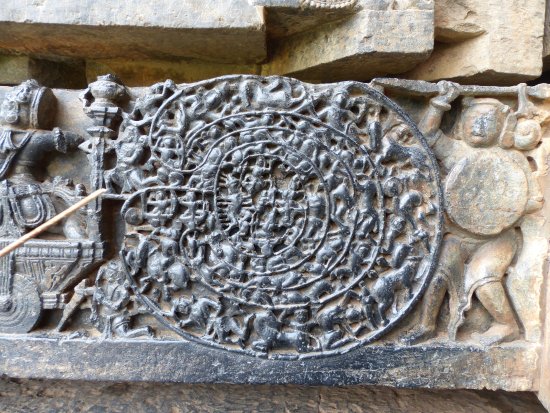
Army Formations
7-187. Let him march on his
road, arraying (his troops) like a staff (i.e. in an oblong), or like a waggon
(i.e. in a wedge), or like a boar (i.e. in a rhombus), or like a Makara (i.e.
in two triangles, with the apices joined), or like a pin (i.e. in a long line),
or like a Garuda (i.e. in a rhomboid with far-extended wings).
188. From whatever (side) he
apprehends danger, in that (direction) let him extend his troops, and let him
always himself encamp in an array, shaped like a lotus.
189. Let him allot to the
commander-in-chief, to the (subordinate) general, (and to the superior
officers) places in all directions, and let him turn his front in that
direction whence he fears danger.
190. On all sides let him place
troops of soldiers, on whom he can rely, with whom signals have been arranged,
who are expert both in sustaining a charge and in charging, fearless and loyal.
191. Let him make a small
number of soldiers fight in close order, at his pleasure let him extend a large
number in loose ranks; or let him make them fight, arranging (a small number)
in the needle-array, (and a large number) in the thunderbolt-array.
192. On even ground let him fight with chariots and horses, in water-bound places with boats and elephants, on (ground) covered with trees and shrubs with bows, on hilly ground with swords, targets, (and other) weapons.
Soldiers from Four Countries
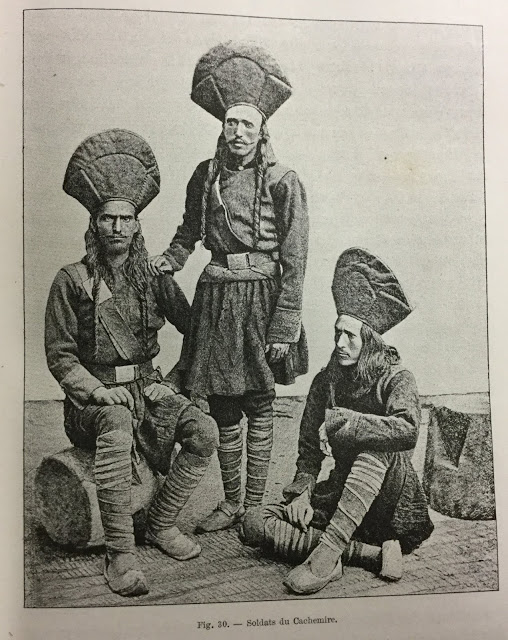
7-193. (Men born in) Kurukshetra,
Matsyas, Pankalas, and those born in Surasena, let him cause to fight in the
van of the battle, as well as (others who are) tall and light.
194. After arranging his troops,
he should encourage them (by an address) and carefully inspect them; he should
also mark the behaviour (of the soldiers) when they engage the enemy.
195. When he has shut up his foe
(in a town), let him sit encamped, harass his kingdom, and continually spoil
his grass, food, fuel, and water.
196. Likewise let him destroy the
tanks, ramparts, and ditches, and let him assail the (foe unawares) and alarm
him at night.
197. Let him instigate to
rebellion those who are open to such instigations, let him be informed of his
(foe’s) doings, and, when fate is propitious, let him fight without fear,
trying to conquer.
198. He should (however) try to
conquer his foes by conciliation, by (well-applied) gifts, and by creating
dissension, used either separately or conjointly, never by fighting, (if it can
be avoided.)
199. For when two (princes)
fight, victory and defeat in the battle are, as experience teaches, uncertain;
let him therefore avoid an engagement.
200. (But) if even those three
before-mentioned expedients fail, then let him, duly exerting himself, fight in
such a manner that he may completely conquer his enemies.
Worship god, honour brahmins
7-201. When he has gained
victory, let him duly worship the gods and honour righteous Brahmanas, let him
grant exemptions, and let him cause promises of safety to be proclaimed.
202. But having fully ascertained
the wishes of all the (conquered), let him place there a relative of the
(vanquished ruler on the throne), and let him impose his conditions.
203. Let him make
authoritative the lawful (customs) of the (inhabitants), just as they are stated
(to be), and let him honour the (new king) and his chief servants with precious
gifts.
204. The seizure of desirable
property which causes displeasure, and its distribution which causes pleasure,
are both recommendable, (if they are) resorted to at the proper time.
205. All undertakings (in) this world depend both on the ordering of fate and on human exertion; but among these two (the ways of) fate are unfathomable; in the case of man’s work action is possible.
Triple Fruits of War
206. Or the king, bent on
conquest, considering a friend (ally), gold, and land to be the triple result of
an expedition, may, using diligent care, make peace with his foe and return to
his realm.
207. Having paid due attention to
any king in the circle (of neighbouring states) who might attack him in the
rear, and to his supporter who opposes the latter, let (the conqueror) secure
the fruit of the expedition from (the prince whom he attacks), whether (he may
have become) friendly or (remained) hostile.
208. By gaining gold and land a
king grows not so much in strength as by obtaining a firm friend, (who), though
weak, (may become) powerful in the future.
209. A weak friend (even) is
greatly commended, who is righteous (and) grateful, whose people are contented,
who is attached and persevering in his undertakings.
210. The wise declare him (to be)
a most dangerous foe, who is wise, of noble race, brave, clever, liberal,
grateful, and firm.
211. Behaviour worthy of an
Aryan, knowledge of men, bravery, a compassionate disposition, and great liberality
are the virtues of a neutral (who may be courted).
212. Let the king, without
hesitation, quit for his own sake even a country (which is) salubrious,
fertile, and causing an increase of cattle.
213. For times of need let him
preserve his wealth; at the expense of his wealth let him preserve his wife;
let him at all events preserve himself even by (giving up) his wife and his
wealth.
214. A wise (king), seeing that
all kinds of misfortunes violently assail him at the same time, should try all
(the four) expedients, be it together or separately, (in order to save
himself.)
215. On the person who employs
the expedients, on the business to be accomplished, and on all the expedients
collectively, on these three let him ponder and strive to accomplish his ends.
216. Having thus consulted with
his ministers on all these (matters), having taken exercise, and having bathed
afterwards, the king may enter the harem at midday in order to dine.
217. There he may eat food,
(which has been prepared) by faithful, incorruptible (servants) who know the
(proper) time (for dining), which has been well examined (and hallowed) by
sacred texts that destroy poison.
Every day schedule
Wear gems, Test food for
poison
218. Let him mix all his food
with medicines (that are) antidotes against poison, and let him always be
careful to wear gems which destroy poison.
219. Well-tried females whose
toilet and ornaments have been examined, shall attentively serve him with fans,
water, and perfumes.
220. In like manner let him be careful
about his carriages, bed, seat, bath, toilet, and all his ornaments.
221. When he has dined, he may
divert himself with his wives in the harem; but when he has diverted himself,
he must, in due time, again think of the affairs of state.
222. Adorned (with his robes of
state), let him again inspect his fighting men, all his chariots and beasts of
burden, the weapons and accoutrements.
223. Having performed his
twilight-devotions, let him, well armed, hear in an inner apartment the doings
of those who make secret reports and of his spies.
224. But going to another secret
apartment and dismissing those people, he may enter the harem, surrounded by
female (servants), in order to dine again.
225. Having eaten there something
for the second time, and having been recreated by the sound of music, let him
go to rest and rise at the proper time free from fatigue.
226. A king who is in good health
must observe these rules; but, if he is indisposed, he may entrust all this
(business) to his servants.
Date: 27 JANUARY 2019 GMT Time uploaded in London –10-47 am Post No. 5994 Pictures shown here are taken from various sources including google, Wikipedia, Facebook friends and newspapers. This is a non- commercial blog.
Date: 26 JANUARY 2019 GMT Time uploaded in London –20-47 Post No. 5992 Pictures shown here are taken from various sources including google, Wikipedia, Facebook friends and newspapers. This is a non- commercial blog.
Date: 26 JANUARY 2019 GMT Time uploaded in London –15-42 Post No. 5991 Pictures shown here are taken from various sources including google, Wikipedia, Facebook friends and newspapers. This is a non- commercial blog.
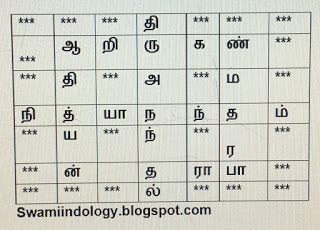
கட்டத்தில் உள்ள 6சொற்களைக் கண்டு பிடிக்கவும். விடையும்
கீழே தரப்பட்டுள்ளது
குறுக்கே
2.முருகனின் 12 கண்
4.என்றுமே ஆன்மீக ஆநந்தத்தில் திளைப்பவர்
5.கண்களால் காணாதவன்(வலமிருந்து இடம் செல்க)
கீழே
1. கடவுளின் திருப்பள்ளி எழுச்சி பூசனை; ஆறு கால பூஜையில் முதலாவது
2. சூரியனுடைய பெயர்;
சோழ
மன்னரின் பெயர்
3.இந்த நாட்டின் மண்(கீழிருந்து மேலே செல்க)
குறுக்கே
2.ஆறிருகண்,4.நித்யாநந்தம்,5.பாராதவன்
கீழே
1.திருஅநந்தல், 2.ஆதித்யன், 3.பாரத மண்
((posted by swamiindology.blogspot.com AND tamilandvedas.com))
Date: 26 JANUARY 2019 GMT Time uploaded in London – 14-53 Post No. 5990 Pictures shown here are taken from various sources including google, Wikipedia, Facebook friends and newspapers. This is a non- commercial blog
ACROSS
1.mood; emotions;
temperament; According to Hindu scriptures there are nine different moods shown
through drama and dance. Also juice
4. Vedic gods
of storm,wind
5. general
meaning husband in Sanskrit; suffix for lot of Hindu gods.
DOWN
1.greatest
hero of Ramayana
2.sub division,chapter
in Sanskrit books.
3. First
among the Seven Rishis; Dattatreya’s father
Date: 26 JANUARY 2019 GMT Time uploaded in London – 8-16 am Post No. 5989 Pictures shown here are taken from various sources including google, Wikipedia, Facebook friends and newspapers. This is a non- commercial blog
Pictures
shown here are taken from various sources including google, Wikipedia, Facebook
friends and newspapers. This is a non- commercial blog. ((posted by swamiindology.blogspot.com AND tamilandvedas.com))






















 Tamil and Vedas