Pictures are taken from various sources for spreading knowledge; this is a non- commercial blog. Thanks for your great pictures.
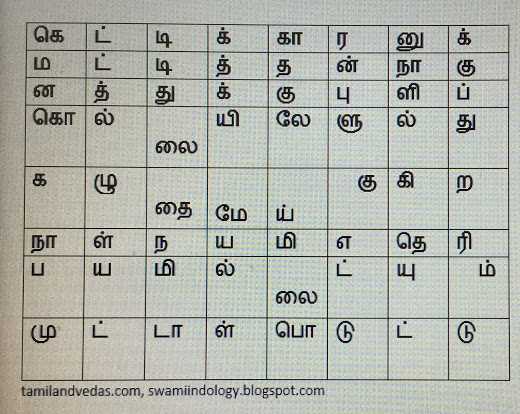
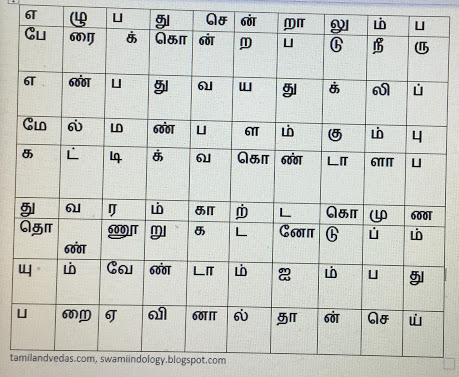
ஒரே சொல் மீண்டும் மீண்டும் வந்தால் ஓரிரு இடங்களில் மட்டுமே கட்டத்தில் இருக்கும். கொண்டு கூட்டி பொருள் கொள்க . விடை கீழே உள்ளது . சில நேரங்களில் படங்களைப் பார்த்தாலும் விடை காண உதவலாம்.
விடை
1.கரடி கையில் உதைபட்டவனுக்குக் கம்பளிக்காரனைக் கண்டால் பயம்
2.சிவ பூஜையில் கரடி புகுந்தாற் போல
3.கரடி பிறை கண்டது போல
4.கரடி துரத்தினாலும் கைக்கோளத் தெருவில் போக வழி இராது
Source book :–
பயன்படுத்திய நூல்- கழகப் பழமொழி அகர வரிசை, கழக வெளியீடு
Pictures are taken from various sources for spreading knowledge; this is a non- commercial blog. Thanks for your great pictures.
tamilandvedas.com, swamiindology.blogspot.com
SANGAM 2700 YEARS AGO
Sangam is a Sanskrit word; though banned by the oldest Tamil book Tolkappiam, Tamils are very fond of this Sanskrit word. No word should begin with ‘Sa’ in Tamil according to Tolkaapiam. But Tamils believe that they had their first Tamil Academy called Sangam 10,000 years ago. It is an exaggeration. (I have explained it in my article several years ago; please see the link at the bottom).
But Tamils had and have Sangam, an academy for languages. It was an assembly of poets. Nowadays it is just an association. Depending upon who runs it, we have third rate show by rubbish film actors or talk by highly intellectual Tamils.
The word has been used by Panini, world’s first linguist and grammarian, in his book Ashtadhyaayi (also called Panineeyam). Sangam like organisation was in Greece as well 2000 years ago.
**
SANGAM IN GREECE
Let me give some interesting information about an association of poets, actors and artists that existed in ancient Greece.
“The actors’ union was called ARTISTS OF DIONYSUS, a union formed in third century BCE by 280 poets , technicians , musicians and actors. Some replaced ‘actors’ with ‘ toadies’ (sycophants). The union lasted 500 years. Its last recorded title, under the emperor Aurelian, was modestly, ‘The Sacred Musical Travelling Aurelian Great World Guild of the Artists of Dionysus’.
(It is strange that Greek poets chose a ‘bad’ god, who was god of wine, fertility, religious orgy, effeminate and who became a bull and a lion; he was Bacchus in Rome)
The actors demanded freedom of travel by land and sea, and freedom from taxation and arrest. At Delphi, they get prior rights to consult the oracle and to hospitality, for them and their descendants.
Not surprisingly, performers had a reputation for arrogance and bad behaviour. In the pseudo-Aristotelian ‘Problems’, the question is asked-
‘Why are Artists of Dionysus mostly without principles ? The answer is that ‘their profession does not encourage reason and wisdom, and most of their life is spent in either rank self- indulgence or poverty, conditions always productive of low moral standards’. They could get away with all this because theatrical and sporting shows were staged as festivals in honour of gods (Dionysus and Heracles), whom the performers were serving .”
–Eureka by Peter Jones, London, 2014
***
VARIOUS SANGAMS 2700 YEARS AGO
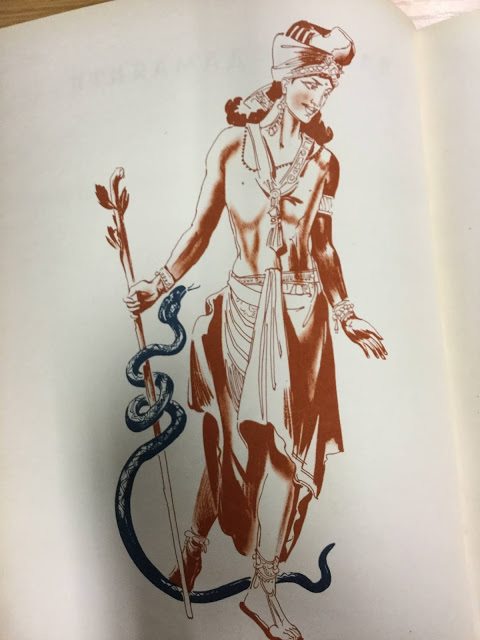
Panini lived in seventh century BCE according to Goldstucker and famous Sanskrit scholars of India. He lists various Sangams. There was also a Dravida Jain Sangam in Tamil Nadu around 450 CE (may be a religious Sangam like Buddhists’).
Though Sangam poets had high moral principles 2000 years ago, the condition deteriorated later to a low level and God Shiva had to interfere in it according to Tiru Vilayadal Puranam. All the fake poets were thrown into water when they sat on a Sacred Plank called ‘Sanga Palakai’. Another device was also set up. The poets were asked to recite their verses in front of a Divine Dumb boy. If he sheds tears (of joy), then they were considered genuine poets. Moral standards were also very low and many famous poets were associated with the courtesans.
**
Panini lists the following Sanghams :-
Panini speaks of ‘Sangha’ as a generic term, applied to the following –
Firstly, sangha means a ‘multitude’ as in the expression ‘graamya- pasu- sangha’ , a herd of domestic cattle . in the same sense it is also applied to a multitude of human beings.
Secondly, a sangha was a term for a ‘nikaaya’, which is termed by panini as a corporate body where the distinction of upper and lower does not exist 3-3-42
(may be compared to Liberty, Equality and Fraternity of France)
‘Sanghe chanauttaraadharye’
This applied to a religious sangha functioning as a fraternity without distinctions of high ‘Uttara’ and low ‘adhara’.
Thirdly, there is the ‘suutra samgh-odghau gana-prasamyoh 3-3-86, which speaks of the political sangha technically known as Gana.
Sangha and Gana were used as synonymous words for a republic. Panini speaks of Yaudheyas as a Sangha, whereas they refer to themselves as a Gana on their coins, albeit in the post- Paninian period.
The religious Sangha treated all equal, but political Sangha vested power in their families. In the post Buddha period there were 18 Sanghas.
The Sangha spirit in Panini’s time had influenced every sphere of public life political, economic, religious, social and educational .
Panini mentioned Ayudhajivi Sanghas by name in sutras 5-3-115 to 117 and in three Ganas of these sutras — Daamanyaadi, Parsvaadi, Yaudheyaadi
They were martial tribes who cultivated military art as a way of life (They made a living by the profession of Arms) mostly Kshatrias, but Brahmanas are also mentioned in 5-3-114 in the group
(I think Gurus like Dronacharya ,commanders like Asavttama and may be Parasurama come under this category; Drona and others are from Punjab where the Ayudhajivis lived)
In sutra 5-1-58, Panini refers to the numerical strength of a Sangha which Patanjali explains as consisting of five, ten or twenty members. This seems to refer to the Executive of a Sangha ( a democratic set up).
**
My comments
Amazing thing about Panini is that he wrote only a grammar book and all these information came as examples for grammatical rules. If we make a list of the missing things in Kautilya’s Arthashatra who wrote a book on politics and economics, we would know the time gap between the two. Panini lived well before Kautilya of fourth century BCE.
We know for sure there were political and religious Sanghas from Panini’s time. Panini’s SANGA is the oldest reference of an organisation. Religious Sanghas continued for long. Political Sangha of Tamil Kingdoms of Chera, Choza, and Pandya was mentioned by Kharavela of Orissa in Second Century BCE (Hathikumba Inscription).
But we don’t hear about Sangha of Poets in Sanskrit literature. We hear about poets being honoured on Festival days such as Vijayadasami . Since we hear lot about Nigamas (Traders Guilds), naturally poets would have formed such groups. Tamil Sangam gave the seal of approval to good works by poets. Though the existence of Tamil Sanghams is true, the staggering number of poets mentioned and the years of its existence may be an exaggeration. We don’t have any secondary proof for it. Moreover all these details are reeled out only in very late period.
Source book – India as Known to Panini, Dr V S Agrawala, Lucknow University, 1953
Here is the link for my earlier article :-
THREE TAMIL SANGAMS : MYTH AND REALITY | Tamil and …
Pictures are taken from various sources for spreading knowledge; this is a non- commercial blog. Thanks for your great pictures.
NATIONAL IDENTITY
by R Nanjappa
Tracing the national identity of any people is an interesting exercise and a humbling experience. Today, we may define it on the basis of citizenship-natural or acquired, ethnicity, historicity, or culture. Yet, if we probe into each patiently, we come up with the stark fact that no nationality is pure on any ground whatsoever.
Colonial Concoctions
The colonial rulers divided us in many ways: into Aryan and Dravidian, into tribes, into aborigines, into martial races and even robber tribes. Our people blindly continued to follow them. The Punjabis and the Gurkhas were considered ‘martial’ and preference was given to them in the armed forces; the Bengalis were considered ‘revolutionary’ after the 1905 Partition experience and were not recruited into the army. Even among others, they forced the division of Brahmins and non-Brahmins. Our free govt. has added its own divisions: SC, ST, BC, OBC etc. People readily identify with one of these, more than with any pan-Indian category. Then there is the language identity. Through all this, it is real hard to say who is a true or total Indian.
English Scene
If we forget ourselves for a minute, and focus on our colonisers who started all this, we come up with very interesting facts! What we call Great Britain is composed of so many immigrants it is almost impossible to say who were the original inhabitants of those islands! The following is the picture we get around 600 AD:
Britain peoples circa 600
by user -Hel- Hama-vectorization CC BY-SA 3.0
So, we see the strands in the British population. Almost all of this consists of immigrants: Romans, Angles, Saxons, Jutes, Danes and Normans! And the whole area was not yet one nation or country, but each area shown was a separate kingdom.The majority of Britons are of Germanic extraction, as also their monarch! It certainly did not lie in their mouth to call us divided on so many lines, but we did not know then how to call their bluff! The Irish and the English are still contending to adjust their claims, not fully reconciled to each other. So is the case with Scotland. And the English Royal Coat of Arms includes two French mottoes.
The arrival of the first ancestors of Englishmen out of Germany into Britain.
Richard Verstegan.
What should really hold our fancy is not the variety,or the origin, but that Britain became such a great power in the subsequent centuries!
The US is an Infant
Compared to this, the United States is recent, hardly 5 centuries old.. It is a mini-world, containing people from all nationalities of the world. Yet, the core consists of Christians from Europe: about 51% Protestants, 24% Catholics. Other religions of the world constitute about 5%. The original inhabitants of America, the Native Indians form less than 2%, after millions of them were exterminated by the European settlers. There are sizable segments of Afro-Americans and Hispanics. Historically, there was resistance to the immigration and assimilation of certain peoples like those from southern Italy or Eastern Europe, and Asia but over the years, every one was absorbed.
But when we have to define an American identity, we have to think of American culture or the American dream! Any one having American citizenship is legally an American, but he would become a “real” American when he shares that culture. But no one can say what that culture is! It is the basic American trait- you think BIG! You think there is no limit to the progress you can achieve! And yet there is a bit of conservatism, a bit of religious affinity- over 75% of Americans think of themselves as ‘religious’. They boldly put on their currency: “IN GOD WE TRUST”! Samuel Huntington said that the basic identity of Americans is Anglo-Saxon Protestants.
Compared to the UK, India has been a nation for many millennia before her. Few Westerners and their Indian counterfeits have understood or acknowledged this. In contrast, Diana L.Eck investigates
a particular idea of India that is shaped not by the modern notion of a nation-state, but by the extensive and intricate interrelation of geography and mythology.
The fact that the people of ancient India….gave a single name to the whole of this diverse subcontinent is itself noteworthy. The name is Bharata…This is an indigenous name used since the time of the Mahabharata to describe roughly the territory we call India…India, like Japan,China and Greece, links its modern identity with an ancient and continuous civilization. For centuries the understanding of India in the West followed primarily a Western agenda, from the land called “Indika” by the Greek scholar Megasthenes, to the “Hindustan” of the Turk and Afghan Muslim dynasties , to the India of John Stuart Mill who, in the nineteenth century, without ever leaving England, wrote an enormous English-language history of India, to the postcolonial studies that still see India through the lens of Western interventions. In the past three centuries India has been seen by traders as a source of riches,by rulers as a part of empire, by missionaries as a mission field for winning souls, by romantics and seekers as the source of something missing in the heart and soul of the West.
The resistance to the ideas of India’s unity is embedded in colonial thought and often in postcolonial thinking as well. Even the many books that address the idea of India in recent times seem to acquiesce to largely Western constructs.
What are some of the ways in which India has seen itself and enacted its regional and pan-regional identities? Political analyses do not touch this question. Postcolonial studies do not reach very deeply into the premodern subsoil of India to inquire whether there have been alternative ways of imagining the complex collectivity of India in a distinctly Indian idiom. …Bharata is not merely a convenient designation for a conglomerate of cultures , such as Europe has been for so much of its history or such as Indonesia has become in modern times. ….And yet it is arresting to consider a “sense of unity” construed…., a sense of connectedness that seems to have flourished for many centuries without the need for overarching political expressions or embodiment.
…the geography of this kind is more than a map. It is a three-dimensional sacred landscape.
Taken from: Diana L.Eck: India, A Sacred Geography.Harmony Books, New York, 2012. p.45-49.
There are many points which could be added to this but I only wish to add two clarifications. India of the Mahabharata times was much more extensive than the India of today.
Even during historic times, India was more extensive than today. See the Maurya empire circa 250 BC.
By Avantiputra7 (Own Work). CC BY-SA 3.0 Creative Commons via Wikimedia
What is a Nation State?
Then there is the question of the nation state. As usual, there is no clear cut idea among scholars, only hypotheses. Some say it was the idea of the map-makers of the 15th century. Nation state- as the idea of a geographical area containing a political unit is a very late European idea- as late as the 19th century. Eric Hobsbawm contended that France became a nation state only in the 19th century; at the time of the French Revolution, (1787-1799) only half the people of France spoke some French, only 12 to 13% spoke ‘fairly’. Germany and Italy too became unified only in the 19th century.
As we have seen in the old map of England, the British isles were not yet a nation!
Wales had started coming close to England in the 13th century, and the eldest son of the English monarch was named the Prince of Wales! Wales finally merged with England in 1556.Scotland and England had always had problems between them because of religion (Catholic v.Anglican) but England, Scotland and Wales united in 1707. Religion [ that is factions within Christianity with one Book, one God, one Son of God] was a barrier between Ireland and England too, though Ireland joined the earlier union of England, Scotland and Wales in 1801 , leading to the birth of the United Kingdom or Great Britain. (But Ireland, except the northern portion became Independent in 1922)
The United Kingdom. From BBC News.
So for these Western writers and their Indian copy cats to say that India was not one nation before the British created it is the height of literate nonsense and deliberate lie. India, from Sethu to the Himalayas has been the Hindu nation from time immemorial. Many great emperors had established huge empires here, from Ashoka onwards, even if we do not take into account our old Itihas.
India is More Than Geography
So, when we say Indian, we do not just mean someone who happens to be born and to live in India as a geographical territory. We mean one who has fully inherited this hoary history and its sense of the sacred geography. As Dr. S.Radhakrishnan says:
When one says that he is an Indian, whether settled abroad or settled here, the matter is not one of geography but of history. What is the tradition for which the Indian stands? What are the ideals to which the Indian adheres? Why do we think that the ideals for which India has stood will have some quality of healing so far as the struggles of nations are concerned? …….
This world is asat. It is subject to mortality.It is dark. ..The Upanishad thinkers say that there is a reality which transcends this universe. It gives you freedom from fear….And it is the perception of that Reality underlying this cosmic process which gives us tranquillity which gives us some kind of freedom.
If the geography of India consists of this extensive territory from the Himalayas to Kanyakumari, the history of India consists of the formulation of these great ideals for which this country has stood from its beginning.
Anyone who calls himself an Indian must know something about what this culture stands for.
From: Dr.S. Radhakrishnan: The Adaptive Indian- Identity and Ethos (originally published as Our Heritage,1976) Orient Paperbacks, 2007.
We can now clearly see what is the identity of a true Indian. Let us remember: if mere birth in this land makes one an Indian, even buffaloes and donkeys are born here!
Note: Christianity and Islam hold up an alien land and alien values as the ideal. That is why Dr.Ambedkar advised his followers not to convert to Christianity or Islam, but embraced Buddhism! Buddhism is an Indian religion, and accepts Dharma as the base. We should be eternally grateful to Dr.Ambedkar for boldly declaring and calling India by her proper name in the Constitution: INDIA THAT IS BHARAT.
Pictures are taken from various sources for spreading knowledge; this is a non- commercial blog. Thanks for your great pictures.
ஹிந்தி படப் பாடல்கள் – 73 – ஒரு ராகம் இரு மலர்கள் – 6 – துர்கா ராகம்!
R. Nanjappa
துர்கா ராகம்!
துர்கா ராகம் கர்னாடக சுத்த சாவேரியிலிருந்து வந்தது என்று சிலர் சொல்வார்கள். தொடர்புடையதாக இருக்கலாம், அதிலிருந்தே வந்தது எனச் சொல்ல முடியாது என்பர் வேறுசிலர். பொறுமை, பயமின்மை ஆகிய மன நிலைகளைக் காட்டும் ராகம் என்பார்கள். இதில் இரண்டு பாட்டுக்கள்.
எத்தனை அழகிய பாட்டு! 70 வருஷங்கள் ஆகியும் கேட்கத் தெவிட்டாதது! துர்கா ராகத்தின் அம்சங்களை முற்றிலும் அடக்கியது! பர்மனின் ஆரம்பகால மகத்தான பாடல்களில் ஒன்று!
இப்பொழுது ஒரு அற்புதமான பாட்டு, 1938ம் வருஷத்தியது! கே/ஸீ,டே, உமா சஷீ, கே.எல் சைகல் என்ற மூன்று அற்புதக் குரல்களில்!
துனியாரங்க்ரங்கீலிபாபா
கே.ஸி.டே
duniyaa rang rangeeli baabaa, duniyaa rang rangeeli duniyaa rang rangeeli baabaa, duniyaa rang rangeeli
yeh duniyaa ik sundar bagiyaa shobhaa iski nyaari hai yeh duniyaa ik sundar bagiyaa shobhaa iski nyaari hai har daari par jaadoo chhaayaa har daari par jaadoo chhaayaa har daari matwaari hai adbhut panchhi phool manohar adbhut panchhi phool manohar kali-kali chatkeeli baabaa duniyaa rang rangeeli
duniyaa rang rangeeli baabaa, duniyaa rang rangeeli a-ha-haa-a-ha-haa-a-ha-haa-a-ha-haa, a-ha-haa-a-ha-haa-a-ha-haa
kadam kadam par aashaa apnaa roop anoop dikhaati hai kadam kadam par aashaa apnaa roop anoop dikhaati hai bigde kaaj banaati hai, dheeraj ke geet sunaati hai bigde kaaj banaati hai, dheeraj ke geet sunaati hai iskaa sur misri se meethaa iski taal sajeeli baabaa duniyaa rang rangeeli
duniyaa rang rangeeli baabaa, duniyaa rang rangeeli a-ha-haa-a-ha-haa-a-ha-haa-a-ha-haa, a-ha-haa-a-ha-haa-a-ha-haa
dukh ki nadiyaa jeewan naiyaa aashaa ke patwaar lage dukh ki nadiyaa jeewan naiyaa aashaa ke patwaar lage o naiyaa ke khene waale o naiyaa ke khene waale naiyaa teri paar lage, paar basat hai desh sunehraa paar basat hai desh sunehraa kismat chhail-chhabeeli baabaa duniyaa rang rangeeli
duniyaa rang rangeeli baabaa, duniyaa rang rangeeli duniyaa rang rangeeli baabaa, duniyaa rang rangeeli
இந்தப் பாட்டின் அருமையை தற்காலத்தவர் முழுதும் உணர்கிறார்களோ, என்னவோ தெரியாது!
அப்போது சினிமா ‘பேசத்’ தொடங்கி சில வருஷங்களே ஆகியிருந்தது! பாட்டுப் பதிவில் உத்திகள் இல்லை! நடித்துக்கொண்டே பாட வேண்டும், அப்பொழுதே பதிவாகும்! இங்கு பாடும் மூன்று பேரில் இருவர் பெரிய புள்ளிகள்! கே.ஸி.டே மன்னா டேயின் மாமா! அவர் 14 வயதில் கண் பார்வை இழந்தார். பெரிய பாடகரானார், நடிக்கவும் செய்தார், இசையும் அமைத்தார். எஸ்.டி. பர்மனுக்கும் ஆசிரியர்! பிறருக்கு குரல் கொடுப்பதை விரும்பவில்லை, அதனால் மன்னா டேவிற்கு வாய்ப்பு கொடுங்கள் என்று அவரை அறிமுகப்படுத்தினார்!
கே.எல் சைகல் பற்றிச் சொல்லவே வேண்டாம்! பின் வந்த எல்லா பாடகர்களுக்கும் அவர்தான் ஆதர்சம்!
இங்கு மூவரின் குரல்களும் எவ்வளவு இயற்கையாக இருக்கின்றன! பாடிக்கொண்டே நடித்தார்கள், ஆனாலும் எவ்வளவு நன்றாகப் பதிவாகியிருக்கிறது! காலத்தால் அழியாத பாடல்! இதை நாம் மறக்காமல் செய்தது அன்றைய ரேடியோ சிலோன்!
துர்கா ராகத்தில் அமைந்த அரிய பாடல்! பாடலும் எத்தனை அழகிய கவிதையாக இருக்கிறது!
மிஸ்ஸியம்மாவில் வந்த “பிருந்தா வனமும் நந்த குமாரனும்” என்ற பாட்டிற்கு இதுதான் ஆதாரம்!
இப்படி ஒரு ராகத்தில் எத்தனை நல்ல மெட்டுக்கள் அமைக்கிறார்கள்!
Agastya, the great engineer and saint on the banks of Kaveri, Grand Anaicut ; he diverted Kaveri into Tamil Nadu through his massive planning and skillful work.
Pictures are taken from various sources for spreading knowledge; this is a non- commercial blog. Thanks for your great pictures.
ச.நாகராஜன்
18.காவேரி தீர ஸ்தலங்கள்!
கங்கையில் புனிதமாய காவிரி நதி தீரத்தில் இரு கரைகளிலும் அமைந்துள்ள ஸ்தலங்கள் எவ்வளவு தெரியுமா?
777 தலங்கள்!
இது தவிர காவேரி பாயும் பகுதிகளில் உள்ளே சென்று பார்த்தால் இருக்கும் தலங்கள் எத்தனையோ! எண்ணி மாளாது!
இந்த 777 தலங்களில் தேவார பாடல் பெற்ற தலங்கள் 276 என்பதைப் பார்த்தோம். பட்டியலும் கொடுக்கப்பட்டு விட்டது.
காவிரி உற்பத்தியாவதிலிருந்து கடலில் சங்கமம் ஆகும் வரை காவிரியின்
வடகரையில் உள்ள தலங்கள் 400.
தென்கரையில் உள்ள தலங்கள் 377.
Kaveri near Nimishamba temple, Mysuru; wikipedia picture
வடகரையில் உள்ள 400 தலங்களில் கூர்க் பகுதியில் 41 தலங்களும், மைசூர் பகுதியில் 67 தலங்களும், கோவை, சேலம் பகுதிகளில் 115 தலங்களும், திருச்சி பகுதியில் 73 தலங்களும், தஞ்சாவூர் பகுதியில் 104 தலங்களும் உள்ளன.
தென்கரையில் உள்ள 377 தலங்களில் கூர்க் பகுதியில் 7 தலங்களும், மைசூர் பகுதியில் 90 தலங்களும், கோவை, சேலம் பகுதிகளில் 117 தலங்களும், திருச்சி பகுதியில் 76 தலங்களும், தஞ்சாவூர் பகுதியில் 87 தலங்களும் உள்ளன.
அட்டவணைப் படுத்தினால் அது இப்படி அமையும் :
———————————————————————-
காவிரி கூர்க் மைசூர் கோவை&சேலம் திருச்சி தஞ்சாவூர் மொத்தம்
வடகரை 41 67 115 73 104 400
தென்கரை 7 90 117 76 87 377
மொத்தம் 48 157 232 149 191 777
இந்த தலங்களின் சிறப்புகளும் கோவில் அமைப்பு, தீர்த்தம், இங்கு வழிபட்ட ரிஷிகள், அவதரித்த மகான்கள் பற்றிய விவரங்களும் அற்புதமான தொகுப்பாக அமையும்.
இப்படிப்பட்ட அரிய விவரங்களை காஞ்சி காமகோடி பீடம் மஹா பெரியவாள் என்று போற்றப்படும் பரமாசார்யாள் ஸ்ரீ சந்திரசேகரேந்த்ர சரஸ்வதி அவர்களின் அருள் ஆணைக்கிணங்க பல்வேறு பக்தர்களால் சரியான விவரங்கள் தொகுக்கப்பட்டன.
இந்த விவரங்கள் அனைத்தும் 1956ஆம் ஆண்டு வாக்கில் பரம பக்தரான திரு E.V.கோபாலையர் வசம் ஒப்புவிக்கப்பட்டது.
அவர் தேவைப்பட்ட விவரங்களைச் சேர்த்து சரிபார்த்து ஒரு அரிய நூலை உருவாக்கினார்.
ஸ்ரீ காவேரி ரஹஸ்யம் என்று பெயரிடப்பட்ட நூல் 1961 ஜனவரியில் ஆசார்யாளிடம் சமர்ப்பிக்கப்பட்டது. 1962இல் புத்தகம் வெளியானது.
Thalakkaveri Temple, Karnataka; wikipedia picture
நூலில் தெய்வக் காவேரி பற்றிய அரிய ரஹஸ்ய செய்திகளும், பொன்னி நதியைப் போற்றும் புராணப் பகுதிகளும், காவேரியின் உற்பத்திச் சுருக்கம், காவேரி பற்றிய ஸ்தோத்திரங்கள், காவேரியைப் போற்றும் இலக்கியங்கள், காவேரி வளர்த்த மகான்கள், தெய்வப் புலவர்கள், காவேரியின் செல்வங்கள், பிரதக்ஷிண விதியில் க்ஷேத்ரங்களின் விவரணம், காவேரி உபநதி, கிளை நதிகளில் அமைந்துள்ள சில முக்கிய க்ஷேத்திரங்களின் விவரணம், காவேரி ஸ்நான, பூஜா விதிகள், காவேரி நதி பிரதக்ஷிண விதியில் க்ஷேத்ரங்களின் அட்டவணை ஆகியவை அடங்கியுள்ளன.
காவேரி பற்றிய ஒரு சிறிய என்சைக்ளோபீடியா – கலைக் களஞ்சியம் இந்த நூல் என்று உறுதியாகக் கூற முடியும். 276 பக்கங்கள் கொண்ட நூலின் அந்தக் கால விலை ரூ 4/.
காவேரி பாயும் பகுதிகளின் மேப் – வரைபடம், சில முக்கிய கோவில்களின் புகைப்படமும் சேர்க்கப்பட்டுள்ளன.
இந்த நூலை உருவாக்க பெரிதும் குறிப்புக்ள் கொடுத்து உதவியவர் சம்ஸ்கிருத பேராசிரியர் டாக்டர் வி. ராகவன் என்று குறிப்பிட்டால் நூலின் தரம் பற்றி உணர முடியும். சரஸ்வதி மஹால் நூல் நிலைய அதிகாரிகளும் தேவைப்பட்ட விவரங்களை வழங்கியுள்ளனர்.
காவேரி தீர மகான்களில் பகவந் நாம போதேந்திர சுவாமிகள், ஸ்ரீ சதாசிவ ப்ரம்மேந்திரர்கள், ஸ்ரீ நாராயண தீர்த்த ஸ்வாமிகள், ஸ்ரீ விஜயேந்திர ஸ்வாமிகள், மருதாநல்லூர் ஸத்குரு ஸ்வாமிகள், ஸ்ரீ சந்த்ரசேகரேந்த்ர ஸரஸ்வதி ஸ்வாமிகள், ஸ்ரீ தியாகராஜ ஸ்வாமிகள், ஸ்ரீ ச்யாமா சாஸ்திரிகள், ஸ்ரீ முத்துசாமி தீக்ஷிதர், கோபாலகிருஷ்ண பாரதியார், அருணாசலக் கவிராயர், கம்பர், காளமேகப் புலவர், ஒட்டக்கூத்தர், ஸ்ரீ தாயுமானவ ஸ்வாமிகள், பட்டினத்தார், ஸ்ரீ கோவிந்த தீக்ஷிதர், ஸ்ரீதர ஐய்யாவாள், ஸ்ரீ ராஜு சாஸ்திரிகள், திவான் சேஷய்யா சாஸ்திரிகள் ஆகிய மகான்கள் மற்றும் புலவர்கள் பற்றிய விவரங்கள் உள்ளன.
தலங்களைப் பற்றிய விவரங்கள் துல்லியமாகவும், சுருக்கமாகவும் கொடுக்கப்பட்டுள்ளன.
இதைப் படித்தவர்களுக்கே பெரும் புண்ணியம் சேரும் என்றால் காவேரி தலங்களை தரிசித்தும் காவேரி நதியில் நீராடியும் ஆனந்தம் அடையும் பக்தர்கள் அடையும் புண்ணியத்தைப் பற்றிக் கேட்கவா வேண்டும்?
ஒரே சொல் மீண்டும் மீண்டும் வந்தால் ஓரிரு இடங்களில் மட்டுமே கட்டத்தில் இருக்கும். கொண்டு கூட்டி பொருள் கொள்க . விடை கீழே உள்ளது . சில நேரங்களில் படங்களைப் பார்த்தாலும் விடை காண உதவலாம்.
விடை
1.கருடனைக் கண்ட பாம்பு போல
2.கருடன் இடமானால் , எவன் கையில் பொருளும் தன் கையிற் சேரும் (COMPARE- காகம் வலமானால் ஆயுசு விருத்தியாகும் )
3.கருடன் காலில் சதங்கை (கெச்சை) கட்டியது போல
4.ஏண்டா கருடா சுகமா? இருக்கிற இடத்தில் இருந்தால் சுகம்தான்
(COMPARE – கண்ணதாசன் பாடல்-பரமசிவன் கழுத்திலிருந்த பாம்பு கேட்டது கருடா செளக்கியமா ?)
Source book :–
பயன்படுத்திய நூல்- கழகப் பழமொழி அகர வரிசை, கழக வெளியீடு
மனைவி கிடைப்பாள் ; நண்பன் கிடைப்பான்; தம்பி கிடைக்காது! (Post No. 8206)
WRITTEN BY LONDON SWAMINATHAN
Post No. 8206
Date uploaded in London – 19 June 2020
Contact – swami_48@yahoo.com
Pictures are taken from various sources for spreading knowledge; this is a non- commercial blog. Thanks for your great pictures.
tamilandvedas.com, swamiindology.blogspot.com
மனைவி கிடைப்பாள் ; நண்பன் கிடைப்பான்; தம்பி கிடைக்காது — ராமன் வருத்தம்
புத்த ஜாதகக் கதைகள் 2300 ஆண்டுகளுக்கு முந்தையவை. பாரத நாட்டில் வழங்கிவந்த கதைகளை புத்தமயமாக்கி அதில் வரும் நல்லவரை புத்தரின் முற்பிறப்பு (போதி சத்துவர்) என்று காட்டும் 500 கதைகள் உள்ளன. இந்து மதக் கதைகளைத் திருடி, புத்தர் என்று சொன்ன போதிலும் இதிலும் ஒரு நன்மை கிடைத்தது. சம்ஸ்கிருதத்தில் அழிந்துபோன நாட்டுப்புற கதைகளும் இதில் கிடைத்துவிட்டன. அது மட்டுமல்ல 2500 ஆண்டுகளுக்கு முன்னர் பாரத நாட்டின் சமுதாய நிலை எப்படி இருந்தது என்பதையும் பாலி மொழியிலுள்ள புத்த ஜாதகக் கதைகள் காட்டுகின்றன.
அதில் ஒரு கதை வால்மீகி ராமாயணப் பழமொழியிலிருந்து வந்தது. அது கிரேக்க நாட்டு கதையுடன் ஒப்பிடற்பாலது .
வால்மீகி ராமாயணத்தில் யுத்த காண்ட த்தில் (101-12-13) ராவணன் அம்புகளால் அடிபட்டு விழுந்த லெட்சுமணனைப் பார்த்து ராமன் புலம்புகிறான் – “மனைவியரும் நண்பர்களும்/ உறவினர்களும் எங்கும் கிடைக்கும். ஆனால் தம்பி கிடைக்காது என்கிறான்.”
“தேசே தேசே களத்ராணி தேசே தேசே ச பாந்தாவாஹா
தம் தும் ந பஸ்யாமி யத்ர பிராதா சஹோதரஹ”
देशे देशे कलत्राणि देशे देशे च बान्धवाः | तं तु देशं न पश्यामि यत्र भ्राता सहोदरः || ६-१०१-१५
6-102-15. kalatraaNi = wives may be obtained; deshe deshe = everywhere; baandhavaaH = relatives (can be had) deshe deshe cha = everywhere; na pashyaami = I do not find; bhraataa = brother; sahodaraH = born of the same womb; yatra tam desham tu = as such a place; wherever.
“Wives may be obtained everywhere. Relatives can be had everywhere. However, I do not find a brother, born of the same womb, at such a place whatsoever.”
தம்பி உடையான் படைக்கு அஞ்சான் -என்பது தமிழ்ப் பழமொழி’
வால்மீகி ராமாயண வசனத்தை எதிரொலிக்கும் ஜாதகக் கதை இதோ:–
ஒரு பெண்ணின் கணவன் , அவளுடைய மகன், சகோதரன் ஆகிய மூவருக்கும் ஒரு வழக்கில் மன்னன் தூக்கு தண்டனை விதிக்கிறான். அவள் கதறி அழுகவே , யாரேனும் ஒருவருக்கு உயிர்ப் பிச்சை அளிப்பதாகக் கூறுகிறான் அரசன் .
அவள் சகோதரனது உயிர் பிழைத்தால் போதும் என்கிறாள் இதற்குக் காரணம் கேட்டபோது கணவனையும் மகனையும் எளிதில் பெறலாம். ஆனால் மீண்டும் ஒரு சகோதரனைப் பெறமுடியாது என்று சொல்கிறாள்
சோபோக்ளீஸ் என்ற கிரேக்க நாடக ஆசிரியர் எழுதிய ஒரு நாடகத்தில் மன்னனின் ஆணையையும் மீறி ஆன்டி கோணி (Antigone) என்ற பெண் மணி , சகோதரர்களின் மரணத்துக்கு துக்கம் அனுஷ்டிக்கிறாள்.
ஹெரோ டோட்டஸ் எழுதிய (இண்டா பெர்னஸ் சம்பவம் )சம்பவம் ஒன்றிலும் ஒருத்தி தன் கணவனுக்குப் பதிலாக சகோதரனையே காப்பாற்றுகிறாள்.
வால்மீகி ராமாயணத்தில் சகோதர வாஞ்சசையைப் போற்றும் பல மேற்கோள்கள் இருக்கின்றன. ராமன் ,, லெட்சுமணன் , சீதை ஆகிய மூவரும் 14 ஆண்டு லாக் டவுனில் (14 Year Lock down period inside forest) இருந்தபோதும் தனது உயர் குணங்களை இழக்கவில்லை:–
“ஒரு சகோதரன் கருத்து வேறுபட்டாலும் ஒருவன் எப்படி சகோதரனை விட்டு ஓடிப்போக முடியும் ?”
இவ்வாறு அண்ணன் -தம்பி அன்பைக் காட்டும் விஷயங்கள் வேற்று நாட்டு இலக்கியங்களில் மிகக் குறைவே. மஹாபாரதத்திலும் பஞ்ச பாண்டவர்கள் எப்படி 13 ஆண்டுக்காலம் லாக் டவுனில் (13 Year Lock down of Pandavas) இருந்த போதும் நிலை குலையாமல் ஒருவருக்கொருவர் உறுதுணையாக இருந்து வெற்றிபெற்றனர் என்பதைக் காண்கிறோம்.
Pictures are taken from various sources for spreading knowledge; this is a non- commercial blog. Thanks for your great pictures.
SRI AUROBINDO-2
R. Nanjappa
Sri Aurobindo provides a total contrast to both Sri Ramakrishna and Ramana Maharshi.
Sri Ramakrishna had no formal schooling. Sri Ramana attended high school, though he did not complete it. Sri Ramakrishna did not know any language other than his mother tongue. Sri Ramana was proficient in his mother tongue Tamil, and his poetry and prose had great literary charm. He knew Telugu and Malayalam to the extent he could compose poems in them. Neither had formally learnt Sanskrit, but Ramana had enough mastery to understand the scriptures and translate them. But neither of them was a “scholar” in the usual sense.
Sri Aurobindo had emerged from King’s college, Cambridge as a formidable scholar with mastery in Greek, Latin and English, proficiency in French and working knowledge in German and Italian. When he returned to India, he did not know his mother tongue or Sanskrit. Gradually he learnt Bengali too and he mastered Sanskrit , to be able to study and understand the Veda and Upanishads and other scriptures and offer comments and interpretations.
Sri Ramakrishna explained religion in the simplest possible terms, basing himself on the main Hindu puranas and Itihas urging people to do some sadhana and realise God, extolling Bhakti as the proper way for our age. He spoke in the same fashion to even college educated youths. Sri Ramana steered clear of all old scriptures, taught the direct way of self -enquiry or surrender and did not base himself on any school of philosophy, or any old scripture. He only replied to questions by sincere seekers who referred to the old scriptures.
Sri Ramakrishna’s practical teaching was mainly based on Bhagavata, though he talked of Vedanta too. Neither of them based his teaching directly on the Veda or Upanishad!
Sri Ramana’s teaching did not depend on or draw support from any old source, though people found connections and common bases. Sri Ramakrishna did not write anything, Sri Ramana wrote some amount of prose and verse, both original and translations. His conversations have been compiled into some books, but considering that he was an active spiritual guide and force, freely interacting with seekers who came to him, for over 50 years, these do not amount to much. All that he wrote is contained within a book of less than 300 pages of crown octavo size.(1949 edition).
Neither SriRamakrishna nor Ramana was interested in any issue other than spiritual realisation. Nor were they interested in offering commentaries on old canons like Prastanatraya. It was the job of others to translate their words into English or even other Indian languages.
Sri Aurobindo provides total contrast. Sri Aurobindo was very active in politics, providing a new turn to the national movement. He completely changed people’s consciousness, especially of the youth. When he left active politics to take up Yoga in 1910, Bengal was so pervaded by the revolutionary spirit that the colonial power decided to shift the Capital to Delhi!
He took up Yoga, experienced the personal and universal aspects of the Divine ( Vasudeva), suddenly left active politics, and dedicated himself to Yoga for the rest of his life.. But he continued to keep interest in national and international socio-political issues and wrote actively.
When Indian civilization was criticised by malicious and ill-informed Western writers, and he was not satisfied with the defence of others, Sri Aurobindo himself wrote a scintillating defence of Indian culture, now published under the title ,’The Renaissance in India”. And he had life-long interest in language and literature, especially poetry; being a poet himself, he wrote Savitri, the longest epic poem in the English language, till the last days. He translated parts of Veda and Upanishads, providing commentary and new interpretation. He wrote essays on the Gita, giving his own interpretation. Once he took up Yoga, he gave it his own orientation. He wrote all this in English of such standard that no other Indian or even few Englishmen are capable of. His writings are collected in 35 huge volumes, running into about 17,ooo pages. With this, the whole world became his stage.
Important Differences
But the most important way he differed from the others is in his interpretation of Vedanta. Traditionally, Vedanta has been interpreted largely on the basis of the commentary of the Acharyas. Not many thinkers have gone to the original sources themselves. The mainstream is dominated by Sankara’s interpretation of Vedanta.
Was Shankara Brahmavadin or Mayavadin?
Here the position is somewhat bewildering. Sankara considered that only Brahman is real, and the world is a mere reflection of that Reality. His usage of the word Maya has been subject to totally unwarranted explanations, making the world appear “unreal”. What Sankara said was that the world was not ‘True” since it was not permanent.( Sankara’s definition of Truth is Permanence.)
Sankara should actually be considered Brahmavadin, since he believed that Brahman is the ultimate Reality. In fact, it was Budddha was was the Mayavadin, not Sankara, since for the Buddha the ultimate reality was Nirvana. This point has been well brought out by Swami Chidbhavananda, Somehow, the so called followers of Sankara have accepted mayavada, and interpreted Advaita on that basis. This makes the world a dark place, a place of suffering and Liberation is taken to mean freedom from this world-samsara. Accordingly, to renounce the world as maya-unreal – is the real goal of life! Even the Gita seems to advocate this view at some point, as in the following pronouncements:
anityam asukham loke
dukkhalayam ashasvatam
mrutyu samsara sagarat
mrutyu samsara vartmani, etc
But Gita’s overall message is one of Hope.
Both Sri Ramakrishna and Ramana uphold the traditional view of the commentator-Acharyas, in a broad sense. Sri Ramakrishna used three key words in describing the world: nitya, maya , lila.. He extolled sanyasa, but asked householders to consider the world as God’s Lila. Thus Sri Ramakrishna accepted both the Jnani’s view of the world as maya, and the Bhagavata view of the world as ‘lila’. He felt happy when he found a youngster fit for renunciation.
Ramakrishna’s Guru on Vedanta was the Advaitin Tota Puri- a sanyasi belonging to one of the ten orders initiated by Sankara. But he said it was not proper for people to talk of Advaita, when they could not forget the body or ignore hunger and pain!
Sri Ramana never allowed any one to renounce the world. He avoided theoretical discussion about the reality of the world, but had to answer questions on the point raised by visitors. He responded according to the ripeness of the questioner. We have it on Muruganar’s authority that Ramana’s real position about the world was “Ajatavada”. [See verse 100, Guru Vachaka Kovai.] But he usually asked the questioner to enquire about his own reality. He clearly said that so long as one regarded the body as real, the world should also be considered real.
The Way of the Veda
If we go to the original source viz Veda and Upanishad, this is not the view advocated! There you are enjoined to live a full life of productivity, engaged in work! May we live for a hundred years, says the Veda! Jeevema Saradas shatam! Not just living anyhow, but enjoying- nandama saradas shatam, modama sarada shatam! The Isha Upanishad says you have to live only by doing Karma : kurvannaiveha karmani! Tena tyaktena bhunjitha does not mean to run away from life!
In more than a thousand years, it is Sri Aurobindo who went beyond the acharyas and commentators, to the original fountain of Indian inspiration- viz the Veda itself and recovered its Truth and founded a philosophy based on that. Veda says Bliss is the basis of creation, and that Bliss must be exhibited here in life! This is one of the basic departures of Sri Aurobindo from Sri Ramakrishna and Ramana , and also the tradition of our earlier Acharyas.. There are others.
Sri Aurobindo accepts the truth of Advaita as final , but does not agree with its interpretation based on mayavada, denying the reality of the world. The world has come from Brahman,and is therefore real! Purnamatha: Purnamidam! Truth of Advaita can be established without reliance on or recourse to mayavada. This is an important point in Sri Aurobindo’s philosophy.
Where does Sri Aurobindo Stand?
Sri Aurobindo himself made a statement of his position in 1934 as under ( referring to himself in the third person):
1. The teaching of Sri Aurobindo starts from that of the ancient sages of India (note: not medieval commentators) that behind the appearances of the universe there is the Reality of a Being and Consciousness, a Self of all things, one and eternal.
2. All beings are united in that One Self and Spirit, but divided by a certain separativity of consciousness, an ignorance of their true Self and Reality in the mind, life and body.
3.It is possible by a certain psychologial discipline to remove this veil of separative consciousness, and become aware of the true Self, the Divinity within us and all.
4. Sri Aurobindo’s teaching states that this One Being and Consciousness is involved here in Matter.Evolution is the method by which it liberates itself.
5. Life is the first step of this relief of consciousness ; mind is the second, but the evolution does not finish with mind.
6. The next step of the evolution must be towards the development of Supermind and Spirit as the dominant power in the conscious being.
7. While the former steps in evolution were taken by nature without a conscious will in the plant and animal life, in man nature becomes able to evolve by a conscious will in the instrument.
8. A conversion has to be made, a turning of the consciousness by which mind has to change into the higher principle. This method is to be found through the ancient psychological discipline and practice of Yoga.
9. In the past it has been attempted by a drawing away from the world and a disappearance into the height of the Self or the Spirit. Sri Aurobindo teaches that a descent of the higher principle is possible which will not merely release the spiritual Self out of the world, but release it in the world, replace the mind’s ignorance or its very limited knowledge by a supramental Truth-Consciousness.
10. The process of this self-discipline or Sadhana is long and difficult.
11. An outward asceticism is not essential, but the conquest of desire and attachment, and a control over the body and its needs, greeds and instincts are indispensable.
12. There is a combination of the principles of the old systems:
the way of knowledge through the mind’s discernment between the Reality and the appearance,
-the heart’s way of devotion, love and surrender
and the way of works turning the will away from the
motives of self-interest to the Truth and service of a
greater Reality than the ego.
13. In this discipline, the inspiration of the Master, and in the difficult stages his control and his presence are indispensable.
Note: This is almost entirely in the words of Sri Aurobindo. Numbering is mine.
It will be clear from the above what are the common elements among the three Masters and what is unique in Sri Aurobindo. The general position may be stated as under:
Sri Ramakrishna: Insistence on Bhakti as shown by Narada ie Bhagavata dharma, combined with viveka, and vairagya, and detachment. Other questions are not really relevant for practical religious life.
Sri Ramana Maharshi: Insistence on direct self-enquiry. This is Jnana marga, but totally different from the old way. It employs the budddhi to focus on the source of Being- buddhi idayatte porundi- as Bhagavan says in the Deepa Darsana Tatva. It does not involve enquiring about the truth of the world, but truth of the Self! The world appears to you, but who are you, Ramana would ask! If one is unable to take up enquiry, one should Surrender. Enquire or Surrender!
Sri Aurobindo: Insistence on the psychological method of Yoga, engaging all the faculties- emotion, will, and intelligence, so that it is integral. His insistence that the world is real, that the world is governed by the force of evolution, which is evolution of consciousness, and that in the next stage, there would be a Supramental Manifestation, replacing the limited mind. This again is an important difference between Sri Aurobindo and others. Sri Aurobindo says that his Yoga begins where the traditional Yogas end! [ The practical implication of this is that one has to master the conventional Yoga, culminating in Nirvikalpa Samadhi, ( but not stay there) before one can take up Sri Aurobindo’s Yoga!]
All methods are not same!
It will now be clear that all methods are based on a broad understanding of Vedanta, but they differ in essential ways . In converting theory into practice ie taking up Sadhana , some one discipline has to be followed.. No method is easy, or necessarily superior to another! That it may appear so is due to our temperament or suitability!
There are many practical differences between the methods which cannot be glossed over. There is no problem so long an aspirant follows one method , without trying to make a hotch potch., or unfair comparisons, not warranted in sadhana. Let us leave arguments to arm-chair academics, who have all the time!
In reality, all paths are difficult, like the sharp edge of the razor, as the Upanishad says. But the psychological method of Sri Aurobindo’s Yoga is intrinsically tougher than the others, and riskier without a proper guide or Guru. Sri Aurobindo himself said that his Yoga was not for all but only for those who had the call! So in his lifetime, he would not allow his Yoga to be “popularised.” Those who felt the call would come! It is one thing to read his writings, but quite another to follow his Yoga!
Fully realised souls are not common in any path. True Masters are rare.
Seclusion and After
Sri Aurobindo went into seclusion in November 1926 to devote his full time and attention to the realisation of Supramental Manifestation upon earth, one aspect of which was physical supramentalisation and divinisation of the body..
All earlier Indian philosophy- ie ‘darshana’ is based on the actual realisation of Rishis. There is no speculative element there. ( Leave the commentators aside!) But Sri Aurobindo’s advocacy of Supramental manifestation is based on his idea and interpretation of evolution , not actual realisation.
Did he succeed in his efforts in the last 24 years of his life?
His deep, lifelong devotees and scholars Nolini Kanta Gupta(1889-1983; revolutionary and prison mate of Sri Aurobindo, and most senior disciple)
Nolinida with Sri Aurobindo c.1915
and Amal Kiran [ K.D.Sethna- 1904-2011] have said that this realisation has been postponed to a future date.[ie it is not realised as yet.] Says Amal Kiran:
” ….he (Sri Aurobindo) for his own purpose gave up his body’s fulfilment and left it to the Mother to fulfil the ultimate aim. Now that she too had abandoned it for her own reasons,the whole problem… has arisen:”Will it be realised by any of her children in the near future?”
“As regards physical transformation, it is not only Amal who has written that it is postponed: Nolini also said the same thing.”
“Neither Sri Aurobindo nor the Mother achieved physical supramentalisation”
8.12.1991 p.266-67
“… supramentalisation and divinisation of the body…..this goal has been put by them in a far away future and that the central object has always been the realisation of the Divine- and now that our Gurus have left their bodies it is idle to think that any of us is going to do in a life time what they themselves didn’t.” 8.4.92 p.318
From: Life-Poetry-Yoga, Letters of Amal Kiran, Volume 2; The Integral Life Foundation, Waterford, USA, 1995.
This is a candid statement. The final position, as it appears from the above, is that “Supramental Manifestaion” -the most distinctive aspect of Sri Aurobindo’s Yoga has been consigned to a distant future. The immediate goal is shown as ‘Realisation of the Divine’ viz God Realisation. This is the goal of all the conventional Yogic disciplines or spiritual effort of India!
To the extent Sri Aurobindo’s philosophy banks on ‘the one Self and Spirit’ behind the universe, it is Advaitic. But to the extent it speaks of the world as being real, it shares the views of Dwaita and Vishishtadvaita. To some extent, it reflects the position of Sri Ramakrishna who regarded the world both as ‘nitya’ and ‘lila’.
These are theoretical considerations. Sri Aurobindo’s writings shed new light even on conventional wisdom. His writings on nationalism, Veda and Upanishads, on Yoga, and his defence of Indian culture are important sources for understanding the true heart and mind of India, that is a Shakti!
[Nolini Kanta Gupta and Amal Kiran are authentic exponents of Sri Aurobindo lore. They have written extensively on him, and also on other things in the light of Sri Aurobindo.]