Written by London Swaminathan
Date: 25 NOVEMBER 2017
Time uploaded in London- 13-12
Post No. 4432
Pictures shown here are taken from various sources such as Facebook friends, Books, Google and newspapers; thanks.
Whatever we have read as magic and mystery in the mythology seventy or hundred years ago, have become day to day ordinary things now; I will explain:
We thought only sages and seers (Rishis and Munis) could see what happens in another or a distant place; now we have CC TV and TV broadcasts which show us that happens in a distant place. With hand held objects, I pads and mobile phones we do now, what sages and seers did 100 years ago.
We thought only Rishis and Munis can hear Gandharva singing in the sky; now we have hand held small radios with which we can hear Bhuloka Gandharavs (earthly musicians) but yet the music is coming from the heavens (air).
We heard that sages and seers received the truths from the heavens; they ‘heard’ it and so we called the Vedas Sruti (Sruti= which is heard); now with the help of internet and google, we can access truthful ( and of course porno and untruthful) information. Now we better understand how the sages and seers could have done it.
Now we know billions of pages can be saved on the internet and anyone could receive it from different parts of the world at any time. They are stored ‘somewhere”
If someone has talked or predicted about mobile, internet, television, Ipads etc. 150 years ago, one would have thought we are talking about something mysterious or strange or science fiction.
In short, now man has become Superman; Manusha has become a Deva!
When we read such magical things, we thought only Devas can do it. Now we know man is also becoming a superman. But yet no one could say what would happen in our grandchildren’s time. Incredible science inventions come every year. Now I can order radio or TV to switch on through my voice. I open the doors with my look (eyes) or finger prints.
But there is a big difference. Our sages did this without any equipment; they could talk about astronomy without telescopes, they could see distant objects without TV or Mobile phones. They knew that mind has more power than scientific equipment. They knew words have more power than science equipment. No one has mastered that art yet.
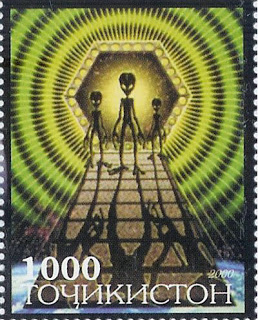
ET in Manu
Now I am coming to the point.
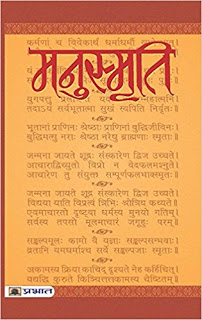
Manu Smrti and our Puranas speak about various time zones for Devas and Brahma. When we hear about Extra Terrestrial Civilizations in distant planetary system we will understand such descriptions better.
We read that Devas cant have sex in the Devaloka, cant stand on their feet,can’t blink, their garlands never wither away , they can travel from one place to another place and appear intact, sages like Narada can do inter galactic travel (Tri Loka Sanchari)etc.
Now I read in Manu Smrti that human year is different from Deva (angelic) year and Deva year is different from Brahma year and Brahma’s life is insignificant compared to the Supreme God. If at all we hear or find another ET civilisation, then we will know all these are true.
For a house fly that lives only 24 hours, human year is 365 times more; human life span is 365X100 days more than the fly’s life span. If we take the life of a bacterium then our life span is million times more. For a turtle ot tortoise that lives 300 years, our life span is shorter.
Now look at what Manu says about Time calculation:-
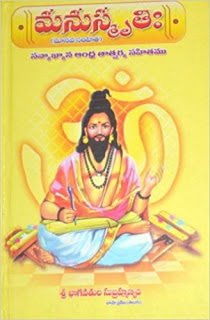
- When he whose power is incomprehensible, had thus produced the universe and men, he disappeared in himself, repeatedly suppressing one period by means of the other.
- When that divine one wakes, then this world stirs; when he slumbers tranquilly, then the universe sinks to sleep.
- But when he reposes in calm sleep, the corporeal beings whose nature is action, desist from their actions and mind becomes inert.
- When they are absorbed all at once in that great soul, then he who is the soul of all beings sweetly slumbers, free from all care and occupation.
- When this (soul) has entered darkness, it remains for a long time united with the organs (of sensation), but performs not its functions; it then leaves the corporeal frame.
- When, being clothed with minute particles (only), it enters into vegetable or animal seed, it then assumes, united (with the fine body), a (new) corporeal frame.
- Thus he, the imperishable one, by (alternately) waking and slumbering, incessantly revivifies and destroys this whole movable and immovable (creation).
- But he having composed these Institutes (of the sacred law), himself taught them, according to the rule, to me alone in the beginning; next I (taught them) to Mariki and the other sages.
- Bhrigu, here, will fully recite to you these Institutes; for that sage learned the whole in its entirety from me.
- Then that great sage Bhrigu, being thus addressed by Manu, spoke, pleased in his heart, to all the sages, ‘Listen!’
- Six other high-minded, very powerful Manus, who belong to the race of this Manu, the descendant of the Self-existent (Svayambhu), and who have severally produced created beings,
- (Are) Svarokisha, Auttami, Tamasa, Raivata, Kakshusha, possessing great lustre, and the son of Vivasvat.
- These seven very glorious Manus, the first among whom is Svayambhuva, produced and protected this whole movable and immovable (creation), each during the period (allotted to him).
- Eighteen nimeshas (twinklings of the eye, are one kashtha), thirty kashthas one kala, thirty kalas one muhurta, and as many (muhurtas) one day and night.
- The sun divides days and nights, both human and divine, the night (being intended) for the repose of created beings and the day for exertion.
- A month is a day and a night of the manes, but the division is according to fortnights. The dark (fortnight) is their day for active exertion, the bright (fortnight) their night for sleep.
- A year is a day and a night of the gods; their division is (as follows): the half year during which the sun progresses to the north will be the day, that during which it goes southwards the night.
- But hear now the brief (description of) the duration of a night and a day of Brahman and of the several ages (of the world, yuga) according to their order.
- They declare that the Krita age (consists of) four thousand years (of the gods); the twilight preceding it consists of as many hundreds, and the twilight following it of the same number.
- In the other three ages with their twilights preceding and following, the thousands and hundreds are diminished by one (in each).
- These twelve thousand (years) which thus have been just mentioned as the total of four (human) ages, are called one age of the gods.
- But know that the sum of one thousand ages of the gods (makes) one day of Brahman, and that his night has the same length.
- Those (only, who) know that the holy day of Brahman, indeed, ends after (the completion of) one thousand ages (of the gods) and that his night lasts as long, (are really) men acquainted with (the length of) days and nights.
- At the end of that day and night he who was asleep, awakes and, after awaking, creates mind, which is both real and unreal.
- Mind, impelled by (Brahman’s) desire to create, performs the work of creation by modifying itself, thence ether is produced; they declare that sound is the quality of the latter.
- But from ether, modifying itself, springs the pure, powerful wind, the vehicle of all perfumes; that is held to possess the quality of touch.
- Next from wind modifying itself, proceeds the brilliant light, which illuminates and dispels darkness; that is declared to possess the quality of colour;
- And from light, modifying itself, (is produced) water, possessing the quality of taste, from water earth which has the quality of smell; such is the creation in the beginning.
- The before-mentioned age of the gods, (or) twelve thousand (of their years), being multiplied by seventy-one, (constitutes what) is here named the period of a Manu (Manvantara).
- The Manvantaras, the creations and destructions (of the world, are) numberless; sporting, as it were, Brahman repeats this again and again.
Also read……..
Manu, not only a Law Maker but also a Great Botanist! (Post No.4375 …
https://tamilandvedas.com/…/manu-not-only-a-law-maker-but-also-a-great-botanist-p…
7 Nov 2017 – Manu Smrti, law book written by Manu, talks about lot of subjects which makes it a Hindu Encyclopaedia. Manu was not only a law maker but …
https://tamilandvedas.com/tag/in-manu/
Black Antelope in Manu: Strange Facts- Part 3 (Post No.3047) … (for old articles go to tamilandvedas.com OR swamiindology.blogspot.com). Manusays,.
similes of Manu | Tamil and Vedas
https://tamilandvedas.com/tag/similes-of-manu/
Posts about similes of Manu written by Tamil and Vedas.
Manu | Tamil and Vedas | Page 2
https://tamilandvedas.com/tag/manu/page/2/
Posts about Manu written by Tamil and Vedas. … Manu deals with the menstrual women in several chapters: 3-239; 4-40/41, 57, 208; 5-66, 85, 108; 11- 88, 174.
Manu on marriage | Tamil and Vedas
https://tamilandvedas.com/tag/manu-on-marriage/
Posts about Manu on marriage written by Tamil and Vedas.
Manu on Brahmins | Tamil and Vedas
https://tamilandvedas.com/tag/manu-on-brahmins/
Posts about Manu on Brahmins written by Tamil and Vedas.
in Manu smrti | Tamil and Vedas
https://tamilandvedas.com/tag/in-manu-smrti/
Posts about in Manu smrti written by Tamil and Vedas.
Manu and Women | Tamil and Vedas
https://tamilandvedas.com/tag/manu-and-women/
Posts about Manu and Women written by Tamil and Vedas.
Mystery of Manu : Rig Veda Mystery No.8! | Tamil and Vedas
19 Jan 2015 – Research article Written by London swaminathan Research Paper No.1589; Dated 19th January 2015 (I have already written about the …
–Subham—
 Tamil and Vedas
You must be logged in to post a comment.