Four Wings of Hindu Army: Blow to Aryan- Dravidian Theory!

War formation in MBh

Research Paper written by London Swaminathan
Post No.1230 ; Dated 13th August 2014.

The Four Limbs of Army, ‘Chatur Anga’ in Sanskrit , is a Hindu concept found in ancient Tamil and Sanskrit literature. It is in the 2000 year old Sangam Tamil literature and earlier Sanskrit literature including that of the greatest Indian poet Kalidasa (1st century BCE or earlier) and world’s first economist and political scientist Chanakya (3rd Century BCE). This is a severe blow to the supporters of ‘racist theory’ which divide Indians into Aryans, Dravidians ,Mundas and aborigines.

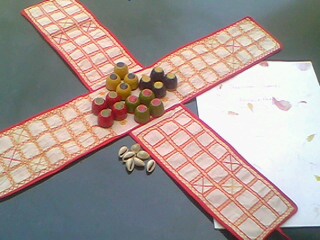
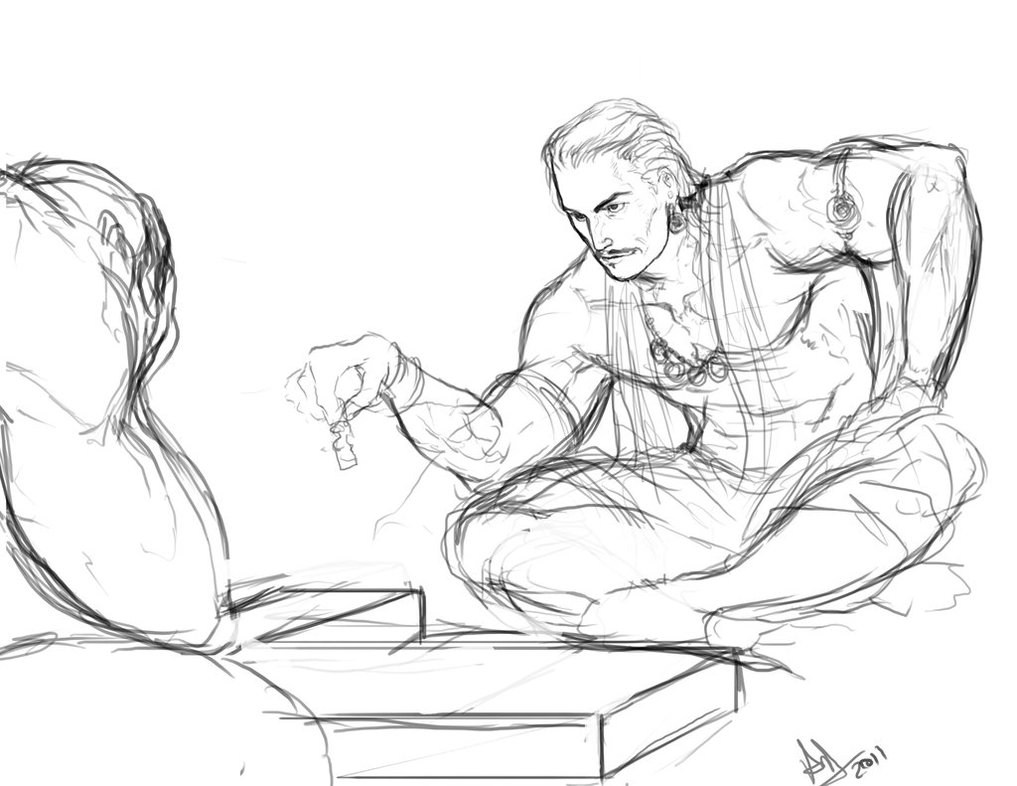
The most famous board game Chess (Chaturanga) was invented in India is a fact acknowledged by everyone. This is based on the four wings of army Ratha, Gaja, Thuraga, Pathadi (Chariot, Elephant, Horse, Foot soldier) that we see in all the Indian wars from the days of Mahabharata, probably earlier.

From the ancient times Hindus from the Himalayas to the land’s end Kanyakumari had the same thought process. Foreign “scholars” who wanted to sow the seeds of division invented (concocted) a theory of dividing Indians which has no basis in Tamil or Sanskrit literature.

Back to Godhead - Volume 12, Number 05 - 1977

Hindus are fascinated with number FOUR for various reasons. Number four is considered strong, long lasting, enduring. They divided the eras (yugas), Vedas, four stages of life (Purushartha), army divisions, castes, four methods of ( Chaturvitha Upaya) winning an enemy etc.

Hindu army was also divided in to four wings of
Ratha= chariots
Gaja= elephants
Thuraga= horses
Patha athi= infantry.

Battle_at_Lanka,_Ramayana,_Udaipur,_1649-53

Powerful Nanda Army!

According to the Greek historian Plutarch (45 CE to 120 CE), Alexander the Great was afraid of the mighty Indian army. Plutarch wrote that Nanda dynasty had 200,000 soldiers, 80,000 cavalry, 8000 chariots and 7000 elephants. Nanda dynasty ruled India in the fourth century BCE.

Kautilya alias Chanakaya gives lot of information about the four wings of army in his Arthashastra (Chapter 10). He even gives the salary for each post. An amazing planning is seen there.

During Mahabahara war 11 divisions of Kauravas and 7 divisions of Pandavas fought in Kurukshetra. One division in Sanskrit is called Akshouhini, which consists of

21,870 chariots
21,870 elephants
65,610 horses
109,350 foot soldiers.

We have to multiply this number by 18 (11+7) divisions!! A huge number indeed! Whether we believe it or not at least we know for sure the four wings of army existed at that time. The war was fought around 3100 BCE!

Krishna_Narakasura

Kalidasa on Equal Fight

The beauty of this fourfold division is that it is found in Sangam Tamil literature as well. They copied it simply from the North. Kalidasa who lived in the first century BCE or earlier says about it in several places including
Raghu Vamsa 7-37:-

Paththi padanim rathinam rathesasthurangasadhi thuragathirudam
Yantha gajasyabhya pathangajastham thulya parathi dwanthvi bhabuva yudhdham
———(Raghu 7-37)

It was a dharma yudhha (war based on rules of equal strength). Infantry fought with infantry only. A charioteer fought with another charioteer only and so do the elephant man and horse man fought with each other. The war was fought between the equals (7-37).

good picture
Tamil Poets on Fourfold Army

Maruthan Ilanagan, a Tamil poet, says it in Purananuru verse 55. It is repeated by Pandya King Neduncheziyan (Puram 72), Adai nedum Kalviyar (Puram 345),Madalan Madurai Kumaranar (Puram 197), Pereyin Muruvalar (Puram 239), Madurai Padai Manga Manniyar (Puram 351),Ulochanar (Puram 377) and Kazaththalaiyar (Puram 368).

There are innumerable references in the Tamil literature. Since Purananuru verses are considered very old poems in the Sangam corpus, I quoted only from the Purananuru. All the above poets lived in the first few centuries of our era.

Sangam Tamil poets shattered the Aryan- Dravidian ‘Racist theory’ with countless references like this. Whatever we find in the North we find in the South of India. There is no difference between the south and the north in the culture or beliefs. People who did not know both Tamil and Sanskrit wrote lot of rubbish in the past. It will take years to clear that Himalayan quantity of Aryan – Dravidian rubbish!!
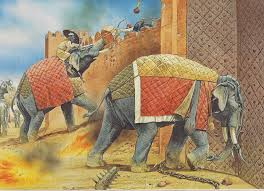
elephant attack

God Bless India, that is Bharat!
கழகத்தில் சேராதே: தமிழர்களுக்கு எச்சரிக்கை!!

mahabharata-game-of-dice

ஆராய்ச்சிக் கட்டுரையாளர்: லண்டன் சுவாமிநாதன்
கட்டுரை எண்:- 1229 ; தேதி 12 ஆகஸ்ட் 2014.

1500 அண்டுகளுக்கு முன்னால் வாழ்ந்த பேரறிஞன் திருவள்ளுவன் தமிழர்களைக் கடுமையாக எச்சரிக்கிறார்:

பழகிய செல்வமும் பண்பும் கெடுக்கும்
கழகத்துக் காலைப் புகின் (குறள் 937)

கழகத்தில் காலத்தைக் கழித்தால் பரம்பரையாக அவனுக்குக் கிடைத்த செல்வமும் தொலையும். அவனிடமுள்ள எல்லா நல்ல குணங்களும் அழிந்து போகும்!
கழகம்= சூதடும் இடம்.

கவறும் கழகமும் கையும் தருக்கி
இவறியார் இல்லாகியார் ( குறள் 935)

கழகத்தை நம்பி பொருள் எல்லாவற்றையும் கோட்டை விட்டவர் பலர் உண்டு! காரணம்? சூதாடும் இடம் (கழகம்), சூதாடும் கருவி, தனது சூதாட்டத் திறமை —- இவற்றை எல்லாம் நம்பி, ‘’இல்லாமல்’’ போனவர்கள் பலர்!

சுருக்கமாகச் சொன்னால் கழகத்தில் சேராதே, கழகத்துக்குப் போகாதே, போனால் நீ அழிந்து போவாய்!
வாழ்க வள்ளுவன்! வளர்க அவன் அறிவுரை!!

இதற்கு முன்னும் பின்னும் உள்ள எட்டு குறள்களில் முத்து முத்தாய் உதிர்க்கிறான் வள்ளுவன்:

sokkattan

புல்லட் பாயிண்ட் 1:
மீனைப் பார்த்தாயா? தூண்டிலைப் பார்த்தாயா? என்ன தெரிந்தது. உன் கதியும் அதே கதிதான் (குறள் 931)

புல்லட் பாயிண்ட் 2
நேற்று லட்டரியில் பத்து ரூபாய் விழுந்ததா? இனிமேல் உனக்கு நூறு முறை தோல்விதான், நீ ஒரு ஏமாளி (குறள் 932)

புல்லட் பாயிண்ட் 3
காயை உருட்டினால் பொருள் கிடைக்கும் என்று சொன்னாயா? உன் கிட்ட நல்ல வழியில் வந்த பொருளும் உருளப் போகுது! (குறள் 933)

புல்லட் பாயிண்ட் 4
டேய்! மண்டு! ‘பெட்’ கட்டினாயா? ரேசுக்குப் போனாயா? லாட்டரி சீட்டாய் வாங்கிக் குவிக்கிறாயா? இனிமேல் உனக்கு வறுமை, சிறுமை ஒன்றுக்கும் குறைவே இல்லை, போ! (குறள் 934)

புல்லட் பாயிண்ட் 5
சூதாட்டத்துக்கு இன்னொரு பெயர் முகடி (மூதேவி). அவள் உன்னை விழுங்கினால் சோற்றுக்கே லாட்டரிதான் (குறள் 936)

புல்லட் பாயிண்ட் 6
சூதாடினாயா? இனிமேல் உன் வாயில் பொய் நிறையவே வரும், அருள் எல்லாம் ஓடிப்போகும் (குறள் 938)

புல்லட் பாயிண்ட் 7
உனக்கு இனிமேல் —- “ரோடி, கப்டா அவ்ர் மகான்” — கிடைக்காது. அதாவது உணவு, புகழ், கல்வி, உடை, செல்வம் ஆகிய ஐந்தும் ‘அவுட்’! (குறள் 939)

புல்லட் பாயிண்ட் 8
நோய் வந்தவுடன் உடம்பின் மேலே கூடுதல் காதல் வருது இல்ல! அதே போல சூதாட்டத்தில் பொருளை இழக்க இழக்க அதன் மேல உனக்கு “லவ்” அதிகரிக்கும், ஜாக்கிரதை! (குறள் 940)

banu karnan 2

ரிக்வேதம் என்ன சொல்கிறது?

சூதாடாதே, நிலத்துக்குப் போய் சோளம் விதை!
கொஞ்சம் ஜெயித்தவுடன் அதைப் பற்றி உயர்வாக எண்ணி விடாதே!
உன்னுடைய ஆடு மாடுகளை எண்ணிப் பார், உனக்கு மனைவியும் உண்டு!
இதுதான் சாவித்ரியே என் கிட்ட சொன்னாள்!
(மண்டலம் 10-34-13)

உலகின் மிகப் பழைய சமய நூல் கூறிய அறிவுரை இது!
கவச ஐலூசர் என்ற முனிவர் காதில் ஒலித்த மந்திரம் இது. வேத மந்திரங்களை சங்க காலப் புலவர்கள் ‘’கேள்வி’’ (காதில் விழுந்தது) என்றும் ‘’மறை’’ (ரகசியம்) பாடுகின்றனர்.

கம்பன் என்ன சொன்னான்?

வள்ளுவனுக்கு சளைத்தவனா கம்பன்? அவன் என்ன சொல்கிறான் என்று பார்ப்போம்?

சூது முந்துறச் சொல்லிய மாத்துயர்
நீதி மைந்த! நினக்கிலை ஆயினும்
ஏதம் என்பன யாவையும் எய்துதற்கு
ஓதும் மூலம் அவையென ஓர்தியே (கம்ப ராமாயணம், மந்தரை-2)
ஒப்பிடுக : குறள் 934

banu karnan

அறநெறிச்சாரம் (147) என்ன சொல்கிறது?

ஓதலும் ஓதி உணர்தலும் சான்றோரால்
மேதை எனப்படும் மேன்மையும் – சூது
பொருமென்னும் சொல்லினால் புல்லப்படுமேல்
இருளாம் ஒருங்கே இவை
ஒப்பிடுக: குறள் 939.

பாரதி என்ன சொன்னான்?

“கோயிற் பூசை செய்வோர் சிலையைக் கொண்டு விற்றல் போலும்
வாயில் காத்து நிற்பான் வீட்டை வைத்து இழத்தல் போலும்
ஆயிரங்களான நீதி அவை உணர்ந்த தருமன்
தேயம் வைத்து இழந்தான் — சீச்சீ! சிறியர் செய்த செய்கை செய்தான்”
என்ற பாரதியாரின் பாஞ்சாலி சபதப் பாடல் சூதாடிய தர்மபுத்திரனைச் சாடுகிறது!

வள்ளுவன் வாழ்க ! (சூதாட்டக்) கழகங்கள் அழிக !!

Hindu Vestiges in Iraq!

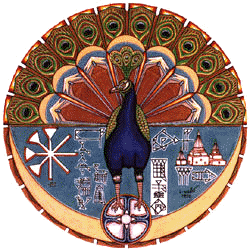
Yazidi_symbol
Yazidi Symbol

Research paper written by London swaminthan
Post No.1228; Dated 12h August 2014.

A shocking news item appeared in London newspapers under the title WOMEN AND CHILDREN BURIED ALIVE, Islamic extremists place 500 devil worshippers in mass graves in Iraq. (Please see Metro, Page 1 dated 11th August 2014). It was about burying 300 women and 200 children of Yazidi tribe who refused to convert to Islam. The news was reported by Mohamed Shia al-Sudani, a minister for the Iraqi government. This article is not written to condemn or criticize the ISIS extremists. This is about the Yazidi Tribe. The news papers have described who they were and what they believe in. Most of their customs and beliefs are from Hinduism!!!

yazidi oil burning for saints
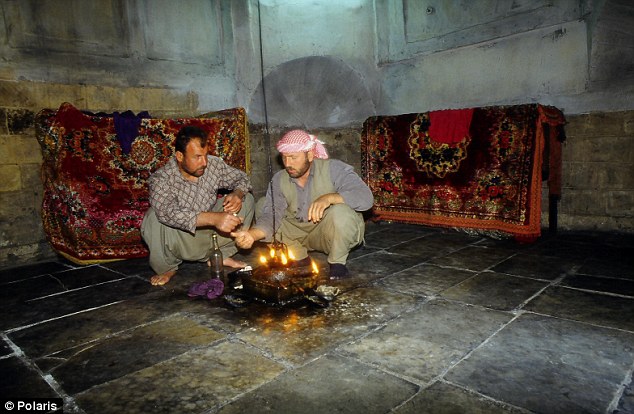
Yazidis burn oil lamps for one the saints.

Kanchi Paramacharya (1894-1994) in his talk pointed out that lot of Hindu customs around the world from Shiva dance of Australian aborigines to Sanskrit Inscription in Turkey dated 1400 BCE with ht names of Vedic Gods are Hindu relics. He cautioned us with the following words: Don’t say that Hindus went there and spread their religion. It was the Hindu religion that existed in every part of the world. That is why this religion is called Sanatan Dharma. What you see is only the vestiges of Hindu religion”.

I strongly believe in his comments. He is 100 percent right. Following news item that is occupying more space in London News Papers is another proof:

Yazidis are part of an ancient religion. From 11th century they organised themselves as a religious group. But they are a pre Islamic community. They are 4000 year old community. They have beliefs borrowed from multi traditions including Zoroastrianism, ancient Iranian religion (Vedic Hindu!!), Christianity and Islam. They speak Kurdish. There are 700,000 Yazidis in the world and most of them live in Northern Iraq. Their heartland is the north western city of Sinjar ( Now they are driven out by the ISIS extremists).

1.The Yazidis believe in One Supreme Being: Rig Veda says “Ekam Sat Vipra: Bahuda Vadanti “, meaning Truth is one, sages call it by different names.

2.Yazidis say, “Supreme being Yasdan created the earth with the help of Seven Angels”: Hindus say that Brahma created the world with Seven Rishis (Sapta Rsis) who were the forefathers of human race. As a Brahmin I do worship Saptarisis every day in the ‘thrice a day Sandhya Vandhana’ (Tri Kla Sandhya Vandhana) ritual. I recite the mantra with the names of sevensages: Atri, Brhu, Kutsa, Vasishta, Gautham, Kasyapa and Angirasa.

The word Yasdan may be the corrupted form of Yadunandan (Yadava Krishna) or lot of Hindu names beginning with Yagna or Yajna. In the Vedas we find names like Yajna Vacas, Yajna Sena, Yahna Valkya, Yajnesu and many more.

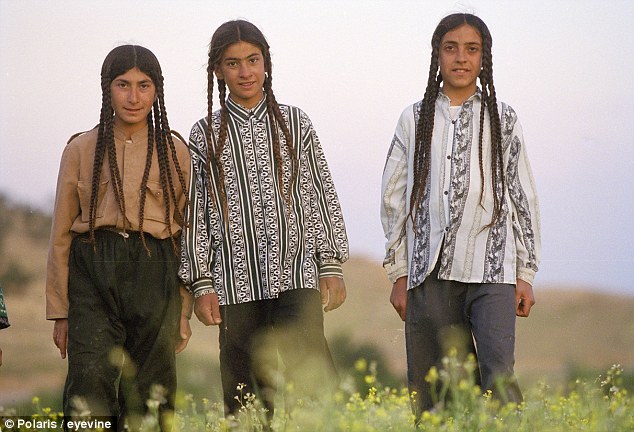
yazid boys plait like girls
Yazidi boys plait hair like girls.

3. Most important of their gods is Peacock Angel. Hindus worship Kartikeya who rides on a Peacock. His names like Mayura Vahana, Mayil Vahana, Siki Vahana and several other names are associated with the Indian national Bird peacock. It is primarily an Indian bird exported to West Asia from Biblical days.

4.Yazidis believe in reincarnation: No Semitic religion believes in reincarnation. Only Hindus and its offshoots like Buddhism, Jainism and Sikhism believe in Reincarnation. This shows very clearly that Yazidis are Hindus.

5.Peacock angel is known as Malak Tawous. It may be the corrupted form of Palak= Bala Deva or Palaka Deva. P < M<V are interchangeable is well known to linguists.

6.They worship five times a day; they do circumcision: This is the local custom followed by ancient people in that region which is taken by other Semitic religions. Circumcision is not followed by the Hindus.

7. Malak Tawoo means “devil” in Arabic. All idol worshippers were called as Devil worshippers by Semitic religions. This is another proof to believe that they are Hindus.

yazidi symbol2
Peacock is sacred to them like Hindu devotees of Lord Skanda

8. Yazidi means Worshippers of God. They are fire worshippers like the Vedic Hindus and Iranians. They keep oil lamps burning at their homes for saints. This like Brahmins Three Fire worship at home (Three Fires: Dakshinagniyam, Gargapatyam and Ahavaniyam). Ized means God in Persian. Yazdis derived from this word, they believe. Ized arrived from Jyothi (Light/Fire), I believe.

9. Why they were buried alive? Metro Newspaper published from London added this on page 5: “Unlike Christians, who have been given the choice of paying a tax to the Islamic organisation – known as Jizya — the Yazdis have been given a stark choice: Convert to Islam or be murdered”.

The news is reported by the BBC, Reuters, Daily Mail and several other mass media in addition to Metro news paper quoted above.

One can find more information about Yazdis by googling.

Contact swami_48@yahoo.com

Pictures are taken from newspapers; thanks.

சதுரங்க பந்தம் -2

chaturan

தமிழ் என்னும் விந்தை!
சதுரங்க பந்தம் -2
ச.நாகராஜன்
Post No.1227; Dated 11th August 2014

சதுரங்க பந்தம் அமைப்பதே ஒரு கடினமான விஷயம். அதில் இன்னும் பல அற்புதங்களைச் செய்து காண்பித்து ஒரு செய்யுளை அமைப்பது என்றால் பிரமிப்பின் உச்சிக்குத் தான் செல்ல முடியும்.

1911ஆம் ஆண்டு வெளியிடப்பட்ட ஒரு அற்புதமான நூல் நகுலேச்சர விநோத விசித்திர கவிப் பூங்கொத்து.

“நகுலேச்சர விநோத விசித்திர கவிப் பூங்கொத்து. விளக்கக் குறிப்புரை சித்திர கோட்டங்களுடன் – நகுலேச ஸ்தோத்திரம்” என்ற தலைப்புடன் வெளிவந்துள்ள இதை இயற்றியவர் யாழ்ப்பாணத்து வலிகாமம் வடக்குப் பகுதிப் பிரசித்த நோத்தாரி மயிலிட்டி க.மயில்வாகனப் பிள்ளை ஆவார். (இதை மறுபதிப்பாக தேன் பதிப்பகம், மூன்றாவது தெரு, சௌமியா நகர், மேடவாக்கம், சென்னை – 601302, 2004ஆம் ஆண்டு வெளியிட்டு ஒரு போற்றத்தகும் செயலைச் செய்துள்ளது). இந்நூலின் நகலை முனைவர் கி.முப்பால் அணி வழங்க ந;கருணாநிதி பேருதவி புரிய நூலைக் கொண்டு வருவதாக இதன் பதிப்பாளர் குறிப்பிடுகிறார்).

செய்யுள் இது தான்:-

நீதா சதாபயனே நீபலர்க்குஞ் சாலாமயற்

றீதார் மனமகற்றச் சீர்நகுலை – யேகலாற்கொன்

னீடார் மிடற்றகலா நீலா கமலபதா

நீதா பலமகலா நீ

இந்த சதுரங்க பந்தத்தை விளக்கும் விதமாக நூல் ஆசிரியர் தரும் விளக்கம் இது:-

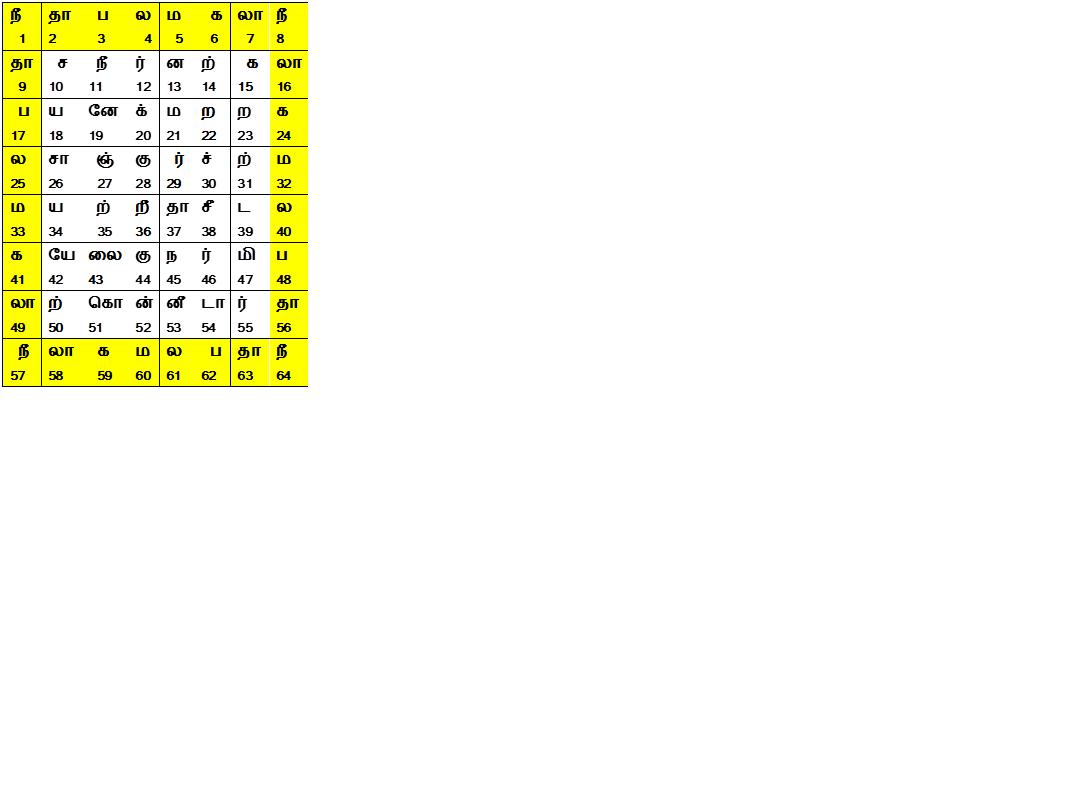
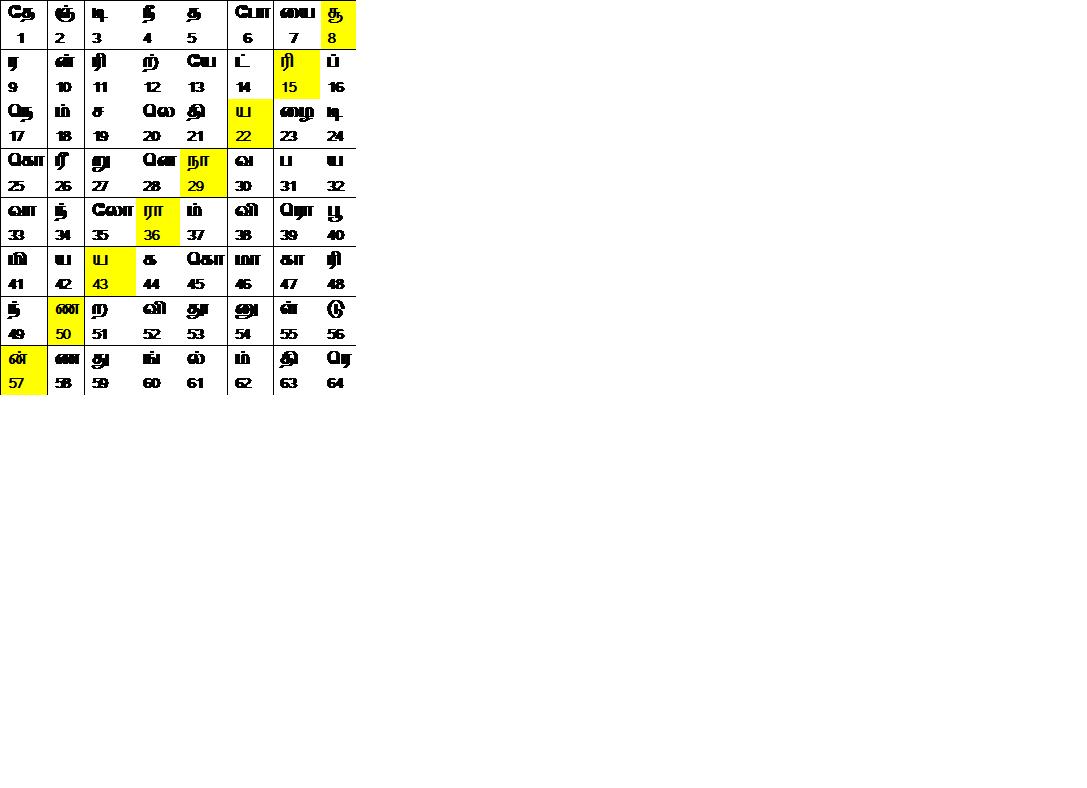
“நிரைக்கு எவ்வெட்டாக எட்டு நிரை கொண்ட அறுபத்துநான்கு அறைகளிலே நான்கு பக்கத்து ஈற்று நிரைகளிலு நான்காம் அடி தோன்ற எழுத்துக்கள் பொதுவின்றி அமையப் பாடுவது.”

செய்யுளில் நான்கு பக்கங்களிலும் நீதா பலமகலா நீ என்ற நான்காம் அடி அமையப் பெற்றுள்ளது. (மஞ்சள் வண்ணத்தில் சுட்டிக் காட்டப்பட்டுள்ளது)

bandham 2

பாடலை எப்படி சதுரங்க பந்தத்தில் படிப்பது? 1, 2, 10, 9, 17, 18, 19, 11, 3, 4, 12, 20, 28, 27, 26, 25, 33, 34, 35, 36, 37, 29, 21, 13, 5, 6, 14, 22, 30, 38, 46, 45, 44, 43, 42, 41, 49. 50. 51, 52, 53, 54, 55, 47, 39, 31, 23, 15, 7, 8, 16, 24, 32, 40, 48, 56, 64, 63, 62, 61, 60, 59, 58, 57 என்ற கட்டங்கள் (சதுரங்க அறைகள்) வழியே சென்றால் பாடலைப் படிக்கலாம்.

பாடலின் பொருளை நூலாசிரியர் இப்படி விளக்குகிறார்:-

கொன் நீடு ஆர் மிடற்று அகலா நீலா – பெருமை நீடுதல் பொருந்திய கண்டத்தினிடத்தே நீங்காத நஞ்சக் கறையை உடையவரே!
கமலபதா – தாமரை மலர் போன்ற பாதங்களை உடையவரே!
நீதா – நீதியை உடையவரே!

நீ பலர்க்கும் சால மயல் தீது ஆர் மனம் அகற்றச் சீர் நகுலை ஏகலால் – தேவரீர் பலர்க்கு (அவர்களுடைய) மனத்திற் பொருந்திய மயக்கமாகிய தீமையை மிகவும் நீக்கும் பொருட்டுச் சிறப்பாகிய நகுலேச்சரத்தின் கண் எழுந்தருளலால்

பலம் அகலா நீ – பேறு நீங்காத தேவரீரே!

நீ சதா பயனே தா – தேவரீர் எப்பொழுதும் பேற்றினைத் தந்தருள்க

இந்த சதுரங்க பந்தத்தில் அமைந்துள்ள பல்வேறு சிறப்புக்களை படித்தும் பார்த்தும் மகிழலாம். தமிழ் எத்தகைய சிறப்பு வாய்ந்த மொழி என்பதை அறிந்து பெருமிதப் படலாம்.

*******

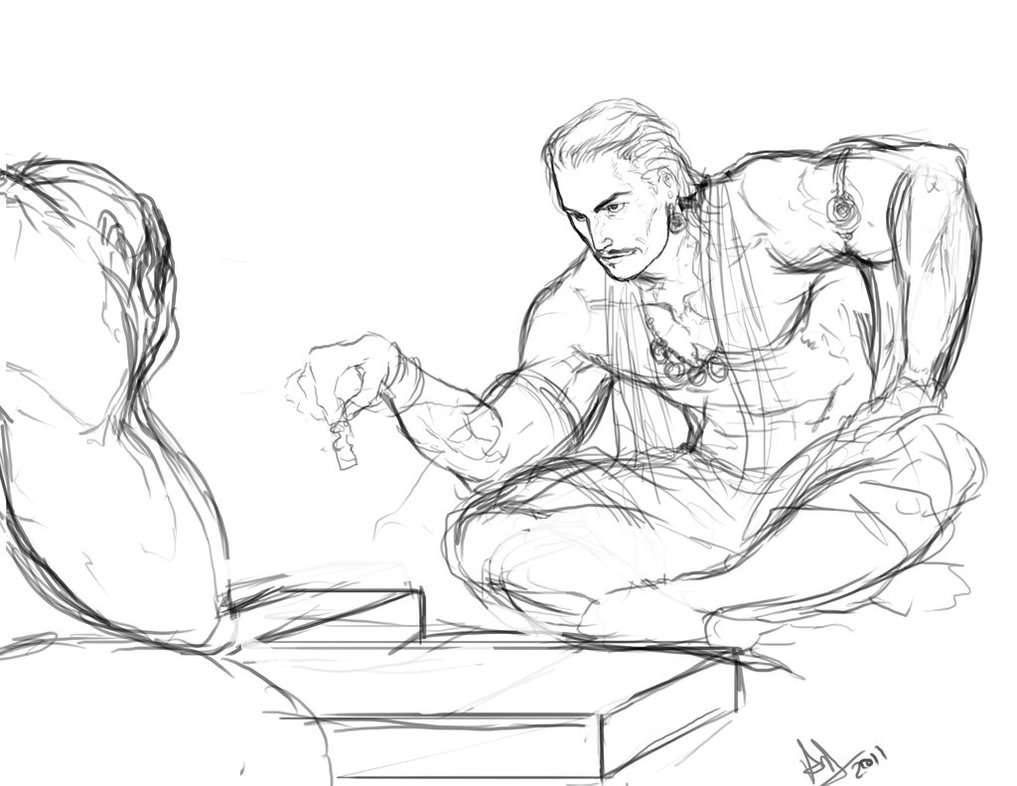
Why did Karna pull the Sari of Duryodana’s Wife?

banu karnan 2

Research article by London Swaminathan
Post No. 1226; Dated 10th August 2014

There are two interesting stories about dice play in Tamil literature. The first incident is in the Mahabharata by Villiputturar, a Tamil poet of repute. He narrates a beautiful anecdote which stands for the model of great friendship.

Kunti came to see Karna. She revealed the great secret that he was her first son. She begged him to save the life of Pandavas in the great war. But he refused to accept her request. He narrated a beautiful incident that happened in his life to justify his stand:

“Mum! Listen! I will die for Duryodahana. I have decided to be grateful to him until my last breadth. You want to know the reason? One day I was playing dice with Duryodhana’s wife Bhanumathi. Only two of us were in the room. Banu was facing the door. Suddenly Duryodhana entered the room. As a respect to her husband who was a mighty king, she stood up. I thought she was trying to run away because she was losing the game. Just to stop her, I pulled her sari. But my hand got stuck up in her waist band which was made up of gold studded with pearls. The pearls in the Mekala ornament fell on the floor in front of Duryodhana’s eyes. Both myself and Banu hung our head. But to my surprise, Duryodhana asked us, “ Hi! Do you want me to pick up the pearls or pick up and make a garland?” His tone was full of love and respect.

banu karnan

What a great friendship? We could not see such a pure relationship anywhere else between a man and a woman. Duryodhana never suspected the integrity, honesty and character of the great Karna. Such was their exemplary friendship. Duryodhana went to the extent of allowing his dearest friend Karna to go to the harem and play with his wife. It was like a brother and sister relationship. They never overstepped their limits. Karna also was grateful till the end of his life. Every episode in the Mahabharata was a moral lesson to the entire world.

This episode is found in the Villi bharatam composed by Villiputturar in Tamil.

(I have given the relevant verse in Tamil in the Tamil version of this post)
mahabharata-game-of-dice

Dice Play in Sangam Literature
Purananuru verse 43 narrated an episode between a Tamil poet and the brother of Choza king. Mavlathan was the brother of Choza king Nalankilli. He played dice with the Brahmin poet Thamappal Kannan. Halfway through the game, one of the coins rolled down and went underneath him. Mavalathan became angry and threw the other coin on the poet. He was shocked.

He said, “You came in the line of great Choza kings whose forefather was the famous Sibi. He was ready to sacrifice his life just to save a dove. None of your forefathers did harm a Brahmin. You threw a dice on me! Now I doubt about even your very birth!” On hearing such harsh words from a Brahmin poet, Mavalathan hung his head in shame. Now the poet changed his tone. What a great gesture is this! You have proved now that you are one of the great cholzas. Even when I said some harsh words you did not become angry. Now I feel ashamed. Probably I was the one who did wrong. Let you live as many years as were the number of sand particles on the banks of River Kaveri!

sokkattan
This anecdote throws light on the relationship between the Kshatriyas and the Brahmins that existed 2000 years ago. Nobody dared to harm a Brahmin because of their character, purity and honesty. Kings never overstepped their limits. This also shows that poets were in great friendship with the rulers. This shows that games like dice were very popular.

((Though verse 43 of Purananuru used the word Vattu Aduthal for the game, I have translated it as a dice game. Not much information is available on this Vattu Aduthal and I guess this is one of the board games like dice.))

Contact swami_48@yahoo.com

துரியோதனன் மனைவி — கர்ணன் விளையாட்டில் ஒரு சம்பவம்

banu karnan

துரியோதனன் மனைவி — கர்ணன் விளையாட்டில் ஒரு சம்பவம்

கட்டுரையாளர் :- லண்டன் சுவாமிநாதன்
கட்டுரை எண்:-1224; தேதி: 10 ஆகஸ்ட் 2014.

சூதாட்டம் பற்றி இரண்டு சுவையான கதைகள் சங்க இலக்கியத்திலும் பிற்காலத் தமிழ் இலக்கியத்திலும் உள்ளன.

துரியோதனன் மனைவி பானுமதியும் கர்ணனும் ஒரு நாள் சொக்கட்டான் ஆடிக் கொண்டிருந்தனர். பாதி ஆட்டத்தில் திடீரென்று பானுமதி எழுந்தாள். அவள் தோற்கும் நிலையில் இருந்ததால் பயந்து ஓடப் பார்க்கிறாள் என்று நினைத்த கர்ணன் அவள் புடவையைப் பிடித்து இழுத்து நிறுத்த முயற்சி செய்தான். கைதவறி பானுமதியின் இடுப்பில் இருந்த மேகலையில் கர்ணன் கை சிக்கவே மேகலையில் ஒட்டியிருந்த முத்துக்கள் சிதறின. பானுமதி திடீரென எழுந்ததற்குக் காரணம் அவளது கணவன் துரியோதனன் உள்ளே நுழைந்ததாகும். துரியோதணன் கண் முன்னால், முத்து மேகலை சிதறவே இருவரும் தலை குனிந்து நின்றனர்.

அடுத்தது என்ன நிகழுமோ என்று பானுமதியும் கர்ணனும் அஞ்சிக் கொண்டிருந்த வேளையில், துரியோதனன் “ எடுக்கவோ கோக்கவோ என்றான். இந்த முத்துக்களை எடுக்கவா அல்லது மாலையாகக் கோர்த்துத் தரட்டுமா? என்று அன்போடு வினவுகிறான்.

banu karnan 2

கர்ணனின் நட்பைக் கடவுளுடன் கொண்ட நட்பாகக் கருதுபவன் துரியோதனன். கர்ணனுடைய ஒழுக்கத்தின் மீது அவனுக்குச் சிறிதும் சந்தேகம் ஏற்படவில்லை. கர்ணனே வியப்படையும் அளவுக்கு அவன் நடந்து கொண்டான. அதனால் அல்லவோ, அந்தப்புரத்தில் தன் மனைவியுடன் மாற்றான் ஒருவனை சொக்கட்டான் ஆட அனுமதித்தான். கர்ணனோ துரியோதணனுக்கும் மேலே ஒரு படி சென்று நட்புக்கு இலக்கணம் வகுத்தவன்.

கர்ணன் தனது மூத்த மகன் என்று கூறி குந்தி சொன்ன போதும் கட்சி மாற மறுத்தான் கர்ணன். அப்போது அவன் கூறிய சம்பவம் தான் மேலே கூறப்பட்ட முத்து மேகலை சம்பவம். இதைச் சொல்லி அம்மா! இப்படிப் பட்ட துரியோதணனுக்குச் செஞ்சோற்றுக் கடன் தீர்ப்பதே என் வாழ்வின் லட்சியம் என்று சொல்லிவிடுகிறான்.

வில்லிபாரதத்தில் வரும் இந்தக் காட்சியைப் படம்பிடித்துக் காட்டும் பாடல் இதோ:–

sokkattan

மடந்தை பொன் திருமேகலை மணிஉகவே மாசு அறத் திகழும் ஏகாந்த இடந்தனில் புரிந்தே நானயர்ந்து இருப்ப எடுக்கவோ கோக்கவோ என்றான்;
திடம்படுத்திடு வேல் இராசராசனுக்குச் செருமுனை சென்று செஞ்சோற்றுக்
கடன் கழிப்பதுவே, எனக்குகு இனிப் புகழும், கருமமும் தர்மமும்.
—வில்லி பாரதம்

புறநானூற்றில் பிராமணன் – க்ஷத்ரியன் மோதல்

புறநானூற்றில் பிராமணப் புலவனும் – க்ஷத்ரியனனான சோழ மன்னனும் சொக்கட்டான் ஆடிக் கொண்டிருந்தனர். ஒரு காய் உருண்டோடியதால் சோழ மன்னன் கோபம் கொண்டான். உடனே சோழ மன்னன், சொக்கட்டான் காய்களைப் பிராமணப் புலவன் மீது வீசி எறிந்தான். உடனே புலவர் உன்னுடைய குலத்தில் “பார்ப்பனர் நோவன செய்யலர்” என்று நயமாகக் கூறினார். உடனே அவன் வெட்கித் தலை குனிந்தான்.

புறநானூற்றுப் பாடல் 43 இந்த சம்பவத்தை விளக்குகிறது. சோழன் நலங்கிள்ளி யின் தம்பி மாவளத்தானும் பார்ப்பனப் புலவர் தாமப் பல் கண்ணனாரும் வட்டு விளயாடுகையில் இது நடந்தது.
((வட்டு ஆடுதல் பற்றி அதிக தகல் இல்லை. இதை ஒரு வகை சொக்காட்டான் ஆட்டம் என்றே நான் கருதுகிறேன்)).
mahabharata-game-of-dice

புலவர் தாமப்பல் கண்ணனார் கூறுகிறார்:
கதிரவனைச் சுற்றி வரும் முனிவர்களும் வியப்படையும் வண்ணம் புறாவுக்காக உயிர்தர முன்வந்த சிபிச் சக்கரவர்த்தியின் பரம்பரையில் வந்த தேர்வண் கிள்ளியின் தம்பியே! உன் பிறப்பில் ஐயம் கொள்கிறேன். ஆத்திமாலை சூடிய சோழ மன்னன் எவரும் பிராமணர் வெறுக்கும் செயலைச் செய்யத் துணியார். நீ எப்படிச் செய்தாய்? என்று நான் வெகுண்டேன். இப்படி நான் சொன்னவுடனே உடனே என் மீது கோபிக்காமல் வெட்கப்பட்டாய். சோழர்குடியின் பெருமையை நிலை நாட்டிவிட்டாய். இப்போது நானே தவ்று செய்தேன் என்று தோன்றுகிறது. காவிரி ஆற்றின் மணலை விட நீ நீண்ட காலம் வாழ்வாயாக என்று தாமப்பல் கண்ணனார் வாழ்த்துகிறார்:

ஆர்புனை தெரியல் நின் முன்னோர் எல்லாம்
பார்ப்பார் நோவன செய்யலர் (புறம் 43)

மேற்கண்ட இரண்டு கதைகளும் விளக்கும் கருத்துகள் அற்புதமானவை.
–சுபம்–

தமிழ் என்னும் விந்தை!

love-poems-do-they-still-exist-14

சதுரங்க பந்தம் -1
ச.நாகராஜன்
Post No 1223; Dated 9th August 2014.

சதுரங்க துரக கதி பந்தம்
உலகில் உள்ள சில மொழிகளில் மட்டுமே சித்திர கவிகளை அமைக்க முடியும். தமிழில் அற்புதமான சித்திர கவிகள் ஏராளம் உண்டு. இவற்றில் ஒன்று சதுரங்க பந்தம். இந்த சதுரங்க பந்தங்களிலும் பல்வேறு வகைகள் உண்டு. அவற்றில் ஒன்று சதுரங்க துரக கதி பந்தம். சதுரங்க விளையாட்டில் ஒரு குதிரை எப்படித் தாவி தாவி கட்டம் விட்டுக் கட்டம் மாறுமோ அது போல அந்தந்த கட்டங்களில் சொற்கள் வருமாறு அமைக்க வேண்டும். அதே சமயம் கவிதையின் இலக்கணமும் மீறக் கூடாது; நல்ல பொருளும் அமைந்திருக்க வேண்டும். இப்படிப்பட்ட மிகவும் கஷ்டமான விதிகளுக்கு உட்பட்டு கவிதை இயற்றுவது மிகவும் கடினம். பெரும் தமிழ்ப் புலவரான வி.கோ. சூரிய நாராயண சாஸ்திரியார் இப்படிப்பட்ட பந்தங்கள் இயற்றுவதில் வல்லவர். தமிழ் மீதுள்ள பற்றின் காரணமாக சூரியநாராயண சாஸ்திரியார் என்ற பெயரை பரிதிமால் கலைஞர் என்று மாற்றிக் கொண்டவர் இவர்.
சித்திர கவி விளக்கம் என்ற அரிய தமிழ் நூலைப் படைத்து அதில் 22 வகை சித்திர கவிகளை விளக்கியுள்ளார். அதில் இந்த பந்தமும் ஒன்று.

சதுரங்க துரக கதி பந்தப் பாடல் இது தான்:-

தேரினெந் நெஞ்ச நீ திரித லென்கொலோ

நாரொடும் வியன்றமி ணயந்து தூவிய

காரெனும் பரிதிமால் கணங்கொள் பூவரா

ரீரடி யேழைசூட் டியையப் போற்றுவாம்

இந்தப் பாடலில் உள்ள எழுத்துக்களைக் குதிரை பாயும் போக்கில் அமைக்க ஆரம்பித்தால் அது கீழ்க்கண்ட விதமாக சதுரங்கத்தின் 64 கட்டங்களில் அமையும்.

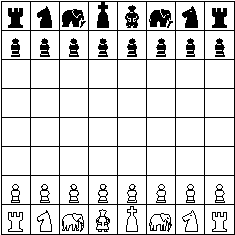
bandham chathur

சதுரங்க விளையாட்டில் குதிரை எப்படிப் பாயும் என்பதை அறியாதவர்கள் கீழ்க்கண்ட கட்டங்களில் வரிசையாகப் பாடலின் எழுத்துக்கள் அமைவதைக் கண்டு மகிழலாம்:-

1, 11, 28, 34, 17, 2, 19, 4
21, 15, 5, 20, 10, 25, 35, 29
39, 56, 62, 52, 42, 57, 51, 41
58, 43, 49, 59, 53, 38, 32, 47,
64, 54, 37, 31, 48, 63, 46, 61
44, 50, 60, 45, 55, 40, 30, 36
26, 9, 3, 13, 23, 8, 14, 24
7, 22, 16, 6, 12, 27, 33, 18

மிகவும் கஷ்டமான இந்தப் பாடல் அமைப்பில் பரிதிமால் கலைஞர் இன்னும் இரண்டு அரிய விஷயங்களை அமைத்துள்ளார். கட்டங்களின் வலது கோடியிலிருந்து குறுக்காக இடது கோடி வரை உள்ள எட்டு கட்டங்களில் (மஞ்சள் வண்ணத்தில் சுட்டிக் காட்டப்பட்டுள்ளது) தனது பெயரான சூரிய நாராயணன் என்பதை அமைத்துள்ளார். அத்தோடு பாடலில் தனது தமிழாக்கப் பெயரான ‘பரிதிமால்’ என்பதை மூன்றாம் வரியில் அமைத்துள்ளார்!
பாடலின் பொருளை அவரே தனது சித்திர கவி விளக்கம் என்ற நூலில் கொடுத்துள்ளார். 1939ஆம் ஆண்டு இந்த நூல் வெளியானது.

BasicShapepoetry

அவர் விளக்கும் பொருளைப் பார்ப்போம்:-
தேரின் – ஆராயுமிடத்து
எம் நெஞ்சம் – எம் நெஞ்சமே!
நீ திரிதல் என் கொலோ – நீ கண்ட இடங்கள்தோறும் சென்று திரிதல் யாது கருதியோ?
நாரொடும் – அன்போடு
வியன் தமிழ் நயந்து தூவிய – (மாணாக்கர்க்கு) பெருமை வாய்ந்த தமிழினை விரும்பிச் சொரியும் (போதிக்கும்)
கார் எனும் பரிதி மால் – மேகத்தினை ஒத்த சூரியநாராயணப் பெயர் கொண்ட ஆசிரியனது
கணம் கொள் பூவர் ஆர் இரண்டு அடி – கூட்டமாகப் பொருந்திய உபய பாதங்களும்
ஏழை சூட்டு இயைய போற்றுவாம் – எளியேமாகிய எமது உச்சியிற் பொருந்துமாறு அவற்றை வணங்குவோம்

“பலவேறு நற்பயன்களையும் அளிக்கும் செந்தமிழ் மழையினை மாணாக்கர்க்குச் சொரிந்த கைம்மாறு கருதாத மேகம் போன்ற சூரியநாராயண வள்ளலினது பாத பதுமங்களை உச்சியிற் கொண்டு (நமஸ்கரித்து) வணங்குவதே காரியமாதலில், நெஞ்சமே! நீ பல விஷயங்களிலும் போய்ப் பயனின்றித் திரிவதை விட்டு எம்மோடு கூட வணங்க வருவாய்” என்று நெஞ்சை விளித்துக் கூறியதாம் இச்செய்யுள்.
என் கொல் ஓ! – கொல், ஓ இரண்டும் அசை. தமிழ் நயந்து என்பது தமிணயந்து என்று ஆனது. வீரசோழியம் சந்திப்படலத்து “ஐம்மூன்றதாம்” என்ற கட்டளைக் கலித்துறையில், “மெய்ம்மாண்ப தாநவ்வரின் முன்னழிந்து பினிக்கணவ்வாம்” என்ற விதியால் அமைந்தது. அன்றி மரூஉ மொழியுமாம். பூவர் – மொழி இறுதிப் போலி

இப்படி விளக்கவுரையையும் அவரே தந்துள்ளார்.
அத்தோடு வல்லி பரிணய நாடகத்தில் இது ஆசிரிய வணக்கச் செய்யுள் என்ற குறிப்பையும் தருகிறார்.

அற்புதமான கவிதையைப் படைத்த தமிழ்ப் புலவரைப் போற்றுவோம்; சதுரங்க பந்தம் கண்டு வியப்போம்!

***********

Quotations on Gambling: From Rig Veda to Tirukkural

dice

Compiled by London Swaminathan
Post No.1224; Dated 9th August 2014.

Do not Gamble:
“Do not play with dice; cultivate your corn fields,
Delight in the gain, thinking highly of it.
There are your cattle, gambler, there is your wife”
So has the noble Savitri told me
———–Rig Veda 10-34-13, Rishi Kavasha, son of Elusha.

BHAGAVAD GITA
I am gambling among the deceiting –Bhagavad Gita 10-36
Dyuutam chalayataam asmi (Lord Krishna in BG 10-36)

dice2

TIRUKKURAL by Tiruvalluvar
Gambling ruins a man’s fortune, and corrupts the innate honesty,
It also hardens the heart and brings on endless misery (Tirukkural 938)

Do not take to gambling even if you can win. What can the fish gain by swallowing the baited hook? (Tirukkural 931)

Wealth, including food and dress, as well as the glory, resulting from learning,
Will desert the man, who seeks gain only from gambling? (Tirukkural 939)

Is there a future for the gambler to thrive, when he loses hundreds,
To gain only one in the bargain? (Tirukkural 932)

chaturan

SANSKRIT SAYINGS
Gambling, to a man, is a kingdom without a throne —-Mrcchakatika
Dyuutam naanma purusasya asimhasanam raajyam

Gambling is the root of all evils Bharata Manjari 2-11-340
Dyuutam sarva apadaam mulam

What will not a defeated fraudulent gambler hesitate to do? –Katha Sarit Sagara
Dyuutanaatasya kim naama kitavasya hi duskaram

Gambling is the destruction of wealth— Bharat Manjari 2-11-308
Dyuutamunmuulanam sriyah

Gamblers do not neglect a chance of profit, even to their very end Rajatarangini 3-393
Na paryante pyupeksante kitavaah svaarthasaadhanam

Don’t ridicule the defeated gambler Satopadesa prabandha
nopahasennirjitam dyuute

Players of dice become the abode of craftiness Brhat Katha Manjari
Bhavanti dyuutakaaraa padam dhiyah

By all means a gambler is despicable Vikrama Carita 3-98
Haa dyuutakaaram satadaah dhigastu

Source: Rig Veda, Bhagavad Gita, Tirukkural, Suktisudha by Chinmaya International Foundation

Who coined the word Motherland?

india on globe map

Research paper written by London Swaminathan
Post No. 1222; Dated 8th August 2014.

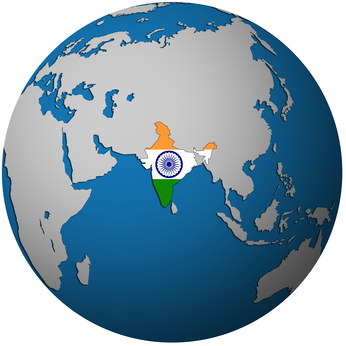
“The land is my mother and I am the son of earth” – Atharva Veda

The concept of motherland can’t be a Semitic term. For the Christians, Jews and Moslems, God is a ‘HE’. For the Hindus, God is He or She or neuter. From the Vedic days god in Hinduism is Eswaran/Eswari, Bhava/Bhavani, Shiva/shivani or Ardhanaree (half woman and half man) or Brahman (neuter).

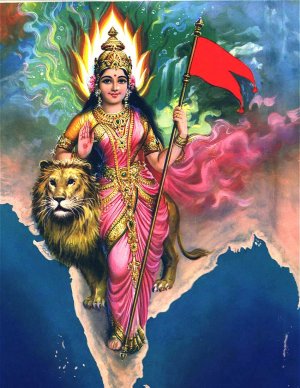
Anything of great quality or virtue such as mercy (karuna), peace(shanty) wealth (Sri), treasure (Nidhi), Kshama (patience) is also feminine in Sanskrit. All Indian rivers are feminine because they nurture us like mothers. Bhumi is also worshipped in feminine form as Bhumadevi. Later Greeks called her Gaia (Greek Goddess of mother earth). Atharva Veda and Ramayana are older than the Greek myth.

bharatma

When Lakshmana was wonderstruck with the enormous wealth of the Golden Lanka, Rama said to him:

Api swarnamayi lanka na me laksmana rocate
Janani janmabhumis ca svargad api gariyasi (Valmiki Ramayana)

“O my brother Lakshmana! Even if Lanka is made of gold, I do not like it because Mother and Motherland are far more superior to heaven”.

Rama used the word Janmabhumi (Birth place) and held it on par with Janani (mother) meaning mother and motherland are superior. But the Athrva Veda which existed well before Rama makes it clear Earth is mother and we are all her children:-

Mother Earth - EarthFirstNewswire -

O Prithivī, thy centre and thy navel, all forces that have issued
from thy body
Set us amid those forces; breathe upon us. I am the son of
Earth, Earth is my Mother. Parjanya is my Sire; may he
promote me.
—–(Atharva Veda Book 12, Hymn 1, Prithivi Sukta)

A Hindu worships Bhumi (earth) before stepping on her every morning. While s/he gets up from the bed, s/he begs for her pardon by reciting the following verse:

Samudra vasane Devi Parvatha Sthana mandale
Vishnu Patni Nmasthubyam Padasparsam kshmasvame

“O Mother Earth who has the oceans as clothes and mountains and forests on her body, who is the wife of Vishnu, I bow to you. Please forgive me for touching you with my feet”.
Here in this ‘Prathasmarana’ (Morning Prayer) verse, Hindus make it clear that Bhuma Devi is the wife of Vishnu. So the concept of earth as mother as a benign woman emerged in India well before other ancient cultures.
mother_earth

Contact swami_48@yahoo.com

ஓஷோ கூறிய பக்கா திருடன் கதை!

bigstock-Burglar-8487742

ச.நாகராஜன்
Post No 1221; Dated 8th August 2014

ஜென் கதைகளில் ஒன்று!

வாழ்க்கையில் எப்படி வெற்றி பெறுவது? ஜென் குருமார்கள் இதற்கு கதை மூலம் பதில் கூறியுள்ளனர். ஜென் பிரிவில் வழங்கி வரும் இதை ஓஷோ கூறியுள்ளார். கதை இது தான்:

ஜப்பானில் ஒரு பக்காத் திருடன் இருந்தான். அவன் திருடுவதில் நிபுணன் அவனை யாராலும் பிடிக்க முடியவில்லை.நாடு முழுவதும் அவன் பெயர் பிரசித்தமாகி விட்டது. ராஜாவின் பொக்கிஷத்திலிருந்தே அவன் திருடி விட்டான். தான் வந்ததற்கு அடையாளத்தையும் அவன் விட்டுச் செல்வதால் அவனது திருட்டுகள் பிரபலமாயின. மக்கள் அவனை வியந்து பாராட்டி நேசிக்கவே தொடங்கி விட்டனர் எந்த திருட்டு நடந்தாலும் என் வீட்டிற்கு பக்காத் திருடன் நேற்று வந்தான் என்று மகிழ்ச்சியுடன் கூறும் நிலையை அவன் உருவாக்கி விட்டான்.

ஆனால் காலம் சென்றது. அவனுக்கும் வயதாகி விட்டது. அவனது மகன் ஒரு நாள் அவனிடம்,’ தந்தையே! உங்களுக்கு மிகவும் வயதாகி விட்டது. உங்கள் கலையை எனக்குச் சற்று கற்பியுங்களேன்” என்று வேண்டிக் கொண்டான்.

பக்காத் திருடன் தன் மகனை அன்புடன் பார்த்து,” சரி, மகனே, இன்று இரவு என்னுடன் வா! ஏனென்றால் இது சொல்லிக் கொடுத்து வருவதில்லை. தானே வர வேண்டியது! நீயே என்னைப் பார்த்தால் கலையை பிடித்துக் கொள்ளலாம். கற்பிக்க முடியாத ஒன்று இது.” என்றான்.

மகனுக்கோ ஒரே பயம்! அவனது முதல் திருட்டு இது. ஒரு வீட்டின் சுவரில் கன்னம் வைத்து அதை உடைத்தான் பக்கா திருடன். நேர்த்தியாக அவன் கைகள் வேலையைத் திறம்படச் செய்தன.அவனிட்த்தில் பயம் இல்லை; பரபரப்பும் இல்லை. நிதானமாக வேலையை முடித்தான்.ஏதோ, தன் வீட்டின் சுவரை உடைப்பது போல உடைத்து உள்ளே நுழைந்தான். மகனுக்கோ உடல் எங்கும் நடுக்கம். கால்கள் தள்ளாடின. யாராவது பிடித்து விட்டால் என்ன செய்வது?

Jewelry-Thief-Walkthrough

கும்மிருட்டில் சர்வ சாதாரணமாக பக்கா திருடன் வீட்டில் நுழைய மகனும் பின் தொடர்ந்தான். வீட்டின் உள்ளே நகைகள் இருக்கும் அறைக்குள் சென்று ஆள் நுழையக் கூடிய அளவில் இருந்த பெரிய பீரோவைத் திறந்தான். மகனை நோக்கி,” விலை மதிப்புள்ள எதை வேண்டுமானாலும் எடு” என்று கூறினான். பீரோவினுள் மகன் நுழைந்தான். உடனே பக்கா திருடன் பீரோவின் கதவுகளை நன்கு மூடி விட்டு, “திருடன் திருடன், வாருங்கள், எல்லோரும் வாருங்கள்’ என்று கத்தி விட்டு தான் கன்னமிட்ட துவாரத்தின் வழியாகத் தப்பிச் சென்று விட்டான்!

மகனுக்கு வேர்த்து விறுவிறுத்தது. தனது தந்தை இப்படிச் செய்வார் என்று அவன் கொஞ்சம் கூட எதிர்பார்க்கவே இல்லை இப்படி மாட்டி விட்டு விட்டாரே, மஹா பாவி! அப்பனா இவன்! பீரோ கதவை வேறு பூட்டி விட்டான்! பிடிபட்டால் மரணம் தான் பரிசு. அடித்தே கொன்று விடுவார்கள். அவன் கண்களிலிருந்து நீர் வழிந்தது.

ஒரு மணி நேரம் கழிந்து வீட்டிற்கு வந்த மகனை அன்புடன் பக்காத் திருடன் வரவேற்றான். மகனோ தனது மேலிருந்த போர்வையைத் தூக்கி எறிந்து விட்டு,” என்ன அநியாயம் இது! இப்படியா செய்வது?” என்று கோபத்துடன் கூவினான்.

பக்காத் திருடன் கூறினான்:” ஓ! நீ ஒன்றுமே சொல்ல வேண்டாம். தூங்கப் போ. உனக்கு நமது கலை புரிந்து விட்டது! அதைப் பற்றிப் பேச வேண்டாம்”

மகனோ,”இல்லை இல்லை, என்ன நடந்தது என்று நான் கூறுகிறேன்” என்றான்.

“உனக்குச் சொல்ல வேண்டுமென்றால் சொல். எனக்குக் கேட்க வேண்டுமென்பது இல்லை. நாளை முதல் நீ தனியாகவே திருடச் செல்லலாம். உனக்குத் திறமை இருக்கிறது. அதைப் பற்றி எனக்கு மிகவும் மகிழ்ச்சி” என்றான் பக்கா திருடன்.

மகனோ,” தந்தையே! நடந்ததைச் சொல்லாவிட்டால் எனக்குத் தூக்கமே வராது. நீ என்னைக் கொன்றே விட்டாய்! அதிலிருந்து தப்பி வந்திருக்கிறேன். நடந்ததைக் கேள்!” என்றான்,
“அப்படியா! ஒரு நிபுணன் என்றால் அப்படிப்பட்ட சூழ்நிலையிலிருந்து தப்பித்துத் தான் வரவேண்டும். இது சகஜமப்பா. சரி என்ன நடந்தது அதைச் சொல்” என்றான் தந்தை.
Jewel_Thief_poster

“எப்படியோ அது நடந்தது. தப்பி விட்டேன். எனது மனமோ, புத்தியோ எதுவும் அதற்குக் காரணமில்லை. ஆனால் நடந்து விட்டது” என்றான் மகன்.

தந்தை கூறினான் ” இது தான் வாழ்க்கையில் வெற்றி பெறும் வழி, அது எந்தத் துறையாக இருந்தாலும் சரிதான். திருடுவதோ, ஓவியம் வரைவதோ, கவிதை இயற்றுவதோ எந்த துறையாக இருந்தாலும் சரி தான்! திருடனாக இருந்தாலும் சரி, யோகியாக இருந்தாலும் சரி. தலையிலிருந்து எதுவும் உதிப்பதில்லை வேறு எங்கோ கீழே இருந்து தான் அனைத்தும் உதிக்கிறது. அதற்கு உள்ளுணர்வு என்று பெயர் கொடு, தியானம் என்று சொல். பல பெயர்களைச் சொன்னாலும் விஷயம் ஒன்று தான். உன் முகத்தில் ஒரு தேஜஸ் ஜொலிக்கிறது நீ ஒரு மாஸ்டர் திருடனாக பக்கா திருடனாக ஆகி விடுவாய் பக்கா திருடனாக நான் ஆனதால் எனக்கு தியான ஒருமைப்பாடு சித்தியாகி இருக்கிறது. ஆகவே உனக்கு தியானம் சித்திக்க வேண்டுமென்றால் இது தான் வழி!”

நடந்ததை மகன் கூறலானான்:” நான் பீரோவின் உள்ளே நடுநடுங்கியவாறு ஒளிந்திருக்கையில் நீங்கள் போட்ட கூச்சல் சத்தத்தைக் கேட்டு ஒரு வேலைக்காரி மெழுகுவர்த்தி ஒன்றை ஏற்றிக் கொண்டு வந்தாள். அதை சாவி துவாரம் வழியே பார்த்தேன். திடீரென எனக்கு ஒன்று தோன்றியது. பூனை போல மியாவ் மியாவ் என்று கூவினேன்.இதுவரை நான் பூனை போல சத்தமிட்டதே இல்லை. பூனை தான் இருக்கிறதென்று பீரோ கதவை வேலைக்காரி திறந்த போது பூவென்று ஊதி மெழுகுவர்த்தியை அணைத்து அவளைத் தள்ளி விட்டு வெளியே ஓடினேன்.

எல்லோரும் என்னைத் துரத்திக்கொண்டு பின்னால் ஓடி வந்தார்கள் திடீரென அங்கு ஒரு கிணறு வழியில் இருந்ததைப் பார்த்தேன். அதன் அருகே ஒரு பெரிய பாறை இருந்தது. அசைக்க கூட முடியாத அளவு பெரிய பாறை அது. கஷ்டப்பட்டு அதைத் தூக்கி கிணற்றில் வீசினேன். பின்னர் ஓட ஆரம்பித்தேன். எல்லோரும் கிணறு அருகே வந்து நின்றனர். நான் கிணற்றுக்குள் விழுந்து விட்டதாக அவர்கள் நினைத்துக்கொண்டனர். ஒரு வழியாகத் தப்பி வீட்டுக்கு ஓடி வந்தேன்.”

பக்கா திருடன் கூறினான்:”மகனே நீ தூங்கப் போ! என்னிடம் எதுவும் கேட்க வேண்டாம். நீயாகவே உனது வேலையைத் தொடங்கலாம்!”

ஓஷோ கூறுகிறார்: சும்மா இரு; அனைத்தையும் அறி!

******************

சென்னையிலிருந்து வெளிவரும் முதல் ஓசை நாளிதழில் 29-6-2014 அன்று வெளியான கட்டுரை

Pictures are used from different sites, not related to this story;thanks.