Chinese New
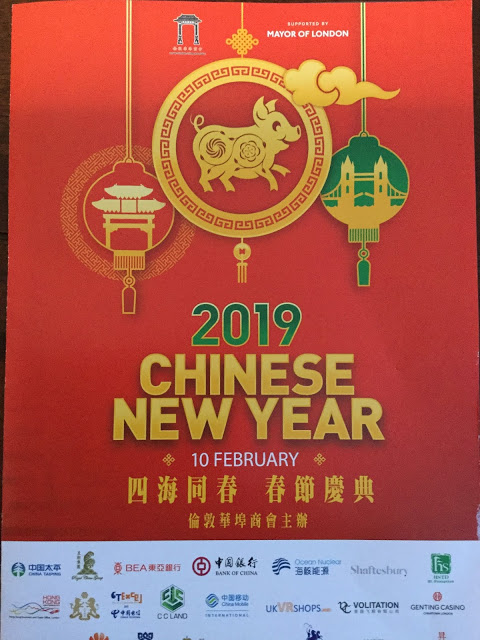
Year – the Year of Pig – occurred on 5th February 2019. Chinese community
with the support of Mayor of London held big events on 10th February
in China Town and Trafalgar Square in London. Year of
the Dog is over. Now this is the Year of Pig.
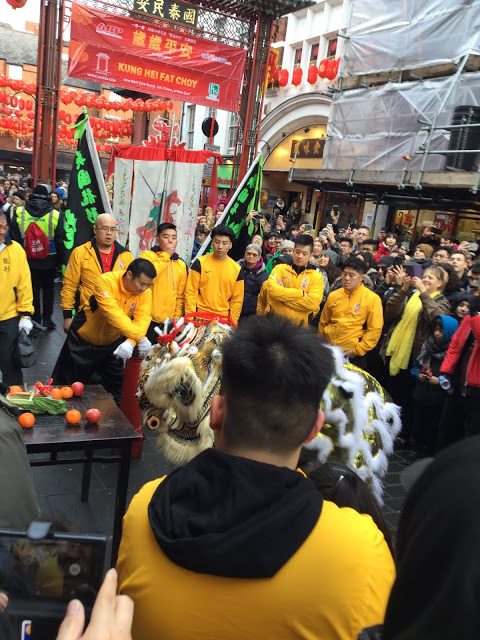
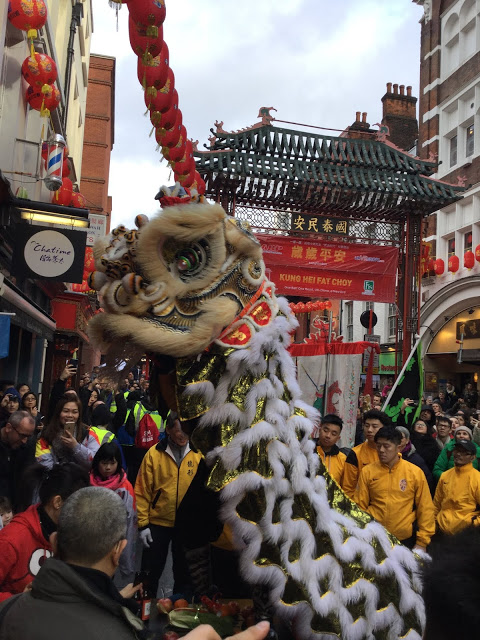
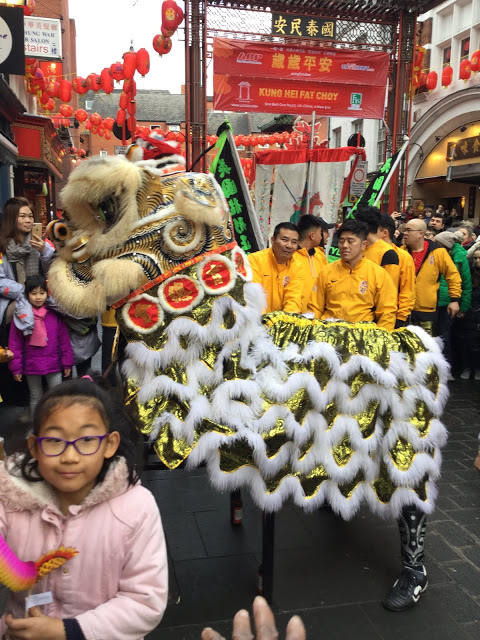
I saw the
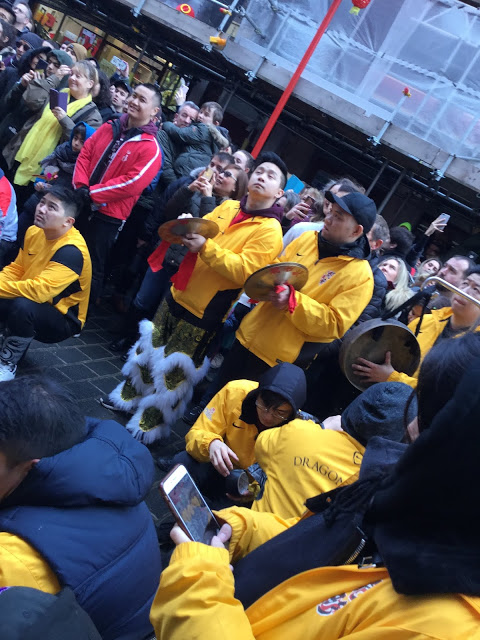
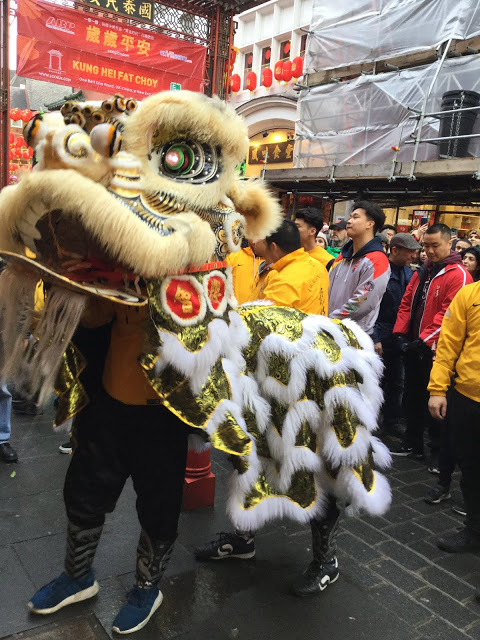
Dragon dance done by two groups. The men in dragon disguise went one shop to
another and danced in front of the shops or buildings. They provided the dragon
fruits and vegetables. During the dance the dragon man threw the fruits and
lettuce on the sponsor.
Unlike other
cultures Chinese consider dragon an auspicious symbol. At one time there were even
rules that the emperor’s dress should have nine dragons embroidered on it.
Chinese dragon
looks like a snake dragon but with a combination of different animal parts such
as crocodile. People welcome it when the dancing dragon visited them.
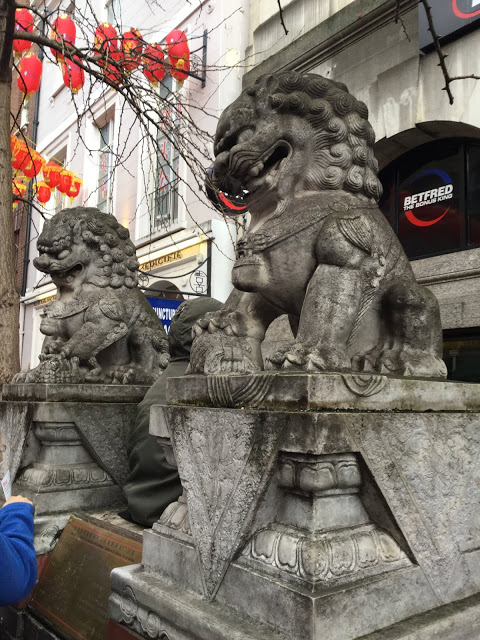
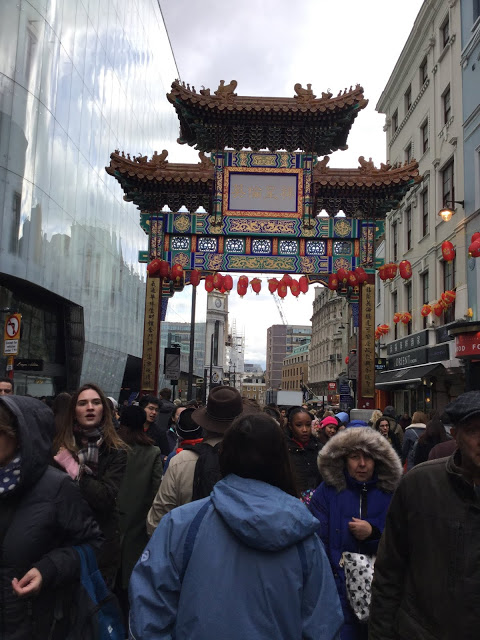
In China town
in London, there were thousands of people today to see the dragons and other tableaus
in the parade. I have taken videos and uploaded them in You Tube Under Chinese
New Celebrations held on 10 February 2019. I attach some pictures with this
write up.
Date: 9 FEBRUARY 2019 GMT Time uploaded in London – 14-31
Post No. 6052
Pictures shown here are taken from various sources including google, Wikipedia,
Facebook friends and newspapers. This is a non- commercial blog. ((posted
by swamiindology.blogspot.com AND tamilandvedas.com)
Post No. 6033
Pictures shown here are taken from various sources including google, Wikipedia,
Facebook friends and newspapers. This is a non- commercial blog. ((posted
by swamiindology.blogspot.com AND tamilandvedas.com))
Date: 2 FEBRUARY 2019 GMT Time uploaded in London –20-18 Post No. 6022 Pictures shown here are taken from various sources including google, Wikipedia, Facebook friends and newspapers. This is a non- commercial blog.
11 May 2014 – 2) Bringing Soma herbs from the remotest Himalayan mountains to Vedic sages to perform Somayaga. … Sanskrit words such as Tiamath, Sumukhan,Azigi, Vizigi (snake gods) in Sumeria can be explained only through Vedic literature. … The story of Garuda (eagle) and Amrita is in Hindu …
18 Dec 2011 – There are striking similarities between the Indian and Sumerian civilizations. One of them is the use of the Double Headed Eagle as a royal …
14 Sep 2014 – This article gives more proof to show that Indra was worshipped as God in Egypt, Sumer and Greece. Indra referred to a title is confirmed by …
14 Nov 2014 – Sumerian king list has two kings with the name Dumuzi. … Since Sumerians are considered migrants from a foreign country by many scholars, …
Date: 1FEBRUARY 2019 GMT Time uploaded in London – 12-59 Post No. 6017 Pictures shown here are taken from various sources including google, Wikipedia, Facebook friends and newspapers. This is a non- commercial blog.
Date: 28 JANUARY 2019 GMT Time uploaded in London -18-17 Post No. 6000 Pictures shown here are taken from various sources including google, Wikipedia, Facebook friends and newspapers. This is a non- commercial blog.
There are
many unravelled secrets in the world; even after a great advancement in
scientific methods and scientific instruments, we are not able to decipher the
Indus script. We are not able to get the full history of the great Hittites,
Kassites and Mitanni civilizations of West Asia. Even big libraries like SOAS,
University of London, has got only two books on Mitannis. But they are the
greatest civilization that ruled Turkey and Parts of Syria with Hindu names
Dasaratha and Pratardhana. Because they are Hindu names no scholar has come
forward to study the civilization in details. Hindus must learn the Sumerian
and Akkadian languages and study the 60,000 plus clay tablets in Cuneiform
script. So far we know about Dasaratha’s letters that were found in Amarna in
Egypt.
The name
Mitanni is connected with Mithras of Vedas. Their capital Washukanni is connected
with Vedic god Vasu (Asta vasus). The kings names have words like Satya, Seela
(Truth and character).
Syria came from
Surya (Sun God in the Vedas), Turkey came from Turaga/horse, Assyria came from
Ashura, Iran came from the word Aryan. So we see all Vedic names there.
But the few
people who researched on these things agree on one thing: Hittites, Kassites
and Mitannis spoke a language related to Sanskrit. Dasaratha (Tushratta in
Mitanni inscriptions) married his two daughters to Egyptian Pharaoh. Mitannis
made agreement in the name of Vedic Gods. In Turkey, horse manuals in Sanskrit
are found. All these have been in western encyclopaedias for over 100 years;
but no Indian history book taught these things to our children till this day!
This is another mystery.
No scholar
disputed the following four important things or their dates- around 1400 BCE.
1.Dasaratha
wrote letters to Egyptian king, married his two daughters to an Egyptian King,
sent a statue of Goddess (may be Lakshmi or Durga)
2.Mitanni
kings made and sealed an agreement in the name of Vedic Gods. Even Indus Valley
scholar Asko Parpola pointed out that the names of the Gods are in the same
order that is found in the Rig Vedic hymn. This explodes Max Muller’s dating of
the Vedas.
3. All the
scholars agree that they spoke an Indo-European language (related to Sanskrit)
4.All the
scholars agree that the oldest horse manual found in Turkey has instructions in
Sanskrit.
What do
these show?
People who
recited Vedas did not come to India from Siberia or Steppes; but they slowly
spread to West Asia from India around 1800 BCE.
Now let me
summarise what the latest book on West Asian Civilizations say (published by
Thames and Hudson in 2008) about The Mitannis:–
Hurrian
and Kassite: Two mystery languages
This is the
title in a box inside the article. It adds
“The Hurrian
language is not properly understood. It has some similarities to Urartian, a
language from the Lake Van region f the Trans Caucus that was written in the
first millennium BCE.”
My comments
Because it
is later than the Mitanni inscription, Hindus migrated later to that area.
It says
further,
“Kassite,
the language of the dynasty which ruled Babylon from the sixteenth century BCE
is another poorly understood language. No Kassite texts have been attested.
There are however , two lexical texts which contain 200 basic words (terms for
colors, chariot parts, irrigation and plants) and a handful of personal names.
From them it is apparent Kassite is unrelated to any known language living or
dead.
My comments
The very
word Kasi is a Sanskrit word ; It stands for Varanasi. Elsewhere they say that
the Kassites are of Indo European origin. If is not related to known language, then
are they from Indus Valley? The dates are nearly same . If we study those 200
words, will we be able to decipher the Indus script?
So it is
imperative Tamil and Sanskrit scholars must focus their attention to Mitannis,Kassites
and Hittiles. Scholars like Mr Kalyanaraman (author of Arya Tarangini, Chennai
based) has done some research in this area.
Hatti may be
Kshatria; Hurrian may be Aryan.
Instead of
guessing, we must do proper research
scanning through 60000 plus inscriptions. (Please read my articles on
the similarities between Hindu and Sumerian civilizations).
Now I will
add what the Thames and Hudson book says about the Mitanni
“The history
of the Mitanni state can only be partially reconstructed. The earliest king is
believed to be certain Kirta, the father of Shuttarna.
Both are
Sanskrit names!
Kirti.
Sudarsan etc. Strangely all the names are Vaishnavite names from Vishnu Sahasranama
or Ramayana.
Hindu names
and rites get corrupted in proportion to the distance they are away from India.
If you look at the names and Hindu rites
in Sri Lanka, Malaysia, Bali/Indonesia, Mauritius, South Africa, Guyana
and Fiji , you will understand how they change, modified or corrupted. The more
distance in area and time they are, the more corrupted.
The earliest
attestation of Hurrians is in the late
third millennium BCE (even before the Indus Valley/ Saraswati Valley
civilization). Mitanni rose to power in 1600 BCE.
Strangest
thing about these civilizations is only two pages are given in most of the
encyclopaedias. But they ruled a vast area for at least 200 years.
Indian
government must allocate more funds to all the universities that are ready to
do research in this area.
11 May 2014 – Sanskrit words such
as Tiamath, Sumukhan,Azigi, Vizigi (snake gods) in Sumeria can be
explained only through Vedic literature. … The story of Garuda (eagle)
and Amrita is in Hindu mythology and Sumeriancivilization. …
I give below two stories from Sumerian andHindu scriptures.
18
Sep 2014 – In short, Hindu concept of God was propagated to the Near East by the Hittites,
Kassites … Please read my earlier posts on Sumer– India link.
You’ve visited this
page 2 times. Last visit: 11/09/16
17 Mar 2017 – Holy River Ganga
(Ganges) is so famous and so holy that wherever Hindus went they
named at least one river after Ganga. We see Ganga in …
2
Aug 2015 – This article is about the Hindu beliefs of
burying hair and bones at the place of an enemy to eliminate him/her and
hanging ugly faces to ward …
Date: 27 JANUARY 2019 GMT Time uploaded in London –18-00 Post No. 5995 Pictures shown here are taken from various sources including google, Wikipedia, Facebook friends and newspapers. This is a non- commercial blog.
WAGING WARS
On 30-12-2018 I covered up to160
slokas of seventh chapter of Manu Smrti. Today we will deal with the rest of
the slokas in seventh chapter.
Though the concluding part deals mainly with waging wars, making alliances and maintaining personal safety there are some interesting points (see below):
TWO, TWO, TWO
1.In the beginning he divided
everything into Twos.
Two kinds of wars, two kinds
of all; alliances and two kinds of marching and camping.
2.Sloka 7-180 is an advice; A
quotation on Political Wisdom
3. Sloka 7-182 specifies good
months for an attack or invasion; commentators say that the Indian weather
would be good and there would be plenty of food supply.
4.Sloka 7-185 talks about
three kinds of roads.
Army Formations
5.Sloka 7-187 says about army
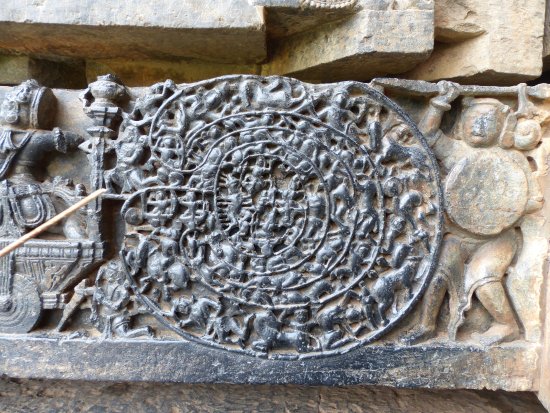
formations; We see the importance of several Vyuhas/ formations in the
Mahabharata war as well.
6.Sloka 7-193 says which
country people must be placed in the front. Commentators say those soldiers are
taller than others.
7.Sloka 7-210 describes the worst
enemy.
8.Sloka 7-218 is about wearing
jewels to nullify poison. He also deals with personal safety. Everything must
be examined.
9.Sloka 7-223 is about Spy
Report.
10.Last part is about the day
to day schedule of a king.
11.Sloka 7-206 lists the Three Fruits of War.
7-161. Having carefully
considered the business (in hand), let him resort to sitting quiet or marching,
alliance or war, dividing his forces or seeking protection (as the case may
require).
162. But the king must know that
there are two kinds of alliances and of wars, (likewise two) of both marching
and sitting quiet, and two (occasions for) seeking protection.)
163. An alliance which yields
present and future advantages, one must know to be of two descriptions, (viz.)
that when one marches together (with an ally) and the contrary (when the allies
act separately).
164. War is declared to be of two
kinds, (viz.) that which is undertaken in season or out of season, by oneself
and for one’s own purposes, and (that waged to avenge) an injury done to a
friend.
165. Marching (to attack) is said
to be two fold, (viz. that undertaken) by one alone when an urgent matter has
suddenly arisen, and (that undertaken) by one allied with a friend.
166. Sitting quiet is stated to
be of two kinds, (viz. that incumbent) on one who has gradually been weakened
by fate or in consequence of former acts, and (that) in favour of a friend.
167. If the army stops (in one
place) and its master (in another) in order to effect some purpose, that is
called by those acquainted with the virtues of the measures of royal policy,
the twofold division of the forces.
168. Seeking refuge is declared to be of two kinds, (first) for the purpose of attaining an advantage when one is harassed by enemies, (secondly) in order to become known among the virtuous (as the protege of a powerful king).
169. When (the king) knows (that)
at some future time his superiority (is) certain, and (that) at the time
present (he will suffer) little injury, then let him have recourse to peaceful measures.
170. But when he thinks all his
subjects to be exceedingly contented, and (that he) himself (is) most exalted
(in power), then let him make war.
171. When he knows his own army
to be cheerful in disposition and strong, and (that) of his enemy the reverse,
then let him march against his foe.
172. But if he is very weak in
chariots and beasts of burden and in troops, then let him carefully sit quiet,
gradually conciliating his foes.
173. When the king knows the
enemy to be stronger in every respect, then let him divide his army and thus
achieve his purpose.
174. But when he is very easily
assailable by the forces of the enemy, then let him quickly seek refuge with a
righteous, powerful king.
175. That (prince) who will
coerce both his (disloyal) subjects and the army of the foe, let him ever serve
with every effort like a Guru.
176. When, even in that
(condition), he sees (that) evil is caused by (such) protection, let him
without hesitation have recourse to war.
177. By all (the four) expedients a politic prince must arrange (matters so) that neither friends, nor neutrals, nor foes are superior to himself.
178. Let him fully consider the
future and the immediate results of all undertakings, and the good and bad
sides of all past (actions).
179. He who knows the good and
the evil (which will result from his acts) in the future, is quick in forming
resolutions for the present, and understands the consequences of past
(actions), will not be conquered.
Gist of Political Wisdom
7-180. Let him arrange everything
in such a manner that no ally, no neutral or foe may injure him; that is the
sum of political wisdom.
181. But if the king undertakes
an expedition against a hostile kingdom, then let him gradually advance, in the
following manner, against his foe’s capital.
7-182. Let the king undertake
his march in the fine month Margasirsha, or towards the months of Phalguna and
Caitra, according to the (condition of his) army.
183. Even at other times, when he
has a certain prospect of victory, or when a disaster has befallen his foe, he
may advance to attack him.
184. But having duly arranged
(all affairs) in his original (kingdom) and what relates to the expedition,
having secured a basis (for his operations) and having duly dispatched his
spies;
185. Having cleared the three
kinds of roads, and (having made) his six fold army (efficient), let him
leisurely proceed in the manner prescribed for warfare against the enemy’s
capital.
186. Let him be very much on his guard against a friend who secretly serves the enemy and against (deserters) who return (from the enemy’s camp); for such (men are) the most dangerous foes.
Army Formations
7-187. Let him march on his
road, arraying (his troops) like a staff (i.e. in an oblong), or like a waggon
(i.e. in a wedge), or like a boar (i.e. in a rhombus), or like a Makara (i.e.
in two triangles, with the apices joined), or like a pin (i.e. in a long line),
or like a Garuda (i.e. in a rhomboid with far-extended wings).
188. From whatever (side) he
apprehends danger, in that (direction) let him extend his troops, and let him
always himself encamp in an array, shaped like a lotus.
189. Let him allot to the
commander-in-chief, to the (subordinate) general, (and to the superior
officers) places in all directions, and let him turn his front in that
direction whence he fears danger.
190. On all sides let him place
troops of soldiers, on whom he can rely, with whom signals have been arranged,
who are expert both in sustaining a charge and in charging, fearless and loyal.
191. Let him make a small
number of soldiers fight in close order, at his pleasure let him extend a large
number in loose ranks; or let him make them fight, arranging (a small number)
in the needle-array, (and a large number) in the thunderbolt-array.
192. On even ground let him fight with chariots and horses, in water-bound places with boats and elephants, on (ground) covered with trees and shrubs with bows, on hilly ground with swords, targets, (and other) weapons.
Soldiers from Four Countries
7-193. (Men born in) Kurukshetra,
Matsyas, Pankalas, and those born in Surasena, let him cause to fight in the
van of the battle, as well as (others who are) tall and light.
194. After arranging his troops,
he should encourage them (by an address) and carefully inspect them; he should
also mark the behaviour (of the soldiers) when they engage the enemy.
195. When he has shut up his foe
(in a town), let him sit encamped, harass his kingdom, and continually spoil
his grass, food, fuel, and water.
196. Likewise let him destroy the
tanks, ramparts, and ditches, and let him assail the (foe unawares) and alarm
him at night.
197. Let him instigate to
rebellion those who are open to such instigations, let him be informed of his
(foe’s) doings, and, when fate is propitious, let him fight without fear,
trying to conquer.
198. He should (however) try to
conquer his foes by conciliation, by (well-applied) gifts, and by creating
dissension, used either separately or conjointly, never by fighting, (if it can
be avoided.)
199. For when two (princes)
fight, victory and defeat in the battle are, as experience teaches, uncertain;
let him therefore avoid an engagement.
200. (But) if even those three
before-mentioned expedients fail, then let him, duly exerting himself, fight in
such a manner that he may completely conquer his enemies.
Worship god, honour brahmins
7-201. When he has gained
victory, let him duly worship the gods and honour righteous Brahmanas, let him
grant exemptions, and let him cause promises of safety to be proclaimed.
202. But having fully ascertained
the wishes of all the (conquered), let him place there a relative of the
(vanquished ruler on the throne), and let him impose his conditions.
203. Let him make
authoritative the lawful (customs) of the (inhabitants), just as they are stated
(to be), and let him honour the (new king) and his chief servants with precious
gifts.
204. The seizure of desirable
property which causes displeasure, and its distribution which causes pleasure,
are both recommendable, (if they are) resorted to at the proper time.
205. All undertakings (in) this world depend both on the ordering of fate and on human exertion; but among these two (the ways of) fate are unfathomable; in the case of man’s work action is possible.
Triple Fruits of War
206. Or the king, bent on
conquest, considering a friend (ally), gold, and land to be the triple result of
an expedition, may, using diligent care, make peace with his foe and return to
his realm.
207. Having paid due attention to
any king in the circle (of neighbouring states) who might attack him in the
rear, and to his supporter who opposes the latter, let (the conqueror) secure
the fruit of the expedition from (the prince whom he attacks), whether (he may
have become) friendly or (remained) hostile.
208. By gaining gold and land a
king grows not so much in strength as by obtaining a firm friend, (who), though
weak, (may become) powerful in the future.
209. A weak friend (even) is
greatly commended, who is righteous (and) grateful, whose people are contented,
who is attached and persevering in his undertakings.
210. The wise declare him (to be)
a most dangerous foe, who is wise, of noble race, brave, clever, liberal,
grateful, and firm.
211. Behaviour worthy of an
Aryan, knowledge of men, bravery, a compassionate disposition, and great liberality
are the virtues of a neutral (who may be courted).
212. Let the king, without
hesitation, quit for his own sake even a country (which is) salubrious,
fertile, and causing an increase of cattle.
213. For times of need let him
preserve his wealth; at the expense of his wealth let him preserve his wife;
let him at all events preserve himself even by (giving up) his wife and his
wealth.
214. A wise (king), seeing that
all kinds of misfortunes violently assail him at the same time, should try all
(the four) expedients, be it together or separately, (in order to save
himself.)
215. On the person who employs
the expedients, on the business to be accomplished, and on all the expedients
collectively, on these three let him ponder and strive to accomplish his ends.
216. Having thus consulted with
his ministers on all these (matters), having taken exercise, and having bathed
afterwards, the king may enter the harem at midday in order to dine.
217. There he may eat food,
(which has been prepared) by faithful, incorruptible (servants) who know the
(proper) time (for dining), which has been well examined (and hallowed) by
sacred texts that destroy poison.
Every day schedule
Wear gems, Test food for
poison
218. Let him mix all his food
with medicines (that are) antidotes against poison, and let him always be
careful to wear gems which destroy poison.
219. Well-tried females whose
toilet and ornaments have been examined, shall attentively serve him with fans,
water, and perfumes.
220. In like manner let him be careful
about his carriages, bed, seat, bath, toilet, and all his ornaments.
221. When he has dined, he may
divert himself with his wives in the harem; but when he has diverted himself,
he must, in due time, again think of the affairs of state.
222. Adorned (with his robes of
state), let him again inspect his fighting men, all his chariots and beasts of
burden, the weapons and accoutrements.
223. Having performed his
twilight-devotions, let him, well armed, hear in an inner apartment the doings
of those who make secret reports and of his spies.
224. But going to another secret
apartment and dismissing those people, he may enter the harem, surrounded by
female (servants), in order to dine again.
225. Having eaten there something
for the second time, and having been recreated by the sound of music, let him
go to rest and rise at the proper time free from fatigue.
226. A king who is in good health
must observe these rules; but, if he is indisposed, he may entrust all this
(business) to his servants.
GMT Time uploaded in London – 20-56
Post No. 5959
Pictures shown here are taken from various sources including google, Wikipedia,
Facebook friends and newspapers. This is a non- commercial blog.
GMT Time uploaded in London –10-33 am Post No. 5928 Pictures shown here are taken from various sources including google, Wikipedia, Facebook friends and newspapers. This is a non- commercial blog.
Part 3 of Rare Pictures from Siva Purana
Picture 11
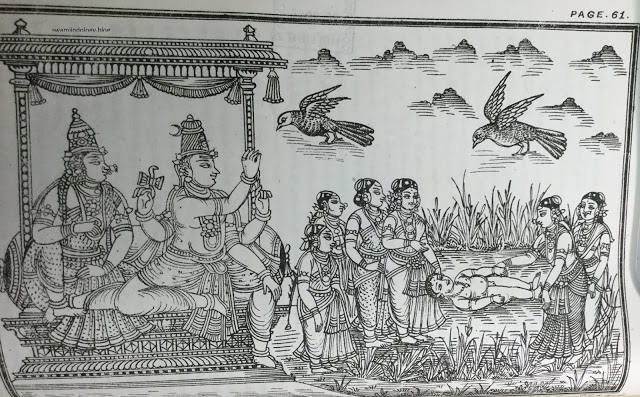
God of Fire Agni Deva comes in the form of a pigeon and on the other side God Kartikeya is born in Saravana Region (Reed filled area) of Ganges.
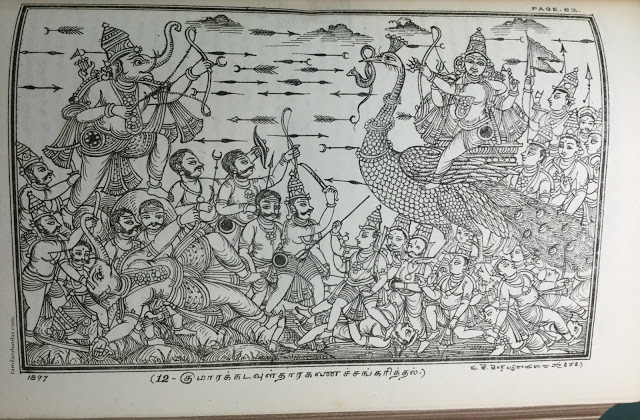
Picture 12
Lord Subrahmanya (Kartikeya/Muruga/Skanda) is destroying the demon Taraka.
Picture 13
Siva burns down the Tri Pura- three hanging forts of demons.
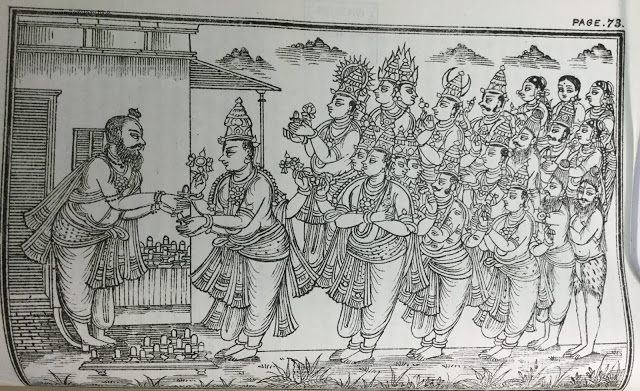
Picture 14
Viswakarma is distributing Shiva Lingas to Devas
Picture 15
All Devas performed Linga Puja in the presence of Lord Vishnu.
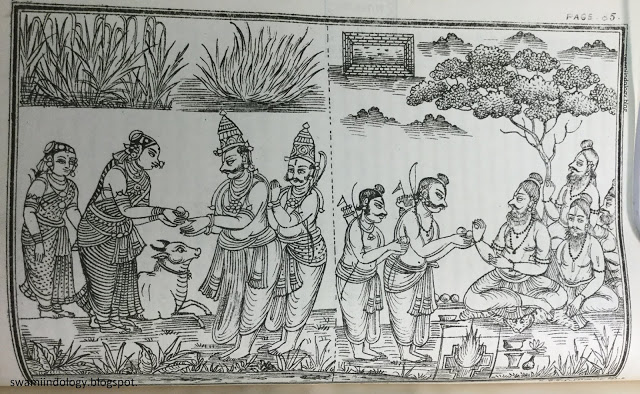
Picture 16
Thazam Pu (Flower of Pandanus Plant- Pandanus odoratissimus; Ketaki flower)is cursed and banned from Shiva Worship.
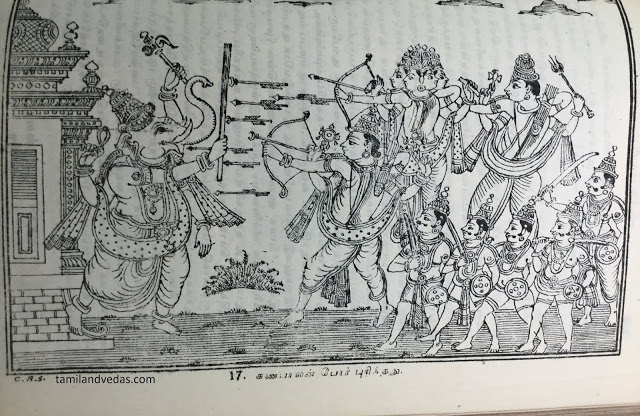
Picture 17
Lord is fighting with Ganapalan.
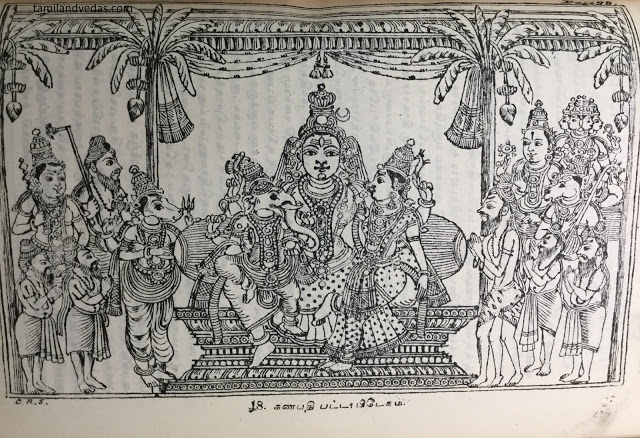
Picture 18
Lord Ganesh is crowned.
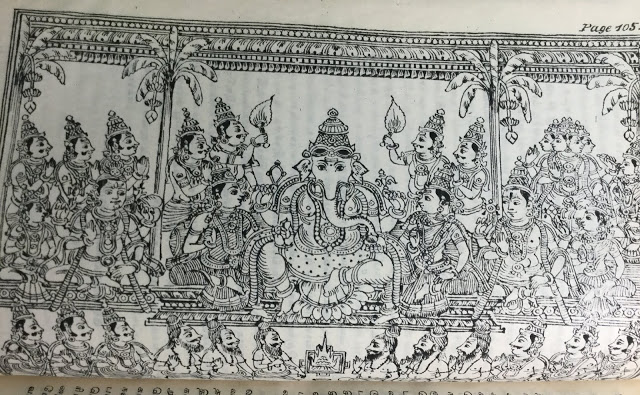
Picture 19
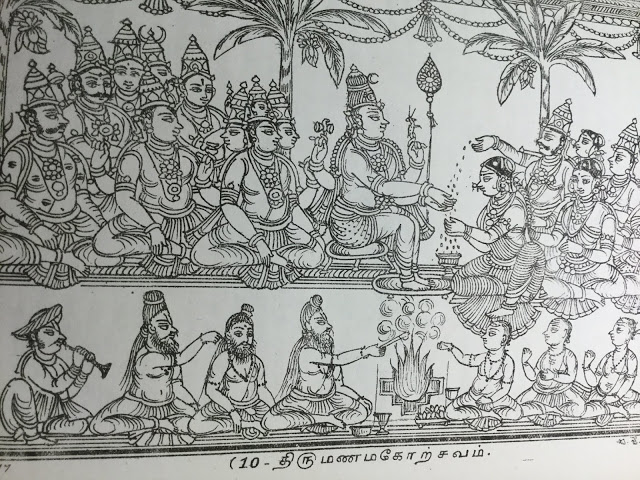
Ganesh is marrying Siddhi and Buddhi.
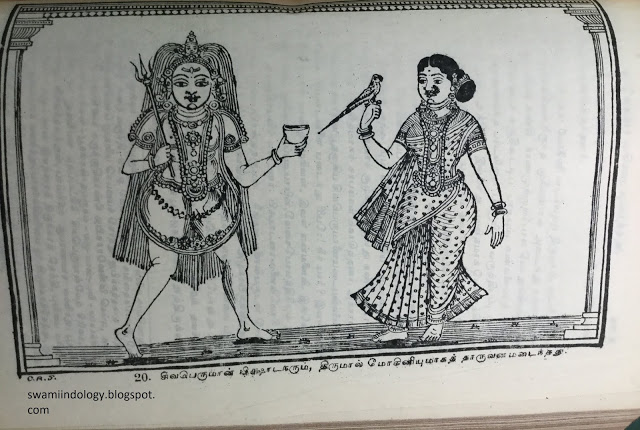
Picture 20
Siva in the
guise of a beggar and Vishnu in the guise of a beauty reached Taruka forest
Date: 13 JANUARY 2019 GMT Time uploaded in London –7-25 am Post No. 5927
Pictures shown here are taken by London swaminathan. This is a non- commercial
blog.
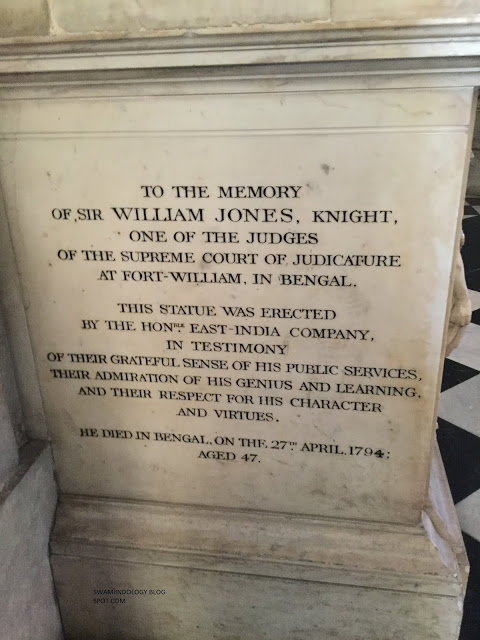
Sir William
Jones who worked as a judge 200 years ago was a philologist. He translated
several works from Persian and Sanskrit. He translated Manu Smrti with the help
of Sanskrit scholars and published it. He is more famous for his comparative
linguistic studies. He showed the world the relationship between Sanskrit and
other European languages. He was one of the co- founders of Asiatic Society in
Calcutta. He published many research articles in the magazines of the society
and encouraged many people to write research works.
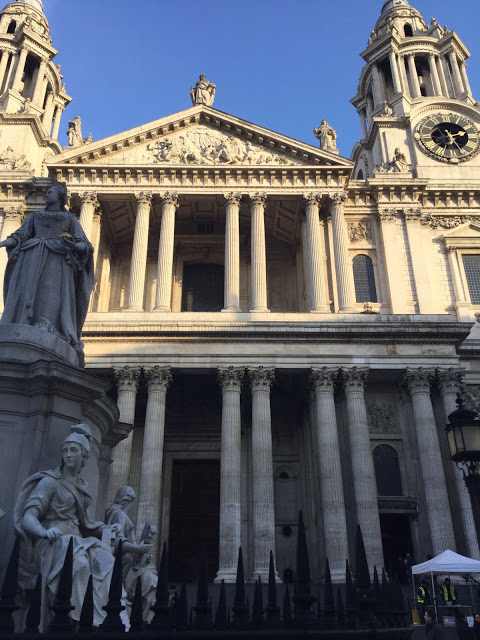
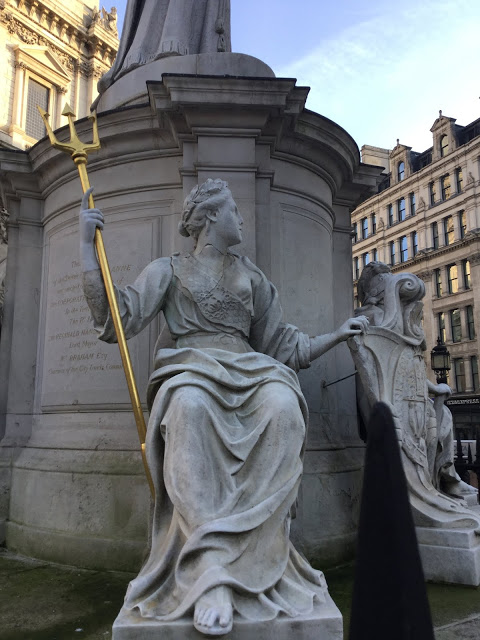
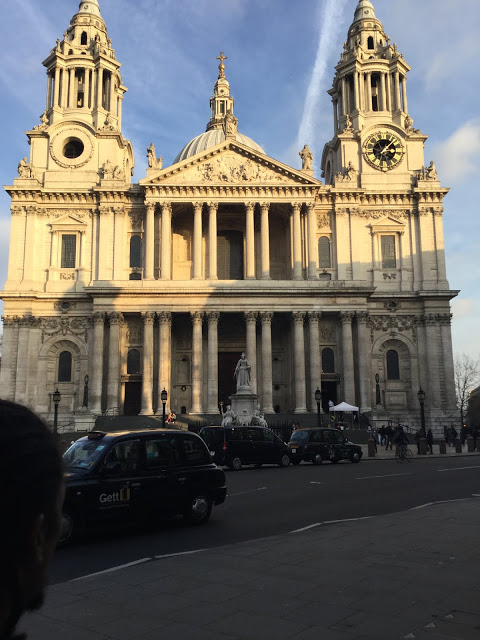
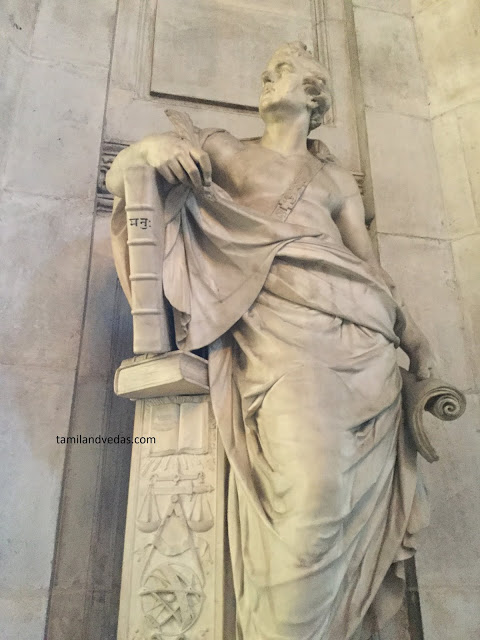
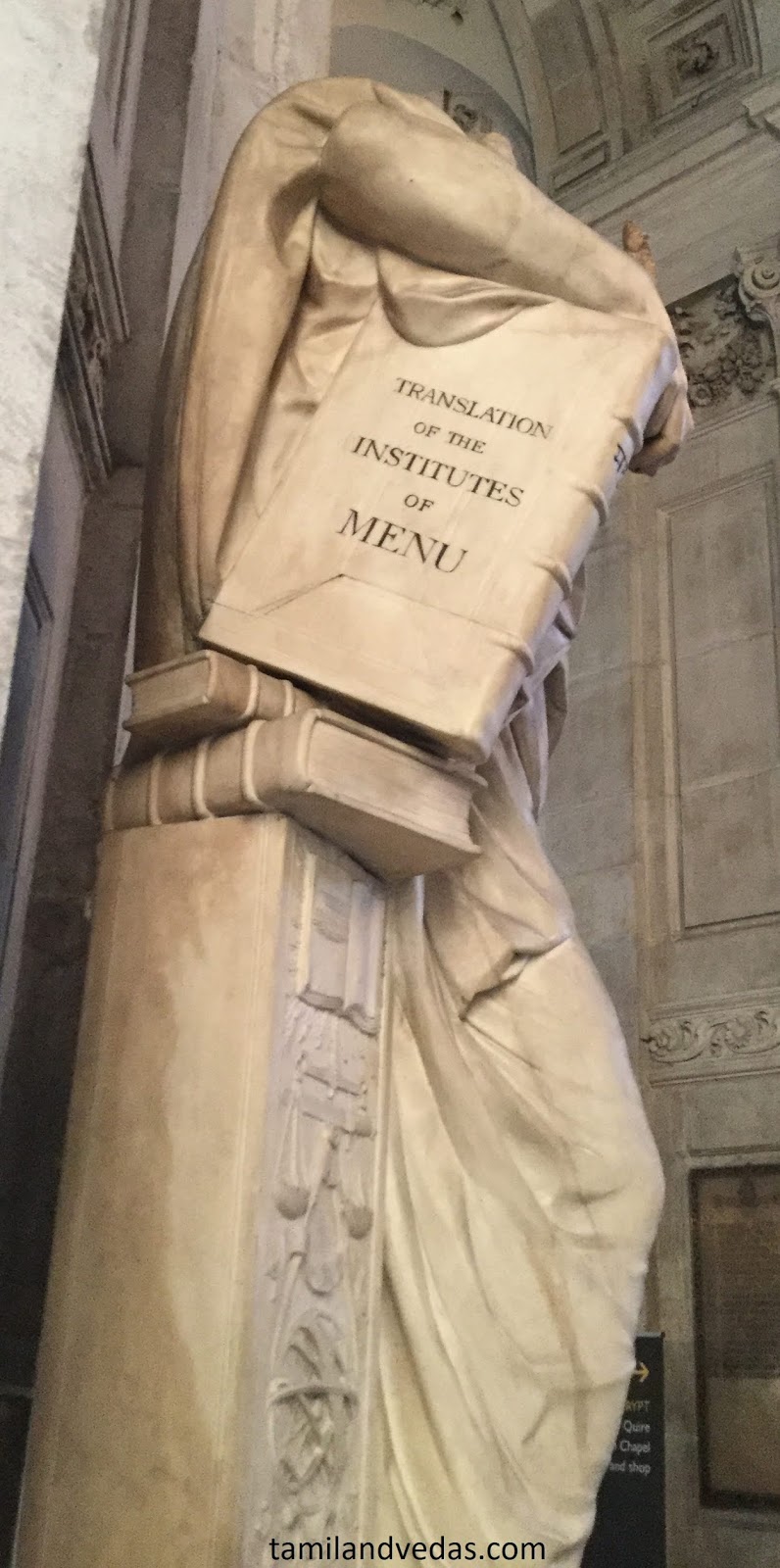
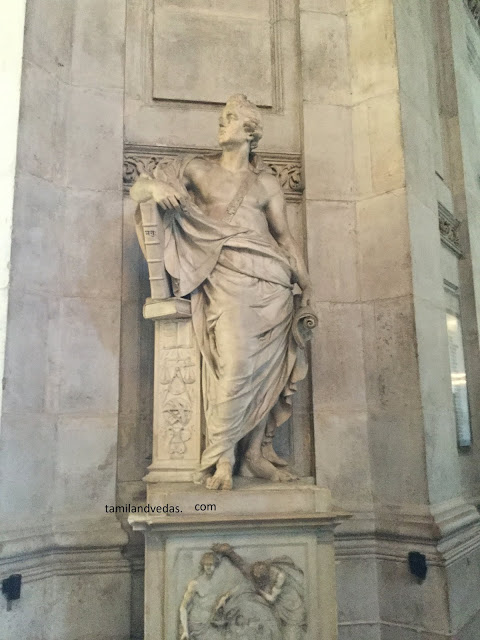
His statue
is in St Paul’s Cathedral in London. This is the most famous cathedral in
London frequented by thousands of tourists every week. The statue of Jones was
sculpted with the Manu Smrti in his hand. The Sanskrit word Manu is visible.
English spelling for Manu is given as Menu, probably that is the spelling he
used in his publication.
The statue was sculpted by John Bacon in 1799 after Jone’s death. Jones died at the age of 47. William Jones was knighted in 1783 and died in 1794.
When I went to
the Cathedral on 11 January, there was an entrance ticket priced at £20. So I
wanted to make sure whether the statue of William Jones is inside the cathedral
or outside. Nobody knew who he was. Many other statues of famous persons like
Nelson and Samuel Johnson inside the cathedral are known to those people. But I
bought the ticket and went inside and asked one of the staff. She was surprised
when I asked for William Jone’s statue. She told me,
“It is
strange that you asked for this man’s statue. He is the least known persons in
the cathedral. Tell me about him”
and then she showed me the statue.
I told her about William Jones and said that he is
one of the famous Indologists and even a stamp was released in India to
celebrate his contributions to the study of Indian culture.
Though photography was not allowed inside the cathedral I asked her permission to take pictures of only that statue. She gave me the permission and I took the pictures from various angles (Please see the attached pictures).
St Paul
Cathedral was seen by millions of people around the word when Charles and Diana
married there in 1981. The cathedral has a chequered history. It was burnt down several times and rebuilt in
the past 1400 years. The last fire accident was in 1666, what is known as the ‘Great
Fire of London’. The fire was raging for four days destroying the heart of London.
Now the cathedral looks beautiful and it is one of the tourist attractions. It
is huge like our South Indian Temples. Though £20 entrance ticket is too much,
they need money to maintain such a beautiful architecture. I was happy when I took
the pictures of William Jones with Manu Smrti in his hand.




















 Tamil and Vedas