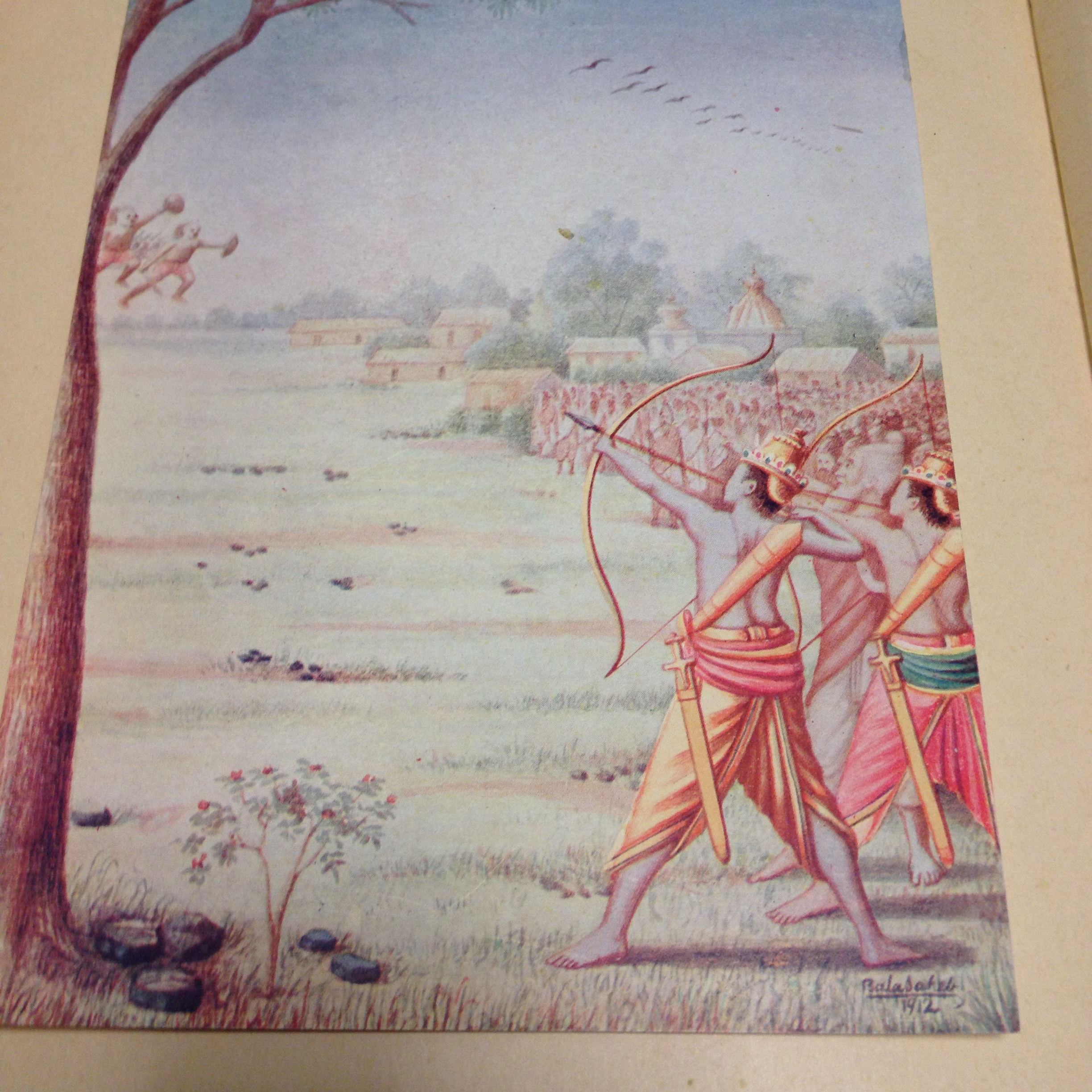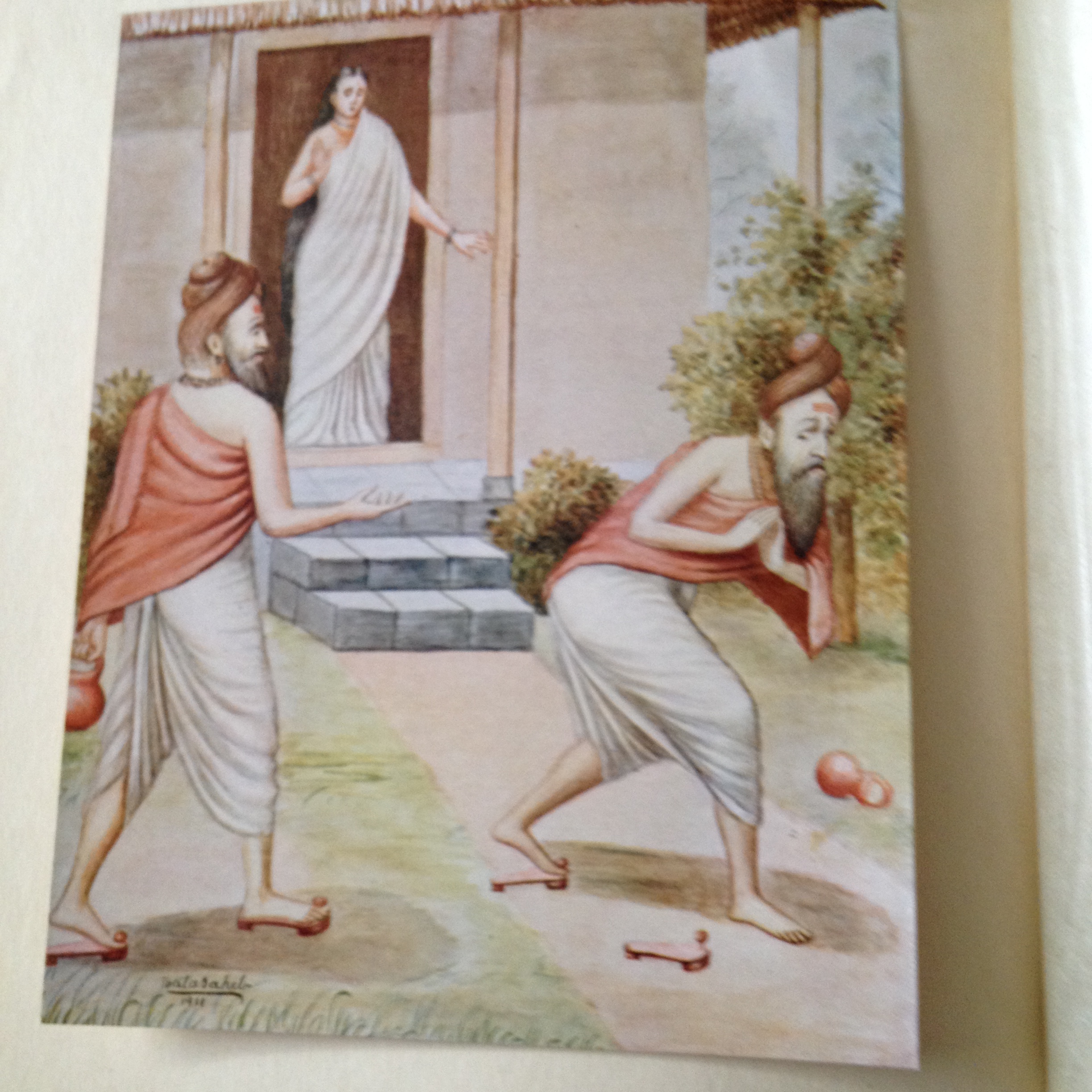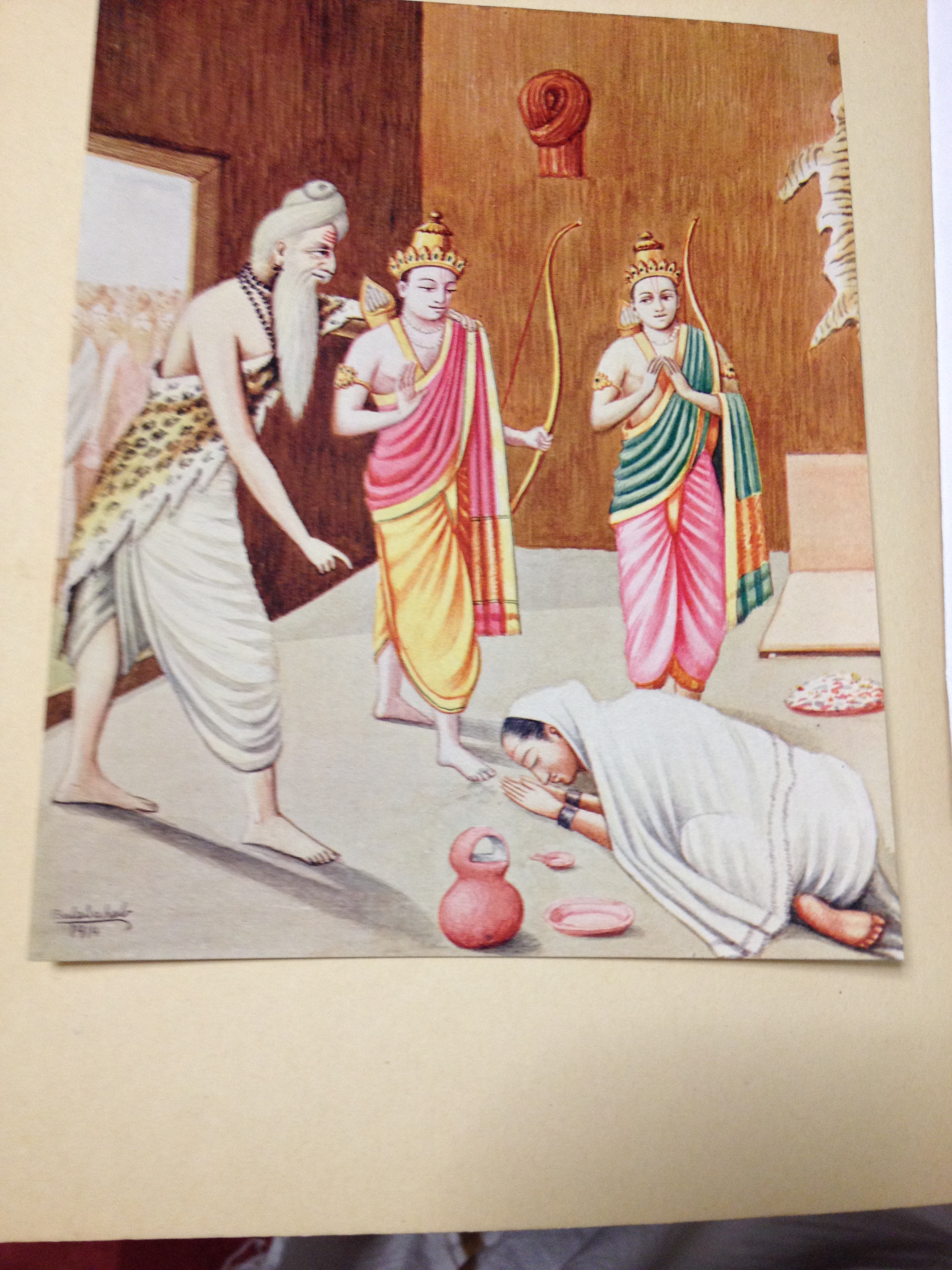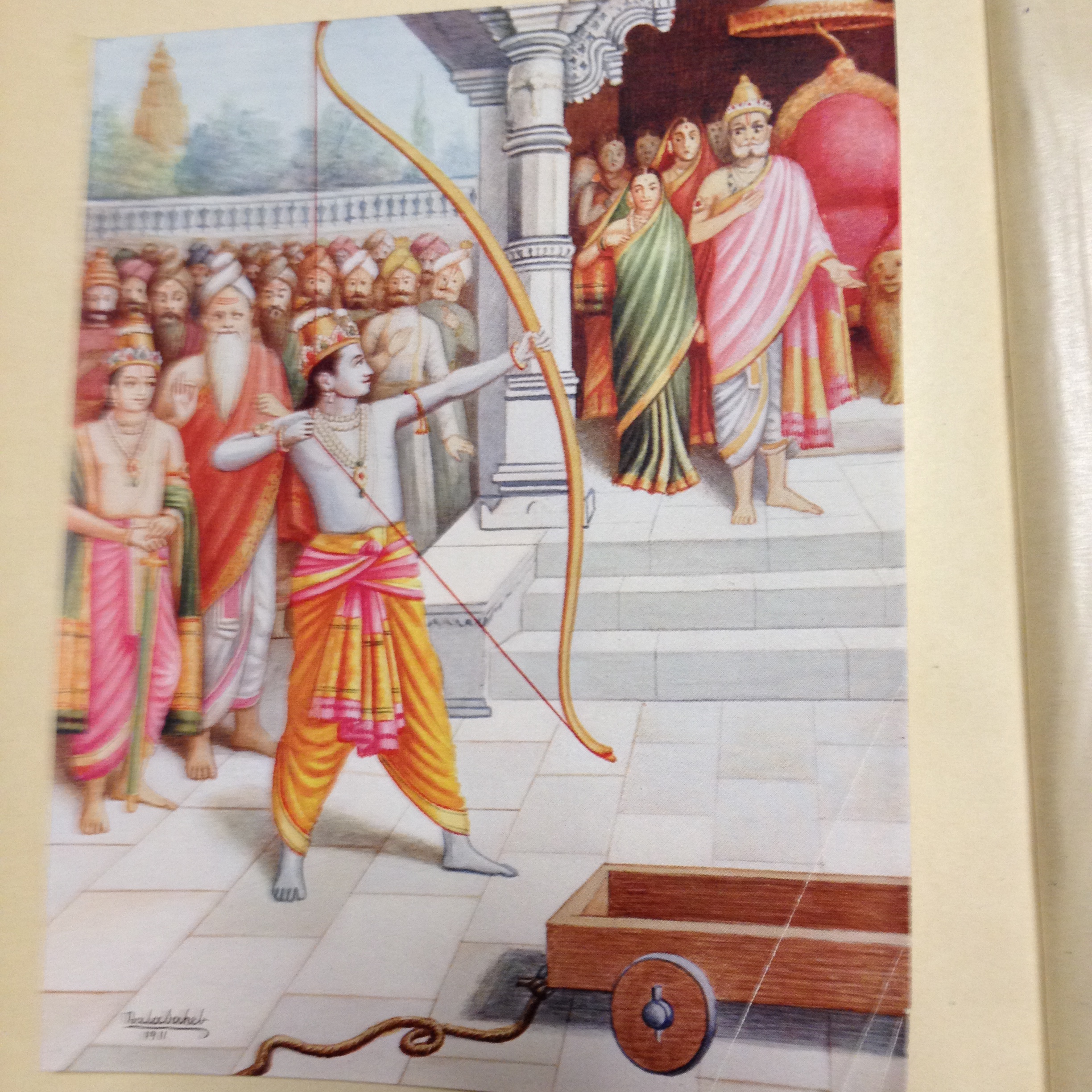
Conspiracy of Foreign Scholars!

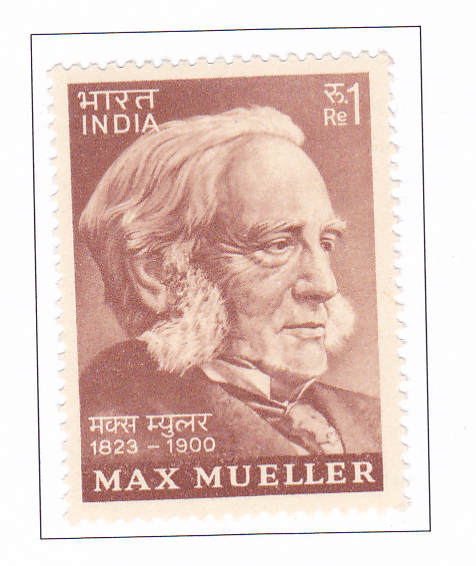
max muller

Post No.1809; Date: 18th April 2015

Compiled by London swaminathan

Uploaded from London at 18-45

Foreign scholars are  trickier than liars. Once we identify the liars, we isolate them or simply ignore their views. But foreign broadcasting organisations, newspapers and academicians will tell you half-truths and mislead you or confuse you and make you doubt your own father and mother. They will make you think that you are a bastard.  The best example for this is the Aryan Dravidian Racist theory. It is nowhere found in Sanskrit or Sangam Tamil literature. But they even made Hitler to believe in the pure Aryan race and provoked him to kill twenty million people! They will tell you fifty percent truth and sow poisonous weeds of doubts in your mind. Today I came across some examples in the book “History Revealed by Ramayana Astronomy” written by Puspendu Chaudhury (Calcutta, 1998). I wanted to share some of the points he discussed in his book

1.In the Bhagavad Gita (2-2), Sri Krishna reproached Arjuna using the words ‘Anaryajustam’ to mean like an ‘Anarya’ where ‘Anarya’ meant uncivilized. In Ramayana Vali was addressed ‘Aryaputra’ by his wife Tara. Ravana was addressed ‘Aryaputra’ by his door keepers; but these words were NOT  translated by the Western Scholar T H Griffith, though he used the word ‘vile’ in translating the word ‘Anarya’ used by Dasaratha in scorning Kaikeyi in the same book, ‘The Ramayana of Valmiki’ just because it would go against the ‘theory of the Aryan Invasion’ (though Max Muller had at last to retreat from the theory).

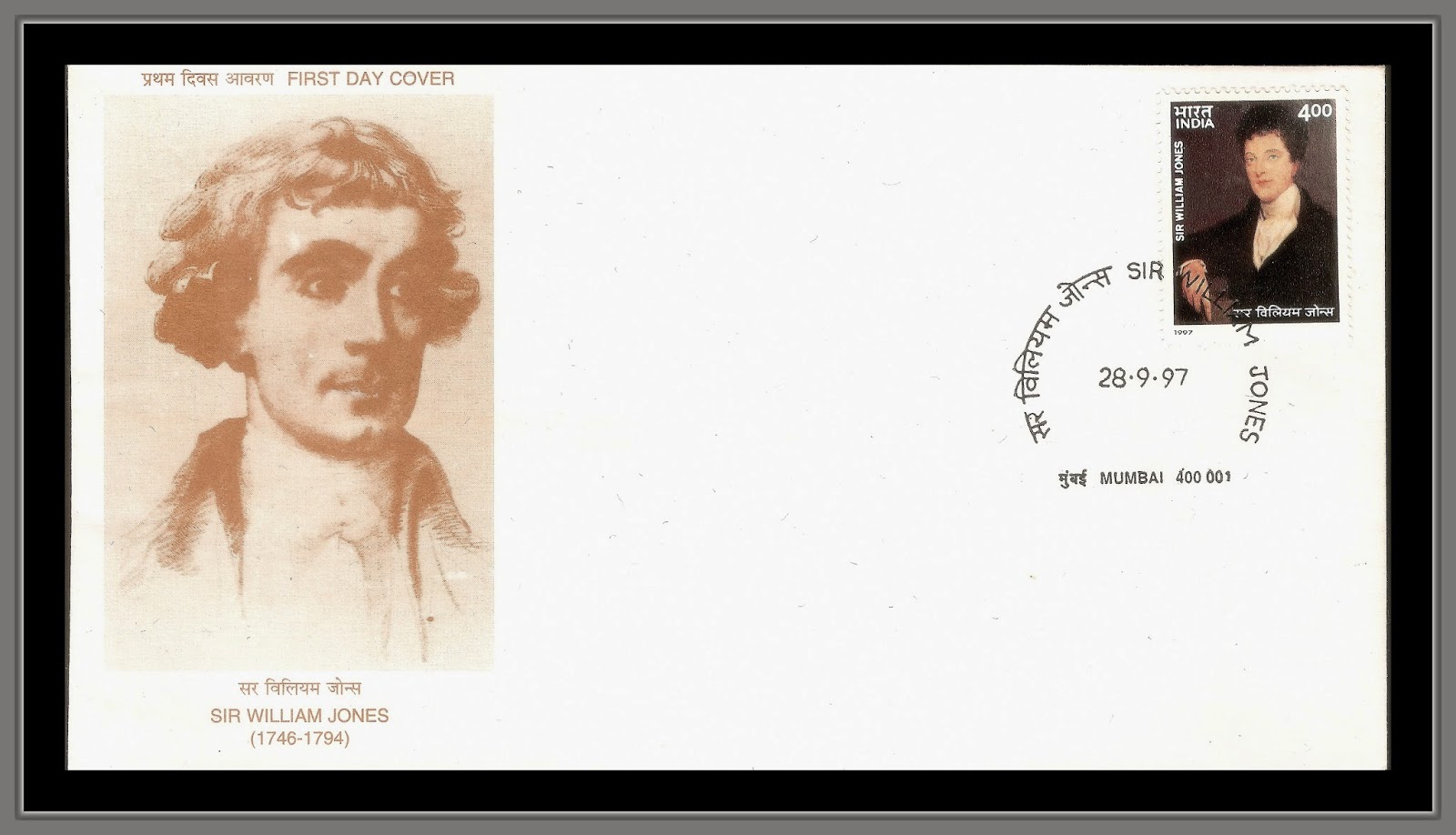
2.The religious bias of many Western scholars may be understood from the fact that Sir William Jones fixed the time of Manu B.C.4006 i.e the time of creation of the earth according to the Bible and that of Rama B.C.2029, quite ignoring the Bharatiya Puranic tradition.
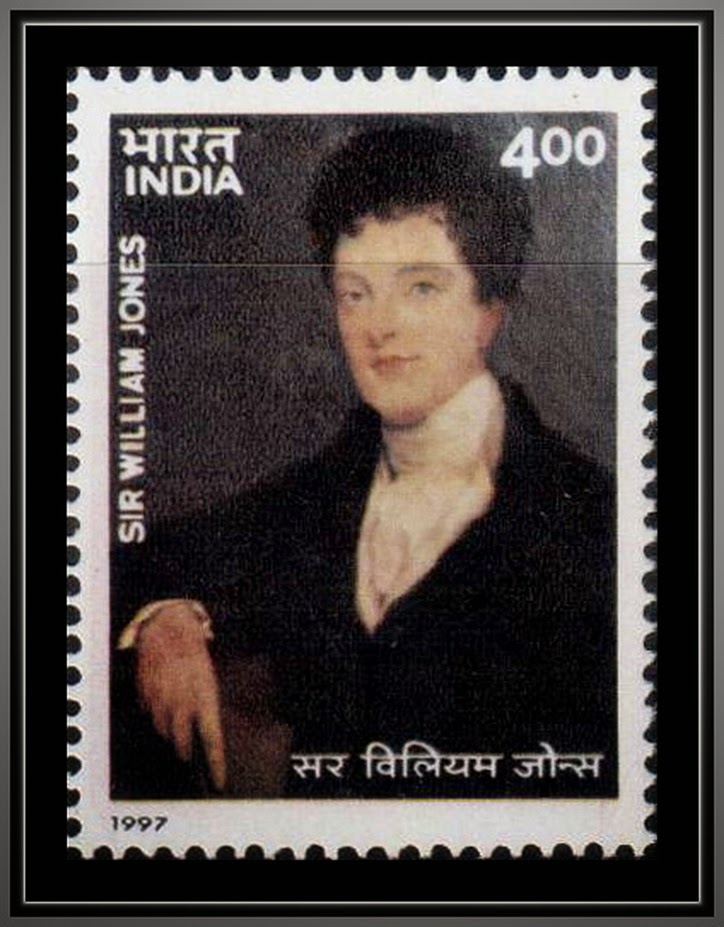
jones stamp

ERAN STONE INSCRIPTION
3.Western scholars have tried to prove, as far as possible  a late date for our civilization and they picked up the pen with a questionable motive to cast doubts upon facts which constitute an object of pride to Indians. And such motive is reflected when the Eran Stone Pillar Inscription  reading ‘trayodasyam suraguror divase’ offered by James Prinsep (who first deciphered the Brahmi scripts)  was changed by putting ‘Dva’ in place of ‘Trayo’ by John F Fleet  to make the tithi of offer  of the stone pillar (as a Victory Pillar = dwaj sthamba) Dvadasi in place of Trayodasi so that the date could be available in 484 AD (June 21 Thursday) while Trayodasi could be available in 150 BC (Thursday, June 1)

Dvadasi is not a favourable tithi for holy ritual of offer of Vijaya Dhvaja (Victory Tower) to God Vishnu, while Sukla Trayodasi causes a nectar like benevolent combination .Knowledge of Indian astrology is, therefore, necessary for correct dating of such events. Rama attacked Lanka fort of Ravana in Sukla Trayodasi
jones fdc

  1. Distortion of Ramayana by Michael Madhusudan in his Meghanadhavadha Kavya:- “Lakshmana killed weapon less Indrajit against moral code of war. The idea of Ravana elevates and kindles my imagination. He was a grand fellow. Though as a jolly Christian youth, I don’t care a pin’s head for Hinduism … it is my ambition to engraft the exquisite graces of the Greek mythology on our own” (But according to Ramayana both Indrajit and Lakshmana bitterly fought with each other. Indrajit was killed by Lakshmana. Indrajit was an immoral warrior who broke the code of war by keeping himself disguised behind the cloud created by him with the Nikumbhila Yajna technology)
NPG Ax18290; Sir Monier Monier-Williams by Hills & Saunders

Monier Williams

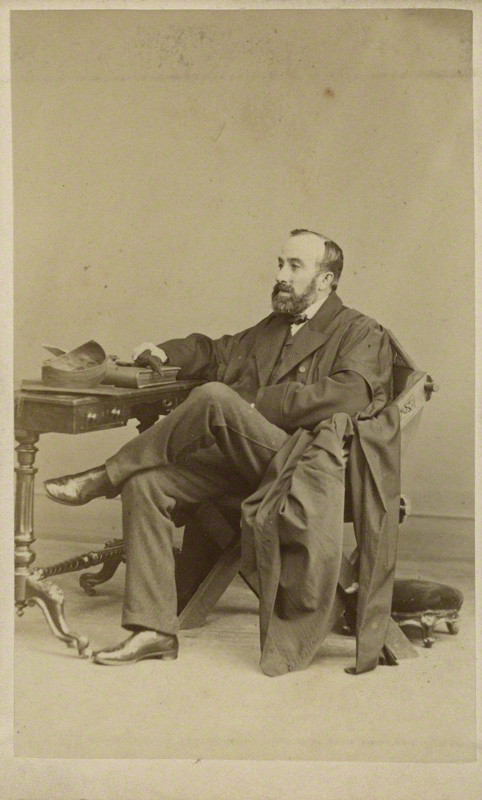
5.”It may, however, be mentioned that the motive behind such work of the Western scholars in general was, as pointed out by Mr Steve Rosen, the religious bias for Christianity, while he discussed the matter in his book ‘Archaeology and the Vaishnava Tradition” (pages 18 to 28). The motive was delineated by Prof Monier-Williams: “ I am only the second occupant of the Bolden Chair, and that its founder, Colonel Bolden, stated most explicitly in his will (dated August 15, 1811) that the special object of his munificent bequest was to promote the translation of scriptures from Sanskrit – so as to enable his countrymen to proceed in the conversion of the natives to the Christian religion”.

Ships in the Rig Veda!

ship2

Written by London swaminathan

Research paper No.1799; Dated 14th April 2015

Uploaded at London Time:21-59

Hindus of the Vedic period had big ships and went into the vast and deep ocean for trade and other purposes. Though it was known hundred years ago and lot of things were written about it, there were some counter arguments as well. But their arguments were weak because they argued on the basis of negative evidence, i.e. what is not in the Vedas regarding the ocean going ships. They deliberately forgot that the Vedas are not oceanography manual or marine engineering manual. Vedas are religious books.

After the discovery of Dwaraka under the sea which corroborated the information found in Vishnu Purana and Mahabharata, the counter arguments became weaker. Negative evidence never prove anything. Salt is not mentioned in the Rig Veda and men urinating is never mentioned in the Tamil literature. If one argues that because salt is not mentioned in the Rig Veda, they did not know sea, another stupid would argue Tamils never urinated in their lifetime!!If one wants to enjoy such stupid arguments, one must read Minor Gods in the Rig Veda, where each God has ten to fifteen different interpretations, all by foreign “Scholars”.

Dwaraka was founded on a sacred site where once Kushasthali existed. Krishna built it with copper according to Sangam Tamil literature (Puram verse 201 by Kapilar). Vishnu Purana also corroborated by saying that Dwaraka was defended by high ramparts. Vishnu Purana says, “On the day Krishna departed from the earth dark bodied Kali Age descended. The ocean rose and submerged Dwaraka. Kali Age began in 3102 BCE. It proved that Dwaraka is at least 5000 year old.

Tamil verse spoke about a copper fort at Dwaraka and migration of a particular king around 1000 BCE to Tamil Nadu. So the details given in Vishnu Purana, information given in Tamil verse Puram 201 and the latest discovery of submerged port in Dwaraka prove that there was a port 5000 years ago ( I have already written about Krishna’s Naval Attacks against Nivata Kavachas and Chaldeans in my post Hindu Gods’ Naval Attacks)

ship35

Sea Travel and Ship and the Rig Veda

Rig Veda is the oldest book in the world dated at least 1700 BCE. But Vedic scholars like Shrikant Talagheri says that it would have taken at least 500 years to compose such a huge volume of literature.

1.Samudra is frequently mentioned in the Rig Veda

2.Treasures of the ocean are mentioned (RV 1-47-6; 7-6-7; 9-97-44)

3.Pearls and other gains of the trade are found in RV 1-48-3, 1-56-2; 4-55-6

4.Bhujyu was rescued by the Asvins from mid sea after a shipwreck RV 1-116-5. A ship with hundred oars (sataritra) is mentioned.

5.In the Rig Veda (1-56-2; 4-55-6), there are clear references to trading in distant lands for profit (RV 1-48-3)

6.Nau is the word used for boat and ship. The word Navy is derived from this Sanskrit word. It is frequently mentioned in the RV and AV. The term nava is referring to a ship (RV 1-97-8)

  1. Destruction of a kingdom where the Brahmins are harassed is compared to a shipwreck in the Atharva Veda (AV 5-19-8)

8.One passage refers to a well rigged ship in which Varuna and Vasisstha sailed to mid ocean (RV 7-8-3)

ship1

9.A prayer for prosperity in distant lands is also found in the Rig Veda(1-97-8)

10.Other words used for vessels and its parts:

Sairavati (sea worthy vessel) – (AB 6-29-5)

Dyumna =small boat- (RV 8-9-14)

Manda = rudder of a ship – SB 2-3-3-15)

Naumanda= deck of the ship – (JB 1-125)

Navaja = sailor or a boatman – (SB 2-3-3-5)

11.A Kind of vessel called plava is described in detail (1-24-35).It is said to be strongly constructed so that it can withstand storms.

12.Satapata Brahmana and Baudhayana Dharmasutra refers clearly to sea travel (SB 2-3-3-15; BD 1-2-4;2-2-2)

13.RV clearly mentions Sarasvati river reaching the sea. RV 10-136-5 also mentioned Dvausamudrava meaning two seas on either side.

14.The knowledge of high tide can be inferred from the RV(1-48—3)

15.The texts speak of inexhaustible sea(RV 5-16-7) and the earth encircled by the sea.

16.Varuna is praised as the God of Sea in the oldest Tamil book Tolkappiam and Rig Veda. Varuna is allocated the direction West and Indra, the East. West signifies sea travel from the Indus Ports and Dwaraka.

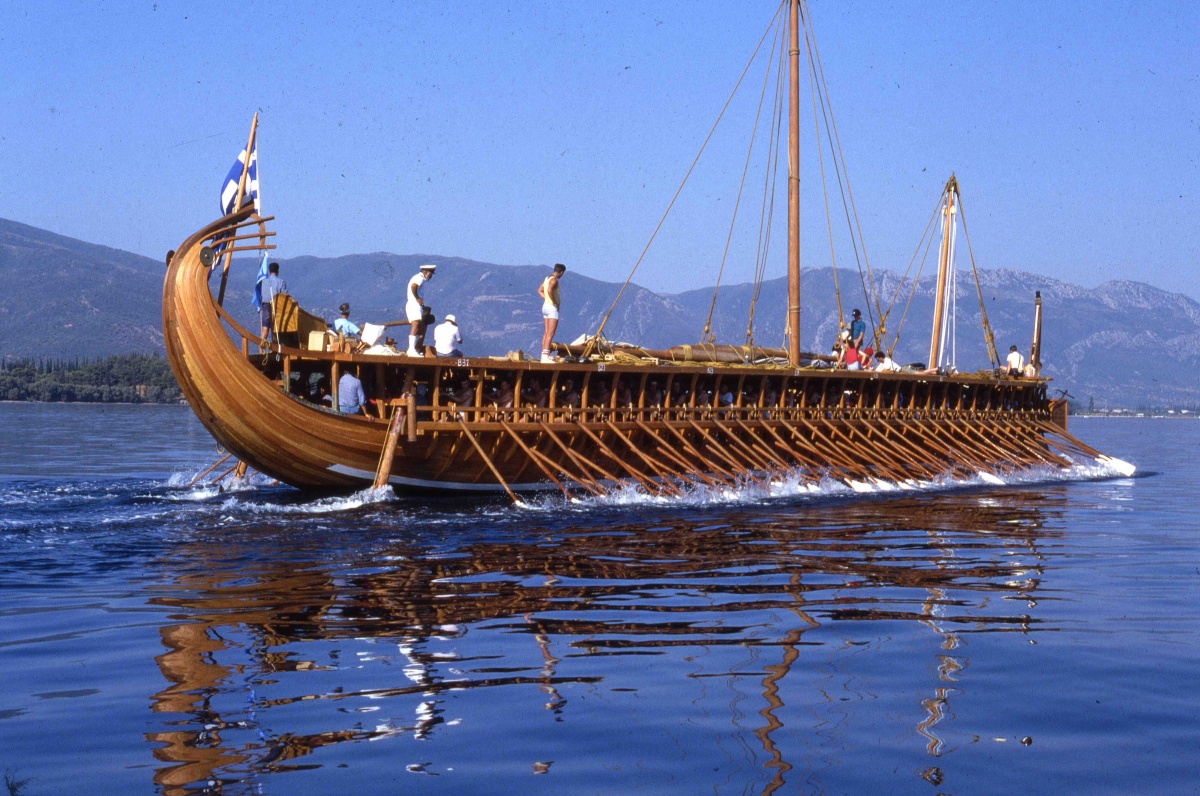
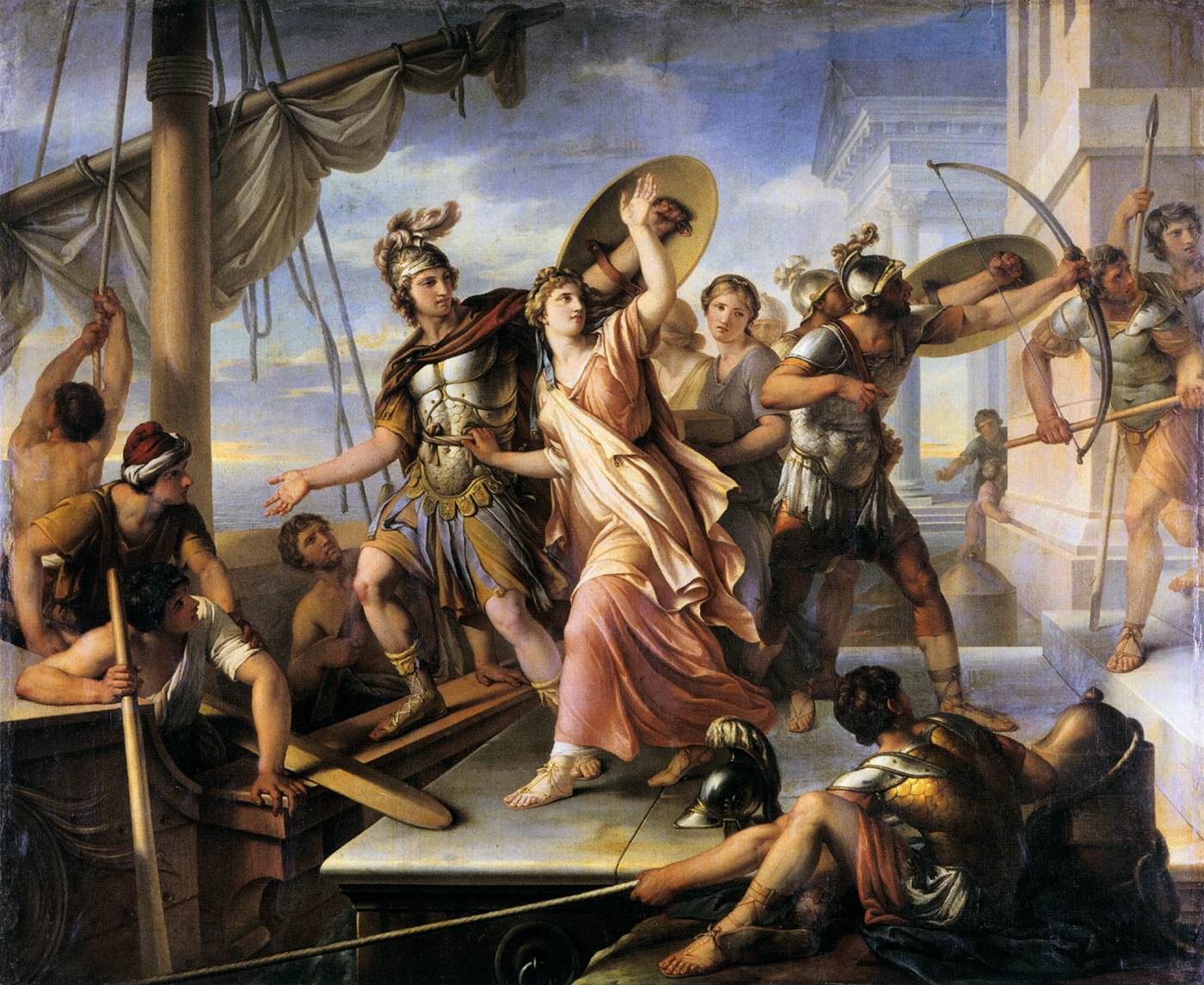
Olympias under Oar,

17.Two thousand year old Tamil literature called the coastal fishermen as Bharatavas. More research must be done to find the link between the Bharatas of RV and Bharatavas of Tamil Literature

  1. RV mentioned at least 15 types of fishes and crabs though it is a religious book.

19.In many countries we see seas named after Rishis (seers) Caspian Sea= Kashyapa, Adriatic= Atri, Bering Sea=Brgu, Aegean Sea= Agastya. More research is needed in the field of place names.

20.Indus valley has links with the Middle East and Gulf countries justifying Varuna the Guardian of Western Direction and God of Sea.

21.Ancient Egyptians knew shipping; ancient Greeks knew shipping; ancient Middle East knew shipping; why not ancient Indians?

south_east_asia_map

swami_48@yahoo.com

Two Stories: Guru and Parrot; Guru and Birds

parrot_reflection

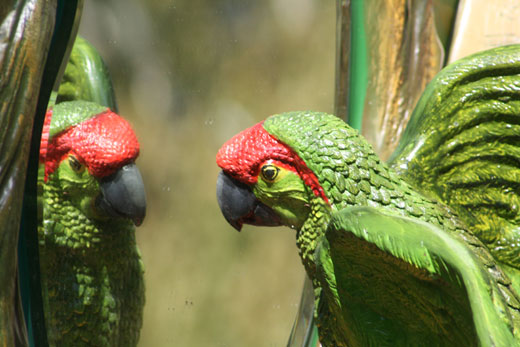
Parrot before a Mirror

Compiled by London swaminathan

Post No. 1797: Dated 13th April 2015

Uploaded at London time 21-25

God and Guru are one

The method by which a parrot is taught to speak is unique. The trainer places a big mirror in front of the newly caught parrot and talks to it from behind the mirror. The parrot thinks that another parrot is teaching it to talk and imitates the voice of the trainer. Trained in this manner, the parrot, picking up the language of the trainer, begins to talk fluently in the human language.

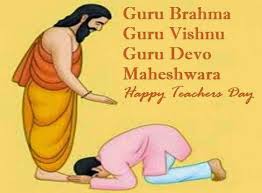
This is how a saint teaches his disciples. Apparently it is human being who is instructing them, but, verily, it is God hidden in the Guru that gives illuminating advice to the disciples. So, whenever the aspirant receives instructions from the Guru, he should consider that such instructions come from God himself. Truly, God and Guru are one.

mirror parrot

guru3

Freedom is the Goal

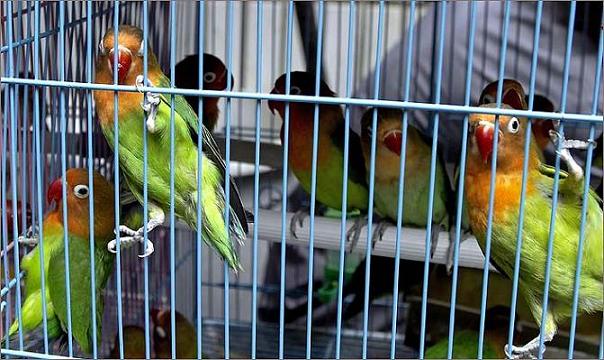
In a war in Europe, a sailor was captured by the enemy and was put into prison. After fifteen years he was released, as the warring countries contracted an alliance through a treaty. On the day of release, a friend placed in his hands a purse containing £50/- When the sailor was passing through the streets, he saw a shop in which he saw various species of birds in cages kept for sale. He went up to the shop and bought all the cages from the money he possessed and, by opening the trap doors of the cages, set free the imprisoned birds one by one. The shop man was astounded at this. He asked why the sailor having bought the birds at such high prices, released them all.

The sailor replied, “You see, I alone know what it is to be in prison, being denied the privilege of freedom. For fifteen years I have suffered prison life. I could not bear to see these birds unhappy in their cages”.

Similarly, a saint having attained spiritual liberation himself is eager to release others from the bondage of ignorance.

Source : Stories as told by Swami Ramdas, B V Bhavan, Mumbai, 1969

caged-parrots2

Tamil saints shout at the top of their voice, in the Saivaite and Vaishnavite hymns, “I have found out an ocean of happiness. Please join me. I have seen the sweetest; please join me”. Another saint says, “Oh my God! What a shame, I have opened the shop; no one comes to buy the valuable goods”.

Sri Ramakrishna Paramahamsa also says that there are two types of saints. The first type merges into the ocean of bliss like a salt doll. As soon as they see a big ocean full of bliss they simply jump into it. Another type of saints, control their enthusiasm, go back and shout to their disciples, “Come on let us all enjoy the most wonderful things”. Because of those saints only we know what is there at the highest level. They take all their disciples to higher stage along with them.

happy-guru-purnima-2012

Swami_48@yahoo.com

Picture Ramayana: Bala Kanda

ramayan1

Written by London swaminathan

Post No. 1794; 12th  April 2015

Uploaded from London at   17-41

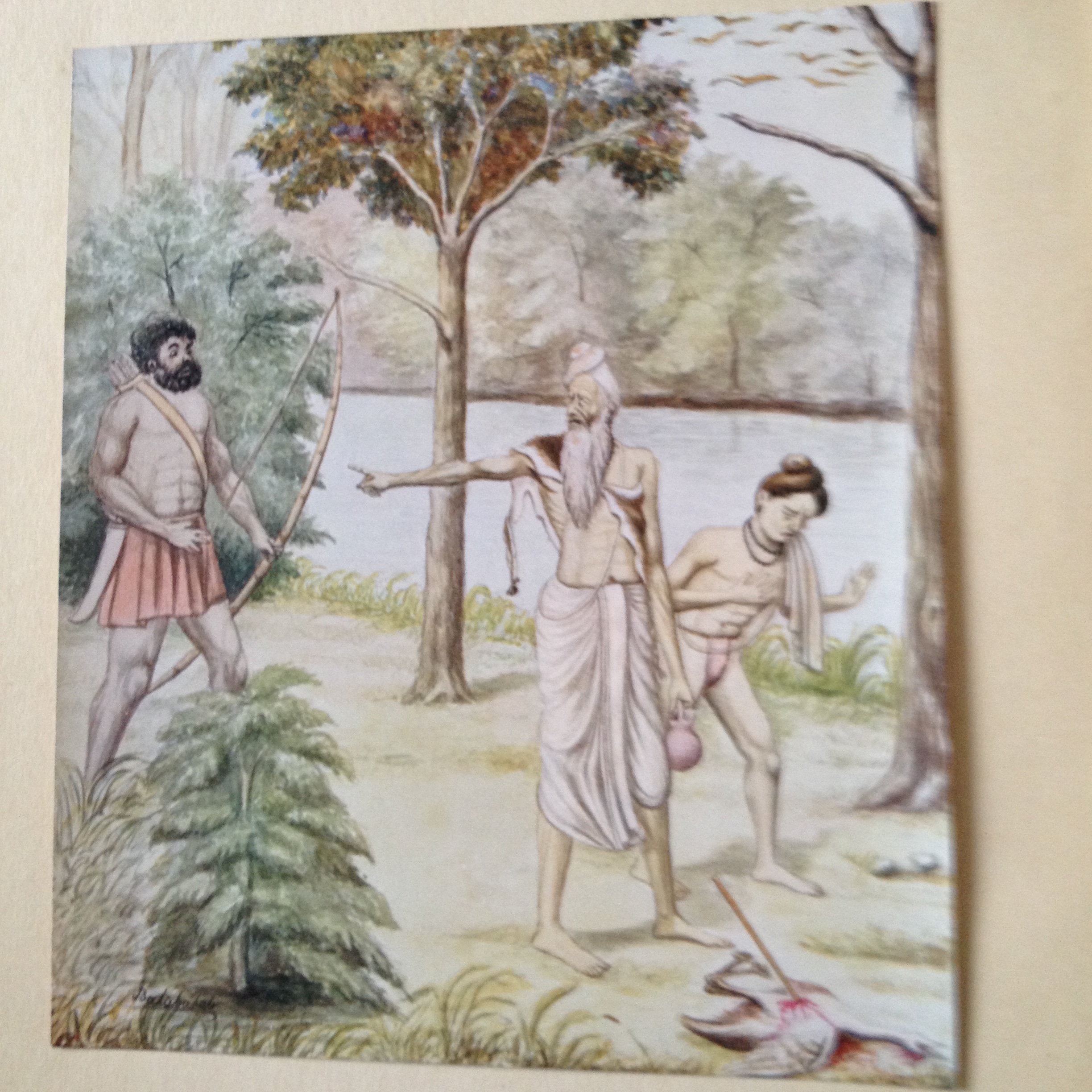
ORIGIN OF RAMAYANA: Sage Valmiki went to Tamasa River to bathe. He saw a hunter shooting two birds in love. One of them died. When Valmiki cursed him he burst into poetry in Anustubh metre. Brahma appeared before him and asked him to sing the glory of Rama. Thus came Ramayana, a timeless epic in Sanskrit with 24,000 slokas/couplets.

ரிஷ்யஸ்ரீனக

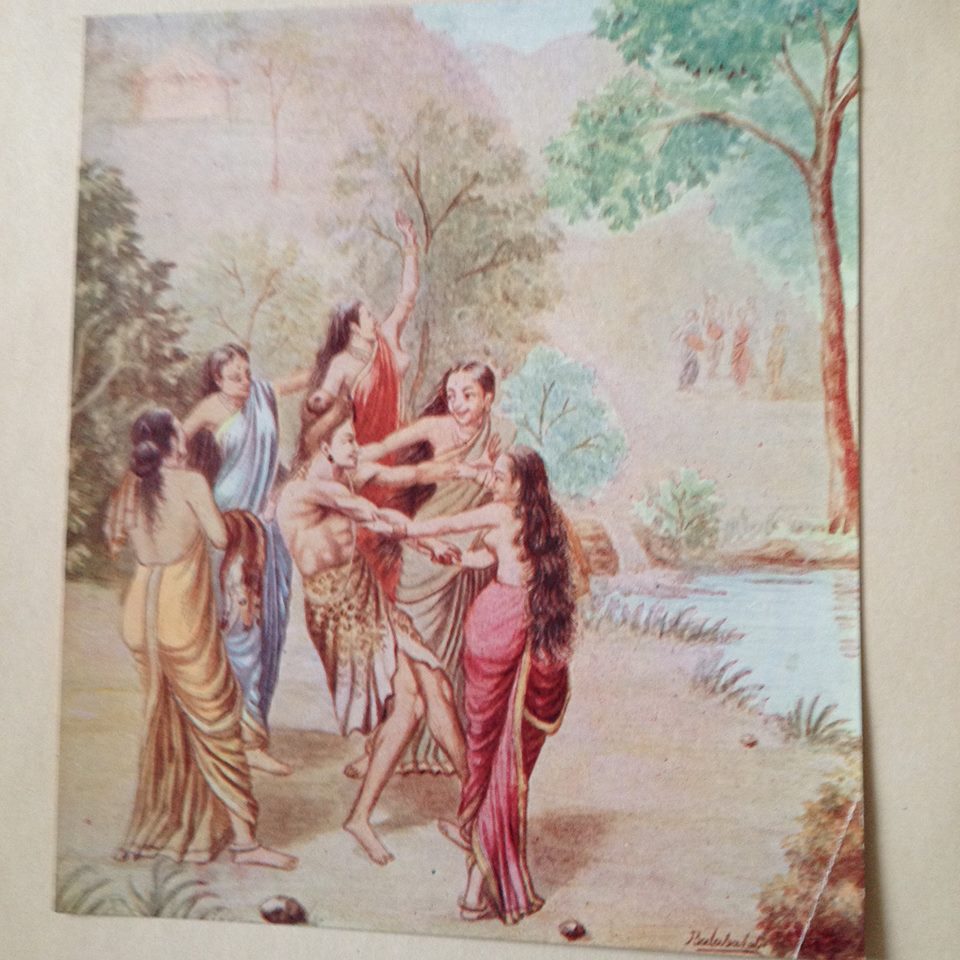
Dasaratha was advised by the seers to perform Puthra Kamaeshti Yajna to get children. They advised him to get the great sage Rishya Sunga to do it. He sent courtesans to bring him. Picture shows Rishyasrnga. Rishyasrnga means the seer with a horn. He had a projection on his head like a deer. There is lot of psychology and biology in his story. Sex is a human instinct is the message. Some People were born with some deformities in the Ramayana days. We know Ashtavakra (Eight Angled) from the Upanishads and Surpanaka (deformed ear like a winnowing pan) from Ramayana.

IMG_2767

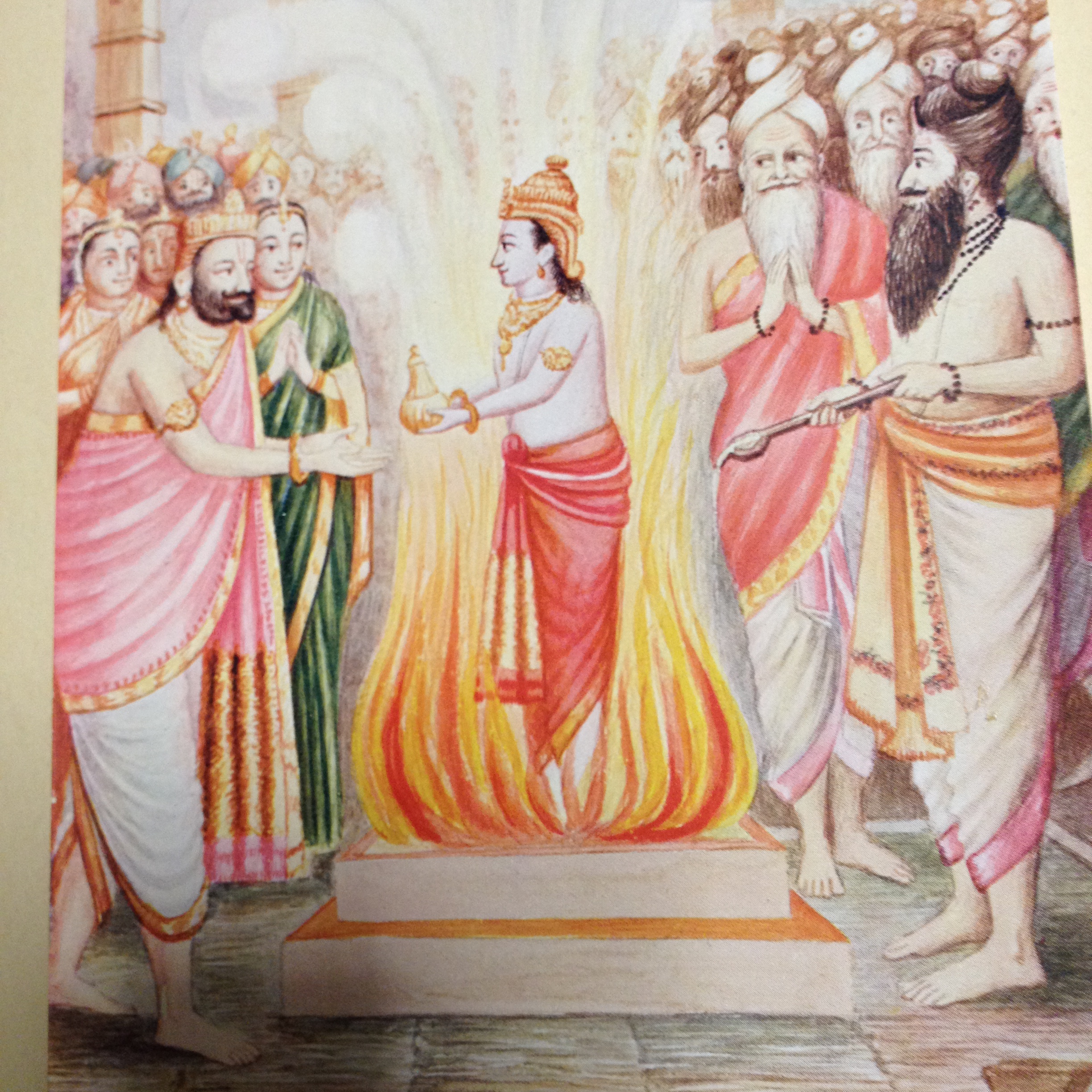
Dasaratha did Putra Kameshti Sacrifice (Yaga) with Rishyasrnga. On the last day of the Yaga, a Spirit appeared from the altar and gave Dasaratha a pot containing an elixir. After partaking this celestial food, Kausalaya gave birth to Rama, Kaikeyi to Bharata and Sumitra gave birth to the twins Lakshmana and Shatrugna.

IMG_2768

Visvamitra came to Dasaratha and asked him to send Rama with him to fight with the demons. Dasaratha hesitated, but his Kula Guru Vasishta told him to send him. Rama and Lakshmana went with Visvamitra who taught them all old Puranic stories and gave them training in ultra modern arms. Not even America and Russia are able to find such arms until today. They are activated by sound. The vibrations will kill thousands at a second. More powerful than Brahmastra, the Indian nuclear weapon.

IMG_2769

Sage Visvamitra (meaning Friend of the World) took Rama and his brother through thick tropical rain forest. Tadaka, a demoness, appeared before them. Visvamitra ordered him to kill her. Rama refused saying that Hindus can’t kill women even in the battlefield. Then Friend of the World=Visva mitra, explained she does not fall under the category of “woman”. Then Rama shot her dead with a single arrow according to Valmiki and Kamba Ramayana.

IMG_2770

After killing demoness Tadaka, Rama and Lakshmana came to Vishvamitra’s hermitage (Leaf House, Thatched shed). Hardly Visvamitra started his fire sacrifice, Maricha and Subahu, with all the demon hosts, attacked the hermitage. Rama killed Subhahu, smote Maricha and hurled him afar off into the ocean. The rest of the evil spirits took to their heels.

Indra is running away as soon as Gautama arrives. Earlier he molested Gautama’s wife Ahalya. Since Indra came in the disguise of Gautama she was cheated. 2000 year old Sangam Tamil literature also mentioned this incident in Paripatal. There was a painting where Indra was escaping like a cat. This painting was in Tirupparankundram, near Madurai, according to Sangam book Paripatal.

IMG_2669

Ahalya Sapa Vimochanam:–Gautama cursed his wife Ahalya for allowing Indra into her hermitage. Under the curse she was in a trance for long. Gautama told her that when Rama comes to the hermitage she would be delivered from the curse. As soon as Rama entered the hut she became normal. Hinduism is based on truth. Not even God can withdraw a word that was said. So Gautama gave her an exit strategy to get out of the mental depression. This shows that the Hindu seers know what is going to happen in future. Even before Rama left Ayodhya, Gautama knew what would happen to Rama. Seers are called Tri Kala Jnanis. That means they can see Future, Present and Past like we see a river from the top of a mountain.

IMG_2794

Viswamitra (meaning Friend of the World) told Janaka that Rama is ready to bend the Siva Danush. Janaka said,” I have promised to give Sita in marriage to him, who can bend and wield the bow. Rama may try this fortune, if he likes”. (Sita means ploughshare. She was found in the field. Rig Veda has hymns on Sita, but not Ramayana Sita) At the order of Viswamitra Rama drew the bow string so far that the bow string burst asunder in the presence of thousands of men and women. Kamban in Tamil Ramayana says, people only saw Rama taking the bow. The next minute they only heard the noise of breaking of the bow; his action was so swift!!!

IMG_2576

Parashurama humbled: Parashu means axe. This Axe Rama was anti- Kshatria (Ruling caste) because they killed his father. He invaded the Kshatrias 21 times and destroyed all of them. When he challenged Rama who was on his way back to Ayodhya, Dasaratha begged him to leave the teenage boy. Parashu (axe) rama told him that he would go if Rama could bend Vishnu danush like he did with Siva danush. Rama got it from Parashu and bent it and shot an arrow. Parashu bowed and went his own way. There is a big confusion about Parashu. He figures in Ramayana and Mahabaharata periods which is not possible. There were two Parashuramas. I am writing a separate research article about it in my blog.

IMG_2575

Source: Picture Ramayana book.

Who are Vratyas (outlaws)?

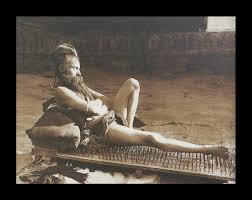
ascetic2

Written by London swaminathan

Research Article No. 1794; 11th  April 2015

Uploaded from London at   21-37

“Persons whom the twice born (Brahmins, Kshatriyas and Vaisyas) beget on women of their own classes, but who omit the prescribed rites and have abandoned the Gayatri, are to be designed as Vratyas” – Manu 10-20.

In the days of Manu, people belonging to three castes Brahmins (Priests), Kshatriyas (Rulers) and Vaisyas (Business community) were reciting the most powerful and most respected Vedic mantra Gayatri (Rig Veda 3-62-10). Today not even all the Brahmins recite it three times a day. They have to do it before the sun rise, before the sunset and at noon.

In an earlier chapter Manu says the three castes must be initiated into the recitation of Gayatri before the age of 16 for Brahmins, 22 for Kshatriyas and 24 for Vaisyas. If they don’t do it then they are called Outlaws/Vratyas (Manu 2—38 and 39). In fact they were initiated well before this age. This was the maximum limit.

In another chapter he gives a long list of tribes who became Vratyas in course of time by dropping their prescribed rites.

Sangam Tamil literature also gives some details about Vratya Brahmins who were involved in conch and bangle making industries. Famous Brahmin poet Nakkirar belonged to this sect.

joeylholymen-9

Vratyas in the Vedas

Atharva Veda, the Panchavimsa Brahmana and the Sutras describe certain rites intended for the Vratyas. They are used for the purification of Vratyas.

Panchavimsa Brahmana (17-1-4) says that there are four types of Vratyas:

1.The ‘hina’ who are described as depressed

2.Those who have become outcasts for some sin (nindita)

3.Those who have become outcasts at an early age, apparently by lving among outcasts or foregoing the prescribed rites

4.Those oldmen who, being impotent (sama-niicamedhra) have gone to live with the outcasts.

For all these four categories some “scholars” have given interpretations according to their whims and fancies without any rhyme or reason. They have no proof for their statements from any other sources. Foreigners have included Aryan and Non Aryan wherever they wanted, once again without any proof!!! They are notorious for their Divide and Rule Policy.

Manu is very clear and say that they all belong to three castes. In the Yajur Veda, Vratya is one of the victims in Purushameda Yajna (VS 30-8, TB3-4-5-1), where nobody knew what the term meant. What we gather from the descriptions of Vratyas in Tamil and Sanskrit sources is that they did not follow the scriptures and lead nomadic life. Vedas are very clear that they can become twice born again by performance of the ritual prescribed (Vratystoma like todays Ghar Vapasi rituals). This provision and Manu’s description clearly show that they are all children of the same family and not foreigners or outsiders.

When their group became big, they themselves elected a leader who wore a turban, carried a whip and a kind of bow. It looks like they had black uniform and owned a rough wagon. They wore silver jewellery. All these were handed over to the priests once they were taken back into the mainstream religion. This shows that the Vedic society was very democratic and had flexi rules for their children; they were not rigid even when their children went astray. They can be compared to Tamil Siddhas who were iconoclastic in their approach. But they had very high philosophy. They worshiped Shiva but did not follow the Agamic rituals. Orthodox Tamil Saivites treated them like outcasts.

The Atharva Veda (15-1-1) description of Vratyas is different. Fifteenth book of Atharva Veda deals with the Vratya, which is of mystical character, exalts the converted Vratya as a type of the perfect Brahmacharin and, in so far, of the divinity.

joeylholymen-5

Brahmanas associate Vratyas with Rudra. They are described as wandering ascetics, but who don’t follow the scriptures.

Now we see Brahmin wrestlers in Gujarat, Brahmin actors in Kerala and Brahmins practising different professions in different parts of India. They were supposed to do only six things in the olden days 1.Performing fire sacrifices for others 2.for themselves 3.Accepting religious Dhana (donations, gifts) and 4.giving donations 5. Learning Vedas and  6.Teaching Vedas. Throughout 2000 year old Sangam Tamil literature, they are called performers of six tasks/jobs (Aru Thozilor).

A Kalyanraman, a scholar who have written two volumes of Aryatarangini with new interpretations on many subjects says, ”There was, in the region now known as North Punjab, Kashmir and Afghanistan, a powerful and enterprising community, ethnically and by broad religious heritage Aryan, but afflicted with impious practices, devious commercial methods and excessive materialistic outlook on life. The Panis were, what were technically known to Rishis as Vratyas, i.e. fallen Aryas. They could be reclaimed by a process of purification and conformist oath taking, known as Vratyastoma, whose details are elaborated in the sastras (scriptures).

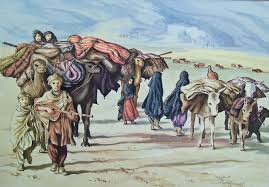
Brahmin families, who for three generations, had failed to recite the Gayatri mantra became Vratyas – The Athrva Veda (XV-1) gives some lovely pictures of vagabond Vratyas “travelling in a bullock cart with concubines and musicians, messengers and footmen and professing Saivaite magic with fluency” (Page 99, Aryatarangini)

nomads

Source books

Vedic Index of Names and Subjects (Vol.II), Keith and Macdonell

Manu Smrti

Aryatarangini (Vol.I) by A Kalyanaraman

Cultural Index to Vedic Literature by N N Bhattacharya

swami_48@yahoo.com

DIVINATION in The Vedas, Babylonian and Etruscan

ashtamangalya+prasnam+at+triprayar

Ashtamangala Prasnam (Prediction) in Kerala, India

Written by London swaminathan

Research Article No.  1792; Date: 10th April 2015


From India’s Northernmost Himalayas to the Southernmost Kanyakumari, the beliefs were same. This is attested by the 2000 year old Sangam Tamil Literature and the earlier 3700 year old Vedic Sanskrit literature. They all believed that the behaviour of animals and birds as well as natural phenomena can predict future. Some of their beliefs have some scientific basis. We see the strange behaviour of animals and birds before natural catastrophes such as big storm or Tsunami or earth quakes. Hindus linked the black bird crow with the departed souls which is in Sangam Tamil literature and earlier Sanskrit literature. Tamils linked the arrival of the guests with crowing. When the housewives cook special dishes naturally the good smell will attract the crows around the house. But many of their beliefs cannot be explained scientifically. This type of belief is seen around the world.

Vedic Hindus used the fire of the Sacrifice, flight of birds, crying of animals, position of the planets, falling of comets and meteors, natural phenomena, sneezing, fluttering/twitching of eyes, etc. Mahabharata has got lot of references to the wind, meteors and the positions of the planets before the great Bharata war.

babylonian liver.jpg1900 BCE sippar,iraq

Babylonian Liver Prediction

Kausitaki Brahmana on crows:

When a ceremony is performed to win for a maiden a husband, the side from which the crow first appears is that from which her wooer will come ( KB 34-24)

Satapata Brahmana on Cows

The movement of the cow at a particular moment in the soma sacrifice shows the fortune of the sacrificer ( SB 4-5-8-11)

Hiranyakesi Grhyasutra on Owls

The owl is invoked to fly around the village and give signs for the future; it is a bird which flies to the dwelling of the gods, and the Rig Veda already knows birds of omen (HGS 1-17-3)

The hyena’s howl is uttered either of its own will, or on the prompting of other powers (HGS 1-17-1)

Gobhila Grhyasutra on Bride and Balls of Earth

The character of the bride can be judged by her choice of balls of earth taken from various places (G G S 2-1-3ff)

The sex of the future child believed to be by the fact whether the member of the body of the prospective mother, which a Brahmana boy touches accidentally has a masculine or feminine name (Keith 390-1)

Later Tamil and Sanskrit literature have hundreds of beliefs like this.

dowsing rod

Dowsing Rod to find water and treasures

Sumerian, Babylonian Beliefs


Divination was widely used in Mesopotamia. It is based on the idea that to some extent the future is predetermined; it can be interpreted/divined by those with specialist knowledge. Sumerians used extispicy i.e.the liver, lungs or the colon spiral of specially slaughtered young ram were inspected for peculiarities during a nocturnal rite (Etruscans also used the liver for predictions).

The study of celestial omens was more popular and it survived for long. Observation of birds was practised like India and Italy/Etruscan. Divination played an important part in decision making. It was used before building a temple, military expedition, for king’s wellbeing and safety, fortune telling and weather forecasting.

(In my home town in Madurai, Tamil Nadu, even the rain and harvest are forecast by the colour of the dress the god Azakar/Perumal wears during Chitra festival).

Hittites also used Extispicy. Anatolians used old women like the Greeks and Tamils, for prediting.

prasnam

Prasnam Predition by shels and cowries in Kerala

Following books are recommended for researchers


Magic and divination in Ancient Palestine and Syria by A. Jeffers, 1996

The act of Extispicy in ancient Mesopotamia by Assyriological miscellanies, 1980

The Interpretations of dreams in the Ancient Near East by A L Oppenheim , 1956

Rituals of the diviner Malibu, CA, 1983

Abhidana Cinatamani in Tamil give some information about Arootam and Sakunam in pages 137 and 541.

Piacenza_Bronzeleber.jpgEtruscan

Etruscan Liver Diagram for predictions

ETRUSCAN CIVILIZATION


From my earlier article Etruscan-Hindu/Tamil Link posted on 28 July 2012


Birds Used for Prediction

Boulon is the word for bird. It is similar to PUl in Tamil.

Tamils believed that flights of birds or their sounds (calls) can predict good and bad things that is going to happen. Even today their traditional calendars (Panchang) publish those details every year. No two cultures in the world come so close as the Tamils and the Etruscans. Etruscans had such a calendar.

Etruscans believed that Gods speak to mortals through nature. They even interpreted thunder and lightning. This is in the Hindu Upanishads. The famous parable of Three “Da” sounds of Thunder is in the Upanishads. Another story about five elements trying to lift a blade of grass is also in the Upanishads.

Etruscans used livers of sacrificed animals to find their future. Mesopotamians had similar beliefs. Like Vastu Shastra allocate different corners for different Gods, they have different areas for different gods in the liver. A Bronze model of a sheep’s liver from Piacenza (150 BC) gives 52 names of divinities, mostly abbreviates. Many of them were repeated.

oxford-water-diviner

Oxford Water Diviner

Source Books

Dictionary of the Near East, British Museum Publication

A Cultural Index to Vedic Culture by N N Bhattacharya

My Previous articles (See the list below)


Read also my articles:

Can Birds Predict Your Future? (Posted on 22 July 2012)

Beware of Wagtail Birds: Prediction by Varahamihira (19 February 2015)

How to find water in the Desert? Varahamihira on Water Divination (Posted on 16 February 2015)

Tamil Astrology: Rope Trick for Predictions (Posed on 27 February 2013)

Two Tamil Articles posted on 12 April 2012 on Greek Delphi Oracles and Tamils

Birds and Gods

Amazing Power of Human Mind: Six Stories

swami_48@yahoo.com

Marriage by abducting Girls in Ancient India!

subhadra

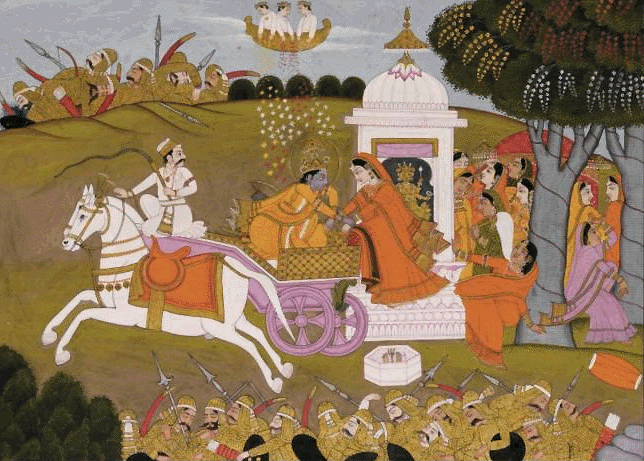
Subhadra’s abduction by Arjuna

Written by London swaminathan

Research article No. 1784; Date 7th April 2015

Uploaded from London at   21-40

Taking a woman away by force and marrying her is called “Rakshasa type of marriage”. It is listed as one of the eight approved types in the Hindu law books. This started during Rig Vedic (before 1700 BCE) days.

In the epics and Puranas and also in the Prakrit and Sanskrit literature, we have numerous instances of forcible abductions but the Vedic references of such cases are very few.

1.The Rig Veda (1-112-19, 1-116-1; 1-117-20; 10-39-7; 10-65-12) contains a few references to Vimada who carried off Purumitra’s daughter Kamadyu against her father’s will, but probably with her own consent.

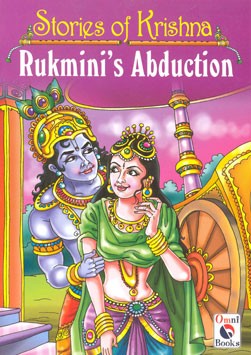
2.Lord Krishna abducted Rukmini and married her.

3.Bhisma abducted Amba, Ambika, Ambalika (daughters of King of Kasi)  and married two of them to Vichitravirya.

4.Arjuna abducted Subhadra, Krishna’s sister, with the connivance of Krishna and married her.

bhishma-amba-ambika-ambalika-300x225

Bhisma’s abduction of Amba, Amabika, Amabalika

In Rukmini’s case her father Rukmi wanted to give her to Sishupala. But Rukmini liked Krishna.

In the case of Subhadra, Balarama wanted to give her to Duryodhana, but Krishna opposed it and helped Arjuna to abduct her. Subhadra liked Arjuna.

In the case of Amba, she told Bhisma that she had already fallen in love with King Shalva. When Bhisma sent her back to Shalva, he refused to accept her. She cursed Bhisma for the failure.

In the case of Ravana, he abducted Sita who is another man’s wife. Though the scriptures accepted abduction marriage (Rakshasa Vivaha) as one of the eight approved types, it never accepted abduction of married women/another man’s wife.

Asvalayana Grhya Sutra and most of the Dharma Sutras have given recognition to this form of marriage. The Baudhayana Dharma Sutra (4-1-15-16) clearly states that “if a damsel has been abducted by force and not has been wedded according to sacred texts, she is to be treated like a maiden and may be lawfully married to another man”.

rukmini2

Rukmini’s abduction by Krishna

Oldest Tamil book Tolkappiyam refers to eight types of marriages which is already said by Manu and other Hindu law books/smrtis. Most famous Tamil commentator Nachinarkiniyar explained them in detail. This gives another blow to the Aryan – Dravidian fake theory. I have already given scores of Tamil customs similar to the ones referred to in the ancient Hindu smrtis.

(1. Performing Rajasuya Yajna, Asvamedha Yajna by Tamil Kings, 2.Worship of Indra and Varuna, Shiva, Vishnu, Durga, Krishna, Balarama in Sangam literature, 3.Four divisions of army, 4.Six divisions of seasons, 5.Four Purusharthas: Dharmartha kamamoksha; 6.Praising Arundhati as the chastest woman; 7.Flags and White umbrella; 8.Sacrificing a human being before the war, 9.Capturing the cattle to start a war; 10.King as God; 11.Praying to Southerners/departed souls; 12.Wishing for a male child to do funeral rites; 13.Cremation, 14.Respecting Brahmins and the Four Vedas; 15.Belief in Karma Theory; 16Belief in Rebirth; 17.Wife respecting husband; 18.Godddess Worship; 19.Worship of sun and moon, 20.Belief in astrology, omens and umpteen other things in the oldest part of Tamil literature bulldozes the Aryan Dravidian theory. 21.Tamil and Sanskrit came from the same source and branched out before 3000 years; both following Sandhi rules until today; Agastya codifying Tamil grammar based on Panini’s Ashtadhyayee; 22.Worshipping nature 23.Using the same alphabet in same order 24.Using Brahmi script 25.Practice of ‘Sati’ etc are given in this blog. These things, not only ridiculed the supporters of Arya- Dravidian Racist theory, but also powdered their theory into dust).

Eight Types of Marriages in Tolkappiyam (Sutra 1038- Porul Adhikaram) and Manu Smrti (3-21)

1.Brahmam

Marriage between a man and a woman according to rules in the scriptures. This is a marriage between a 48 year old man and a 12 year old girl. The man remained a bachelor for 48 years for studying the Vedas and other allied subjects.

2.Prajapatyam (Prajapathi Type)

Giving away the daughter in marriage with double the dowry as given by the bridegroom’s party.

3.Arsam (Rishi Type)

Offering in marriage of a girl decked in jewels to a suitable person. Both the bride and the bridegroom are made to stand between a cow and an ox whose horns and hoof are plated with gold and they are blessed to live in joy like cow and ox. Holy water is poured as a symbol of giving away the daughter.

rukmini

4.Daivam (Divine)

This means the offer of a girl in marriage to the suitable one among those who do the noble sacrifice or yagam  in the presence of fire/agni.

5.Asuram (demonic)

The marriage of valour where a man marries one after proving his manliness by subduing a wild ox, shooting a wandering hog by an arrow or by proving his skill in archery.

6.Rakshasam (demonic)

This means a forced marriage where a person carries away a maid by force without the consent of the woman or her parents

7.Paisasam (ogre Type)

This means the act of union with the old, drunkards or the sleeping ones; also it refers to marrying a woman leading a disgraceful life.

8.Gandharva (Love Marriage; Western Type)

This means a man and a woman falling in love at first sight and then getting married just like the heavenly Gandharvas ( The word Centaurs came from the gandarva)

abduction of Helen

Helen of Troy abduction by Paris

Sources :

A Cultural Index to Vedic Literature

Who is Who in Mahabharata

Manu Smrti (Third Chapter from 3-20 onwards)

Tolkappiam (Tamil Grammar)

Abidana Chintamani (Pages 1240-1243)

Sanskrit Inscriptions in South East Asia!

Carte_Empire-Khmer

Compiled by London swaminathan

Post No. 1781; Date 6th April 2015

Uploaded from London at   20-15

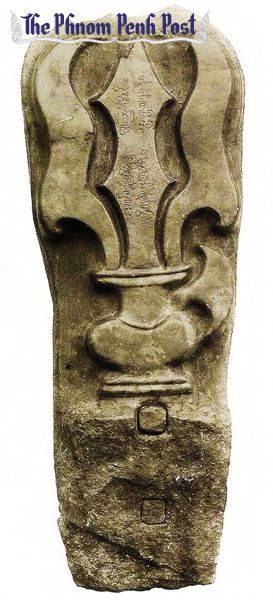
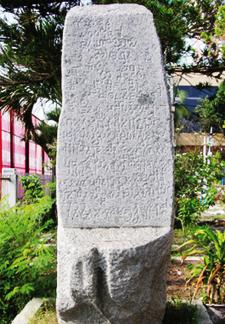
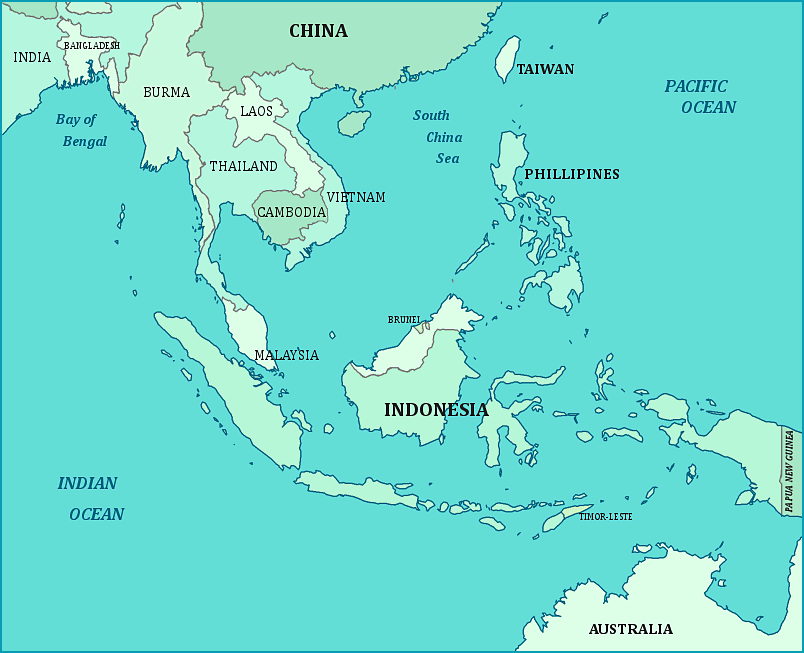
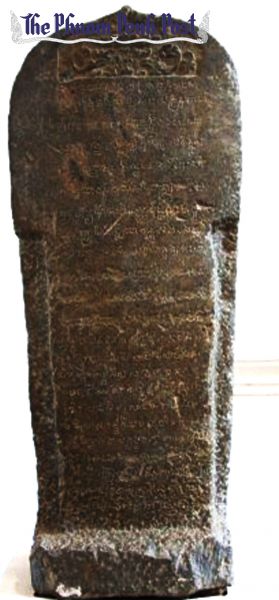
Over 1250 inscriptions are discovered so far in South East Asian countries. Majority of them are in Sanskrit language. Ancient Cambodia, known as Kingdom of Khmer covered most of the area in South East Asia. Champa, what is now known as Vietnam, has the oldest Sanskrit inscription. Since the name on the inscription is Sri Mara, I have interpreted it as the name of a Pandyan king in my research article “A Tamil king who ruled Vietnam” — posted here on  Sept 13 , 2011. This is what I wrote,

“The inscription is known as Vo-Chanh Inscription. It was inscribed on a rock as two parts. This is about the donation made by the family of the king Sri Maran. We have fifteen lines on one part of the rock and seven more lines on the other side. Of these only nine lines are readable. Scholars who took a copy of the inscription say the poetry part is in Vasantha Thilaka metre in Sanskrit and rest is in prose.

The king donated all his property to the people who were close to him and ordered that it should be honoured by the future kings. The inscription ends abruptly. But we could read the words ‘Sri Mara raja kula’ very clearly. Though we couldn’t get much information about this king from other sources, Chinese historians confirmed that the Hindu empire that existed in Vietnam, Laos and Cambodia started with Sri Maran”.

Over 800 Sanskrit inscriptions were found in S.E.Asia until fifty years ago. Now more and more inscriptions are discovered. Even a new underground city is discovered in 2013.

10_A-Shivait-Sanskrit-inscription

Saivite Sanskrit Inscription

Cambodia has made unique contributions to Sanskrit literature especially in poetry according to Dr M K Charan. He says, “The writers demonstrated full knowledge of various Indian sects. They mastered the rhetorical and literary conventions like puns, alliterations, similes etc. and virtually employed all the varied metres of Sanskrit poetics.

Cambodian epigraphy used both Sanskrit and old Khmer languages. They considered Sanskrit as a sacred language and so used it to record royal genealogies, panegyrics of the founders of monuments and donors, while old Khmer and Cambodian were used for the details which followed. Even in South India writers used Sanskrit and Tamil in the same way. Sanskrit verses praised the king and his Vamsavali (genealogy) whereas the Tamil section gave minute details of the donation, the extension of the land or the gifts to temples or the Brahmins.

south-east-asia-map

298 verses in one inscription!

Since the Cambodian inscriptions covers a vast area covering several modern S. E. Asian countries and period of 800 years from 7th century to 14th century CE, we can’t expect uniformity in the language of the inscriptions.

“We have positive evidence about the flourishing state of Sanskrit language during a span of more than 800 years. Verses composed during the period of Jayavarman and Yasovarman conform to Panini’s rules because the composers had a thorough knowledge of grammar”, says DR MK Charan. Many of the Sanskrit verses are so beautiful that we do not find their parallel in India. A new Kavya style named Manohara has been referred to in the Pre rup inscription.

Inscriptions are in beautiful and flawless Kavya style. They exhibit a thorough knowledge of different metres and most developed rues and conventions of rhetoric and prosody.

10_A-Buddhist-inscription

Buddhist Inscription

The oldest inscription found in Cambodia is of fifth century CE. Out of the five verses contained in this inscription, four are in sardulavikridita metre and one shows familiarity with Hindu mythology. Some of the inscriptions are very big compositions. The Prasusti of Rajendravarman which contains 298 verses excess all others in size.

J F Stall says, “The Vocañh inscription is written in regular Sanskrit prose, and most of the inscriptions from Cambodia are written in a more correct form of Sanskrit than that which is used in some of the inscriptions from India. The reason for this may be that the Cambodians learned Sanskrit from grammar books and not from native speakers. The Indian grammarian Panini is in fact honoured by being mentioned in these inscriptions; other linguistic works are referred to as well”.

Jean-Michel Filippi, Professor of Linguistics at Royal Phnom Penh University wrote in June 2013, “Cambodian inscriptions make you feel dizzy: new inscriptions are still regularly found and they are very far from having been translated and commented upon.

The implications of this fact are obvious: Cambodian general history may well be known, but there remains very many obscure points which will only be made clear when the inscriptions are deciphered. Thus there is a strong chance that a book about pre-Angkor or Angkor Cambodia written 20 years ago may be simply refuted by the discovery or the deciphering of an inscription”.
budhagupta inscription

Pallava Grantha Script

Lakshminarayana dasa and Bhaktin Kaunteya of Iskcon, Cambodia, are writing about research in this area and add

“In the beginning of Christian era, Khmer language was only a spoken language. In other terms, at that time, the Khmer did not know how to write. The ancient Khmers borrowed the Indic script to record their own language. So the modern Khmer language is written in a script, which is borrowed from India. It is precisely the Grantha Brahmi script, which is the mother of modern Khmer script. Cambodia has also adopted the Devanagari script and Pallava Grantha script in order to develop its actual alphabets. In the present day Cambodian, about seventy percent words are borrowed from Sanskrit. Such common words as dhanagara (bank), durasabda (telephone),bhasa (language), etc are derived from Sanskrit.

Sanskrit was the court language of the Khmer Empire for more than thousand years. All the royal orders, land transactions, temple administration were recorded in Sanskrit. Slowly the Khmer language shared this role in course of centuries. So after seventh century we find inscriptions partly written in Sanskrit and partly in Khmer.

south_east_asia_map

About 1250 inscriptions have been discovered from the Ancient Angkor Empire. The majority is written in Sanskrit. The aim of the present research is to explore various aspects of cultural relations between India and Cambodia as presented in the epigraphic literature of this country”

Sources:–

Studies in Sanskrit Inscriptions of Ancient Cambodia by M K Charan, 1974

Articles by J F Stall, Jean-Michel Filiippi and Iskcon, Cambodia.

10_The-Vo-Canh-Inscription

Vo Canh Inscription in Vietnam (Champa)

Four Indian Kings who did not want to Rule!

Puhar-ILango

Picture of Tamil Prince Ilango

Research Article written by London swaminathan

Post No. 1778; Date 5th April 2015

Uploaded from London at  22-03

We have stories of at least four ancient Indian kings who sacrificed their right to rule. Because of their great sacrifice their names are entered into our literature and remembered for ever.

Devapi of Rig Vedic Period

Dustaritu Paumsayana of Vedic Period

Bhisma of Mahabharata Period

Ilango of Tamil Sangam Period

The interesting stories about these people are as follows:-

Devapi (RV 10-98) abdicated the throne in favour of his brother. According to the Nirukta (2-10), Devapi was the elder Kuru prince, but his younger brother Santanu became the king. There was a prolonged drought in the kingdom and Devapi acted as the priest of the king and brought rain by performing a sacrifice. The Brhaddevata gives us the same story but adds that Devapi abdicated because of his skin disease.

King Dustaritu Paumsayana, a king of the Srnjayas had to abdicate for his misrule (Satapata Brahmana 12-9-3-1). We have the stories of Vijaya who was banished from Kalinga/Vanga region who established a new kingdom in Sri Lanka. Other kings thrown out were Vena, Nahusa and Sumuka. But theirs was not abdication; they were driven out from their kingdoms.

title_bhishma_

Bhishma’s Great Sacrifice

Bhishma’s sacrifice was highly praised by the epic. His name was Devavrata. He sacrificed his right to rule for the sake of his father. His father Shantanu fell in love with a fisherwoman (Satyavati). Her father insisted that Shantanu could marry her only when he promised him that her child would succeed him to the throne of Hastinapura. When Shantanu was not ready to give such a promise, Devavrata came to know about his father’s love for Satyavati. He renounced the throne of Hastinapura. The entire country praised him for his sacrifice and then he was called Bhishma (man of terrible vow).

King Edward VIII of Britain wanted to marry a divorced American woman Wallis Simpson; it was opposed on moral, political and legal grounds. He renounced the throne in 1936 and married the woman.

bhisma

Tamil Prince Ilango

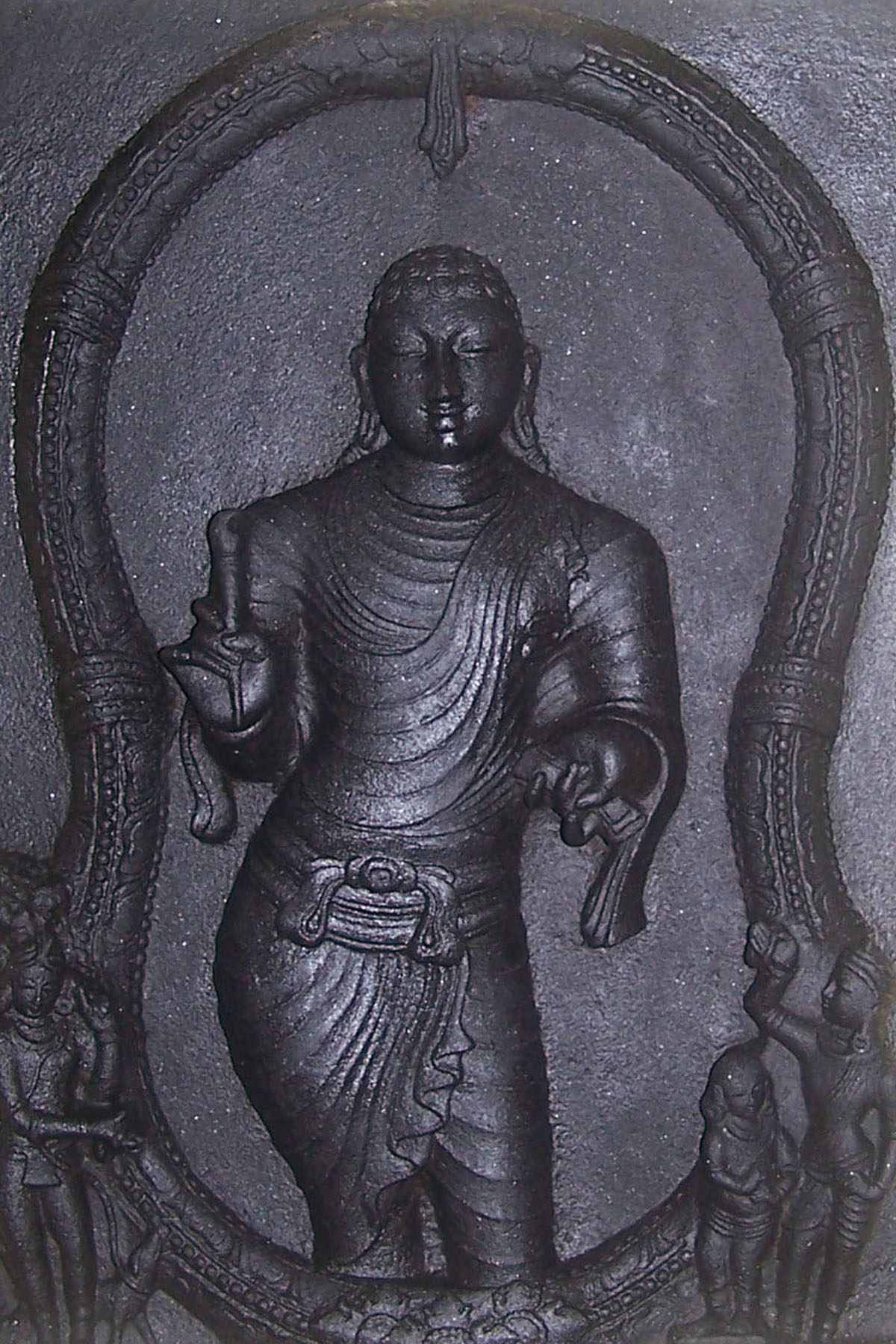
Ilango (also written Ilanko) was the younger son of King Ceralatan who ruled the western coastal area (Kerala) of South India. His elder brother was Senguttuvan. He was celebrated in the Tamil epic Silappadikaram written by his brother Ilanga. They lived in the Second century CE.

One day, when the king Ceralatan was sitting in the audience hall, there came to the court an astrologer who predicted the immediate death of the reigning king and the passing of the throne to his younger son (Ilango). It was an age of faith in Astrology. The prediction was a rude shock to Senguttuvan, brother of Ilango. He was the elder son and heir apparent to the throne. Ilnago noticed this, and in order that his brother might enjoy the kingdom, he became a monk. Once he became a monk, he could not be a king. The assumption of holy orders was to assure his brother that he would not stand to the way of his brother’s hopes and aspiration. He left the palace immediately and lived in Gunavayir Kottam, a temple.

swarna-vrsti  shankara

Pictures of Vidyaranya and Adi Shankara

Hindus believed that once a person becomes a monk, astrological predictions won’t come true. It is a way out or an exit strategy to defeat the fate or to beat the Karma theory. When Adi Shankara was caught by a crocodile, he told his mother that his present life was finished, but once his mother allowed him to become a monk, he would live. His mother said yes and the crocodile left him. That was like his “second birth”.
When Vidyaranya prayed for immense wealth, goddess appeared before him and told him that he couldn’t become rich in that birth, he immediately became a monk. Later he realised that Hindu monks couldn’t touch money. He gave all the gold bars given by the Goddess to  Harihara and Bhukka to establish the Vijanagara Empire. In the same way, by taking a “second birth” as ascetic, Ilango wiped out his first existence. He beat astrology by becoming an ascetic.
Source books:

Who is Who in the Mahabharata by Subash Mazumdar

A cultural Index to Vedic Index, Edited by N N Bhattacharya

The Cilappatikaram by Prof. V R Ramachandra Dikshitar

More about Bharatanatya in the Vedas!

IMG_2760

Research Paper No.1769; date 2nd April 2015

Written by London swaminathan

Uploaded at 21-42 London Time

Please read the first part of article posted yesterday under the title “Dance in the Vedas”.

Dr R Nagasamy, historian and former Director of Archaeology, Tamil Nadu delivered two lectures in the Shanmukananda Fine Arts, Sangeetha Sabha, Mumbai and Narada Gana Sabha, Chennai in 1989. He gives the references to dance in the Vedas:-

“I find that almost all forms of classical dances of India like Bharata Natyam, Kathak, Kathakali, Kuchipusdi, Manipuri, Mohini Attam etc are represented in this conference. It represents the essential unity of all classical dances of India, which from its recorded history has over 4000 years of continuous existence.

“In the earliest strata of India thought, represented by the Rig Veda, we find the classical form of dance mentioned frequently. The Maruts, said to dance in measured steps, are often referred to as dancers – Nrtavah.

“Oh ye dancers with golden ornaments on your chests, even a mortal comes to ask for your brotherhood. Take care of us”, says a Vedic hymn (RV 8-20-22)

cave dance

The Maruts not only dance rhythmically but also sing, and are called the singers of heaven. While they are described as the male dancers, the most charming imagery of a dancing girl, is created in Ushas, the dawn, portrayed as a dancer decked in showy attire.

Adhi poshamsi vapate nrtoohu iva pornute vakshakaa

“As the dawn arrives, with her beautiful colour in the eastern horizon, it gladdens the heart of the living beings. The birds flutter, singing with their sweet voices. Men rise up from their sleep and busy themselves in activities. Ushas is a giver of joy and happiness like a beautiful dancer”.

“There are several passages in the Rig Veda, indicating the highly developed art of dance, to which many of nature’s phenomenon are compared. Soon we find the dancer occupying an important position in the society. All religious and auspicious rites, required her presence. For example the birth of sanctity and immortality is symbolised by the Purna Kumbha. Oh, fair damsel, bring hither to us the Purna Kumbha, filled with streams of clarified butter blend with nectar”.

Poornam naari prabhara kumbham etham drutasya

Dhaaram amrutena sambhrutam

Dr Nagasamy pointed out also that music and dance are part of Shodasopara (16 Upasaras).

The Amarakosa (Sanskrit Thesarus) lists different words used to denote dance:

Tandavam Natanam Natyam Lasyam Nrityamcha Narthane

Tanyathrikam Nritya geetha vadhyam natyam idam trayam


Bharata’s Natyasastra (The Treatise on Dance Drama) is the oldest surviving text of the theory of dance drama and dramatics.

IMG_2750

Maypole Dance/ Garba Dance

Chandra Rajan gives the following information in the introduction to Kalidasa:

The Vedic hymns were chanted and sung by several voices and the refrain in some suggests a choral element. There is mention in the Vedic literature of maidens, beautifully dressed and jewelled, singing and dancing and circling the sacred altars with jars of holy water in their hands.

The refrain in RV 10-100 :- “For our boon we ask for felicity full and boundless. And in 10-134, The glorious mother gave you birth/ the blessed mother gave you birth”.

Indra is addressed as dancer in many hymns.

In RV 5-52 on Maruts we have the following

Hymn singing, seeking water, they, praising, have danced about the spring

In 6-63, Asvins are praised as dancing heroes.

krishnakaliya,trikoteeswara temple, AP

Krishna dancing on Kaliya

Dance in Kalidasa

Varahamihira in his Brhat Samhita mentioned dancing girls in three places to say how they will be affected by the planets or the eclipses.

Kalidasa (1st Century BCE) who lived at least 500 years before Varahamihira mentioned the Abhinaya (hand gestures) in several places. When he described the Spring season in Raguvamsa 9-33, he says the rustling of leaves of the mango trees in the breeze looked like they were trying to learn Abhinaya/gestures (Abhinayaan parichetum udhyataa iva). In the following verse he described the creepers dancing to the tunes of the beetles. In 19-36, he tells us about dance competition.

In the Megadutam (verse 58), he described the Dance of Siva:

The wind breathing through hollow bamboos makes sweet music;

Woodland nymphs sing with passion filled voicesof the victory over the trile city;

If your thunder rumbles in the glens like a drum

Would not the ensemble then be complete

For the Dance-Drama of the Lord of Beings?


Kalidasa’s description (Malavika 2-6) of a lady resting her left hand on her hip and right hand hanging loosely reminds us of the dancing figure discovered in in the Indus Valley. He says it is more attractive than her dancing.

Whenever Kalidasa saw some plants fluttering in the breeze, he was always reminded of dancing girls. We have more references to it in Vikramorvaseeiyam and Shakuntalam.

kaliya nardhana