Similes in Sanskrit Literature

mbh1

Research paper written by London Swaminathan
Research article No.1489; Dated 15th December 2014.

Appaayya Diksita’s ‘Citramimamsa’ gives the definition of simile as follows,

“Tad idam citram visvam
Brahmajnanad ivo pamajnanat
Jnatam bhavati’ ty adau
Nirupyate nikhilabhedasahita sa
Upamai ka sailusi
Samprapta citrabhumikabhedan
Ranjayati kavyarange
Nrtyanti tadvidam cetah”

Meaning :–As this diversified universe is known by the knowledge of Brahman, so all the figures are known by the knowledge of the simile. Thus the simile with all its varieties is described in the very beginning. The simile alone, an actress dancing in different kinds of costumes on the stage of poetry, taking different shapes of figures, delights the heart of those who know it.
Jayadeva defines the simile (upama) as a figure of speech in which the beauty of similarity exists between two objects, as between the two breasts of a woman (Candraloka 5-3)

In the Mahabharata gods are used as similes. Indra tops the list of Gods. This shows that Mahabharata was written nearer to Vedic times. Had it been written in the Common Era (CE), Siva or Vishnu would have topped the list. As per the statistics available, the frequency table shows the following:

mbh2

Indra (brilliance and prominence) – at least 247 times
Surya (splendour) –164 times
Agni (Fire; for splendour and destruction) – 155 times
Yama (destructionand terror) 104 times
Gods (Devas) (Brilliance) – 81 times.

Siva, Vishnu and Brahma are way down below in the frequency table and so the Mahabharata was written long before the Puranas which glorify Siva or Vishnu.

The name Upama occurs as early as the Rig Veda (5-34-9; 1-31-15). Yaska quotes the grammarian Gargya’s definition of Upama.
The oldest Tamil book Tolkappiam also used the Sanskrit word Upama (uvamam).
Ramayana has more than 3400 similes. Kalidasa has used more than thousand similes.

Contact swami_48@yahoo.com

Amaru Satakam : Sanskrit Love Poems

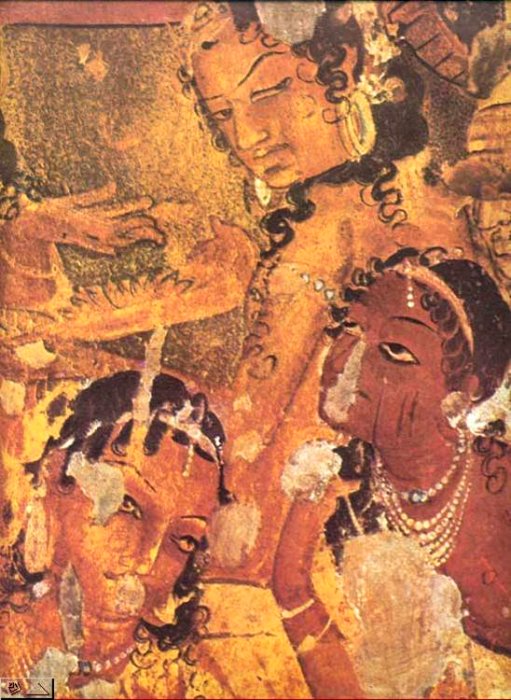
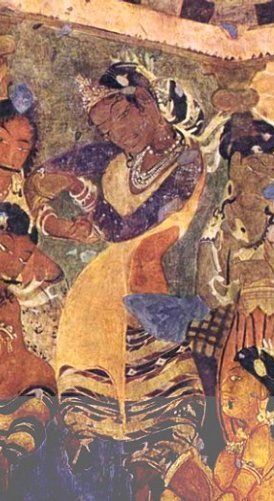
ajanta1
Ajanta Cave Paintings

Compiled by London Swaminathan
Post No.1488; Dated 15th December 2014.

The Amaru Satakam is a collection of 100 verses in Sanskrit by one Amaruka. His identity and date are not available. This delightful lyric describes the varied moods of lovers, giving us pen pictures of several charming experiences. The style is very elegant, precise and lucid. Though the theme is familiar, the treatment is unique – it is said that in Sanskrit the highest distraction as the poet who can depict the various phases of love, desire and attainment, estrangement and reconciliation, joy and sorrow must be awarded to Amaruka.

Sri S Sankaranarayanan dealt with this recently under the auspices of Rasodaya at the KSR Institute Hall, Madras-4, citing about twenty verses. He observed: Obscenity lies only in the mind of the reader or the listener and not in the verses, which gives glimpses of the attendant emotions and reactions and not physical features (Further there is the possibility of esoteric apprehension also). Some instances –

1)A maiden casts sidelong glances brimming with love on some person. An attendant maiden enquires – who is the blessed individual on whom you cast these slow glances dripping with love of closing your eyes with shyness and then gazing with open unwinking lids for a while – fully betraying the surging feelings in your heart (sloka 2)

2)A lover intimates that he has to go afar in search of wealth assuring his lady love of his firm loyalty to her and of hopes of speedy return. She breaks out into tears, unable to bid him adieu. “Tell about your safe return to those that would survive your departure (Sloka 8 and 55. It can be compared with Akananuru 5 and Tirukkural 1151, 1156.)

3)A companion advises the lady to check the advances of her lover because of his lapses, but she says “do not slander the lord of my life loudly lest he abiding in my heart should hear it” (Sloka 68; compare it with Tirukkural 1220)

ajanta2
Ajanta paintings, Maharashtra, India

4)A lady describes how her shyness stands in the way of her eagerness to clasp her lover on the first night with him (Sloka 39; can be compared with Valmiki Ramayana , Kishkinda Kanda 30-28)

5)During separation from the lover, the lady plans to upbraid him and keep aloof when he returns here, but as soon as she sees him back, all this is forgotten and she is eager to clasp him (sloka 9; Turukkural 1284) – R.R.
From Indian Express dated 3rd January 1983

References cite from Tirukkural:
1151.Speak to me if you do not depart. About your quick return, speak to those who live.
1156.If he could be cruel enough to speak of parting, meagre is the hope of being kind again.
1220.People of this town say that my husband has parted from me; is it that they see him in my dreams?.
1284.I want to huff and slight him, O maid. But my heart leaps unawares to embrace him straight away.

(I am throwing away all the old paper cuttings, before which I wanted to upload them, so that it benefits interested readers. Those who don’t have time to read the full Amaru satakam can get a glimpse of it—swami)

Contact swami_48@yahoo.com

Strange Names for Unknown Poets of Rig Veda and Tamil Literature!

Funny-Baby-Names

Research paper written by London Swaminathan
Research article No.1486; Dated 14th December 2014.

Some poets have got strange names in the Rig Veda as well as in Sangam Tamil literature. Some of the poets are named after the epithets they use. There is a reason behind it.

Shrikant G.Talageri, in his book The Rig Veda – A Historical Analysis, has written the following:-
“There are obviously corruptions in the Anukramanis in the form of ascriptions to fictitious composers. This is particularly in the case of in Mandala X, where a large number of hymns are ascribed to composers whose names, or patronyms/epithets, or both fictitious.

However, in the first eight Mandalas, except in the case of one single hymn (VIII-47), it is very easy to identify the actual composer (by which we mean the Rsi who actually composed the hymn, or the eponymous ancestor to whose the hymn has to be credited as per the system followed in the particular Mandala) of a hymn ascribed to a fictitious composer.

Hence, in our listing of the composers of the first eight Mandalas, we have replaced the fictitious names in the Anukramanis with the names of the actual composers, whose identity is clear from those same Anukramanis”.

This is what Mr Talageri said about the names of poets in the Rig-Veda.

baby

My comments
1.First of all it is regrettable that a great scholar like Talageri does it. No one dared to touch the Vedas in the past thousands of years. There may be mistakes in copying or passing by word of mouth. But nowhere in the world have we had such a voluminous old literature passed by word of mouth. Even if someone finds something wrong, it is always better to give it within brackets or as a foot note. We have no right to amend the age old scripture or the Anukramani.

2.We have approximately 435 names of seers in the Rig Veda. Sangam Tamil Literature which is 2000 year old also has 471 poets. But they were compiled into anthology form in the fifth century CE or so. Those compilers also had the same problem and they gave 20+ poets “fictitious” names. But Tamil scholars did not dub them as “fictitious”.

rapex-contracting

3.The reason for such names is that their names were lost in course of time and so they took one or two quotable epithets from their poems and put it as the name of the poet.

4.Another reason given by the scholars is that the poets became famous because of their oft quoted epithet or word phrases. They were always remembered by the epithets; A K Ramanujan, a great Tamil scholar and author of several translation works, says,

“Cempulap peya niiraar, which would mean ‘The Poet of Red Earth and Pouring Rain’ composed poem 40 (of Kuruntokai). Poem 47 is by Netu ven nilavinaar, ‘The Poet of the Long White Moonlight”. The use of epithetical names seems to suggest that for these poets no signature was more authentic than their own metaphors”.

strange name1

Veda Vyasa was called Sakarakukshi for his excessive use of the letter S, Sa etc. Many of the Upanishads also named in the same way.

Isavasya Upanishad was called Isavasya since the Upanishad begins with the words “Isavasya” and similarly the Kena Upanishad is so named because of its initial word Kena. Prashnopanishad contains six questions and answers and so it is called Prashna/Question Upanishad. So it is common to give names to books or authors on such epithets, metaphors or expressions.

strange2

I will give you some strange epithets or metaphors from Sangam Tamil literature. This is only a rough translation. These are the poets’ names as well as the metaphors in their poems:

Kayamanar = Mr.Tank
Anilaadumundrilaar= Mr.Backyard where squirrel plays
Miinerithuundilaar = Mr.Fishing rod
Vittakuthiraiyaar = Mr.Jumping Horse
Ooreer uzavanaar =Mr Single ploughshare farmer
Kuuvanmaindan = Mr.Dumb who dreamed a cow falling into a well (unable to tell anyone)
Ooril pichaiyaar = Mr.Begging for food from only one house
Kalporu sirunuraiyaar = Mr.Foam created by water dashing stones
Kuppaik koziyaar = Mr.Hen or cock looking for food in the rubbish heap
Kavaimakan = Mr.Siamese twins taking poison by one mouth (disastrous effect for both)
Villaka viralinaar = Mr.Fingers holding the bow
There are many more names like this in Tamil poetry.
starnge3

Conclusion
We should never alter the names in the Vedas or in the Anukramanis
Everyone has freedom of speech to give his or her own views, but no one has the right to alter the original script.
Poets having metaphors or epithets as their names are common from Himalayas to Kanyakumari.
We have proof for such a custom at least from Rig Vedic period to Sangam Literature period: 1700 BCE to 3rd Century CE.

Contact swami_48@yahoo.com

Saivism in Cambodia

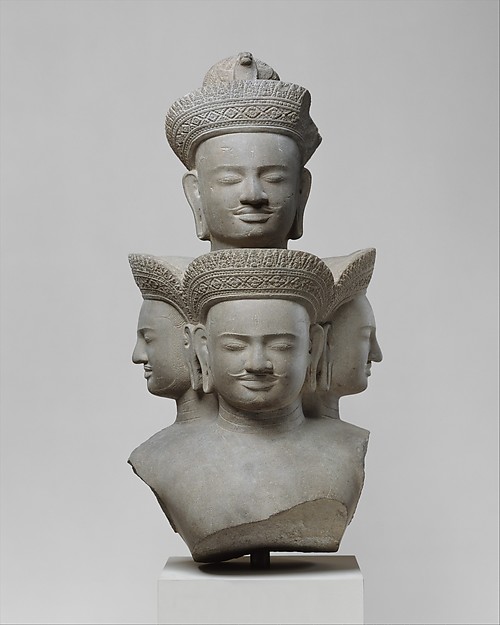
bust of five headed siva
Bust of Pancha muka Siva from Cambodia, Metropolitan Museum, New York

Compiled by London Swaminathan
Post No.1485; Dated 14th December 2014.

Points from an illustrated talk by Dr R Nagaswami, eminent historian and archaeologist, at the KSR Institute, Mylapore, Madras on 2nd October 1983 ( Dr Sivaramamurti Memeorial Lecture)

1)There are many legends about the origin of the rulers of Cambodia –
a)Kaundinya, a Brahmana of the Agastya clan, receiving a spear from Aswathama (Drona’s son) coming to this land and planting it—his marriage with a local (Naga) princess – their son Bhavavarman founding the city, Bhavapura (There are analogues in Pallava and Chola legends in India).

2)Chinese version – A male – Huen Chan (Houentien) dreaming of a bow given to him by a spirit sailing in a boat – losing his way coming to this land – meeting, defeating local queen and marrying her.

The Kambojan rulers called themselves – Sri Kaundinya somoduhitr praabhavah. This rule could have commenced even as early as 100 CE. There are records and inscriptions – detailed and continuous from the fifth century CE to the present day.

Tagore’s Song
Note: i)Tagore singles beautifully, in Bengali, of the Aryan migration to the Far East:“The great god Vishnu spoke to me, as also Uma, the ten armed Goddess; Make ready thy boat, carry the rites of worship across the unknown turbulent seas. The rivers stretched their arms to the eastern ocean in a flow of majestic gesture…………And the heart of my land murmured to me its hope that it might build its nest of love and piety in the far off lands of its dreams”

siva cambodia
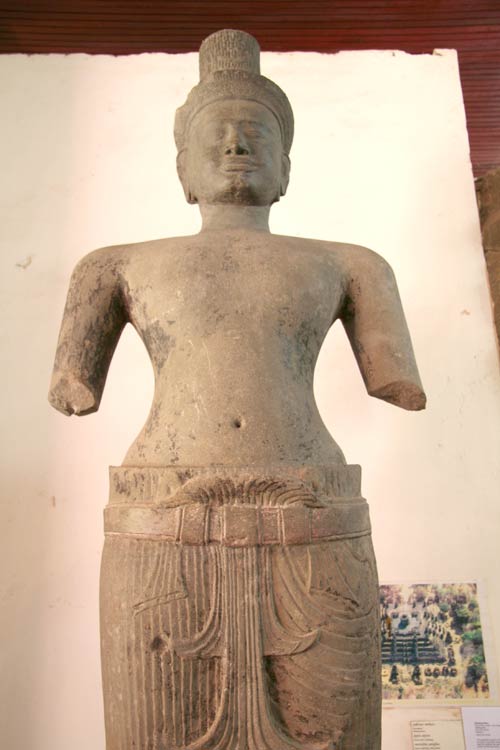
Siva from Cambodia

2)Prof.K.A.Nilakanta Shastri observes— “The Hindu colonists carried abroad a cult with them i.e. the cult of Saivism under the aegis of the then chief purohit/priest of the Pandyas, an Agastyabhatta.
The inhabitants of Kambudesa when the Aryans first arrived there were Khmers – an Austronesian people who had settled there about fifth century BCE and mingled with the local ethnic groups. The Aryans civilised them. The original Aryan colony was Fou-nan (Vanam in Sanskrit and Panom in Khmer), established at the mouth of the Ma Ganga (Mekong)—first century CE.
(The Aryan state Bohuvanam extended up to Laos and Annam in the north and the east and reached down to Malay Peninsula in the west.)

Rulers of Cambodia
After Kaundinya – I, there were other dynasties. A Brahmin sage from Malaya conquered the kingdom early in the fifth century CE and became Kaundinya – II (Siva Chandra Varman?); the successor rulers were Indravarman………. and Jayavarman(470 CE). The last one built new capitals, one of which was Vyadhapura (Angkorbore). He had a long reign of 44 years. His successor Rudravarman became a Buddhist. Later Bhavavarman seized Fou – nan and the empire was integrated. His brother succeeded him – Mahendravarman ruled from Sambhupura. His successor Isanavarman firmly established his suzerainty and extended his conquests – he called himself “Trilokapala” (Fou nan, Kamboja and Dvaraavati) and built a new capital Isanapuri. His successor BhavavarmanII (635 CE) and the next ruler was Jayavarman II (640-680 CE)…. Jayavarman IV (11th century CE) and performed a special sacrifice to free Kambudesa from Javan overlordship. He succeeded and was a great ruler.

Different Names of Siva
The inscriptions give different names of Siva (Ashtamurti) as also of Sankaranarayana, Sambhu-Vishnu, Hara-Achyuta, Hari-Sankara. Even Buddhist inscriptions begin with salutations to Siva or the content is about Siva. In later periods Buddhist Bhikkus, Saivite and Vaishnavite sanyasins lived in harmony, receiving equal patronage from the ruler. There references to Ashramas – Brahmana, Vaishnava and Sangata, with their duties and privileges.
OLYMPUS DIGITAL CAMERA
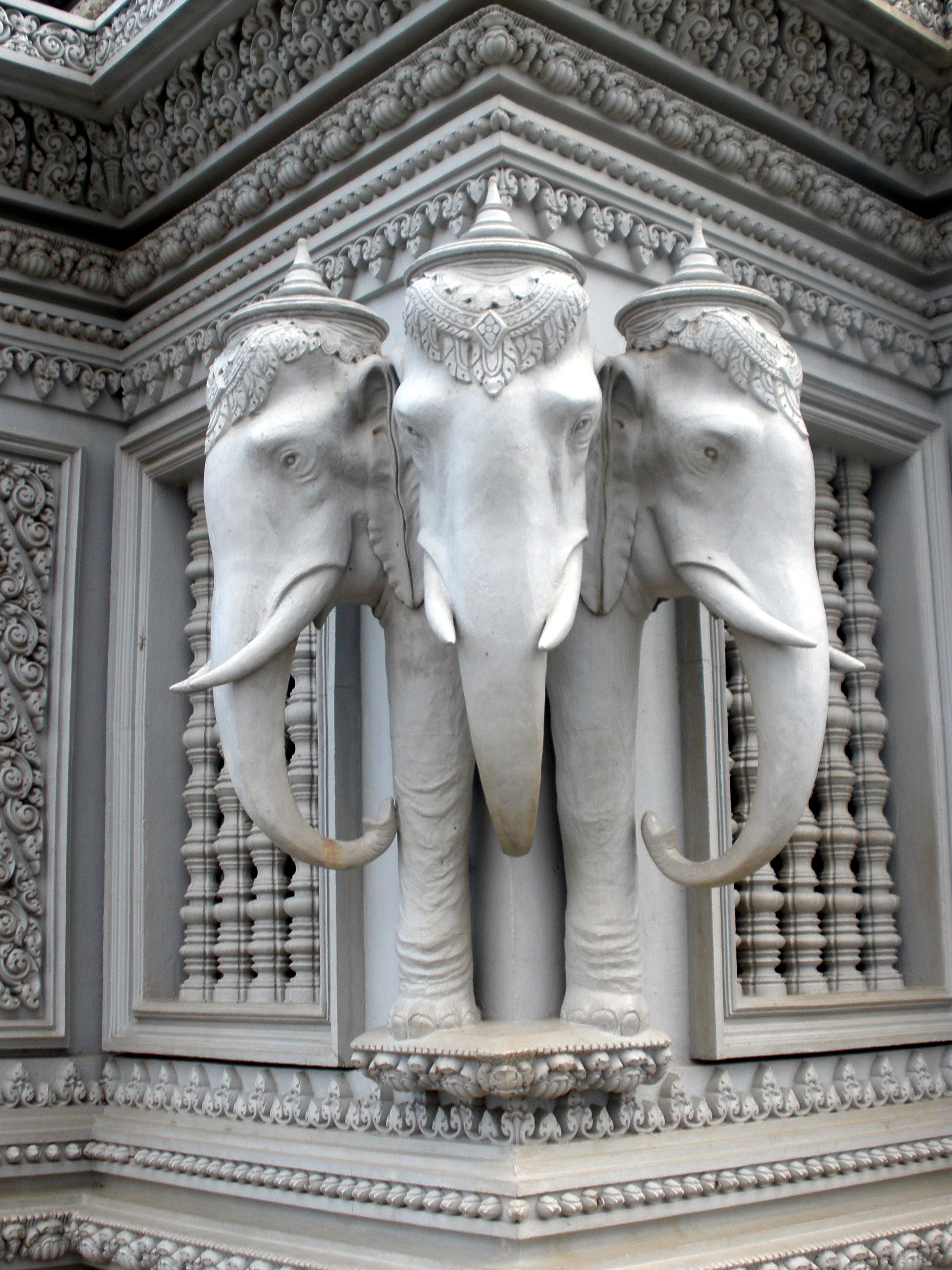
Three headed elephant, Cambodia, Photo by John Farraloo

There is mention of Vedas, Vedangas, Puranas, the reading of the Ramayana and Mahabharata, different Darsanas etc. The Sanskrit inscriptions are of great poetic beauty, hardly surpassed in India.

Siva – Sakti apparently dual is declared as one. The Trinity is also one –“jayati – ambhoja bhavanah jayati! Ambhoja locana jayati ambhoja bhupendra prabho bhavah (1005 CE – Suryavarman’s inscriptions)

After death kings got the names Sivaloka, Isvaraloka, Parameswaraloka.

It is remarkable that rulers with same names – Mahendra, Rajendra ….. ruled about the same time in South India and Cambodia – protagonists of the same culture – R.R.
(Paper cuttings from 7th and 8th of October 1983, Indian Express)

I am throwing away all the old paper cuttings, before which I wanted to upload them, so that it benefits interested readers. Those who don’t have time to read voluminous Cambodian histories will get some idea about it. I have changed all the AD in to CE– swami

Socrates, Napoleon, Valluvar believed in Fate!

aurobindo

Research paper written by By Santhanam Nagarajan

Research article No.1483; Dated 13th December 2014.

Fate and Free will – Part VI

Maharishi Aurobindo has explained that all men great and strong have believed some higher force. He explains Fate, thus:

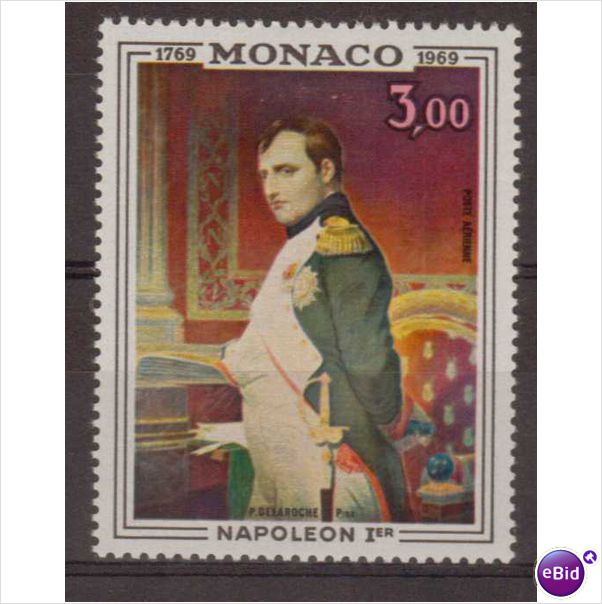
“There have been people who have believed in fate or destiny or whatever you may call it. Napoleon III used to say, ‘So long as something is necessary to be done by me it will be done in any case and when that necessity will cease, I shall be thrown on the wayside like an unworn vessel.’ And that is what exactly happened to him. Napoleon also believed in Fate.

All men who have been great and strong believe in some higher Force, greater than themselves, moving them. Socrates used to call this his Daemon, man’s divine being. It is curious how sometimes even in small things one depends on this voice.

socrates

Socrates’ belief in Fate

Once Socrates was walking with a disciple when they came to a place where they had to take a turn. The disciple said, ‘Let us take this route.’ Socrates said, ‘My Daemon asks me to take to take the other.’ The disciple did not agree and followed his own route. After he had gone a certain distance he was attacked by some pigs and thrown down by them.

There are some who do not follow the inner voice but an inner light. The Quakers believed in that.”

Quoting Napoleon, Aurobindo further explains fate and effort.
“Napoleon when asked why he believed in Fate, yet was always planning and acting, answered, ‘Because it is fated that I should work and plan.”

The great work Thirukkural explains fate and effort very interestingly.
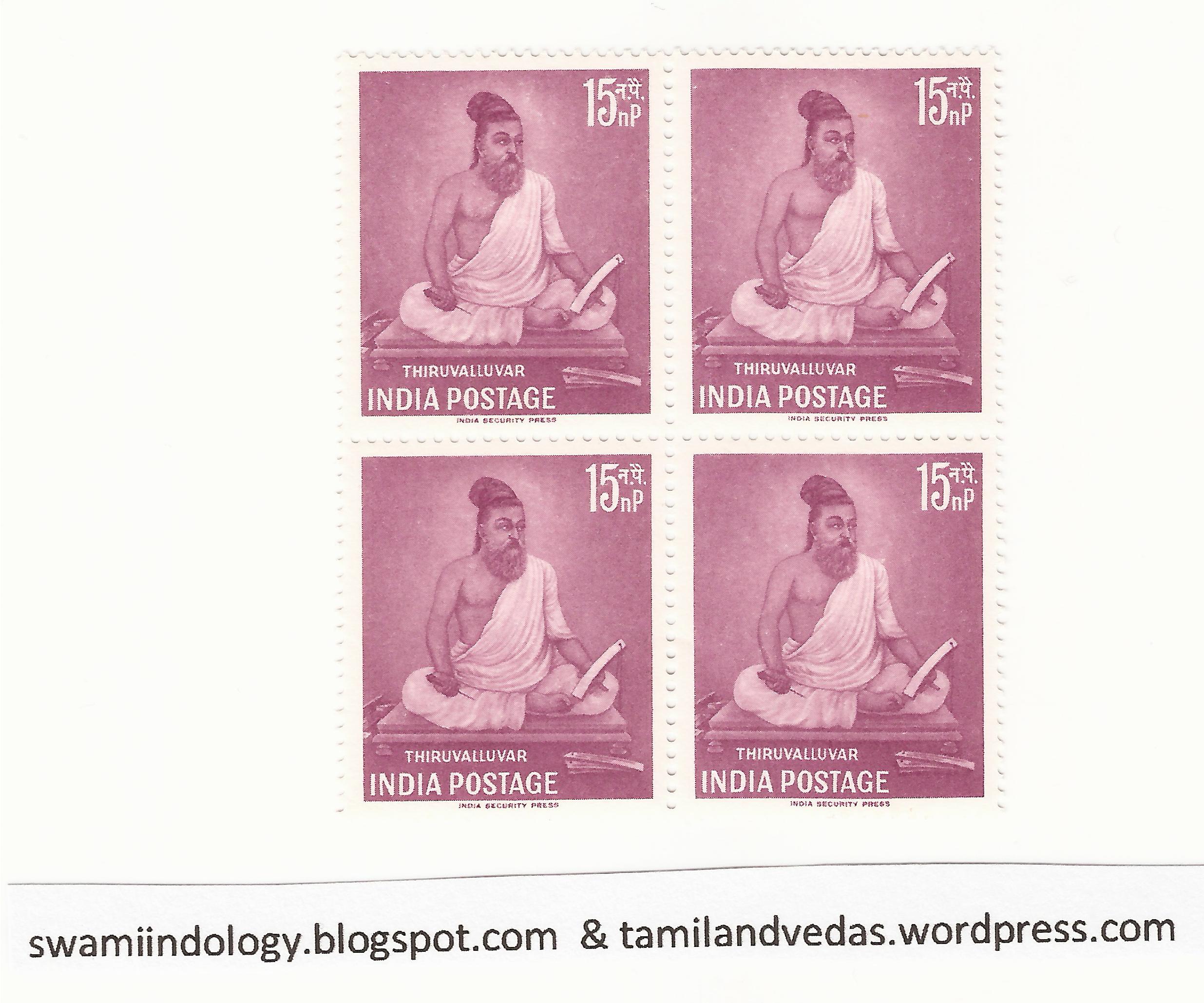
The great work Thiurkkural is the master-piece of Tamil literature. The great poet Thiruvalluvar has given it to the whole world. It consists of 1330 couplets.

valluvar 4

Valluvar’s belief in Fate

Rev G.U. Pope said: “Thiruvalluvar was undoubtedly one of the greatest geniuses of the world. Complete in itself, the sole work of its author has come down the stream of ages absolutely uninjured, hardly a single various reading of any importance being found.

The Kural owes much of its popularity to its exquisite poetic form. The brevity rendered necessary by the form gives an oracular effect to the utterances of the great Tamil “Master of Sentences”. They are the choicest of moral epigrams.”

Now let us read the two couplets.

The couplet no 380 says: “What is stronger than Fate? Even if we think of a way to avert it, it will forestall us.”
The couplet no 620 says: “Those who labor on untiringly and without fault will overcome even fate.

Even though both these couplets seem to be contradictory, they are not.
Work hard and smart and leave the rest to God. God helps to those who help themselves.

Maharishi Thiruvalluvar and Maharishi Aurobindo have explained very beautifully Fate and effort thus.
Let us explore further.

napoleon

Summary:
Maharishi Aurobindo explains fate and effort, quoting Napoleon. “Napoleon when asked why he believed in Fate, yet was always planning and acting, answered, ‘Because it is fated that I should work and plan.” The great Tamil poet Thiruvalluvar in his great work Thirukkural says: “What is stronger than Fate? Even if we think of a way to avert it, it will forestall us.” But he also says: “Those who labor on untiringly and without fault will overcome even fate.”

To be continued …………………..

OM symbol in Europe (2000 BCE)!

220px-Om.svg

Research paper written by London Swaminathan
Research article No.1480; Dated 12th December 2014.

One need not be extraordinarily brilliant to see the link between AUM (Om) and Number three. Look at the pictures and read the description of Om in Hindu scriptures and then judge for yourself!

Om is the primal sound. This is the name of Brahman or God. It is the word from which everything came. Om has no beginning, no end. During cosmic dissolution, the universe is merged into Aum.

Of all the Mantras, the most powerful is the single syllable incantation called the Pranava, i.e. Om. Lord Krishna confirms it in the Bhagavad Gita. “of the incantations I am the single aksharam (Aum/Om)— (B.G.10-25)

All the Vedic recitations begin with Om. No mantra gets its power without Pranava. Only when it is added all the mantras get life force. That is why it is called Pranava. Om moves the Prana or the cosmic vital force.

Krishna says in Bhagavad Gita 8-13 that those who depart reach the highest goal if they recite the Pranava.
In the Gita sloka 17-24, he says

“Therefore with the utterance of Om the acts of sacrifice, gift and penance enjoined in the scriptures are always undertaken by the expounders of Brahman”.

newgrange.jpg

Aum and Number 3
Aum stands for Brahma, Vishnu and Shiva (Trinity)
It stands for the world made up of tri gunas (triple manifestations of nature). They are Satva Guna/ tranquillity, Rajo Guna/ passionate activity, Tamo Guna/ inactivity.

Esoterically Om stands for of our physical, astral and casual bodies.

AUM is made up of three letters: A is guttural, U is middle and M is the labial. In short Om stands for all that is manifested and un manifested.

AUM = Three Letters A, U, M can be seen in Sanskrit AUM and Tamil AUM. Actually the three letters written jointly and that only forms the AUM symbol.

The efficacy of the Mantra “Aum” and the benefits of reciting Mantra Aum fall beyond the scope of this article. I will show how the same here forces are understood by all ancient cultures and wrote the symbol in the same way.

There are 207 entries under Number 3 in the Encyclopaedia of Numerals in Sanskrit literature. If I add Tamil entries it will add to another 100 at least! From other cultures I can add hundred more!

rockart
New Grange, Megalithic Spiral Art, Ireland
#

Three spirals at new grange
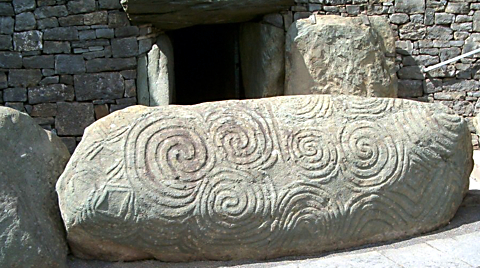
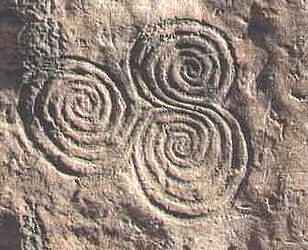
New grange is in Republic of Ireland. It is one of the most impressive megalithic tombs in Europe. The most remarkable example of megalithic art in Europe is the entrance stone at New Grange. Its three spirals are similar to found on Malta and Brittany in France. The spiral symbolised a natural force of which the builders were aware. It is dated around 2000 BCE.

Some of the spirals at New Grange have seven turns; but this is not usual; they do turn both clockwise and counter clock wise . It shows that it is more than a decoration. It indicates the builders’ awareness of the natural force or energy.
Omega_uc_lc.svg.hi
Omega of Greek alphabet.If we slightly turn it, it will match with Aum

OMEGA is Greek
“O – Mega” means Big O. That is the last letter of the Greek alphabet. Like Krishna, Jesus also said “I am the Alpha and the Omega” in the Bible (Revelation 22-13).
The Greek O was not only called Maga O that was placed as the last letter as well. This indicates how much they valued it. As we all know “O” is one of the vowels in all the major languages of the world.

Several cultures have got three hands or three legs as their emblem. But the three rounds, looking like Aum, is in the tombs in Ireland. This reminds of what Krishna said in Bhagavad Gita (8-13), who ever departs saying this letter will reach the highest goal. That is why we find this symbol in such places like passage graves.

triskailion
Triskelion in Celtic Art

Triskelion
Triskelion is a design that appears on pre historic earthenware. A circle is divided into three parts. This symbol adorns the wall of Irish megaliths.

There are also Triskelions formed from three human legs bent at the knee. We see it in the arms of Isle of Man with the motto/slogan –“It will stand erect wherever it is thrown”. The city of Fussen in Bavaria also has this emblem
isla of man
Isle of Man emblem of Three Legs

The form of three overlapping circles, are frequently found in the windows of Gothic Churches.
What is the purpose for these designs or emblems?

All these emblems demonstrate vital positive force going in clock wise direction, same like Hindu AUM.

0m-in-Various-Scripts
contact swami_48@yahoo.com

Stories and Quotes on Fate and Free will

woman-crossroads

Article written by S Nagarajan

Research article No.1467; Dated 8th December 2014.

Fate and Free will – Part VII
Santhanam Nagarajan

Bhartruhari – the famous king turned saint has sung categorically thus
(in his famous Niti Sathakam meaning 100 verses on morals):

“Whether dive in the ocean or ascend the Samairoo hills, get victory over the enemy in the field of battle, engage in husbandry, trade or service, soar high in heaven like birds, what is not destined would never happen and whatever happen cannot be undone.”

To illustrate his point, he has given an example also in another verse:
“A serpent, not experiencing to live long and being confined in a basket, was in great bodily trouble and out of hunger all his organs had become loose. A mouse, having made a hole in the said basket, fell into the mouth of that serpent, who, being satisfied with its flesh, escaped through that hole. Now, you may observe that in prosperity and adversity, God is the cause of causes.”

But at the same time, like Thiruvalluvar, the Tamil poet, Bartruhari also says:
“Laziness is a great enemy of mankind. There is no kinsman better than one’s own efforts, from the performance of which all troubles are removed.”

Hence, even fate is all powerful; one has to make his best efforts at all times.
Similar views are expressed in ‘The Bustan of Sadi’.

We can read some of the stories:
A poor man dropped a dinar in the road. He searched much, but at last, despairing, abandoned the attempt.
Someone came along and found the coin by chance.

Good and ill fortunes are predestined. Our daily portion depends not upon our strength and efforts, for those who are strongest and strive the most stands often in the direst need.

free will
One more story:

A darwesh remarked to his wife, who was of ill-favored countenance: “Since Fate has made thee ugly, do not encrust thy face with cosmetic.”

Who can attain good fortune by force? Who, with collyrium, can make the blind to see?

Not one among the philosophers of Greece or Rome could produce honey from the thorn.

Wild beasts cannot become men; education is wasted upon them.

A mirror can be freed from stain, but it cannot be made from a stone.

Roses do not blossom on the branches of the willow; hot baths never yet made an Ethiop while.

Since one cannot escape the arrows of Fate, resignation is the only shield.

The wisdom of east strongly favours Fate. But at the same time it advise us to work

(Note: Niti Sathakam: three verses -English translation by: Mr Sohan Lal
The Bustan of Sadi: two stories – English translation by Mr A. Hart Edwards)
We will analyze further.

******************

fate2

Mother of Aurobindo Ashram’s View on Fate
Fate and Free will – Part VIII
Santhanam Nagarajan

The Mother of Sri Aurobindo Ashram has clearly defined destiny.

Who is Mother? Originally named Mirra Alfassa, the Mother was born in Paris on 21st February 1878. Between 11 and 13 a series of psychic and spiritual experiences revealed to her not only the existence of God but man’s possibility of uniting with Him, of realizing Him integrally in consciousness and action, of manifesting Him upon earth in a life divine.

At the age of thirty-six the Mother journeyed to Pondicherry, India, to meet Sri Aurobindo. She saw him on 29th March 1914 and at once recognized him as the one who for many years had inwardly been guiding her spiritual development. She went back to Paris and returned to Pondicherry on 24th April 1920 to resume her collaboration with Sri Aurobindo, and remained there for the rest of her life.

She worked for 50 years in Aurobindo Ashram and left her body on 17th November 1973 at the age of ninety five. In her spiritual charged life she had touched all spiritual subjects and advised the ardent seekers of Truth about all spiritual matters. She explains the destiny as follows:
“I shall give you a simple example – but it may occur in any state of consciousness.

A stone falls. If it fulfills its destiny, it will fall to the ground, won’t it? But you are there and you have a vital or mental will – one or the other – and you catch the stone in your hand. You have changed the destiny of the stone. A leaf falls to the ground if it follows its normal destiny. You have a vital will; you take the leaf in your hand. You have changed the destiny of the leaf. This happens millions of times in the universe and nobody notices it because it is so common.

But imagine that you have a very high range of consciousness. If into the determinism down here you can bring by aspiration, an urge, a prayer, a higher consciousness, if you can take hold of your higher consciousness, so to say, and bring it into the material destiny. Everything would immediately be changed. But because you do not see or understand what is happening, you say that it is chance or a miracle.

Not every destiny is active in a material destiny, and if you want to change this material destiny, you must be able to bring down another one from above. In this way, something new will enter into it – these “descents” of the higher consciousness take place all the time, but because we do not understand them, this ‘something new’ that comes is turned by ordinary people into a miracle.”

Bringing down the Supramental force and consciousness into the physical and material world, everything will be changed in an absolutely unexpected way.

Thus material destiny could be changed and you have to work hard to bring down another one from above.

Great sages and saints agree that by Divine Grace the destiny can be changed, altered, modified, eliminated.

Fate and Freewill series is written by S Nagarajan. To be continued…………..

contact swami_48@yahoo.com
Nehru on Rajatarangini

rajatarangini

Compiled by London Swaminathan
Article No.1465; Dated 7th December 2014.

What is Rajatarangini?
Rajatarangini is the history of Kashmir written by a Kashmiri Brahmin called Kalhana. Rajatarangini means “RIVER OF KINGS”. It was written in Sanskrit in eight chapters. It consists of 3449 slokas/couplets. It is a 12th century work.

Who was Nehru?
Jawaharlal Nehru was the first Prime Minister of India from 1947 to 1964. He was also a Kashmiri Brahmin. Nehru’s brother in law Ranjith Pandit translated it from Sanskrit into English in two years inside the jail. The translation work was done when both Nehru and Mr Pandit were in prison. Nehru wrote a foreword to his translation in 1934.

Rajatarangini was “the only work hitherto discovered in India having any pretensions to be considered as a history”, said Mr S P Pandit. Foreigners also praised Rajatarangini as the first history book in India. Kalhana was the first Indian to write a history book with the dates and other details like a modern history book.

Kalhana wrote it 200 years before Muslim’s conquest of Kashmir. It has got lot of interesting information. Kalhana disputed the traditional date of Kaliyuga 3100 BCE and placed it around 2500 BCE.

I give below what Nehru said about Rajatarangini,

“It is a history and it is a poem, though the two perhaps go ill together, and in a translation especially we have to suffer for this combination.

“Written 800 years ago, the story is supposed to cover thousands of years, but the early part is brief and vague and sometimes fanciful and it is only in the later periods, approaching Kalhana’s own times, that we see a close up and have a detailed account.

“There is too much of palace intrigue and murder and treason and civil war and tyranny. It is story of autocracy and military oligarchy here as in Byzantium or elsewhere. In the main, it is a story of kings and the royal families and the nobility, not of the common folk – indeed the very name is the River of Kings.

Quixotic Chivalry and Disgusting Cruelty

“And yet Kalhana’s book is something far more than a record of king’s doings. It is a rich store house of information, political and social and, to some extent economic. We see the panoply of the Middle Ages, the feudal knights in medieval glittering armour, quixotic chivalry and disgusting cruelty, loyalty unto death and senseless treachery; we read royal amours and intrigues of and of fighting and militant and adulterous queens.

kalhanas_rajatarangini_medium

Women seem to play a quite important part, not only behind the scenes but in the councils and the field as leaders and soldiers. Sometimes we get intimate glimpses of human relations and human feelings, of love and hatred, of faith and passion.

We read of Surya’s great engineering feats and irrigation works; of Lalitaditya’s distant wars of conquest in far countries; of Meghavahana’s curious attempt to spread non violence also by conquest; of the building of temples and monasteries and their destruction by unbelievers and iconoclasts who confiscated the temple treasures. And then there were famines and floods and great fires which decimated the population and reduced the survivors to misery.

Kalhana describes Kashmir as “a country in insurrection”! It was nearly two hundred years after Kalhana wrote his history that Kashmir submitted to Muslim rule, and even then it was not by external conquest but by a local revolution headed by a Muslim official of the last Hindu ruler, Queen Kota”.

About Kashmir’s summer heat inside the prison Nehru writes,
“But Kalhana had enabled me to overstep these walls and forget the summer heat, and to visit the land of the Sun God “where realizing that the land created by his father is unable to bear the heat, the hot rayed sun honours it by bearing himself with softness in summer; where dawn first appears with a golden radiance on the eternal snows and in the evening, the daylight renders homage to the peaks of the towering mountains”.

stories_from_rajatarangini_tales_of_kashmir_idi013

“The joy of plunging into Ganga is not known to those who reside in the sandy deserts, writes Kalhana; how can the dwellers in the plains know the joys of the mountains, and especially of this jewel of Asia, situate in the heart of that mighty continent.”

The above matter is from the foreword of Jawaharlal Nehru to Rajatarangini written on 28 June, 1934 from Dehradun Jail.

(There is lot of interesting historical information in Rajatarangini of which I will write in separate articles: swami)

Origin of Drama in Ancient India and Egypt

ravana
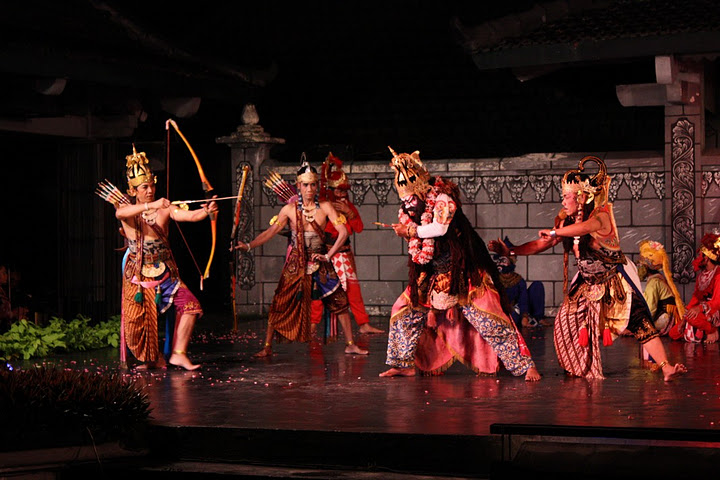
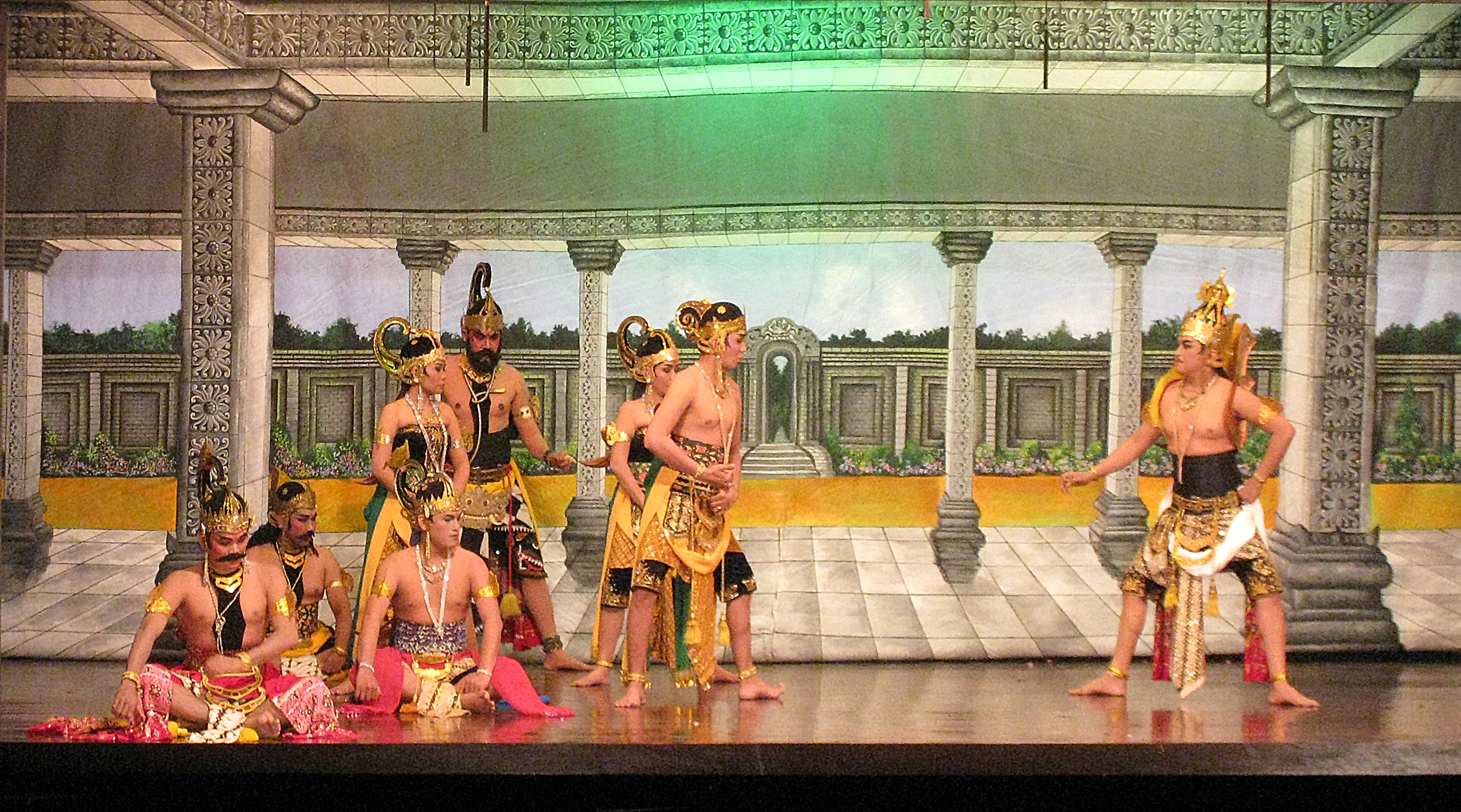
Ramayana in Indonesia with Ravana

Research paper written by London Swaminathan
Research article No.1463; Dated 6th December 2014.

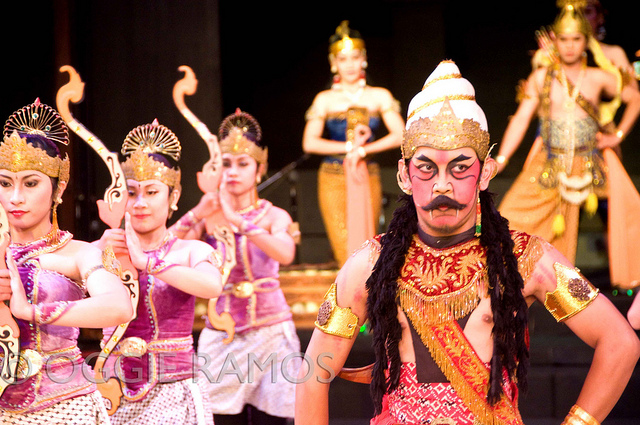
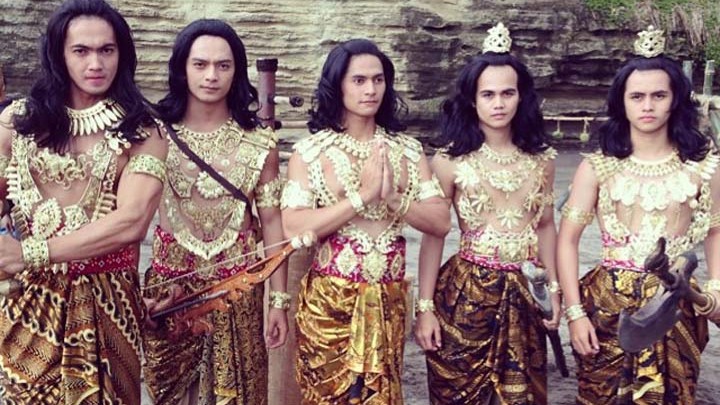
Where did dramas originate? Did the first play was enacted in Egypt or India? We have dialogue hymns in the Rig-Veda and several scholars believe those were the first theatrical plays. We have similar dialogues in Egypt. Greek dramas that became popular in the fifth century BCE belonged to different genre. Plays of Bhasa, Kalidasa, Asvagosha, Shudraka and many more playwrights became popular in India from third century BCE. We have discovered fragments of Asvagosha’s plays beyond India.

transtv-buat-pandawa-lima-mahabharata-versi-sinetron-berjudul-1-720x405
Mahabharata in Indonesia

Dramas in the Vedas
After long Yajnas (fire sacrifices) lasting for several days, Vedic Hindus had dance, music and drama to entertain the public or the attendants.

The Natyasastra of Bharata, claims a divine origin for itself. It styles itself as a fifth Veda, accessible to all, including those who were precluded from the study of four Vedas. In its present form it came after Kalidasa’s plays. It is possible that the author of the Natyasastra sat down to compose his treatise with Kaliidasa’s plays before him, says Chandra Rajan, translator of Kalidasa’s works .

She adds, “the origins of drama could be traced back to the Vedas. In the Rig Veda we find a number of poems with dramatic elements in them: dialogues such as the lively debate between Sarama, the Hound of Heaven and the Panis (traders or demons of darkness) over wealth or tribute; the dialogue between Urvasi, a celestial nymph and the mythic king Puruvas, which is the distance source of Kalidasa’s play Vikrama Urvasiyam; monologues like the declamation of Vac proclaiming her role in the creation of the universe; soliloquies like Vasistha’s”.

“In some of the poems in this group, there are three or more voices speaking; and the few contain the germ of a story or a cryptic reference to an event, that could develop in to a plot in the hands of a great dramatist. Kalidasa used the Urvasi-Pururuvas dialogue and made a great play.

Cambodia 1
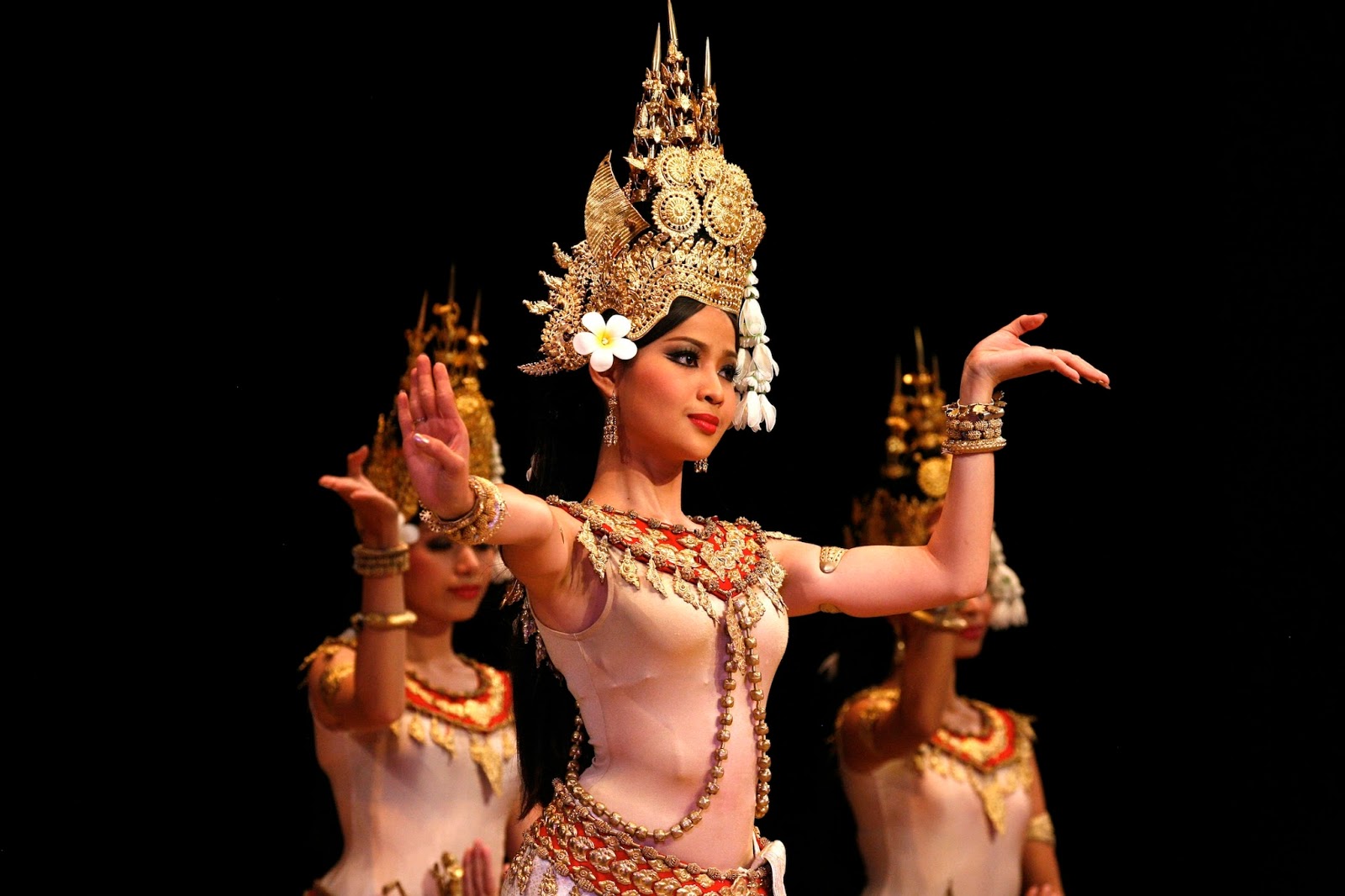
Hindu drama in Cambodia

“The Vedic hymns were chanted and sung by several voices and the presence of refrain in some suggests a choral element. The rituals themselves of the great sacrifices have a dramatic character. The rituals are re-enactments of cosmic events. It is possible priests officiating played the roles of gods and seers in re-enacting the cosmic events.

“There is mention in Vedic literature of maidens beautifully dressed and jewelled, singing and dancing and circling the sacred altars with jars of holy water in their hands. A chariot race is mentioned, as well as a contest between a Vaisya and a Shudra for the possession of a white skin symbolising the Sun (light).

“It is suggested that Urvasi-Pururuvas poem was a staged dialogue, a dramatic substitute for what was originally the sacrifice of a male in a fertility rite after a sacred ritual wedding.

“The Mudras (hand gestures) used and the stances adopted during the performance of Vedic rituals were incorporated later into classical drama. Often the stage directions in a play indicate miming, and call for a specific Mudra, as for instance, in Sakuntala 6-3 Kapota Hastaka- the dove shaped hand gesture that conveys adoration or supplication.

“The Binding of Bali and Kamsa’s Slaying are two plays referred to in the literature of Second century BCE.

ram1indonesia
Ramayana in Indonesia

“Bharata’s Natyasatra assumes the close association of Siva with the performing arts. Bharata, in his dialogue with Brahma, the creator, speaks of having witnessed the Dance of Siva ‘full of feeling’ and expressive of the sentiments of Srngara (love) conveyed through graceful sequences of movement and gesture.

“And Siva, highly pleased with the performance of two plays, The Churning of the Ocean and The Burning of the Triple City, composed by Brahma and performed by Bharata and his troupe, instructs his disciple Tandu to teach Bharata certain dance sequences.

“Bharata is obviously an assumed name. The Bharatas were originally the rhapsodies or the bards of the powerful Bharata tribe celebrated in the Rig Veda. Dancing figure discovered in Mohenjo-Daro point to the antiquity of dance as an art form in India”.
–From Introduction in the book “ Kalidasa The Loom of Time” by Chandra Rajan.

Wayang_Wong_Bharata_Pandawa
Mahabharata in Indonesia

Drama in Egypt and Sumer
In all the ancient civilisations dance and drama were inseparable. We see such things in Sumer, Egypt and South India. Silappadikaram, Tamil epic, describes scores of dances based on stories in Hindu mythology. In Sumer, all festivals had rituals involving kings and priests. Sacred marriages between Gods and Goddesses were enacted. Priests and Kings played their roles as Gods. In Madurai Minakashi Temple of Tamil Nadu, every year the sacred marriage between God and Goddess (Siva and Parvati) is enacted where priests and their children play the roles.

In the Rig Veda, we have Yama-Yami dialogue and Vasukra dialogue. These may be theatrical performances. We have such plays in Egypt as well. All the dance and dramas started as religious rituals. Later it took secular turns as we see in the Greek dramas of fifth century BCE.

tamil drama
A scene from Tamil Drama

Michael Rice, in his book the Egypt’s Making says,
“Conflict of Horus and Set” is one of the great plays of ancient Egypt. This is the ritualized version of the mythical struggle between the opposing dualities which made up Egypt’s historical personality. The very fact that this conflict is conventionalized into the form of a drama with carefully presented dialogue and action is very remarkable. Then there is the “Mystery play of Succession” known for its great antiquity, for it is known from First Dynasty. It included a mysterious group of characters called the Spirit Seekers who disappeared after the first Dynasty.

At his coronation, likewise, the king played through a complex and numerous series of rituals designed to signify his assumption of the sovereignty over Egypt.
( In Madurai in Tamil Nadu, the great Nayak king Tirumalai Nayak, used to receive the sceptre from Goddess Minakshi every year. This is renacted even today)

history_of_indian_theatre_early_history_idh429

My comments
Horus of Egypt may represent in a Hindu context, positive forces or Shakti, or Vishnu or Kinetic Energy or Mitra of the Vedas.

Set may represent Siva or negative forces or Varuna or Potential energy.
Like the Deva and Asura participation in the Churning of the Milky Ocean, we need two sets of people representing opposites or dualities (like Light and darkness, Good and Bad, Hot and Cold).
If one reads all the dialogues and dramas of ancient Egypt and Sumer, then one will understand better the dialogues in the Rig Veda. I have come to the conclusion that most of them are theatrical plays staged during the sacrifices that lasted for days or weeks.
Following are some of the dialogues:

RV 10-51: Agni and Varuna
RV 10-10 Yama- Yami
RV 1-179 Agastya and Lopamudra
RV 10-95: Pururuvas and Urvasi
RV 10-86 Indra and Vrsakapi
We have such conversation hymns in RV 10-135; 10-124; 4-26; 10-108; 10-28 and many more.
So we may conclude that dramas originated in India provided one accepts the antiquity of the Vedas. B G Tilak and Jacobi dated them to 6000 BCE.

theatric_aspects_of_sanskrit_drama_nac455

Contact swami_48@yahoo.com
Hindu Dwarfs in Egypt?

3 pygmies
Ivory Figures found in Egypt. Are these Hindu dolls or Saints?

Research paper written by London Swaminathan
Research article No.1461; Dated 5th December 2014.

Hindus gave respect to handicapped people and believed that they can achieve great things in life by having faith in God. There are some famous characters in Hindu mythology that were very short in their stature but did great things.
Vamana
Agastya
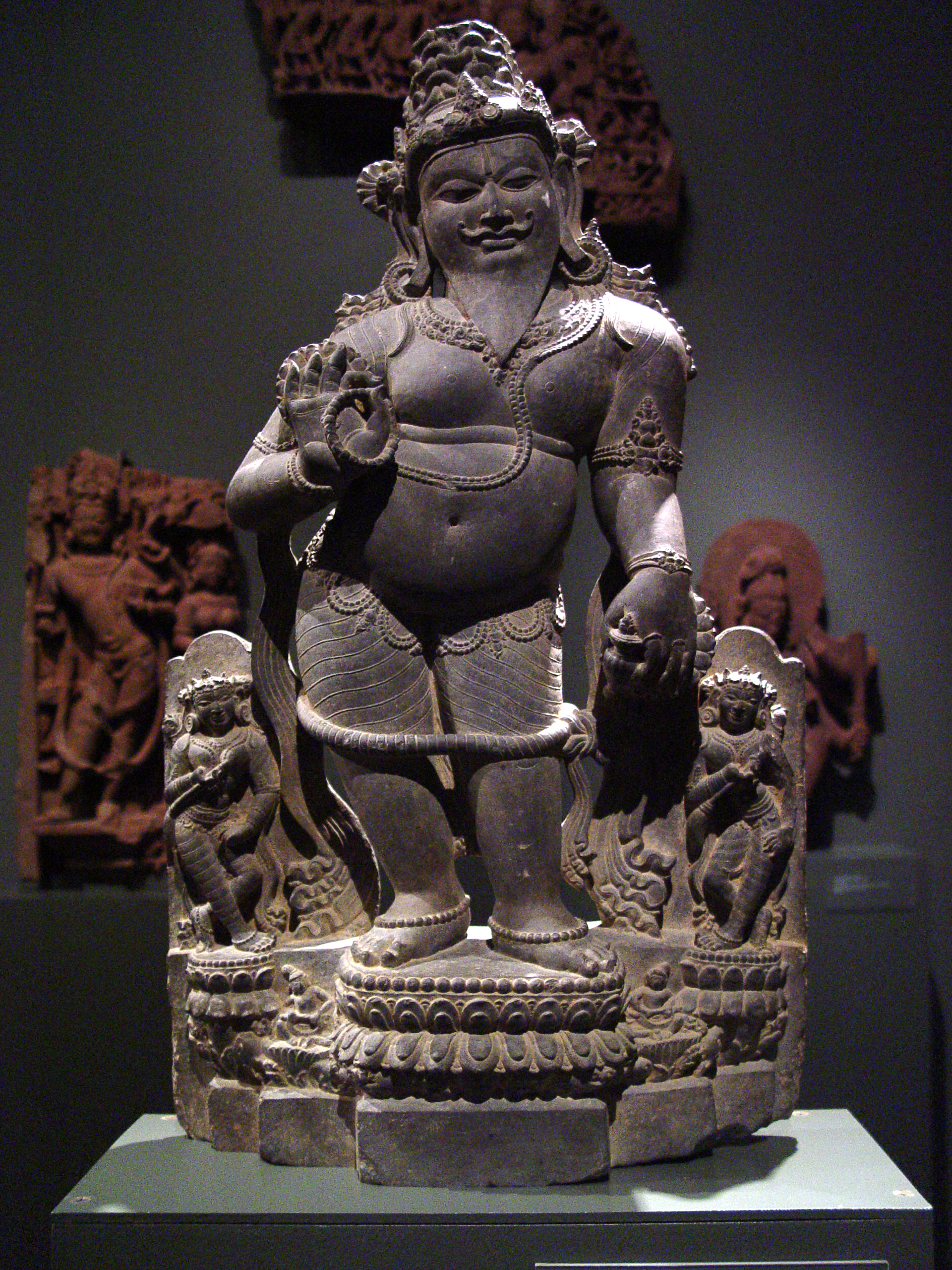
Kubera
Siva Ganas
were all dwarfish. Their sculptures depict them as dwarves.

Vamana was one of the Ten Incarnations (Avatar) of Lord Vishnu. He came as a dwarfish boy and begged for land measuring just three feet/steps. But he grew taller and taller and the third step had to be placed on the demon king Mahabali, after measuring the earth and sky with his two feet. This is a famous story found in all the Hindu religious as well secular literature.

Agastya
Agastya

Sage Agastya was a famous saint sent by Lord Shiva to Tamil Nadu to reduce the imbalance in the population of North India. He was sent with people from 18 tribes and he codified a new grammar for Tamil language according to the ancient Tamil and Sanskrit literature. Agastya was a dwarf. He was a great engineer and diverted Cauvery River to benefit the people of Tamil Nadu. He followed the example of another Puranic engineer Bhageeratha who diverted Ganges towards Bay of Bengal. He took lot of people across the Indian Ocean to set up colonies in South East Asia. He was the first one to lay a land route via the Vindhya Mountain which was a big barrier between the North and South in the Indian sub continent.

Kubera
According to Hindu scriptures Kubera was the lord of wealth. He was driven out of Sri Lanka by his half brother Ravana. Then he settled in Tibet region of the Himalayas. His people known as Yakshas in Hindu scriptures are portrayed as dwarves.

SatvahanaYaksha
Yaksha

Siva Ganas
Siva’s attendants known as Siva Ganas are shown as dwarves. They were well versed in dance and music. When Shiva danced every day, they played the music along with Narada, Tumburu and others.
All these show that dwarves maintained a high profile.

Ramayana and Mahabharata
The two Hindu epics also say very clearly the dwarves were employed in the harem and other parts of the palace. They provided entertainment to the royals as well as the general public. Sanskrit dramas employed dwarves as jesters. Dwarves accompanied king to different places. They gave entertainment at harems to the queen and her assistants.

anuradhapura
dwarf from Anuradhapura, sri lanka

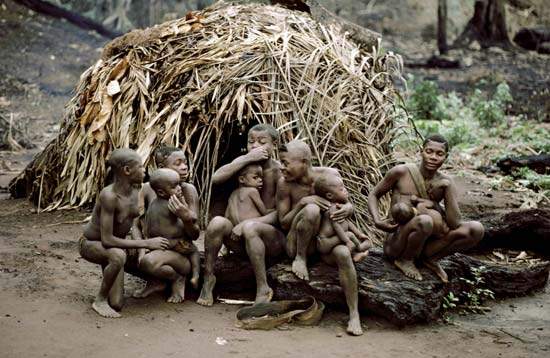
Researchers say that India and Egypt had the earliest puppets. The puppets were shown as dwarves. They have discovered three such puppets in Egypt belonging to the Middle Kingdom (2000 BCE to 1700 BCE). They are made up of ivory. Though the Egyptologists say that they are African pygmies, I doubt them for the following reasons:-

1.The ivory figures wear rosaries like Indian saints. My research shows pygmy men don’t wear such necklaces. Very rarely pygmy women wear jewellery. They seldom wear upper garments.
2.They have robes or sacred threads like the Brahmins of India on their left shoulders. Brahmin priests even today wear towels or upper garments on their left shoulders in all the religious institutions in South India. The Priest King of Indus Valley also wears clothing like Brahmins.

3.Since these statues are made up of ivory it should have come from India. We have Indian ivory figures in Pompeii and other places. Indian teak, peacock, monkeys etc have been exported to West Asia. Indian coast and Egyptian coast are easily accessible to the people of both the regions.
4.Since the figures are naked it may be Indian puppet toys or Gymnosophists (naked Saints of India) whom even Alexander invited to Greece.

A_Dwarf_Drummer_
One of the Siva Ganas

5.African primitive pygmies would not wear clothes and rosaries like ancient Hindus.

6.The blessing pose of the three figures is typical Hindu. Sadhus/saints bless their devotees in this way.
7.The middle figure have something like a tilak mark on his forehead.

8.Whether it is a puppet or a toy is immaterial. The style and motif is typical Indian. So my conclusion is that the three figures are Indian puppet dolls or Hindu gymno sophists of India.

Egyptians also gave respect to the handicapped people like Indians. The following papyrus document shows the protection they offered to such people:

An ancient Egyptian text (British Museum Papyrus No. 10474) reads: “Beware of robbing a wretch or attacking a cripple. Do not laugh at a blind man, nor tease a dwarf, nor cause hardship for the lame. Don’t tease a man who is in the hand of the god”(i.e. ill or insane).

pygmies of central africa
Pygmies of Central Africa

This sounds like a Sanskrit sloka. In Giza and Saqqara, dwarves were depicted at least in 50 tombs.
A Sanskrit sloka/prayer says about the dumb and lame:

मूकं करोति वाचालं पङ्गुं लङ्घयते गिरिं ।
यत्कृपा तमहं वन्दे परमानन्द माधवम् ॥
Muukam Karoti Vaacaalam Panggum Langghayate Girim |
Yat-Krpaa Tamaham Vande Param-Aananda Maadhavam ||

Meaning:
1: Dumb speak with Eloquence and the Lame cross high Mountains,
2: I Remember and Extol that Grace which flows from the Supreme Bliss manifestation of Madhava.
Even a lame person can cross high mountains with the grace of God.

gymno
Alexander with the naked saints of India
contact swami_48@yahoo.com