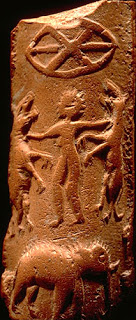
Mysterious Fish Gods around the World


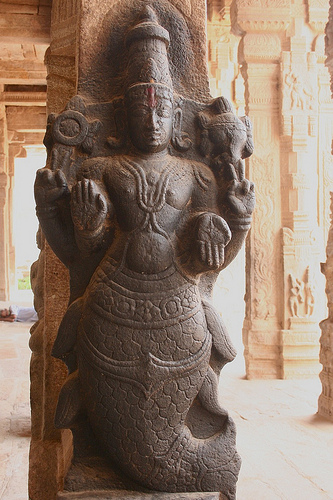
The Story of Floods is in every culture. The first incarnation of Hindu God  Vishnu known as Matsya Avatar (Fish Incarnation) has spread to different parts of the world. We read about it in Sumerian Atrahasis /Ziusudra/Gilgamesh, Biblical Nova and other cultures including Mayan culture. One fact is very clear in all these stories. There was a civilization before. That civilization was very good in Marine Engineering. They were able to build a big ship so as to accommodate all the species. The thought of preservation for the posterity was also there. So it must be an intelligent society. Otherwise they would have perished without trace. Now who was that intelligent person or god who instructed them to build a ship? That person must be a scientist and must have Tsunami monitoring equipments. Otherwise he couldn’t have forecast a catastrophic event. All fingers point to India. No one has that intelligence in maths or calculation in those times.

1. Every other culture stopped with fish and flood story. But Hindus developed it logically to Ten Incarnations of Lord Vishnu. From water born fish they took it to amphibian turtle. From Amphibian turtle, they took it to the next level of land animals- ‘pig’ avatar. Then half man half animal (Lion) Narasimha avatar, then humans with more and more intelligence. They beat Darwin by 2000 years in proposing the Theory of Evolution. That is why I said only a Hindu mind can do it. The mathematical (decimal) calculations in the Vedas and the invention of Game of Chess show that we could do it.

2. Hindus First in Biology

The Hindu classification of plants and animals as 84 lakhs is the closest to science. The latest count is 8.7 million (87 Lakhs) species of plants and animals on earth. Hindus had an amazing knowledge about this number, thousands of years before our time. It is a big puzzle to modern science. No wonder we were able to forecast a big rise in sea level—Great Floods.

In Hindu myth, Lord Vishnu took the form of a fish in order to save Manu, the ancestral father of the human race. Every Manvantara (Period of one Manu=306,720,000 years) will have a new Manu.

3. Sumerians, Mayans and Egyptians say that they did not belong to the land they lived. Either they said that they came from a far off place or someone from a far off place came and taught them civilization. Another strange thing about this Great Floods is that this happened in South India. Sanskrit and Tamil Books are unanimous in pointing the direction to south. Tirugnana Sambandha, a Saivaite saint who lived 1400 years ago, even called his own place Sirkazi as Thonipuram (Boat Town). He sang about the great floods and he praised Lord Shiva for making the town safe during the deluge.
4. The gradual development of Fish to fully fledged, civilized man show that the story started its circulation from Indian soil. The scriptures and sculptures stand as a proof. Hindus believed that TIME is cyclical. Civilizations start from Golden age (Krita Yuga) and deteriorate into Kali Yuga/Black age. So even before the Great Floods, there was civilization.

5. Fish Gods

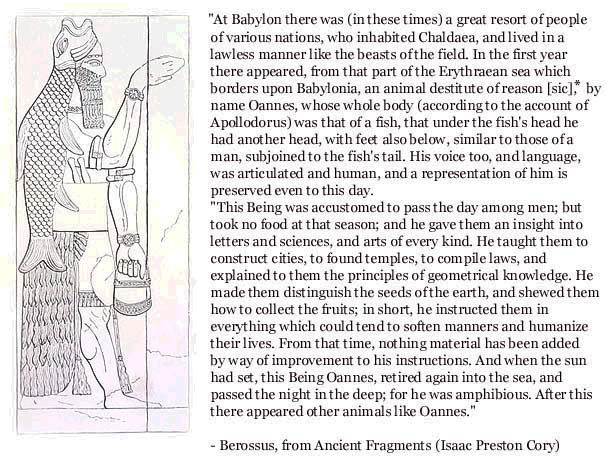
Apart from Matsya Avatar of Lord Vishnu, we hear about other Fish Gods such as Oannes, Dagon and Sindhi saint. Berossus (Vararuchi ?) was a scholar/priest who lived in Babylon in 3rd century BC. He wrote the history of Babylonia. He gave us the story of Oannes. Oannes was a mythical being who taught mankind wisdom. He had the body of fish, but underneath the figure of a man. He taught arts, science and writing. Oannes came from the Uanna, another name for Adapa. Akkadian connects this word to Um Manu. I guess this name as Indian Law Giver Manu. Adapa was a sage according to Sumerian legends. Going by this version I will take it as Manu or a sage from India who taught them Manu Dharma.

Berossus said that the half man-half fish creature was attended by other monsters called Apkallu. Apkallus are Sapta Rishis of India. The Sumerian legend says Seven Apkallus (sages) were created by Enki to establish culture and give civilization to mankind.

First King Narmer ( Nara Meru also knowns as Menes=Manu) was called Catfish Chisel. In other words he was also called a fish. Perch fish was sacred to Goddess Neith.

6.Dagan

He was called Dagon in the Bible. He was worshipped throughout the near east from 2500 BC. He was considered god of rain, corn and death. The kings of third dynasty of Ur established for Dagan an official state cult and a sanctuary to him was constructed at Nippur. From fourth century AD, he was considered a fish god.
7.Sindhi Saint on Fish

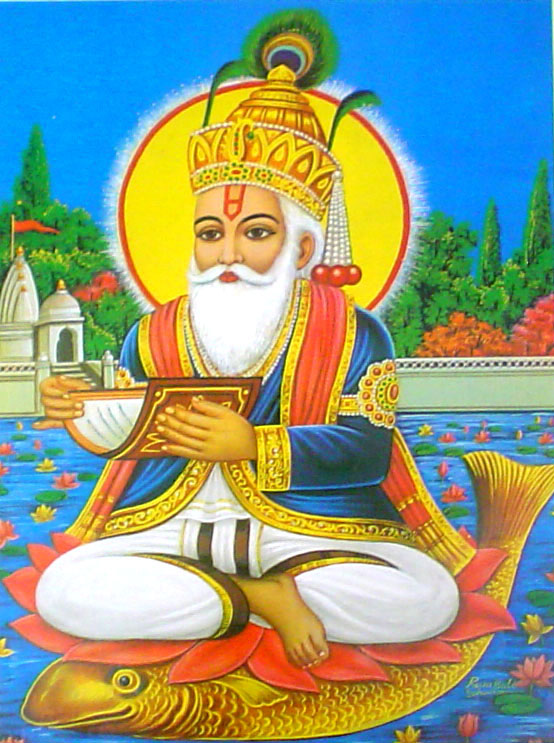
Sindhi saint Jhulelal is depicted riding a fish. He saved the Sindhi people from a tyrannical ruler called Mirkshah. He was considered a man sent by Vedic God Varuna. He convinced the ruler that God is one and he is common to everyone.


8.Turtle Gods

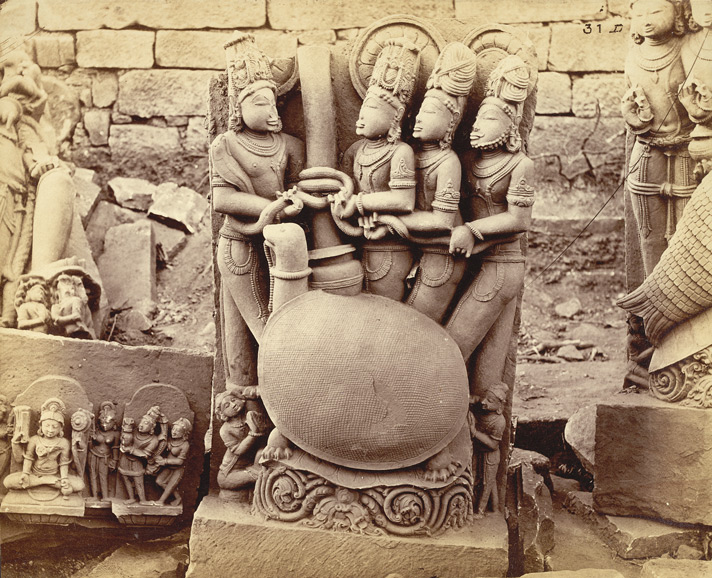
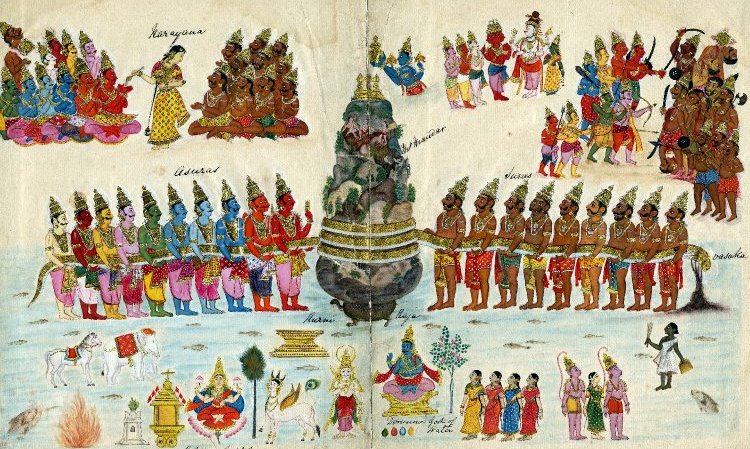
Following the fish come turtles in the Hindu myths. When the Devas and demons churned the ocean god took the form of a turtle (Kurma) and gave stability. He supported the mountain Mandara that acted as the churning rod while Vasuki the snake was used as the rope. This turtle also figured in the world of mythology in the names of Ao (China), Ataentsic (North America), Bedawang (Bali, Indonesia), Gong Gong (China), Sciron (Greece), Xbalanque and Hunaphu (Mayan Twins).

The Atlas like Mayan deity Pauahtun who supported the world on his shoulders is sometime depicted wearing a turtle shell on his head. Turtle shells are also associated with altars in some contexts, and the maize god is sometimes shown emerging from turtle shell.

9.I reproduce the following passages from my earlier post, ”SANSKRIT INSCRIPTION AND MAGIC SQUARE ON TORTOISE”:
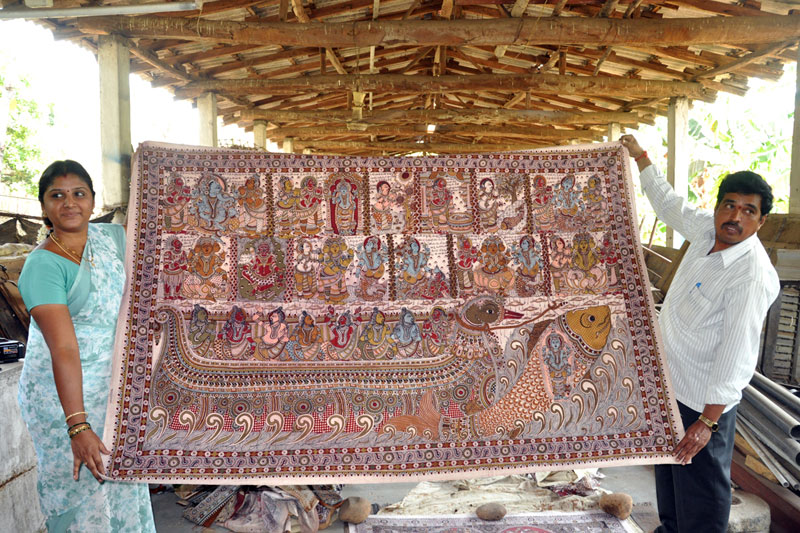
Hindu Gods are associated with all the important birds and animals. They are associated with insects and reptiles as well. Take any animal whether it is elephant or rhino, snake or scorpion, fish or crocodile, eagle or crow, boar or tortoise —they are all associated with Hindu gods. We see it in the Vedas, in the Indus valley civilization and in the temple Vahanas. But when we read that even the Chinese, Mongolians and other cultures believed in such things we raise our brows. When we see Sanskrit inscription on a tortoise statue,that too in the remotest part of the world, we are wonder struck!!

Kurmavatar, the Tortoise incarnation of Vishnu is the oldest tortoise we know. But we have even Rishis (seers) in the name of frog (manduka)owl (Uluka) and tortoise (Kasyapa)in Vedic literature. Kasyapa is one of the Vedic Rishis. Kasyapa means tortoise. Kashmir is named after Kasyapa Rishi. Kumaon hills in the Himalayas is named after Kurma Avatar. If you read the history of Kashmir and Kumaon in Uttaranchal state you will find more surprising things. We have Kurmavatar statues in Kahajuraho Lakshman temple (M.P) and Osiyan temple in Rajasthan. One exclusive temple for Kurmavatar is near Srikakulam in Andhra Pradesh .
 

Three thousand years ago a Chinese king found a turtle with a magic square on its back. The magic square will add up to number fifteen whichever way you add the numbers. From that day it was considered a lucky square and people believe that they will get money etc. It is called Lo Shu. Hindus also believe this as money making square and call it Kubera Kolam. Egyptians and Hindus used the magic squares. Even the Vedic mathematics has magic squares.

Contact swami_48@yahoo.com

***************
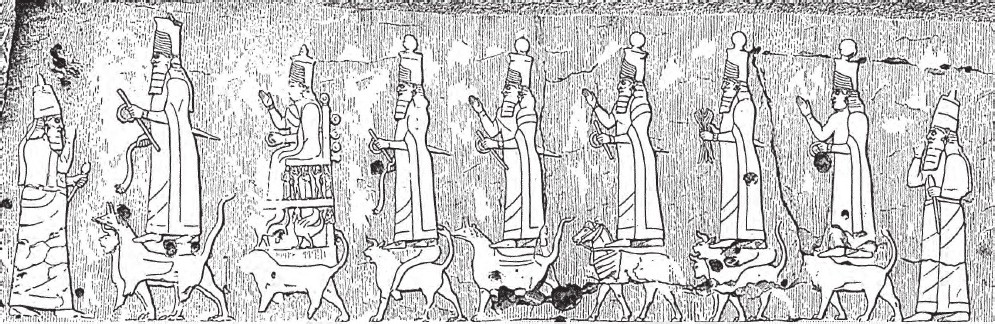
Iraq: 7 Gods Procession on Vahanas!

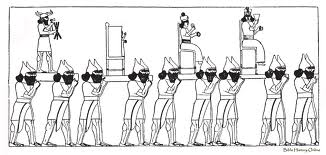
Picture shows seven gods on Vahanas in Iraq.

(Tamil version of this article is also available: London swaminathan)

(Please read Hindu Vahanas around the World–first part of this article and Deer Chariot: From Rig Veda to Santa Claus—second part: swami)

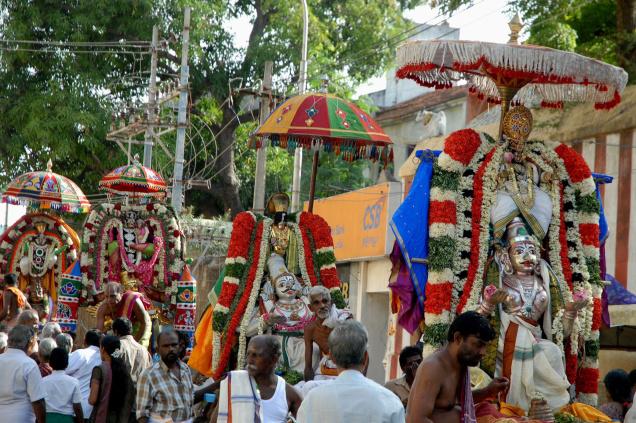
In India, particularly in Tamil Nadu, several gods are taken in procession at the same time on different Vahanas (Mounts of Gods) during festival times. People throng in thousands to see the Gods procession. It is a great feeling one gets after witnessing such a procession. It is amazing that this Hindu custom was followed in Assyria and Babylonia.

An Assyrian king, probably Sennacherib (704 BC) flanks a procession of seven gods on their sacred animals on a rock relief at Maltai in Northern Iraq.In the Middle East, all male gods are in standing position. Goddess is stting on a chair or a vahana.


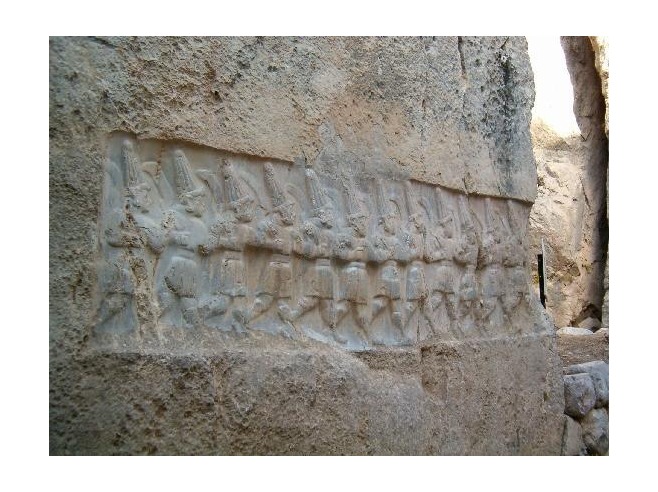
Procession of 12 Gods in Turkey

In Boghazkoi in Turkey we have a procession of 12 gods. It may be Dwadasa Adityas (12 Adityas of Vedic pantheon). It is significant we see the 12 gods procession in a place where an inscription with the names of Vedic gods Indra, Mitra, Varuna and Nasatyas was excavated. The inscription is about a treaty between a Mitanni king and a Hittite king. It was dated 1400 BC.

Turkey, Syria, Iraq and Iran were ruled by Hittites, Kassites and Mitannis who used Sanskrit Scriptures for their treaties and horse training. We have inscriptional evidence starting from 1400 BC.

Hindu gods and goddesses are taken in procession during festivals on vahanas. Vahanas are Mounts of Gods. They are mostly animals. In some big temples like Madurai Meenakshi temple we several Gods are taken in procession at the same time.

Description of a procession

Madurai is a temple city and a city of festivals. Throughout the year one or other festival is celebrated in the temple. The temple has got beautiful Vahanas. They are Rishaba (bull),Horse, Kailash mountain, Kamadhenu (wish fulfilling Cow), Karpaka Vrisham (Wish fulfilling Tree), Annam (swan), Simmam (Lion), Parrot, Yali (Mythical animal), Nandhi Deva, Bhutam (shiva’s attendant) and elephant.

Picture shows 12 Garuda Vahana Sevai in Thanjavur.

Madurai temple stands unique in taking out Rishaba Vahana (bull) eighteen times in a year.

In Madurai, first comes the Vettu Vandi/ explosives cart in a procession. A person is hired to fire explosives to announce the procession to the area. People living in nearby areas, hearing the explosion, immediately rush to the street where the procession is on its way. Behind it comes the Temple Bull with Nagara drum. One person sits on it and beats the drum. It is followed by elephant and camels. Torch bearers, Petromax light bearers, temple flag and standard bearers follow in two lines on either side of the gods procession.

The Vedic Pundits come in a group reciting Vedas. Tamil singers sing the Tamil Hymns in a group and follow them. Then Ganesh, Kartikeya were taken in small Chapparams (vehicles). In the olden days, they were all carried manually. Now due to labour regulations, most of the deities outside the temple are taken in  carts with tyres and they are manually or mechanically operated.

Picture shows a procession in Assyria

The main deities follow Ganesh and Kartikeya in different Vahanas on different days. In Madurai , immediately after the Meenakshi Wedding, even Lord kartikeya of Tirupparankundram and Kudal azakar Perumal of Madurai  follow Meenakshi-Sundareswar and Piriyavidai. So in total there five big deities and three smaller deities will be taken in procession on the same day. Last comes Nandikeswara, the attendance taker. He is the one who maintains the account of devotees’ good deeds and makes sure they are rewarded duly. So, people disperse only after seeing Nandikeswara.

All the advertisement carts, Toffee sellers, Balloon and Toy sellers and bangle sellers follow the God’s procession to cater to the needs of children, women and others.

On Ani Tirumanjanam and Arudra festival days, five to twelve Natarajas are taken in procession in different towns. In Thanjavur 12 Garuda Vahanas are taken on a specific day. Each temple or each town has its own special occasions where more than one deity is taken at the same time. The more the number of deities in a procession, more the excitement and more crowds are seen.

**************

Deer Chariot: Rig Veda to Santa Claus


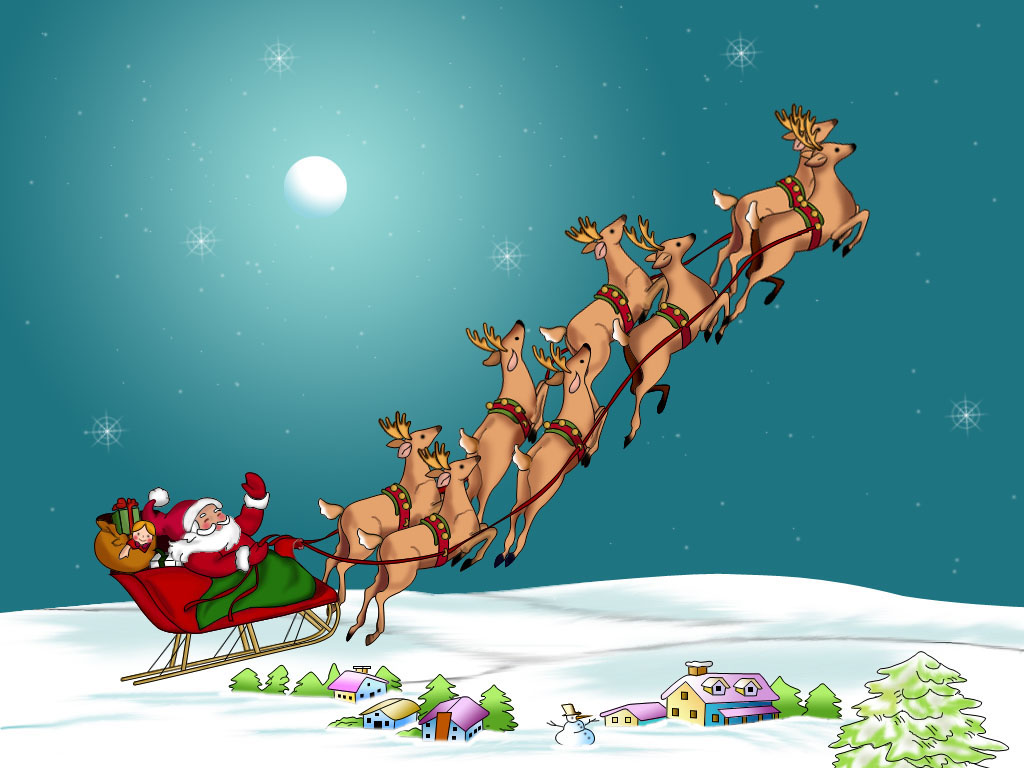
Picture shows Santa Claus on a Reindeer Chariot

(Tamil version of this article is also available: London swaminathan)

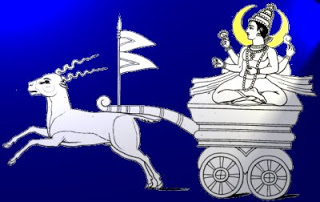
It is an amazing similarity that we have chariots/carts drawn by deer or Reindeers in Rig Veda and Santa Claus stories. Of the Navagrahas, Chandra’s (moon) chariot is also drawn by deer. Tamil Sangam and Sanskrit literature describe goddess is also mounted on a deer (Kalaiyathurthi  in Tamil). Greek Goddess is also drawn by or carried by a deer.

Deer and parrots are associated with Brahmins and seers in Ancient India. They raise parrots and deer in Ashrams (holy cottages). Manu, the Hindu law maker,  says that his law is applicable only to Aryavarta where the black antelope lives. Brahmin Brahmacharis (celibates) must wear the deer skin in their sacred thread.

Deer is found in Indus seals as well. In the so called Pasupati seal, a god or an ascetic is surrounded by four animals and a deer under the dais. Buddhist sculptures have deer because of Buddha’s association with deer.

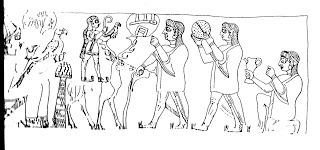
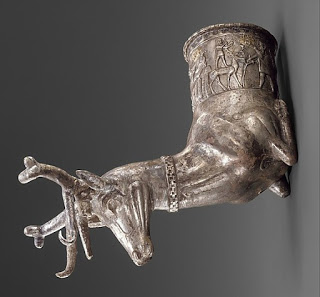
Picture of Hittite God on a deer from a silver cup (see below for cup)


Picture of Hittite god on a deer is etched at the ridge (enlarged drawing given above)

Deer Chariot in Rig Veda

Chariots drawn by antelopes are as old as Rig Veda. We have references to Marut (Marut=Maruti=Wind God=Hanuman) whose chariot was drawn by antelopes. Marutas are storm gods. They number from 27 to 36. Various origins are assigned to them. They are sons of Rudra, sons and brothers of Indra, sons of the ocean, sons of heaven or earth. They ride golden chariots drawn by ruddy horses or reindeers. They reside in the north. They are armed with lightning and thunderbolts Ramayana gives a different story and their number increases to 49.

Nordic god Thor whose chariot is drawn by goats is compared to Maruts of Vedas. He is attributed with the same qualities. He has massive red beards (like Santa Claus).It is said that a Minoan sarcophagus dated 1400 BC also shows a chariot drawn by goats (Hagia Triada sarcophagus)

RV I-85-4 (also RV I-39; I-146)

When mighty warriors, ye who glitter with your spears, overthrowing with your strength even what is never over thrown,

When, O Ye Maruts, ye the host that send rain , had harnessed to your cars the thought fleet spotted deer

When ye have harnessed to your cars the spotted deer urging thunderbolt ,O Maruts to the fray——

(Ralph T.H. Griffith’s translation of Rig Veda, year 1889)

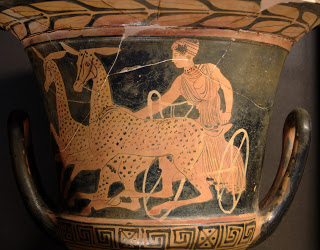
Picture of Greek Goddess Artemis

When Ptolemy II became the king of Egypt in 285 BC, he organised a big procession of troops and chariots. The description goes like this , “An endless array of similar wonders followed; also a vast number of palace servants displaying the golden vessels of the king; twenty-four chariots drawn by four elephants each; the royal menagerie—twelve chariots drawn by antelopes, fifteen by buffaloes, eight by pairs of ostriches, eight by zebras; also many mules, camels, etc., and twenty-four lions.”

Picture of Roman goddess Diana

Tamil Reference

Goddess Durga has deer as her vahana. Tamil Thevara hymn (Pathikam 921) praised Durga has Kalaiyathurthi=one who rides a deer).

Metropolitam Museum of Art in New York has a cup in the shape of a deer on which a god riding a deer holding a bird in its hand is depicted. It was dated 1700 BC from Hittites in Syria/Tukey. Hittites belong to Vedic culture. It may be Vedic god Marut.

Picture shows Chandra, one of the Nava Grahas

Artemis, Greek goddess of animals was worshipped from 800 BC. Though she was called Mistress of Animals, she was portrayed with deer. Her Roman counterpart Diana, Roman moon goddess was also shown riding a deer.They can be compared with Hindu goddess Durga  and Aranyani and Rudrani, goddesses of Hindu Vedas. They are all connected with forest, hunting and animals.

Story of Santa Claus

Many of the customs followed by Christians such as Easter Egg, Christmas Tree, Santa Claus are the remnants of ancient religions. They have nothing to do with Christ or Christianity. Though they have found some modern explanations, they existed long before Christ. Santa Claus story is one of them. Encyclopaedias attribute various mythical, historical, legendary folk lore origins to Santa Claus. Modern figure of Santa with white beard and red coat was derived St Nicholas. He was a fourth century Greek saint. Neither he nor Christ has anything to do with North Pole or Reindeer chariots. Santa is always portrayed as travelling by Reindeer chariot in the icy regions of the North Pole. In short it is closer to Maruts of Vedas than to Christianity!

Vedic mantras are always associated with gifts, but gifts only for priests. We have several Dana Stutis in the Vedas giving a list of big gifts.

***********

Hindu Vahanas Around the World

Pictures: Tutankhamen of Egypt and Adad of Babylonia


(Tamil version of this article is also available: london swaminathan)

Vahanas are Mounts of Hindu gods and goddesses. For thousands of years Hindus have been worshipping their gods mounted on vahanas. Mostly they are animals. Big Temples in Tamil Nadu take their beautifully  decorated gods and goddesses on various vahanas along the streets of the town. It is happening even today. During the annual festival of each temple, gods’ processions are organised. Some temples like Madurai Meenakshi temple do it more times in a year.

The origin of Vahanas is shrouded in mystery. Hindu Agamas have rules about Vahanas for each deity, each day and specific decoration. Various philosophical explanations are given about the vahanas. But before going into the details, let us look at the mounts of gods and goddesses around the world. This shows the influence of Hinduism, what is known as Sanatan Dharma, is around the world.

Chronologically speaking Vahanas first appeared in the Middle East in Babylonian and Sumerian cultures. We see them in Egypt and Greece. In India, it has started in Indus Valley. I have already written about Indra on his elephant Airavata in an Indus seal. Some scholars interpreted the figure as a woman standing on elephant. We have Indra’s wife Indrani on elephant in a Bangladesh sculpture. Either way it can be interpreted as Vedic Gods.

Most of the ancient Vahanas are in standing position. But later day Hindu iconography showed them comfortably sitting on an animal or a bird. Kanchi Shankaracharya (who attained Samadhi when he was 100 year old) gave a series of lectures in Chennai in 1935. Talking about California may be a corrupted word for Kapila+Aranaya=kapilaranya (read my article about Is California ,kapilaranaya?) etc., he raised a question and answered at one go “did Hindus go around the world to spread their religion? No. This was the religion that existed once in all parts of the world”.

I agree fully with Sri Kanchi Paramacharya. We see the vestiges of Sanatan Dharma in all parts of the world and Sanskrit words and names of Vedic Gods in every culture. Going by this rule, we can boldly say that the Hindu Vahanas seen in Egypt and Sumerian sculptures are due to Hindu influence.

Picture: Goddess Inana on Lion

Now look at the deities on animals in other parts of the world:

HINDU RELIGION IS THE ONLY RELIGION WHERE GOD IS WORSHIPPED IN FEMININE FORM FROM VEDIC DAYS TILL TODAY.

Lot of deities like Ishtar, Astarte, Inana, Lilith, Kadesh, Qudhu and Hathor are shown riding a lion like the Hindu goddess Durga.

Ishtar was worshipped from 2500 BC till 200 AD in the Middle East. She was compared with Inana of Sumerian culture. Inana ‘s worship goes back to 3500 BC She was the oldest god shown on a lion. She was the goddess of fertility and war. Even today Hindus worship Durga on lion as Goddess of War.

Inana was the paramount goddess of Sumerian pantheon. She was one of three deities involved in primordial battle between god and evil. Ishtar is the counterpart of Sumerian Inana.

Pictures: Astarte of Middle East and Indra on Elephant Airavata in Indus valley

Lilith was the first wife of Adam in Hebrew mythology. Lilith may have been derived from the Mesopotamian fertility goddess Nin lil. She is shown standing on two lions.

Qudshu (Kadesh) was the goddess of good health. She was the consort of fertility god Min of Egypt.  She was of Syrian origin but thought of as another form of Egyptian Hathor. She was depicted naked standing on a lion. She holds snake and lotus flower in her hands.

Astarte , the goddess of the evening star, of war and sexual love, was shown with lion like sphinx on either side. We see some similarity in these descriptions. They were the symbols of fertility or war. Hindu Vedas portray goddesses in the same way and till this day they are worshipped in Sri Suktam, Durga Suktam etc.

Tutankhamen on Tiger

Lilith of Hebrew Mythology

Tutankhamen (1333 BC), the most famous boy king of Egypt was shown standing on a tiger. This is clearly due to Hindu influence. His great grandparents married two Hindu girls from Syria. Mittanni king Dasaratha (Tushratta) who ruled Syria Turkey regions gave his daughters in marriage to an Egyptian king. We have the evidence of Vedic Gods for the first time in Bogazkoy inscriptions (please read my posts on oldest Sanskrit inscriptions).  Seti, another king who ruled after Tutankhamen, was also shown on a tiger. Kings were considered Gods in Egypt.

Padmasambhava, an Indian mystic who went to Tibet and Mongolia to spread Buddhism was shown riding a tiger like the Hindu god Ayyappa of Kerala and Hindu goddess Durga.

Bull Riders

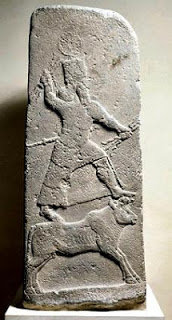
Bull (Nandhi) was the vahana of Hindu god Shiva. Indra was compared to bull in hundreds of places in the Hindu Vedas. A god known as Adad, holding Indra’s thunderbolt, was shown riding a bull in Akkadian sculptures.

Picture: Kadesh In Egypt

Adad had its origin in Mesopotamian around 1900 BC. He was worshipped as a weather god, similar to Indra of Rig Veda. His sculptures were found in Karkara, Mari, and Aleppo in Syria. His other names were Ramman and Iskur.

Iskur was worshipped in Iraq from 3500 BC in Iraq.

Baba Iaga , a witch or ogress of Slav regions was shown riding a pig.

Hindu epics and Puranas give a vivid description of various vahanas. We have excavated coins with Kartikeya on peacock from second century BC. A lot of beautiful sculptures show Hindu vahanas in Cambodia, Indonesia and the Indian subcontinent. (contd. In second part)

Picture: Hindu Goddess Durga


Contact swami_48@yahoo.com

உலகம் முழுதும் இந்து தெய்வ வாகனங்கள்


Goddess Lilith and Tutankhamun

(This article is available in English as well: swami)

தமிழ்நாட்டில் உள்ள எல்லா பெரிய கோவில்களிலும் ஆண்டுதோறும் உற்சவ காலங்களில் சுவாமி புறப்பாடு நடைபெறும். அப்பொழுது இறைவனையோ இறைவியையோ அலங்கரித்து ஒரு வாகனத்தில் தெருக்கள் வழியாக ஊர்வலமாக எடுத்துச் செல்வார்கள். எந்தெந்த சுவாமிக்கு எந்தெந்த நாட்களில் எந்த வாகனம் என்பதை ஆகமங்கள் எடுத்துச் சொல்லுகின்றன.

இந்த வழக்கம் ஒருகாலத்தில் உலகம் முழுதும் இருந்திருக்கிறது. ஆனால் அங்கெல்லாம் அழிந்த பின்னரும் இந்தியாவில் மட்டும் ஆயிரக் கணக்கான ஆண்டுகளாக இன்றுவரை நீடித்துவருகிறது. இந்துப் பண்பாடு காலத்தால் அழியாத ஒரு பொக்கிசம்.

வாகனங்கள் ஏன், எப்போது துவங்கின, அவைகளின் உள்ளர்த்தம் என்ன எனபவைகளைப் பார்ப்பதற்கு முன்னால் சில சுவையான விசயங்களை முதலில் காண்போம். எகிப்திலும் பாபிலோனியாவிலும் கூட இந்த வாகனங்கள் இருந்தன. துருக்கி சிரியா, இராக், ஈரான் முதலிய முஸ்லீம் நாடுகளில் ஒரு காலத்தில் இந்து கலாசாரம் இருந்தது. சம்ஸ்கிருத கல்வெட்டுகள் பற்றிய கட்டுரையில் இது பற்றி பார்த்தோம். துருக்கி –சிரியா எல்லைப் பகுதியில் பொகஸ்கோய் என்னும் ஊரில் கண்டு பிடிக்கப்பட்ட களிமண் படிவ கல்வெட்டில் வேதகால தெய்வங்களின் பெயர்கள் இருக்கின்றன.

காலக் கணக்கீட்டின்படி பார்த்தால், இந்தியாவுக்கும் முன்னதாக சுமேரிய, பாபிலோனிய,எகிப்திய ,கிரேக்க பண்பாட்டில் முதலில் வாகனங்களைக் காண்கிறோம். ஆக, அங்கிருந்து இவை இந்தியாவுக்கு வந்தனவா? அல்லது இந்தியர்கள் அதை அங்கு பரப்பினரா என்று கேட்டால் காஞ்சி பரமாசார்ய சுவாமிகள் சொன்ன பதிலையே சொல்லுவேன். கபில+ஆரண்ய= கபிலாரண்யா=கலிபோர்னியா (அமெரிக்கா) என்று ஆனதாகச் சொல்லிவிட்டு உலகம் முழுதுமுள்ள இந்து தடயங்கள் சின்னங்கள் பற்றி குறிப்பிட்டுவிட்டு, இப்படிச் சொல்கிறார்: “உடனே இந்துக்கள் அங்கெல்லாம் போய் இதைப் பரப்பினார்கள் என்று நினைக்காதீர்கள். ஆதியில் உலகம் முழுதும் சநாதன தர்மம் (இந்துமதம்) ஒன்றுதான் இருந்தது” என்று 1935-ஆம் ஆண்டு சென்னை தொடர் சொற்பொழிவில் கூறுகிறார்.

வேதத்தில் பல மிருகங்கள் குறிப்பிடப்படுகின்றன. புராண இதிகாசங்களில் வாகனங்கள் பற்றிய தெளிவான குறிப்புகள் இருக்கின்றன. சிந்து சமவெளியில் ஒரு முத்திரையில் யானை மீது ஒரு ஆணோ பெண்ணோ நிற்கும் காட்சி இருக்கிறது. இதைப் பற்றி யானை வாகனத்தில் இந்திரன் அல்லது இந்திராணி என்று ஏற்கனவே எழுதி இருக்கிறேன். ஆகவே 5000 ஆண்டுகளுக்கு முன்னரே இந்தியாவில் வாகனம் உபயோகத்துக்கு வந்துவிட்டது..கி.மு இரண்டாம் நூற்றாண்டு காசுகளில் மயில்வாகனத்தில் முருகன் காட்சி தருகிறான். இந்தியா, கம்போடியா, இந்தோநேசியா ஆகிய இடங்களில் வாகன சிற்பங்கள் உள்ளன.

Astarte and Hathor

இந்து வாகனங்கள் உலகம் முழுதும் இருந்ததற்கான சான்றுகள் இதோ:

எகிப்தில் துதன்காமுன் (கி.மு. 1333) என்ற மன்னனை கருஞ்சிறுத்தை மீது நிற்பதாகக் காட்டியுள்ளனர். எகிப்திய பாரோக்கள் (மன்னர்கள்) இறைவனுக்குச் சமமாகக் கருதப்பட்டனர். அவனுடைய தாத்தா, கொள்ளுத் தாத்தா காலத்தில் இருந்து இந்துப் பண்பாட்டில் இருந்த தொடர்பு இதற்குக் காரணமாக இருக்கக் கூடும். மிட்டன்னி (சிரியா/துருக்கி/இராக் பகுதியை ஆண்ட இந்து மன்னர்கள்) மன்னர் தசரதன், தன் பெண்களை எகிப்திய மன்னனுக்கு மணம் முத்துவிட்டு எழுதிய கடிதங்கள் இன்றும் எகிப்தில் உள்ளன. துதன்காமுனுக்குப் பின் சேதி என்ற மன்னர் ஓவியங்களிலும் வாகனத்தைப் பார்க்கலாம்.

இந்துக் கடவுள்களில் துர்க்கா தேவி, அய்யப்பன், புத்த மதத்தில் பத்மசம்பவர் ஆகியோர் புலி வாகனத்தில் செல்வதாகக் காட்டப்பட்டிருக்கின்றனர்.

சீம்ம வாகனம்

வாகனங்களில் மிகவும் பழைய வாகனம் சிம்ம வாகனம். இன்றும் துர்கா தேவியின் வாகனமாக பயன்படுத்தப்படுகிறது. எங்கெல்லாம் தேவி, காளி வழிபாடு இருக்கிறதோ அங்கெல்லாம் சிம்ம வாகனம் இருக்கிறது.

கதேஸ் என்று சிரியா நாட்டிலும் ஹதோர் என்று எகிப்திலும் வழிபடப்பட்ட தேவியின் வாகனம் சிங்கம். நிர்வாணமாக நிற்கும் இந்தக் கடவுளின் ஒரு கையில் பாம்பு இருக்கும். இனவிருத்திக்கான தேவதை.

Adad on bull. Indra onVan, and Durga on vahanas

ஹீப்ருக்கள் வணங்கிய லிலித் என்ற தேவதை இரண்டு சிங்கங்களின் மீது நிற்பதாகக் காட்டப்படுகிறது. லிலித், முதல் மனிதன் ஆன ஆதாமின் மற்றொரு மனைவி. ஜில்காமேஷ் கதையிலும் லிலித் வருகிறாள். அவர் தாக்கியவுடன் லிலித் பாலைவனத்துக்குள் ஓடியதாக கதை.

கி.மு.எட்டாம் நூற்றாண்டு சிற்பம் ஒன்று அசீரிய காதல்-போர் அதி தேவதையான இஷ்டாரையும் சிம்ம வாகினியாகக் காட்டுகிறது.

கி.மு 133 ஆம் நூற்றாண்டைச் சேர்ந்த எழிலிகாயாவில் அரின்னா, சுர்ருமா ஆகிய தெய்வங்களும் சிம்ம வாகனத்தில் நிற்கின்றனர்.

காளை வாகனம்

காளையை இந்திரனுக்கும் ஏனைய தெய்வங்களுக்கும் உவமையாகக் கூறுவதை வேதத்தில் படிக்கிறோம். பிற்காலத்தில் காளையை சிவனுக்கு வாகனமாக்கினர்.5500 ஆண்டுகளுக்கு முன் சுமேரியாவில் ஒருகாளை மீது தெய்வம் உட்காரும் ஆசனம் போடப்பட்டிருக்கிறது

கி.மு.எட்டாம் நூற்றாண்டு சிற்பம் ஒன்று புயலுக்கு அதிபதியான பாபிலோனிய அதாத் என்னும் கடவுளை காளை வாகனத்தில் நிற்கும்படி செதுக்கியுள்ளது. அதாத் இந்திரன் போல கையில் வஜ்ராயுத்தை தாங்குகிறார்.

இந்திய வாகனங்களுக்கும் முற்கால வெளிநாட்டு வாகனங்களுக்கும் உள்ள பெரிய வேறுபாடு அந்த கடவுள்கள் வாகனங்கள் மீது நிற்பார்கள். இந்துக் கடவுளோவெனில் வாகனத்தில் அமந்திருப்பார்கள்.

பாபா இயாகா என்ற ஸ்லாவ் இனக் கடவுள் பன்றியின் மீது பயணம் செய்கிறார்.  (தொடரும்)

Flags: Indus Valley-Egypt similarity

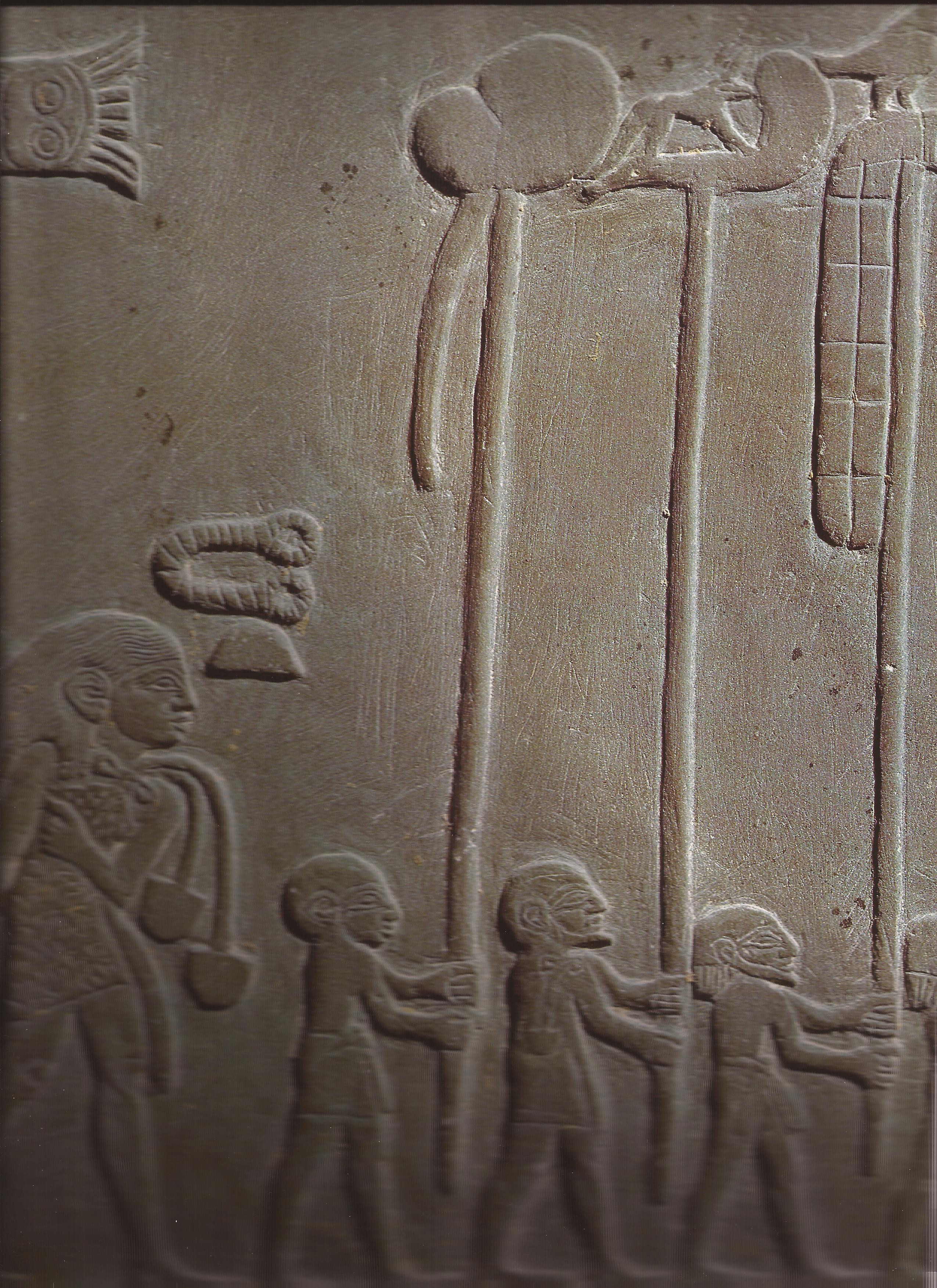
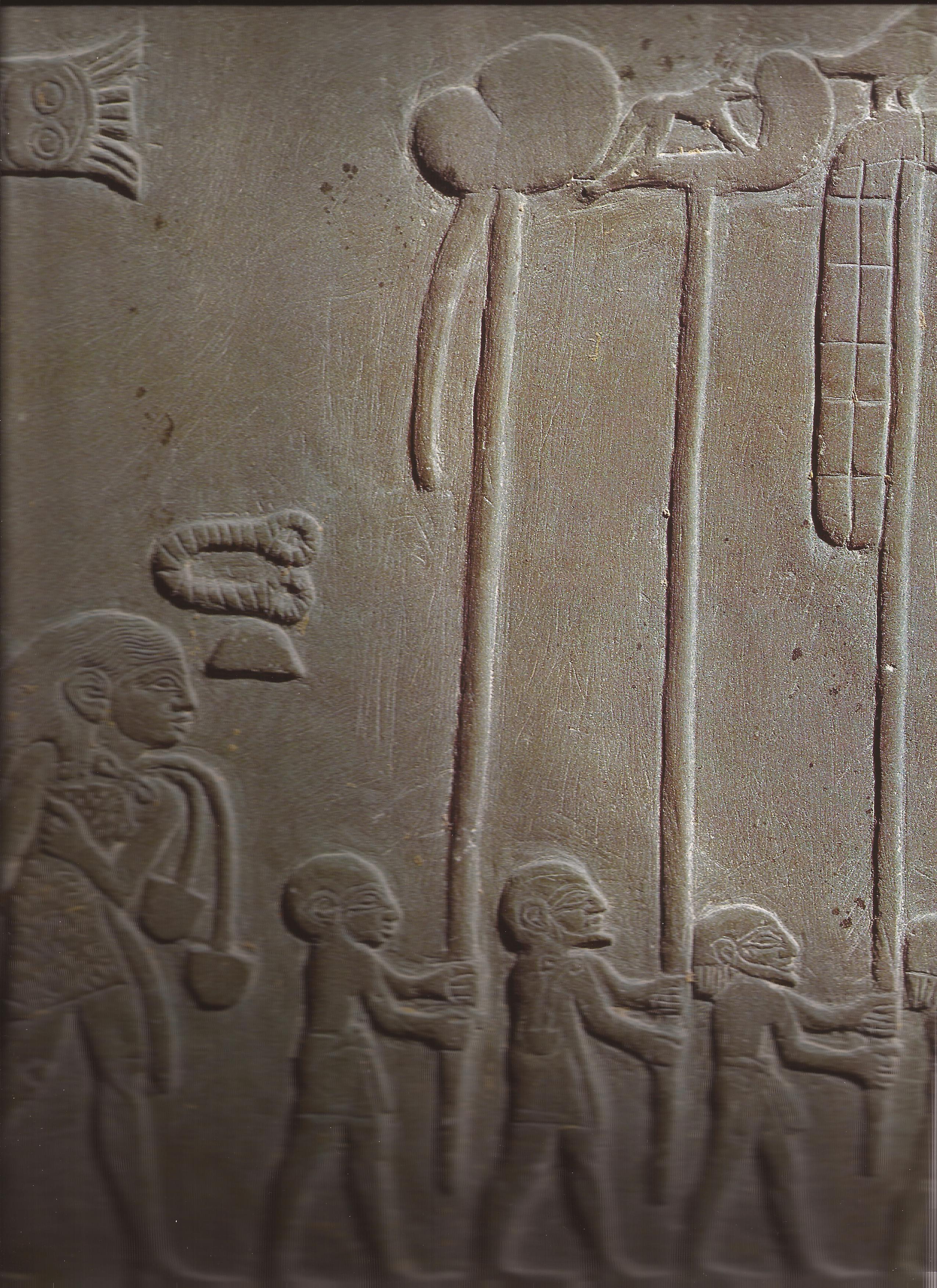
Picture shows Egyptian standards from Narmer palette

( Tamil version of this article is already posted in the blogs: swami )

Carrying flags and standards in a king’s procession or God’s (statue) procession is practised even today in India. In Tamil Nadu, the emblems of Shiva or Vishnu are taken in the procession during the annual temple festivals. We are fortunate to have one seal or tablet showing a procession that went through an Indus Valley city thousands of years ago. Egypt has provided us still an older picture of a procession.

Narmer (Nara Meru also known as Menes/Manu) ruled Egypt in the Pre Dynastic period, 5000 years before our time. His palette shows four people carrying standards. The first two carry long poles with bird figures on the top. Next person carried a pole with the wolf God (Wepwawet) and the last one carried a bundle or a cloth. The king is walking behind the sandal bearers.

Indus valley seal of a procession is not complete. We could see only three people carrying three different things. The first one carried a cloth or a festoon like thing hanging from the top of the pole. This is similar to the first two poles of Egypt. The middle one carried a calf (Heifer). This is very clear. Israelites did this till Moses revolted against it. People who have watched films like Ten Commandments may remember the scene of breaking such golden calf statues.

The last person in the Indus procession carried a cult object. Many scholars have identified it with the vessels for extracting Soma Juice. Rig Veda has hundreds of hymns in praise of Soma. A whole Mandala is devoted to Soma Rasa. So it may be something to do with the Soamrasa. A lot of seals with the one horned animas have this symbol. Others think this is a cage with a live bird in it. In Egypt, the first two poles have bird figures. Whatever it may be, there is amazing similarity between Indus Valley and Egyptian standards.

If the cult object is Soma filter or extractor then it must be a Vedic civilization. But nothing is proved beyond doubt. I have made it amply clear in my earlier posts that the Indus civilization was influenced by Middle East and other neighbouring civilizations if we accept the current chronology. A god surrounded by many animals, one hero fighting two animals, the circular stone structures, the snake queen and many others have similarities with older cultures including Minoan civilization.

Please read my other articles on Hindu-Egypt links, Indus Valley seals, Hindu and Tamil flags. Out of my 300 plus articles, there are more than ten posts on Indus Valley and Egypt.

Contact swami_48@yahoo.com

கொடி ஊர்வலம்: சிந்து சமவெளி எகிப்து அதிசய ஒற்றுமை!

Picture shows Egyptian Standards

(English version of this article is also available: London swaminathan)

சிந்து சமவெளி முத்திரை ஒன்றில் ஒரு ஊர்வலக் காட்சி பதிவு செய்யப்பட்டுள்ளது. இந்த ஊர்வலத்தில் என்னதென்று இனம் காணப்படாத ஒரு பொருளையும், ஒரு மாடு அல்லது கன்றின் உருவ பொம்மையையும், மூன்றாவதாக ஒரு துணியையும் தூக்கிச் செல்கின்றனர். இதே போல எகிப்திலும் ஒரு ஊர்வலக் காட்சி பதிவு செய்யப்பட்டுள்ளது. இரண்டுக்கும் சில அதிசய ஒற்றுமைகள் இருக்கின்றன.

சிந்து சமவெளியில் தூக்கிச் செல்லும் முதல் பொருள் பற்றிப் பல கருத்துக்கள் இருக்கின்றன. சிலர் இதை சோமரசம் பிழியும் வடிகட்டிப் பாத்திரம் என்று நினைக்கின்றனர். இன்னும் சிலர் இந்த முதல் பொருள் ஒரு பறவைக் கூண்டு என்றும் அதற்குள் உயிருள்ள பறவையை எடுத்துச் சென்றனர் என்றும் கருதுகின்றனர். நடுவிலுள்ள கன்றுக் குட்டி பற்றி யாருக்கும் சந்தேகம் இல்லை. படம் தெளிவாகவே இருக்கிறது.

எகிப்தில் நரமேர் (நர மேரு) என்பவருடைய சின்னத்தில் இப்படி ஒரு காட்சி இருக்கிறது. அதில் நான்கு பேர் உயர்ந்த கொடிக் கம்பில் நான்கு உருவங்களைத் தூக்கிச் செல்கின்றனர். முதல் இருவர் இரண்டு பறவைகள் உடைய கம்பத்தைத் தூக்கிக் கொண்டிருக்கின்றனர். அதிலிருந்து தோரணம் போல ஏதோ தொங்குகிறது. மூன்றாமவர் ஓநாய் வடிவ தெய்வத்தைத் தூக்கிச் செல்கிறார். நாலாமவர் ஏதோ ஒரு மூட்டை மாதிரி ஒன்றத் தூக்கிச் செல்கிறார்.

நரமேருவின் மற்றொரு பெயர் மனு.அவர் 5000 ஆண்டுகளுக்கு முன் எகிப்தை ஆண்ட முதல் மன்னர். எகிப்திய ஒநாய் தெய்வத்தின் பெயர் வெபாவெட்.

Picture shows Indus Valley procession

முதல் இரண்டு கம்பங்களில் தொங்கும் தோரணம் அல்லது துணி போலவே சிந்துவெளி ஊர்வலத்திலும் உள்ளது. ஆனால் சிந்துவெளி ஊர்வலக் காட்சி முழுதாக இல்லை. ஆக முதல் கொடி எகிப்தைப் போலவே இருந்திருக்கலாம். இதை அடுத்து வருபவர் கன்றுக்குட்டியைத் தூக்கிவருவதை எகிப்தின் ஒநாயுடன் ஒப்பிடலாம். அடுத்ததாக வரும் சிந்துவெளி ஆள் ஒரு பொருளைத் தூக்கிவருவதை சிலர் சோம பானம் பிழியும் கருவி என்றும் மற்றும் சிலர் உயிருடன் பறவை உள்ள கூண்டு என்றும் கருதுகின்றனர்.

ரிக்வேதத்தில் ஒரு மண்டலம் முழுதும் சோமப்பானத்தைப் பற்றிய பாடல்கள் இருப்பதை அறிஞர் உலகம் அறியும். சரஸ்வதி நதியின் தடயங்கள் கண்டுபிடிப்பு, சோமபானப் பாத்திரம் ஆகியவை வேத காலத்தை நோக்கி சிந்துவெளி நாகரீகத்தைத் தள்ளுகிறது. ஒரு ஆள் தூக்கி வரும் இந்த சோமபான பாத்திரம், ஒரற்றைக்கொம்பு மிருகம் காணப்படும் நூற்றுக் கணக்கான முத்திரைகளில் காணப்படுகிறது. இதை ஊதுபத்தி அல்லது சாம்பிராணி ஸ்டாண்டாக இருக்கலாம் என்று முன்னர் கருதி வந்தனர்.

சிந்து சமவெளி மற்றும் எகிப்து-இந்திய கலாசார உறவு பற்றிய ஏனைய பத்து கட்டுரைகளையும்  இதே “பிளாக்” கில் படிக்கலாம்.

Contact for further information: swami_48@yahoo.com

Hindu Goddess Sri Bali /Cybele in Rome and Greece


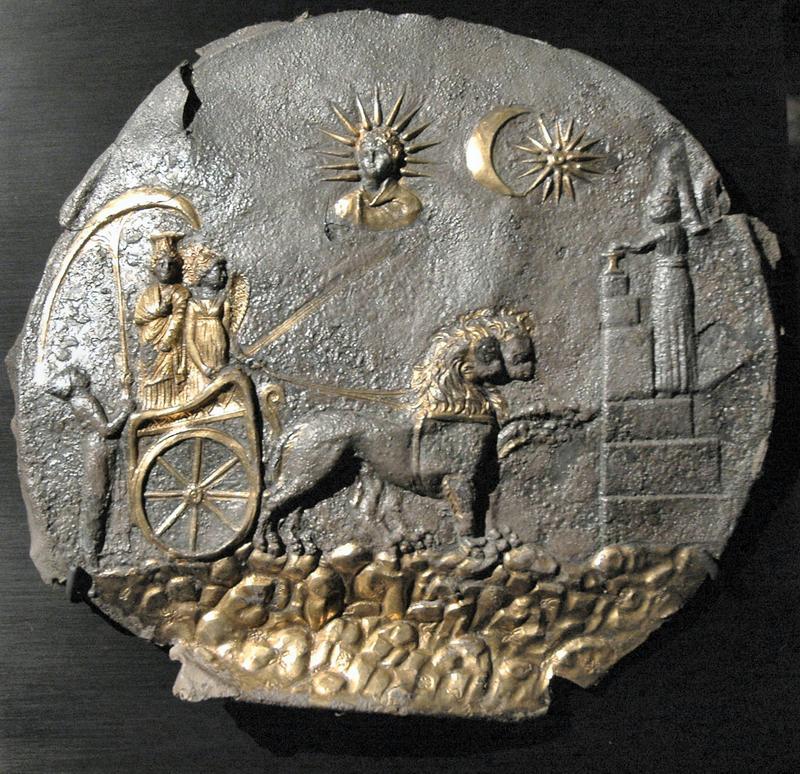
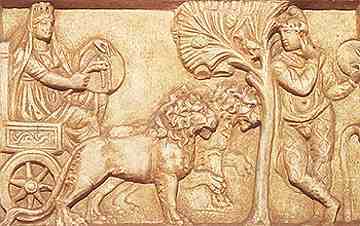
Picture shows Cybele accompanied by Goddess of Victory in a chariot drawn by lions. Sun is personified as Helios. An attendant in barefoot holds a parasol. Silver plate found in Afganistan

Cybele worshipped in Europe was the Hindu goddess Sri Bali. Keralites carry Sri (Bhutha) Bali in all the festivals. They call it Seeveli. Sri Bali got corrupted in to Seeveli and Cybele. Read the full article for more interesting facts. We find Cybele’s statues from Afghanistan to Greece.

Cybele is a mother goddess. She was worshipped in Greece and Rome. Scholars say that Cybele originated in North Western Turkey (Phyrgia). Turkey was ruled by the Hindus at one time. Hittites and Mittani kings were Hindus. They worshipped Vedic Gods and knew Sanskrit. The oldest inscriptions with Sanskrit words (Horse Training Manual by Kikkuli) were discovered in Turkey and Syria. One of the kings that ruled this area was Thusratta (Dasaratha). His letters were discovered in Egypt. (Please see my earlier posts for full details).

Worship of Cybele (also written Kybele) began in 1500 BC and ended in 400 AD when Christianity spread to Europe. She was worshipped as mountain goddess in the beginning. This explains the popularity of Seeveli in mountainous Kerala (India).

Cybele is shown with umbrella on a chariot. This is the main clue to identify it with Hindu gods. Any king or god shown with umbrella is influenced by Indian culture. Indians invented the umbrella. When one did a big Yaga  he was presented with a white umbrella. From Kalidasa to Sangam Tamil literature we read about white umbrella as the symbol of glory. Showing umbrella is one of the Sixteen Upacharams in Hindu puja. Even the Vamana Avatar was shown with an umbrella, again Kerala type!

Umbrellas spread to all parts of the world from India. We have got enough proof for it in our ancient literature. Snake hood was the umbrella for Krishna when he was a baby.

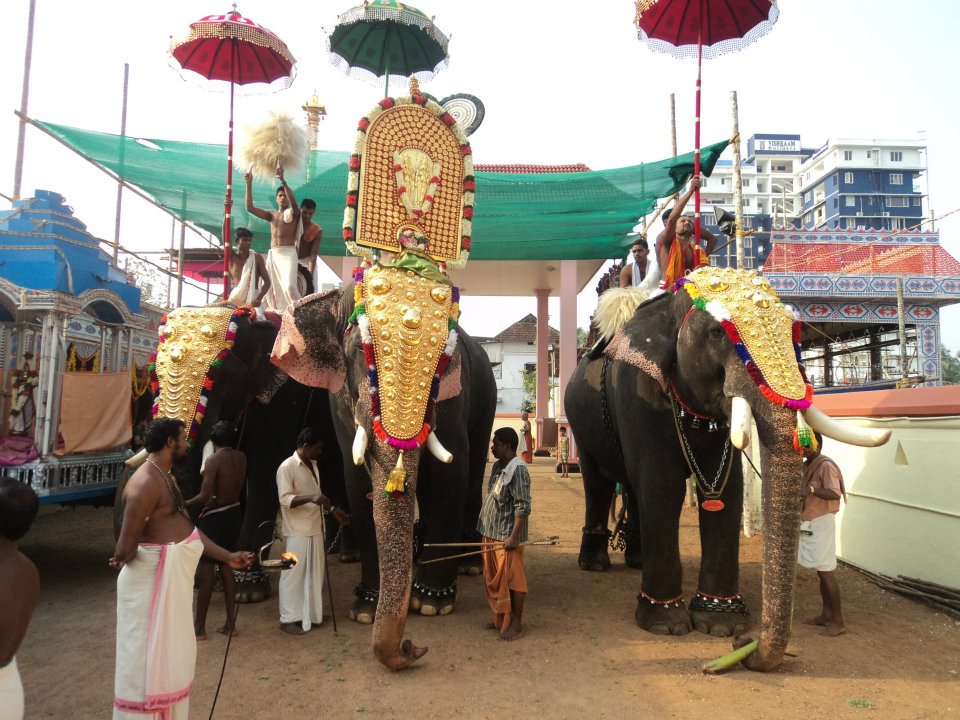
All Kerala festivals show beautiful umbrellas on decorated the elephants. One of the elephants carries the Sri Bhutha Bali (Seeveli). This has led to the worship of Cybele, the mother goddess.


Picture of  Thrissur Seeveli

SRI is mother, BALI is offering. Before and during any big festival, offering bali is an important ritual. There are elaborate instructions about what to offer to which god on what day in the Agama Shastras.

Greeks identified Cybele with the goddess Rhea and the Romans identified her with Magna Mater (Great Mother). In the beginning this ritual must have started with some sacrifice to the Mother Goddess. That is why it is called SRI bali. Later it spread to local gods and goddesses. Now in Kerala the Sri Bali is in same shape, but with different deities in different areas/temples.

Even modern encyclopaedias describe Cybele as one of the most important ASIAN mother goddesses. In 204 BC, Cybele carved in a black stone was taken to Rome from Turkey. Hindu statues of Kali are also in black stone (Kali means black). She was depicted riding in a chariot drawn by panthers or lions accompanied by frenzied dancers. This is also similar to Kerala where the possessed people dance and forecast future events (known as Velichapadu). A more chronological study of this deity will show us the movement and development of this Hindu deity.


Bali or Offerings for Hindu Gods

During ten day or 13 day temple festival, different offerings are given to different gods. In the temples only one instrument will be played with the person who offers Bali. There is a stone called Bali Peetam in most of the temples. A few examples of Bali are given below:

Picture of Guruvayur Seeveli


First Day for Lord Ganesh: Modhakam, Idli, Pulses, Flour, Jaggery

Second Day for Lord Brahma: Payasam, Turmeric powder, Lotus flower and fried rice (Pori)

Third Day for Bhuthas: Banana fruit mixed with melted butter, Sesame seed Rice

Fourth Day for Gandharvas: Turmeric powder, Coconut and sesame seed rice

Fifth Day for Indra: Indravalli root with ghee,millet

Sixth Day for Rishis/Seers: Jack fruit with Ghee and Bamboo rice

Seventh Day for Lakshmi: Sweet Pongal (rice) and fruits

Eighth Day for Rakshasas( demons) Blackgram rice with ghee (melted butter)

Ninth Day for Shiva: Curd Rice (Yogurt), Root Flour, Fried rice, Flowers

Tenth Day for Vishnu: Red colour rice, Appam (sweet cake),Sesame powder

Some Agamas give thirteen day offerings including for Nagas, Loka palaks etc.


Daily Pujas also offer balis to different devatas (angels). This will give some idea about Balis. It is part and parcel of Hindu Rituals.

Even meat is offered to Grama devatas. In Madurai, goddesses like Sellaththamman are offered meat offerings. In the middle of the night they throw the meat balls for the goddess. A detailed study of different Balis to different Devatas may throw interesting information about our ancient customs.

Picture of Cybele at Attis Relief.

Contact  swami_48@yahoo.com


**************
Hindu Mudras in Egyptian and Sumerian Statues


Picture: Egyptian Statue

What is a Mudra? Mudra is the hand gesture or the finger position. Gods or saintly persons who practise meditation or Yoga use Mudras. The Mudras are sacred, mysterious and magical. They can attract or distract people. They express lot of things. They are meaningful. They can give you certain powers.

The word Mudra is derived from two Sanskrit words: MODHANATH and DRAVANATH. The meaning is that which makes the Devas happy and that which gets rid of the sins. More over it fulfils the desires of the people who  practise them. The Sanskrit sloka says:

Modhanath sarva devanam

Dravanath papa santhathe:

Thasmath mudrethi sa kyatha

Sarva kamartha sadhani

Mudra Vidhanam, a book published by Ramakrishna Mutt lists 137 Mudras practised by the Hindus. Buddhists and Jains have added some more. So there are at least 150 recognised Mudras. But naturally the permutation and combination of hand and finger positions can give us hundreds of different Mudras. If one notices the hand and finger positions of Hindu Gods and Goddesses or the statues of the Buddha, one can easily learn about them.

Why did the Hindu Gods or the Buddha who was born a Hindu use them? The reason is they can give the practisers some power. Even in the modern culture, showing middle finger in western countries is rude. Recently a singer and a foot ball player were condemned for the rude gestures. So hand gestures are powerful.

Picture: Dharmachakra Mudra

In the classical dance called Bharatanatyam, there are lot of Mudras called Karanas. They are used to express feelings and give different messages. The books about Mudras are in Sanskrit. There are 108 different Mudras shown on the tower of Chidambaram temple where the Lord of Dance Nataraja/Shiva appears in his dancing form. The dance Mudras are different from Yoga Mudras. The Tantric Mudras are different from these two categories.

Mudras have been used by the Hindus for thousands of years. Egyptians and Sumerians have learnt them from the Hindus. The most famous Mudra is the Chin Mudra of Lord Dakshinamurthy (Shiva). Abhaya Mudra shown by all the Hindu Gods and saints is also famous. Chin Mudra gives one the divine wisdom. Abhaya Mudra gives us the message, “Why fear when I am here?”. Though Hindus invented them, Buddha was the one who mastered them. Every Buddha statue shows a different type of Mudra. Now the Buddhists have been talking about them in the meditation classes more than the Hindus.

Mudras in Egypt and Babylonia

If anyone has an eye for different gestures, one can notice the Egyptian and Sumerian Gods show different gestures. ( See the accompanying pictures).

Babylonian gods touches their shoulders with crossed hands. This is called Kavacham Mudra. This protects one like a shield. Other gods and goddesses show one hand touching the heart (chest). It is called Jnana Mudra. We are told that Lord Rama liked this very much.

Picture: Abu Temple Votive figures (Sumerian), 3000 BC

Lower hand facing up, usually on one lap is called Vara (boon) mudra. Hindu gods show Abhaya Mudra with one hand and Vara Mudra with another hand meaning “You don’t need to fear, I will give you the boons you ask for”.

Mudras affect the flow of energy in the body. By positioning the hands and fingers in a particular position one can channelize the energy. Jain Thirthankaras , Indus valley Statues and Egyptian Pharaohs keep their hanging hands straight. They resemble one another establishing some connection in the past. This Mudra is called Kayotsarga Mudra.


Picture: Egyptian Goddess Isis and god Horus


Hand on hand on the lap is called Buddha Mudra. We find it in Jain and Buddha statues.

Hindus use Mudras in the Puja, Meditation, Yoga Sadhana (Practice), Yagas (Fire Ceremonies) and Naivedhyam (food offerings). There are different types of Mudras for different Gods. Anna, a great Sanskrit scholar, has listed 137 Mudras under 12 different categories in his book Mudra Vidhanam (Ramakrishna Mutt Publication) .This is authentic. But several websites give us different types of Mudras with different interpretations without attributing the sources. So one wonders whether there is any basis for such interpretations.

Hindu Mudras in Egyptian and Sumerian Statues


Brahmins who do the daily ritual of Sandhyavandhana use Mudras and Nyasam. Brahmins do see the sun though the finger hole (not to damage the eye). Nyasam is touching different parts of body like head, mouth and heart with the right hand. Priests who do Siva Puja use lot of Mudras.  Those who want to learn about the Mudras should learn it from those who practise it instead of the websites and books. Websites and Books are only guides, and not Gurus.

Picture : Chidambaram temple 108 dance karanas

Contact: swami_48@yahoo.com or santanam.swaminathan@gmail.com

Pictures of Jain Tirthankara and the Buddha

*************
 

What is special about India?

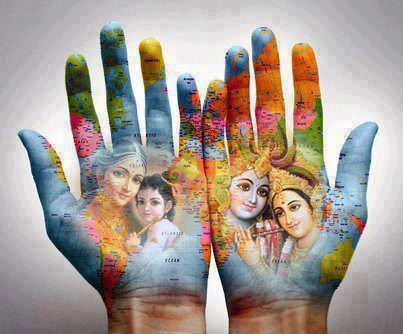
Picture: Divine Hands from face book


Gravity wobble puts 1 lb on you

 An interesting science news item appeared in London newspapers several years ago. It said that anyone wants to lose weight should travel to India.

Read it verbatim from London Metro News paper:

“If you want to lose weight without dieting, take a trip to India. A new map of earth shows that is where the force of gravity is weakest, so objects are lighter. It means you would weigh one percent less there—about 1.5 pound for an average person. The bad news is Britain is one of the places where the gravitational pull is strongest, so people appear to be relatively weighty.

The findings are presented in a new map, prepared to help NASA plan a five year satellite mission to measure the effects of gravity. It shows the planet is not spherical; it is lumpy, slightly flattened at the poles and bulges around the equator.

A fourteen stone man standing on top of Mount Cayambe, a 19,000 foot peak on the equator in Ecuador would be 2 pounds lighter than if he was standing on North Pole. The density of the ground also makes a difference.”

When I read the news item, I wondered whether this had got any connection to our spiritual inclination. So far no scientific experiment is done to determine this. But Bhagavatham and other Puranas say that Devas wanted to take birth in India. Great Tamil poet Bharathyar says that this is the place where Devas live and saints rush to live (Ref. Jaya Jaya Bhavani….. poem).

John Woodroffe (Arthur Avalon) says (page 117, Shakti and Shakta,1918),

“India remains still the most important country on earth for the student of religion. In India we meet with all forms of religious thought and feeling which we find on earth, and that not only at different times but also all together even today. Here we find the most primitive belief in ancestral Spirits, in Demons and Natural Deities with a primeval, imageless sacrificial cult. Here also is a polytheism passing all limits, with most riotous idolatry, temple cult, pilgrimages and so forth. And side by side with and beyond the  these crudest forms of religious life, we find what is deepest and most abstract of what religious thinkers of all times have ever thought about the Deity, the noblest pantheistic  and the purest monotheistic conceptions. In India we also find a priest craft as nowhere else on earth side by side with a religious tolerance which lets sect after sect, with the most wonderful saints, exist together. Here there were and still are forest recluses, ascetics and mendicant monks , to whom the renunciation of this world is really and truly a matter of  deepest sincerity , and together with them hosts of idle mendicant monks , vain fools and hypocrites , to whom religion is only a cloak for selfish pursuits  for the gratification of greed for money , of greed for fame or the hankering after power.


From India also a powerful stream of religious ideas had poured forth over the West and especially over the East, has flooded Central Asia, has spread over Tibet, China, Korea and Japan, and has trickled through the Further East down to the remotest islands of the East Indian Archipelago. And finally, in India as well as outside India Indian religions have often mixed with Christianity and with Islam now giving and now taking.”

“An examination of Indian Vedic doctrines shows that it is in tune with the most advanced scientific and philosophical thought of the West.”

Picture: Kailash, Himalayas.

Let us compare it with what others said about India:

 Will Durant, American historian: “India was the motherland of our race, and Sanskrit the mother of Europe’s languages: she was the mother of our philosophy; mother, through the Arabs, of much of our mathematics; mother, through the Buddha, of the ideals embodied in Christianity; mother, through the village community, of self-government and democracy. Mother India is in many ways the mother of us all”.


Mark Twain, American author: “India is, the cradle of the human race, the birthplace of human speech, the mother of history, the grandmother of legend, and the great grand mother of tradition. Our most valuable and most instructive materials in the history of man are treasured up in India only.”

Albert Einstein, American scientist: “We owe a lot to the Indians, who taught us how to count, without which no worthwhile scientific discovery could have been made.”

Max Mueller, German scholar: If I were asked under what sky the human mind has most fully developed some of its choicest gifts, has most deeply pondered on the greatest problems of life, and has found solutions, I should point to India.

Romain Rolland, French scholar : “If there is one place on the face of earth where all the dreams of living men have found a home from the very earliest days when man began the dream of existence, it is India.”

(Quotes taken from hinduismabout.com)

When we read all these comments we feel how great India is!

*********************