Vedic Sarama and Greek Hermes!!

dog3

Research paper No 1952

Written by London swaminathan

Date: 24 June 2015

Uploaded in London at 20-50

Who is Sarama?

In the Rig Veda (10-108) the dog of Indra is called Sarama. It has got two children and they are called Sarameyas. They were the watch dogs of Yama, the god of death. Panis (who are identified with Phoenicians) stole the cows of Indra. Sarama was sent as a messenger who warned the Panis.

Who is Hermes?

Sarama became Hermes in Greek mythology and Panis became Pan. Greeks borrowed lot of Hindu stories and mutilated them beyond recognition. Hermes is the son of Zeus and Maiya. From the day of birth Hermes was cunning and stole the cows of Apollo. He became the herald of the gods and escort of the shades of the dead. He was the God of Travellers, patron of music and wore a hat and the caduceus (a serpent twined wand).

Letter S changed to H in Greek. They changed Sindhu River into Hindu (S=H) via Persia (Iran).

Both the Vedic and Greek stories have some similarities:

a) Accompanying the dead

b)Stealing the Cow

c)Messenger of the Gods

d)Panis=Pan

But who borrowed it from whom? Definitely the Greeks borrowed it from us and jumbled it with attributes of several other Vedic Gods. Then Romans identified their god Mercury with Hermes. Mercury is connected with Mercantile like Pani is connected with Vanik (business)

So the new equation is

Sarama= Hermes = Mercury

But in Vedic story the lines are clearly demarcated, while in Greek and Roman stories, they got mixed up.

Who is Aesir and Vanir?

These are two races of Gods in Teutonic myth (Scandinavian). Aesir is ASURA and Vanir is PANIS. Once again the same Vedic story! But to understand the links between these Gods one must go to the Rig Veda. All are Sanskrit words get corrupted and stories changed Ulta (upside down)! Rig Veda is the oldest scripture and other myths came at least 1000 years later.

Now the equation IS

Sarama= Hermes = Mercury= Aesir/Vanir

Though the connection between Sarama and Hermes is known for long, Shrikant G Talageri has analysed the story by comparing them with Persian, Teutonic and Greek stories. The conclusion is that we are the original source. The dates of Greek, Teutonic and Persian myths are later than the Rig Veda.

indra

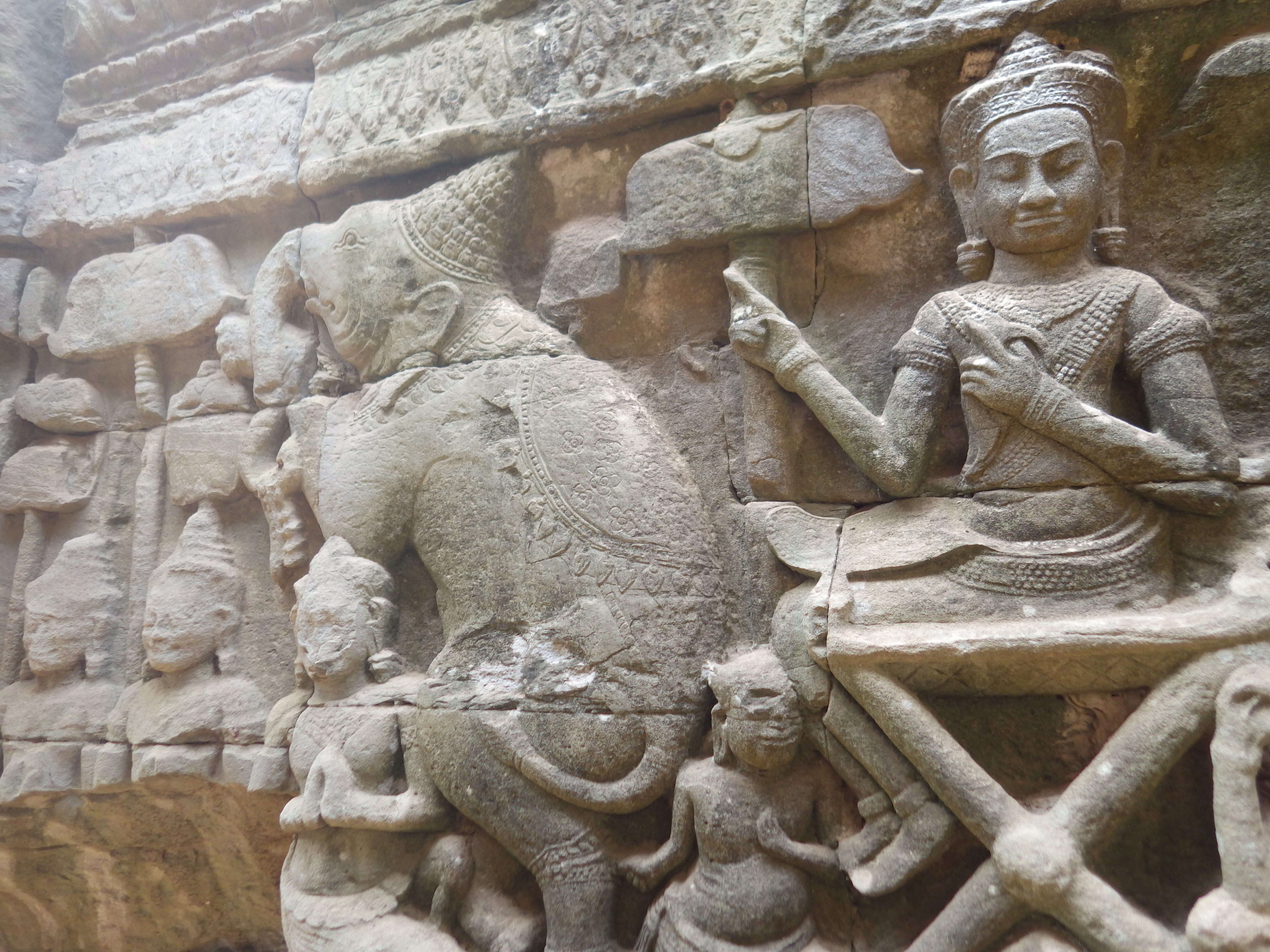
Indra on his elephant

My comments:

This shows that the Hindus migrated to various parts of Europe long ago. Talageri points out that without our Vedas no one could know the links between the Gods in four different cultures. All have a common thread and the Vedic story is changed in every culture. For instance Pusan is the God of Travellers in Vedas.

Now I give below Talageri’s view on this episode from his book ‘The Rig Veda, a Historical Analysis’:–

1.Griffith and Mac donell give different translations!

2.In course of time, a regular phenomenon of nature was converted into a single mythical incident:-

Sarama is at first, the dawn who recovers the rays of the sun that have been carried away by the night; then

The hound of Indra and mother of the two dogs called Sarameyas who are the watch dogs of Yama; then

The messenger of the Gods or Indra

sarama_and_her_chil

3.The Panis are at first,

Merchants or traders; then

A class of envious demons watching over treasure; then

The fiends who steal cows and hide them in mountain caverns

4.The cows are at first

The Rays of Light carried off and concealed by the demons of darkness, the Panis; then

The rain clouds carried off and kept concealed by the Panis; then

The Panis hoarded the wealth, the cattle and the wealth in horses and in kine.

5.The myth starts off with the idea of the Panis, the demons of darkness, stealing the rays of light and hiding them away at night, and Sarama, the dawn, recovering them in the morning, as a matter of daily routine. A regular phenomenon gradually becomes a single incident.

6.Apart from the Rig Veda, the story is in Jaiminiya Brahmana (2-440) and Brhatdevata

7.The gist of the Rig Vedic Hymn is

a)Sarama makes her way over long paths and over the waters of Rasaa (River) and conveys to the Panis, Indra’s demand for their ample stores of wealth

b)The Panis refuse, and tauntingly make an offer to make Indra the herdsman of their cattle

c)Sarama warns them of the consequences

d)The Panis express their willingness to do battle with Indra. But they offer to accept Sarama as their sister

e)Sarama however rejects the offer.

  1. Panis variant Vani is also found two places in the Rig Veda. A range of words pertaining to trade, commerce, economics and business activity are derived from Pani: Apana/market, Apanika/mercantile, Pan/money,coin, Vani/Bania/Trader, Vanijya/commerce etc.

9.Teutonic mythology has the cognate word Vanir and Aesir (asura). The rivalry between the Aesir and Vanir is reflected throughout Teutonic Mythology. But in Teutonic mythology Vanir are a second race of Gods. Aesir are first race of Gods.
talagheri book

Conclusion

1.Practically all the elements in any reconstructed proto Indo European Mythology are found in Vedic Mythology, whereas only a few of them are found in any other  Indo European Mythology.

2.The common elements are found in Vedic Mythology in their most primitive forms, closest to the original nature myths; while fragments of the original myths, in later developed versions, are found in other  Indo European Mythologies.

3.Each of the other Indo European Mythologies has several elements in common with Vedic mythology, but hardly any with any of the others (not counting historical borrowings, such as Greek Apollo in Roman mythology)

4.In respect of common elements, the Vedic version provides the connecting link, often the only one, between the versions in other mythologies.

5.Iranian Mythology has no connection with any other mythology except Vedic.

6.If the word Pani in the Rig Veda, which is pre cursor of the Teutonic Vanir and the Greek Pan, originally meant a merchant or trader in the earlier part of the Rig Veda, then it certainly means that the VEDIC PEOPLE WERE ALREADY A SETTLED AND A COMMERCIALLY PROSPEROUS PEOPLE IN THE GEOGRAPHICAL REGION INDICATED BY THE RIG VEDA BEFORE THE DEVELOPMENT OF THE MYTHICAL CONCEPT OF THE PANIS.
Brain Surgery in Ancient India: Bhoja and Indus Valley

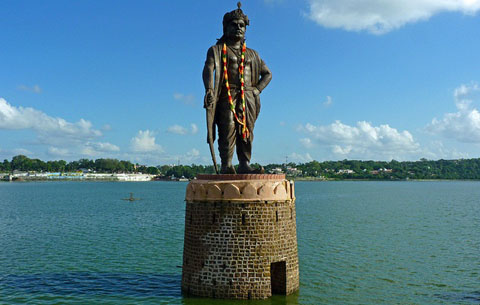
Bhoja 32ft 7 tons

King Bhoja In Bhopal, Madhya Pradesh

Post No 1938; Date: 17th June 2015

Written  by London swaminathan

Uploaded from London at 19-28


We have very interesting information about two brain surgeries in ancient India, one form Indus Valley and another from Sanskrit work Bhoja Prabandham.  Bhoja was a great scholar. He was a versatile genius. 84 Sanskrit books were authored by him. He wrote on every subject from aeronautics to medicine. He was a great Sanskrit scholar and wrote on grammar as well. He ruled from Dharain Madhya Pradesh where Parmar dynasty ruled. He lived in the eleventh century CE.
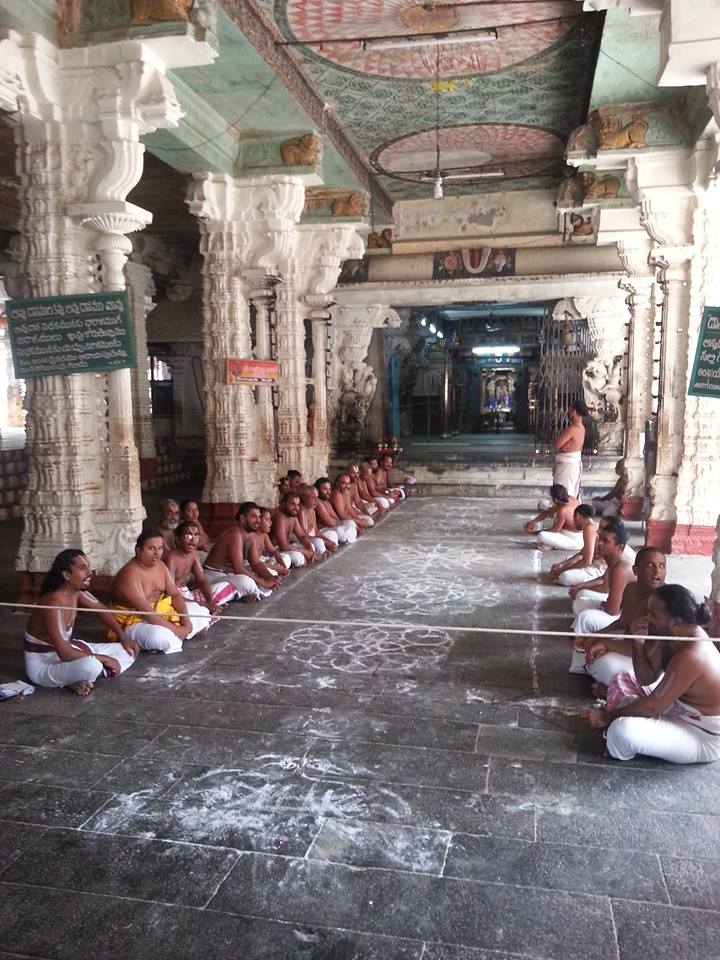
India had many kings with the name Bhoj. We have one King Bhoja in  Vedic literature Aitareya Brahmana. We had another Bhoja during the days of Kalidasa (First Century BCE)

1.Surgery for King Bhoja

Bhoja had incurable headaches. All the doctors in the town tried their hands and nothing worked. Having heard about the king’s health problems two Brahmin surgeons from Ujjain came to Dhara and told the king that they can cure him but it involved surgery in the skull. The king told them that he was ready to undergo any difficulty to get out of this torturous headache.

The surgeons brought with them a herb called Sammohini which will put any one in a coma stage like the Chloroform of modern operation theatres. The surgeons know how much of herb to give for certain number of hours. Nowadays the anaesthetists stand by the surgeons to increase the level of chloroform or reduce it. But in those days the surgeons themselves handled this. When the operation was over they administered an antidote herb called Sanjeevini (we have already heard about it in Valmiki Ramayana which cured Lakshmana from Indrajit’s biological warfare). King Bhoja also went through all the procedures and the surgery was 100 percent successful. He came out of the surgery room as if he had just woken up. This is in Bhoja Prabandham, a Sanskrit book giving his life history.

Surgeries are not new to ancient India. We have heard about Buddhist doctor Jeevaka whose salary was also mentioned in the Buddhist literature. He charged an enormous fee for each operation. I have already written about his eye operation and the Sangam age Pandya’s hand operation. The Pandya king was fixed with a golden hand and the Tamil literature call him Golden Handed Pandya. Nobody knew his real name! Following are the links for my earlier articles:

2.Jeevaka’s Eye Operation

There is a similar story that happened in Northern India one thousand years before Kannappan. Jeevakan was a great physician cum surgeon in the days of Buddha. He lived in the Maghada (Bihar) empire during Bimbisaran’s rule(603-551 BC). One of the kings who ruled the north western part of India was Sibi. A blind Brahmin approached him asked for eye donation. The Brahmin asked him because the king had already earned the reputation of a big philanthropist donating anything you ask for. The king sent a word for Jeevaka and he came and removed both the eyes of the king and fixed them to the Brahmin. This is recorded in the Buddhist chronicles. Both these stories show that the organ donation was in vogue in those days. Big surgeons did eye operations and other surgeries easily. Posted on 25-2-2013.

3.How did a Pandya king get a golden hand? (Posted on Nov 18,2011)

4.Brain Surgery In Indus Valley

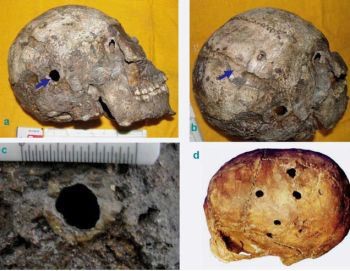
We find the names of over 400 surgical instruments in Sanskrit medical books. In 2013 an important news item hit the front page of Indian news papers about a Brain surgery that happened 4300 years ago in India in the Harappa region. One of the skulls excavated from Harappa was with the Kolkatta anthropological survey (ASI). It was kept in the Paleo Anthropology Wing of the ASI. A study published in the Current Size Magazine said the hole in oe of the male skulls showed a surgery by a procedure called “trepanation”.

Paleo anthropologist A R Sankhyan said that trepanation was practised in Bronze Age in India. They make a hole in 3 mm wide hole in the skull. And the evidence from the skull showed that the person lived for considerable time after the operation. It was the oldest case of such a surgery. This developed in to Ayurvedic surgery in later days.

We find lot of information about surgery in Susruta’s Sanskrit book. Even surgeries like rhinoplasty (fixing artificial nose) was explained by him. I have explained in my article The Oldest Organ Donation in India how Kannappan and others transferred their eyes to God and got them back.

skull brain sugery

The trepanated Harappan male skull H-796/B in the Palaeoanthropology Repository of Anthropological Survey of India, Kolkata in three views: a, the left lateral view showing the trepanated hole; b, the postero-lateral view showing the horizontal linear traumatic fracture on the occipital bone; c, an enlarged view of the

Hittite Mystery! Were they Hindus?

lion gate

Huge lions guard the gate at Hattusa (later it became Lion Throne/Simhasana)

Written by London swaminathan

Research article No.1923

Date :10th June 2015

Time uploaded in London: 21-10

Who are Hittites?

Scholars say that no one knew who were they and where from they came. Their monuments have been found in Bogazkoy (previously known as Hattusa; now called Bogazkale) in Turkey.

Where were they?

They ruled Turkey (Anatolia) and Northern Syria.

When did they rule?

We knew that they existed between 1800 BCE and 1200 BCE.

What language did they speak?

They spoke an Indo –European language to which Sanskrit, Greek, Latin and most of the European languages belong.

Were they Hindus?

Other than the Sanskrit connection there are lot of similarities between Hindus and Hittites.

I have listed them below.

Why did their rule come to an end 1200 BCE?

Hattusa (Bogazkoy) , their capital was razed to ground about 1200 BCE. The end was sudden and this has been largely attributed to “sea people” from the Mediterranean. Some disagree.

Hittites are known from Old Testament and clay tablets discovered in Turkey ( area ruled by Hittites). In 1906, Dr Hugo Winckler began excavation in Bogazkoy and found a Royal archive of 10,000 tablets. The tablets give a good picture of Hittite politics and society. Czech scholar B.Hrozny deciphered the script and wrote about it.  Hittite called their language NESILI.

bogazkoy

Bogazkoy = Hattusa in Turkey

Similarities with the Hindus

1)They spoke a language related to Sanskrit. All scholars agree on it. And so they did not belong to Anatolia (Turkey).

2)They use the phrase 1000 Gods in their peace treaty and this is very common in Hindu scriptures. Decimal system was invented by the Hindus. Vedic god Indra is decribed as a man with 1000 testicles (so potent!) and his Vahra Aydha is 1000 pointed! Thousand here means “a lot”.

3.They signed a peace treaty with the Egyptians 3000 years ago. The signing of peace treaty is also a typical Hindu custom. We hear about the Peace Treaty between Ravana and a Pandya king in Tamil literature (Please read my earlier article on it) We knew about another peace treaty between Mitanni king Dasaratha and Egyptian king around 1400 BCE.

4.Hittite Treaty:–Treaty of Rea-masesha mai Amana, the great king, the king of the Land of Egypt, the valiant, with Hattusili, the great king of the Land of Hatti, his brother, for establishing good peace and good brotherhood worthy of great kingship between them for ever.

The treaty goes on to define the relationship between the two nations; to renounce aggression; to establish a defensive alliance; to guarantee, upon the death of either party, he succession of legitimate heir; and to provide for the extradition of fugitives. The treaty was carved on the wall of a great temple of Karnak and at the Ramesseum of Thebes (Egypt). One of the final passages calls upon the gods as witnesses to the good faith of the signatories (this is also typical Hindu custom):

“As for these words —— as for him who shall not keep them, a thousand gods of the land of Hatti together with a thousand gods of the land of Egypt, shall destroy his house, his land and his servants”

Rea- masesha mai Amana was the Egyptian Pharaoh Ramses II. (Again this name is Sanskrit Ramasesha) .The Hittite king’s name was Hattusili (in Sanskrit it is Sathyaseela; s=h in many languages)

5)Royal Marriages :Hittites survived by Royal marriages, diplomacy and heroic fights. They were superb fighters. Royal marriages mean marrying girls from neighbouring countries which is also typical Hindu custom: Dasaratha married a woman from Kekaya, Dhritarashtra married a woman from Gandhara/Kandahar, Rama married a woman from Videha etc (Kaikeyi, Gandhari, Vaidehi)

6)Hattusa was full of temples. They were worshipping Storm God (similar to Indra) and Sun Goddess (similar to Gayatri)

7)Buyukkale (Turkish word for Great Castle) occupies a rocky place in Eastern Hattusa, where the king resided. It had its own temple and two libraries, where thousands of cuneiform clay tablets have been found.

8)A tablet from one of the temple archives says, “The deity  has now been made as a statue in silver covered with gold in the shape of a bull standing on all fours”. The storm god sometimes was represented a s a bull and at other times was shown accompanied by two bulls that pulled his chariot. Indra is also represented as bull in the Vedas.

9)Hattusili III, who signed a peace treaty with Ramses II,gave his daughter to Ramses II in marriage. Hattusili’s (Sathyaseela) wife was Pudushepa (may be Padmashiva in Sanskrit). She was a Hurrian (Suryan; belongs to Surya Kula of Hindus)

vahanas

Hindu Vahanas in Yazilikaya, Turkey

65 deities and Vahanas

10)Hindu Gods and goddesses have Vahanas (mounts or vehicles) until today. Hittites’ gods always ride vahanas. North west of Hattusa is  Yazilikaya which is described as the most impressive of all Hittite religious structures. Here on the wall, storm god and his consort Hepatu were shown. There are 65 deities on the walls of the rocks. There were big festivals and ceremonial processions with the King and the Queen along with festival sports such as races, wrestling, stone throwing contests and boxing.

Hindu Goddess Durga is described as riding a deer in Tamil epic Silappadikaram and Thevaram of Saivite saints (Kalaiyathurthi in Tamil). We could not see such statues nowadays in India. But in the Hittite world we see deer riding gods!

11)Like Hindus Hittites cremated the bodies. Scholars believe that one of the galleries in Yazilikaya contained the urn with the ash of Tudhaliya, son of Hattusili and Pudushepa. They have identified two figures by hieroglyphs. The larger is the God Sharruma, the smaller is Tudhaliya IV. The relief depicts Sharruma, son of Storm God of Heaven and the goddess Hepatu.

12)Among the Hittites, when a king died it was said that he became God, and the relief may represent a celebration of of Tudhaliya’s entrance in to the Hittite pantheon. Hindus believed that their king was god and in the heaven they were waiting to receive them. Sangam Tamil verse says that Indra was waiting to welcome Tamil chieftain Ay Andiran. Sanskrit literature has such references too.

13)Manu’s Law Code: Hittites had very strict law like Hindu Law book Manu Smriti. Disobedience to the king was one of the few offences punishable by death – not just the offender but of his family as well. A Tamil king who was praised as Manu Neeti (smrti) Choza crushed his own sun under the wheels of his chariot because he crushed to death a calf. And the cow itself came to his palace and rang the Calling/enquiry Bell.

hariti


Vedic Prayer

14)What we read in Hindu Atharva Veda is also in the Hittites: From the tablets we have precise descriptions of various rituals: to counteract sorcery, to end pestilence, to engage the help of protective demons, to patch family quarrels, even to cure impotence. One tablet contains words of Muwatalli, the king who fought at Kadesh, concerning what must be said to the gods “when things get too much for a man”.

15)Their prayer was similar to Vedic paryers; one of the Hittite prayer runs like this, “Hattian Storm God, my lord, ye gods, my lords! It is only too true that man is sinful. My father sinned and transgressed against the word of the Hattian Storm god, my lord. But I have not sinned in any respect. It is only too true, however the father’s sin falls upon the son. So my father’s sin has fallen upon me…. Take pity on me and drive the plague out of the Hatti land”. This echoes the Hindu prayers. This is the prayer of Mursili II, a king who ruled near the end of 14th Century BCE. On the annual sacred thread changing day (Upakarma) of the Hindu Brahmins, the priest recites a long list of sins (in fact an amazing list of sins done in seven generations) and begs for pardon.

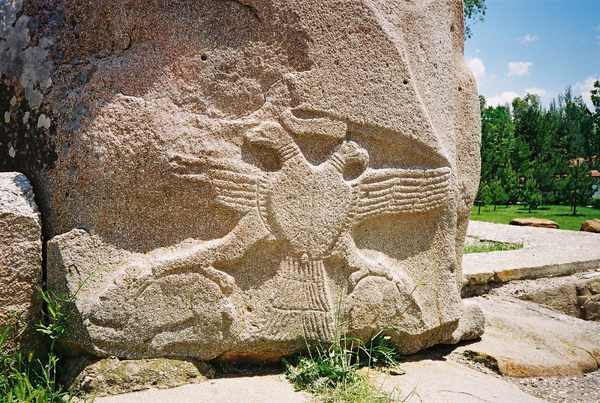
16).Lion and Double Headed Eagle

Hittites monuments have huge lions carved at the entrance of the Place gate. They depict double headed eagle. Both of them figure in Hindu scriptures. Please see my articles Double headed Eagle: India –Sumeria connection (posted on 18 December 2011) and Vedic Lion around the world (posted on 9 November 2014) . I have dealt with them in detail.

17)Rings with emblems and seals: Ramayana says Dasaratha sent the coronation invitations to all kings of the land with eagle emblem engraved on the invitation. Sanskrit dramas like Sakuntalam, Mudra Rakshasam are based on rings with emblems. We have such rings and seals in Hittite world. Hittite craftsmen fashioned elaborate seals for stamping official and commercial documents and correspondence.  The five sided stone seal depicted religious scenes. The seal was hanging around the neck of the king. Hieroglyphs on the gold signet ring identify it as that of the son of a king. In India all such ancient rings were melted and made into new ornaments.

18).A goddess with disc shaped headdress sits on a throne holding an infant on her lap. We have such goddess in Hindu pantheon. Her name is Hariti. Hariti ma is worshiped in Swayambunath temple in Nepal. Neplaese Newars worship her Ajima. She is praised as the protector of children. A Hindu deity later taken by Buddhists went up to Japan. Chinese worship her as Kishimojin and Japanese worship her as Kariteimo (=Hariti Ma). She was said to be a child devouring demon and later converted by Buddha. Since Buddhism had no duties and Buddha never spoke about deity worship, all these must have gone from Hinduism.

19)Scholars have found several similarities between Greek mythology and Hittite mythology. This brings them closer to the Hindus because Greek mythology is nothing but the corrupted form Hindu mythology according to Max Muller and Edward pocoke.

20)Hittites were often attacked by Kaska people from the North. During the reign of Muwatalli, in the late 14th century BCE, Kaska ttacked Hattusa and set it ablaze. Muwatalli fled, taking his court and the Hittite cult gods with him. His son Uri-Teshub, returned to Hattusa and restored the city as Imperial capital.

21)Huge storage jars were discovered in the Great Temple complex, probably stored oil or grains. One of them had the capacity to store 3000 litres!

yazilikaya

Yazilikaya sculptures on huge rocks

A.Kalyanaraman’s Research

22.A Kalyanaraman in his book Aryatarangini has done a very detailed research into West Asian Hindu Civilizations and found out all Sanskrit names behind the corrupted West Asian names. He was very reasonable in arriving at the names. I am very much convinced because even in London, Sri Lankan Tamils corrupt all Indian Sanskrit names. Kanaga Durga Temple is called Kanaka Turka and Ganesh is called Kanesh, Damayanti is called Tamayanti. We see such corruptions in Mauritius Hindu community because of French influence. In South East Asian countries all the Ramayana names are corrupted beyond recognition.Ravana became Rab and Dhanajaya became Tenemjya, Nara Uttama became Nordom Sihanuk. So Kalyana Raman is right in identifying the names with Sanskrit equivalents. Here is the list:

Hittite =Hatti= Kshatriya=Kheta (in Bible)

Hattusas =Sathwasa = My reading is Sathya vacha

(In Tamil we have Vay Mozi Kosar=Truthful Kosar and Athiyaman=Sathyavan=Sathyaputra in Asoka’s inscription)

Anittas = Anitha = son of Pitkhana

Hattusilis = Sathva sila = my reading is Sathyasila

Mursilis = murasila

Telepinus= Dilipa

Tudhaliya – Dugdalaya

Suppiluloma = he of the golden hair

Tusratha = Dasaratha

Aranawanda= Arna Bandha

double headed

Now that lot of Hittite tablets are translated and books published, we can compare these and find some supporting documents.

So far as Mitannis are concerned the Sanskrit names are crystal clear. So we have archaeological proof from 1400 BCE for kings with Sanskrit names and Sanskrit numbers in the Horse Training manual of Kikkuli in Turkey/Syria area.

Let us continue our research with Kassites in another article.

Pictures are used from Splendors of the Past, Published by National Geographic Society;thanks.

Dakshina Meru! 216 ft. Tall Brihadeeswarar Temple !!

Thanjavur_Big_Temple

Compiled by London swaminathan

Article No.1919; Dated 8 June 2015.

Uploaded at London time: 19-22

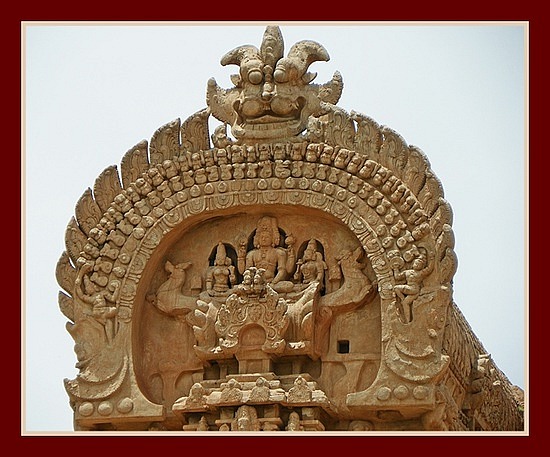
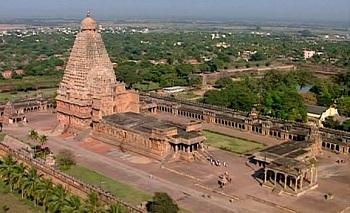
The Shiva temple in Thanjavur, Tamil Nadu (South India) is full of wonders. It was built 1000 years ago by Raja Raja (985-1014 CE), one of the great Choza kings.

The name of god in the temple is Brihadeeswarar meaning Great Lord or Lord of the World. Raja Raja rightly named it as Dakshina Meru—the Meru Mountain of the South. It is also known as Big Temple.

The Brihadeeswara temple represents the climax of south Indian temple architecture. The pyramidal tower that rises above have 13 storeys that steadily diminish in size. The temple is built entirely with granite blocks, laid one upon another without any mortar!  The temple stands in the middle of a vast rectangular walled courtyard lined by colonnades accommodating smaller shrines.

Rajaraja_mural-2

Painting of Raja Raja and his spiritual Guru Karuvur Thevar

There are five wonders in the temple:

a)The tall tower

b)The colossal Shiva Lingam which is 13 foot tall  (Lingam means formless shape)

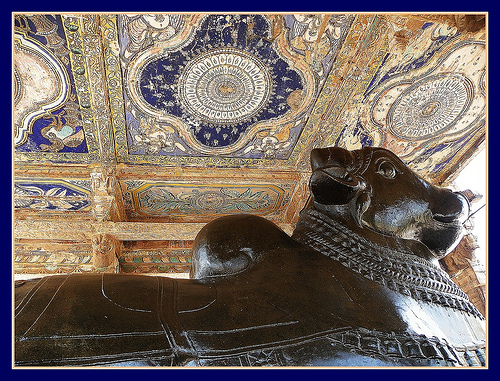
c)Colossal Bull (Nandi, Shiva’s Vehicle) 12 feet  tall

d)Top most stone weighing over 80 tonnes

e)Thousand year old paintings

Scholars have speculated about how the blocks were lifted to the upper storeys of the sanctuary tower. Some 9 miles North West of Thanjavur is a village called Sarapallam. Here they began a ramp supported on bamboo scaffolding that led to the summit of the sanctuary tower. Another theory postulates a spiral earthen ramp winding upwards around the tower, along which blocks were hauled.

The plaster work that ornaments the granite tower elements was added in 18th-19th centuries under the Maratha rule. Nayaks of the 17th century added the outer wall, Subrahmanya shrine, goddess shrine and some mandapas. But the greatest achievement rests with Raja Raja and his master architect.

lord-shiva-linga-

Colossal Shiva Linga

The sculptures of men guarding the door to the main sanctum – the Dwarapalakas  – demonstrate the Choza sculptor’s versatility in creating masterpieces regardless of size. To emphasize their scale, the sculptor has used an innovative imagery, a serpent swallowing an elephant. The serpent, which then must have been of monstrous proportions, is curled around the mace of the Dwarapalaka/gatekeeper, like a small worm. For all this incredible size, the guardian is holding his hand in Vismaya Mudra, which suggests that still he is not the tallest amongst all that is within the temple. The sculpture is 12 feet high, but he indicates that the taller being was the deity in the sanctum of the temple!

There are some beautiful paintings from the Choza period.

Names of some of the dancers, found in inscriptions, who lived around the temple 1000 years ago: Cheran Mangai, Chozakula Sundari, Thillai Azaki, Ravikula Manikkam, Thennan Mahadevi, Thilaka Chudar, Aaraa Amuthu, Kamakoti, Mazalai Silambu, Chithira Valli, Sundara Chozi, Uttama Sundari, Kunjara Malli

top

Top of the temple

Factfile

1)Height of the Tower – 216 feet tall

2)Unique feature – unlike other temples, tower is just over the sanctum sanctorum

3)Over 85 inscriptions starting from Raja Raja period are in the temple

4)Inscriptions give us the names of 600 staff with their salary details!

5)Four hundred of them are dancers! We have all the 400 names!

6)Over 50 singers were employed by the temple

7)Sanctuary tower 25 m sq. 60 m hig

nandi2

8)Hemispherical roof 7 m diameter, 7 m high

9)Walled courtyard 241X 121 m

10)Materials – dry stone masonry of granite blocks

11)Decoration – carved granite covered with polychrome plaster work

12)Plinth of the central shrine – 45-72 sq.mts

13)Shikara – the top most circular stone weighs 81-284 tonnes!

14)Shivalinga – 4 mtrs high and 4-5 mts diameter (13 feet tall)

15)The Nandi/Bull is 3-66 mts tall (12 feet high), weight 12 tonnes!

Big_Temple-Lingam_Painting

Big temple paintings

16)Total volume of masonry work – 49000 m3

17)No mortar was used in the construction!

18)Sculptors – Kunjaramallan and Raja Raja Perunthchan

19)Spiritual force behind the temple – A saint by name Karuvur Thevar

20)Family inspiration for the temple – Kundavai, Raja Raja’s sister

21)Military force behind the Temple – Chief Commander Krishnan Raman

22)Renovations – 17th and 19th centuries.

birdseye view

Source:

The Seventy Architectural Wonders of Our World

Thanjavur – A Cultural History by Pradeep Charavarthy with phtos by Vikram sathynathan

Thanjavur Inscriptions by Dr R Nagasamy

Tamil Nadu, Madura welcome

Hindu Vastu God in Rome and Greece!

vestatemple_nero

Research article by London swaminathan

Article No.1917; Dated 7 June 2015.

Uploaded at London time: 17-49

Vastu god was worshipped as Vesta in Rome and Hestia in Greece. Since they lost touch with India for thousands of years after they left the Indian landmass on their migratory routes they developed the stories in their own way. We see such trends in our Puranas and Sthala (local) Puranas of every town in Tamil Nadu. Same Siva or Vishnu will have a different story in each town with interesting turns and twists. This happened with the Vedic God Vaastospati who is invoked in one short hymn in the oldest religious book in the world, the Rig Veda (7-54-1/3). Vaastospati means Lord of the House. He is invoked to bless man and beast, to remove diseases, to make cattle and horses prosper, to afford protection and to grant a favourable entry.

He is elsewhere described as the destroyer of diseases, is identified with Soma, brought into close connection with Tvastr, an artificer, and he is likened to Indra in connection with Soma pressers.

Origin of Grhapravesa (Entering New House) Ceremony

In the Tenth book of Rig Veda (10-61-7) he appears as an observer of ordinances, who was fashioned by the gods. His character is made clearer by the fact that the Grhyasutras prescribed that offerings are to be made to him upon entering new house. In later literature (TS 3-4-10-3) Rudra bears the style in one passage. The god is clearly the god of the house, who when a new house is built, comes and abides in it. Later in the Sutras, we hear more generally of deities in the house.

vesta_coin4

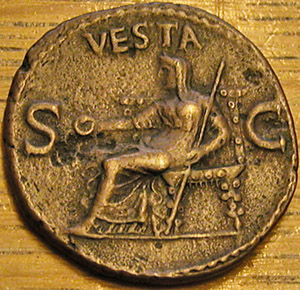
Goddess in Rome Vesta

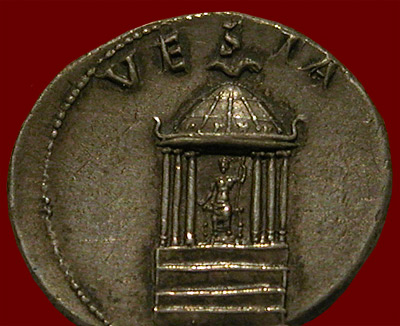
Vesta was the Goddess of Rome. Vesta sounds like Vastu. She was the goddess of the hearth/fireplace, regarded as the centre of the home, so that in effect she had an altar in every house besides the great sanctuary in the Forum attended by the Vestal Virgins. In contrast to other temples, it was circular in shape. It was served only by virgins who had been selected in their childhood from among the most perfect girls of the city. They were placed under the authority of the great pontiff and received many honours. If they failed to remain chaste, they were whipped or walled up alive at the Collins Gate in Rome.

vesta 3

Now here is the comparison with Vedic deities:

Vasstospati is a male deity but Vesa is a female deity. But the fire place is part of every Brahmin’s house in ancient India. Every Brahmin had three different fire places in his house and one of them is circular like Vesta’s. Another point is the girls were given to temples in India also who remained chaste till their death. But they were not punished for violating the rules of celibacy. Romans thought Vesta was the guardian of the city. In India every city has a guardian goddess like Vesta of Rome.

In Rome, the fire was kept lit all year long and its flame was solemnly stirred up during the festival in March – Vestalia. This flame had to be obtained solely by rubbing two pieces of wood together. This is also a Vedic custom. For all the Vedic fire ceremonies they produce fire by rubbing two woods and there is special mantras for it. Moreover from birth to death, the same fire in the Brahmin’s house is used. So it was never allowed to stop burning. In the temples the flame was kept alive in Nunda Vilakku (Eternal Flame), special type of lamps which will burn for years continuously. Only thing is oil has to be filled now and then in the pot like bottom of the lamp.

kalibanganfirealtars.

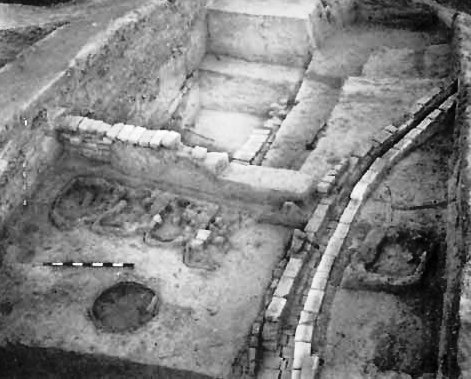
Vedic Fire Altars in Indus valley Site in Kalibangan

Her name derives – like the name of Hestia — from a Sanskrit root, vas, which expresses the idea of shining. The Romans made Vesta a goddess who personified earth and fire – the fire required for domestic use or in religious ceremonies. As goddess of fire she received both a private and public cult. Hindu’s Fire god is also treated the same way in the Vedas. Vesta received daily offerings from each family, at the hearth/fire place. In Brahmin families everyday offerings were given to fire god. It was called Aupasanam or Agni Hotram. On 9th of June every year was the Vestalia when barefoot Roman matrons offered food baked on their hearths. In Indian temples women give offerings on barefoot on certain days in a year.

As with the Balts and Slavs, a woman had to bring fire from her mother’s house when she married. The goddess of fire celestial and earthly naturally suggests Agni, the god of fire, lightning and the sun: all forms of fire. The rounded temple echoed the form of the sun: the hearth as the earthly counterpart of the heavenly fire.

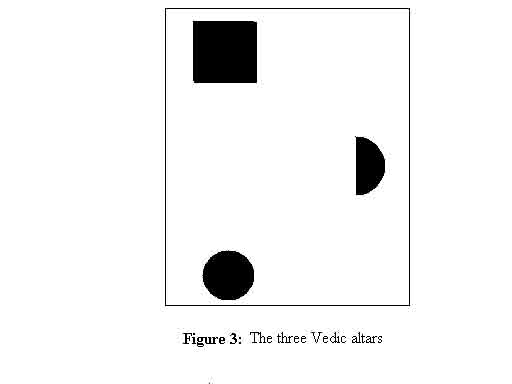
In the Rig Veda, every male head of a family was obliged to perform, every day, Purvas. For this purpose he had to set up in his house three kinds of fire, protecting his house and the fires by placing  altars of special design. The fires were known as Dakshinagniyam (Semi Circular altar), Garhapatyam (Circular altar) and Ahavaneeyam (Square altar). The altars, intended to shield the fires, had to be built to design plans which related them to each other in the shape and area. To calculate the correct dimensions, sound knowledge of geometry was required. This is quite a complex calculation, requiring an accurate value of pi and a knowledge of the formula for the areas of a circle and rectangle. In such ways as this, the religious concerns of Hindu heads of families had the effect of raising the arithmetical standards of everyone involved. Advanced Geometry originated in India during the Vedic period.

temple3

Source

The Sun Goddess, Myth, Legend and History by Sheena Mc Grath

New Larousse Encyclopaedia of Mythology

The Rig Veda, Translation by Griifith

Sanskrit and Tamil Words in Cambodian Language

RIMG2835

Compiled by London swaminathan

Article No.1906; Dated 2 June 2015.

Uploaded at London time: 20-39

(All photos are taken by Mr K Natarajan,Sydney,Australia. Thanks for allowing us to use the pictures).

I read two interesting books written by Judith M Jacob who worked Senior Lecturer in Cambodian at SOAS, University of London. The titles of the books are 1)The Traditional Literature of Cambodia and 2) Cambodian Linguistics, Literature and History. I a summarising only the interesting points.

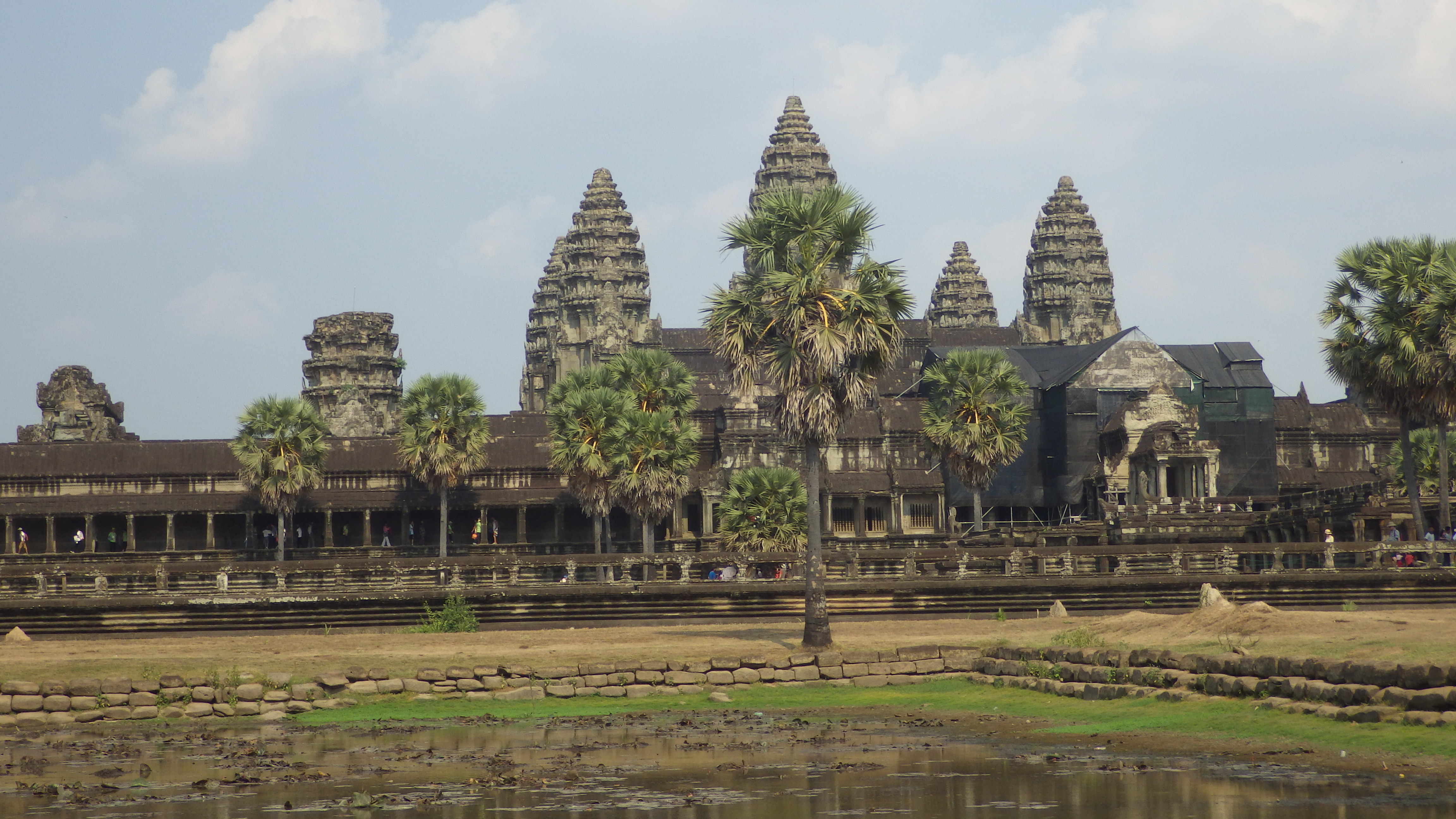
Cambodians or Khmers are a race of people occupying the Mekong (Ma Ganga) River basin what was known as Indo-China but now is South East Asia. The racial and linguistic family to which the Cambodians belong is known as the Mon-Khmer family. Indians came from the second century CE to trade and later to settle on the west coast of Indo China.

RIMG2480 - Copy

Funan= Panavan=Punal: Tamil Connection

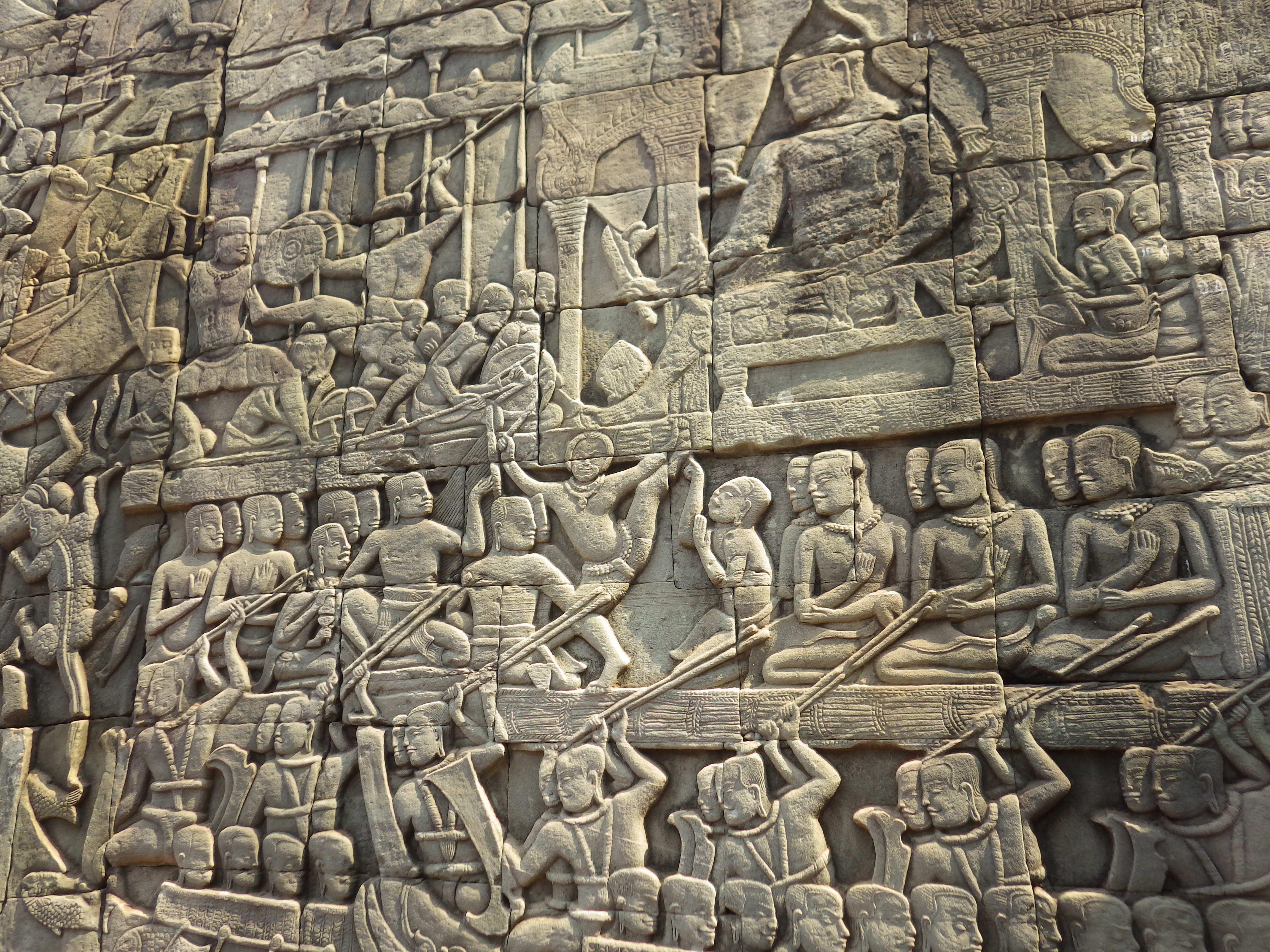
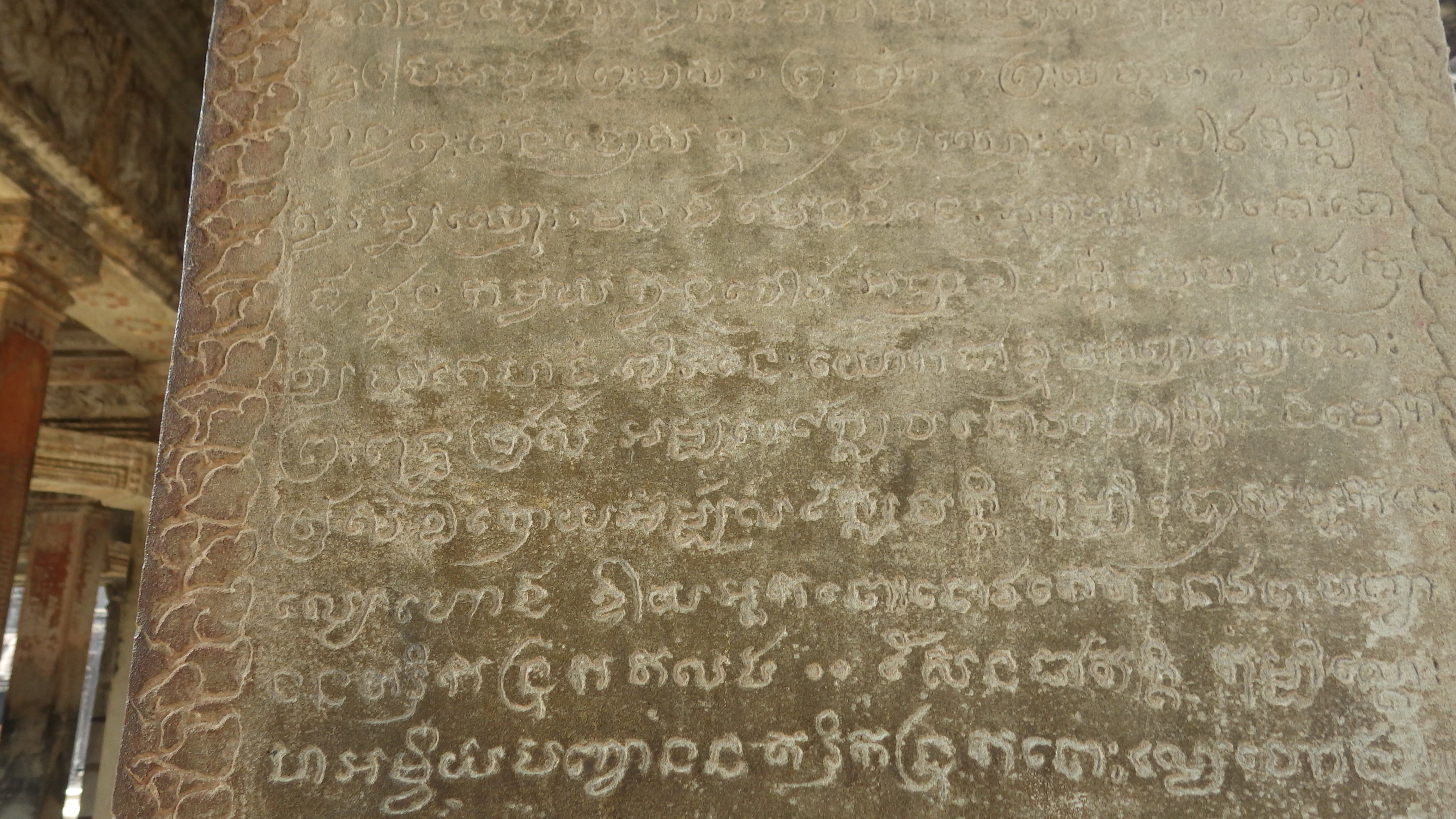
1)The first Khmer texts, inscriptions of the 7th and 8th centuries CE gave practical information about religious foundations while Sanskrit was used for composing the panegyrics of Gods and kings. Khmers regarded Sanskrit as the language of literature.

2)From the Chinese annals we learn that there was an indianized state called Funan in south of Cambodia.

(My comments: The word Funan may mean Panavan (Pandya title) or Punal Nadu (water country in Tamil). The reason for my conclusion is the first king of Vietnam (Champa) was Sri Maran, a Pandya king (Tiru maran in Sangam literature)

3)The Indian connection is reflected in the legend which tells how an Indian, the  Brahmin Kaundinya, came to Cambodia and married Soma, the daughter of the king of the Nagas.

(My comments: Tamil and Sanskrit literature describe all lands lying beyond east of India or South of India as Nagalokam. If it is further away from South East Asia they called those lands Patala Lokam (Under world).

RIMG2534 - Copy

Reason for the name Kamboja/Cambodia

4)Another legend relates that the hermit Kambu Swayambuva married the heavenly nymph Mera, a gift of the god Siva. This gave them the name Kambojas for the people.

5)Finally at the end of ninth century CE there was the beginning of the Angkor kingdom which built the world famous monuments including Angkorwat. The earliest dated inscriptions are 611 CE (Khmer) and 613 (Sanskrit) but there were earlier dated Sanskrit inscriptions in Champa/Vietnam

6)We know the names of six poets who wrote in Sanskrit during Angkor period. Indian epics were read even before this period.

RIMG2587

New Ramayana

7)The Ramakerti (16th century CE) presents Ram as the Buddha, but lot of Hindu gods are referred to. Like Indians, Cambodians also worshiped the spirits inhabiting the rocks and trees.

8)Apart from writing on stone, the Khmers wrote on palm leaf. The Latania palm leaves were first treated to make them supple. An iron stylus was used to engrave the writing. The oldest manuscripts were preserved at a monastery in Battambang.

9) The Khmers have lively interest in the use of words. They were praised fr their riddles.  The hero of the folk tales and riddles was Thmenh Chey (Sanskrit name Dhananjaya). He was like the great Tenali Rama, court jester of Vijayanagara emperor Krishna Deva raya. Dhanajaya saves Cambodia from the Chinese by answering all the three riddles sent by king of China. There are hundreds of stories about Dhanamjaya.

The names in Ramakerti are Rab for Ravana, Laks for Lakshmana, Hemavant for the Himalayas. The end of Ramayana is changed in this work. Ram asked Lakshmana to execute Sita in the forest. When Lava and kusa went to Rama’s court one was arrested and released later. Sita was asked to go to Ayodhya. She refused and went to the underworld when falsely told that Rama was dead!!!)

RIMG2822

Khmer Dictionary

10)The Khmer lexicon includes a large body of fully integrated loan words, principally from Sanskrit and Pali languages of India.

First period covers Pre Angkor and Angkor periods (7th to 14th centuries CE): we find inscriptions on stone in Sanskrit and Pali.

Second period covers the Middle period (16th to 19th centuries CE): Inscriptions on stone are in Pali. Verse novels are in Sanskrit and Pali.

Early modern period covers 19th and early 20th century: Prose and poetry are in Sanskrit, Palai, French , Thai and English.

11.In the inscriptions the first part and the last parts are in Sanskrit. First par contains prayer to Hindu gods. Last part contains warnings of punishment to marauders. All types of hells are mentioned for those who destry the inscriptions or the properties.

RIMG2853

Sanskrit Names

12.The educated elite of Cambodia read and wrote Sanskrit. It became the practice of to use Sanskrit for all elevated linguistic activities. Names of dancers, singers, musicians and officials were in Sanskrit. Few examples: Vasantamallika/Spring jasmine, Tanvangi/Slender limbed,Sakhipriya/Beloved lady friend , officer Dharmaraksa/Protector of the Law.

  1. Like Dhananjaya, Vikram and Vetal type stories are also prevalent. Satra kin Kantrai is a collection of legal tales known also in Laos, Thailand and Burma. In each case the dispute cannot be solved by a mere judge and has to be referred to the king. His judgements are wise and fair. When two women claim to be the mother of a child, he settles the case very much as Solomon the wise did.

(My comments: These stories show that even the stories were borrowed from India and improved later. If we compare all the folk tales of Cambodia, it will be a very interesting comparative study.)

14.Indra figures as the helping god in many stories. This shows that the cultural contacts began at a very early date than the inscriptions show.

RIMG2493 - Copy

Tamil Names

15.Dhananjaya goes to China and he dupes even the emperor of China like Tenali Rama duped the Emperor of Vijayanagara. He says to the king that he has an Indri bird (Which is really a toy kite). The emperor heaps handsome presents upon him.  References to Thais and Vietnamese are noticeably lacking in the folk tales. But a proverb explains this

The monkey is constantly occupied with chewing

The Thais with their text books

The Vietnamese with their pretences

The pure Khmers with the truth.

  1. My comments: We already know that the script used in all the South East Asian countries went from South India. All the scripts are based on Pallava Grantha. Even the early architecture looked like Pallava cave temple where from it went to South America. Brahmin Kaundinya must have gone from Tamil Nadu. The famous Tamil Saint Tirunjana Sambandha also belonged to Kaundinya Gotra and we have a few Kaundinya Brahmins in the list of Tamil Sangam poets. In the folk tales we have typical Tamil name Kandhan as the captain of King Brahmadutt. Other names of interest in the stories are Kamaraj, Aruna Raj, Krishnakumar etc. Feminine Saskrit names like Chandra, Chitra, Padma etc are common to both parts of India.

17.The Pre Khmer inscriptions looked exactly similar to South Indian inscriptions; the order of the matter was

  1. a) The date or name of the reigning king
  2. b) The title and name of donors
  3. c) The name of the God

d)Names of the people from whom the donor obtained the land to offer to the religious foundation

e)Details of the price paid to those who relinquished the land

f)The extent, location and the capacity of the donated rice fields

g)The names of the slaves/workers donated with an indication of their duties

h)details of the subsistence to be given to the religious personnel

i)details of other lands given to the religious institution: orchards, gardens etc.

j)The list of the precious objects given to the foundation

k)the statement that the revenues are to be combined with those of another foundation

l)Warning of punishment for anyone using or abusing the belongings of the religious foundation.

RIMG2571 - Copy

More research will bring out more interesting connections.

Battle of Ten Kings in Vedic Times

Compiled by London swaminathan

Article No.1903; Dated 1 June 2015.

Uploaded at London time: 22-13

The first great war in Indian History is not the Mahabharata war. Nowhere in the ancient history we have wars where many kingdoms participated. As we know from Vyasa’s Mahabharata, over 29 kingdoms are named in the Mahabharata. They took part in the war directly or indirectly. This is unique in the world history. Whether we believe the traditional date, just before Kaliyuga, i.e. 3102 BCE, or the majority of the scholar’s date 1500 BCE, we have no parallel in the world history. But before the Mahabharata war, there was another great war where ten kingdoms participated. It is mentioned in the Vedas several times.

But the foreign translators couldn’t believe that Hindus had ten kingdoms during Vedic times and so they dubbed them as tribal chiefs!!! But immediately after the Vedic Samhitas we read about Asvamedha Yajnas conducted by emperors to win the neighbouring countires/kingdoms. The change couldn’t have happened overnight. So the fact of the matter is Dasa Rajna Yuddha (Ten Kings War) is really a war between ten kingdoms. The reason for this is that the 20 plus foreigners who translated the Vedas into European languages strongly believed that the world was created at 9 am on 23rd October 4004 BCE. All the foreigners who scrutinised the Rig Veda never said a single world about Semetic (Abrahamic ) religions.

All through their translations they translated the Rajna as tribal chief. But till this day the Raja is used only for kings from the Himalayas to the southernmost point of Sri Lanka. Foreigners believed that Egyptians can have kings and big kingdoms from 3100 BCE, Sumerians can have several kingdoms in the Midlle East from 3100 BCE, Chinese can have kingdoms from 3000 BCE but stupid slaves, Hindus, couldn’t have kings until Buddha’s time, sixth century BCE!!!!!. According to them there was no king in India until Buddha’s time, not even in Indus Valley. Even Mayans can have kings in South America. But Indians couldn’t have kings! They have a reason to believe so because a person who was considered a scoundrel in England, Robert Clive, came with a handful of people and established an empire in India. If Indians were that stupid then there couldn’t be any king in ancient times! They believed Greece and Greek literature because they were not able to rule them. And so they commanded respect.

Had they been petty tribal chiefs the story would not have survived for this long period.

Now let us look at the details of the Ten Kings War.

The Dasarajna or the Battle of the Ten Kings, is an important historical event alluded to in various hymns of the Rig Veda.

Sudas was the king of Bharata Kingdom. He belonged to Trstu family. At first Visvamitra was their priest. He led him to victorious campaigns on the banks of Vipas and Sutudri. Later there was some misunderstanding and Vasistha was appointed as the priest and Visvamitra was sacked. Thereupon a long and bitter rivalry ensued between the two priests and, in revenge, Visvamitra led ten kings against the Bharata kingdom.

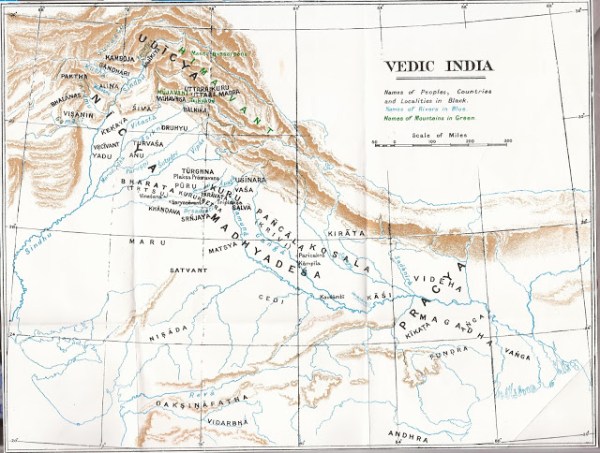
The ten kings were from the kingdoms of Puru, Yadu, Turvasa, Anu and Drhyu, Alina, Paktha, Bhalanas, Siva and Visvanin. In the bloody and decisive battle on the banks of River Parusni, the Bharats emerged victorious, utterly routing the ten kings. The kings of Anu and Druhyu kingdoms were drowned, while Purukutsa, King of the Puru Kingdom met his death.

There was another battle in which Sudas fought with Ajas, Sigrus and Yaksus who had united under King Bheda; but these new assailants also met the same fate and were defeated, being slaughtered on the River Jamuna.

By the time of this war, the Vedic Hindus covered a vast territory, from the banks of Jamuna to Iran in in the west. In modern terms it covers the North India ,Pakistan ,Afghanistan and Iran! The earliest part of the Rig Veda sings about Ganges. So the ten people can’t be tribal chiefs. When it comes to Chera, Choza and Pandyas of Tamil kingdoms we don’t dub them as tribal chiefs. There were umpteen tribals and chieftains, but yet these three were called kingdoms. In the same way all the ten names gave big dynasties in India. Even Morton Smith’ conservative estimate gives a long list of Yadava (Yadu) kings from 1800 BCE and Puru Kings from 1800 BCE. Even when he placed Krishna around 1000 BCE and Rama around 1060 BCE, other dates are pushed back; the earlier kings from 1800 BCE. If we believe in the traditional dates the Vedic kings must have ruled several thousand years before our time.

All the foreign authors wrote only piece meal histories. If we put all the twenty plus foreigners’ statements together we would know that they were just bluffing. No two clocks agree; no two foreigners agreed! They believed in only one thing, that all of us came from outside, that there was no king in India from Indus valley time! Even at the rate of five kings per century Indus valley alone should have at least 100 kings for 2000 years! As we know the world history now, each “territory” had one king. In the Middle East six or seven kings were ruling different territories at the same time. Indian tradition says there were 56 kingdoms. By the time Buddha 16 emperors were in India. They could not have jumped from heaven. There is a long tradition of kingship which is confirmed by the Sabhas and Samitees in the Rig Veda (corrupted as committee in English). In my earlier article on Sabhas and samitees I have explained they helped the kings to run the administration efficiently.

Migration from India after the Ten Kings War

All the names of these people were found in Iran, Afghanistan, Turkey, Albania, Greece and many more countries. They all migrated after the defeat at hands of Sudas. Shrikant talgeri gives the following list in his book  The Rig Veda- A Historical Analysis:–

Iranian:

Prthus or Parthavas (RV 7-83-1) Parthians

Parsus or Parsvas (7-83-1) Persians

Pakthas (7-18-7) Paktoons

Bhalanas (7-18-7) Baluchis

Sivas (7-18-7) Kivas

Visanins  (7-18-7) Pisachas/Dards

Simyus (718-5) Sarmatians(ancient Albanians)

Alinas (7-18-7) Alans /Hellennes/ Ancient Greeks

Bhrgus (7-18-6) Phyrgians

In Tamil, the people of Pandya country are called Pandyas and Choza country as Chozas. In the same way these people were called after the country of their origin. For instance Brahmins who migrated from Saraswati River are called Sarasvats even today. Brahmins from Telugu Desa are called Dhillons, Dravida desas are called Dravids, Brahmins from Pandya desa are called Pandyas (in Gujarat), Choza Desa are called Chozias. These are few examples to show that they are the names of territories but not tribal names.

இந்தப் பூவுலகில் யாராலும் வேதங்களின் காலத்தை சொல்லமுடியாது: மாக்ஸ்முல்லர்

சிந்துவெளி ஆண் மிருகங்கள்

சிந்து வெளி முத்திரைகளில்,  ஆண் மிருகங்களின்  ஆதிக்கம்

Compiled by London swaminathan

Article No.1902; Dated 1 June 2015.

Uploaded at London time: 9-23 am

தொன்று நிகழ்ந்தது அனைத்தும் உணர்ந்திடும்

சூழ்கலை வாணர்களும் — இவள்

என்று பிறந்தவள் என்றுணராத

இயல்பினளாம் எங்கள் தாய்.


நாவினில் வேதம் உடையவள் கையில்

நலந்திகழ் வாளுடையாள் – தனை

மேவினர்க்கு இன்னருள் செய்பவள் தீயரை

வீழ்த்திடும் தோளுடையாள். –பாரதியார்


பாரத அன்னையைப் புகழ்ந்த பாரதியார், உடனே அவள் நாவினில் வேதம் உடையவள் என்று சொல்லி, பாரதம் எவ்வளவு பழமையானதோ, அவ்வளவு பழமையானது வேதமும் என்பதை உறுதிபடக் கூறுகிறார்.

எக்காலத்தும் இந்தியாவுக்கே வராமல், இங்கிலாந்தில் இருந்துகொண்டே வேதத்தை மொழிபெயர்த்த ஜெர்மானியர் மாக்ஸ் முல்லர், வேதங்களின் காலம் கி.மு.1200–க்கு முன்னதாக இருக்கலாம் என்று சொன்னார். உடனே அதை எதிர்த்து அறிஞர் உலகம் போர்க்கொடி உயர்த்தியது. இப்படி போர்க்கொடி உயர்த்தியவர்களும் மேலை நாட்டவரே! வில்சன், பார்த்தலேமி, செயின்ட் ஹில்லேர், விட்னி, கோல்ட்ஸ்டக்கர் (Wilson, Barthelemy, St.Hillaire, Whitney, Goldstucker)

போன்றோர் மாக்ஸ் முல்லர் கருத்தை ஏற்கவில்லை. உடனே மாக்ஸ்முல்லர் ஜகா வாங்கினார். அறிஞர்கள் அனைவர் சொல்லுவதையும் நான் அப்படியே ஏற்கிறேன். நான் கி.மு.1200–க்கும் கீழாக யாரும் வேதத்தைக் கொண்டுவரக்கூடாது என்று சொன்னேனே தவிர, அதுதான் வேதத்தின் காலம் என்று சொல்லவில்லை என்றார்.

ரிக் வேதத்தில் இருக்கும்  வான சாத்திரக் குறிப்புகளைக் கொண்டு, மாக்ஸ் முல்லருக்கு நீண்ட நெடுங்காலம் முன்னரே ஆராய்ச்சி மேற்கொண்ட, இந்திய சுதந்திரப் போராட்ட வீரர் திலகரும், ஜெர்மன் அறிஞர் ஜாகோபியும் (Tilak 1904, Jacobi 1894) வேத காலத்தை கி. மு 4000 என்று காட்டினர்.

17ef9-vedapatam

Max Muller:–

I need hardly say that I agree with every word of my critics. I have repeatedly dwelt on the hypothetical character of the dates., which I ventured to assign to the first periods of Vedic literature; all I have claimed for them has been that they are the minimum dates………………

If now we ask how we can fix the dates of these three periods, it is quite clear that we cannot hope to fix a terminum a qua. Whether the Vedic hymns were composed 1000 or  1500 or  2000 or 3000 years BC, NO POWER ON EARTH WILL EVER DETERMINE” (Max Muller 1890)

ஆனால் ஆரிய-திராவிட இனவெறிக் கொள்கையைப் பின்பற்றுவோர், ஆரியர்கள் வந்து, கறுப்புத் தோலுடைய பூர்வ குடிமக்களை விரட்டி விட்டதாக நீண்ட நெடுங்காலமாகப் பிரசாரம் செய்துவந்தனர். இந்தப் பிரசாரம் 200 வருடங்கள் நடந்தபின்னர் 1920 ஆம் ஆண்டுக்குப் பின், சிந்து வெளியில் இரண்டு நகரங்கள் கண்டுபிடிக்கப்பட்டன. “வேதாளம் மீண்டும் முருங்கை மரத்தில் ஏறியது”. பார்த்தீர்களா, நாங்கள் அன்றே சொன்னோம். ஆரியர்கள் வந்து இந்த மக்களை விரட்டினார்கள் என்று. இது உண்மையானது என்பதற்கு சான்று கிடைத்துவிட்டது என்றனர். ஆக மீண்டும் எல்லோரும் வேதத்தின் காலம் கி.மு. 1200 என்று எழுதத் துவங்கினர். இப்பொழுது இது எல்லாம் பொய்யாய் பழங்கதையாய்ப் போய்விட்டது.

காரணம்?

சிந்து சமவெளியில் ஒரு திராவிடர் எலும்புக்கூடு கூட கிடைக்கவில்லை! கிடைத்தது எல்லாம் ஆரிய எலும்புக்கூடுகளே. அதுவரை ஆகாசத்துக்கும் பூமிக்கும் குதித்தவர்கள் எலும்புக்கூடு விஷயத்தில் கப்புச்சிப்பு என்று வாய் மூடி மௌனம் ஆகிவிட்டனர். கிடைத்த எலும்புக்கூடுகள் எல்லாம் பஞ்சாபியரை போல அந்த இடத்து மக்களின் உடல் ஆகிருதி உடையவர்கள். வேறு சிலவும் உண்டு. ஆனால் திராவிடம் இல்லை. கிடைத்த எலும்புக்கூடுகளும் மிகச் சில. ஆரியர்கள் படுகொலை நடத்தியிருந்தால். பல்லாயிரம் திராவிட எலும்புக்கூடுகள் இருக்க வேண்டுமே என்று யாரவது ஒரு சிலர் கேட்டு விடப் போகிறார்களே என்று எண்ணி, திராவிடர்கள், பயந்துகொண்டு 3000 மைல்களுக்கு ஓடிப் போய் தமிழ் நாட்டில் உகார்ந்து கொண்டனர் என்று சொல்லி திராவிடர்களுக்கு அதி பயங்கரக் கோழை என்று பட்டமும் சூட்டினர்.

சிந்து சமவெளிப் பகுதியில் ஆராய்சி நடத்திய ஜான் மார்ஷல் போன்றவர்களை ஆராய்ச்சியாளர்கள் என்று சொல்லுவதா, மதப் பிரசாரகர்கள் என்று சொல்லுவதா என்று கூட எண்ணத் தோன்றுகிறது ஆராய்ச்சியாளர்கள் யாரும் 30 எலும்புக்கூடுகளைப் பார்த்துவிட்டு இந்திரன் குற்றவாளி என்று சொல்லமாட்டார்கள். ஒரு ஆரய்ச்சியளனுக்குள்ள மனப் பக்குவம் இல்லாத இனவெறியன் என்பது இதன் மூலம் சொல்லாமலே விளங்கும்!

vedic fire altar.chattisgarh

வேத யாக குண்டம், சட்டிஷ்கர்

மேலும் இப்பொழுது சிந்துவெளி முத்திரைகளில் காணப்படும் மர்மச் சின்னம் சோம ரசம் வடிகட்டும் பாத்திரம் என்றும் ஆராய்ச்சியாளர்கள் ஒப்புக் கொள்கின்றனர். இதுவரை சிறிதும் பெரிதுமாக 2000 சிந்து வெளி நகர, கிராமங்கள் கண்டுபிடிக்கப்பட்டு விட்டன. மேலும் சரஸ்வதி நதியின் காலமும் அது மறைந்த காலமும் தெரிந்துவிட்டதால், வேதங்களின் பழமையும் குறைந்தது கி.மு 1700 என்று இந்துமத எதிரிகளும் ஒப்புக்கொள்ளத் துவங்கி விட்டனர்.

மொஹஞ்சதாரோ ஹரப்பாவில் பெரிய அகலமான மதில் சுவர்கள் கி.மு 2000 வாக்கிலேயே உள்ளன. இவர்கள் யாரைக் கண்டு பயந்து கி.மு 2000 வாக்கில் அவ்வளவு பெரிய மதில் சுவர்களை எழுப்பினர்? ஒரு வேளை சேர, சோழ, பாண்டியர்கள் 1800 ஆண்டுகளுக்குத் தொடர்ந்து மோதிக் கொண்டது போல ஹரப்பாவும், மொஹஞ்சதாரோவும் சண்டை போட்டார்களா?

மேலும் காலிபங்கன், லோதல், டோலவீரா முதலிய பல இடங்களில் யாக குண்டங்கள், கருகிய ஹோம சாம்பல் ஆகியனவும் கிடைத்திருக்கின்றன.

எல்லா இடங்களிலும் ஏன் முத்திரைகள் கிடைக்கவில்லை? கிடைத்த எல்லா முத்திரைகளிலும் மிருகங்களின் ஆண் வகை மட்டும் காணப்படுகிறதே? இவர்கள் பெண்களை எதிர்க்கும் அல்லது மட்டம் தட்டும் கும்பலா? ஆயிரத்துக்கும் அதிகமான சின்னங்களில் காளைச் சின்னத்தைப் பொறித்த மக்கள் ஏன் பசுமாட்டைப் பொறிக்கவில்லை? ஒருவேளை புனிதச் சின்னம் என்பதால் பசுவை விட்டு விட்டனரா? குதிரை எலும்புகள் கிடைத்தபோது மட்டும் அது மேல் மட்டத்தில் கிடைத்தது என்று சொல்லிவிட்டு, முழு ஒட்டக எலும்புக்கூடு கிடைதது பற்றி மௌனம் சாதிப்பது ஏன்? இப்படிப் பல கேள்விகள் எழுந்து கொண்டே இருக்கின்றன.

ஒட்டுமொத்த முடிவுரை:

1அங்கு வாழ்ந்தவர்கள் ஆரியர்களும் இல்லை, திராவிடர்களும் இல்லை. வேதகால இந்துக்கள்.

2.அவர்களில் இப்பொழுது இந்து மதத்தில் இருப்பது போலவே பலதரப்பட்ட மக்கள் இருந்தனர். சிலர் கிராமதேவதைகளை வழிபடுவது போல பெண் தெய்வங்களையும் மற்றும் பலர் ஆண் தெய்வங்களையும் வணங்கினர்.

3.ஒர்புறம் கந்தர்வர்கள் ஆதிக்கம் இருந்ததால் இசை, நடனம் ஆகியன வளர்ந்தன.

4.உலகிலுள்ள எல்லா பழைய நாகரீகங்களிலும் பெரிய கோவில்கள்/ வழிபாட்டு இடங்கள் இருக்கின்றன. ஆனால் சிந்து வெளியில் அப்படி இல்லை. ஆகவே அது வேத காலத்தை ஒட்டிய– பெரிய கோவில்கள் இல்லாத நாகரீகமே

5.ஹரப்பா நகரத்தில் பல இன மக்கள் வசித்தது குறித்து 2013-ல் நேஷனல் ஜியாக்ரபிக் மேகஸின் ஒரு ஆரய்ச்சிக் கட்டுரையையும் வெளியிட்டு இருக்கிறது.

Views of Indian Scholars on Translations of the Vedas

vedavyasa2

Compiled by London swaminathan

Article No.1901; Dated 31 May 2015.

Uploaded at London time: 18-18

“The Rigveda is not only the oldest and hoariest religious text of the oldest living religion in the world today- Hinduism, but also the most authentic record of the Vedic Hindus.

The entire text was kept alive over a long period, almost without change of a tone or a syllable, in oral form recited and memorised from generation to generation. A text which is alive in this manner, as part of a living tradition, cannot be analysed without reference to what that tradition has to say about it”.

About twenty foreign scholars tried their hands on translating the Vedas into European languages from Sanskrit. All of them failed miserably. Indian scholars are able to identify the blunders in foreign translations. Since the foreign “scholars” were not sons of the soil, they could not understand the culture. They came with a motive to undermine the country and Hindu religion. And they believed that the world was created at 9 am on 23rd October 4004 BCE!!!

To understand the foreign psyche, one must read the estimate of Indian scholars:

P Subrahmanya Aiyer, Sanskrit Curator, King’s Library, Bangkok, Siam (Thailand)

Today when the Vedic literature, though venerable as ever, has ceased to offer solace and inspiration to suffering millions, ignorant as they are of its language; when the western scholarship alone – all honour be to them – have taken the trouble of explaining our religious scriptures , imperfectly of course owing to their lack of faith in it , and still more because of their defiance for such accredited scholars as the great Sayana and others; when the weight of controversial religious literature and meaningless babbling for reforms embarrass every sensible man , your translations of a  religious literature which needs no expatiation upon it, marks, I swear with truth, a red letter day in our national history.

(Sent on the occasion of publication Vidhyanandatirtha Maharishi’s Translation of Rig Veda into Tamil, Year 1937).

Following extract is taken from The Rigveda- A Historical Analysis by Shrikant G.Talageri :–

About B K Gosh: The first Mandala falls naturally into two parts: the first fifty hymns have the Kanvas as authors like the eighth Mandala……

Actual fact: 1-1-12, 24-30 (nineteen hymns) are by Viswamitras

1-31-35 (five hymns) are by Angirases

1-12-23, 36-50 (26 hymns ) are by Kanvas

About D D Kosambi: The principal Vedic God is Agni, the god of fire; more hymns are dedicated to him than to any other. Next in importance comes Indra”

Actual fact: The ratio between number of hymns and verses to the two gods, by any count is Indra: Agni=3:2

About Maurice Bloomfield: Under the title “Untrustworthiness of Anukramani statements shown by the repetitions”, Bloomsfield remarks that the statements of sarvanukramani….. betray the dubiousness of their authority in no particular more than in relation to the repetitions………………….

However, the repetitions do not disprove the authenticity of the Anukramanis. The repetitions in the Rigveda are representative of a regular phenomenon in classical and liturgical literature throughout the world.

About Rajesh Kochar: There is even an extreme lunatic fringe which would like to suggest that the Ganga and Yamuna of the Rig Veda are rivers in Afghanistan. A political ‘scholar’, Rajesh Kochar, as part of a concerted campaign to show that the events in the Ramayana took place in Afghanistan, transfers the entire locale of the epic to Afghanistan: Ravana’s Lanka can be a small island in the midst of River Indus…by Vindhyas is meant Baluch Hills, and by sea the Lower Indus. He does this under the cover of examining the geography of the Rig Veda.

mahati vedapatasala

About Griffith’s blunders

Jahnavi is another name of River Ganges. Griffith translates it as as Jahnu’s children (1-116-19) and the house of Jahnu (3-58-6)

The evidence, however, admits only one interpretation. It is River Ganga.

In RV 7-5-3, Griffith mistranslates the name of the River Asikni as dark hued people, thereby killing two birds with one stone: the people of Askini become the dark hued races, thereby wiping out the sense of direction inherent in the reference, while at the same time introducing the racial motif.

Griffith again mistranslates names of the tribes as “armed with broad axes” and the word “praca” as “forward”

(In my post “Conspiracy of Foreign Scholars”, posted on 18th April, 2015, I have given more details of T H Griffith’s mistranslation of the word Arya in Valmiki Ramayana)

Griffith in his foot note to RV 6-61-2, suggests that perhaps Sarasvati is also another name of Sindhu or the Indus.

Griffith, in his footnote to 10-75-5, takes pains to suggest that the poet addresses first, the most distant rivers.  Actual fact is the Eastern most river (Ganga) is the first river.

Bhagwan Sing in his book “ Vedic Harappans”

“No commentator or translator of the Rigveda can be relied upon blindfold; this is more so because both traditional and modern scholars have committed serious blunders in determining the socio- cultural milieu of the Rigveda which had a great bearing on the correct interpretation of a passage. Traditional commentators, working in an age when the social position of merchants had played a hegemonistic role. Western translators could not get reconciled to the fact that a civilization we meet in the disruptions of the Rigveda could have prospered at such an early period. They therefore started with  reductive interpretations—a mistake which was not rectified even after the discovery of Harappan civilization.

VEDAPARAYAN

Marxist View of Indian History

The trouble with some of the Marxist scholars was that they lifted abstract and absolutist theories from Marxist text books and thrust them on the Vedic society without attaching any importance to the specific character and exclusive features of that society. Before lifting extracts from Morgan and others it should have been seen how many tribal societies governed by chiefdoms had created and cared to preserve in bulk a literature approximating the level of the Rigveda or how many of them had cared to remember the poets of each of the compositions popular in their society, or how many of them living on predatory enterprise had evolved a moral code in which a theft, violence, aggressiveness, arrogance, dependence on unearned income, lying, immodesty in speech and behaviour including even the sins contemplated but not committed, are condemned in the most disparaging terms and propitiated by conscientious persons.

No doubt the Vedic language is terse and almost fossilised. But its terseness is more due to misconceived notions in regard to the cultural level of its authors. If Max Muller wanted to read “the first beginnings of our society” and “the earliest deposit of the Aryan speech” in it, he had on the one hand to treat it as a product of early childhood of our society which it is not, and on the other to eulogize it –“few understand children and still fewer understand antiquity” – and finally to hold that “large number of the Vedic hymns are childish in the extreme; tedious, low, commonplace” as well as “ dead letter to us”.

An overdose of poetry in history can ruin the charm of both. But we do agree with Max Muller when he says that, “No translation in any modern language can do them justice”, and adds that translation in a foreign tongue, and more so in metrical limitations, can compound the plight by new dimensions to inaccuracy.

But the Rigveda is neither a dead letter nor a living word one has to grapple with the text with the help of Sayana and modern translators, though both of them fall short of  our requirement as we have stated at the outset. We find even key words like Devata and Rsi to have been misinterpreted by scholars like Macdonell who had also translated the Brhatdevata in which the terms have been defined.

yajur veda

According to Saunaka, he who speaks in a dialogue is rsi of that verse. In other words Rsi is not necessarily the poet but the character, whether human or sub human or superhuman who is made to utter the dialogue.

Likewise Devata is not a divinity but the subject of the verse, and so it could be a deity, or an action, or an object, or even a vice. That is why we have such entities in the list of rsi names as Indra, Garuda, Vaisvanara, Sarama the dog, Vrsakapi, Indrani, Masa, marbles for gambling, Panis, Atma or soul, Jara or paramour, rivers, fish, Yama, Yami Saptarsi, Snake/sarpa, Sarparajni/chief  female snake, Soma etc. likewise we find in the list of Devatas such objects as Isu/arrow, Jya/bow string, Varma/armour, Grava/pressing stone, Ulukhala/mortar, Musala/pestle, Krsi/agriculture, Dhanu/bow, Asva/horse etc.

If Macdonell mistook them for divinities or gods, we can well understand the state of Vedic studies and the limitations of modern scholars. Likewise, we find in Griffith translating Samudra as ‘flood’ even in contexts where it clearly means ocean, ‘sena’ as host and bhisag as leech. We can imagine how misleading the translations may be, if we do not our selves read the original carefully.

In most of the studies, scholars ignore information which is inconvenient to them lest their thesis gets demolished. Sometimes they dismiss an entire development in one sentence without going into its merits.

So reconciliation of all the crucial points is the real challenge and there lies the key to correct conclusions.

–SUBAM—

Dictionary of 10,000 Indian Kings – Part 20

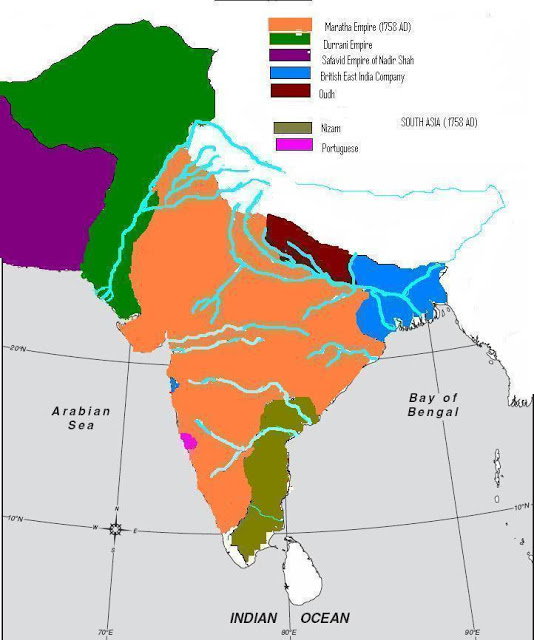
Map of Shivaji’s Maratha Empire

Compiled by London swaminathan

Article No.1899; Dated 30 May 2015.

Uploaded at London time: 17-35

Summary of Previous 19 Parts:–

160 Kings in Rig Veda published here on 23rd November 2014.

First part of the article –146 kings beginning with letter ‘A’.

Second part– 65 Pandya Kings of Madurai+ Puranic Kings

Third part — 122 kings beginning with letter ‘B’

Fourth Part- 43 Kings of Vijayanagara Empire + 34 Kings under letter C.

Fifth Part – 106 Kashmiri Hindu Kings

Sixth Part – 30 Satavahana  Kings  + 136 Kings under letter D.

Seventh Part –  35 Tamil Pandya Kings of Sangam Age.

Eighth Part – List of Chera (Kerala) 22 kings of Sangam Age+ Kings listed under E (3),G(37) & H(28)=68kings

Ninth Part- 39 Choza Kings of Tamil Nadu

Tenth Part- 104 kings from Cambodia, Champa, Sri Vjaya Kingdom of Indonesia and Pallava

11th part:Under ‘I’  13 kings+ Under ‘J’ 40 kings+ Under ‘K” 147 kings are listed.

12th Part:– 113 kings of various Indonesian kingdoms are listed.

13th Part –UNDER ‘L’ 14 + UNDER ‘M’ 72 + PANDYA II LIST 36=122 KINGS

14TH PART:Dynasties of Vishnukundina (10), Vakataka (16),Salankayana (4),Andra Ikshvaku (4) and Names under “N”(60)=94 kings.

15th Part:—-Kadamba dynasty – 14 kings, Badami Chalukya -10 kings, Rashtrakuta dynasty kings- 16

Western Chalukya kings – 14, Kakatiya dynasty – 16, Eastern Chalukya kings – 33, Ganga vamsa – 16, Kalachuri dynasty- 14,Pala vamsa -21, Chandela dynasty 34, Gurjara Pratihara -17

Hoysala-13, Alupa – 32 kings are listed = Total 226 kings

16th part – Under R—121 kings and 152 Kings of Nepal = 273 kings

In this 17th part, I have listed Kings under ‘S’

18th part I list the kings of Kushan (18), Gupta Dynasties(26) and Kings under the letter ‘T’ (38 kings).

19th Part- kings under ‘U’—39, under ‘V’—131 and Sri Lankan Kings 202= Total 2937

Today I list the kings under letters  ‘y’ from Dates and Dynasties in Earliest India by R.Morton Smith; all dates are BCE unless stated otherwise.

Y- 20 Kings+ Nanda- 9 kings+ Maurya- 9+Sunga—10+Saka—70 kings+Thanjavur Marathas -9 kings+ Jath/Deshmuk Rulers -12+Gaekward Rulers – 20=159 kings in Part 19.

TOTAL So far 3096 kings.

map-500bc

KINGS UNDER “Y”

Y1)Yadu Yauyateya 1660 BCE

Y2) Yadu Vasava Chaitya 1165 BCE

Y3) yajnasena Drupada Pancala 1000 BCE

Y4) Yanjasri Satakarni – 197 CE

Y5) Yajnavalkya of Br. Upanishad – 810 BCE

Y6) Yajnavalkya – Pupil of Vaisampayana -950 BCE

Y7) Yasodevi, wife of Brahan manas – 930 BCE

Y8) Yasodhra, wife of Hastin – 1120 BCE

Y9)Yati Nahusa – 1120

Y10)Yavinara Dvimidha – 1325

Y11)Yavinara Pancala -1220

Y12)Yayati Nahusa – 1800 BCE

Y13)Yuddhamusti Augrasainya -875

Y14)Yudhajit Varsni Yadava -1170

Y15)Yudhamsrausti, brother of Yudhamusti

Y16) Yudhitra Panadava -975

Y16)Yugandhara Yadava -1030

Y17)Yuwanasva Ardri Aikvakava I -1700

Y18)Yuvanasva Ranasva II -1520

Y19)Yuvanasva Ambarisa III- 1440

Y20)Yuyudhana Satyaki Yadava – 1100 BCE

Nan1)Mahapadma Nanda (345 BCE)

Nan 2)Pandhuka Panghupati

Nan 3)Bhutapala

Nan 4)ashtrapala

Nan 5)Govishanaka

Nan 6)Dashasidhaka

Nan 7)Kaivarta

Nan 8)Mahendra

Nan 9)Dhana Nanda (Agrammes) (c. 329 BCE – 321 BCE)

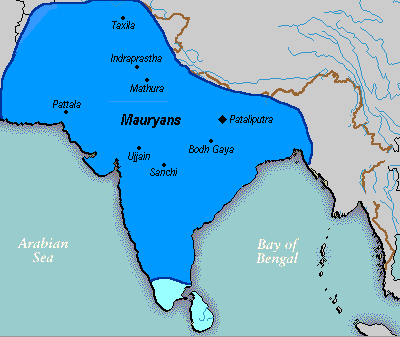
Mauryan_Empire_Map

MAURYA

Mau 1)Chandragupta Maurya – 345 BCE

Mau2 )Bindusara

Mau 3)Ashoka

Mau 4)Dasaratha

Mau 5)Sampati

Mau 6)Salisuka

Mau 7)Devavarman

Mau 8)Satadhnavan

Mau 9)Brihadratha- 185 BCE

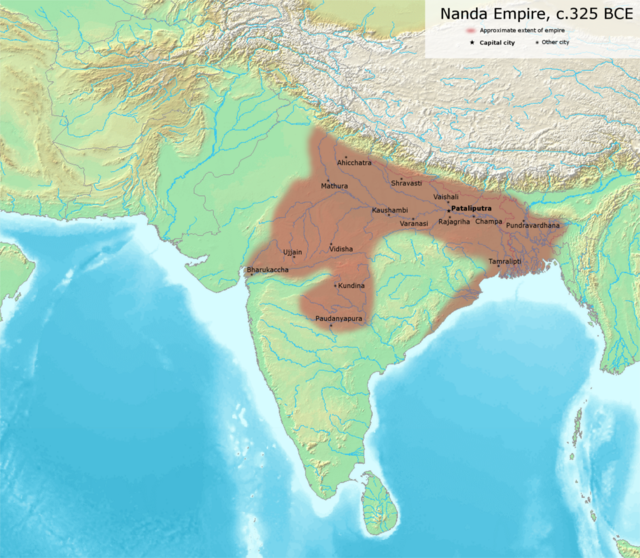
Nanda_Empire_c.325_BCE

SUNGA

Sun1)Pushyamitra Sunga (185–149 BCE)

Sun2) Agnimitra (149–141 BCE)

Sun3) Vasujyeshtha (141–131 BCE)

Sun4)Vasumitra (131–124 BCE)

Sun5) Andhraka (124–122 BCE)

Sun6) Pulindaka (122–119 BCE)

Sun7)Ghosha (?)

Sun8) Vajramitra (?)

Sun9)Bhagabhadra (?)

Sun10) Devabhuti (83–73 BCE)

SAKA (List is used from Wikipedia)= 70 Kings


Khyber-Pakhtunkhwa and Eastern Pakistan/ Ten Kings


Kshaharatas (Punjab, Pakistan and beyond) / Four Kings


Aprācas (BajaurKhyber-PakhtunkhwaPakistan) Six Kings

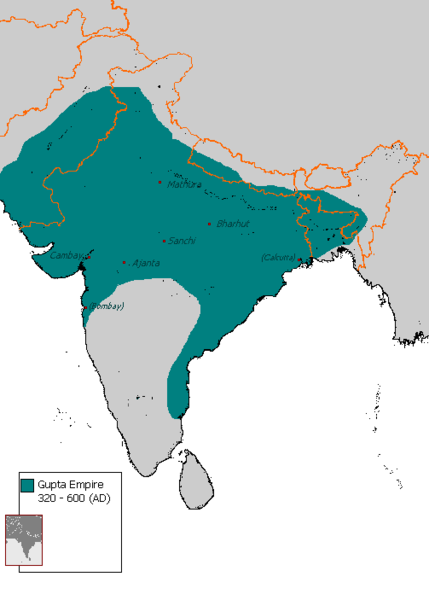
429px-Gupta_Empire_320_-_600_ad

Pāratas (BalochistanPakistan) /12 Kings

ParatarajaBhimajhunasa.
Yolamira, son of Bagareva (c. 125–150)

  • Bagamira, son of Yolamira (c. 150)
  • Ajuna, a second son of Yolamira (c. 150–160)
  • Hvaramira, a third son of Yolamira (c. 160–175)
  • Mirahvara, son of Hvaramira (c. 175–185)
  • Miratakhma, another son of Hvaramira (c. 185–200)
  • Kozana, son of Bagavharna (and perhaps grandson of Bagamira?) (c. 200–220)
  • Bhimajuna, son of Yolatakhma (and perhaps grandson of Ajuna?) (c. 220–235)
  • Koziya, son of Kozana (c. 235–265)
  • Datarvharna, son of Datayola I (possible grandson of Bhimajuna) (c. 265–280)
  • Datayola II, son of Datarvharna (c. 280–300)

“Northern Satraps” (Mathura area) /Six Kings

Minor local rulers/ Three Kings

Western Satraps / 29 Kings


chatrapathi-shivaji-771x352

THE MARATHAS OF THANJAVUR (Nine Kings)

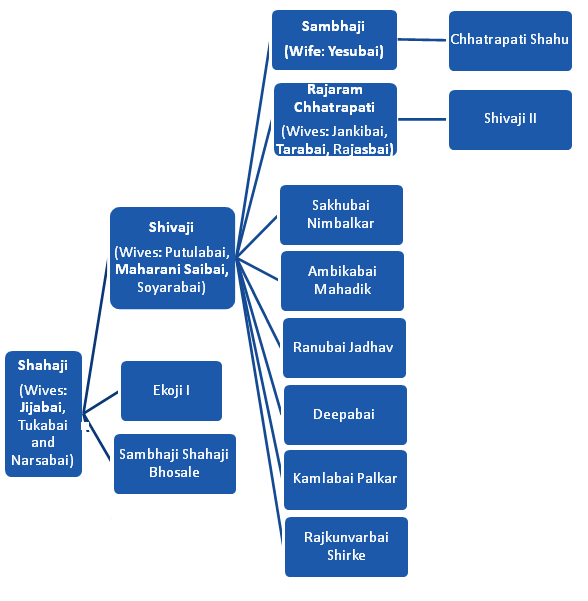
MALOJI BHONSLE

SHAHJI BHONSLE

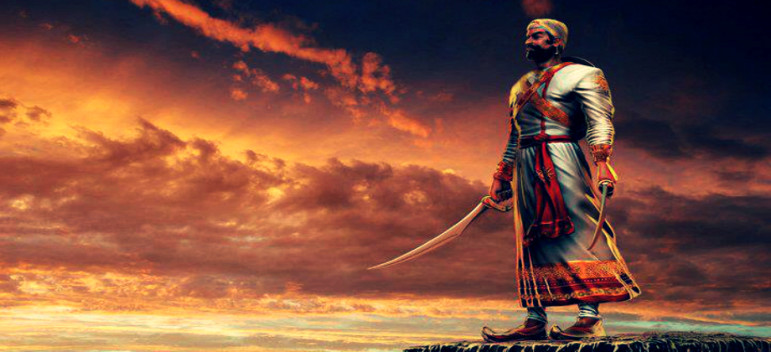
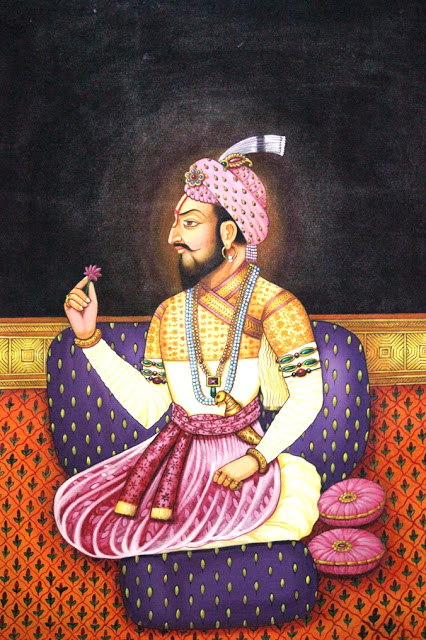
SHIVAJI THE GREAT WHO ESTABLISHED HINDU SAMRAJYA

Tan 1)EKOJI 1676

Tan 2)SHAJJI i- 1684

Tan 3)SERFOJI I 1712

Tan 4)TUKOJI AKA Tulaja 1728

Tan 5)Pratapa simha – 1739

Tan 6)Tulaja II – 1763

Tan 7)Amarasimha 1787 (ruled from Thiruvidaimarudur)

Tan 8)Serfoji II -1798

Tan9) Shivaji – 1833

(Thanjavur annexed by the British)

Rulers of Jath (12 Rulers)


The rulers of Jath belonged to the Daphle dynasty and took the title of ‘Deshmukh’. The last ruler Vijayasingh Rao Ram Rao took the title of ‘Raja’

Deshmukhs

1686 – 1706 Satvaji Rao (b. 16… – d. 1706)

1706 – 1754 Yesu Bai “Au Sahib” (b. … – d. 1754)

1754 – 1759 Yeshwant Rao (b. … – d. 1759)

1759 – 1790 Amrit Rao I (b. … – d. 1790)

1790 – 1810 Khanji Rao (b. 17… – d. 1810)

1810 – 1822 Renuka Bai (b. … – d. 1822)

1822 – Dec 1823 Sali Bai (b. … – d. 1823)

Dec 1823 – Aug 1835 Ram Rao I Narayan Rao “Aba Sahib Daphle” (b. … – d. 1835)

Aug 1835 – 29 Jul 1846 Bhagirathi Bai (b. … – d. 1846)

29 Jul 1846 – 11 Jan 1892 Amrit Rao II “Rao Sahib Daphle” (b. 1835 – d. 1892)

13 Jan 1892 – 14 Aug 1928 Ram Rao II Amrit Rao “Aba Sahib Daphle” (b. 1886 – d. 1928)

14 Aug 1928 – 23 Jun 1936 Vijayasingh Rao Ram Rao “Baba Sahib Daphle

Shivaji-Maharaj-Family-Tree

Gaekwad Maharajas of Baroda (20 Kings)

Maharaja Sayajirao I

Nandaji Rao Gaekwad, died May 1721

Kerojirao

Jhingojirao

Pilaji Rao Gaekwad, reigned from 1721, died 14 May 1732

  1. Damajirao, Maharaja of Baroda, reigned from 1732, died 18 August 1768
  2. Sayajirao I, Maharaja of Baroda, reigned 1768–1778, died 1792

III. Fatehsinhrao I, Maharaja of Baroda, born before April 1751, reigned from 1778, died 26 December 1789

  1. Manajirao, Maharaja of Baroda, born before April 1751, reigned from 1789, died 27 July 1793
  2. Govindrao, Maharaja of Baroda, born 175?, reigned from 1793, died 19 September 1800
  3. Anandrao, Maharaja of Baroda, born 179?, reigned from 1800, died 2 October 1819
  4. Sayajirao II, Maharaja of Baroda, born 3 May 1800, reigned from 1819, died 28 December 1847

VII. Ganpatrao, Maharaja of Baroda, born 1816, reigned from 1847, died 1856

VIII. Khanderao, Maharaja of Baroda GCSI, born 1828, reigned from 1856, died 14 June 1870

  1. Malharrao, Maharaja of Baroda, born 1831, reigned 1870 – 19 April 1875, died in obscurity in 1882

Prataprao (d. 1737)

Kalojirao

Gabajirao

Bhikajirao

Kashirao (1832-1877)

Picture of Shamburaje

  1. Sayajirao III, Maharaja of Baroda GCSIGCIE, born 10 March 1863, reigned from 1875, died 6 February 1939

Yuvraja Fatehsinhrao (1883-1908)

  1. Pratapsinhrao, Maharaja of Baroda GCIE, born 29 June 1908, reigned from 1939, titular Maharaja from 1949, deposed 1951, died 19 July 1968

Covered Up to Independence in 1947.

We will look at the other Maratta dynasties in the next part.