Parachuting and Mountaineering in Ancient Hindu Scriptures!!

para2

Compiled by London Swaminathan

Research Article No.1893;  Dated 27 May 2015.

Uploaded at London time 19-43

We have already seen the frequent trips of Lord Krishna and Balarama between Mathura in Uttarpradesh and Dwaraka in Gujarat. We have also seen Bharata’s urgent trip from Iran-Afghan border to Ayodhya in Uttar Pradesh. We have read about how Ravana used Godavari basin and Himalayan foot hills as his play ground using the monsoon wind to travel from Sri Lanka. The same monsoon wind was used by Asoka’s daughter Sangamitra and his son Mahindra to travel to Sri Lanka in seven days from Patna. Sangam Tamil book Purananuru says Karikal Choza used wind power to sail in the seas I have written separate research article on each one of these adventures. This is all started in the age of the Rig Veda where Bhujyu was saved from a shipwreck in the middle of the sea by Asvins. Rig Veda has at least ten references to Bhujyu incidents. Probably they knew how to use the monsoon and returning monsoon.

Panini who lived around 7th century BCE describes several paths such as Varipatha (Sea Route),Karipatha (elephant/Forest route), ajapatha (Mountain goat route), Sankupatha (Mountain climbing with hooks and rope), Hamsapatha (Air route; using air planes like Ravana, Kubera, Uparichara, Arjuna, Matali and Rama) and Devapatha (space travel like Narada, Matali and Rishis;Tri Loka Sanchari)

The commentary of Katyayana on certain Panini sutra (Devapathathi Gana 5-3-100) gives this information.

para4

But a later work in Pali,  ‘Niddesa’ (circa 250 BCE) describes more routes in a fanciful story according to Aryatarangini written by A.Kalyanaraman. It is an encyclopaedic work on Hindu influence around the world.

Twenty four places, all harbours, visited by a ship captain and ten difficult land routes likely to be traversed by him after reaching his destination are described. This shows that around fourth century BCE Indians were very familiar with all the ports from Alexandria in Egypt to Java and Sumatra in Indonesia.

Brihatkatha gives details of ten routes in another story. Sanudasa joins King Acera, who is on an expedition to the Land of Gold (Suvarnabhumi). The paths they cross are

Vetrapatha:Catching hold of giant climbers and jump from one cliff to another or from one tree to another (like we see in Tarzan movies). Vetra means climber or flexy wood.

Vamsapatha: Bamboo path. They cross a river which turns every tree into stone when it falls into the river (Actually they are fossilised trees).Vamasa means bamboo.

Ajapatha: They buy some goats from the Kiratas (hunter tribe) to cross the mountain terrain. Aja means goat.

Acera who came with his troops asked his soldiers to kill the goats and expose the bloody flesh to attract the birds of prey.

Sakunapatha: Huge birds come and try to take the meat. Sanudasa and Acera cling to the birds so as to reach the gold mines. This gave birth to Stories like Sindbad the sailor. This type of using eagles to bring emeralds, Soma plant are in the Rig Veda and Kalidasa’s works. Sakuna means bird.

para7

Mandhapatha:Ram instead of goat.

Janupatha: Crawling route.

Sankupatha: An iron hook attached to a rope of skin, is thrown up till the hook is fixed up in the mountain. After climbing up to the point, he used a diamond tipped instrument to make big hole and insert a spear. From there he throws up his hook to reach higher and higher. Hindus used monitor lizard or iguana to climb the walls of the fort. But it won’t work in mountain territory.

PARACHUTING

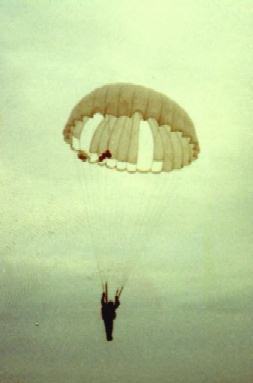
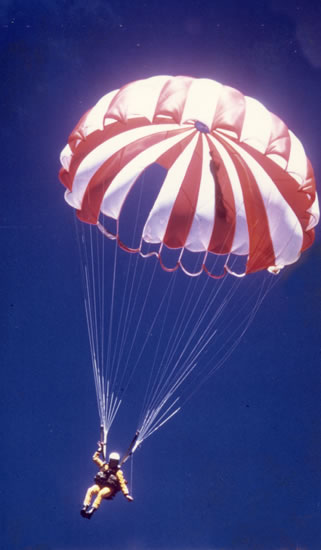
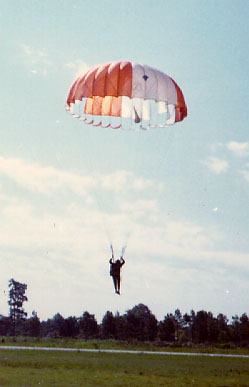
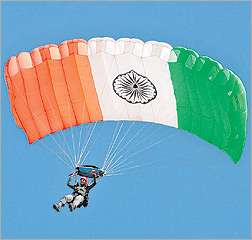
Chatrapatha: Chatra means umbrella. IT IS EXPLAINED IN THE COMMENTARY AS THE WAY WHERE ONE JUMPS DOWN FROM A PRECIPICE WITH AN OPEN PARASOL MADE UP OF THIN SKIN, AND DESCENDS SLOWLY TO HE GROUND. In other words it involved the principle of parachuting.

Mushikapatha: Mushika is mouse or rat. Tunnelling and using the tunnel to cross the path.

Daripatha : Something similar to tunnelling

Danipatha :It is making a cave or cleft in a rock to cross difficult terrain.

Katyayana, writing in fifth century BCE, mentions most of the routes and the Milinda panna agrees with the Vartika of Katyayana.

Paracommander2

Patha=Path

If they can use such pathas in stories like Brihat katha, common men must also be familiar with them. Another interesting thing is that the English word ‘Path’ is derived from the Sanskrit word ‘patha’. This word is in the Rig Veda. Even Tamils use the word ‘Paathai’ in day to day language.

Routes mentioned in the Rig Veda

Vari patha (Sea route) and Vanikpatha (Commercial Route) are mentioned in the Arthasatra of Chanakya (3rd century BCE). Bhagwan Singh in his book “Vedic Harappans” add more interesting details:

Varipatha and Vanik patha are in the Rig Veda. The Vedic Aryans express their gratitude to Indra for digging these routes (4-19-6) and for removing the obstacles from these routes by annihilating robbers and pirates (1-80-3; 4-28-1;10-67-12) and to the gods, ancient seers and manes for discovery or creation of land routes (6-21-12). What was it that bound them so intimately to the rivers that they refer time and again to them as “nadyah, sindhavah, sravantyah, Sapta Sindhavh, trisapta sindhavah and Ganga, Yamuna, Saraswati etc? The answer is not far to seek. The rivers were the trunk routes of the Vedic times as they happened to be in later days as well, but not with as much traffic”.

Manu’s flood story has spread to the whole world. Nova in the Biblical story itself is a Sanskrit word. Nava is ship in Sanskrit. Nava is new in Sanskrit. Both apply to the story.

11_Funerary-boat

Hindu gods are floating on water. Nara+ayana. The very word Nara(yana) and Tamil word Neer for water is derived from Sanskrit word Nara. The proof lies in the Greek ‘Nereids’ (Water nymphs). The word existed even before Tamils started writing. Nara is in the Vedas existed even before Greeks started writing. So we know that is derived from the Vedas. Above all Hindus birth starts with water ceremony and ends with water (funeral) ceremony. Without water Hindu religion or rituals can’t survive.

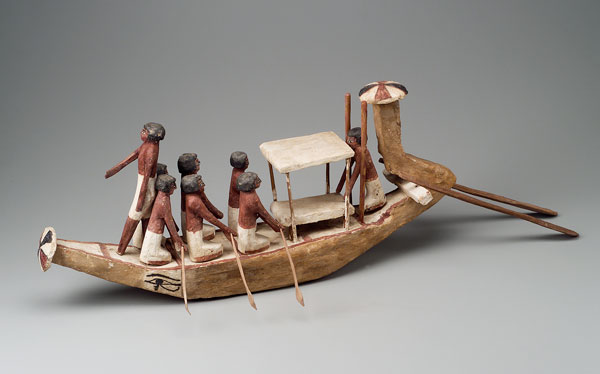
Like Egyptians buried a boat with the Pharaoh to help him to cross the sky, Brahmin funeral ceremony includes boat(Made up of leaves) for the soul to cross the River Vaitarani. All these show that the boat is very familiar with the Hindus. It is even in the Vedic Funeral ceremonies! Indus valley boat and the direction finding bird are also mentioned in the Vedic literature.

Vedic Phoenicians; History’s Mystery!

Picture of Baal (Vedic demon Vala), 1800 BCE, Louvre Museum, Paris

Written by London swaminathan

Research Article No.1889

Date: 25 May 2015; London Time 19-22

Every one of us use the word “Pana” for money in India. All of us use the word “Vanik(a)” for the business people or commerce. The entire English speaking world use the word “MONEY”. All these are derived from the Rig Vedic word “Pani”.

Linguists know that P=V=M are interchangeable. If you apply this rule, you get:-

Pani=Vanik= Vanij= Pana= Money

P=V=M interchange is very common in several languages including Tamil.

According to Western encyclopaedias, Phoenicians’ contribution to the world are 1)Alphabet and 2)Money. Even the Indian Brahmi which gave birth to Tamil script and all the South East Asian scripts are developed from the Phoenician alphabet according to them. I would not touch the issue of alphabet in this article. But let us look at other things.

Misers and Robbers

Panis or Phoenicians were very bad people according to the Rig Veda(1-33-3; 5-34-7; AV 20-128-4; VS 3-1). Panis were

1)Robbers or thieves who stole the cows of Vedic Hindus.

2)They were very greedy and rich.

3)They accumulated wealth.

4)They were miserly merchants (RV 1-124-10; 4-51-3; 8-45-14).

5)They were called Dasyus RV 7-6-3 (Thieves)

6)In some places they were called Dasas (RV 5-34-5; AV 5-11-6).

7)They don’t worship Gods.

8)They don’t do Fire Sacrifice.

9)They never give Dakshinas (fees) to the Vedic priests.

10)They were called wolves (RV  6-51-14)

11)They were grathin (nobody knew the meaning)

12)In some passages the Panis are shown as mythological figures, demons who withhold the cows and waters of heaven and to whom Sarama (dog) goes on a mission from Indra (RV 10-108)

(Story of Indra’s ambassador Sarama, the dog, has spread up to Greece via Iran, who was called Hermes. I will give the story separately; in both Persian and Greek S sound is changed to H)

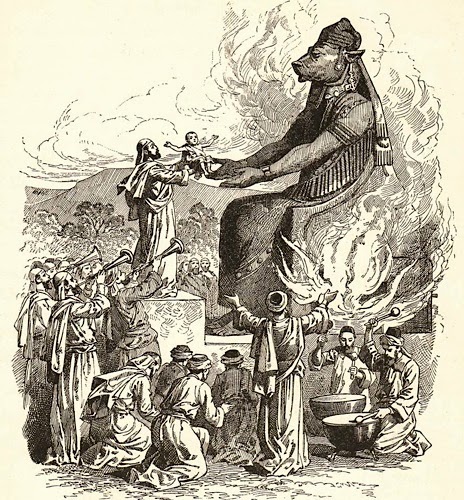
But Rig Veda never mentioned about  their child sacrifice. They killed thousands and thousands of children, actually burnt them alive and buried their ash in pots. Now we have found those graves in Bahrain and other neighbouring countries.  Probably that is the reason Vedic Hindus hated them. They worshipped Baal from 2000 BCE. He had a major sanctuary at BYBLOS.

Another god was Moloch or Molek. Israelite children were sacrificed by burning to Molech , according to the Bible (1 Kings 11-7; 2 Kings 23-10). Vedic Hindus hated the Mlechas; probably the world came from Molek worshippers.

Who were the Phoenicians?

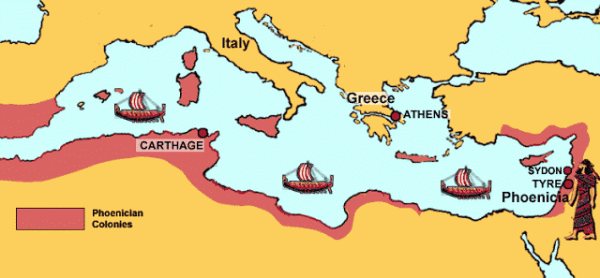
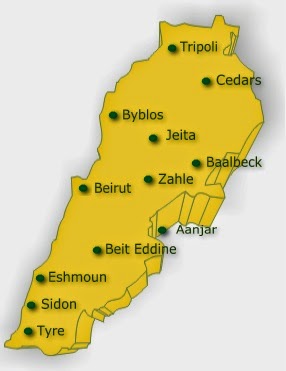
The best proof for identifying them with Panis of Rig Veda come from the word Byblos. This is the corrupted form their King Bibru. Rig Veda mentioned the name Bribu as their king. He constructed the city Byblos which is known to all historians. They controlled areas on the coast of Mediterranean Sea. Carthage (modern Tunisia) in North Africa and Lebanon in the Middle East were their main colonies.

Linguists know R=L are interchangeable. Even Panini has a sutra about it.

BIBRU became BYBLOS.

Byblos has got continuous existence from 5000 BCE. So Rig Vedic Bribu must have corrupted to Byblos. Or later kings might have named it after Bribu. Both are possible.

The second proof comes from the Sanskrit words of Phoenician areas. Following piece is taken from Wikipedia:

Other colonies (Note the Sanskrit Names)

Lebanon = lavana ( salt or salty white)

  • Callista (on modern Santorini)
  • Calpe (modern Gibraltar)
  • Gunugu
  • Thenae
  • Tipassa
  • Sundar (Sanskrit)
  • Surya(Sanskrit)
  • Shobina(Sanskrit)
  • Tara(Sanskrit)
  • My comments: Vedic Hindus might have settled in these Phoenician colonies for business purposes or settled there earlier than the Phoenicians.

Phoenicians spoke a non-Sanskrit language and so they were called Mrdhravach (of hostile speech). Greeks called non-Greeks barbarians; Ancient Tamils called Roman and Greek bodyguards with the same word (People of rude or harsh words); Telugus called Tamils with the same word (Arava=loud mouthed or voiceless or snake people); Bible called non-Christians as Pagans; Quran called Non-Muslims as Kafirs. This type of derogatory coinage was very common in the ancient world.

Miners of Lapis Lazuli

Bhagavan Sing (Author of Vedic Harappans) say that they mined minerals and gem stones such as lapis lazuli and exported them. So the Vedas say they hid the treasure under rocks.

I Come appointed messenger of Indra, asking your ample stores of wealth, O Panis (RV 10-108-2)

Paved with rock is this our treasure chamber; filled full of precious things, of kine, and horses. These Panis who are watchful keepers guard it. In vain hast thou approached this lonely station (RV 10-108-7)

Vedic Mantras cover a vast period of time. So it is possible at one time they had good business contacts with the Vedic Hindus.

Even Homer described them as good and bad people. They exported purple dye for the dress of Roman kings. In Illiad, Homer say that their wares are fit for Gods and kings and in Odyssey he says they are bunch of treacherous thieves. He has reflected the Rig Vedic thoughts.

Like we see in India, there is a big gap between the literary evidence and the archaeological evidence for Phoenicians. This remains a mystery until this day.

A.Kalyanaraman (author of Aryatarangini) argues that they were also Vedic people but who did not follow Vedic religion (vratyas) and migrated westwards.

References to Vanij (Vanikan in Tamil)

RV 1-112-11; 5-45-6; AV 3-15-1

References to Pani

RV1-33-3; RV 4-28-7; 5-34-5; 6-13-3; 8-64-2; 10-60-6;3-58-2;6-51-14. There are over 30 references. I have given only a few.

Child Killers

Vedic Hindus hated them because Phoenicians were ready to do anything for getting money. Bible refers to child sacrifice by Canaanites/Phoenicians in Jerusalem. Modern excavations have revealed thousands of urns containing the cremated remains of infants, small children and animals in Carthage (Tunisia), Motya (Sicily),Sulcis (Sardinea)and other Punic (Phoenician) sites. They spread this disgusting, barbaric practice to other Mediterranean areas. Scholars believe they had their origin in Bahrain. Vedas dub all the cannibals as Asuras/demons.

Phoenician God Baal is called Vala in Rig Veda whom Indra pierced when they plundered the Hindus’ cows.

All these prove that the hated Panis were Phoeniciaans.

Sanskrit and Tamil Words in Ancient Chinese!

Written by London swaminathan 

Research article no.1880, Date: 21 May 2015.

There are hundreds of research articles about the Indian contact with China from 2nd century BCE. The Silk Road trade is well known. But not much is written about the contact before 300 BCE. We have to piece together the information that is available in various places. I read some interesting articles about the Indian languages’ contribution to Chinese language which I wanted to share with language enthusiasts.

1.Max Muller says that the names of stars and other astronomical terms in Chinese are of Sanskrit origin.

2.Nadar community in Tamil Nadu believes they have connections with China in the past.

3.Col.Tod says, “The genealogies of China and Tartary declare themselves to be descendants of AWAR, son of the Hindu king Pururawa (Annals of Rajasthan, Vol.1, p 35).

4.Sir William Jones says the Chinese assert their Hindu origin(Annals of Rajasthan, Vol.1, p 57).

5.The original settlers of China are from Kashmir and other parts of the Himalayas. According to the traditions noted in the ‘SCHUKING’, the ancestors of the Chinese, conducted by Fohi, came to the plains of China in 2900 BCE from the High mountain land which lies to the west of that country. They might have gone via Afghanistan which was under Hindu rule from the days of Ramayana and Mahabharata. Hindus ruled Afghanistan until Sixth Century CE.

6.The name China is of Hindu origin according to Prof.Heeren; the word SINIM occurs in the Bible as well (Isaiah xlix.12)

7.According to Prof.Lconperie (Western origin of Chinese Civilization), the maritime intercourse of India with China dates from 680 BCE. They went through Ceylon (Lanka) after Vijaya founded a kingdom there.

8.From the days of Asoka (3rd Century BCE), lot of authentic information is available. So I don’t want to repeat them here. We know of K A Neelakata Sastri’s identification of Kuong Tchi with Kancheepuram, Bodhidharma’s visit to China, Tamil Inscription in China, Hindu temples in China, thousands of Buddhist monuments in China, old pam leaf manuscripts in China etc. They are all after second century BCE.

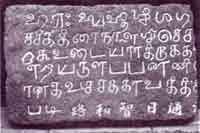
tamil in china

Tamil Inscription in China

Language Influence:

9.Tamils have found out some words like Nee (you) in Chinese. But they are very few. It may be just co incidence.

  1. Shrikant Talageri in his book The Rig Veda- A Historical Analysis (p 289) says, “Tsung-tung, a scholar of Chinese (Taiwanese origin), has shown, on the basis of study of relationship between the vocabulary of old Chinese, as reconstructed by Bernard Karlgren (Grammata Serica, 1940) and the etymological roots of proto-Indo European vocabulary, as reconstructed by Julius Pokorny (year 1959), that there was a strong Indo- European (IE) influence on the formative vocabulary of Old Chinese (OC).

(My comments: I have abbreviated IE and OC; Indo European means Sanskrit; foreign scholars never use Sanskrit, but use IE, fearing their Aryan-Dravidian Racist theory would be demolished)


Tsung-tung provides a long list of words common to IE and OC and adds “in the last four years I have traced about 1500 cognate words, which would constitute roughly two thirds of the basic vocabulary in OC.

The common words are to be found in all spheres of life including kinship, animals, plants landscape, emotional expressions, actions, body parts, politics, religion and even function words such as pronouns and prepositions.

This IE influence on OC took place at the time of the founding of the first Chinese Empire in about 2400 BCE. He identified the Yellow Emperor Hang-ti as an Indo European(IE). Huang-ti is mentioned as the founder of Chinese language in the Li Chi (Book of Rites).

Among IE dialects, Germanic languages seem to have been mostly akin to OC. Germanic preserved the largest number of cognate words also to be found in Chinese. The influence on the Chinese language probably spread to other related languages later on. Sino-Thai common vocabulary, too, bristles with IE stems”.

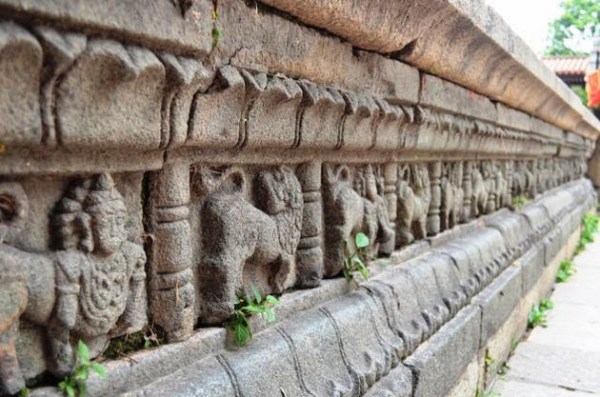
A panel of inscriptions of the God Narasimha adorns the entrance to the main shrine of the temple, believed to have been installed by Tamil traders who lived in Quanzhou in the 13th century. Photo: Ananth Krishnan

My comments

My previous argument is strengthened by this piece of scholarly work. I have been saying,

1.Sanskrit and Tamil are closer to each other than any two ancient languages in the world. Caldwell and Max Muller were wrong in saying that the Dravidians came from outside India.

2.Most of the BASIC words in ancient languages can be traced back to Tamil and Sanskrit ( I have already given examples in my earlier posts)

3.There are common words between any two languages in the world because human beings lived under one roof at one time. So don’t jump to any conclusion by seeing a few similar words.

4.Human beings might have originated in Africa ,but the civilization marched to various parts of the word from India. Apart from the language evidence, the biggest evidence comes from the language speakers  themselves. Sumerians, Egyptians, Chinese, Mayans – all say that they came from outside the area. They were not the sons of the soil. They all migrated from India. Indians say that they were born and brought up here. It is crystal clear in Sanskrit and Tamil literature. They never say anything about migration to India from outside.

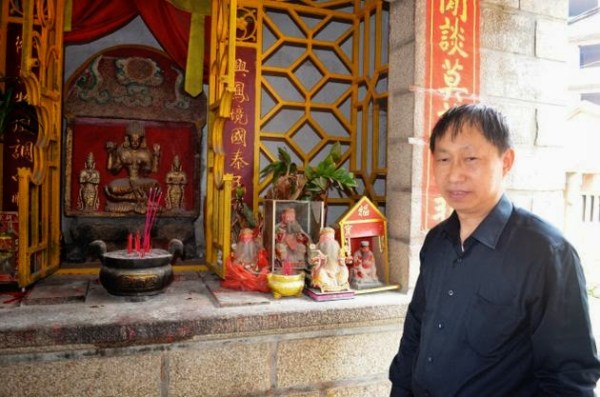
Li San Long, a resident of Chedian village, offers prayers at the village shrine, which houses a deity that is believed to be one of the goddesses that the Tamil community in Quanzhou worshipped in the 13th century. (Right) A stone elephant inscription on display at the Quanzhou Maritime Museum. Photo: Ananth Krishnan

5.Last but not the least, the onomatopoeic words are similar in many languages. One should not jump to any conclusion on the basis of those words. Since they are based on sounds, all bird names will be based on Ka, Ka, Ki, ko, ke, kow in most of the world languages (E.g.Kaka, Kiwi, Kili, Cuckoo, Kokku, Kaga etc)

Amazing Geographical Knowledge of the Vedic Hindus!!

Written by London swaminathan

Research Article No.1873; Dated 18 May 2015.

Uploaded in London at 16-51

Vedic Hindus’ knowledge of geography is amazing. We know that the Vedas are books of hymns and not a book on history and geography of India. And yet we find names of scores of rivers, mountains and countries. It covers a vast area from Iran to the Vindhyas. They knew the seas on both sides of the Indian subcontinent. They ventured into seas and rescued shipwrecked Bhujyu (mentioned in at least ten places in the RV) and others. They relate the names of 30 plus rivers from EAST of India showing that they were born and brought up on the banks of Ganges. Indra is allocated direction EAST and Varuna the west indicating they marched from the Gangetic plains to the seas in the west spreading the Vedic civilization. We have already archaeological proof of Vedic gods from Turkey –Syria area dated circa 1400 BCE.

Kings of Iran are mentioned in the eighth Mandala of the Rig Veda. Dasaratha (Amarna) letters of Egypt is another archaeological proof to show that the Vedic kings sent their daughters up to Egypt. So the Vedic Hindus knew the areas covering Iran, Turkey, Syria, Iraq in the Middle East and Egypt in Africa. Indisputable archaeological proof is there to support this. The Vedas mention lot of names of kingdoms in India, but the early translators of the Vedas, who believed that the Hindus came from outside India translated the kingdoms names as “tribes”!!

Later Mahabharata mentioned 30 kingdoms! Just to suit their theory of migration into India they translated those Vedic Kingdoms’ names as “tribes”! The Samhitas, Brahmanas, Aranyakas and the Upanishads were all composed even before the Greeks started writing! No primitive civilization can have vast literature like this. They have very clear cut ideas of geography which we knew from their coinage of the word Sapta Sindhava (RV.8-24-27). Names of hundreds of kings are available in the Vedic literature. And we know that they are not tribal leaders because there is a long list of kings who did Aswamedha Yaga. The horse covered several kingdoms and all were taken by the emperor who did the Yaga.

The great war – War of the Ten Kings—Dasarajna Yuddha in the Rig Veda—clearly show that there were at least ten kingdoms by the time. But foreign “Scholars” described them as tribes! The Great War was described in detail in several hymns in the Rig Veda, but not mentioned in the epics which show the lapse of time between the epics and the Vedas. We know that the Vedas were vast which made Vyasa of Mahabharata to compile them and divide them into four Vedas.

Later epics like Ramayana and Mahabharata spoke about Swayamvaras attended by lot of kings from different countries. Krishna’s travel from Mathura in Uttar Pradesh to Dwaraka in Gujarat show how advanced was the road transport in those days. Before Krishna, Bharata travelled all the way from Iran-Afghanistan ( Kekaya) border to Ayodhya in Uttarpradesh quickly. The route is explained clearly in the Ramayana. By around 3rd century BCE, Hindus were using the monsoon wind to travel to Patna from Sri Lanka. It took only seven days. Ravana and his cousins used the Godavari river region as their playground. He travelled all the way to Kailash from Sri Lanka by using the monsoon wind (sea route up to Bengal).

Agastya took 18 groups with him and came to Tamil Nadu by 1000 BCE according to Sangam Tamil Literature. The Purananuru (201) verse very clearly refers to 49 generations before first century CE.

If we look at the Vedic terms with this information in the  background, then we can understand where foreign “Scholars” went wrong!

The Satapatha Brahmana (SB 17-3-8) mentions the Eastern people (Pracyas) and the Bahlikas (people of the Western regions). One must remember these are not geography books and yet hundreds of geographical terms occur! The same book refers to Udichya Brahmanas (SB 11-4-1-1; GB 1-36). Aitareya Brahmana (AB 8-14) refers to Madyamadis (Middle Zone) and Pracya (East), South (Dakshna), the West (Pradichya) and the North (Udichya). Hindus always mention the directions in the same clock wise direction. Until this day people go round the temples in the same way!

They even mention the King Bhoja of the South and the northern most mystical Uttarakuru region. Though South India was full of forests and unoccupied areas they still knew about the South.

Now let us look at the Vedic materials:

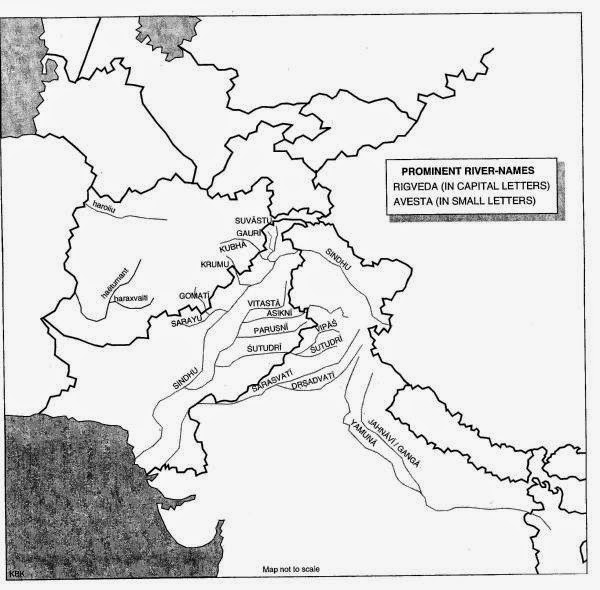
Nadi Stuti ( RV.10-75) gives the names of the rivers from East to West. (Westerners translated the names according to their pre conceived notions. If the river names don’t suit their theories they translated differently! In several places they don’t even know whether it is a river or something else! Griffith who said the meaning is ‘obscure’, ‘not clear’ in every page, translated according to his whims and fancies. The main reason for this is all the foreign “scholars” were taught by third rate Sanskrit Pundits in North India. True Vedic scholars refused to teach them the Vedas or Sanskrit. Now thousands of mistakes are being discovered.)

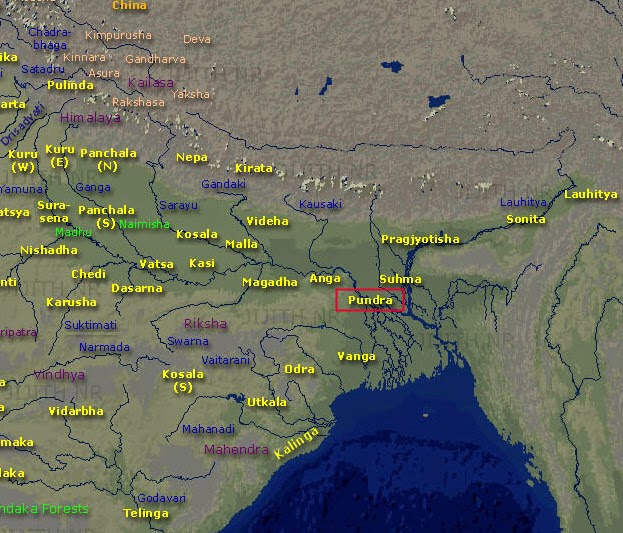
Andhra: People mentioned with the Pundras, Sabaras, Pulindas and Mutibas (AB 7-18)

Alina: They ruled Kafiristan (The current name indicates that it was once ruled by Non-Muslims)

Anga: AV 5-22-14, GB 2-9 as Anga-Magadhas

(This is one of the 16 Big Empires in Buddhist literature)

Bahlika :It is a Western Kingdom mentioned in SB 1-7-3-8 and earlier AV (5-22-5), 5-7-9). The name got corrupted to Bactria in later literature.

Bhalanas (RV 7-18-7) along with Pakthas (Pakhtoonistan), Alinas, Visanins, and Sivas are other kingdoms that took part in the Ten King War (Dasarajna Yuddha) They all had their own kingdoms in and around present Afghanistan. A person would not be called KING without a kingdom! They are mentioned as TEN KINGS throughout the RV!

Bharata: The king who gave the name Bharata for India. They ruled the Sarasvati River Region. Like the later Magadha Samrajya, they were the most powerful empire during the  Rig Vedic Time.

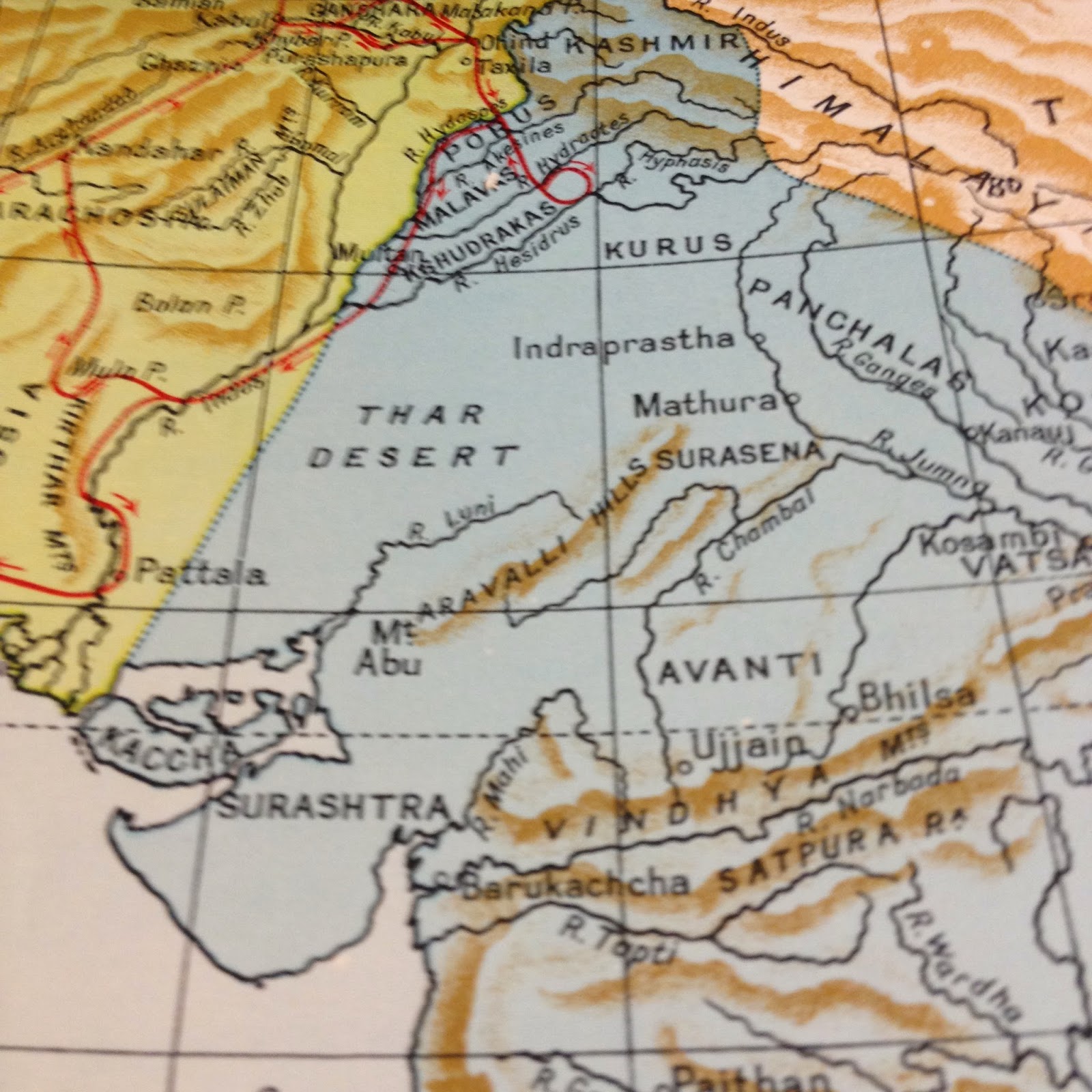
Cedi : Their king Kasu (RV 8-5-37) ruled either Iran or Bugelgund region in India. Later Cedi kingdom was near the Matsya kingdom.

Matsya : They ruled Rajasthan region. RV mentioned them (RV 7-18-6). Their king name Dhvasan Dvaitavana is mentioned as a performer of Aswamedha in SB 13-4-5-9. Only powerful kings who wanted to conquer the neighbouring kingdoms did Aswamedha. This shows that a lot of kingdoms existed at the time of Brahmanas which are dated around 1000 BCE even by a conservative estimate.

Pulindas : They are mentioned along with Andhras in South India in Brahmana literature (AB7-18)

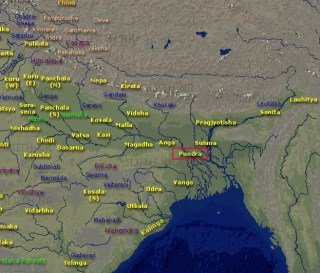
Pundra:They ruled Northern Bengal (AB 7-18)

Purus, Anus, Druhyus, Turvasas and Yadus are the five groups mentioned in several hymns.

The holiest of the holy rivers Sarasvati is mentioned in 80 places in the Vedas.

My list is not a comprehensive list. It is only a sample. Though the foreign “scholars” translated Raja/Ranja as Kings, they made their kingdoms “tribes”!

Since we have got archaeological proof from 1400 BCE with kings names in Sanskrit in inscriptions (Bogazkoy and Amarna letters of Dasaratha in Egypt), we are sure that the tribes are not tribes, but kingdoms or empires. Those who do Aswamedha proclaimed themselves as Maharaja (Emperor).

A proper study of all the mountains, rivers, towns (Hariyupa=Harappa), kings, kingdoms, trees, animals and birds will throw more light on the Vedas and Vedic Hindus. Even during the Vedic days it was the largest country in the world from Iran to Andhra in India!

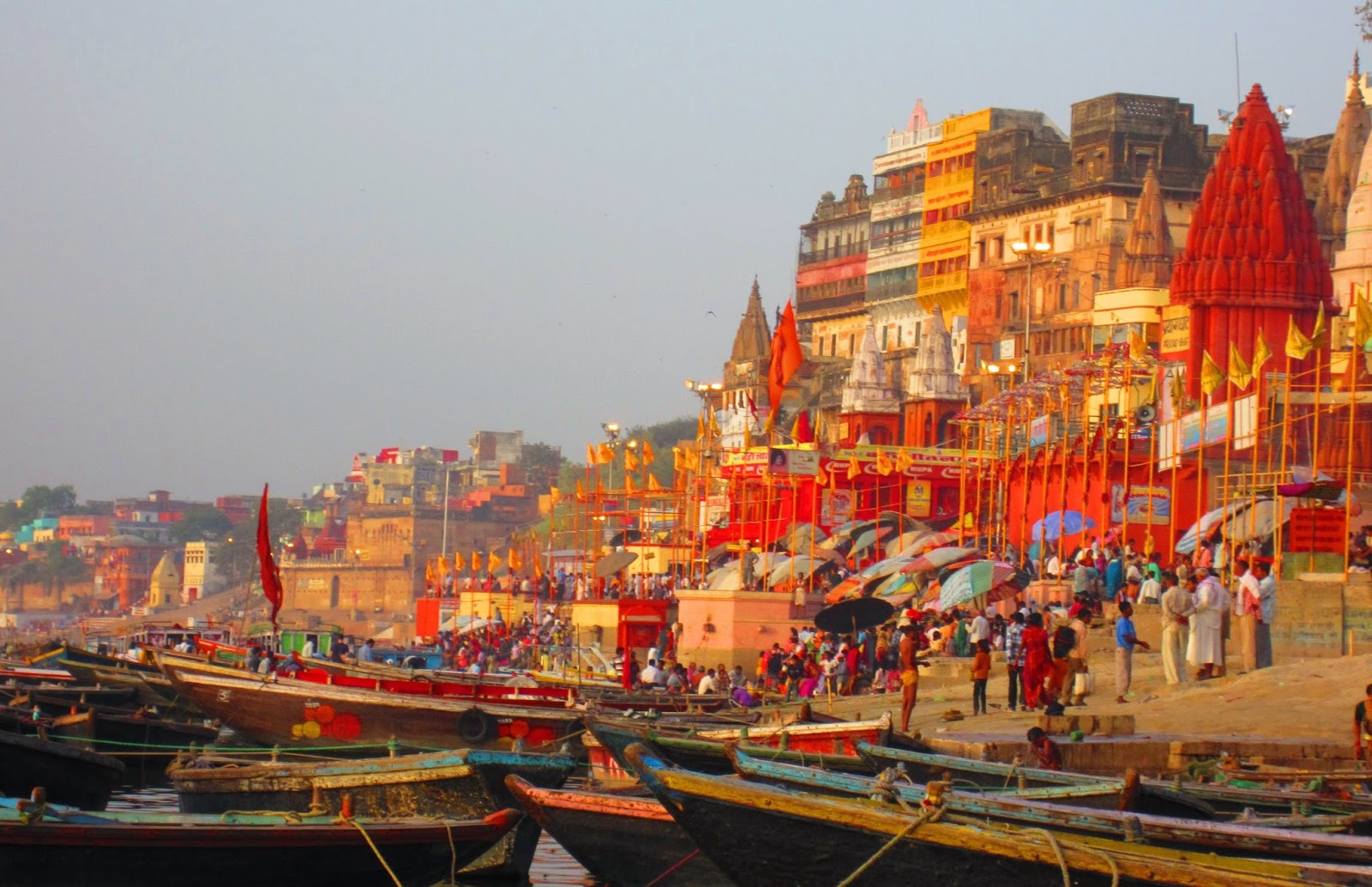
Oldest City in the World: Varanasi/Kasi/Benares

Written by London swaminathan

Research Article No.1864; Dated 14 May 2015.

Uploaded in London at 12-07

“There is hardly any city in the world that can claim greater antiquity, greater popular veneration than Banaras”- P V Kane

Varanasi also known as Kashi and Benares is the oldest city in the world. Those who believe that Mahabharata war was fought just before the dawn of Kaliyuga in 3102 BCE would agree with me. King of Kasi is also mentioned in the Mahabharata. Before Mahabharata, we have references to Varanasi in the Vedic literature as well. Those who believe in encyclopaedias written by English only knowing lot may dis agree with me.

The archaeological proof we could get so far from Varanasi region takes us back to 900 BCE only. Those who witnessed the recent floods that destroyed Kedarnath temple and the Nepal earth quake that destroyed the Muktinath temple could understand that the enemies of Indian civilization are the floods and earth quake in addition to Muslim invaders. The changing course of Rivers Sarasvati, Sindhu, Ganga and Yamuna destroyed the oldest parts of our civilization. The monsoon rains coupled with the scorching sun make everything crumble into dust.

Three tributary rivers Varuna, Assi and Rajapur of Ganga contributed significantly to the make up of Varanasi. The city’s name came from the two rivers Varuna and Assi.

Following are the evidence for Kasi to enter the Records Book, as the oldest city in the world:

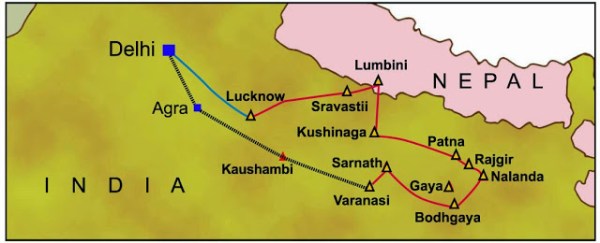
1.Why did Lord Buddha choose Kasi (Saranath is its suburb) to deliver his first lecture, particularly when he attained enlightenment in Buddha Gaya? He avoided all the places such as Kapilavastu (Nepal), Pataliputra/Patna, Gaya in Bihar, Rajagriha and came all the way to Saranath, part of Kashi area to deliver his most famous lecture. This is because Kashi was the holiest city in the whole of India and the oldest.

2.Kassites who ruled Babylonia from 1500 BCE, but settled there from 1800 BCE bore names in a language related to Sanskrit. Like Mitanni, who have very pure Sanskrit names (from 1400 BCE), they also spoke a language related to Sanskrit. All the encyclopaedias “dodge and escape” by saying that their origins were not known. The fact is that they migrated from Gangetic plain, like Saurashtra (Zoaraster) migrated to Iran from Saurashtra coast of Gujarat (Please read Kanchi Paramacharya’s (1894-1994) talk on Zoaraster/Saurashtra.

3.Most of the Jataka stories are centred around Kashi and the previous births of the Buddha are attributed to that city, because that was the oldest city in the world. Several stories begin with ,”Once upon a time when Brahmadatta was reigning in Kashi”. They wrote this “once upon a time” story 2300 years ago! So once upon a time for them meant at least 1000 years ago!

4.Jain literature also supports that Kashi was one of the oldest cities. Mahavira was the 24th Tirthankara who was Buddha’s senior. Before Mahavira there 23 were Tirthankaras and the seventh one Suparsvanath was born in Benares. Jains believe that the 23rd Tirthankara Parasvanath, also born in Benares, was Krishna’s contemporary in 3200 BCE. So seventh must be well before that period!

5.Ancient Varanasi was a famous education centre. Anyone who follows a new philosophy must go to Kashi and win over the scholars there in philosophical debates. It was an unofficial University – a unique Indian institution. Scholars used to stand in street corners and invite others for debates. We have to compare this with other cities of the world where prostitutes or beggars were standing in the street corners!

Scholars and “Scholars”

6.If one doesn’t know the culture of a country and write something, then the person’s ignorance will be revealed. At Maski, a megalithic deposit, a burial of a child was found with a pottery disc on the chest of the child’s body. Earlier “Scholars” described it as the play object of the child. But actually the Vedic rituals say that a kapala should be offered on the body of the diseased (AvalayanaGrihya Sutra 4-3-5). Kapala is a mud disc. Other Grihya sutras also describe the Kapalas as offerings in Vedic rituals. Literal meaning of Kapala is ‘broken piece of clay pot or a pot shred’. Such kapalas are discovered in various places in the Gangetic plain establishing its antiquity.

7.The earliest human occupation in Varanasi is found in the Atharvaveda (5-22-14) according to which Kasis are the indigenous people wo lived in Varanasi region. The name Kasi came from these people.

8.The name Kasi denotes (in the plural) the people of Kasi (Satapatha Brahmana 13-5-4-19). The Satapatha Brahmana tells of Dhrtarashtra, King of Kashi, who was defeated by Satanika Satrajita. We hear also of Ajatasatru as a king of Kasi (Brhadaranyaka Upanishad) and another king Bhadrasena Ajatasatrava of Kasi.

The River Varnanavati is referred to in the Atharva Veda (A.V. 4-7-1). It was known as Varuna in later literature.

9.Compound words Kasi-Videha and Kasi-Kausalya occurring in Brahmanas indicate the friendship between these kingdoms. Ayodhya, Capital of Kosala (Kausalya) is also one of the oldest cities in the world which is linked with the first Jain Tirthankara, Rishaba/Adinath.

10.Amba, Ambika and Amabalika are the three daughters of King of Kashi. They were abducted by Bhisma in a swayamvara ceremony. Abduction is one of the eight types marriages approved by Smritis (Hindu Law Books). Oldest Tamil work Tolkappiam also lists this type of marriage. It is well known from this story that several kingdoms including Kashi existed at the time of Mahabharata war. Conservative estimates date the war to 1500 BCE. Kalhana dates it to 2600 BCE. Hindu scriptures date it to 3150 BCE.

Hindus’ holiest city has a glorious history!

Oldest Democracy in the World! Oldest Female MP in the World!!

Written by London swaminathan

Research Article No.1858; Dated 11 May 2015.

Uploaded in London at 21-07


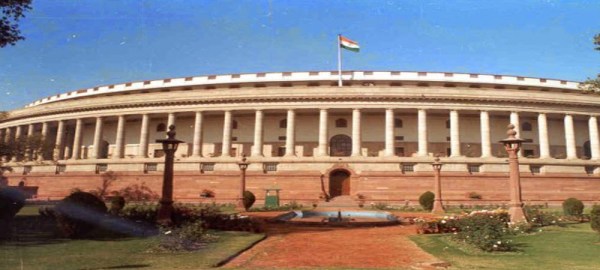
India is the oldest democratic country in the world. Rig Veda, the oldest book in the world, confirms it. Not only that but also the two words used by the Vedic Hindus are used until today from the Himalayas to Kanyakumari and throughout the world. They had two assemblies: Sabha and Samiti. Sabha is used in all the states of India (Lok Sabha, Rajya Sabha, Vidhan Sabha etc) Since Tolkappiam, the oldest Tamil book banned the use of letter ‘Sa’ in Tamil,  Sabha is changed as Avai (Sabhai) in Tamil Nadu. Samiti is used throughout the world as Committee (C=S; samiti=committee).

Several hundred words from the Rig Veda are being used throughout the country. Tamils have been using them for 2000 years! Sanskrit will never die! All the major languages of the world have Sanskrit words!

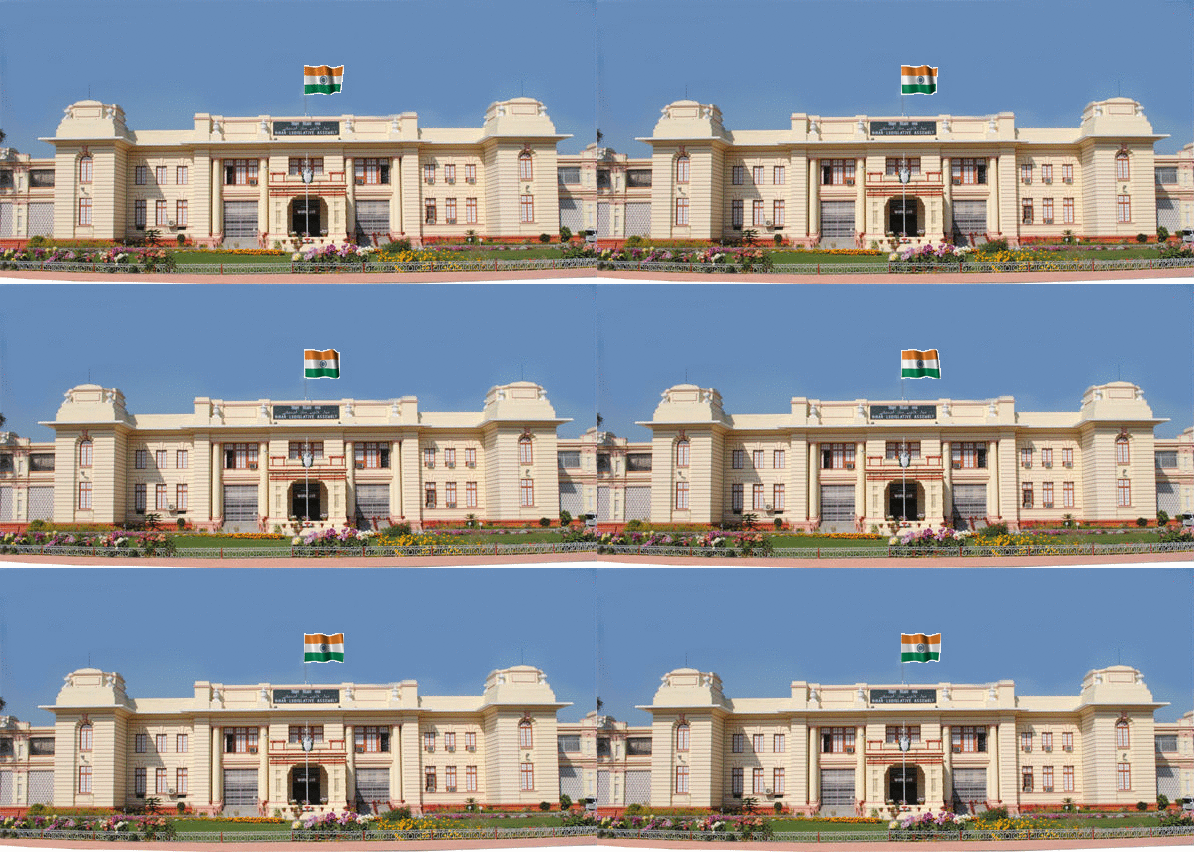
Bihar Vidhan Sabha

OLDEST FEMALE MP!!

Oldest female MP or MLA was also from India! Rig Veda mentioned female members of the Sabha as sabhavati (RV 1-167-3). It says female member utters fitting words in the sabha!! They were the best speakers! It also said that a woman who protects law (rta) comes thrice to the Sabha (RV 3-56-5). I have already given one proof where Miss Gargi Vachaknavi attended the Religious Conference convened by Janaka. She stood up in the conference and challenged the greatest scholar of the period Yajnavalkya! All this happened before Homer wrote the first book in Greek!

The words regarding Sabha, its activities, its members and its uses show that Rig Vedic society was the most advanced civilization in the world.

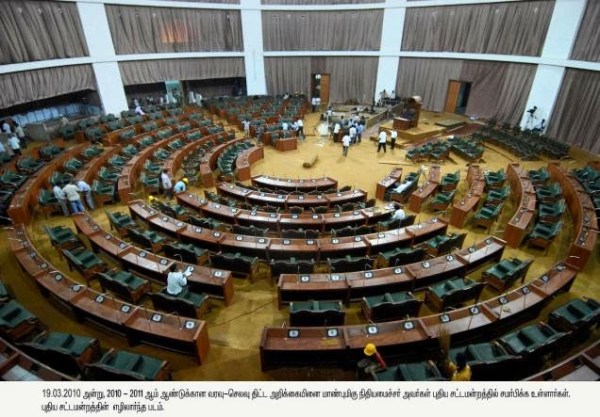
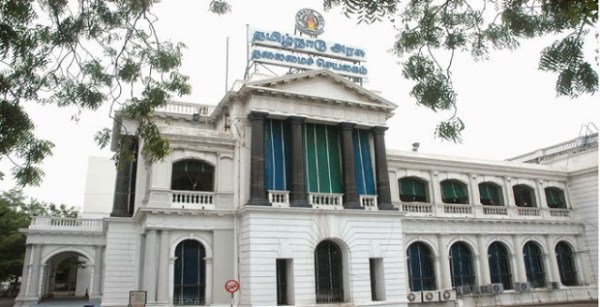
Tamil Nadu Assembly

ROLE OF SABHA (Avai in Tamil; S becomes ‘a’ and B becomes ‘v’; sabha=avai)

Sabha was an assembly where important members met and discussed matters of public interest (RV.6-28-6; 8-4-9; 10-34-6; 7-12-1; 8-10-5; 12-1-56; 19-55-6 etc). It is also mentioned in the later Samhitas and Brahmanas. The members were called sabhasaha like we call MLA or MP. Its director was called sabhasthanu; may be compared to Chief Secretary or the Speaker. The word literally meant Pillar of the Assembly.

The hall was used for social intercourse. General conversations and debates were also held there (RV2-24-13). Disputes were also solved and mitigated in the Sabha according to Mahidhara. He mentioned it in his commentary on Vajasaneyi Samhita (20-27). Financial affairs like wealth of the cattle were also discussed and settled in the sabha (RV6-28-6). Atharva Veda says that higher subjects were also discussed there (AV 7-12-3).

It looks like they performed various functions like enacting new laws, solving the problems. Another suggestion is that it was the assembly of the affluent (maghavan), like the House of Lords.

It was the meeting place of Village council. Domestic use of the sabha was confirmed in several passages of the later Samhita and Brahmanas (AV 8-10-5; TS 3-4-8-6; TB 1-1-10-3

Rajasthan Assembly

Dignity and Decorum of the House

Care was taken to maintain the standard of speech in the Sabha. No unparliamentarily words were allowed. Important participants were called ‘sabheya’ or fit for assembly (RV 2-24-13; AV 20-12-8; VS 22-22

Chandogya Upanishad says that the king attended the sabha (53-6). Chairperson of the Sabha was known as Sabhapala. Members were also known as sabhachara (TB 3-7-46)

Both Sabha and Samiti are described as the Twin Daughters of Prajapati (AV 7-12; SB 4-1-4-1)

Tamil Nadu Assemly

ROLE OF SAMITI (Comiti=Committee)

Samiti means a collective body (RV 9-92-6). Kings attended the samiti (RV 10-97-6)

Atharva Veda which described Samiti and Sabha as twin daughters of Prajapati says they are deliberative bodies (712). RV shows its importance and the business transacted there in 10-193-3.

AV gives more information about the Samiti

a)Courtly men coming as guests 8-10

b)Samiti’s praise sung in all gatherings of men 12-1-56

c)It was an assembly of people and its consent is essential for the King 5-19

Sayana says that Samiti was a War Council, where kings or tribal chiefs assembled to discuss the course of action.

It was conveyed to elect and accept the king or to approve of his acts (RV 1-95-8;9-92-6; 10-97-6.

Compared to Sabha, it was a smaller assembly.

Picture of Lok Sabha

Dasaratha’s Consultation

Even in Valmiki Ramayana we read that Dasaratha called the assembly of ministers and VIP.s and asked their opinion and consent to appoint Rama as the next king. Manu in his Smrti says how bad kings were thrown out of power. We read about Vijaya’s banishment from Kalinga/Bengal region who established a new dynasty in Sri Lanka. Later literature gives us information about Council of Five and Council of Eight people. So we have a continuous history of democratic institutions. The king was decorative post without much power.

Brahmin Kings of Sri Lanka!

Compiled by London swaminathan

Article No.1854; Dated 9 May 2015.

Uploaded at London time: 18-11

Dictionary of 10,000 Indian Kings – Part 19


ARYA CHAKRAVARTI DYNASTY: Nineteen Brahmin Kings ruled Jaffna region of Sri Lanka from 13th century to 17th century CE and the last king Cankili II was ousted by the Portuguese. They were of Tamil Brahmin origin who came from Rameswaram. They alternated the names Pararajasekaran and Jegarajasekaran following the Pandyan model of Maran and Sadayan. Pandya kings alternated their names with Jatavarma (sadayan) and Maravarman (maran). We know the names of Aryachakravarti kings from Tamil inscriptions

Summary of Previous 18 Parts:–

160 Kings in Rig Veda published here on 23rd November 2014.

First part of the article –146 kings beginning with letter ‘A’.

Second part– 65 Pandya Kings of Madurai+ Puranic Kings

Third part — 122 kings beginning with letter ‘B’

Fourth Part- 43 Kings of Vijayanagara Empire + 34 Kings under letter C.

Fifth Part – 106 Kashmiri Hindu Kings

Sixth Part – 30 Satavahana  Kings  + 136 Kings under letter D.

Seventh Part –  35 Tamil Pandya Kings of Sangam Age.

Eighth Part – List of Chera (Kerala) 22 kings of Sangam Age+ Kings listed under E (3),G(37) & H(28)=68kings

Ninth Part- 39 Choza Kings of Tamil Nadu

Tenth Part- 104 kings from Cambodia, Champa, Sri Vjaya Kingdom of Indonesia and Pallava

11th part:Under ‘I’  13 kings+ Under ‘J’ 40 kings+ Under ‘K” 147 kings are listed.

12th Part:– 113 kings of various Indonesian kingdoms are listed.

13th Part –UNDER ‘L’ 14 + UNDER ‘M’ 72 + PANDYA II LIST 36=122 KINGS

14TH PART:Dynasties of Vishnukundina (10), Vakataka (16),Salankayana (4),Andra Ikshvaku (4) and Names under “N”(60)=94 kings.

15th Part:—-Kadamba dynasty – 14 kings, Badami Chalukya -10 kings, Rashtrakuta dynasty kings- 16

Western Chalukya kings – 14, Kakatiya dynasty – 16, Eastern Chalukya kings – 33, Ganga vamsa – 16, Kalachuri dynasty- 14,Pala vamsa -21, Chandela dynasty 34, Gurjara Pratihara -17

Hoysala-13, Alupa – 32 kings are listed = Total 226 kings

16th part – Under R—121 kings and 152 Kings of Nepal = 273 kings

In this 17th part, I have listed Kings under ‘S’

18th part I list the kings of Kushan (18), Gupta Dynasties(26) and Kings under the letter ‘T’ (38 kings). So far we have listed 2565+39(U)+ 131(V)kings+202 Sri Lankan Kings=2937!
Kings under letter “U” from Dates and Dynasties in Earliest India by R Morton Smiths

U1)Uddaalaka Aruni – 855 BCE (all dates are in BCE unless stated otherwise)

U2)Uddhava Devasravas – 1160 BCE

U3)Uddhava Kalinga 850 BCE

U4)Ugradeva Rajani Janaki – 880 BCE

U5)Ugrasena, father in law of Akrura – 1125

U6)Ugrasena Ahuki Yadava – 1020

U7)Ugrasena, brother of Janamejaya – 1230

U8)Ugrasena, nanda vamsa –

U9)Ugratirtha Kalinga – 925

U10)Ugrayudha Dvimidha – 1070

U11)Ulmuka ,son of Rama – 1075

U12)Uluka (Urnanabha) –

U13)Upabahyaka Sarnjayvi – 1200

U14)Upabimba Vasudeva – 1055

U15)Upadaanaavi , wife of Sudyuma

U16)Upadeva Yadava- 1080

U17)Upadeva Daivaka-

U18)Upadeva Daivaki

U19)Upagraavant Bhangakari -1090

U20)Upagu vaideha – 682

U21)Upagupta vaideha – 660

U22)Upamadgu Yadava- 1090

U23)Upananda Vasudeva –

U24)Upasanga Saura – 1210

U25)Upendra Yadava – 1020

U26)Urja of Magadga- 1050

U27)Urjavaha Vaideha – 1050

U28)Urnanabha Aiksvakava – 1180

U29)Uruksaya Amahiyava – 1140

U30)Uruksaya    Aiksvakava –  945

Urvasi wife of Pururuvas

Usad-gu

U31)Usanas Sukra Bhargava – 1820

U32)Usanas Yadava – 1440

U33)Usij Brother of Gautama – 1320

U34)Usinara Anava – 1365

U35)Usna vatsa – 830

Uthathya Ucathya –

U36)Uttamaujas -890

Uttanka –

U37)Utkala Saudyumna – 1280

U38)UtkilaKata Vaisvamitra – 1240

U39)Uttara Abhimanyu – 970
Kings under Letter “V”

V1)Vadava paricarika

V2)Vadrayasva Pancala – 1190

V3)Vagindra Saunaka – 1050

V4)Vahinara vatsa – 450

Vahini , wife to Kuru

V5)Vahni Turvasa – 1400

V6)Vaibhandaki – 1030

V7)Vainateya – father in law of Citaratha- 1130

V8)Vainateya , father in law of Brahanmanas – 950

V9)Vaisaki Bhadra

Vaisampayana – brother of Vyasa – 1000

V10)Vaitarana daivarha Yadava -1115

V11)Vajramitra Sunga Magadha – 129

V12)Vajra Asvasuta – 945

V13)Vajranabha Aiksvakava – 1160

V14)Vajrara Saura – 1190

Valmiki Adi Kavi – 400

V15)Vanga Baleya – 1210

Vantivana

V16)Vapusmant Laumapada -1060

V17)Varanta Divarha Yadava – 1120

Varangi – wife of Samyati

V18)Varcas saunaka – 1220

V19)Vardhamana auradevala – 119

V20)Vardhamana Jina Mahavira – 44

V21)Varsakara , minister in Magadha – 485

V22)Varsaketu of Kasi – 1195

Varuthin

V23)Vasavadatta  Pradyota – 485

V24)Vasati aiksvakava – 1810

V25)Vasin vaideha – 350

V26)Vasistha ikshvaku – 1840

V27)Vasistha Trisanku – 1335

V28)Vasistha Apava – 1315

V29)Vasistha Maitravaruni – 1320

V30)Vasu Kausika – 1360

V31)Vasu Upasanga – 1200

V32)Vasu Caidya – 1190

Vasudha

V33)Vasudana Vatsa -540

V34)Vasudeva saura – 1260

V35)Vasudeva II father of Krishna – 1010

V36)Vasudeva Kanva Magadha – 73 CE
V37)Vasudeva Kushan -189 BCE

V38)Vasujyestha Sunga –

V39)Vasumanas Aiksvakava -1350

V40)Vasumitra Sunga – 142

V41)Vasunabha (Abhayada Suvanant) -1680

Vasundhara Mother of Srutavant 1050

V42)Vatapati bhangakari – 1090

V43)Vatsa Rtadwaja Kasya- 1290

V44)Vatsa Avantaka Nipa -1300

V45)Vatsapri Bhalandana –

V46)Vatsavana Saura- 1155

V47)Vatsavyuha akisvakava – 930

V48)Vedisri satakarni – 193

V49)Vegavant Saka – 1360

V50)Venuhaya Yadava – 1560

V51)Venuhotra of Kasi – 1060

V52)Vibhandaka Kasyapa – 1165

V53)Vibhraja Nipa – 1140

V54)Vibhu of Kasi- 1140

V55)Vibudha vaideha – 1200

V56)Vicitravirya of Kasi 905

V57)Vicitravirya Kaurava – 1035

V58)Vidarbha Yadava – 1290

V59)Vidura Vaicitravirya -990

V60)Viduratha,  father in law of Sudhrtri

V61)Viduratha Bhajamana Yadava – 1140

V62)Viduratha Vaidarbha – 1190

V63)Viduratha Kaurava -1200

V64)Vidathin Marutasva –

V65)Vihavya Saunaka – 1200

V66)Vijaya Aiksvakava 1380

V67)Vijaya Vaideha – 528 CE

V68)Vijaya Ksatradharmana – 1510

V69)Vijaya Saura – 1190

V70)Vijaya Anava Satyaratha 1080

V70)Vijaya Andhra – 226 CE

V71)Vijaya, wife of sahadeva

V72)Vikarna Anava – 780

V73)Vikrama Aditya – 58

V74)Vikuksi sasada

V75)Vikunthn Hastina – 1100

Vimala, wife of Ajamidha

V76)Vimsa Pramsava – 1380

V77)Vinatasva Saudyumna – 1280

V78)Vinda of Avanti- 980

V79)Viprthu Caitraka Yadava – 1080

V80)Virabahu of Mahabharata Nala story

V81)Viraja kaurava – 1425

V82)Viraratha Dwimidha -950

V83)Virasena Nisada- 1390

V84)Virasena maurya Saubhagasena-200

V85)Virocana of Hiranyakasipu

V86)Virupa Nabhagi – 1410

V87)Visakhayupa Pradyota- 456 CE

V88)Visala Vaisravasa Saka- 1260

V89)Visala, wife of Uruksaya – 1140

V90)Visnuvrddha Aiksvakava 1390

V91)Visravas Dravideya Saka – 1280 BCE

Visruta Sruta –

V92)Visrutasva Aiksvakava-830

V93)Visrutavant Aiksvakava 1025

V94)Visvagasva Aiksvakava 1740

V95)Visvajit ,Brother of Bhima- 1540

V96)Visvajit of Magadha- 572

V97)Visvaksena pancala- 1070

V98)Visvamitra gathina- 1340

Visvaratha Visvamitra-

V99)Visvasaha Nabhagi- 1180

V100)Visvasaha Aiksvakava1100

V101)Visvasaha Laumapada -1180
V102)Visvavasu, father of Pramadvara -1010

V103)Vitahavya Haihaya – 1295

V104)Vitaratha Laumapada – 990

V105)Vitarka Kaurava – 1130

V106)Vitatha Marutasva- 1205

V107)Vitatya Saunaka -1180

V108)Vitihotra vaideha- 462 CE

V109)Visvavant, father of Manu

V110)Vivimsa Pramsava – 1360

V111)Vratini Bhagavati Yadavi- 1170

V112)Vrddhasarman Karusa- 1000

V113)Vrddhasarman Nabhagi 1200

V114)Vrjini, daughter of Susila Madri

V115)Vrjnivant Yadava – 1620

V16)Vrka Aiksvakava 1340

V117)Vrkadeva -1230

V118)Vrkadeva sisirayani- 1200

V119)Vrkati Vaidarbha – 1130

V120)Vrsa Arjuni Yadava -1335

Vv121)rsa Anava Varsasena -940

V122)Vrsabha 1150

V123)Vrsabhuta Indra -1810

V124)Vrsadarbha Saibhya Anava – 1320

V125)Vrsala Madhava Yadava- 1290

V126)Vrsaparvan, father in law of Yayati- 1820

V127)Vrsasena Anava -960

V128)Vrsni satvata Yadava – 1190

V129)Vrsnimant Vatsa- 770

Vyasa Krsna – 1050

V130)Vyoman Vaidarbha -1170

V131)Vyusitasva Aiksvakava – 1120
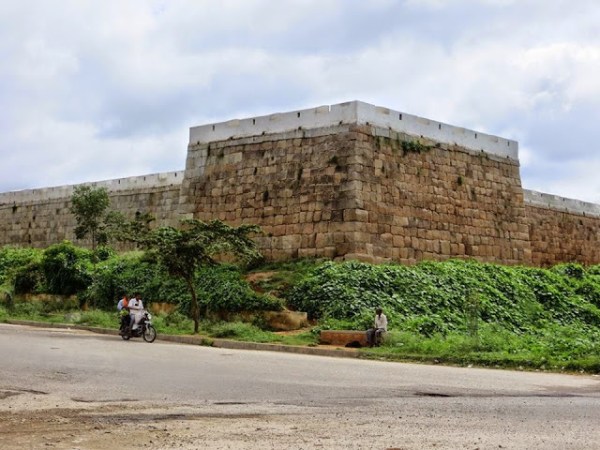
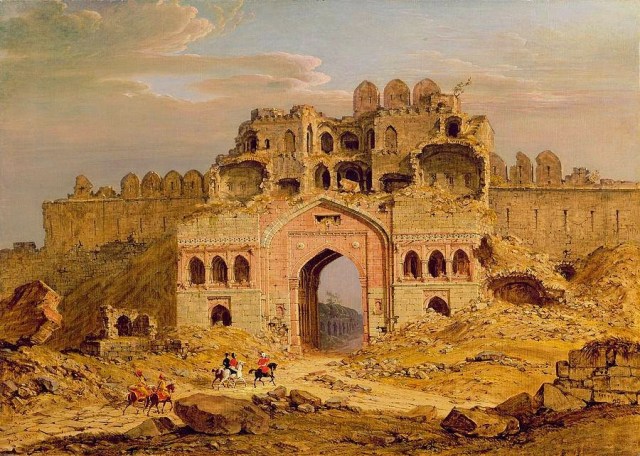
Magadhi Fort

Kings of Sri Lanka

SL1)Vijaya 38 Years 543 – 505 BC Thammanna Nuwara
Upathissa 01 Year 505 – 504 BC Upathissa Nuwara
Panduwasa Dewa 30 Years 504 -474 BC Upathissa Nuwara
Abhaya 20 Years 474 – 454 BC Upathissa Nuwara
Pandukabhaya 70 Years 437 – 367 BC Anuradhapuraya
Mutasiwa 60 Years 367 – 307 BC Anuradhapuraya
Devanampiyathissa 40 Years 307 – 267 BC Anuradhapuraya
Uththiya 10 Years 267 – 257 BC Anuradhapuraya
Mahasiwa 10 Years 257 – 247 BC Anuradhapuraya
SL10)Surathissa 10 Years 247 – 237 BC Anuradhapuraya
Sana & Guththika 10 Years 237 – 215 BC Anuradhapuraya
Asela 10 Years 215 – 205 BC Anuradhapuraya
Elara 44 Years 205 – 161 BC Anuradhapuraya
Dutugemunu 24 Years 161 – 137 BC Anuradhapuraya
Saddhathissa 18 Years 137 – 119 BC Anuradhapuraya
Thullaththana 01 Month 119– BC Anuradhapuraya
Lanjithissa 09 Years & 08 Month 119 – 109 BC Anuradhapuraya
Kallathanaga 06 Years 109 – 103 BC Anuradhapuraya
Wattagamini Abhaya ( Walagamba ) 05 Month- ( 1st rulling time ) 103 BC Anuradhapuraya
SL20)Walagamba 12- Years ( 2nd rulling time ) 89 – 76 BC Anuradhapuraya
Pualahattha 03 Years 103 – 100 BC Anuradhapuraya
Bhahiya 02 Years 100 – 98 BC Anuradhapuraya
Panayamara 07 Years 98 – 91 BC Anuradhapuraya
Piliyamara 07 Month 91 – 90 BC Anuradhapuraya
Dhatiya 02 Years 90 – 89 BC Anuradhapuraya
Mahasilu Mahathissa 14 Years 76 — 62 BC Anuradhapuraya
Choranaga 12 Years 62 – 50 BC Anuradhapuraya
Thissa ( Kuda Thissa ) 03 Years 50 – 47 BC Anuradhapuraya
Anula & Her Husbonds– 04 Years & 03 Month 47 – 42 BC Anuradhapuraya
SL30)Kutakannathissa 22 Years 42 – 20 BC Anuradhapuraya
Bhathiya , Bhathika

Abhaya, Bhathiya Thiss

28 Years 20 BC – 09 AC Anuradhapuraya
Mahadathiya Mahanaga 12 Years 09 – 21 AC Anuradhapuraya
Amanda Gamini 09 Years- 21 – 30 AC Anuradhapuraya
Kanirajanuthissa 03 Years 30 – 33 AC Anuradhapuraya
Chulabhaya 02 Years 33 – 35 AC Anuradhapuraya
Queen Seewali 04 Month 35 AC Anuradhapuraya
Eylanaga 09- Years 35 – 44 AC Anuradhapuraya
Chandramukhaseewa 08 Years 44 – 52 AC Anuradhapuraya
SL40)Yasalalakathissa 07 Years & 08 Month 52 – 60 AC Anuradhapuraya
Subharaja 06 Years 60 – 66 AC Anuradhapuraya
Wasabha 44 Years 66 – 110 AC Anuradhapuraya
Wankanasikathissa 03 Years 110 – 113 AC Anuradhapuraya
Gajabahu – I 22 Years 113 – 135 AC Anuradhapuraya
Mahallakhanagha 06 Years 135 – 141 AC Anuradhapuraya
Bhathiya Thissa – II 24 Years 141 – 165 AC Anuradhapuraya
Kanitthathissa 28 Years 165 – 193 AC Anuradhapuraya
Chulanaga ( Kujjanaga ) 02 Years 193 – 195 AC Anuradhapuraya
Kunchanaga 01 Years 195 – 196 AC Anuradhapuraya
SL50)Sirinaga 19 Years 196 – 215 AC Anuradhapuraya
Voharikathissa 22 Years 215 – 236 AC Anuradhapuraya
Abhayanaga 08 Years 236 – 244 AC Anuradhapuraya
Sirinaga – II 08 Years 244 – 246 AC Anuradhapuraya
Vijayakumara 01 Year 246 – 247 AC Anuradhapuraya
Sangathissa 04 Years 247 – 251 AC Anuradhapuraya
Sirisangabhodhi ( Sirisagabo ) 02 Years 251 – 253 AC Anuradhapuraya
Ghotabhaya 13 Years 253 – 266 AC Anuradhapuraya
Detuthis – I ( Jettathissa ) 10 Years- 266 – 276 AC Anuradhapuraya
Mahasen 27 Years 276 – 303 AC Anuradhapuraya
SL60)Sirimewan 28 Years 303 – 331 AC Anuradhapuraya
Detuthissa – II 09 Years 331 – 340 AC Anuradhapuraya
Buddhadasa 29 Years 340 – 369 AC Anuradhapuraya
Upathissa – I 42 Years 369 – 410 AC Anuradhapuraya
Mahanama 22 Years 410 – 432 AC Anuradhapuraya
Soththisena 01 Day 432 AC Anuradhapuraya
Chaththagrahaka 01 Year 432 – 433 AC Anuradhapuraya
Miththasena 01 Years 433 – 434 AC Anuradhapuraya
Pandu 434 – 459 AC Anuradhapuraya
Parinda 434 – 459 AC Anuradhapuraya
SL70)Kudaparinda 434 – 459 AC Anuradhapuraya
Thirithara 434 – 459 AC Anuradhapuraya
Dhatiya 434 – 459 AC Anuradhapuraya
Phitiya 434 – 459 AC Anuradhapuraya
Dhatusena 18 Years 459 – 477 AC Anuradhapuraya
Kashayapa 18 Years 477 – 495 AC Anuradhapuraya
Mugalan — I 18 Years 495 – 512 AC Anuradhapuraya
Kumaradasa ( Kumara Dhathusena ) 09 Years 512 – 521 AC Anuradhapuraya
Keerthisena 09 Month 521 AC Anuradhapuraya
Siwa 25 Days 521 AC Anuradhapuraya
SL80)Upathissa – II 01 Year 521 – 522 AC Anuradhapuraya
Silakala 13 Years 522 – 535 AC Anuradhapuraya
Dathappabhuthi ( Dhapuphasen ) 06 Month 535 AC Anuradhapuraya
Mugalan — III 20 Years 535 – 555 AC Anuradhapuraya
Kithsirimewan- ( Keerthi Sri Megawarna ) 19 Years 555 – 573 AC Anuradhapuraya
Mahanaga 03 years 573- -575 AC Anuradhapuraya
Agbo – I ( Agrabhodhi ) 34 Years 575 – 608 AC Anuradhapuraya
Agbo – III 10 Years 608 – 618 AC Anuradhapuraya
Sangathissa 02 Month 618 AC Anuradhapuraya
Mugalan – III 05 Years 618 – 623 AC Anuradhapuraya
SL90)Asigrahaka ( Shilamegawarna ) 09 Years 623 – 632 AC Anuradhapuraya
Agbo – III 06 Month ( 1st rulling time) 632 AC Anuradhapuraya
Jetthathissa ( Detuthissa )- – III 05 Month 632 AC Anuradhapuraya
Agbo- – III 16 Years- ( 2nd rulling time ) 632 – 648 AC Anuradhapuraya
Dathasiwa – I 02 Years 648 – 650 AC Anuradhapuraya
Kashayapa — II 09 years 650 – 659 AC Anuradhapuraya
Dappula – I 03 Years 659 – 662 AC Anuradhapuraya
Haththadatha ( Dhatopathissa – II ) 09 Years 659 – 667 AC Anuradhapuraya
Agbo – IV ( Aggabhodhi ) 16 Years 667 – 683 AC Anuradhapuraya
Daththa 02 Years 683 – 684 AC Anuradhapuraya
SL100)Haththadatha- 06 Month 684 AC Anuradhapuraya
Manawamma 35 Years 684 – 719 AC Anuradhapuraya
Agbo – V 06 Years 719 – 725 AC Anuradhapuraya
Kashshapa – III 06 Years 725 – 731 AC Anuradhapuraya
Mahinda – I– ( Mihindu ) 03 Years 731- 733 AC Anuradhapuraya
Agbo- – VI 40 Years 733 – 722 AC Anuradhapuraya
Agbo – VII 06 Years 772 – 718 AC Anuradhapuraya
Mihindu – II 20 Years Anuradhapuraya
Dappula -II ( Udaya – I ) 05 Years 797 – 802 AC Anuradhapuraya
Mihindi – III 03 Years 802 – 805 AC Anuradhapuraya
SL110)Agb0 – VIII 11 Years 805 – 816 AC Anuradhapuraya
Dappula – III 16 Years 816 – 831 AC Anuradhapuraya
Agbo – IX 02 Years 831 – 833 AC Anuradhapuraya
Sena – I 20 Years 833 – 853 AC Anuradhapuraya
Sena – II 35 Years 853 – 887 AC Anuradhapuraya
Udaya – II 11 Years 887 – 898 AC Anuradhapuraya
Kashshapa- – IV 17 Years 898 – 915 AC Anuradhapuraya
Kashshapa- – V 09 Years 915 – 924 AC Anuradhapuraya
Dappula – IV 07 Month 924 AC Anuradhapuraya
Dappula – V 12 Years 924 – 935 AC Anuradhapuraya
SL120)Udaya – II 03 Years 935 – 938 AC Anuradhapuraya
Sena – III 08 Years 938 – 946 AC Anuradhapuraya
Udaya – III 06 Years 946 – 952 AC Anuradhapuraya
Sena – IV 03 Years 952 – 955 AC Anuradhapuraya
Mihindu – IV 16 Years 955 – 972 AC Anuradhapuraya
Sena – V 10 Years 972 – 982 AC Anuradhapuraya
Mihindu – V 36 Years 982 – 1018 AC Anuradhapuraya
Vijayabahu – I 55 Years 1055 – 1110 AC Polonnaruwa
Jayabahu – I 01 Year 1110 AC Polonnaruwa
Vickramabahu 21 Years 1110 – 1131 AC Polonnaruwa
SL130)Gajabahu – II 22 Years 1131 – 1153 AC Polonnaruwa
Maha Parakramabahu – I 33 Years 1153 – 1186 AC Polonnaruwa
Vijayabahu – II 01 Year 1186 – 1187 AC Polonnaruwa
Mihindu ( mahinda ) – IV 05 Days 117 AC Polonnaruwa
Nishshankamalla 09 Years 1187 – 1196 AC Polonnaruwa
Veerabahu – I 01 Day 1196 AC Polonnaruwa
Vickramabahu – II 03 Month 1196 AC Polonnaruwa
Chidaganga 09 Month 1196 – 1197 AC Polonnaruwa
Leelawathi 03 Years ( 1st rulling time ) 1197 – 1200 AC Polonnaruwa
Leelawathi 01 Year ( 2nd rulling time ) 1210 AC Polonnaruwa
SL140)Leelawathi 07 Month ( 3rd rulling time ) 1212 AC Polonnaruwa
Sahasamalla 02 Years 1200- – 1202 Ac Polonnaruwa
Kalyanawati 08 Years 1202 – 1210 AC Polonnaruwa
Darmshoka 01 Year 1210 AC Polonnaruwa
Anikanga 17 days 1210 AC Polonnaruwa
Lokeshwara 09 Month 1211 AC Polonnaruwa
Parakramapandu 03 Years 1212 – 1215 AC Polonnaruwa
Kalinga- Maga 21 Years 1215 – 1236 AC Polonnaruwa
Vijayabahi – III 04 Years 1220- 1224 AC Dambadeniya
Parakramabahu – II 35 Years 1234 -1269 AC Dambadeniya
SL150)Vijayabahu – IV 03 Years 1267 – 1270 Ac Dambadeniya
Buvanekabahu – I 12 Years 1270 -1283 AC Dambadeniya & Yapahuwa
Parakramabahu – III 06 Years 1287 – 1293 AC Polonnaruwa
Buwanekabahu – II 09 Years 1293 – 1302 AC Kurunegala
Panditha Parakramabahu – IV 24 Years 1302 – 1326 AC Kurunegala
Buwanekabahu – III Kurunegala
Vijayabahu – V Kurunegala
Buvanekabahu – IV 12 Years 1341 – 1353 AC Gampola
Parakramabahu – V 15 Years 1344 – 1359 Dedigama & Gampola
Vickramabahu – III 17 Years 1500 – 1374 AC Gampola
SL160)Buvanekabahu – V 37 Years 1372 – 1408 AC Gampola
Veerabahu – II 05 Years 1392 – 1397 AC Raigama
Veeraalakeshvara 12 Years 1397 – 1410 Ac Raigama
Parakramabahu – VI 55 Years 1412 – 1467 AC Kotte
Jayabahu – II 05 Years 1467 – 1472 AC Kotte
Buvanekabahu – VI 09 Years 1472 – 1480 AC Kotte
Parakramabahu – VII 04 Years 1480 – 1484 AC Kotte
Veeraparakramabahu – VIII 24 Years 1484- 1508 AC Kotte
Darma Parakramabahu – IX 20 Years 1508 – 1528 AC Kotte & Kelaniya
Vijayabahu – VII 12 Years 1510 – 1522 AC Kotte
SL170)Buwanekabahu- – VII 30 Years- 1522 – 1551 AC Kotte
Darmapala 46 Years 1551 – 1597 Ac Kotte
Mayadunna 60 Years 1521 – 1581 AC Seethawaka
Rajasinghe – I 39 years 1554 – 1593 AC Seethawaka
Don Pilip 01 Year 1591 AC Mahanuwara
Wimaladarmasuriya – I 13 years Mahanuwara
Senarath 31 Years 1604 1635 AC Mahanuwara ( Senkadagala )
Rajasinghe – II 52 Years 1635 – 1687 AC Senkadagala
Wimaladarmasuriya – II 20 Years 1687 – 1707 AC Mahanuwara ( Senkadagala )
Narendrasinghe 32 Years 1707 – 1739 AC Mahanuwara ( Senkadagala )
SL180)Vijaya Rajasinghe 08 Years 1739 – 1747 AC Mahanuwara ( Senkadagala )
Keerthi Sri Rajasinghe 35 years 1747 – 1782 AC Mahanuwara ( Senkadagala )
Radhirajasinghe 16 Years 1782 – 1798 AC Mahanuwara ( Senkadagala )
SL183)Sri Wickrama Rajasinghe 17 Years 1798 – 1815 AC Mahanuwara ( Senkadagala )


Ninteen Kings (Pararaja, Jegaraja)184 to202
Arya Chakravarti – 1277 –Jaffna (Northern Sri Lanka)

Devan

Azakan

Minatungan

Singai Parasasekaran

SL202) Cankili II

Though nineteen kings ruled, we don’t know about them. Only the contemporary inscriptions help us to identify them. Some people have attributed their origin to Malaya, Java and Kalinga.

Ramayana came first; Mahabharata came later!

Written by London swaminathan

Research Article No.1847; Date: 5 May 2015

Uploaded at London time: 16-08


Which came first Ramayana or Mahabharata? It is a question debated for long. Hindus believe that Ramayana happened in Treta Yuga and Mahabharata happened in Dwapara Yuga. That means Ramayana happened well before Mahabharata. But the question arose because of Parasurama and a few others who figured in both the epics. How is it possible if both the epics are Yugas (eras) apart?
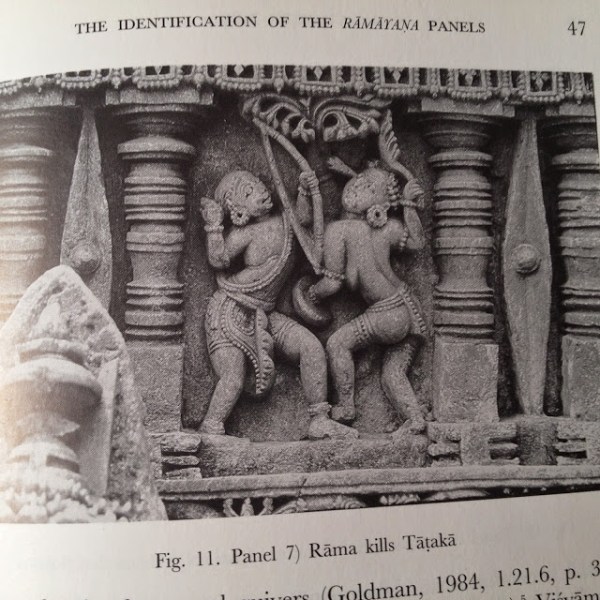
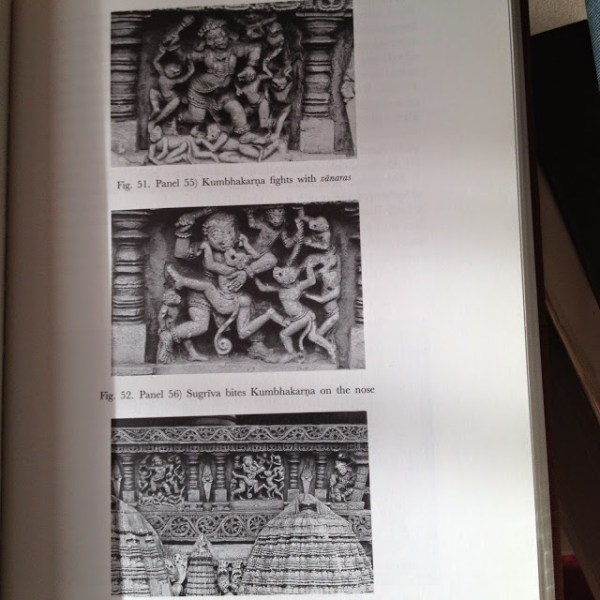
The answer is very simple. There were more than one Parasurama.

Let us look at this issue in more details. There are two questions: Which one happened first? Which one was written first?

1.Ramayana happened first and was written first. Mahabharata has abridged Ramayana in the Ramopakhyayanam. Since Mahabharata (here afterwards abbreviated as Mbh) included lot of old stories Vyasa did not want to miss it. Like he gave other stories, he gave Ramayana in short. It is not the other way round.

2.The word Arya is used in its archaic sense in an archaic way in Ramayana. Sita addressed Rama, Hey Arya! and Ravana’s palace guards address him as Hey Arya (Respected Sir, or Cultured man)

  1. In the Ramayana we come across many ‘not so civilized’ tribes such as the Monkey people (Hanuman), Eagle (Jatayu) People, Bear (Jambhavan) People. These may be their totem symbols or they had such tattoos for identification and recognition. We see such customs among forest tribes around the world. During Ramayana days the forests were full of cannibals called demons. Mahabharata has more urban areas and urban culture. Very rarely we come across tribes or cannibals (except Bakasura). Both the cultures are poles (Yugas) apart.

4.Hanuman came across Mainaka Parvat, Simhika, Langini and other hurdles on his way to Lanka. We don’t see such things or similar hurdles in Mahabharata.

5.Parasurama fought with Karta Veerya Arjuna. Mahabaharata Arjuna came several hundred years after Karta Veerya Arjuna, according to historians. So that Parsurama could not have taught Karna martial arts. Some one bearing similar name or someone was called  Parasurama for his Anti Kshatriya stance. Throughout our Puranic literature this confusion exists. There were several Parikshits, several Janamejayas etc. But Pauranics confused the public by saying all are one!

6.In Ramayana we come across some old phrases such as Dasaratha ruled for 60,000 years, Dasaratha had 60,000 wives. The meaning is “a lot of”. This archaic expression was not used in Mahabharata (Mbh).

7.Rama –Ravana battle was like an old style battle. No military formations etc. Whereas Mbh yuddha was fought on military formations. The result of the battle was decided by such formations. Abhimanyu was killed because of this. Moreover the army was divided into 7 and 11 divisions and each one had its commander. In Ramayana days they were never organised on similar lines.

8.Lava and Kusa “sang” Ramayana ballads. Valmiki taught them the ballads. Valmiki himself was praised as a Koel (Vande Valmiki Kokilam). So Ramayana evolved out of ballads like the Odyssey and Illiad of Homer. Whereas Mbh was “written” by Vyasa. There is a big time gap between the ballad period and writing period.

9.Some people were misled by the archaic style of Mahabharata and simple style of Valmiki Ramayana. Vyasa was well versed in the Vedas. In fact he was the one he compiled all the Vedic hymns fearing that it may be lost once and for all. But for him we would have got anything Vedic. Moreover he knit all the existing older materials into Mbh. To make the style uniform he used archaic style. Valmiki being the Adi Kavi—the First Poet—sang in the Anustubh metre for the first time in Sanskrit (apart from the Vedas).

  1. The message of Ramayana is very simple: Be honest, Speak the Truth, Obey your parents, Don’t desire for another man’s wife. Being Treta Yuga people were 50 percent to 75 percent good. But Mbh is full of intrigues, conspiracies, infightings in the family, hatred and jealousy. It was nearer to Kaliyuga, the Dark Age. So we have lot of moral teachings.
  1. Ramayana days were nearer to Upanishadic age. So there was no need for philosophical teaching. Whereas Mbh has the Bhagavad Gita which is the gist of all major Upanishads.

12.Ramayana has 24,000 slokas. When Lava and Kusa sang the ballads it might have been done in a different way; but the story line did not change. Mbh is the largest book in the ancient world with 100,000 slokas. It was that big even in the first century BCE. Lot of scholars have bluffed that it slowly grew to the present level. No scholar could show until today what the original was and what snowballed later. In spite of computers and other modern techniques they could not show it. The fact of the matter is Vyasa compiled everything available at his time. That is why we even see some contradictions in the moral teachings in it. The very word VYASA means a compiler, an essayist.

  1. Ramayana has 300 different versions because it was very old. The longer it travelled it, more and more varied it became. Whereas Mbh has got only one version throughout South East Asia. Ramayana has different versions from country to country in S E Asia. This shows the length of gap between the two epics.
  1. Mbh has got at least 29 countries represented in the great war. Ramayana has not got that many political divisions. We knew even the names of lots of kings of Mbh time. Whereas Ramayana gives only four or five kings names in the entire subcontinent.

15.We could identify many of the places mentioned in Mbh whereas we did not even know where Kiskidha was. We could only guess, but no written or literary records for Lanka or Kiskindha. Mbh places have been continuously repeated in several written or literary records.

  1. Mahabharata has many stories woven into the main Pandava-Kaurava conflict. Whereas Ramayana has only one simple story. It shows that it was the first one.

17.We have highly developed subjects/sciences in Mbh; but Ramayana did not deal with medicine or astronomy or astrology in the same way.

18.In short we see more advanced civilization in the Mbh and a very simple culture in Ramayana.

Since Parasurama existed at the time of Karta Veerya Arjuna he could not have lived at the time of Mahabharata Arjuna to teach martial arts to Karna.

I will deal with more minute details in another article.

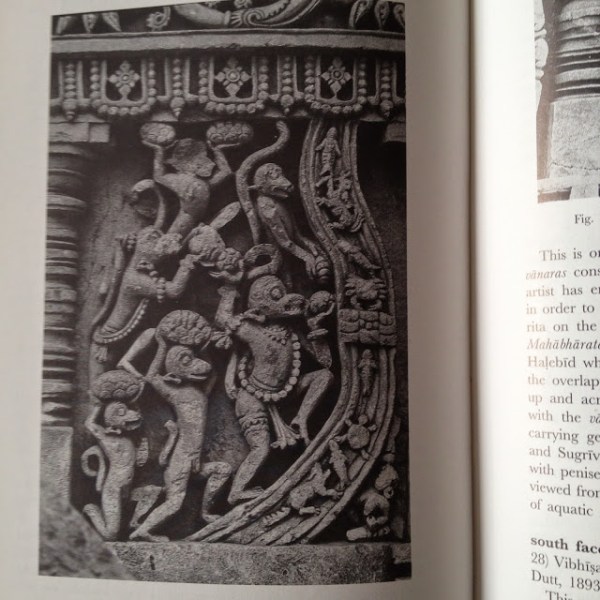
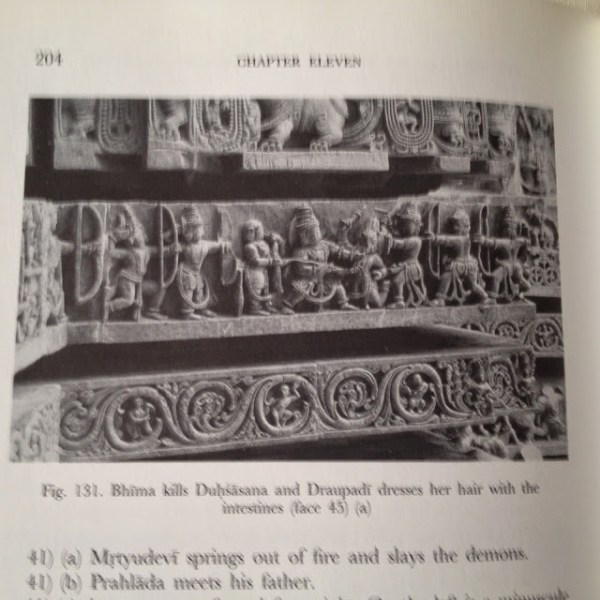
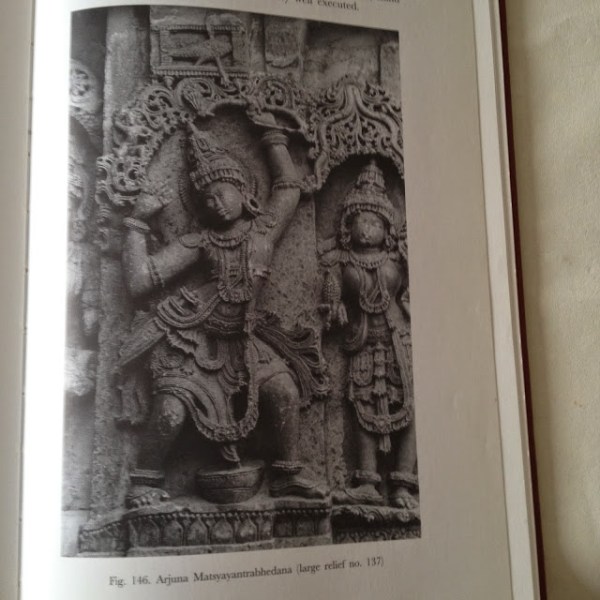
Pictures re used from the book “Epic Narratives in the Hoysala Temples” by Kirsti Evans;thanks.

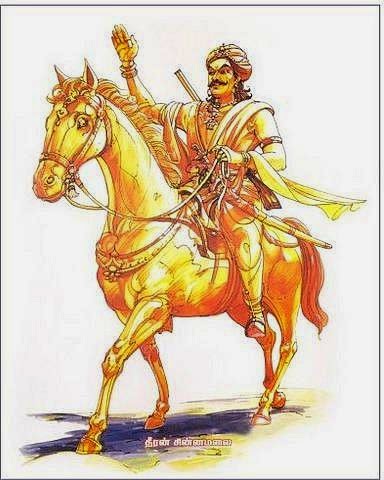
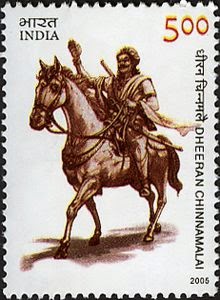
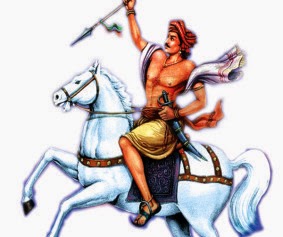
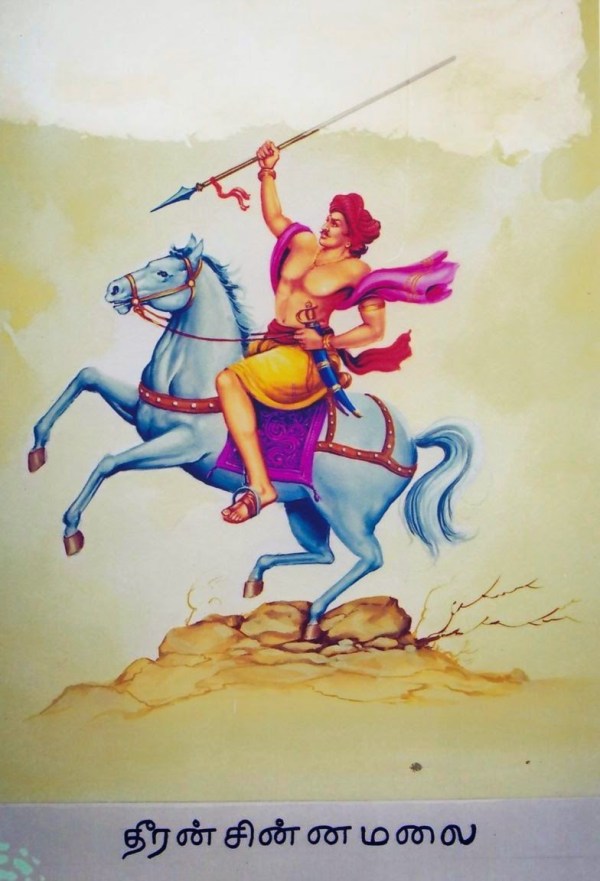
Dheeran Chinnamalai, a fighter to the last!

Compiled by London swaminathan

Date: 22 April 2015; Post No: 1819

Uploaded in London 8-54 am

By T A Srinivasan, Indian Express, 4th April 1985

I was about to throw out my old paper cuttings. One of them was written by my colleague in Indian Express and it is a good article about a great hero. So I am typing the full article published thirty years ago: London swaminathan

Dheeran Chinnamalai alias Theerthagiri

Long before the First War of Independence in 1857 which the British historians derisively referred to as the ‘Sepoy Mutiny’, many Polygars (Paalaiyakkaarar in Tamil) and chieftains in the South had fought against the British, chief among them being Hyder Ali, Tippu Sultan, Kittur Chennamma in Karnataka, Velu Thampi, Paliathachcan and Palasiraja in Kerala, Kattabomman, Oomaithurai, Pulithevan and Marudu Pandiyar in Tamil Nadu. But not so popular were many valiant fighters and one among them was Dheeran Chinnamalai, the hero of the Kongu country, whose memory has been cherished by the Tamil Nadu Government by naming a Transport Corporation after him.

His heroic deeds do not find any mention in any mention in the scores of history books that this writer has occasion to come across, but he has been immortalised in folk songs recited in the area and a poetic tribute to this great hero has been offered by Mr Sakthikanal, who has come out with a Kummi work of 96 pages. But for him and the Tamil Nadu Government cherishing his memory, he would have been a forgotten hero like the scores of others.

Pandya Gift

According to legend, Chinnamalai’s forefathers had served the Pandya kings and one of them was Uthama Kamindar or Karian Sarkarai of Anoor, who worked under Sathrusathana Pandya. The then Choza king, Uthama, performed a Bhuta Yaga and ordered the demon who came out of the Yaga Kunda to destroy the Pandya country. Kariyan sarkarai worsted the Choza king and his demon in the battle field and Pandya king, in turn, gifted 24 villages in the Kongu country to him and made him his chieftain. One of his descendants was Kotraivel Sarkarai, who besides being an able administrator, was a great poet and “Nalla Mangaiamman Sathakam” written by him deals with medicines, animal husbandry and farming. He had two wives but no issues and he adopted two sons, Senapathi and Rathinam. The kingdom was divided into two and Senapathi became the ruler of Anoor and Rathinam Sarkarai got the area west of it with headquarters at Melapalayam.

Dheeran Chinnamalai was the second of the five sons of Rathina Sarkarai and he was born in 1756. The name given to him by his parents was Theerthagiri and after getting preliminary education in traditional schools, he learnt martial arts. His elder brother Kuzandaisami , and the youngest Kuttisami were peace loving men. The other two Thambi and Kiledar, like Chinnamalai, loved battles.

The Kongu country then which consisted of the present Coimbatore, Periyar, Salem, parts of Tiruchi districs with Palai hills as northern and Palani hills as the southern boundaries. It was under the suzerainty of Mysore rulers.  The Mysore king then in turn was under the control of the British and Chinnamalai , who hated the British from childhood, wanted the Kongu country become free.

Marava Warriors

When Hyder Ali died in 1782, and Tippu became the ruler of Mysore, Chinnamalai wanted to strengthen his hands and he recruited a large contingent of Marava warriors and all of them joined Tippu’s army.  Chinnamalai also built a big palace at Oddanilai on the banks of Noyyal and trained his warriors.

When the fourth and the last Mysore War broke out in 1799, Chinnamalai and his forces fought valiantly along with Tippu  against the English forces  which invaded Mysore from the east and the west.  A British contingent from Bombay, led by General Stuart, forced Tippu to retreat from  the Coorg frontier; the Madras forces under General Harris, aided by the Nizam’s forces and led by Col.Wellesley, routed Tippu at Maalavalli. Harris further marched towards Srirangapattinam and laid siege to it in 1799. The capital was stormed and Tippu was killed in the battlefield.

Kongu Heroes’ Challenge

Chinnamalai, with his remaining warriors, retreated to the Kongu country. He sought the help of other Polygars in the area to fight the British. He became a force to reckon with and the British sent an ambassador to his court offering to acknowledge him as the ruler of the Kongu country with the condition he should pay royalty to them. Chinnamalai not only rejected the offer outright but also challenged the meet him in the battle field.

Colonel Maxwel, who was leading the British forces at Sankagiri, then ordered the British forces to loot Chinnamalai’s country.  Chinnamalai, who got annoyed by these acts of the British, looted their areas and the two forces met on the banks of Cauvery, in 1801, in which Chinnamalai’s forces became victorious. Col. Maxwell who had a narrow escape in the 1801 war took a bigger force a year later consisting of 10,000 soldiers to the Kongu country. The Kongu forces, which were only 3000 strong, defeated them and the English captain  was killed in action.  The Kongu forces which had no fire power or other weapons, which the British possessed, were able to defeat mainly with the ‘crowbar tactic’. They attacked the British with the crowbars on their hands by swinging them right and left and were able to win the war.

Hindu Idol Destroyed

The British unable to bear the ignominy, sent a 3000 strong cavalry under the leadership of Colonel Harris in 1803 to the Kongu country. Chinnamalai had strengthened his army in the meantime and acquired fire arms. The Kongu people were then celebrating the festival at the Arachalai Amman temple at Arachalur. Col.Harris forces stormed them and the British colonel disfigured the idol of the Amman (goddess). The Kongu forces, which were infuriated by this, attacked the British forces with vigour and Chinnamalai shot at Colonel Harris’ horse. The injured horse ran helter skelter and others followed suit.  Chinnamalai was third time lucky in making the British forces retreat from the Kongu country.

Chinnamalai Victorious in Three Wars!

Having failed in their efforts to defeat Chinnamalai in three wars, the British sent a much bigger force with canon power from Calicut and Chinnamalai who got prior information about it, left Oddanilai along with his forces and took refuge in Karumalai forests in the Palani Hills.

The British forces destroyed Chinnamalai’s palace and fort at Oddanilai and went back to Calicut. The British who were not satisfied with this, somehow wanted to get at Chinnamalai and his men. Due to the betrayal of Chinnamalais cook, he and his brothers were taken prisoners by the British who chained them and took them to Sankagiri fort in 1805. They were hanged there like Kattabomman, Marudu Pandiyar, Oomaithurai and other great heroes.

It is in the fitness of things that the Tamil Nadu Government decided to honour this unhonoured and unsung hero by naming a transport corporation after him as it had done in the case of Marudu Pandiyar and Kattabomman. The buses which will run bearing his name, will make the people remember this valiant fighter and sing his glory for a long, long time to come – T A S

Indian Express, 4th April 1985

Ships in the Rig Veda!

ship2

Written by London swaminathan

Research paper No.1799; Dated 14th April 2015

Uploaded at London Time:21-59

Hindus of the Vedic period had big ships and went into the vast and deep ocean for trade and other purposes. Though it was known hundred years ago and lot of things were written about it, there were some counter arguments as well. But their arguments were weak because they argued on the basis of negative evidence, i.e. what is not in the Vedas regarding the ocean going ships. They deliberately forgot that the Vedas are not oceanography manual or marine engineering manual. Vedas are religious books.

After the discovery of Dwaraka under the sea which corroborated the information found in Vishnu Purana and Mahabharata, the counter arguments became weaker. Negative evidence never prove anything. Salt is not mentioned in the Rig Veda and men urinating is never mentioned in the Tamil literature. If one argues that because salt is not mentioned in the Rig Veda, they did not know sea, another stupid would argue Tamils never urinated in their lifetime!!If one wants to enjoy such stupid arguments, one must read Minor Gods in the Rig Veda, where each God has ten to fifteen different interpretations, all by foreign “Scholars”.

Dwaraka was founded on a sacred site where once Kushasthali existed. Krishna built it with copper according to Sangam Tamil literature (Puram verse 201 by Kapilar). Vishnu Purana also corroborated by saying that Dwaraka was defended by high ramparts. Vishnu Purana says, “On the day Krishna departed from the earth dark bodied Kali Age descended. The ocean rose and submerged Dwaraka. Kali Age began in 3102 BCE. It proved that Dwaraka is at least 5000 year old.

Tamil verse spoke about a copper fort at Dwaraka and migration of a particular king around 1000 BCE to Tamil Nadu. So the details given in Vishnu Purana, information given in Tamil verse Puram 201 and the latest discovery of submerged port in Dwaraka prove that there was a port 5000 years ago ( I have already written about Krishna’s Naval Attacks against Nivata Kavachas and Chaldeans in my post Hindu Gods’ Naval Attacks)

ship35

Sea Travel and Ship and the Rig Veda

Rig Veda is the oldest book in the world dated at least 1700 BCE. But Vedic scholars like Shrikant Talagheri says that it would have taken at least 500 years to compose such a huge volume of literature.

1.Samudra is frequently mentioned in the Rig Veda

2.Treasures of the ocean are mentioned (RV 1-47-6; 7-6-7; 9-97-44)

3.Pearls and other gains of the trade are found in RV 1-48-3, 1-56-2; 4-55-6

4.Bhujyu was rescued by the Asvins from mid sea after a shipwreck RV 1-116-5. A ship with hundred oars (sataritra) is mentioned.

5.In the Rig Veda (1-56-2; 4-55-6), there are clear references to trading in distant lands for profit (RV 1-48-3)

6.Nau is the word used for boat and ship. The word Navy is derived from this Sanskrit word. It is frequently mentioned in the RV and AV. The term nava is referring to a ship (RV 1-97-8)

  1. Destruction of a kingdom where the Brahmins are harassed is compared to a shipwreck in the Atharva Veda (AV 5-19-8)

8.One passage refers to a well rigged ship in which Varuna and Vasisstha sailed to mid ocean (RV 7-8-3)

ship1

9.A prayer for prosperity in distant lands is also found in the Rig Veda(1-97-8)

10.Other words used for vessels and its parts:

Sairavati (sea worthy vessel) – (AB 6-29-5)

Dyumna =small boat- (RV 8-9-14)

Manda = rudder of a ship – SB 2-3-3-15)

Naumanda= deck of the ship – (JB 1-125)

Navaja = sailor or a boatman – (SB 2-3-3-5)

11.A Kind of vessel called plava is described in detail (1-24-35).It is said to be strongly constructed so that it can withstand storms.

12.Satapata Brahmana and Baudhayana Dharmasutra refers clearly to sea travel (SB 2-3-3-15; BD 1-2-4;2-2-2)

13.RV clearly mentions Sarasvati river reaching the sea. RV 10-136-5 also mentioned Dvausamudrava meaning two seas on either side.

14.The knowledge of high tide can be inferred from the RV(1-48—3)

15.The texts speak of inexhaustible sea(RV 5-16-7) and the earth encircled by the sea.

16.Varuna is praised as the God of Sea in the oldest Tamil book Tolkappiam and Rig Veda. Varuna is allocated the direction West and Indra, the East. West signifies sea travel from the Indus Ports and Dwaraka.

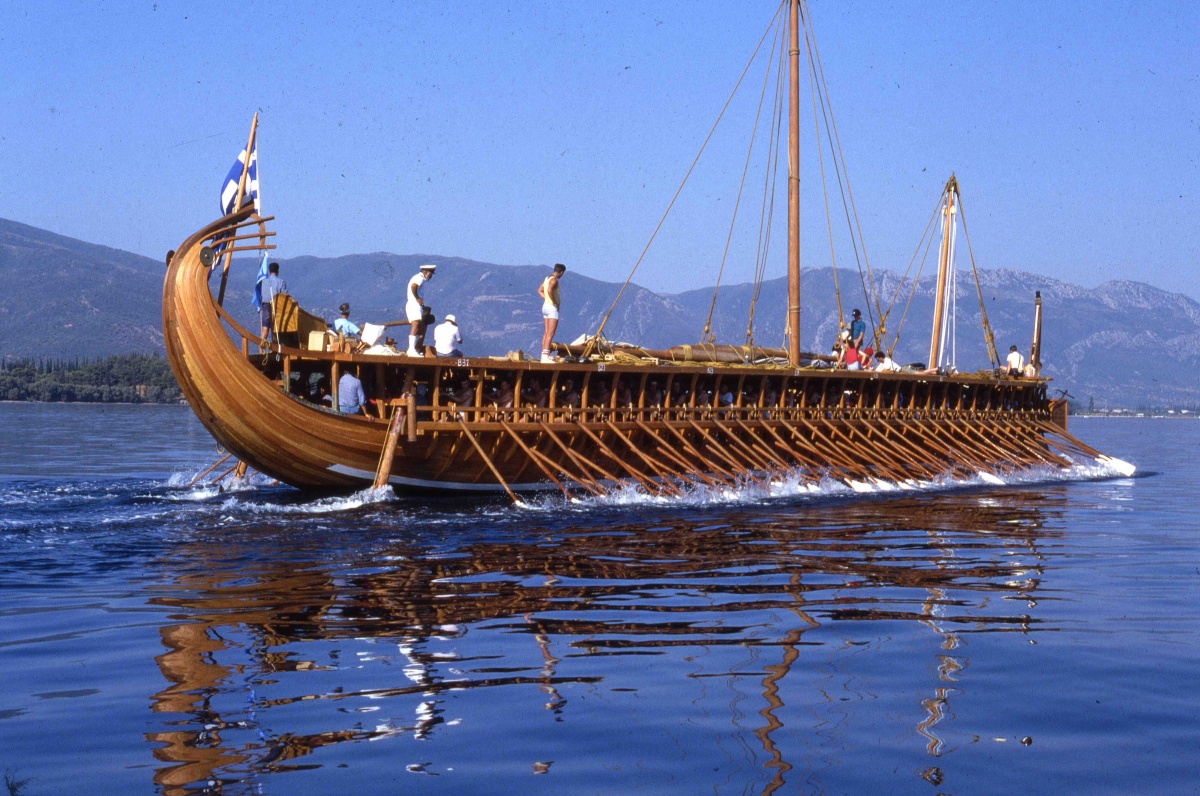
Olympias under Oar,

17.Two thousand year old Tamil literature called the coastal fishermen as Bharatavas. More research must be done to find the link between the Bharatas of RV and Bharatavas of Tamil Literature

  1. RV mentioned at least 15 types of fishes and crabs though it is a religious book.

19.In many countries we see seas named after Rishis (seers) Caspian Sea= Kashyapa, Adriatic= Atri, Bering Sea=Brgu, Aegean Sea= Agastya. More research is needed in the field of place names.

20.Indus valley has links with the Middle East and Gulf countries justifying Varuna the Guardian of Western Direction and God of Sea.

21.Ancient Egyptians knew shipping; ancient Greeks knew shipping; ancient Middle East knew shipping; why not ancient Indians?

south_east_asia_map

swami_48@yahoo.com