31 Vedic Gods (Post No.4110)

AUGUST 2017 CALENDAR (Post No.4110)

Compiled by London Swaminathan
Date: 24 July 2017
Time uploaded in London-22-07
Post No. 4110
Pictures shown here are taken from various sources such as Facebook friends, Books, Google and newspapers; thanks.


Festival days:- – Adi Perukku -August 3; Varalakshmi Vrata—August 4; Raksha Bandhan—7; Gayathri Japa—8;  Janmashtami—14 & 15;  Ganesh Chaturthi—25; Rishi Panchami- 26.

Indian Independence Day – 15 August


Auspicious Days:- August 31

Ekadasi Fasting Day:-  3, 18

Full Moon Day- August 7

New Moon Day- August 21
August 1 Tuesday

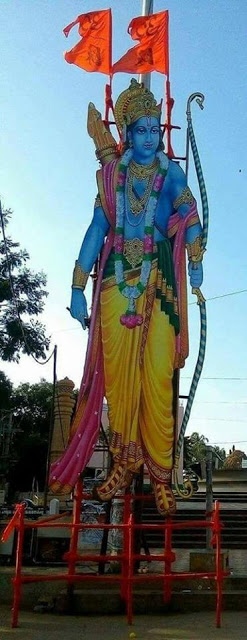
Indra:- One of the most important Vedic deities. Also used as a title for Kings. He is praised as a weather god; he oversees governing, Eastern direction and rains. Documented in the Bogazkoy inscription of 1350 BCE. The warrior king of the gods and the head of the early Vedic pantheon. Indra fought against the evil forces who were represented by Asuras.

August 2 Wednesday

Dyaus :–Dyaus pitr is one of the important gods. He is known in Greek (Zeus Pater) Old Norse (Tyr) and Roman (Jupiter) cultures. He is the sky god and Prithvi is the earth god.  The gods brought the Heaven and Earth together says Aitareya Brahmana.

August 3 Thursday

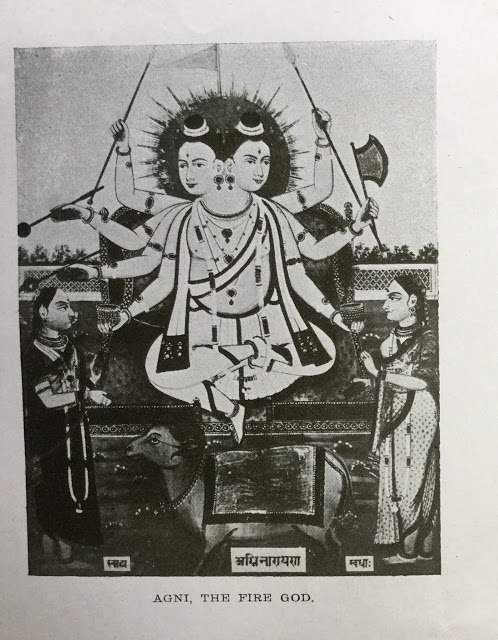
Agni:–Agni is the messenger of Gods. He takes the food to them from the people who perform Fire sacrifices (Yaga, Homa, Havan, Yajna). Hindus use Agni as a witness to seal agreements, wedding and death. One of the important Vedic Gods. His wife is Swaha


August 4 Friday

Ushas:–Goddess of the dawn in the Vedas. She is the all seeing eye of the gods. An auspicious deity heralding Surya and drives away darkness. Rig Veda describes her as a beautiful virginal figure who rides in a hundred chariots. She inspired the finest lyrical hymns in the Rig Veda. Ushas is beautiful, fresh and ever young, dressed in a red garment awakens creatures and send them off to their respective duties.


August 5 Saturday

Mitra:–He who is protected by Mitra is neither slain nor conquered, says the Vedas– A Vedic God associated with light, friendship and positive force. He is always paired with Varuna. Mitra as several meanings: Sun, Friend, Vedic God, Positive force and Roman God. Mitra rules the day and Varuna rules the night.
August 6 Sunday

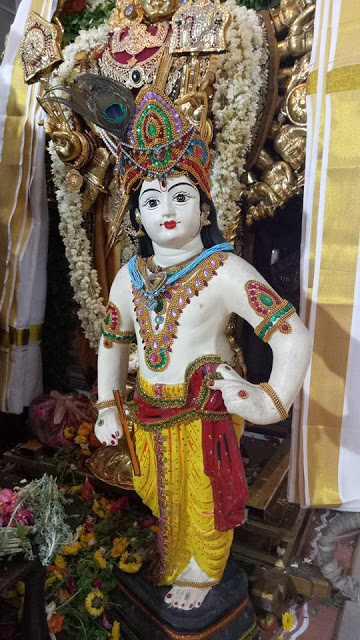
Varuna:–One of the important Vedic gods. He maintains the order in the world. He punishes who ever violates the world order. He oversees the water sources such as ocean, sea, lakes, river and tanks. During drought Vedic pundits do Varuna Japa (prayer) to get rains.


August 7 Monday

Aditi:–Aditi means boundless, infinity, eternal. Aditi is regarded as personification of universal, all embracing nature. Mother Goddess in the Rig Veda. Mother of 12 Adityas. Sometimes identified with Cow. guardian goddess who brings prosperity and who can free her devotees from problems.


August 8 Tuesday

Vayu:– Vedic god of the Winds. In some texts he is described as the chariot driver for the God Agni. It means wind helps Fire to spread and glow. The Vedic Vayu combines the concept of life sustaining principle together with the might of a gusty wind. He is said to have sprung from the Purusha (the cosmic god). He is also called the son in law of Tvastri


August 9 Wednesday


Parjanya:–Parjanya is also a weather god. Slightly less distinct wind god; also a harbinger of the monsoon showers.


August 10 Thursday

Yama:–Vedic God of death. He takes the lives of the people and Yami’s brother. Son of Surya and Sanjna. Yama was the first of the mortals to die. He is benign guardian of the departed souls with whom he carouses in cool, shady spots in the next world.

August 11 Friday

Surya:–Son of Aditi and Dyaus. Personification of the Sun. Head of the 12 Adityas. He rides in a one wheeled chariot drawn by seven horses. Pushan goes as his messenger with his golden ships, which sail in the aerial ocean. Surya is the preserve and soul of all that moving and stationary; enlivened by him men perform their work; he is far-seeing, all-seeing, beholds all creatures and the good and the bad deeds of the mortals.


August 12 Saturday

Rudra:–Another name for Shiva. He controls the gales and storms. Because of this he is called howler. Rudra lives in the mountains. Prayers to Rudra describe a god whose harmful darts  are dreaded, but otherwise he is like any beneficial Rig Veda God, riding a chariot (later bull), wearing a gold necklace, armed with bow and arrows.

August 13 Sunday

Vishnu:-Vishnu means omnipresent. One of the trinities Brahma, Vishnu and Siva/Rudra. Vishnu oversees preservation. He is a  mighty mountain dwelling god in the Veda. He is famous for his three strides (Vamana= Tri Vikrama Avatar)


August 14 Monday

Prajapati:–Also known as Brahma; he is in charge of creation He is reciting four Vedas from his four mouths. At  the end of each deluge a new Brahma is created. Prajapati means Lord of the Creatures.He is invoked as bestowing progeny. He is described as Hiranyagarbha, the golden germ/egg


August 15 Tuesday

Asvin:–Twins in the Vedas riding horses or birds. They are Nasatya and Dasra. They are famous for saving people from shipwrecks. They travel in the sea. They also figure in the Turkish inscription around 1350 BCE. Their name and fame went up to Turkey and Syria before 1400 BCE. They rescue people from disasters and heal people.
August 16 Wednesday

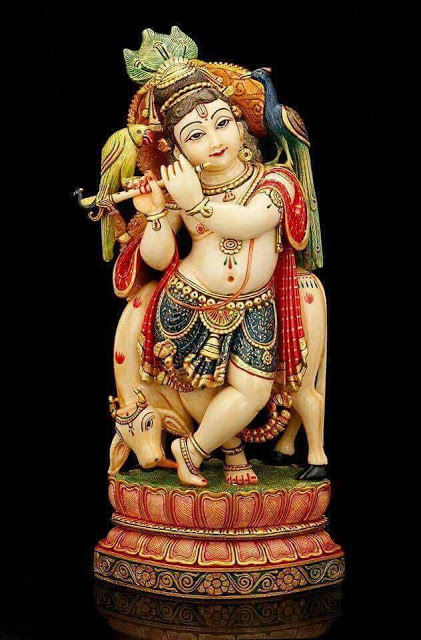
Brihaspati and Brahmanaspati:–In the Rig Veda the two names are equivalent. He is a deity in whom the action of the worshipper upon the gods is personified. He is the suppliant, the sacrifice, the priest who intercedes with the gods on behalf of men and protects,them from the wicked. He represents the priests and the priestly order. He is also designated as the purohita of the gods. He is the lord and protector of prayer. In the Rig Veda he is described as the Father of the Gods; to have blown forth the birth of the gods like a blacksmith.


August 17 Thursday


Ribhus :–Meaning is skilful; identified in the Rig Veda as the craftsmen of the gods and linked with the Maruts. They are led by Indra. The Ribhus are said to be three sons of Sudhanwan, a descendent of Angiras. They fashioned the Indra’s chariots and horses, and made their parents young again. By command of the gods, and with a promise of exaltation to divine honours, they made a sacrificial cup fashioned by Tvashtri into four. They are also spoken of as supporters of the sky.


August 18 Friday

Nirriti:–Goddess of darkness and destruction; associated with pain, misfortune and death; she wears dark dress in charge of south western quarters.


August 19 Saturday

Brahman:-Supreme God. Very often confused with the Brahmanas (caste) and the Brahmanas (part of Vedic literature)

August 20 Sunday

Ila:-Vedic Goddess. She is invoked to appear on the sacrificial field before a ritual. Usually associated with the goddess Sarasvati. Ila is linked with the sacred cow and her epithets include butter-handed and butter toothed.

August 20 Sunday

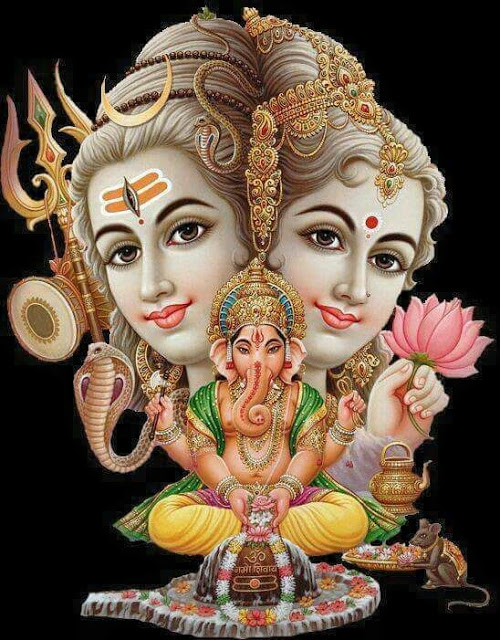
Apamnapat:–God of fresh water; he is described golden in appearance.
 

August 21 Monday

Apah:–Apah means water. The atmospheric waters are doubtless the imaginary reservoir of the rain water in the sky. The waters are sometimes described as dwelling in the highest heavens and sometimes, also in the atmosphere from where they descend refreshing , fertilizing showers which ensures crops and good harvests.

August 22 Tuesday

Gayatri:–Goddess of light. It has got two meanings: Vedic metre of 24 syllables. Most powerful mantra received by Viswamitra. Billions of Hindus recite this mantra which prays for knowledge and wisdom.

August 23 Wednesday

Pushan:–Pushan means nourisher. One of the sons of Aditi, i.e. Adityas. He is the charioteer of the Sun and a guardian deities of pathways and journeys. In domestic ritual Pusan has the morning and evening offerings placed for him on the threshold. His primary function is to ensure the well being of cattle and their fertility. Pusan is described as glowing.

August 24 Thursday

Marut:–Maruts means smashers. They are Storm Gods. Vedic poets describe him approaching with golden helmets, with spotted skins on their shoulders, brandishing golden spears, whirling their axes, shooting fiery arrows and cracking their whips , amidst thunder and lightning

August 25 Friday

Sarasvati:–It is the name of a river as well as mother goddess. seers had long sessions on the banks of River Sarasvati. She is the goddess of Knowledge and wisdom. she is identified with Vach (word or speech) in some places in the Veda. There is beautiful description of the mighty river Sarasvati in the Vedas. It is equally applicable to goddess.
 

August 26 Saturday

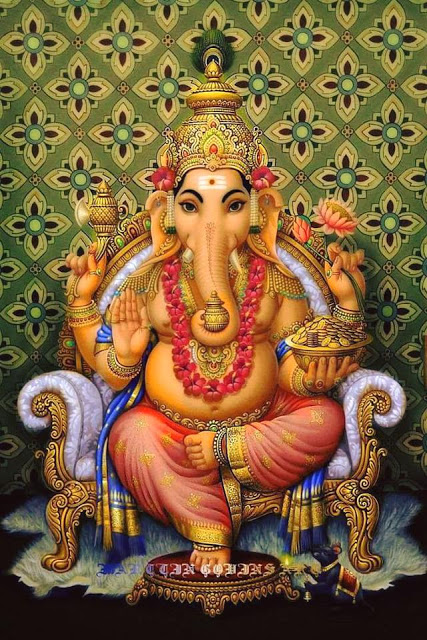
Soma:–Most wonderful herb in the world is the Soma herb. The whole ninth Mandala of the Rig Veda and the later literature praise it sky high. It has got miraculous effects. Soma  was the famous plant used by the Vedic priests to make juice for the fire sacrifice. The whole of Ninth Mandala of Rig Veda (RV) is devoted to its praise. We have more references in other Mandalas too. The seers described Soma as the King of Herbs. They attributed divinity to it. Soma also meant Moon.


August 27 Sunday

Visvedvas:–

Many hymns are addressed to Visvedvas in the gods. it means all gods. the seers might have meant the entire pantheon collectively .


August 28 Monday

Aryaman

Another Solar God

August 29 Tuesday

Aum/om

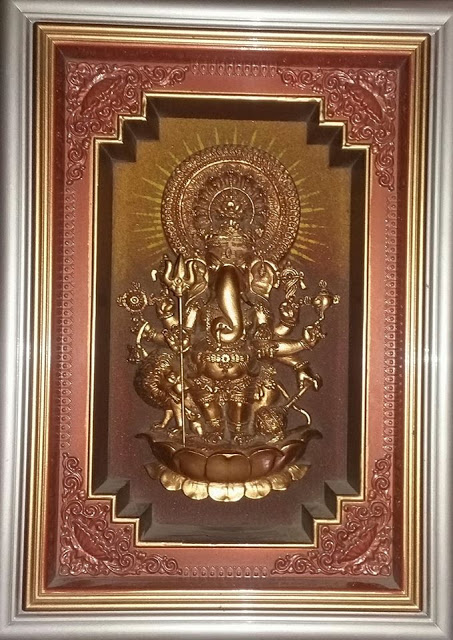
Primordial sound; represent God. Vedas begin with Om and ends with Om. It is in Buddhist, Jain, Sikh books. In other religions, it is in the form of Amen. Represents God in sound form.
 

August 30 Wednesday

Urvasi

Divine woman. The dialogue between Urvasi and her husband Pururuvas is famous in the Rig Veda.

August 31 Thursday

Uma

Consort of Lord Shiva; first seen in the Upanishads.


–Subham–
 

HINDU ACCOUNTS OF THE ORIGIN OF THE VEDAS (Post No. 4105)

Written by London Swaminathan


Date: 22 July 2017


Time uploaded in London- 17-24


Post No. 4105


Pictures shown here are taken from various sources such as Facebook friends, Books, Google and newspapers; thanks.


The Hindu sacred books are called the Vedas. They are divided into four books: Rig, Yajur, Sama and Atharva Vedas. Hindus believe that Veda Vyasa classified them into four around 3100 BCE. They existed even before him. But he was the one who arranged them into four and gave to four of his best students the responsibility  of spreading them (through the word of mouth to generations to come). Now it is considered the Literary Wonder of the World.

Many of the seven wonders of the world disappeared. But the Vedas which came even before the Seven Wonders of the World are still alive. It is recited in one hundred thousand temples in India. It is recited by millions of Hindus every day. As a Brahmin I recite the names of Indra, Mitra, Varuna, Yama, Surya, Vayu every day. They are in the Bogazkoy inscription of Turkey dated 1350 BCE.


Vedic Gods are the oldest Gods documented by an archaeological inscription. Other Gods have gone into museums.

There are beautiful descriptions about the origin of Vedas. For foreigners and Non-Hindus they may appear contradictory, but Hindus don’t find any contradiction in it. Foreigners selected some passages and looked at them superficially and misinterpreted them. But the authors of great Hindu epics Vyasa and Valmiki did not see any contradiction or confusion.


Vedas are not composed by poets. They are heard like radio frequencies. They will be in the air after every deluge. They are eternal truths in sound form. When the world is recreated, another Brahma will appear and reveal it through his four heads/mouths. Enlightened souls can hear them and pass it to others.


The Vedic mantras are in Sanskrit language. Some of the passages are considered amazing revelations. Lot of scientific information, higher thoughts are reflected in the hymns. Whatever we find in the UNO charter such as world peace, brotherhood of human beings are there in the tenth mandala of the Rig Veda. The literary level is so high that no ancient language in the world has reached that level. They talk lot about prosody, grammar, hidden meaning, double entendre etc.


Youngsters were taught linguistics, astronomy, grammar etc along with the Vedic hymns when they were only seven years old! It is a literary marvel.

Tamils of Sangam Age praised them sky high. When one of their poets composed Tirukkural with 1330 couplets five contemporary poets praised it as Tamil Veda. Another Tamil poet said that all over the world kings get up after hearing cock a- doodle-doo but Pandyan Kings get up by listening to the Vedas. Kalidasa who lived in the first century BCE said in his Raghuvamsa that Pandyan Kings always looked like they are coming out of Vedic sacred bath (Avabrta Snanam done during fire sacrifices)

Let us look at some of the Hymns:

1.The Vedas sprung from the mystical sacrifice of the Purusha

The hymn Pursuha Sukta of the Rig Veda (10-90) says the following:-

Tasmaad yajnaat sarvahutah rchah saamaani jagniree

chandaamsi jagniree tasmaad yajus tasmaad ajaayata

“From that universal sacrifice sprung the Rich and Saman verses; the metres sprung from it; from it the yajush arose”.


2.The Vedas were cut or scraped off from Skambha as being his hair and his mouth

The Atharva Veda (10-7-20) says,

Yasmaad rcho apatakshan yajur yasmaad apaakashan

saamaani yasya lomaani atharvaangiraso mukham

skambha tam bruuhi iktatamah svida eva sah


“Declare who is that Skamnbha (the Supporting Principle) from who they cut off the Rich verses; from whom they scraped off the Yajush, of whom eth Sama verses are the hairs, and the verses of the Atharva and Angiras the mouth.”

  1. The Vedas sprung from Indra and he sprung from them (AV 13-4-38) says,

sa vai rgbhyo ajaayata thasmaad rcho ajaayanta

“Indra sprung from the Rich verses; the Rich verses sprung from him”.


4.The Vedas sprung from Time (AV 19-54-3)

Kaalad rchah sambhavan yajuh kaalaad ajaayata

“From Time the Rich verses sprung; the Yajush sprung from Time

5,The Vedas sprung from the leavings of Sacrifice (AV 11-7-24)

Rchah samaani chandaamsi puraanam yajushaa saha

uchchshtaaj jajniree sarve divi devaah divi sritaah

“From the leavings of the sacrifice sprung the Rich and the Saman verses, the metres, the Purana with the Yajush, and all the gods who dwell in the sky”

My comments:

This is a very interesting verse. The Puranam is mentioned in the Atharva Veda. In any culture mythology is the oldest part. So even before the Vedas the Puranas were there. But they were constantly updated with the names of the latest kings. Like they write the names of the Winners of Wimbledon Title every year under the previous winners, newer materials were constantly added. Foreigners took the latest reference and interpreted them as modern. Same with the Mahabharat. Vyasa added all that available to it at his time.

Another interesting point is that we believed Vyasa ‘divided’ the Vedas into four. Then how come there is reference about all the four Vedas in some hymns? Is it not contradicting what we believe?

No contradiction. Rich Yajush, Saman,Atarva are parts of the Vedas. Vyasa arranged them in a particular order and since it is humanly impossible to learn and pass them to future generations. He selected four of his most intelligent students and allocated some portions of it to each one. The very name Vyas means one who arranges, organises, essay writer. His actual name was Krishna Dvaipayana= Black Islander. He was black and was born in an island.

If you take the meaning literally you will be as confused as a foreigner.

The simple equation so far is

Vedas = God/Indra= sacrifice = Time

  1. The Vedas were Produced from Agni, Vayu, Surya- says the Chandogya Upanishad

“Prajapatir lookaan abhyatapat………………. iti saamabhyah”

“Prajapati infused warmth into the worlds, and from them so heated he drew forth their essences, viz, the Agni from the earth

Vayu from the air

and Surya from the sky.

He infused warmth into these three deities

and from them so heated he drew forth their essences—

from Agni the Rich verses

from Vayu the the Yajush verses

and from Surya the Saman verses.

He then infused heat into this triple science from it, so heated he drew forth its essences—

from Rich verses the syllable Bhuh

from Yajush verses, Bhuvah

and from Saman verses Svar”

Heat = tapas

  1. The Vedas are the breathing of the Great being – Satapata Brahmana (14-5-4-10)

“sa yathaa aardredhaagrer abhyaahitaan………………nisvasitaani”

“As from a fire made of moist wood various modifications of smoke proceed, so is the breathing of this great being the Rig Veda, the Yajur Veda, the Sama veda, the Athrvangirases,the Ithihasas, Puranas, science, the Upanishads, slokas, aphorisms, comments of different kinds – all these his breathings”

My comments

This is another proof for the existence of Puranas, Ithihasas (Mytology and Epics), Upanishads, Sutras, Slokas, Science (Vidhyaa) –  by the time of Satapata Brahmana. Even the jaundice eyed, biased foreigners date this SB to 850 BCE. But we knew that it existed from the Vedic days i.e, several thousand years ago. Even if we go by foreigner’s dating one must admit that we had History (Ithihas/epics), mythology etc. by that time.


Poor foreign ignoramuses say ‘this portion of Vedas is later, this portion is older, this portion of Mahabharat is added to Jaya, the original epic. All these are absurdities because till this day no one is able to show what is added ‘later’, and ‘when’ it is added!!

And the foreigners try to cramp the largest volume of ancient literature into 400 year period! Not even the modern society can achieve such intellectual growth within that short period! If they are right they must show us another ancient culture that achieved so many things within 400 years!


When we compare the Vedic literature with other religious literature, they are like mosquitoes and the Vedic literature is like the Himalayas. No one is able to study all these in one life time. Even Max Muller studied it for over fifty years! And yet he could not attain full maturity!  He did not even get the maturity of a Vedic school boy! His bookish knowledge in Vedas was great, but his wisdom- just pass mark!

Any one who reads his comments on Vedic hymns, would agree with me.


  1. The Vedas were dug by the gods out of the Mind Ocean (SB 7-5-2-52)

“Mind is the ocean; from the mind ocean, with speech for a shovel, the gods dug out the triple Vedas; may the brilliant deity today know where they placed that offering which the gods dug out with sharp shovels. Mind is the ocean; speech is the sharp shovel—Satapata Brahmana”


This shows Vedas were received by the Rishis after deep meditation. What a beautiful way of describing the Vedas! Poetic in description!

  1. Vedas are the hair of Prajapati’s beard (Taittiriya Brahmana 3-39-1)

(it means it is recited by Brahma)

  1. Vach is called the Mother of the Vedas (TB 2-8-85);

(it means the word is god)

“Vach (word) is an imperishable thing and the first born of the ceremonial, the mother of the Vedas, and the centre point of immortality”

My Comments

Some foreigners used to bluff that Hindus don’t know about immortality, rebirth etc. during the Vedic time. They draw their own line in the Vedic literature, they fix their own dating for each and every section and bluff this way; and even in that bluffing, fifty foreigners say fifty different things! In the book about Asuras written by a foreigner he listed over 40 different definitions or interpretations on the word Asura!

(I will give the quotations on Vedas from the Puranas and Mahabharata, in another article.)

–Subham–


Asura’s Mistake- Satapata Brahmana Story (Post No.4087)

Compiled by London Swaminathan


Date: 16 July 2017


Time uploaded in London-19-03


Post No. 4087


Pictures shown here are taken from various sources such as Facebook friends, Books, Google and newspapers; thanks.


Once upon a time the gods and the Asuras, both of them sprung from Prajapati, strove together. And the Asuras even though arrogance, thinking,

“Unto whom, forsooth, should we make offering? went on offering into their own mouths. They came to naught, even through arrogance; wherefore let no one be arrogant, for verily arrogance is the cause (mouth) of ruin.

“Pride goeth before destruction.

But the gods went on making offerings to one another.

Prajapati game himself to them; thus the sacrifice became theirs; and indeed the sacrifice is the food of the gods – Satapata Brahmana.

xxx

“This which is sacrifice is the soul of all beings and of all gods”

–Satapata Brahmana14-3-2-1


Prajapati gave himself to the gods and became their sacrifice. He then created sacrifice as his own image or counterpart. Hence they say that ‘Prajapati is sacrifice’; for he created it as his own image.

–Satapata Brahmana 11-1-8-2

xxx


Women in Vedic Times

The following passage is of interest as clearly indicating that women in Vedic times had access to the Vedas; they took part in the sacrifices is clear from quite a number of passages:

Ida, the daughter of Manu, was a revealer of sacrifice. She heard, ‘The Asuras are placing fire’……………. Ida said to Manu, ‘I shall so place thy fire that thou shalt increase in offspring, cattle and twins; thou shalt be firmly established in  the world and shalt conquer the heavenly  word’. She first placed the Garhapatya fire. It was through the Garhapatya she produced for him offspring.

Taittiriya Brahmana 1-1-4-4

(Garhapatya is one of the three fires in a house)

xxx

Manu’s Wife Sacrificed!

There is another story where one must read between the lines; this one of the  symbolic stories:

“Manu had a bull. Into it an Asura slaying, enemy slaying voice had entered. In consequence of this bull’s snorting and bellowing. Asuras and Rakshasas were continually destroyed.


Then the Asuras said, “This bull, alas! does us mischief; how shall we overcome him? Now there were two priests of the Asuras called Kilata and Akuli. They said, ‘Manu is a devout believer; let us make trial of him’. They went and said to him, “Let us sacrifice for thee”

“Wherewith”, he asked.

With this bull, they replied.

Be it so, he answered.


When it had been slaughtered, the voice departed out of it and entered into Manu’s wife, Maanavaa.

Wherever they hear her speaking, the Asuras and Rakshasas continue to be destroyed in consequence of her voice.

The Asuras said, “She does yet more mischief; for the human voice speaks more”


Kilata and Akuli said, Manu is a devout believer; let us make trial of him. They went and said to him,

“Manu, let us sacrifice for thee”.

“Wherewith?, he asked.

“With this thy wife”, they replied.

Be it so, he answered.

When she had been slaughtered, the voice departed of her”.

–Satapata Brahmana 1-1-4-16

The same story is found with variations in the Kathaka Brahmana.

This is a symbolic story. One must rely on saints of India rather than foreigners.

–Subham–


Common Sense Anecdotes (Post No.4084)

Compiled by London Swaminathan


Date: 15 July 2017


Time uploaded in London-13-57


Post No. 4084


Pictures shown here are taken from various sources such as Facebook friends, Books, Google and newspapers; thanks.


Why I tell Many stories?

Lincoln once said to Chauncey Depew , “They say that I tell a great many stories; I reckon I do, but I have found in the course of a long experience that common people, take them as they run, are more easily informed through the medium of a broad illustration than in any other way, and to what the hypercritical few may think, I don’t care”.


Xxx

Common Sense- Gift of God!

This is one of the favourite stories of Dr Karl Compton , the noted physicist of  M I T . His sister lives in India. She was having a simple electrical installation done by a native electrician. He troubled her so much for instructions that she at last said irritably, “You know what I want; just use your common sense and do it.”

The electrician salaamed politely and said, “Madam, common sense is a rare gift of God. I have only a technical education”.

Xxxxx


Literature Anecdotes 


Two passengers were overheard in a literary discussion on the Brooklyn express,

“Whatcher favourite readin?”

“Popeye, Superman, and Flash Gordon”

“Howcha like O Henry?”

“Naw, the nuts get in my teeth”

Xxx

Did Little Neil Die? Suspense in the Story!

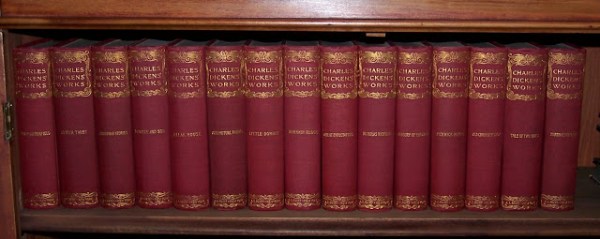
The magazine which published The Old Curiosity Shop came to America by sailing vessel. As interest in Dickens story mounted from week to week, the crowds became larger on the New York wharf waiting to buy copies as soon as the boat docked. By the time the story reached its last chapter these crowds had grown to such large numbers and to such a pitch of suspense that they swarmed, five or six thousand strong, upon the wharf and could not wait until the ship docked, when they spied the captain on the deck they called out across the narrowing in waters

The question that burned in everyone’s heart, “Did little Neil Die?”

–Subham–


Dickens and Voltaire: More Author Anecdotes (Post No.4080)

Compiled by London Swaminathan
Date: 14 July 2017
Time uploaded in London- 10-49 am
Post No. 4080
Pictures shown here are taken from various sources such as Facebook friends, Books, Google and newspapers; thanks.


Meeting one’s literary idol face to face is sometimes a sad experience. According to George Dolby, who was dickens lecture manager.

During the progress of a reading, he tells, my attention was drawn to a gentleman who was in a most excited state. Imagining to be ill and wanting assistance,

I said, “What is the matter with you?”

“Say, who is that man on the platform reading ?”

“Mr Charles dickens”, I replied

“But that ain’t the real Charles dickens, the man as wrote all them books I have been reading all these years?”

“The same”

“Well, all I have to say about it then is that he knows no more about Sam Weller a cow does of pleating a shirt, at all events that ain’t my idea of Sam Weller, anyhow. And he clapped his hat on his head and left in a state of high dudgeon.

Xxxx


Voltaire and Casanova

While Voltaire was living in retirement in Geneva, he was visited by the Italian Casanova. Voltaire had been reading some recent works by Haller, the Bernese savant, and praised him to his guest.

“That is commendation which is indeed ill requited”, said Casanova.

“I have heard that Haller, far from returning your compliment says that your writing is more than half nonsense”.

Ah, well, then returned the famous wit with a wry smile, “it may be that we were both mistaken in our judgments”.

Xxxx


Dr Johnson and Oliver Goldsmith

One day Dr Johnson received a message from Oliver Goldsmith that his land lady had called in an officer to arrest him for non- payment of his bill. Johnson immediately sent him a guinea and himself proceeded to the scene of battle at his own speed.


When he arrived Goldsmith had already broken the guinea to procure a bottle of Madeira, and being well stimulated by the contents was berating his land lady soundly when Johnson entered.


The heavy angel interrupted his eloquence to inquire if he had any means of raising money, whereat Goldsmith produced the manuscript of a novel.  This Johnson pocketed, hurried away to Newbury the book seller and returned shortly with sixty pounds. This was the “Vicar of Wakefield “

–Subham–


What is Research? Authors Anecdotes (Post No.4077)

Compiled by London Swaminathan
Date: 13 July 2017
Time uploaded in London- 10-34 am
Post No. 4077

 
Pictures shown here are taken from various sources such as Facebook friends, Books, Google and newspapers; thanks.


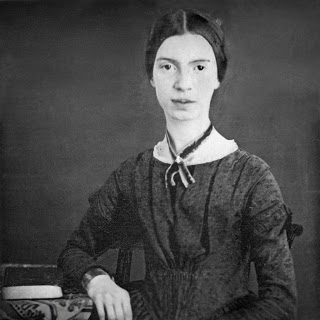
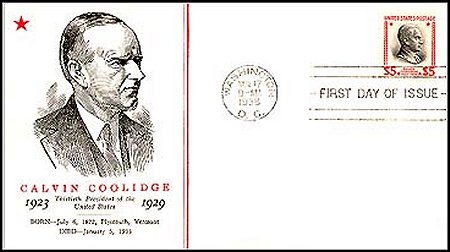
The Emily Dickenson house in Amherst has been converted into a shrine, preserving the memory and relics of the distinguished American poetess. During his administration, President Coolidge, chancing to pass through Amherst, stopped off at the Dickinson shrine to do it honour.


In deference to the President he was shown throughout the house; permitted to see and handle many relics carefully shut away from the general public. At last the small upper room in which Emily Dickinson had done much of her writing, the greatest special privilege was conferred upon him. Stooping down, his guide opened a locked chest and removed from it a packet of holograph manuscripts of some of her most famous poems.

These were put into Coolidge’s hand. He examined them with interest And handed them back making, at the same time, his only comment on the entire tour, “Wrote with a pen, eh? I dictate”.


Xxxx


Research is………………..

Nicholas Murray Butler and Prof Brander Mathews of Columbia university were having a conversation, and Prof Mathews was giving his ideas on plagiarism from an article of his own on that subject.

In the case of the first man to use an anecdote, he said, there is originality; in the case of the second there is plagiarism; with the third there is lack of originality; and with the fourth it is drawing from a common stock.

“Yes”,  broke in President Butler, “and in the case of fifth, it is research”.

Xxx


Synonyms and Antonyms!

Henry James could never rest content with the phrases that came to his tongue. He simply couldn’t leave the English language alone; he would extract a word from his verbal store house, drop it, substitute another ,then a third, and so on until he had constructed a veritable pyramid of synonyms. This terrible word malady broke out once at Princes Restaurant as he gave the waiter his order,

“Bring me…………, fetch me…………., carry me…………. supply me….. in other words (I hope you are following me) serve …………when it is cooked… scorched…. grilled. I should say a large…considerable…meaty ( as opposed to fatty ) …. chop .

—Subham—


Manu and Longfellow: Great Men think Alike (Post No.4074)

Written by London Swaminathan
Date: 12 July 2017
Time uploaded in London- 18-24
Post No. 4074

 
Pictures shown here are taken from various sources such as Facebook friends, Books, Google and newspapers; thanks.


Tamil saint Tiru Jnana Sambandar says we can lead a good life on the earth; there is no paucity of good things (good ways)here (mannil Nalla vannam Vaazalaam…..)


Manu said this first in the Manava Dharma Sastra:

“On the path on which his fathers and grandfathers have walked, on that path of good man let him walk, and he will not go wrong” 4-178

H W LONGFELLOW (1807-1882) said,


A PSALM OF LIFE

WHAT THE HEART OF THE YOUNG MAN
SAID TO THE PSALMIST


Art is long, and Time is fleeting,
And our hearts, though stout and brave,
Still, like muffled drums, are beating
Funeral marches to the grave.

In the world’s broad field of battle,
In the bivouac of Life,
Be not like dumb, driven cattle !
Be a hero in the strife !

Trust no Future, howe’er pleasant !
Let the dead Past bury its dead !
Act,— act in the living Present !
Heart within, and God overhead !

    Lives of great men all remind us
We can make our lives sublime,
And, departing, leave behind us
Footprints on the sands of time ;

    Footprints, that perhaps another,
Sailing o’er life’s solemn main,
A forlorn and shipwrecked brother,
Seeing, shall take heart again.

Let us, then, be up and doing,
With a heart for any fate ;
Still achieving, still pursuing,
Learn to labor and to wait.


Bhagavad Gita 3-21

Whatever a great man does, the same is done by others as well. Whatever standard he sets, the world follows.

Dr Radhakrishnanan comments on this sloka:

“The Gita points out that the great men are the path makers who blaze the trail that other men follow. The light generally come through individuals who are in advance of society They see the light shining on the mountain heights while their fellows sleeps in the valley below”.


Swami Chinmayananda says,

“The moral rejuvenation of a society in any period of history can take place only because of the example set up by the leaders of that nation. Students can be disciplined only when teachers are well behaved; the minor officials cannot be kind and honest when the rulers of the country are corrupt and tyrants. Children’s behaviour depends entirely upon , and is ever controlled by, the standard of purity and culture of their parents.

–Subham–
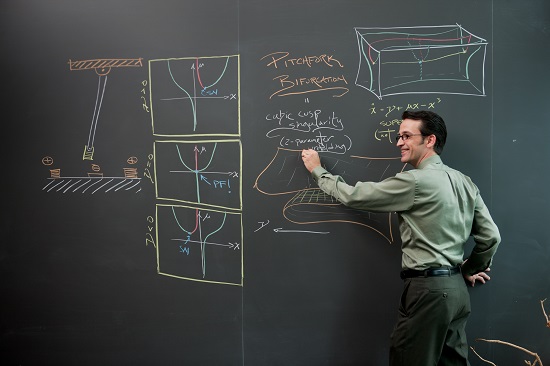


Professor Anecdotes (Post No.4039)

Compiled by London Swaminathan
Date: 30 June 2017
Time uploaded in London-14-02
Post No. 4039

 
Pictures shown here are taken from various sources such as Facebook friends, Books, Google and newspapers; thanks.


GOD GETS A GRADE!

William Lyon Phelps, on a pre-Christmas examination paper found written

God only knows the answer to this question. Merry Christmas.

He returned the paper with the notation,

“God gets an A; you get an F. Happy New Year “

Xxx

JAW AND JOY

The celebrated Prof. Maclaurin , the famous mathematician of Edinburgh college and the able expounder of Newtons Principia , always dislocated his jaw and was unable to shut his mouth whenever he yawned. His pupils took advantage of this physical affliction. When tired of his lecture, they either began to yawn or open their mouths in imitation of that act, and the professor began to yawn too, by unconscious imitation. He stood before them with his mouth open and could not proceed till he rang for his servant to come and shut it. In the meantime, the mischievous enemies of Euclid effected their escape.


Xxx

ONLY ONE WHO IS LISTENING!

Told by John Erskine,

At the end of my university studies when I was leaving for my first professional job, I went to say goodbye to my old teacher William Peterfield Trent. I can give you no theoretical advice in pedagogy, he said, but I will tell you one thing from experience. It will frequently happen when you are holding forth that some boy in the class will disagree. He will probably shake his head violently. You will be tempted to go after him and convert him then and there. Don’t do it. He is probably the only one who is listening.

Xxx

ALWAYS CONTEMPTIBLE!


Professor Parson, in a dispute, so exasperated his opponent by the dryness of his sarcasm that the latter at length exclaimed,

“Mr Parson, I beg leave to tell you, sir, that my opinion of you is a perfectly contemptible one”.

Parson replied,

“I never knew any opinion of yours, sir, which was not contemptible”.


Xxx

GOD ALONE ABOVE ME

Harvard’s famous professor Charles Townsend Copeland, for many years occupied a couple of cramped ,dusty too, on the top floor of Hollis Hall. He was frequently urged to move to more comfortable and fitting quarters.

“No”, he always said.

“I shall always live on the top floor. It is the only place in Cambridge where god alone is above me. He is busy, but he is quiet”.


Xxxx.

FEW MORE PEARLS AVAILABLE!

Interrupted by the sound of the bell announcing the end of the class, the professor was annoyed to see the students noisily preparing to leave although he was in the very middle of his lecture.

“Just a moment, gentlemen, he said, I have a few more pearls to cast”.

Xxx SUBHAM xxxx


Strategy Anecdotes and Panchatantra Story! (Post No.4036)

Written by London Swaminathan
Date: 29 June 2017
Time uploaded in London- 10-06 am
Post No. 4036

 
Pictures shown here are taken from various sources such as Facebook friends, Books, Google and newspapers; thanks.


All of us know the Panchatantra story written in Sanskrit 2000 years ago where the crows took revenge upon the owls by setting fire to their nests in the night. Tiruvalluvar, in his Tamil Veda Tirukkural (Kural couplet 481) also referred to that story.

We also know that Asvattama watched this and adopted the same technique to kill the Pandava family members (see Mahabharata)

We also know that the greatest Brahmin poet Kabilar, who is the biggest contributor to Sangam Tamil corpus, trained the birds to fetch grains to the Parambu Hills when the three mighty Tamil kings laid a siege to the Parambu Nadu of the philanthropist chieftain Pari (Ref.Akam 78 and Akam 303 sung by Nakkiran and Avvai)

Last but not the least, it reminds us of Hanuman burning the city of Lanka with his tail, which was set on fire by Ravana’s men.


Since I have written about all these episodes I am not going to repeat it. But something similar happened just 1000 years ago in England. Read the anecdote given below:


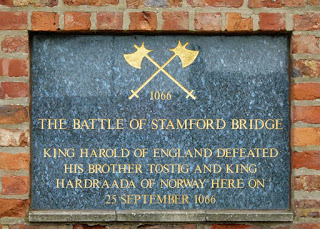
The Norwegian king, Harold Hardrada, who lost his life in the battle of Stamford Bridge in 1066, fought for some time under the banner of the Byzantine emperors. On one of his expeditions to Sicily, he came with his army to a populous town, to which he laid siege. The walls, however, were so strong that he began to doubt whether it would be possible to make a breach in them; and the burghers had plenty of provisions, and everything which they needed for their defence.


Harold, therefore ordered his fowlers to catch the small birds that nested in the town, and flew to the forest during the day in quest of food. He then caused splinters of inflammable wood, smeared with wax and sulphur , to be fastened on their backs and enkindled. The birds, when set at liberty, flew immediately to the town to revisit their young and their nests on the rooftops of the houses, which were thatched with straw and reeds. The fire fell from, the birds on the thatch, and although each bore but a small quantity, their number was so great that one house after another began to burn, until the whole town was in flames. The inhabitants then came out and implored mercy, and Harold thus got possession of the town.

Xxxx

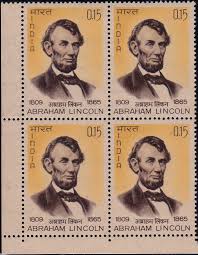
Abraham Lincoln’s Discovery!


After Lee had taken Harpers ferry, the President realising how great it was a calamity to the Northern Arms, determined if possible to fix the responsibility. Halle know was summoned but did not know where the blame lay.


Very well, said Lincoln, I will ask general Schenck. The latter could throw no light upon the question further than to say he was not to blame. Milroy was the next to be called to the presence of the commander in chief, and to enter a plea of not guilty. Hooker was next given a hearing, and Fighting Joe made an emphatic disclaimer of al. responsibility.


Then the president assembled the four in his room and said,

Gentlemen, Harpers ferry was surrendered, and none of you, it seems, is responsible. I am very anxious to discover who is. After striding across the room several times, the President suddenly threw up his bowed head and exclaimed, I have it! I know who is responsible.

Who, Mr President; who is it? anxiously inquired the distinguished quartet.

Gentlemen, said the president,

General Lee is the man

Xxxx


Rockefeller and Ramakrishna Paramahamsa on Desire! (Post No.4030)

Written by London Swaminathan
Date: 27 June 2017
Time uploaded in London- 18-07
Post No. 4030
Pictures are taken from various sources such as Face book, Wikipedia and newspapers; thanks.


American billionaire John D Rockefeller made a big fortune in the oil and natural gas industry. For over a century his family has been maintaining their position in the list of 100 richest men in the world. He never stopped making money. One curious American reporter asked him one day, “Mr Rockefeller, How much money is enough? Would you ever stop making money?”


Mr Rockefeller replied immediately without any hesitation, “Just a little bit more”. It is a very interesting answer. All of us want the same thing in every field, ‘a little bit more’. We never stop making money.


Everyone wants to compete with his neighbour or his close relative or his professional rival. This is a never-ending process. Great religious leaders like the Buddha, political leaders like Mahatma Gandhi emphasized contentment in all the fields. They taught us that ‘desire is the root cause of evil’.


Barber and the Seven Jars of Gold!

This reminds me of a popular story told by Sri Ramakrishna Paramahamsa; the story is given below:

“ A barber, who was passing under a haunted tree heard a voice say, ‘Will you accept seven jars full of gold?’. The barber looked around, but could see no one. The offer of seven jars of gold, however, roused his cupidity and he cried aloud, ‘Yes, I shall accept the seven jars.’ At once came the reply, Go home, I have carried the jars to your house.


The barber and ran home and he saw the sevens when he entered the house. He opened them and found them all full of gold, except the last one which was only half full. A strong desire now arose in the mind of the barber to fill the seventh jar also; for without it his happiness was incomplete. He therefore converted all his ornaments into gold coins and put them into the gold jar; but the mysterious vessel was as before, unfilled. This exasperated the barber. Starving himself and his family, he saved some more amount and tried to fill the jar; but the jar remained as before.


So one day he humbly requested the king to increase his pay, saying his income was not sufficient to maintain his family. The king also doubled his pay. He saved all the money and converted them into gold and tried to fill the jar, but in vain. He started begging from door to door. Nothing changed. The last gold jar was only half full.


Seeing his sad plight the king asked him one day, “Hello, when your pay was half of the pay you get now you were happy. Now you look dejected. What is the matter? Have you got the ‘seven jars’?


The barber was taken aback and he told the king his full story. Then the king told him that the Yaksha offered him the seven jars but he rejected them when he knew that he could not spend it. The barber realised his mistake and returned the seven jars to the tree (yaksha) taking the advice of the king. Such is the state of some men in the heaven. Those who do not understand the difference between what is real expenditure and what is real income, lose all they have.”

This is the story told by Sri Ramakrishna. We can compare it with little more bit of Rockefeller. The little more never ends. You never feel content. That is why Hindus did a daily Yajna (fire offering) and poured ghee (butter) and other essential things in the fire saying “Idam Na Mama” (it is not mine). If we can inculcate such a thought in everyone they will offer something to others instead of taking everything that comes their way in business or life.

–Subham–