Atom Bomb to Zoo of the Bhagavad Gita: Part 1

By S Swaminathan

Atom bomb, Football, the British Empire, animals—such words may be strange for a spiritual seeker, but look at the harmony in the following A to Z compilation of beautiful quotes from world famous poets, philosophers, scientists and thinkers. 

This is the first part of a two part series covering A to M


A for Atom Bomb 

The world’s first nuclear test was conducted in 1945. Father of the atomic bomb was J.Robert Oppenheimer,an American physicist and Director of the Manhattan Project that developed atom bomb. He was a Sanskrit scholar and read Bhagavad Gita in Sanskrit. When he witnessed the first nuclear test ,huge fire ball brightened the sky for many miles. Huge mushroom cloud rose up. On witnessing the awe inspiring scene, Oppenheimer burst in to a Bhagavad Gita sloka(Chapter 11,verse 32) where Krishna says ,” Now I am become Death, the Destroyer of worlds”.

We always compare God to the biggest source of energy that we know of. Hindus have been worshipping the sun when they recite the most powerful Gayatri mantra. Modern science says that sun is where billions of hydrogen bombs explode every second to give tremendous energy.

B for British Raj 

Warren Hastings, the first Governor General of India (1773-1784) wrote an introduction to the first-ever English translation of the text by Charles Wilkins (1784) where he declares that, “Works as the Gita could live long after the British Domination ceased to exist and it contains passages elevated to a track of sublimity into which our habits of judgement will find it difficult to penetrate”.

C for Carl Gustav Jung 

“The idea that man is like unto an inverted tree seems to have been current in bygone ages. The link with Vedic conceptions is provided by Plato in his Timaeus in which it states……”behold we are not an earthly but a heavenly plant”- Carl Gustav Jung (1875-1961, Founder of Analytical Psychology)Ref. To Gita verse Chapter 15-1

D for Dnynaneswari 

Dnyaneshwari also known as Jnaneswari was written in Marathi by Jnaneswar in the 13th century. He expanded 700 verses of the Gita in to 9999 Marathi verses ‘ovis’. The first line of each ‘ovi’ rhymes with the next two lines adding beauty to the verses.

E for Einstein 

An interesting incident took place in 1948-49. A young researcher by name B M Gupta met the great scientist Albert Einstein (1879-1955).The German scientist hailed him in Sanskrit instead of English. The Indian scientist pleaded his inability to reply in Sanskrit. Surprised Einstein showed him his collection of books and told him, “See my library which treasures classics from Sanskrit namely the Gita and other treatises on Hindu philosophy. I have made Gita as the main source of my inspiration and guidance for the purpose of scientific investigations and formulation of my theories”.(Ref. Ezine article by Santanam Nagarajan)

F for Football 

“First of all, our young must be strong. Religion will come afterwards. Be strong, my young friends; that is my advice to you. You will be nearer to Heaven through foot ball than through study of Gita” said Swami Vivekananda .

G for Gandhi 

“When doubts haunt me, when disappointments stare me in the face, and I see not one ray of hope on the horizon, I turn to Bhagavad Gita and find a verse to confront me@ and I immediately begin to smile in the midst of overwhelming sorrow. Those who meditate on the Gita will derive fresh joy and new meanings from it every day”-Mahatma Gandhi

H for Huxley and Hesse 

“The Bhagavad Gita is the most systematic statement of spiritual evolution of endowing value to mankind. It is one of the most clear and comprehensive summaries of perennial philosophy ever revealed: hence its enduring value is subject not only to India but to all humanity”- Alduous Huxley

“The marvel of the Bhagavad Gita is truly beautiful revelation of life’s wisdom which enables philosophy blossom in to religion”-Herman Hesse

I for India 

TO INDIA 

So have I read this wonderful and spirit-thrilling speech,

By Krishna and Prince Arjun held discoursing each with each;

So have I writ its wisdom here,- its hidden mystery

For England; O our India as dear to me as She!

Edwin Arnold wrote in the year 1900

J for Jawaharlal Nehru

“The Bhagavad-Gita deals essentially with the spiritual foundation of human existence. It is a call of action to meet the obligations and duties of life; yet keeping in view the spiritual nature and grander purpose of the universe.” Jawaharlal Nehru, First Prime Minister of India

K for Karmayoga 

Lokamanya Bal Gangadhar Tilak ,freedom fighter and a scholar, interprets Gita as the scripture of Karmayoga. Karmayoga is performing one’s duty without having any desire for its fruits. According to Tilak Gita teaches selfless action as is said in Chatper 2, Verse 48:

“Yogasthah kuru karmaani sangam tyaktvaa dhananjaya
siddhyasiddhyoh samo bhuutvaa samatvam yoga ucyate”


Remaining steadfast in yoga, oh Dhananjaya (Arjuna), perform actions, abandoning attachment, remaining the same to success and failure alike. This evenness of mind is called Yoga.

L for Languages 

The poem has been turned into French by Burnouf, into Latin by Lassen, into Italian by Stanislav Gatti, into Greek by Galanos, and into English by Mr. Thomson and Mr Davies, the prose transcript of the last-named being truly beyond praise for its fidelity and clearness. Mr Telang has also published at Bombay a version in colloquial rhythm.

M for Milk 

All the Upanishads are cows, the son of the cowherd (Gopala Nandana) is the milker, Partha is the calf, the man of pure intellect is the enjoyer and the supreme nectar Gita is the milk (Gita Dhyana Sloka). 

Send comments and feedback to: swami_48@yahoo.com.

See Part 2 for N to Z 


Krishna’s Restaurant in Dwaraka – Hot Satwic Food Sold!

By S.Swaminathan

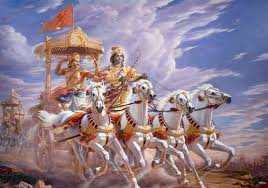
Sri Krishna and Arjuna

Imagine Lord Krishna is running a restaurant called Panchajanya in the city of Dwaraka. What he would sell?

He has given the menu in the Bhagavad Gita in several places. He advocates vegetarianism. So you would only get vegetarian dishes. He would never sell you old food which was made overnight or unsold from the previous day.

Let us look at Chapter 17 of Gita for more details on the menu; if you still don’t understand his policy don’t forget to read the two interesting stories at the end!


The Menu

Only Sattwic food available:

“The foods which increase life, purity, strength, health, joy and cheerfulness (good appetite) which are savoury and oleaginous (oily), substantial and agreeable are dear to sattwic people”

Bhagavad Gita Chapter 17-8

Not available: Rajasic food:

“The foods that are bitter, sour, saline, excessively hot, dry, pungent and burning are liked by the Rajasic and are productive of pain, grief and disease”.

Chapter 17-9

Banned Food: Tamasic

“That which is stale, tasteless, putrid, rotten and impure refuse is the food

liked by the Tamasic.”

Chapter 17-10

MOTTO of our restaurant :”Eat to live; don’t live to eat!”

HOLIDAYS: Ekadasi (twice a month) and Shivratri -Complete closure; half-day closure on full moon and new moon days; days of eclipse and Navaratri.


Rules for Customers

Customers, please note the following rules are strictly followed in the restaurant:

1.Salt ban: On fasting days food will be made without salt. Food with salt is considered meat according to the scriptures.

2. “Verily yoga is not possible for him who eats too much……..” Chapter 6-16

So we will serve only set meals. Unlimited meals or Buffets are not available here

3. “The righteous, who eat of the remnants of the sacrifice, are freed from all sins; but those sinful ones who cook food (only) for their own sake, verily eat sin”- Chapter 3-13

Please note whatever we serve in this restaurant is Prasad from the nearby temple.

4. We provide you four types of food  Chapter 15-14   Gathyam-food that has to be eaten by chewing, Soshyam-Drinks that which has to be sucked, Lehyam – food that which has to be licked and last but not the least Peyam –that which has to be drunk.

This is what Lord Sri Krishna said to Arjuna in the Gita.


Salt ban in New York

In March 2011 The New York Assembly proposed to ban salt in the restaurants. Those who violate the ban would be fined one thousand dollars. This news sent shock waves across the Western restaurants around the world. New York Mayor Bloomberg is opposed to display of salt bottles on the tables of the restaurants .The research showed that salt was the cause for blood pressure, heart disease and stroke. They believe that 100,000 lives a year could be saved by cutting the salt intake. Lord Krishna said it thousands of years ( Gita 17-9) before the western scientists. Salt was banned in religious food and on fasting days. Salty dishes were considered Rajasic.

The problem with the modern diet is not one of deficiency, but one of excess. We eat too much and become obese. Obesity leads to diabetes, heart problems, hypertension and other complications. A lot of us live to eat, but it should be other way round. We must practise to eat to live. When the stomach says ‘enough’ and the tongue says ‘more’ we must follow what the stomach says. This is what Lord Krishna said about too much food (Gita 6-16).

Sri Sathya Sai Baba rightly said, “As the food, so is the head. As the head so is the mind. As is the mind, so is the conduct. As is the conduct so is God’s grace”.


Story #1

Food influences our thoughts. Good food gives us good thoughts. Sri Ramakrishna Paramahamsa said a story to illustrate this point. A saint approached him one day and told him that he gets violent thoughts for some unknown reason. Ramakrsishna asked him what he read, what he saw and who he met the previous day. None of the answers to these questions solved the puzzle. Then he asked him where and what he ate – he found out the food he ate was the cause for the violent feelings. If we eat food cooked by bad people our very thoughts will be polluted.

Story #2

Osho tells us a beautiful story about Sri Ramakrishna. He had a great passion for food. His attachment for food was so much it bewildered every one of his followers. When people asked about this he did not give a clear answer. Now and then he popped in to kitchen to see what his wife was cooking- that too half way through his satsang. Now she also became very curious and insisted for an answer. Then he told her the truth. All his Praraptha karma was already over and once he discards this passion for food (attachment with the world) he would have to leave the mortal frame.

He did not stop there. He told her that he would stop eating three days before his death. He would refuse the food even if it was forced upon him. In course of time even his wife forgot what Sri Ramakrishna told her. That big day came. He refused to take food for three days. He turned his face away from the food for those three days. His wife suddenly remembered what he told her about food. Now she realised a great soul never lived for eating. They ate only for the survival- survive to redeem the world. That is what Sri Ramkrishna did. He created a Vivekananda out of an atheist Narendra to enlighten the Western world with reverberating English speeches about the glories of Hinduism.

Let us eat to live and not live to eat.

Lord Shri Rama – The World’s Best PR Man!

By S Swaminathan

Lord Shri Rama

Valmiki praised the way Sri Rama spoke to people. The way Valmiki described him showed Sri Rama was the best PR Man. The best company would have hired him as a Public Relations Officer with the highest pay. Why? He was Srutha Bhashi, Hitha Bhashi, Mitha Bhashi and Purva Bhashi according the Adi Kavi Valmiki.

  • Srutha Bhashi: Rama always spoke truth
  • Hitha Bhashi: He spoke whatever was pleasant to hear.
  • Mitha Bhashi: He spoke very little.
  • Purva Bhashi: He did not wait for others to open a dialogue. He opened the conversation.

Let us analyse it for a minute. Many a times we speak the truth and get caught in a trap. Why? Though we spoke truth, it was bitter. One example is a wife’s cooking. Under the pressures of work and modern living a man may shout at her saying that she put too much salt in the dishes. It may be true – but the way we spoke was wrong.

If we were Rama we would have passed the message in the gentlest way with the kindest words.  Rama would probably have said “Darling, your cooking is usually wonderful. What happened to you today? Aren’t you feeling well? The food you prepared was a bit salty today which is unusual.” Speaking truth is good but it should not harm or upset any one. That is why Valmiki called him a Srutha Bhashi and Hitha Bhashi.

When people attend weddings or birthday parties they often wait for others to come and talk to them. Their arrogance and ego stop them going up to others, who they consider their rivals, to enquire about their welfare. They pretend to look at other people and wait for their ‘rivals’ to approach them. When they go home they boast to their friends that they snubbed those arrogant rivals. The other people would probably have told their friends the same thing. But look at Rama. He was the son of a great emperor and crown prince of a kingdom. He went up to people and voluntarily spoke to them and enquired about their welfare. He was called a Purva Bhashi.

Mitha Bhashi: Many people suffer from verbal diarrhoea. They can never stop blabbering. We meet them with their mobile phones on 24/7 – on the bus, in the office and of course, at our political meetings! Rama spoke only very little, but made everyone happy. When he met a hunter Guhan he declared him as the fifth brother. When Ravana lost all his weapons in the final phase of the war he told him: “Go home today. Come back tomorrow” and gave him a last chance for survival. These words were meaningful and powerful.  (Guhan and Ravana references are from a version of the Ramayana written by Kamban in Tamil).

If you were running a business today, wouldn’t you hire Rama as your PRO with the highest pay?

Please visit my blogs: swamiindology.blogspot.com and tamilandvedas.wordpress.com


Send comments and feedback to: swami_48@yahoo.com

Is Brahmastra a nuclear weapon?

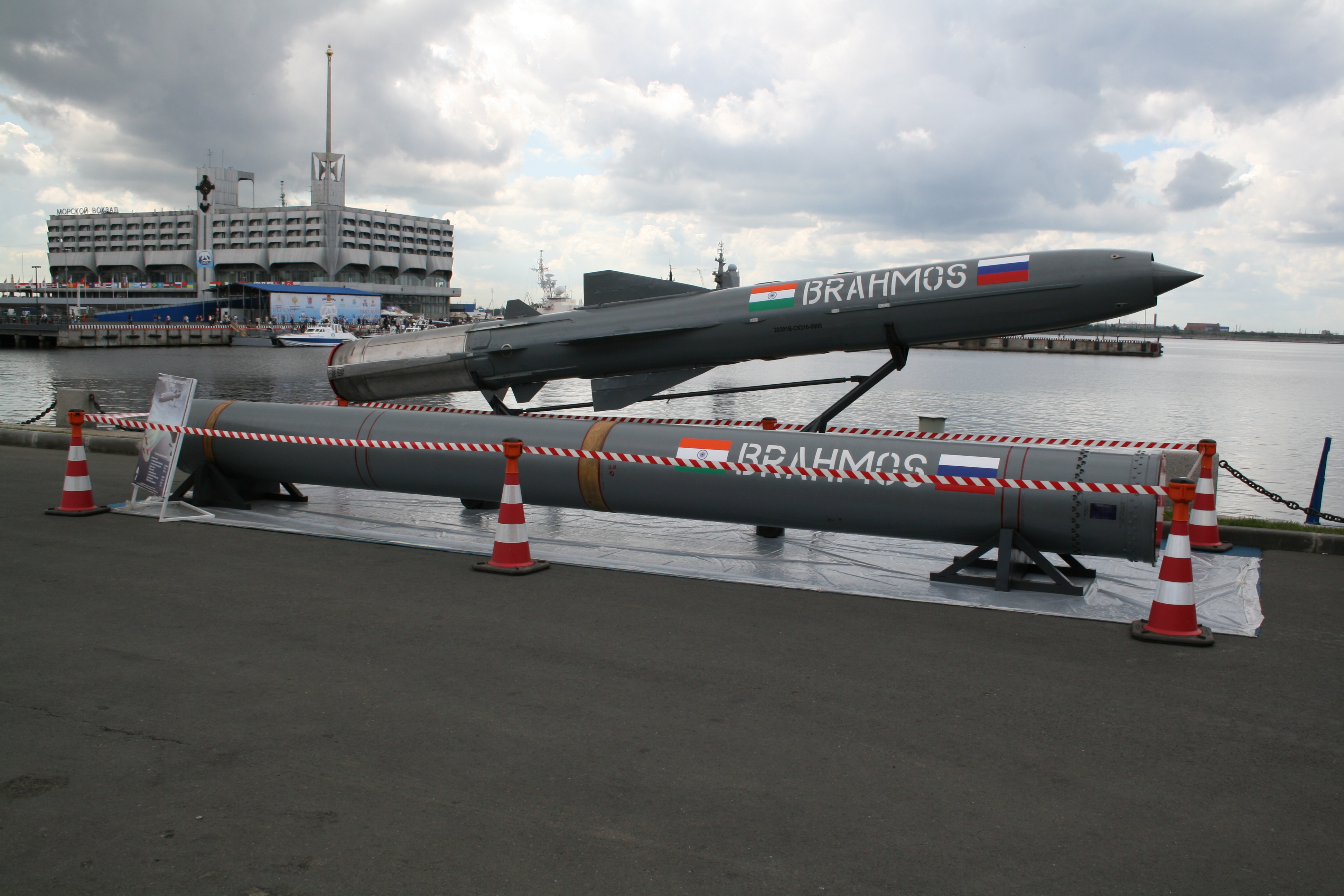
Brahmos_imds
Picture of India’s mighty missile.

IS BRAHMASTRA A NUCLEAR
WEAPON?

– S .Swaminathan, Tamil
Tutor, SOAS, University of London

Nowadays we see a lot of documentaries on television giving scientific or rational explanations for the Biblical events. But not many things in the Hindu epics or Puranas are explained in the same way. Any one with a scientific bent of mind or rational outlook can find explanations for most of the ‘unusual or abnormal’ phenomena or miracles. While I was working for the BBC World Service twelve years ago I had to interview one Indian doctor who had specialisation in Test Tube (IVF) Babies. Casually I mentioned that Gandhari also might have undergone IVF treatment to give birth to 100 children from the urns where the pieces of flesh were kept. But the doctor laughed at my suggestion.  I was surprised to read my view many years later when Mr Cho Ramaswamy started writing Mahaharata in his magazine ‘Tughlak’.

I am giving below some events from our epics and puranas and modern explanations for the same. They
may raise some questions such as ,Did they have all the modern equipment like today? or Are they just imagination or intuition about the future? I leave it to the judgement of the readers.

Dasavatara and Darwin

Many of us have noticed the similarity between Darwin’s Theory of Evolution and ten avataras of Lord Vishnu . Fish/matsya Avatara, Tortoise/kurma Avatara,, Boar/varaha Avatara, Man- Lion/narasimha Avatara,
Dwarf/vamana Avatara, then Rama, Parasurama, Krishna, Buddha(or Balarama) and Kalki avataras are equated with the life in the sea, amphibians, land animals, half man/half animal-semi civilised state, then full grown intelligent men. This is a reflection of Darwin’s Theory of Evolution. While I was writing this , a news item appeared in the British newspapers saying that the have found a fossil of 3 foot tall man. They also added that those people may be there even today in the remote forests. This justifies the Vamana (dwarf) avatara. We already know that there are pygmies in the Congo forests of Africa.
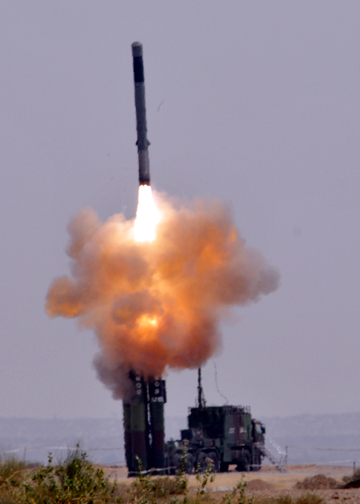
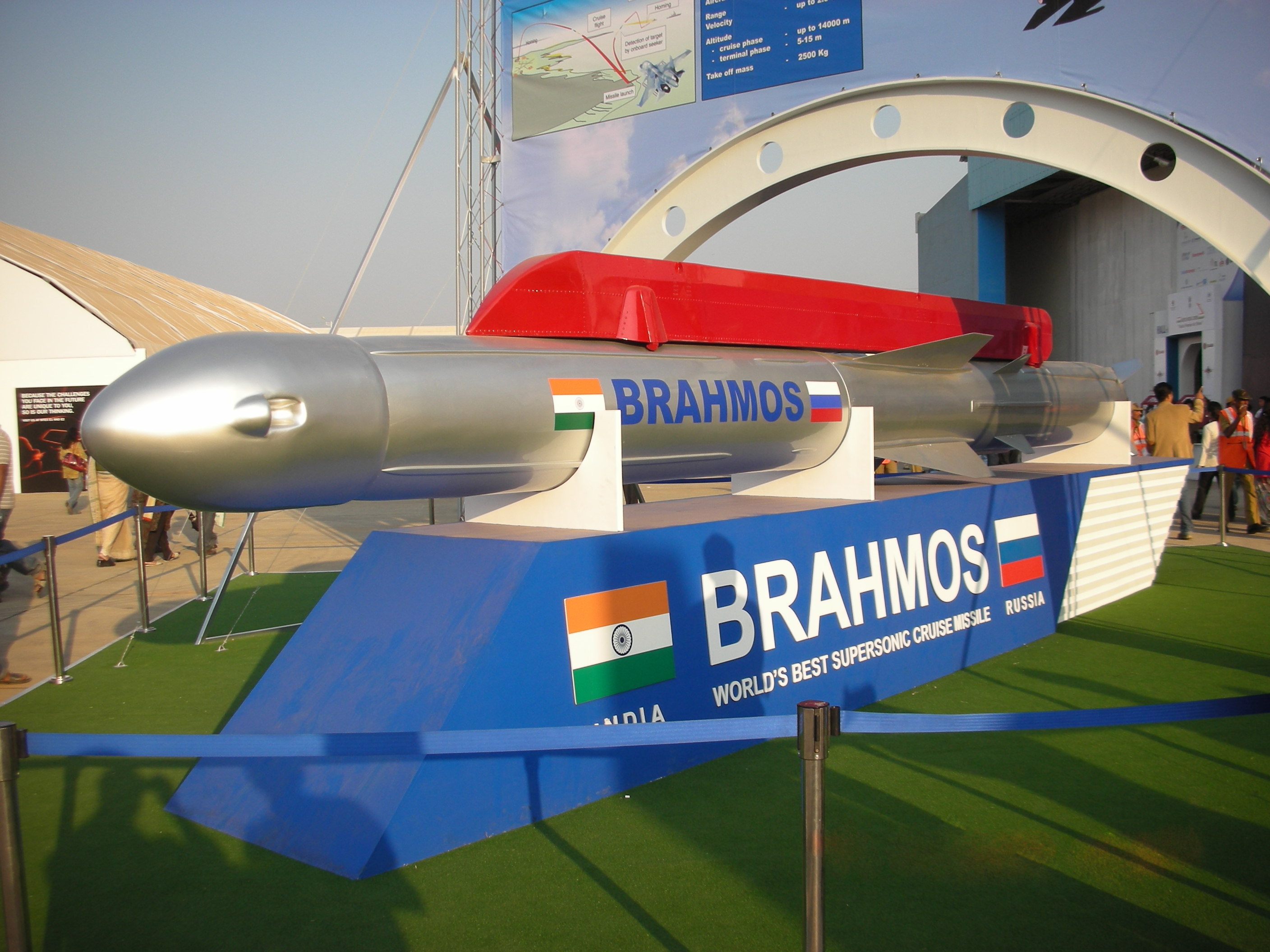
test fire
Brahmos Missile Test Fire.

One Indian scholar explains the Varaha Avatara as follows:

‘One is reminded of the meaningful story full of highly relevant symbolism from our Puranas,
centred round the incarnation of Lord Vishnu as the boar to restore the Mother Earth that had tilted and slipped into the depths of ocean. The moral is when human beings become oblivious of their responsibilities consequent on their inter connectedness and interdependence, God Almighty incarnates as Yagna Varaha-symbol of the principle of sacrifice. When our actions become self oriented and disjointed, breaking the natural inter relatedness, Truth gets devalued and there is atilt. Varaha(boar) comes to remind man of the urgency of bringing the sense of sacrifice into his actions, of raising them into Yagnas, so that harmony and strength are restored as also the balance.

Theory of Time Dilation

If a 16 year old person travels at the speed of light (186000 miles per second), that person will be a ‘Markandeya’ for ever. He will be young for ever. We came to know this fact only after the greatest physicist of our times Albert Einstein gave us the Theory of Relativity. But there is a story in our Puranas about Arjuna’s travel to Swarga (an alien planet?)  in Indra’s chariot driven by his driver Matali. When Arjuna came back to earth he saw people more aged than he expected. When he asked for explanation scholars told him that the time on earth was different from the time of the place he visited. Even now we read in the Puranas about Deva’s day, Manu’s day and Brahma’s day. They have different duration. No other religion in the world described ‘Time’ this way. The concept of time and the way we use adjectives like ‘Surya Koti samaprabha’/light equivalent to million suns show that our forefathers were aware of the modern concepts.
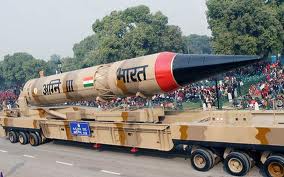
agni
Picture of Agni missile of India.

Futurology and Nuclear Winter

Vanaparvam of Mahabharata describes the end of the world. It says how the world will end at the end of Kaliyuga. It says that all the planets will be aligned in a single line. It also describes the climatic changes at the time. One cant miss the similarity between the nuclear winter (What will happen in the aftermath of a nuclear explosion) and the changed climate. Before reading about the nuclear winter I thought the epic describes some natural catastrophe. Now it is very clear that they describe only the nuclear winter.

Biology in Tamil

There is a proverb in Tamil ‘pulikku piranthathu poonaiyaguma? (Will a cub born to a tiger be a cat? ).The modern zoological classification says that both the animals belong to the same cat family. Did Tamils group both the animals in the proverb by sheer coincidence or did they know a scientific classification. Even the oldest Tamil book Tolkappiyam classifies all the living beings into six groups.
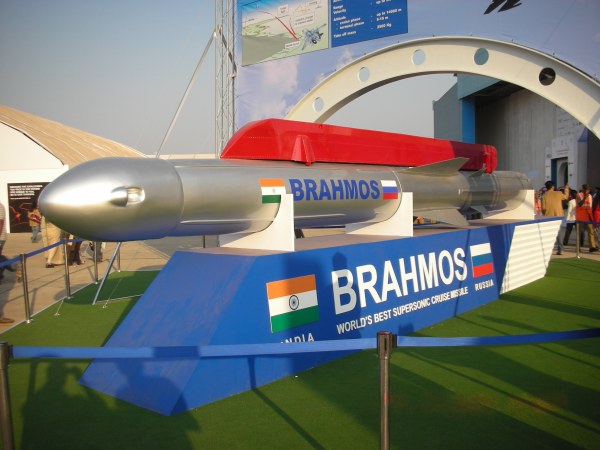
BrahMos

Brahmastra- a Nuclear Missile?

Whenever the use of Brahmastra is mentioned  in our scriptures ,the devastation it caused was also described in detail. They allowed it to use only once, that too only as a last resort. When they gave reason for it, they said that it kills the good and bad together and other living beings also. And we know that it was the most powerful weapon of the epic period. What is this weapon? Is it just a fire weapon or more than that? When we compare this with other weapons of Mahabaharata period such as the Shakti missile used by Karna, the Nagastra (Biological weapon?), Pasupatastra  etc it is very different from them. When Aswaththama and Arjuna released their Brahmastras, Krishna foreseeing the end of the world by such terrible weapons asked both to recall their weapons. When Arjuna did so, Aswaththama was unable to do it as he did not possess the requisite knowledge. At last Krishna had to use his power to save the child (Parikshit) in the womb of Uttara (from the radioactive fallout?) by using his special powers. 

Bhagiratha- a Great Engineer

The story of the descent of river Ganges to the ‘earth’ through Bhagiratha’s several thousand year penance is nothing but a marvelous engineering feat. Three decades ago when engineers wanted to build a dam across
river Nile in Egypt, they removed the massive Abu Simbel statues from the banks of the river and then a bomb explosion diverted the river Nile. The story of Bhagiratha bringing river Ganges to the earth clearly says that several of his forefathers also tried and failed in the mission. That is to say several kings tried to divert the Ganges which was running mostly on the Himalayan mountain but failed.  Bhagiratha with great ingenuity, diverted the river by breaking certain point in the Himalaya and the mighty river descended to the present Gangetic plains of North India. We must remember several thousand years ago there were no people on the Gangetic plains. This is what we read as the ‘descent of the river from sky to earth’. Population slowly spread eastward from the Indus plains. So we may call Bhagiratha the greatest engineer of the ancient world.

Did Agastya drink ocean?

Agastya was one of the greatest travelers of ancient India. He was mentioned in the Rig Veda and the Ramayana. He slowly moved southward and established an ashram at the western ghats-Pothya malai. There are lot of myths about him. All this can be explained scientifically. He did divert the river Cauvery to the present Chola mandala like Baghiratha. But in thousands of years it became a myth and we read a crow tilted the ‘kamandalam’ (pot) of Agastya and thus came River Cauvery.

Another story told about Agastya is that he traveled to the south at the behest of Lord Siva. It is
true that either Siva or a Saivite saint requested him to go to the south to disperse the population. The story of Siva’s(Meenakshi wedding) Tirulkalyanam makes it clear by  saying the overcrowding of the earth tilted the balance and Siva requested Agastya to go southward. Our fore fathers were such a great planners that they did what we are doing today-building satellite cities! This story is in Tiruvilayadal puranam and other books.

Did Agastya drink the ocean? Agastya was the first person to cross the Indian ocean for the first time to establish a great Hindu empire in South East Asia.  We now knew that there was a flourishing Hindu colony in Laos,Vietnam,Cambodia (Angorvat temple) Malaysia,Singapore and Indonesia (Borobudur Stupi) for 1300 years. Now they are all converted as Muslims. Like Columbus and Magellan, he crossed the ocean- that is he ‘drank’ the ocean! It is a symbolic story. Agastya’s statues are displayed through out South East Asian countries even today.

One another myth about Agastya is that he made the Vindhya Hill not to grow again. This is another
symbolic story to say that he crossed the Vindhyas for the first time through the ‘land route’. Before him North and South Indians used coastal sea routes. Tamil literature also makes it very clear in several places that Agastya came to the south with 18 groups of people and he was the one who codified a grammar for Tamil.

Jarasandhan-Siamese Twins?

Jarasandhan was born to two mothers and he came as two balls of flesh. The left and right     sides (child) were thrown into a dustbin by the queens in disgust and fear and a rakshasi (wild shaman woman) by name Jara picked it up and gave it to the king after joining both the parts .The fact is one woman gave birth to a Siamese twins (two children joined together physically) and  threw it in to the bin. Somebody did some surgery successfully and gave the child in good condition back to the king.

I have counted and listed more than 20 abnormal children in the Mahabjharata. Several of them are
stories of cloning. Mandhata was born out of his ‘father’ says the epic. Another story says that Vaidharbi gave birth to a squash fruit and it was divided into several parts and kept in urns. They became sons. The stories of Shisupala, Sikandi and Sthunakarna talk about organ changes. Vashista and Agastya were born in ‘pots’(Kumba Muni or Kumba Yoni). If we remove all the myths about all these miracle children we see clear medical treatment or surgeries/operations!

Who discovered Boomerang?

All of us knew that the Australian aboriginals had a weapon called Boomerang which will come back to
the person who shoots it. But Krishna’s Sudarsana charka also did the same .Whenever Lord Krishna used it, it came back to him. Was it the first boomerang weapon? Did Krishna teach this art to the world?

Miracle or Solar eclipse?

On the fourteenth day of the 18 day Mahabharata war, Arjuna vowed that he would kill Jayadrathan  before sunset or commit suicide. Unfortunately Arjuna couldn‘t kill him. But the story is that Krishna created false sunset using his Sudarsana charka (disc). If we look closely at this event it is nothing but a solar eclipse. The sun light faded for some time because of the eclipse. When all prepared for the withdrawal of the army for the day, the sun came out and Arjuna killed the unguarded Jayadratha. In those days they didn’t fight after sunset.

What I have given here is only very little. If we take the fields of Medicine, Mathematics,
Psychology  ,The power of mind/brain, Extra Sensory perception etc. we may write volume after volume. But I wish someone analyses all such events and publish their findings well before the western scientists reveal them. No one will appreciate if we keep on comparing every new invention with the writings in our old literature.

contact swami_48@yahoo.com
Pictures are inserted on 26th March 2014 in the original article. The article was written ten years ago for the South Indian Society UK (London) magazine.

********