Manu’s Beautiful Definition of Dharma!(Post No. 3564)

Written by London swaminathan


Date: 21 January 2017


Time uploaded in London:- 15-48


Post No.3564


Pictures are taken from different sources; thanks.


contact: swami_48@yahoo.com


What are the sources of Dharma?

Veda- Four Vedas

Smrti – Law Books

Sadaacaara – Good Conduct

Priyamaatmanah – What is pleasing to mind

vedah smrtih sadaacaarah sasya ca priyamaatmanah

etat caturvidham praahuh sakshaaddharmasya lakshanam

–Manu Smrtih 2-12


Manu, the first law giver in the world has defined righteousness. As always believed Vedas and Smrtis (law books) are the source of Dharma. It is very difficult to translate the word ‘Dharma’ in English. But Tamils succeeded in Tamilizing that Sanskrit word as ARAM (Dharam in Hindi). The most interesting point of this definition is WHAT IS PLEASING TO MIND!


Does it mean that anyone can do anything that which pleases one’s mind? No. It must be a good conduct. Why did he add this after giving three sources? That is because Dharma also changes according to time, location and the circumstances. So, when one in doubt he does what pleases his mind  without violating the other three factors i.e. Vedas, Smrtis (law books) and accepted good conduct. I will give you one example.


Brahmin priests get enormous number of Dhotis (Veshti) in a year by performing various rituals. But they don’t get enough money to pay for their house rent, bills and travel etc. When they met Kanchi Paramacharya, he suggested that if there are too many dhotis involved in a ceremony, they can get money with a small thread representing Vesti/dhoti.


So, when someone is in doubt about following certain rules, one can always consult the saints or elders living at that time. Sri Sathya Sai Baba made Gayatri a universal mantra, available to everyone. He did not insist initiation or caste or sacred thread to recite Gayatri, the most powerful mantra in the three Vedas. This is applicable to Baba devotees, because they have already fallen in a divine, religious grew. So, nothing could go wrong if they are in the grew.


In the very first verse of the Second Chapter of Manu Smrti, Manu says, “Learn Dharma that is constantly followed and assented to in the heart by learned men, good men who have neither HATRED or PASSION – Manu 2-1


Narada Smrti says that the Four Feet of Dharma are

Jnaanam – Knowledge

Dhyaanam – Contemplation of Inner Self

Sama – Control of Mind

Dama- Control of Sense Organs


catushpaadaa hi dharmasya jnaanam dhyaanam samo damah

–Narada smrtih 1-8

Valluvar’s Definition


“That which should be done is virtue;

That which should be avoided is vice

–Tiruk Kural 4-40


Tiruvalluvar, author of the Tamil Veda, Tirukkural, also defines Dharma in ten couplets.

He says, “What brings more glory to man than righteousness? It gives prosperity (on earth) and also happiness (in heaven)- Kural 41


Do good deeds unceasingly, as far as you are able, by thought word and deed 43

Do the deeds of charity now without postponing them to your old age; for they will be unfailing help to you in the hour of death- 46

Buddha on Righteousness!


Gautama Buddha explains Dharma (righteousness) in 17 couplets in Dhammapada (Path of Dharma). He said nothing new. All are already in the Gita and Upanishads.

“A man is not great because he is a warrior and kills other men; but because he hurts not any living being, he in truth is called a great man” (269)

“A man is not on the path of Dharma if he settles matters in a violent haste (256)

“He in whom three sins (envy, greed and deceit) are uprooted and who is wise and has love, he is in truth a man of honour”(263)


Is short, everything said by Buddha is already in Mahabharata.


Long Live Dharma!

–Subham–


Where does Lakshmi reside? (Post No.3561)

9dbc9-gajalakshmi

Written by London swaminathan


Date: 20 January 2017


Time uploaded in London:- 21-30


Post No.3561


Pictures are taken from different sources; thanks.


contact; swami_48@yahoo.com


In the ancient Tamil Sangam literature, a beautiful verse is found in the Purananuru. The verse is composed by Valmiki. Dravidian frauds and foreign “scholars” have spread out a lie that Tamil culture is different. Those who read 30,000 lines of Sangam literature will know that the culture is same from Kanyakumari to Kashmir with some regional specialities.


Valmiki is not the only Sanskrit name in Sangam literature. There Damodara, Kesava, Markandeya, Sangavaruna, Kapila, Parana, Mamula and so many other Sanskrit names. This will explode the racist Aryan Dravidian theory. One third of the poems were composed by Brahmin poets. If Sanskrit words are removed from Sangam Tamil verses it would like virus affected software!


Valmiki who composed verse 358 of Purananuru is different from Valmiki of Ramayana. But he was given this name because he liked Ramayana very much. According to some commentators this is a verse about Rama.

The gist of the verse no. 358 is, “ Life is so impermanent that this land has seen seven kings on a single day. If you compare worldly life with ascetic life, life of an ascetic is far better/ greater. Asceticism is so great and the earth is not one iota of it. It is because asceticism is difficult people became family men.  Those who strived for liberation became ascetics. Those who don’t ask for wealth (Lakshmi) will get it. Those ask for it wont get it and suffer as family men”.

5064c-lakshmi2bold2bdrawing

Lord Rama said that he did not want Rajya Lakshmi (kingdom) but he got it.


Apart from the philosophical interpretation, it gives some historical information of having Seven Kings on a Single Day!

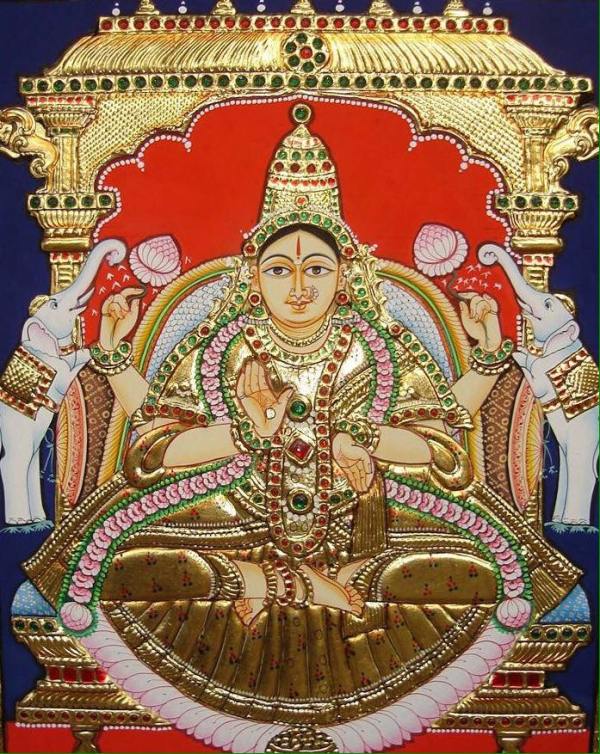
There is another verse in later Tamil literature, which lists the places where Lakshmi, the Goddess of Wealth resides: Lotus, Flag of a kingdom, City, Lightning, Tulsi leaves, Vilva/Bilva leaves, Sheath of paddy, Chank, Sea, Lamp, Horse, Marriage House or Mandap, Milk pot and the hearts of the good people.


Apart from the above list there is a belief that Lakshmi resides at the backside of a cow and the parting of a woman where she applies Kumkum every day. The list explains why Hindus boil milk in the new house, why Vishnu gets Tulsi and Shiva gets Vilva every day, why Hindus light lamp every day, why grains ae called Dhanya Lakshmi etc.


–Subham-


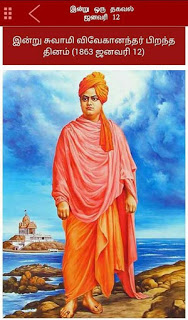
Ah! It was a wonderful phenomenon – Swami Vivekananda! (Post No.3536)

Written by S NAGARAJAN


Date: 12 January 2017


Time uploaded in London:-  5-49 am


Post No.3536


Pictures are taken from different sources; thanks.


Contact: swami_48@yahoo.com


VIVEKANANDA JAYANTHI JANUARY 12TH

Ah! It was a wonderful phenomenon – Swami Vivekananda!

by S. Nagarajan


Ramakrishna Paramahamsa was Narayana and Swami Vivekananda was nara in the ‘Nara Narayana’ pair.

They just visited the earth to uplift the humanity and rejuvenate Hinduism.

Swamiji had extraordinary power. But he never revealed himself. However occasionally he used to reveal some of his secrets.

Given below is one such secret which was told by himself.


“While I was in America I had certain wonderful powers developed in me. By looking into people’s eyes I could fathom in a trice the contents of their minds. The workings of everybody’s mind would be patent to me, like a fruit on the palm of one’s hand. To some I used to give out these things, and of those to whom I communicated these, many would become my disciples, whereas those who came to mix with me with some ulterior motive would not, on coming across this power of mine, even venture into my presence any more.

 
When I began lecturing in Chicago and other cities, I had to deliver every week some twelve or fifteen or even more lectures at times. This excessive strain on the body and mind would exhaust me to a degree. I seemed to run short of subjects for lectures and was anxious where to find new topics for the morrow’s lecture. New thoughts seemed altogether scarce. One day, after the lecture, I lay thinking of what means to adopt next. The thought induced a sort of slumber, and in that state I heard as if somebody standing by me was lecturing – many new ideas and new veins of thoughts, which I had scarcely heard or thought of in my life. On awaking, I remembered them and reproduced them in my lecture. I cannot enumerate how often this phenomenon took place. Many, many days did I hear such lectures while lying in bed. Sometimes the lecture would be delivered in such a loud voice that the inmates of adjacent rooms would hear the sound and ask me the next day, ”With whom, Swamiji, were you talking so loudly last night?” I used to avoid the question somehow.


Ah, it was a wonderful phenomenon.


(Complete Works of Swami Vivekananda Volume 7 page 124)

Swami Akhandananda (earlier name Gangadhar) who was the direct disciple of Ramakrishana Paramahamsa has narrated some of the wonderful experiences he had with Swamiji.

Once Swamiji was in Almora with Swami Akhandananda. One day Swamiji disclosed to Swami Akhandananda mantras he has seen in gold, explaining their import and telling him to which deity each related.  Thus they travelled along the solitary mountain paths.


One day near Almora, they rested under a peepul tree. They bathed in a mountain stream and then sat for meditation. After a long time, Swamiji said to Swami Akhandananda : “Gangadhar , here at Almora, under this tree, a most auspicious moment has been spent. Today, I have found a solution to a knotty problem. I have realized that the macrocosm and the microcosm are strung together on the same string.”


In a notebook preserved by Swami Akhandananda, Swamiji wrote an account of his realization, which is the source of some of the main points in his later speeches and writings.

(ref : Swami Akhandananda by Swami Annadananda page 70)

From the above we may conclude that Swamiji was guided by the Supreme Power continuously with the grace of Ramakrishna Paramahamsa.

*********

Spiritual Message though a Village Woman (Post No.3529)

4692c-pot2bwomen252c2btribal

Written by London swaminathan


Date: 9 January 2017


Time uploaded in London:- 17-45


Post No.3529


Pictures are taken from different sources; thanks.


contact; swami_48@yahoo.com


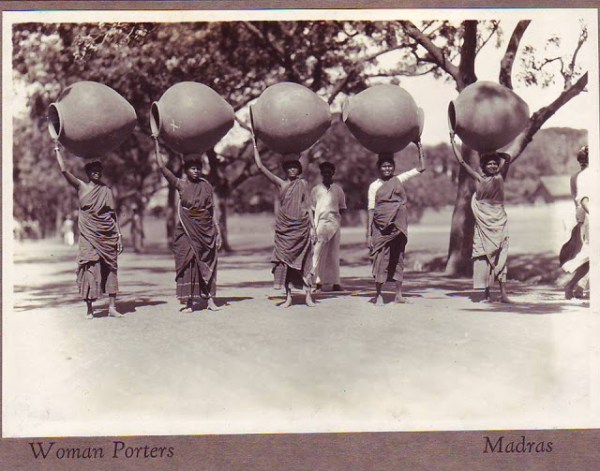
Hindu saints are great writers. They propagate great ideals through simple similes or imageries. When those examples are seen in our day to day life, it goes straight in to our head and heart. Ramakrishna Paramahmasa was one who propagated the highest ideals in Hindu literature through parables, pithy sayings and similes. It is a strange coincidence that a Tamil saint who lived approximately 1000 years before Sri Ramakrishna Paramahamsa also used the same simile.


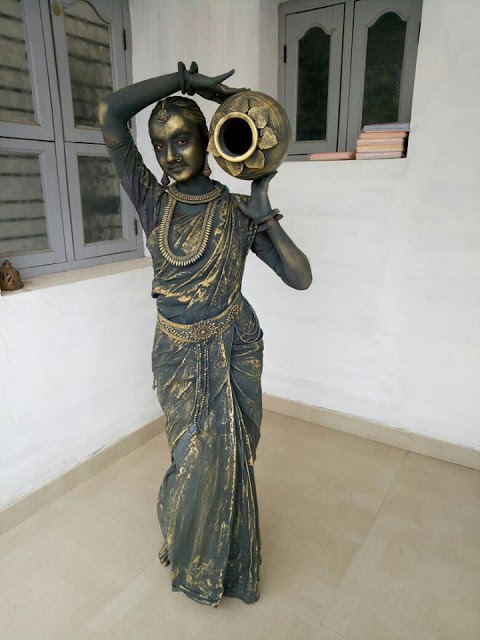
An ascetic or a Yogi is like a water carrying village woman. She fetches water from a faraway well or tank in five or six metal pots piled up one over the other on her head. Juts to avoid the boredom, she gossips with other women watch fun on her way, but always remember the water pots on her head. An ascetic or Yogi also does everything like an ordinary man but always remember God. Though the women artistes in the Circus, Folk dance and Acrobats also do such things they are trained for it. But a village woman is just an ordinary person bt with extraordinary talent in carrying and balancing the water pots.


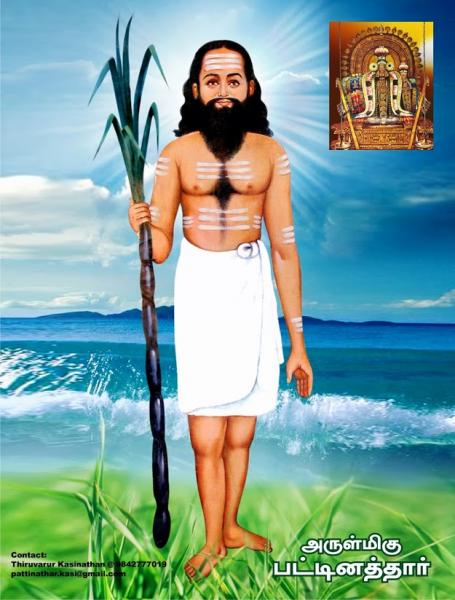
I have given below the sayings of Paramahamsa and Pattinathar; I have already written about Pattinathar. Please read my post: “Eyeless Needle changed the Life of a Millionaire”- posted on 2nd January 2017.

9c281-water2beverywhere

Pattinathar Verse:-

What though  they do, what though they undergo,

The liberated are ever poised in Silence.

With easy skill she  sports a gait

Flourishing her hands Twain.

Yet the house maid has an eye on the water pot

She carries on her head – Pattinathar Poem


ca850-water2bpot

Ramakrishna Sayings: –

As a boy holding to a post or pillar whirls about it with headlong speed without any fear of falling, so perform your worldly duties   fixing your hold firmly on god ,and you will be free from danger.


As the village maidens in India carry four or five pots of water placed one over the other upon their heads, talking all the way with one another about their joys and sorrows, and yet do not allow a single drop of water to spill, so must the traveller in the path of virtue walk along his route. In whatever circumstances, he may be placed, let him always take heed that his heart does not swerve from the true path.


The magnetic needle always s to the North, and hence it is that the sailing vessel does not lose her direction. So long as the heart of man is directed towards God, he cannot be lost in the ocean of worldliness.


–Subham–


Stone cutters of Tamil Nadu and the Story behind Madurai Temple (Post No.3520)

Incomplete Raya Gopuram of Madurai in Tamil Nadu

Compiled by London swaminathan


Date: 6 January 2017


Time uploaded in London:-  17-14


Post No.3520


Pictures are taken from different sources; thanks.


contact; swami_48@yahoo.com


The village stone cutter belongs to the five artisans of the village. He generally lives where there is solid rock which will suit his purposes. He opens his workshop under the burning sun on the open rock. He has a few chisels of different kinds and some iron hammers. With these simple tools he turns out some really good and useful work. He makes the stone for grinding curry materials; the mortar in which to pound rice and the mills– which are primitive in style– for grinding the flour. He can also make stone steps, pillars, beams, doorposts, jars, stands, troughs for watering the cattle and other useful articles that are required for domestic use.


He is not a monthly or annually paid artizan, but he receives suitable payment from the people for all the articles with which he supplies them. He does not go about to collect grain and vegetables from the villagers. If any villager chooses to give him a gift in the form of grain or fruit, of course, he is only too happy to accept it.


The skill of the famous Indian stonemasons has been displayed in the erection of the temples of India. The remarkable way in which groups of animals and human figures are carved out of the solid rock in some of the most famous ancient Hindu temples, speaks volumes for the skilfulness of the Indian stonemason. There is a temple (consecrated to the Hindu god Subramanian, the second son of the god Siva) at Kalugumalai, in the Tinnevelly district of Southern India, which is noted for its singular situation under a solid rock. The cave itself is well worth a visit and the carvings in solid rock are simply marvellous.


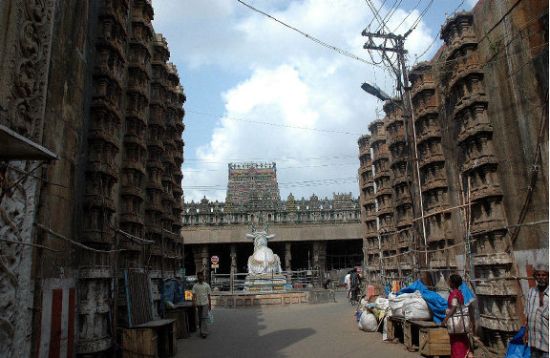
In the temple of Srirangam, in the Trichinopoly district, there are several indications of the skill of the stonemason. There are many beautiful pagodas, which shoot up into the sky to a lofty height, in the midst of hundreds of palm-trees and mango-trees, between the two great rivers, the Kavery and the Kollidam. The beautiful and attractive stone pillars, which stand in some of the temple mandapam(cloisters) were first conceived in the mind of the stonemason and then fashioned into shape by his skilful hands. At the bottom of the pillar is the figure of a bear ten feet in height; in the middle of the pillar is a horse about eight feet in height; on the back of the horse there is a hero holding a long spear in his hand, which is passing through the bear that holds up the pillar. On the top of the pedestal there hangs different kinds of Indian fruits. There are several pillars of this kind, and they differ only in the form given to the animals.


The stonecutters also make innumerable gods and goddesses for the people. They make gods with human bodies and animal heads, or with animal bodies and human heads. Their fingers have formed images of all the living creatures of India and placed them in the sacred buildings of the Hindu community.


It is a general complaint that the ancient Indians did not leave any proper record of the history of their land. The stonecutters have to some extent made up for this deficiency. They have told the histories and mysteries in the works of their bands. The inscriptions carved by them in various temples some two to three thousand years ago are still read with interest, and they are often used in deciding the disputes as to the rights of the peasants, the priests, and the princes of the land.

Story behind the Madurai Temple Tower

There are many stories connected with the scientific knowledge of the stonemasons. There is a beautiful and even magnificent temple in the historical and ancient city of Madurai. This temple was built by the founders of the Pandyan dynasty, and afterwards much improved by Terumal Naick (Thirumalai Nayakar), the latest Hindu ruler of Madura. In this temple there is a royer gopuram (the great pagoda) which was built by Terumal Naick. There are two large stone pillars in this royer (Rayar) gopuram. A certain stonemason, by order of the king, brought the stones from the mountain, and placed them in the pagoda, and then died. His son came, and attempted to follow in the footsteps of his father in erecting the royal monument to the goddessMeenatchi, and then he died. By-and-by his son came to the temple to pay his vows. As he entered the royer gopuram saw the great stone pillars. As he looked at them he thought that his grandfather had made a mistake in bringing of the stones and placing it in the sacred place, and he gave expression to his feelings while he was standing in the temple, saying that the temple was polluted according to building science, inasmuch as in one of the two huge pillars a frog was still alive at a certain spot towards the top of the pillar. This statement was brought to the notice of the king, and the man was summoned at once into his presence. The king asked the stonemason, “Have you said that my temple is polluted on account of one of the pillars being placed in the main entrance of the temple?”

“Yes, Your hHghness,’”politely said the man.

“If you cannot prove your statement to be true, remember your head will be severed from your body,” said the king in a very severe tone of voice.


Having placed his life as the pledge for the truth of his the stonemason boldly asked the king to follow him to the temple. The king and his courtiers went. The stonemason requested one of the servants of the king to place a ladder beside the pillar and to go up to the top, and break off a certain portion of the pillar with a hammer. When several small pieces had been broken off a stone frog actually fell down to the great surprise of the king and the advisers. The king immediately ordered his servants to bring gifts from the palace, and these be presented to the stonemason, and he even bestowed upon him royal honours.


Source: Indian Village Folk, T B Pandian, London Year 1897
-Subham-

‘Eyeless Needle’ Changed the Life of a Millionaire! (Post No.3508)

Compiled by London swaminathan


Date: 2 January 2017


Time uploaded in London:-  16-15


Post No.3508


Pictures are taken from different sources; thanks.


contact; swami_48@yahoo.com


Pattinathar was a rich man who lived in the port city Kaveri Poompattinam (also known as Pumpuhar) in the tenth century CE. He has not been included among the Sixty-Three Saiva Nayanmars, though five of his poems have been taken into the Eleventh Tirumurai.


A bright infant he was, left uncared for in a garden at Tiruvidaimarudur. It was picked by a poor couple who it to Pattinathar for reward. He took the child and reared it as his own son, naming him Marudapiran. Some years later the boy disappeared after asking his mother to handover a box to his father when he returned home. When Pattinathar opened, it he found an eyeless needle and a palm leaf on which a conundrum had been written.  This is said to have opened his eyes to the truth about the divine nature of the boy, who was thought to be God Shiva himself. He immediately arranged for the distribution of his wealth to the poor, renounced life and became an ascetic. He wandered far and wide visiting several sacred places and temples and finally attained salvation at Tiruvotriyur.


In the course of his pilgrimage he is reported to have visited the Tuluva country and converted a king of Bhadragiri to his creed of Yogic asceticism.


Commenting on the eyeless needle which brought a sea change in the life of Pattinathar A J Appasamy (in a book published by YMCA Publishing house nearly 100 years ago) says: “The eyeless needle, tradition maintains, was the means of Pattinathar’s conversion. It swiftly flashed across his mind that just as a needle without an eye is of no value., though the eye itself be the tiniest of things, so the human soul which does not devote itself to God, is lost. The little symbol brought home to him that great truth.


The word Pattinathar means “He of the City”. Pattinathar belonged to the mercantile clan. According to the tradition he was a Chettiar. A flourishing merchant, it is well known, will be greatly attached to his business and wealth. It takes a miracle to wean him away from these. And, a miracle did take pace, in his life. It pleased Lord Shiva to bring about his enlightenment in a flash “ All wealth is worthless, yes as worthless as an eyeless needle”. This knowledge made a new man of Pattinathar. He revelled in divine vagabondry. He sang

Our home is Tiruvalankadu; we have with us

A begging-bowl – God given- and never empty;

To supply as whatever we need, there is the rich land;

O goody heart, there is none our equal.


Visit to a Courtesan’s house

The great commentator Sivagnana Munivar says “Here is commanded the chanting of Panchakshara as ordained. Though for these souls the effulgence of Gnanam (wisdom) is vouchsafed, Nescience does its besetting, even as the worm accustomed to eating neem, forever repairs to it.” Lust besieged, out saint visited a courtesan. She took some time to present herself before him. Meanwhile, our saint quelled his sinful thought. When the woman eventually came, he burst into verse thus:

“O Peafowl-like woman adorned with the garlands

Of bourgeoning flowers, the one that just now

Quested for you, has gone away; compose yourself.

If you yearn for me I will kick you on your hips

And if I think of you, you kick me.


In the history of Tamil religious literature he has secured a niche which is proof against the tooth of time and razure oblivion.


Two Pattinathars?

It is said that there were two Pattinathars. The author of the hymns included in the Eleventh Tirumurai is the earlier of the two. A careful perusal of his poems establishes this fact indubitably. Pattinathar the second, if such a description can pass muster, is the author of the poems given below:

Kovil Tiru akaval, Kachi Tiru akaval, Tiruvekampamalai, The decad of Obsequies, Anatomical song.


Pattinathar refers to the eyeless needle episode his poems:

He tore a cloth of silk, placed there in with love

A thick needle, folded it and put it into the hand

Of my wife with rich tresses;

Did Siva by his advent intend that I should

Give up my love for my bewitching wife?

For ever hail the flower-feet of the strong-armed Lord

Of Annamalai, oh my heart!

In this world, of what avail are wealth

Tined with evil and the buries riches?

Even an eyeless needle accompanies you not

After you decease”.


AV Subramania Aiyar wrote the following in 1957 believing that there was one Pattinathar:


“A careful study of the very scanty materials about the life and works of Pattinathar shows that there are, broadly, two periods in his life after his final and sudden renunciation. Ther is a tradition that when he left his home he took with him a broken pot and a palm leaf manuscript of Tirumular’s poem. There is no doubt that he was greatly influenced by Tirumular’s Tirumantiram.  There was a significant change in the lives of both Sivavakkiyar (a Tamil Siddha) and Pattinathar at some crucial period in their lives.


There are some similarities and differences in the pomes of Sivavakkiyar and Pattinathar. Both have shown an excessive desire to extoll the virtues of unqualified asceticism and Yogic mysticism in language that can be understood by the masses. Their frequent and repeated scornful references to the physical facts of sex and the biological facts of birth are similar in tone, if not in language.

Pattinathar’s poems are happily free from the violent denunciations of idol worship, temples, rituals, caste, the Vedas, Agamas etc. which Sivavakkiyar indulges in.


Source Books:

St Pattinathar in English by Sekkizhar Adippodi T N Ramachandran, Dharmapura Adinam,1990


The Poetry and the Philosophy of THE TAMIL SIDDHAS, A V Subramania Aiyar, Tirunelveli, 1957

–Subham–


Lamps in Tamil and Sanskrit Literature (Post No 3502)

Research Article Written by London swaminathan


Date: 31 December 2016


Time uploaded in London:-  18-28


Post No.3502


Pictures are taken from different sources; thanks.


contact; swami_48@yahoo.com


Prince Aja did not differ from his father in resplendent form, in valour and in nobility of nature as a lamp lighted from another lamp does not differ in brightness– Raghuvamsa 5-37


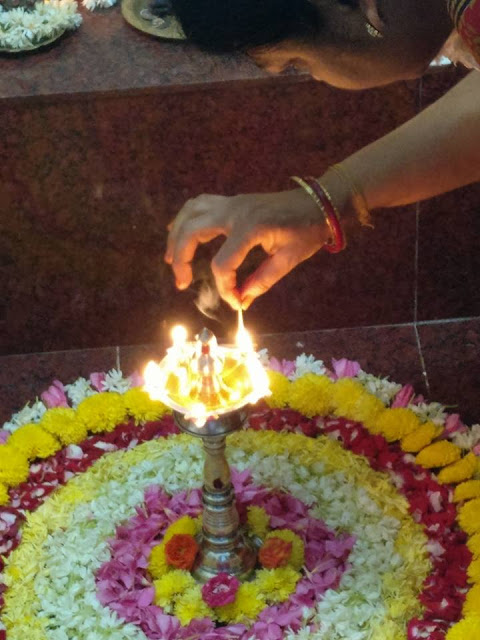
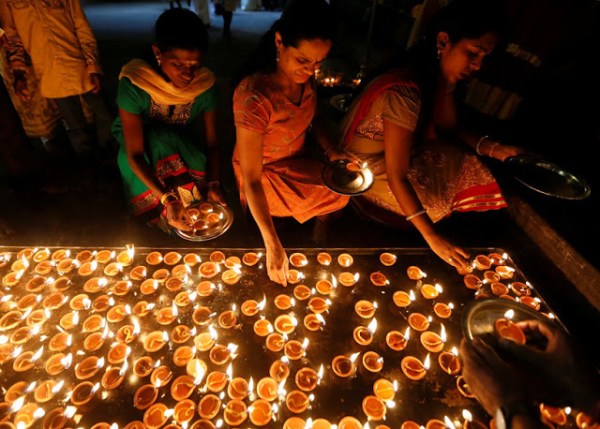
Lamp or Deepa is considered an auspicious symbol in Hindu literature. I don’t think that any other culture gives such a treatment to Lamps. Though lamps were essential items in a household in the ancient world, it did not get any sanctity in other cultures. Hindus light lamps in the morning and in the evening in front of God’s pictures or idols in the prayer rooms and worship god. They have special prayers for lighting the lamp and special places for the lamps. women won’t even touch the lamp during the menstrual period or periods of pollution. Someone else in the house will take care of it. They wouldn’t use the word ‘switch off’ to put out the lamp. They will say ‘see the lamp’ meaning see that it is taken care of. So much sanctity and respect was given to lamps in Hindu homes.


There are lots of beliefs regarding the lamps. If it goes out in the wind or falls down then they think it is inauspicious thing or a bad omen. Tamil and Sanskrit literature compare the wife as a lamp in the family. In old Indian films a person’s death will be hinted by a lamp going off suddenly or blown out by wind.


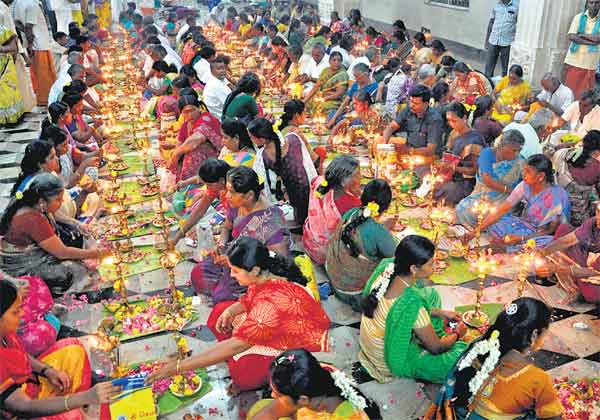
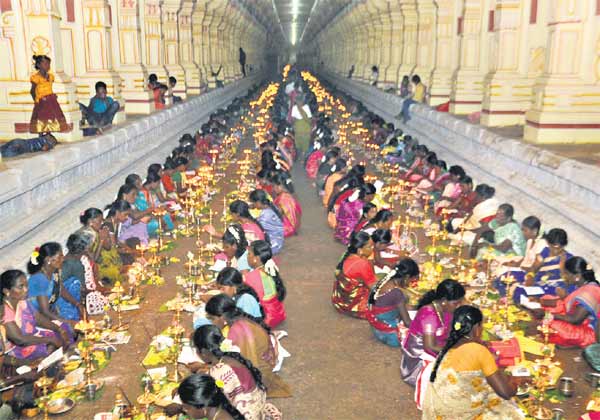
Hindu organisations organise 1008 Lamps Pujas or 10008 Lamps Pujas regularly and Hindu women participate in them with great devotion and enthusiasm.

Kalidasa use the lamp simile in several places:-

In the Kumarasambhava, Himalaya with Parvati, received sanctity and was also glorified as the lamp by its exceedingly brilliant flame (K.S. 1-28). The image suggests the bright lustre of Parvati.

Nagaratna or Cobra jewel on the head of snakes giving out light is used by Tamil and Sanskrit poets in innumerable places. In certain places, it served as light. This is also a typical Hindu imagery used from the lands ned to the Himalayas. We see such things in the oldest part of Tamil and Sanskrit literature which explodes the myth of Aryan-Dravidian theories.

Steady lamp is compared to the steady mind of a Yogi or an ascetic. Siva, on account of the suspension of the vital airs, is imagined to be like a lamp steady in a place free from wind. The image shows the steadiness of the mind of Siva (KS 3-28).


Manmata (cupid) is imagined to be like a lamp put out by a blast of wind because he was at once, burnt by the anger of Siva. Rati, Manmata’s wife, is said to be the wick f a lamp which when blown out emits smoke for some time.


In the Raghuvamsa, the lustrous herbs, burning without oil, served at night, as lamps to King Raghu. Kalidasa sang about these light emitting plants in many places which is not seen in any other literature. Probably some plants attracted the families of fireflies on a large scale (RV 4-75)  Phosphorescent or luminescent plants also KS 1-10.


In the Raghuvamsa, Indumati, wife of King Aja, all of a sudden fell from the couch and died. Aja sitting close to her also fell down with her. Kalidasa depicts the sad event by the image of a lamp which is apt and homely. Indumati is compared to the flame of a lamp while Aja to the drop of dripping oil (RV8-38)


In another place, the poet says “As the flame of a lamp does not stand a gale, similarly, son of Sudarsana who had no offering could not outlive the disease that defied all attempts of the Physicians (RV 18-53)


The king of Surasena is praised as the Vamsadeepa (lamp of the dynasty) in RV 6-45.

A son in a family is also compared to light in RV 10-2.

Rama is described as A Big Lamp of the Dynasty of Raghu (Raghuvamsa Pradeepena)

in 10-68. Because of him all other lamps in the delivery room lost their brightness. They became dim.

Woman- Family Lamp

There is no difference at all between the Goddesses of Good Fortune (Sriyas) who live in houses and women (Striyas) who are the Lamps of their Houses, worthy of reverence and greatly blessed because of their progeny (Manu 9-26)


Lamp of Wisdom is used by all the Tamil and Sanskrit devotional poets.


Iyur Mutvanar, A Tamil Sangam poet, is also praising the wife as the lamp of a family in Purananuru verse 314, echoing Manu.


Madurai Maruthan Ilanagan, A Tamil sangam poet, praised the son as the lamp of the family or lineage in Akananuru 184.


Throughout the length and breadth of India, largest country in the world 2000 years ago had the same thought regarding family and family values. This explodes the foreigners’ theory of Aryan-Dravidian divisions. We cant see such a praise for a woman or her son in any other ancient literature.


Peyanar, another Tamil poet of Sangam Age also praised the woman (wife) of a house as the Lamp of the House in Ainkurunuru verse 405

Lamp of Mind

In the Mahabharata, we come across a strange imagery of Mind lamp.

pradiptena va dipena  manodipena pasyati (3-203-38)

One sees the soul with the lamp of the mind as if with a lighted lamp.

–Subham–

31 Beautiful Quotes on Omkara (Aum)—Post No. 3499


Compiled by London swaminathan


Date: 30 December 2016


Time uploaded in London:-  18-28


Post No.3499


Pictures are taken from different sources; thanks.


contact; swami_48@yahoo.com


January 2017 Good Thoughts Calendar

8- Vaikunda Ekadasi, 13-Bogi Festival, 14-Pongal/Makarasankranti, 15-Mattu Pongal, 17- Tiruvaiyaru Thyagaraja Aradhana, 26-Republic Day 27- Thai Amavasya.

Ekadasi- 8, 23; New moon day- 27; Full moon day- 12.


Om or Aum is also known as Pranava, Eka Akshara and Udgita


1 January Sunday

I am the syllable Aum in all the Vedas- Bhagavad Gita 7-8

2 January Monday

He who utters the single syllable Aum which is Brahman, remembering Me, as he departs, giving up his body, he goes to the highest goal Bhagavad Gita 8-13

3 January Tuesday

I am the syllable Aum and I am the Rik, the Sama and the Yajus as well –Bhagavad Gita 9-17

4 January Wednesday

Aum stands for the inexpressible Absolute – Dr Radhakrishnan

5 January Thursday

Truly seeing Thy golden feet this day, I have gained release.

O Truth! as the Omkaram dwelling in my soul—- Manaikkavasakar in Tiruvasakam 1 (Tamil)

Showed me the way to escape; and taught the meaning of the mystic OM

—- Manaikkavasakar in Tiruvasakam 51 (Tamil)


6 January Friday

The sacred syllable Aum is verily the lower Brahman and it is also said to be the Higher Brahman. Aum is without beginning, unique, without anything external to it, unrelated to any effect and imperishable- Gaudapada.


7 January Saturday

If we worship Aum as Isvara, we pass beyond grief; Know Om to be Iswara, ever present in the hearts of all. The wise man realising Aum as all pervading does not grieve- Gaudapada.

8 January Sunday

Firstly there was an unexcelled king among kings, namely Vaivasvat-Manu, an estimable one for all sensible people, like the unexcelled mystic syllable Om for Veda-s. [Raghuvamsa 1-11]


9 January Monday

Vedic Recitation begins with Aum and ends with Hari: Aum or Om Tat Sat.

10 January Tuesday

In making a sound we use the larynx and the palate as a sounding board. Is there any material sound of which all other sounds must be manifestations, one which is the most natural sound? Om (Aum) is such a sound, the basis of all sounds. The first letter, A, is the root sound, the key, pronounced without touching any part of the tongue or palate. M represents the last sound in the series, being produced by the closed lips, and the U rolls from the very root to end of the sounding board of the mouth. Thus, Om, represents the whole phenomena of sound-producing. As such, it must be the natural symbol, the matrix of all the various sounds. It denotes the whole range and possibility of all the words that can be made- Swami Vivekananda

11 January Wednesday


The word OM has been retained at every stage of religious growth in India and it has been manipulated to mean all the various ideas about God. Monists, dualists, mono-dualists, separatists, and even atheists took up this Om. Om has become the one symbol for the religious aspiration of that vast majority of human beings. Take, for instance, the English word God. It covers only a limited function, and if you go beyond it, you have to add adjectives, to make it Personal, or Impersonal, or Absolute God. So with the words for God in every other language their signification is very small. This word Om however, has around it all the various significances– Swami Vivekananda


12 January Thursday


Aum or Om or Pranava or Eka Akshara is found in the scriptures of Hindus, Buddhists, Jains and Sikhs.


13 January Friday


When someone correctly enunciated the syllableOM according to the rules, the lore that he had previously rehearsed came back to him.- Vana Parva, The Mahabharata


14 January Saturday

The Panchbhutas (five elements) came from the Omkara; all the movable and immovable things came from it; Om has the three types of living beings; and Om is not only Pranava but also the Symbol of Shiva – Tirumanthiram


15 January Sunday


Since the two words Om and Atha came from the mouth of Brahma, bot are considered auspicious (Sanskrit works begin either wwith Om or Atha)—Patanjala darsanam.


16 January Monday


The great hail it ever as OM,

it smashes karma and quells evil;

it wipes out embodiment and ushers weal

Nor name nor form is it endowed with

And is beyond the pale of mind and buddhi.

It is of the shape of all things existent;

It is, aye, Wisdom, pure and unalloyed

Whose nature is Bliss absolute – Tamil Poet Bharati


17 January Tuesday


Devas chanted: OM OM OM

Heaven rumbled its Amen

The earth did quake; a blizzard

Smote the sky with a storm of dust.

The elements of five then attested;

It is Dharma who is the Lord of the Earth

Our mission stands fulfilled

May this world four fold be in bliss immersed. Bharati


18 January Wednesday


OM, the imperishable sound

is the seed of all that exists

The past, the present,  the future,

all are but the unfolding of Om

And whatever transcends the three realms of Time

that indeed is the flowering of OM

–Mandukya Upanishad.

19 January Thursday


The pure Self and Om are as one;

and the different quarters of the self

correspond to om and its sounds A U M

–Mandukya Upanishad.


20 January Friday


Experience of the inner world corresponds to A, the first sound

This initiates the action and achievement.

Whoever awakens to this acts in freedom and achieve success

–Mandukya Upanishad.

21 January Saturday


Experience of the inner world corresponds to U,

the second sound

This initiates upholding and unification

Whoever awakens to this upholds the tradition

of knowledge and unifies the diversities of life

Everything that comes along speaks to him of Brahman

–Mandukya Upanishad.


22 January Sunday


The state of dreamless sleep corresponds to M,

the third sound.

This initiates measurement and merging.

Whoever awakens to this merges with the word

and has the measure of all things.

–Mandukya Upanishad.


23 January Monday


The pure Self alone,

that which is indivisible,

which cannot be described,

the supreme good,

the one without a second,

That corresponds to the wholeness of OM.

Whoever awakens to that becomes the Self

–Mandukya Upanishad.


24 January Tuesday

By sound alone is the non-sound revealed. Now here the sound is Aum. Moving upward along it one rises to the non-sound. So this is the way, this is immortality, this is the total union and peace. Just as the spider moving upward by the thread reaches unbound space, certainly the meditator moving upward by the syllable Aum reaches the self-sufficiency

– Maitryopanishad VI-22


25 January Wednesday
OM is a word of solemn invocation, affirmation, benediction and consent. The word is used at the commencement of prayers and religious ceremonies, and is generally placed at the beginning of  books —-Dictionary of Hinduism


26 January Thursday


OM is a compound of three letters A U M, which are typical of the three Vedas; and is declared in the Upanishads,  to have a mystic power and to be worthy of the deepest meditation. In later times the monosyllable represents the Hindu triad or union of the three gods, A being Vishnu, U Shiva and M Brahma. This monosyllable is called Udgitha- Dictionary of Hinduism

27 January Friday


Image of Ganesh looks like OM: parAdicatvArivAgAtmakaM – who is the embodiment (AtmakM) of the four  levels (catvAri) of speeches (vAg) commencing with  parA (parAdi) , namely parA, pashyanI, madhyamA, and vaikharI

praNavasvarUpavakratuNDaM – who has a curved (vakra) trunk (tuNDaM) in the shape of (svarUpa) the sacred mystic syllable “Om” (praNava) – Muthuswamy Dikshitar

28 January Saturday

In every piece of music there are three aspects, namely (1) the meaning of the song; (2) the laws of music, and (3) the sound of the song. Similarly, on OM there are three aspects. The first is the mere sound, the mere mantra as pronounced by the mouth; the second is the meaning of the syllable, which is to be realized through feeling; and the third is the application of OM to your character, singing it in your acts, and so through your life— Chinmayananda


29 January Sunday

No sound is beyond the ken of Om; all sounds are permutations and products of Om. Brahmam too is Om, identified by It and with It. The Brahmam, which is beyond Vision, is manifest for the vision as Atma. —Sathya Sai Baba

30 January Monday

Subrahmanya taught the meaning of OM to the sage Agastya and Lord Shiva and so Subrahmanya is called Swami Nathan.

31 January Tuesday

I want to soak myself in the Omkara and remain motionless like a picture, Grant me it _ Arunagirinatha’s Tiruppugaz


–Subham–


THE STORY OF PARIJATA TREE (Post No.3495)

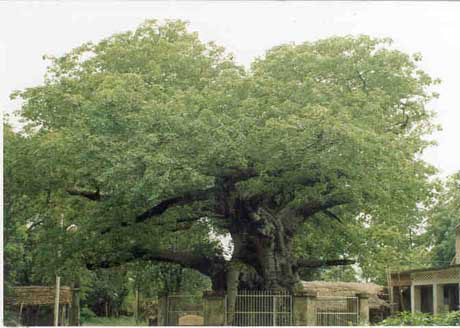
Wikipedia Picture of Parijata at Kittoor in Uttar Pradesh

Compiled by London swaminathan


Date: 29 December 2016


Time uploaded in London:-  17-37


Post No.3495


Pictures are taken from different sources; thanks.


contact; swami_48@yahoo.com


This mythical (Parijata) tree rose of the milk ocean and Indra planted it in his garden. “Its bark was gold, and it was embellished with young sprouting leaves of a copper colour, and fruit stalks bearing numerous clusters of fragrant fruits.”


It is related that once Narada brought a flower of this tree to Dwaraka and presented it to his friend Krishna. He waited to see to to which of his wives Krishna gave the flower. The flower was given to Rukmini, and Narada went straight to Satyabhama and made a show of sorrow. On her enquiring why he was not in good cheer, the sage told Satyabhama, that he had presented Krishna with a flower of the Parijata tree thinking that she was her favourite wife and he would present it to her, but was grieved to find that Krishna had given it to Rukmini.


Satyabhama’s jealousy was roused and she asked Narada what could be done to spite Rukmini. The sage advised her to ask Krishna to bring the Parijata tree itself from heaven and plant it near her house. After giving this advice, he went back to the celestial region and told Indra to guard the Parijata tree carefully as thieves were about.


Satyabhama repaired to the anger-chamber, (ancient Hindu kings who had more than one wife had room or house, called anger-chamber, set apart for a dissatisfied queen to occupy and demand redress of her grievances) and when Krishna came to her shereviled him for cheating her.

“You pretend that I am your favourite wife, but treat me as Rukmini’s handmaid she said, and asked him what made him present the Parijata flower to Rukmini. Krishna admitted his guilt and asked her what he could do in expiation. She wanted possession of the tree. Krishna immediately proceeded to Amaravati, Capital City of Indra’s Empire. Krishna stole into Indra’s grove and started uprooting the tree. The king of the gods came upon the scene and caught the thief red-handed but seeing who his despoiler was, he allowed him, after some show of resentment, to take the tree to Dwaraka, Capital city of Krishna’s empire.


It is fabled that, after Krishna’s death, Dwaraka was submerged in the ocean and the Parijata tree was taken back to heaven.


Source: EPICs, MYTHS AND LEGENDS OF INDIA by P Thomas

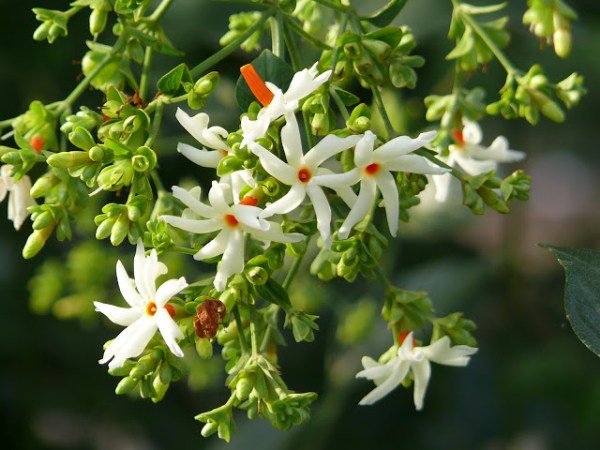
Coral Jasmine is also called Parijata


Botanical Information: Two different plants are known as Parijata one is Coral Jasmine (Pavala Mallikai in Tamil) and another is Baobob Tree in Uttar Pradesh; See the picture taken from Wikipedia)


–Subham–


Tulsi Leaf is heavier than Lord Krishna! (Post No. 3492)

Compiled by London swaminathan


Date: 28 December 2016


Time uploaded in London:-  15-42


Post No.3492


Pictures are taken from different sources; thanks.


contact; swami_48@yahoo.com


STORY OF THE TULSI PLANT (OCIMUM SANCTUM)


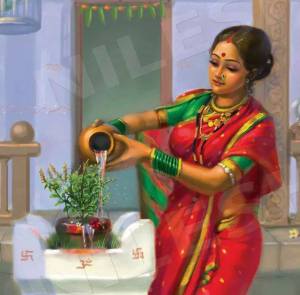
This plant is sacred to Vishnu. Its leaves are supposed to possess medicinal properties. Orthodox Hindus plant it in their gardens and and compounds and worship it.


A story is told how even Rukmini, the chief wife of Krishna, and an incarnation of Lakshmi, gave pride of place to Tulsi.

Narada, one day, visited Satyabhama, one of the wives of Krishna, and this lady confided to the sage that she wished to obtain Krishna as her husband in all her future births, and asked him how this could be done.

Narada said that the best way of ensuring this was to give her husband to Narada himself, as anyting given to a Brahmin could be depended upon to return to the giver in future births in manifold forms. Carried away by Narada’s eloquence Satyabhama gave her husband to Narada and the latter asked Krishna to work as his page, gave him his Vina to carry and proceeded towards the celestial regions.


The other wives of Krishna, on coming to know of this rushed to the sage and implored him to return their husband. They reviled Satyalhara for her presumption, and this lady repented on her rash act and requested Narada to return Krishna to her.


Narada now disclosed to them that it was a sin to receive anything in charity from a Brahmin and told them they could buy their husband from him if they cared to. He was asked to name his price and he demanded Krishna’s weight in gold. The ladies piled up their ornaments in one pan of the scales, but when Krishna sat in the other this one came in a thud. Now they sent for Rukmini who was not in the crowd. She came with a leaf of the Tulsi plant, asked the ladies to remove the ornaments from the pan and, when this was done, placed the leaf in the pan when Krishna was lifted upwards in the other. Rukmini now told all the ladies that Tulsi was more beloved to Krishna than any of them.


On the eleventh day of Kartik (october-November) a ceremony is performed in honour of Tulsi and her marriage with Vishnu. “This ceremony opens the marriage season among high caste Hindus. It is said that he who performs this marriage ceremony assuming that Tulsi is his daughter, gets all the benefits of Kayadandan, (giving away a daughter in marriage),a very meritorious act.


Source:Epics, Myths and Legends of India by P Thomas, Year 1961


–Subham–