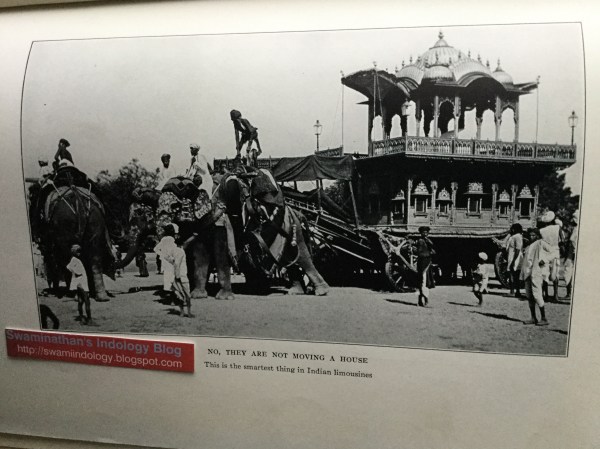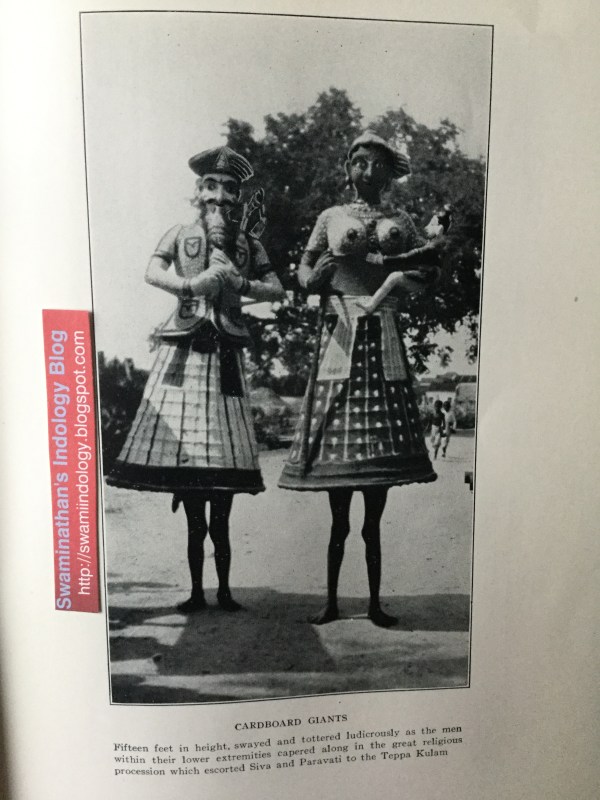
MORE RARE HINDUISM PICTURES FROM TWO OLD BOOKS (Post No.3289)

img_5733

Written by London Swaminathan


Date: 25 October 2016


Time uploaded in London: 20-46


Post No.3289


I have already posted two sets of pictures and line drawings. Here are some more pictures: –


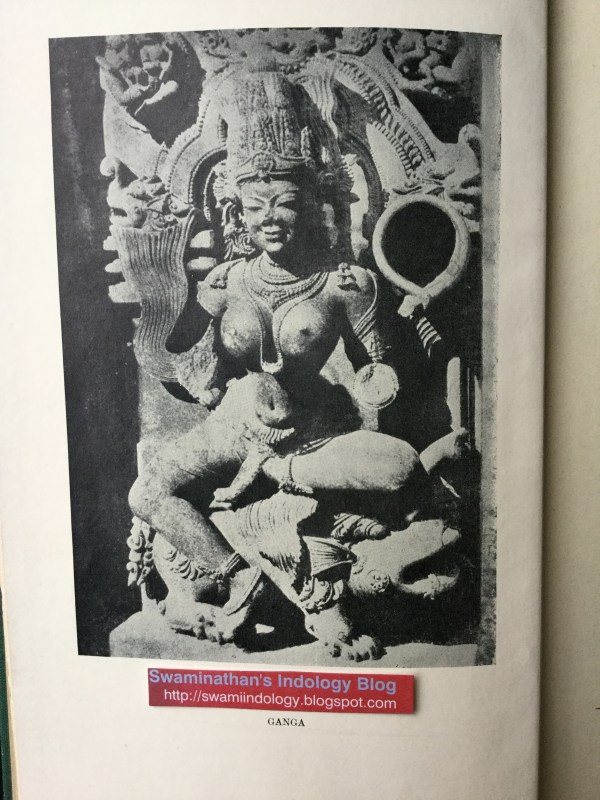
img_5728

Picture of Ganga Devi

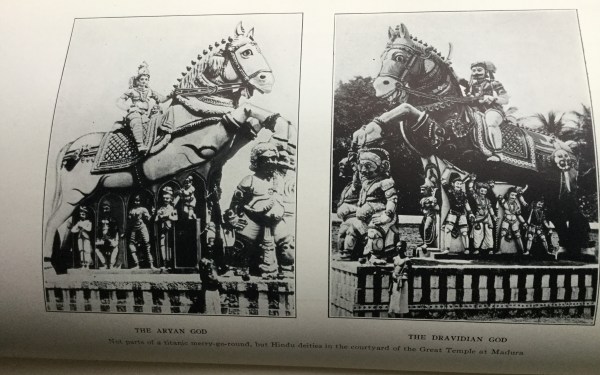
img_5739

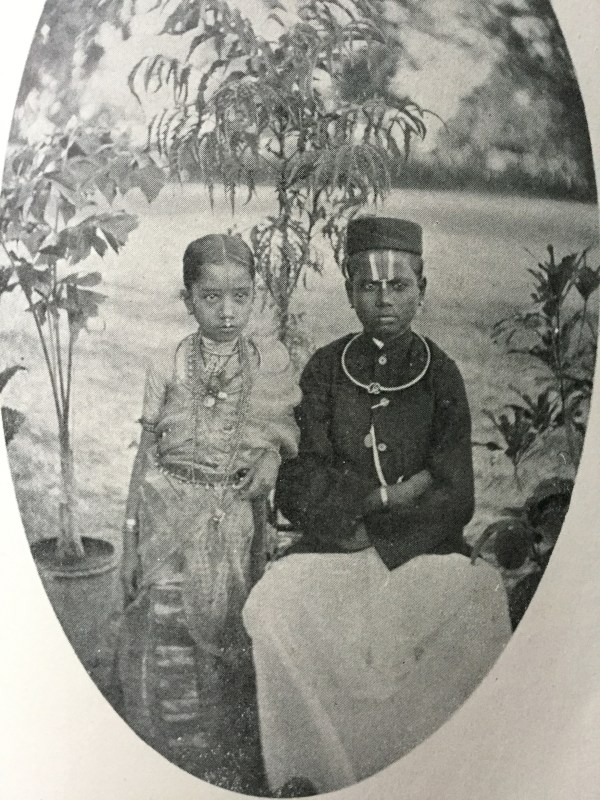
Both are Ayyanar=Sastha; he dubbed one as Aryan and another as Dravidian! This is how foreigners did the Divide and Rule (the world)


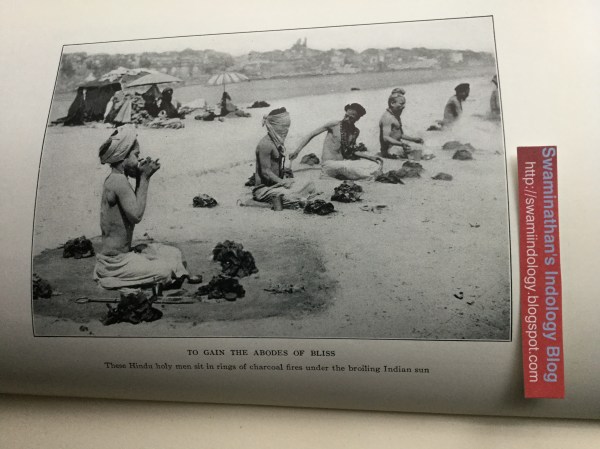
img_5742

Panchagni Yajna picture (Doing penance by sitting sorrounded by Five Fires; sun is the fire above our head. Hidnu Yogis do this. Parvati did this according to Kalidasa’s Kumara Sambhava.


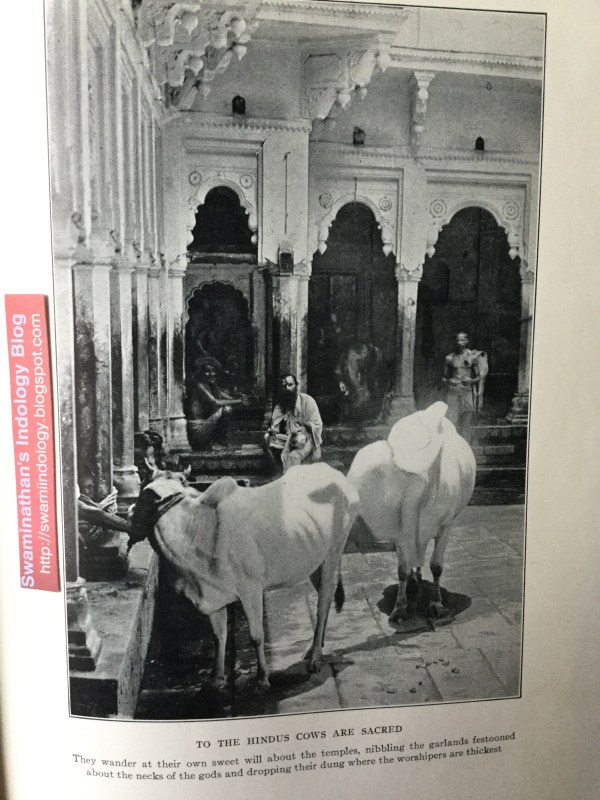
img_5741

Sacred Cows


img_5750

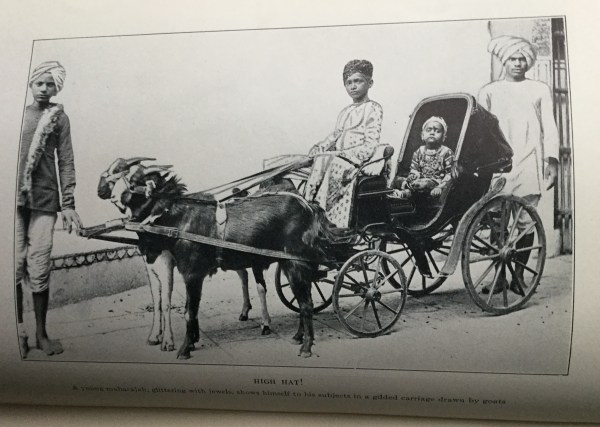
Maharani (Princess) on the cart

img_5755

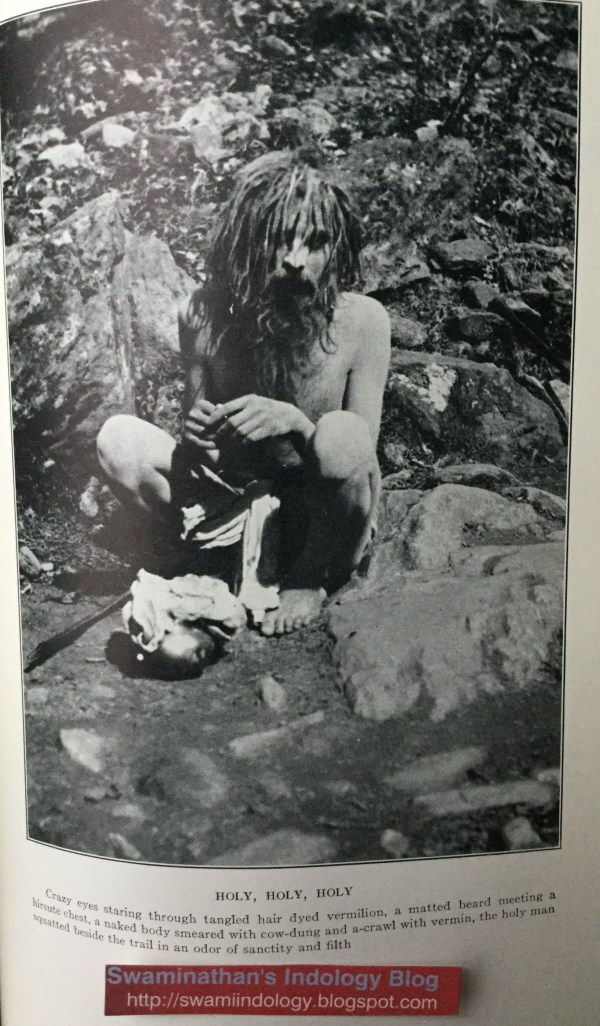
Hindu Yogi

img_5748

img_5747


img_5744

Picture of Madurai Teppakulam Festival (below)

img_5738

img_5736

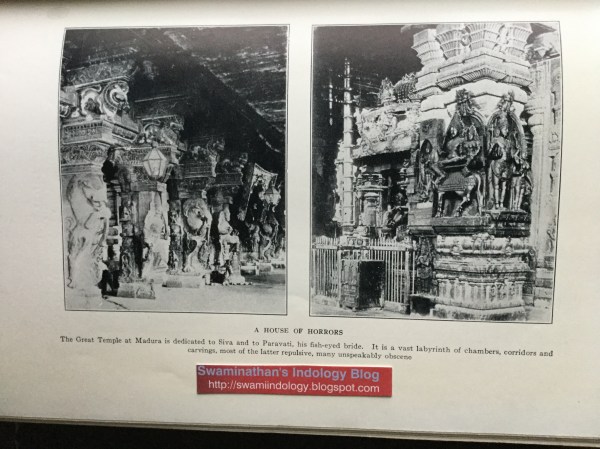
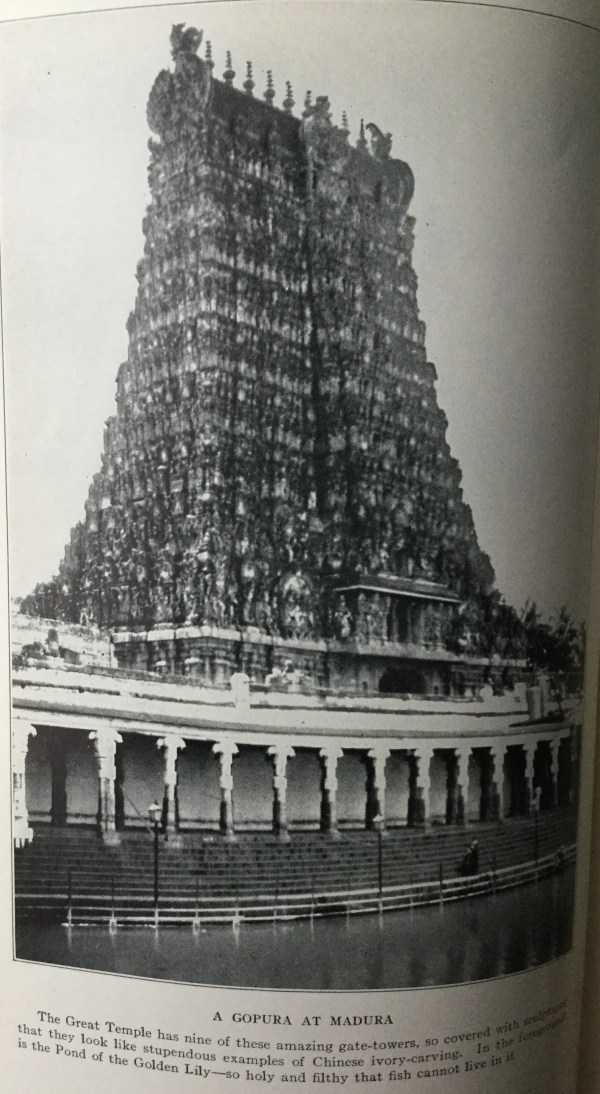
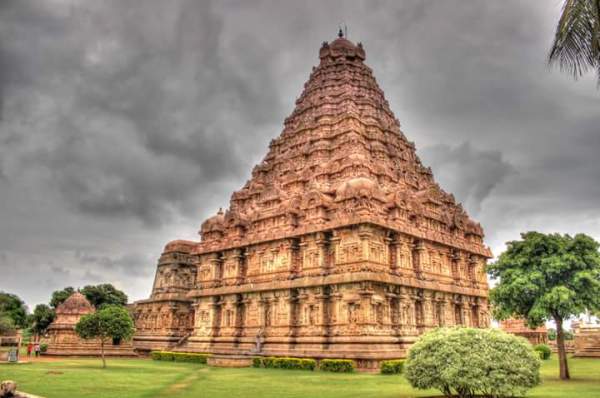
E.Alexander Powell in his book The Last Home of Mystery (Year 1929) was very critical of Madurai Temple. He described it as House of Horrors and he described the Golden Lily tank filthy. When the whole world praised the temple, he criticised it; this shows his immaturity.

img_5737

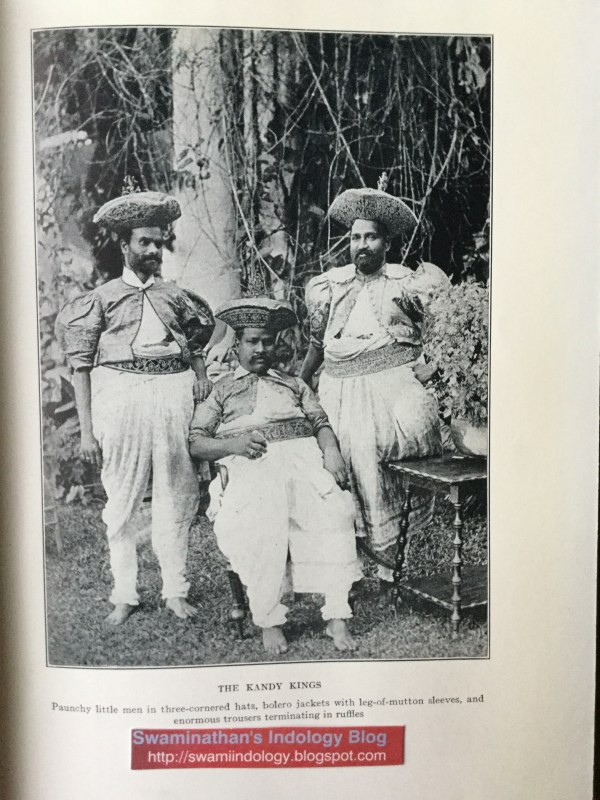
Picture of Kandy Kings (See below)img_5734

Hindu House Warming- Gruha Pravesa-Part 2 (Post No.3287)

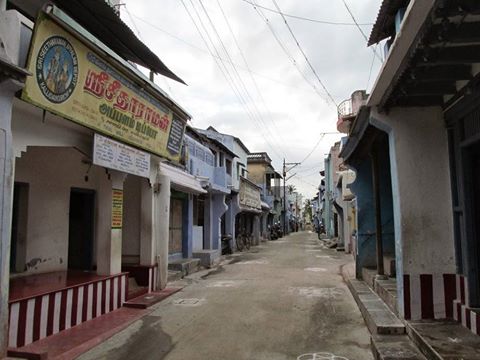
kallidaikurichi-agraharam

Compiled  by London Swaminathan


Date: 25 October 2016


Time uploaded in London: 9-43 AM


Post No.3287


Pictures are taken from various sources; thanks. They are used for representational purpose. They may not have direct connection to the article below.


Contact swami_48@yahoo.com


Yesterday I gave an excerpt from Arthur Miles’ book. Today I give a detailed description of Gruha Pravesa from  Rev. J E Padfield’s book The Hindu At Home, Year 1908

Good Period to occupy a House

“I shall now proceed to state the considerations necessary, from a religious point of view, before the householder venture to occupy the house which he is supposed to have built. The first thing that has to be considered is the proper time of year for taking up residence in the new abode. On this point there is a little difference of opinion amongst Hindu authorities.


According to some persons, if a house is newly occupied in Vaishakham, the owner will be blessed with many sons; if in Jyéshtam, he will have abundance of joyous festivities, such as marriages and the like if the house is newly occupied in Phalgunam, the owner will be blessed with wealth. if in Magham he will have good crops and much happiness. On the other hand, there are those who maintain that, although all the other months in the vernal equinox (Uttarayanam) during which the sun is north of the equator, are good for newly entering into a house, Magham is not a propitious month. This difference of opinion is chiefly between the Tamils, who reckon by the solar system, and the Telugus, who go according to the lunar. All, however, are agreed that it is most un propitious to enter a new abode for the first time during any month of the second half of the year.

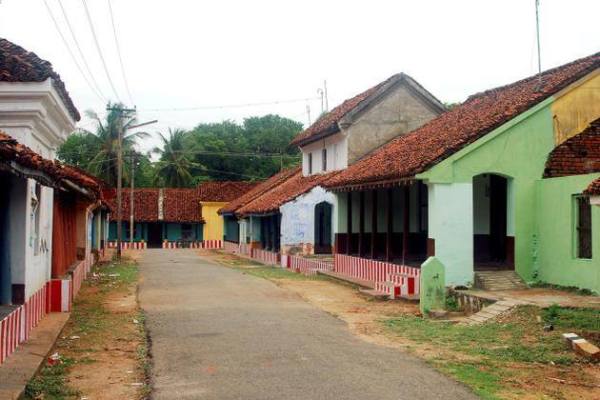
 udayalur-agraharam

Decoration of the House

A suitable day for entering having been duly fixed upon, the house is adorned in various ways, chiefly by smearing saffron and kunkuma on the lintels and door posts of all the doors in the house, and tying over them a garland of flowers and leaves of the mango or of the neredu tree (eugenia jambos/rose apple tree). A company assembles consisting of the members of the family relatives, friends and a number of Brahmin pundits, band of native musicians and a group of dancing girls may also be in attendance, all of course in proportion to the means of the householder. A procession is formed from the house then inhabited by the owner to his new abode. As the company passes along, the band plays and every now and then the company will stop before the house of a friend or that of some great person, when the dancing women will go through their performance of dancing and singing to the sound of a kind of harp and cymbals, and beating of the tom-tom. The thing is so arranged that the procession arrives at the house at the propitious moment, before fixed upon, when they all enter walking over grain that has been spread in the door way and all along to the western side of the central portion of the house.


Worship is then performed to Ganésha, Vastu- purusha, Venkatéshvara and other gods, after which the family priest makes the following declaration in the name of the house-owner, concluding with a prayer The declaration is:


On an auspicious day, under a lucky star,

At a fortunate moment of time, (He must enter) his new and beautiful home, (It being) decorated with flowers and tender leaves.

He must enter accompanied by relatives, Brahmins and others,

(And worship) Vignésh vara and all other gods, With hymns of praise.”

Sudine suba nakshatre suba lagne subamsake

Nutane svagruhe ramie pushpapallavaranjite

Praviset bandhu mitrascaiva brahmane parivaritah

Vignesam sarvadevamsca svasti vachanapurvakam


The prayer is


“O God of gods! O great God Be gracious unto us, o supreme God!

Preserve us, O preserve us,

Lord of the universe!

Yea ever more preserve us

Home happiness and domestic joys

Do thou ever increase unto us


Devadeva Mahadeva prasida paramesvara

Raksha Raksha jagannatha savanasmanirantaram

Gruhasaukyam kutumbasya mamavardhaya sampratam


After this is over, presents of cloths and jewels, a cording to the ability of the house-owner are given to the chief workmen who have been engaged in the erection of the building. It is now quite a custom in India for chief workmen to be thus rewarded, and even some Europeans follow the ideas of the country so far as to give a jewel or two to the chief workmen after any important building work is finished. The ceremonies of the day are concluded with a blessing after the following manner. A metal dish with coloured rice is produced, and some of the attendant Brahmins take a handful of this and having repeated mantrams, cast the rice into the cloth of the house-owner who holds up a corner of it for the purpose. This blessing consisting of quotations from the Vedas is a very long one. The concluding portion only is here given. The translation, in this case, is a rather free one :

May thy life continue for a hundred years, and may thy mental and physical powers remain perfect for a hundred years.

Satamanam bhavati. Satayuh purushah. Satendriya. Ayushyevendriye. Pratishtati.


The family priest then takes the rice, by handfuls, and pours it on the heads of the house-owner, his wife his children and any relatives who may be present. On the following day there is a feast in the new house and, if the guests are numerous, an awning may be put up in the yard to accommodate them. When the owner is not a Brahmin, his Brahmin guests will receive their portion of the feast in an uncooked form, and this they will take away with them to cook in their own houses.

on an occasion of this kind, all castes,even Brahmins, will give food to all sorts of people, but the principal guests are relatives and friends. With this feasting the house-warming is concluded.


There are various things that cause a house to become defiled. Some of these are only trifling, such as bees settling in the house, or an owl, or a certain kind of kite settling upon it or flying into it, or any fungus growing anywhere inside. These necessitate a minor kind of purification. The great defilement is caused by death. If any other than one of the chief members of the family is at the point of death, his relatives carry him out of the house into the outer verandah, or some such place. The reason for this may be seen from the following idea. There are twenty-seven lunar mansions (nakshatram), of which fourteen are disastrous and thirteen auspicious. Should a person die inside the house during any one of the fourteen inauspicious periods, the house must be abandoned by the whole family and left vacant for two, three, or six months, according to the particular star then in the ascendant. If, however, the death takes place outside the house, in the outer verandah for instance, only that portion must be divided off and abandoned for the set period. If the death takes place during any of the auspicious periods, the house only has the ordinary contamination of the family and is, with them, purified on the eleventh day after the death It will be thus seen that it is a very risky thing for anyone to die inside a house, as the good or bad periods are only known though in the case of the heads of the household the risk is usually run, sometimes the dying patient will ask to be taken outside to avoid possible trouble to the family.

agraharamuthamadanapura 

Defilement and Purification

After any defilement the house is purified in the following manner, portions of the ceremony or the whole being performed according to its relative importance.


The most important purification is when, after temporary abandonment, the family again comes into residence. The house is thoroughly cleaned up and probably white washed. The family assemble, with their family priest and several other Brahmins or friends. Ganésha, under the name of Vighnesha, is worshipped. Water is poured into a vessel (kalasam), which is adorned with flowers, sandal, and the like, and this having been worshipped and all the gods having been invoked, the water is sprinkled by the priest over the various parts of the house and over the people present.


Food is then cooked and partaken of by the company. The following are specimens of the slokas or verses repeated by the priest in the worship of the kalasam; they are a declaration and a prayer.

The declaration is

“This puny havachanam rite Is holy and destroys sin.

It is for the purification of a house, the body and other things

And also for that of the mind

The Ganges with all other holy rivers,

And all the gods, rishis, and ancients,

Also the Vedas and sacrifices

Having been invoked into these vessels (now before us),

Which is having adorned and worshipped

With sandal flowers and coloured rice.

He must pray to the supreme God

That all his desires may be fulfilled


Punyahavachanam karma pavitram papanasanam

Gruhadehadi sudhyartham atmasudhyarthameva ca

Gangadi punyatirthani devan sarvan rsin pitrun

Avahya kalasamgresu vedan yajnan visodhakan

Gandhapushpakshatairevam alankrutya prapujya ca

Prarthayetparamatmanam sarvabhista palaptaye

The prayer is

I am a sinner ;all my deeds are sinful.

I am of a sinful mind; I am born in sin.

O God in mercy save me!

Thou who art merciful to those who flee to thee

There is no sinner equal to me:

There is no deliverer like unto thee.

Ever knowing me to be a sinner,

As is thy pleasure, so do.

Papoham papakarmaham papatma papasambavah

Trahimam krupaya deva saranagatavatsala

Matsama patako nasti tvatsamo nasti mocakah

Papinam mam sada njatva yatheccasi tatha kuru


A purification ceremony is gone through if the well becomes ceremonially contaminated

There are various other occasions calling for purification. A robber might break into a house and go into the kitchen, and as he would probably be a low caste man, the full purification ceremony would be

Necessary. If a dog or any other unclean animal were to die in or near the house, the place must be purified by sprinkling water mixed with cow dung, or with cow’s urine. This is a minor purification which is often resorted to for lesser defilements.


Doubtless home life, true domestic happiness, is much influenced by the immediate surroundings; but, after all, habit and custom are much if not everything in such matters, and certainly many an Indian home is happy in spite of what may seem to us its dullness and monotony.


The old English proverb which says that “Home is home be it ever so homely” expresses a truth that can be applied in many ways it is the hearts that make the home. What must be deplored, however, is the hard bondage to superstition that is so evident in every page of this description.

–subham–


HINDU HOUSE WARMING CEREMONY: Gruha Pravesa!- Part 1 (Post No.3285)

house-on-hill-line-art

Compiled  by London Swaminathan


Date: 24 October 2016


Time uploaded in London: 18-10


Post No.3285


Pictures are taken from various sources; thanks. They are used for representational purpose. They may not have direct connection to the article below.


Contact swami_48@yahoo.com


Vastu Purusha
“In the district round Calicut, when a house is completed it must be handed over to its owner with due ceremony Vastu Purusha, a supreme being lying on its back with its head to the north and its legs to the south, supports the earth. The forests of the earth are this being’s hairs, the oceans its blood, the wind its breath. When the earth is dug, and the trees are felled, the being is bound to be disturbed, wherefore it must be propitiated or it will wreak vengeance on its disturbers.

house

53 columns of Rice Flour!

A ceremony must be performed immediately a house built, or the owner of the building will have untimely deaths in his family. A square is marked off in the centre room by fifty-three columns made of rice flour, and red and black powders are sprinkled over the columns. Leaves, containing grain and pieces of cocoanut, are placed on the top of each column. The architect and the carpenters perform puja (worship) with flowers, incense and lights. Troublesome demons are propitiated with toddy, and the blood of a fowl is offered to the boy satan (Kutty Satan). Then all the workmen who have been engaged in the building break cocoanuts on the walls, and howl to drive away evil spirits.


The house is handed over to a third person by the chief carpenter, and there are few who are willing to assume the responsibility for the owner, since if a demon should be left in the building it would for ever pursue the person who takes over. A man is sought who is supposed to bring good luck, and who has no trouble in his family. He is frequently a poor man, who cannot resist the bribe of money and rice. He is dressed in new clothes, taken to the centre room where the columns have been erected, and made to stand facing the door with each foot on a banana leaf. The others thereupon all leave him, and stand on the outside. The man opens and shuts the door three times, and the carpenter calls out to him:

“Have you taken charge of the house?”

The man replies “Have all the workmen received their wages?”

The carpenter, without answering, asks again. “Have you taken charge of the house?” There must be no direct answers, or questions, for about ten minutes.


Finally, the man inside says: “I will take charge of the house,” and picking up the two banana leaves on which he has been standing, he runs away as fast as he can, without looking back. The workmen pelt him with bananas and cow-dung as he runs, and sprinkle cow-urine in his path. After this, the workmen are fed with boiled milk and rice which have been prepared in the new house, and the owner may move in.


This is from the book The Land of the Lingam by Arthur Miles; I will give another detailed version from an older book tomorrow.


To be continued………………….


Rare pictures of Brahmins from an Old Book, year 1908 (Post No.3281)

img_5721

Compiled  by London Swaminathan


Date: 23 October 2016


Time uploaded in London: 18-27


Post No.3281


Contact swami_48@yahoo.com


The Hindu at Home

By The Rev. J E Padfield


img_5727

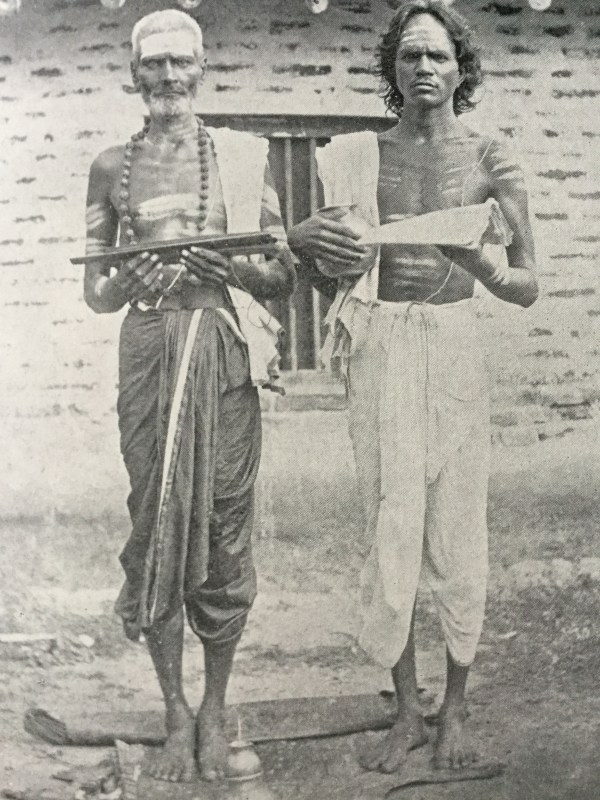
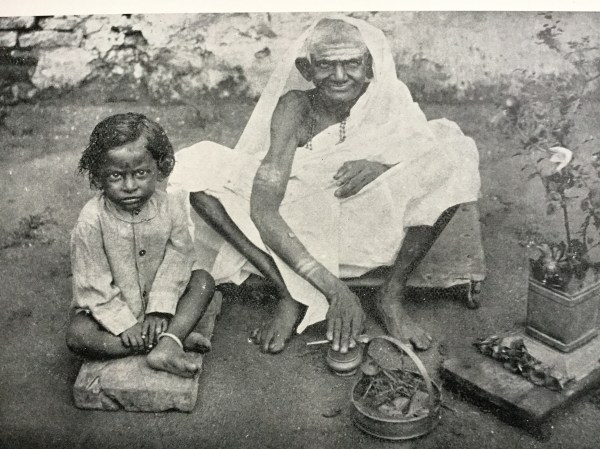
Picture of a Brahmin Mendicant and his Disciple

img_5725

Picture of a Brahmin Widow


img_5721

Picture: Sivite Priest with sacred Marks (Sivite=Saivaite)


Picture below:Bride and Bridegroom

img_5723

A WIFE IS HALF THE MAN: STATUS OF WOMEN IN HINDUISM (Post No.3279)

garba-practice

Compiled by London Swaminathan


Date: 23 October 2016


Time uploaded in London: 6-53 AM


Post No.3279


Pictures are taken from Facebook and other sources; thanks. (Pictures are used only for representational purpose; no connection with the current article.)


Contact swami_48@yahoo.com


babay-mother

This article is available in Tamil as well


Sir Moiner Williams gives the following translation of the definition of a wife as found in the Mahabharata :


A wife is half the man, his friend;

A loving wife is a perpetual spring

Of virtue, pleasure, wealth; a faithful wife is his best aid in seeking heavenly bliss;

A sweetly- speaking wife is a companion

In solitude, a father in advice,

A rest in passing through life’s wilderness,”


The woman is part of her husband and so she worships through him; what he does, she does.

The “Yajur Veda says

“The wife is half the self of her husband”.

Ardhova esha atmenoyatpatnii


Upon this there is a comment by Brihaspati, some what as follows:

“It has been said that the wife is half the self of her husband, and in consequence she shares equally with him all the good and evil done by him.”


A Passage on this subject is quoted from the Padma Purana:

The husband is the beloved of the wife

He is more to her than all the gods. Herself and her husband

Be it known are one person.

Without the consent of her husband

Any kind of worship she must not perform.”

Patireva priya striinaam

Brahmaadibyopi sarvasah

Atmaananca svabarataara mekapindamaniisayaa

Bharturaaknjaam vinaa naiva kinchitdharmam samaasaret


With the consent of her husband a wife may go on short pilgrimage without him when he is unable to accompany her, but this is very seldom. Strictly with his consent, she may also perform and keep vows for instance, to do without salt in her food for a stated period or to abstain from milk or various of eatables for a given time. All this is one the object of obtaining for herself or some on to her something desired- wealth, or children, or deliverance from disease.
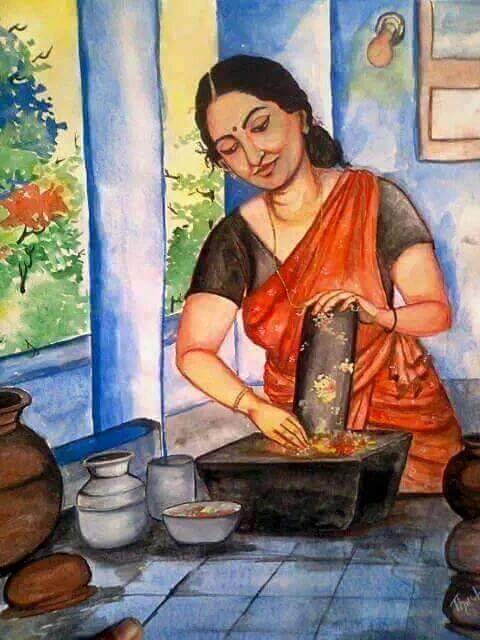
ammami

Tamil Poet Tiruvalluvar also says,

Even the clouds will obey and pour out rain at the bidding of a wife

Who prefers to worship her husband rather than any other God

-Tirukkural 55


SITA SPEAKS:-

There is also a most touchingly beautiful piece in the Ramayana to be found translated into English by Ward (History of the Literature and Mytholoogy of the Hindus (Vol.II, page 408)


It purports to be the address of Sita to her husband Rama. Rama was banished by the king, his father Dasaratha, at the instigation of his third wife Kaikeyi, who wished the succession for her own son, Bharata. He was doomed to perpetual exile in the forest, and his wife expresses her determination to go with him.


As a beautiful expression of tender affection I cannot refrain from quoting the piece at length. It serves to show that the affectionate nature of a true woman is ever the same, despite its surroundings.


“Son of the venerable parent! hear,

‘Tis Seeta speaks. Say art not thou assur’d

That to each being his allotted time

And portion, as his merit, are assign’d

And that a wife her husband’s portion shares

Therefore with thee this forest lot I claim.

A woman’s bliss is found, not in the smile

of father, mother, friend, nor in herself:

Her husband is her only portion here,

Her heaven hereafter. If thou, indeed,

Depart this day into the forest drear,

I will precede, and smooth the thorny way.

O hero brave, as water we reject

In which our nutriment has been prepared

So anger spurn, and every thought unkind,

Unworthy of thy spouse, and by thy side,

Unblam’d, and unforbidden, let her stay.

O chide me not; for where the husband is,

Within the palace, on the stately car,

Or wandering in the air, in every state

The shadow of his foot is her abode.


My mother and my father having left,

I have no dwelling place distinct from thee.

Forbid me not, for in the wilderness,

Hard of access, renounce’d by men, and fill’d

With animals and birds of various kind,

And savage tigers, I will surely dwell.

This horrid wilderness shall be to me

Sweet as my father’s house and all the noise

Of the three worlds shall never interrupt

My duty to my lord. A gay recluse,

On thee attending, happy shall I feel

Within this honey-scented grove to roam,

For thou e’en here canst nourish and protect

And therefore other friend I cannot need.

To-day most surely with thee I will go,

And thus resolved, I must not be deny’d.


Roots and wild fruit shall be my constant food

Nor will I, near thee, add unto thy cares,

Not lag behind, nor forest-food refuse;

But fearless traverse evr’y hill and dale,

Viewing the winding stream, the craggy rock.

And, stagnant at its base, the pool or lake.

In nature’s deepest myst’ries thou art skill’d

O  hero– and I long with thee to view


Those sheets of water, fill’d with nymphaas

Cover’d with ducks, and swans, and silvan fowl

And studded with each wild and beauteous flow’r

In these secluded pools I’ll often bathe

And share with thee, o Rama, boundless joy

Thus could I sweetly pass a thousand years

But without thee e’en heav’n would lose its charms

A residence in heaven, O Raghuvu,

Without thy presence, would no joy afford.

Therefore, though rough the path, I must, I will

The forest penetrates, the wild abode

Of monkeys, elephants, and playful fawn.

Pleas’d to embrace thy feet, I will reside

In the rough forest as my father’s house.

Void of all other wish, supremely thine

Permit me request-I will not grieve

I will not burden thee refuse me not

But shouldst thou, Raghuvu, this prayer deny,

Know, I resolve on death-if torn from thee.
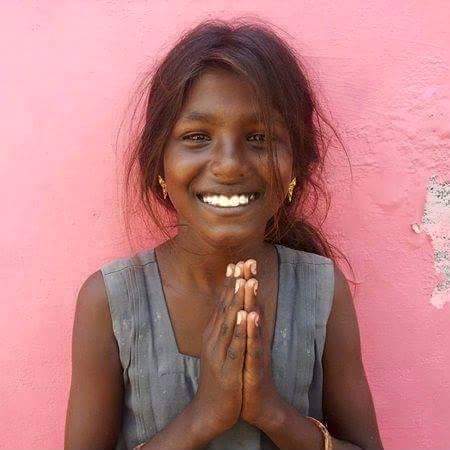
 

poor-namaste

The main question is whether a woman can have any worship at all apart from her husband; she has a kind of daily worship of her own.


At the time of her marriage, at the marriage of her children, and at certain other periods and at some festivals, the wife must sit with her husband during the time he is engaged in the performance of certain acts of worship, though she seems to be there only as a kind of complement of her husband takes no and active part in the ceremonies. If a man has lost his wife, he cannot perform any sacrifices by fire (oupasana) which shows that the wife has some indirect connection with the ceremony, and also in part accounts for the anxiety of a widower to remarry.


At the midday service when the man per forms the ceremonies before taking food, the wife may attend upon him and hand him the things used by him, but she can take no real part with him. The woman is not a twice-born (dvija) nor does she wear the sacred thread (which is the mark of the second birth (upanayana). She cannot read the Vedas, or even hear them read, nor can she take part in her husband’s sacred services.

onam-cbe

–subham–

Tamils are Devil Worshippers: Caldwell’s Bluff- Part 1 (Post No.3227)

caldwell

Compiled by London Swaminathan


Date: 7 October 2016


Time uploaded in London: 17-05


Post No.3227


Pictures are taken from various sources; thanks.


From the book

The folk songs of Southern India

By

Charles E.Gover

Member of Royal Asiatic society and of the Society of arts, Fellow of the Anthropological Society, Year 1871.


“Since the learned book by Dr Caldwell- Comparative Grammar of the Dravidian Languages – was issued, it has been taken for granted that the Tamils & c , are a Turanian People. The progress of philogical enquiry and the new means of analysis furnished by the great German writers on languages have shown the error of this classification. Driven at a very early period into the extreme south , and cut off by vast oceans from intercourse with other peoples, the Dravidian nations have preserved with singular purity the vocabulary they brought with them; and it is probably not extravagant or untrue to say that there is not one single true Dravidian root common to the three great branches, Tamil, Telugu and Canarese, that cannot be clearly shown to be Aryan.as an interesting example both of the true character of the language and linguistic progress made since the publication of Dr Caldwell’s book,, it may be noted that the learned doctor gives an appendix containing considerable number of Dravidian words which he asserts to be Scythian, and most efficient witnesses to prove the Turanian origin of the language. It is now known every word in this list is distinctly Aryan, although some of them have representatives in the Finnish group of Turanian tongues – the group which has been most constantly exposed to Aryan influences. The greater portion of them are included in Fick’s Indogermanischen Grundsprache as Aryan roots, although Fick does not appear to have seen Caldwell’s work.


This however is a digression. The songs do not touch the question of roots or derivatives. On another side of the same argument their evidence is decisive. It has been always noted that the true Turonian peoples are inferior to the Aryan in everything connected with the moral nature of the man. One recent writer lays it down as a rule that the Turanian peoples display “an utter want of moral elevation”.

caldwell-four


Caldwell grouped Tamils with Murderers!

Mr Farrar, the learned and eloquent author of Families of Speech asserts (page 155), “We may say generally that a large number of them (the Turanian peoples; – he has previously stated that the exceptions are Chinese, Finns, Magyars and Turks) belong to the lowest paleozoic starta of humanity………….. peoples whom no nation acknowledges as its kinsmen, whose languages, rich in words for all that can be eaten or handled, seem absolutely incapable of expressing the reflex conceptions of the intellect or higher forms of the consciousness, whose life seems confined to the glorification of the animal wants, with no hope in the future and no pride in the past.  They are for most part peoples without a literature and without a history, and many of them apparently as imperfectible as the Ainos of Jesso or the Veddahs of Ceylon – perhaps whose tongues in some instances have twenty name of murder, but no name for love, no name for gratitude, no name for God.


This is but a fair description of the class to which are said to belong the writers and learners of the songs this book contains. It will be seen that the Dravidian peoples possess one of the noblest literatures, from a moral point of view, the world has seen. Compare with the above, the remarks of the Rev. P Percival, in his excellent book – The Land of the Veda – perhaps no language combines greater force with equal brevity, and it may be asserted that no human speech is more close to and philosophic in its expression as an exponent of mind……. The language, thus specific, gives to the mind a readiness and clearness of conception while its terseness and philosophic idiom afford equal means of lucid utterance. The Rev W Taylor says about Tamil language, “it is one of the most copious, refined and polished language spoken by man. And again in his Catalogue Raisonne of Oriental Mss (Vol.1 p.v), “It is desirable that the polish of the Telugu and Tamil poetry should be better known in Europe; that no competent judges might determine whether the high distinction accorded to Greek and Latin poetry, as if there were nothing like it in the world, is perfectly just”.


Dr Caldwell asserts – “It is the only vernacular literature in India which has not been content with imitating the Sanskrit, but honourably attempted to emulate and outshine it. In one department, at least, that of ethical epigrams, it is generally maintained, and I think must be admitted, that the Sanskrit has been outdone by the Tamil.” Three such witnesses, added to hundred this book contains, suffice to show that, whether as regards literature or morals, the Dravidian people are deserving of entited to the honor of omission from the Turanian family.


This is no unimportant matter. Looking to the necessity that the governing race should not be disqualified from performing its noble task by labouring under a complete mistake as to the nationality, aspirations, feelings and errors of the people

It rules; seeing that the Dravidian peoples distinctly claim unity of race and origin with the yet more cultivated Sanscrit nation that has settled among them; knowing that Orientals look as much to points of etiquette, which require in their observer an accurate knowledge of popular social ideas, as to matters of stern fact – would as soon be robbed as loose title; it is indisputable that there can scarcely be a more serious and interesting question that that which would enquire of the true character and position of the subject nation.  All this is over and above that interest and value which is everywhere inherent in all attempts t learn the true life and inner feelings of any portion of the great human brotherhood.

caldwell-book

TAMIL DEVILS AND DEMONS

Toshow how a simple error in such matters may lead to gigantic mistakes, and because the subject has a close connection with the question under discussion, it will be profitable to examine one feature of the theory started by Dr Caldwell regarding the South Indian DEMONOLATRY.  He shows truly enough that the Shanars worship malignant beings, pure devils and proceeds to note that  that there is ample proof that the Shanars, and the argument includes Tamils also, cannot be related to the Sanscrit race.


He says, “Every word used in the Tamil country relative to the Brahmanical religions, the names of the gods and the words applicable to their worship, belong to the Sancrit, the Brahmanical tongue; whilst the names of demons worshipped by the Shanars in the South, the common term for “devil” and the various words used with reference to devil worship are as uniformly Tamil………….. The words used with reference to devil-worship being exclusively tamil, we are obliged to assign to this superstition a high antiquity, and refer its establishment in the arid plains in the plains of Tinnelvelly and amongst the Travancore jungles and hills., to a period long anterior to the influx of the Brahmans and their civilization of the primitive Tamil tribes”.


The most important word thus noted is Pe or as Ziegenbalg correctly writes it Pey. It means a devil. The places of worship are called Pe- Coils. Another form of the word in Tamil is Penam, a devil. Now let us follow up this word. It appears in Khond as Pennu, the name of the deity. But the object of worship is the Sun or Light. Macpherson says – “There is one Supreme Being, self-existing, the source of good, and Creator of the Universe” This divinity is sometimes called, “the God of Light”, by others “ the Sun-God and the sun and the places from which it rises beyond the sea, are the chief seats of his presence”. Again Macpherson says, “The Supreme being and the Sole Source of Good is styled the God of Light”. It is true there are other gods to whom the name Pennu is generically given, and even the Sun god takes prename and is known as Bella Pennu, literally the Light of the Sun”. But this, it is clear, does not touch the question, for there are kinds of light which require an adjective off defentin. Then subordinate deities arose, to whom, though not representing ligh, the name was attached. This has happened everywhere. The Sanscrit word Deva means deity. But there are Sibva Deva, Vishnu Deva, Agni Deva and so on. Pennu exactly corresponds with Deva and both mean “the light”.


caldwell-book-2

But how came Pennu or its root form Pey to be reduced till it mean a devil? Macphersn again gives the answer. He distinctly states that this worship of light is common to all the tribes. But the Khonds are divided into north, middle and south confederations. The former had degraded its worship into a demonolatry.  The deity exhibits nothing but pure malevolence towards man, and they believe that while no observances or course of conduct can change her malignant aspect into benignity, her malevolence mat still be placed in partial or complete abeyance by the sacrifice of human life, which has expressly ordained”. He describes the rites of this horrid superstition and they are the exact counterpart of the Shanar devilry, where, by the way, the male god has also been changed into a female devil.  The Khonds of the middle region have maintained the true and earlier doctrine. Macpherson says of their deities the same as those worshipped in the north – “No malevolence towards mankind is ascribed to them.  On the contrary they are merciful and benign towards those who observe their ordinances and discharge their rites.  Instead of delighting in cruel offerings they abhor the inhuman ritual of the northern, southern and western districts; and they would resent with detestation any semblance of participation in it by their worshippers.”


To be continued……………………………

(In the Second part I will give the argument of E Gover and the strange link between the Bella Pennu and Egyptian deity Benu of 2500 BCE)

Human Sacrifice practised by the Kondhs! (Post No3225)

pic-gaund

Compiled by London Swaminathan


Date: 7 October 2016


Time uploaded in London: 6-01 AM


Post No.3225


Pictures are taken from various sources; thanks.


(Following is a piece from Arthur Mile’s book about the customs of the Kondh Tribes whom he described the DRAVIDIANS!)

The Kondhs live in dread of witchcraft, and are for ever watching for signs of it. In this connection the Madras Police Report records a case in the Vizagapatnam hill districts. The younger of the the three brothers died of fever, and when the body was cremated the upper portion did not burn. The surviving brothers therefore concluded that death had been caused by the witchcraft of a certain Kondh, and they attacked the man and killed him. After cutting their victim’s body into halves, they took the upper part to their village and threw it on the spot where the deceased brothers body had refused to burn. For their crime they were arrested and sentenced to death.


When cholera breaks out in a village, they smear their bodies with pig’s fat which has been liquefied and they continue to do this until the disappearance of the epidemic. It is believed that the cholera Goddess is driven away by the smell of the fat. They also attempt to prevent the approach of the goddess by barricading the paths to the village with ditches, which they fill with thorns and pots stinking oil.


pic-gond

Friendship Oath!

The Kondhs have a friendship oath, which in some way resembles the blood covenant of the Hebrews. Friendship is sworn on sacred rice, which has been consecrated to the god of Jagannath of Puri. Pilgrims visiting Puri get a quantity of this rice, and distribute it to those who ask for it. It is supposed that one cannot utter a lie, or have an evil thought, while holding the rice in the hand. Instances are known of friendship, sworn on the rice, being contracted between towns-men and the poor village peasants; even between a Brahman woman and a Sudra servant. Bound by such friendship, two people allow no festival to pass without an exchange of presents the house of one presents, and no ceremony goes on at the house of one unless the other is invited. If one party dies, the survivor does not consider the bond disconnected but continues to make gifts to the family of the deceased. This friendship is called songatho, and it increases with the barbarity of the division. Among the wilder tribes there are splendid examples of Songatho which have lasted for generations. One hill tribe takes an oath on a leopard’s skin, or while holding a peacock feather in the hand.


Origin of the Kondhs
The legend of the origin of the Kondhs is a story of human sacrifice.

In the beginning, when the ground was all wet, there were only two women living on the earth, and in due course each one was blessed with a son. The two women and their children came from the interior of the earth, bringing with them two plants which were their food. One day, when one of the women was cutting one of the plants, she accidentally cut her finger and the blood dropped on the ground, and instantly the wet earth became dry. The woman cooked the plant and gave it to her son to eat, who asked her why it tasted so much sweeter than usual. She told him that she did not know, but that that night she expected to have a dream and would let him know. The next morning the woman made her son promise to do as she told him if he would prosper in the world. He must forget that she was his mother, and cut flesh from her back and bury it in the ground. This her son did, whereupon the wet soil dried up and became hard, and the animals, trees, and birds came into existence. A partridge then scratched the ground, and millet and rice grew.


The two brothers agreed that, as the sacrifice of the woman brought forth abundance from the ground, they must sacrifice a human being once a year. A god by the name of Boora Panoo, together with his daughters, came to live with the brothers, and, marrying the daughters, the brothers begat children. When the children grew up, there was a dispute as to which one should be sacrificed, and, not being able decide the point, the brothers sacrificed a monkey instead. The goddess of the earth in consequence was very angry, and ordered the proper offering of a human being. The two men sought for ten years for a victim, and finally they found a man with a son five years old. They bought the son from the father, with permission to sacrifice him.


The boy was fettered to prevent his running away, toddy was made from grain, and a post was erected at which a pig was sacrificed. Two days before being offered the boy was tied to the post. On the night before the sacrifice the priest took a stick and poked it into the earth until the earth god answered, and round the hole from whence the goddess had spoken, pieces of wood were arranged lengthways and cross ways and an egg was placed the on the sacrificial day the boy was conducted to the wood, made to lie on it face downward. Pieces of flesh were then removed from his back, and buries at the caste’s place of worship. While other portions were put into the ground near  a drinking well to increase the water. The remainder of the corpse was burnt on the pile of wood. On the next day a buffalo was sacrificed, and a feast given.

gond-women-grinding-corn

The following verse (which was intended to be uttered over human sacrifice) is now recited by the Janni (priest) at the buffalo sacrifice. Come, male slave, come, female slave, what do you say? What do you call out for? You have been brought, ensnared by the Haddi. You have been called, ensnared by the Domba. What can I do, even if you are my child? You are sold for a pot of food


–Subham–


“Politics and Propaganda cannot overthrow Hinduism” (Post No.3204)

gkc-puram-clouds

Compiled by London Swaminathan


Date: 30 September 2016


Time uploaded in London:12-52


Post No.3204


Pictures are taken from various sources; thanks.


Contact swami_48@yahoo.com


Arthur Miles begins his anti-Hindu tirade, in his book THE LAND OF THE LINGAM (Year 1933), with these words: –


“Ask any Hindu to explain his religion, and he will wander off into a labyrinth of words from which nothing will extricate him but the end of your endurance. If you comment on his belief, he will tell you that you do not understand. “You do not understand” is always the last word of the Hindu”.


He contradicts himself at the end of the book with these words:

“The Hindu religion is as much alive today as ever it was. A thousand years of Muslim domination, and hundreds of years of Christian persuasion, have failed to make the slightest impression on their religion. Yet the religions of Egypt, Persia, Greece and Pagan Rome are nothing but memories which proves that politics and propaganda cannot overthrow Hinduism.

shiva-ganesh

At the base of this pertinacity lies, I believe, the importance of self, which Hinduism teaches before everything. Even the gods can be bought up and bargained with, and every Hindu has it in the back of his mind to retire sometime to the forest and concentrate on his own salvation. The idea of future happiness, where he is again an individual, has so gripped his imagination nothing can dislodge it.


Family, the dearly beloved sons, sacrifice, caste are simply stepping stones to personal salvation, and sacrifice s a bargain made with the gods for personal gain. The sacrifice of Hindu women, which we hear so much about, is based on tradition and fear. The women sacrifice themselves for the good of their husbands, because they must. Everything in Hinduism stands for the importance of self, and that self is male self. Mohammedans and Christians say that theirs are the highest gods, and the Hindu quietly accepts them and gives them a place in the Hindu pantheon. These Gods, the Hindu knows, can do nothing to overcome the belief in self; they are no more to the Hindu than his own gods.


All gods, then, are pegs to hold self-love. Siva can sleep in his snow clad paradise; Brahma may remain in his Satya loka; and Vishnu with his wife Lakshmi, can contemplate art in his heaven. When the Hindu wants them, he will use them for the salvation of self.


Character is based on man’s ideals, which are not necessarily the ideals of religion. Character of men and nations must be able to stand the strain of temptation and self-acquisition, when the latter means the disregard of human society. The Indian people have never been conquered in thought, and considering that this has been tried many times, it goes to prove that such conquest is not possible. The Indian must change himself, must want to change.


Once the Indian arouses himself, he will accomplish what no outsider can accomplish for him. Once he uses his great talents in a new direction, he will win the acclaim of a watching world.”


–Subham–
 

Muslim Holy Water Sold! (Post No.3182)

aga-khan-iii-c094msms

Compiled by London swaminathan

Date: 23 September 2016

Time uploaded in London: 18-03

Post No.3182

Pictures are taken from various sources; thanks.


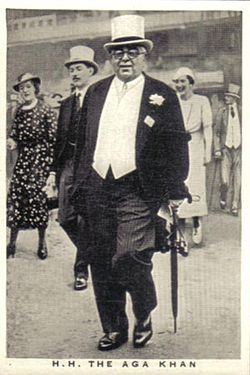
“The Aga Khan, the head of all Mohammedans of India, who is supported by the contributions of the pious, keeps half dozen racing stables in France alone, a shooting box in Scotland, an apartment in Paris and a chateau on the Riviera.

The Aga Khan, while not a ruling price, for he has no territory, nevertheless exercises more political influence in India than any individual native ruler. This by reason of the fact that he is the spiritual head of the thirty million Mohammedans in India. His sanctity is so great, indeed, in the eyes of his followers, that the water in which he bathes is carefully conserved and sold annually to the representatives of various Mohammedans at a ceremony held once year at Aga Hall in Bombay. The price paid for this holy water is Aga Khan’s own weight in gold, the scales used for the weighing ceremony being adjusted to the fraction of an ounce troy. As  the Aga Khan is a plump little man the price paid for his used bath water is a high one.

aga_khan_1936

ANTI INDIAN

It is generally understood that in recognition of his services in keeping the Moslems of India loyal to Britain, The Aga Khan receives a secret and by no means inconsiderable subsidy from the British Raj. His value to the Paramount Power was strikingly evidenced early in 1929, when he presided at the All Indian Mohammedan conference, held in Delhi. The most momentous question on the agenda was whether the assembled Moslems should indorse the demand, made aa few weeks before by the Indian National Congress, a Hindu organization, that India should be granted “dominion status” within a year. The Aga Khan, an eloquent orator aand an astute statesman, solved the dilemma by deftly guiding the Mohammedan conference into adopting a resolution which completely ignored the Hindu demands. Whereupon British officialdom heaved a deep sigh of relief, for the virile, warlike Moslems count for far more than the servile, easy going Hindus, even though the latter vastly outnumber them. If The Aga Khan is worth his weight in gold to his Moslem followers, to the British whom he so steadfastly befriends he should be worth his weight in diamonds”

From the book “The Last Home of Mystery” by E.AlexanderPowell, London, 1929


xxx


Aga Khan is a religious title like Dalai Lama, Pope, Shankaracharya. He is the religious head of Ismaili Muslims. Wikipedia has given the list of Aga Khans until today:-

  1. Aga Khan I – Hasan Ali Shah Mehalatee (1800–1881), 46th Imam of Nizari Ismailis (1817–1881)
  2. Aga Khan II– Ali Shah (about 1830–1885), 47th Imam of Nizari Ismailis (April 12, 1881 – 1885)
  3. Aga Khan III– Sir Sultan Mohammed Shah (1877–1957), 48th Imam of Nizari Ismailis (August 17, 1885 – 1957)
  4. Aga Khan IV– Prince Shah Karim Al Husseini (b. 1936), 49th Imam of Nizari Ismailis (July 11, 1957 – present)


xxx

My comments

1.Now we know British started dividing India from very early days by secretly giving the Muslims, money.

2.We can guess how much other Anti Indian parties like Justice Party and other Dravidian parties received from the British.

  1. Muslim holy water is praised by the writer. If it is Hindu holy water they would have criticised as unhygienic, unholy, source of bacteria etc.

4.I am pretty sure that the anti-Hindu “rationalists” would have kept quiet about this holy water sale! We know they are cowards and double-tongued!


–Subham–


Good and Bad Salagrama: How to find it? ( Post No.3175)

sripadarajamatha_saligramas

Compiled by London swaminathan

Date: 21 September 2016

Time uploaded in London:18-43

Post No.3175

Pictures are taken from various sources; thanks.

shaligram-sila

From Arthur Miles’ book The Land of the Lingam 

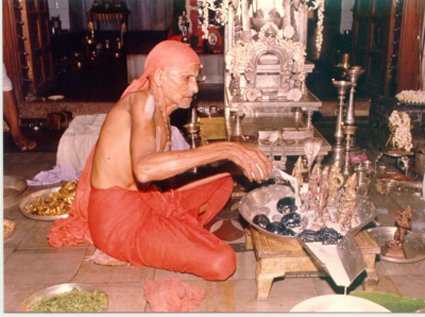
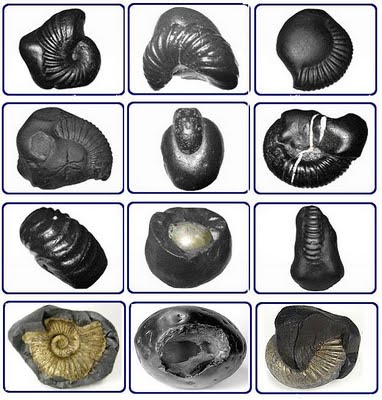
“No legend has so enhanced the value of a precious stone as that handed down from the Skanda Purana. In comparison with the intrinsic value of the genuine Salagrama stone, the Kohinoor and Jubilee diamonds fade into insignificance, although the Salagrama appears to have no value outside Hindu countries.


The Atharva Veda decrees that a Brahmana s house without a Salagrama stone is as impure as a cemetery, and any food cooked therein is as unclean as the excrement of a dog.


To touch water in which this stone has been washed is to get absolution from all sins however grievous, and the possession of such a stone assures perpetual wealth. To drink water which has been sanctified with Saligrama provides happiness in this world and a place in the heaven, the ultimate goal.

To invoke the power of Salagrama, the god Vishnu must be supplicated.  With the prayer ‘Narayana’ and the worship which accompanies it.

ammonites

STORY OF SALAGRAMA

The Salagrama legend centres around a low caste dancing girl, whose head was turned by her own beauty.  Failing to find a match to her loveliness, she retired to Himalayas to fast and meditate.  During this period she encountered god Vishnu and was so enamoured of his beauty that she demanded the full satisfaction of her passion. On account of her profession, and her low caste, God pretended to remain cold to her voluptuous invitation.


Here the creators of Hindu gods had in mind the symbolisation of their deities’ human weaknesses, of which compromise and justifications are not the least.


In the end, not wishing to pollute his caste, but at the same time determined not to lose all the delight which was offered him, Vishnu took a middle course. He promised that the dancing girl should reincarnate in the form of a river, and he, in the form of a Salagrama stone, wold lie in the river bed as her eternal lover.  Thus was founded the Gandaki river, and one of the incarnations of Vishnu in the form of a precious stone. The description of the river and the stone is in the Skanda Purana.


The legend binding the Salagrama stone to Vishnu’s body has proved a source of great wealth to the native state of Nepal through which River Gandaki runs most of its course until it joins the Ganges near Patna. Indeed, so valuable is the stone, that concession for its recovery from the river bed has been farmed out to concessionees by the Maharajah. The consessionees are bound to submit the recovered stones to Maharajah’s s inspection.

fossil-puja

FOSSIL AMMONITES

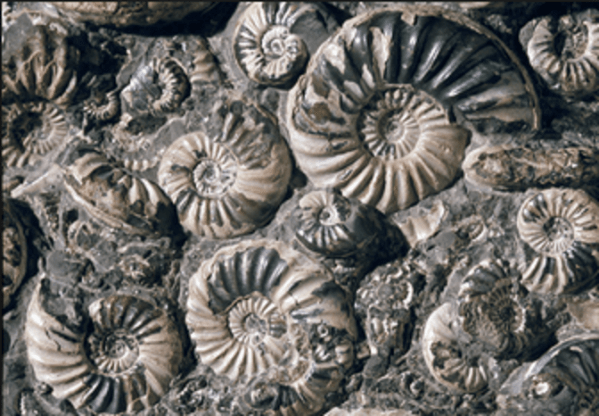
The stone is known to geologist s as fossil Cephalapods (ammonites) it’s worth is not considered by weight; but by certain spiral markings, a hole in a certain position and various spiritual tests. Its value none the less, often exceeds four thousand pounds. The hole was provided by Brahma, who in his incarnation as a water worm, at the request of Vishnu bored the holes known as Vadanas. He traced also the spirals, or chakrams as they are called.


Tradition has it that mysterious power of Salagrama was discovered accidentally by a simple Kshatriya, soldier. This soldier discovered that with the stone in his mouth, or clasped in his hand he was able to accomplish all his desires. His luck was so phenomenal that he became a great King, and was finally borne up to heaven in a cloud by Vishnu; not before, however, he had imparted the secret to one of his courtiers.

HOW TO FIND GOOD  SALAGRAMAS

Like all precious stones Salagramas have not escaped the bad luck superstition. Unlucky stones are known as ‘Ugra chakra Salagrama’ or furious stones. Bad luck may follow their possessor especially if prayers offered are not ardent enough to propitiate the deity. The possessors of furious stones are advised to present it to a temple, where the ardent prayers of the priests will keep it from doing its worst.


The stone’s efficacy depends upon how it is acquired, and one that has been acquired dishonesty will bring nothing but evil to its possessor. The Government of Nepal have their own tests. They depend upon no acid which might be falsified, but upon the scales of justice. A stone, on reception, after careful tapping to remove encrustations and expose the spirals, is placed on one pan of the scale, while in the other pan rice is added to an equal weight. If, in twenty-four hours, the rice has increased in weight (it is said sometimes to double itself) the stone is priceless; but if the scale remains even, or if the rice diminishes, it is of little value.

salagrama

The orthodox Hindus believe that the possession of the salagramas without worship is unlucky; but no Brahmin house is complete without one, and often two or three are said to be necessary.

Thousands of so called salagramas are sold by charlatans, fortune-tellers and others. So skilfully is the fake produced that only after years, or possibly generations, of washing can the deception be discovered. False vadanas are bored in pebbles, and faked chakrams are raced in slate and place on the pebbles”.


–subham–