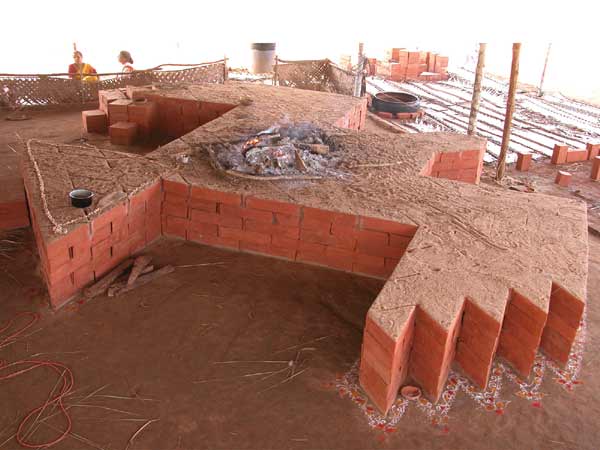
கரிகால் சோழனின் பருந்து வடிவ யாக குண்டம்

சங்கத் தமிழ் நூல்கள் சங்க கால மன்னர்கள் செய்த பல அபூர்வ யாகங்கள் குறித்து பல அதிசயமான செய்திகளைத் தெரிவிக்கின்றன. ஒரு யாகம் முடிந்தவுடன் ஒரு பார்ப்பனரும் அவர் மனைவியும் மாயமாக மறைந்துவிட்டார்கள். இதைப் பாடிய புலவரின் பெயர் பாலைக் கவுதமனார். அவர் வேண்டுகோளின் பேரில் சேர மன்னன் 10 யாகங்களைச் செய்து முடித்தவுடன் இந்த அதிசயம் நடந்தது.(காண்க: செல்வக் கடுங் கோ வாழியாதனைப் பாலைகவுதமனார் பாடிய மூன்றாம் பத்து– பதிற்றுப் பத்து)

வேளிர் என்னும் குறுநில மன்னர்கள் தாங்கள் யாகத் தீயிலிருந்து உதித்ததாகக் கூறுகின்றனர். பஞ்ச பாண்டவர் மனைவியான திரவுபதி இப்படி யாகத்தீயில் உருவானவர். பல ராஜஸ்தானியர்கள் ,குஜராத்திகள், பஞ்சாபியர் ஆகீயோரும் இப்படிக் கூறுவது வியப்பான ஒற்றுமையாகும். கபிலரும் கூட இதே செய்தியைக் கூறுகிறார் (புறம் 201).

கரிகால் சோழன் வேத நெறி தவறாது ஆண்டவன். 2000 ஆண்டுகளுக்கு முன் ஆண்ட இவன் சோழ மன்னர்களில் மிகவும் புகழ்பெற்றவன். இவன் பருந்து வடிவ யாக குண்டம் அமைத்து அதில் யூபம் (கம்பம்) நட்டான் என்று புறநானூற்றுப் புலவர் பாடுகிறார்.

தூவியற் கொள்கை துகளறு மகளிரொடு

பருதி உருவிற் பல்படைப் புரிசை

எருவை நுகர்ச்சி யூப நெடுந்தூண்

வேத வேள்வி தொழில் முடித்த தூஉம்

புறம் 224 (கருங் குழலாதனார்)


கரிகாலனின் எல்லா மனைவியரும் அப்போது உடன் இருந்தனர். மனைவி உடன் இல்லாமல் வேள்வி செய்ய முடியாது. அவர்களை வேள்விக் கிழத்தியர் என்றே தமிழ் நூல்கள் கூறும்.

1008 அல்லது 10008 செங்கற்களை சுத்தி செய்து மந்திரம் கூறி ஒவ்வொரு செங்கல்லாக அடுக்குவர். சமீபத்தில் கேரளத்தில் கழுகு வடிவ யாக குண்டம் அமைத்து பெரிய யாகம் செய்தனர். கலிபோர்னியா பலகலைக் கழக ஆசிரியரகள், அறிவியல் வல்லுனர்கள் புடைசூழ இந்த யாகம் நிறைவேறியது.

தமிழ் மன்னர்கள் வேத நெறியை தங்கள் வாழ்வியல் நெறியாகக் கொண்டனர். காஞ்சி மகா சுவாமிகளும் தனது உரையில் வேதம், யாகம், பிராமணர்கள் ஆகியவற்றுக்கு சங்க காலத்தில் வழங்கும் தமிழ் சொற்களைப் பார்க்கையில் இந்தப் பண்பாடு எவ்வளவு காலத்துக்கு முன் எவ்வளவு ஆழ வேரூன்றியிருக்க வேண்டும் என்கிறார்.

வெளி நாட்டுக் காமாலைக் கண்ணர்கள் பொய்யான ஆரிய திராவிட வாதத்தை அவர்களுடைய மதத்தைப் புகுத்த நம் முன் வைத்ததால் நாம் மதி மயங்கிக் குழம்பிவிட்டோம்.

கல்யாண மந்திரங்களில் சப்தபதி என்னும் ஏழடி நடக்கும் மந்திரம் முக்கியமான மந்திரமாகும். மணப் பெண்ணும் மண மகனும் கையைப் பிடித்துக் கொண்டு தீயை வலம் வருவார்கள். இந்த மந்திரங்களின் அர்த்தம் தமிழ் திரைப் பட காதல் பாடல்களை எல்லாம் மிஞ்சிவிடும். கண்ணகியும் கோவலனும் தீயை வலம் வந்து ஐயர்கள் முன்னிலையில் திருமணம் செய்துகொண்டதை சிலப்பதிகாரம் பத்திரிக்கை நிருபர் தோற்றுப் போகும் அளவுக்கு அழகாக வருணிக்கிறது.

ஏழடிகள் ஒருவருடன் நடந்து சென்றால் பந்தமும் பாசமும் உறுதி பெற்றுவிடும் என்று ரிக்வேதம் சொல்லுகிறது. கரிகாலன் தன்னைப் பார்க்க வந்தவர்களை வழி அனுப்புகையில் வேத நெறிப்படி ஏழு அடிகள் கூடவே நடந்து சென்று வழி அனுப்புவானாம்.


பால்புரை புரவி நால்குடன் பூட்டிக்

காலின் ஏழடிப் பின் சென்று கோலின்

தாறு களைந்து ஏறு என்று ஏற்றி வீறு பெறு

–பொருநர் ஆற்றுப்படை வரிகள் 165-167


மதுரைக் காஞ்சி எழுதிய மாங்குடிக் கிழார் இன்னும் ஒரு அதிசிய விஷயத்தைச் சொல்லுகிறார். மற்ற எல்லா நாட்டு மன்னர்களும் சேவல் கூவும் சத்தத்தைக் கேட்டு எழுந்திருப்பான். அனால் மதுரைப் பாண்டிய மன்னனோவெனில் ஐயர்கள் முழங்கும் வேத ஒலியைக் கேட்டு எழுந்திருப்பான் என்று.

சிறுபாண் ஆற்றுப் படை எழுதிய புலவர் இன்னும் ஒரு வியப்பான விஷயத்தைச் சொல்லுகிறார். பிராமணர்கள், பாணர்கள் போன்றோர் நல்லியக்கோடன் அரண்மனையில் 24 மணி நேரமும் அனுமதியின்றி உள்ளே போகலாம் என்கிறார்.


பொருனர்க் காயினும் புலவர்க் காயினும்

அருமறை நாவின் அந்தணர்க்காயினும்

அடையா வாயில் (சிறு பாண்—வரிகள் 203-206)


பாண்டிய மன்னர்களில் மிகவும் பழைய மன்னர்களில் ஒருவன் முதுகுடுமிப் பெருவழுதி. அவனுக்கு அடைமொழியே பல் யாக சாலை முது குடுமிப் பெரு வழுதி என்பதாகும். நாடு முழுதும் யாகத் தூண்கள் இருக்குமாம் (புறம் 6,15). அவன் தலை தாழ்வது இரண்டே முறைதானாம். ஒன்று சிவன் கோவிலில், இரண்டு நாலு வேதம் படித்த அந்தணர் முன்பு (புறம் 6).

அவ்வையாருக்கு ஒரே மகிழ்ச்சி. ஏன் தெரியுமா? உலகில் 1500 ஆண்டுகளுக்குக் குடுமி பிடிச் சண்டை போட்ட ஒரே இனம் தமிழ் இனம் தான். உள் சண்டையினாலேயே அழிந்த ஒரே இனம் என்ற பெருமை உடைத்து. அப்பேற்பட்ட மூன்று தமிழ் மன்னர்களும் ஒரே மேடையில் வீற்றிருந்ததைப் பார்தவுடன் அவ்வைப் பாட்டிப் பூரித்துப் போய்விட்டார். எப்போது தெரியுமா? சோழ மன்னன் பெரு நற் கிள்ளி ராஜசூய யாகம் செய்தபோது –ஆகாயத்திலுள்ள நட்சத்திரங்களை விட நீங்கள் நிறைய நாட்கள் ஒற்றுமையாக வாழ வேண்டும் என்று பாடினார் (புறம் 367)

அப்போது பெருநற் கிள்ளியுடன் சேரமான் மாரி வெண்கோவும் பாண்டியன் உக்கிரப் பெருவழுதியும் ஒருங்கே இருந்தனர்.

ஒவ்வொரு மன்னனும் என்ன யாகம் செய்தான் என்பதை தொல்பொருட்துறை அறிஞரும் வரலாற்று நிபுணருமான டாக்டர் நாகசாமி அவர்கள் கல்வெட்டு இலக்கியச் சான்றுகளுடன் யாவரும் கேளிர் என்னும் அவரது நூலில் பட்டியல் இட்டிருக்கிறார். ஒவ்வொரு மன்னரின் கோத்திரம் என்ன என்பதையும் செப்பேட்டுச் சான்றுகளுடன் எழுதி இருக்கிறார். சிம்மவர்மன் என்ற பல்லவ மன்னன் பத்து அஸ்வமேத யாகங்களைச் செய்ததாக சிவன் வாயில் கல்வெட்டு கூறுகிறது.


புதிய விஷயம்: அஸ்வமேத பாண்டியன்

குப்தர்கள் அஸ்வமேத யாகம் செய்தவுடன் குதிரைப் படத்துடன் தங்க நாணயங்களை வெளியிட்டார்கள். அப்படி தமிழ் மன்னர்களின் தங்க நாணயம் கிடைக்க வில்லை. ஆனால் ஒரு பாண்டிய மன்னனின் செப்பு நாணயம் குதிரைப் படத்துடன் கிடைத்துள்ளது. இது முதுகுடுமிப் பெருவழுதியாக இருக்கலாம். ஏனெனில் கி.மு. முதல் நூற்றாண்டில் வாழ்ந்த உலகின் மாபெரும் கவிஞர்களில் ஒருவரான காளிதாசன் அவனது ரகுவம்ச காவியத்தில் பாண்டிய மன்னர்கள் அவப்ருத ஸ்நானத்தால் நனைந்ததாக எழுதி இருக்கிறார். அவரது காலத்தில் வாழ்ந்த முதுகுடுமிப் பெருவழுதியையே இது குறிக்கிறது. யாகம் செய்யும்போது குளிப்பதை அவப்ருத ஸ்நானம் என்று அழைப்பர். காளிதாசனின் காலம் கி.மு முதல் நூற்றாண்டு என்பதற்கு சங்கத் தமிழில் 200க்கும் மேலான சான்றுகள் இருக்கின்றன. (இதை எனது காளிதாசனின் காலம் என்ற கட்டுரையில் காண்க).

‘பொய்யா நாவிற் புகழ்’ உடைய கபிலர் தரும் இன்னொரு வியப்பான தகவல் (புறம்122): மலையமான் திருமுடிக்காரியின் நாட்டை யாரும் வெல்லவும் முடியாது, படை எடுக்கவும் முடியாதாம். ஏனேனில் நாடு முழுதையும் அவன் ஏற்கனவே அந்தணர்க்கு தானமாகக் கொடுத்துவிட்டானாம்!


கடல் கொளப்படா அது, உடலுநர் ஊக்கார்,

கழல் புனை திருந்து அடிக் காரி! நின் நாடே;

அழல் புறந்தரூஉம் அந்தணரதுவே;( புறம் 122—கபிலர்)


வேதங்களை ஏற்றுப் போற்றும் தமிழ் இலக்கியங்கள் என்ற நூலில் திரு கே சி இலக்குமிநாராயணன் , ஒரு கலைக் களஞ்சியம் கொள்ளும் அளவுக்கு தகவல்கள் தந்துள்ளார் என்பதையும் இங்கே குறிப்பது பொருத்தமாக இருக்கும்.

***********************
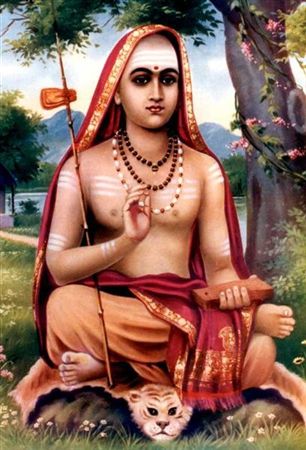
60 SECOND INTERVIEW WITH ADI SHANKARA

Adi Sankaracharya

(Questions are imaginary; Answers are true excerpts from BhajaGovindam aand Viveka Chudamani) –S Swaminathan

Q : Shankarji, Namasthe and Vanakkam.what is your philosophy?  Could you please tell us in one or two sentences?

A: Brahman alone is real, the universe is unreal, and the individual soul is no other than the universal Soul ( ”Brahma Sathyam -Jagan Mithya- Jeevo Brahma Eva , Na Aparaha” ).

Q. You have said it beautifully well. But laymen may not understand it.

A: Maya can be destroyed by the realisation of the pure Brahman, just as the mistaken idea of a snake is removed by the discrimination of the rope.

Q. Swami, This is high philosophy indeed. But is there any short cut for reaching God?

A: Through the company of the good, there arises non attachment:

Through non attachment there arises freedom from delusion:

When there is freedom from delusion, there is the Immutable Reality:

On experiencing immutable reality there comes the state of ‘liberated in life’(Jeevan Mukti).

Q: Oh, Swamiji, now I remember the Bhaja Govindam sloka ‘Satsangatve nissangatwam, Nissangatve Nirmohatvam——–‘.Ok,  A lot of people believe in simple things like holy dip in Ganges etc. Is it not good then?

A: To one who has studied the Bhagavad Gita even a little,

Who has sipped at least a drop of Ganges water,

Who has worshipped at least once Lord Murari,

To him there is no quarrel with Yama, the Lord of Death.

Q: Shankarji, only now you have come down to our level. We understand that you have gone round the Holy Bharat several times by foot when there was no vehicle, no bridges, no gun to protect you from wild animals .How did you do it. Aren’t you scared?

A: There is only Brahman, the one without a second, which is within all, homogenous, infinite, endless, and all pervading: there is no duality whatsoever in it (Eka mevadwayam Brahma neha nanasthi  kinchana)

Q. Yeah, we understand fear comes only when you think there is another thing.  Swami, we believe in Karma.  Is in it that even meeting you today destined already?

A: Through the realization of one’s identity with Brahman, all the accumulated actions of a hundred crore of cycles come to nought.

Q: That is a good news. That means no one needs to fear Karma. Now In India, we have got a lot of Babas and Swamijis with hundreds of thousands of followers. Aren’t we are going in the right direction?  I think Your Holiness must be happy about it.

A:One ascetic with matted-locks, one with shaven-head, one with hairs pulled out one by one, another parading in his ochre-robes- these are fools who, though seeing, do not see. Indeed these different disguises or apparels are only for their belly’s sake.

Q. Thanks for clarifying, Swamiji. Could you please give a simple message to our youths?

A: Childhood skips off on sport and play.

Youth flies off in pursuits of love making.

As one grows older one he is drowned in worry about the security and future of his wife and children.

One’s whole life gets spent in some kind of worry or other. And at no stage does man find time to lift his thoughts to God.  Seek God (Bhaja Govindam), Seek God, Seek God.

Q. You are a keen observer of Nature. You even escaped from the grip of a crocodile when you were young in Kaladi, Kerala. You tricked your mum by saying the crocodile will leave you alive if she permits you to enter Sanyas (ascetic life).Tell us what can nature teach us?

A: The deer, the elephant, the moth, the fish and the black bee-these five have died due to one or other of the five senses, viz. Sound etc. through their own attachment.

Whoever seeks to realise the self by devoting himself to the nourishment of the body, proceeds to cross a river by catching hold of a crocodile, mistaking it for a log.

Q : Shankar ji ,we would recommend you to be entered in the Guinness Book of records under three categories  : 1.The man who walked around the sub continent several times by foot-for longest Pada Yatra 2.The man who wrote highest number of commentaries on ancient texts and and 3. For strengthening the unity of India by establishing four centres (Mutts) in four corners of India :Sringeri, Dwaraka, Kashmir and Puri.

Namasthe. Thanks (Dhanyavad)

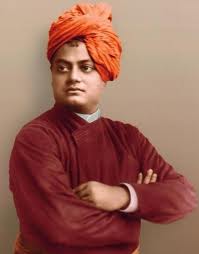
60 second interview with Swami Vivekananda

By S Swaminathan

Q: Swamiji , Namasthe and Vanakkam. Let me begin the interview with a question on football. Why did you say youths should play foot ball rather than reading Bhagavad Gita?

A: “First of all, our young must be strong. Religion will come afterwards. Be strong, my young friends; that is my advice to you. You will be nearer to Heaven through foot ball than through study of Gita”

Q: Swami, people are even scared of going in the night time!

The moment you fear, you are nobody. It is fear that is the greatest cause of misery in the world. It is fear that is the greatest of all superstitions. It is fear that is the cause of our woes, and it is fearlessness that brings heaven in a moment “The earth is enjoyed by heroes”—this is the unfailing truth. Be a hero. Always say, “I have no fear.”

Q: Are there ghosts?

A: Be strong! Don’t talk of ghosts and devils. We are the living devils. The sign of life is strength and growth. The sign of death is weakness. Whatever is weak, avoid! It is death. If it is strength, go down into hell and get hold of it! There is salvation only for the brave.

Q: Will God give us whatever we ask for?

Answer:

“When I Asked God for Strength
He Gave Me Difficult Situations to Face

When I Asked God for Brain & Brown
He Gave Me Puzzles in Life to Solve

When I Asked God for Happiness
He Showed Me Some Unhappy People

When I Asked God for Wealth
He Showed Me How to Work Hard

When I Asked God for Favours
He Showed Me Opportunities to Work Hard

When I Asked God for Peace
He Showed Me How to Help Others

God Gave Me Nothing I Wanted
He Gave Me Everything I Needed.”

What is the formula for success?

Take up one idea. Make that one idea your life – think of it, dream of it, live on that idea. Let the brain, muscles, nerves, every part of your body, be full of that idea, and just leave every other idea alone. This is the way to success.

What is your message to our youths?

Brave, bold people, these are what we want. What we want is vigour in the blood, strength in the nerves, iron muscles and nerves of steel, not softening namby-pamby ideas. Avoid all these. Avoid all mystery. There is no mystery in religion.

There are hundreds of thousands of microbes surrounding us, but they cannot harm us unless we become weak, until the body is ready and predisposed to receive them. There may be a million microbes of misery floating about us. Never mind! They dare not approach us, they have no power to get a hold on us, until the mind is weakened. This is the great fact: strength is life. Weakness is death. Strength is felicity, life eternal, and immortal. Weakness is constant strain and misery: weakness is death

Q: We have so many great religious leaders and Gurus. Which one should we follow?

A: In Buddha we had the great, universal heart and infinite patience, making religion practical and bringing it to everyone’s door. In Shankaracharya we saw tremendous intellectual power, throwing the scorching light of reason upon everything. We want today that bright sun of intellectuality joined with the heart of Buddha, the wonderful infinite heart of love and mercy. This union will give us the highest philosophy. Science and religion will meet and shake hands. Poetry and philosophy will become friends. What! Those giants of old, the ancient Rishis, who never walked but strode, of whom if you were to think but for a moment you would shrivel up into a moth, they sir, had time–and you have no time!

Q: What is the role of India in the world?

A: “It is the same India which has withstood the shocks of centuries, of hundreds of foreign invasions, of hundreds of upheavals, of manners and customs. It is the same land, which stands firmer than any rock in the world, with its undying vigour, indestructible life. Its life is of the same nature as the soul, without beginning and without end, immortal; and we are the children of such a country.”

“This is the ancient land, where wisdom made its home before it went into any other country… Here is the same India whose soil has been trodden by the feet of the greatest sages that ever lived… Look back, therefore, as far as you can, drink deep of the eternal fountains that are behind, and after that look forward, march forward, and make India brighter, greater, much higher, than she ever was.”

Q: What can a poor man do in this world?

A: They alone live who live for others. The rest are more dead than alive. In the world take always the position of the giver. Give everything and look for no return. Give love, give help, give service, and give any little thing you can, but keep out barter. Make no conditions and none will be imposed. Let us give out of our own bounty, just as God gives to us.

Q: What is the use of meditation?

A: In real meditation you forget the body. You may be cut to pieces and not feel it at all. You feel such pleasure in it. You become so light. This perfect rest we will get in meditation. Meditation means the mind is turned back upon itself. The mind stops all the thought-waves and the world stops. Your consciousness expands. Every time you meditate you will keep your growth.

The greatest help to spiritual life is meditation. In meditation we divest ourselves of all material conditions and feel our divine nature. We do not depend upon any external help in meditation.

Thanks, Swamiji.

(Questions are imaginary: answers are from Swamiji’s speeches)

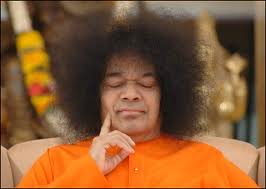
60 second Interview with Sathya Sai Baba

Sri Sathya Sai Baba


Q: Babaji, Namasthe. What is the purpose of Krishna Avatar (incarnation)?

Sri Krishna was born as the eighth child of Devaki. This is significant, for Samadhi is the eighth stage of spiritual effort, coming after Yama, Niyama, Asana, and Pranayama. Pratyahara, Dharana and Dhyana. These are grouped as Ashtanga Yoga, the Eight­fold Discipline. The Lord can be visualised only after the seven steps are successfully negotiated and the mind purified in the process. Samadhi means, sama (equal) dhi (intelligence) that is say, intelligence, grasp­ing the equality (fundamental) of every be­ing. Not only will all idea of difference and distinction disappear, but, even the idea of duality—heat and cold, grief and joy, good and bad—disappears. And, when man reaches that state, the Lord is born, auto­matically in his consciousness.

Q: Baba,Where is God?

A: GOD is neither distant, nor distinct from you. God is in you, around you, behind you, above you, beside you.

Q: What should I do every day to remain good?

Start the Day with Love;
Spend the Day with Love;
Fill the Day with Love;
End the Day with Love;
This is the way to God.

Q: Thanks, Baba. I will start observing it from an auspicious day.

Yesterday has deceived you and gone; Tomorrow is a doubtful visitor. Today is a fast friend — hold fast to it.

Q: At any one time a violent agitation or a war is happening in at least one part of the world. How can we establish peace?

If there is righteousness in the heart, there will be beauty in character;
If there is beauty in character, there will be harmony in the home;
When there is harmony in the house, there will be order in the nation;
When there is order in the nation, there will be peace in the World.

Q: Baba, even followers of religions fight among themselves. Cant you stop it?

There is only one religion, the religion of Love;
There is only one language, the language of the Heart;
There is only one caste, the caste of Humanity;
There is only one law, the law of Karma;
There is only one God, He is Omnipresent.

Q: Babaji, I have vowed to shave my head if I pass in the exam.

MANY believe that a pilgrimage to holy places is conductive to spiritual progress. They journey to Tirupathi, Rameswaram, Badrinath or Amarnath and pray for the removal of their mundane troubles. They vow to remove their hair if, through Divine intervention, they win a prize in the State Lotteries, as if God is in need of hair. This trick of bargaining is only cheating oneself in an attempt to cheat God. Do not pray to God for wealth or fame, positions of power or for the fruits of your actions. The genuine seeker will pray for nothing else but God.

Q:Babaj, I fear losing in the competition.

A: Every experience is a lesson, every loss is a gain.

Q: Is it true that human birth is better than others?

Each one of you has struggled upward from the stone to a plant,

From the plant to an animal,

From the animal to a man.

Do not slide into an animal.

Rise higher to divinity

Shining with the new effulgence of love.

Q: Swamiji Sometimes I feel bored. I don’t know how to explain my dull feelings

A: Life is Love, enjoy it;
Life is Challenge, meet it;
Life is a Song, sing it;
Life is a Dream, realize it;
Life is a Game, play it;
Life is a Goal, achieve it.

Q: Babaji,What is your message to our youths?

Bharat has always produced excellent people in abundance-intelligent, courageous, valorous, devoted, strong and virtuous. Yet we were conquered by foreigners. Why? Only because there was no unity. For this reason Bharat had to endure slavery and untold injustice at the hands of invaders. Students must cultivate unity. The reputation and future prosperity of the nation are hinged on the behaviour of students. Ensure that your conduct is prper. All the future leaders are among  today’s students. “Start early, drive slowly and reach safely”. Imprint the nation’s welfare as the primary goal in your heart, starting in your student days

Baba, we have got only sixty seconds. You have to be a quick.

Haste makes waste;
Waste makes worry;
So do not be in a hurry.

Q. Baba, It may sound  a bit embarrassing. About your miracles?

My miracles are my visiting cards to attract the devotees.

Q: Last question Baba. Who am I?

A:You are not one person, but three:
The one you think you are;
The one others think you are;
The one you really are.

(Imaginary Questions are mine; Answers are from Baba’s speeches)

Karikal Choza and Eagle shaped Fire Altar

–S Swaminathan

Fire altar, Kerala, April 2004

Ancient Tamil kings followed Vedic customs in their daily life. They respected the Vedas and performed Yagnas/fire ceremonies like the Rajasuya and the Aswamedha. The oldest Tamil book available today is Tolkappiyam, a grammatical treatise. The book says that the Vedic Gods Indra, Varuna, Vishnu were worshipped along with Durga and Skanda. Vedic deities were the gods assigned to three of the four Tamil land divisions. For Marutham-Indra, Neithal-Varuna and Mullai- Vishnu. Skanda and Durga were the deities for Kurinji and Palai respectively.

Mudukudumi Peruvazuthi, one of the earliest Pandya kings had the epithet of “The King Who Performed Several Yagas”. In fact that was his greatest achievement. He probably even performed the Aswamedha Yagna. His country was full of Yupa posts. (Purananuru verses 6, 9, 16 ).They treated Vedic culture as their own culture. The Pandya king was praised for holding his head high except in two situations: one is in the temple and second, before Brahmins. He would bow to only these two in the whole world! Another Pandya king of Madurai was praised for awaking to the Vedic chants of the Brahmins where as other kings wake up to the cry of fowl. (Mankudi Maruthn in Madurai Kanchi). Another king Nalliakodan says that his palace doors were always open to Brahmins (Ref. Sirupan Atruppadai).

Kalidasa, one of the world’s greatest playwrights and the most celebrated Indian poet for his 1000+ beautiful similes mentioned the Pandya king and Agastya in consecutive slokas in his Raguvamsa, which indicates a close relationship that ran for thousands of years. The commentators mention Avabruda Snanam which is done during the Aswamedha Yagna.

The grand old lady of Tamil Sangam period poetess Avvaiyar praised the unity of the three great kings Chera, Choza and Pandyas on the occasion of Rajasuya Yagnam of Perunar Killi (Puram verse 367)

Why did he walk SEVEN STEPS?

The most interesting reference is about the greatest of the ancient Cholas Karikalan by Mudathama Kanniyar. Karikal Peruvalathan is dated 1st century BC. (Please read my article Why British Judges follow Karikalan?).  There are two interesting references to show that Karikalan followed the Vedic customs. He was praised as the one who walks with his guest SEVEN STEPS before seeing them off (Line 166 ,Porunar Atrupadai). Rig Veda says that a friend must be seen off after walking seven steps. Walking Seven Steps (Saptapadi) is an important ceremony in Hindu marriages as well. If both any two friends or a couple walk the seven steps together, their bond last for a lifetime.

This is the meaning of the Sanskrit Saptapadi mantra in marriage:

“Now let us make a vow together. We shall share love, share the same food, share our strengths, share the same tastes. We shall be of one mind, we shall observe the vows together. I shall be the Samaveda, you the Rigveda, I shall be the Upper World, you the Earth; I shall be the Sukhilam, you the Holder – together we shall live and beget children, and other riches; come thou, O sweet-worded girl

We have taken the Seven Steps. You have become mine forever. Yes, we have become partners. I have become yours. Hereafter, I cannot live without you. Do not live without me. Let us share the joys. We are word and meaning, united. You are thought and I am sound. May the night be honey-sweet for us. May the morning be honey-sweet for us. May the earth be honey-sweet for us. May the heavens be honey-sweet for us. May the plants be honey-sweet for us. May the sun be all honey for us. May the cows yield us honey-sweet milk. As the heavens are stable, as the earth is stable, as the mountains are stable, as the whole universe is stable, so may our union be permanently settled.

Eagle Shaped Altar

The second reference is that Karikalan did a Yagna with an EAGLE-SHAPED FIRE ALTAR (Yaga Kunda). Poet Karunkuzalahanar praised Karikalan for setting up eagle shaped fire altar and a Yupa post in Puram verse 224. When he did this he consulted the Brahmins in his court and all his wives were with him during the Yagna, the poet added.

For important fire ceremonies such as the Soma Yaga, the Athirathra and the Aswamedha the fire altar is set up with 10,008 bricks or 1,008 bricks (Please read my article Hindu’s Magic Numbers). Each brick is cleaned ritually and mantras are chanted while the eagle shape fire pit is constructed. The altar is sprinkled with gold chips. If it is an Aswamedha Yagna the altar that is constructed is three times bigger.

In the Valmiki Ramayana we get more details about the Aswamedha performed by King Dasaratha. Gupta Kings issued gold coins after they performed the Aswamedha. Pandya coins were excavated featuring a horse on its side. This proves that they performed the Aswamedha. All credit for this goes to Mudukudumi Peruvazuthi.

The Eagle is the King of Birds. Lord Krishna says in Vibhuti Yoga of Bhagavad Gita that among the birds, he was the eagle. Garuda/eagle was his vehicle as well. The Eagle is used as an emblem throughout Western countries, including the USA. It is Thailand’s national emblem. Though Indonesia is the largest Muslim country in the world, it has named its national airlines after Vishnu’s vehicle Garuda.

The symbol of the national airline of Indonesia

Mankudi Kizar in Puram 29 praised Thalaialangkanathu Neduncheziyan for performing a fire ceremony .Dr R Nagaswamy, famous historian and archaeologist has given a long list of all the Yagas done by the Tamil kings and the Pallava kings in his book (Yavarum Kelir page 78 to 82). Almost all the Chera kings listed in Pathitru Pathu performed several yagnas. It gives a lot of detail, such as the fasting done by the kings before the ceremonies. Cheran Chenguttuvan even released all the prisoners in his jails to mark this occasion.

Velirs claim that they were born in Fire pits. They belonged to the Agni clan. Several clans in Gujarat, Punjab and Rajasthan also claimed themselves as fire-born. One famous Maya King’s name was Fire-Born.

Pallavas were powerful and they performed the famous Aswamedha (Horse Sacrifice) to establish their political superiority. If we look at the epigraphs and copper plates of that time, they give a long list of the Yagas they performed and the donations they gave on such occasions. Rajathi Rajan I performed an Aswamedha according to his epigraphs. Foreign scholars, with their mischievous propaganda of Aryan Dravidian divide distorted Indian history beyond recognition. They made us believe that there were two different cultures existing in India during ancient times. Anyone who studies our ancient literature without the Aryan Dravidian prejudice will find one culture and unity of thought throughout its 5,000 year history from the northernmost Himalayas to the southernmost oceans. The minute our scholars realise this truth, they will find the key to the Indus script as well.

Finally, a twelve day Athirathram Yagna was recently performed in Kerala (April 2011) in Panjal near Thrissur. The eagle-shaped fire altar was set up with 1,110 specially designed bricks. Frits-Staal, Indologist and Emeritus Professor of Philosophy, University of California, Berkley attended the ceremony with a group of scholars and scientists to study the effects on the environment and biosphere.

***********************

Valakhilyas: 60,000 thumb-sized ascetics who protect Humanity

By S Swaminathan

 
The ozone layer protects us from the Sun

60,000 Ascetics are protecting us from ultra violet radiation!

Jonathan Swift has taken the idea of Lilliputians for his novel Gulliver’s Travels from Valakhilyas!!

Valakhilyas are thumb sized ascetics accompanying the sun in its every day travel in the sky. They are protecting the humanity by taking all the extra heat and act like the ozone layer. They are 60,000 in number they are shining like brilliant lights because of their severe penance. They used to hang upside down in the trees while doing penance—these are some of the interesting facts that are found in the Vedas, the epics and the mythologies. Tamil literature adds more details about these strange kinds of ascetics.

Valakhilya hymns, eleven in number, are the appendix of the eighth Mandala of the Rig Veda. But famous commentators like Sayana rejected them as interpolations. The Ramayana and the Mahabharata have a lot of references to the Valakhilya Rishis. They may be considered the forerunners of English folklore: ‘Tom Thumb’ and the Lilliputians of the famous satirical novel Gulliver’s Travels by Jonathan Swift. English newspapers and magazines were publishing a lot of stories about India in the 1700s.

Ancient Sangam Tamil literature refers to Valakhilyas in Puranaanuru (verse 43), Tirumurugatrup patai (lines 16-109), post Sangam book Silappadikaram (Vettuvavari 15) and in the poems of middle age poet Arunagirinathar.

Valakhilyas were born to Kratu and Kriya. Once Kasyapa did a Yagna (fire sacrifice) to beget children. He invited all the Devas and Rishis to help him in the task. Everybody readily agreed. Mighty Indra, the King of Heaven, brought wood for the ceremony. Valakhilyas were emaciated due to severe penance. They were hardly able to lift anything but leaves. Even when they were moving leaves like ants, they fell into rain water puddles, because they were so tiny. It amused Indra and he laughed loudly. Valakhilyas were very much offended. They made a vow to do a separate yagna to create another Indra. When Indra listened to their vows he was afraid and ran to Kasyapa to explain what had happened.

Kasyapa lent a patient ear, but warned that he could not stop the powerful Valakhilyas. But he gave an assurance to Indra that he would find a compromise. When he met Valakhilyas he requested them to drop the yagna to create a new Indra. He also assured them that whoever they create will be the Indra of the birds and Valakhilyas agreed to this new plan.

After the yagna Valakhilya’s prasad (food offering) was given to Vinata, one of the two wives of Kasyapa. She gave birth to two children Aruna and the most powerful golden-hued eagle, Garuda. Long after this Garuda flew to Indraloka to get Amrita and defeated Indra. The Second wife of Kasyapa Kadru gave birth to the Nagas or the Snake race. Garuda on his way back sat on the tree where Valakhilyas were doing penance. The tree broke into many branches, but Garuda lifted all the ascetics with the branch and put them in a safe place.

The Rig Veda says that they sprang from the hairs of Prajapati Brahma. They are the guards of the Chariot of the Sun. They are also called the Kharwas. The Vishnu Purana describes them as pious, chaste and resplendent as the rays of the sun.

Tamil literature is very clear in saying that the main task of the short and smart ascetics is to prevent human beings from being scorched. So they absorb the excess heat from the sun by travelling in front of him. Tamil books also add they were in turn given energy by Lord Skanda and Goddess Durga. Even the hunters in the forest pray to Durga for this. Another Tamil poet compares the sacrifice of the Valakhilyas to the sacrifice of the Emperor Sibi who gave his flesh to an eagle to save a pigeon. The famous story of Sibi was referred to in four Sangam Tamil books. Sibi was praised as the forefather of the famous and powerful Tamil Chola dynasty. The food of Valakhilyas is only wind.

Another story in the Hindu mythology is that the sun has to fight a set of demons called Mandokarunar on a day to day basis for survival. Valakhilyas stand beside the Sun in battle. We don’t know whether there is scientific basis for this story. Mandokarunar maybe a reference to the dangers of solar flares or magnetic storms. In any case, it is crystal clear that the Valakhilyas act as the ozone layer to protect us from harmful ultraviolet rays. Too much ultraviolet rays will cause us skin cancer and other health problems.

We must be grateful to the authors of the Vedas, Puranas, Epics and Tamil commentators Nachinarkiniyar and Adirarku Nallar for creating awareness about the dangers of ultra violet radiation. In western countries people are warned to use special creams whenever they sun bathe.

 ******************

When Animals worship God, Why not Men?

When Animals worship God, Why not Men?

Parrots recite the Vedas.
Dog follows Yudhistra to heaven.
Squirrel helps to build Rama Setu.
Gajendra, the elephant called on Vishnu for help.
Dogs inspire Adi Shankaracharya.
Four dogs come as four Vedas to Somasi Nayanar Yagna.
In Madurai pigs, swallow and heron were given moksha by Lord Shiva.
Cows bathed Shiva lingas with milk in several Indian towns.
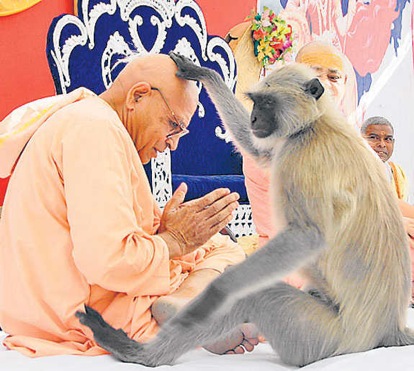
Recently in Ratlam (Madhya Pradesh) monkeys listened to Ramayana.
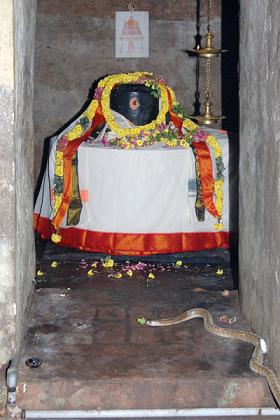
Very recently In Tamil Nadu snakes and goats did Puja to statues of gods.
What are all these? Are these Panchatantra stories or Aesop fables? or
Are Walt Disney’s films on nature? If you read more you can judge it yourself.
Indian Tamil and Sanskrit literature are full of animal stories. They say that if a just king rules the country deer and tiger will drink water from the same river without showing enmity. They go one step forward and say that animals when pregnant get more affection even from their natural enemies. Snakes open their hoods to protect pregnant frogs from scorching sun. Such is the love and affection they show one toward another.
Western newspapers don’t lag behind in such stories. Within the last quarter of 2011 three such stories about parrots appeared in London publications. A pet parrot alerted its owner when his pet dog gave birth prematurely. But for the timely intervention of the bird many of the cubs would have died. Another parrot betrayed its owner during illicit intimacy by calling his wife’s name. A third parrot helped to catch a burglar, because even after it was stolen it was repeating its original owner’s name and identified him in the pet shop.
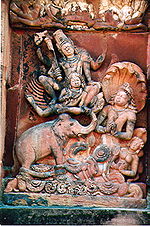
But Indian literature goes well beyond these anecdotes in time. We have the great Bhagavatham story of Elephant Gajendra calling Lord Vishnu to rescue it from the near fatal grip of a crocodile. This was beautifully sculpted 1500 years ago in the Deogarh temple. (My article about mysterious messengerstalks about a cobra giving shelter to a frog).
Look at the pictures now:
Monkey blessing Rama katha exponents in Ratlam in Madhya Pradesh, India (Monkey attending Rama katha is available on You Tube).

Elephant Gajendra calling Vishnu, 5th century AD (1500 old statue).
When the intellectual giant and the greatest Indian philosopher Adi Shankaracharya at a tender age went to challenge the mightiest figure of his days Mandanamishra on the banks of the river Narmada, he was laughed at and ridiculed by the women of the village who came to get water from the river. When they heard from a youth like Shankara that he came to discuss philosophical subjects with Mandanamishra and wanted to know where his house was, they giggled. But they were so intelligent that they replied to him in Sanskrit poetry. They asked him to go to a house where the parrots were reciting the Vedas and discussing Upanishad philosophy. The story takes very interesting turns at every stage. But I will stop with the parrots (those who wanted to read the story in English must go to Osho’s website, and those who wanted to read it in Tamil must go to Kanchi Shankaracharya’s Tamil lectures).
 
Thepperumanallur, Tamil Nadu, India- snake worships Lord Shiva.
On 16th January 2010 there was a solar eclipse. When the priest of Thepperumanallur in Thanjavur district of Tamil Nadu opened the temple, he saw a snake on top of the Shivalingam statue. It slowly went to the holy Bilva tree and brought the bilva leaves and put them on the head of Lord Shiva. It did it three times. Hundreds of villagers and photographers rushed to the temple and quietly watched the wonderful ceremony. The priest explained that solar eclipse is a holy occasion and people who do puja at that time get more punya.
 
Erode, Tamil Nadu, India – Goat worships Nagadeva statue with Tulsi (basil Leaves)
On 17th November 2011 when the Ayyappa devotees started their 40 day fasting (vrata) they all wore garlands and did Puja. A goat also took the holy basil leaves and did puja to the Nagadeva statues. Hundreds of devotees watched this with great reverence and curiosity. Popular Tamil Daily Dinamalar had published these incidents and they were read by millions.
People who have read Ramayana and Mahabharata knew about the little animals (read my story -Two LittleAnimals) When Adi Shankara was walking along a narrow street, a person of low caste came in the opposite direction. When Shankara, with all arrogance, asked him to move out of his path he asked a great philosophical question whether the body or soul should move out of his path. This opened Shankara’s eyes and awakened a greater fire in him. He realised that the man who came as an ugly uneducated person was nothing but God and the four dogs that accompanied him were four Vedas.
The same thing happened in the Soma yagna conducted by a great Tamil devotee called Somasimara Nayanar. When an untouchable came in drunken state with four dogs looking for his lost animals, all the Brahmins chased him away. But the great Nayanar realised that it was nothing but Shiva who came with four Vedas as dogs. Shiva showed him his real form and blessed him. It happened in the eighth century. The story appears in great detail in Periya Puranam in Tamil. Swami Sivananda of Rishikesh has translated it in to English.
Madurai Meenakshi Temple (Please go to The Wonder that is Meenakshi Temple) is full of animal stories. People were all reborn as animals and blessed by Lord Shiva. All these stories were given in greater details in the Tiruvilaiyadal Purana which is available in Sanskrit and English.
A lot of holy places and temples in India claim that the places were discovered when cows spontaneously showered milk in those spots.
Tamil Nadu (South India) is full of legends about temples. Most of the towns are associated with animals in one way or another. Just to mention a few Tiruanaika near Trichy in Tamil Nadu became famous because a spider and an elephant worshipped Shiva there. According to the local legend the spider was reborn as a famous Chola king and built many temples for Shiva. Tiruverumbur (ants worshipped), Tirukkazuku Kundram (eagles worshipped) and Vaitheeswaran Koil (Eagles Jatayu and Sampati worshipped).
So many places in India are associated with animals worshipping God and it is a good topic for further research.
                                                     ************************

Atom Bomb to Zoo of the Bhagavad Gita: Part 2

By S Swaminathan

This is Part 2 of a two part series on the A to Z of the Bhagavad Gita.


N for Nirvana 

Nirvana is an interesting term used both by the Buddhists and the Hindus with different interpretations. Gita uses this term several times (chapters 2-72,5-24,25,26 and 6-15). In Gita it means complete union with God. Brahma nirvana means the mystic state of extinction of self in the union with God. Literal translation of nirvana is blow out ,extinguish.

Osho on Gita 

Osho’s(Acharya Rajneesh) interpretation of the Gita stands out for many qualities. He creates a multifaceted analysis of Gita, drawing from all sources—philosophy, scriptures, biographies and his own experience. The shlokas of the Gita are often abstract, mysterious and sometimes downright contradictory. In such cases the listener will definitely appreciate Osho’s deep and precise insight in explaining why Krishna said it this way. He has the skill of explaining apparently impossible slokas in layman’s terms, using simple analogies.

P for Paramahamsa Yogananda 

Elucidating on the Gita’s primary metaphor of inner battle, Sri Yogananda writes, “From the moment of conception to the surrender of the last breath, man has to fight in each incarnation innumerable battles: biological, hereditary, bacteriological, physiological, climatic, social, ethical, political, sociological, psychological, metaphysical- so many varieties of inner and outer conflicts. Competing for victory in every encounter are the forces of good and evil. The whole intent of Gita is to align man’s efforts on the side of dharma or righteousness. The ultimate aim is self realisation.

Q for Queen of Greece 

What should be leader doing in regard to customs, usages, etc.? Even after he finds them to be not of any benefit for himself, should he follow them? Asked Queen of Greece, who was a devotee of Ramana Maharishi and Kanchi Sri Chandrasekarendra Saraswathy (1884-1994).

Kanchi Sankaracharya’s answer on 4/12/1966: Those who are the leaders of a group, society, or state should not neglect the established religious customs and usages. In the words of Bhagavad-Gita: “The wise one should not unsettle the minds of those who are ignorant, and are attached to action. On the contrary, he should encourage them to perform what they should perform, by himself doing the appropriate actions well and with diligence.”

R for Ramakrishna Paramahamsa 

The essential message of the Gita can be obtained by repeating the word several times, “‘Gita, Gita, Gita’, you begin, but then find yourself saying ‘ta-Gi, ta-Gi, ta-Gi’. The message is Thyaga/sacrifice –Thyagi means one who has renounced everything for God”, says Sri Ramakrishna Paramahamsa

Question : The Gita seems to emphasise karma yoga, for Arjuna is persuaded to fight. Sri Krishna himself set the example by an active life of great exploits.
Ramana Maharshi : The Gita starts by saying that you are not the body and that you are not therefore the karta [the doer].

S for Sivananda 

Study of the Gita must be made compulsory in all schools and colleges of India; nay of the whole world. It must become a text book for students of schools and colleges-Swami Sivananda wrote it on 4thJuly ,1942

T for Thoreau 

“In the morning I bathe my intellect in the stupendous and cosmogonal philosophy of the Bhagavad Gita, in comparison with which our modern world and it’s literature seems puny and trivial “- Henry David Thoreau (1817-1862) American poet and philosopher

U for Upanishads 

The Gita is a boquet composed of beautiful flowers of spiritual truths collected from the Upanishads- Swami Vivekananda

V for Vivekananda 

According to Swami Vivekananda the most important shloka in the Gita is the 3rd in the 2ndChapter. He says, “If one reads this one shloka –klaibyam mas ma gama: …… one gets all the merits of reading the entire Gita: for in this one shloka lies embedded the whole message of the Gita. The meaning of the verse is “Yield not to impotence, O Arjuna, son of Pritha. It does not befit thee. Cast of this mean weakness of the heart. Stand up, O scorcher of the foes.”

W for Water 

Hindus offer to God anything from hair to gold in different temples. Lord Krishna says he is happy with even an offering of little water. Chapter 9 verse 26: “If one offers me with love and devotion a leaf, a flower, fruit or WATER, I will accept it.” Lord Krishna has a scale where devotion gets more value than the actual value of the goods!

X for X number of commentaries 

Gita has 700 commentaries when Sita pati das (Joshua J Wulf) wrote a commentary several years ago. Now we have x number of commentaries on it. Even the Tamil atheists have written a commentary interpreting the shlokas with negative connotation.

Y for Yama & Yoga 

Adi Shankara in Bhaja Govindam (hymn 20) says: To one who has studied the Bhagavad Gita even a little, who has sipped at least a drop of Ganges water, who has worshipped at least once Lord Murari

Gita deals with three Yogas:karama/action,Bhakti/devotion,Jnana/wisdom

Zoo and Gita: 

Lord Krishna uses a lot of animal names in his dialogue with Arjuna. If we have to set up a Bhagavad Gita zoo to teach Krishna’s philosophy , we need the following animals:

Elephant, eagle, horse, shark, snake, cow, lion (Chapter 10) and dog, cow and elephant (5-18)

Send comments and feedback to: swami_48@yahoo.com.


Please visit my blogs: swamiindology.blogspot.com and tamilandvedas.wordpress.com


Atom Bomb to Zoo of the Bhagavad Gita: Part 1

By S Swaminathan

Atom bomb, Football, the British Empire, animals—such words may be strange for a spiritual seeker, but look at the harmony in the following A to Z compilation of beautiful quotes from world famous poets, philosophers, scientists and thinkers. 

This is the first part of a two part series covering A to M


A for Atom Bomb 

The world’s first nuclear test was conducted in 1945. Father of the atomic bomb was J.Robert Oppenheimer,an American physicist and Director of the Manhattan Project that developed atom bomb. He was a Sanskrit scholar and read Bhagavad Gita in Sanskrit. When he witnessed the first nuclear test ,huge fire ball brightened the sky for many miles. Huge mushroom cloud rose up. On witnessing the awe inspiring scene, Oppenheimer burst in to a Bhagavad Gita sloka(Chapter 11,verse 32) where Krishna says ,” Now I am become Death, the Destroyer of worlds”.

We always compare God to the biggest source of energy that we know of. Hindus have been worshipping the sun when they recite the most powerful Gayatri mantra. Modern science says that sun is where billions of hydrogen bombs explode every second to give tremendous energy.

B for British Raj 

Warren Hastings, the first Governor General of India (1773-1784) wrote an introduction to the first-ever English translation of the text by Charles Wilkins (1784) where he declares that, “Works as the Gita could live long after the British Domination ceased to exist and it contains passages elevated to a track of sublimity into which our habits of judgement will find it difficult to penetrate”.

C for Carl Gustav Jung 

“The idea that man is like unto an inverted tree seems to have been current in bygone ages. The link with Vedic conceptions is provided by Plato in his Timaeus in which it states……”behold we are not an earthly but a heavenly plant”- Carl Gustav Jung (1875-1961, Founder of Analytical Psychology)Ref. To Gita verse Chapter 15-1

D for Dnynaneswari 

Dnyaneshwari also known as Jnaneswari was written in Marathi by Jnaneswar in the 13th century. He expanded 700 verses of the Gita in to 9999 Marathi verses ‘ovis’. The first line of each ‘ovi’ rhymes with the next two lines adding beauty to the verses.

E for Einstein 

An interesting incident took place in 1948-49. A young researcher by name B M Gupta met the great scientist Albert Einstein (1879-1955).The German scientist hailed him in Sanskrit instead of English. The Indian scientist pleaded his inability to reply in Sanskrit. Surprised Einstein showed him his collection of books and told him, “See my library which treasures classics from Sanskrit namely the Gita and other treatises on Hindu philosophy. I have made Gita as the main source of my inspiration and guidance for the purpose of scientific investigations and formulation of my theories”.(Ref. Ezine article by Santanam Nagarajan)

F for Football 

“First of all, our young must be strong. Religion will come afterwards. Be strong, my young friends; that is my advice to you. You will be nearer to Heaven through foot ball than through study of Gita” said Swami Vivekananda .

G for Gandhi 

“When doubts haunt me, when disappointments stare me in the face, and I see not one ray of hope on the horizon, I turn to Bhagavad Gita and find a verse to confront me@ and I immediately begin to smile in the midst of overwhelming sorrow. Those who meditate on the Gita will derive fresh joy and new meanings from it every day”-Mahatma Gandhi

H for Huxley and Hesse 

“The Bhagavad Gita is the most systematic statement of spiritual evolution of endowing value to mankind. It is one of the most clear and comprehensive summaries of perennial philosophy ever revealed: hence its enduring value is subject not only to India but to all humanity”- Alduous Huxley

“The marvel of the Bhagavad Gita is truly beautiful revelation of life’s wisdom which enables philosophy blossom in to religion”-Herman Hesse

I for India 

TO INDIA 

So have I read this wonderful and spirit-thrilling speech,

By Krishna and Prince Arjun held discoursing each with each;

So have I writ its wisdom here,- its hidden mystery

For England; O our India as dear to me as She!

Edwin Arnold wrote in the year 1900

J for Jawaharlal Nehru

“The Bhagavad-Gita deals essentially with the spiritual foundation of human existence. It is a call of action to meet the obligations and duties of life; yet keeping in view the spiritual nature and grander purpose of the universe.” Jawaharlal Nehru, First Prime Minister of India

K for Karmayoga 

Lokamanya Bal Gangadhar Tilak ,freedom fighter and a scholar, interprets Gita as the scripture of Karmayoga. Karmayoga is performing one’s duty without having any desire for its fruits. According to Tilak Gita teaches selfless action as is said in Chatper 2, Verse 48:

“Yogasthah kuru karmaani sangam tyaktvaa dhananjaya
siddhyasiddhyoh samo bhuutvaa samatvam yoga ucyate”


Remaining steadfast in yoga, oh Dhananjaya (Arjuna), perform actions, abandoning attachment, remaining the same to success and failure alike. This evenness of mind is called Yoga.

L for Languages 

The poem has been turned into French by Burnouf, into Latin by Lassen, into Italian by Stanislav Gatti, into Greek by Galanos, and into English by Mr. Thomson and Mr Davies, the prose transcript of the last-named being truly beyond praise for its fidelity and clearness. Mr Telang has also published at Bombay a version in colloquial rhythm.

M for Milk 

All the Upanishads are cows, the son of the cowherd (Gopala Nandana) is the milker, Partha is the calf, the man of pure intellect is the enjoyer and the supreme nectar Gita is the milk (Gita Dhyana Sloka). 

Send comments and feedback to: swami_48@yahoo.com.

See Part 2 for N to Z 


Krishna’s Restaurant in Dwaraka – Hot Satwic Food Sold!

By S.Swaminathan

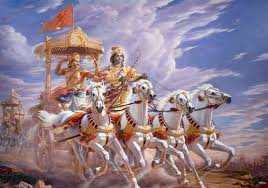
Sri Krishna and Arjuna

Imagine Lord Krishna is running a restaurant called Panchajanya in the city of Dwaraka. What he would sell?

He has given the menu in the Bhagavad Gita in several places. He advocates vegetarianism. So you would only get vegetarian dishes. He would never sell you old food which was made overnight or unsold from the previous day.

Let us look at Chapter 17 of Gita for more details on the menu; if you still don’t understand his policy don’t forget to read the two interesting stories at the end!


The Menu

Only Sattwic food available:

“The foods which increase life, purity, strength, health, joy and cheerfulness (good appetite) which are savoury and oleaginous (oily), substantial and agreeable are dear to sattwic people”

Bhagavad Gita Chapter 17-8

Not available: Rajasic food:

“The foods that are bitter, sour, saline, excessively hot, dry, pungent and burning are liked by the Rajasic and are productive of pain, grief and disease”.

Chapter 17-9

Banned Food: Tamasic

“That which is stale, tasteless, putrid, rotten and impure refuse is the food

liked by the Tamasic.”

Chapter 17-10

MOTTO of our restaurant :”Eat to live; don’t live to eat!”

HOLIDAYS: Ekadasi (twice a month) and Shivratri -Complete closure; half-day closure on full moon and new moon days; days of eclipse and Navaratri.


Rules for Customers

Customers, please note the following rules are strictly followed in the restaurant:

1.Salt ban: On fasting days food will be made without salt. Food with salt is considered meat according to the scriptures.

2. “Verily yoga is not possible for him who eats too much……..” Chapter 6-16

So we will serve only set meals. Unlimited meals or Buffets are not available here

3. “The righteous, who eat of the remnants of the sacrifice, are freed from all sins; but those sinful ones who cook food (only) for their own sake, verily eat sin”- Chapter 3-13

Please note whatever we serve in this restaurant is Prasad from the nearby temple.

4. We provide you four types of food  Chapter 15-14   Gathyam-food that has to be eaten by chewing, Soshyam-Drinks that which has to be sucked, Lehyam – food that which has to be licked and last but not the least Peyam –that which has to be drunk.

This is what Lord Sri Krishna said to Arjuna in the Gita.


Salt ban in New York

In March 2011 The New York Assembly proposed to ban salt in the restaurants. Those who violate the ban would be fined one thousand dollars. This news sent shock waves across the Western restaurants around the world. New York Mayor Bloomberg is opposed to display of salt bottles on the tables of the restaurants .The research showed that salt was the cause for blood pressure, heart disease and stroke. They believe that 100,000 lives a year could be saved by cutting the salt intake. Lord Krishna said it thousands of years ( Gita 17-9) before the western scientists. Salt was banned in religious food and on fasting days. Salty dishes were considered Rajasic.

The problem with the modern diet is not one of deficiency, but one of excess. We eat too much and become obese. Obesity leads to diabetes, heart problems, hypertension and other complications. A lot of us live to eat, but it should be other way round. We must practise to eat to live. When the stomach says ‘enough’ and the tongue says ‘more’ we must follow what the stomach says. This is what Lord Krishna said about too much food (Gita 6-16).

Sri Sathya Sai Baba rightly said, “As the food, so is the head. As the head so is the mind. As is the mind, so is the conduct. As is the conduct so is God’s grace”.


Story #1

Food influences our thoughts. Good food gives us good thoughts. Sri Ramakrishna Paramahamsa said a story to illustrate this point. A saint approached him one day and told him that he gets violent thoughts for some unknown reason. Ramakrsishna asked him what he read, what he saw and who he met the previous day. None of the answers to these questions solved the puzzle. Then he asked him where and what he ate – he found out the food he ate was the cause for the violent feelings. If we eat food cooked by bad people our very thoughts will be polluted.

Story #2

Osho tells us a beautiful story about Sri Ramakrishna. He had a great passion for food. His attachment for food was so much it bewildered every one of his followers. When people asked about this he did not give a clear answer. Now and then he popped in to kitchen to see what his wife was cooking- that too half way through his satsang. Now she also became very curious and insisted for an answer. Then he told her the truth. All his Praraptha karma was already over and once he discards this passion for food (attachment with the world) he would have to leave the mortal frame.

He did not stop there. He told her that he would stop eating three days before his death. He would refuse the food even if it was forced upon him. In course of time even his wife forgot what Sri Ramakrishna told her. That big day came. He refused to take food for three days. He turned his face away from the food for those three days. His wife suddenly remembered what he told her about food. Now she realised a great soul never lived for eating. They ate only for the survival- survive to redeem the world. That is what Sri Ramkrishna did. He created a Vivekananda out of an atheist Narendra to enlighten the Western world with reverberating English speeches about the glories of Hinduism.

Let us eat to live and not live to eat.