‘An inch of Gold will not buy an inch of Time’ (65 Sayings on TIME) – Post No 2524

IMG_2205

Compiled by london swaminathan

Post No. 2524

Date: 9th February 2016

Time uploaded in London 13-37

( Thanks for the Pictures  ) 


DON’T REBLOG IT AT LEAST FOR A WEEK!  DON’T USE THE PICTURES; THEY ARE COPYRIGHTED BY SOMEONE.


(for old articles go to tamilandvedas.com OR swamiindology.blogspot.com; contact 
 

swami_48@yahoo.com)


IMG_2332

Time cures all things.

Time is a great healer.

Nature, time and patience are the three great physicians.

Time tames the strongest grief.

Time works wonders.

Time is money.

Patience, time and money accommodate all things.

An inch of gold will not buy an inch of time (Chinese Proverb)

He that has time has life.

Gain time, gain life. (10)
IMG_1565

The crutch of time does more than the club of Hercules.

With time and art, the leaf of the mulberry-tree becomes satin.

Time and straw make medlars ripe.

Time devours all things.

Time is a file that wears and makes no noise.

Time undermines us.

Time is the rider that breaks the youth.

Time tries all things.

Time will tell.

Time tries truth. (20)
 

IMG_2716

Time is the father of truth.

Truth is time’s daughter.

Time flies (tempus fugit in Latin)

Time flees away without delay.

Time has wings.

Time is, time was and time is past.

For the busy man time passes quickly (Chinese Proverb)

Time and tide wait for no man.

The sun has stood still, but time never did.

Time stays not the fool’s leisure. (30)


IMG_2833

What greater crime than loss of time?

Time spent in vice or folly is doubly lost.

Lose an hour in the morning and you will be all day burning for it.

If you lose your time, you cannot get money or gain.

Time lost cannot be recalled.

Take time when time comes, lest time steal away.

There is a time and place for everything.

Everything is good in its season.

Other times, other manners

Now is now, and then was then. (40)
 

IMG_3061

It is too late to call back yesterday.

Things past cannot be recalled.

There are no birds in last year’s nests.

Things present are judged by things past.

Today is the scholar of yesterday.

The golden age was not the present age.

The time to come is no more ours than the time past

None knows what will happen to him before sunset.

This morning knows not this evening’s happenings (Chinese Proverb)

He that would know what shall be, must consider what has been. (50)
 

IMG_3128

History repeats itself

What has been, may be.

Coming events cast their shadows before (Thomas Campbell (1777-1844)

From Tirukkural:-

481.The crow defeats the owl during day-time. The leader seeks the right time to quell the enemy.

  1. Acting at appropriate season is a cord that will immutably bind wealth to a leader.

483.What is difficult for him to achieve who adopts proper means and tact and acts in right time?

484.One can even the world if he chooses the proper place and acts in the right hour.

485.Heroes who want to conquer the world wait patiently for the proper time, gathering strength.

486.The restrain of a strong man is like the step back of a fighting ram before charging.

487.The wise do not straightaway fly into a passion, but smoulder inwardly biding their time. (60)


IMG_9011

488.Bow to your foe when you see him; for when the time of his end is seen, his fall would headlong.

489.When a rare opportunity offers itself, accomplish forthwith the design that is difficult.

490.In adverse time feign peace and wait like a heron. Strike like its peck when the time is opportune.

(all the above numbered are from Tamil book Tirukkural)

I am Time (kalosmi) – (Bhagavd Gita 11-32)

The Master of the Past, Future and Present (Bhuta Bhavya Bhavat Prabhuh) – Vishnu Sahasranama (65)
IMG_9165

–subham–
 

AKASHIC RECORDS

 STORY OF ATLANTIS

Written  by S NAGARAJAN

Post No.2259

Date: 20 October 2015

Time uploaded in London: 8-50 AM

Thanks for the pictures.

Don’t use pictures. Don’t reblog for at least a week.


SANTHANAM NAGARAJAN


It is very interesting to note from Hindu Puranas that all of our thoughts are recorded by one Chitra Gupta. The very word Guptam means hidden. It is hidden, where?

All the thoughts are having various forms and they are recorded in the Akasha. Through deep meditation and intuition one could draw whatever is recorded in the sky.

Since we believe in a cyclical order, everything repeats. Hence one could draw what has happened in the past, what is happening now in the present and what will happen in the future. In Ananda Ramanayana one of the arguments of Sita to Rama to go to the forest is this: “Oh Rama! Have you ever heard that Rama went to forest without Sita?”

Hence the cyclical order will continue forever.

The Theosophists started analyzing these Akashic records.

In his introduction to W.Scott Elliotte’s ‘The Story of Atlantis’, the  very first books drawn from Akashic Records , A.P.Sinnett explains  that the pictures of memory are imprinted on some non-physical medium,  they are photographed by Nature on some imperishable page of super-physical matter.

ATLANTIS 2

They are accessible, but the interior spiritual capacities of ordinary humanity are as yet too imperfectly developed to establish touch. “But in a flickering fashion”, he continues, we have experience in ordinary life of others that are a little more effectual. Thought-transference is a humble example.

In that case, “impressions on the mind” of one person, Nature’s memory pictures with which he is in normal relationship, are caught up by someone else who is just able, however unconscious of the method he uses, to range Nature’s memory under favourable conditions a little beyond  the area with which he himself is in normal relationship. Such a person has begun, however slightly, to exercise the faculty of astral clairvaoyance.”

Scott Elliotte was an investment banker. He came into contact with C.W.Leadbeater.

Leadbeater told him that he received knowledge about ancient Atlantis and Lemuria from the Theosophical Masters by ‘astral clairvaoyance’.

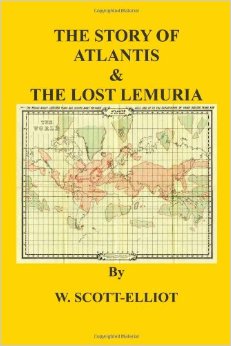
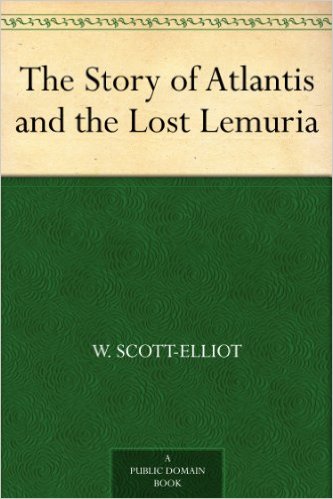
He transmitted his clairvoyant findings to Scott-Eliiotte who undertook scholarly research to back him up. Elliotte wrote two books titled, ‘The story of Atlantis’ and then ‘The lost Lemuria’. Later he combined these two book into a single book as the Story of Atlantis and The Lost Lemuria.

Perhaps the most extensive source of information regarding the Akashic Records comes from the clairvoyant of work of Edgar Cayce. (1877-1945) He possessed the uncanny ability to lie down on a couch, close his eyes, fold his hands over his stomach, and put himself into some kind of an altered state in which virtually any type of information was available!

Every single information of Cayce was verified and found to be true!  One dozen biographies were written on him. Hundreds of articles are written which explore various aspects of his information and thousands of topics he discussed.

He told about his source of information as 1) his subconscious mind and 2) the Akashic Records.

He has touched about ten thousand topics.

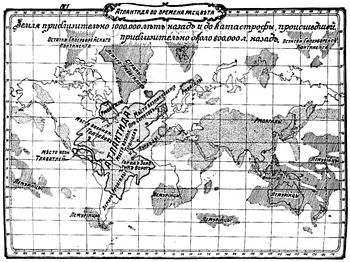
Map_of_Atlantis

Nostradamus, Quatzlcoatl, Rudolph Steiner, Mary Baker Eddy and Emmanuel Swedenbord are some of the personalities who have accessed Akashic records.

Hindu Rishis are experts in getting the Akashic records.

One could practice meditation and start reading the records hidden in the sky.

^^^^^^^^

Hindu Vastu God in Rome and Greece!

vestatemple_nero

Research article by London swaminathan

Article No.1917; Dated 7 June 2015.

Uploaded at London time: 17-49

Vastu god was worshipped as Vesta in Rome and Hestia in Greece. Since they lost touch with India for thousands of years after they left the Indian landmass on their migratory routes they developed the stories in their own way. We see such trends in our Puranas and Sthala (local) Puranas of every town in Tamil Nadu. Same Siva or Vishnu will have a different story in each town with interesting turns and twists. This happened with the Vedic God Vaastospati who is invoked in one short hymn in the oldest religious book in the world, the Rig Veda (7-54-1/3). Vaastospati means Lord of the House. He is invoked to bless man and beast, to remove diseases, to make cattle and horses prosper, to afford protection and to grant a favourable entry.

He is elsewhere described as the destroyer of diseases, is identified with Soma, brought into close connection with Tvastr, an artificer, and he is likened to Indra in connection with Soma pressers.

Origin of Grhapravesa (Entering New House) Ceremony

In the Tenth book of Rig Veda (10-61-7) he appears as an observer of ordinances, who was fashioned by the gods. His character is made clearer by the fact that the Grhyasutras prescribed that offerings are to be made to him upon entering new house. In later literature (TS 3-4-10-3) Rudra bears the style in one passage. The god is clearly the god of the house, who when a new house is built, comes and abides in it. Later in the Sutras, we hear more generally of deities in the house.

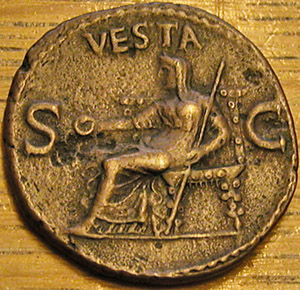
vesta_coin4

Goddess in Rome Vesta

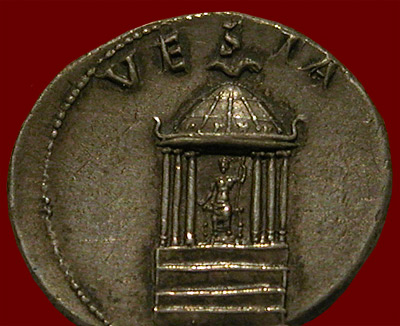
Vesta was the Goddess of Rome. Vesta sounds like Vastu. She was the goddess of the hearth/fireplace, regarded as the centre of the home, so that in effect she had an altar in every house besides the great sanctuary in the Forum attended by the Vestal Virgins. In contrast to other temples, it was circular in shape. It was served only by virgins who had been selected in their childhood from among the most perfect girls of the city. They were placed under the authority of the great pontiff and received many honours. If they failed to remain chaste, they were whipped or walled up alive at the Collins Gate in Rome.

vesta 3

Now here is the comparison with Vedic deities:

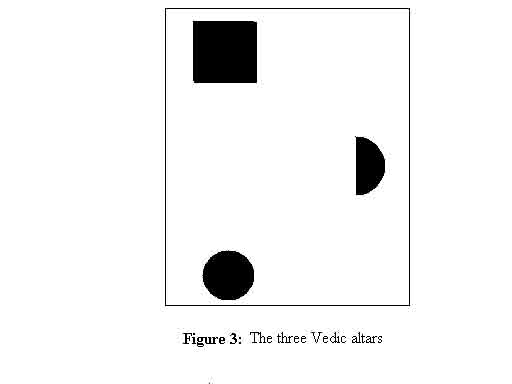
Vasstospati is a male deity but Vesa is a female deity. But the fire place is part of every Brahmin’s house in ancient India. Every Brahmin had three different fire places in his house and one of them is circular like Vesta’s. Another point is the girls were given to temples in India also who remained chaste till their death. But they were not punished for violating the rules of celibacy. Romans thought Vesta was the guardian of the city. In India every city has a guardian goddess like Vesta of Rome.

In Rome, the fire was kept lit all year long and its flame was solemnly stirred up during the festival in March – Vestalia. This flame had to be obtained solely by rubbing two pieces of wood together. This is also a Vedic custom. For all the Vedic fire ceremonies they produce fire by rubbing two woods and there is special mantras for it. Moreover from birth to death, the same fire in the Brahmin’s house is used. So it was never allowed to stop burning. In the temples the flame was kept alive in Nunda Vilakku (Eternal Flame), special type of lamps which will burn for years continuously. Only thing is oil has to be filled now and then in the pot like bottom of the lamp.
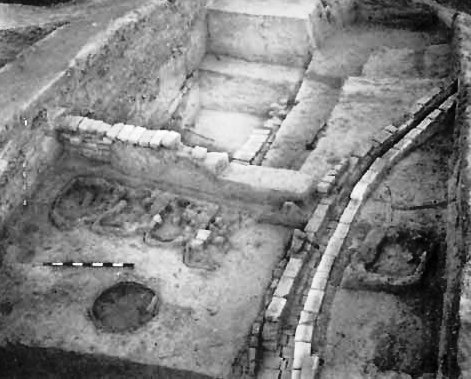
kalibanganfirealtars.

Vedic Fire Altars in Indus valley Site in Kalibangan

Her name derives – like the name of Hestia — from a Sanskrit root, vas, which expresses the idea of shining. The Romans made Vesta a goddess who personified earth and fire – the fire required for domestic use or in religious ceremonies. As goddess of fire she received both a private and public cult. Hindu’s Fire god is also treated the same way in the Vedas. Vesta received daily offerings from each family, at the hearth/fire place. In Brahmin families everyday offerings were given to fire god. It was called Aupasanam or Agni Hotram. On 9th of June every year was the Vestalia when barefoot Roman matrons offered food baked on their hearths. In Indian temples women give offerings on barefoot on certain days in a year.

As with the Balts and Slavs, a woman had to bring fire from her mother’s house when she married. The goddess of fire celestial and earthly naturally suggests Agni, the god of fire, lightning and the sun: all forms of fire. The rounded temple echoed the form of the sun: the hearth as the earthly counterpart of the heavenly fire.

In the Rig Veda, every male head of a family was obliged to perform, every day, Purvas. For this purpose he had to set up in his house three kinds of fire, protecting his house and the fires by placing  altars of special design. The fires were known as Dakshinagniyam (Semi Circular altar), Garhapatyam (Circular altar) and Ahavaneeyam (Square altar). The altars, intended to shield the fires, had to be built to design plans which related them to each other in the shape and area. To calculate the correct dimensions, sound knowledge of geometry was required. This is quite a complex calculation, requiring an accurate value of pi and a knowledge of the formula for the areas of a circle and rectangle. In such ways as this, the religious concerns of Hindu heads of families had the effect of raising the arithmetical standards of everyone involved. Advanced Geometry originated in India during the Vedic period.

temple3

Source

The Sun Goddess, Myth, Legend and History by Sheena Mc Grath

New Larousse Encyclopaedia of Mythology

The Rig Veda, Translation by Griifith

Five Beautiful Stories on Hindu Concept of Time

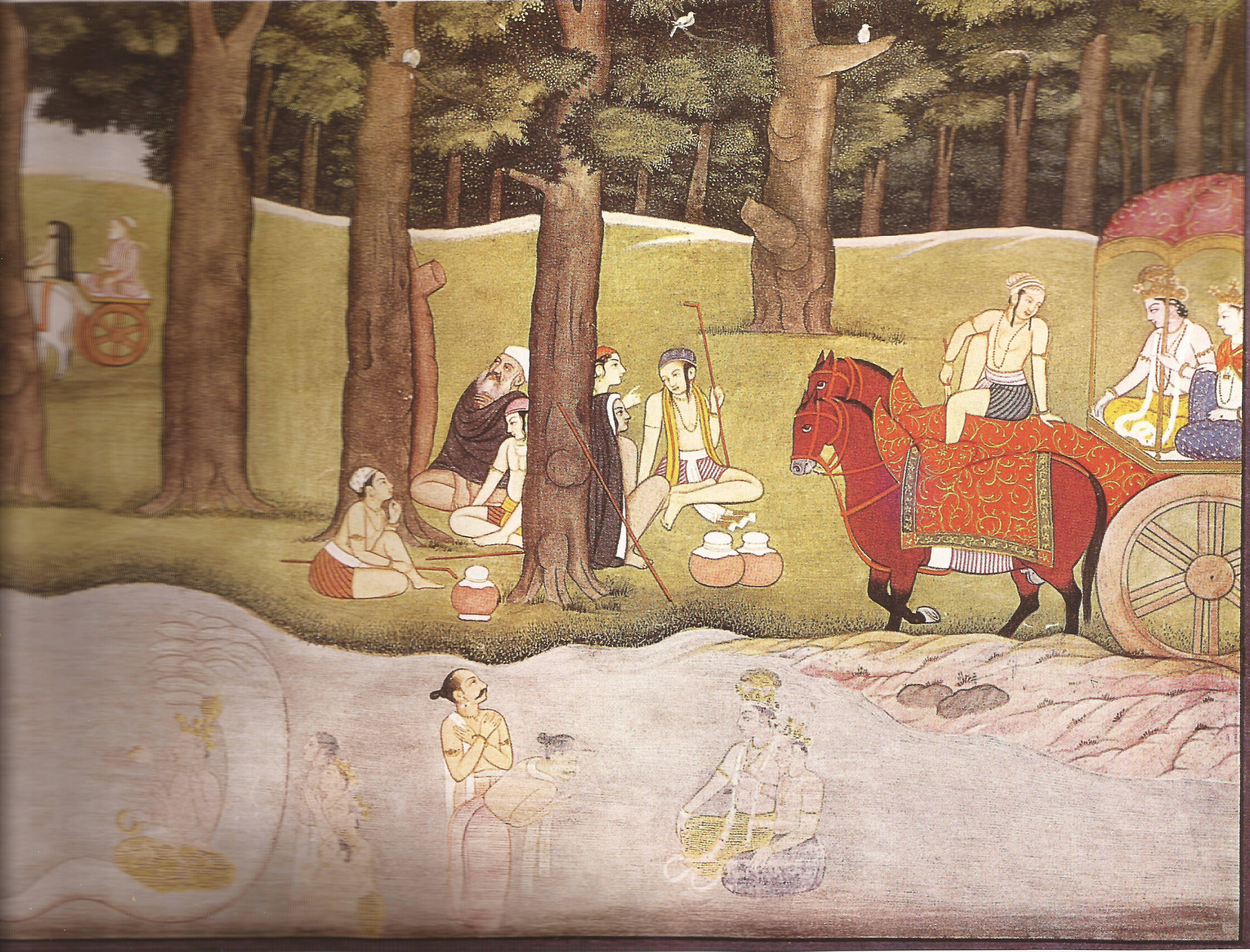
akrura vision

Akrura’s Vision under Water, Bharat Kalabhavan, Varanasi

Compiled by London swaminathan

Article No.1869; Dated 16 May 2015.

Uploaded in London at 20-14

Time is cyclical according to Hindu scriptures and linear according to Westerners. Hindus repeat it in several stories to emphasize that time is cyclical. No ancient culture in the world has bothered about time whereas Hindus have been naming their Gods after TIME.

Lord Shiva is called Mahakala=Great Time or Great Death; also Kalabhaksha= Devourer of Time. Rudram (Yajur Veda) describes him as Kalagni Rudraya= the fire that destroys the end of time. Vishnu is called Bhuta,Bhavya, Bhavat Prabhu= Lord of the Past, the Future and the Past. Vedas say God is beyond Time (kalatrayadita:)

When the world did not know to write the numbers, Hindus taught them to write with 1,2,3….0 without which modern computers would not have been on our tables today. When the western scientists complete the study of Black holes, they will understand the Hindu Concept of (cyclical) Time.

Here are five stories to illustrate the cyclical nature of Time:

க்ரிஷ்ன ஈட்டி

Story 1

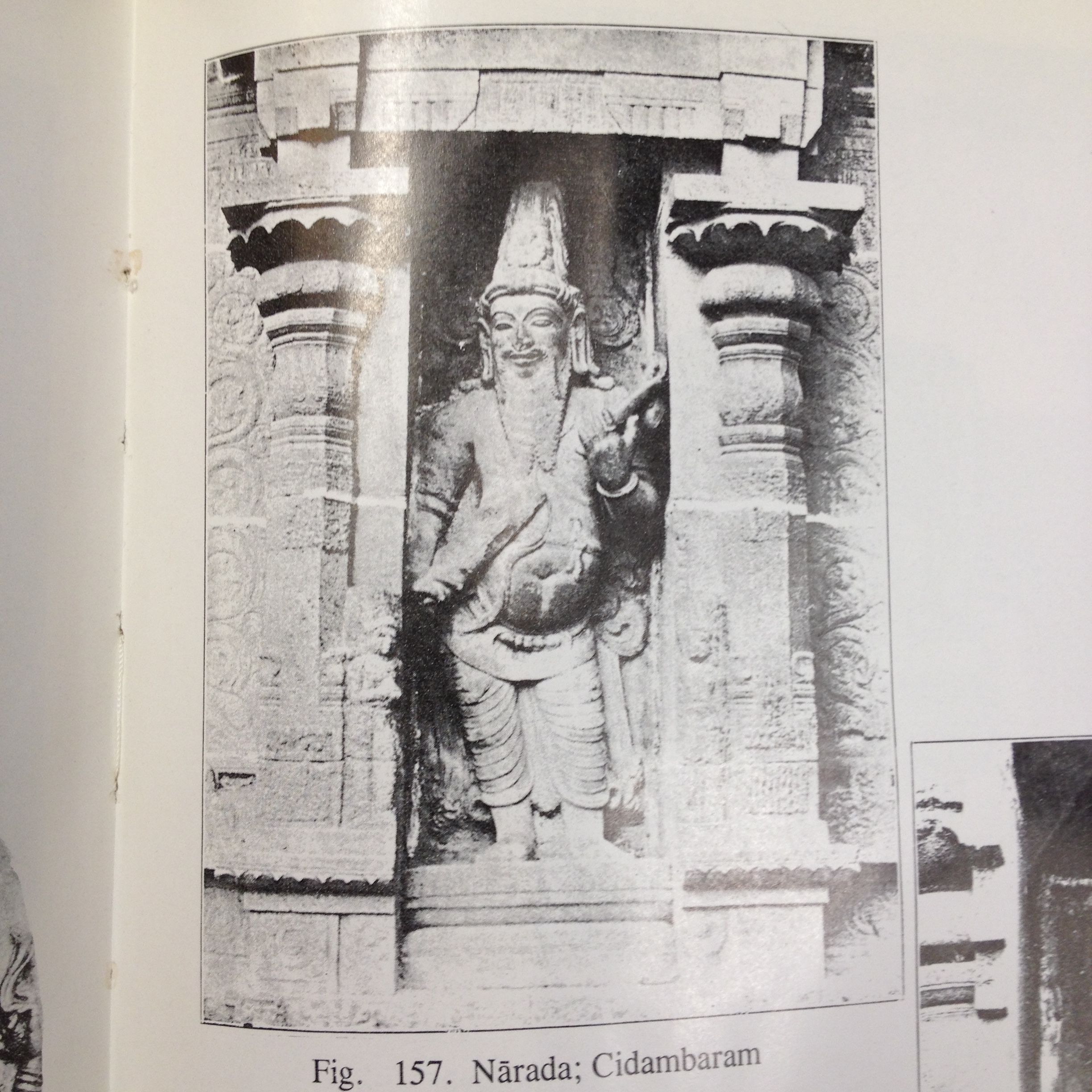
In an episode in the Vishnu Purana, one reads of Vishnu accompanied by the divine sage Narada, stopping at one point in the course of their wanderings, and asking Narada to fetch him some water from a nearby village. While he waits at the edge of the forest, Narada goes to the village , knocks at the door, falls in love with the young woman who answers, marries her, founds a family, and lives happily with his wife and children for years until a flood comes and inundates the village sweeping everything before it. Narada too is washed away by the current and is thrown perchance at exactly the point where he had parted company with Vishnu. As he lands there, he is greeted by Vishnu who asks him for the water that he had gone to fetch.

The pace at which TIME has moved for Vishnu and Narada is very different.

Story 2

In Balagopalastuti of Lilashuka there is a famous verse in which Yashoda, Krishna’s foster mother, recites the story of Ramayana to young Krishna while she puts him to bed. The narrative reaches the point where the demon Maricha, assuming the guise of a golden deer, lures Rama away from his forest-hut in the hermitage, leaving Sita exposed to danger. As Yasoda speaks of the evil of Ravana’s arrival on the scene to abduct Sita, suddenly young Krishna, half asleep, jerks into action and shouts aloud: “Lakshmana! Where, Oh where, is my bow?” It is as if the memory of an earlier incarnation of himself as Rama, the seventh, overtakes Krishna in his present life, as the eighth incarnation of Vishnu.

Suddenly Time moves in a loop.

 IMG_3526

Narada from Chidambaram Temple

Story 3

Another story in the Brahmavaivarta Purana speaks of humbling of Indra’s pride. As the king of the gods sits majestically in his, self-satisfied and aware of his own importance, into this assembly moves a phalanx of ants that takes everyone by surprise. Only one man in the assembly, seeing his strange vision, laughs aloud. When asked by Indra what causes him this laughter, he says that each of these ants was an Indra in a previous birth.

Countless cycles of Time are hinted at.

ants

Story 4

When Narada visits Krishna’s kingdom at Dwaraka, as narrated in the Bhagavata Purana, he enters the inner apartments. As he approaches the senior most queen of Krishna, he finds her attending upon Krishna with chowri (fly-whisk) in her hand. Greeting the divine pair, Narada withdraws and moves into the next chamber to pay his respects to the wife of Krishna next in seniority and, as he enters, sees her playing a game off dice with Krishna. In another palace he sees one of Krishna’s queens massaging the soles of Krishna’s feet while he lies on a bed. Amazed Narada moves further on, and finds, in each chamber a queen in Krishna’s company, serving him food, helping him with oblations, and so on.  In chamber after chamber Narada encounters Krishna, and is greeted by him each time as if he had seen the sage just then.

Simultaneous presences of the same person at different places are being spoken of

krishnarjuna fb

Story 5

In the Bhagavata Purana, again, Akrura, the great devotee of Krishna, is described as being entrusted with the responsibility of escorting Krishna and Balarama to Mathura. On the way, Akrura feels the need to refresh himself by taking a bath in the Yamuna along the banks of which they are moving. With the permission of the two brothers, Akrura halts his chariot, enters the water, and dips his head only to see, below the surface of the water, Krishna and Balarama seated in the chariot exactly as he had left them on the river bank. Greatly confused, he lifts his head out of the water, and sees them again on the bank, in the very same chariot. Disbelieving, he takes another dip: this time, under the water, he sees Krishna as Vishnu lying on the serpent couch of Sesha, Krishna and Balarama having assumed their true forms. Akrura suddenly sees, in this vision, the identity of Krishna and Vishnu, Balarama and Sesha. But when he lifts his head, he sees on the river bank Krishna and Balarama again as youthful boys engaged in conversation.

vishnu pink

With a sense of wonder, the elusiveness of time and appearances is put across.

Tales like this, presenting the many aspects and hues of time, can be multiplied. What emerges from these is time moving in a cyclic fashion, making bends and loops, turning back upon itself, rising spiral like, splitting itself, assuming different tempi for different people – mercurial, illusive, elusive.

The above five stories are reproduced from Picture Showmen, Edited by Jyotindra Jain, Marg Publication.

I have already written about Arjuna’s travel to alien worlds and the Theory of Time dilation. I have already written about the Time Travel by two Tamil Saints.

Please read my articles:

TIME TRAVEL by TWO TAMIL SAINTS, posted on 14-2-2012

Do Hindus believe in ETs and Alien Worlds?, posted on 28-1-2012

Is Brahmastra a Nuclear Weapon?, posted on 5 June 2011

Hindus Future Predictions Part 1 (posted 20 May 2012)

Hindus Future Predictions Part 2 (Posted on 20 May 2012)

Earth Quake in Rig Veda

Written by London swaminathan

Research Article No.1867; Dated 15 May 2015.

Uploaded in London at 21-20

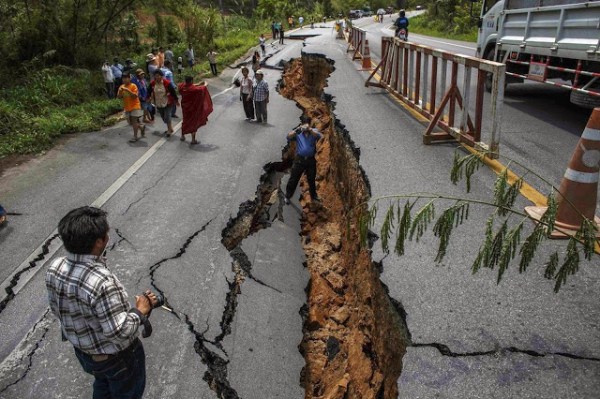
Three years ago on 22nd January 2012, I posted an article “Ravana trapped and Sita Devi died in Earth Quake” in my blogs. I interpreted both Ravana shaking the Himalayas (Kailash) and Sita Devi entering the earth when Bhuma Devi opened to receive her, were actually earth quakes. I also cited the references to earth quakes from Sangam Tamil literature and post Sangam Tamil literature.

The earliest reference to an earth quake is in the Rig Veda (2-12-2). Throughout our Puranas and classical Sanskrit literature we read about flying mountains and Indra clipping their wings. The origin of this story is in the Rig Veda where Grtsamada sings in a hymn on Indra:

“He who fixed fast and firm the earth that staggered, and set at rest the agitated mountains.

Who measured out the air’s wide middle region and gave the heaven support, He, men, is Indra”

Later Valmiki in his Ramayana (1-23-27) and Kalidasa in his Kumarasambhava (1-20) allude to this incident. All these are nothing but the natural phenomena that our ancients observed several thousand years ago. These natural catastrophes are mythicized in later Sanskrit literature.

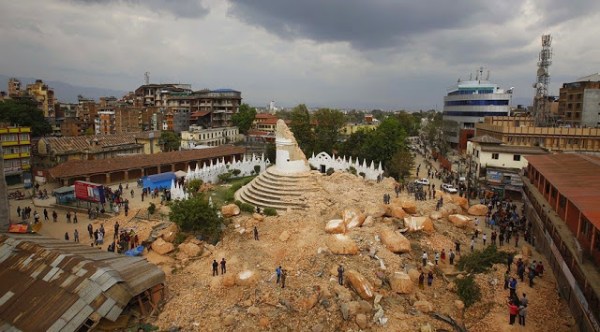
Earth quake in Nepal

Varahamihira’s Starnge and Funny accounts

Anyone who reads the Brhat Samhita of Varahamihira would be amazed to see the topics he has covered 1500 years ago. He covered lot of subjects including perfume making, rain bows, meteors, comets, sun dogs, and sun and moon halos. He did not stop there and there are 100 more topics. He was humble enough to tell us he had given only the summary of what was written in volumes by twenty of his predecessors!

Though the ancient’s accounts of meteors and earth quakes are strange and funny we must appreciate their scientific quest. I don’t think any other culture has a book with so many topics devoting once chapter each. Now I will summarise what Varahamihira says in his chapter on Earth Quakes:

1.Some sages hold that an earth quake (abbreviated as EQ  here afterwards) is brought about by the huge animals in the oceans, while others like Garga opine that is caused by the elephants of eight quarters. When they become tired by the weight of the earth they cause this.

(This has some scientific truth in it. The Ashta Dig Gajas/ Eight elephants of Eight directions may be compared to tectonic plates. Alternately the weight factor may be taken into account. Several theories are there about local reservoirs causing a chain of events including tremors.)

2.Yet other sages like Vasistha declare that it is caused by the atmospheric wind colliding with another and falling to the earth with a booming (This is what one watches after a big EQ). There are still others like Vrdha Garga who maintain that it is occasioned by some unseen power (This may be interpreted as the tectonic plate movements).

3.There are some more sages like Parasara who declare as follows: In bygone days, the earth being shaken by severely by the winged mountains which flew up and came down heavily, spoke to the Creator (Brahma), in the Assembly of the Gods: “My Lord, You have given me the name Acala (Immovable), which is falsified by the flying mountains and I am unable to put up with this suffering. Hearing these words, Mother Earth shed tears. Immediately the Creator said, “Indra, remove this humiliation of Mother Earth; chop off the wings of the mountains with your thunderbolt”. At this Indra said, ‘so be it’.

Earth quake in San Francisco

4.Another couplet/sloka says that EQs are caused by the eclipses and deities in charge of the divisions of the day.

5.Scores of couplets give astrological reasons for the EQ. They have divided the 27 stars into groups for this.

6.According to Garga, persons in whose natal asterisms EQs occur must do propitiatory rituals to the deities to avoid troubles.

7.The reference to repeated earth quakes show that they have observed them for long.

Though the sages’ accounts are not scientific, still we can appreciate their thirst for knowledge and their long observation.

On the chapter on Meteors also there are many funny explanations. We can only appreciate that Varahamihira compiled all the facts and summarised them for future generations.

Vedic Seers knew earlier What Europeans “Discovered” later!

Compiled by London swaminathan

Article No.1839 Date:30 April 2015

Uploaded at London time: 21-36

If you go to any encyclopaedia they will mislead you by saying ‘this person discovered the earth was spherical’, ‘that person discovered earth is revolving sun’ etc. Those “frogs in the well” don’t know that all these are in the Vedas at least by 1700 BCE or even before that according to Hindu tradition.

There are lots of books about Vedic astronomy. German scholar Jacobi and Freedom Fighter Bala Ganagadara Tilak worked out the date of Rig Veda and arrived at the date 4500 BCE or before. They did this research independently without knowing each other. Until this day nobody disputed them on the basis of astronomy.

1.Astronomy was recognised as separate science in Vedic Age and it was called ‘Nakshatra Vidya’ (the science of stars). It is very interesting to note that Vedic Hindus were more interested in stars rather than planets. An astronomer was called ‘Nakshatra – Darsa (star observer) or ganaka (calculator). Tamils also used the Vedic word Gani(ka).

2.According to the Rig Veda (1 -115-1, 2-40-4 etc. the universe comprises ‘prithivi’/earth, ‘antariksa’/sky, literally meaning the region below the stars and div or ‘dyaus’/heaven.

3.Vedic Hindus knew very well that the earth was spherical RV 1-33-8 and was suspended in the mid air (4-55-3). The Satapatha Brahmana describes it ‘parimandala’ – globe or sphere.

4.There is evidence in the Rig Veda of the knowledge of rotation and annual revolution of the earth. It was known that these motions are caused by the sun. According to RV 6-58-1, the sun alone is the maker of the day and night, twilight, month, and year, and also the cause of the seasons (1-95-3).

The Aitareya Brahmana states that the sun never sets or rises , the setting or the rising of the sun are but changes of its course.

Mac donell and Keith refer to the view of Ludwig that the RV mentions the inclinations of the ecliptic with the equator ( 1-10-2) and the axis of the earth (10-86-4).

5.The course of the sun is divided into two halves, ‘uttarayana’ when the sun apparently goes northwards and the ‘dakshinaya’ when it goes southwards.

B G Tilak says that according to the Satapatha Brahmana (SB 2-1-3-1) the uttarayana begins from the vernal equinox. But it is clear from (KB 19-3) that those periods used to begin respectively from the winter and summer solstices.

The ecliptic is divided into twelve parts- the signs of the Zodiac which corresponds to the twelve months of the year.

THE MOON

6.The RV says that the moon shines by the borrowed light of the sun (9-71-9). The phases of the moon and their relation to the sun were fully understood.

The Rig Veda mentions 34 ribs of the horse (RV 1-161-18) and 34 lights. Ludwig and Zimmer think that these refer to the sun , the moon ,five planets and 27 Nakshatras. But Macdonell and Keith don’t support this view.

((Vedic horse has 34 ribs and European horses have 36 ribs is another interesting fact. This shows that the Vedic Hindus and their horses were of Indian origin; not imported from outside))

7.Taittiriyasamhita (TS 2-3-5-1) and Kathaka Samhita (KS 9-3) state that the moon is wedded to the nakshatras. Later when ‘Star Abhijit’ became the pole star it was counted as the 28th star. In the course of time ‘abhijit’ ceased to the polestar and the number again came to 27.

This fact throws another bomb shell on the Aryan Dravidian racist theory. In European cultures moon is a woman and they do not know about 27 stars. In Vedic culture moon is a male and 27 stars are his wives from Vedic days and Sangam Tamil literature also follows it. This is also another proof that there has been only one culture in India from time immemorial throughout the land which was the world’s largest country 2000 years ago.

ECLIPSES

8.Observations of several solar eclipses are mentioned in both the Rig Veda and the Atharva Veda (RV 5-40-9,  aAV 13-2-4, 13-12-36;SB 4-4-21

In the AV (19-9-10) the eclipse of the sun is  stated to be caused by ‘rahu’, the demon. At the time of the RV the cause of the solar eclipse was understood as the occultation of the sun by the moon.  Lunar eclipses are also mentioned.

SEASONS

9.In the Vedic Samhitas the seasons in a year are generally stated to be five- Vasanta (spring), Grisma (summer), Varsa (rains)Sarat (autumn) and Hemanta-Sisira (Winter). Then it was counted as six seasons. Tamils also followed the same six seasons. I have elsewhere written that threw a big bombshell on the Aryan Dravidian Racist theory. In western countries the seasons are four, but Tamils and their counterparts in the north followed a Six Season Climatic System from the Vedic days. This exploded the theory that Tamils/Dravidians had a different culture.

Vasanta (March- April) was the first of the seasons as well as the beginning of the year (TB 1-1-2-6; 3-10-4-1). In the Gita Lord Krishna says that among the months he was Margasirsa. Scholars think that at one time Margasirsa was the beginning of the year. This shws the antiquity of Indian Civilization. Since it spanned several thousands of years the system changed according to the star position. We see even the change of polestar.

10.The Taiitiriya Samhita (TS 6-1-5-1) and Aitareya Brahana (AB 1-7) speak of Aditi as the presidin deity of the Punarvasu star receiving the boon that all sacrifices begin with her and end with her. This clearly refers to the position of the vernal eqinox in the asterism Punarvasu. There is also evidence to show that the vernal equinox was once in the asterism Mrgasirsa from whence in course of time, it receded to Krittika (Pleiades). Thus knowledge of the precession of equinox existed in the Samhitas and Brahmanas.

11.Some scholars maintain that the Vedic seers also knew of the equation of time.

SOLAR MOTION

12.The sun’s annual and daily motions are described in Vedic hymns (RV 1-35-2). The RV (1-22-16) states: “Gods be gracious to us even from the place whence Vishnu strode through the seven regions of the earth.

Though the word ‘saptadhama’ often indicated the seven prosodies, it also means the seven regions representing the sky. It also denotes the seven places or paths of the sun in the course of its annual motion.

VAMANA AVATAR

13.In the Rig Veda (RV 1-22-17), reference is made of Vishnu’s traversing the whole world in three strides. These strides are interpreted as the uttarayana and dakshinayana (two strides) and the daily motions (third stride). The expression encompasses the orbital as well as diurnal course of the sun.

(Personally I support the Vamana Avatara story said in this hymn. The other explanation is not convincing)

About the stars (nakshatras) there are more than 25 ages in the Vedic Index and the Atharva Veda. I will give the gist of those pages in a separate article.

  1. As I have been mentioning in my previous articles on the Vedas, all these details, put together, show that the Vedic civilization is unique, well advanced and progressive in thinking. Who else would have prayed for the welfare of the human beings, peace and unity in the last hymn of the Rig Veda?

Lokas Samasto Sukino Bhavantu!

காளிதாசன் நாடகத்தில் வியத்தகு விண்வெளி விஞ்ஞானம்!!

IndiaNameplate

கட்டுரை மன்னன் :– லண்டன் சுவாமிநாதன்
ஆராய்ச்சிக் கட்டுரை எண்:-1286; தேதி: 13 செப்டம்பர் 2014

உலகப் புகழ்பெற்ற சம்ஸ்கிருதக் கவிஞனின் உலகப் புகழ்பெற்ற நாடகம் சாகுந்தலம். இயற்கைக் காட்சிகளின் வருணனை ஒரு புறம். மான்களையும் மாதவிப் பூங்கொடிகளையும் மனிதனுக்கு நிகராக நேசிக்கும் சகுந்தலையும் கண்வ மகரிஷியும் மறுபுறம்.

மனிதனின் சிந்தனையை இமயமலை அளவுக்கு உயர்த்தும் காளிதாசனின் உவமை நயம் ஒருபக்கம். அவனது சம்ஸ்கிருத மொழி நடை என்னும் அழகு மறுபக்கம். இப்படித் திரும்பிய இடமெல்லாம் சுவைதரும் காவியத்தில் ஒரு அரிய பெரிய விஞ்ஞான உண்மையையும் புதைத்து வைத்துள்ளான் கவி காளிதாசன்.

சாலைப் போக்குவரத்து

முதல் காட்சியில் சாலைப் போக்குவரத்து பற்றி ஒரு அரிய காட்சி வருகிறது. மன்னன் துஷ்யந்தனின் ரதம் செல்லும் வேகம் பற்றியது அந்தக் காட்சி. அதைப் படிக்கும்போது அந்தக் காலத்தில் ‘’சூப்பர் Fஆஸ்ட்’’ எக்ஸ்பிரஸ் ரயிலுக்கு நிகரான வேகத்தில் செல்லும் வண்டிகள் இருந்ததோ என்று எண்ண வைக்கிறான். எங்கள் பிரிட்டனின் மோட்டர்வேயில் கார்கள் செல்லும் வேகம் மணிக்கு 70 மைல். இங்கு ரயில்கள் 130 மைல் வேகம் வரை செல்ல முடியும். ஆகையால நமக்கு காளிதாசன் வருணிக்கும் காட்சி எதுவும் புதுமை இல்லை. ஆனால் 2000 ஆண்டுகளுக்கு முன் இவ்வளவு வேகமாகச் செல்லும் ரதங்கள் இருந்ததா? அப்படிப்பட்ட வேகத்தில் செல்ல கான்க்ரீட் அல்லது ரப்பர் ரோடு அல்லவா வேண்டும். அப்படிப்பட்ட சிறந்த சாலைகள் இருந்தனவா?

இதோ அவனது ஸ்லோகம்

Yad aaloke suuksmam vrajati sahasaa tad vipulataam
Yad ardhe vicchinnam bhavati krtasamdhaanam iva tat
Prakrtyaa yad vakram tad api samarekham nayanayor
Name duure kimcit ksanam api na parsve rathajavaat
Sakuntalam Act 1—9

(வடமொழியில் ஸ்லோகம் கிடைத்தால் சரியான உச்சரிப்புடன் தமிழில் எழுதி இருப்பேன். கிடைக்காததால் எனது ஆங்கிலக் கட்டுரையில் இருந்ததை அப்படியே தருகிறேன்; பொறுத்தருள்க)

chandrayaan-1

விண்வெளிப் பயணம்
சாகுந்தலம் நாடகத்தின் ஏழாவது காட்சியில் விண்வெளிப் பயணம் பற்றி வரும் காட்சிதான் வியப்பானது. மஹாபாரத வன பர்வத்தில் வரும் அர்ஜுனனின் ஐந்து ஆண்டு விண்வெளிப் பயணம் குறித்து ஏற்கனவே எழுதி விட்டேன். அங்கு இந்திரனின் ரதத்தைச் செலுத்திய அதே டிரைவர் மாதலிதான் இங்கும் துஷ்யந்தனுக்கும் டிரைவர்.

இங்கு ரதம், டிரைவர் என்பதெல்லாம் சங்கேத மொழிச் சொற்கள் இந்திரன் ரதம் என்பது விண்வெளிக் கப்பல், டிரைவர்/சாரதி என்பது விண்வெளி வீரர். இப்போது அமெரிக்கா பயன்படுத்தும் கொலம்பியா, அட்லாண்டிஸ் முதலிய ‘’ஸ்பேஸ் ஷட்டில்’’ வாகனங்களைவிட அதி நவீன ‘’ஸ்பேஸ் ஷட்டில்’’ இந்திரனிடம் இருந்தது என்பது அதன் வருணனையில் இருந்து தெரிகிறது.
மன்னன் வாய் வழியாக காளிதாசன் கூறுகிறான்:

தூசி கிளப்பவில்லை
சத்தம் போடவில்லை
இறங்கிய இடத்தில் தடயம் ஏதும் விடவில்லை.

இப்போது ரஷ்யா, அமெரிக்காவிடம் உள்ள விண்வெளி ஓடங்கள் இதை மூன்றும் செய்தே தரை இறங்க முடியும். ஆனால் துஷ்யந்தன் வந்த விண்வெளி வாகனம் இதை மூன்றும் செய்யாதது துஷ்யந்தனுக்கு பெரும் வியப்பை ஏற்படுத்தியது.

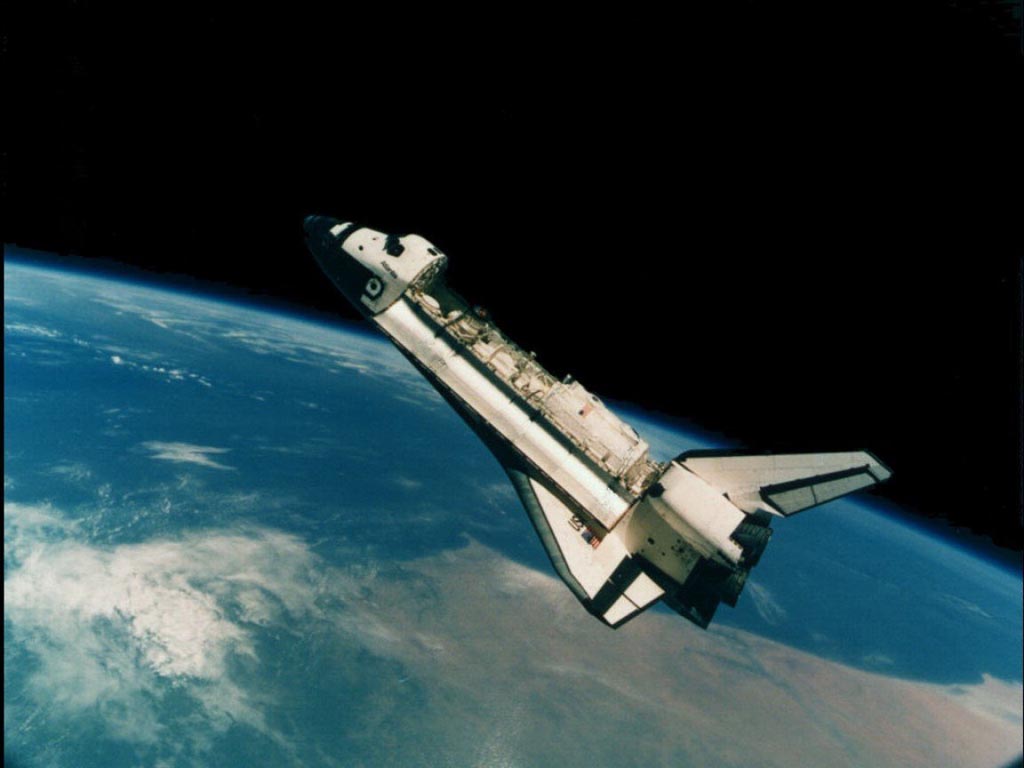
space_shuttle_4

காளிதாசன் சொல்லுவதைப் படிக்கையில் அவனே விண்வெளி வாகனத்தில் பயணம் செய்தானோ என்றே வியக்க வேண்டி இருக்கிறது. விமானி அறையில் (காக்பிட்) உட்கார்ந்திருப்போருக்கு அல்லது ராக்கெட்டில் பயணம் செய்வோருக்கு மட்டும் தெரியும் காட்சியை வருணிக்கும் ஸ்லோகம் இதோ:

Sailanaanaam avarohatiiva sikharaad unmajjataam medinii
Parnaabhyanataraliinataam vijahati skandhodayaat paadapaah
Samtaanais tanubhaavanastasalilaa vyaktim bhajanty aapaghaah
Kenaapy utksipateva pasya bhuvanam matpaarsvam aaniiyate

மாதலி: மன்னர் மன்னவா! இன்னும் ஒரு நொடியில் நாம் பூமியில் இறங்கப் போகிறோம்.

மன்னன்: (ரதத்தில் இருந்து கீழே பார்த்தவாறு): அம்மாடியோவ்! என்ன வேகத்தில் கீழ் நோகிச் செல்லுகிறோம். பூலோகவாசிகளின் தோற்றம் அற்புதமாக இருக்கிறதே!

மலைகளின் முகடுகள் மேல் நோக்கி எழுவது போலவும், பூமி கீழ் நோக்கி விழுவது போலவும் தெரிகிறதே.

இலைகள் போர்த்திய மரங்கள் எல்லாம் இப்போது அடிமரத்தோடு பெரிதாகத் தெரிகின்றன.

மேலேயிருந்து பார்க்கையில் மெல்லிய கோடாகப் பார்வையில் தெரிந்தும் தெரியாமலுமிருந்த நதிகள், பரந்த நீர்ப்பெருக்காகத் தோன்றுகின்றன.

அடடா, பூமியை யாரோ என்மீது எறிந்ததுபோல என்னருகே வருகிறதே (காட்சி 7-8)

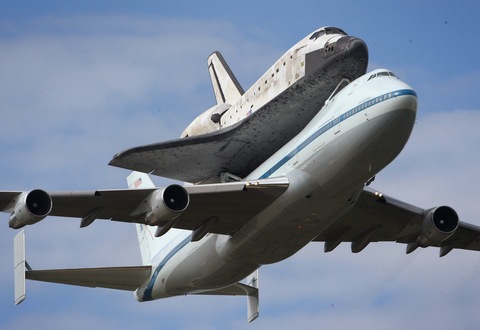
shuttle3

மாதலி: மன்னவா! சரியாகச் சொன்னீர்கள் என்ன அற்புதமான பூமி இது!
இந்த சம்பாஷனைக்குப் பின் இருவரும் ஹேமகூட பர்வத ‘’கிம்புருஷர்கள்’’ பற்றி விவாதிக்கிறார்கள். ‘’கிம் புருஷன்’’ என்றால் “என்ன மனிதன்?” என்று பொருள். வெளி கிரக வாசிகளைப் பார்த்தாலோ, விண்வெளிவீரர் போல பூதாகார உடை (ஸ்பேஸ் ஸூட்) அணிந்து வந்தாலோ அவரைப் பார்த்து நாமும் கிம் புருஷ:? என்று வியப்போம். இப்படிப்பட்டவர்கள் ஹேமகூட பர்வதத்தில் வசிப்பதாக மதாலி கூறுகிறான்.

மன்னன் ( மிகவும் ஆச்சர்யம் கலந்த தொனியில்):
சக்கரங்கள் சத்தம் போடாமல் வழுக்கிச் செல்லுகின்றன!
சூறாவளித் தூசி எதுவும் எழும்பவில்லை!!
பூமியைத் தொடாமலேயே நிற்கிறது!!!
இறங்கிய இடத்தில் ஒரு தடயமுமே இல்லையே!!!!

மாதலி: மன்னர் மன்னா! இதுதான் உங்கள் இகலோக தேருக்கும் இந்திரனுடைய ரதத்துக்கும் உள்ள வித்தியாசம் என்பதை நான் சொல்லவும் வேண்டுமா?

இப்படி இருவரும் அற்புதமாக பேசியதைக் காளிதாசன் 2000 ஆண்டுகளுக்கு முன் எழுதி இருக்கிறான். ஒரு காலத்தில் அமெரிக்காவோ ரஷ்யாவோ இந்திரனுடைய விண்வெளி ரதம் போல ஒரு ஷட்டிலைக் கண்டுபிடித்தால் அதற்கு ‘’இந்திர ரதம்’’ என்று பெயர் சூட்ட வேண்டும் ஏனெனில் இப்போதுள்ள எல்லா விண்வெளி வாகனங்களையும் விட மிக Advanced Technology “அட்வான்ஸ்டு டெக்னாலஜி” — பற்றி காளிதாசன் பேசுகிறான்!!!

shuttle 1

–சுபம்–

Did Kalidasa fly in a Space Shuttle?

IndiaNameplate

Research Paper written by London swaminathan
Post 1284; dated 12th September 2014.

Kalidasa gives us an amazing picture of space travel in his most famous drama Sakuntalam. Before the space travel, he describes road transport in his days.He describes the scenery as witnessed by a passenger from a fast moving vehicle. We are familiar with those pictures because we travel by Super Fast Express trains or air planes nowadays. But in Kalidasa’s days did he have such fast moving chariots? Was the road condition was as good as our modern motor ways. Here in Britain we can drive up to 80 miles per hour on motor ways. The trains can go up to 130 miles per hour. Kalidasa’s description show that he had travelled in such a fast moving vehicle.

“Objects which to my sight appeared minute suddenly become large; what was really divided, seems united; and what was in truth bent, appears straight to my eyes. So swift is the motion of the chariot that nothing even for moment seems either near or distant”.

Yad aaloke suuksmam vrajati sahasaa tad vipulataam
Yad ardhe vicchinnam bhavati krtasamdhaanam iva tat
Prakrtyaa yad vakram tad api samarekham nayanayor
Name duure kimcit ksanam api na parsve rathajavaat
Sakuntalam Act 1—9

One can see big palaces as tiny little toy houses from the top of a high hill. But Kalidasa actually talks about fast moving chariots. Right; Let us accept we had such beautiful roadways in those days and we had faster vehicles.

But his other description is definitely that of an astronaut. Matali is always associated with space travel and I have written about Arjuna’s space travel in Matali’s chariot in Mahabharata in my post “Stars are Gods! We are stars” (posted on 18th August 2014).

chandrayaan-1

Space Travel
Kalidasa also says that it is about space travel. Here are a few bits from Act 7 of Sakuntalam:

MATALI: in an instant, Your Honour will be landing on Earth that you rule over.
KING ( Looking down again): Matali, see with what rapidity we are descending; the world of mortals presents a most marvellous sight. Look.

The earth appears to descend from the summits of mountains that emerge upwards;
The trees no longer appear to be enveloped in their foliage, as their trunks heave in sight;
The rivers whose waters were lost to view from their narrowness become visible from the expansion of their waters.

Behold, the earth is brought near me as if someone throwing it upwards.
(See how the Earth looms at my side sa if some mighty hand flung her up to me) — Sakuntalam Act 7—8

Sailanaanaam avarohatiiva sikharaad unmajjataam medinii
Parnaabhyanataraliinataam vijahati skandhodayaat paadapaah
Samtaanais tanubhaavanastasalilaa vyaktim bhajanty aapaghaah
Kenaapy utksipateva pasya bhuvanam matpaarsvam aaniiyate
space_shuttle_4

MATALI: An acute observation, Sir. Oh, what enchanting beauty is this, of the Earth.
Then Matali and the king discuss about Hemakuta, the home of Kimpurusas.
The term KIM PURUSA fits very well with a space traveller. It means “WHAT MAN?” When you look at an Extra Terrestrial or anyone dressed in a space suit we wonder “What Type of Man is this?” Kimpurusa means the same!!

Let us loot at the Sakuntalam drama again:

KING (in tone of utmost wonder): How is this Matali?
The wheels glide noiseless; no jolting is felt;
No dust is seen whirling around;
They do not touch the surface of the Earth;
Nothing marks the chariot’s descent

MATALI: This, needless to say, is the difference, gracious lord between the Chariot of Indra, Lord of Heroic Fury and that of Your Honour.

This is a very clear description of a space travel. They must have had a space shuttle better than ours. No noise, No dust, No impact!!!

NASA may develop such a vehicle in future. If they are able to develop such a vehicle they must name it Indra Ratha.
shuttle3

Here in Sakuntalam, he describes an astronaut’s experience. Only they can see “earth throwing up at them”. Anyone learning to pilot a plane will also have to tackle this problem. No one else can understand this description. The second amazing thing is that he wrote in a popular drama which was enacted on the stage two thousand years ago!! So people must also be familiar with these things. This shows not only the kings, but also the general public had access to high speed travel two thousand years ago or at least the knowledge of it. We all read about space travel. But we have no experience and we believe what they say about Moon and Mars!

I have already proved that Kalidasa lived before the Tamil Sangam poets. My research in Tamil and Sanskrit similes shows that Kalidasa lived before 1st Century BCE. His 200+ similes out of his 1000+ similes are used by the Sangam poets. Tamil Sangam poets who lived 2000 years ago did not name Buddha or Mahavira anywhere in their literature. Only hints are there about the sects that existed at that time. They could not have copied I from Asvagosha who himself copied gods like Skanda/Kartikeya etc from Hindu Kalidasa. So Kalidasa’s age is proved beyond doubt. Great Tamil scholar Rev.G.U.Pope also gave similar view about Kalidasa. People who knew Sanskrit and Tamil only can judge the period of old Indian poets.

Space_Shuttle_scheme

Another proof for my theory is that we had Sanskrit books on flying planes in “ Vaimanika Sahstra” even before Wright brothers flew such planes for the first time in the Western World.

One another proof is in my post “ How did Rama fly his Pushpaka Vimana/Plane? (posted on 22nd June 2013).
Long live Kalidasa! Long live Indian Space Research!!

shuttle 1

Contact swami_48@yahoo.com

Oldest Engineer in the World- Indra: A Dam buster or a Dam Builder?

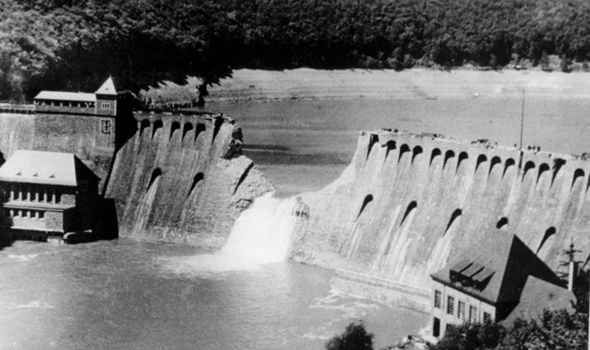
dam-busters-poster

Research Article written by London Swaminathan
Post No.1268; Dated 4th September 2014.

“Floods great and many, compassed by the Dragon Ahi, you made them swell and set free, O Hero.
Strengthened by songs of praise you tore apart piecemeal the Dasa, him who deemed himself immortal” – RV. 2-11-2

“Who slew the Dragon Ahi, freed the seven rivers, and drove the cows forth from the cave of Vala” – RV. 2-12-3

“The Dragon attached against the seven prone rivers, where no joint was, you tore apart with your thunder.
Indra with might shook the earth and her foundation as the wind stirs the water with fury.
Striving with strength he burst the firm asunder, and tore away the summits of the mountains.
They ran to you as mothers to their offspring; the clouds, like chariots, hastened forth together.
You did refresh the streams and force the billows; you Indra, set free the obstructed rivers”. – RV. 4-19-3/5

dambusters-398707

On 25th June 2011, I wrote an article and posted here with the title: “Great Engineers of Ancient India” in which I have explained that

The first planned Sea Bridge in the World was built by Lord Rama
Balarama went with a plough to all parts of the country to spread agriculture
Bhageeratha was the one who broke down Himalayan mountain in one area to divert he river Ganges to plains.
Agastya was the first one to discover a land route to South India via Vindya Hills and a sea route to South East Asia.

I have dealt with more engineering feats of our forefathers in that article written two years ago. Now I want to solve a mystery about Indra.

FLYING MOUNTAINS or UFOs

Question 1:Hindu Puranas (mythology) say that Indra cut down the wings of the flying mountains. What is this? What are the flying mountains? Why were the mountains flying previously? Are our mythologies talking about Flying Saucers (UFOs) or meteorites and asteroids?

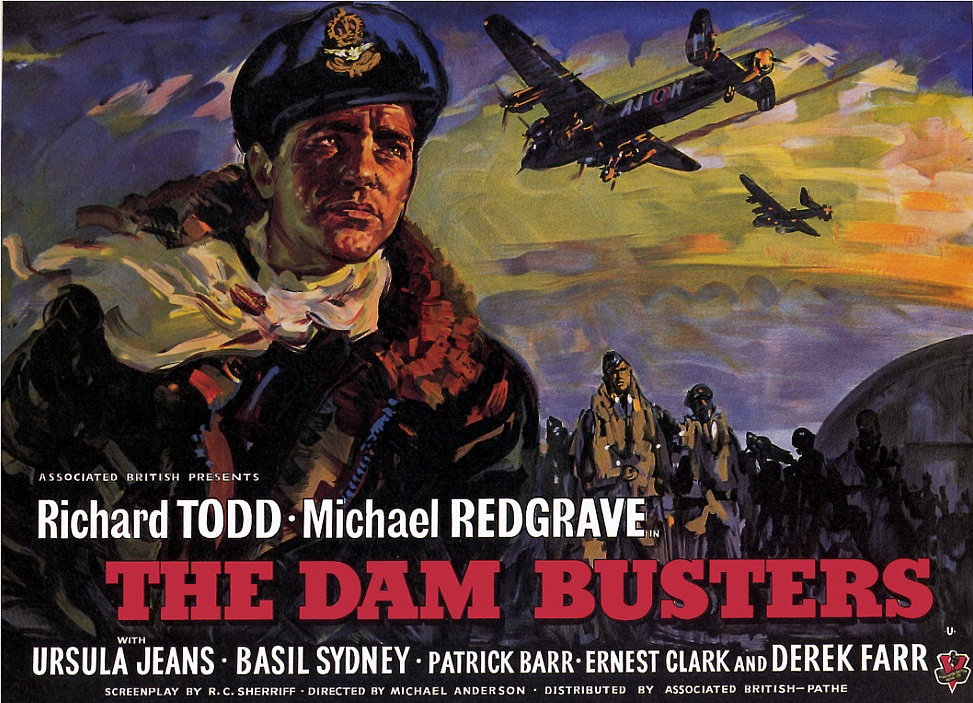
Question 2:Indra is said to have released water that was blocked by the demons in Indra-Vala myth and Indra-Vritra Myth. This is what we read in the oldest religious book in the world, The Rig Veda. What is this? Was it an engineering feat? Was Indra the oldest Civil Engineer in the world? Was he the first one to build a dam? Or was he the first Dam Buster? (Remember the famous Second World War film The Dam Busters?)

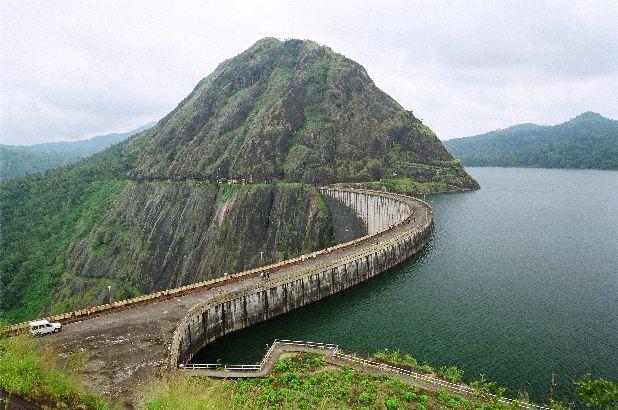
dam idukki

I am not in a position to answer the first question now, because I don’t write anything without proof. But my guess is that it was about the asteroids and meteorites that were falling on earth in the old geological ages. Previously the earth was bombarded with asteroids and huge meteorites. To teach a science lesson to a layman, they invented such stories. Every day the earth is bombarded by millions of meteorites even today. But we are protected by the atmosphere where in they were burnt to ashes. In the olden days the earth was hit by huge meteorites, one of which destroyed the Dinosaurs.

“Scholars” from foreign lands who studied the Rig Veda (RV) did not make the following things clear. The reason being they wanted to interpret Indra myths according to their imagination and to serve their own ulterior motives:

1.Was Indra one person or many Indras were there?
2.Was Indra a Title like the Shankaracharya, Pope, Dalai Lama, President, Prime Minister etc.?
3.Was Indra a nature god concerning rains, rivers, mountains or a human being?
4.Were all Indra myths about human beings, or natural phenomena? Or some natural and some others are about human beings?

5.Did he live for hundreds of years like a Super human or some decades like any other king in the world?
6.Indra is mentioned thousands of times in the Rig Veda alone. Is it humanly possible to do all that is attributed to one Indra? (Please Read my story about Numbers in The Rig Veda)

7.If he is ONE person, wasn’t he the most celebrated hero in the world? Neither Hercules nor Ulysses, nor Gilgamesh was celebrated in so many scriptures like Indra. He figured in all the scriptures in Tamil and Sanskrit. There is no old Tamil book without Indra’s name. From Tolkappiam to the latest Bharatiyar’s works he is glorified.

8. Why do Hindus from Nepal to Kandy in Sri Lanka still name their children after Indra when all other Sumerian, Egyptian, Greek, Chinese Gods have gone into museums and history books?

dam germany

9.Why Indra Festival is celebrated from Nepal to all the South East Asian countries (Water Festival) till today? Sangam Age Tamils celebrated it but stopped it after the three Tamil dynasties died.

The answer is very simple. Indra is the word for ‘The God’ and ‘The King’ in Hindu literature. If we treat him as God in some places and the king in some places all the puzzles will be solved. In Sangam Tamil and classical Sanskrit literature, the king is glorified as God. Both the Tamil and Sanskrit literature attributed miraculous powers to the kings who ruled according to Law Books (smritis).

Indra, as a Vedic king did unbelievable engineering feats in the mountains of Hindu Kush and the Himalayas. Lot of other kings also tried to imitate Indra in such engineering feats of diverting the Himalayan Rivers or damming the Himalayan Rivers. After a long time only Bhageeratha succeeded in diverting the Ganges. Indra set an example for them. Vedic mantras clearly spoke about his roles as a hydraulic and civil engineer.

SCHWEIZ STAUSEE LAGO BIANCO

Let us find answer to the second question (Were his myths engineering feats) from the Rig Veda:–

RV.4-19
Indra broke the mountain and freed the rivers. The rivers ran like mothers running towards their children
RV.2-11
Indra broke the mountain like clouds and released the captivated waters

RV.2-11
Indra killed Vala, Vritra and Dragon Ahi who captivated the waters and allowed waters to swell and flow
RV.2-12
Indra freed the dragon and release the seven rivers
RV.1-11-5
Indra broke the cave of Vala,rich in cows

RV.1-32
Indra killed Vritra, Dragon Ahi and released the water. Dragon Ahi is frozen water in the Himalayas.

The above hymns make it very clear that all is about releasing the water for the welfare of the general public. All the demons mentioned there may be the people who objected to such damming or dam bursting activity of Indra or they are the personification of natural things like glaciers or rocks blocking the flow of water.

natural dam1.jpg2

When Bhageeratha wanted to bring the River Ganges to the plains of Uttar Pradesh, Bihar and Bengal, he did years of planning and execution. That is what we call penance for thousands of years on one leg. That means focussed on only one thing throughout his rule. Indra did this first and that is why he was always connected with water and rain and rivers. Even if we take Indra as God, that will make sense. Hindus invoke God before any task, whether it is building a civil building or launching a war ship or a passenger ship or taking oath as a Prime Minister. Even today non-believes do it secretly and it is exposed by the mass media.

Indra as a king from the Indus Valley Civilization

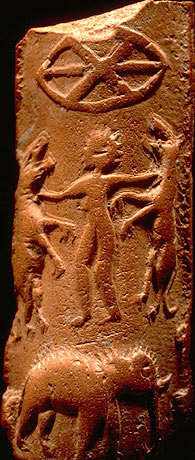
RV.1-32-15 (Indus Symbol)

Indra ruled the world, containing all as spokes (ara) within the felly (nemi)
This symbol is in Indus Valley with a wheel on top of Indra. Indra is also known as the Wheel (chakra)

industablet2
Indra in Indus Valley Seal Indra is called Chakra in Vedas and Buddhist scriptures.

My previous research articles on RV and AV:-
1.The Mysterious Vedic Homa Bird: Does it exist? – posted on 10-12-2011
2.Vedic Hymn better than National Anthems
3.Vedas and Egyptian Pyramid Texts – posted on 29-8-2012
4.Kapinjala Bird Mystery –posted on 23-5-2014 (Post No 1060)
5. Most misinterpreted words :Asva and Ayas
6.Confusion about Vedic Soma Plant –posted on 5-5-2013
7.Horse Headed Seer: Rig Veda Mystery- 1 -posted 27-8-2-14
8.Cucumber in the Rig Veda – posted on 2-42014 (post no 950)
9.Origin of Horse race and Chariot Race –posted 25-8-2014
10.Creation: Vedic Hymn and Babylonian Hymn –posted 6-8-2013

11.Sex Mantras and Talismans in Egypt and the Atharva Veda –posted 26 Sept. 2012
12.Gems from the Atharva Veda – posted 27 Sept. 2013
13.Mysterious Atharva Veda: Part 1 –posted 30 Sept. 2013
14. Mysterious Atharva Veda: Part 2 – posted 7 Oct 2013
15).27 Similes in one Vedic Hymn! – posted on18-8-2012
16) 107 Miracle Herbs in Rig Veda – posted on16-9-2013
17)Vedic Origin of 1000 Pillar Halls in Indian and Mayan Culture – 5 July 2014
18.Two seers saved by Asvins: Stories from the Rig Veda – posted 7 Aug. 2014.
19.Herbs and Diseases in the Veda – posted on 1 July 2014.
20) 31 Quotations from the Vedas – posted on 26 June 2014.

21.Talismans in Atharva Veda and Ancient Tamil Literature — posted on 17 June 2014.
22)Why did Indra kill Brahmins? – posted on 25 May 2014.
23)Ode to Sky Lark: Shelley, Kalidasa and Vedic Poet Grtsamada– posted on 3/5/14
24)Vedic Poet Medhathithi’s Quotations — Posted on22/5/2014
25)Pearls in the Vedas and Tamil Literature –posted on 18/5/2014
26.Important Vedic Quotations on Rivers and Water –posted on 8/5/14
27) 40 Important Quotations from the Atharva Veda –posted on 2-5/14
28.Oldest and Longest patriotic Song – 20 Sept. 2013
29)King and 8 Ministries in Vedic Period – posted on 28 May 2013
30)Numbers in the Rig Veda: Rig Veda Mystery – 2 –posted on 3rd Sep.2014

And several other articles regarding Vedic Gods Agni, Varuna and Indra in Tolkappiam and the Indus Valley Civilization. Please read my 1000+ articles.

Contact swami_48@yahoo.com

நாம் எல்லோரும் நட்சத்திரங்கள் !!

ஆராய்ச்சிக் கட்டுரை:– லண்டன் சுவாமிநாதன்
கட்டுரை எண்:– 1242: தேதி 19 ஆகஸ்ட் 2014.

நாம் அனைவரும் ஒரு காலத்தில் நட்சத்திரங்களின் துகள்களாக இருந்தோம். இது ஒரு விஞ்ஞானச் செய்தி. ஆனால் புண்யம் செய்தவர்கள் எல்லோரும் நட்சத்திரங்கள் ஆவார்கள் என்பது மஹபாரதம் தரும் அதிசயச் செய்தி. நட்சத்திரங்கள் எல்லாம் கடவுள் என்பது எகிப்திய, மாயா நாகரீக வரலாறு தரும் செய்தி; அனைத்தையும் சுருக்கமாக்ச் சொல்வதே இந்த ஆய்வுக் கட்டுரையின் நோக்கம்.

Life-on-Other-Planets-Orion

பள்ளிக்கூடத்தில் படிக்கும்போது மஹாபாரத வனபர்வத்தில் வரும் அர்ஜுனனின் விண்வெளிப் பயணத்தைப் படித்து அதிசயித்துப் போனேன். ஆனால் அது ‘’சிம்பாலிக்’’க்காக (அடையாளபூர்வமாக) சொன்ன செய்தி என்று விட்டு விட்டேன். லண்டனுக்கு வந்த பின்னர் ராஜாங்க ஆஸ்தான விண்வெளி விஞ்ஞானி பாட்ரிக் மூர் நடத்தும் “இரவு நேரத்தில் வானக் காட்சி” என்ற கிரகங்கள்—நட்சத்திரங்கள் நிகழ்ச்சியைப் பார்த்து வந்தேன். ஒரு நாள் அவர் சொன்னார், “ நாம் எல்லோரும் ஒரு காலத்தில் நட்சத்திரங்களின் துகள்களாக இருந்தோ என்று! மஹாபாரத வன பர்வ செய்தியை ஒப்பிட்டுப் பார்த்தபோது புல்லரித்தது.

அர்ஜுனனின் விண்வெளிப் பயணம்
அதாவது அர்ஜுனனை மாதலி என்ற சாரதி விண்வெளி ரதத்தில் ஐந்தாண்டுகளுக்கு சொர்க்கத்துக்கு அழைத்துச் செல்லும் வர்ணனை மஹா பாரத வன பர்வத்தில் உள்ளது. அர்ஜுனன் ஒளிமிகுந்த ஆயிரக் கணக்கான ரதங்களைப் பார்த்து இவர்கள் என்று கேட்கிறான். இந்த ஒளிமிகுந்த மக்கள் எல்லாம் புண்யம் செய்தவர்கள், இவர்களைத்தான் நீங்கள் நட்சத்திரங் களாக பூமியில் பார்க்கிறீர்கள் என்று மாதலி விளக்கம் தருகிறான். இதை பாட்ரிக் மூர் என்ற வானியல் அறிஞ்ர் சொன்னதோடு ஒப்பிடுகிறேன்:

கோடி கோடி வருடங்களுக்கு முன் மாபெரும் வெடிப்பு (பிக் பேங்) ஏற்பட்டது. அப்போது விரிவடையத் துவங்கிய பிரபஞ்சம் இன்னும் பலூன் போல விரிவடைந்து கொண்டே இருக்கிறது. இதில் தோன்றிய ஒரு சின்னத் துகள் சூரிய மண்டலம். அதிலுள்ள ஒரு இம்மி அளவான பூமியில் அந்த நட்சத்திரத் துகள்கள் இறுகி மனித இனம் தோன்றியது என்பர் விஞ்ஞானிகள்.

stars

அவர்கள் கணக்குப் படி நட்சத்திரங்கள் என்பது கோள உருவத்தில் சுற்றும் வாயுக் கோளங்கள். அதில் ஹைட்ரஜனும் ஹீலியமும் பிரதானமாக இருக்கின்றன. ஒவ்வொரு வினாடியிலும் கோடிக் கணக்கான ஹைட்ரஜன் குண்டுகள் வெடிப்பதால் அவை வெப்பத்தையும் ஒளியையும் உமிழ்கின்றன. சூரியனும் ஒரு சின்ன வகை நட்சத்திரம்தான்.

இதை எல்லாம் விஞ்ஞானம் சொன்னாலும் மாபெரும் வெடிப்பு ஏன் நிகழ்ந்தது? அதன் முடிவு என்ன? என்பதை விஞ்ஞானத்தால் விளக்க முடியவில்லை. பாட்ரிக் மூர் சொன்னது போல நாம் எல்லோரும் நட்சத்திரத் தூசியாக இருந்ததை ஒப்புக் கொண்டாலும் அதற்குள் ஆத்மா ஒன்று இருப்பதை விஞ்ஞானம் ஒத்துக் கொள்வதில்லை. அங்குதான் மதம் வந்து கை கொடுக்கிறது!

வியாசர் எழுதிய மஹாபாரத வனபர்வத்தைப் படிப்பவர்கள் இன்றும் வியப்படைவார்கள். அவர் சொன்ன பல விஷயங்களுக்கு இப்போது விஞ்ஞான விளக்கம் கிடைக்கிறது. அவரை ஒரு விஞ்ஞானி என்று அறிஞர்கள் ஒப்புக் கொள்ள மறுத்தாலும், 5000 ஆண்டுகளுக்கு முன்னரே விஞ்ஞான புனைக் கதை எழுதிய முதல் மனிதன் என்ற பட்டத்தையாவது கொடுக்க வேண்டும். நீண்ட விண்வெளிப் பயண வர்னணையை வன பர்வத்தில் படிக்கலாம். அது பற்றி தனியாக எழுதுவேன்.
pyramids stars

இந்துக்களின் நட்சத்திர வழிபாடு
நாமும் அருந்ததி அதை ஒட்டியுள்ள சப்தரிஷி மண்டலம், அகத்திய நட்சத்திரம், துருவ நட்சத்திரம், திரிசங்கு நட்சத்திரம் ஆகியவற்றை புனிதர்களாகவே வழிபடுகிறாம். வானில் தெரியும் ஏழு நட்சத்திரங்களான சப்த ரிஷி மண்டலத்தை “கை தொழு எழுவர்” என்று சங்கப் புலவர் புகழ்கிறார். கார்த்திகை நட்சத்திரம், ரோகிணி நட்சத்திரம் ஆகியனவும் நம்மால் வழிபடப் படுகின்றன. சங்க காலத் தமிழர்கள் ரோகிணி நட்சத்திரத்தில் மட்டும் கல்யாணம் செய்ததை சிலப்பதிகரமும் அகநானூறும் பாடுகின்றன.

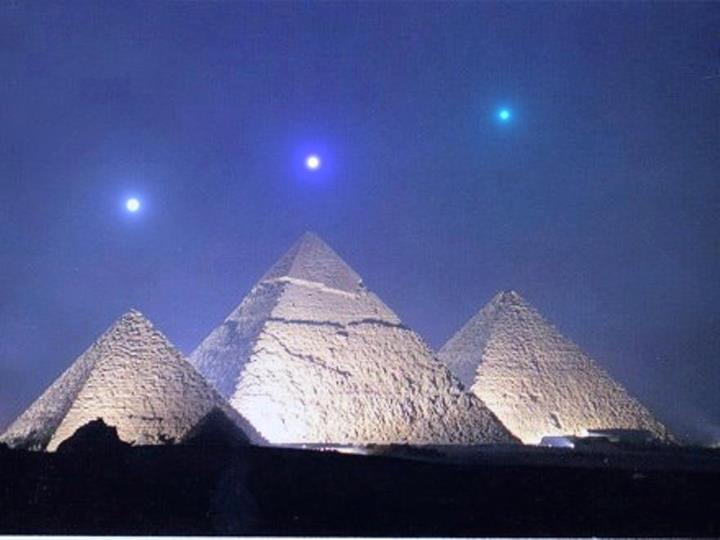
இதே போல எகிப்தியர்களும் மாயா நாகரீக மக்களும், மன்னர்கள் இறந்த பின்னர் நட்சத்திரங்களாக மாறுகின்றனர் என்று எழுதிவைத்துள்ளனர். அண்மைக்கால ஆரய்ச்சியில் கியாப்ஸ்-குபு பிரமிட்டில் நட்சத்திரப் படங்கள் இருப்பது தெரியவந்துள்ளது. மேலும் 90 பிரமிடுகளில் மூன்று பெரிய, பழைய பிரமிடுகள் ‘’ஓரியன்’’ நட்சத்திர மண்டலத்திலுள்ள மூன்று நட்சத்திரங்களை நோக்கி அமைந்துள்ளதும் தெரியவந்துள்ளது. அதாவது காற்றுப் போவதற்கான மூன்று ஓட்டைகள், அந்த மூன்று நட்சத்திரங்களை நோக்கி அமைந்துள்ளன. 1994 பிப்ரவரியில் பி.பி.சி. ஒளிபரப்பிய ஓரியன் மிஸ்ட்ரி என்ற டாகுமெண்டரியில் இது பற்றி விரிவாகக் காட்டினார்கள். அப்போது நான் எழுதி வைத்த ஆராய்ச்சிக் குறிப்புகளை இப்பொழுது சொல்வதற்குக் காரணம் உண்டு.

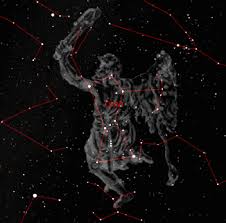
orion hunter

சிவன் என்னும் வேடன்

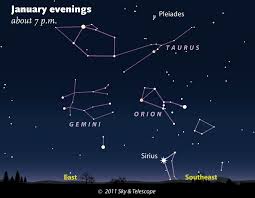
ஓரியன் நட்சத்திரக் கூட்டத்தில் உள்ள ஆருத்ரா நட்சத்திரம் சிவனுக்கு உரிய நட்சத்திரம். சிவ பெருமானை வேடனாக நாம் உடைகள் போட்டுக் காட்டுவதோடு அல்லாமல் ருத்ரம் என்னும் யஜூர்வேத மந்திரம் அவரை வேடனாகவே வருணிக்கிறது. இதே கதை சிறிது மாற்றத்தோடு கிரேக்க புராணத்திலும் இருக்கிறது. கிரேக்கர்களின் புராணக் கதைகள் சிதைந்து போன வடிவத்தில் இயற்றப்பட்ட இந்து புராணக் கதைகள் என்று மாக்ஸ்முல்லர் கூறுவார். ஆக்வே நம்மிடம் காப்பி அடித்த கதைதான் ஓரியன் வேடன் கதை என்பதாகும்.

ஐதரேய பிராமணம் என்னும் வேதப் பகுதியில் ம்ருக வ்யாத (வேடன்) என்ற பெயரில் ஓரியன் நட்சத்திரம் வருணிக்கப்படுகிறது. அவர் பிரஜாபதி என்றும் அவர் மகள் ரோகிணியை துரத்திச் செல்கிறார் என்றும் பிராமணங்களில் எழுதப்பட்டுள்ளது. அப்போது சிரியஸ் வேடன் வடிவத்தில் அம்பு எய்ததாகவும் உள்ளது. அதர்வ வேதம் 27 நட்சத்திரங்களையும் பட்டியல் இடுகிறது. கிரேக்கர்கள் நூல்களை எழுதுவதற்கு ஆயிரம் வருடங்களுக்கு முன்னரே வேதகால கீதங்கள் சரஸ்வதி நதிதீரத்தில் ஒலிக்கத் துவங்கி விட்டன. ஆக வேடன் கதை இந்தியாவில் இருந்தே ஏற்றுமதி செய்யப்பட்டிருக்க வேண்டும்.
orion january

உதவிய நூல்கள்:
Page 308, Mahabharata, The Book of the Forest (Vana Parva), Translated by A B Van Buitenen
Page 141 of Fingerprints of the Gods by Graham Hancock
Page 174, Volume 2 of Vedic Index by A A MacDonnell and A B Keith.
Page 160, An Illustrated Dictionary of Classical Mythology by Gilbert Meadows.