
Please find the article: Valakhilyas: 60,000 thumb-sized ascetics protect humanity in Tamil below
Please find the article: Valakhilyas: 60,000 thumb-sized ascetics protect humanity in Tamil below
Posted by Tamil and Vedas on December 31, 2011
https://tamilandvedas.com/2011/12/31/valakhilyas-60000-thumb-sized-ascetics-protect-humanity-tamil/
Please see below for my latest article on Solar eclipses in Tamil and Sanskrit Literature in Tamil
Posted by Tamil and Vedas on December 29, 2011
https://tamilandvedas.com/2011/12/29/tamil-article-solar-eclipse-in-tamil-and-sanskrit-literature/
by S Swaminathan

Maya Devi dreaming
Every one of us dreams at night. Most of them are without any meaning. We couldn’t even remember them the next morning. But now and then we read in newspapers or our ancient scriptures about some dreams becoming prophetic. What is the truth?
A devote Hindu knows the importance of good sleep. He prays for it in the Rudram – Chamakam of Yajur Veda. Every day, Brahmins pray to God three times a day to not give them “dus swapna” (nightmares). Ref. Adyano deva savita:,Sandhyavandana Mantra.
Western psychoanalyst Sigmund Freud interpreted dreams as wish fulfilment (nightmares being failed dreams prompted by fears of repressed impulses). In short western psychologists saw them as suppressed desires, feelings and wishes. According to the scientists, dreams occupy one fifth of our sleep and they happen during the REM (Rapid Eye Movement) period of sleep. REM sleep means that the cortex of the brain is about as active as during waking hours.
Hindus don’t agree with western views. We see more meaning in dreams. We think they are telling you what is going to happen to you – like winning the lottery or becoming ill or some misfortune to our near and dear. But not all the dreams are interpreted in this way. Hindus have analysed the status of the mind better than modern scientists. All our religious literature speaks of Jagrat (waking) Swapna (dream) Sushupti (deep sleep) and Turiya (an experience of pure consciousness beyond the three stages of sleep – there is no English word for it).
Swami Sivananda of Rishikesh who himself was a doctor turned ascetic explains dreams in a beautiful way in his book The Philosophy of Dreams ( It is available free of cost on the Divine Life Society website):
“Every dream presentation has a meaning. A dream is like a letter written in an unknown language. To a man who does not know Chinese, a letter written in that language is a meaningless scroll. But to one who knows that language it is full of most valuable information. It may be the letter calls for immediate action; or it may contain words of consultation to one suffering from dejection. It may be a letter of threat or it may speak of love. These meanings are there only to one who would care to attend to the letter and would try to decipher it. But alas! How few of us try to understand these messages from the deep unseen ocean of our own Consciousness!”
Dreams in Vedic Literature
We have references to dreams in the Rig Veda, Kaushitaki Brahmana, Chandogya Upanishad and other classical Sanskrit literature. They treated dreams as prophetic- conveying some message of the future. For instance, the Chandogya Upanishad (V 2-8-9) says seeing a woman in a dream means a previous sacrifice (fire ceremony) was successful. But it gives conditions for such dreams. Kaushitaki Brahmana says seeing a man in black with black teeth is not a good omen. Some people even receive messages in dreams. Rishi Viswamitra received mantra upadesa from Lord Siva in his dream. Advocate of Vishistadvaita Sri Ramanuja believed that the dreams are caused by the Lord.
Andal, a great Tamil Vaishnavite woman saint saw Lord Vishnu marrying her in a dream. She sang about her dream in beautiful Tamil verses known as Varanam Ayiram. This is sung in all Tamil Vaishnavite weddings.
Before great men were born, the women had strange dreams. We see this in the birth of Jain saint Vartaman Mahavira, Gautama Buddha, Sri Ramakrishna Paramahamsa, Swami Vivekananda and several saints. Bhuvaneswari Devi, mother of Swami Vivekananda dreamt of Siva agreeing to be born as her son. Being a great devotee of Lord Vireswara Siva of Varanasi, she gave the name
Vireswara to her son. Later it was changed to Narendra and then to Vivekananda.
Ramakrishna Paramahamsa’s parents experienced supernatural incidents, visions before his birth. His father Khudiram had a dream in Gaya in which Lord Gadadhara said that he would be born as his son. Chandramani Devi is said to have had a vision of light entering her womb from Shiva’s temple.
Gauthama Siddhartha’s mother Maya Devi and King Sudhdhodana were trying for a baby for twenty years after their marriage. One day she had a dream of a white elephant with a lotus flower in it’s trunk going around her three times and entering her womb. Before this she dreamt of bathing in a lake in the Himalayas. She was carried away to the lake by four angels in her dream.
Mother of Mahavira Trishala had 16 auspicious dreams before his birth. When King Sidhdharth consulted his astrologers they told him that there were 72 auspicious dreams according to the books on dreams and the king was going to get a son who will rule a spiritual empire. Trishala saw
1. A white elephant
2. A lion
3. The Goddess Gaja Lakshmi
4. Moon
5. Two jumping fishes
6. Sun
7. Lake full of lotus flowers
8. Ocean of milk
9. A celestial palace
10. A throne of rubies and diamonds
11. A celestial king
12. A garland
13. A white bull
14. Fragrant Mandara flowers
15. A tall vase with gems and
16. A white elephant entering her.
Seeing an elephant in a dream is considered auspicious. In most of the cases of divine births, we see a light entering or elephant entering the mother’s body.
Messages from the Departed souls
The previous Head of Madurai Adheenam (Saiva Mutt) who died several years ago did a lot of research about communicating with dead people. He has narrated several incidents where departed souls appeared in dreams to warn people about coming dangers.
When Vallabhacharya was born prematurely without life signs, his mother left him under a tree. When she came home with all the sadness, she dreamt of Krishna saying to her that he was born as a child to her. She ran back to the tree where the boy was alive and kicking with a divine fire protecting him. All of these stories impart some knowledge about dreams to those who have an interest in their interpretation.
Swami Vivekananda also narrated a strange dream about Jesus Christ to his disciples. Read it in his own words:
“I had a curious dream on my return voyage to England. While our ship was passing through the Mediterranean sea, in my sleep, an old and venerable looking person, Rishi-like in appearance, stood before me and said: I am one of the ancient order of Theraputtas which had its origin in the teaching of the Indian Rishis.
The truths and ideals preached by us have been given out by Christians as taught by Jesus: but for the matter of that there was no such personality by the name of Jesus ever born. Various evidences testifying to this fact will be brought to light by excavating here. By excavating which place can those proofs and relics you speak of be found? I asked. The hoary-headed one pointing to a locality of Turkey, said, see here.
Immediately after, I woke up, and at once rushed to the upper deck and asked the captain, ‘what neighbourhood is the ship in just now?’. ’Look yonder’, the captain replied, ’there is Turkey and the island of Crete’.”
Svapnavasava datta (Dream of Vasavadatta) is a famous drama by ancient Sanskrit playwright Bhasa.
The hero of the story is presented with an exact painting of a girl he had previously seen in a dream in the court of King Udayanan. Indians do not miss any opportunity to use a dream as the basis of their novels, dramas and films.
Mathematical Genius Ramanujan
Indian mathematical genius Srinivasa Ramanujan said that he received his inspiration and mathematical solutions in his dreams. He attributed this to the Goddess at Namakkal. He said:
“While asleep I had an unusual experience. There was a red screen formed by flowing blood as it were. I was observing it. Suddenly a hand began to write on the screen. I became all attention. That hand wrote a number of results in elliptic integrals. They stuck to my mind. As soon as I woke up, I committed them to writing”
The most famous Tamil epic Silappadikaram narrated the vivid dreams of Kovalan and Kannaki, the hero and the heroine in great detail.
Tamil Bhakti literature (5th to 9th centuries) has a lot of references to dreams. 2000 year old Tamil Sangam literature talks of animals dreaming – a concept which modern research at MIT and other scientific institutions recently confirmed.
Finally, I will leave you with a list of great people who attributed their discoveries or inventions to strange dreams:
1. F.A. Kekule: saw the structure of Benzene in his dream and revealed it to the world
2. Abraham Lincoln: dreamt of his assassination just before his death and told his friends
3. Otto Loewi: won the Nobel prize for Science having discovered the chemical transmission of nerve impulses in a dream
4. Paul McCartney: He got his tune for the ‘Yesterday‘ in a dream
5. Mary Shelley: the idea for Frankenstein came to her in a dream
6. Elias Howe: invented the sewing machine from a dream
7. Stephen King: the famous novelist’s plots came from his dreams
Have sweet dreams!
********************
Posted by Tamil and Vedas on December 29, 2011
https://tamilandvedas.com/2011/12/29/do-our-dreams-have-meaning/
By S Swaminathan
In Hinduism numbers have a lot of significance. In some places it is used as a symbol or metaphor. Vedas also have a lot of numbers and their meanings are still mysterious. One example is the odd and even numbers up to 33 and 44 respectively in the Chamakam (a part of the Rudram in the Krsna Yajur Veda). But 108 and 1008 are used for all the Gods in Ashtotharam (108) and Sahasranamam (1008), particularly in all the South Indian Temples on day to day basis.
Hindu epic Mahabharata is associated with number 18 in several ways. The Mahabharata is divided in to 18 books (parvas) and the Bhagavad Gita also has 18 chapters. The original name of the Mahabharata was JAYA and according to Sanskrit numerical system (Ka Ta Pa Yathi sankhya) Jaya is 18. The architect of the war Sri Krishna’s Yadava caste – which had 18 clans. The army number of divisions that took part in the war were also 18 (11 divisions/Akshauni of Kauravas and 7 Akshauni of Pandavas).
There is a beautiful description about the number 18 in the Tamil epic Cilappatikaram: The war between the Devas and Asuras went for 18 YEARS. The fight between Rama and Ravana went on for 18 MONTHS. The war between the Pandavas and Kauravas went on for 18 DAYS, but the battle between the King Cheran Senguttuvan and Kanaka Vijayan went on only for 18 NAZIKAS! (A day consists of 60 Nazika and one Nazika is 24 minutes). Cheran Senguttuvan was a great Chera (Kerala) king who went up to the Himalayas and brought a stone from the holy Himalayas to erect a statue for the Tamil heroine Kannaki. He washed the stone in the holy Ganges and brought it on the heads of Kanka and Vijayan who were defeated by him in seven hours (Ref. Cilappatikaram, Neerpataik kaathai lines 8-9).
The Number 10,008
The priests who did havan/yagna erected the yaga kund (fire altar) with 10,008 bricks in the shape of an eagle. The reason for this may be the Deva year was equivalent to (360 X 30) 10,800 days and Brahma’s kalpa was 40 times of this i.e. 432,000 years. If we add any of these figures and bring it to one digit it will always be 9.
Number 9 and its multiples are in Sanskrit and Tamil literature. Planets are nine-Nava Grahas, Gems are nine- Nava Ratnas and the scholars in the assembly of Vikramaditya were also called Navaratnas.
Another reason for this is a man breathes 21,600 (half of 43,200) times a day, on average. The book written by Romarishi calculated this on the basis of 15 breaths for every minute. This is reflected in the famous Nataraja temple in Chidambaram, Tamil Nadu where the Golden Roof of the temple contains 21,600 gold tiles. They used 72,000 nails to fix them.
Sathya Sai Baba’s interpretation
Sri Sathya Sai Baba went one step ahead of others in explaining the significance of these numbers. A man breaths 21,600 time a day (at the rate of 15 a minute and 900 times an hour). During the day time he breaths 10,800 times. During this day time one must say the mantra ‘soham’ ( sa=He, aham=I; in other words – God and I are one) and to signify this we have 108, 1,008 and 10,008. Baba added by saying that number nine represents Brahman and number 8 represents Maya (illusion). He demonstrated that Nine remains intact after multiplying by any number (e.g. 9×12=108,8×9=72,3×9=27 if we bring them down to one digit it is always 9) Where as if we multiply 8 with other numbers it will go down when we bring them down to single digit (e.g. 1×8= 8, 2×8=16,3×8=24,4×8=32,5×8=40,6×8=48 etc. One digit numbers will be 8, 7, 6, 5, 4, 3, 2, 1).
“With each breath you are positively affirming ‘Soham (I am He)’. Not only you, every being thus affirms it. … When you watch your breath and meditate on that grand truth, slowly the ‘I’ and the ‘He’ will merge; Soham will become transformed into Om, the primal sound, which the Vedas (ancient scriptures) proclaim as the symbol of the formless, all-knowing God.”
-Sathya Sai Speaks X, ‘Meditation’
The Devas spent 10,800 days (in other words 29 years and 5 months) to churn the Ocean of Milk to extract Amrit (ambrosia). The planet Saturn, which plays a significant role in our lives, also takes the same time to complete one circuit of the Solar System.
Tamils have divided their 2,000 year old Sangam Literature in to 18 books (Pathu Paattu & Ettu Thokai) and the post-Sangam ethical literature in to another 18 books! (Pathinen Keez Kanakku).
These numbers have also got some significance in the Buddhist and Greek literatures as well.
Send comments and feedback to: swami_48@yahoo.com.
Please visit my blogs: swamiindology.blogspot.com and tamilandvedas.wordpress.com.
Posted by Tamil and Vedas on November 26, 2011
https://tamilandvedas.com/2011/11/26/hindus-magic-numbers-18-108-1008/
By S Swaminathan
It is a well known fact that the Ancient Indians made tremendous advancements in the field of medical sciences. The Ayurveda and Siddha medical systems were widely practised for the benefit of the general public. Charaka and Susrutha wrote great treatises. A lot of surgical instruments, surgeries like rhinoplasty (plastic surgery for nose), hundreds of medicinal plants and thousands of medicines were listed by them. They were not only appreciated in India but reached western world through Arabic translations nearly one thousand years ago. The old medical books in Sanskrit and Tamil run in to several thousand pages.
Though Charaka, Susrutha,Vagbhata and Agastya are known to many even in the western world, one important surgery went unnoticed by many scholars. There is a very interesting story about a Pandya king in ancient Tamil literature. The king lived two thousand years ago is known from the Tamil epic Silappathikaram (Ref.Mathurai Kandam-Katturai Kaathai) dated around second century AD. A Pandya king was fitted with an artificial hand made of gold; he was known only as the Golden Handed Pandya. Nobody knows his real name even today. One more old Tamil book refer to this story (Ref. Pazamozi Naanuru).
The Story:
The story according to the epic runs like this: a Pandya king was going through the streets of Madurai (the second largest city of Tamil Nadu in South India) in disguise during the night. In the olden days kings used to visit their subjects and observe the general public in disguise to feel the pulse of the populace. Though the ancient Arthashastra of Kautilya speaks of kings employing spies for this purpose, the monarchy always wanted to know what the people feel about them or the country directly.(Every Hindu knew what Rama did to Sita just because a washer man raised some doubts about the purest woman Sitadevi). So much importance was given to the opinion of general public – absolute democracy!
When the Pandya king was passing by a house the lights were on at the dead of night and he heard a conversation. A brahimn by name Keeranthai was consoling his crying wife with these words, ”Darling, don’t worry too much about your safety and security. I am only going to be away for a very short period. Our great king is there to protect all the citizens. Nothing will go wrong in this just place”. As soon as the king heard this conversation he felt some big responsibility fell on his shoulders. So he increased his ward rounds and kept an eye on that house. Months passed. To his surprise he saw light again in the same house at the dead of night. He heard someone talking. In a hurry he mistook that person for a stranger and knocked at the door to scare away the stranger. Alas, it was not a stranger. It was her own husband Keeranthai himself who had just returned from his tour. When Keeranthai shouted back, the king realised his mistake.
One stupid mistake will make you to do more stupid things to hide the first one. It is human nature. So the king knocked at all the houses in the brahmin street and ran away to his palace. Next day a battalion of brahmins went to the palace and complained about what happened the previous night. The king, after patiently listening to their complaints, said to them that the ‘thief’ was already caught. All his ministers were surprised to hear his statement. The king did not stop there. He asked the opinion of the complainants what should be the punishment for that ‘thief’. Everyone shouted in chorus to follow the Hammurabi law: a hand for hand, an eye for an eye. The hand that knocked on the doors must be cut off. Before a second lapsed the king drew his sword and cut off the hand with which he had knocked on the doors the previous night. When he narrated the incident, the whole world praised his justice. The royal physicians rushed for his help and attached a gold hand to his arm. He came to be known as a Gold Hand Pandya in Tamil “Por Kai Pandyan”.
This is a story to elucidate the justice that was followed in ancient Tamil Nadu. No medical information was given about fixing the artificial limb but it didn’t surprised any Indian (please read my article Why do British Judges follow a TamilKing?) because they practised either the Ayurveda or the Siddha medical system.
Send comments and feedback to: swami_48@yahoo.com.
Please visit my blogs:
swamiindology.blogspot.com and tamilandvedas.wordpress.com
Follow me on Twitter: @swami_48 and find me on Facebook.
Posted by Tamil and Vedas on November 18, 2011
https://tamilandvedas.com/2011/11/18/120/
GREAT ENGINEERS OF ANCIENT INDIA
S Swaminathan, Tutor,University of London
Contact details swami_48@yahoo. com ,
Swaminathan.santanam @ gmail. com
He may be Muda Thiru Maran or Kadalul Mayntha Ilam Peru Vazuthi
mentioned in Tamil Cankam literature.
South Indian Tamil saint Appar always travelled with an pick axe
to clear the bushes from the temple towers. He simply followed Balarama.
Vedas are the oldest religious scriptures in the world.2000 year old Tamil literature translate the word VEDA as Secret (Marai in Tamil) and Unwriiten Word (Ezuthaa Kilavi in Tamil). Vedic rishis/ascetics
say that they enjoy saying anything with hidden meanings. That is why ancient Tamils translated Vedas as SECRET. Ithihasas also used a language of idioms and phrases. A child in a western country says Mum, buy me the game, I will give you million kisses. The child did not mean literally one million kisses. Ancient Indians used a sort of language and said that Dasaratha had 60,000 wives.
Vedas also use this number in many places to say that Indra killed 60,000.What they wanted to say is ‘’a lot of’’.Not literally 60,00, Buddhist literature use 500 for everything. They a king visited 500 prostitutes.No one takes the meaning literally. Tamils used 16000 pon (gold) for most gifts. Even today in Brahmin marriages when the close relatives of brides and grooms donate something the priest will say a mantra
and add ‘’lakasham katti varahan’’ mama donation 101 rupees. The actual meaning is uncle donated just 101 rupees which is equal to 100000 lumps of gold!!
When thousands or hundreds of years lapse people lose the original meaning of those idioms and phrases and start taking literal meaning. Modern day youths with their scientific bent of mind and back
ground ridiculed these things as a pigment of imagination. Let us re interpret our Puranas and Ithihasas, but very very carefully. We should not confuse the already confused Hindu youths. The westerners made very big chaos by wrong interpretations. Take any one’s date Like Kalidasa or the date of Vedas or the Origin of Tamils. Ten different authors say ten different things. They did not dare to do such things to Greeks or Romans or Sumerians or Egyptians. Even when they did this, they were all corrected long ago. But Indian students are still reading the 300 year old history books written by westerners but printed with new wrappers. The old history book by Smith even has a picture of Brahmins with
tufts fighting with aboriginals!!! Aryans Vs Dravidians!!! Divide and Rule!!
They did it and succeeded for 350 years. Now the picture is changing very slowly for good.
Posted by Tamil and Vedas on June 25, 2011
https://tamilandvedas.com/2011/06/25/great-engineers-of-ancient-india/
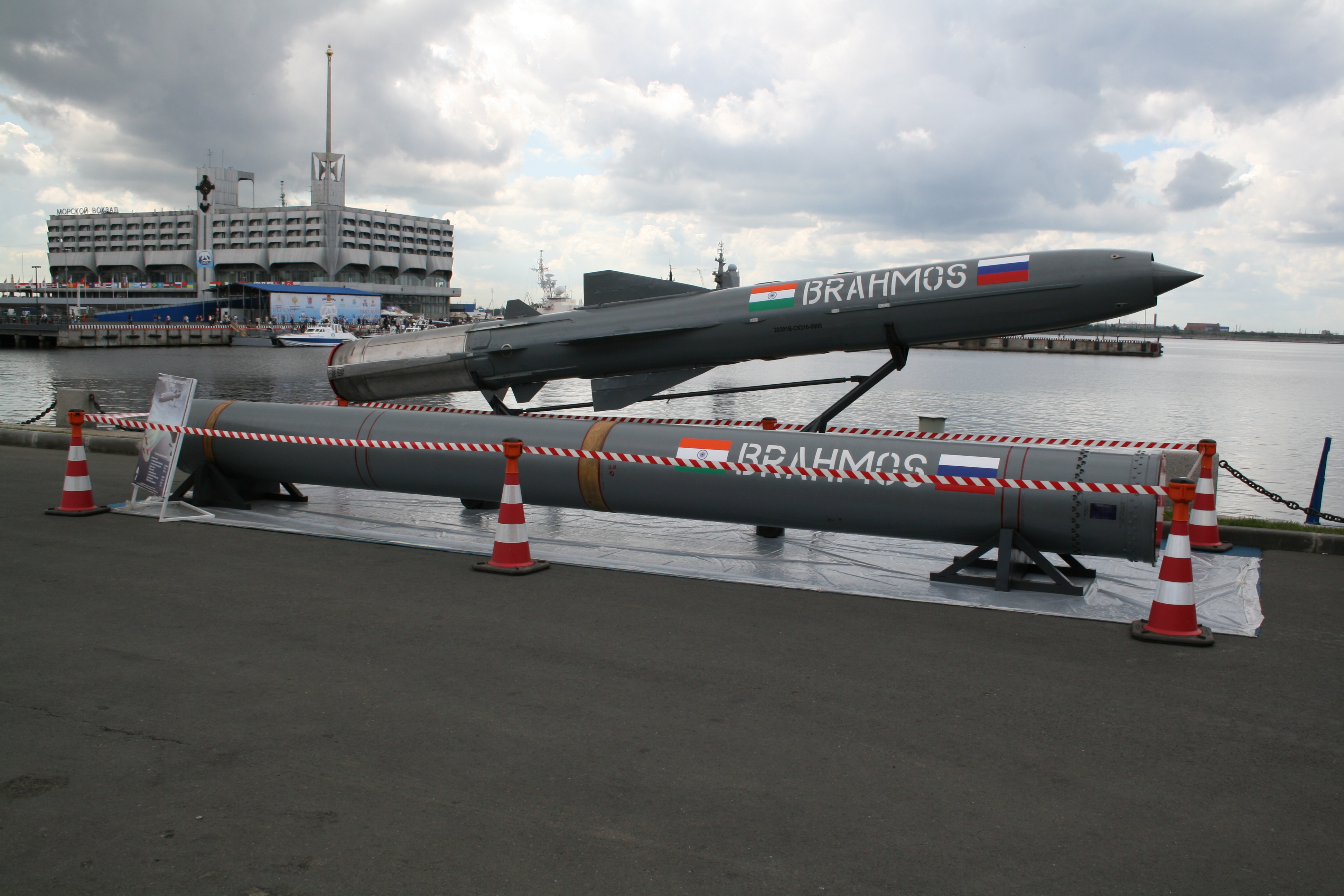
Picture of India’s mighty missile.
IS BRAHMASTRA A NUCLEAR
WEAPON?
– S .Swaminathan, Tamil
Tutor, SOAS, University of London
Nowadays we see a lot of documentaries on television giving scientific or rational explanations for the Biblical events. But not many things in the Hindu epics or Puranas are explained in the same way. Any one with a scientific bent of mind or rational outlook can find explanations for most of the ‘unusual or abnormal’ phenomena or miracles. While I was working for the BBC World Service twelve years ago I had to interview one Indian doctor who had specialisation in Test Tube (IVF) Babies. Casually I mentioned that Gandhari also might have undergone IVF treatment to give birth to 100 children from the urns where the pieces of flesh were kept. But the doctor laughed at my suggestion. I was surprised to read my view many years later when Mr Cho Ramaswamy started writing Mahaharata in his magazine ‘Tughlak’.
I am giving below some events from our epics and puranas and modern explanations for the same. They
may raise some questions such as ,Did they have all the modern equipment like today? or Are they just imagination or intuition about the future? I leave it to the judgement of the readers.
Dasavatara and Darwin
Many of us have noticed the similarity between Darwin’s Theory of Evolution and ten avataras of Lord Vishnu . Fish/matsya Avatara, Tortoise/kurma Avatara,, Boar/varaha Avatara, Man- Lion/narasimha Avatara,
Dwarf/vamana Avatara, then Rama, Parasurama, Krishna, Buddha(or Balarama) and Kalki avataras are equated with the life in the sea, amphibians, land animals, half man/half animal-semi civilised state, then full grown intelligent men. This is a reflection of Darwin’s Theory of Evolution. While I was writing this , a news item appeared in the British newspapers saying that the have found a fossil of 3 foot tall man. They also added that those people may be there even today in the remote forests. This justifies the Vamana (dwarf) avatara. We already know that there are pygmies in the Congo forests of Africa.
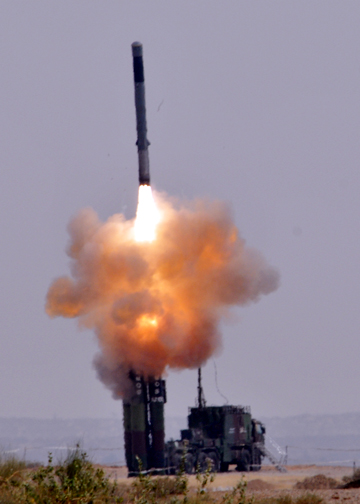
Brahmos Missile Test Fire.
One Indian scholar explains the Varaha Avatara as follows:
‘One is reminded of the meaningful story full of highly relevant symbolism from our Puranas,
centred round the incarnation of Lord Vishnu as the boar to restore the Mother Earth that had tilted and slipped into the depths of ocean. The moral is when human beings become oblivious of their responsibilities consequent on their inter connectedness and interdependence, God Almighty incarnates as Yagna Varaha-symbol of the principle of sacrifice. When our actions become self oriented and disjointed, breaking the natural inter relatedness, Truth gets devalued and there is atilt. Varaha(boar) comes to remind man of the urgency of bringing the sense of sacrifice into his actions, of raising them into Yagnas, so that harmony and strength are restored as also the balance.
Theory of Time Dilation
If a 16 year old person travels at the speed of light (186000 miles per second), that person will be a ‘Markandeya’ for ever. He will be young for ever. We came to know this fact only after the greatest physicist of our times Albert Einstein gave us the Theory of Relativity. But there is a story in our Puranas about Arjuna’s travel to Swarga (an alien planet?) in Indra’s chariot driven by his driver Matali. When Arjuna came back to earth he saw people more aged than he expected. When he asked for explanation scholars told him that the time on earth was different from the time of the place he visited. Even now we read in the Puranas about Deva’s day, Manu’s day and Brahma’s day. They have different duration. No other religion in the world described ‘Time’ this way. The concept of time and the way we use adjectives like ‘Surya Koti samaprabha’/light equivalent to million suns show that our forefathers were aware of the modern concepts.
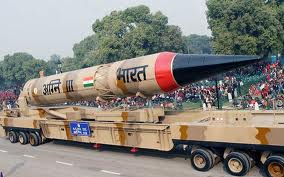
Picture of Agni missile of India.
Futurology and Nuclear Winter
Vanaparvam of Mahabharata describes the end of the world. It says how the world will end at the end of Kaliyuga. It says that all the planets will be aligned in a single line. It also describes the climatic changes at the time. One cant miss the similarity between the nuclear winter (What will happen in the aftermath of a nuclear explosion) and the changed climate. Before reading about the nuclear winter I thought the epic describes some natural catastrophe. Now it is very clear that they describe only the nuclear winter.
Biology in Tamil
There is a proverb in Tamil ‘pulikku piranthathu poonaiyaguma? (Will a cub born to a tiger be a cat? ).The modern zoological classification says that both the animals belong to the same cat family. Did Tamils group both the animals in the proverb by sheer coincidence or did they know a scientific classification. Even the oldest Tamil book Tolkappiyam classifies all the living beings into six groups.
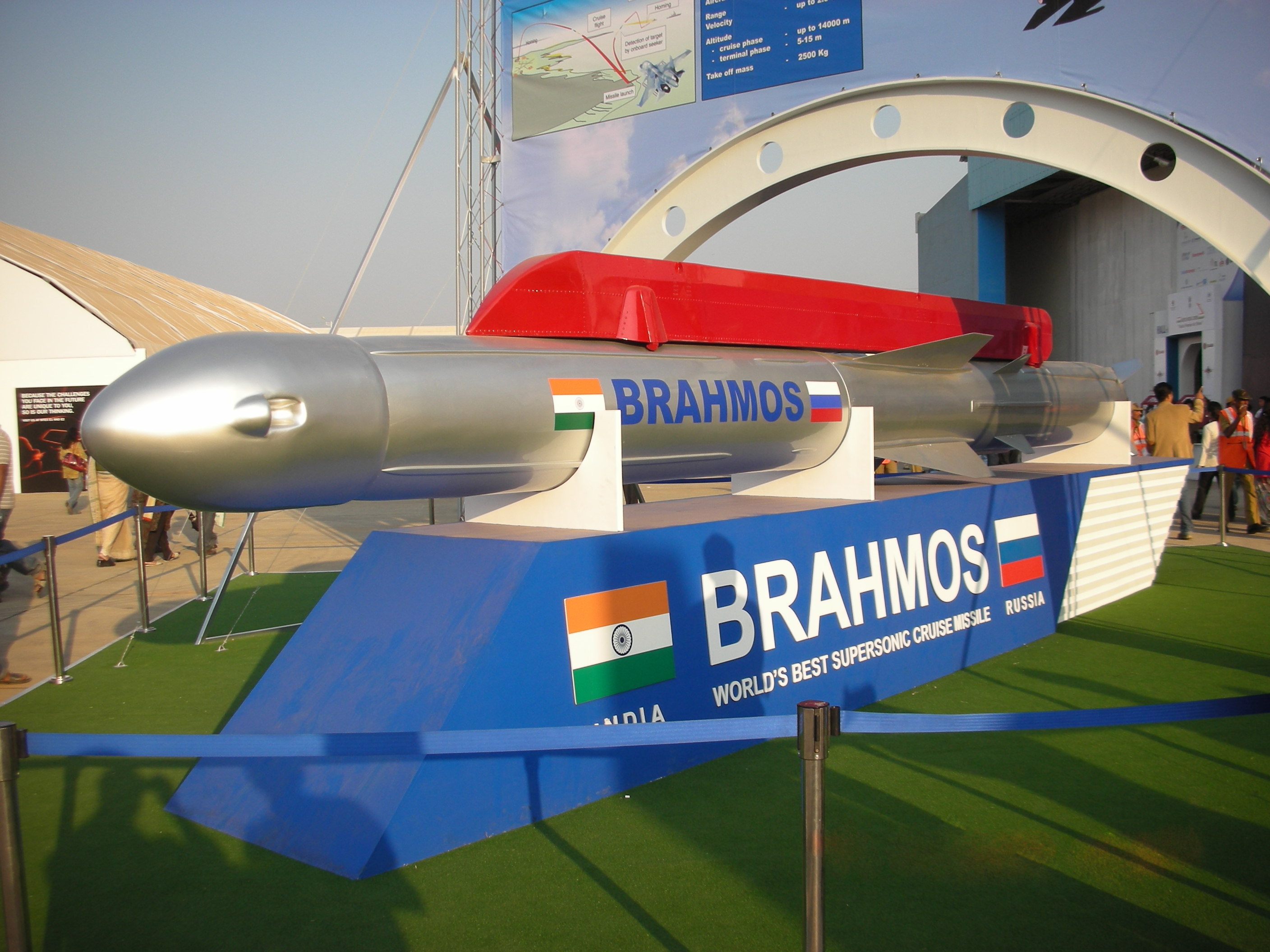
Brahmastra- a Nuclear Missile?
Whenever the use of Brahmastra is mentioned in our scriptures ,the devastation it caused was also described in detail. They allowed it to use only once, that too only as a last resort. When they gave reason for it, they said that it kills the good and bad together and other living beings also. And we know that it was the most powerful weapon of the epic period. What is this weapon? Is it just a fire weapon or more than that? When we compare this with other weapons of Mahabaharata period such as the Shakti missile used by Karna, the Nagastra (Biological weapon?), Pasupatastra etc it is very different from them. When Aswaththama and Arjuna released their Brahmastras, Krishna foreseeing the end of the world by such terrible weapons asked both to recall their weapons. When Arjuna did so, Aswaththama was unable to do it as he did not possess the requisite knowledge. At last Krishna had to use his power to save the child (Parikshit) in the womb of Uttara (from the radioactive fallout?) by using his special powers.
Bhagiratha- a Great Engineer
The story of the descent of river Ganges to the ‘earth’ through Bhagiratha’s several thousand year penance is nothing but a marvelous engineering feat. Three decades ago when engineers wanted to build a dam across
river Nile in Egypt, they removed the massive Abu Simbel statues from the banks of the river and then a bomb explosion diverted the river Nile. The story of Bhagiratha bringing river Ganges to the earth clearly says that several of his forefathers also tried and failed in the mission. That is to say several kings tried to divert the Ganges which was running mostly on the Himalayan mountain but failed. Bhagiratha with great ingenuity, diverted the river by breaking certain point in the Himalaya and the mighty river descended to the present Gangetic plains of North India. We must remember several thousand years ago there were no people on the Gangetic plains. This is what we read as the ‘descent of the river from sky to earth’. Population slowly spread eastward from the Indus plains. So we may call Bhagiratha the greatest engineer of the ancient world.
Did Agastya drink ocean?
Agastya was one of the greatest travelers of ancient India. He was mentioned in the Rig Veda and the Ramayana. He slowly moved southward and established an ashram at the western ghats-Pothya malai. There are lot of myths about him. All this can be explained scientifically. He did divert the river Cauvery to the present Chola mandala like Baghiratha. But in thousands of years it became a myth and we read a crow tilted the ‘kamandalam’ (pot) of Agastya and thus came River Cauvery.
Another story told about Agastya is that he traveled to the south at the behest of Lord Siva. It is
true that either Siva or a Saivite saint requested him to go to the south to disperse the population. The story of Siva’s(Meenakshi wedding) Tirulkalyanam makes it clear by saying the overcrowding of the earth tilted the balance and Siva requested Agastya to go southward. Our fore fathers were such a great planners that they did what we are doing today-building satellite cities! This story is in Tiruvilayadal puranam and other books.
Did Agastya drink the ocean? Agastya was the first person to cross the Indian ocean for the first time to establish a great Hindu empire in South East Asia. We now knew that there was a flourishing Hindu colony in Laos,Vietnam,Cambodia (Angorvat temple) Malaysia,Singapore and Indonesia (Borobudur Stupi) for 1300 years. Now they are all converted as Muslims. Like Columbus and Magellan, he crossed the ocean- that is he ‘drank’ the ocean! It is a symbolic story. Agastya’s statues are displayed through out South East Asian countries even today.
One another myth about Agastya is that he made the Vindhya Hill not to grow again. This is another
symbolic story to say that he crossed the Vindhyas for the first time through the ‘land route’. Before him North and South Indians used coastal sea routes. Tamil literature also makes it very clear in several places that Agastya came to the south with 18 groups of people and he was the one who codified a grammar for Tamil.
Jarasandhan-Siamese Twins?
Jarasandhan was born to two mothers and he came as two balls of flesh. The left and right sides (child) were thrown into a dustbin by the queens in disgust and fear and a rakshasi (wild shaman woman) by name Jara picked it up and gave it to the king after joining both the parts .The fact is one woman gave birth to a Siamese twins (two children joined together physically) and threw it in to the bin. Somebody did some surgery successfully and gave the child in good condition back to the king.
I have counted and listed more than 20 abnormal children in the Mahabjharata. Several of them are
stories of cloning. Mandhata was born out of his ‘father’ says the epic. Another story says that Vaidharbi gave birth to a squash fruit and it was divided into several parts and kept in urns. They became sons. The stories of Shisupala, Sikandi and Sthunakarna talk about organ changes. Vashista and Agastya were born in ‘pots’(Kumba Muni or Kumba Yoni). If we remove all the myths about all these miracle children we see clear medical treatment or surgeries/operations!
Who discovered Boomerang?
All of us knew that the Australian aboriginals had a weapon called Boomerang which will come back to
the person who shoots it. But Krishna’s Sudarsana charka also did the same .Whenever Lord Krishna used it, it came back to him. Was it the first boomerang weapon? Did Krishna teach this art to the world?
Miracle or Solar eclipse?
On the fourteenth day of the 18 day Mahabharata war, Arjuna vowed that he would kill Jayadrathan before sunset or commit suicide. Unfortunately Arjuna couldn‘t kill him. But the story is that Krishna created false sunset using his Sudarsana charka (disc). If we look closely at this event it is nothing but a solar eclipse. The sun light faded for some time because of the eclipse. When all prepared for the withdrawal of the army for the day, the sun came out and Arjuna killed the unguarded Jayadratha. In those days they didn’t fight after sunset.
What I have given here is only very little. If we take the fields of Medicine, Mathematics,
Psychology ,The power of mind/brain, Extra Sensory perception etc. we may write volume after volume. But I wish someone analyses all such events and publish their findings well before the western scientists reveal them. No one will appreciate if we keep on comparing every new invention with the writings in our old literature.
contact swami_48@yahoo.com
Pictures are inserted on 26th March 2014 in the original article. The article was written ten years ago for the South Indian Society UK (London) magazine.
********
Posted by Tamil and Vedas on June 5, 2011
https://tamilandvedas.com/2011/06/05/is-brahmastra-a-nuclear-weapon/
 Tamil and Vedas
You must be logged in to post a comment.