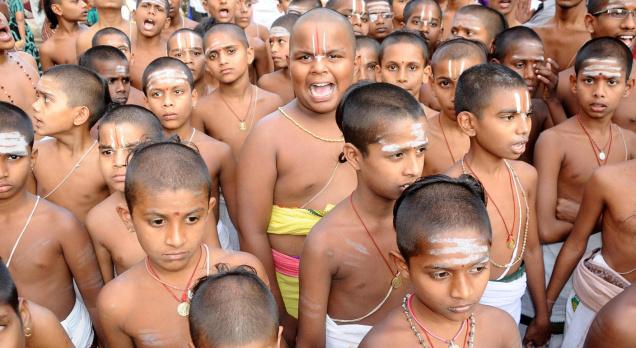
Who are Dravidians?

veda[atasala

By London Swaminathan

(600 Posts so far! Over Three Lakh Hits till this day!! 1200 Hits a day. Thanks for your continued support. You are my inspiration!)

‘’Every town is my town; all are my kinsmen’’ (Pura. 192, Poet Kaniyan Punkunran)


This is the principle of the Tamils; this is my principle as well. I have written the following article to explode the myth of Aryan and Dravidian race theory; the Tamil political parties are cheating the people for long in the name of Aryan –Dravidian divisive politics. This will expose them.


Dravidians are Brahmins! Brahmins are Dravidians!!

I wrote about most misunderstood words earlier and gave the meaning of Ayas/Iron and Asva/Horse. There are two more words Aryan and Dravidian which are misunderstood only after foreigners gave them a wrong meaning. They distorted the meaning deliberately and gave racial connotation to it. They did this to spread their religion and stabilise the British rule. Divide and Rule is a well known policy followed by foreigners who wanted to deprive the natives of their freedom.


The word Arya occurs in seven places in the 2000 year old Sangam Tamil literature. Nowhere itwas used as a racial term. The word Dravida was not found anywhere in the Tamil Sangam Literature of 30,000 lines. But later day literature gives very interesting information. The Anti Brahmin movement used this word as their trump card. The surprising thing about this word Dravida is, it was used only to denote Brahmins in the early days!!


Dravida meant Brahmins in Sanskrit hymn Saundarya Lahari. It was composed by Adi Shankara. Some scholars used the reference of ‘’Dravida Sisu’’  (Dravidian baby or boy) in the hymn as a reference to the Tamil Boy Wonder, Child Prodigy Thiru Jnana Sambandhar. He composed poetry at the age of five and changed the course of Tamil religious life in the seventh century AD. So scholars thought Dravida Sisu was Sambandhar, who was a Brahmin. Religious Heads like Kanchi Paramacharya rejected it and said it may be Adi Shankara referring to himself. ( I have argued that it may be a reference of Abhinava Shankara to Adi Shankara in my Tamil article The Date of Adi Shankara through Tamil Literature). But everybody is in agreement that it referred to a Brahmin boy. So Dravida was used for Brahmins.


Pancha Dravida

Tamil encyclopaedia ‘Abhidana Chnthamani’ by Singaravelu Mudaliyar gives more interesting details. He says ‘Pancha Dravida’ means the Brahmins of Gujarat, Maharashtra, Karnataka, Andhra Pradesh and Tamil Nadu. Here again the word was used only for Brahmins.

India was divided in to 56 states in the olden days. The list of 56 states or countries of India listed Chera, Cholza, Pandya, Kerala, Konkana and Dravida meaning Dravida was not Tamil Nadu. So it was out of Tamil Nadu and was not a part of it. Dravida may be a small geographical area adjacent to Tamil country. But atheistic Tamils projected Dravida as Tamil land and named their political parties on the basis of it. Here Dravida meant an area in the South.


Dravida Veda

Divya Parbandham is an anthology of 4000 verses composed by 12 Vaishnavite saints called Alvars. Not all the 12 Alvars were Brahmins. But it was called Dravida Veda denoting the Veda of the South.

Dravida Bhupathi was a king of Agastya’s time according to Abhidana Chintamani. Dravidachari was a Brahmin commentator of Vedanta Sutras. Dravidan was another king of Surya Kula ( Sun Clan).

Rahul_Dravid

Cricketer Dravid

Famous cricketer Rahul Dravid was a Maharashtrian Brahmin. Brahmins who migrated to north were called Dravids. Brahmins who migrated to Gujarat were called Pandyas. Brahmins who migrated from Tri Linga Desa (Telugu=Triling) are called Dhillons. Brahmins of Chola Desa were called Soziyas. This gives another fact that Brahmins did not come from North to South, but migrated from South to North. Mahavamsa also speaks of Brahmins present in Sri Lanka from time immemorial. Probably Tamil Brahmins went everywhere like Adi Shankara and Ramanujan. Both of them were from Tamil speaking areas of the South. Even today we have Tamil priests in the North including Nepal.


Agastya’s March to the South

Tamil scholars of olden days wrote that Brahmins came from north with Agstya. But Tamil literature gives contradictory information. Tamil commentators of Purananurau anthology said Agastya led 18 clans including Velirs, not Brahmins. Even before Agastya came to the south,  Brahmins were there in Tamilnadu. Indus Valley ‘’Scholars’’ also said Dravidians ran to the South fearing for their life, not Brahmins. Indus valley excavators projected Dravidians as a cowardly people running helter skelter fearing invading barbaric Aryans!!! Now we know Dravidians were not cowards and Indus civilization came to an end because of geological changes.

Tamil= Dramila=Dravida

Even the word TAMIL came from Dravida according to some scholars. Some others say it was vice versa ( Dravida= Dramila=Tamil). Even here it is only the language and not any race!

I have written an article about a Dravidian Queen who ruled in the north in 1320 BC. It is only one interpretation of the queen Idavrida= Ilavrida=Dravida by one of the scholars.


To add to confusion, foreign scholars said that the Dravidians came from Mediterranean region. They even said there was similarity between Finnish, Turkish and Tamil. But I have shown elsewhere the closest language to Tamil is Sanskrit. Turkey was the place where the oldest inscription with Sanskrit names was found. Vedic Gods are there in the Bogazkoi inscription of 1400BC. Mitanni nearby have kings with Sanskrit names. No one has explained satisfactorily how Finnish and Turkish had link with the Tamils. On the other hand Tamil enthusiasts say that they had their origin in Kumari Kandam situated beyond Kanyakumari–the land’s end.


Foreigners misled the entire scholarly world by saying that the invading barbaric Aryans drove out all the Dravidians from the Indus. If it is true Indus Valley must have hundreds or thousands of Dravidian skeletons! Sixty years ago some scholars even said the language of the Indus was Dravdian in structure and till this day not a single word was deciphered! They always mislead the scholars and general public. Sangam Tamil literature knew Ganges and Himalayas very well, but they never knew INDUS!!! There is no reference to the river or Punjab region. If there was a prize for Fiction in those days,  Indus valley excavators would have got it for discovering Dravida Shiva and Dravidians running for life!!


The above examples show that the words Aryan or Dravidian never had a racial connotation in Indian literature till the foreigners imposed it and misinterpreted every walk of life. India was one with one culture. If different languages are an indication of different races, then no one can explain why New Guinea Island has 700+ languages. They can’t even explain why so many languages are in India.

Dravida denoted the South of India. So anyone from the south was a Dravidian, not necessarily Brahmins. It is like North Indians calling all the South Indians ‘’Madrasis’’ (Madras men).

todaToda Tribal; calssified as Dravida by foreigners


(Please read my 600 articles posted here on the above subject and Indian culture. Some of the related topics are given below:

1.Dravidian Queen (1320 BC) in North India (2).The Biggest Brainwash in the World  3)Tamil Sangams: Myth and Reality 4) Indra festival in the Vedas and Tamil Epics  5.Bull fighting: Indus valley to Spain via Tamil Nadu 6.Karikal Choza and Eagle shaped Fire A tar 7.Why do British judges follow a Tamil king? 8.Flags : Indus Valley- Egypt Similarity 9. Veera Matha in the Vedas and Tamil Literature 10. Pandya King who ruled Vietnam.

Contact swami_48@yahoo.com


Pictures are taken from various websites; thanks.
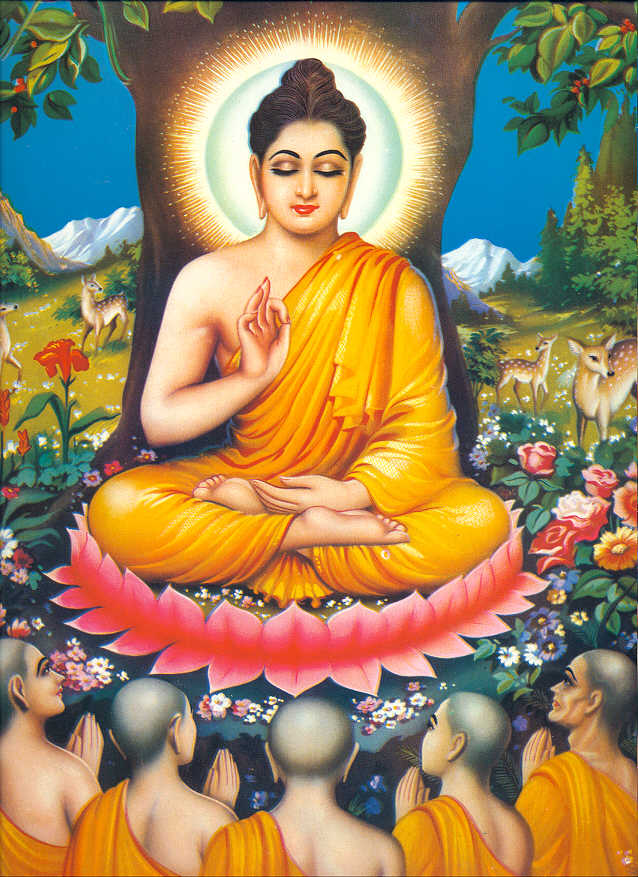
60 second interview with The Buddha


(Questions are imaginary; answers are from The Dhammapada)

Buddha, people say mind is like a monkey, jumping from one thing to another. How can we control it?

The mind is wavering and restless, difficult to guard and restrain: let the wise man straighten his mind as a maker of arrows makes his arrows straight (33).

What is the eternal law?

For hate is not conquered by hate; hate is conquered by love. This is a law eternal (5)

Who is happy?

The man who does good things is happy in both worlds. He is glad, he feels great happiness when he sees the good he has done (16).

Why are thoughts important?

What we are today comes from our thoughts of yesterday, and our present thoughts build our life of tomorrow; our life is the creation of our mind (2).

Can we criticize others when they do something wrong?

Think not of the faults of others, of what they have done or not done. Think rather of your own sins, of the things you have done or not done (50).

Who is a fool?

How long is the night to the watchman; how long is the road to the weary; how long is the wandering of lives (samsara) ending in death for the fool who cannot find the path (60).

Who is wise?

Even as a great rock is not shaken by the wind, the wise man is not shaken by praise or by blame.

What is the source of joy?

Wherever holy men dwell, that is indeed a place of joy- be it in the village, or in a forest, or in a valley or on the hills (98).

 Can we call a person Hero who kills hundreds of people with his AK 47 gun?

If a man should conquer in a battle a thousand and a thousand more, and another man should conquer himself, his would be the greater victory, because the greatest of the victories the victory over oneself (103-105).

Should I postpone doing good things till my old age?

Make haste and do what is good. If a man is slow in doing good, his mind finds pleasure in evil (116).

Lord Krishna (Gita 2-58) compares a tortoise to a self controlled Yogi and you said something similar…

The man whose hands are controlled, whose feet are controlled, whose words are controlled, who is self controlled in all things, who finds the inner joy, whose mind is self possessed, who is one and has found perfect peace-this man I call a monk (362)

Lord Krishna in Gita says Arise! Attain Glory! The Self is the friend and foe of the Self.

Arise! Rouse thyself by thy Self; train thyself by thyself, thy Self. Under the shelter of thy  Self , and ever watchful, thou shall live in supreme joy (379, 380)

Buddha, you have given one full chapter for Brahmins (Chapter 26) in Dhammapada. Who is a Brahmin according to you?

A man becomes not a Brahmin by long hair or family or birth. The man in whom there is truth and holiness, he is in joy and he is a Brahmin (393)

Who is free from anger, faithful to his vows, virtuous, free from lusts, self restrained, whose mortal body is his last- him I call a Brahmin.(400)

One should never hurt a Brahmin; and a Brahmin should never return evil for evil (389)

About misers….

Misers certainly do not go to the heaven of the gods (177)

About Birth……

It is a great event to be born a man (182).

About Love…..

O let us live in joy, in love amongst those who hate! Among men who hate, let us live in love (197).

About Health……

Health is the greatest possession. Contentment is the greatest treasure.  Confidence is the greatest friend. Nirvana is the greatest joy. (204)

Buddha, Thanks a lot. You have enlightened us.


No Brahmins, No Tamil!!

Written by By S Swaminathan

Posted on 14th January 2012

Tamil is one of the oldest, richest and sweetest languages in the world. A great many people, irrespective of their religion and caste, have shed their blood and sweat to foster and preserve the language and the culture. We salute all those great people. But yet a lot of mischievous propaganda by the Dravidian political parties in Tamil Nadu has misled the public to a great extent that they really believed Brahmins were aliens to Tamil culture. But anyone who goes deeper in to ancient Tamil literature known as Cankam (also called Sangam) literature would find out that without Brahmins Tamil would have died or at least become poorer two thousand years ago. The reason being Brahmins were the teachers of that language, like in other parts of India. So much was their contribution that any deletion of references to words like Brahmins, Vedas, Yagas, Sanskrit words, Sanskrit names from those books would leave the Tamil literature like a virus affected software. That is to say it would be incomplete without their contribution. Literally hundreds of references are there in the books. Ramayana ,Mahabharata and Puranic references are also in abundance.

The oldest Tamil book Tolkappiyam says Tamils worshipped the Vedic gods Indra , Varuna and Vishnu (Ref.Porul Adhikaram-1.5)

Two great Tamil kings were praised for their great yagnas- RAJASUYAM vetta Perunarkilli and Mudukudumi Peruvazithi. The first one was a Choza who did the great fire ceremony called Rajasuyam. We knew from Mahabharata that Dharma did this yaga. The second one was a Pandya king whose country was full of Yupa pillars. He was praised as if he would bow only twice-when he goes around a temple or when he sees a Brahmin. He was indomitable and invincible that the entire world would bow to him (ref.Purananuru Poem 6)

Nalliakodan’s palace is open to Brahmins 24 hours a day,  says Sirupantruppadai. Seraman Selvak Kadungo Vaziyathan will bow only to Brahmins , says Pathitru Pathu. In short we have so many references about kings bowing only before Gods and Brahmins.

Kapila was the giant among Cankam poets. He composed the highest number of poems (over 230) in Cankam period. Not only he composed Tamil poems, he taught a North Indian King Brahadhathan and made him to write a poem in Tamil. When he ridiculed Tamils, Kapila did teach him a real lesson. Kapila was praised by other Cankam poets as “A Brahmin of spotless character”.

A lot of Cankam poets have Sanskrit Names : Damodaran, Kesavan, Mahadevan, Vishnudasan, Kannadasan, Valmiki, Sahadevan, Gauthaman, Kausikan (Viswamitra), Kavya (written as Kappiya), Acharya (aasaan),Brahmachari

Over twenty Tamil poets are Nagas! They may not be Tamils. There is no reference to Nagas in five fold land division of traditional Tamils: Kurinji, Mullai,Marutham,Neithal and Palai landscapes have their own set of peoples and their own Gods such as Skanda Murugan,Vishnu,Indra, Varuna and Durga. Naga race lived in different parts of India.

The word Veda was beautifully translated by the Tamil poets. One poet described Veda as ‘Ezutha Kilavi’= unwritten word. Another poet praises it as ‘Ezutha Karpu’= unwritten chastity. He means that once written it’s purity would be lost and that is why the Brahmins pass it by word of mouth. Other poets call the Vedas as Marai= secret. They understood that the Vedas are written in a secret language with enigmatic or hidden meanings. Kaduvan Ilaveyini says that God is in secret form in the Vedas (Ref. Paripatal)

Karikalan and the Vedas

Karikalan and Rig Veda: Karikal Choza was praised as a supporter of Vedic practices. When you want to see your friends off you will have to walk seven steps with them and say good bye-says Rig Veda. The Saptapadthi ceremonly in wedding is also part of it. Karikalan was praised to have walked seven teps with his guest and see them off (Ref. Line 166 in Porunar Atruppadai by Mudathama Kanniyaar)

Brahmins are always referred to as one who looks inward (Anthanan or Paarppaan), one who always think of Brahman (Brahmanan). They are called one who do six jobs –Aru Thozilor- (In Sanskrit Shad Karma sukrutha:) because they do the following six kind of jobs,1.Learning,2.Teaching,3.Performing fire ceremonies  for others 4.Doing fire ceremonies for themselves,5. Accepting Gifts and 6.Donating gifts.

They are attributed with six virtues 1.One who seeks Brahman,2.One who takes two Births/Dwija,3.One who worships three forms of Agni/fire 4.One who practises four Vedas,5. One who controls all the five senses and 6. One who does six kinds of Jobs. Anyone can notice numbers 1,2,3,4,5 and 6 are used to describe Brahmins. The play on numbers has been used by thevTamil poets for two thousand years.

Brahmins acted as messengers as well during Cankam period. Dramas of Kalidasa and Bhasa also attributed this messenger role to Brahmins.

VEDIC GODS IN OLD TAMIL BOOKS

Following Hindu Gods and Godly persons were mentioned in Cankam literature:

Indra,Varuna,Agni,Yama,Rama,Krishna,Balarama, Shiva,Uma, Vishnu,Lakshmi, Parasurama,Kubera,Surya,Chandra,Arundhati, Gods in City Squares, Gods in trees, Gods in Hero Stones, Goddess of Kolli Hills,Gods in water sources etc. Reference of Holy bath in Cape Comorin and Dhanuskoti is also found in Tamil books.

Tamil Queen Committed Sati

There is a reference of a Pandya queen, Bhuta Pandyan Perun Devi, committing Sati as well. There is another reference of a poet going straight to heaven after performing a particular type of Yagna (Ref. Pathitru Pathu/Tenfold Ten poems).Gowthamanar who sang about Kuttuvan Cheral was transferred to Swarga (heaven) when he completed ten yagams with the help of the king. It is mentioned in Silappathikaram as well.

List of Brahmin poets and their contribution in Cankam literature:

Agasthyar ,who received Tamil language from Shiva

Tolkappiyar (Thruna dumagni), who wrote grammar after Agaththiyam became obsolete.

Amur Gowthaman Sathevanar (Sahadevan)

Kadiyalur uruththiran Kannanar ( Rudra Aksha)

Kodimangalam Vathula (Gothra) Narsenthan

Sellur Kosikan (Kausika Gothra) kannanar

Madurai Teacher Nalanthuvan

Madurai Ilam kausikanar

Madurai Kanakkayanar

Nakkiran,son of Madurai Kanakkayanar

Madurai gownian (Kaundinya Gothra) daththnar

Mamulanar

Uraiyur enicheri mudamosi

Perunkundrur Perungkausikan

Kumattur kannan

Gowthaman

Valmiki

Vadamavannakkan damodaran

Vembathur kumaran

PARANAR

Kapilar-Paranar, Kallada-Mamulanar are always treated as pairs. Of them Kapilar and Mamulanar are known Brahmins. But others are not classified under any caste. But my research shows Paranar is a Brahmin.

  1. Chera King sent his son with him for education. This was done in those days only with Brahmins.
  2. He was given land (Umbarkadu as Brahmadeyam) which was also done only to Brahmins or Temples in those days.
  3. Paranar is not a Tamil name. It is one of the Gothra Rishi’s name.
  4. Scholars like P T Srinivasa Iyengar also consider him a Brahmin.
  5. Dr R Nagaswamy, eminent historian and archaeologist of Taminadu also listed Paranar as a Brahmin in his book Yavarum Kelir.
  6. Paranar must be well versed in Sanskrit because he has translated and used lines from Kalidas’s poems and Vedic hymns.
  7. The name Paranar comes as a Brahmin’s name in the Story of Vikramaditya.

If we include Paranar’s  80+ poems with Kapilar’s 230+,  it will form a huge chunk in the Cankam works.


Books by Brahmin poets

Tolkappiyam (Pre Cankam period)

Kurinji pattu (lines 261)

Thiru murugatruppadai (lines 317)

Pattinap palai (Lines 301)

Perumpanatrup padai (Lines 500)

Malaipadukadam (lines 583)

Nedunal vadai (lines 188)

Six out of Ten Idylls sung by Brahmins

Pathitrup pathu (all except one)

Ainkurunuru (Kapilar’s 100)

Brahmin’s contribution adds up to 10,000 lines, nearly one third of the Cankam literature. The man who went from village to village to collect all these manuscripts was Mr U V Swaminatha Iyer, a Brahmin. We would have lost most of the Tamil treasures without his hard work.

Post Cankam Brahmin Writers

Thiru Gnana Sambandhar

Sundarar

Manikka Vasagar

Andal

Periyalvar

Madura kavi alvar

Tondaradippodi alvar

Jayamkondar

Ramanujar

(Though Adi Shankara and Dandi are from the South they did wrote only in Sanskrit)

Parimel Azkar: Though ten scholars wrote commentaries on the most famous Tamil ethics Tirukkural, Parimel Azakar’s was the best and most popular.

Nachinarkiniyar: The greatest commentator of Tamil literature. What Adi Sankara did for Upanishads, Brahmasutra, Bagavad Gita and Vishnu Sahasranama, Nachinarkiniyar did for Tamil literature. He wrote and wrote and never stopped. Without his commentaries we wouldn’t understand the Tamil poems at all. He was a voracious reader and a prolific writer.

Senavaraiyar: He wrote commentary on Tolkappiyam

U Ve Swaminatha Iyer: He was the doyen of Tamil literature. He saved Tamil books by visiting village after village to collect the old palm leaf manuscripts. Without his collection Tamil would have lost very valuable works. The Tamil world is indebted to him forever.

Bharathiyar: This twentieth century revolutionary poet was the giant of modern Tamil. He simplified the language of the poems and made it popular. He was the first one to write on various themes like God, nature, women’s liberation, education, freedom from poverty and patriotism. He broke the shell which insulated Tamil and made it available for laymen.

Parithimar Kalaignar: He was the first one to suggest Tamil should be declared a classical language.

We don’t want class and caste divisions in the society. But if anyone says that Brahmins came from outside India via Khyber Pass and they were alien to Tamil language and culture, my argument will be a nail in the coffin of those Brahmin haters.