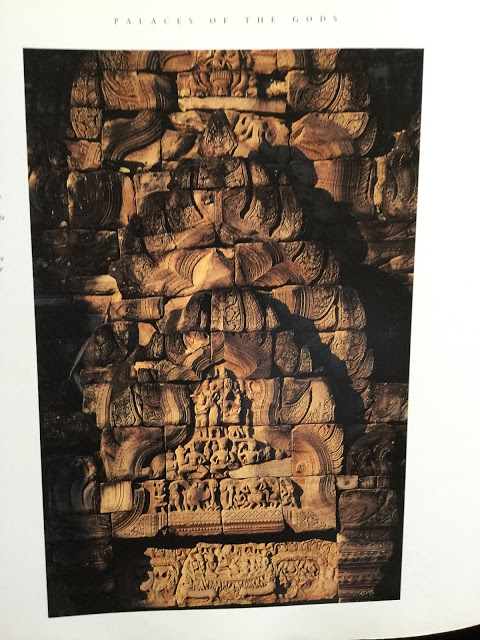
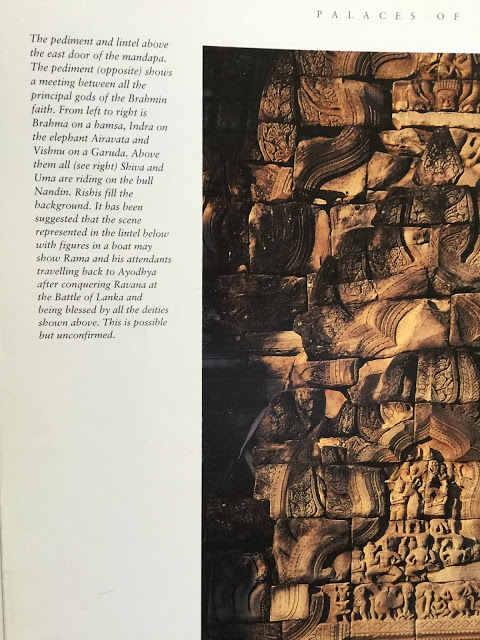
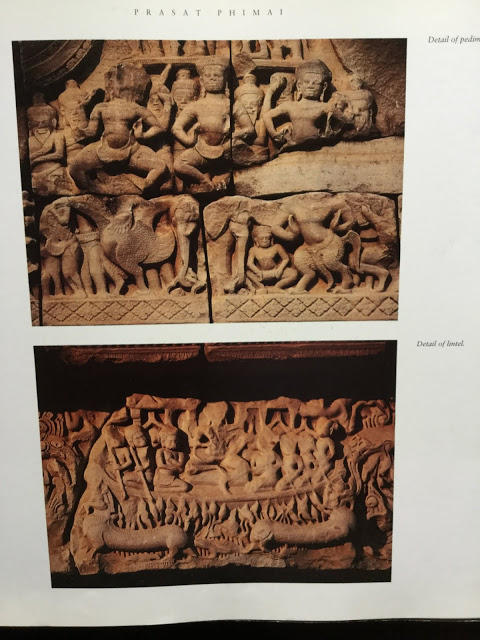
Interesting Stories from Mithila, Sita’s Birth Place (Post No.5190)

Sita Mandir, Janakpur, Nepal.

COMPILED  by London swaminathan


Date: 7 JULY 2018


Time uploaded in London –   7-17 am  (British Summer Time)


Post No. 5190


Pictures shown here are taken from various sources such as Facebook friends, Wikipedia, Books, Google and newspapers; thanks. Pictures may be subject to copyright laws.


There are many interesting stories about the City of Mithilaa.
The most famous story is from the Upanishad about the philosopher king Janaka discussing the meaning of the Veda when Mithila was on fire.
Janaka was not only a great king and a great sacrificer but also a great patron of culture and philosophy. His court was adorned with learned Brahmanas from Kosala and Kuru Panchala regions. Some of them are named , Asvala, Jaratkarva, Artabhaga Miss Garki Vacaknavi, Uddalaka Aruni, Vidagdha Sakalya and Kahoda Kausitakeya A Brahmin named Brahmayu who was well versed in history, grammar and worldly wisdom lived in Mithilaa.

In the Mahabharata,12-17, there is a saying attributed to Janaka of Mithilaa. Seeing his city burning in a fire the king of Mithilaa sang thus
“In this world, nothing of mine is burning
Mithilaayaam pradtaayaam na me dahyati kincana”

xxx

But there are other stories not that popular.
Mithilaa was the capital of the kingdom of Videha also called Tirabhkti, modern Tirhut.

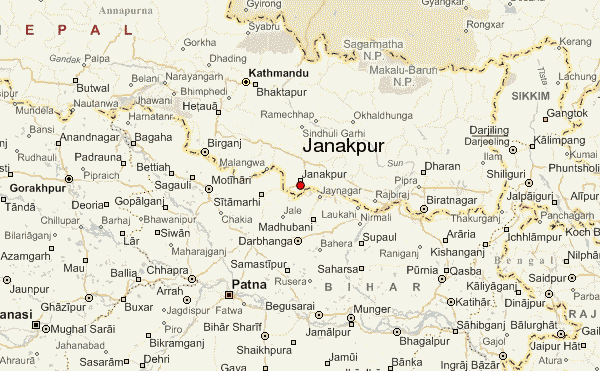
Mithila has been identified with the modern Janakapura, a small town within the Nepal border.

During the reign of Janaka, it took Visvamitra together with Rama and Lakshmana four days to reach Mithilaa from Ayodhyaa to. On the way they rested for one night at Visala (Valmiki Ramayana)

(My comments: the road distance today is 450 kms. They must have travelled by a short cut route and they could have walked at least 50 miles a day or by horse ride it is quicker)
According to Satapata Brahmana, Videha was so named after Madhava, the Videha who colonised it. Videha was famous for handsome people and horses of noble breed
xx
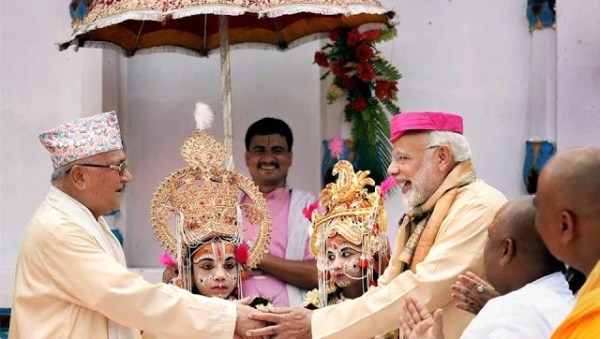
 

Narendra Modi in Janakpur, Nepal.
Mahabharata on Mithilaa
Bhima and Arjuna visited it with Krishna on his way from Indraprastha to Rajagriha.

Mahabharata points out that Karna conquered  Mithilaa during his digvijaya.


xxx
Jain literature on Mithilaa
Mahavira 24th Tirthankara of Jainism Mahavira was born in Videha and he lived there for thirty years. He was called Videha and his mother was called Videhadattaa.

xxx

Story of Nimi
Vasisthta having performed a fire sacrifice of Indra proceeded to Mithilaa to commence a sacrifice for King Nimi. On reaching there he came to know that the king had engaged Gautama to perform the sacrificial rites. Seeing the king asleep he cursed him thus king Nimi will be bodiless. (Videha =vigata Deha) because he rejected me. The king on awakening cursed Vasistha saying that he too would perish as he cursed a sleeping king.
The sages churned the body of Nimi and as a result of the churning a child was born, afterwards known as Mithi. After Mithi, Mithilaa was named and the kings were called Maithilas.
This is in Vishnu Purana
Xxx


Jataka stories
MIthila had at each of it’s four gates a market town. They formed for suburban towns. Videha contained 16000 villages 16000 store houses and 16000 dancing girls.


A disciple of the Buddha who was an inhabitant of Sravasti took cart loads of articles and went to Videha for trade. There he sold his articles and filled the carts with articles got in exchange.

King Videha had four sages to instruct him in law. The son of this king was educated at Taxila. A young named Pinguttara living in Mithilaa went to  Taxasiila and studied under a famous teacher. He soon completed his education. Then after diligent study he proposed to take leave of his teacher and go back home. But in the teacher’s family there was a custom if there be any daughter ripe for marriage, she should be given to the eldest pupil. So the teacher said,
I shall give you my daughter and you shall take her with you. He went home as a married man.
Xxx

Sumedha and Buddha

Sumedha, a childless widow of Suruchi, king of Mithilaa prayed for a son. She took the eight fold vow (Ashtasiilaani), and sat meditating upon the virtues. Sakka  in the guise of a sage came to fulfil her desire. He was entreated by her to grant her the boon of a son. She was asked by him to sing her own praises in fifteen stanzas, which she did to his satisfaction. Afterwards she was blessed with a child.

Xxx
Videha was ruled by Cedaga, Mahavira’s maternal uncle. He was an influential leader of Lichchavi confederacy. His daughter Cellanaa or Vaidehi was married to Srenika Bimbisara of Magadha and became the father of Kunika Ajatasatru

XX x

Vedas mentioned a king named Namiisaapya
Xxx
600000 pieces a day!
King Saadhina of Mithilaa lived in happiness for many years. He ruled this city righteously. Six alms halls were built by him. Daily sixth thousand pieces were spent in alms.
Xxx
Bodhi sattvaavadana kala of Kshemendra refers to Mithilaa ruled by Pusphadeva who had two pious sons named Chandra and Surya. The munificent king Vijitavi of Mithilaa was banished from his kingdom. He took shelter in a leaf hut near the Himalayas. Mithilaa was governed by the descendants of a Nagadeva, Sagaradeva, and Mahadeva
Xxx
3000 Kings of India!!!

Sita Stamp.

Some time back I started posting the names of 3000 Kings of India. After 1500 plus, kings I got one here and one there. So I stopped posting them Here in  Mithilaa, we come across following new names:

Mostly from Jataka stories

Mahajanaka,

King Saadhina,
Namisaapya, Vedic index I, 436
Pushpadeva,
Vijitaavi
Cedaga, jain sources
King Angati,
Mithi
King Mahadeva (Madhva)
King Pabhata
King Suruci

Nagadeva
Sagaradeva

(other kings are already covered in the Purana list of Kings)
Xxx
Polygamy
Brahmadatta, king of Benares, had a daughter named Sumedha whom he declined to give in marriage to a Videha king who had large number of wives, fearing that her cowives wold make herself life miserable. Polygamy appears to have been in vogue among some Videha kings.


Source- India Antiqua, Leyden, 1947

Xxx SUBHAM xxx

RARE PAINTINGS AND RARE SCULPTURES (Post No.5188)

COMPILED  by London swaminathan


Date: 6 JULY 2018


Time uploaded in London –   13-58

 (British Summer Time)


Post No. 5188


Pictures shown here are taken from various sources such as Facebook friends, Wikipedia, Books, Google and newspapers; thanks. Pictures may be subject to copyright laws.


A KRISHNA WITH A LION AND ELEPHANT IN TWO HANDS IN THAILAND PRASART MUSEUM. PALLAVA PAITINGS OF SITHTHANNAVASAL (TAMIL NADU) ARE IN 1926 BOOK. KRISHNA’S ADVENTURE OF LIFTING GOVARDHANA HILL IS IN GUJARAT. SOME RARE PIECES FROM VERY OLD BOOK ARE GIVEN BELOW:


MAHADEVA- PALLAVA PERIOD

GANDHARVA

APSARA

MUSIC PARTY- BAGH FRESCO

KRISHNA LIFTING GOVARDHANA HILL

RAMA’S DEPARTURE FROM AYODHYA

DAANA LILA


WOMAN IN THE KITCHEN

INDRA AND MAHA KALA (BHAIRAVA)

KRISHNA LIFTING A LION AND AN ELEPHANT

–SUBHAM–

YUPA- SACRIFICIAL POST- PART 2 (Post No.5186)

RESEARCH ARTICLE by London swaminathan


Date: 6 JULY 2018


Time uploaded in London –   5-53 am

 (British Summer Time)


Post No. 5186


Pictures shown here are taken from various sources such as Facebook friends, Wikipedia, Books, Google and newspapers; thanks. Pictures may be subject to copyright laws.


We have already seen the references to Yupa, the sacrificial post, in the Rig Veda, Tamil Sangam Literature and 19 Yupa inscriptions found in India and Indonesia.


An interesting nomenclature concerning Yupa is found in Brahmana Adhyaya of the Bhumiknda of Yadhavaprakasa’s Vaijayanti, a well known Sanskrit lexicon.

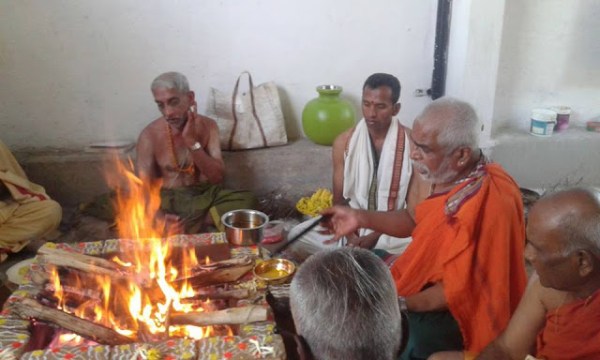
While Yupa is a consecrated sacrificial post, Homayupa is one that is set up at sacrifices only for the decoration. The two Yupas that flank every fire at sacrifices are known by the name Upastha. Whatever, Yupa and the like, stands in front of the fire, is called Agnishta. The middle and the top of Yupa are called Samaadaana and Tarman respectively. The ring near the top is called Chasthaala. The rough unhewn bottom part of a Yupa is called Tuupara. Its girdle is known as Parivyaana, and wrappings Kumbaa.


Number 17

If the Yupa is seventeen cubits long, these seventeen cubits, from bottom upwards are designated, Methika, Uttraasa, Svarumochana, Anjana, Vaiyathita, Kshaalana, Savasiirshaka, Sudhanva, Rathagaruta, Saikhaalika, Karanjaka, Vaasava, Vaishnava, Tvaashtra, Saumya, Maadhura and  Vejana respectively.

During the Vajapeya Yaga, a race of 17 chariots was held.

Prajapati is represented by Number 17.

Number 17 is a mysterious number in the Hindu Vedas. I have already explained it  in my article (see below)

Mysterious Number 17 in the Vedas! (Post No.3916) | Tamil and …

tamilandvedas.com/2017/05/17/mysterious-number…

Research article Written by London Swaminathan Date: 17 May 2017 Time uploaded in London: 19-46 Post No. 3916 Pictures are taken from various sources such as Face …


From the above description, we come to know that there was one post for symbolically tying the victim and other posts to decorate the Yajna Bhumi.

An idea of the picturesque view of the Yajna Bhumi can be gathered from the Asvamedha Sacrifice scene in Valmiki Ramayana (Bala Kanda 14-22/27):–


We are told that 21 Yupas were erected and every one of them was octagonal and 21 cubits long. They are draped each in a cloth and adorned with fruits, foliage and flowers. The 21 Yupas were likened to  the Seven Rishis (Sapta Rsi= Ursa Major Constellation). The idea is that each of the sacrificial fires, ie. Gaarhapatya, Aahavaniiya and Dakshinaagni was allotted seven posts. There were thus three groups of seven each.


The elaborate descriptions, exact size and naming of the different parts show they were not pillars or posts for animal sacrifice or tying of the victim of the Yaga. All these explain the philosophy, some of which is already lost, behind the Yupa.


Ravana’s son Meghanaada is credited with a number of sacrifices. His sacrificial grove is described in the Ramayana to be bristling with hundreds of Yupas. The vast number only denotes their decorative role (Uttarakanda 25-3)


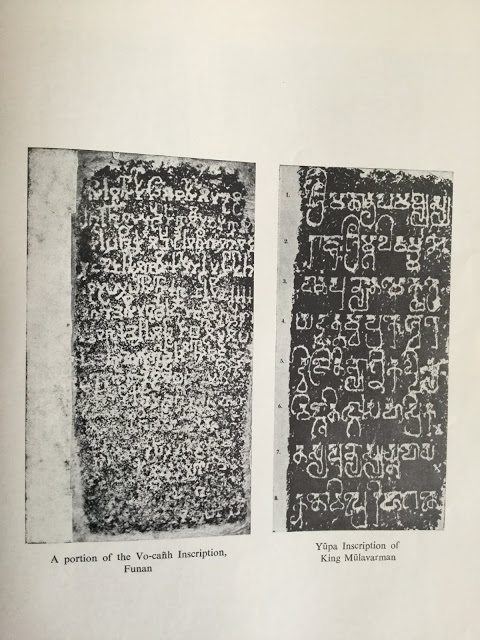
Regarding the inscriptions on Yupas, all are dated and this shows the historical sense of Hindus that existed 2000 year ago. We find Vikrama era, Kushana era and Krita era.

I have already given the names of Sangam Age Tamil kings and the Indonesian Kings in the first part. In North Indian Yupa inscriptions we come across:

Kushana

Maalava

Mokhari.

The Yagas performed were

Dvaadasa raatra,

Sapta soma samsthaa

Ekashasti raatra

Tri raatra,

aptoryaaman,

Pundariika etc.


Another interesting information available from the Indonesian Mulavarman’s Yupa is that he did ‘Bahusuvarnaka Yaga’.

It is also known as Bahu Hiranya (lot of gold)

Bahusuvarnaka is mentioned in Valmiki Ramayana (Balakanda 1-95).

Now we know from Uttarakanda that Meganada did the following seven sacrifices:

agnishtoma

Asvamedha

Bahu suvarnaka

Rajasuuya

Gomedha

Vaishnava

Mahesvara.


Thus Mulavarman proved tht Ramayana gives historical information and Ramyana proved that Mulavarman did a sacrifice which was famous from the Ramayana days.

In other words Ramayana and Sanskrit inscriptions corroborate the details of Yagas.

( I have given lot of Yaga names in my article about ‘400 types of Yagas’. We may add the details found here as well.)

Source: Ramayana, Sangam Tamil Literature, Rig Veda and ‘Indian Antiqua, Kern Institute, Leyden, 1947’.

–Subham–


INDIAN HISTORY BEGINS BEFORE 2,50,000 YEARS; NEW CHRONOLOGY (Post No.5179)

Compiled by London swaminathan


Date: 4 JULY 2018


Time uploaded in London –   6-39 am (British Summer Time)


Post No. 5179


Pictures shown here are taken from various sources such as Facebook friends, Wikipedia, Books, Google and newspapers; thanks. Pictures may be subject to copyright laws.


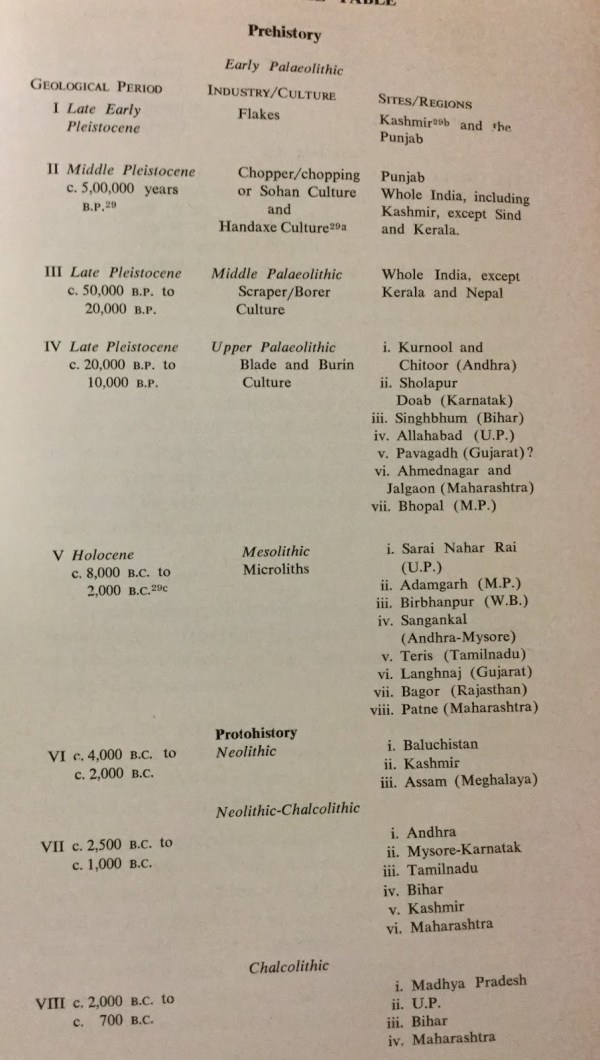
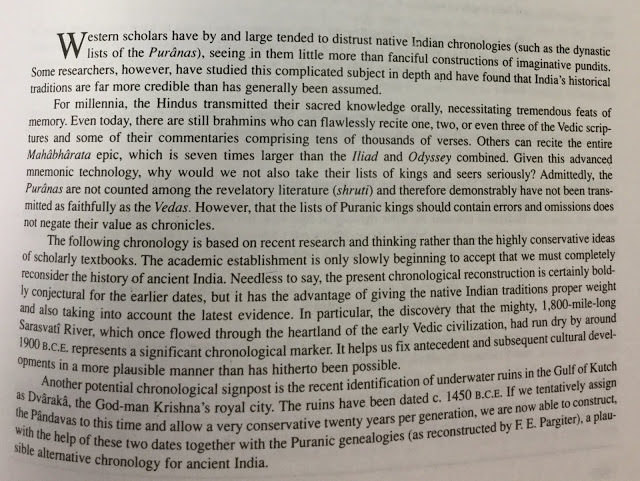
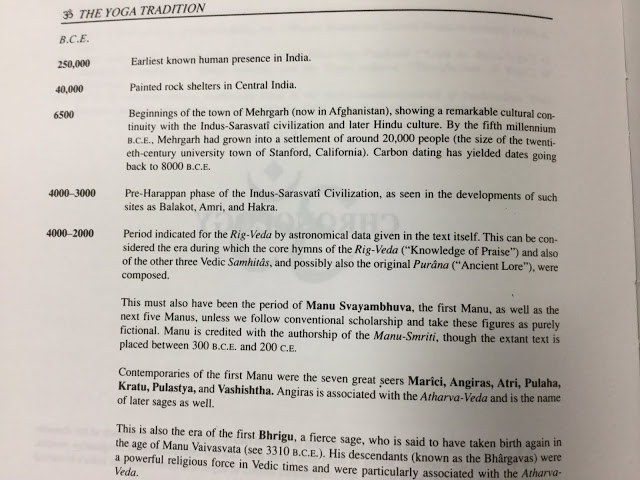
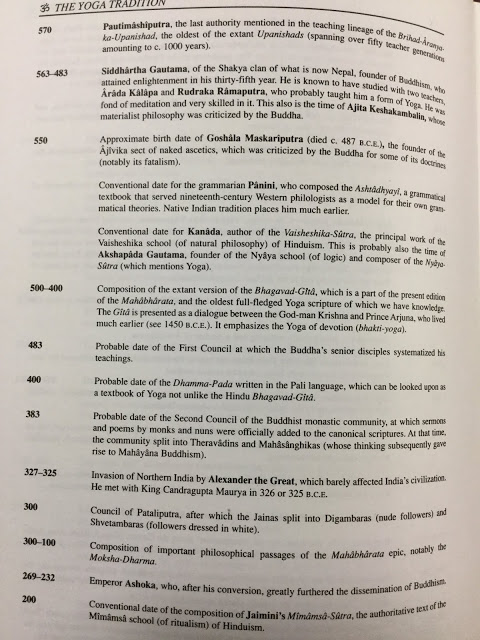
Latest research shows that Indian history begins in 250,000 BCE. Bhimbetka caves in Madhya Pradesh has 40,000 year old paintings. If human beings live in the heart of India amidst thick forest, deep inside India, far from the sea coast, they must have been there several thousand years before that date. it raises a question about the popular belief that human beings slowly migrated from Africa about 60,000 years ago. We have older evidence to prove that the theory is wrong.


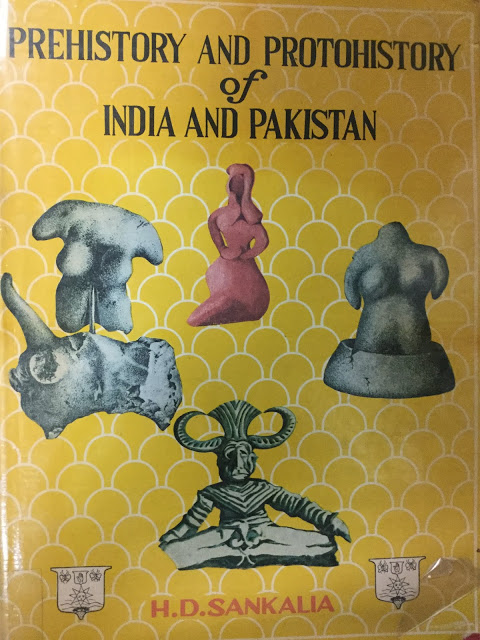
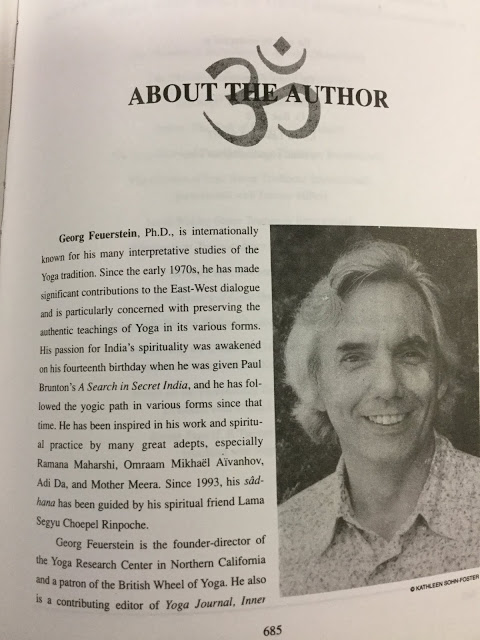
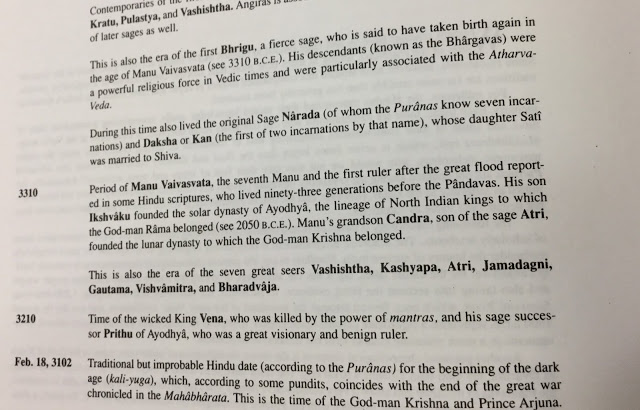
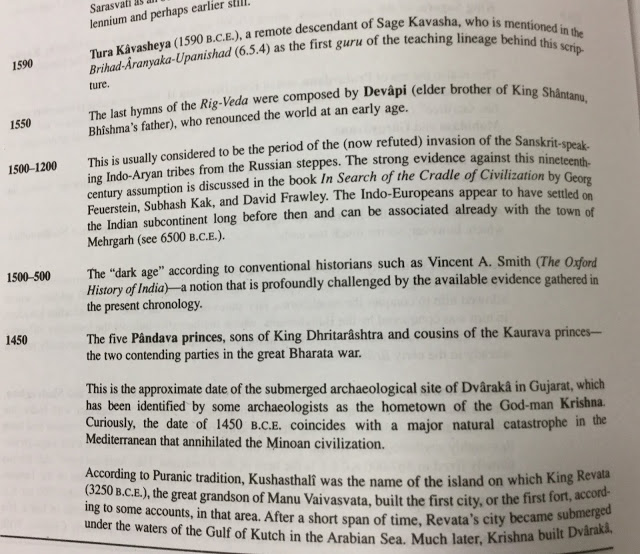
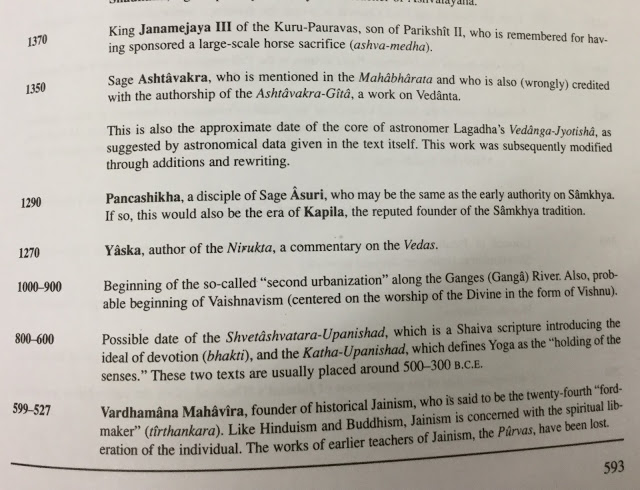
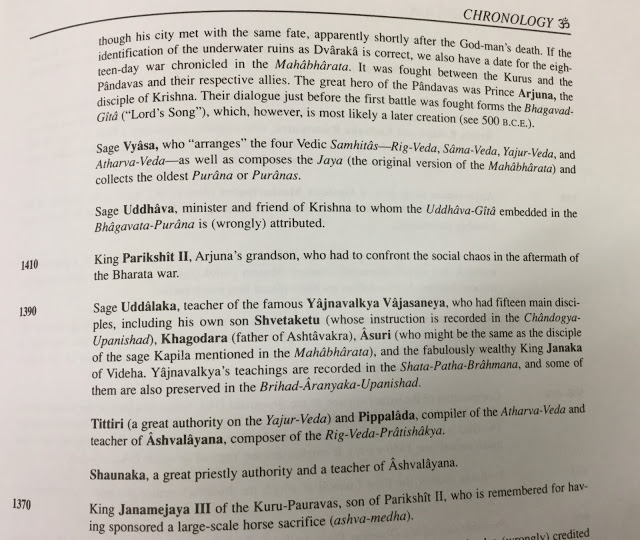
The Yoga Tradition author Georg Feurstein gives the New Chronology of India. It shows that the India is the oldest country with human occupation. Famous archaeologist H D Sankalia in 1974 has shown the paleo lithic and neo lithic stone cultures with dates. But current discoveries take us to very early periods. Indian history must be rewritten immediately. All the history books written by British and Marxist historians must be dumped into Indian ocean.

I have given below the chronological tables from Georg and Sankalia:–

NEW CHRONOLOGY


–SUBHAM–

HOW DID SHIVA GET TIGER SKIN? (Post No.5177)

Compiled by London swaminathan


Date: 3 JULY 2018


Time uploaded in London –   18-52 (British Summer Time)


Post No. 5177


Pictures shown here are taken from various sources such as Facebook friends, Wikipedia, Books, Google and newspapers; thanks. Pictures may be subject to copyright laws.

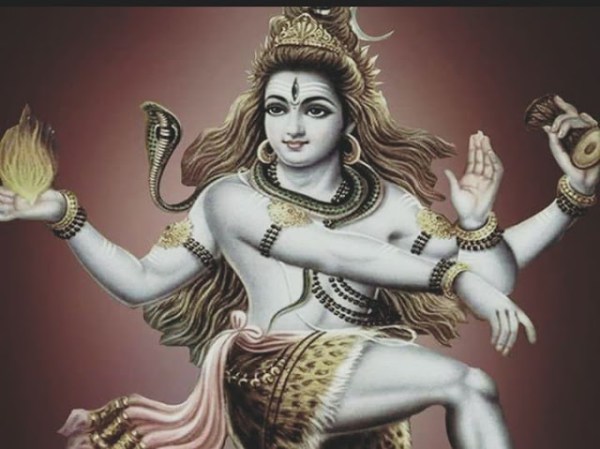
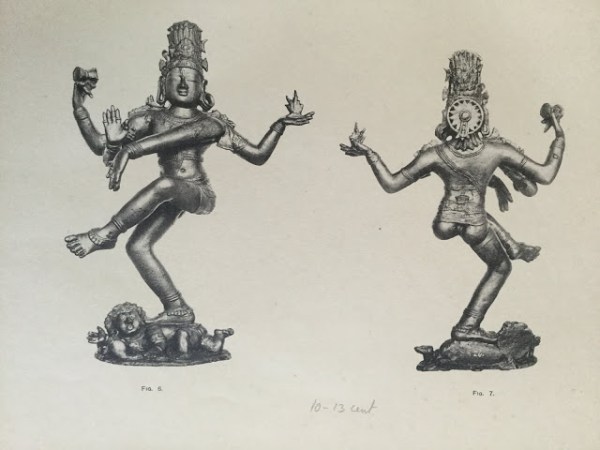
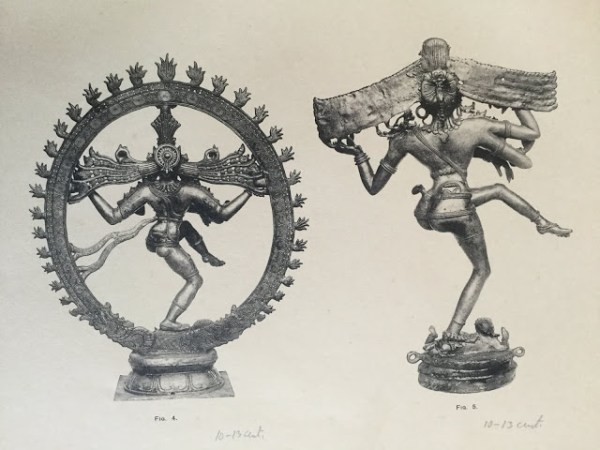
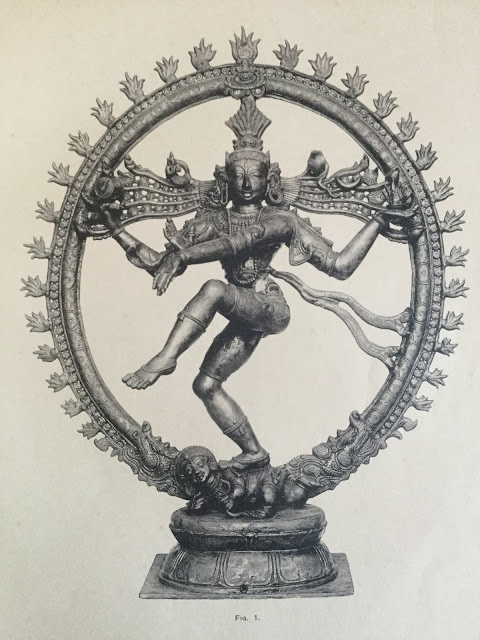
NATARAJA is the cosmic dancer. Shiva is represented in dancing form. He is four armed and has flowery braided locks ending in tight curls and whirling in the dance.


On the proper right side, In the flying hair, is a figure of Ganga represented as a ‘nagini’, on the left a cobra and the crescent moon. The head dress contains a skull and terminates in a fan of cassia leaves.; a pearl fillet encircles the forehead. a man’s earring is worn on the proper side and a woman’s on the left.


Of the four hands the rear right holds a drum (udukkai), the rear left a flame in a dish. The front right is in ‘Abaya mudra’ (do not fear gesture), the front left hand points to the lifted foot. Amongst the many ornaments are small bells tied round the calf of the leg. The whole figure is enclosed in a fiery arch (tiruvaasi), arising from the mouths of a pair of addorsed makaras, established on a lotus pedestal (padmasna).

Why?

“A legend is told in explanation of this dance (in the Tamil Peria Puranam) as follows:

In the forest of Taaragam there dwelt multitudes of heretical rishis, followers of the Mimaamsa. Siva proceeded there to confute them, accompanied by Vishnu disguised as a beautiful woman, and by Vishnu’s servant Aati Sesan, the naga Ananta.


The sages were at first led to dispute amongst themselves, but their anger was soon directed against Lord Siva, and they endeavoured to destroy Him by incantations
A fierce tiger was produced in the magic fires, and rushed upon Him. But he seized it in his hand stripped off its skin with the nail of his little finger, and wrapped it himself about as a garment.


The sages renewed their offerings , and produced a monstrous serpent , which Siva took in His hands and wreathed about his neck like a garland. Then he began to dance, but there rushed upon Him a last monster in the shape of a malignant dwarf, Muyalaka. Upon him the god pressed his the tip of his foot, and broke the creatures back, so that it writhed upon the ground, then he resumed the dance, beheld of God’s and Rishis.
On this occasion. Ati sesan obtained the boon to behold the dance again in Tillai, sacred Chidambaram, the centre of the universe.”
Symbolic Representation


More significant than the details of this legend, are the interpretations constantly referred to in the Saiva hymns. The dance called ‘Naadaanta’, represents the movement of energy within the universe. It is Siva’s Five Activities, ‘Creation, Preservation, Destruction, Embodiment and Release’. The drum is for Creation, through sound which for Hindus has always a moulding force on the material environment, the flame for Destruction by fire. The dwarf is Illusion, Plural Perception , the fetters of Time, Space and Casuality, the sense of Egoity, in general ‘Avidya’.


–Ananda Coomaswamy about the Museum pieces in Colombo Museum, Year 1914.


–Subham–

Dullness Anecdotes (Post No.5176)

Compiled by London swaminathan


Date: 3 JULY 2018


Time uploaded in London –   12-11 (British Summer Time)


Post No. 5176


Pictures shown here are taken from various sources such as Facebook friends, Wikipedia, Books, Google and newspapers; thanks. Pictures may be subject to copyright laws.


Lincoln was told of a profound historian.
“It may be doubted whether any man of our generation has plunged more deeply into the sacred fount of learning”
“Yes or come up drier”, said Lincoln.
Xxx

Great Bore!

One day one of the greatest bores of the Players Club said to Oliver Hereford,
“Oliver, I have been grossly insulted. Just as I passed that group over there I over heard someone say he would give me fifty dollars to resign from the club”.
“Hold out for a hundred, counselled Mr. Herford, you will get it.”

Xxx


JOHNSON READY TO WAIT

A gentleman who introduced his brother to Dr Johnson was desirous of recommending him to his notice; which he did by saying,
When we sat together sometime, you will find my brother growing very interesting.”
Sir. Said Dr Johnson
“I can wait”.
Xxx

PIN Without Head or Point

To a very thin man who had been boring him, Douglas Jerold said,
“Sir,you are like a pin, but without either it’s head or it’s point.”
Xxx


ARISTOTLE AND CHATTERBOX
An impertinent chatterbox, entertaining Aristotle, the philosopher, with a tedious discourse and observing that he did not much regard him, made an apology, that he was afraid he had interrupted him.

‘No really’, replied the philosopher, ‘you have not interrupted me at all , for I have not minded one word you said’.
Xxx

TIRESOME

Talleyrand was asked if a certain authoress whom he had long since known, but who had belonged rather to the last ag , was not, a little tiresome.
‘Not at all, said he, she was perfectly tiresome’.

Xxx

SLEEPY NOVELS

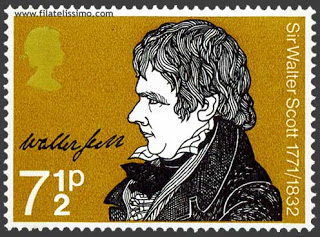
Sir Walter Scott’s faithful servant Tom said to him one day,
Them are fine novels of yours; they are invaluable to me. When I come home very tired, and take up , one of them , I am asleep directly.

Xxxx


Only One Idea!

Speaking of a dull, tiresome fellow whom he chanced to meet, DrJohnson said,
“That fellow seems to possess but one idea, and that is a wrong one”.

Xxx
The modest Joseph Addition was accused by a lady of being dull and heavy in conversation.
Madam, he replied, with great dignity, I have only nine pence in my pocket, but I can draw for a thousand pounds.
Xxxxx  SUBHAM xxx
GURUR BRAHMA, GURUR VISHNU STORY (Post No.5168)

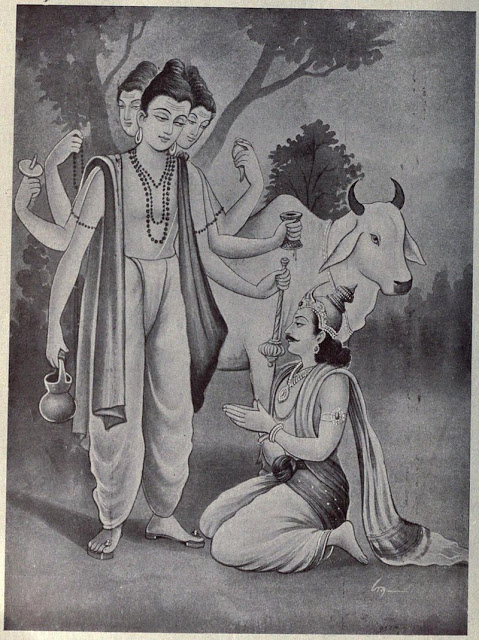
Dattatreya blessing Kartaveerya Arjuna

Written by London swaminathan


Date: 1 JULY 2018


Time uploaded in London –   7-02 AM (British Summer Time)


Post No. 5168


Pictures shown here are taken from various sources such as Facebook friends, Wikipedia, Books, Google and newspapers; thanks. Pictures may be subject to copyright laws.


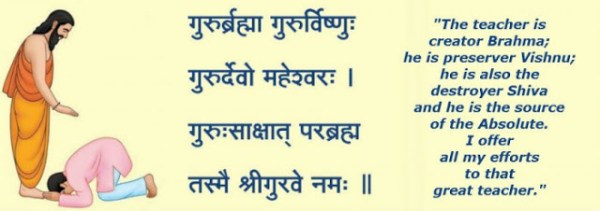
Hindus revere and respect the teacher as God. Whether it is archery or Atma Jnana lessons, dance or music lessons, same respect is given to the teachers, known in Sanskrit as Guru or Acharya. There is a story in Bhagavatha Purana about a great king of India who gained the strength of 1000 hands by serving his Guru.


Karatavirya Arjuna who is also known as Sahasrabahu- a man with 1000 hands—has good and bad qualities. Every coin has got two sides. He was the son of Krita Virya and his name was Arjuna. Just to differentiate between the Arjuna of Mahabharata and this man he was named Karta Veerya Arjuna. He ruled Haihaya Kingdom, the modern Madhya Pradesh. His capital was Mahismati on the banks of River Narmada.


Bhagavatha Purana narrates a story about his good deeds. He was a great disciple of Dattareya. He learnt all the scriptures—Vedas and Shastras—from him. It was a custom in ancient India to massage the feet of Guru when he goes to bed. Guru gives his full blessings when he is happy. He worshipped Dattatreya with the ancient sloka,


“Gurur Brahma, Gurur Vishnuh, Gurur Devo Mahesvarah

Guru Saakshaat Parabrahma Tasmai Sri Gurave Namah”

(Guru is Brahma, Vishnu, Shiva, Para brahma whom I worship)

Once Kartaveerya Arjuna was massaging the feet of his Guru Dattatreya. He got some burning sensation in his palms. but yet he continued his service. Slowly it went up to his arms and he was wriggling in pain. The Guru woke up he saw his distress and found out what happened. When he was told that his hands were burning, he took Kartaveerya’s hands and stroked them and told him that “from today onwards you will have the strength of one thousand hands and no one could defeat you on earth”. Thus he gained the name of Sahasra Bahu- man with 1000 hands — (actually strength of 1000 hands; thousand did not mean 1000 literally; it means great strength).


Power corrupts, absolute power corrupts absolutely.

So with all the great power he became very arrogant. When Ravana from Sri Lanka came to Narmada River area, Kartaveerya was bathing with his wives. When Ravana, who is fond of all beauties, eyed on his wives, Kartaveerya caught him like a bird and thrashed him. He imprisoned Ravana and placed him in the corner of Mahismati City as an exhibit. Then Ravana’s maternal Grandfather Pulastya used his influence and obtained the release of Ravana. He promised him not to come to his country in his life time.


When Kartaveerya became more arrogant he went to the Ashram (hermitage) of sage Jamadagni and his wife received him with all the honours fit for a king. But he made an ill return for her hospitality and carried off the divine milch cow. Jamadagni’s son Parasurama got angry and cut off his hands and killed him. Kartaveerya’s sons killed Jamadagni in a revenge attack. Then Parasurama vowed to kill all the Kshatria Kings whoever dared to oppose him. Thus Parasurama killed 21Kings.

About Kartaveerya, Hindu mythologies (Puranas) say,

“Having worshipped a portion of divine being called Dattatreya, sprung from the race of Atri, he sought and obtained these boons—

a thousand arms,

a golden chariot that went wheresoever he willed it to go,

the power of restraining wrong by justice,

the conquest of the earth and the disposition to rule it righteously,

invincibility by enemies and

death at the hands of a man renowned over the whole world”.


By him the earth was perfectly governed. It is said that the moment someone thought of doing wrong there he appeared and stopped it.

Another mythology praised him,

“ No other king shall ever equal Kartaveerya in regard to sacrifices, liberality, austerities, courtesy and self restraint”

Thus he ruled for 85 years with unbroken health, prosperity, strength and valour.”

In another place we read,

“When the demon king Ravana came in the course of his campaign of conquest to Mahismati, he was captured without difficulty, and was confined like a wild beast in a corner of his city Mahismati”

Only Vayu Purana differs slightly by saying Karta veerya invaded Lana and there took Ravana as prisoner.


(It may look like contradictory; but I think that both may be correct and could have happened at different times of his 85 year rule)


–Subham–


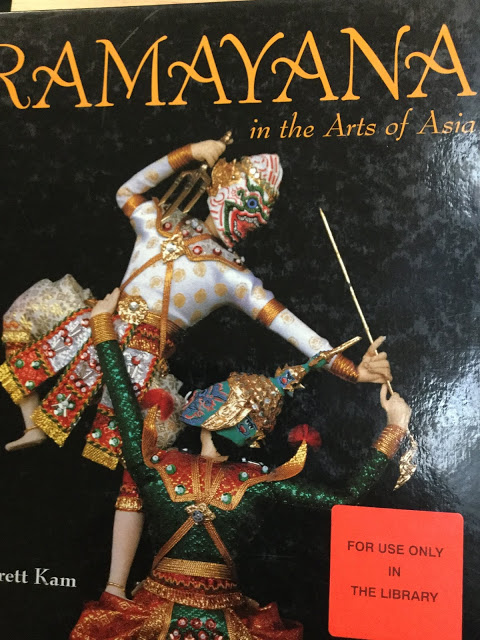
RAMAYANA IN ARTS OF ASIA BY GARRETT KAM (Post No.5166)


RAMAYANA IN ARTS OF ASIA BY GARRETT KAM (Post No.5166)


Written by LONDON SWAMINATHAN


Date: 30 JUNE 2018


Time uploaded in London –  13-56 (British Summer Time)


Post No. 5166


Pictures shown here are taken from various sources such as Facebook friends, Wikipedia, Books, Google and newspapers; thanks. Pictures may be subject to copyright laws.


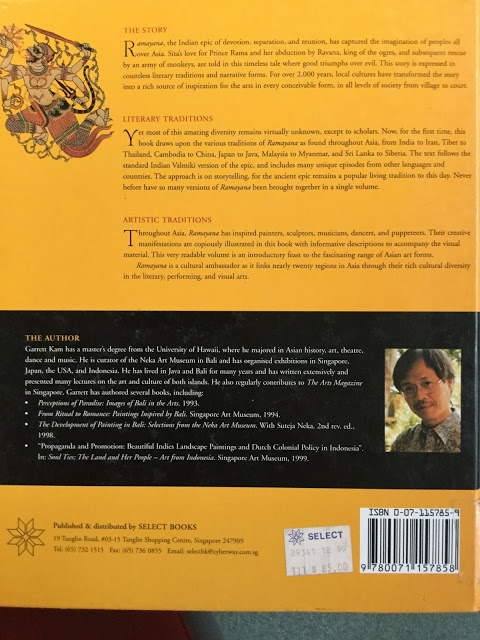
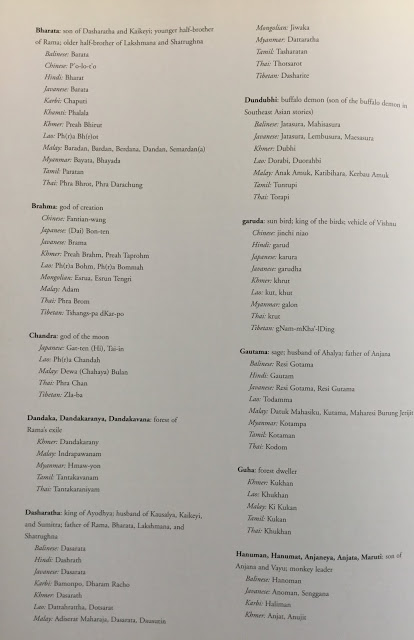
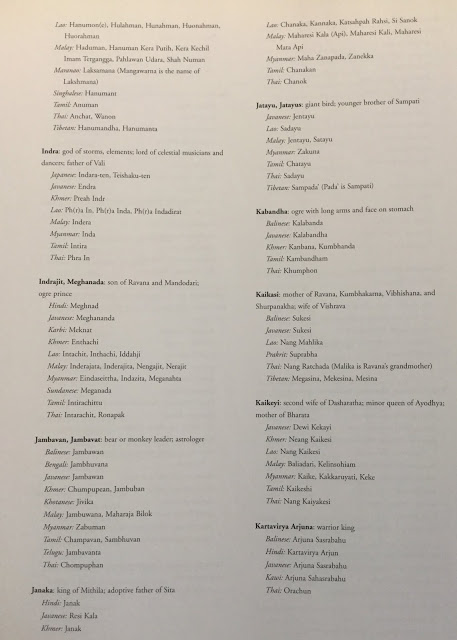
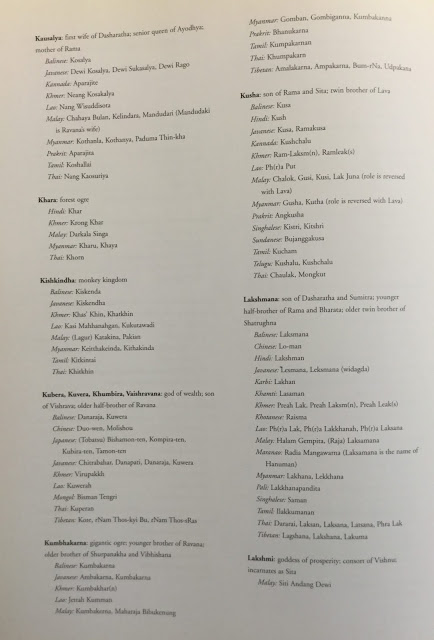
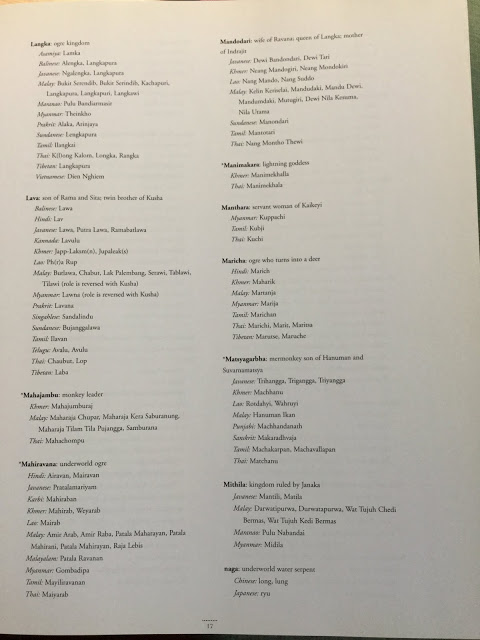
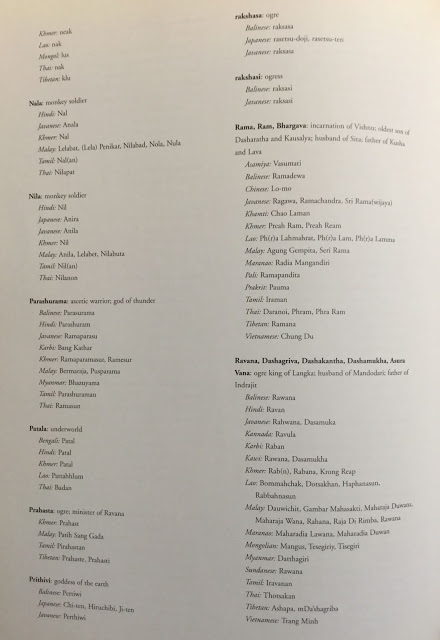
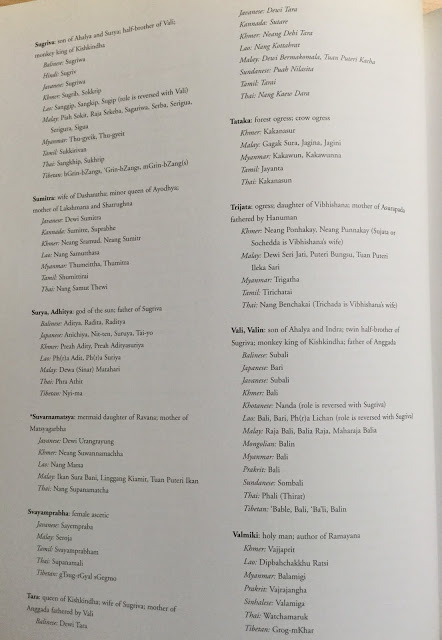
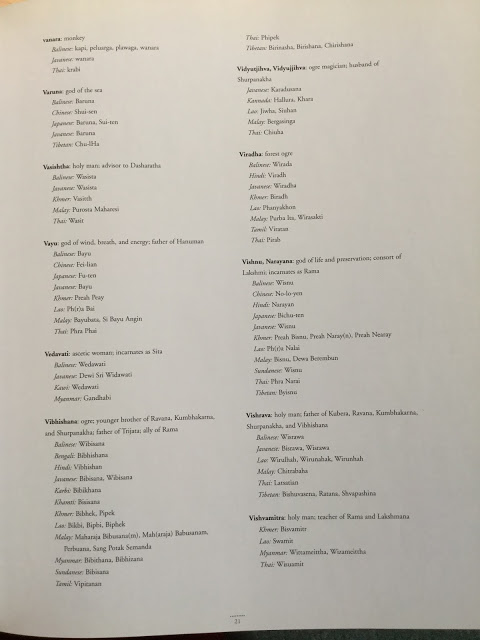
Ramayana in the Arts of Asia is a wonderful book with lot of information with particular reference to South East Asia. Author Garrett Kam is a scholar in the art history. I have found some useful information and pictures which I have never seen in any other book on Ramayana.


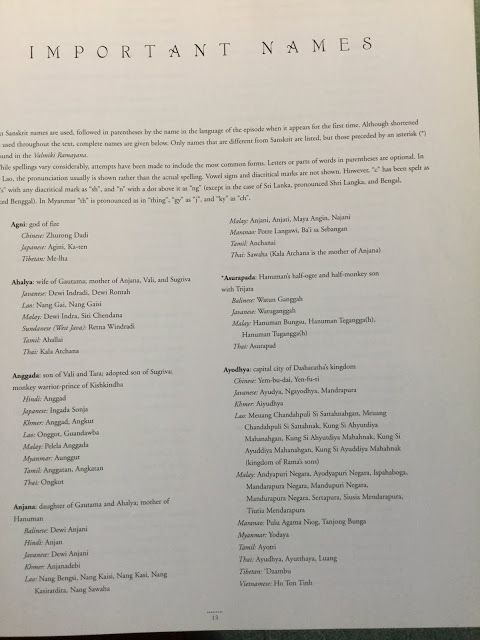
Ramayana character names change in all languages This is very useful for researchers. With is as a guide we can figure out the names of Hindu Gods in different countries. The pictures from private collections and museums are not available in other books. The display of important points in boxes is very attractive. I am just reproducing some pages which shows the Ramayana names in different cultures. Please enlarge the pages and read.


Nagapasa binds Rama and Lakshmana.


Everyone must buy this Encyclopaedia on Ramayana.


–subham–

HERO STONES ON SEA BATTLES (Post No.5163)

Written by LONDON SWAMINATHAN


Date: 29 JUNE 2018


Time uploaded in London –  21-24 (British Summer Time)


Post No. 5163


Pictures shown here are taken from various sources such as Facebook friends, Wikipedia, Books, Google and newspapers; thanks. Pictures may be subject to copyright laws.


Hero stones are found throughout India. They are erected to honour those who lost their lives in protecting the community or saving the country. Even a dog has a hero stone in Tamil Nadu because it heroically fought with a tiger and save the people.

Sangam Tamil literature refers to hero stones and so we know that it has been the practice for at least 2000 years; but unfortunately we have not discovered very ancient ones. The ones we know now are from sixth or seventh century.

Hero(ine) stones are erected for women who lost their lives by climbing their husband’s funeral pyre. Rajasthan and Karnataka have such stones with had symbols. In short Super Men were celebrated in Bharat from very early days.

Though we don’t come across much in Sanskrit literature about Hero Stones, we know that Brahmin families even today bury a stone after the ten day ceremony in a garden or the backyard of the house. Perhaps in ancient days it was a big one. Now they just bury it in the crematorium or the place where the ceremonies are done.

One feature about the hero stones is that they are revered as gods or goddesses. Sangam Tamil literature is very clear about the Pujas done to you with flowers etc.


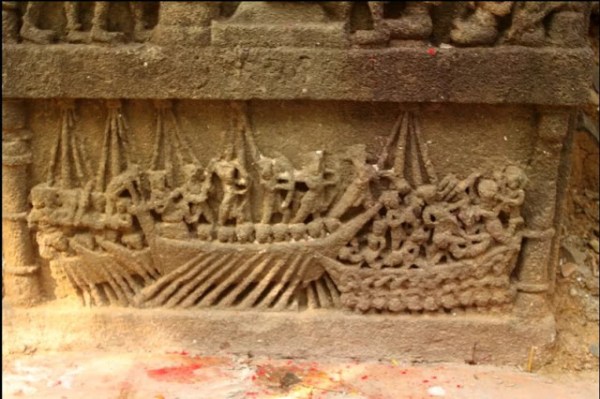
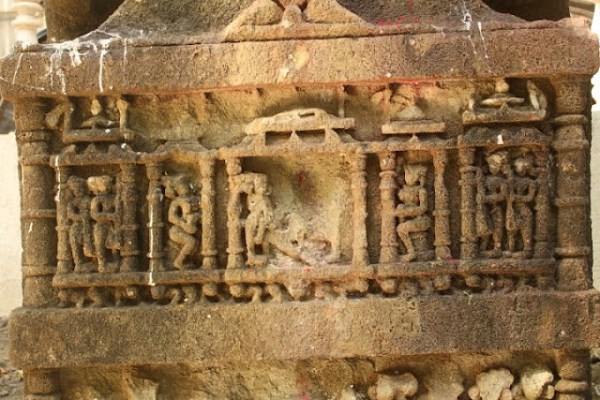
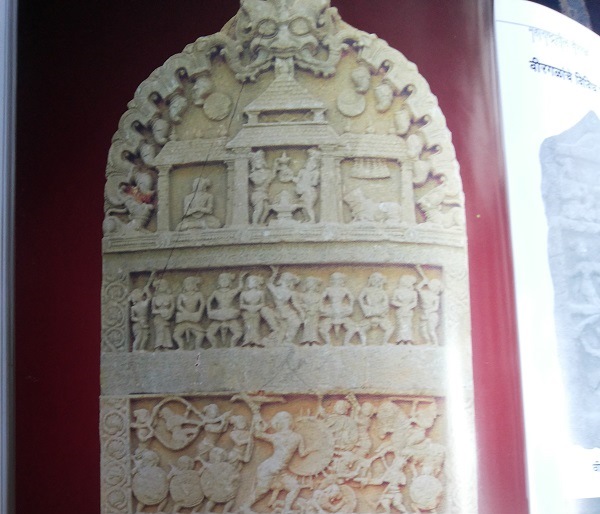
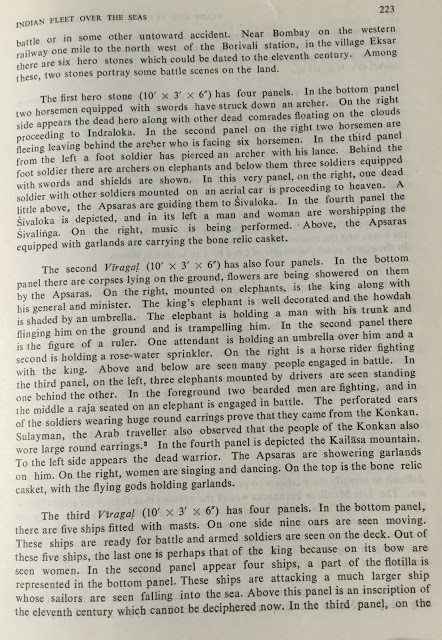
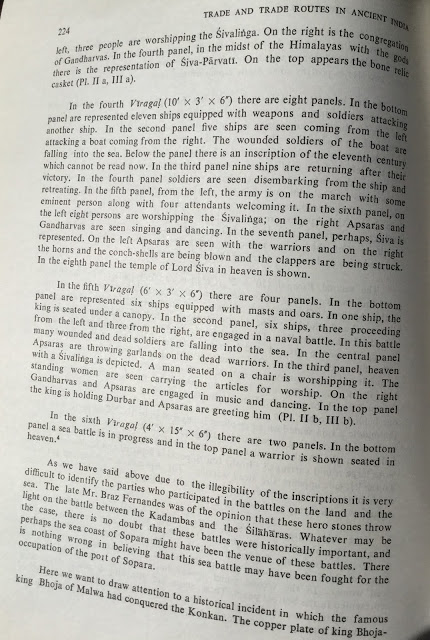
Several Tamil Hero Stones became Village Gods. We are fortunate to have two sets of Hero stones describing in pictures and words the ancient sea battles. One set of Stones is in Goa Museum and another set of six stones is in Eksar in Mumbai. It is one mile from Borivili station. But latest press reports say that some of the stones are missing. People in the village worship it as Goddess Boradevi. They are between four and eight feet high and intricately carved with ships and warriors.
 

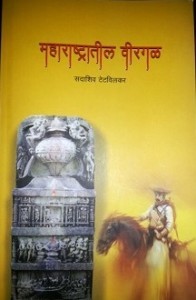
After some historical awareness, people have discovered over 100 hero stones in Maharashtra. They are already well known in Tamil Nadu, Andhra and Karnataka.


The old Goa hero stones are from the Kadamba rulers who ruled for 400 years from CE 950.

Great Tamil poet Tiruvalluvar says in Tamil Veda Tirukkural that human beings who lead a virtuous life are considered Gods.

“A man who leads an ideal life in this world,

will be ranked amongst the Gods in the heaven”- Kural 50


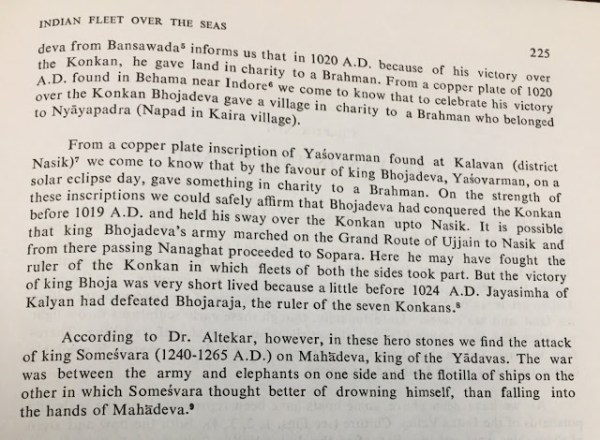
Sea Battle

Moti Chandra in his book Ancient Trade Routes has given full details about the six stones found in Eksar. But there are different opinions about the identity of the king in the stones. One researcher says it was the battle between Yadava king Mahadevan and Silhara King Someswara as described by Hemadri Pandit in his work Chaturvarga Chintamani. Others think it wass a battle between the Kadambas and Silahara kings. Since the inscriptions on the stones are unreadable we don’t know the names for sure.


Another strange thing about these Eksar stones is they are called Veera Gal ( a mixture of Sanskrit and Tamil words Veera+ Kal)

Now it becomes essential to collect all the details and publish them in an Encyclopaedia of Hero Stones.


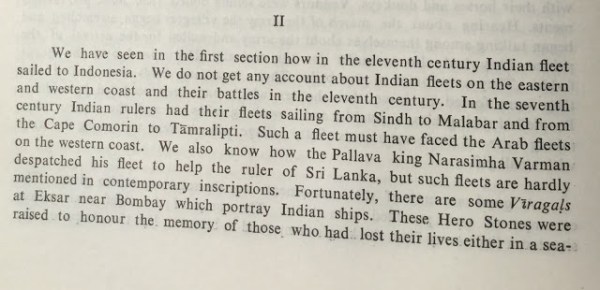
I am giving below the descriptions of six stones as found in Moti Chnadra’s book:-


–SUBHAM–


RAMAYANA SCULPTURES IN THAILAND (Post No.5158)


compiled by LONDON SWAMINATHAN


Date: 28 JUNE 2018


Time uploaded in London –  14-20 (British Summer Time)


Post No. 5158


Pictures shown here are taken from various sources such as Facebook friends, Wikipedia, Books, Google and newspapers; thanks. Pictures may be subject to copyright laws.\


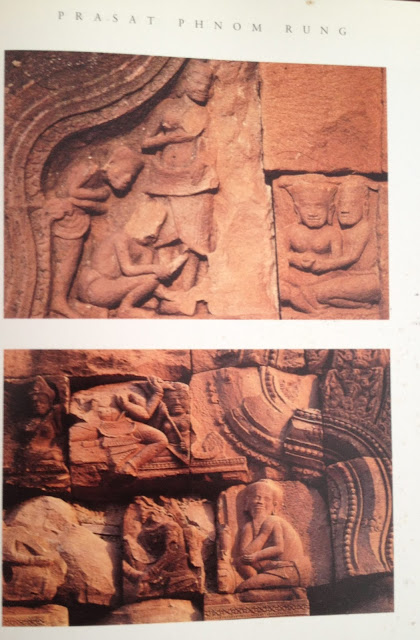
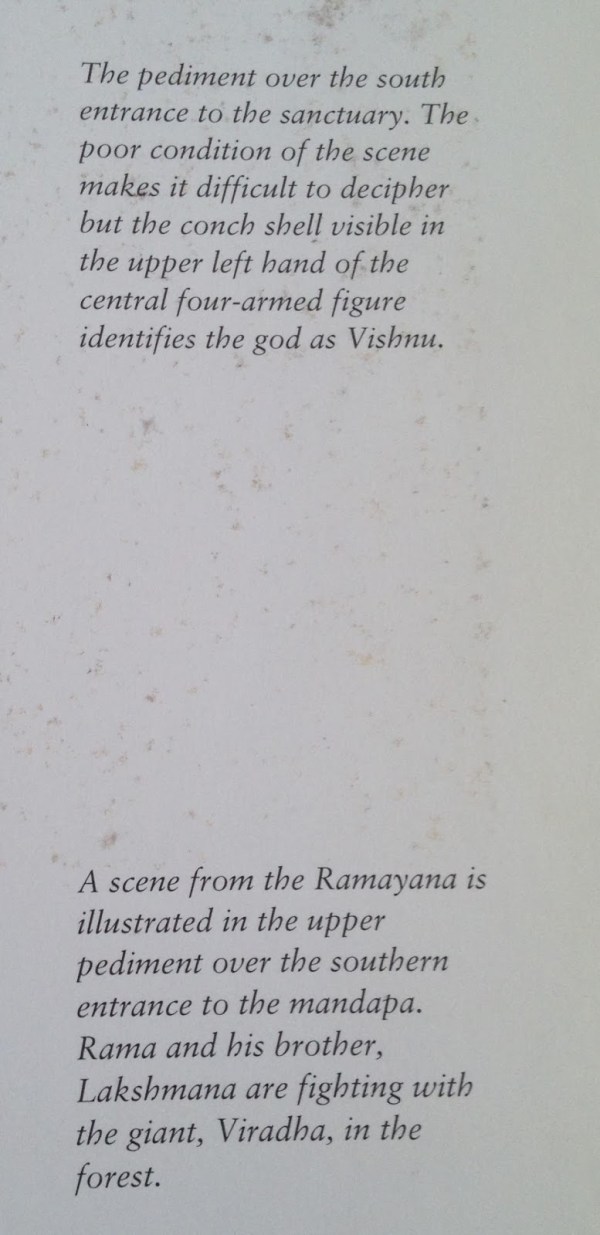
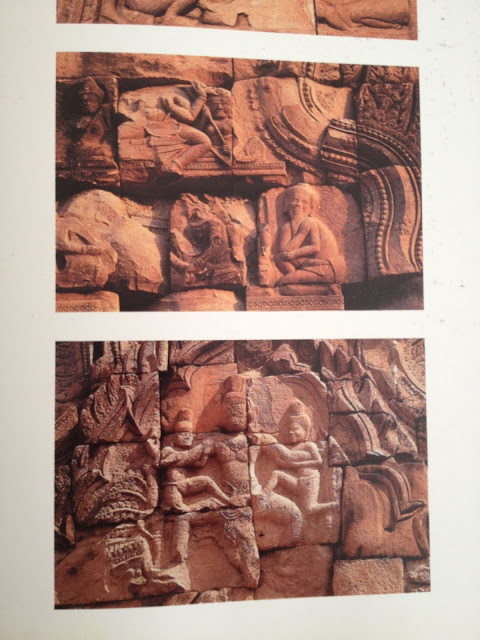
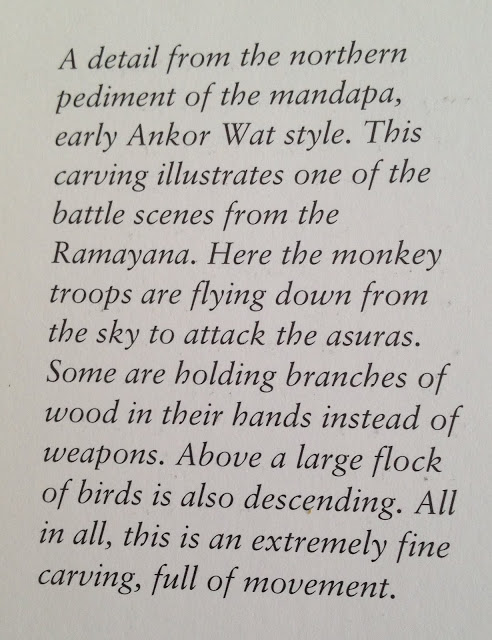
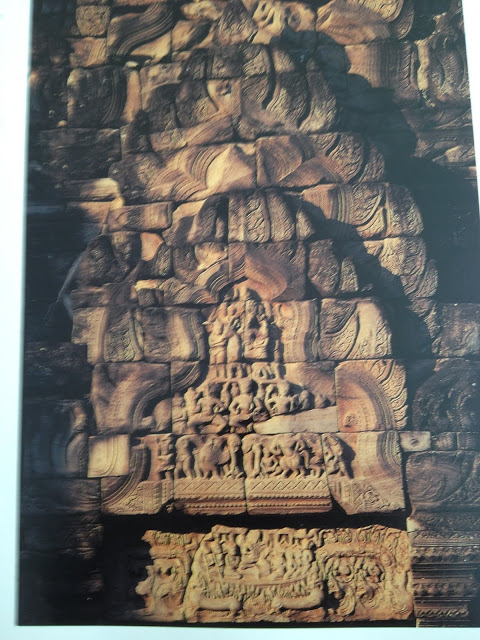
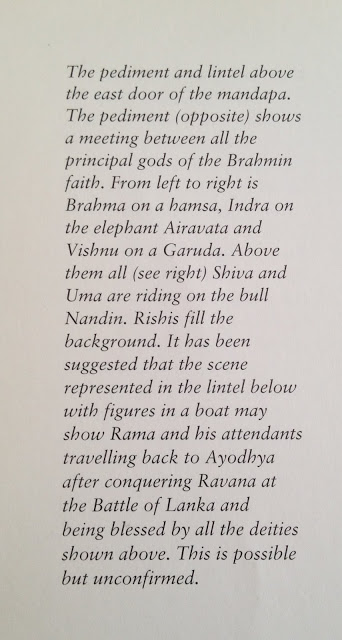
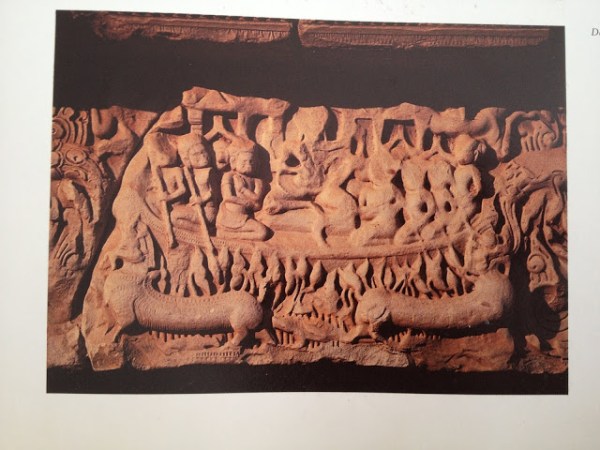
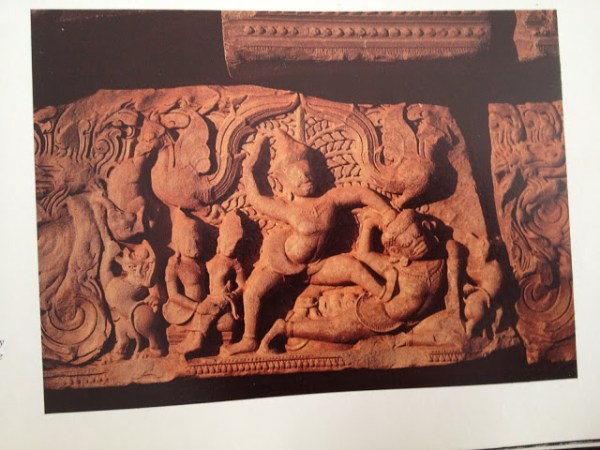
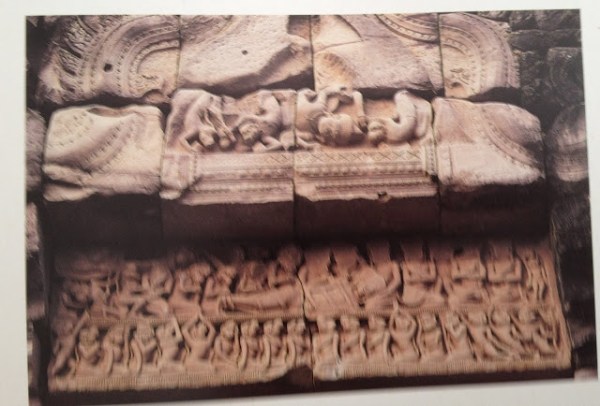
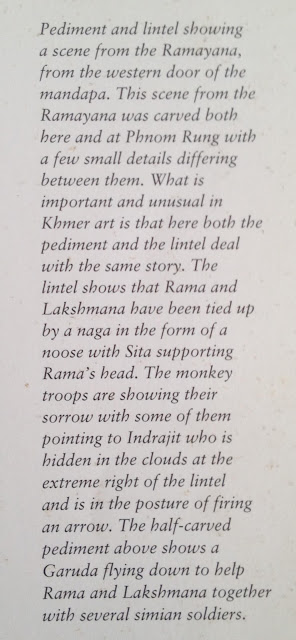
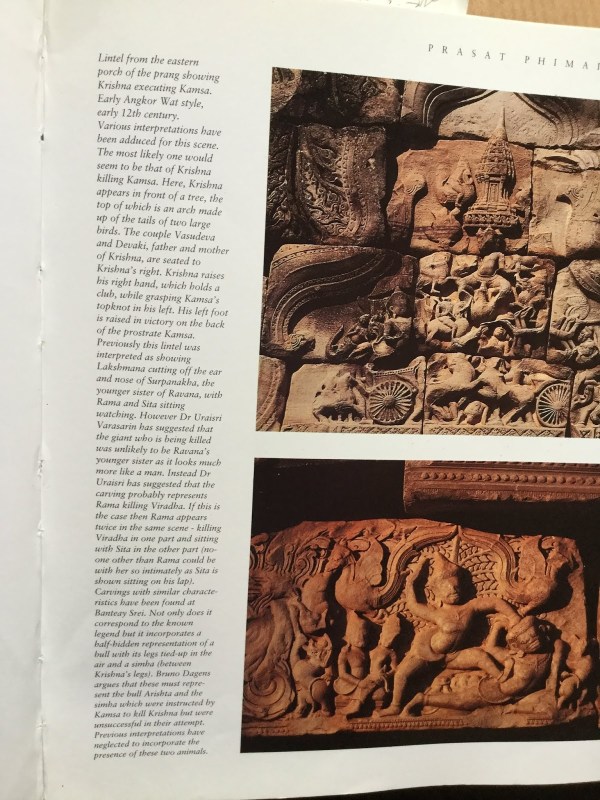
RAMAYANA sculptures in Cambodia are well known; but sculptures describing the scenes of Ramayana in Thailand are not known to many. Some of the sculptures were even interpreted earlier as scenes from Buddha Jataka stories. Now we know they are from Ramayana.

Mostly sculptures of Hindu gods are found in the temples of Prasat Phnom Rung and Prasat Phimai. Other sculptures of Hindu Gods are kept in Bangkok Museum.

Following book (Palace of the Gods by Smithi Siribhadra and Elizabeth Moore)  give some pictures with explanation:


— SUBHAM —