Description of Mela and “loathsome” Hindu Sadhus by Murray (Post No.2718)


mela 1

Written by london swaminathan

Date: 12 April, 2016


Post No. 2718


Time uploaded in London :– 21-14


( Thanks for the Pictures  ) 


DON’T REBLOG IT AT LEAST FOR A WEEK!  DON’T USE THE PICTURES; THEY ARE COPYRIGHTED BY SOMEONE.


(for old articles go to tamilandvedas.com OR swamiindology.blogspot.com)


Read also

1.Prayag- the meeting place of Ganga and Jumna – posted on 10th April, 2016

2.To rule India by the heart — posted on 11th April, 2016


mela 2

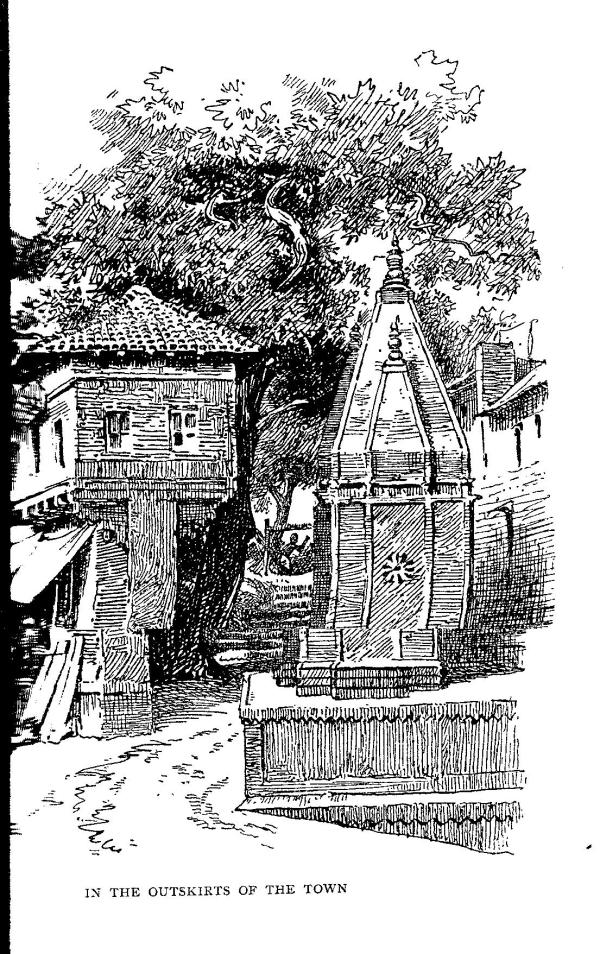
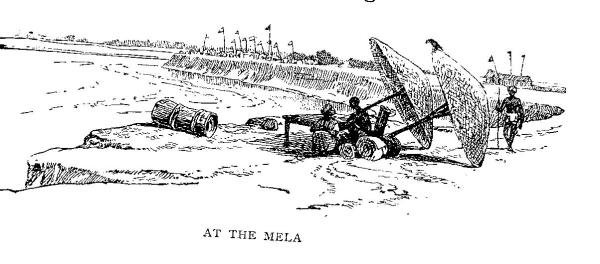
“From the ramparts of the Fort (in Prayag called Allahabad now), we looked down over the river, with its many strange craft, and the little temples on the brink, and saw immediately at our feet a very interesting and characteristic scene. The great “mela”, or religious festival to which Allahabad probably owes its origin, was just beginning. The cold blue waters of the Jumna wash the Fort walls, and after flowing for about half a mile fall into the muddy Ganges; this tongue of land, between the two sacred rivers, was covered with grass and palm huts and booths of manifold shape and height, the encampment of the pilgrims who come from the ends of India – Srinagar or Ceylon, Kabul or Calcutta – for cleansing and purification.


From time immemorial, many points on the ever swelling stream of the mighty Ganges have been held sacred; the source Gangotri, and the issue into the plains Hardwar, Deo Prayag, Benares and Sagar, where it enters the sea, have always been the scene of crowded religious festivals, to which mutitudes throng. But the place of pilgrimage, par excellence- to which literally hundreds of thousands repair, to wash away the stains and defilements contracted in the turmoil of life and its illusions – is where the waters of the clear  and rapid Jumna meet  the slow and stately stream of  the beneficent  benefactress, Mother Ganges, and, as they believe, the still more sacred waters of the Saraswati.

ganges-route-510x348

Source to Sea: Six Year Pilgrimage!

Not many or devout or adventurous enough to undertake the six year’s pilgrimage to all the holy spots  from source to sea, though the passion, which glows beneath the calm impassive exterior of a Hindu, moves some intense and fervent  souls to accomplish the  endless penance of measuring their length the whole weary way. But every year hundreds of thousands flock here to bathe and pray, and there are many whose fervour lead s them to devote a full month in all solemnity and earnestness, to fasting and religious excise.  Then the strings of priest led pilgrims, with banners floating from long bamboos, return home bearing pots of holy water from the sacred stream with reverent care. Water from the Ganges is prescribed by  the ritual for use in many domestic rites.


Everyone who bathes is also shaved, and widows travel hundreds of miles to have their hair cut off here, as an offering to the sacred stream. The barbers have each to pay a tax of four rupees for a licence  to practise at the mela; the revenue netted at Allahabad (Prayag) in this way  has amounted to 16,000 rupees in the season – this gives one some idea of  the size of the gatherings at its height.


They had not yet come in very great numbers; nothing like the whole concourse of eager , patient, saffron robed pilgrims, seeking redemption, had yet arrived, but, nevertheless, there was already a regular city by the river side, and the swarms of people were quite sufficient  to give us a very good idea of the scene later on when the authorities would have some anxious hours, supervising the thousands who encamp on the bank of the stream, to wash away their sins in the sacred waters of healing.


Of Couse a religious festival involves a fair and to the strain and stress of religious emotion, and all the danger involved by it, where so many differing faiths  are concerned, are added the rowdiness and excitement which accompany such gatherings all the world over.


We went down and walked along the lines of booths and huts, all surmounted by long bamboos with bright fluttering flags at the top; the whole scene, with busy crowds of people formed a very piquant prospect. In one part of the mela were men, seated on the ground, preparing the colours with which they sign the caste marks on the fore heads of those who have worshipped and bathed; further on were groups selling garlands of white flowers which, strung flower by flower, with threads of tinsel, and worn as necklaces and fillets for the head, recall the Greek custom of coming to sacrifice crowned with flowers. The scene, with its millions of twinkling lights, is most striking at night, but the early morning is naturally the moment when the throng is at its busiest and noisiest, and then the air is full of discordant cries and deafening shouts, all the yogis, Brahmans and worshippers clamouring  loudly jai ram or jai Vishnu, as they perform their devotions, and their dark foreheads barred with white, or smeared with bold patches of ochre, in the shape of Shiva’s eye, or Vishnu’s trident.


ganges-map-simple1

The weird and horrible forms of the fanatical yogis repelled and fascinated our attention at the same time; with bodies smeared with ashes, and barred with paint  – yellow, red or white- with dusty matted hair: many of them were most loathsome objects, as they sat counting heir beads before their huts, or the grass umbrellas which served the  same purpose. Before each acetic was a cloth, spread on the ground, and on this the passers-by, as a tribute to his supposed sanctity, threw offerings – often simply cowrie shells , which pass as current coin, of such infinitesimal value, that sixty two make only a farthing; those, who have appeared to have gone through a long course of austerity and penance had the richest harvest, as they are presumably those gifted with the highest occult power.


I called down the wrath of a holy man by putting my foot on the boards in front of his booth, which I imagined to be a kind of shop; but when he swore vehemently and horribly, and sprinkled the place with water, I discovered that it was considered a holy spot. I believe the chief yogis or gurus, occupy a throne or a seat, called gadi. It is placed under a pavilion, and sometimes even roped round to ensure respect for the sanctity which attaches to it from its occupant, whether present or absent. Those, whose position and power are less universally acknowledged, have to content themselves with an umbrella and small ma, tiger skin, or a boarded space, marked off as a sacred precinct.


Any pretensions the yogis might have to spirituality to be in the greater number of cases, clearly unfounded.  Heir evil faces were boldly streaked with pigment under matted locks, coiled in ropes on their heads, or crowned with fantastic head dresses; and the wild and swollen, bloodshot eyes, which add to their repulsive aspect, are the result of different preparations of opium or hemp with which they intoxicate themselves, hoping thus to deaden their nerves to the self-inflicted tortures, which they believe will give them supernatural power over gods and men.


There are about five and half a millions of these men in India, who have given up all earthly employment, and live apart as ascetics; they spend their time chiefly in roaming the country and begging. Some belong to more or less well organised communities, called akharas, of which at least ten varieties were represented at the Allahabad ‘mela’ and some are free -lances.


The evening, after we visited the ‘mela’ we dined with the chaplain of All Saints Church, where Father Benley, of Cowley, had been holding a Quiet Day, and had given some addresses, which I was told, were very interesting. “In India may be found, at the same moment, all the various stages of civilization through which man has passed from pre historic ages until now.”

–subham-

This was written in THE HIGH-ROAD OF EMPIRE by A H Hallam Murray in 1905.


‘To Rule India by the Heart’: A H Hallam Murray (Post No.2715)

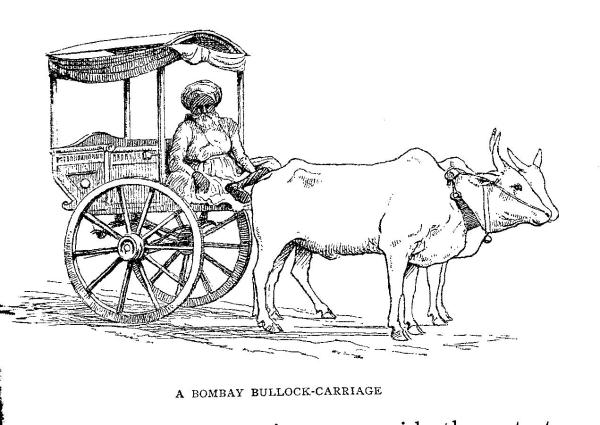
bombay cart

Written by london swaminathan

Date: 11 April, 2016


Post No. 2715


Time uploaded in London :–  10-35 AM


( Thanks for the Pictures  ) 


DON’T REBLOG IT AT LEAST FOR A WEEK!  DON’T USE THE PICTURES; THEY ARE COPYRIGHTED BY SOMEONE.


(for old articles go to tamilandvedas.com OR swamiindology.blogspot.com)


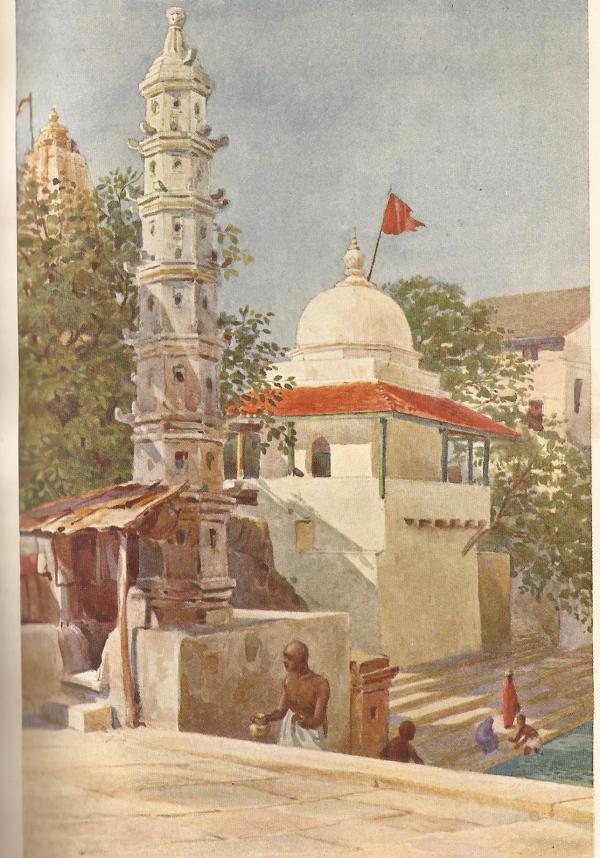
bombay temple

Walkeshwar Temple, Malabar Point, Bombay; sketch by Murray in 1905.
“The appeal which India makes is as many-sided as it is universal and irresistible, with its glorious architecture, its unique landscapes, its rich historic associations, and above all its strangely interesting people, whose customs and character have come down unaltered through the centuries, and are now submitted to the impact of new ideas and new conditions, to them doubtless in great part incomprehensible.  The effect of the collision of this new and old, of East and West, is partially hidden from us by the apparent indifference of a calm demeanour, which at once conceals the tremendous capacity for passion that glows beneath an impassive surface, and heightens the mystery that surrounds a fascinating people.


“I have, I hope, given typical views of   typical places, but though not neglecting the more striking scenes and buildings which form the goal of every pilgrim’s quest, I have tried to fix the attention of the lovers of beautiful on the essentially picturesque side, on the little pictures that unfold themselves at the very turn of the wheel of life in India and might well be overlooked by the casual wayfarer.


“Englishman who spends a few months on the threshold of an ancient and mysterious land and life, and we had no exceptional opportunities or capacities for penetrating behind the veil; but by the exercise of a little sympathetic imagination, and with the help of books on special sides of Indian life such as within reach of all, we tried to understand such phases of the life as fell under our notice. If we have not quite misinterpreted that life, it is owing to the kind friends who, both in India and at home, tried so generously to set our feet in the right way.

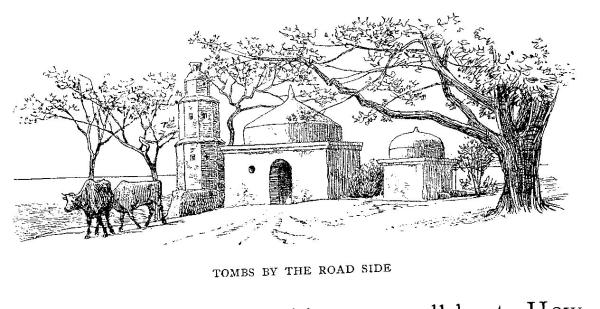
roadside tombs

I should like to think that these efforts might, in their small way, help to pave the highway of sympathetic understanding which might unite East and West, if – as all who realise the vast responsibilities of our Indian Empire must desire – the unselfish devotion and unstinting self-sacrifice of those who have toiled for its welfare are to be crowned with success, and we are ever, in Lord Curzon’s words, to rule India by the heart.


This was written in the preface of THE HIGH-ROAD OF EMPIRE by A H Hallam Murray in 1905.His book has his water colour and pen and ink sketches. I have already given his Benares sketches in one post. He wants India to stay ever under the British rule as Jewel in the Crown.

Year of publication 1905

–subham-


Prayag, the meeting place of Ganga and Jumna; A H Hallam Murray (Post No.2712)

prayag

Sketch by Murray

Compiled by london swaminathan

Date: 10 April, 2016


Post No. 2712


Time uploaded in London :–  13-56


( Thanks for the Pictures  ) 


DON’T REBLOG IT AT LEAST FOR A WEEK!  DON’T USE THE PICTURES; THEY ARE COPYRIGHTED BY SOMEONE.


(for old articles go to tamilandvedas.com OR swamiindology.blogspot.com)


Centuries before Akbar’s day, however, a stronghold, called Prayag, or the place of sacrifice, existed at the meeting of the Ganges and the Jumna, which, since the earliest days, had been most popular place of pilgrimage with the Hindu race.  The first authentic historical information about it is on the tapering shaft of the Lath of the Buddhist king Asoka, in the garden entrance of the fort; it dates from about BC 258 and its 49 feet of height is covered with inscriptions; it, no doubt, very curious, but it is one of the things about which I find it difficult to screw up much enthusiasm.

(Prayag is known as Allahabad now)


In the native town, with its low brown houses, there were of course picturesque corners, but what struck our eyes chiefly – as we drove, through it, to the tomb of Khusru – was the absence of colour, after the vivid blues and reds and yellows of Bombay, and the number of clothes worn.

prayag2

We drove, under a tall archway, overgrown with creepers, into the Khusru Bagh, one of the most beautiful and shady gardens of India, and there under a fine spreading the tamarind tree, we saw the last resting place of Akbar’s ill-fated grandson, prince Khusru, the rebellious and popular heir of Jahangir. Akbar had a great affection of Khusru, whom Jahangir treated with jealous animosity that caused the Rajput Princess Khusru’s mother to commit suicide. Khusru was imprisoned and at last poisoned to death by Shah Jehan.


The Fort, which passed to the English in 1801 must have been originally a splendid and intensely interesting place, and it still forms a striking object above the sandy spit at the meeting of the rivers. But perhaps military exigencies obliged us to obliterate and destroy every vestige of originality in it; it has been ruthlessly shorn of any architectural beauty or archaeological interest.


It contains the arsenal. But the military authorities have been more respectful to the Hindu remains inside the Fort and not interfered with the well-known  Akshai Bar, or ever living banyan tree- – a forked stump with the bark on—which, though the tree appears to be  replaced every few months , yet stands in the midst of what is, probably identical the Hindu temple of Shiva, described by the Chinese pilgrims in the seventh century it is now in a pillared crypt, reached by an underground passage  beneath the walls of Akbar’s Fort; this seems to show that Akbar’s well known religious liberality led him to allow the priests  and pilgrims free access to the  ancient Hindu shrine, though he was obliged to incorporate it in his building.


In the passage leading to the ancient temple are some curious idols, and, in the centre, a stone rudely tapered to a cone, which the devout venerate and reverence with lustrations.  Beyond is a square aperture probably leading to the river, though the Hindus say it leads straight to Benares; whilst the natural moister, exuding from the walls, is supposed to prove the truth of the legend that the sacred river Saraswati, which disappears in the Bikaneer desert, many miles away north, finds it way to this holy spot. The tree was probably worshipped here by the rude aboriginal tribes, with its ostrich like capacity for assimilating alien religious practices, has sanctioned its continued worship. Hiouen Thsang gives a description of the wide-spreading tree in front of the principal shrine of the temple, which recalls description of the blood stained grove at Kumasi. The tree was supposed to be the abode of a man eating demon, and was surrounded by the bones of the human sacrifices, with which from the “old unhappy far off days” of earliest tradition it had been propitiated.
Extract from AHH Murray’s book The High-Road of Empire

To be continued……………………


“No Cabinet Minister is Indispensable!” Abraham Lincoln (Post No.2700)

statue-of-plato

Statue of Plato.

Compiled by london swaminathan

Date: 6 April, 2016

Post No. 2700

Time uploaded in London :–  19-53

( Thanks for the Pictures  ) 

DON’T REBLOG IT AT LEAST FOR A WEEK!  DON’T USE THE PICTURES; THEY ARE COPYRIGHTED BY SOMEONE.


(for old articles go to tamilandvedas.com OR swamiindology.blogspot.com)


Modesty anecdotes


Plato’s Story about Spirits
Plato tells a fable of how spirits of the other world came back to find bodies and places to work. One took the body of a poet and did his work. Finally, Ulysses came and said,
“All the fine bodies have been taken and all the grand work done. There is nothing for me”.

“Yes”,said a voice, “the best has been left for you – the body of a common man, doing a common work for a common reward”.

Xxx

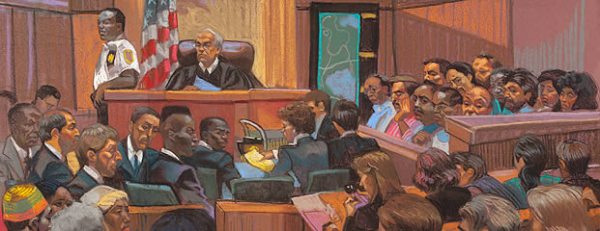
court
Respectable Ladies thrown out!
A t Lyon assizes, in France, before the trial of a certain case, the presiding judge remarked on seeing the court crowded with ladies:
“The persons composing the audience are probably not aware of the nature of the case about to be tried. I therefore feel it incumbent on me to request all respectable women to withdraw”.

Not one of the ladies stirred from her place.

“Usher”, the judge continued, “now that all the respectable women have left, turn the others out”.

Xxxx

lincoln speeches
Let him resign; no one is a national necessity!
Salmon P Chase, when Secretary of the Treasury, had a disagreement with other members of the Cabinet, and resigned.
The President was urged not to accept it as “Secretary Chase is today’s national necessity”, his advisers said.

“How mistaken you are!” Lincoln quietly observed, “yet it is not strange. I used to have similar notions.
No! if we should all be turned out tomorrow and could come back here in a week, we should find our places filled by a lot of fellows doing just as well as we did, and in many instances better”.

“Now, this reminds me of what the Irish man said. His verdict was that ‘in this country one man is as good as another. And, for the matter of that, very often a great deal better’. No, this government does not depend upon the life of any man.

Xxxx

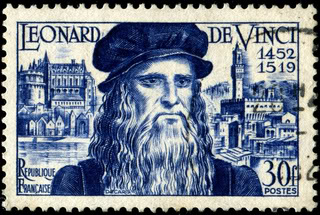
da vinci

Learno da Vinci’s modesty

Vasari relates that when Learnado da Vinci lay on his death bed, the King came to visit and cheer him. He raised himself as far as he could in the Royal presence and lamented that he offended God and man in that he had not laboured in art as he ought to have done.

Xxxx

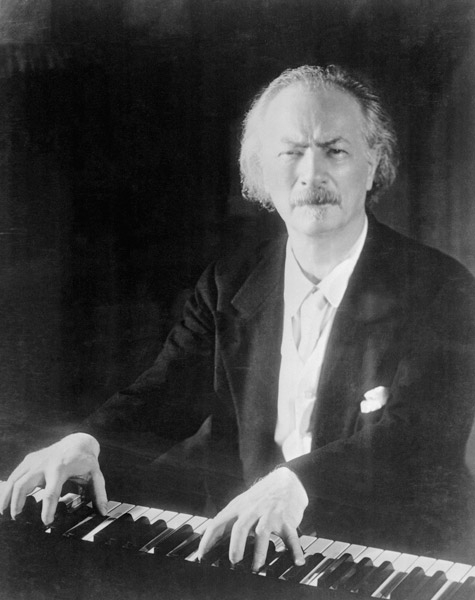
paderewsi_readmore

Picture of Pederewski

Piano at Beethoven Museum

In Bonn, the home of Beethoven has been converted into a memorial museum. In one of the rooms, roped off from curious hands, is the Piano upon which Beethoven composed many of his great works. A Vassar girl visiting the shrine with a party of American students, looked upon the instrument with awe and asked the guard, with the additional persuader of a generous tip, if she might play upon for a minute. The permission was granted and she sat at the piano and strummed out a few bars of the ‘Moonlight Sonata’.

Departing she remarked to the guard, “I suppose all the great pianists who have come here at one time or another played on it”.

The guard said, “No, Miss, Paderewski (famous Polish pianist) was here two years ago; but said he was not worthy to touch it”.
beethoven piano

–Subham–


“Aladdin destroyed 1000 Hindu shrines in Benares alone” – A.H.HALLAM MURRAY (Post No.2694)

benares street

Narrow alleys of Benares/Kasi, painting by Hallam Murray

Compiled by london swaminathan

Date: 4 April, 2016

Post No. 2694

Time uploaded in London :– 19-25

( Thanks for the Pictures )

DON’T REBLOG IT AT LEAST FOR A WEEK! DON’T USE THE PICTURES; THEY ARE COPYRIGHTED BY SOMEONE.

(for old articles go to tamilandvedas.com OR swamiindology.blogspot.com)
(Benares= Varanasi= Kasi)
“It was cold in the train in the early morning; we had been travelling all night, and had exchanged the coast-climate of Calcutta for the colder plains. We were an hour late when we reached Mogul Serai station, and had barely time to catch the Benares train. By 2 p.m. we were in Clark’s Hotel, Benares, a clean, comfortable bungalow in the Cantonment, but unfortunately three mils from the old city.

As soon as we had time to turn round we made our way to the centre of the native quarters, and were enchanted with the novelty and vivid interest of the scene. There is no doubt about it, Benares is wonderful; it is marvellously picturesque and as for sketching, a life time would not exhaust the subjects. It is a long narrow town extending in a crescent along the left bank of the Ganges for two miles, overlooking, on the opposite side of the river, a flat and monotonous expanse of cultivated plain; the bank is steep, and about 100 feet high, and is clothed, as it were, with staircases coming down to the water’s edge in wide irregular flights, quite unconnected with one another. Above these flights of steps, or ghats, are huge houses and palaces, temples and the great mosque of Aurangazeb, packed close, with narrow alleys between them. All this, in spite of its attraction, is comparatively modern, and except a few buildings, that is nothing earlier than the time of Akbar (sixteenth century); for like many Eastern towns Benares has shifted its site from time to time, and has left traces of its “dead self” for miles along the Ganges.

 
No one knows the story of its beginning, at the time of the very earliest Aryan settlement in India, but Benares was the religious centre of India as far back as the sixth century B.C., when it was chosen by Sakya Muni as the first place in which to preach his doctrine of Nirvana. It then had become a strong hold of Buddhism for many centuries, but in the fourth century A.D. reverted to the Hindu faith. In the twelfth century came the Mohammedeans, who conquered it, and converted its temples into mosques, and the story goes that Alu-ud-din boasted of having, here alone, destroyed 1000 Hindu shrines.
After 600 years of Moslem prominence Benares returned to its old faith, and has since continued the sacred city par excellence of the Hindu.

mosque

Picture shows Aurangazeb’s mosque over Hindu Temple

 
In Calcutta and Bombay – though one cannot fail to notice the enormous predominance of the natives over Europeans – yet owing to the modern aspect of the greater part of those cities, with their wide streets and broad spaces, and their law-abiding inhabitants, the Indian population does not impress one by its vast numbers. To all this the appearance of crowded Benares forms a striking contrast. Here is the very heart of India. Here, in this fountain of Hindu fanaticism, beats the quick pulse of the people. To this sacred spot, from the utmost corners of the land, stream in endless pilgrimage thousands upon thousands of devout Hindus, who, through the narrow alleys and dark passages of the city, constantly course along, jostling one another in a seething flow, towards the temples, or the sacred river, to drink or in bathing to wash away their sins, or to die, if need be, in the arms of the od gages, the mother of life.


SHIVA WORSHIP IN ISRAEL!
Here then, above all other places, in this swarming mass of humanity, is one forced to realise, the depth and strength of the national life of India. This was specially impressed upon us in the first place we visited; the Golden Temple dedicate to Bisheshwar, or Shiva, as the Poison God, the spiritual ruler of Benares. In this form Shiva appears with a blue throat, the result of his having magnanimously swallowed the poison evolved in one of the processes of creation. But this deity is worshipped probably by more than half the Hindus as the reproductive power of nature, in the form of a symbol, the lingam. Is there perhaps, some remote connection between this cult and the calf and pillar worship of the Israelites? Shiva’s temple, this holiest of holy places in the sacred city, is in the heart of the town, surrounded by a network of narrow alleys thronged with people, and crowded between other buildings. The roofed quadrangle where it stands is itself crowded with worshippers, jostling one another, sprinkling holy water, and carrying votive offerings of flowers to hang upon the upright black stone, tapering to a cone shape, the symbol of Shiva. Cows are admitted on equal terms, and roaming lazily along have to be passed and to pass; every now and then a palanquin comes along and one has to flatten oneself against the walls of the narrow passages to let it go by.

Shrines, figures of cows, shapeless masses – representing Ganesh, Shiva’s son, the god of good luck, with elephant’s trunk painted red – met our gaze on all sides, and every turn in a bewildering confusion.


ghat

 
PLANET SATURN!
One very curious object of worship specially caught my eye. It was a silver disk with a red apron hanging below it,and represents the planet Saturn, an imporatant object in this city of astrologers.
The gates or the doors of the Golden temple are of beautifully wrought brass, but it takes it name form the fact that one of its conical flame-like towers, and a dome, are covered with plates of gilded copper; we mounted a narrow stair in a side building, in which are kept the great tom-toms, and where temple flowers were being sold, and looked at these towers, and the red conical tower of Mahadeo’s temple from the first floor. The so called priest, with a view to baksheesh, told me that he would pray the gods to give me a son. When I told him I had one already, he kindly offered to pray that I might have five.


Round the court of an adjoining temple are a number of sacred cows in close quarters; this they call the Cow Temple, and a little further on, round the corner of a narrow alley, is the Temple of Annapurna, goddess of daily bread. All along these lanes are small shops for the sale of images and rosaries, and of the celebrated brass work of Benares, especially of ‘lotas’, which are as essential to the existence of a Hindu as a cigarette to a Spaniard. A ‘lota’ is a spherical wide mouthed vessel  — of brass for a Hindu, of copper for a Mohammedean- from which the owner never seems to be separated, and to which he clings with tenacity when he has given up all other worldly possessions. Out of it he drinks; with the aid of it, and a bit of soft stick, and much ritual observance, he washes his teeth – a favourite occupation and pastime, especially out of the railway carriage window when travelling – and with the help of it he cooks.

Before dusk we had time to explore some high, narrow streets in the thick of the town; they reminded me of Genoa, but are far more picturesque. The rich colouring (chiefly a deep red), the overhanging storeys, and an occasional bridge thrown over from one side of the street to the other, combine all the elements which an artist could desire.


Every empty space on the brightly painted facades is occupied by a fantastic representation of Hindu mythology, with all its many- handed, many -headed, many- weaponed gods and goddesses in endless variety; and besides the regular temples and shrines with which the town bristles, an uncouth image, or a squarely hewn sacred stone, it is set up at every vacant corner.

To be continued…………


bathing ghats


SOURCE:

THE HIGH-ROAD OF EMPIRE

BY

A.H.HALLAM MURRAY

LONDON, YEAR 1905


–subham–


Attention Narendra Modi! Vyasa and Manu on Rulers (Post No. 2684)

Modi_1938656f

picture of Prime Minister Narendra Modi; I am sure he has not got the 18 vices listed by Manu!

Compiled  by london swaminathan

Date: 1 April, 2016


Post No. 2684


Time uploaded in London :–  17-15


( Thanks for the Pictures  ) 


DON’T REBLOG IT AT LEAST FOR A WEEK!  DON’T USE THE PICTURES; THEY ARE COPYRIGHTED BY SOMEONE.


(for old articles go to tamilandvedas.com OR swamiindology.blogspot.com)


Vyasa says:

“A king should be

farsighted like a vulture,

patient like a crane,

vigilant like a dog,

valiant like a lion,

fearful like a crow,

and penetrate the territories of his foes

like a snake with ease and without anxiety.


Sama, Dana, Beda, Danda and Pancha Tantra

A king should win over a hero

By joining his palms,

A coward by inspiring him with fear,

And a covetous man by gifts of wealth

While with an equal he should wage a war.


He should be mindful of producing disunion among the leaders of sects and of conciliating those that are dear to him. He should protect his ministers from disunion and destruction.


If he becomes stern, the people feel it an affliction. The rule is that he should be stern when the occasion requires sternness and mild when the occasion requires mildness.


By mildness should the mild be cut. By mildness one may destroy that which is fierce. There is nothing that mildness cannot effect. For this reason mildness is said to be sharper than fierceness. That king who becomes mild when the occasion requires mildness and who becomes stern when some sternness is required succeeds in accomplishing all his objects, and putting down his foes.

XXX


IMG_1485

Manu says,


In Chapter 7 of Manu Smrti he explains the duties of kings in detail. Some of the important points are as follows:

(7-2) A ruler should protect all the people under his rule

(7-3) When the world was without a king, people lived in fear. And so the Lord created the kingship to protect his people.

(7-4) a king should be like Yama, Indra, Vayu, Agni, Surya/sun, Chandra/moon, Kubera.

(each one stands for one good quality)

Respect even a little boy!

(7-8) A king should not treat even a little boy with disrespect. He must think that he is a human being; for this is a great deity standing there in the form of a man.

(7-43)From those who have the triple learning he should acquire triple learning, the eternal science of politics and punishment, philosophy, and the knowledge of the soul; and from the people he should learn the trades and enterprises.


(7-44) Day and night he should make a great effort to conquer his sensory powers. Then only he can keep his subjects under control.


(7-45) He should avoid the ten vices that arise from desire and eight that are born of anger.

They are

Hunting,

Gambling

Sleeping by day

Malicious gossip

Women

Drunkenness

Music

Singing

Dancing

Aimless wandering (Ten vices)

Slander,

Physical violence

Malice

Envy

Resentment

Destruction of property

Verbal abuse

Assault (eight vices born out of anger)

It is very interesting to read Manu’s views on kings. He gives the examples of fallen kings from the mythology. The list makes very interesting reading. I will give them separately with the commentaries of famous commentators.

–Subam-


In India Rain drops turn into Pearls and Rubies! (Post No.2678 )

rubies-article-8688364

Compiled by london swaminathan

Date: 30 March,2016


Post No. 2678


Time uploaded in London :–  18-43


( Thanks for the Pictures  ) 


DON’T REBLOG IT AT LEAST FOR A WEEK!  DON’T USE THE PICTURES; THEY ARE COPYRIGHTED BY SOMEONE.


(for old articles go to tamilandvedas.com OR swamiindology.blogspot.com)


Arab writers praised India sky high; here are two notes:–

ruby_plain

India is a land where when rain falls it turns into pearls and rubies for those who have no ornaments; from here come musk camphor, amber and aloe wood, and various kinds of perfumes for those who require them; here grow all sweet smelling substances and nutmeg and andropogonnadus; here are found ivory and jai-phal, and aloe wood and sandal, and here is found in abundance the mineral tutia; here are found lions, leopards, elephants and bears; and here are found cranes and parrots, and peacocks and pigeons; and here grow the coconut tree and ebony tree and pepper plant; and here are made the unparalleled swords which need not be polished, and the lances which when wielded, large armies are routed; who can deny the excellence of such a land except fools?

Arabic writer Atharul Bilad, Al-Qazvini

1280-pearl-farming

Indians are the Most Advanced

The Indians are the first (most advanced), very large in number and belonging to a noble country. All the ancient peoples have acknowledged their wisdom and accepted their excellence in the various branches of knowledge. The kings of china used to call the Indian kings the kings of wisdom because of their great interest in sciences. The Indians, therefore according to all the nations throughout the ages had been the mines of wisdom, and the fountains of justice and administration. But on account of the great distance of india from our country, few of their compositions reached us. And, therefore only a small portion of their sciences was received by us.


We learnt of only a few of their scholars. In astronomy, for example there are three schools of thought in India

1.The school of Siddhanta

2.The school of Arjbar (Aryabhatta)

3.The school of Arkand (Khandakhadyaka)

But in spite of our efforts we received only the theory of Siddhanta. And this is the theory which is followed by a group of Muslim scholars who based their astronomical tables on it.

In music we have received from them the book called Yafar(?) it literally means ‘the fruits of wisdom’. It contains the principles of modulation and the collections of tunes. And what reached us of their science of ethics is the book “Kalila Wa Dimna’’(Panchatantra stories) which is widely known. And what reached us of their works on arithmetic is the one which has been collaborated by Abu Jafar Muhammed b. Musa al- Khawrizmi. This is the shortest process of calculation easiest to learn. It proves the sharp intelligence of Indians, their creative genius and their excellence in invention.

golden-pearls.jpg

Arabic writer Abu Mashar al –Balkhi

–subham–


Positive thoughts help! (Post No 2655)

indra

Compiled by london swaminathan


Date: 22 March 2016


Post No. 2655


Time uploaded in London :– 17-20


(Thanks for the Pictures; they are taken from various sources)


DON’T REBLOG IT AT LEAST FOR A WEEK!  DON’T USE THE PICTURES; THEY ARE COPYRIGHTED BY SOMEONE.


(for old articles go to tamilandvedas.com OR swamiindology.blogspot.com)

indra in thailand

The God Indra, travelling one day through a forest, came upon a penitent who, during long terms of meditation and self-castigation, had almost changed himself into a tree stump.

(Penitent = a person who repents for his/her sins)

How long must I yet practise that I may be free, he asked the God SADLY.

Ten more years, said Indra.

Ten whole years? Sighed the sage, and for this complaint, was at once precipitated into hell.


Wandering on Indra came upon another penitent. This one was of slight spirituality and hoped to attain salvation by dancing around a tree. He asked the God the same question; but he asked them CHEERFULLY, in the midst of his dancing.


It will take you a hundred thousand years, said Indra smiling.

The foolish penitent gave a skip and hop

Only hundred thousand years!

And no sooner had the shout of joy left his lips than he rocketed up to heaven, a liberated soul.


Lord Krishna says in the Bhagavad Gita (6-5)

“Let a man lift himself by himself; let him not degrade himself; for the Self  (Atma) alone  is the friend of the self and the Self alone is the enemy of the self.”

–subham-


Hindu Welcome to Prince Harry in Nepal (Post No 2652)

panchakanya 3

Compiled by london swaminathan


Date: 21 March 2016


Post No. 2652


Time uploaded in London :– 18-40


(Thanks for the Pictures; they are taken from various sources)


DON’T REBLOG IT AT LEAST FOR A WEEK!  DON’T USE THE PICTURES; THEY ARE COPYRIGHTED BY SOMEONE.


(for old articles go to tamilandvedas.com OR swamiindology.blogspot.com)


panchakanya 2

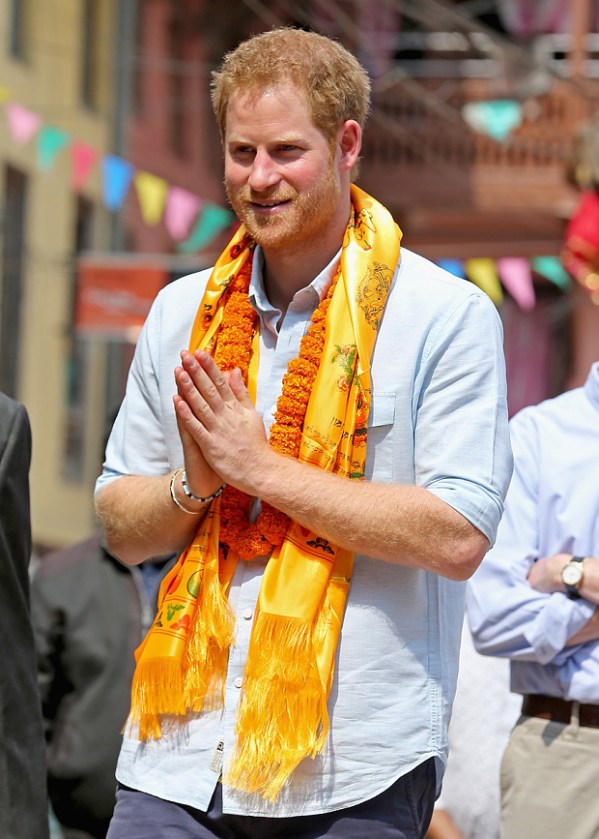
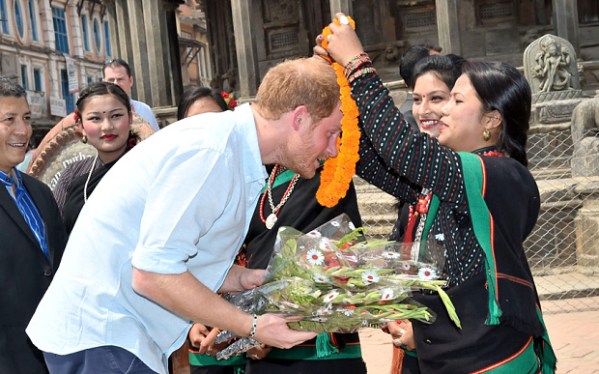
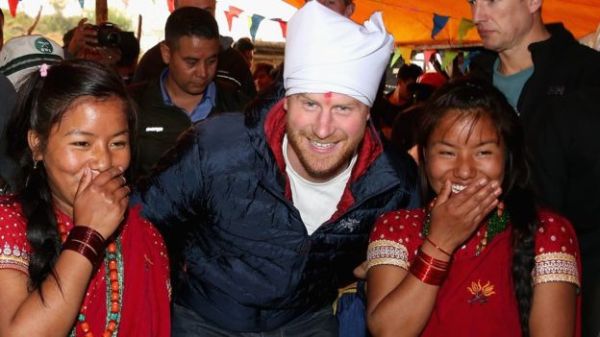
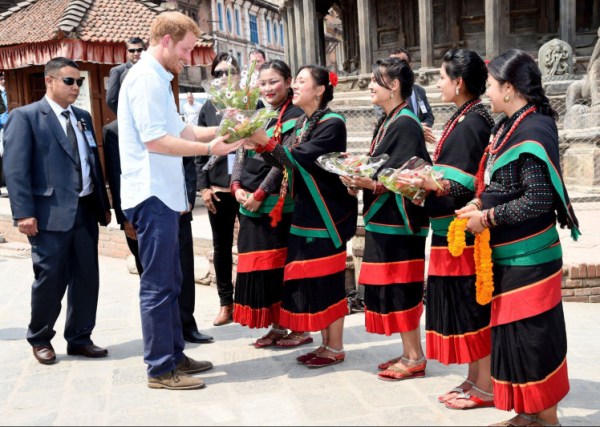
Prince Harry was given a traditional Nepalese welcome yesterday in Kathmandu, Capital of Nepal. Five Virgins, known as Pancha Kanya gave him the welcome by garlanding him. Till recently, Nepal was a Hindu Kingdom. Now they have dropped that claim when they framed a new constitution. Governments may change, constitutions may change. But people’s belief remains the same.

Hindu women remember Five Great Women every day in the morning. They recite a sloka/couplet in Sanskrit that contains the five names. This couplet itself is very significant because it explodes the Aryan- Dravidian myth to pieces. Though our scriptures clearly say that the Asuras or Rakshasas are cousins of Devas, jaundice eyed foreigners deliberately write that they belong to different races. This sloka also is a proof to show that good people are praised and remembered, irrespective of Rakshasa or Deva or Monkey race.


Five women praised in the Sanskrit couplet are Ahalya (wife of a seer, Gautama),Draupadi (Wife of Panadava brothers), Sita (wife of Rama), Tara (Wife of Monkey King Vali) and Mandodari (wife of Demon king Ravana).

All the five were featured in the great Hindu epics Mahabharata and Ramayana.

prince-harry-nepal_3597889b

In Nepal the Panchakanya are virgins or not married; but the above five were married. But here the virgin stands for their virgin minds – ever pure! For them sex was an act used for procreation and not for sexual gratification. That is why every Hindu woman remember them every morning. Those who don’t recite such a couplet also know the stories of five women and their contribution to Hindu culture.

Traditional Sanskrit couplet, part of Pratasmaran (Morning Prayer) runs like this:

Ahalyaa, Draupadii, Seetaa, Taaraa, Mandodari tathaa

Panchakanyaah smaren nityam sarva mahaapaataka nasanam


Meaning:

By remembering the Five Pure Women Ahalya, Draupadi, Sita, Tara and Mandodari all the great sins are wiped out or destroyed.

This sloka explains all that Hindu women stand for. Draupadi fought for her rights. Sita was ready to undergo all the hardships that her husband went for. Tara established her right by making her son Angada the next king of Kishkinda. Ahalya , a sinner, was reformed and proved that every sinner has a future. Mandodari, a chaste woman, but married to a demon Ravana advised him to send back Sita to Rama.

prince-harry-nepal_3597891b

Report from Nepal according to London Newspapers:

Prince Harry’s visit to Nepal began with a ceremony signifying luck and purity – a welcome from five virgins.

The young women greeted their special guest with gifts of flowers and placed a garland around his neck.

He was given flowers by Ujala Maharjan, 18, Alisha Awale, 18, Reju Maharjan, 19, and Nafisa Dangol, 17, before Maiya Maharjan, 25, put a garland or orange flowers around his neck.


The group of five young women – a lucky number in Nepalese culture – with their status as virgins representing purity, greeted their special guest with gifts of flowers and placed a garland of marigolds around his neck.


Harry was left in awe of the magnificent Hanuman Dhoka Palace complex, named in honour of the monkey god, Hanuman, with its impressive galleried courtyards, featuring beautiful carvings.


Much of the monument was built by King Pratap Malla in the 17th century but a 1934 earthquake which struck Nepal destroyed a large amount of the structure.

harry with kunkum

The prince lit a large candle, or lamp, in a metal cup and handed it to a priest guarding the icon at the 600-year-old Golden Temple. The offering of a burning lamp symbolises the impermanence of life.


When he arrived Harry was greeted by the temple’s chief abbot, 94-year-old Turtha Raj Shakya, who gave him a gift of an orange holy scarf decorated with eight auspicious symbols of Buddhism.


Already wearing a garland of orange flowers given to him by the five young women, the prince said: “Orange is the colour of the day.”


Golden Temple of Nepal


He was then taken into the tiny main courtyard of the temple, no bigger than half a tennis court, in which stood a large pagoda-style shrine as well as the shrine of the Buddha – covered in gold leaf, giving the temple its name.

As the prince stooped through a low doorway to enter the courtyard, he looked around him and said “Wow”.


Local conservationist Anil Chitraker showed him around the building, explaining the significance of prayer wheels, bronze statues of monkeys and elephants that relate to stories told by the Buddha, and the importance of the temple itself, which serves as a religious and community hub for 5,000 people.

After lighting the lamp, the prince gave it to Sujan Shakya, 32, one of two priests guarding the shrine of the Buddha.


The chief priest, or baphaca, in the temple is 10-year-old Sumit Shakya, who is serving one month as guardian of the shrine. Tradition dictates that the job must always be done by a boy aged under 12, who must not leave the temple for the month that he is in charge.


The temple was built in 1409 on the site of a 12th century Buddhist monastery, and only survived last year’s earthquake because of just-completed work to replace all of its rotting wooden beams.


Mr Chitraker said of the lamp-lighting ceremony: “In the Buddhist tradition, all this knowledge needs to spread, so when you light one lamp with the other lamp it symbolises how knowledge and wisdom spreads around the world.

“The butter that is being used to fuel the lamp ultimately runs out so it also symbolises the impermanence of life.”


He went on: “The earthquake was devastating, so between the palace he has seen and the Golden Temple, it shows how a 2,600-year-old institution established by Buddha comes to life when there is a disaster.


“The people pooled their food, they pooled their fuel, they cooked for 800 people at the same time and they took care of their houses. Five days after the earthquake some people were already moving back into their houses.”

–subham-

Why I Love Bombay: Edwin Arnold (Post No. 2647)

Bombay_Mumbai_Harbour_Scene_c1880

Compiled by london swaminathan


Date: 19 March 2016


Post No. 2647


Time uploaded in London :–  18-11


(Thanks for the Pictures; they are taken from various sources)


DON’T REBLOG IT AT LEAST FOR A WEEK!  DON’T USE THE PICTURES; THEY ARE COPYRIGHTED BY SOMEONE.


(for old articles go to tamilandvedas.com OR swamiindology.blogspot.com)


From the book India Revisited by Edwin Arnold Published in London in 1886


(Pictures are taken from different sources, not from Edwin’s book)

oldbombay2_grande

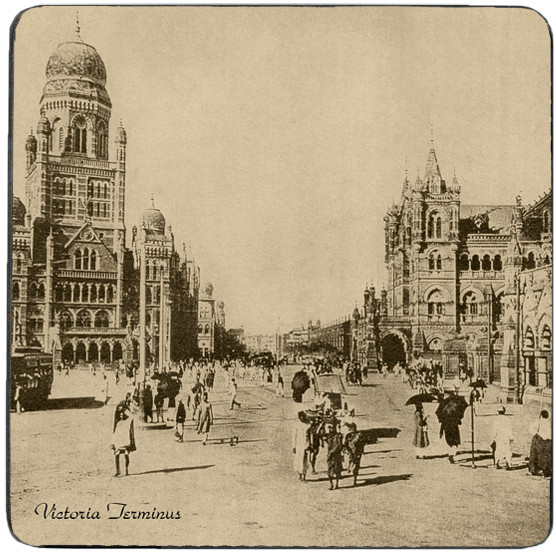
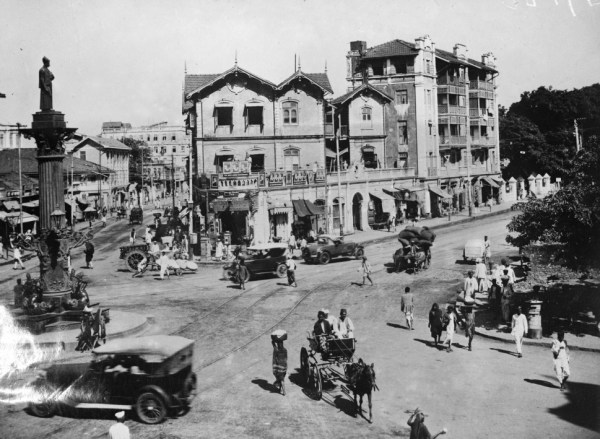
Augustus said of Rome, “I found it mud; I leave it marble,” and the visitor to India who traverses the Fort and the Esplanade Road after so long an absence as mine might justly exclaim “I left Bombay a town of warehouses and offices; I find her a city of parks and palaces.”


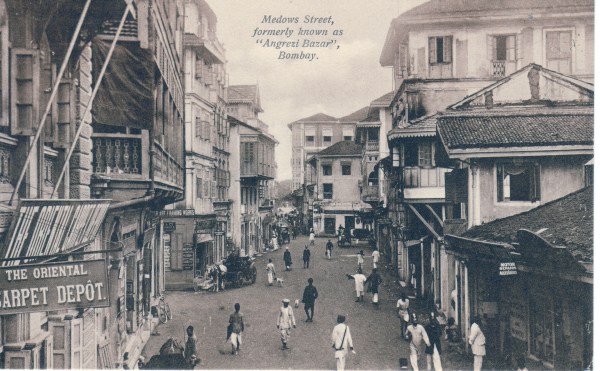
“Even the main native streets of business and traffic are considerably developed and improved, with almost more colour and animation than of old. A tide of seething Asiatic humanity ebbs and flows up and down the Bhendi Bazaar, and through the chief mercantile thoroughfares. Nowhere could be seen a play of livelier hues, a busier and brighter city of life! Besides the endless crowds of Hindu, Gujerati, and Mahratta people coming and going – some in gay dresses, but most with next to none at all – between the rows of grotesquely painted houses and temples, there are to be studied here specimens of every race and nation of the East.

Arabs from Muscat, Persins from the Gulf, Aghans from the Northern Frontier, black shaggy Biluchis, negroes of Zanzibar, islanders from the Maldives and Laccadives, Malagashes, Malays, and Chinese throng and jostle with Parsees in their sloping hats, with Jews, Lascars, fishermen, Rajpoots, Fakirs ,Europeans, Sepoys and Sahibs. Innumerable carts drawn by patient, sleepy-eyes oxen, thread their creaking way amid tram car, buggies, victorias, palanquins and handsome English carriages. Familiar to me but absolutely bewildering to my two companions, under the fierce, scorching, blinding sun light of midday, is this play of keen colours, and this tide of ceaseless clamorous existence.

OldBombay-110624_8_2665237

But the background of Hindu fashions and manners remains unchanged and unchangeable. Still, as ever the motely population lives its accustomed life in the public gaze, doing a thousand things in the roadway, in the gutter, or in the little open shop, which the European performs inside his closed abode. The unclad merchant posts up his account of pice and annas with a reed upon long rolls of paper under the eyes of all the world.


The barber shaves his customer, and sets right his ears, nostrils and fingers, on the side walk. The shampooer cracks the joints and grinds the muscles of his clients wherever they happen to meet together.

The Guru drones out his Sanskrit slokas to the little class of brown-eyed Brahman boys; the bansula player pipes; the sitar singer twangs his wires; worshippers stand with clasped palms before the images of Rama and Parvati, or deck the Lingam with votive flowers; the beggars squat in the sun, rocking themselves to an fro the monotonous cry of ‘Dharrum’; the bheesties go about with water skin sprinkling the dust; the bhangy coolies trot with balanced bamboos; the slim bare limber Indian girls glide along with baskets full of chupatties or bratties of cow dung on their heads, and with small naked babies astride upon their hips.


Everywhere, behind and amid the vast bustle of modern Bombay, abides ancient, placid, conservative India, with her immutable customs and deeply rooted popular habits derived unbroken from time immemorial days. And overhead in every open space, or vista of quaint roof tops, and avenues of red, blue, or saffron hued houses, the feathered crowns of   the date trees wave, the sacred fig swings its aerial roots and shelters the squirrel and the parrot, while the air is peopled with hordes of  ubiquitous, clamorous, grey necked crows, and full of ‘Kites of Govinda’, wheeling and screaming under a cloudless canopy of sunlight.  The abundance of anima life even in the suburbs of this great capital appears once more wonderful, albeit so well-known and remembered of old. You cannot drop a morsel of bread or fruit but forty keen beaked , sleek, desperately audacious crows crowds to snatch the spoil; and in the tamarind tree which overhangs our veranadh may at this moment may be counted more than a hundred red throated parakeets, chattering and darting, like live fruit, among the dark green branches. India does not change!”

postcard-20005-horiz

In the beginning Mr Arnold says:-

“The transformation effected in this great and populous capital of India during the past twenty years does not vey plainly manifest itself until the traveller has landed. From the new light house at the Colaba Point, Bombay looks like what it always was, a handsome city seated on two bays, of which one is richly diversified by islands, rising,  green, and picturesque, from the quiet water, and the other has for its background, the crescent of the Esplanade and the bungalow dotted heights  of Malabar Hill.


He who has been long absent from India and returns here to visit her, sees strange and beautiful buildings towering above the well-remembered yellow and white houses, but misses the old line of ramparts, and the wide expanse of the Maidan behind Back Bay which we used to call ‘Aceldama, the place to bury strangers in”.


And the first drive which he takes from the Apollo Bunder – now styled Wellington Pier – reveals a series of really splendid edifices, which have completely altered the previous aspect of Bombay.

light of asia

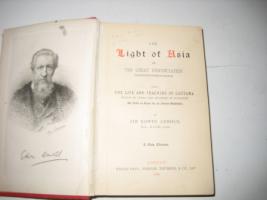
Picture  of Edwin Arnold and his book.

Close to the landing-place, the pretty façade of the Yacht Club –one of the latest additions to the city – is the first to attract attention, designed in a pleasing mixture of Swiss and Hindu styles. In the cool corridors of that waterside resort we found a kindly welcome to the Indian shores and afterwards on our way to a temporary home, passed, with admiring eyes, the Secretariat, the University, the Courts of Justice, the magnificent new railway station, the Town Hall, and the General Post Office, all very remarkable structures, conceived for the most part with a happy inspiration, which blends the Gothic and the Indian schools of architecture. It is impossible here to describe the features of these splendid edifices in detail, or the extraordinary changes which have rendered the Bombay of today hardly recognisable to one who knew the place in the time of the Mutiny and in those years which followed it.


-subham-