Parachuting and Mountaineering in Ancient Hindu Scriptures!!

para2

Compiled by London Swaminathan

Research Article No.1893;  Dated 27 May 2015.

Uploaded at London time 19-43

We have already seen the frequent trips of Lord Krishna and Balarama between Mathura in Uttarpradesh and Dwaraka in Gujarat. We have also seen Bharata’s urgent trip from Iran-Afghan border to Ayodhya in Uttar Pradesh. We have read about how Ravana used Godavari basin and Himalayan foot hills as his play ground using the monsoon wind to travel from Sri Lanka. The same monsoon wind was used by Asoka’s daughter Sangamitra and his son Mahindra to travel to Sri Lanka in seven days from Patna. Sangam Tamil book Purananuru says Karikal Choza used wind power to sail in the seas I have written separate research article on each one of these adventures. This is all started in the age of the Rig Veda where Bhujyu was saved from a shipwreck in the middle of the sea by Asvins. Rig Veda has at least ten references to Bhujyu incidents. Probably they knew how to use the monsoon and returning monsoon.

Panini who lived around 7th century BCE describes several paths such as Varipatha (Sea Route),Karipatha (elephant/Forest route), ajapatha (Mountain goat route), Sankupatha (Mountain climbing with hooks and rope), Hamsapatha (Air route; using air planes like Ravana, Kubera, Uparichara, Arjuna, Matali and Rama) and Devapatha (space travel like Narada, Matali and Rishis;Tri Loka Sanchari)

The commentary of Katyayana on certain Panini sutra (Devapathathi Gana 5-3-100) gives this information.
para4

But a later work in Pali,  ‘Niddesa’ (circa 250 BCE) describes more routes in a fanciful story according to Aryatarangini written by A.Kalyanaraman. It is an encyclopaedic work on Hindu influence around the world.

Twenty four places, all harbours, visited by a ship captain and ten difficult land routes likely to be traversed by him after reaching his destination are described. This shows that around fourth century BCE Indians were very familiar with all the ports from Alexandria in Egypt to Java and Sumatra in Indonesia.

Brihatkatha gives details of ten routes in another story. Sanudasa joins King Acera, who is on an expedition to the Land of Gold (Suvarnabhumi). The paths they cross are

Vetrapatha:Catching hold of giant climbers and jump from one cliff to another or from one tree to another (like we see in Tarzan movies). Vetra means climber or flexy wood.

Vamsapatha: Bamboo path. They cross a river which turns every tree into stone when it falls into the river (Actually they are fossilised trees).Vamasa means bamboo.

Ajapatha: They buy some goats from the Kiratas (hunter tribe) to cross the mountain terrain. Aja means goat.

Acera who came with his troops asked his soldiers to kill the goats and expose the bloody flesh to attract the birds of prey.

Sakunapatha: Huge birds come and try to take the meat. Sanudasa and Acera cling to the birds so as to reach the gold mines. This gave birth to Stories like Sindbad the sailor. This type of using eagles to bring emeralds, Soma plant are in the Rig Veda and Kalidasa’s works. Sakuna means bird.
para7

Mandhapatha:Ram instead of goat.

Janupatha: Crawling route.

Sankupatha: An iron hook attached to a rope of skin, is thrown up till the hook is fixed up in the mountain. After climbing up to the point, he used a diamond tipped instrument to make big hole and insert a spear. From there he throws up his hook to reach higher and higher. Hindus used monitor lizard or iguana to climb the walls of the fort. But it won’t work in mountain territory.

PARACHUTING

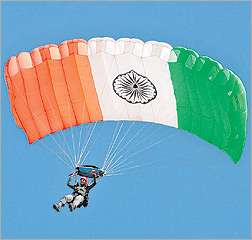
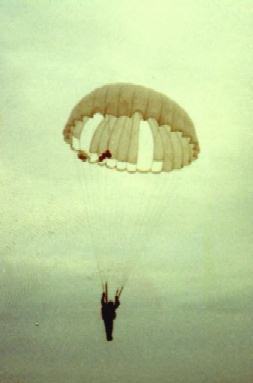
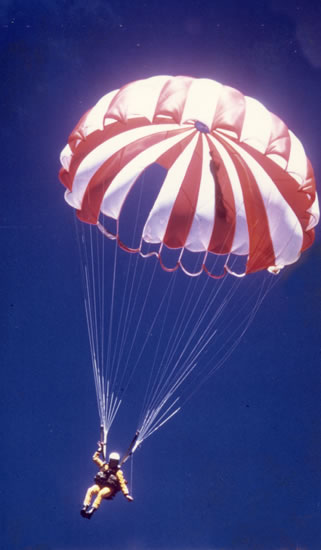
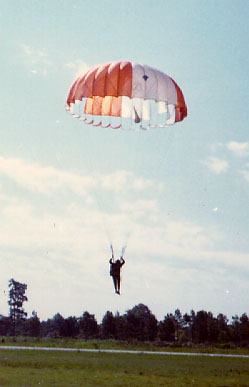
Chatrapatha: Chatra means umbrella. IT IS EXPLAINED IN THE COMMENTARY AS THE WAY WHERE ONE JUMPS DOWN FROM A PRECIPICE WITH AN OPEN PARASOL MADE UP OF THIN SKIN, AND DESCENDS SLOWLY TO HE GROUND. In other words it involved the principle of parachuting.

Mushikapatha: Mushika is mouse or rat. Tunnelling and using the tunnel to cross the path.

Daripatha : Something similar to tunnelling

Danipatha :It is making a cave or cleft in a rock to cross difficult terrain.

Katyayana, writing in fifth century BCE, mentions most of the routes and the Milinda panna agrees with the Vartika of Katyayana.
Paracommander2

Patha=Path

If they can use such pathas in stories like Brihat katha, common men must also be familiar with them. Another interesting thing is that the English word ‘Path’ is derived from the Sanskrit word ‘patha’. This word is in the Rig Veda. Even Tamils use the word ‘Paathai’ in day to day language.

Routes mentioned in the Rig Veda

Vari patha (Sea route) and Vanikpatha (Commercial Route) are mentioned in the Arthasatra of Chanakya (3rd century BCE). Bhagwan Singh in his book “Vedic Harappans” add more interesting details:

Varipatha and Vanik patha are in the Rig Veda. The Vedic Aryans express their gratitude to Indra for digging these routes (4-19-6) and for removing the obstacles from these routes by annihilating robbers and pirates (1-80-3; 4-28-1;10-67-12) and to the gods, ancient seers and manes for discovery or creation of land routes (6-21-12). What was it that bound them so intimately to the rivers that they refer time and again to them as “nadyah, sindhavah, sravantyah, Sapta Sindhavh, trisapta sindhavah and Ganga, Yamuna, Saraswati etc? The answer is not far to seek. The rivers were the trunk routes of the Vedic times as they happened to be in later days as well, but not with as much traffic”.

Manu’s flood story has spread to the whole world. Nova in the Biblical story itself is a Sanskrit word. Nava is ship in Sanskrit. Nava is new in Sanskrit. Both apply to the story.
11_Funerary-boat

Hindu gods are floating on water. Nara+ayana. The very word Nara(yana) and Tamil word Neer for water is derived from Sanskrit word Nara. The proof lies in the Greek ‘Nereids’ (Water nymphs). The word existed even before Tamils started writing. Nara is in the Vedas existed even before Greeks started writing. So we know that is derived from the Vedas. Above all Hindus birth starts with water ceremony and ends with water (funeral) ceremony. Without water Hindu religion or rituals can’t survive.

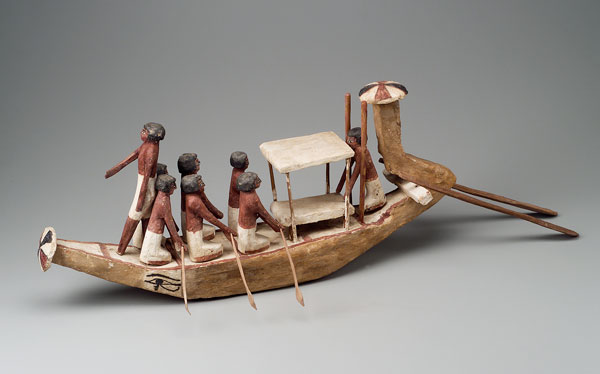
Like Egyptians buried a boat with the Pharaoh to help him to cross the sky, Brahmin funeral ceremony includes boat(Made up of leaves) for the soul to cross the River Vaitarani. All these show that the boat is very familiar with the Hindus. It is even in the Vedic Funeral ceremonies! Indus valley boat and the direction finding bird are also mentioned in the Vedic literature.
Unique and Wonderful Food Items (Prasad) of Hindu Temples

laddu

Written by London swaminathan

Research article no.1882, Date: 22 May 2015.


Prasad in a Hindu temple is a vast subject. A Ph.D. thesis can be written on it. It is also a multi-billion dollar industry. It gives employment for thousands of workers. In India, temple itself is a big industry. If the temples are closed by some atheistic ruler, millions of people would lose jobs very next day; tourist industry and transport would grind to a halt. Directly and indirectly millions of people earn their livelihood through Hindu temples. People of other religions are also benefitted by the Hindu Temples.

What is Prasad?

Prasad is an offering made to a Hindu deity, usually eatable food items, which is distributed to the devotees as the deity’s blessings.

As a general rule “no onion, no meat, no garlic, no fish, no egg, no mushroom” policy is followed in all the holy centres and Hindu temples. They are strictly vegetarian. There may be exceptions. For instance Sri Lankan Tamil temples use garlic and onion. Indian temples won’t use them. In villages there are some strange customs of offering even toddy and meat to Grama Devatas (Village Goddesses).

A Ph.D, thesis can be written about Hindu Prasads. It is a billion dollar business.US temples sell Prasad. Tamil temples in Britain distribute free meals like Hare Krishna (Iskcon) temples and Sikh Gurdwaras. Hare Krishna people visit even universities and distribute food to students. I have seen long queues of students in London University.

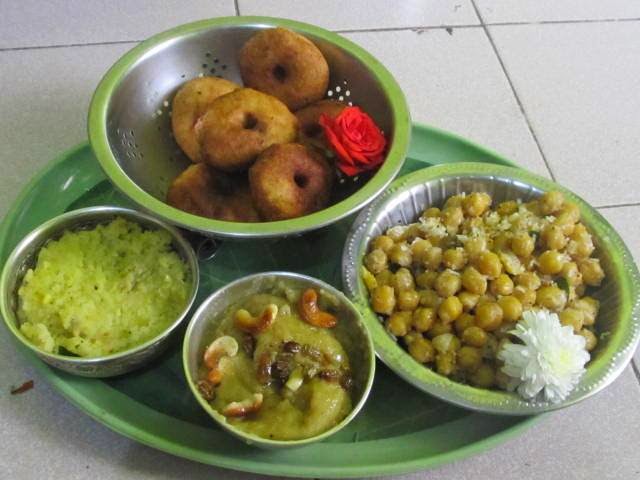
Vadai, Sudal, Sarkkarai/sweet Pongal

Six types of Hindu Prasad

There are six types of Prasads:

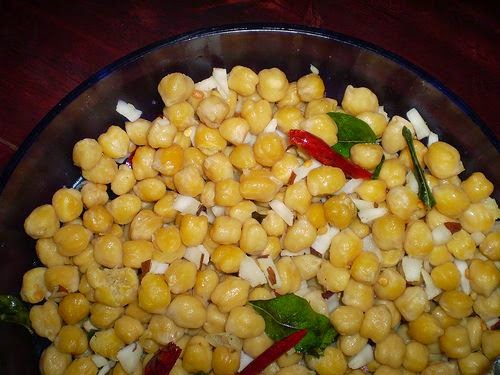
1.Edible/ Cooked: Sweets, Different types of cooked rice, Sundal (boiled pulses mixed with spices).

Cooked Samba rice with Jeerak, Ven Pongal (cooked rice with pepper, butter and nuts), Sarkkarai Pongal (Rice Pudding), Payasam, (Liquid Rice Pudding) Puliyodharai (Tamarind Rice), Thayir sadham (Curd rice), Vadai (fried lentil snack), Modakam (Rice+ Sweet Coconut), Pittu (Rice+jiggery), Full  square meal

2.Edible/ uncooked: Milk, Water, Panchamirtham(fruits, honey, jaggery, nuts, spices mixture), fruits, sugar candy, nuts, pepper, salt, sand from ant hill, Tulsi leaves, Powa (pounded rice mixed with coconut and sugar)

In Sankarankoil and Vaitheeswaran Koil in Tamil Nadu, people collect sand from anthill in the temple and eat it in minute quantities as Prasad and medicine.

Tamil Hindus take Coconut, Bananas, betel leaves and flowers into temple and take them home after offering it to God.

Non edible:

3.Applied on Body : Vibhuti, Kunkum, sandal, burnt Yaga ash, Bilva leaves  and Yellow powder

In all south Indian temples Vibhuti (holy ash), Kunkum (red powder made up with turmeric etc), Sindhur (Red powder), Sandal paste, Homa pasmam (holy ash from the fire pit), Bilva leaves, yellow powder are offered as Prasad. If it is a Vishnu temple Tulsi leaves are offered to devotees from the feet of the statue.

All temples give flowers to women which they wear it in their hair. Flower industry is also a billion dollar industry in India. In Western countries flowers are offered to women. In India it is first offered to Gods and then women get it from there. No Hindu women wear it straight from the basket.

North Indian Temple Prasad

4.Worn on body: Talisman, medals, holy thread (kaappu on wrists), Kasi thread (black), Flowers, Garlands, Silk, rosaries (Rudraksha or Tulsi seeds).

Special Prasads like Rudraksha Malas, Tulsi malas, silk from the Gods’ statues, talismans are obtained with special arrangements.

In South Indian Temples, used sarees from statues are sold in auction to women. They buy it as good luck symbol or auspicious items.

Pictures and books are given in some places such as Ashrams, Holy Centres, which can be kept at home as Prasad.

Metal objects such as rings, talismans etc come under this category.

5.Sold Prasad: Nowadays Prasad is sold in big temples; but simultaneously free Prasad is also distributed. Whoever needs more than that have to buy it.

After seeing the demand for Prasad, South Indian temples also started selling special prasads in special counters.

6.Free Prasad: Flowers, Vibhuti, Kunkum, Sandal or the fruits, coconuts we take it into the temple are returned to us; but yet there is a small fee for that service.

So we can broadly classify the Prasad into Sold and Free Prasads. In the same way, we can broadly classify them into cooked and not cooked Prasads.

Aravanai  Prasad in Sabarimalai

There is a pattern in Prasad distribution:

In village temples they offer gruel made up of rice or millets

In Vishnu temples, they give Tulsi+water from a copper pots or silver vessels.

After the main Arti, they distribute Tamarind rice or Curd rice.

In Shiva temples in Tamil Nadu they distribute plain cooked rice with Jeera or Ven Pongal.

In Goddess Temples they offer Sweet Pongal, particularly Fridays.

But each temple has got something unique to offer.

As a student I used to go to the world famous Madurai Meenakshi Temple and get Samba rice or Ven Pongal in the day time and Sundal and milk after the last Arti (Palli Arai Deeparadhana).

In Krishnan temple,Madurai run by the Yadava caste, I used to queue up for tamarind rice or Curd rice.

On Fridays, they offer sweet Pongal to goddesses in the South Indian temples, Goddess statues are inside both the Vishnu and Shiva temples.

13 miles from my home town Madurai is Azakarkoil. They used to make unique ADAI (looks like Dosa but much thicker made up with grains,pulses and spices) two or three people can share it.

When we go to Tirupati we used to buy Ladoos and a small Adai like spicy snack. They do distribute rice items as well.

In the North Indian temples they distribute small sugar balls, sugar candy, nuts or coconut sweets as Prasad. In Swami Narayan temples, they offer sweets during Deepavali in huge quantity (Annakut festival).

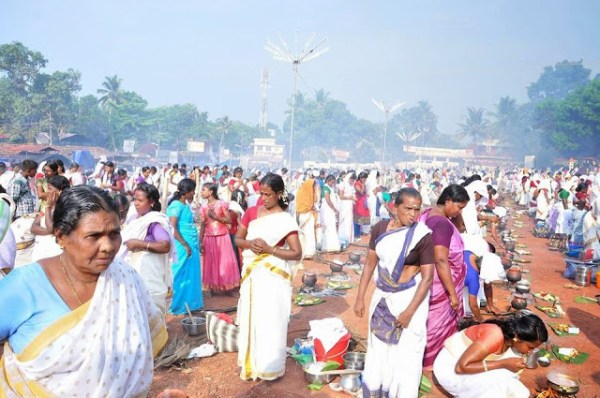
Kerala temples are famous for the sweet liquid called Payasam. This is rice based item but can be made with jack fruit or sago or vermicelli or pounded rice.

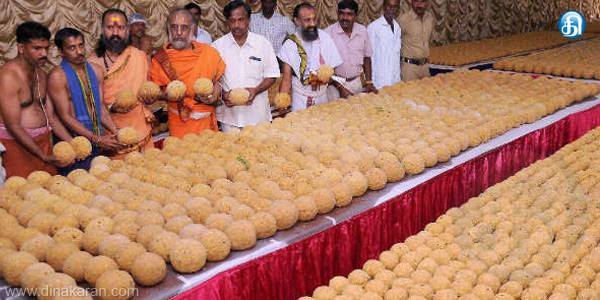
In south India Tirupati (in Adhra Pradesh) laddu is the most famous Prasad. In Tamil Nadu, Panchamirtham of Palani Murugan temple is unique. Both these prasadas give work to lot of people.

Equally famous is the Mahaprasad of Puri Jagannatha Temple. It has fifty six cooked and non- cooked items in its menu.

Mahalaxmi Temple (Mumbai), Shirdi Sai Baba Temple (Shirdi), Viswanatha temple (Kasi) are offering sugar balls as prasad. In many of the temples people buy it from outside shop and offer it to God and take it back.

Sundal

How to take Prasad?

Always take the Prasad with your right hand. Never use left hand.  Both hands may be used but place your right palm over left palm, bow your head, and then receive it. You should not throw anything on floor even if you don’t want it. You have to dispose them in the containers for it.

List of Unique Hindu Prasads:

Puri Jagannatha Temple: Maha (great or big) Prasad with 56 items

Tirupati Balaji temple:Ladoo and Appam

Palani Dandayutha pani Temple: Fruit Mixture (Panchamirtham)

North Indian Temples: Sugar Balls or sweets

Maharastrian Temples: Powa +Sugar+Coconut

Kerala Temples: Ney Appam (fried sweet flour item with butter)

Ganesh Temples: Modaka on special days

Hanuman Temples: Vada (made up of Urad Dal) in South India or Boondhi in North India.

Sabari Malai Ayyappan Temple: Aravanai sweet, Appam, Ghee from Cow’s butter

Sri Rangam: Coconut, Butter, Spinach

Tiruvarur Temple: Ney Murukku ( Fried Rice snack)

Tirukkannapuram: special Pongal (rice item)

Kancheepuram Varadaraja Perumal: Kanchi Type Idli (boiled rice cake with pepper)

Kollur Mookambika and Kutralam: Medicinal concoction with herbs

Chidambaram, Madurai Temples: Cooked Rice with Jeeraka

Irinjala kuda Bharatha Temple: Brinjal/Aubergine preparation

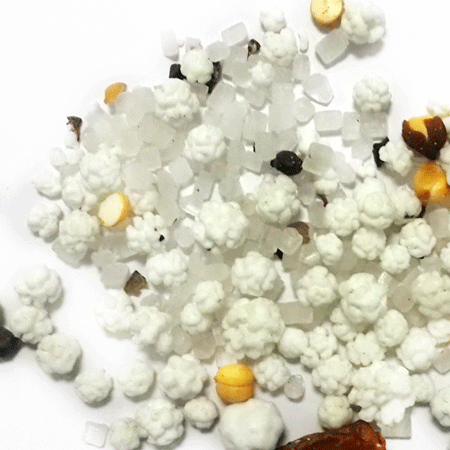
Vaishnava Devi in Kashmir: Puffed rice+coconut+sugar balls

Ambalapuza in Kerala: Milk Payasam.

In Tamil Nadu, during Navaratri festival and Markazi (Month Margsirsha) Bhajans, Sundal is distributed. On the Saraswati Puja/Vijayadasami day Sundal+Vada+ Sweet Pongal are distributed.

This is not a comprehensive list. Each temple has got its own Madappalli (kitchen) and its own traditional menu. Anything can be a Prasad once it is offered at the feet of God. Hinduism is a colourful religion. There is no place for monotony. Variety is the spice of life (loko binna ruchi:), says Kalidasa. Hindus see god even in variety of food items.

Sweet Pongal for the Goddess in Kerala

Sanskrit and Tamil Words in Ancient Chinese!

Written by London swaminathan 

Research article no.1880, Date: 21 May 2015.

There are hundreds of research articles about the Indian contact with China from 2nd century BCE. The Silk Road trade is well known. But not much is written about the contact before 300 BCE. We have to piece together the information that is available in various places. I read some interesting articles about the Indian languages’ contribution to Chinese language which I wanted to share with language enthusiasts.

1.Max Muller says that the names of stars and other astronomical terms in Chinese are of Sanskrit origin.

2.Nadar community in Tamil Nadu believes they have connections with China in the past.

3.Col.Tod says, “The genealogies of China and Tartary declare themselves to be descendants of AWAR, son of the Hindu king Pururawa (Annals of Rajasthan, Vol.1, p 35).

4.Sir William Jones says the Chinese assert their Hindu origin(Annals of Rajasthan, Vol.1, p 57).

5.The original settlers of China are from Kashmir and other parts of the Himalayas. According to the traditions noted in the ‘SCHUKING’, the ancestors of the Chinese, conducted by Fohi, came to the plains of China in 2900 BCE from the High mountain land which lies to the west of that country. They might have gone via Afghanistan which was under Hindu rule from the days of Ramayana and Mahabharata. Hindus ruled Afghanistan until Sixth Century CE.

6.The name China is of Hindu origin according to Prof.Heeren; the word SINIM occurs in the Bible as well (Isaiah xlix.12)

7.According to Prof.Lconperie (Western origin of Chinese Civilization), the maritime intercourse of India with China dates from 680 BCE. They went through Ceylon (Lanka) after Vijaya founded a kingdom there.

8.From the days of Asoka (3rd Century BCE), lot of authentic information is available. So I don’t want to repeat them here. We know of K A Neelakata Sastri’s identification of Kuong Tchi with Kancheepuram, Bodhidharma’s visit to China, Tamil Inscription in China, Hindu temples in China, thousands of Buddhist monuments in China, old pam leaf manuscripts in China etc. They are all after second century BCE.

tamil in china

Tamil Inscription in China

Language Influence:

9.Tamils have found out some words like Nee (you) in Chinese. But they are very few. It may be just co incidence.

  1. Shrikant Talageri in his book The Rig Veda- A Historical Analysis (p 289) says, “Tsung-tung, a scholar of Chinese (Taiwanese origin), has shown, on the basis of study of relationship between the vocabulary of old Chinese, as reconstructed by Bernard Karlgren (Grammata Serica, 1940) and the etymological roots of proto-Indo European vocabulary, as reconstructed by Julius Pokorny (year 1959), that there was a strong Indo- European (IE) influence on the formative vocabulary of Old Chinese (OC).

(My comments: I have abbreviated IE and OC; Indo European means Sanskrit; foreign scholars never use Sanskrit, but use IE, fearing their Aryan-Dravidian Racist theory would be demolished)


Tsung-tung provides a long list of words common to IE and OC and adds “in the last four years I have traced about 1500 cognate words, which would constitute roughly two thirds of the basic vocabulary in OC.

The common words are to be found in all spheres of life including kinship, animals, plants landscape, emotional expressions, actions, body parts, politics, religion and even function words such as pronouns and prepositions.

This IE influence on OC took place at the time of the founding of the first Chinese Empire in about 2400 BCE. He identified the Yellow Emperor Hang-ti as an Indo European(IE). Huang-ti is mentioned as the founder of Chinese language in the Li Chi (Book of Rites).

Among IE dialects, Germanic languages seem to have been mostly akin to OC. Germanic preserved the largest number of cognate words also to be found in Chinese. The influence on the Chinese language probably spread to other related languages later on. Sino-Thai common vocabulary, too, bristles with IE stems”.

A panel of inscriptions of the God Narasimha adorns the entrance to the main shrine of the temple, believed to have been installed by Tamil traders who lived in Quanzhou in the 13th century. Photo: Ananth Krishnan

My comments

My previous argument is strengthened by this piece of scholarly work. I have been saying,

1.Sanskrit and Tamil are closer to each other than any two ancient languages in the world. Caldwell and Max Muller were wrong in saying that the Dravidians came from outside India.

2.Most of the BASIC words in ancient languages can be traced back to Tamil and Sanskrit ( I have already given examples in my earlier posts)

3.There are common words between any two languages in the world because human beings lived under one roof at one time. So don’t jump to any conclusion by seeing a few similar words.

4.Human beings might have originated in Africa ,but the civilization marched to various parts of the word from India. Apart from the language evidence, the biggest evidence comes from the language speakers  themselves. Sumerians, Egyptians, Chinese, Mayans – all say that they came from outside the area. They were not the sons of the soil. They all migrated from India. Indians say that they were born and brought up here. It is crystal clear in Sanskrit and Tamil literature. They never say anything about migration to India from outside.

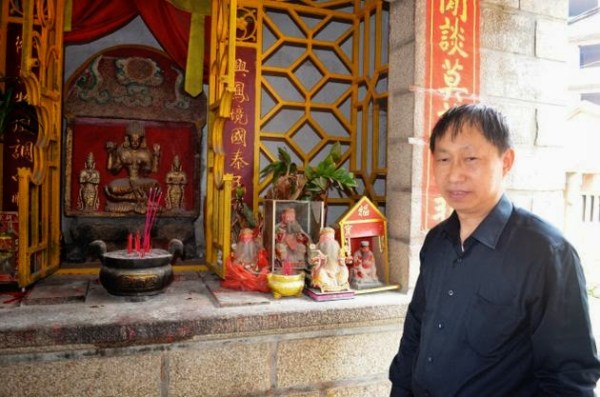
Li San Long, a resident of Chedian village, offers prayers at the village shrine, which houses a deity that is believed to be one of the goddesses that the Tamil community in Quanzhou worshipped in the 13th century. (Right) A stone elephant inscription on display at the Quanzhou Maritime Museum. Photo: Ananth Krishnan

5.Last but not the least, the onomatopoeic words are similar in many languages. One should not jump to any conclusion on the basis of those words. Since they are based on sounds, all bird names will be based on Ka, Ka, Ki, ko, ke, kow in most of the world languages (E.g.Kaka, Kiwi, Kili, Cuckoo, Kokku, Kaga etc)

The Story of ‘Juggernaut!’

Compiled by London swaminathan

Post no.1878, Date: 20 May 2015.

Most of us know that the word ‘juggernaut’ in the English dictionary is derived from Lord Jaganatha of Puri, Odisha.

If you look at Oxford Dictionary you will get two meanings:-

1.A very large Lorry/Truck

2.A large powerful force or institution that cannot be controlled

British News Paper The Guardian has published the following matter under its question and answer column (Notes & Queries, Vloume 5)

Question: What is the origin of the word Juggernaut?

Answer:

JUGGERNAUT is derived from Sanskrit and modern North Indian languages like Hindi ‘Naut’ here is Lord(nath) of the universe (jagat), the compound Jagannath, is a title for the Hindu god Vishnu, especially in his eighth incarnation as Krishna. Huge Lorries are called juggernauts because the epithet of the deity had come in English to be associated with the enormously heavy chariot (rath) which bears Jagannath in procession at the annual festival (Rathayatra) at the town of Puri (Jagannath Puri) in Orissa in North East India.

This has been reported by European travellers since about 1321 and reports mentioned worshippers dying, crushed under the massive wheels. Western observers’ usually disparaging  accounts led to an intermediate usage of juggernaut for any institution to which persons are ruthlessly sacrificed (OED 1933) before it was applied to ‘a very large lorry for transporting goods by road, especially one that travels throughout Europe’ Collins Dictionary of the English Language 1979). During the past 150 years, juggernaut served in a derogatory as a verb and an adjective as well as a noun.

–Eleanor Nesbit, Senior Research Fellow, Religious Education, University of Warwick.

Brewer’s Book of Myth and Legend add…

The chief festival is the car festival when Jagannath is dragged in his car (35 feet square, 45 feet high) to another temple. The car has sixteen wheels, each seven feet in diameter. The belief that fanatical pilgrims cast themselves under the wheels of the car to be crushed to death on the last day of the festival is largely without foundation. However it has led to the phrase the car of the juggernaut, used to denote customs, institutions etc., beneath which people are ruthlessly and unnecessarily crushed.

My comments: Actually the Christian missionaries published pictures of Jagannath Rath in bad light (throwing people under the wheels) and women thrown into husband’s funeral pyre etc. to justify their conversion agenda.

Old Languages Never Die!

Written by London swaminathan

Research Article No.1876; Dated 19 May 2015.

Uploaded in London at 19-21

Origin of the word “TAMIL (THAMIZ)” has been debated for long by scholars. Several scholars said the word Tamil came from:–

Dravida=Dramila=Tamil

Some countered this argument by saying it worked the other way round:–

Tamil=dramila= Dravida

But those who study the following answer will have to accept that the first argument is correct i.e. Tamil came from Dravida. Since dra, bra, pra, gra sounds don’t exist in Tamil they always write it as da, ba, pa,kira in Tamil as in the words Thamiz, Piraman(Brahma), Padimam (Pratima),Kirantham (Grantha) (Following answer shows that the sound change works in only one direction)

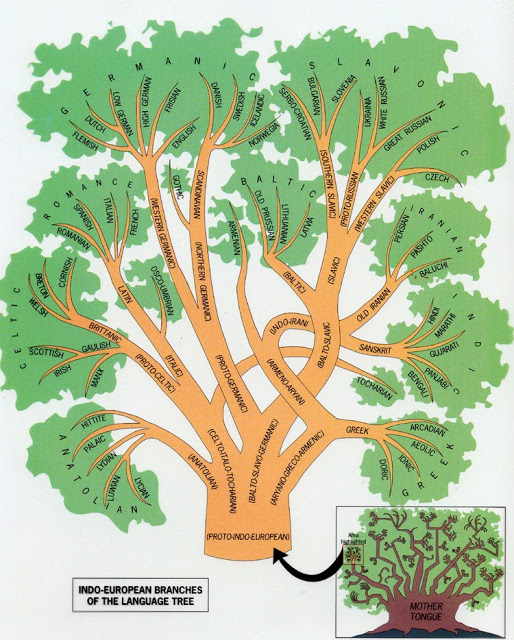
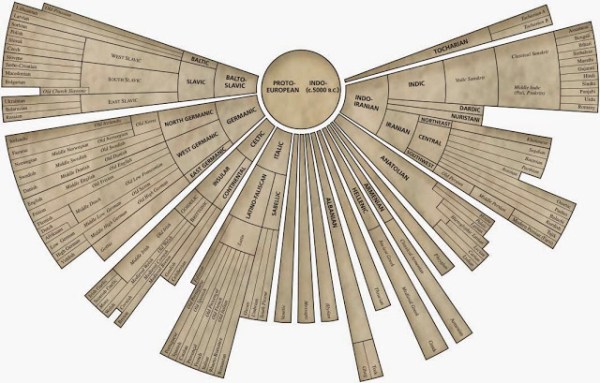
The second point is that one can understand from the following answer how Sanskrit words/sounds changed into European languages in course of time. The oldest Indo-European language is Sanskrit. All the European languages are very much younger than Sanskrit. Their literature came into existence at least 1000 year after the Vedas.

Question and Answer from a British News Paper

Question:How do we know the correct way to pronounce a dead language?

(From the Notes and Queries- volume 4 of The Guardian News Paper)

Answer: Old languages don’t die. They just fade into new languages (at least most of them do). While the entire sound system of an ancient language rarely survives intact, fragments can usually found scattered around its daughter languages.

For example many traits of Latin pronunciation are directly observable in Italian, French, Spanish and Romanian languages. The job of the linguistic historian is try to piece these various bits together. The most tried and tested technique is comparative reconstruction, which focusses on    systematic sound correspondences that emerge when we compare the same words in different sister languages. Where this exercise turns up different sounds, it is usually possible to trace them back to a common historical source.

For example many English words beginning with ‘t’ corresponds to words beginning with ‘ts’ – spelt tz – in the sister language German; compare English ten, to, time with zehn, zu, zeit. On the basis of this and many similar correspondences, we can reconstruct a common Germanic parent language in which the older sound in this particular instance is the knowledge that each type of sound change takes place in one direction only. On the strength of what happens in other languages, we know that ‘t’ at the beginning of a word  can turn into ‘ts’ but not vice versa. The more widely we cast our comparative net, the further we can reach back into the mists of time.

The ‘t’ of early Germanic itself derives from  an even older ‘d’ – contrast English two and tooth with, say, Italian ‘due’ and ‘dente’. Ultimately we arrive at the sound system of an ancient indo – European tongue, the common ancestor of languages as apparently diverse as English, French, Russian, Irish, Greek and Urdu.

John Harris, Department of Phonetics and Linguistics, University College, London

Amazing Geographical Knowledge of the Vedic Hindus!!

Written by London swaminathan

Research Article No.1873; Dated 18 May 2015.

Uploaded in London at 16-51

Vedic Hindus’ knowledge of geography is amazing. We know that the Vedas are books of hymns and not a book on history and geography of India. And yet we find names of scores of rivers, mountains and countries. It covers a vast area from Iran to the Vindhyas. They knew the seas on both sides of the Indian subcontinent. They ventured into seas and rescued shipwrecked Bhujyu (mentioned in at least ten places in the RV) and others. They relate the names of 30 plus rivers from EAST of India showing that they were born and brought up on the banks of Ganges. Indra is allocated direction EAST and Varuna the west indicating they marched from the Gangetic plains to the seas in the west spreading the Vedic civilization. We have already archaeological proof of Vedic gods from Turkey –Syria area dated circa 1400 BCE.

Kings of Iran are mentioned in the eighth Mandala of the Rig Veda. Dasaratha (Amarna) letters of Egypt is another archaeological proof to show that the Vedic kings sent their daughters up to Egypt. So the Vedic Hindus knew the areas covering Iran, Turkey, Syria, Iraq in the Middle East and Egypt in Africa. Indisputable archaeological proof is there to support this. The Vedas mention lot of names of kingdoms in India, but the early translators of the Vedas, who believed that the Hindus came from outside India translated the kingdoms names as “tribes”!!

Later Mahabharata mentioned 30 kingdoms! Just to suit their theory of migration into India they translated those Vedic Kingdoms’ names as “tribes”! The Samhitas, Brahmanas, Aranyakas and the Upanishads were all composed even before the Greeks started writing! No primitive civilization can have vast literature like this. They have very clear cut ideas of geography which we knew from their coinage of the word Sapta Sindhava (RV.8-24-27). Names of hundreds of kings are available in the Vedic literature. And we know that they are not tribal leaders because there is a long list of kings who did Aswamedha Yaga. The horse covered several kingdoms and all were taken by the emperor who did the Yaga.
The great war – War of the Ten Kings—Dasarajna Yuddha in the Rig Veda—clearly show that there were at least ten kingdoms by the time. But foreign “Scholars” described them as tribes! The Great War was described in detail in several hymns in the Rig Veda, but not mentioned in the epics which show the lapse of time between the epics and the Vedas. We know that the Vedas were vast which made Vyasa of Mahabharata to compile them and divide them into four Vedas.

Later epics like Ramayana and Mahabharata spoke about Swayamvaras attended by lot of kings from different countries. Krishna’s travel from Mathura in Uttar Pradesh to Dwaraka in Gujarat show how advanced was the road transport in those days. Before Krishna, Bharata travelled all the way from Iran-Afghanistan ( Kekaya) border to Ayodhya in Uttarpradesh quickly. The route is explained clearly in the Ramayana. By around 3rd century BCE, Hindus were using the monsoon wind to travel to Patna from Sri Lanka. It took only seven days. Ravana and his cousins used the Godavari river region as their playground. He travelled all the way to Kailash from Sri Lanka by using the monsoon wind (sea route up to Bengal).

Agastya took 18 groups with him and came to Tamil Nadu by 1000 BCE according to Sangam Tamil Literature. The Purananuru (201) verse very clearly refers to 49 generations before first century CE.

If we look at the Vedic terms with this information in the  background, then we can understand where foreign “Scholars” went wrong!

The Satapatha Brahmana (SB 17-3-8) mentions the Eastern people (Pracyas) and the Bahlikas (people of the Western regions). One must remember these are not geography books and yet hundreds of geographical terms occur! The same book refers to Udichya Brahmanas (SB 11-4-1-1; GB 1-36). Aitareya Brahmana (AB 8-14) refers to Madyamadis (Middle Zone) and Pracya (East), South (Dakshna), the West (Pradichya) and the North (Udichya). Hindus always mention the directions in the same clock wise direction. Until this day people go round the temples in the same way!

They even mention the King Bhoja of the South and the northern most mystical Uttarakuru region. Though South India was full of forests and unoccupied areas they still knew about the South.

Now let us look at the Vedic materials:

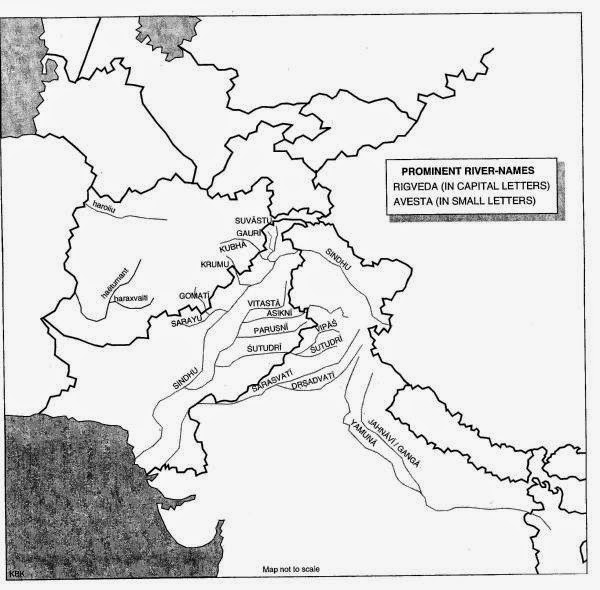
Nadi Stuti ( RV.10-75) gives the names of the rivers from East to West. (Westerners translated the names according to their pre conceived notions. If the river names don’t suit their theories they translated differently! In several places they don’t even know whether it is a river or something else! Griffith who said the meaning is ‘obscure’, ‘not clear’ in every page, translated according to his whims and fancies. The main reason for this is all the foreign “scholars” were taught by third rate Sanskrit Pundits in North India. True Vedic scholars refused to teach them the Vedas or Sanskrit. Now thousands of mistakes are being discovered.)

Andhra: People mentioned with the Pundras, Sabaras, Pulindas and Mutibas (AB 7-18)

Alina: They ruled Kafiristan (The current name indicates that it was once ruled by Non-Muslims)

Anga: AV 5-22-14, GB 2-9 as Anga-Magadhas

(This is one of the 16 Big Empires in Buddhist literature)

Bahlika :It is a Western Kingdom mentioned in SB 1-7-3-8 and earlier AV (5-22-5), 5-7-9). The name got corrupted to Bactria in later literature.

Bhalanas (RV 7-18-7) along with Pakthas (Pakhtoonistan), Alinas, Visanins, and Sivas are other kingdoms that took part in the Ten King War (Dasarajna Yuddha) They all had their own kingdoms in and around present Afghanistan. A person would not be called KING without a kingdom! They are mentioned as TEN KINGS throughout the RV!

Bharata: The king who gave the name Bharata for India. They ruled the Sarasvati River Region. Like the later Magadha Samrajya, they were the most powerful empire during the  Rig Vedic Time.

Cedi : Their king Kasu (RV 8-5-37) ruled either Iran or Bugelgund region in India. Later Cedi kingdom was near the Matsya kingdom.

Matsya : They ruled Rajasthan region. RV mentioned them (RV 7-18-6). Their king name Dhvasan Dvaitavana is mentioned as a performer of Aswamedha in SB 13-4-5-9. Only powerful kings who wanted to conquer the neighbouring kingdoms did Aswamedha. This shows that a lot of kingdoms existed at the time of Brahmanas which are dated around 1000 BCE even by a conservative estimate.

Pulindas : They are mentioned along with Andhras in South India in Brahmana literature (AB7-18)

Pundra:They ruled Northern Bengal (AB 7-18)

Purus, Anus, Druhyus, Turvasas and Yadus are the five groups mentioned in several hymns.

The holiest of the holy rivers Sarasvati is mentioned in 80 places in the Vedas.

My list is not a comprehensive list. It is only a sample. Though the foreign “scholars” translated Raja/Ranja as Kings, they made their kingdoms “tribes”!

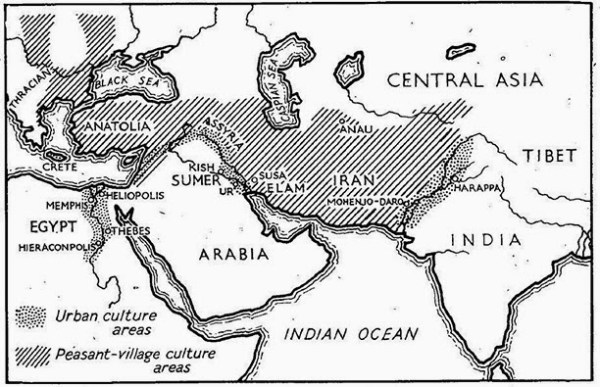
Since we have got archaeological proof from 1400 BCE with kings names in Sanskrit in inscriptions (Bogazkoy and Amarna letters of Dasaratha in Egypt), we are sure that the tribes are not tribes, but kingdoms or empires. Those who do Aswamedha proclaimed themselves as Maharaja (Emperor).

A proper study of all the mountains, rivers, towns (Hariyupa=Harappa), kings, kingdoms, trees, animals and birds will throw more light on the Vedas and Vedic Hindus. Even during the Vedic days it was the largest country in the world from Iran to Andhra in India!

Oldest City in the World: Varanasi/Kasi/Benares

Written by London swaminathan

Research Article No.1864; Dated 14 May 2015.

Uploaded in London at 12-07

“There is hardly any city in the world that can claim greater antiquity, greater popular veneration than Banaras”- P V Kane

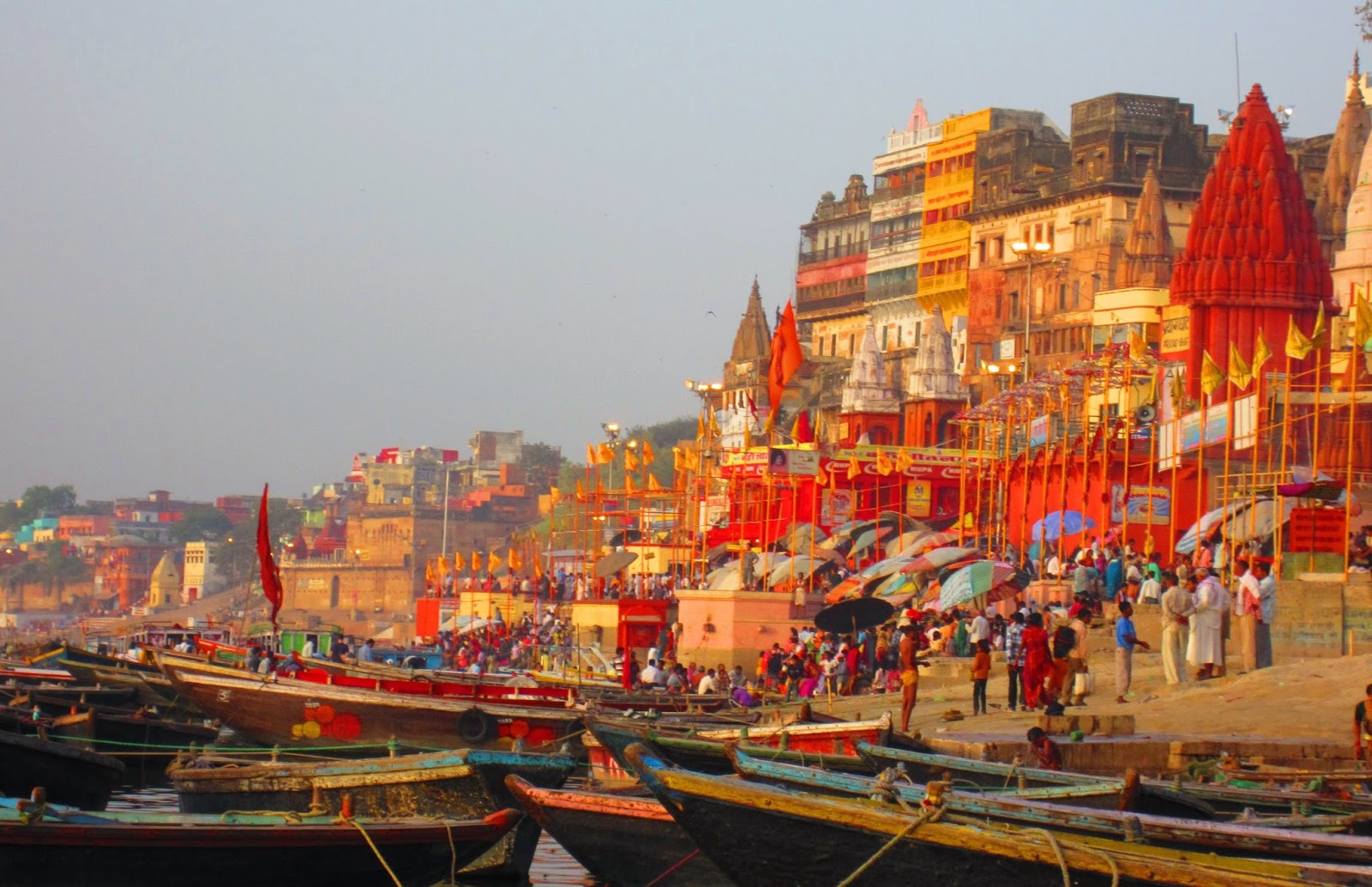
Varanasi also known as Kashi and Benares is the oldest city in the world. Those who believe that Mahabharata war was fought just before the dawn of Kaliyuga in 3102 BCE would agree with me. King of Kasi is also mentioned in the Mahabharata. Before Mahabharata, we have references to Varanasi in the Vedic literature as well. Those who believe in encyclopaedias written by English only knowing lot may dis agree with me.

The archaeological proof we could get so far from Varanasi region takes us back to 900 BCE only. Those who witnessed the recent floods that destroyed Kedarnath temple and the Nepal earth quake that destroyed the Muktinath temple could understand that the enemies of Indian civilization are the floods and earth quake in addition to Muslim invaders. The changing course of Rivers Sarasvati, Sindhu, Ganga and Yamuna destroyed the oldest parts of our civilization. The monsoon rains coupled with the scorching sun make everything crumble into dust.

Three tributary rivers Varuna, Assi and Rajapur of Ganga contributed significantly to the make up of Varanasi. The city’s name came from the two rivers Varuna and Assi.

Following are the evidence for Kasi to enter the Records Book, as the oldest city in the world:

1.Why did Lord Buddha choose Kasi (Saranath is its suburb) to deliver his first lecture, particularly when he attained enlightenment in Buddha Gaya? He avoided all the places such as Kapilavastu (Nepal), Pataliputra/Patna, Gaya in Bihar, Rajagriha and came all the way to Saranath, part of Kashi area to deliver his most famous lecture. This is because Kashi was the holiest city in the whole of India and the oldest.

2.Kassites who ruled Babylonia from 1500 BCE, but settled there from 1800 BCE bore names in a language related to Sanskrit. Like Mitanni, who have very pure Sanskrit names (from 1400 BCE), they also spoke a language related to Sanskrit. All the encyclopaedias “dodge and escape” by saying that their origins were not known. The fact is that they migrated from Gangetic plain, like Saurashtra (Zoaraster) migrated to Iran from Saurashtra coast of Gujarat (Please read Kanchi Paramacharya’s (1894-1994) talk on Zoaraster/Saurashtra.

3.Most of the Jataka stories are centred around Kashi and the previous births of the Buddha are attributed to that city, because that was the oldest city in the world. Several stories begin with ,”Once upon a time when Brahmadatta was reigning in Kashi”. They wrote this “once upon a time” story 2300 years ago! So once upon a time for them meant at least 1000 years ago!

4.Jain literature also supports that Kashi was one of the oldest cities. Mahavira was the 24th Tirthankara who was Buddha’s senior. Before Mahavira there 23 were Tirthankaras and the seventh one Suparsvanath was born in Benares. Jains believe that the 23rd Tirthankara Parasvanath, also born in Benares, was Krishna’s contemporary in 3200 BCE. So seventh must be well before that period!

5.Ancient Varanasi was a famous education centre. Anyone who follows a new philosophy must go to Kashi and win over the scholars there in philosophical debates. It was an unofficial University – a unique Indian institution. Scholars used to stand in street corners and invite others for debates. We have to compare this with other cities of the world where prostitutes or beggars were standing in the street corners!

Scholars and “Scholars”

6.If one doesn’t know the culture of a country and write something, then the person’s ignorance will be revealed. At Maski, a megalithic deposit, a burial of a child was found with a pottery disc on the chest of the child’s body. Earlier “Scholars” described it as the play object of the child. But actually the Vedic rituals say that a kapala should be offered on the body of the diseased (AvalayanaGrihya Sutra 4-3-5). Kapala is a mud disc. Other Grihya sutras also describe the Kapalas as offerings in Vedic rituals. Literal meaning of Kapala is ‘broken piece of clay pot or a pot shred’. Such kapalas are discovered in various places in the Gangetic plain establishing its antiquity.

7.The earliest human occupation in Varanasi is found in the Atharvaveda (5-22-14) according to which Kasis are the indigenous people wo lived in Varanasi region. The name Kasi came from these people.

8.The name Kasi denotes (in the plural) the people of Kasi (Satapatha Brahmana 13-5-4-19). The Satapatha Brahmana tells of Dhrtarashtra, King of Kashi, who was defeated by Satanika Satrajita. We hear also of Ajatasatru as a king of Kasi (Brhadaranyaka Upanishad) and another king Bhadrasena Ajatasatrava of Kasi.

The River Varnanavati is referred to in the Atharva Veda (A.V. 4-7-1). It was known as Varuna in later literature.
9.Compound words Kasi-Videha and Kasi-Kausalya occurring in Brahmanas indicate the friendship between these kingdoms. Ayodhya, Capital of Kosala (Kausalya) is also one of the oldest cities in the world which is linked with the first Jain Tirthankara, Rishaba/Adinath.

10.Amba, Ambika and Amabalika are the three daughters of King of Kashi. They were abducted by Bhisma in a swayamvara ceremony. Abduction is one of the eight types marriages approved by Smritis (Hindu Law Books). Oldest Tamil work Tolkappiam also lists this type of marriage. It is well known from this story that several kingdoms including Kashi existed at the time of Mahabharata war. Conservative estimates date the war to 1500 BCE. Kalhana dates it to 2600 BCE. Hindu scriptures date it to 3150 BCE.

Hindus’ holiest city has a glorious history!

Oldest Democracy in the World! Oldest Female MP in the World!!

Written by London swaminathan

Research Article No.1858; Dated 11 May 2015.

Uploaded in London at 21-07


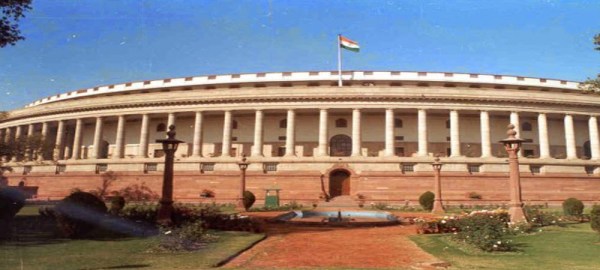
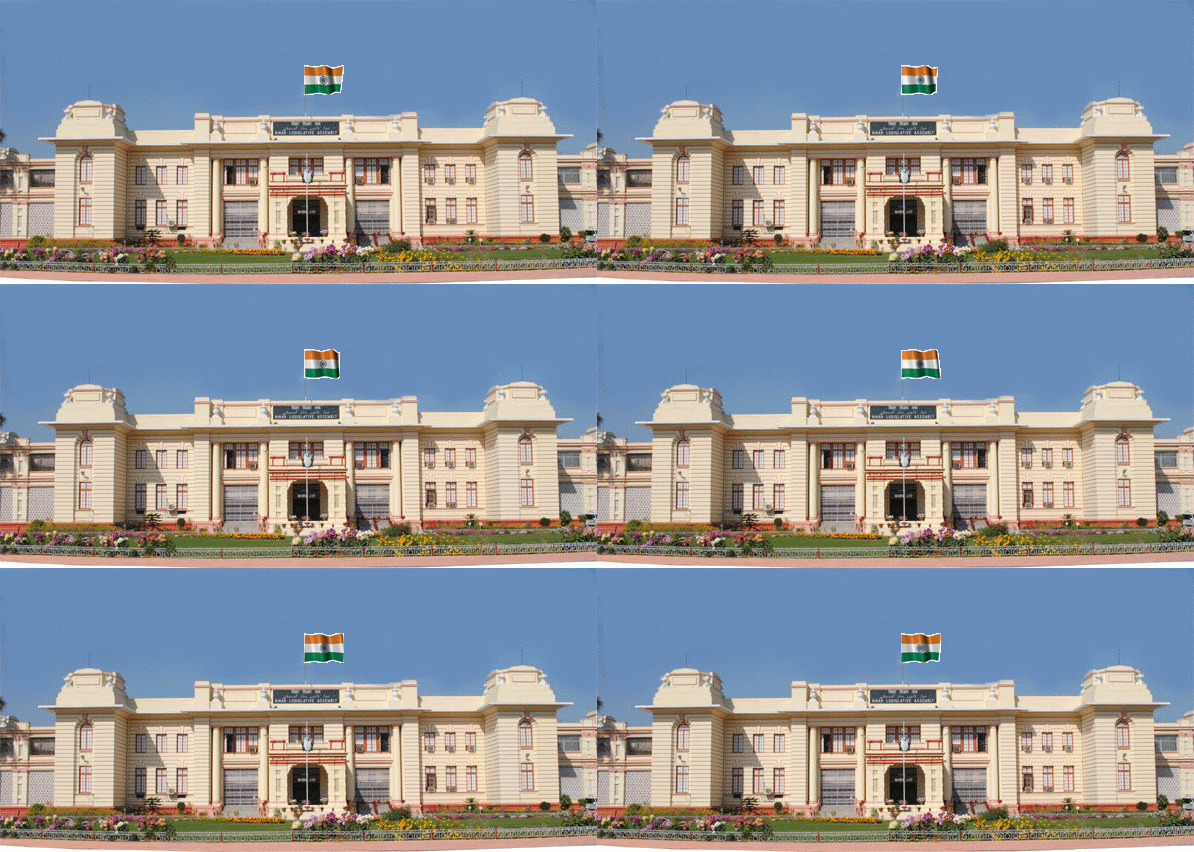
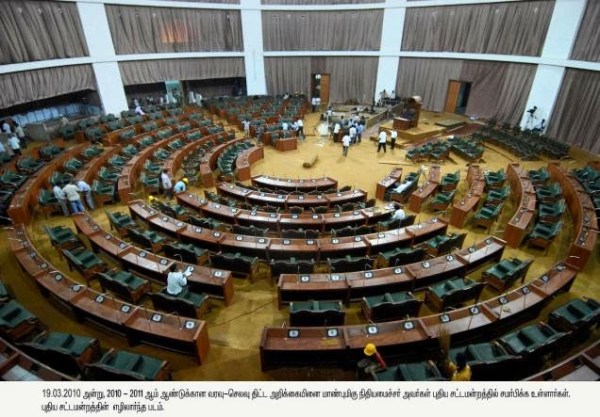
India is the oldest democratic country in the world. Rig Veda, the oldest book in the world, confirms it. Not only that but also the two words used by the Vedic Hindus are used until today from the Himalayas to Kanyakumari and throughout the world. They had two assemblies: Sabha and Samiti. Sabha is used in all the states of India (Lok Sabha, Rajya Sabha, Vidhan Sabha etc) Since Tolkappiam, the oldest Tamil book banned the use of letter ‘Sa’ in Tamil,  Sabha is changed as Avai (Sabhai) in Tamil Nadu. Samiti is used throughout the world as Committee (C=S; samiti=committee).

Several hundred words from the Rig Veda are being used throughout the country. Tamils have been using them for 2000 years! Sanskrit will never die! All the major languages of the world have Sanskrit words!

Bihar Vidhan Sabha

OLDEST FEMALE MP!!

Oldest female MP or MLA was also from India! Rig Veda mentioned female members of the Sabha as sabhavati (RV 1-167-3). It says female member utters fitting words in the sabha!! They were the best speakers! It also said that a woman who protects law (rta) comes thrice to the Sabha (RV 3-56-5). I have already given one proof where Miss Gargi Vachaknavi attended the Religious Conference convened by Janaka. She stood up in the conference and challenged the greatest scholar of the period Yajnavalkya! All this happened before Homer wrote the first book in Greek!

The words regarding Sabha, its activities, its members and its uses show that Rig Vedic society was the most advanced civilization in the world.

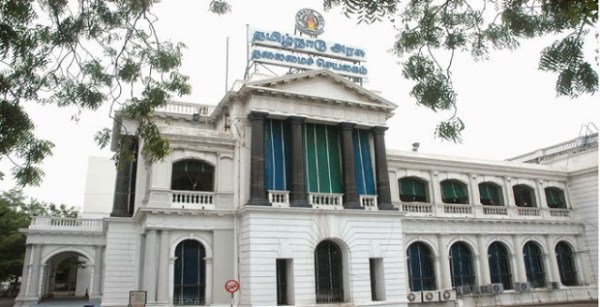
Tamil Nadu Assembly

ROLE OF SABHA (Avai in Tamil; S becomes ‘a’ and B becomes ‘v’; sabha=avai)

Sabha was an assembly where important members met and discussed matters of public interest (RV.6-28-6; 8-4-9; 10-34-6; 7-12-1; 8-10-5; 12-1-56; 19-55-6 etc). It is also mentioned in the later Samhitas and Brahmanas. The members were called sabhasaha like we call MLA or MP. Its director was called sabhasthanu; may be compared to Chief Secretary or the Speaker. The word literally meant Pillar of the Assembly.

The hall was used for social intercourse. General conversations and debates were also held there (RV2-24-13). Disputes were also solved and mitigated in the Sabha according to Mahidhara. He mentioned it in his commentary on Vajasaneyi Samhita (20-27). Financial affairs like wealth of the cattle were also discussed and settled in the sabha (RV6-28-6). Atharva Veda says that higher subjects were also discussed there (AV 7-12-3).

It looks like they performed various functions like enacting new laws, solving the problems. Another suggestion is that it was the assembly of the affluent (maghavan), like the House of Lords.

It was the meeting place of Village council. Domestic use of the sabha was confirmed in several passages of the later Samhita and Brahmanas (AV 8-10-5; TS 3-4-8-6; TB 1-1-10-3

Rajasthan Assembly

Dignity and Decorum of the House

Care was taken to maintain the standard of speech in the Sabha. No unparliamentarily words were allowed. Important participants were called ‘sabheya’ or fit for assembly (RV 2-24-13; AV 20-12-8; VS 22-22

Chandogya Upanishad says that the king attended the sabha (53-6). Chairperson of the Sabha was known as Sabhapala. Members were also known as sabhachara (TB 3-7-46)

Both Sabha and Samiti are described as the Twin Daughters of Prajapati (AV 7-12; SB 4-1-4-1)

Tamil Nadu Assemly

ROLE OF SAMITI (Comiti=Committee)

Samiti means a collective body (RV 9-92-6). Kings attended the samiti (RV 10-97-6)

Atharva Veda which described Samiti and Sabha as twin daughters of Prajapati says they are deliberative bodies (712). RV shows its importance and the business transacted there in 10-193-3.

AV gives more information about the Samiti

a)Courtly men coming as guests 8-10

b)Samiti’s praise sung in all gatherings of men 12-1-56

c)It was an assembly of people and its consent is essential for the King 5-19

Sayana says that Samiti was a War Council, where kings or tribal chiefs assembled to discuss the course of action.

It was conveyed to elect and accept the king or to approve of his acts (RV 1-95-8;9-92-6; 10-97-6.

Compared to Sabha, it was a smaller assembly.

Picture of Lok Sabha

Dasaratha’s Consultation

Even in Valmiki Ramayana we read that Dasaratha called the assembly of ministers and VIP.s and asked their opinion and consent to appoint Rama as the next king. Manu in his Smrti says how bad kings were thrown out of power. We read about Vijaya’s banishment from Kalinga/Bengal region who established a new dynasty in Sri Lanka. Later literature gives us information about Council of Five and Council of Eight people. So we have a continuous history of democratic institutions. The king was decorative post without much power.

Kiskindha Kanda Pictures from Valmiki Ramayana

Written by London swaminathan

Post No.1850; Date: 7 May 2015

Uploaded at London time: 7-51 am

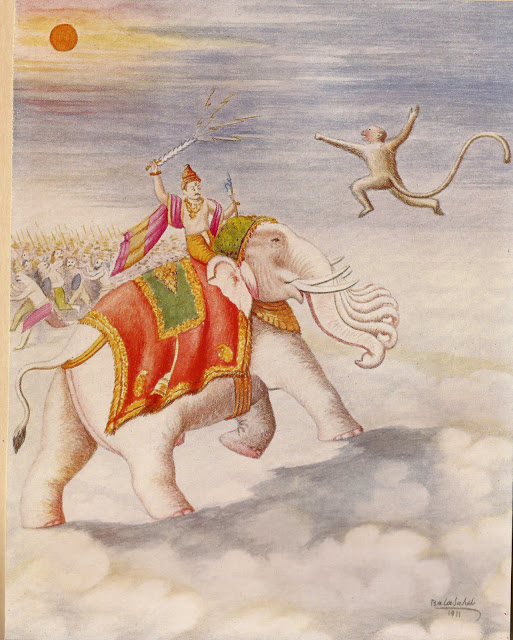
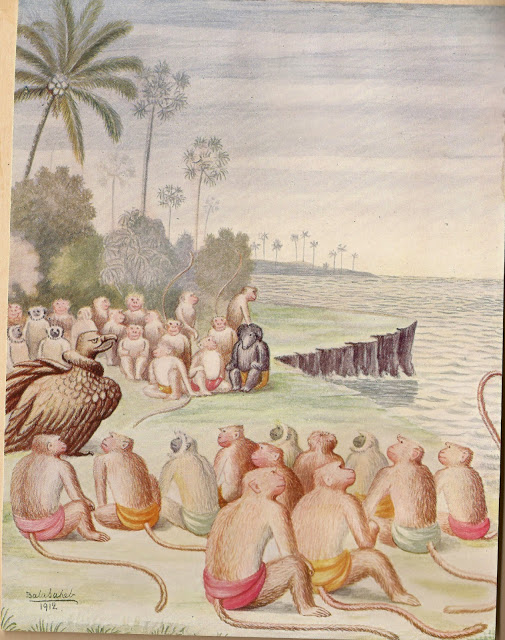
You have seen the pictures of Balakanda, Ayodhya Kanda and Aranya Kanda already in my previous posts. Now you can enjoy the beautiful pictures drawn one hundred years. Pictures are from Picture Ramayana book.

Maruti meets Rama: KISHKINDHA KANDA PICTURE 1

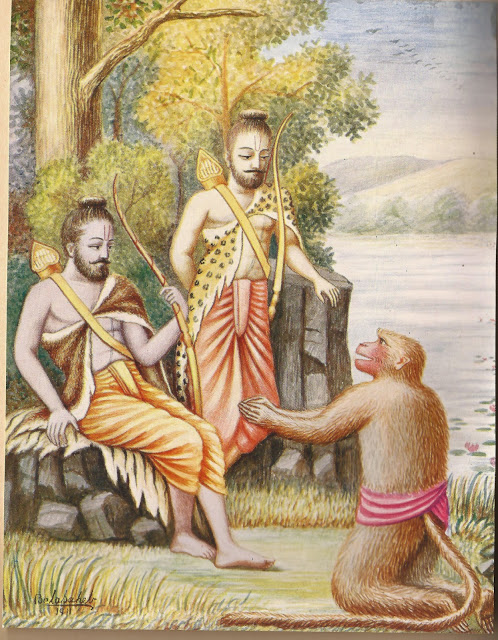
Rama and Lakshmana went to Lake Pampa. Sugriva was afraid to see two mighty heroes from the top of Rishyamuka hill. He sent Maruti (Hanuman/Anjaneya) to find out who they were. Maruti/Hanuman went on a fact finding mission (scouting) and found out they were good people. Immediately he told them the sad story of Sugriva whose wife was abducted by his brother Vali. Maruti wanted to form an alliance with him so that they could help Sugriva in the Rescue Mission. Rama who was on the same boat, readily agreed. Then Maruti took the brothers to Sugriva, the King of Monkeys.

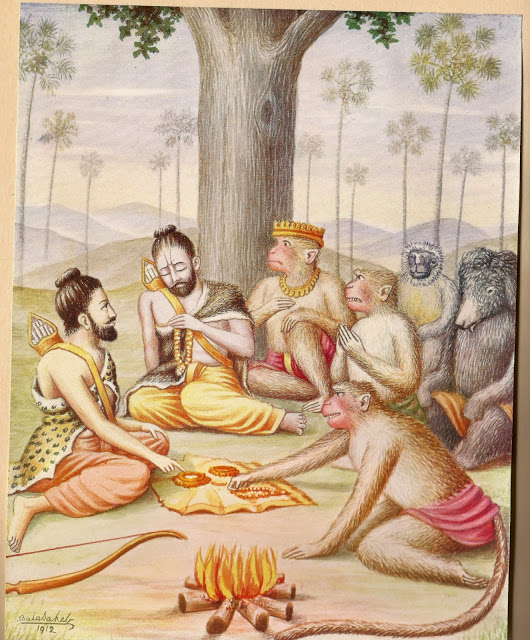
Rama – Sugriva Agreement:-KISHKINDHA KANDA PICTURE 2 (Ramayana Picture No.31) Rama and Sugriva took an oath, in the presence of sacred fire, to be friends even unto death and to help each other in all their undertakings. Then Sugriva brought the ornaments and garments cast down by Sita and showed them to Rama. He recognised them. Lakshmana could recognise Sita’s anklets. Rama promised Sugriva to kill Vali and make him the King of Monkeys again. Sugriva promised Rama to find Sita. An agreement was reached. In those days they did not sign any agreement but took an oath in front of Fire like we do during weddings nowadays. That is more than a written agreement.

KISHKINDHA KANDA PICTURE 3 (Ramayana Picture No.32)

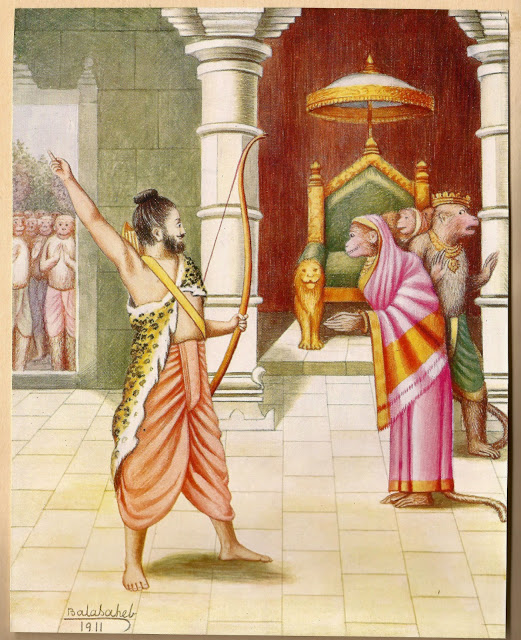
VALI KILLED BY RAMA :-Once Vali fought with a demon named Dundubhi in a cave; Vali asked his friend Sugriva to guard the entrance but he did not come out for several days. Sugriva thought that Vali was dead and crowned himself as the king. When Vali killed Dundubhi and tried to come out, the cave was shut. He was angry and so dethroned Sugriva when he managed to come out. Sugriva took refuge in Rishyamukha Mountain which is a ‘No Go zone’ for Vali because of a curse. When Rama was ready to help, Sugriva asked Vali to come for a duel. Rama killed Vali from behind a tree. Lot of debates were done by scholars whether it was right to kill one hiding behind the tree. But the answer is in Vali’s final words. He himself praised Rama for upholding Dharma. After Vali’s death, Sugriva was crowned as the King of Kiskindha.

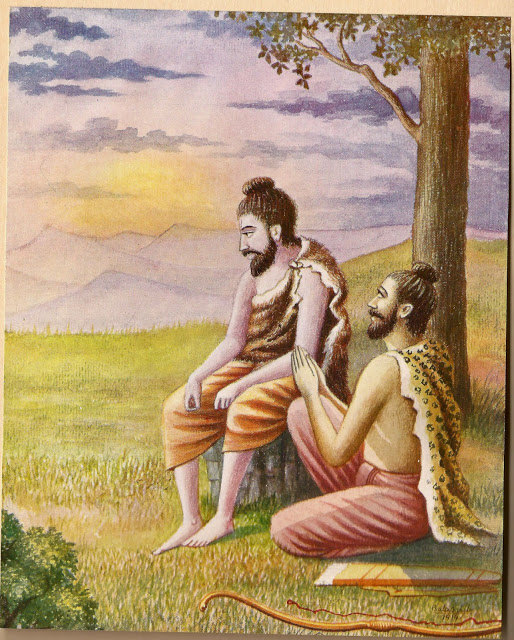
Sugriva’s Faithlessness:-KISHKINDHA KANDA PICTURE 4 (Ramayana Picture No.33) Sugriva stopped visiting Rama after he became the king. Rama was waiting for him at the Mountain Prasravana. He became very much worried about Sita. His brother Lakshmana consoled him.

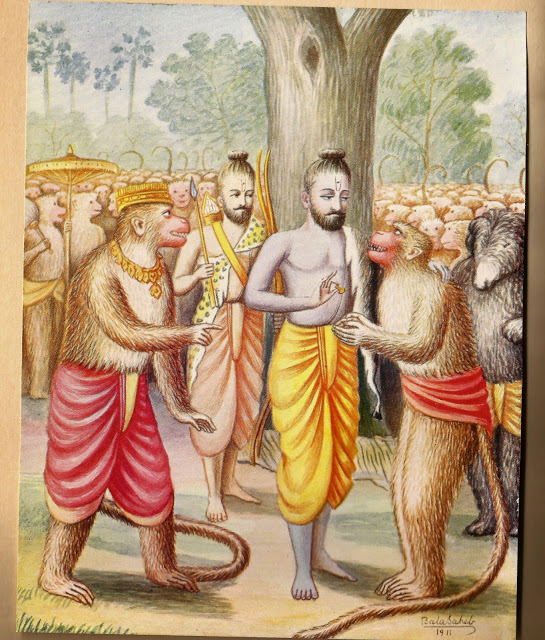
Angry Lakshmana:-KISHKINDHA KANDA PICTURE 5 (Ramayana Picture No.34) Ordered by Rama, Lakshmana went to Kiskindha and reproached Sugriva severely for not honouring his agreement. Sugriva was enjoying life with his wives Tara, Ruma and others. When Lakshmana was angry, Sugriva hid himself behind Tara. She pacified Lakshmana who brought Sugriva into Rama’s presence.

GOLD JEWELS in RAMAYANA:-KISHKINDHA KANDA PICTURE 6 (Ramayana Picture No.35):Sugriva yielded to Rama and summoned all his force at Mount Prasravana. It was divided into four squadrons. Since they knew Ravana went towards South the elite commandos Maruti (Hanuman) and Angada were selected for the mission towards the south. Rama described the features of Sita to them and gave him his ring, which Sita could recognise easily. Women should note here that Indians used gold from time immemorial for good purpose. Sita threw her jewels for identification. Rama sent his ring for identification. Sita sent back her Choodamani. Kalidasa used this technique in two of his dramas.

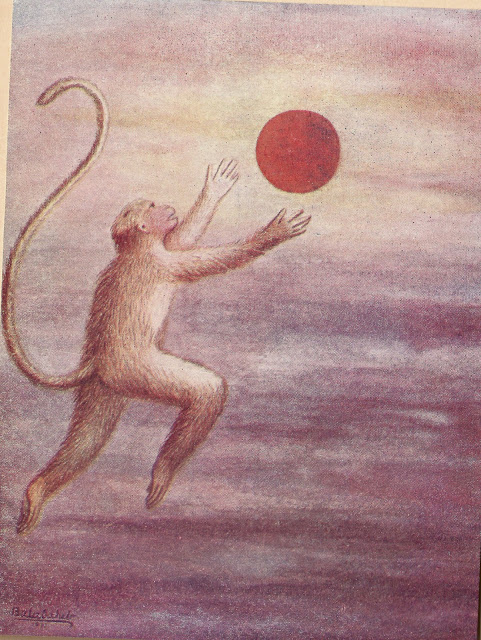
STORY OF HANUMAN-KISHKINDHA KANDA PICTURE 7 and 8 (Ramayana Picture No.36 & 37Maruti was born on a full moon day in Chaitra. When his mother Anjana went to get him some fruits he tried to catch the sun and got burnt. When Indra came to know about it he started attacking him. Then Maruti was hurt and he got a scarred chin. That is why he is called Hanuman. Anajaneya/Maruti/Hanuman is a SUPERMAN. All the comics such as Superman, Spiderman are based upon him. (Scientific explanation: On the day Maruti was born there was a Lunar eclipse followed by Rains. He fell down and broke his chin. Probably that led to the story of him catching the sun, fighting with Inda/thunder and Hanuman/fell and broke his chin)

Hanuman Selected–KISHKINDHA KANDA PICTURE 9 (Ramayana Picture No.38)

Hanuman, Jambavan and Angada encountered many difficulties and reached the shores of southern ocean. Jatayu’s brother Sampati came and told them that Ravana kept Sita at Ashokavana in Lanka. It was unanimously decided by the monkeys that Hanuman should cross the ocean and search for Sita. Accordingly Hanuman climbed the Mahendra mountain and prepared to cross the ocean. (Kiskindha Kanda finito. Next comes Sundara Kanda)

SUBHAM.

Ramayana came first; Mahabharata came later!

Written by London swaminathan

Research Article No.1847; Date: 5 May 2015

Uploaded at London time: 16-08


Which came first Ramayana or Mahabharata? It is a question debated for long. Hindus believe that Ramayana happened in Treta Yuga and Mahabharata happened in Dwapara Yuga. That means Ramayana happened well before Mahabharata. But the question arose because of Parasurama and a few others who figured in both the epics. How is it possible if both the epics are Yugas (eras) apart?

The answer is very simple. There were more than one Parasurama.

Let us look at this issue in more details. There are two questions: Which one happened first? Which one was written first?

1.Ramayana happened first and was written first. Mahabharata has abridged Ramayana in the Ramopakhyayanam. Since Mahabharata (here afterwards abbreviated as Mbh) included lot of old stories Vyasa did not want to miss it. Like he gave other stories, he gave Ramayana in short. It is not the other way round.

2.The word Arya is used in its archaic sense in an archaic way in Ramayana. Sita addressed Rama, Hey Arya! and Ravana’s palace guards address him as Hey Arya (Respected Sir, or Cultured man)

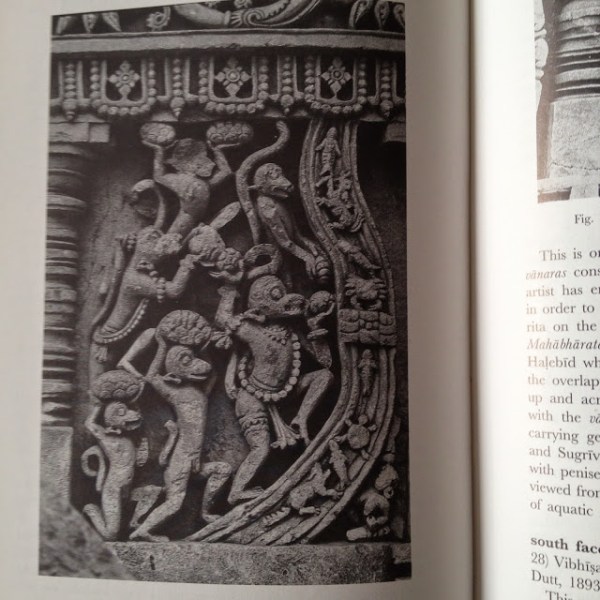
  1. In the Ramayana we come across many ‘not so civilized’ tribes such as the Monkey people (Hanuman), Eagle (Jatayu) People, Bear (Jambhavan) People. These may be their totem symbols or they had such tattoos for identification and recognition. We see such customs among forest tribes around the world. During Ramayana days the forests were full of cannibals called demons. Mahabharata has more urban areas and urban culture. Very rarely we come across tribes or cannibals (except Bakasura). Both the cultures are poles (Yugas) apart.
4.Hanuman came across Mainaka Parvat, Simhika, Langini and other hurdles on his way to Lanka. We don’t see such things or similar hurdles in Mahabharata.

5.Parasurama fought with Karta Veerya Arjuna. Mahabaharata Arjuna came several hundred years after Karta Veerya Arjuna, according to historians. So that Parsurama could not have taught Karna martial arts. Some one bearing similar name or someone was called  Parasurama for his Anti Kshatriya stance. Throughout our Puranic literature this confusion exists. There were several Parikshits, several Janamejayas etc. But Pauranics confused the public by saying all are one!
6.In Ramayana we come across some old phrases such as Dasaratha ruled for 60,000 years, Dasaratha had 60,000 wives. The meaning is “a lot of”. This archaic expression was not used in Mahabharata (Mbh).

7.Rama –Ravana battle was like an old style battle. No military formations etc. Whereas Mbh yuddha was fought on military formations. The result of the battle was decided by such formations. Abhimanyu was killed because of this. Moreover the army was divided into 7 and 11 divisions and each one had its commander. In Ramayana days they were never organised on similar lines.

8.Lava and Kusa “sang” Ramayana ballads. Valmiki taught them the ballads. Valmiki himself was praised as a Koel (Vande Valmiki Kokilam). So Ramayana evolved out of ballads like the Odyssey and Illiad of Homer. Whereas Mbh was “written” by Vyasa. There is a big time gap between the ballad period and writing period.

9.Some people were misled by the archaic style of Mahabharata and simple style of Valmiki Ramayana. Vyasa was well versed in the Vedas. In fact he was the one he compiled all the Vedic hymns fearing that it may be lost once and for all. But for him we would have got anything Vedic. Moreover he knit all the existing older materials into Mbh. To make the style uniform he used archaic style. Valmiki being the Adi Kavi—the First Poet—sang in the Anustubh metre for the first time in Sanskrit (apart from the Vedas).

  1. The message of Ramayana is very simple: Be honest, Speak the Truth, Obey your parents, Don’t desire for another man’s wife. Being Treta Yuga people were 50 percent to 75 percent good. But Mbh is full of intrigues, conspiracies, infightings in the family, hatred and jealousy. It was nearer to Kaliyuga, the Dark Age. So we have lot of moral teachings.
  1. Ramayana days were nearer to Upanishadic age. So there was no need for philosophical teaching. Whereas Mbh has the Bhagavad Gita which is the gist of all major Upanishads.

12.Ramayana has 24,000 slokas. When Lava and Kusa sang the ballads it might have been done in a different way; but the story line did not change. Mbh is the largest book in the ancient world with 100,000 slokas. It was that big even in the first century BCE. Lot of scholars have bluffed that it slowly grew to the present level. No scholar could show until today what the original was and what snowballed later. In spite of computers and other modern techniques they could not show it. The fact of the matter is Vyasa compiled everything available at his time. That is why we even see some contradictions in the moral teachings in it. The very word VYASA means a compiler, an essayist.

  1. Ramayana has 300 different versions because it was very old. The longer it travelled it, more and more varied it became. Whereas Mbh has got only one version throughout South East Asia. Ramayana has different versions from country to country in S E Asia. This shows the length of gap between the two epics.
  1. Mbh has got at least 29 countries represented in the great war. Ramayana has not got that many political divisions. We knew even the names of lots of kings of Mbh time. Whereas Ramayana gives only four or five kings names in the entire subcontinent.

15.We could identify many of the places mentioned in Mbh whereas we did not even know where Kiskidha was. We could only guess, but no written or literary records for Lanka or Kiskindha. Mbh places have been continuously repeated in several written or literary records.

  1. Mahabharata has many stories woven into the main Pandava-Kaurava conflict. Whereas Ramayana has only one simple story. It shows that it was the first one.

17.We have highly developed subjects/sciences in Mbh; but Ramayana did not deal with medicine or astronomy or astrology in the same way.

18.In short we see more advanced civilization in the Mbh and a very simple culture in Ramayana.

Since Parasurama existed at the time of Karta Veerya Arjuna he could not have lived at the time of Mahabharata Arjuna to teach martial arts to Karna.

I will deal with more minute details in another article.

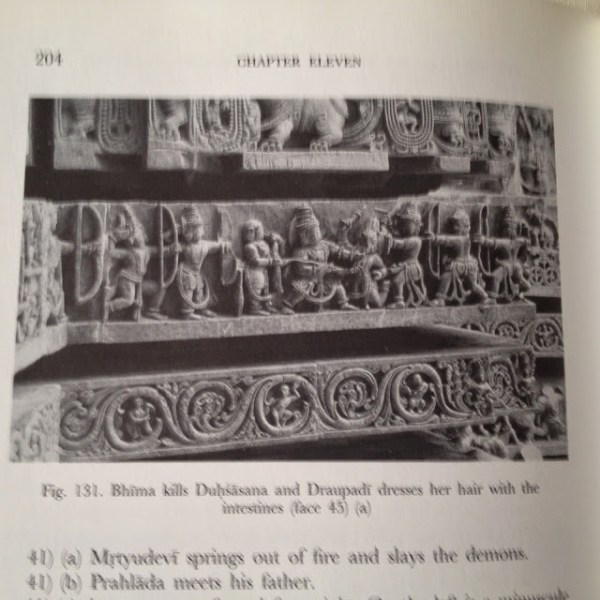
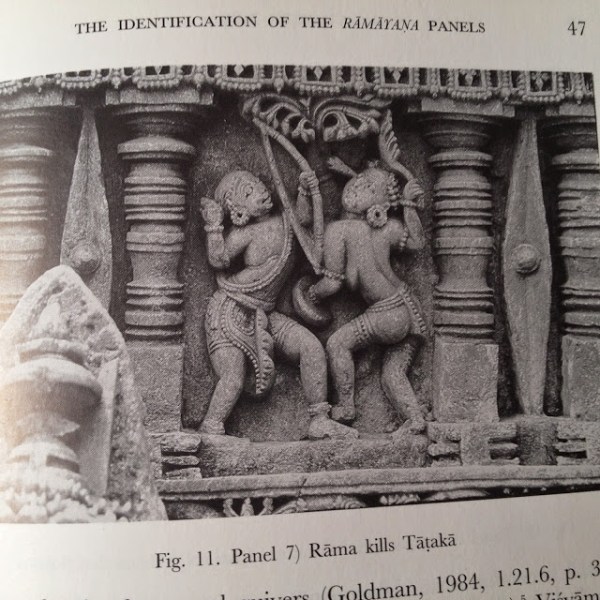
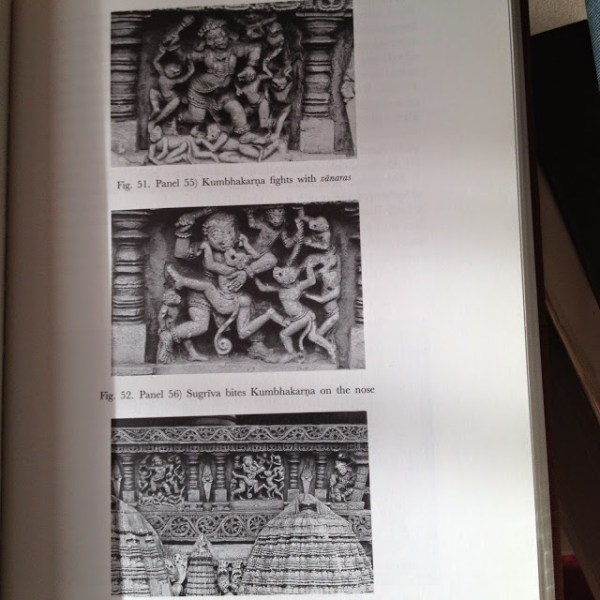
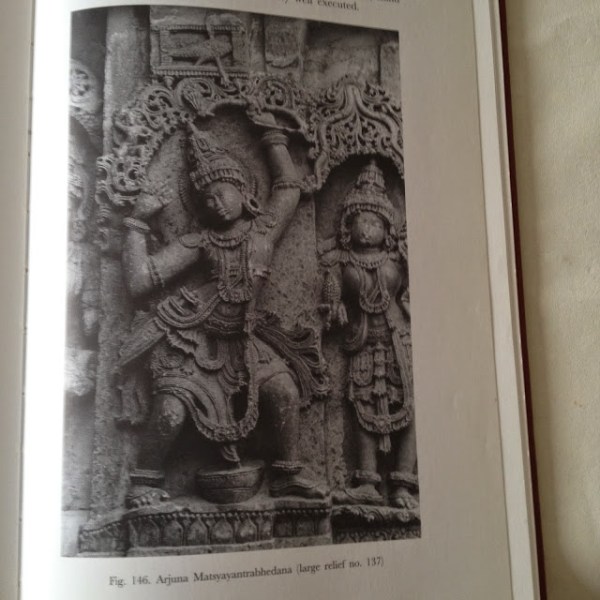
Pictures re used from the book “Epic Narratives in the Hoysala Temples” by Kirsti Evans;thanks.