இராக் நாட்டில் இந்துமதம்! மயில்வாகனன் வழிபாடு!!

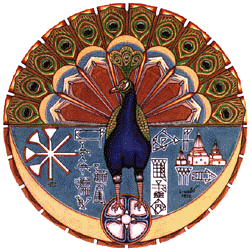
Yazidi_symbol
யாசிதி இன மக்களின் புனிதச் சின்னம்!

ஆராய்ச்சிக் கட்டுரையாளர் லண்டன் சுவாமிநாதன்
கட்டுரை எண்:1232; தேதி 14 ஆகஸ்ட் 2014.

English version of this article is published here on 12th August 2014.

இராக் நாடு முஸ்லீம் நாடு. ஒரு காலத்தில் பாபிலோனிய சுமேரிய நாகரீகங்கள் கொடிகட்டிப் பறந்த நாடு. இப்போது சுடுகாடு என்னும் அளவுக்குச் சண்டை, மண்டை உடைகிறது. இது பற்றி லண்டன் நாளேடுகளில் ஆகஸ்ட் 12ம் தேதி கொட்டை எழுத்துக்களில் செய்தி வெளியானது. ‘’500 பெண்களும் குழந்தைகளும் உயிருடன் புதைப்பு’’ —என்பதுதான் அந்தச் செய்தி. அதாவது முஸ்லீம் தீவிரவாதிகள், மதம் மாற மறுத்த 500 பழங்குடி மக்களை உயிருடன் புதைத்துவிட்டனர். இந்த விஷயத்தை உலகிற்கு அற்வித்தவர் இராக்கிய மந்திரி சுடானி ஆவார்.

புதைக்கப்பட்ட பழங்குடி மக்கள் யாசிதி இனத்தவர். இவர்களைப் பற்றிய செய்திக்கு அருகிலேயே இவர்கள் யார்? இவர்களுடைய நம்பிக்கைகள் என்ன என்ற வியப்பான செய்திகளும் வெளியாகின. அதைப் படித்த உடனே அவர்கள் இந்துக்கள் என்பது புரிந்தது! இதோ அவர்கள் பற்றி பத்திரிக்கைகள் மற்றும் பி.பி.சி. வெளியிட்ட செய்திகளும் அது பற்றிய எனது விளக்கங்களும்:–
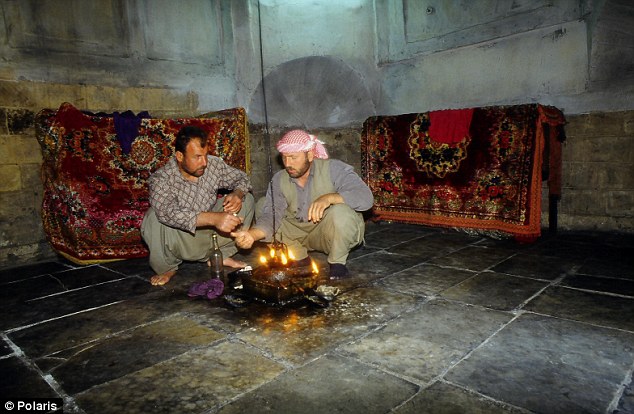
yazidi oil burning for saints

முனிவர்களுக்கு விளக்கு ஏற்றி வழிபாடு!!

யாசிதி இன மக்கள் 4000 ஆண்டுப் பழமையான இனம். இவர்கள் பாரசீக சொராஸ்ட்ரியன் மதம், பழங்கால இரானிய (வேத) மதம், கொஞ்சம் இஸ்லாமிய, கிறிஸ்தவ மத நம்பிக்கைகளை பின்பற்றுகின்றனர். இப்போது 1,60,00 பேர் மட்டுமே வடக்கு இரக் மலைப் பகுதிகளில் வாழ்கின்றனர். இவர்கள் குர்தீஷ் மொழி பேசுகின்றனர்.

கிறிஸ்தவர்களாக இருந்தால் ஜிஸியா வரி கொடுத்தால் வாழலாம் என்றும் யாசிதி இன மக்களாக இருந்தால் இஸ்லாமிய மதத்துக்கு மாற வேண்டும் என்றும் அல்லது படுகொலை செய்வோம் என்றும் ‘ஐஸிஸ்’ இஸ்லாமிய தீவிரவாதிகள் அறிவித்தனர். அதன்படி படுகொலை நீடிக்கிறது என்று லண்டன் ஆங்கிலப் பத்திரிக்கைகள் படங்களுடன் செய்திகள் வெளியிட்டுள்ளன. காரணம் இவர்கள் இந்து மதம் சொல்லும் எல்லா விஷயங்களையும் சொல்லுகிறார்கள். இதோ நீங்களே படித்து முடிவுக்கு வரலாம்:

1.யாசிதி இனமக்களுக்கு மறு பிறப்புக் கொள்கையில் நம்பிக்கை உண்டு: உலகில் மறு பிறப்பை நம்புவோர் இந்துக்களும் அதன் கிளை மதங்களான புத்த, சமண, சீக்கிய மதங்களும் தான். செமிட்டிக் மதங்களான கிறிஸ்தவ, யூத, இஸ்லாமிய மதங்களுக்கு மறுபிறப்பில் நம்பிக்கை இல்லை.
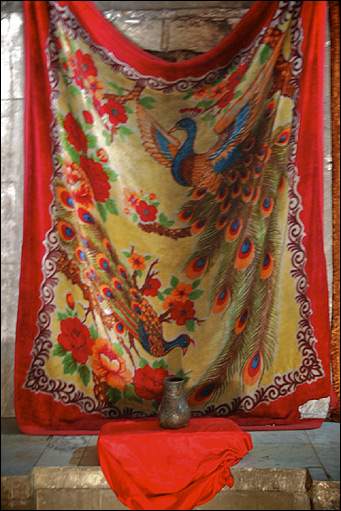
yazidi symbol2

மயிதேவதையைக் குறிக்கும் புனிதச் சின்னம்.

2.யாசிதி இனத்தினர் ஒரே கடவுளை நம்புகின்றனர்: இதுவும் இந்து மதத்தின் கொள்கையே. உலகின் மிகப் பழைய நூலான ரிக் வேதத்தில் —–ஏகம் சத் விப்ராஹா பஹூதா வதந்தி —- என்று சொல்லப்பட்டிருக்கிறது. அதாவது உண்மை ஒன்றே, அதை முனிவர்கள் பல பெயர்களால் அழைப்பர் என்பது இதன் பொருள்.

3.அந்த ஒரே கடவுள் ஏழு தேவதைகள் மூலம் உலகைப் படைத்தார்: இதுவும் இந்து மதக் கொள்கையே! சப்த ரிஷிக்கள் என்னும் அத்ரி, ப்ருகு, குத்ஸ, வசிஷ்ட, கௌதம, காஸ்யப, ஆங்கிரச ரிஷிக்கள் மனித இனத்தைப் படைத்ததை புராணங்கள் கூறும். பிராமணர்கள் நாள் தோறும் மூன்று முறை செய்யும் சந்தியா வந்தனத்தில் இந்த 7 பெயர்களையும் கூறுவர். சங்க இலக்கியமும் ‘’கை தொழு எழுவர்’’ என்று சப்தரிஷிக்களை விதந்து ஓதும். சப்த ரிஷிக்களில் வசிஷ்டர் என்னும் நட்சத்திரம் அருகில் வலம் வரும் அருந்ததி நட்சத்திரத்தை சங்க இலக்கியம் ஆறு, ஏழு இடங்களில் பாராட்டுவதோடு ஒவ்வொரு இந்து தம்பதியும் முதலிரவு அறைக்குள் போவதற்கு முன் அருந்ததியைக் காண வேண்டும் என்பதும் அனைவரும் அறிந்ததே.

4.இவர்கள் வணங்கும் முக்கியக் கடவுள் மாலக தாவூஸ். இவர் மயில் தேவதை என்று யாசிதிக்கள் கூறுவர்: உலகில் மயில்வாகனக் கடவுளான கார்த்திகேயனை (முருகனை) வணங்குவோர் இந்துக்கள் மட்டுமே என்பதைச் சொல்ல வேண்டியதில்லை. மாலக தாவூஸ் என்பதை நான் பால தேவன் என்றே படிப்பேன். ப— வ — ம—என்ற மூன்று எழுத்துக்களும் இடம் மாறும் என்பது மொழி நூலார் அறிந்த உண்மை.

5.அவர்களுக்கு மயில் புனிதச் சின்னம். இந்தியாவின் தேசியப் பறவையான மயில் சிந்து சமவெளிப் பானை ஓடுகளில் கண்டுபிடிக்கப்பட்டதோடு இந்தியாவில் இருந்து ஏற்றுமதி செய்யப்பட்டதை பைபிளும் கூடப் பகர்கிறது.
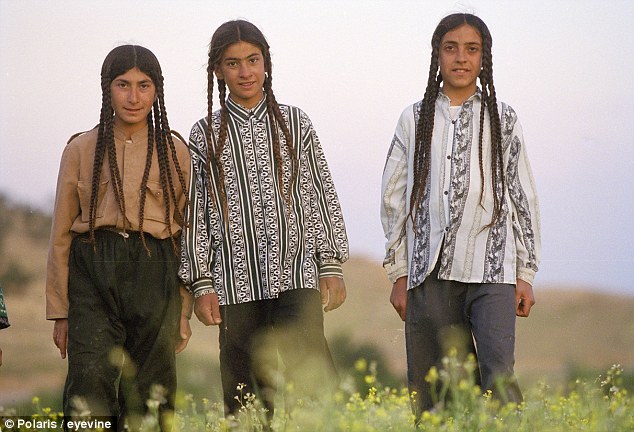
yazid boys plait like girls
இளைஞர்களும் பெண்களைப் போல பின்னல் முடி அணிவர்.

6.அவர்கள் தீயை வணங்குவர்: யாகத் தீயை பிராமணர்களும், பாரசீக மதத்தினரும் இன்றுவரை வணங்குவதை உலகம் அறியும். பிராமண பிரம்மச்சாரிகள் தினமும் தீ வளர்த்து சமிதாதானமும், கிருஹஸ்தர்கள் தீ வளர்த்து அக்னிஹோத்ரம்/ஔபாசனமும் செய்ய வேண்டும் என்பது விதி. ஆனால் விரல்விட்டு எண்ணக் கூடியவர்களே இன்று வரை இதைச் செய்கின்றனர். காலத்தின் கோலம்!!!

7.அவர்கள் சுன்னத்து செய்து கொள்வர், ஐந்து முறை தொழுவர்: இவை இரண்டும் இந்து வழக்கம் அல்ல. இது செமிட்டிக் இன மதங்களின் வழக்கம் அல்லது மத்திய கிழக்கில் செமிட்டிக் மதங்கள் தோன்றுவதற்கு முன்னரே இருந்த வழக்கம் என்று கொள்ளலாம்.

8.யாசிதி இனத்துக்கு அப்பெயர் வரக் காரணம் அவர்கள் யஸ்தான் என்னும் தேவனை வணங்குவதாகும். இது யது நந்தன் (யாதவ குல கிருஷ்ணனின் பெயர்) அல்லது யக்ஞ (யாகம்) என்பதன் மரூஉ — ஆக இருக்கும் என்பது என் ஊகம். வேதத்தில் யக்ஞ சேன, யாக்ஞவல்க்ய, யக்ஞேசு எனப் பல பெயர்கள் வருகின்றன. மேலும் பாரசீக மொழியில் இசட் என்பதன் பொருள் ‘’ஜோதி’’ (தீ/அக்னி) என்பதாகும். இவர்கள் வீடுகளில் விளக்கு ஏற்றி புனிதர்களை வணங்குகின்றனர். சுருங்கச் சொன்னால் இவர்கள் வாழும் இஸ்லாமிய நாட்டுக்கும் இவர்களின் நம்பிக்க்கைகளுக்கும் கொஞ்சமும் தொடர்பு இல்லை!!

9.யாசிதி இன மக்களின் மயில்தேவனான மாலக்தேவூஸை அராபிய மொழியில் சைத்தான் (பேய்) என்பர். முஸ்லீம்களும் கிறிஸ்தவர்களும் தங்கள் தெய்வங்களை ஏற்காதவர்களை சைத்தானை கும்பிடுவோர் (காபிர், பேகன்) என்று அழைப்பதை உலகமே அறியும்.

10.இராக்கில் இந்து மத வாகனங்கள் போல ஏழு கடவுள், வாகனங்களில் பவனி வருவது பற்றிய ஆங்கிலக் கட்டுரையை ஏற்கனவே எழுதி உள்ளேன். அந்தப் பிண்ணனியில் யாசிதி இன மக்களைக் காண்கையில் அவர்கள் இந்து மத எச்ச சொச்சங்களே என்பதில் எள்ளவுக்கும் ஐயம் இருக்காது.

11. இங்கு காஞ்சி பரமாசார்ய சுவாமிகள் (1894—1994) தனது சென்னைப் பிரசங்கத்தில் கூறியதை நினைகூறுதல் பொருத்தம். ஆஸ்திரேலியப் பழங்குடி மக்களின் சிவா நடனம் முதல் துருக்கியில் கண்டுபிடிக்கப்பட்ட கி.மு 1400 சம்ஸ்கிருதக் களிமன் படிவ கல்வெட்டு வரை பல விடயங்களைப் பிரஸ்தாபித்த பின்னர் அவர் ஒரு எச்சரிக்கை விடுக்கிறார்: “ இதை எல்லாம் கேட்டபின்னர் இந்துக்கள் அங்கெல்லாம் சென்று தங்கள் மதத்தைப் பரப்பினர் என்று எண்ணீ விடாதீர்கள். அங்கும் பழங்காலத்தில் இந்து மதமே இருந்தது. அதன் மிச்சம் மீதியைத்தான் நாம் இப்படிக் காண்கிறோம். அதனால்தான் நமது மதத்துக்கு சநாதன மதம் என்று பெயர்” என்றார்.
ஆக அவர் சொன்னதை நூற்றுக்கு நூறு உண்மை என்று நிரூபிக்கிறது இந்த வார இராக்கிய செய்திகள்!!!!

Four Wings of Hindu Army: Blow to Aryan- Dravidian Theory!

War formation in MBh

Research Paper written by London Swaminathan
Post No.1230 ; Dated 13th August 2014.

The Four Limbs of Army, ‘Chatur Anga’ in Sanskrit , is a Hindu concept found in ancient Tamil and Sanskrit literature. It is in the 2000 year old Sangam Tamil literature and earlier Sanskrit literature including that of the greatest Indian poet Kalidasa (1st century BCE or earlier) and world’s first economist and political scientist Chanakya (3rd Century BCE). This is a severe blow to the supporters of ‘racist theory’ which divide Indians into Aryans, Dravidians ,Mundas and aborigines.

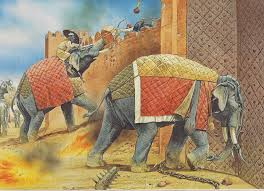
The most famous board game Chess (Chaturanga) was invented in India is a fact acknowledged by everyone. This is based on the four wings of army Ratha, Gaja, Thuraga, Pathadi (Chariot, Elephant, Horse, Foot soldier) that we see in all the Indian wars from the days of Mahabharata, probably earlier.

From the ancient times Hindus from the Himalayas to the land’s end Kanyakumari had the same thought process. Foreign “scholars” who wanted to sow the seeds of division invented (concocted) a theory of dividing Indians which has no basis in Tamil or Sanskrit literature.

Back to Godhead - Volume 12, Number 05 - 1977

Hindus are fascinated with number FOUR for various reasons. Number four is considered strong, long lasting, enduring. They divided the eras (yugas), Vedas, four stages of life (Purushartha), army divisions, castes, four methods of ( Chaturvitha Upaya) winning an enemy etc.

Hindu army was also divided in to four wings of
Ratha= chariots
Gaja= elephants
Thuraga= horses
Patha athi= infantry.

Battle_at_Lanka,_Ramayana,_Udaipur,_1649-53

Powerful Nanda Army!

According to the Greek historian Plutarch (45 CE to 120 CE), Alexander the Great was afraid of the mighty Indian army. Plutarch wrote that Nanda dynasty had 200,000 soldiers, 80,000 cavalry, 8000 chariots and 7000 elephants. Nanda dynasty ruled India in the fourth century BCE.

Kautilya alias Chanakaya gives lot of information about the four wings of army in his Arthashastra (Chapter 10). He even gives the salary for each post. An amazing planning is seen there.

During Mahabahara war 11 divisions of Kauravas and 7 divisions of Pandavas fought in Kurukshetra. One division in Sanskrit is called Akshouhini, which consists of

21,870 chariots
21,870 elephants
65,610 horses
109,350 foot soldiers.

We have to multiply this number by 18 (11+7) divisions!! A huge number indeed! Whether we believe it or not at least we know for sure the four wings of army existed at that time. The war was fought around 3100 BCE!

Krishna_Narakasura

Kalidasa on Equal Fight

The beauty of this fourfold division is that it is found in Sangam Tamil literature as well. They copied it simply from the North. Kalidasa who lived in the first century BCE or earlier says about it in several places including
Raghu Vamsa 7-37:-

Paththi padanim rathinam rathesasthurangasadhi thuragathirudam
Yantha gajasyabhya pathangajastham thulya parathi dwanthvi bhabuva yudhdham
———(Raghu 7-37)

It was a dharma yudhha (war based on rules of equal strength). Infantry fought with infantry only. A charioteer fought with another charioteer only and so do the elephant man and horse man fought with each other. The war was fought between the equals (7-37).

good picture
Tamil Poets on Fourfold Army

Maruthan Ilanagan, a Tamil poet, says it in Purananuru verse 55. It is repeated by Pandya King Neduncheziyan (Puram 72), Adai nedum Kalviyar (Puram 345),Madalan Madurai Kumaranar (Puram 197), Pereyin Muruvalar (Puram 239), Madurai Padai Manga Manniyar (Puram 351),Ulochanar (Puram 377) and Kazaththalaiyar (Puram 368).

There are innumerable references in the Tamil literature. Since Purananuru verses are considered very old poems in the Sangam corpus, I quoted only from the Purananuru. All the above poets lived in the first few centuries of our era.

Sangam Tamil poets shattered the Aryan- Dravidian ‘Racist theory’ with countless references like this. Whatever we find in the North we find in the South of India. There is no difference between the south and the north in the culture or beliefs. People who did not know both Tamil and Sanskrit wrote lot of rubbish in the past. It will take years to clear that Himalayan quantity of Aryan – Dravidian rubbish!!
elephant attack

God Bless India, that is Bharat!

Hindu Vestiges in Iraq!

Yazidi_symbol
Yazidi Symbol

Research paper written by London swaminthan
Post No.1228; Dated 12h August 2014.

A shocking news item appeared in London newspapers under the title WOMEN AND CHILDREN BURIED ALIVE, Islamic extremists place 500 devil worshippers in mass graves in Iraq. (Please see Metro, Page 1 dated 11th August 2014). It was about burying 300 women and 200 children of Yazidi tribe who refused to convert to Islam. The news was reported by Mohamed Shia al-Sudani, a minister for the Iraqi government. This article is not written to condemn or criticize the ISIS extremists. This is about the Yazidi Tribe. The news papers have described who they were and what they believe in. Most of their customs and beliefs are from Hinduism!!!

yazidi oil burning for saints
Yazidis burn oil lamps for one the saints.

Kanchi Paramacharya (1894-1994) in his talk pointed out that lot of Hindu customs around the world from Shiva dance of Australian aborigines to Sanskrit Inscription in Turkey dated 1400 BCE with ht names of Vedic Gods are Hindu relics. He cautioned us with the following words: Don’t say that Hindus went there and spread their religion. It was the Hindu religion that existed in every part of the world. That is why this religion is called Sanatan Dharma. What you see is only the vestiges of Hindu religion”.

I strongly believe in his comments. He is 100 percent right. Following news item that is occupying more space in London News Papers is another proof:

Yazidis are part of an ancient religion. From 11th century they organised themselves as a religious group. But they are a pre Islamic community. They are 4000 year old community. They have beliefs borrowed from multi traditions including Zoroastrianism, ancient Iranian religion (Vedic Hindu!!), Christianity and Islam. They speak Kurdish. There are 700,000 Yazidis in the world and most of them live in Northern Iraq. Their heartland is the north western city of Sinjar ( Now they are driven out by the ISIS extremists).

1.The Yazidis believe in One Supreme Being: Rig Veda says “Ekam Sat Vipra: Bahuda Vadanti “, meaning Truth is one, sages call it by different names.

2.Yazidis say, “Supreme being Yasdan created the earth with the help of Seven Angels”: Hindus say that Brahma created the world with Seven Rishis (Sapta Rsis) who were the forefathers of human race. As a Brahmin I do worship Saptarisis every day in the ‘thrice a day Sandhya Vandhana’ (Tri Kla Sandhya Vandhana) ritual. I recite the mantra with the names of sevensages: Atri, Brhu, Kutsa, Vasishta, Gautham, Kasyapa and Angirasa.

The word Yasdan may be the corrupted form of Yadunandan (Yadava Krishna) or lot of Hindu names beginning with Yagna or Yajna. In the Vedas we find names like Yajna Vacas, Yajna Sena, Yahna Valkya, Yajnesu and many more.

yazid boys plait like girls
Yazidi boys plait hair like girls.

3. Most important of their gods is Peacock Angel. Hindus worship Kartikeya who rides on a Peacock. His names like Mayura Vahana, Mayil Vahana, Siki Vahana and several other names are associated with the Indian national Bird peacock. It is primarily an Indian bird exported to West Asia from Biblical days.

4.Yazidis believe in reincarnation: No Semitic religion believes in reincarnation. Only Hindus and its offshoots like Buddhism, Jainism and Sikhism believe in Reincarnation. This shows very clearly that Yazidis are Hindus.

5.Peacock angel is known as Malak Tawous. It may be the corrupted form of Palak= Bala Deva or Palaka Deva. P < M<V are interchangeable is well known to linguists.

6.They worship five times a day; they do circumcision: This is the local custom followed by ancient people in that region which is taken by other Semitic religions. Circumcision is not followed by the Hindus.

7. Malak Tawoo means “devil” in Arabic. All idol worshippers were called as Devil worshippers by Semitic religions. This is another proof to believe that they are Hindus.

yazidi symbol2
Peacock is sacred to them like Hindu devotees of Lord Skanda

8. Yazidi means Worshippers of God. They are fire worshippers like the Vedic Hindus and Iranians. They keep oil lamps burning at their homes for saints. This like Brahmins Three Fire worship at home (Three Fires: Dakshinagniyam, Gargapatyam and Ahavaniyam). Ized means God in Persian. Yazdis derived from this word, they believe. Ized arrived from Jyothi (Light/Fire), I believe.

9. Why they were buried alive? Metro Newspaper published from London added this on page 5: “Unlike Christians, who have been given the choice of paying a tax to the Islamic organisation – known as Jizya — the Yazdis have been given a stark choice: Convert to Islam or be murdered”.

The news is reported by the BBC, Reuters, Daily Mail and several other mass media in addition to Metro news paper quoted above.

One can find more information about Yazdis by googling.

Contact swami_48@yahoo.com

Pictures are taken from newspapers; thanks.

Why did Karna pull the Sari of Duryodana’s Wife?

banu karnan 2

Research article by London Swaminathan
Post No. 1226; Dated 10th August 2014

There are two interesting stories about dice play in Tamil literature. The first incident is in the Mahabharata by Villiputturar, a Tamil poet of repute. He narrates a beautiful anecdote which stands for the model of great friendship.

Kunti came to see Karna. She revealed the great secret that he was her first son. She begged him to save the life of Pandavas in the great war. But he refused to accept her request. He narrated a beautiful incident that happened in his life to justify his stand:

“Mum! Listen! I will die for Duryodahana. I have decided to be grateful to him until my last breadth. You want to know the reason? One day I was playing dice with Duryodhana’s wife Bhanumathi. Only two of us were in the room. Banu was facing the door. Suddenly Duryodhana entered the room. As a respect to her husband who was a mighty king, she stood up. I thought she was trying to run away because she was losing the game. Just to stop her, I pulled her sari. But my hand got stuck up in her waist band which was made up of gold studded with pearls. The pearls in the Mekala ornament fell on the floor in front of Duryodhana’s eyes. Both myself and Banu hung our head. But to my surprise, Duryodhana asked us, “ Hi! Do you want me to pick up the pearls or pick up and make a garland?” His tone was full of love and respect.

banu karnan

What a great friendship? We could not see such a pure relationship anywhere else between a man and a woman. Duryodhana never suspected the integrity, honesty and character of the great Karna. Such was their exemplary friendship. Duryodhana went to the extent of allowing his dearest friend Karna to go to the harem and play with his wife. It was like a brother and sister relationship. They never overstepped their limits. Karna also was grateful till the end of his life. Every episode in the Mahabharata was a moral lesson to the entire world.

This episode is found in the Villi bharatam composed by Villiputturar in Tamil.

(I have given the relevant verse in Tamil in the Tamil version of this post)
mahabharata-game-of-dice

Dice Play in Sangam Literature
Purananuru verse 43 narrated an episode between a Tamil poet and the brother of Choza king. Mavlathan was the brother of Choza king Nalankilli. He played dice with the Brahmin poet Thamappal Kannan. Halfway through the game, one of the coins rolled down and went underneath him. Mavalathan became angry and threw the other coin on the poet. He was shocked.

He said, “You came in the line of great Choza kings whose forefather was the famous Sibi. He was ready to sacrifice his life just to save a dove. None of your forefathers did harm a Brahmin. You threw a dice on me! Now I doubt about even your very birth!” On hearing such harsh words from a Brahmin poet, Mavalathan hung his head in shame. Now the poet changed his tone. What a great gesture is this! You have proved now that you are one of the great cholzas. Even when I said some harsh words you did not become angry. Now I feel ashamed. Probably I was the one who did wrong. Let you live as many years as were the number of sand particles on the banks of River Kaveri!

sokkattan
This anecdote throws light on the relationship between the Kshatriyas and the Brahmins that existed 2000 years ago. Nobody dared to harm a Brahmin because of their character, purity and honesty. Kings never overstepped their limits. This also shows that poets were in great friendship with the rulers. This shows that games like dice were very popular.

((Though verse 43 of Purananuru used the word Vattu Aduthal for the game, I have translated it as a dice game. Not much information is available on this Vattu Aduthal and I guess this is one of the board games like dice.))

Contact swami_48@yahoo.com

Who coined the word Motherland?

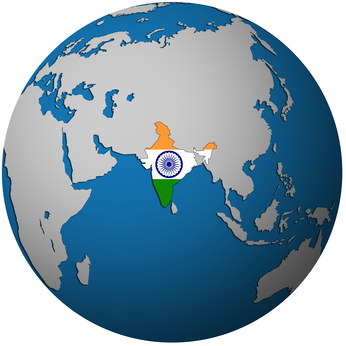
india on globe map

Research paper written by London Swaminathan
Post No. 1222; Dated 8th August 2014.

“The land is my mother and I am the son of earth” – Atharva Veda

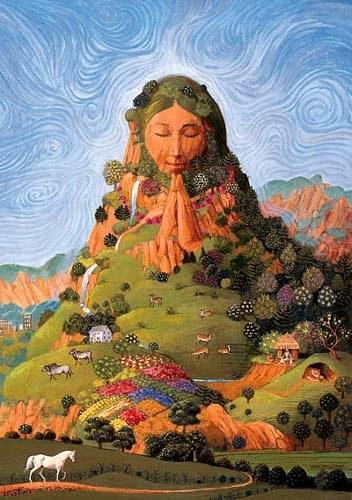
The concept of motherland can’t be a Semitic term. For the Christians, Jews and Moslems, God is a ‘HE’. For the Hindus, God is He or She or neuter. From the Vedic days god in Hinduism is Eswaran/Eswari, Bhava/Bhavani, Shiva/shivani or Ardhanaree (half woman and half man) or Brahman (neuter).

Anything of great quality or virtue such as mercy (karuna), peace(shanty) wealth (Sri), treasure (Nidhi), Kshama (patience) is also feminine in Sanskrit. All Indian rivers are feminine because they nurture us like mothers. Bhumi is also worshipped in feminine form as Bhumadevi. Later Greeks called her Gaia (Greek Goddess of mother earth). Atharva Veda and Ramayana are older than the Greek myth.

bharatma

When Lakshmana was wonderstruck with the enormous wealth of the Golden Lanka, Rama said to him:

Api swarnamayi lanka na me laksmana rocate
Janani janmabhumis ca svargad api gariyasi (Valmiki Ramayana)

“O my brother Lakshmana! Even if Lanka is made of gold, I do not like it because Mother and Motherland are far more superior to heaven”.

Rama used the word Janmabhumi (Birth place) and held it on par with Janani (mother) meaning mother and motherland are superior. But the Athrva Veda which existed well before Rama makes it clear Earth is mother and we are all her children:-

Mother Earth - EarthFirstNewswire -

O Prithivī, thy centre and thy navel, all forces that have issued
from thy body
Set us amid those forces; breathe upon us. I am the son of
Earth, Earth is my Mother. Parjanya is my Sire; may he
promote me.
—–(Atharva Veda Book 12, Hymn 1, Prithivi Sukta)

A Hindu worships Bhumi (earth) before stepping on her every morning. While s/he gets up from the bed, s/he begs for her pardon by reciting the following verse:

Samudra vasane Devi Parvatha Sthana mandale
Vishnu Patni Nmasthubyam Padasparsam kshmasvame

“O Mother Earth who has the oceans as clothes and mountains and forests on her body, who is the wife of Vishnu, I bow to you. Please forgive me for touching you with my feet”.
Here in this ‘Prathasmarana’ (Morning Prayer) verse, Hindus make it clear that Bhuma Devi is the wife of Vishnu. So the concept of earth as mother as a benign woman emerged in India well before other ancient cultures.
mother_earth

Contact swami_48@yahoo.com

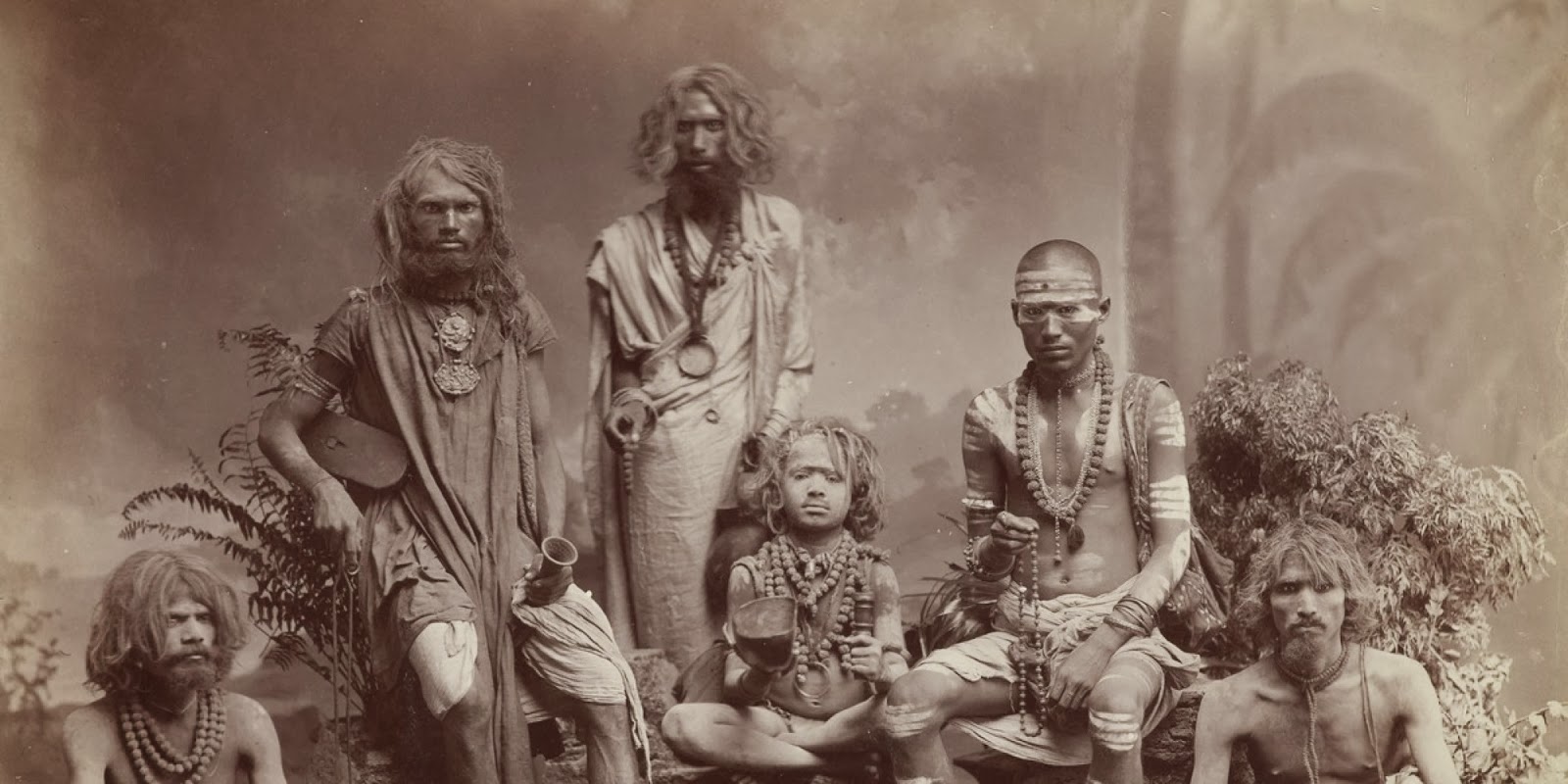
Two Seers Saved by Asvins: Stories from Rig Veda

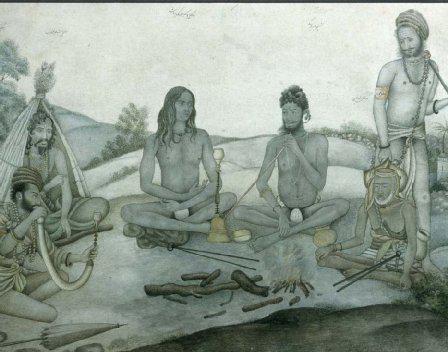
ascetics

Written by London Swaminathan
Post No.1220; Dated 7th August 2014.

Noble men dread vulgar company;
Mean men treat the vulgar as kinsmen (Tirukkural 451)

Rig Veda is the oldest religious scripture in the world. The Veda is full of anecdotes which can be interpreted at different levels. The hymns are partly mythical, partly didactic, partly allegorical and partly symbolical. But there are factual stories as well. Some of the names still remain a mystery. We don’t know where they lived and when they lived. The Vedas themselves are very old – the oldest available documents of the Hindus. And those Vedas talk about OLD stories!! That is why the great Tamil poet of modern age Subramanya Bharati sang about Bharat Mata ‘that not even the greatest of the scholars knew how old she (Mother India) was!’

Whatever said in Vedas and other scriptures are summarised in Tirukkural, which is considered Tamil Veda. Tamil poet Tiruvalluvar who composed The Tirukkural says:

No greater help than good companionship
No greater sorrow than bad friendship (Kural 460)

Purity of mind ushers in spiritual growth and personal prosperity
While good associations lead to glory (Kural 457)

Men’s perceptions are of their own mind
But their nature is known by their kind (Kural 453)

o-YOGA-ART-OF-TRANSFORMATION-

Here are two stories from the Rig Veda

It is like watching Indian films. The baddies pushed two good people into wells. One suffered there for 3 days and another was in the dark for ten days. And then the hero of the film (Here, it is Asvins) comes to their rescue!!

Asvins are also known as the Nasatyas or Dasras. They save everyone in trouble. They are Twins.
In the following verses in the Rig Veda we hear about the stories of Vandana and Rheba. Both of them were seers.

“Worthy of praise and worth the winning, Heroes, is that your favouring succour O Nasatyas
What time you, knowing well his case, delivered Vandana from the pit like hidden treasure– RV 1-116-11

One day Rishi (seer) Vandana was returning from another village. As the night fell when he was half way though, he took shelter in one of the nearby hut. Unfortunately it belonged to a demon. On the third day while he was drawing water from the well, the servant came and pushed him into the well, apparently at the instruction of his Master (demon). The well was deep and he could not come out. He prayed to Asvini devas who came and escorted him to a safer place.

Asvins, you raised, like Soma in a ladle, Rheba who for ten days and ten nights, fettered.
Had lain in cruel bonds, immersed and wounded, suffering sore affliction, in the waters” – RV 1-116-24

Rheba was another saint who underwent a similar ordeal. One day when Rheba went to the nearby forest to fetch fuel and grass for the daily ritual, the demons tied him with ropes and then pushed him into a well. His friends and relatives were looking for him for several days. Though he was crying loudly for ten days, no one could hear him who was deep inside the well that was deep inside the jungle. Thus ten days and ten nights passed. When he prayed to the Asvins, they came and brought Rebha out of the well. His body was sore and painful. The Asvins touched him and his pain and fatigue disappeared at once.
Long live the Vedas! Long live the Vedic Seers!!
rishi3

Source: Rig Veda, Tirukkural and The Effulgence of the Veda by Swami Gangeshwaranandaji Maharaj

Contact swami_48@yahoo.com

கவிதையை ரஸிப்போமா?

tamil poets

By ச.நாகராஜன்

Post No.1217; Dated 6th August 2014.

காவியத்தின் பயன்

பாரத தேசம் வலியுறுத்தும் புருஷார்த்தங்கள் நான்கு: தர்ம, அர்த்த, காம மோக்ஷம். இலக்கியமோ, இசையோ, நடனமோ எதுவாக இருந்தாலும் சரி அது இறைவனை அடைய வழி வகை செய்ய வேண்டும்; செய்யும் என்பது அறநூல்கள் நமக்குத் தரும் அறிவுரை, அன்புரை! அறத்தின் அடிப்படையில் அமைந்த வாழ்க்கையின் படி வாழ்ந்து பொருளை ஈட்டி இன்பம் துய்த்தால் வீட்டுப் பேறு தானே வந்து எய்தும் என்ற அடிப்படையிலேயே திருவள்ளுவர் முப்பாலை வகுத்தார் போலும்!

இறைவனுடன் ஒன்றச் செய்யும் கவிதைகள்
முதல் காவியமான வால்மீகி ராமாயணத்தில் அதைப் படித்தவர் தீர்க்க ஆயுள், செல்வம் உள்ளிட்ட அனைத்தையும் பெற்று முக்தியையும் அடைவர் என்று காவியத்தின் பயனாக இறுதியில் சொல்லப்படுகிறது.

ஒரு லக்ஷம் ஸ்லோகம் அடங்கிய வியாஸர் வகுத்த மஹாபாரதத் தைப் படிக்க முடியாதவர்கள் அதன் இறுதியில் வரும் பாரத ஸாவித்திரியில் உள்ள நான்கு ஸ்லோகங்களைச் சொன்னாலேயே பெரும் பேறு பெற்று பரப்ரஹ்மத்தை அடைவர் என்று வியாஸர் அருளியிருக்கிறார். அப்பர் ஞானசம்பந்தர் உள்ளிட்ட மகான்களின் பாடல்களிலும் கடைசியில் அதைக் கூறுவதால் ஏற்படும் பயன்கள் தெள்ளத் தெளிவாக் கூறப்பட்டுள்ளது. உலகின் வேறு எந்த இலக்கியத்திலும் இல்லாத அதிசய வேறுபாடு இப்படி பலனைச் சொல்லி நம்மை ஊக்குவிப்பது தான்!– முக்கியமாக இறைவனை இப்படி இலக்கியம் மூலம் அடைய முடிவதை வலியுறுத்துவது தான்!

கவிஞனாகத் தகுதிகள்
காவியம் இயற்றப் புகும் ஒரு கவிஞன் சகல கலைகளிலும் வல்லவனாக இருக்க வேண்டும். மனிதனை உன்னதமான உயரத்திற்கு ஏற்ற வல்லவனாக இருக்க வேண்டும், ஒவ்வொரு சொல்லின் முழு அர்த்தத்தையும் அது தரும் பயனையும் அறிந்திருக்க வேண்டும், என்று இப்படி ஏராளமான தகுதிகளை யாப்பு நூல்கள் கூறுகின்றன.
இப்படிப்பட்ட கவிஞன் இயற்றும் காவியங்களை ரஸிப்பதும் ஒரு சிறந்த விஷயமாகப் போற்றப்பட்டு வந்துள்ளது.

barathiyar r creations
ரஸிகனாகத் தகுதி
ஒரு காவியத்தை அல்லது கவிதையை ரஸிக்க சஹ்ருதயனாக ஒருவன் இருக்க வேண்டும் என்பது அடிப்படைத் தகுதியாக விதிக்கப்பட்டிருக்கிறது. சஹ்ருதயன் என்றால் நல்ல இதயம் உடையவனாக இருக்க வேண்டும். அப்படிப்பட்டவனே ரஸிக்கவும், விமரிசிக்கவும் முடியும் என்பது அறிஞர்களின் துணிபு.

“அணி செய் காவியம் ஆயிரம் கற்கினும்
ஆழ்ந்திருக்கும் கவியுளம் காண்கிலார் “

என்று மகாகவி பாரதியார் கூறுவதில் எத்தனை பொருள் பொதிந்துள்ளது. கவிஞன் எதை வலியுறுத்திக் கூறியுள்ளான் என்று அந்தக் கவியுள்ளத்தை அறிவதே கவிதை அல்லது காவியத்தைப் படிப்பதன் முக்கிய நோக்கம். கவிஞன் எல்லாவற்றையும் வெளிப்படையாக்க் கூறி விட மாட்டான். பல விஷயங்களை உள்ளடக்கி சொல் சிக்கனத்தின் மூலம் பெரும் பொருளை உணரவைக்க முயல்வான். அணுவைத் துளைத்து ஏழ் கடலை அதற்குள் நுழைவிப்பான்!அதை அறிந்து ரஸிப்பதே தேர்ந்த ரஸிகனின் வேலை.

வார்த்தை ஜாலங்கள், சொல் அடுக்குகள், உவமைகள், அணி அலங்காரங்கள், ஓசை நயம் இவற்றை எல்லாம் ரஸித்து அதையும் தாண்டி உண்மைப் பொருளை அறிவது என்பது பெரிய காரியம் தானே!

கவிஞனும் ரஸிகனும்

கவி கரோதி காவ்யானி
ரஸம் ஞானானி பண்டித:
சுதாசுரத சாதுர்யம்
ஜாமாதா வெட்டி நோ பிதா;

என்ற ஸ்லோகம் அற்புதமாக கவிஞனையும் ரஸிகனையும் பற்றிக் கூறுகிறது.

இதன் பொருள் :- ஒரு கவிஞன் காவ்யத்தை இயற்றத் தான் முடியும். அதன் ரஸத்தை அறிந்தவனே அதை ரஸிக்க/விமரிசிக்க முடியும். எப்படி ஒரு தந்தை தன் பெண்ணின் சாதுர்யமான லீலைகளை அறிய முடியாதோ அவளது லீலைகளை எப்படி அவனது மருமகன் மட்டுமே அறிய முடியுமோ அது போலத் தான் கவிஞனும் அவன் ரஸிகனும்!

எப்படி ஒரு அற்புதமான விளக்கத்தை இந்த ஸ்லோகம் தருகிறது, பாருங்கள். படைப்பவன் கவிஞன். அந்தப் படைப்பை நன்கு அனுபவிப்பவன் ரஸிகன்!

Tiruvalluvar Tamil poet

இன்னொரு ஸ்லோகம் மூன்று மாநிலங்களின் பெண்களோடு கவிஞனின் வார்த்தைகள் மற்றும் பொருள் அமைப்பை ஒப்பிடுகிறது.
ஸ்லோகம் இதோ:-

அர்த்தோ கிராமபிதிதா: பிஹிதாஸ்ச கச்சித்
சௌபாக்யமேதி மாராஹட்டவதுகுசாபாஹா;
நோ கேரளிஸ்தன இவாதிதரம் பரகாசோ
நோ கூர்ஜரிஸ்தன இவத்தராம் நிகுதா:

ஒரு யுவதியின் அழகும் கவர்ச்சியும் அவள் மார்பகத்தில் வெளிப்படும், இல்லையா! அதை உவமையாகக் கொண்டு கவிஞனின் படைப்பு அமைய வேண்டிய விதத்தைக் கூற வருகிறார் ஒரு கவி!
ஒரு கவிஞன் வார்த்தைகளில் பொதிந்துள்ள அர்த்தத்தில் பாதியையே வெளிப்படுத்துவான். பாதியை மறைத்து வைத்திருப்பான்! அதுவே மிக அழகு! எப்படி மஹராஷ்டிரத்தில் உள்ள பெண்கள் மார்பகங்களை பாதி மறைத்து பாதி வெளிப்படுத்திக் காண்பிக்கிறார்கள் அது அல்லவா அழகு! கேரளத்துப் பெண்கள் மார்பகங்களை முழுவதுமாக மறைப்பதில்லை. அது அழகல்ல! அல்லது குஜராத் மங்கையர் முழுவதுமாக கச்சை இறுகக் கட்டி மறைக்கிறார்களே அதுவும் அழகல்ல!

சொல்ல வந்ததை சிருங்கார ரஸம் ததும்பச் சொல்லி விட்டார் இந்தத் தனிப்பாடல் கவிஞர்.

காவியங்களில் சஞ்சரிப்பவன் சரஸ்வதி
கவிகளின் தெய்வமான சரஸ்வதியை “புராண நாடக மஹா காவ்யாதி சஞ்சாரிணீம்” – புராணங்கள், நாடகங்கள் மற்றும் மஹா காவியங்களில் சஞ்சரிப்பவள் அதாவது உள்ளுறைந்திருப்பவள் என்று சரஸ்வதி தியான ஸ்லோகம் கூறுகிறது.

காவியத்தில், இந்த உள்ளுறை தெய்வத்தை ஒரு சஹ்ருதயனே அறிய முடியும் என்பதே கவிதையை ரஸிக்க வருவோர் அறிந்து கொள்ள வேண்டிய முதல் உண்மை.

Manickavasagar Tamil Poet
Image of Tamil poet Manikkavasagar.

உலகம் போற்றும் ஒரே ஒரு கவிதை
இப்படி ஒரே ஒரு கவிதையை மட்டும் எடுத்து ரஸித்துப் பார்ப்போம் – உதாரணத்திற்காக!

மஹாகவி காளிதாஸன் இயற்றிய குமார சம்பவத்தில் ஐந்தாம் காண்ட த்தில் 24வது செய்யுளாக அமைந்திருப்பது இது!

ஸ்தி²தா: க்ஷணம்ʼ பக்ஷ்மாஸு தாடி³தாத⁴ரா:
பயோத⁴ரோத்ஸேத⁴நிபாதசூர்ணிதா:
வலீஷு தஸ்யா: ஸ்க²லிதா: ப்ரபேத சிரேண நாபி⁴ம்ʼ ப்ரத²மோத³பி³ந்த³வ:

இதன் பொருள் இது தான்:- மழையின் முதல் துளிகள் அவளது கண் இமைகளில் சிறிது தங்கின. பின்னர் அவள் மார்பகங்களில் சிதறின. பின்னர் இறங்கி அவள் வயிற்று சதை மடிப்பு வரிகளில் தங்கின. வெகு நேரத்திற்குப் பின்னர் அவள் நாபிச் சுழியில் கலந்தன!
இதை உலகெங்கும் உள்ள அறிஞர்கள் இன்று வரை புகழ்ந்து பாராட்டுகின்றனர். சம்ஸ்கிருத கவிதைகளைத் தொகுத்த டேனியல் ஹெச்.ஹெச். இங்கால்ஸ் இதன் புகழைச் சொல்லிச் சொல்லி உருகுகிறார்!

ஏராளமான கருத்துக்களை சிறு சிறு வார்த்தைகளின் சங்கமம் பிரவாகமாக்க் கொண்டு வந்து தள்ளி நம்மைப் பிரமிக்க வைத்துப் பரவசப்படுத்துகின்றன!

முதலில் ஒரு ராஜகுமாரி தியானத்தில் ஆழ்ந்திருக்கிறாள்.செல்வச் செழிப்பில் ஊறிய ஒரு அழகிய யுவதி தியானத்தில் இருப்பது மெல்லிய உணர்வுகளை நம்முள் எழுப்புகிறது.உலகிற்கெல்லாம் தேவி அவள்! அடடா! கீதை கூறும் யோக நிஷ்டையில் அல்லவா அவள் இருக்கிறாள்! நீர்த் திவலைகள் அவள் கண்களில் சிறிது தங்க வேண்டுமென்றால் அது நீண்டு அழகியதாய் வளைந்து இருக்க வேண்டும். துளிகள் மார்பகங்களில் சிதற வேண்டுமென்றால் அவை பெரிதாக இருக்க வேண்டும்.அவை இரண்டும் திரண்டு உருண்டு ஒன்றுடன் ஒன்று ஒட்டி இருக்க வேண்டும். (உத்தம அழகிகளின் லட்சணப்படி!) இல்லையேல் மழைத் துளிகள் மார்பகங்களின் இடைவெளி வழியே உருண்டோடி அல்லவா இருக்கும்! திரட்சியான மார்பகங்கள் திடமாக இருப்பவை என்பதை மழைத் துளிகள் தெறித்துச் சிதறியதால் உணர்கிறோம். அவை பின்னர் வயிற்றில் உத்தம பெண்களுக்கே அமைந்திருக்கும் மூன்று வயிற்று மடிப்புகளின் வழியாக இடுப்பு என்னும் ஏணியின் வழியே இறங்கி நாபி கமலத்தை அடைந்து அந்தச் சுழியில் சங்கமிக்கின்றன!
என்ன அற்புதமான த்வனி அல்லது suggestion அல்லது ஏராளமான உட்பொருளைக் கொண்டுள்ள ஒரு செய்யுள் இது.
poetry

கவிகளுள் மஹாகவி காளிதாஸன் என்பதை எடுத்துக் காட்ட இந்த ஒரு செய்யுள் உலகளாவிய அளவில் எடுத்துக் காட்டப்பட்டு வருகிறது!

நல்ல கவிதைகளை நாடித் தேடி ரஸிப்போம்
ஒரு சஹ்ருதயனின் ரஸிகத் தன்மை வளர வேண்டுமெனில் இது போன்ற லட்சக் கணக்கான சம்ஸ்கிருதம் மற்றும் தமிழ் கவிதைகளைத் தேடிப் பாடி ரஸிக்க வேண்டும்.
உன்னதமான உணர்வுகளை மேம்படுத்தி ரஸிகனை இது பிரபஞ்ச லயத்துடன் ஒன்று படுத்தி விடும், இல்லையா?!

*********************

நிலாச்சாரல் (www.nilacharal.com) 600வது இதழில் வெளியான சிறப்புக் கட்டுரை

Ilango and Kovalan were Sanskrit Scholars!!

mahisa1

Research paper written by London Swaminathan
Post No.1212; Dated :-3rd August 2014.

Who is Ilango? The author of Tamil Epic Silappadikaram
Who is Kovalan? The hero of the epic Silappadikaram.

Silappadikaram is the most popular Tamil epic. It is a Hindu encyclopaedia. There are three Kandams (cantos): Pukar Kandam, Madurai Kandam and Vanji Kandam, all named after three great cities. These cantos have 30 sections (Kaathai in Tamil) in addition to the foreword and concluding part. Every section gives amazing information about music, dance, Tamil Hindu folklore, Hindu religious and cultural beliefs, temples, history and geography of India in the context of Tamils.

The hero Kovalan was shown as a Master of Sanskrit language. The author of the epic shows his erudition in Hindu scriptures throughout the epic. His translations of Mahishasura Mardhani Sloka and Ardhanaree sloka and Durga sloka are excellent. His ‘namavalees’ of Jainism and Hindu Goddess serves as proofs for his knowledge in Sanskrit. He praised Rama and Krishna sky high in the ‘Aychiar Kuravai’, Lord Skanda/ Muruga in Kundra Kuravai and Goddess Durga in the ‘Vettuva Vari’. He also quoted Bhagavad Gita indirectly. All these led some scholars to state that he must have lived in the seventh century CE. But I strongly believe that the epic belongs to 4th or 5th century CE. The incidents in the epic happened during the second century CE.

pallava
Pallava sculpture from Mahabalipuram, Tamil nadu.

Proof 1: Kovalan read Sanskrit sloka
A Brahmin lady killed a mongoose by mistake thinking that it killed her child. Her husband became very angry. Before leaving the city, he wrote something in Sanskrit and asked her to show it to a well informed person and take it further. With this palm leaf in her hand the Brahmana lady went through the bazaars and cried loudly. At once Kovalan called her and relieved her of pain and worry by doing the atonement mentioned in the palm leaf.

VR Ramachandra Dikshitar who translated Silappadikaram in 1939 comments on this episode: “It bears testimony to the fact that Kovalan possessed a sound knowledge of Sanskrit. Atiyarkku nallar, the commentator gives a Sanskrit sloka from Panchatantra in this context, which was said to be on the palm leaf.

DurgaS

Proof 2: List of Jain Names

Ilnago was very familiar with ‘sahasranamam’ which means 1008 names of any god or goddess. In the Indra Festival 1008 kings bore on their heads gold pots filled with holy water and performed the bathing of Indra.
In the ‘Natukan Katai’ section Jain nun Kavunti says, “ my tongue will not say anything other than the 1008 names”. The Hindu concept of 1008 names is used for Jains here.
In the ‘Urkan Katai’, the poet sings of 1008 gold coins.
Most of the Jain names listed earlier are Sanskrit terms, some are common to Saivite Gods: Jinendra, Siddha, Bhagavan, Dharma, Punya, Purana, Deva, Sivgathi Nayaka, Thathva, Sarana, Karana, Kumara, Sankara, Isa, Swayambhu, Chathurmuka, Arka, Veda with the Tamil suffix ‘an’ (Eg. Nayaka will be Nayakan in Tamil).

mahisa foreign

Proof 3: Kovalan recites Durga Mantra

In the ‘Katukan katai’, Ilango talks about Vedic mantras of five letters – Namasivaya and eight letters – Om Namo Narayana. While Kovalan and Kannaki were passing through the jungle, a forest deity appeared before them in the guise of Vasantamala, Matavi’s friend in Pumpukar. Since the Brahmin who gave information about the dangers in the forest forewarned them, Kovalan immediately recited a mantra of Durga. This mantra was called ‘’Pay Kalai Pavai Mantra’’ meaning the mantra of the lady who rides a deer. Immediately the forest spirit disappeared. Durga worship was practised by all the hunting tribes throughout India. Here the author used the Sanskrit word Mantra. This verse shows us how well versed was Kovalan in Mantras. Eariler the Brahmin also spoke about Panchakshara (namasivaya) and Astakshara (Namo Narayana) Mantra.

SriNarayani2
Image of Narayani

Proof 4: Sanskrit Names of Durga Devi
In the Vettuva Vari section, Durga’s names are recited which are in Sanskrit: Amari, Kumari, Gowri, Samari, Suli, Neeli, Arya (Ayai). Other terms are translations of Sanskrit terms:
She who wore moon in her coiffure
She with Unwinking Eye in her forehead
Whose Throat darkened by poison (Neelakanthi)
Serpent Vasuki is her girdle
Her upper garment was lion or tiger skin
Holder of trident
Holding a sword
Riding a deer
Her left foot with Silambu (woman), right with Kazal (man)
Lady who stood on the head of the double bodied broad shouldered Asura

(Mahisasuramardani= demon with buffalo head, human body)

This section shows that Ilango was very familiar with the story of Ardhanareeswara and Mahisasuramardani.

Then the author describes her form as Narayani (goddess as Narayana holding conch and the wheel (Sanga, Chakra) riding a lion.

dance mahisa
Mahisasuramaradani Dance

Ilango says in Tamil,

How is it that you, who receive the worship of all gods and stand undaunted as the sprouting wisdom in the Veda of all the Vedas, once stood upon the dark head of the wild buffalo, clad in a tiger’s skin and covering yourself with an elephant’s skin?

How is it that you, who stand as the shining light spreading its rays over the lotus heart of Hari, Hara and Brahma, also stood upon the stag with the dark twisted horns, after slaying Mahisasura, holding your sword in your bangled hands?

How is it that you, who stand praised by the Vedas as the consort of him who has an eye in his forehead and the Ganges in his coiffure, stood upon a fierce red eyed lion, holding a conch and discuss in your lotus hands?

The above three stanzas of Ilango are an imitation or translation of Sanskrit verses.

Sarva mangala mangalye Sive sarvartha sadike
Saranye Tryambake Devi Narayani Namostute (Durga Sapta sati)

One who reads ‘Vettuva vari’ of Ilango, will be reminded of Mahishasuramardani sloka and other Durga stotras. This section is a translation of Sanskrit slokas similar to the following two stanzas:

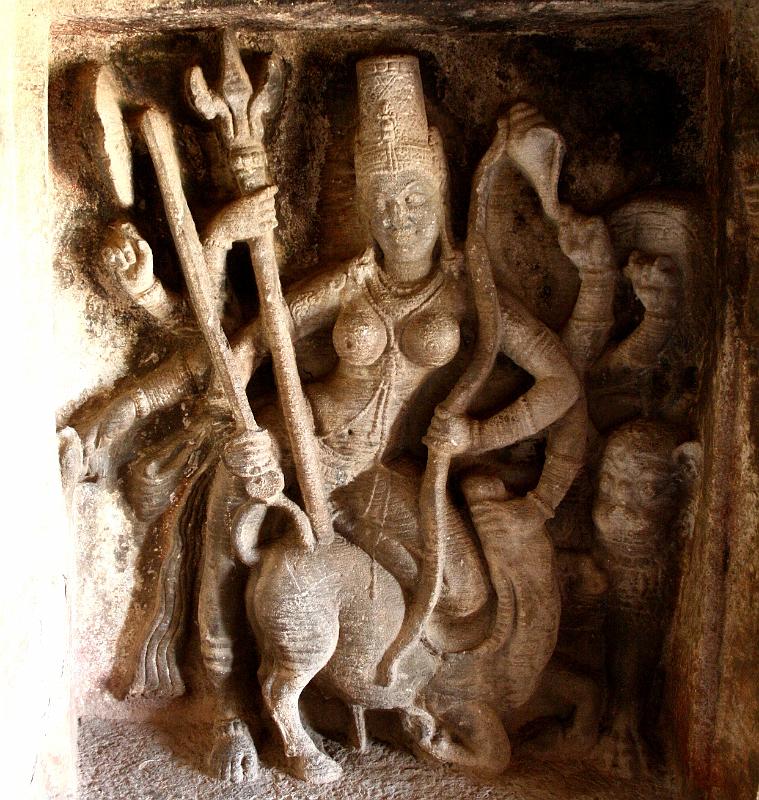
ravanaphadi cave
Sculpture at Ravanaphadi Cave

Ayi giri nandini, nandhitha medhini,
Viswa vinodhini nandanuthe,
Girivara vindhya sirodhi nivasini,
Vishnu Vilasini Jishnu nuthe,
Bhagawathi hey sithi kanda kudumbini,
Bhoori kudumbini bhoori kruthe,
Jaya Jaya hey Mahishasura mardini,
Ramya kapardini, shaila Suthe. 1

Victory and victory to you,
Oh darling daughter of the mountain,
Who makes the whole earth happy,
Who rejoices with this universe,
Who is the daughter of Nanda,
Who resides on the peak of Vindhyas,
Who plays with Lord Vishnu,
Who has a glittering mien,
Who is praised by other goddesses,
Who is the consort of the lord with the blue neck,
Who has several families,
Who does good to her family.
Who has captivating braided hair,
Who is the daughter of a mountain.
And who is the slayer of Mahishasura.

durga mahisa

Jaya Jaya hey japya jayejaya shabda ,
Parastuti tatpara vishvanute ,
Bhana Bhanabhinjimi bhingrutha noopura,
Sinjitha mohitha bhootha pathe,
Nadintha nataartha nadi nada nayaka,
Naditha natya sugaanarathe,
Jaya Jaya hey Mahishasura mardini ,
Ramya kapardini, shaila Suthe. 9

Victory and victory to you,
Oh darling daughter of the mountain,
Oh Goddess , whose victory is sung,
By the whole universe,
Which is interested in singing her victory,
Oh Goddess who attracts the attention of Lord Shiva,
By the twinkling sound made by her anklets,
While she is engaged in dancing,
Oh Goddess who gets delighted ,
By the dance and drama by versatile actors,
Even while she is half of Lord Shiva’s body,
Oh Goddess who has captivating braided hair,
Who is the daughter of a mountain.
And who is the slayer of Mahishasura.

(Two stanzas from Mahishasuramardani Sloka)

V R Ramachadra Dikshitar has poined out that Tamil name Kovalan is the Tamil form of Gopala (cowherd) in Sanskrit. It is Lord Krishna’s name.
I will write separately about the number of Sanskrit words and the influence of Bhagavad Gita in Silappdikaram.

The best translation available on Silappadikaram is the one by VR Ramachandra Dikshitar: The Cilappadikaram, 1939.

Contact swami_48@yahoo.com

நிகழ்காலத்தில் வாழ்க!

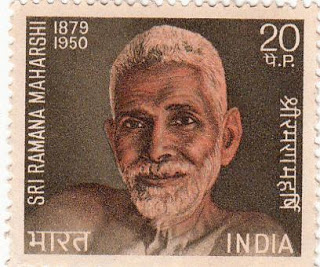
ramana stamp

ஜென் காட்டும் வாழ்க்கை நெறி:-
நிகழ்காலத்தில் வாழ்க!
By ச.நாகராஜன்

Post No 1211; Dated 3rd August 2014.

ஜென் நெறி – நிகழ்காலத்தில் வாழ்க!
அமைதியான வெற்றிகரமான வாழ்க்கைக்கு ஜென் காட்டும் வாழ்க்கை நெறிகளில் மிக முக்கியமான ஒன்று –“நிகழ்காலத்தில் வாழ்க” என்பது தான்!

ரமண மஹரிஷியிடம் ஒரு கேள்வி!
இதே நெறியைத் தான் இந்து மதமும் வலியுறுத்தி வருகிறது.பகவான் ரமண மஹரிஷியை தரிசிக்க அவரது அணுக்கத் தொண்டர்களுள் ஒருவரான கிரிதாரிலால் என்பவர் (18-3-1946 அன்று) வந்தார். இந்த யுகம் எப்போது முடியும் என்ற கேள்வியை அவர் பகவானிடம் கேட்டார்.

உடனே ரமண மஹரிஷி” நான் காலத்தை உண்மையெனக் கருதுவதில்லை இறந்த காலத்தைப் பற்றியும் முன்பிருந்த யுகங்களைப் பற்றியும் நமக்குத் தெரியாது. எதிர்காலத்தைப் பற்றியும் நமக்குத் தெரியாது ஆனால் நிகழ்காலம் இருக்கிறதென்பது தெரியும் அதை முதலில் தெரிந்து கொள்வோம். அப்போது எல்லா சந்தேகங்களும் தீரும். தூக்கத்தில் இந்த உலகமும் இறந்த காலம் அல்லது எதிர்காலம் ஆகிய ஒன்றுமே நமக்கு இருப்பதில்லை. ஆனால் “நாம்” இருக்கிறோம்! மாற்றமில்லாததும் சாஸ்வதமுமானதையும் முதலில் தெரிந்து கொள்வோம்” என்றார்.

கிரிதாரிலால் புராணங்களில் ஒவ்வொரு யுகத்திலும் இத்தனை வருடங்கள் எனத் துல்லியமாகக் குறிப்பிடப்பட்டிருக்கிறதே என்று மேலும் வினவினார்.

அதற்கு பகவான், : அப்படிக் குறிப்பிடப்படுவதில் ஒரு அர்த்தம் இருக்கக் கூடும். அல்லது உலகத்தின் பிரமிப்பூட்டும் காலத்திற்கு முன்னர் மனிதனின் முழு ஆயுளான நூறு வருடங்கள் கூட எவ்வளவு அற்பமானது என்பதைச் சுட்டிக் காட்டும் ஒரு உத்தியாகவும் அது இருக்கக் கூடும்” என்று அருளினார்.

.பிரபஞ்ச வயதின் முன்னர் மனிதனின் வாழ்வு எவ்வளவு அற்பமானது! நான்கு யுகங்கள் கொண்ட சுற்று வரிசை எத்தனை வந்தனவோ! நிகழ்காலத்தில் வாழக் கற்றுக் கொண்டால், தூக்கத்தில் உள்ளதைப் போல காலம் என்பதே இல்லையென்றால் இந்தக் கேள்விகளால் நம்மை நாமே தொந்தரவு செய்து கொள்வதால் என்ன பயன்!

ஒவ்வொரு கணத்தையும் அனுபவித்து அமைதியாக வாழக் கற்றுக் கொண்டால் நாளடைவில் அனைத்தும் புரிய ஆரம்பிக்கும் என்பதே ரமண மஹரிஷியின் அருளுரையின் சாராம்சம்.

EmptyBoat

காலிப் படகு மோதிய கதை

ஜென் பிரிவில் புத்த துறவிகளும் எல்லையற்ற கால வெள்ளத்தின் முன்னர் இறந்த காலத்தையோ எதிர் காலத்தையோ பற்றி எண்ணாமல் நிகழ் காலத்தில் வாழ்வதையே வாழ்க்கை நெறியாகக் கொண்டுள்ளனர்.

ஜென் பிரிவில் அடிக்கடி கூறப்படும் ஒரு போதனை காலியான படகு பற்றிய ஒரு சம்பவம். பெரிய ஜீவ நதியில் நீங்கள் பயணப்பட்டுக் கொண்டிருக்கும் போது திடீரென காலியான படகு ஒன்று உங்கள் படகின் மீது மோதி விடுகிறது என வைத்துக் கொள்வோம். நீங்கள் என்ன செய்வீர்கள். கோபப் பட மாட்டீர்கள். ஆனால் அதிலேயே படகோட்டி ஒருவன் இருந்தால் அவன் மீது எவ்வளவு கோபம் வரும்!

அதே போலத்தான் உங்கள் வாழ்வின் நிகழ்வுகளும்! உங்களை உங்கள் அண்டை அயலார் சரியாகப் புரிந்து கொள்ளாமல் இருந்திருக்கலாம். மற்ற தோழர்கள் உங்களைச் சீண்டி விளையாடி இருக்கலாம். நேற்று உங்களின் மீது அபாண்டமான பழியை உங்களின் அலுவலக சகா சுமத்தி இருக்கலாம்.! இவர்கள் அனைவரும் காலியான படகு தான்! அவர்கள் தங்களது செய்கைகளை ஏதோ ஒரு உந்துதல் பேரில் தான் செய்திருக்கிறார்கள். தாங்கள் என்ன செய்கிறோம் என்பதே அவர்களுக்குத் தெரியாது!

கண்ணுக்குத் தெரியாத ஒரு சக்தியினால் காலியான படகு உங்கள் படகின் மீது மோதுவது போல தங்கள் வலியினாலும் காயத்தினாலும் உங்கள் மீது அவர்கள் மோதுகிறார்கள்.

இதை உணரும் வரை நாம் நமது துக்கம், இறந்த காலம் ஆகியவற்றின் கைதிகளாக இருப்போம். நிகழ் காலத்தின் சக்திகளுக்குக் கட்டுப்பட்டு எப்போதும் பாய்ந்து பெருகும் அன்பை உளத்தில் ஏற்றுக் கொண்டால் யார் மீதும் கோபம் கொள்ள மாட்டோம்.காலிப் படகுகளை ஒதுக்கி விடுவோம்.

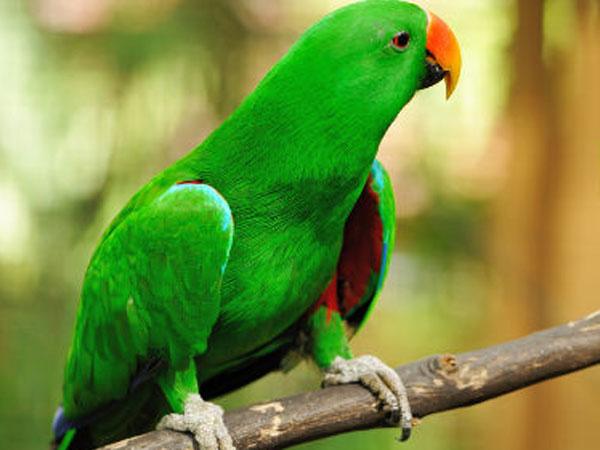
26-parrot1

ஒவ்வொன்றாகச் செய் நண்பனே!
நிகழ் காலத்தில் வாழ்வது உடனடி பயனைத் தரும் ஒரு அற்புதமான நெறி. வில்லியம் ஆஸ்லர் என்பவரிடம் ஒரு நண்பர் சென்றார்.எப்போதும் குழப்பமான சூழ்நிலையில் இருக்கும் தான் அதிக வேளைப் பளுவினாலும் ஏராளமான விஷயங்களைச் செய்ய வேண்டியிருப்பதால் மன இறுக்கம் கொண்டவராக இருப்பதாகவும் கூறி மனம் நொந்தார். அப்போது வில்லியம் ஆஸ்லர் வளர்த்து வந்த கிளி ஒன்று அந்த நண்பரை நோக்கி வணக்கம் கூறியது. இதனால் ஆச்சரியப்பட்ட நண்பர் அந்தக் கிளி பற்றி அவரிடம் விசாரித்தார்.

“இது ஒரு அற்புதமான கிளி..உங்கள் பிரச்சினைக்கு இந்தக் கிளி சுலபமான தீர்வைத் தரும்” என்று வில்லியம் ஆஸ்லர் சொல்லவே.அதன் விலை எவ்வளவு என்று கேட்டார் நண்பர்.

:இதன் விலை நூறு டாலர்” என்றார் வில்லியம் ஆஸ்லர். “இவ்வளவு விலையா?” எனத் திகைத்தார் நண்பர் ஆனால் தனது பிரச்சினையோ பெரிது என்பதால் நூறு டாலர் கொடுத்து அதை வாங்கி வீட்டுக்குச் சென்றார்.

வீட்டுக்குச் சென்றவுடன் கிளி அவரை நோக்கி “ஒன் அட் எ டைம். ஃப்ரண்ட் ஒன் அட் எ டைம்” (One at a time, friend! one at a time) -“ஒவ்வொன்றாகச் செய், நண்பனே ஒவ்வொன்றாகச் செய்” என்று கூறியது.

திருப்பித் திருப்பி அந்த வார்த்தைகளைக் கேட்ட நண்பர் தன் கையிலிருந்த முதல் காரியத்தை முடித்தார். ஆச்சரியமாக இருந்தது அவருக்கு. இப்படி விரைவாக ஒரு காரியத்தையும் அவர் முடித்ததே இல்லை. அடுத்தாற் போல அடுத்த விஷயத்தைத் தொடங்கினார். அதுவும் விரைவாக முடிந்தது. “ஒரு சமயத்தில் ஒரு வேலை” என்று நிகழ்காலத்தில் வாழப் பழகிக் கொள்ளும் பழக்கத்தால் ஒரே வாரத்திலேயே அவரது எல்லா வேலைகளும் முடிந்தன. தாமதமான காரியங்களும் இல்லை; தடைப்பட்ட காரியங்களும் இல்லை!வில்லியம் ஆஸ்லருடன் நேராக வந்த நண்பர், “கிளி கோடி டாலர் பெறும்” என்று உளமாரக் கூறினார்.

நிகழ்காலத்தில் வாழ்வது அதிசயமான மாற்றங்களை உங்கள் வாழ்க்கையில் உருவாக்கும். வெற்றி மேல் வெற்றி வரும். உங்கள் மீது மோதுபவர்களை காலிப் படகாக எண்ணி சிரித்தவாறே முன்னேறுங்கள். அற்புதங்கள் மலரும்! இதுவே ஜென் காட்டும் வாழ்க்கை நெறி!

Article was written by my brother S Nagarajan of Bangalore for Muthal Osai tamil Daily. Contact swami_48@yahoo.com

**************

Adi Shankara & Mysterious Sundara Pandya !

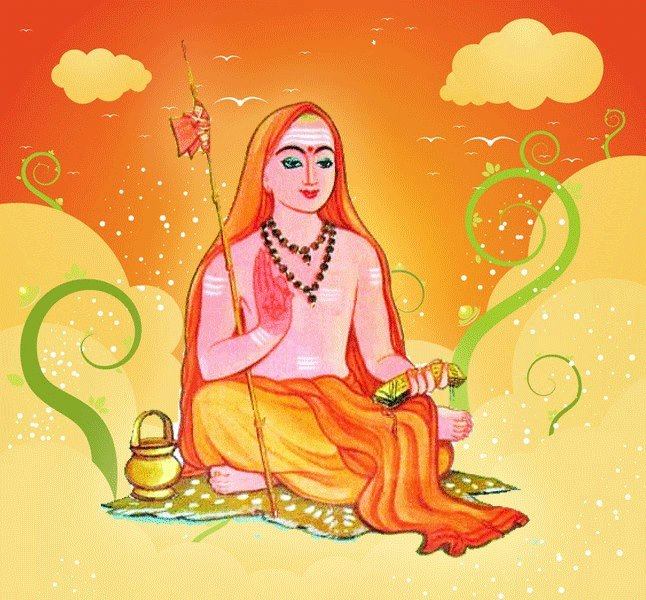
adishankara drawing

Research Paper by London Swaminathan
Post No. 1210; Dated 2nd August 2014.

Age of Adi Shankara is shrouded in mystery. Most of the scholars have already concluded that he lived in the eighth century CE (788-820). There is no positive proof to support this date. The confusion in dating happened because of another Shankara who was a copy of Adi Shankara in all aspects. Abhinava Shankara, whose name roughly translated sounds like “Once Again A New Shankara”.

There have been lot of discussions on this topic and a lot have been written. Kanchi Paramacharya (1894—1994) had given a long explanation for dating him in fifth century BCE. I am not going to repeat his argument or the counter argument of people attached to Sringeri Mutt, who believes that Shankara lived around 788 CE.

My argument is based on Sangam Tamil literature and Sundara Pandya. I have written about it in Tamil and posted it in this blog on 21st March 2012.

1.Adi Shankara’s favourite simile is rope mistaken for a snake. He used this allusion umpteen times in all his works. No one has used this like him. Greek Philosopher and founder of scepticism Pyrroh 360-270 BCE used this simile. Famous historian K A Neelakanta Sastri has commented on it saying that it was unusual for a Greek philosopher to use it. I think that he copied it from Adi Shankara. The reason for my conclusion is that he accompanied Alexander the Great. All of us knew Alexander’s unquenchable thirst for Hindu Philosophy. Swami Vivekananda, Paramahamsa Yogananda and many scholars have dealt with this subject.

More over this simile is used by Uuttiyaar, a Sangam Age poet. He used this simile in Akananuru (verse 68).: “A thunderbolt struck the Asoka Tree mistaking the swing rope for a snake”. Another poet Kutavaayir Keerathanaar used a similar comparison in verse Akam.119. This is to show that it is a typical Indian analogy.

shankara with sloka

2. One of the great four Saivite saints is Appar alias Tirunavukkarasu, who lived in the middle of seventh century. He used the famous slogan “Jaya Jaya Sankara” in his Tamil Thevaram hymn followed by the word ADI. Though this Adi has nothing to do with Shankara, I honestly believe that the thought of Adi Shankara made him to say “Jaya Jaya Shankara”. In one another hymn he says that “Stotras sung by your devotees” (of Shiva). The very word “Stotras (Thoththirangal)” in a pure Tamil hymn came through his mouth because he knew the contribution of Shankara very well. Appar lived during the reign of Mahendra Pallava.

3. Another common belief is that Shankara rejuvenated Hinduism by eliminating 72 conflicting sects and establishing Shanmatha (Six Forms of Worship). He fought against Jainism and Buddhism is another popular belief. If he had lived in eighth century there was need for it because both the religions had very little following at that time. In the South, Saivite Nayanmars and Vaishnavite Alwars have already re-established Shaivam and Vsihnavam.

4. Maya (illusion) was used by Shankara umpteen times in his hymns. Ancient Sangam poets went to the extent of using this Sanskrit word boldly in their verses due to the impact of Adi Shankara. They used the word in the context of impermanence (instability) of the world like Adi Shankara (363, 366 Purananuru). Strangely names of the poets are in Sanskrit Gothamanar (Gauthama) and Siruventheraiayar (Manduka Rishi).

Sanskrit word Maya occurs in Puram 243, 363,366; Akam 226,256; Kali.2-3, 88-7, 90-1, 93-15, Narr.294; Pari. 3-70; Pathi.60-6.

Saivite saints Appar, Sambandhar, Manikkavasagar also mentioned Mayavatha. It may be due to Shankara’s propaganda.

shanakara face

History’s Mystery — Sundara Pandya

5. Last but not the least is Sundara Pandya, who was a great Sanskrit scholar who wrote about Advaita even before Adi Shankara. This is the strongest proof to show that Shankara lived long before the accepted date of 788 CE. The name sounds like a king of the Pandyan Kingdom. All the Sundara Pandyas known to history lived in 12th century CE of after. They had no connection to Shankara. The other Sundara Pandya was the husband of presiding deity of Madurai , Goddess Meenakshi. This queen was referred to by the Greek Ambassador Megasthenes as ‘Pandya queen’. Shankara’s Brahma Sutra commentary used Sundara Pandya’s verses.
PT Srinivasa Iyengar in his History of the Tamils gives the following information quoting various authorities:

a)Sundara Pandya was the person whose ‘varttika’ was quoted by Sankaracharya in his commentaries on Vedanta Sutra.
b) A book on ethics, called ‘Niti dvi sastika’, attributed to Sundaya pandya was discovered and printed.
c)As quotations from it occur in the Panchatantra and Janasrayi, it appears Acharya Sundara Pandya must have lived before sixth century.
d) Sundara Pandya being a well known name of several kings, there is a temptation to identify this Acharya with a king of Madurai. I cannot think of any Pandya king capable of writing such works. I think Sundara Pandya merely means Sundara of Pandya country.

PTS Iyengar is wrong in assuming that Pandya kings were not capable of writing Sanskrit works. Mukundamala was written by a Chera king/Alvar in Sanskrit. A North Indian King by name Bramadutt learnt Tamil from Sangam poet Kapila and wrote verses in Tamil 2000 years ago! Because it was a rare achievement we still talk about them. Mudukudumi Peruvazuthi, the mighty Pandya King, installed Yupa Pillars through his kingdom. He was a performer of great Yajnas including Asvamedha. Iyengar was ignorant of Pandya Copper Plates.

Prof. S Kuppuswami sastri identified Sundara Pandya with Kun Pandya (Nedumaran) of Sambandhar period. Three of his verses were cited by Shankara in his Brahmasutra Bhasya (Page 219 of Sanskrit -Tamil Contact)

abhinava vidya theertha
Sri Abhinava Vidya Theetha Swami of Sringeri Mutt

Dalawaipuram Copper Plates and Sinnamanur Copper plates of Pandya Kings praised Sundara Pandya as a great scholar. The wordings of the inscriptions give the impression that he lived long before the known kings. There is no mention of Sundara Pandya in the Sangam literature. But the inscriptions make it very clear that he was a king in the Pandya line. Sinnamanur plates say

“Imaam Kanchana Peedasyaam samethya kavayo Bhuvi
Aryaam Sundara Paandyasya snaapayanthivathimiva”,
Inanother Pandy copper plate
“Samastha Sastra Arnava Karnadharo yadudbhava Sundara Pandya nama”

Then the Rajasuya and Asvamedha Yagas performed by the Pandya kings were mentioned. So Sundara pandya must have lived in the first few centuries of BCE or CE. We know for sure the Sangam Age Pandyas and Chozas performing Asvamedha and Rajasuya Yajnas. From 570 CE, we have very clear record of Pandya kings and their activities. We don’t hear any big Yagas performed by them.

6.Shankara’s life is linked with Hala, Manukula Aditya, Purna Varman, Indra Varman (of Cambodia) in one way or other. If it is just one name one can reject it. Here the names mentioned were too many and those people lived long before the accepted date of Shankara 788 CE. Hala lived in first century AD in Andhra and another Hala in 4th century BCE. Manu kula Aditya was Manu Neethi Choza who lived around first century BCE. Even the age of Kumarila Bhatta connected with Shankara is debatable. Shankara’s fame would not have spread to far off Cambodia in such a short time if we are going to believe Adi Shankara’s disciple was Sivasoman (of Cambodia).
But Abhinava Shankara can be the Guru of Sivasoman.

kanchi for bath
Sri Kanchi Paramacharya of Kanchi Mutt.

UNKNOWN DRAVIDACHARYA
7. Dravidacharya of first century BCE was a great Advaita scholar. Shankara quoted him and praised him as ‘Agamavidh’, ‘Sampradhaya Vidh’ in his commentaries on Mandukya Upanishad and Brihad Aranyaka Upanishad. This shows that Tamil Nadu of first century BCE produced great Sanskrit scholars. Shankara quoted a story from Dravidacharya’s work:

A prince lost his way in the forest when he was a child. The hunters found him and raised him like a hunter. Several years after this incident the minister of the kingdom went for hunting and found this prince through his special body marks (moles etc). The minister told him “Na Tvam Vyadha, Amushya Rajna Putra” (You are not a hunter, you are a king’s son) and handed over him to the king. He became a king soon. Like this the soul realises it’s true form –Brahma Swarupa— then it enjoys bliss.

(The same story is presented differently in Vedic literature: A lion cub is raised like a sheep. When other lions attacked the flock of sheep, this cub was identified and taught to roar like a lion. Then it got its true form)

Ananda giri also quoted Dravidacharya in his work.

8. Another conflicting information is the number of Shankaracharyas in each of his five Mutts : Dwaraka Peeth 80, Kanchi 70,Puri over 140,Kudali 60, Sringeri 36. Why is it?
Shankara’s Guru was Gowdapatha and his book was translated in to Chinese in sixth century CE!

9.Later Saiva Siddhanta scriptures mention the five activities/tasks of Lord Shiva– creation, preservation, destruction, veiling and grace. But Adi Shankara and Tamil epic Silappadikaram mention only the first three. We may use this for drawing a boundary line in dating.

sringeri abishekam

Current Shankaracharya of Sri Sringeri Mutt

10.Dravidasisu reference: The reference to Dravida Sisu in Sowndarya Lahari of Shankara is not Tamil saint Sambandhar, but Shankara himself. Another possibility is that Abinava Shankara might have referred to Adi Shankara if we consider it as the work of Abhinava sankara. But in olden days the poets used to refer to themselves in their verses (Example: Manikkavasagar, Sambandhar)

11.There is a way to settle the controversy about the Age of Shankara or Kalidasa or Tamil saint Manikkavasagar. If we feed their works in to computers and analyse the word index, we may be able to decide their age through linguistics.

Contact swami_48@yahoo.com