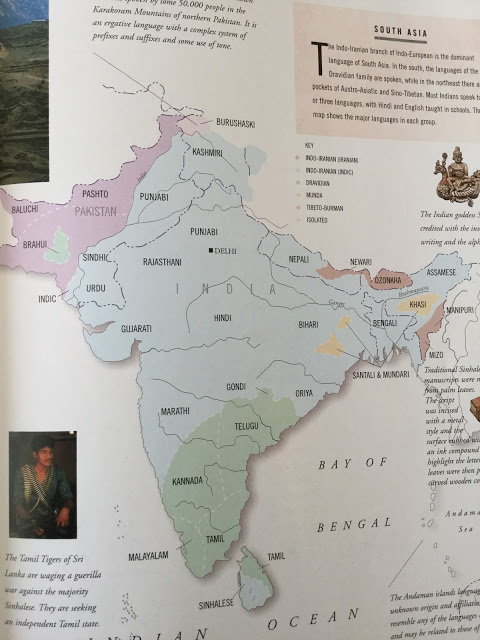
Brahui Theory Incorrect? (Post No.4205)

Research Paper written by London Swaminathan


Date: 12 September 2017


Time uploaded in London- 12-09


Post No. 4205


Pictures are taken from various sources; thanks.


(This is the fourth and the last part)


From 1844, there is some incorrect information circulated among scholars about Brahui language and Dravidian invasion/migration of India via Afghanistan. Foreigners used this “Dravidian” Brahui to show the Dravidians entered India through the north west route. But all this information is not correct. Until today no KEY Tamil words are found in Brahui.


A language must have body parts, numbers, personal pronouns etc to show some affinity with another language. No such things are found except two numbers.


Andropov tried very hard to show some relationship with Dravidian languages. He found an escape route to justify his findings by using PROTO DRAVIDIAN. He used ‘may and might’ in his article which shows all these are just guesses

(ref. Notes on Brahui, M Andropov, Institute of Oriental Studies, Moscow; 6 page article appeared in Journal of Tamil Studies, Volume 1, October 1969)


I threw a challenge to a girl who studied lost languages to come with at leaest 10 Tamil words from Brahui speakers. No response until today. The fact of the matter is no one can even produce a few Tamil words!


Brahui speakers are not of Dravidian stock; they are of Indo-Aryan stock

no Dravidian word will have beginning ‘BRA’, which is Sanskrit.
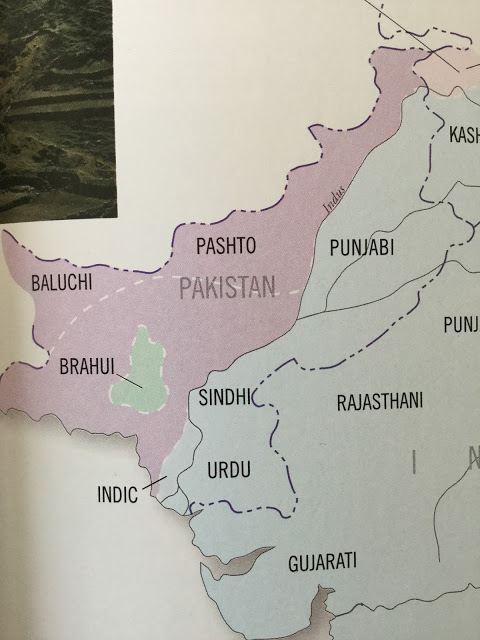
Currently Brahui language is full of Indo Aryan words (Baluchi etc)

Even if we find two Tamil numbers, we can explain that Tamil businessmen were there at one time using these numbers. Tamils presence in North West and beyond is confirmed; but all those are just visits not from permanent settlements. Some fanatics tried to hide under the guise of Indus valley civilization.


What do others say?

The derivation of the word Brahui from personal name IBRAHIM frequently met with among Brahuis themselves, is nothing more than a popular etymology invented after the adoption of Islam. The Iranian etymology ‘borohi’ a mountaineer is dobted for many reasons- Andropov

So no one knows the origin of the word ‘Brahui’)!


xxx

Dictionary of languages by Andrew Dalby gives the following information:

BRAHUI

1500,000 speakers

Pakistan

“Brahui, major language of western Pakistan, is an astonishing survival – utterly different from the Iranian languages that surround it. Most Brahui speakers are bilingual in Baluchi. There is no doubt that that Brahui belongs to the family of Dravidian languages of South India, though it is separated from the nearest of them by many hundreds of miles (see map at KURUKH).


The relationship was pointed out by German linguist Christian Lessen in 1844.


ONE COMMON GUESS IS THAT EARLY DRAVIDIAN SPEAKERS MIGRATED SOUTHWARDS IN TO INDIAN PNINSULA THOUSANDS OF YEARS AGO, AND THE BRAHUI (AND PERHAPS ELAMITE) REMAIN AS A CLUE TO SHOW THE ROUTE THEY FOLLOWED.

(MY COMMENTS: THE PEOPLE HAVE NO PHYSICAL SIMILARITY TO DRAVIDIANS. BRAHUIS ARE OF INDO-ARYAN STOCK!!!! FOREIGNERS WANTED TO SHOW ALL INDIANS CAME FROM OUTSIDE INDIA!!!!!!!!!!!!!)
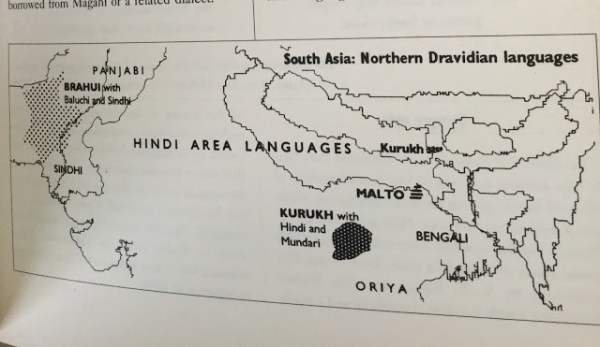
 

But it cannot be as simple as this; Brahui shares some innovations with northern Dravidian languages such as KURUKH so must have separated from other Dravidian languages before they them themselves began to differentiate. IN REALITY THE EARLY HISTORY OF BRAHUI IS QUITE UNKNOWN.

(My comments: building sand castles as big as possible to be washed away by every wave! No single Tamil word found yet!!!)


It is at least certain that the speakers of Brahui and Baluchi have long lived side by side. Tradition tells of Hindu rule in medieval Kalat, the centre of Brahui and Baluchi culture, followed by a Brahui dynasty, followed by Mughal rule as elsewhere in India, followed by renewed Brahui domination. This last period contains a date 1660—the accession of Mir Ahmed as Khan of Kalat, ruling both Brahui and Baluchi tribes.


The pastoralist Brahuis traditionally migrate in large numbers in winter, the people called Sarraavaan to Kachi, the people called Jhalawaan to Sind, where they have hereditary winter quarters.

IT HAS BEEN SUGGESTED THAT THEIR NOMADIC ROUTES USED TO BE WESTWARDS TOWARDS AFGHANISTAN IN EARLIER CENTURIES AND THIS EXPLAINS WHY THER ARE SOME 20,000 BRAHUI SPEAKERS NOW SETTLED IN AFGHANISTAN WITH A FEW FURTHER NORTH IN TAJIKISTAN. AT ALL EVENTS, BRAHUI IS HEAVILY INFLUENCED BY BALUCHI AND SINDHI LANGUAGES IN WHICH MANY BRAHUI SPEAKERS ARE NECESSARILY BILINGUAL.

(My comments: There is no Brahui language; it is nothing but Sindhi and Baluchi for ever!!!)


BRAHUI NOW HAS RATHER FEW INHERITED DRAVIDIAN WORDS IN ITS LEXICON; Iranian and Baluchi words predominate. ITS SOUND PATTERN IS MOST LIKE THAT OF INDO ARYAN LANGUAGES SUCH AS SINDHI, WITHOUT THE SHORT E AND O AND THE MULTIPLE R SOUNDS TYPICAL OF DRAVIDIAN.

(My comments: There is no Brahui; it is just Indo-Aryan language; so far everything is guess; in reality everything is Baluchi and Sindhi—Indo-Aryan languages!!!!!!)

The first ten numerals in Brahui are

asit

irat

musit

chaar

panch

shash

haft

hasht

noh

dah

only 1 to 3 are Dravidian- the higher numbers are borrowed from Baluchi or Persian


(my comments: so all  these sand castles were built on Irat and musit!!!!!!!!!!!!!!!!!!!!!! is ASIT, Tamil???????)


O hilaarki daun e ki gingishk tuutaki = he is as fond of dates as a sparrow is of mulberries

CAN YOU FIND A SINGLE TAMIL WORD OR TAMIL SOUND IN THE BRAHUI SENTENCE?


So cunning linguist frauds have developed this Dravidian Brahui theory.


In fact Tamil has more similarity with English than Brahui:

One= ondru

Two= randu

Eight= Ettu


Let us compare it with Turkey (1400 BCE)!

Following is not a guess work or reconstruction like Brahui; It is based on inscriptions!

The oldest horse training manual found in Turkey has Sanskrit words for numbers!
The MItannian (Syria/Turkey) rulers’ names were in Sanskrit:
Biridaswa=Brhat Asva= possessing great horses
Sattawaza = Sapta Asva= Prize Winner in Seven horse races.
Kikkuli (1400 BCE) trained people on horses in Turkey and Syria. His manual used Sanskrit words:

KIKKULI SANSKRIT MEANING
Wartanna Vartana a turn
Aika Eka One turn
Tera Tri Three turns
Panza Panca Five turns

Satta Sapta Seven turns
Na (artanna) Nava Nine turns

Those who studied Tamil grammar wouldn’t be surprised to see Satta becoming Sapta. In Tamil also we follow the same rules to change Sanskrit sounds in to Tamil sounds. Raja becomes Arasan in Tamil. Rajaraja becomes Iraasa rasan in Tamil. Damayanthy in Sanskrit is written as Tamayanti, YogaRaja becoming Yokarasa in Tamil, Shakespeare changing to Sekappiriyar or seksupiyar, Homer changing to Omar and Harrypotter changing to Karipaattar!! There is no S or H or J or Sh or Ksha in pure Tami!!

 
In the same way Kikuli changed Sanskrit words to suit his students in the Hittite empire (Syria/Turkey)!
Maryannu is a word for warrior used by Kiikuli. This comes from the Sanskrit word Marya. Egyptians borrowed this Sanskrit word and Egyptianized like Tamils and wrote M(a)-ar-ya-na in 1470 BCE in Papyrus Anastasi I. They used this for Chariot warrior.

P= V
Asva in Sanskrit is written as Aspa by the Persians.
By 1500 BCE Sanskrit words were used from the Plains of River Ganges to the Plains of the River Nile and in between Mesopotamia!!!

Zend Avesta of Zoroastrians had Old Sanskrit or Persian words
Dravaspa =Devi Asva = Goddess for horses
Vist aspa (a king of Bactri) Visva Asva? = All powerful Horse?
Pourus Aspa = father of Zarathustra = one who possess many horses
Arbataspa =Master of war like horses
Huaspa =Su Asva= having good horses
Bactria’s capital was known as Zariaspa= land of golden horses! This is because they used gold coloured bronze coat.

Even when we have such proper evidence we did not build sand castles!


-subham–
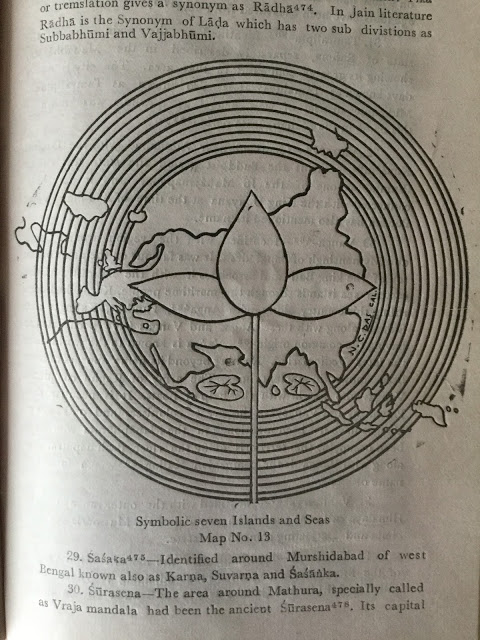


Interesting Geographical Details in the Mahabharata-4 (Post No.4203)

Written by London Swaminathan


Date: 11 September 2017


Time uploaded in London- 14-48


Post No. 4203


Pictures are taken from various sources; thanks.


(This is the fourth and the last part)


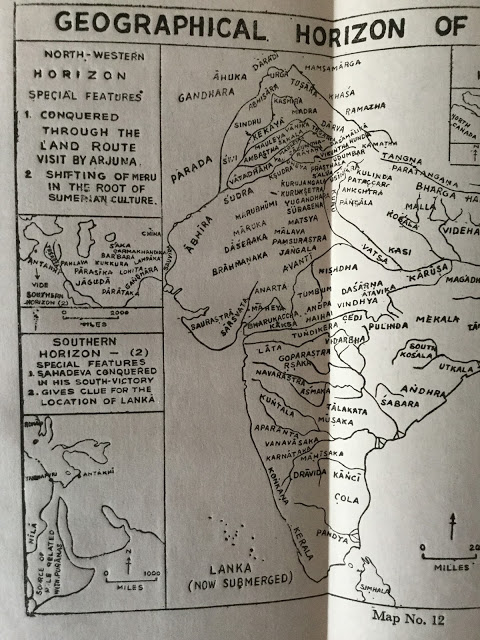
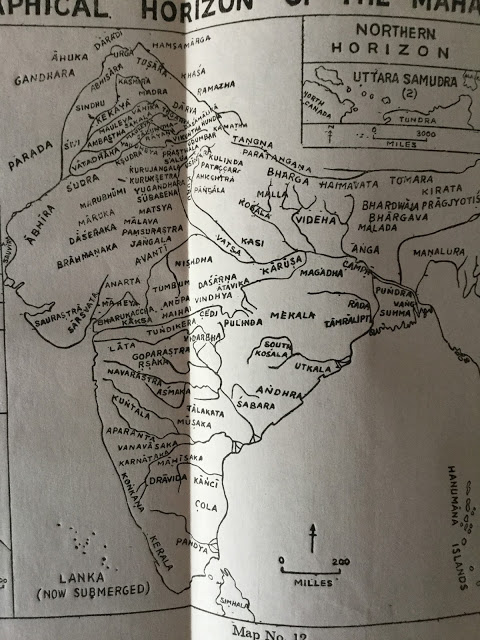
My comments: The geographical details in the MBH gives lot of scope for research; it is amazing that Vyasa or his disciples have accumulated so much information in an epic. Modern approach will give a better picture. We can divide them into different categories such as 100% sure, 755 certain etc.

Janapadas of the East

1.ANDHAKA: Mathura area

2.ANGA: area between Videha and Magadha;modern Bihar

3.ANTARGIYA: Badri-Kedara region

4.ATREYA: Garwala region

5.BHADRA:Bhadranagara of Rajasthan

6.BHARGA: State of Vatsas; between Vaisali and Sravasti

7.BHARGAVA: West of Assam

8.GAYA: modern Bihar

9.KALAKUUTA:Kulinda region

10.KASI:Region between rivers Ganga and Gomati

11.KIRATA:Ladakh area

12.KUNTI: Gwalior area

13.KURU:Meerut area

14.KOSALA: Sarayu river area.

15.MATSYA:Bharatapura, Jaipura area

16.MALLA:Deoria district of UP

17.MAGADHA: Patna area; Bihar

18.MALADA: Malda of West Bengal

19.MAADHYAMIKA: Nagari area of Chittoor

20.MANAVARJAKA:Vardhamana in West Bengal

21.NAIMISA: Sitapura of UP

22.PATACCARA: Pataidi near Gugaon

23.PRAYAGA: Allahabad, Triveni Sangam

24.PANCALA:Punjab

25.PRAGJYOTISA: Gauhati in Assam area

26.PUNDRA: Rangpur, Rajasahi, Bogra in Bangladesh

27.STRI RAJYA: Western tip of the Buddhist Majjimadesa

28.SUHMA:Tamralipti and Medhinipura of Bangladesh

29.SASAKA: Murshidabad of West Bengla

30.Surasena: area around Mathura

31.TAMRALIPTA:Midnapur District of West Bengal

32.VANGA:Dacca and Mymensingh of Bangladesh

33.VATSA: Allahabad area

34.VAHIGIRYA:Mussori, Nainital areas

35.VIDEHA: Mithila area of Bihar


xxx


JANAPADAS OF THE WEST

1.APRAANTA:also Kuttapraanta Kalyana, Supara districts

2.ARBUDA: Abu mountain area

3.AANARTA:  Southern part of Ahmedabad, Baroda

4.AABHIRA: Ophir of the Bible; Averia of the Greeks;Sindhu delta

5.AARATTA: pancanada state

6.KAAKSA: Inner Narmada area; Bharukacca port

7.KUKKURA: western Vindhyas

8.KONKANA: Ratnagiri district

9.KOLVAGIRYA: Colaba area of Mumbai

10.KSUDRAKA:Montgomery area


11.GOPARAASTRA: area around Nasik

12.JANGALA: Bikaneer area

13.TUNDIKERA: Chindwada area of MP

14.TUMBUMA: Guna District of MP

15.DVAIPEYA: Island Diu

16.NAVARAASTRA: Maharashtra state

17.BRGHU: around ancient AAnarta

18.MARU BHUMI: Desert area of Jodhpur

19.MAAHEYA: river Mahi basin

20.SUUDRA: identified with State Abhira

21.LAATA: modern Gujarat

22.VITIHOTRA:  south of Avanti

23.SURASSTRA: Kathiawad region

24.SAMUPTA NIKUTA: island area of Kathiawada

25.SAARASWATA: river Saraswati basin, west of Ahmedabad

26.SINDHU: river Indus area

27.SAUVIRA modern Rodj in Pakistan


–Subham–

Interesting Geographical details in Mahabharata (Post No.4193)

Written by London Swaminathan

Date: 8 September 2017

Time uploaded in London- 17-04

Post No. 4193

Pictures are taken from various sources; thanks.

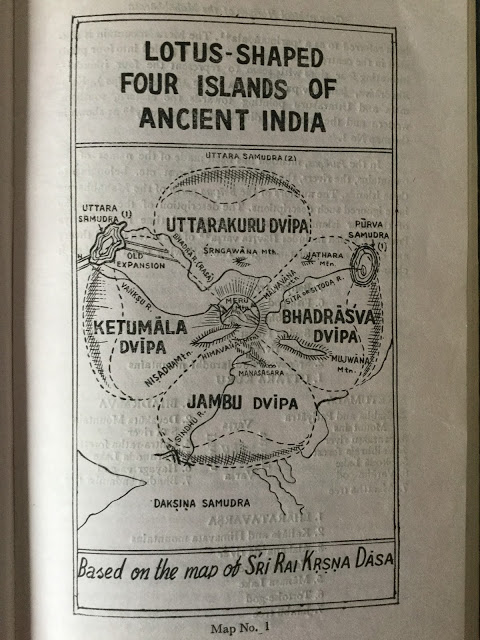
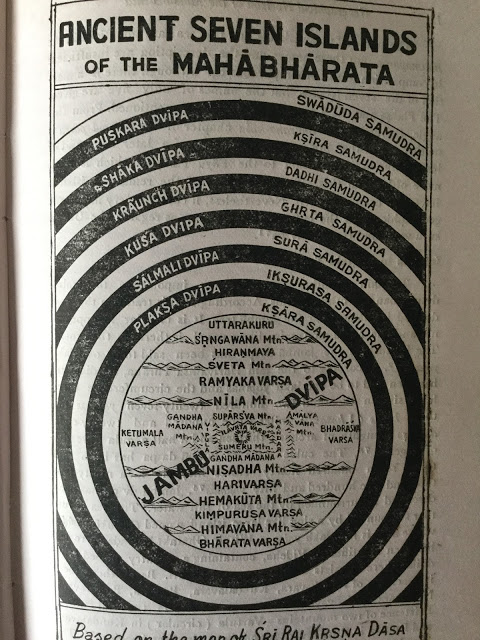
I was reading a book titled Geographical Horizon of the Mahabharata by Pande Syam Narayan published in 1980. Following are some interesting data:

The epic contains much of the geographical material relating to India and outside. There are 230 Janapadas (states) mentioned in the MBH. Out of these 230, 62 are towards the North, 35 towards the East, 27 towards the West and 36 towards the South.

(the author’s description of the seas and countries and their identification may not be correct; but it can be used a starting point)

He adds

Janapadas of Sakadwipa

Udaivarsa (Malaya, Jalada)

Sukumaravarsa of Jalandhi mountain; it is the Komroi of the Greeks

Kaumaravarsa Or Narada mountain

Manicara or Anandaka Varsa; it has been identified as Mustag mentioned in the Zend Avesta

Mainaka varsa of the Ambikeya mountain

It seems the author of the Bhisma Parva and the Greeks had the similar knowledge

Janapada of Pushkala Dwipa

The MBH gives only one janapada by the name Saba having a quadrangular habitation divided into 33 divisions of mandala. Vamana, Airavata, Supratika and Anjana are said to be the guards of the four directions.

Janapadas of Kusadwipa

There is a great bush of Kusa or poa grass and there are the following seven varsas:

Umigada, Venumandala, Surathaakaara, Kambala, Dhrimana, Prabhaakara and Kapila

Janapadas of Krauncadwipa

There are seven varsas in the dwipa:

Kusala, Manonuga, Usna, Pravaraka, Andhakaraka Muniand Dundubhiswana

Janapadas of Jambudwipa

They are scattered in four directions. There is neither any sequence nor any classification; their identification becomes very difficult

Adhiraja

Aparaparjata

Asvaataka

Agneya

Aj-neya

Adhirastra

Averekah

Ahvaayaka

Aupakah

Aurasikah——10

Balitha

Carmakara

Civuka

Cicchila

Darsaka

Dasamiyaa

Dirgavenu

Drptaaksha

Govasana

Krakhadaah———— 20

Karabhanjakaah

Karavataah

Kuraka

Krmi

Karakaraah

Kayavya

Kaalaamukh

Kundamaana

Kusavindu

Kaisika—————- 30

Lalaataksa

Lalitya

Lohajanga

Manga (mrga)

Mandaka

Mandiika

Madaka

Majeeecha

Mavillakah

Mundaajh————– 40

Murucipatan

Modanaah

Maukaah

Nalakalaka

Naula

Natakeya

Pacakarpata

Panitaka

Pasu

Prakuttsakah——————- 50

Prakira

Pravrseya

Prahuta

Rajanya

Suukara

Sanjayanti

Sansthaanah

Sudesnu

Suparsva

Saivala—————— 60

Saubha

Tumbuna

Trayaksa

Trayainga

Taaratoyah

Uparyakah

Upaavrta

Ulluukha

Varmakah

Vanarasya———————– 70

In the second part I will give the Janapadas in the north, south and west where known places figure.

—–to be continued

100 Wonders of Karnataka – Part 2 (Post No.4161)

Halebidu Sculptures

Compiled by London Swaminathan


Date: 25 August 2017


Time uploaded in London- 16-07


Post No. 4161

Pictures shown here are taken from various sources such as Facebook friends, Books, Google, Wikipedia and newspapers; thanks.


Bijapur district


17.BIJAPUR

Treasure house of Islamic architecture; a city of domes and minarets. Chalukyan rulers of kalyana founded this city called Vijayapura, corrupted as Bijapur. Adil shah dynasty ruled from here. There are 50 mosques, 20 Tombs and several palaces.

18.Gol Gumbaz: Its an astounding engineering feat built between 1626 and 1656 by Mohammed Adil Shah. The dome measures 44 meters in diameter. It has a circular whispering gallery, known for its amazing acoustics qualities. A faintest whisper will echo nine times!


Halebidu

Chamrajnagar District

19.BANDIPUR

It is a famous Tiger reserve. It adjoins Mudumalai Wildlife sanctuary in Tamil Nadu and Wayanad Sancturay in Kerala. Famous for pythons,tigers, elephants, leopard, panther and crocodiles. several types of birds are also seen here.

20.BILLIGIRI RANGANA HILLS

famous for trekking and adventure sports. It has hill top temples. Billigiri Rangana Temple dedicated to Vishnu is famous. 2000 year old giant tree Dodda sampige Mara is a natural wonder.

Chikamagaluru District

21.CHIKAMAGALURU

Ishwara Temple here has a 4 ft high statue of Jademuni and a Yupa Stambha supposed to be installed by Janamejaya during the Serpent sacrifice.

22.BABA BUDAN RANGE

Baba Budan Giri peak named after a Muslim saint is one of the highest peaks. Dattatreya Peetha here is another example of communal harmony. A laterite cave here is held sacred as it is believed to that Dattatreya Swami and Hazarat Dada mir Khalander stayed here.


23.KEMMANAGUNDI

two water falls – Kalahasti and Hebbe are popular picnic spots. This hill station is known as KR hills and a peak of 4732 ft.

24.KUDREMUKH

It means Horse Head. It has iron rich deposits. With 6250 ft peaks it has scenic splendour.

25.SRINGERI

Famous Hindu pilgrim centre on the banks of River Tungabadra. Adi Shankara founded a Mutt here. The 12th century Sharadamba temple is a holy place. The 12 zodiac pillars in the mantapa are noteworthy, these are placed perfectly so that the sun rays fall on each of them, in the order of the solar months.

Chitradurga District


26.CHITRADURGA

Since this historical town has a landscape with different sized, different shaped rocks ir is known as Stone Fort (kalline Kotte). Chitradura is actually Chitra Kal Durga – umbrella shaped lofty hill. Ancient temples, Forts of Hyder Ali, Tipu Sultan and Palegars are here. Hidimbeswara temple and many other temples are situated here.

Dakshin Kannada

27.Mangaluru

Important sea port, exporting coffee and cashewnuts, place of ship building industry. Ullal, Panambul and Sutrakal are other beaches with scenic spots.


28.KATIL

Durga Parameswari temple is famous.


29.DHARMASTALA

Manjunaha Temple has Vaishnavite priests and a Jain trustee 14-metre-tall Gomateswara is another attraction

30.GHATISUBRAMANYA
Ancient shrine of Lord Subramanya

31.MUDABIDRI

This is known as Varanasi of Jains with 18 bastis. Of them the Chandranatha basti has 1000 pillars built in 1429. Jain temples have exquisite sculptures.

Davanagare District


32.DAVANAGARE

Famous for textile mills; a commercial, educational and industrial town.

33.HARIHAR

On the bank of Tungabadra river. Since the demon Gulhasura got a boon not to be killed by either Shiva or Vishnu, both f them went in the form of Harihara and killed the demon.

Harihara image (half Shiva, Half Vishnu) is here in the Harihara temple


Gadag District

34.GADAG

Gadag has a famous temple of Viranarayana built by the Hoysala King vishnuvardhan.

35.LAKKUNDI

Relics of old temples are in this town Image of God Surya (Sun) is here.

Kalburgi (Gulbarga) District

36.KALBURGI

First capital of Bahmani sultans. Hindu King Raja Gulchand’s fort has been converted into a Muslim fort. Magnificent mosque Jami Masjid was built by a North African Moorish architect. It resembles Spanish Mosque of Cordoba. This town has a library in the Dargah with rare Urdu, Persian and Arabic books.

Hassan District

37.HASAN

Hasanamba temple’s presiding deity is represented only by an ant hill. It is open only for a week every year.

38.BELUR

Hoysala sculptures are in famous Chennakesa va temple. They are 800 year old. 65 elephants on the frieze are carved beautifully and each one is different! Volouptuous beauties known as Mandakinis are also found in the brackets.

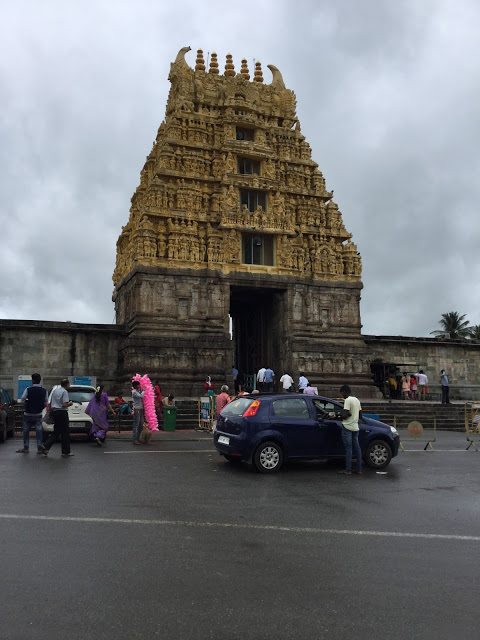
39.HALABIDU

Ancient capital of the Hoysalas was founded in the 11th Century. It was ravaged by the Muslim invaders. Hoysaleswara temple was fortunate enough to survive the attack. Thousands of sculptures are on the walls of the temple. It is a great architectural wonder.


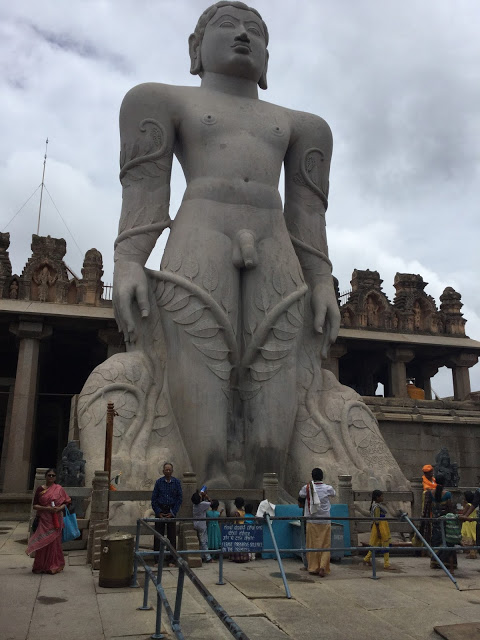
40.SHRAVANA BELAGOLA

Important Jain Pilgrim centre with a 57 ft high monolith of Gomateswara (bahubali). It is on top of the Vindhyagiri This 1000 year old monolith is one of the largest monoliths in the world. Every 12 yeas millions of devotees to see the Mahamastakabisheka

to be continued………………….


100 Wonders of Karnataka- Part 1(Post No.4160)

Temple in Badami

Compiled by London Swaminathan


Date: 25 August 2017


Time uploaded in London- 6-12 am


Post No. 4160

Pictures shown here are taken from various sources such as Facebook friends, Books, Google, Wikipedia and newspapers; thanks.


Karnataka state in South India has several natural, architectural, historical and religious wonders. It was once called Mysore state. It has got huge monoliths, gateways, Nandhis (bulls) and Palaces. Everything is massive in Karnataka. The Hindu kings aimed high and achieved the best in architecture.

I will list them district wise.

Bengaluru (Bangalore is the capital of the state.

1.BASAVANGUDI OR BULL TEMPLE

It was built by Kempe Gowda around 1500 CE. The temple has a huge Nandhi (bull). It is a monolith sculpture measuring 4-57 metres in height and 6-10 metres in length.

There are other wonders like Lalbagh Botanical Gardens Tippu Sultan’s palace, Planetarium and several museums.

Dodda Ganapathi temple has a huge monolithic statue.

Badami Caves

2.CHANNAPATNA

Its wooden toys, wooden beads, bangles, boxes and light furniture are very popular.


3.KUDALA SANGHAMA

This is the confluence of Krishna and Malaprabha rivers. It is famous for the Sanghameswara temple. It is built in Chalukyan style.

Bagalkot district


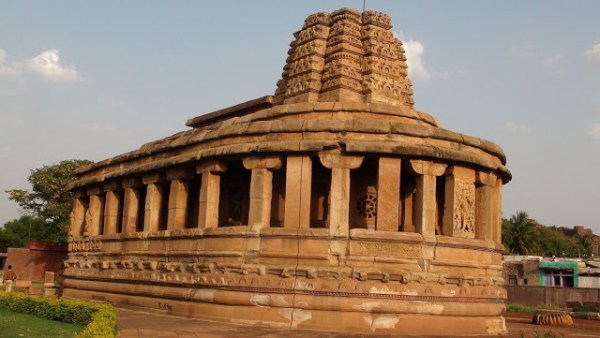
4.AIVALLI (AIHOLE)

It was capital of Chalukyas for 400 years between 4th and 7th centuries. 140 temples with exquisitely carved sculptures are in the Vishnu and Shiva temples. It is a holy place for the Hindus, Jains and Buddhists


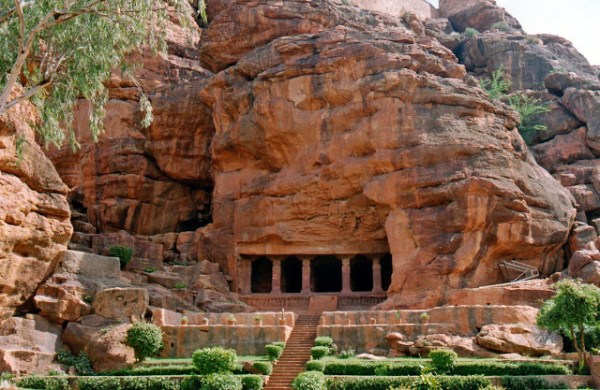
5.BADAMI

It was the capital of Early Chalukyas from 540 to 760 CE. The cave temples and museum are very popular tourist attractions. Buddhist rock cut caves, Hindu and Jain sculptures attract the tourists.

6.MUDHOL

It has got famous places of worship belonging to different religions. It is on the bank of Ghataprabha river. Shiva temple, Kamaleswara temple, Mahavir Basadi, Brahmagaddi Veerashiva mutt and Syed Beer dargah are located here.

It is very rare to get so many different religious spots in one place.

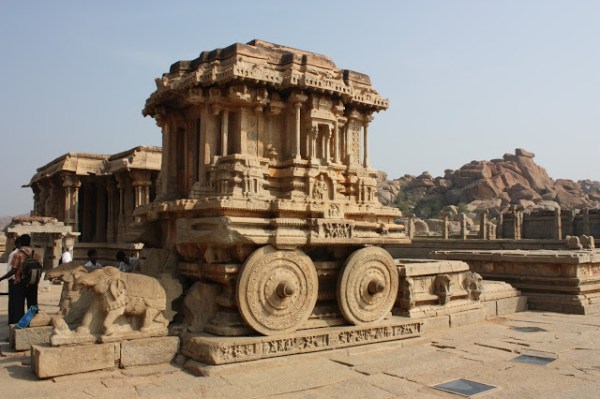
Hampi Stone Ratha

7.PATTADAKAL

It is on the banks of River Malaprabha and famous for 10 temples. It is declared as a UNESCO WORLD HERITAGE centre. The Virpakshesvara Temple has a beautiful huge gateway adorned with inscriptions. It has a huge Nandhi (bull) which is 2-6 metres tall.


Belagaavi (Belgaum) District

  1. BELAGAAVI

It is very near Maharashtra border. It was the capital of Ratta Kings during 13th century. Several temples are in the town Kittur Rani Chennamma is associated with the place. She was one of the first freedom fighters.


9.GOKAK FALLS

Gokak falls is over the Ghataprabha river. It is 170 feet high. Because of its horse shoe shape it looks like a Mini Niagara falls. It is a natural wonder. Relics of ancient temples are in this place.


10.SAUNDATTI

It was the original capital of the Ratta Kings. There is also a fort built in 1734 Two famous temples are here.


Bellari District


11.HAMPI

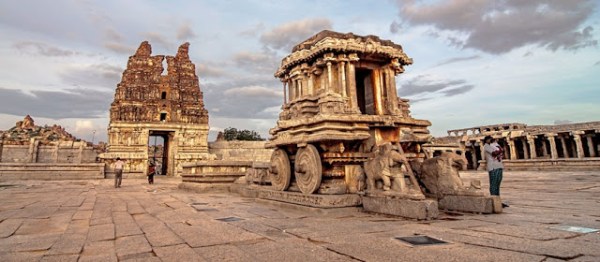
It was once the capital of the mighty Vijayanagara Empire which destroyed the Muslim invaders. It is on the banks of the River Tungabadra. Harihara and Bukka founded the city in 1336 CE. It has got the relics of old temples destroyed by the Muslim invaders. Vittala Temple has the famous Kalyana Mandapa and Stone Chariot. The musical pillars in the temple are architectural wonders.

Virupaksha Temple 50 metre high gateway and pillared halls. It is famous for Vijayanagara period paintings. Lotus Maha was built for women. Ugra Narasimha temple has a huge Narasimha statue under the seven headed snake. It is 6-7 metre high. A huge Linga is also located in running water. Mahaswami Dibba buit by Krishna Deva Raya is here. Queen’s bath here is 15 metre square with a lotus headed fountain. Even in dilapidated condition Hampi stands as a symbol of Vijayanagara samrajya. In its glorious days it excelled all the capital cities in the world.


Bidar District

BIDAR

  1. Bidar was the capital of Bahamani Sultans and Barid shah. Ahmed Shah rebuilt the old Hindu fort and changed it into a Muslim (style wise) Fort. It has got lot of tombs and buildings and famous for its Muslim architecture.


13.BIDAR FORT

It was built around 1426 CE. There are five big Gateways, Royal residence Rangin Mahal. This Mahal has ornately carved wooden pillars with  Persian couplets engraved on it. Royal Kitchens, Royal baths, Ladies Apartments and 16 pillared prayer hall are popular attractions.

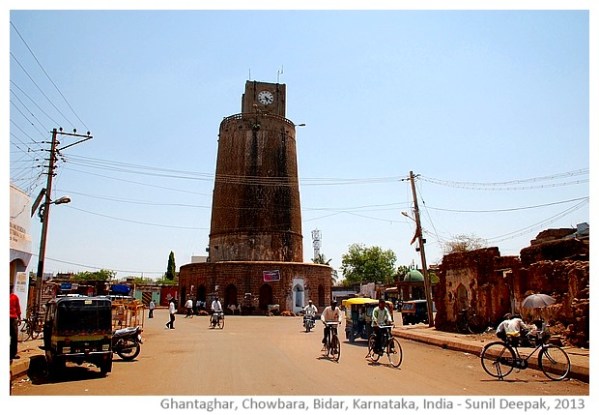
  1. 71 FEET HIGH WATCH TOWER

The 71 feet high watch tower ‘Chaubara’ stands in the middle of the town. A bird’s eye view of the town is available from the top of the tower.


15 & 16 NANAK JHEERA AND NARASIMHA JHEERA

Nanak Jheera is associated with Guru Nanak. When the town was undergoing a severe famine, his visit made the water to gush out as a spring (jheera). The sacred site is marked with a huge Gurudwara.

Narasimha Jheera (spring) is the only subterranean stream in Karnata.The subterranean cave has a water spring and Narasimha statue. Papanash, a Shiva temple is also located here.

Both the springs are natural wonders.

—to be continued

India, That is Bharat! Why do we call India, Bharat?

Written by London Swaminathan


Date: 9 August 2017


Time uploaded in London- 18-08


Post No. 4142

Pictures shown here are taken from various sources such as Facebook friends, Books, Google and newspapers; thanks.


India’s true name is Bharat. It is in Mahabharat. Indian constitution also begins with the words, India, that is  Bharat……………….”

This country is named after the greatest of the Indian kings  Emperor Bharat.

“All those born in this land before Bharata

All those born after, are called after this name”

–Mahabharata 1-69-49


Kalidasa’s most popular drama Sakuntalam is about Dushyana, Sakuntala and their child Bharata. He is known as Sarva Damana – all tamer. He could play with wild animals. Greatest of the modern Tamil poets Bharatiyar sings that Bharata played with little lion cubs.

We are all sons of Bharatavarsa- the country of Bharata.

Kalidasa says,

“He will be a sovereign of the World. Know this too.

Crossing the oceans in a chariot gliding smooth

he shall conquer and rule unopposed

the rich Earth with her seven continents;

named All Tamer here, because he subdues all creatures

by his strength, the future will see his name

proclaimed Bharata; He who bears the world


There are very interesting details about Bharata in the Vedic Brahmana literature.

“Sage Dirgatama consecrated King Bharata, son of Dusmanta, who conquered the earth and performed 133 Asvamedha sacrifices.” – Aitareya Brahmana


The Aitareya Brahmana gives more details about the coronation ceremonies of other kings. The names of the kings consecrated along with their priests who anointed them are mentioned.


In Greece, Egypt and Babylonia all the old kings are listed in the history of those countries. But in India, British people began our history with Asoka in third century BCE! We must change it and begin our history from 4000 BCE.


The Kings who ruled India, that is Bharat, are :

King Janamejaya – Tura Kavaneya consecrated him

King Saaryaataa – Cyaavana Bhaargava consecrated him

Sataaniika Satraajita – Soma Suusmaa consecrated him


Amvassthya – Paravata consecrated him


Yudhaamsrausti  Augrasenya- Narada consecrated him


Visvakarmaa Bhauvana – Kasyapa consecrated him

Sudaas Paijavana – Vasistha consecrated him

Marutta Aviksita – Samvarta Angirasa consecrated him

Anga – Udamanya consecrated him


Very clear history is in the Vedic literature. We have to rewrite our history before it is too late.

Sage Udamaya ,son of Atri, anointed king Anga and the latter made a gift of

10,000 elephants

10,000 maid servants, decorated with gold ornaments

Ten million cows

87,000 white stallions to the sage.

TEN GENERATIONS OF VEDIC KINGS!

Satapata Brahmana (12-9-3-1 and 13) gives historical details of Vedic Kings:

Dustaritu Paumsayana (Srnjaya King) boasts that he inherited the kingdom through ten continuous generations. Aitareya Brahmana also refers to Dasapurusam Rajyam.

This shows that one kingdom had at least 350 year history (10X35 years). Before him many other kings  might have ruled that area.


Tamil Sangam literature which came into existence 2000 years ago says that the number of kings ruled this land is equal to the sand particles (Innumerable, uncountable). Even before 2000 years they knew that Bharat had thousands and thousands of kings.


The history of Three Tamil Sangams (Tamil Academy) also give the number of kings who ruled the Tamil Land. If we put all these data together we will get a picture of ancient Bharat.


Asvamedha Yajna

Brahmana books give the list of all the kings who did Asvamedha Yajna:-

Satapata Brahmana (13-5-4) gives a long list of kings:

Indrota Daivaapa Saunaka did Asvameda for Janamejaya Parikshit

Bhimasena, Ugrasena, Srutasena in his line also did Asvameda. They may be brothers of Parikshit or separate kings

Kosala (Kausalya) King Para Aaanaara, son of King Aaatnaara

King Purukutsa of Iksvaku race

Ayoga King Marutta Aviksita

Pancal aKing Kraivya

Matsya King Dhvasaa Dvaitavana

Bharata Dauhsyanti

—–all performed Asvamedha.

Bharata did use 78 steeds on the banks of Yamuna and 55 steeds on the banks of Ganga.

In total he used 133 horses and covered the whole country and brought it under his rule. That is why we call this country (India)  Bharat.

There is one Gaathaa (laudatory verse) for every king who did Asvameda.

One laudatory verse says that King Bharata used 1000 horses and no one could beat him.

King Rsaba Yajnatura of Siviknas and  Sona Saatrasaaha of Pancala also performed horse sacrifice.

King Dhrtarastra’s white horse was captured by King Saataniika Saatraajita.


So much detail about the kings and their kingdoms were given in the Brahmana literature dated 1000 BCE.


This is foreigners’ date. We think that they are all Pre Puranic Kings. We have 150 generations in the Puranas under Chandra and Surya vamsas.


So Vedic kings must have ruled the vast North India from Yamuna to Sarasvati before 3100 (Kaliyua beginning) BCE.

We must rewrite Indian History and start our history from 4000 BCE.

Moses is not a historical figure. So far they haven’t found any historical material to confirm his existence. But three religions  stand upon his shoulders!!!

My old articles on Yagas and Yajnas:-


List of Tamil Kings who performed Yagas and Yajnas -Post No. 3086In “Culture”

Why do Hindus say ‘Idam Na Mama’/ It is Not Mine? (Post No. 3309)In “Science & Religion”


Hindu Fire Ceremonies: 7 Paka Yajnas and 14 Srauta Yajnas (Post No.3310)In “Religion”

Interesting Titbits about Asvamedha Yajna- Part 1(Post No.3159)In “சமயம். தமிழ்”

Tamil King’s Rajasuya Yagna! (Post No.3084)In “Culture”


Asvamedha: New Explanation (Post No.3163)


400 Types of Yagas (Fire Ceremonies) | Tamil and Vedas

https://tamilandvedas.com/2014/03/06/400types-of-yagas-fire-ceremonies/

6 Mar 2014 – Kanchi Paramacharya Sri Chandrasekarendra Saraswati Swamikal mentioned in one of his lectures that there are 400 different types of Yagas …


400 வகை யாகங்கள்: காஞ்சி பரமாசார்யார் …

https://tamilandvedas.com/…/400வகையாகங்கள்

Translate this page

6 Mar 2014 – 400 வகை யாகங்கள்காஞ்சி பரமாசார்யார் உரை. rudra baba. Sri Sathya Sai Baba in Ati Rudra Maha Yagna.

5 மஹா யக்ஞம், 14 ச்ரௌத யக்ஞம், 7 பாக …

swamiindology.blogspot.com/2016/11/5-14-7-post-no3312.html

Translate this page

2 Nov 2016 – … கட்டுரையையும் படிக்கவும்:– 400 வகை யாகங்கள்காஞ்சி பரமாசார்யார் உர


தமிழ் மன்னர்கள் செய்த யாகங்கள்! (Post No.3085)


–subham–


HINDU RITUALS IN GREECE (Post No.4129)

Written by London Swaminathan

Date: 4 August 2017

Time uploaded in London- 17-31

Post No. 4129

Pictures shown here are taken from various sources such as Facebook friends, Books, Google and newspapers; thanks.
 

When I went to Acropolis Museum in Athens (Greece) in July 2017, I entered the museum shop. Normally I buy only fridge magnets as mementos and stick them to my fridge in London. But the picture post cards in Athens shop were very attractive. So, I bought a few of them and one of them shows a Hindu ritual. I already wrote a research article about the Hindu customs in Sumerian civilization. One of the rituals is offering certain votive objects to get married or to get issues (children) or to get cured of sickness.

People who have problems pray to god with votive offerings either before or after the solution to the problem. South Indian temple Hundis get lot of metal objects in the shape of eye, ear, leg, hand, nose , baby etc. Devotees offer these either to thank the god for solving the problems or to get the problems solved.


I found two similarities in the Greek picture:-

  1. Like in Hindu temples, the votive offerings were given to a GODDESS.
  2. The offerings were made with a special request or prayer to solve a specific problem.

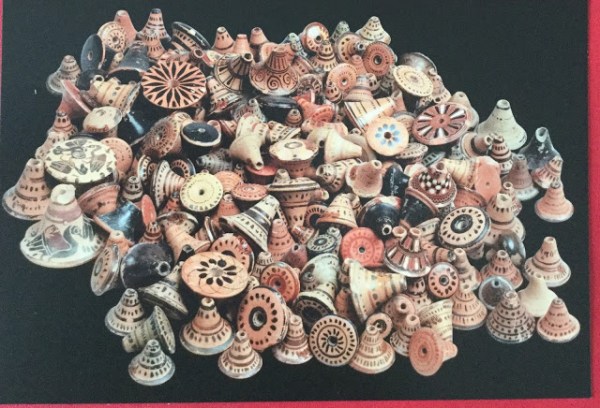
The Greek picture post card shows Clay spinning whorls, offered by young women to the sanctuary of Nymph, the protectress of marriage. They are dated around sixth century BCE. This ritual has been there in Greece at least 2500 years ago. Now they are in museum. But Hindu culture is older by thousands of years to Greek culture. And ours is a living culture and you can see such votive offerings even today in Sankarankoil and Bhagavathy temples in Kerala and hundreds of temples around the country.


      NEW IDEAS FROM GREECE

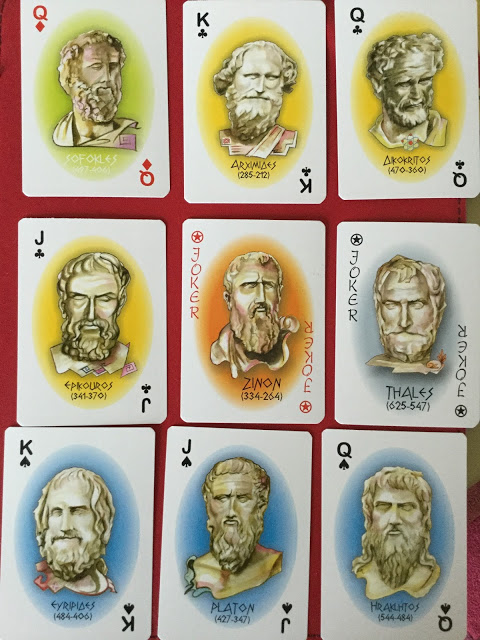
NEW IDEAS FROM GREECE: When I came back from New York, San Francisco, Rome, Stockholm and Indian cities, I posted some new ideas for business. In Athens (Greece) I saw playing cards with the famous Greek philosophers. We may also do some playing cards with Indian philosophers or temples or Tourists spots. Foreigners will buy them because it is a memento as well as playing cards. But it must be of good quality. I paid 2-50 euros for the playing cards pack.


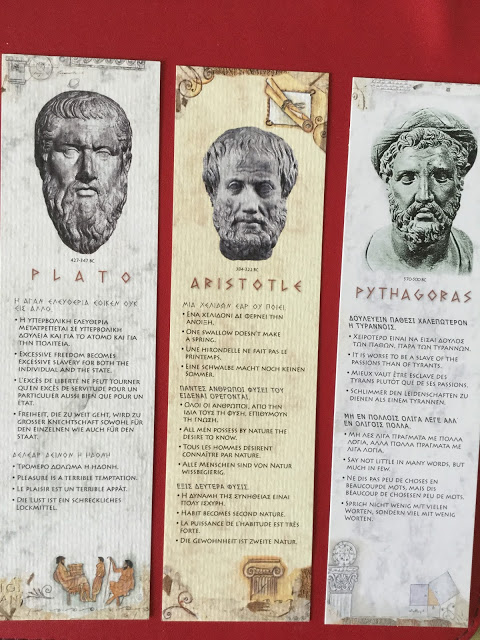
MORE NEW IDEAS FROM GREECE; I KNOW INDIAN BOOKSHOPS SELL BOOK MARKS WITH QUOTATIONS. BUT I BOUGHT A SET OF BOOK MARKS WITH QUOTATIONS FROM THE GREATEST GREEK WRITERS. WE MUST SELL SOMETHING LIKE THIS IN ALL THE BOOK SHOPS WITH HINDU QUOTES OR TAMIL LITERATURE QUOTES. QUALITY AND ACCURACY ARE MORE IMPORTANT.

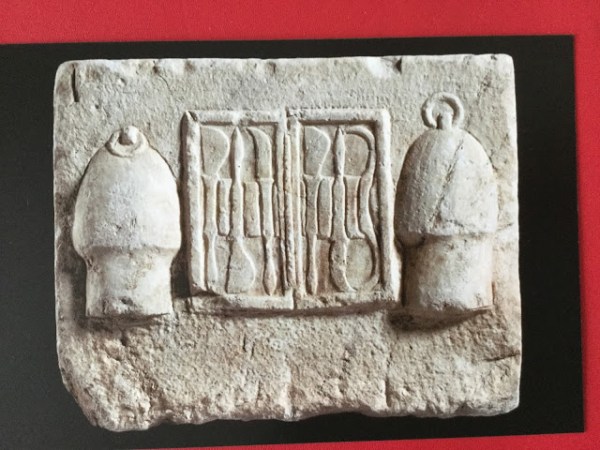
SURGICAL INSTRUMENTS FROM GREECE; This picture post card shows the surgical tools and suction cups. Carved on the base of a statue, now lost. Dedicated to the sanctuary of Asklepios , 320 BCE. From Athens museum stall.


CHARAKA AND SUSRUTA HAD MORE SURGICAL INSTRUMENTS; WE HAVE THE NAMES OF HUNDREDS OF SURGICAL TOOLS IN THE BOOKS OF CHARAKA AND SUSRUTA IN SANSKRIT. WE MUST SELL PICTURE POST CARDS WITH THOSE INSTRUMENTS

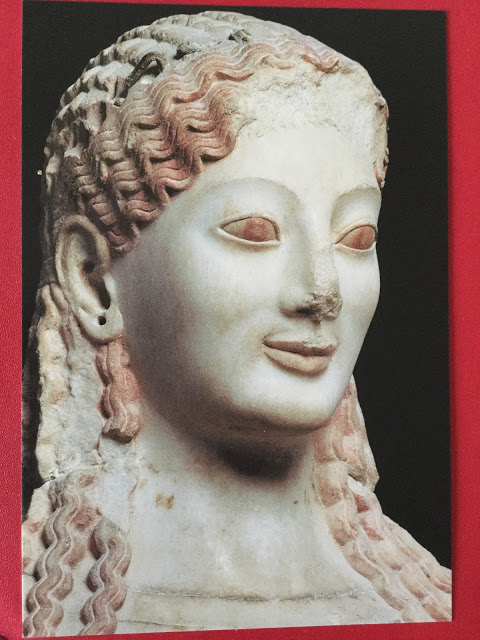
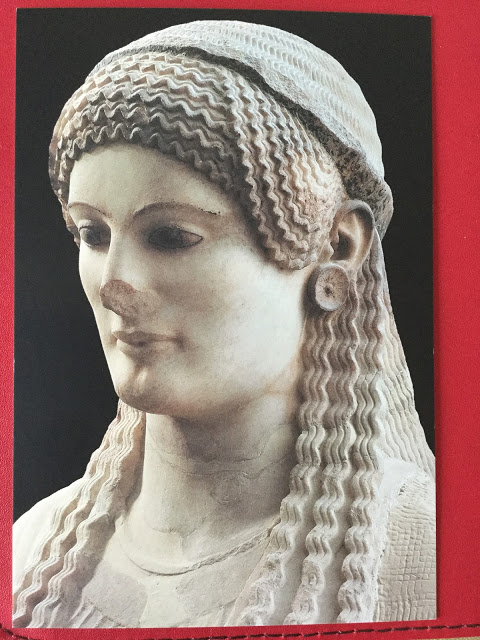
Statue of a young girl, probably depicting the goddess Artemis; Acropolis Museum, Athens, Greece; around 530 BCE. I bought this picture post card last week in Athens.

All Indian Temples must have a book shop cum stall with high quality books and pictures.

Every Indian museum must have a stall with a cafe. Western countries do roaring business buy selling artefacts, picture cards, books etc in such museum stalls. They are of high quality. India can do it.


BOOK ON SANTORINI ISLANDS, GREECE


The house where we stayed in Santorini (Thera) islands had a book on the table which contained some pictures about wine making and archaeological finds.


CHRISTIAN MUSLIM ATROCITIES: –

In the past few days I wrote some articles comparing Hindu culture with the Greek culture. I wrote that I will list the atrocities of Christians and Muslims in Athens. But encyclopaedias such as Wikipedia have very elaborate writeups about it. So I will just give you the bullet points


How Parthenon, Temple of Goddess was destroyed?

First, Persian invasion caused some damage in the fourth century BCE

After the introduction of Christianity in Greece, they banned all the pagan temples.

One of the kings, who was a Christian fanatic, took the beautiful, valuable statue of Athena made up of gold to  Turkey and destroyed it.

Later Christian kings converted Temple of Athena in to a church; made architectural changes; in other words, defaced it. Gave new names to old Greek gods to show them Christian. Virgin Athena changed into Virgin Mary.

After Ottoman Turkish attack, the Parthenon structure and temple were destroyed.

They converted it into a mosque. The Venetian- Turkish war destroyed this structure with cannon balls. They used it arms depot.

It is a systematic destruction similar to what Muslim invaders did to Hindu temples in India and what Portuguese and Spanish invaders did to Mayan, Aztec, Olemec and Inca civilizations.

Wherever these invaders went there was bloodshed, plundering and destruction.


Last but not the least, people like Elgin “stole” the remaining marbles “legally” and now they are in British, Louvre and Metropolitan museums around the world. My Greek tourist guide was furious when she explained about how Elgin took the historical marbles to Britain.

More in Wikipedia.


–Subham–


Story of Athena and Ganga Devi! (Post No.4125)

Written by London Swaminathan

Date: 3 August 2017

Time uploaded in London- 21-09

Post No. 4125

Pictures shown here are taken from various sources such as Facebook friends, Books, Google and newspapers; thanks.

pictures by london swaminathan.

The story of Athena, the Greek Goddess, is a symbolic one. We have such symbolism in the Vedic literature. Athena personifies wisdom, like Goddess Sarasvati. She was a virgin and is the protective genius of the City nation .

Our tourist guide in Athens compared Ganga’s (Ganges) descending from heaven and Shiva holding her in his head and Ganga emerging from his head

The myth of the birth of Athena illustrates the compromises necessary in the progression of thought. Greek god Zeus and the Titan Metis (cunning intelligence) were her parents. A prophesy had claimed that Metis would bear a goddess equal to Zeus in wisdom, so the god devoured his wife in an attempt to prevent the birth. But one day Zeus had a raging head ache and asked the craftsman god Hephaistos to split his head open with an axe. Hephaistos did so and Athene emerged, fully formed and armed, from her father’s head. True to the prophesy, Athene rivalled Zeus in wisdom and was symbolised by owl. Owl is considered wisest of all the birds.


This is similar to Lakshmi emerging from ocean after the churning of ocean. Lakshmi also has owl as her vehicle. Owl is derived from the Sanskrit word Uluka. Owl’s name is a suffix for poets and saints in Tamil and Sanskrit (Aanthai in Tamil, Kausika in Sanskrit).

This is to show that wisdom dawns upon in someone. We have such symbolic stories in Vedic literature.


When there was a referendum to select the representative Athens , Athene gave them the gift of Olive tree. Olive branch stands for pece. So the Athenians preferred her. This shows that peace is more important than other things for the progress and prosperity of a country. Rig Veda ends with hymn praying for Shanti/ Peace.


Or guide explained that Pericles was the father of democracy. But it is wrong. Rig Veda refers to Samiti and Sabha elected by people. English word committee was pronounced as samite at one time. Committee is derived from Samiti. Moreover, Valmiki Ramayana refers to Dasaratha’s consultation with the elders of the city before appointing Rama as his heir.

Greece had three Pre -historic civilizations: Mycenaean, Cycladic and Minoan.

Greek has three different types of columns/ Pillars.

Greeks like blue and white than other colours.

— Subham —


Parthenon of Athens and its Hindu Links! (Post No.4122)

Written by London Swaminathan
Date: 2 August 2017
Time uploaded in London- 21-39
Post No. 4122
Pictures shown here are taken from various sources such as Facebook friends, Books, Google and newspapers; thanks.


pictures by london swaminathan.


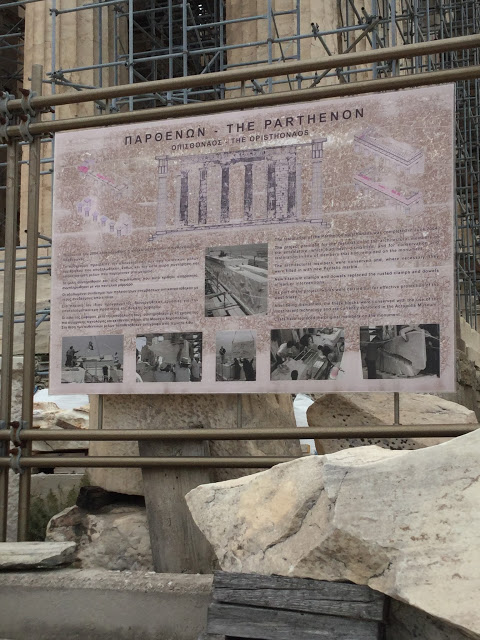
Parthenon was the temple of Goddess Athena in the capital city Athens in Greece.

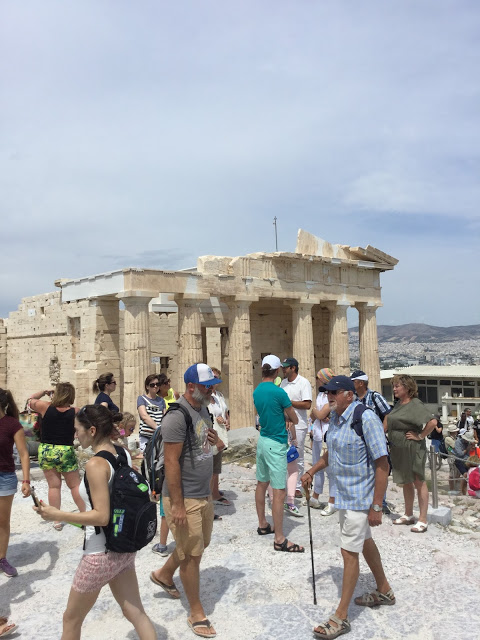
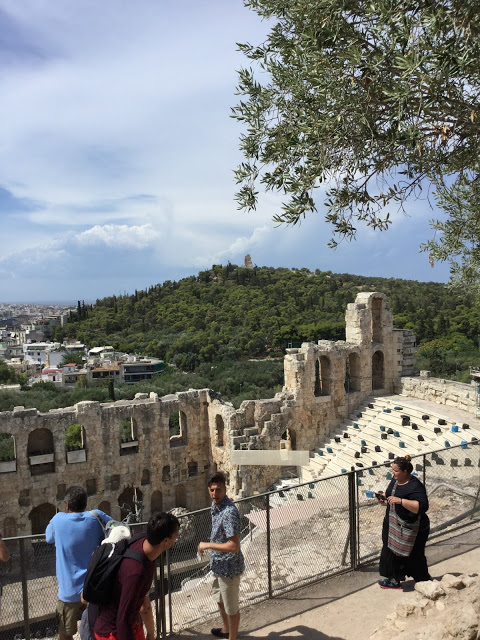
I went to Athens on 27th of July and spent almost a full  day visiting Acropolis, Parthenon and the Acropolis museum. An approved tourist guide approached us ( a group of 11 people0and explained everything in two hours for the price of 100 Euros. This is in addition to the ticket price of 30 Euros per head. As a history student, first I objected to hiring her, the tourist guide. But after listening to her, I said I was happy. she gave the whole history of Greece in two hours. Above all, looking at us she asked whether we were from India. We said we were of Indian origin, but at the moment coming from London, Sydney and New Zealand. The reason she asked us about our origin was that she compared the Goddess River Ganges (ganga devi) with the Goddess Athena. The comparison does not stop there. I will explain it one by one in my article today.


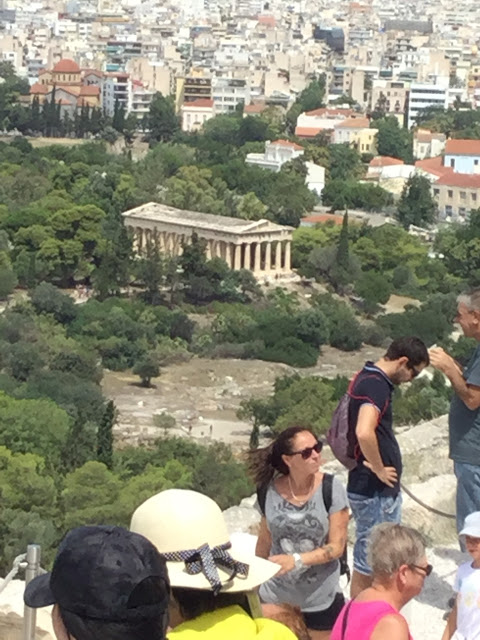
Athens was named after the goddess Athena Parthinos. Naming a city after a goddess is typical Hindu custom. We have the famous Mumbai, Kolkata, Madurai, Kanyakumari and hundreds of towns in India named after Hindu goddesses. Athena Parthenos means Virgin Goddess, i.e. Kanya Kumari.

Raghuvamsa of Kalidasa, Ramayana of Valmiki and Silappadikaram and Manimegalai , the Tamil epics – all these talk about the goddesses of the towns such Lanka Devi, Mathura Devi, Manimeghala, goddess of Ayodhya etc.
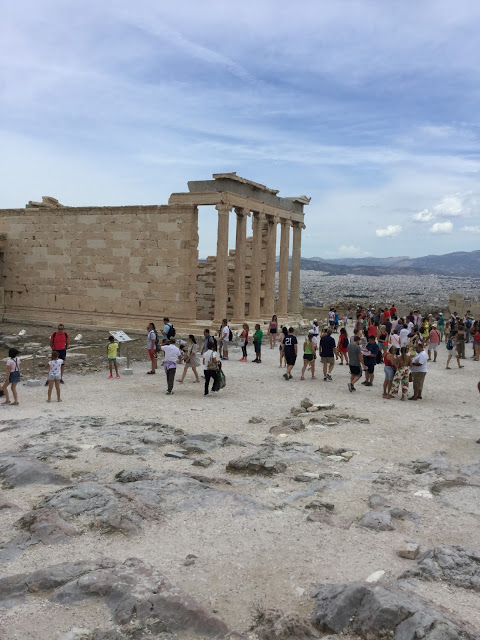
The tourist guide beautifully explained how the Christians and Muslims systematically destroyed the building Parthenon and the wonderful Athena statue inside the Parthenon temple. They converted the building as a church and then a mosque and then arms depot. at one time they torpedoed the statue like Muslim terrorists who bombed the tallest Buddha staue in the Bhamiyan cave of Afghanistan. The Greek tourist guide angrily accused the British for plundering the marbles in the Parthenon temple and placed them in the British Museum in London as Elgin marbles. She blamed that Elgin stole them and why did they call Elgin marbles. She rightly told that it should be called Parthennon marbles or Phydias marbles and should be returned to Greece. Immediately I remembered the British looting of Kohinoor and the Victoria looting Sapphire of Madurai Goddess Meenakshi.

Now let us look at the structure of Parthenon:


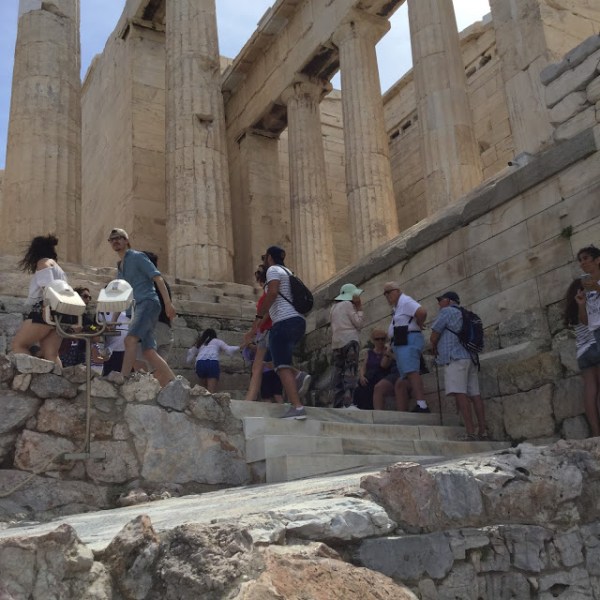
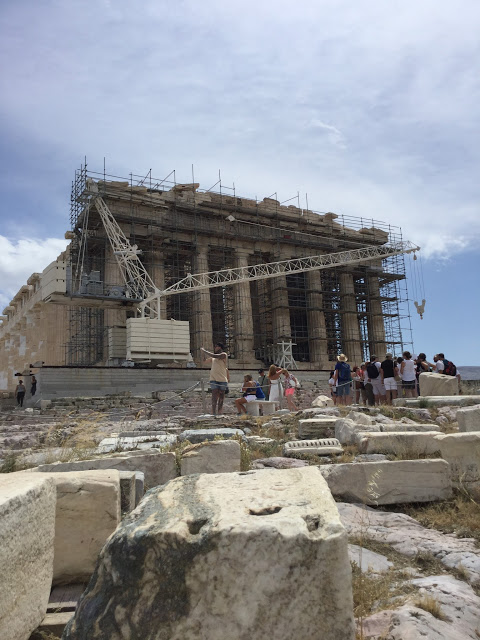
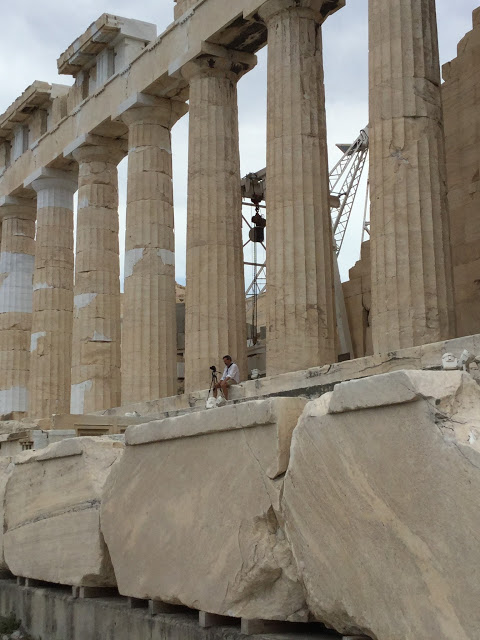
Parthenon was the temple of Athena Parthinos (the Virgin). It was built on top of Acropolis in Athens. Phydia,s the sculpto,r supervised it and the architects Callicractes and Ictinus built it. It had a beautiful statue of Goddess Athena, made up of gold and ivory. It was a tall statue. The rectangular building is the best specimen of Doric style. It has 8 pillars or columns on one side and 13 columns lengthwise. It is called golden ratio.

The tourist guide added some information which I did not find in the encyclopaedias. Proportionately the Parthenon structure is similarto A 4 size paper. So it is a perfect size. Since it is not on a flat surface the lines drawn from the columns will meet at five kilometres above the Parthenon and it will form a pyramid.

It was built between 447 and 438 BCE. But people believe that there was another building before that.


Parthinogensis means birth without a male’s participation. That is virgin birth. We have Draupadi, Sita, Andal, Five Pandava brothers and several others in this category.

I will compare the birth of Athena and the Ganga in the second part. The story of birth of Athena is a symbolic story like the symbolism we find in the Rig Veda and the Brahmanas. It symbolises the dawn of wisdom. I will also explain how Christians and Muslims destroyed the temple. It is also a repeat of what they did in India and Sri Lanka. The Muslim terrorists who destroyed Bhamiyan Buddha and Syrian Palmyra just imitated the Christians and Muslims of Europe. They were the roll models for these terrorists. The full history of destruction is in Wikipedia and other encyclopaedias. I will just tell you what the tourist guide told us.


–to be continued………………….


Sacred Cow in Satapata Brahmana (Post No.4050)

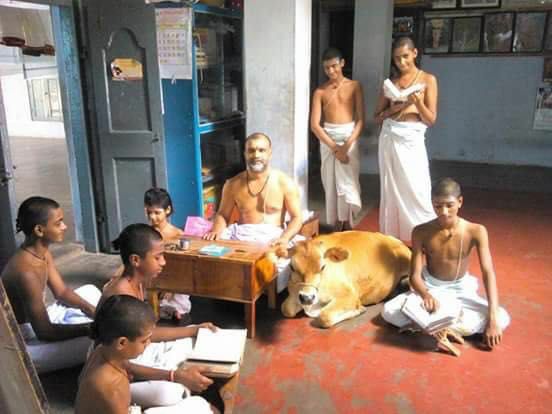
Cow attending Veda class

Written by London Swaminathan
Date: 4 July 2017
Time uploaded in London- 10-41 am
Post No. 4050

 
Pictures shown here are taken from various sources such as Facebook friends, Books, Google and newspapers; thanks.


Satapata Brahmana is one of the Brahmana books of Vedic period. Foreigners date it to 800 BCE to 1000 BCE. Hindus date it to thousands of years before that. Foreigners spread a false story that Hindus adopted vegetarianism only after Mahavira and Gautama Buddha appeared in India. Those stories are exploded by the Satapata Brahmana passage.

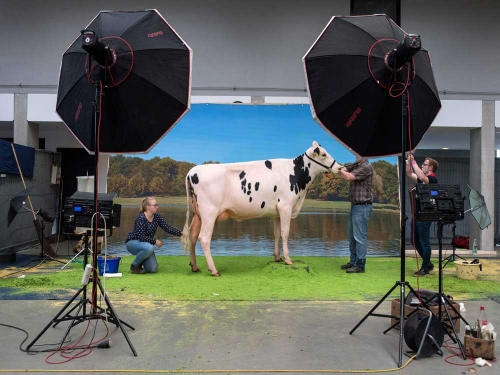
Cow photographed in Oldenburg ,Germany

Through out the Vedas cow and calf are used as the symbol of love and affection between a mother and her child. This is the oft used simile in the oldest portions of the Vedas. That shows that cow was equated to mother. Vaatsalyam is a Sanskrit word coined out of it (Vatsa=calf)


The biggest contribution of the Vedic Hindus to the world civilization are the DECIMAL SYSTEM and the COW’S MILK. In no other world literature, we come across such references or similes as we see in the Vedas. Until today the world has not found an alternative to the Decimal system and the Cow’s milk. These are used everyday. This shows at they are the oldest and highly advanced civilization. These type of concepts can evolve only after thousands of trial and error methods or experiments.

Here are some passages from the famous Satapata Brahmana (3-1-2-3):

“Let him not eat the flesh of either the cow or the ox; for the cow and the ox doubtless support everything on earth. The Gods spake: ‘Verily the cow and the ox support everything here; come let us bestow on the cow and the ox whatever vigour belonged to other species of animals; and, therefore, the cow and ox eat the most. Hence were one to eat the flesh of an ox or cow, there would be, as it were, an eating of everything, or, as it were, a going on to the end. Such a one, indeed, would be likely to be born again as a strange being, as one of whom there is evil report, such as, “He has expelled the embryo from a woman’ He has committed a sin; let him therefore, not eat the flesh of the cow and the ox”.

Most valuable fuel and manure– cow dung

Foreigners are so cunning and divisive that they quote from different sources (very old and the latest) to support their arguments. It may be from the latest books, which they would never mention. But if they see any good things, they will say that they are from the latest books. It was because of…………. They will bluff.


Atharva Veda talks about a huge geographical area from West Bengal to Iran. No ancient civilization had such a sway over a large region. When such things come they will say Atharvana Veda was the latest addition. How latest – no two scholars agree! They try to cramp the development of a huge civilization within a span of 200 to 400 years. It is not possible to any civilization even in the modern period.


Usefulness of the Cows:

Sale of Cow for the Soma plant

In Vedic times barter trade was practised. They exchanged cows for Soma herb. Here is a passage about it:

“He bargains for the King Soma; and, because he bargains for the king, therefore any and everything is vendible. He says,

Soma seller! is your King Soma for sale?

Soma seller: He is for sale

I will buy him from you.

Buy him

I will buy him of you for one sixteenth of the cow;

King Soma is surely worth more than that.

From the cow comes the fresh milk; from the boiled milk boiled milk comes ghee/butter cream, clotted curds, whey etc.

Soma seller: King Soma is worth more than that; but surely is the greatness of the cow

Adhvaryu Priest:-

Gold is yours;  a cloth is yours;  a milch cow, a pair of kine,  three other cows are thine.


They buy the Soma plant for a cow and then the cow is also taken back.

This type of conversation shows the importance of cow and they are shown as equal to mother and Soma plant.

Foreigners quote certain passages to show that a cow was sacrificed in the yaga; but there are also it is explained that a cow made up of dough or flour is sacrificed.


The very concept of sacrifice is uniquely Hindu. It shows that all you desire, all that you want, all you consider valuable are not yours—Idam Na Mama – it is not mine.


from this ritual ‘Idam na mama’ they take humans to a higher stage i.e. everything thing belongs to God – Isavaasyam Idam sarvam i.e.

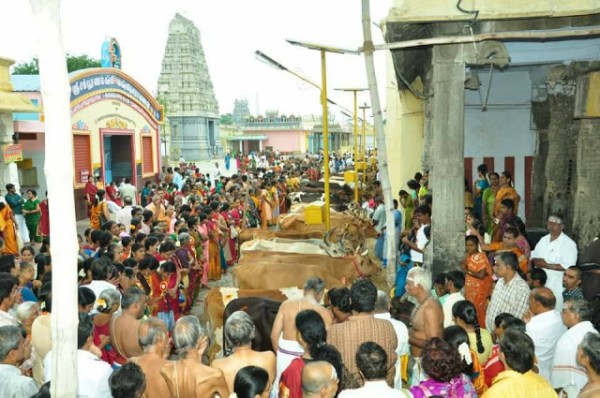
Cow Puja at Kanchipuram

MANTRA ONE of Isavasya Upanishad


isavasyam idam sarvam

yat kinca jagatyam jagat

tena tyaktena bhunjitha

ma grdhah kasya svid dhanam


isa–by the Lord; avasyam–controlled; idam–this; sarvam–all; yat kinca— whatever; jagatyam–within the universe; jagat–all that is animate or inanimate; tena–by Him; tyaktena–set-apart quota; bhunjithah–you should accept; ma–do not; grdhah–endeavor to gain; kasya svit–of anyone else; dhanam–the wealth.


TRANSLATION


Everything animate or inanimate that is within the universe is controlled and owned by the Lord. One should therefore accept only those things necessary for himself, which are set aside as his quota, and one should not accept other things, knowing well to whom they belong. 


(This is the favourite hymn of Mahatma Gandhi)


–subham–