Debt and Credit Anecdotes (Post NO.2870)

credit-debt-200x300

Compiled by London swaminathan


Date: 5 June 2016


Post No. 2870


Time uploaded in London :–  10-47 AM


( Thanks for the Pictures)


DON’T REBLOG IT AT LEAST FOR A WEEK!  DON’T USE THE PICTURES; THEY ARE COPYRIGHTED BY SOMEONE.


(for old articles go to tamilandvedas.com OR swamiindology.blogspot.com)


Contact swami_48@yahoo.com

 

bad-credit-debt-consolidation-loans-23

1.Boy and the Revenue Officer

Those who believe in strictly cash business have as their shining example the small son of a mountaineer, who was accosted by a revenuer.

“Where is your pappy?”, asked the officer.

“Pappy is up at the still”.

“Where is your mother?”

“She is up at the still too”.

“I will give you a dollar”, said the officer,” if you will take me up there”.

“All right”, said the boy, “give me the dollar”.

“I will give it to you when we get back”, said the officer.

“No sir, mister, give it to me now”, insisted the boy. “You aren’t coming back “.


Xxx

Credit-Loans-Debt

2.Right Time to return your Loan!

The train came to a sudden stop. People started to look out of the window and then, hurriedly dropped back into their seats as they saw that the cause of the stop was a hold up.

The robbers came through the train ruthlessly stripping the money, jewels and valuables from the passengers.

One man seemed to become more and more nervous as the bandits approached the seat where he sat with his friend. Finally drawing a ten dollar bill from his pocket he leaned toward his friend and said, “Here Jerry. Here is ten dollars I owe you”.

Xxx

3.Who will have sleepless nights?

Charles Fox, the English statesman, once received a severe reprehension from his father who asked him how it was possible for him to sleep, or enjoy any of the comforts of life, when he thought about the immense sums he owed.

“Your lordship need not be in the least surprised”, answered Charles

“Your astonishment ought to be how my creditors can sleep”.


Xxx

4.Interest

Richard Brinsley Sheridan, the playwright, wit and spendthrift, being dunned by a tailor to pay at least the interest on his bill, answered

“It is not my interest to pay the principal, nor my principle to pay the interest”.


Xxx

we are closing


5.Collection Technique!

A new technique of collection was practised by the man who called up his debtor and demanded payment of a long outstanding account.

I can’t give it to you now, was the answer, as usual.

Give it to me now, replied his ingenious creditor, or I will tell all your other creditors you have paid me.


Xxx

6.Closing down threat!

A Canadian butcher, many of whose customers’ accounts were in bad standing, put a sign in his window

This business will soon close because of bad debts. Names and amounts will be posted here.

The business is now thriving.

Xxxx

7.Benjamin Franklin’s Advice

Benjamin Franklin, noted for so many different things, was also known as one of the best money raisers of his generation. He set forth his principles on this subject thus

First, call upon those whom you know will give something .

Next apply to those you are uncertain whether they will give or not, and finally to those you are sure will give nothing, for in some of these you may be mistaken.

Xxx Subham xxx


Kohinoor Diamond: Interesting Anecdote by Hallam Murray (Post No.2864)

diamond_3518629b

Compiled by London swaminathan


Date: 3 June 2016


Post No. 2864


Time uploaded in London :–  6-12 AM


( Thanks for the Pictures)


DON’T REBLOG IT AT LEAST FOR A WEEK!  DON’T USE THE PICTURES; THEY ARE COPYRIGHTED BY SOMEONE.


(for old articles go to tamilandvedas.com OR swamiindology.blogspot.com)


Contact swami_48@yahoo.com


From the book “The High Road of Empire” by A H Hallam Murray, year 1905, London

kohinoor

“When the kingdom of Ranjit Singh came into possession of the British at the end of the Sikh War (1849) the (Lahore) district was taken by the East India Company from Maharajah Dhuleep Sing, and with it came into their possession the famous diamond Kohinoor. After the murder of Nadir Shah in 1739 this historic stone had passed through many vicissitudes, and came at last, in a much mutilated condition – as the price of the liberty of Shah Soojah, its blind and decrepit royal owner – into the hands of Ranjit Sing. He left on his death bed instructions that it was to be sent to Jagannath, but his son retained it, amongst his treasures, until the day when it was personally entrusted to Lord Lawrence for transmission to the Queen.


One of the quaintest of its many adventures then followed. Lord Lawrence placed the small box, in its cotton wrappings, that contained it, in his waistcoat pocket, and promptly forgot all about it until six weeks later, he was called upon to send it home. Then the circumstances flashed across his mind, and with much anxiety he hastily summoned his bearer, and inquired whether he recollected the box being in his pocket sometime before. The servant had found it, and, with the care of a good native servant, though he thought it contained only a worthless glass, had luckily put it carefully away in a battered tin box, and, to Lord Lawrence’s great relief, was able to produce it at once”.


–Subham–


Five Wealth Anecdotes (Post No.2863)

dollars

Compiled by London swaminathan


Date: 2 June 2016


Post No. 2863


Time uploaded in London :–  13-43


( Thanks for the Pictures)


DON’T REBLOG IT AT LEAST FOR A WEEK!  DON’T USE THE PICTURES; THEY ARE COPYRIGHTED BY SOMEONE.


(for old articles go to tamilandvedas.com OR swamiindology.blogspot.com)


Contact swami_48@yahoo.com


1.Rabbi and the Miser

One day a rich but miserly orthodox Jew came to a Rabbi. The Rabbi led him to the window.

“Look out there”, he said, “and tell me what you see”.

“People”, answered the rich man.

Then the Rabbi led him to a mirror.

“What do you see now?” he asked.

“I see myself”, answered the Jew.

Then the Rabbi said, “Behold, in the window there is glass and in the mirror there’s glass. But the glass of the mirror is covered with a little silver, and no sooner is a little silver added then you cease to see others and see only yourself.

Xxx

edison

2.Edison hated big money!

For a certain invention the Western Union Company offered Thomas Edison one hundred thousand dollars. He couldn’t grasp the idea of such a sum, and wouldn’t take the money.

“Safer with you”, he said.

“Give me six thousand dollars a year for seventeen years”.


Xxx

3.Nine and Six is 14!

Julius Rosanwald, the Chicago multi-millionaire, who once said,

“I never could understand the popular belief that because a man makes a lot of money he has a lot of brains”, was fond of telling this story

“A certain man won a million dollars on number 14.

When asked how he had figured it out, he said,

“I had a dream. One night I saw in my dream a great big 9, and next I saw a 6, so I used my brains and figured that nine and six is 14.

Xxx

4.Where is the nobility?

Dr Johnson, being asked by a young noble man what had become of the gallantry and military spirit of the old English nobility, replied,

“Why, my lord, I will tell you what has become of it. It has gone into the city to look after a fortune”.


Xxx

lincoln dollar

5.Lincoln’s Story of an Illinois Man

Certain government officials approached President Lincoln with the request that they be given control over funds now in the hands of other branches of the governmental setup.

Lincoln answered them with the following story,

“You are very much like a man in Illinois whose cabin was burned down, and, according to the kindly custom of early days in the West, his neighbours all contributed something to start him again. In his case they had been so liberal that he soon found himself better off than before the fire, and got proud.

One day a neighbour brought him a bag of oats, but the fellow refused it with scorn, and said, “I am not talking oats now, I take nothing but money.

–Subham–


Chinese and Indian Parables of the Turtles and Frogs (Post No.2854)

turtle-03

Compiled by london swaminathan


Date: 30 May 2016


Post No. 2854


Time uploaded in London :– 9-43 AM


(Thanks for the Pictures)


DON’T REBLOG IT AT LEAST FOR A WEEK!  DON’T USE THE PICTURES; THEY ARE COPYRIGHTED BY SOMEONE.


(for old articles go to tamilandvedas.com OR swamiindology.blogspot.com)


Contact : swami_48@yahoo.com


The philosopher Chuang Tzu was fishing on the bank of a river when a messenger appeared with an invitation form the king of Ch’u offering him the post of prime minister.

Without taking his eyes from the river, the philosopher replied,

“They say that the King has in his treasury a shell of a supernatural tortoise. If the tortoise had been allowed to choose, would it have preferred to adorn a king’s treasury or to continue to wag its tail in the mud of its native marsh?”

“It would have preferred to remain wagging its tail in the mud”, said the messenger.

“And I, too”, answered Chuang Tzu, “Prefer to live obscure but free. To be in the office often costs a man his life and always costs his peace of mind. Go back to the king and say that I will continue to wag my tail in the mud”.

XXX


turtle frog, croc

Tuttle and Frog on the back of a Crocodile


The Frog and the Turtle


A certain frog lived in an abandoned well.

“How you must envy my delightful existence!”, he said to a Giant Turtle of the Eastern Sea. “When I go into the water I can make it hold me up under the armpits and support my chin; when I jump into the mud, I can make it bury my feet and cover my ankles.  As for the baby crabs and tadpoles, none of them can compete with me………..To have at one’s command all the delights of a disused well, that surely is the most that life can give.”


The Giant Turtle tried to get into the well, but before his left foot was well in, the right got wedged fast. So he wriggled free and retired, saying, “As you have been kind enough to tell me about your well, allow me to tell you about the sea. Imagine a distance of a 1000 leagues, and you will still have no idea of its size; imagine a height of a thousand times man’s stature, and you will still have no notion of its depth. Not to be harried by the moments that flash by nor changed by the ages of the pass; to receive much, yet not increase, to receive little, yet not to diminish; this is the Great Joy of the Eastern Sea.”

—-Chuang Tzu (China)


Compare it with the Frog in the Well story of Swami Vivekananda’s Chicago Address at the Parliament of Religions.


Why We Disagree: Swami Vivekananda (from my post  ‘The Blind men and the Elephant: known Story, Unknown Facts’ (posted on 14 March 2014)

Swami Vivekananda expressed the somewhat a similar theme through his story Frog in the Well in the very second lecture in Chicago about 125 years ago:

I will tell you a little story. You have heard the eloquent speaker who has just finished say, “Let us cease from abusing each other,” and he was very sorry that there should be always so much variance.

But I think I should tell you a story that would illustrate the cause of this variance. A frog lived in a well. It had lived there for a long time. It was born there and brought up there, and yet was a little, small frog. Of course the evolutionists were not there then to tell us whether the frog lost its eyes or not but, for our story’s sake, we must take it for granted that it had its eyes, and that it every day cleansed the water of all the worms and bacilli that lived in it with an energy that would do credit to our modern bacteriologists. In this way it went on and became a little sleek and fat. Well, one day another frog that lived in the sea came and fell into the well.

“Where are you from?”

“I am from the sea.”

“The sea! How big is that? Is it as big as my well?” and he took a leap from one side of the well to the other.

“My friend,” said the frog of the sea, “how do you compare the sea with your little well?”

Then the frog took another leap and asked, “Is your sea so big?”

“What nonsense you speak, to compare the sea with your well!”

“Well, then,” said the frog of the well, “nothing can be bigger than my well. There can be nothing bigger than this. This fellow is a liar, so turn him out

XXX

Green Sea Turtle. Chelonia mydas. Maui, Hawaii, USA.

Green Sea Turtle. Chelonia mydas. Maui, Hawaii, USA.

Appar’s Turtle Story!

Appar, Tamil Saint of seventh century, saw another scene along his travel route. In a village he saw people boiling turtle for their food. It was a big vessel with cool water. The turtle is swimming happily, but below the vessel firewood is just lighted. The flames are growing bigger and bigger. The happily swimming turtle is going to be boiled and eaten in an hour. Stupid turtle does not know the danger to its life and enjoyed the momentary pleasure. Such is our impermanent life, he says.


My previous posts:–

Frog in the mouth of a snake (posted on 9 March 2014)

In Tamil

கிணற்றுத் தவளை: அப்பரும் விவேகாநந்தரும் சொன்ன கதைகள் (9 மார்ச் 2014)


–Subham–

Animals in Buddha’s Dhammapada (Post No 2851)

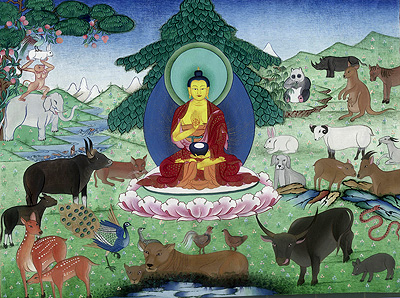
animals1.jpgbuddha

Research Article written by london swaminathan


Date: 28 May 2016


Post No. 2851


Time uploaded in London :– 11-25 AM


(Thanks for the Pictures)


DON’T REBLOG IT AT LEAST FOR A WEEK!  DON’T USE THE PICTURES; THEY ARE COPYRIGHTED BY SOMEONE.


(for old articles go to tamilandvedas.com OR swamiindology.blogspot.com)


Contact : swami_48@yahoo.com


Ancient Rishis (saints) used animals and birds as similes from the Vedic days to teach their disciples. I have never seen so many animals used by the Hindu saints in any other religious literature. Though we see animal similes in many scriptures and literatures around the world, the number of similes are more in Sanskrit and Tamil writings. Our forefathers have observed the birds and animals closely and used them to teach higher values to their followers. I have dealt with them in at least 50 articles in my blog.

Buddha also used animals to teach his followers. There are many books where Buddha refers to them and but in the Dhammapada, the Veda of the Buddhists, there are not many. Let us look at them:–

Bees

As the bee takes the essence of a flower and flies away without destroying its beauty and perfume, so let the sage wander in this life (verse 49).

Fish

Like fish which is thrown on dry land, taken from his home in waters, the mind strives and struggles to get free from the power of death (verse 34).

Birds

Who can trace the invisible path of the man who soars in the sky of liberation, the infinite void without beginning, whose passions are peace, and over whom pleasures have no power? His path is difficult to trace as  that of the birds in the air (verse 93).

swan-8

Swan

Those who have high thoughts are ever striving; they are not happy to remain in the same place. Like swans that leave their lake and rise into the air, they leave their home for a higher home (verse 91).

Swans follow the path of the sun by the miracle of flying through the air. Men who are strong conquer evil and its armies; and then they arise far above the world (verse 175).

Horse

The men who wisely controls his senses as a good driver controls his horses and who is free from lower passions and pride, is admired even by the gods (verse 4).

Have fire like a noble horse touched by the whip. By faith, by virtues and energy, by deep contemplation and vision, by wisdom and by right action, you shall overcome the sorrows of life (verse 144)


Ox

If a man tries not to learn he grows old just like an ox. His body indeed grows old but his wisdom does not grow (verse 152).

Elephant

I will endure words that hurt in silent peace as the strong elephant endures in battle arrows sent by the bow, for many people lack self-control (verse 320).

They take trained elephants to battle, and kings ride on royal trained elephants. The best of men are self- trained men, those who can endure abuse in peace (verse 321).

The great elephant called Dhana-palaka is hard to control when in rut, and he will not eat his food when captive, for he remembers the elephant grove (verse 324).

In the days gone by this mind of mine used to stray wherever selfish desire or lust or pleasure would lead it. Today this mind does not stray and is under the harmony of control, even as a wild elephant is controlled by the trainer (verse 326).

Mules

Mules when trained are good, and so noble horses of Sindh. Strong elephants when trained are good; but the best is the man who trains himself (verse 322).

Pig

The man who is lazy and a glutton, who eats large meals and rolls in sleep, who is like a pig which is fed in the sty, this, this fool is reborn to a life of death (verse 325).

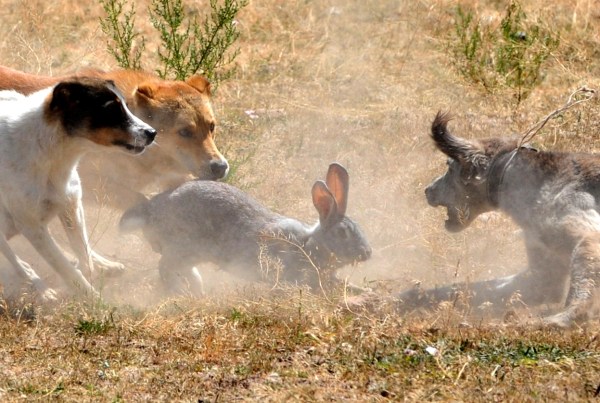
hare hunting

Hare

Men who are pursued by lust run around like a hunted hare. Held in fetters and in bonds they suffer and suffer again (verse 342).

Antelope

Of what use is your tangled hair, foolish man, of what use your antelope garment, if within you have tangled cravings, and without ascetic ornaments? (verse 394).

In addition to birds and animals, Buddha used objects from plant kingdom as well.

–subham—


buddha elephant

My Previous Research Articles:–

The connection between William Wordsworth and Dattareya (10 November 2011)

13 Saints in Nature (7 November 2013)

Four Birds in One Sloka of Adi Shankara (9 July 2012)

Kapinjala Bird Mystery in Rig Veda ( 23 May 2014)

Strange Bird in Mahabharata- Bhulinga Bird (29 June 2014)

Strange Bird Stories in Mahabharata (12 March 2015)

Ode to Skylark: Shelley, Kalidasa and Vedic Poet Grtsamada

Bird Migration in Kalidasa and Tamil Literature ( 5 February 2012)

Dogs at Sringeri and Kanchi Mutts ( 19 August 2013)

Snake and snake Bites in Mahabharata (10 March 2015)

Animals in the Bhagavad Gita ( 8 July 2015)

Alexander’s Dog and Horse (24 November 2014)

Businessman- born as cow, dog and snake before got liberated (26 December 2015)


For other Animal stories and animal miracles, please read my earlier posts:

1.Animal Einsteins (Part 1 and Part 2) 2. Can parrots recite Vedas? 3. Why do animals worship Gods? 4. Mysterious Messengers for Ajanta, Angkor Wat and Sringeri 5. Elephant Miracles 6). 45 Words for Elephant 7. Can Birds Predict your Future? 8. Two Little Animals That Inspired Indians 9. Three Wise Monkeys from India 10. Mysterious Tamil Bird Man 11.Vedic Dog and Church Dog 11. Deer Chariot:  Rig Veda to Santa Claus 12. Mysterious Fish Gods around the World 13.  Serpent  (Snake) Queen: Indus Valley to Sabarimalai 14.Who Rides What Vahanas (Animal or Bird)? 15. Vahanas in Kalidasa and Tamil Literature 16. Vahanas on coins and in sculptures 17. Gajendra Moksha in Africa 18. The Tortoise Mystery: Can We live for 300 years? 18.Gods and Birds 19.வேத நாயும் மாதா கோவில் நாயும் 20.கழுதைக்குத் தெரியுமா கற்பூர வாசனை 21.Bird Migration in Kalidasa and Tamil Lterature 22.Double Headed Eagle: Sumerian- Indian Connection 23.Karikal Choza and Eagle Shaped Fire Altar 24.Four Birds in One Sloka 25.Hindu Eagle Mystery Deepens 26.Multi lingual parrot mimics Hindi, Arabic and English Word 27.Indian Crow by Mark Twain 28.அதிசய பறவைத் தமிழன்


No Bees no Honey, No Work no Money (Post No.2848)

honey-bee-640x517

Article written by london swaminathan


Date: 28 May 2016


Post No. 2848


Time uploaded in London :– 17-37


(Thanks for the Pictures)


DON’T REBLOG IT AT LEAST FOR A WEEK!  DON’T USE THE PICTURES; THEY ARE COPYRIGHTED BY SOMEONE.


(for old articles go to tamilandvedas.com OR swamiindology.blogspot.com)


Contact ; swami_48@yahoo.com

ANIMAL PROVERBS;WHAT DO THEY TEACH US?

Proverbs are telescopic and kaleidoscopic; you can extend and expand the meaning; you can make it colourful and meaningful by interpreting them. The words are flexy and the meaning can be bent according to your needs. Our forefathers summarised their accumulated wisdom in pithy sayings. They observed nature closely and used them to teach us their discovery of truths. Here are some proverbs which use animals and birds to teach us something.

A for ant

The ant had wings to her hurt ( a warning against aspiring  to higher positions than one is equipped to cope with)

A for an ass

Better ride an ass that carries me than a horse that throws me

ass

A for an ape

An ape is an ape, a varlet’s a varlet, though they be clad in silk or scarlet

B for bear

Call the bear ‘uncle’ till you are safe across the bridge (Turkish proverb)

B for bee

The bee sucks honey out of the bitterest flowers

C for cat

A cat in gloves catches no mice (warning against over cautiousness)

D for donkey

Send a donkey to Paris, he will return no wiser than he went.

E for elephant

An elephant is worth 1000 gold coins whether it is alive or dead (Tamil Proverb)

Big-Elephant

F for fox

A fox should not be of the jury at a goose’s trial

G for goat

The goat must browse where it is tied

H for hare

The hare always returns to her form

I for Insect

Neither the insect nor the worm dies (Tamil proverb)

J for jackdaw

Jackdaw always perches by jackdaw

K for Kingfisher

The grasshopper flies about, but the kingfisher watches him (Samoan Proverb)

L for lamb

Lamb on the shoulder, looking for it in the forest (Tamil proverb)

monkey-images-14

M for Monkey

What will happen if a drunken monkey is stung by a scorpion and possessed by a ghost? (Tamil Proverb)

N for nightingale

Everybody thinks that his own cuckoo sings better than another’s nightingale (German proverb


O for ox

An ox is taken by the horns and a man by his word

P for peacock

The peacock has fair feathers, but foul feet.


Peacocks in Pak 2.jpg

Q for quail

The parrot utters one cry and the quail another

The quail waits for the stick, the idle loiterer about a place waits for a kick from an old boot.

R for rats

Rats desert a sinking ship

S for snail

When black snails on the road you see, then on the morrow rain will be

T for tiger

If you do not enter tiger’s den, you cannot get his cubs (Chinese proverb)

U for (M)ule

He who wants a mule without fault must walk on foot

V for vulture

No matter how hungry the vulture, it will never eat grass (African Proverb)

W for wolf

A thief knows a thief as a wolf knows a wolf

X for fox

Old foxes want no tutors

zebra

Y for yak

Don’t notice the tiny flea in the other person’s hair and overlook the lumbering yak on your own nose- Tibetan Proverb

Z for zebra

When you shoot a zebra in the black stripe, white dies too (South African Proverb)


–Subham–

A Good Face is a Letter of Recommendation (Post No.2841)

kalai3

June, 2016 Good Thoughts Calendar

Compiled by london swaminathan


Date: 26 May 2016


Post No. 2841


Time uploaded in London :– 10-08 AM


( Thanks for the Pictures)


DON’T REBLOG IT AT LEAST FOR A WEEK!  DON’T USE THE PICTURES; THEY ARE COPYRIGHTED BY SOMEONE.


(for old articles go to tamilandvedas.com OR swamiindology.blogspot.com)


30 beautiful Quotations on BEAUTY


Auspicious Days: 8, 9, 16, 23, 26

Full Moon/Purnima-  20

New Moon/Amavasya- 5

Ekadasi Fasting Days: 1, 16


IMG_4532

June 1 Wednesday

The very sight of the charming arouses one’s respect – Brhat katha kosa

June 2 Thursday

Beauty opens locked doors!

June 3 Friday

Beauty draws more than oxen

June 4 Saturday

What does not lend charm to a sweet beautiful form ?-Kalidasa’s Sakuntalam, 1-18

June 5 Sunday

Beauty is eloquent even when silent.


IMG_4530

June 6 Monday

Beauty needs no artificial adornments – Kiratarjuniya 4-23

June 7 Tuesday

A fair face s half a portion.

June 8 Wednesday

Novelty every moment is the characteristic of beauty – Sisupalavadam,4-17

June 9 Thursday

No one can live on beauty, but they can die for it.

June 10 Friday

A lotus looks radiant not only on account of the swarming bees, but also due to the surrounding water weeds –  Kalidasa’s Kumara Sambhava, 5-9


IMG_4875 (2)


June 11 Saturday

A poor beauty finds more lovers than husbands.

June 12 Sunday

Beauty and good nature co exist –Mrcha katika of Sudraka

June 13 Monday

Beauty is potent but money is omnipotent

June 14 Tuesday

Goodness is better than beauty.

June 15 Wednesday

Who is not enthralled by beauty? –Kahvatratnakar

June 16 Thursday

Handsome is as handsome does.

June 17 Friday

The naturally beautiful need no embellishment –Drstaantasataka

June 18 Saturday

Beauty is in the eye of the beholder.

June 19 Sunday

What one most likes looks beautiful to him –Hitopadesa 2-53

June 20 Monday

A thing of Beauty is joy for ever – John Keats


பெண்ணா, பறவையா

June 21 Tuesday

If jack is in love, he is no judge of Jill’s Beauty.

The lady wooed by a man appears most beautiful to him –Brhat Katha Manjari

June 22 Wednesday

Health and wealth create Beauty.

June 23 Thursday

Beauty engenders charm on all occasions – Kalidasa’s  Malavika Agnimitram

June 24 Friday

Beauty’s sister is vanity, and its daughter lust.

June 25 Saturday

Those endowed with beauty are charming in all circumstances – Kalidasa’s Sakuntalam

IMG_4413 (2)

June 26 Sunday

Beauty may have fair leaves, yet bitter fruits.

June 27 Monday

Beauty wont make the pot boil

June 28 Tuesday

Beauty fades like a flower

The fairest flowers soonest fade

June 29 Wednesday

The peacock has fair feathers, but foul feet

June 30 Thursday

Less eating enhances the beauty of women (Tamil saying: Pendirku Azaku Undi Surukkuthal)

tamil-kili

–subham–


Conquer Evil Doers by Saintliness, Anger by peacefulness (Post No. 2839)

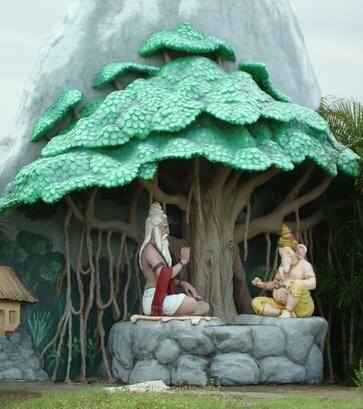
vyasa,ganesa,sivaraman

Article written by London swaminathan


Date: 25 May 2016


Post No. 2839


Time uploaded in London :–  16-35


( Thanks for the Pictures)


DON’T REBLOG IT AT LEAST FOR A WEEK!  DON’T USE THE PICTURES; THEY ARE COPYRIGHTED BY SOMEONE.


(for old articles go to tamilandvedas.com OR swamiindology.blogspot.com)

 vyasa 2

There is a beautiful sloka/couplet in the Mahabharata:


Akrodhena jayet krodham, asaadhum saadhunaa jayet

Jayet kadaryam daanena, jayet satyena caanrutam


Meaning:-

Conquer the anger of others by non-anger

Conquer evildoers by saintliness,

Conquer the miser by gifts

Conquer falsehood by truth

-Udhyogaparva, 38-73,74


It is interesting to compare it with what the Budhha said:-

Overcome anger by peacefulness

Overcome evil by good

Overcome the mean by generosity

And the man who lies by truth

–Dhammapada 223

buddha tree upades

Buddha came approximately 2500 years after Vyasa, the author of Mahabharata.


Now Tiruvalluvar who came 2500 years after the Buddha says


“Where is the superiority of the worthy man, if he does not choose to make,

A good turn even to those who do him wrong”

-Tirukkural 987


The idea of forgiving, forgetting and doing good in return, had been developing among philosophers, prophets and great men of the world over centuries. Noble characters forget injuries; base ones forget benefits.


Lao Tse of China said, “requite injury with kindness” which is very different from the law of Hammurabi, based on, “eye for an eye and tooth for a tooth”.


The bible says , “whoever strikes thee on the right cheek,

Turn to him the other also”.

-Mathews 5,39


The best way to punish those who harm you is to make them feel abashed by doing them good and thinking no more of it.

-Tirukkural 314


That is, the best punishment for those who do evil to you, is to shame them by returning good for evil.


Dr S M Diaz in his commentary says,


“I am reminded of JR Lowell’s poem ‘Youssouf’ in which the great and generous sheik of the desert avenged the killing of his first born son by speeding the murderer to safety with enough gold and a speed horse. In his heart

Youssouf’ felt that in doing thus he was acting ‘as one lamp lights another, nor grows less, so nobleness enkindleth nobleness’.


Youssouf’s conduct in this connection went one step ahead of just forgiveness. It is n line with Seneca’s view  that ‘the mark of true greatness is not to notice that you have received a blow’ –that a wrong has been done to you”.


–subham–

Two Types of Mind -Pure Mind and Impure Mind (Post No.2836)

good_and_bad

Article written by London swaminathan


Date: 24 May 2016


Post No. 2836


Time uploaded in London :–  18-05


( Thanks for the Pictures)


DON’T REBLOG IT AT LEAST FOR A WEEK!  DON’T USE THE PICTURES; THEY ARE COPYRIGHTED BY SOMEONE.


(for old articles go to tamilandvedas.com OR swamiindology.blogspot.com)


There  is a beautiful sloka/couplet in Sanskrit explaining what is pure and what is impure:-

Mano hi dwividham proktam sudhdham chaasudhdhameva ca

Asudhdham kaamasanalpam sudhdham kaamavivarjitam

–Amruta bindu Upanishad

One who has too many desires in mind is impure; those who are without desires are pure.

Very simple couplet with a grand message.

Most of us are trying to fulfil one desire and immediately another desire follows it. It is an endless process.

Our ancient saints compared fulfilling desires to trying to extinguish fire with ghee. The more butter you pour into the sacrificial fire the more it glows. The more you try to fulfil one desire the more desires crop up.

Hindus from Kanyakumari to Kashmir thought the same way about the desires. Great Tamil poet Tiruvalluvar says in his Tirukkural:-

Purity consists in the freedom from all desires,

Which comes from the relentless pursuit of truth (Kural 364)

With the pursuit of truth comes absence of desire which leads to purity and also ultimate release.

Good Choice, Bad Choice Road Sign with blue sky and clouds.

Socrates Anecdote

Elaborating on this couplet SM Diaz says in his commentary:

“Valluvar emphasises the importance of the pursuit of Truth, just as much as Socrates, Plato and Aristotle. If the desire for the truth is strong enough, according to Valluvar, the renunciation of all worldly desires comes easy.


One recollects in this connection the famous incident of the young man who asked Socrates, ‘What is truth and how to find it’, and of how the great sage pushed his head into a tub of water, till the youth struggled for breath with great effort and got himself released. Then Socrates told him, ‘when your need to find out the truth is as much as your need for air as just now, you will find it out soon enough.’


The Bhagavad-Gita lists out Purity of heart and Truth as two of the attributes of the Divine State in slokas one and two of Chapter 16.


Buddha also said ‘the root cause of all evil is desire’. There is a beautiful couplet in the Dhammapada:-

“Cut down the forest of desires, not only a tree; for danger is in the forest. If you cut down the forest and its undergrowth, then Bikkhus, you will be free on the path of freedom.”


English and Sanskrit proverbs also emphasise this:
Desire has no rest.

Humble hearts have humble desires.

He that desires but little has no need of much.


Following are the Sanskrit proverbs:


Aasaa dukhasya kaaranam

Desire invites misery.


Aasaavadhim ko gatah

Has anyone seen the shores of desire?


Kaalah kriidati, gachchat aayus tadapi  na muncat yaasaavaayuh – mohamudgara

Time teases, age advances, yet the grip of desire loosens not.


In Tamil they say that “the moustache has become grey, but the desire never greys/ages”

The meaning is ‘desire does not diminish though the body withers’.


So one must learn to be content with what one has. That is the first step to get rid of evil desires. Then one can reach the desire less state.


–subham—

மனது இரண்டு வகைப்படும்! (Post No.2835)

Abstract Businessman has a Moral Dilemma.

Article written by London swaminathan


Date: 24 May 2016


Post No. 2835


Time uploaded in London :–  9-08 AM


( Thanks for the Pictures)


DON’T REBLOG IT AT LEAST FOR A WEEK!  DON’T USE THE PICTURES; THEY ARE COPYRIGHTED BY SOMEONE.


(for old articles go to tamilandvedas.com OR swamiindology.blogspot.com)


good_and_bad

மனோ ஹி த்விவிதம் ப்ரோக்தம் சுத்தம் சாசுத்தமேவ

அசுத்தம் காமசங்கல்பம் சுத்தம் காமவிவர்ஜிதம்

–அம்ருதபிந்து உபநிஷத்

மனது இரண்டு வகையானது; ஆசைகள் நிறைந்திருந்தால் அது அசுத்தமானது; அதாவது எபோதும் ஏதாவது ஒன்றின் மீது விருப்பம் கொண்டு அதையே நாடித் தேடி ஆடி ஓடி காலம் கழிப்பது. ஆசைகளை அறவே ஒழித்தால் அது சுத்தமானது; இதற்கு நம் நாட்டு சாது சந்யாசிகள், முனிவர்கள், மகான்கள் எடுத்துக் காட்டு. அவர்கள் ஆசையை அறவே ஒழித்து, பேரின்பத்தில் வாழ்ந்தார்கள்.

இதே கருத்தை வள்ளுவனும் இயம்புவதைப் படித்து இன்புறலாம்:–

தூஉய்மை என்பது அவாவின்மை மற்றது

வாய்மை வேண்ட வரும் (குறள் 364)

பொருள்: தூய்மை எனப்படுவது எந்தப் பொருளிடத்தும் ஆசை கொள்ளாதிருத்தல்; அந்த நிலை வாய்மையை நாடுவோருக்கு தானாக வந்து சேரும்.


ஆசையே துன்பத்திற்குக் காரணம் – என்பது புத்தர் பிரானின் முக்கியப் பொன்மொழி.

“ஆசை என்னும் காட்டை அழியுங்கள்; ஒரு மரத்தை மட்டுமல்ல.ஏனெனில் அந்தக் காட்டில்தான் அபாயமே உள்ளது. அந்தக் காட்டிலுள்ள மரங்களை வெட்டி, அதன் கீழ் வளர்ந்துள்ள புதர்களையும் அழியுங்கள். பிக்ஷுக்களே! அப்படிச் செய்வீர்களானால் நீங்கள் விடுதலை (நிர்வாண) பெறுவீர்கள்”.

–தம்மபதம் 283


ஆங்கிலத்திலும் ‘ஆசை உள்ளவனுக்கு அமைதி இல்லை’, ‘உயர்ந்த மனிதர்கள் உன்னத ஆசை கொள்வர்’ என்றெல்லாம் பழமொழிகள் உண்டு

Desire has no rest

Humble hearts have humble desires

He that desires but little has no need of much.

Good Choice, Bad Choice Road Sign with blue sky and clouds.

இந்து மதத்தில் ரிஷிகள் அழகான ஒரு உவமை சொல்லுவர்:–

“ஆசைக்கு அணை போடமுடியாது. யாரேனும் ஒருவர் அப்படி நினைத்தால் நெய்யைக் கொண்டு தீயை அணைப்பதற்குச் சமம்; அதாவது ஆசையை நிறவேற்ற, நிறைவேற்ற, புதுப்புது ஆசைகள் எழும், தேவைகள் வரும்.


சம்ஸ்கிருதத்திலும் இதற்கிணையான பழமொழிகள் இருக்கின்றன:–

ஆசா துக்கஸ்ய காரணம் = ஆசையே துன்பத்திற்குக் காரணம்

ஆசாவதிம் கோ கத: = ஆசைக் கடலின் கரையைக் கண்டவர்கள் யார்?

கால: க்ரீடதி கச்சத்யாயுஸ்தபி ந முஞ்சத்யாசாவாயு: (மோகமுத்கரா) = காலமோ ஓடுகிறது, வயதோ ஆகிறது, ஆனால் ஆசையின் பிடி தளரவே இல்லை.


இதை தமிழிலும் அழகாகச் சொல்லுவர்—

“மீசை நரைத்தாலும் ஆசை நரைப்பதில்லை”.


மேலே கண்ட, தூய்மையையும் ஆசையின்மையையும் முடிச்சுப் போடும் சம்ஸ்கிருத ஸ்லோகமும் வள்ளுவன் குறளும் பாரதீய சிந்தனையின் ஒற்றுமையைக் காட்டி நிற்கின்றது.


–சுபம்–