Vedic Phoenicians; History’s Mystery!

Picture of Baal (Vedic demon Vala), 1800 BCE, Louvre Museum, Paris

Written by London swaminathan

Research Article No.1889

Date: 25 May 2015; London Time 19-22

Every one of us use the word “Pana” for money in India. All of us use the word “Vanik(a)” for the business people or commerce. The entire English speaking world use the word “MONEY”. All these are derived from the Rig Vedic word “Pani”.

Linguists know that P=V=M are interchangeable. If you apply this rule, you get:-

Pani=Vanik= Vanij= Pana= Money

P=V=M interchange is very common in several languages including Tamil.

According to Western encyclopaedias, Phoenicians’ contribution to the world are 1)Alphabet and 2)Money. Even the Indian Brahmi which gave birth to Tamil script and all the South East Asian scripts are developed from the Phoenician alphabet according to them. I would not touch the issue of alphabet in this article. But let us look at other things.
Misers and Robbers

Panis or Phoenicians were very bad people according to the Rig Veda(1-33-3; 5-34-7; AV 20-128-4; VS 3-1). Panis were

1)Robbers or thieves who stole the cows of Vedic Hindus.

2)They were very greedy and rich.

3)They accumulated wealth.

4)They were miserly merchants (RV 1-124-10; 4-51-3; 8-45-14).

5)They were called Dasyus RV 7-6-3 (Thieves)

6)In some places they were called Dasas (RV 5-34-5; AV 5-11-6).

7)They don’t worship Gods.

8)They don’t do Fire Sacrifice.

9)They never give Dakshinas (fees) to the Vedic priests.

10)They were called wolves (RV  6-51-14)

11)They were grathin (nobody knew the meaning)

12)In some passages the Panis are shown as mythological figures, demons who withhold the cows and waters of heaven and to whom Sarama (dog) goes on a mission from Indra (RV 10-108)

(Story of Indra’s ambassador Sarama, the dog, has spread up to Greece via Iran, who was called Hermes. I will give the story separately; in both Persian and Greek S sound is changed to H)

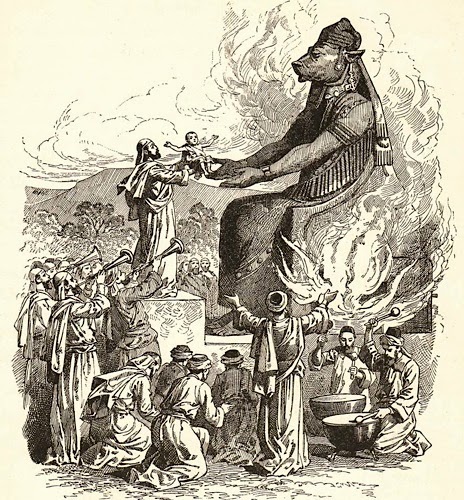
But Rig Veda never mentioned about  their child sacrifice. They killed thousands and thousands of children, actually burnt them alive and buried their ash in pots. Now we have found those graves in Bahrain and other neighbouring countries.  Probably that is the reason Vedic Hindus hated them. They worshipped Baal from 2000 BCE. He had a major sanctuary at BYBLOS.

Another god was Moloch or Molek. Israelite children were sacrificed by burning to Molech , according to the Bible (1 Kings 11-7; 2 Kings 23-10). Vedic Hindus hated the Mlechas; probably the world came from Molek worshippers.
Who were the Phoenicians?

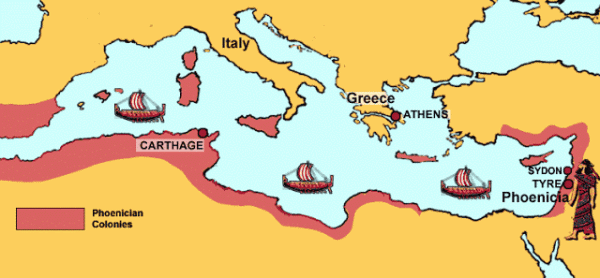
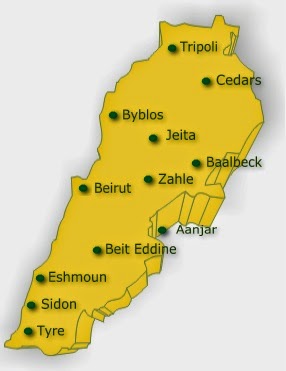
The best proof for identifying them with Panis of Rig Veda come from the word Byblos. This is the corrupted form their King Bibru. Rig Veda mentioned the name Bribu as their king. He constructed the city Byblos which is known to all historians. They controlled areas on the coast of Mediterranean Sea. Carthage (modern Tunisia) in North Africa and Lebanon in the Middle East were their main colonies.

Linguists know R=L are interchangeable. Even Panini has a sutra about it.

BIBRU became BYBLOS.

Byblos has got continuous existence from 5000 BCE. So Rig Vedic Bribu must have corrupted to Byblos. Or later kings might have named it after Bribu. Both are possible.

The second proof comes from the Sanskrit words of Phoenician areas. Following piece is taken from Wikipedia:

Other colonies (Note the Sanskrit Names)

Lebanon = lavana ( salt or salty white)

  • Callista (on modern Santorini)
  • Calpe (modern Gibraltar)
  • Gunugu
  • Thenae
  • Tipassa
  • Sundar (Sanskrit)
  • Surya(Sanskrit)
  • Shobina(Sanskrit)
  • Tara(Sanskrit)
  • My comments: Vedic Hindus might have settled in these Phoenician colonies for business purposes or settled there earlier than the Phoenicians.

Phoenicians spoke a non-Sanskrit language and so they were called Mrdhravach (of hostile speech). Greeks called non-Greeks barbarians; Ancient Tamils called Roman and Greek bodyguards with the same word (People of rude or harsh words); Telugus called Tamils with the same word (Arava=loud mouthed or voiceless or snake people); Bible called non-Christians as Pagans; Quran called Non-Muslims as Kafirs. This type of derogatory coinage was very common in the ancient world.
Miners of Lapis Lazuli

Bhagavan Sing (Author of Vedic Harappans) say that they mined minerals and gem stones such as lapis lazuli and exported them. So the Vedas say they hid the treasure under rocks.

I Come appointed messenger of Indra, asking your ample stores of wealth, O Panis (RV 10-108-2)

Paved with rock is this our treasure chamber; filled full of precious things, of kine, and horses. These Panis who are watchful keepers guard it. In vain hast thou approached this lonely station (RV 10-108-7)

Vedic Mantras cover a vast period of time. So it is possible at one time they had good business contacts with the Vedic Hindus.

Even Homer described them as good and bad people. They exported purple dye for the dress of Roman kings. In Illiad, Homer say that their wares are fit for Gods and kings and in Odyssey he says they are bunch of treacherous thieves. He has reflected the Rig Vedic thoughts.

Like we see in India, there is a big gap between the literary evidence and the archaeological evidence for Phoenicians. This remains a mystery until this day.

A.Kalyanaraman (author of Aryatarangini) argues that they were also Vedic people but who did not follow Vedic religion (vratyas) and migrated westwards.

References to Vanij (Vanikan in Tamil)

RV 1-112-11; 5-45-6; AV 3-15-1

References to Pani

RV1-33-3; RV 4-28-7; 5-34-5; 6-13-3; 8-64-2; 10-60-6;3-58-2;6-51-14. There are over 30 references. I have given only a few.

Child Killers

Vedic Hindus hated them because Phoenicians were ready to do anything for getting money. Bible refers to child sacrifice by Canaanites/Phoenicians in Jerusalem. Modern excavations have revealed thousands of urns containing the cremated remains of infants, small children and animals in Carthage (Tunisia), Motya (Sicily),Sulcis (Sardinea)and other Punic (Phoenician) sites. They spread this disgusting, barbaric practice to other Mediterranean areas. Scholars believe they had their origin in Bahrain. Vedas dub all the cannibals as Asuras/demons.

Phoenician God Baal is called Vala in Rig Veda whom Indra pierced when they plundered the Hindus’ cows.

All these prove that the hated Panis were Phoeniciaans.
How Amazing – The Power of God’s Name! Four Beautiful Stories!

Compiled by London swaminathan

Post no.1886,

Date: 24 May 2015; London Time: 12-12

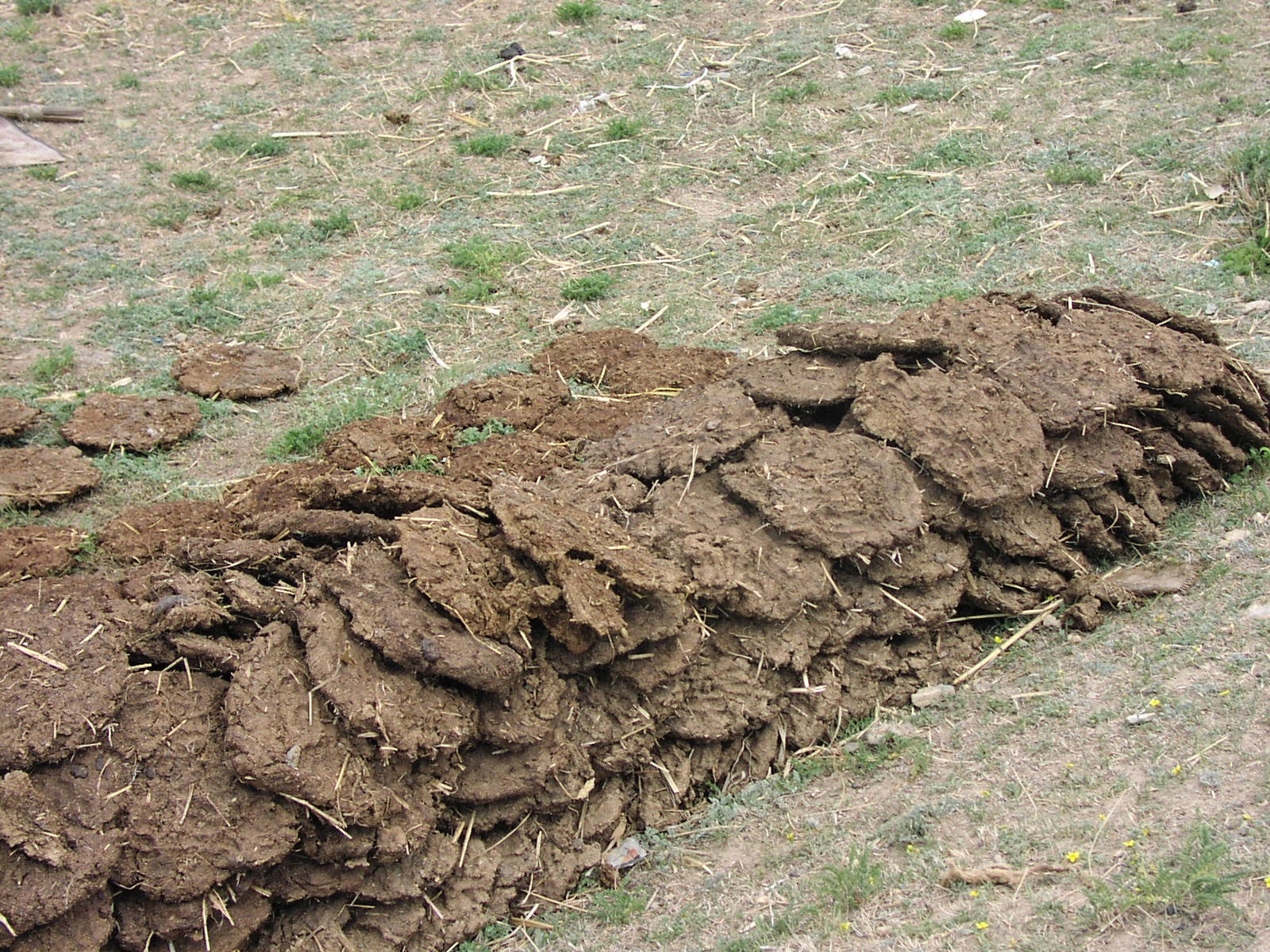
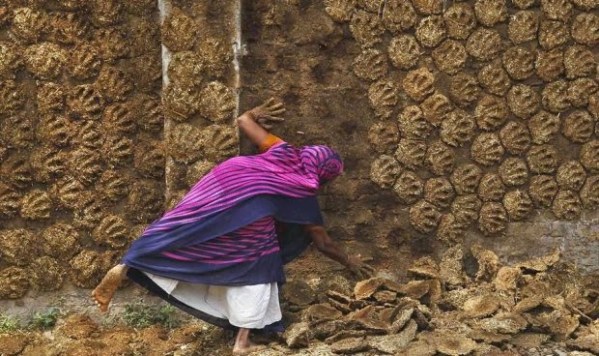
There was a woman saint who lived with her Guru serving him. Both were votaries of divine name. She used to prepare cow-dung cakes which are used as fuel in India. She had put them up in the sun or drying. A neighbouring woman had also prepared similar cakes and spread them out nearby. When the cakes were dry, the woman saint and her neighbour went to collect the. The cakes had got mixed up somehow. The neighbour wanted to take, besides her own cakes, the cakes of the saints also.

Hearing of it, the Master whom the woman saint serving, said he could easily find out the cakes prepared by his disciple.  He took each cake and placed near his ear. In some of them, he heard the sound of god’s name. Those in which god’s name was being sung, were sorted out from others were sorted out from ohers  – these belonged to his disciple. Thus the dispute was settled.

As the woman saint was always repeating God’s name, even while preparing the cow-dung cakes, the cake absorbed the divine vibrations and her master could hear the God’s name in the.

–p63, Stories as told by Swami Ramdas

Pearl necklace gifted to Hanuman by Sita

Rama Navami is the festival that marks the advent of the Lord as Rama. Many years, the festival occurs when Swami is in Kodai. On such occasions, the festival becomes a truly memorable day for the boys. On one such Rama Navami day, Sri Sathya Sai Baba materialised the pearl necklace that Sita gifted to Hanuman at the time of Rama’s Coronation.

Rama was distributing various gifts to members in the assembly but somehow, He seemed to skip Hanuman. Sita was troubled by this apparent indifference; how could such a loyal one like Hanuman be overlooked on an occasion like this? So, she whispered to Rama that Hanuman should not be forgotten. Rama whispered back that Hanuman was way above material gifts. Sita was not quite satisfied by this reply; so she took out a pearl necklace that she was wearing and offered it to Hanuman.

While receiving the necklace, Hanuman gave it a suspicious look. He then placed the necklace near one of his ears as if to check whether the individual pearls were emitting some sound. He appeared to examine every pearl in the necklace, and once in a while, he would bite a pearl. Sita was shocked by this behaviour. Was Hanuman proving that, after all, he was a monkey? She demanded an explanation from Hanuman for what he was doing.

With great humility Hanuman replied, “Mother, for me the Name of Rama is supreme. An object is worthless if it does not resound with the Name of Rama. Some of these pearls are not emitting the proper sound and so I am chewing them up.” Sita was neither convinced nor amused and tersely remarked, “Pearls do not emit sound.” Hanuman replied, “Everything that is saturated with the Rama Principle will always chant the Name of Rama. Let me demonstrate.” So saying, Hanuman plucked a hair from his body and offered it to Rama. When Sita took it near her ear, she could clearly hear the chant of Rama’s Name! This was the way Hanuman proved to the world how intense true devotion really is.

After narrating the story and materialising the necklace, Swami passed it around and asked the boys to carefully examine it. Sure enough many pearls had teeth marks! After everyone present there had had a look, Swami made the necklace disappear!

Story from Radio Sai

Guha’s Previous Birth!

A king who was guilty of the heinous sin of killing a Brahmana went to the hermitage of a rishi (seer) to learn what penance he must perform in order to be purified. The rishi was absent, but his son was in the hermitage. Hearing the case of the king, he said, “Repeat the ‘name’ of God (Rama) three times, and your sin will be expiated”.

When the rishi came back and heard of the penance prescribed by his son, he remarked indignantly, “Sins committed in myriads of births are purged immediately uttering the name of the Almighty but once. How weak must be your faith, O fool, since you have ordered the holy name to be repeated thrice? For this weakness of your faith, you shall become an outcaste”. And the son became Guhaka of the Ramayana.

p.98, Tales and Parables of Sri Ramakrishna, Ramakrishna Math, Chennai, Year 1947

(My comments: Brahmins even today repeat Rama’s name thrice during several rituals such as Tithi and Tarpana for departed souls, saying “Rama’s name purifies one from all sins, No doubt about it.” Then they repeat the name thrice.)

Just the name of Rama!!

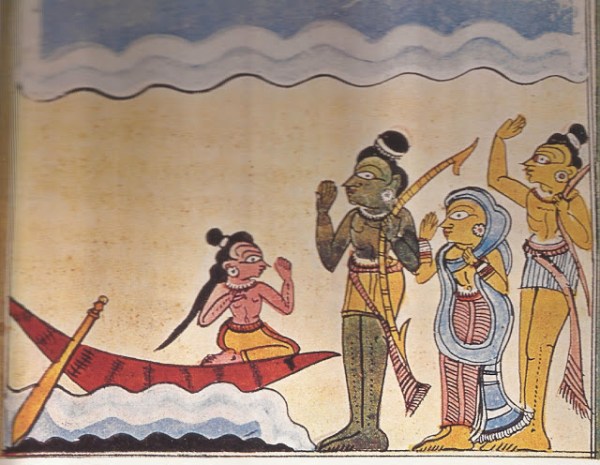
Once a man was about to cross the sea. Vibhishana wrote Rama’s name on a leaf, tied it in a corner of the man’s wearing cloth and said to him, “Don’t be afraid. Have faith and walk on the water. But look here – the moment you lose faith you will be drowned”.

The man was walking easily on the water. Suddenly he had an intense desire to see what was tied in his cloth. He opened it and found only a leaf with the name of Rama written on it. “What is this?”, he thought. “Just the name of Rama!.” As soon as the doubt entered his mind he sank under the water.

p.99, Tales and Parables of Sri Ramakrishna, Ramakrishna Math, Chennai, Year 1947

A Rare Musical Instrument: Panchamuka Vadhya

പഞ്ചമുഖമിഴാവ്൧

Written by London swaminathan

Research article no.1884, Date: 23 May 2015.

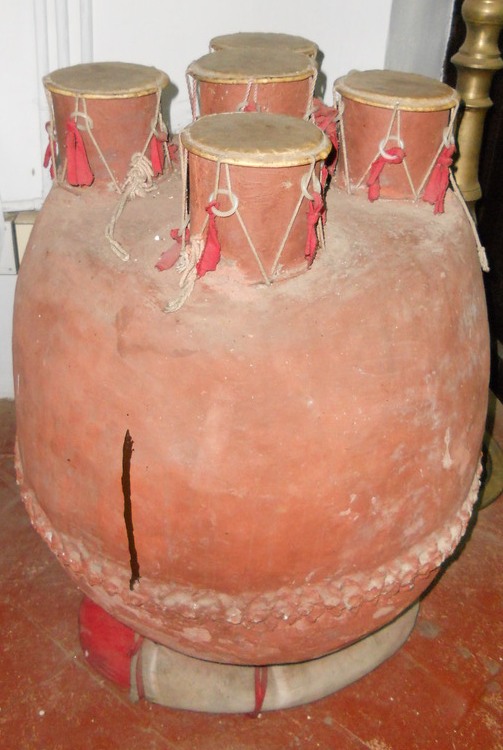
Panchamuka vadhyam (Five faced drum) is shown in some of the Nataraja (Dancing Siva) sculptures in South India. This is a rare musical instrument found in Kerala and Tamil Nadu. Nandideva is said to play on it during the cosmic dance of Shiva/Nataraja. It is associated with Five Faces of Shiva and Five functions of Shiva. Now it is found in Tiruvarur and Tituththuraipundi in Tamil Nadu and a few places in Kerala. It is used during Puja time.

The instrument is made up of metal and covered with cow skin. Since it has got five faces to play on, it requires good practice to use it. Slowly this art is disappearing. Since it is very heavy, they fix it on a wooden frame with wheels, so that it can be rolled to any place. The five faces of the instrument are named after the five faces of Lord Shiva: Isanam,Satyojatam, Vamadevam, Tatpurusam, Agoram.

Creation, Preservation, Destruction, Concealing Grace and Revealing Grace are the five actions of Lord Shiva according to Saiva Siddhanta. It is believed that these five faces represent those five actions. The varying thickness of the skin covering the five faces help the player to create five different sounds. Five faces of the instrument are named after four directions (N E W S ) and the middle one is called the sky direction(Up). The player used to stand near the North face and play on it. All the five faces are circular in shape. In Tamil they are called Vatta Thattu, meaning circular plate.

IMG_3721 (2)

The instrument was made to explain the principles of Saiva Agamas. So the scholars have produced the following table:

West              — Satyojatham – Creation

North             — Vamadevam – Preservation

South             — Agoram —             Destruction

East                            — Tatpurusam – Concealing Grace

Skyward (Up)          — Isanam                  — Revealing Grace

Lord Krishna’s conch is called Panchajanya (Bhagavad Gita 1-15). It is a strange coincidence that Panchajanya also mean the producer of five different sounds. It will be useful to do some research into the words Panchamuka Vadhya drum and Paanchajanya conch.

IMG_3722 (2)

Unique and Wonderful Food Items (Prasad) of Hindu Temples

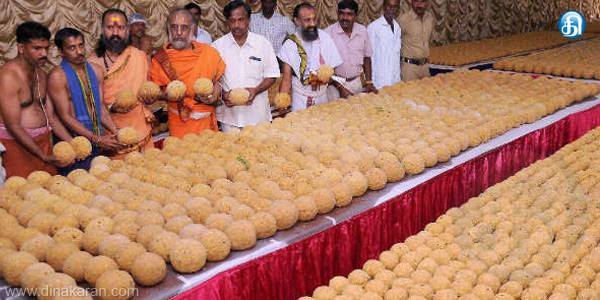
laddu

Written by London swaminathan

Research article no.1882, Date: 22 May 2015.


Prasad in a Hindu temple is a vast subject. A Ph.D. thesis can be written on it. It is also a multi-billion dollar industry. It gives employment for thousands of workers. In India, temple itself is a big industry. If the temples are closed by some atheistic ruler, millions of people would lose jobs very next day; tourist industry and transport would grind to a halt. Directly and indirectly millions of people earn their livelihood through Hindu temples. People of other religions are also benefitted by the Hindu Temples.

What is Prasad?

Prasad is an offering made to a Hindu deity, usually eatable food items, which is distributed to the devotees as the deity’s blessings.

As a general rule “no onion, no meat, no garlic, no fish, no egg, no mushroom” policy is followed in all the holy centres and Hindu temples. They are strictly vegetarian. There may be exceptions. For instance Sri Lankan Tamil temples use garlic and onion. Indian temples won’t use them. In villages there are some strange customs of offering even toddy and meat to Grama Devatas (Village Goddesses).

A Ph.D, thesis can be written about Hindu Prasads. It is a billion dollar business.US temples sell Prasad. Tamil temples in Britain distribute free meals like Hare Krishna (Iskcon) temples and Sikh Gurdwaras. Hare Krishna people visit even universities and distribute food to students. I have seen long queues of students in London University.

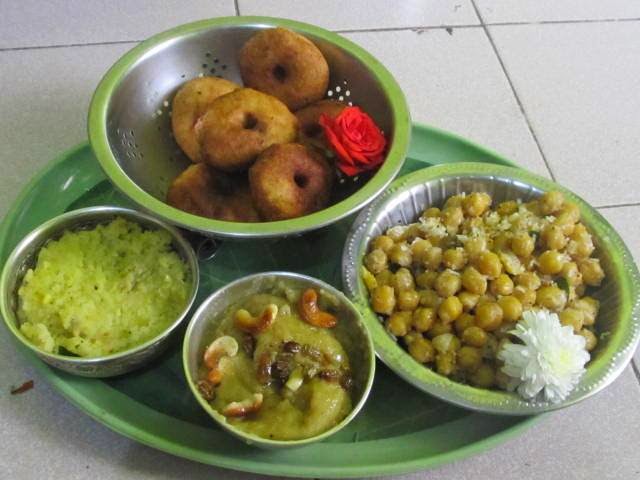
Vadai, Sudal, Sarkkarai/sweet Pongal

Six types of Hindu Prasad

There are six types of Prasads:

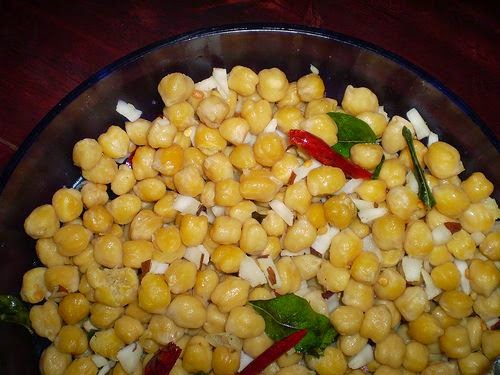
1.Edible/ Cooked: Sweets, Different types of cooked rice, Sundal (boiled pulses mixed with spices).

Cooked Samba rice with Jeerak, Ven Pongal (cooked rice with pepper, butter and nuts), Sarkkarai Pongal (Rice Pudding), Payasam, (Liquid Rice Pudding) Puliyodharai (Tamarind Rice), Thayir sadham (Curd rice), Vadai (fried lentil snack), Modakam (Rice+ Sweet Coconut), Pittu (Rice+jiggery), Full  square meal

2.Edible/ uncooked: Milk, Water, Panchamirtham(fruits, honey, jaggery, nuts, spices mixture), fruits, sugar candy, nuts, pepper, salt, sand from ant hill, Tulsi leaves, Powa (pounded rice mixed with coconut and sugar)

In Sankarankoil and Vaitheeswaran Koil in Tamil Nadu, people collect sand from anthill in the temple and eat it in minute quantities as Prasad and medicine.

Tamil Hindus take Coconut, Bananas, betel leaves and flowers into temple and take them home after offering it to God.

Non edible:

3.Applied on Body : Vibhuti, Kunkum, sandal, burnt Yaga ash, Bilva leaves  and Yellow powder

In all south Indian temples Vibhuti (holy ash), Kunkum (red powder made up with turmeric etc), Sindhur (Red powder), Sandal paste, Homa pasmam (holy ash from the fire pit), Bilva leaves, yellow powder are offered as Prasad. If it is a Vishnu temple Tulsi leaves are offered to devotees from the feet of the statue.

All temples give flowers to women which they wear it in their hair. Flower industry is also a billion dollar industry in India. In Western countries flowers are offered to women. In India it is first offered to Gods and then women get it from there. No Hindu women wear it straight from the basket.

North Indian Temple Prasad

4.Worn on body: Talisman, medals, holy thread (kaappu on wrists), Kasi thread (black), Flowers, Garlands, Silk, rosaries (Rudraksha or Tulsi seeds).

Special Prasads like Rudraksha Malas, Tulsi malas, silk from the Gods’ statues, talismans are obtained with special arrangements.

In South Indian Temples, used sarees from statues are sold in auction to women. They buy it as good luck symbol or auspicious items.

Pictures and books are given in some places such as Ashrams, Holy Centres, which can be kept at home as Prasad.

Metal objects such as rings, talismans etc come under this category.

5.Sold Prasad: Nowadays Prasad is sold in big temples; but simultaneously free Prasad is also distributed. Whoever needs more than that have to buy it.

After seeing the demand for Prasad, South Indian temples also started selling special prasads in special counters.

6.Free Prasad: Flowers, Vibhuti, Kunkum, Sandal or the fruits, coconuts we take it into the temple are returned to us; but yet there is a small fee for that service.

So we can broadly classify the Prasad into Sold and Free Prasads. In the same way, we can broadly classify them into cooked and not cooked Prasads.

Aravanai  Prasad in Sabarimalai

There is a pattern in Prasad distribution:

In village temples they offer gruel made up of rice or millets

In Vishnu temples, they give Tulsi+water from a copper pots or silver vessels.

After the main Arti, they distribute Tamarind rice or Curd rice.

In Shiva temples in Tamil Nadu they distribute plain cooked rice with Jeera or Ven Pongal.

In Goddess Temples they offer Sweet Pongal, particularly Fridays.

But each temple has got something unique to offer.

As a student I used to go to the world famous Madurai Meenakshi Temple and get Samba rice or Ven Pongal in the day time and Sundal and milk after the last Arti (Palli Arai Deeparadhana).

In Krishnan temple,Madurai run by the Yadava caste, I used to queue up for tamarind rice or Curd rice.

On Fridays, they offer sweet Pongal to goddesses in the South Indian temples, Goddess statues are inside both the Vishnu and Shiva temples.

13 miles from my home town Madurai is Azakarkoil. They used to make unique ADAI (looks like Dosa but much thicker made up with grains,pulses and spices) two or three people can share it.

When we go to Tirupati we used to buy Ladoos and a small Adai like spicy snack. They do distribute rice items as well.

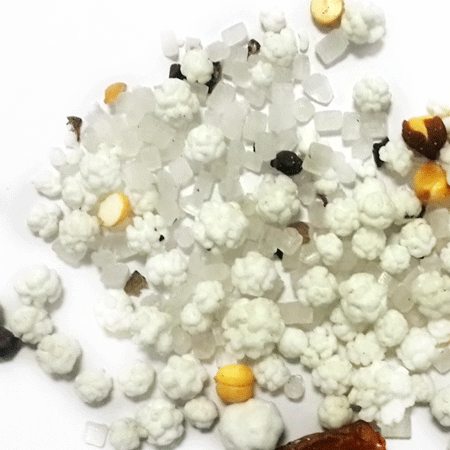
In the North Indian temples they distribute small sugar balls, sugar candy, nuts or coconut sweets as Prasad. In Swami Narayan temples, they offer sweets during Deepavali in huge quantity (Annakut festival).

Kerala temples are famous for the sweet liquid called Payasam. This is rice based item but can be made with jack fruit or sago or vermicelli or pounded rice.

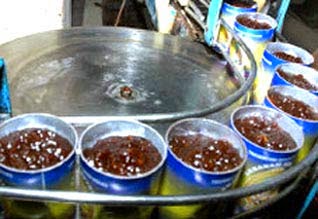
In south India Tirupati (in Adhra Pradesh) laddu is the most famous Prasad. In Tamil Nadu, Panchamirtham of Palani Murugan temple is unique. Both these prasadas give work to lot of people.

Equally famous is the Mahaprasad of Puri Jagannatha Temple. It has fifty six cooked and non- cooked items in its menu.

Mahalaxmi Temple (Mumbai), Shirdi Sai Baba Temple (Shirdi), Viswanatha temple (Kasi) are offering sugar balls as prasad. In many of the temples people buy it from outside shop and offer it to God and take it back.

Sundal

How to take Prasad?

Always take the Prasad with your right hand. Never use left hand.  Both hands may be used but place your right palm over left palm, bow your head, and then receive it. You should not throw anything on floor even if you don’t want it. You have to dispose them in the containers for it.

List of Unique Hindu Prasads:

Puri Jagannatha Temple: Maha (great or big) Prasad with 56 items

Tirupati Balaji temple:Ladoo and Appam

Palani Dandayutha pani Temple: Fruit Mixture (Panchamirtham)

North Indian Temples: Sugar Balls or sweets

Maharastrian Temples: Powa +Sugar+Coconut

Kerala Temples: Ney Appam (fried sweet flour item with butter)

Ganesh Temples: Modaka on special days

Hanuman Temples: Vada (made up of Urad Dal) in South India or Boondhi in North India.

Sabari Malai Ayyappan Temple: Aravanai sweet, Appam, Ghee from Cow’s butter

Sri Rangam: Coconut, Butter, Spinach

Tiruvarur Temple: Ney Murukku ( Fried Rice snack)

Tirukkannapuram: special Pongal (rice item)

Kancheepuram Varadaraja Perumal: Kanchi Type Idli (boiled rice cake with pepper)

Kollur Mookambika and Kutralam: Medicinal concoction with herbs

Chidambaram, Madurai Temples: Cooked Rice with Jeeraka

Irinjala kuda Bharatha Temple: Brinjal/Aubergine preparation

Vaishnava Devi in Kashmir: Puffed rice+coconut+sugar balls

Ambalapuza in Kerala: Milk Payasam.

In Tamil Nadu, during Navaratri festival and Markazi (Month Margsirsha) Bhajans, Sundal is distributed. On the Saraswati Puja/Vijayadasami day Sundal+Vada+ Sweet Pongal are distributed.

This is not a comprehensive list. Each temple has got its own Madappalli (kitchen) and its own traditional menu. Anything can be a Prasad once it is offered at the feet of God. Hinduism is a colourful religion. There is no place for monotony. Variety is the spice of life (loko binna ruchi:), says Kalidasa. Hindus see god even in variety of food items.

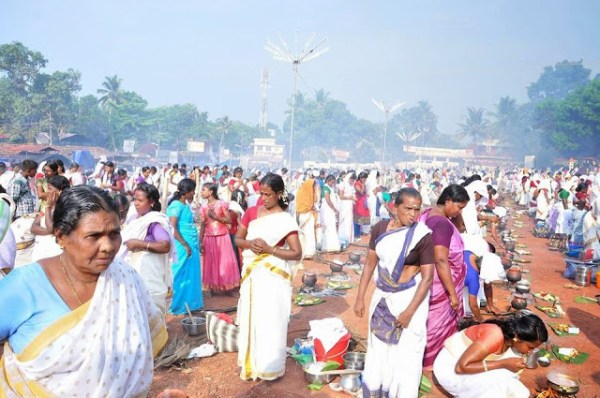
Sweet Pongal for the Goddess in Kerala

Five Beautiful Stories on Hindu Concept of Time

akrura vision

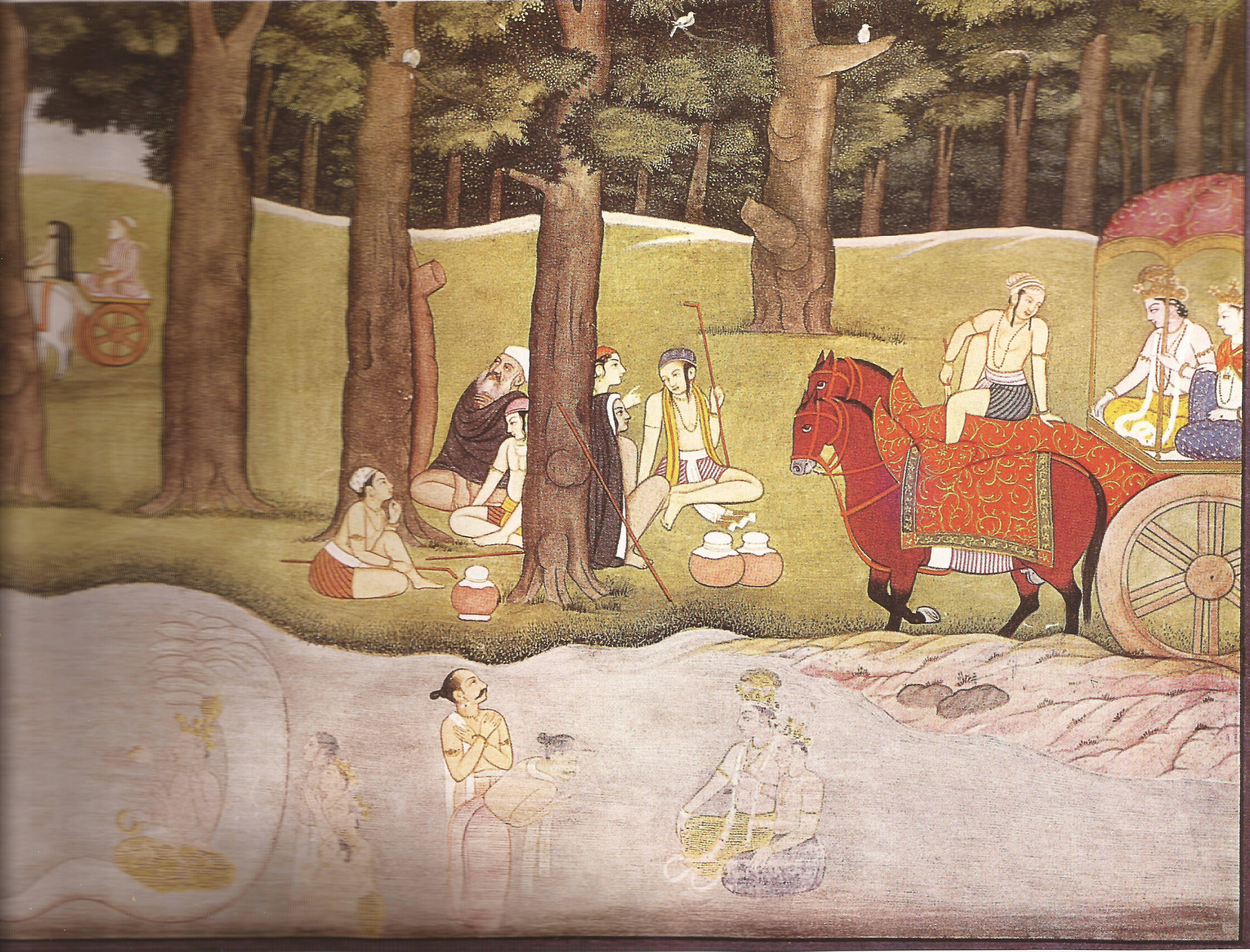
Akrura’s Vision under Water, Bharat Kalabhavan, Varanasi

Compiled by London swaminathan

Article No.1869; Dated 16 May 2015.

Uploaded in London at 20-14

Time is cyclical according to Hindu scriptures and linear according to Westerners. Hindus repeat it in several stories to emphasize that time is cyclical. No ancient culture in the world has bothered about time whereas Hindus have been naming their Gods after TIME.

Lord Shiva is called Mahakala=Great Time or Great Death; also Kalabhaksha= Devourer of Time. Rudram (Yajur Veda) describes him as Kalagni Rudraya= the fire that destroys the end of time. Vishnu is called Bhuta,Bhavya, Bhavat Prabhu= Lord of the Past, the Future and the Past. Vedas say God is beyond Time (kalatrayadita:)

When the world did not know to write the numbers, Hindus taught them to write with 1,2,3….0 without which modern computers would not have been on our tables today. When the western scientists complete the study of Black holes, they will understand the Hindu Concept of (cyclical) Time.

Here are five stories to illustrate the cyclical nature of Time:

க்ரிஷ்ன ஈட்டி

Story 1

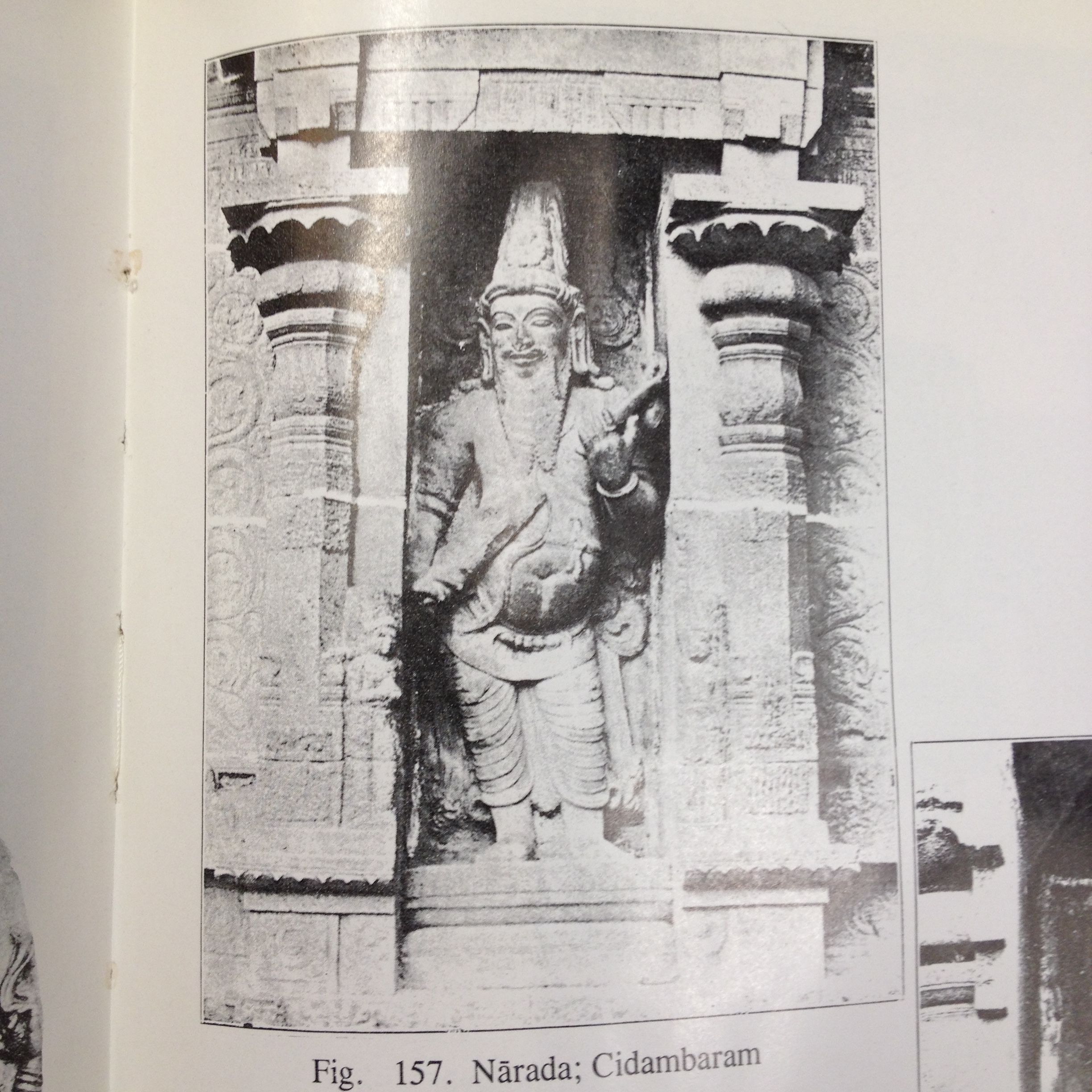
In an episode in the Vishnu Purana, one reads of Vishnu accompanied by the divine sage Narada, stopping at one point in the course of their wanderings, and asking Narada to fetch him some water from a nearby village. While he waits at the edge of the forest, Narada goes to the village , knocks at the door, falls in love with the young woman who answers, marries her, founds a family, and lives happily with his wife and children for years until a flood comes and inundates the village sweeping everything before it. Narada too is washed away by the current and is thrown perchance at exactly the point where he had parted company with Vishnu. As he lands there, he is greeted by Vishnu who asks him for the water that he had gone to fetch.

The pace at which TIME has moved for Vishnu and Narada is very different.

Story 2

In Balagopalastuti of Lilashuka there is a famous verse in which Yashoda, Krishna’s foster mother, recites the story of Ramayana to young Krishna while she puts him to bed. The narrative reaches the point where the demon Maricha, assuming the guise of a golden deer, lures Rama away from his forest-hut in the hermitage, leaving Sita exposed to danger. As Yasoda speaks of the evil of Ravana’s arrival on the scene to abduct Sita, suddenly young Krishna, half asleep, jerks into action and shouts aloud: “Lakshmana! Where, Oh where, is my bow?” It is as if the memory of an earlier incarnation of himself as Rama, the seventh, overtakes Krishna in his present life, as the eighth incarnation of Vishnu.

Suddenly Time moves in a loop.

 IMG_3526

Narada from Chidambaram Temple

Story 3

Another story in the Brahmavaivarta Purana speaks of humbling of Indra’s pride. As the king of the gods sits majestically in his, self-satisfied and aware of his own importance, into this assembly moves a phalanx of ants that takes everyone by surprise. Only one man in the assembly, seeing his strange vision, laughs aloud. When asked by Indra what causes him this laughter, he says that each of these ants was an Indra in a previous birth.

Countless cycles of Time are hinted at.

ants

Story 4

When Narada visits Krishna’s kingdom at Dwaraka, as narrated in the Bhagavata Purana, he enters the inner apartments. As he approaches the senior most queen of Krishna, he finds her attending upon Krishna with chowri (fly-whisk) in her hand. Greeting the divine pair, Narada withdraws and moves into the next chamber to pay his respects to the wife of Krishna next in seniority and, as he enters, sees her playing a game off dice with Krishna. In another palace he sees one of Krishna’s queens massaging the soles of Krishna’s feet while he lies on a bed. Amazed Narada moves further on, and finds, in each chamber a queen in Krishna’s company, serving him food, helping him with oblations, and so on.  In chamber after chamber Narada encounters Krishna, and is greeted by him each time as if he had seen the sage just then.

Simultaneous presences of the same person at different places are being spoken of

krishnarjuna fb

Story 5

In the Bhagavata Purana, again, Akrura, the great devotee of Krishna, is described as being entrusted with the responsibility of escorting Krishna and Balarama to Mathura. On the way, Akrura feels the need to refresh himself by taking a bath in the Yamuna along the banks of which they are moving. With the permission of the two brothers, Akrura halts his chariot, enters the water, and dips his head only to see, below the surface of the water, Krishna and Balarama seated in the chariot exactly as he had left them on the river bank. Greatly confused, he lifts his head out of the water, and sees them again on the bank, in the very same chariot. Disbelieving, he takes another dip: this time, under the water, he sees Krishna as Vishnu lying on the serpent couch of Sesha, Krishna and Balarama having assumed their true forms. Akrura suddenly sees, in this vision, the identity of Krishna and Vishnu, Balarama and Sesha. But when he lifts his head, he sees on the river bank Krishna and Balarama again as youthful boys engaged in conversation.

vishnu pink

With a sense of wonder, the elusiveness of time and appearances is put across.

Tales like this, presenting the many aspects and hues of time, can be multiplied. What emerges from these is time moving in a cyclic fashion, making bends and loops, turning back upon itself, rising spiral like, splitting itself, assuming different tempi for different people – mercurial, illusive, elusive.

The above five stories are reproduced from Picture Showmen, Edited by Jyotindra Jain, Marg Publication.

I have already written about Arjuna’s travel to alien worlds and the Theory of Time dilation. I have already written about the Time Travel by two Tamil Saints.

Please read my articles:

TIME TRAVEL by TWO TAMIL SAINTS, posted on 14-2-2012

Do Hindus believe in ETs and Alien Worlds?, posted on 28-1-2012

Is Brahmastra a Nuclear Weapon?, posted on 5 June 2011

Hindus Future Predictions Part 1 (posted 20 May 2012)

Hindus Future Predictions Part 2 (Posted on 20 May 2012)

Arya Putra Ravana Spoke Sanskrit! Hanuman spoke Prakrta!

Written by London swaminathan

Research Article No.1848; Date: 6 May 2015

Uploaded at London time: 8-43 am


Sanskrit was spoken by all the well educated people in ancient India. Sanskrit was the language used as official language in all the Royal courts. Dance, Drama and Music used Sanskrit. All the Tamil dictionaries and ancient Tamil Nighandus give Sanskrit words as Tamil words!!! In short there is no ancient Tamil literature without Sanskrit words. They treated both Tamil and Sanskrit as their two eyes. The oldest Tamil book Tolkappiam has a lot of Sanskrit words. He even formulated rules to use Sanskrit words in Tamil literature. His book was certified and approved by the Acharya of Tiruvithankodu who had mastered the four Vedas. All these details are documented in literature.

Sanskrit was the link language throughout India. Ravana and Hanuman were great Sanskrit scholars. Ravana mastered Sama Veda as well. Tamil poets were well versed in Sanskrit. Kapila taught Tamil to a North Indian King named Brahma Dutta who ridiculed Tamil and made him to write poems in Tamil. His poems are included in 2000 year old Sangam Tamil literature. Kovalan, hero of Tamil epic Silappadikaram, helped a Brahmin woman who was crying in the street holding a letter written in Sanskrit by her husband. Kamban who adapted Valmiki Ramayana in Tamil was a great Sanskrit scholar.

Hanuman’s Hesitation!

Hanuman hesitated to speak Sanskrit thinking that Sita would mistake him for Ravana (Ramayana, canto 30)

Ravana and his spies spoke in Sanskrit. So when Hanuman went to Asokavana, he thinks:

“Shall I, a puny Vanar, chose

The Sanskrit men delight to use?

If, as a man of Brahman kind,

I speak the tongue by rules refined.

The lady, yielding to her fears,

Will think’ it’s Ravana’s voice she hears.

I must assume my only plan-

The language of a common man”

—Translated by T H Griffith

The language of the common man in those days was Prakrit. In Sanskrit dramas women (even queens), children, court jester spoke Prakrit. Kings, ministers and Brahmins spoke Sanskrit. Low characters (in dramas) like fishermen, policemen spoke in dialect.

In Sudraka’s Mrccakatika, the comedian (jester) says,“ I hate a woman speaking Sanskrit and a man singing”. It is followed until this day in Tamil and Hindi films. Kings or high officers or heroes speak a chaste language and low characters like village folk, comedians speak in dialect or colloquial language. We also speak a dialect or colloquial language at home but when we go to a stage and speak in front of a huge crowd we speak literal, posh language. So Hanuman also wanted to be very careful in choosing his language.

Aryaputra Ravana!

In the Ramayana Ravana and Vali were addressed as Arya while Kaikeyi was addressed as Anarya ( Non-Arya i.e. uncultured, uncivilized)

Door Keepers of Ravana’s palace addressed him Aryaputra (Yuddha Kanda, Sarga32, Sloka 35)

Vijayasvaryaputreti soabivadhya prasadya cha

Nyavaidayadanuprasam prahastam vaahiniipatim

In the following sloka of Kiskindha Kanda of Valmiki Ramayana, Vali was addressed as Aryaputra by his wife Tara

Supteva punaruththaaya aaryaputreti vaadinii

Ruroda saa patim drstvaa samviitam ptrunyudamabih

In the Sloka 14 of Sarga 36 of Ayodhya kanda, Kaikeyi was addressed as Anarya by King Dasaratha

Vahantam kim tudasi maam niyujya dhuri maahite

Anaarye krtyamaarangam kim purvamupaarudhah


Writing during Ramayana Days

We know that Hanuman was well versed in Nava vyakarana. All the monkeys wrote Ram on the stones and they started floating in water. Rama gave his ring to Hanuman as a token to be shown to Sita. His name was engraved on it. Hindus used scripts, but sparsely.

T H Griffith’s translation of relevant Valmiki verse is as follows:

He gave the ring that bore his name,

A token for the captive dame,

That the sad lady in her woe

The missive of her lord might know.

‘This ring’, he said, ‘my wife will see,

Nor fear an envoy sent by me…’

Since writing was prevalent in ancient India, Asoka installed hundreds of rock edicts in Brahmi script from Afghanistan to Kancheepuram in Tamil Nadu (Most of the edicts including Kanchi’s) were destroyed by the Muslim invaders and the monsoon weather. Brahmi inscriptions were available up to the Southern Sri Lanka 2600 years ago!!

Pictures are taken from various websites; thanks.

Baffling Questions and Beautiful Answers in Spirituality — Part V

baba president

Former President of India Abdula kalam with Sri Sathya Sai Baba

Compiled by S NAGARAJAN

Date: 21 April 2015; Post No: 1816

Uploaded in London at 8-19 am

By Santhanam Nagarajan

Here is a new Question – Answer series for the benefit of all.

From time to time we have baffling questions.  But there is nobody to answer them.

But here is an effort to compile the answers from the great scholars, sages and saints of India. Some beautiful answers are found in the ancient Hindu epics and scriptures.  This is an effort to compile them.  This is in continuation of the earlier article.

10) Why should one Meditate and recite God’s names?

By Dhyana (Meditation) you develop Jnana (Spiritual wisdom) and by Japam (recitation of God’s name) you develop Bhakthi (devotion) and by both, you cleanse your heart of the canker of ego. You can link yourselves with God, by a chain of love, through the recitation of the name, in silence and with full awareness of the meaning and its nuances. Each Sai ram, Hare Krishna, Hare Ram, or Vittal is a link; the more the links the longer the chain, the firmer the bond.  But each link has to be well forged out of well- tempered steel.  One false link, that is to say, the Name once uttered in sloth or slight, indifference or anger, resentment or rancor, will constitute a weak link and the bond will not bind!

-Sri Sathya Saibaba in Sathya Sai Speaks Volume 11-Link by Link

baba

Sri Sathya sai Baba

11) What is the significance of the story related to Christ’s birth?

The story says there was a Star in the sky, which fell with a New Light, and this led a few Tibetans and others to the place where the Savior was born. This story is read and taken on trust by many, though stars do not fall or even slide down so suddenly.  What the story signifies is this:  There was a huge halo or splendor illuminating the sky over the village when Christ was born.  This meant that He, who was to overcome the darkness of evil and ignorance, had taken birth that He will spread the Light of Love in the heart of man and councils of humanity.  Appearances of splendor and other signs to herald the era that has dawned are natural when incarnations happen on earth.  Jesus was to shatter the darkness that had enveloped the world and the aura of light was a sign that announced the event.  The Masters arrive in answer to man’s prayer, “Thamaso maa jyothir gamaya” (Lead us from darkness unto Light!)

-Sri Sathya Saibaba in Sathya Sai Speaks Volume 11-He whom Christ announced

Summary

10) Why should one Meditate and recite God’s names? 11) What is the significance

Baffling Questions and Beautiful Answers in Spirituality Part IV

2012-Swami-Vivekananda

Article No.1813; Date: 20th April 2015

Written by S NAGARAJAN

Uploaded from London at 5-49 am

By Santhanam Nagarajan

Here is a new Question – Answer series for the benefit of all.

From time to time we have baffling questions.  But there is nobody to answer them. But here is an effort to compile the answers from the great scholars, sages and saints of India. Some beautiful answers are found in the ancient Hindu epics and scriptures.  This is an effort to compile them.  This is in continuation of the earlier article.

vivek

07) What is the most wonderful thing in the world?

Day after day, there enter into the Temple of Death, countless lives.  Looking at this spectacle, the rest of them those who remain, believe themselves to be permanent, immortal.  Can anything be more wonderful than this?

The Yaksha asked certain questions to Dharma the eldest of the Pandavas.  He gave fitting replies to all the questions.  One among the questions is given above.  As usual Dharma gave a fitting reply.

08) What is the peculiarity of the Vedas?

One peculiarity of the Vedas is that they are the only Scriptures that again and again declare that you must go beyond them.  The Vedas say that they were written just for the child mind; and when you have grown, you must go beyond them.

The above question was put forth to Swami Vivekananda at the Twentieth Century Club of Boston, United States of America. Swami gave a fitting reply to the question.

Swami-vivekananda-400x395

09) How one can get rid of the fear of hell?

For a clever and a hard working agriculturist there cannot be any scare of famine and for an individual regularly performing Japa (mental recitation of Holy names and Mantras), there cannot be any fear of hell.

Summary

07) What is the most wonderful thing in the world?  08) What is the peculiarity of the Vedas?   09) How one can get rid of the fear of hell?  King Dharmaputra, Swami Vivekananda and Subashitha answer the questions.

********

Advanced Grammar and Linguistics in Vedic India!

Research Article No.1812; Date: 19th April 2015

Written by London swaminathan

Uploaded from London at 21-24

When the sages formed the Speech with their mind

Straining it, as they strain flour with sieve

Therein have friends discovered bonds of friendship

Whose holy beauty lies hidden in that Speech.


With worship they followed the steps of the Speech

And found it installed in the hearts of sages

They acquired it and gave it at many places

And seven singers intone it together.


There is a man who sees but has not seen Vak

There is the man who hears but not has heard her

But to another she reveals her lovely form

Like a loving wife, finely robed, to her husband

—Rig Veda 10-71

One who studies Vedas ‘subject wise’ will be amazed to see the level of knowledge in all the faculties at such an early age. They have reached the highest level in Grammar and Linguistics. Nowhere in the world were grammar and etymology part of regular education in religious institutes. I am talking about a period between 1000 BCE and 1700 BCE. Max Muller said no one can date the Vedas under 1200 BCE. The latest research in Sarasvati River basin and History of Rig Veda show that it can be safely dated to at least 1700 BCE. For Brahmanas (not Brahmin caste, but literature) even if we accept Max Muller’s date it would be 1000 BCE.

Let us look at what  Vedic literature say about grammar, etymology, linguistics in general:-

Hindus were the first to write a grammar book. We have Panini’s Ashtadyayi dated to seventh century BCE by Goldstucker and other great Sanskrit scholars of India.

Hindus were the first in the world to do an Index. They compiled an index for the Vedas: Vedic Anukramani

Hindus were first in installing a chair for the study of words (Nirukta) in all Vedic Educational Institutes in ancient India.

1.The Rig Veda celebrates Vac ( personified speech) as a Goddess (RV 10—125). For the Hindus all that is good is feminine, as affectionate as a mother. So they named all the Vedic metres after women starting from Gayatri metre (24 syllables) and the speech as Vac or Sarasvati or Bharati. Some stanzas of the RV are capable of giving grammatical explanation. Expressions like ‘catvari srnga’ and ‘sapta sindhavah’ have been interpreted by Patanjali in terms of four parts of speech and seven cases.

2.There are speculations on letters, syllables and words in the Brahmanas as also terms like Aksara, Varna and Vibhakti which Panini has used without definition. In the Satapata Brahmana (SB 13-3-1-18) we meet with names for singular ad plural.

3.In the Chandogya Upanishad we find classification of letters and technical terms such as Svara (vowels), sparsa (consonants) and women (sibilants).

4.The next land mark was reached when  the Samhita texts were reduced to pada-patha where in each word is exhibited separately in its individual grammatical form followed by word signs like ‘iti’ and also symbols by avagraha etc. to distinguish case terminations to analyse compounds and to mark out a few special cases of accentuation.

5.Yaska (at least 8th century BCE) distinguishes a Northern and an Eastern school of grammarians and mentions nearly twenty predecessors such as Sakatayana, Pargya, Sakalya. The theory of verbal origin of nouns stressed by Yaska may be said to be the foundation of the whole system of Panini.

6.Yaska states that there are four parts of speech : naman (noun) akhyata (verb), upasarga (preposition) and nipata (particle)  — terms later used by Panini.

64 Grammarians before Panini!

7.Of the sixty four grammarians, referred to as the predecessors of Panini’s ,few must have belonged to the Vedic age (Cultural Heritage of India I (281 -283)

(My comments: Brahmanas themselves belong to 1000 BCE. Yaska mentioned 20 grammarians before 8th century BCE. Panini mentioned 64 grammarians before seventh century BCE. This big number of grammarians show that the civilization  has reached a very high standard during the Vedic times. Only when peace prevails, this is possible.

8.VAC:-Personified speech is celebrated in one hymn of the Rig Veda (10-12-5) in which she describes herself. She accompanies all the gods and supports Mita-Varuna, Indra-Agni and the Asvins. She bends Rudra’s bow against the unbeliever. Her place is in the waters, the sea. She encompasses all beings. In another passage she is called the queen of the gods and divine.

9.A legend of Vac frequently referred to in the Brahmanas is that of Soma being brought back from the Gandharvas at the price of Vac transformed into a woman. (AB 1-27).

My comments: It may be a symbolical story to convey certain thing. We do not know the meaning now.

Riddles in the Vedas

10.Riddle poetry was very popular with the Vedic Hindus. The Rig Veda contains a large number of riddles (RV. 1-114) such as ,seven harness a one wheeled cart; it is drawn by one horse with seven names; three naves have the immortal never-stopping wheel, on which all these beings stand’

11.In content, the Kuntapa hymns (AV20-127-36) are partly riddles and their solutions are partly obscene songs and coarse jokes.

12.The Vajasaneyi Samhita contains a number or riddles with which the priests amused themselves at the horse sacrifice. These riddle games form an equallay imporatant part of the prayers and sacrificial formulae.

13.The Vedic texts frequently assure us that gods wish to be not only fed but entertained as well as they take a particular pleasure in the mysterious and the enigmatic.

Spoken Language

  1. Spoken language was known as ‘Bhasa’. Vedic Sanskrit has grown out of the spoken tongue of the times as its root. The point is discussed by Yaska in the Nirukta (i-16). Those who do not speak a refined language are referred to in the Rig Veda as ‘mrdhravac’ 5-29-10; 5-32-8).

Even in the oldest Tamil book , ‘Kotun thamiz’ (rustic language) is referred to as the language spoken by some people. They were also Tamils living in border areas. When the same was said in the Vedas, they brought in the racist Aryan-Dravidian theory. Even the Greeks called other language speakers as barbarians. Sangam Tamil literature also describe the Yavanas (Greeks/Romans/Arabians) as speakers of a rude language. For any language speaker, another language is a Mrdhra vac. Even Telugus called Tamils Aravas. When such a thing existed in all parts of the world at all times, foreign scholars distorted the image of the Vedic society.

If we make a list of what one community called another community or their language, we will have a long list of insults. There is no race involved. I see lot of phrases about Irish, English, Scottish and Welsh in London.

15.The Satapata Brahmana (SB 3-2-1, 23-24) refers to barbarisms in speech which are to be avoided. Scholars think that it is a reference to Vratyas (please read my article on Vratyas), who are Hindus but did not practice the rituals, leading a nomadic life. We have parallels in Tamil Siddhas, who were high philosophers, but against the rituals.

16.Panchavimsa Brahmana (17-1-9) describes Vratyas as speaking the language of the initiated by the uninitiated people as they felt it difficult to utter.

Metrics

  1. In the Rig Veda (10-14-16), 10-130-4.5) we meet with several terms which later became well known as technical designations of metres.

Gayatri is said to born of Agni, Usnih of Savitr, Anutubh of Soma, Brahati of Brhaspati, and Virat of Mitra Varuna. Indra, the god praised most often, invented the Tristubh, the metre employed most often. The Visvedevas created Jagati.

A hymn in the eighth Kanda of Atharva Veda gives the number of syllables in these seven chief metres of Vedic poetry by increasing by four successively i.e. from 24 in Gayatri to 48 in Jagati. These seven metres are referred to in several hymns. Fascinated by the charming rhythm of metres, the authors of the Brahmanas ingeniously show that their harmony is, in some mystical and mysterious fashion the fundamental cause of the harmony of the world.

18.Among the five or six extant Indices (anukramanis), the chandonukramani enumerates the metres of the Rig Vedic hymns and states the number of verses in each metre.

These Indices, metres and the care with which they have compiled the statistics show that the civilization was very advanced in literature and mathematics. We don’t see such things in the contemporary Egyptian or Sumerian civilizations.
19.The Satapata Brahmana (8-1-1-2) tells us that metres, like other beings,  were created by Prajapati. In 3-9-4-10. It mentions gayatri as a mystical name of Agni who carries off Soma. Gayatri, in the form of a bird, fetches the Soma from heaven. In the Brahmana and Upanishadic speculations on the mystical significance of metres, numbers play a great part. The Brhadaranyaka Upanishad (5-15) says, “The word Bhumi, Antariksha and Dyu make up eight syllables; a gayatri pada (foot) contains eight syllables, therefore he knows the gayatri gains the three worlds

In other scriptures we have lot of things said about these metres. This shows their obsession with metres, prosody, their number and the mathematics behind it. The Vedic society was very scientific and much more advanced than Sumer and Egypt.

maheswara-sutrani.jpg (300×275)

Etymology

20.Nirukta of Yaska states, “without this science there can be no understanding of the Vedic mantras (1-15). However it is a commentary on an older list of Vedic words, called the Nighantu or Naighantuka, to each of which one of the more illustrative Vedic passages ought to be understood as attached. Yaska himself mentions earlier Niruktakaras. The Brahmanas, Aranyakas, Upanishads offer as many as 600 etymologised words, through proper etymologies, synonymous expression, explanation of one Vedic word by another and brief annotations of whole verses and hymns.

Yaskas borrowing from earlier works is quite evident though he was the first one to formulate general principles of etymology. When we consider that he lived around 850 BCE and many more etymologists lived before him, the science of etymology must have advanced to a high degree around 1000 BCE. This is a big difference from other civilisations. They did not advance in literature or its allied branches. Only a peaceful and prosperous society could make some progress in this area.

21.The Taiitiriya Samhita and Maitrayani Samhita have got the largest number etymologised  of the Rig Vedic words. Among the Brahmanas, satapata Brahmana and Aitareya Brahmana, and among the Aranyakas, the Aitareya is notable in this respect. Among the Upanishads Brhadaranyaka and Chandogya Upanishads occasionally take to etymologising on the basis of etymologising principles formulated by Yaska.

  1. Anecdotal etymologies are copious in Brahmana literature. Thus the etymologies of Agni, Asva, Udumbara, Vidyut, Prithivi etc., are connected with the legend of Prajapati; those of Ashada, Aparajita etc., with the legend of Devasura contest; and that of Puskara and Sakvari with the legend of Indra- Vritra fight in the Brahmanas.

23.Vedic language had become antique with obsolete words by the time of Yaska. He counts more than 400 words of which he did not know the meaning.  This shows the big gap between the time of Yaska and the Samhitas.

24.In the Atharva Veda (8-10-5), there is a reference to Vak on incantation for acquiring extraordinary charm of speech and manner. Social prestige through intelligent speech is vouchsafed in the Rig Veda (10-71-10). Success in assembly and triumph in debate, were greeted with joy by the friends of equal mind. At the later Vedic ae Hindus had even invented a prescription for procuring a son not only attending the assembly or conference, but also having naturally cultured speech as ‘susruta vak’ by learning in the lore’s, clearly noted in Brahadaranyaka Upanishad (6-4-17)

All the above quotes point out that the Vedic Hindus cared so much about their speech and such a thing is possible only in a civilized society.

Souce: Cultural History of India; A Cultural Index to Vedic Literature by N N Bhattacharya and Sri Aurobindo’s Vedic Glossary.

Swami_48@yahoo.com

50 reasons people give for believing in a God

50 reasons

Old Book Review by S Nagarajan

Post No:- 1810; Date 19th April 2015

Time uploaded in London: 6-36 am

50 reasons people give for believing in a God by Guy P.Harrison

Guy P.Harrison is a columnist and travel writer for a national newspaper. He has won several international awards for his writing.

The book under review has 50 chapters. There are about 50 reasons to believe God or not. All the views are put in a perspective manner by the author.

He has visited many countries and interviewed almost all great followers of Hinduism, Buddhism, Christianity, Islam, Scientology etc.

Why should one believe God? Fear was the first thing on Earth to make Gods. Whether He exists or not, play it safe. The author humorously points out that some gods are very jealous and they don’t condone any worshipping of rival gods!

Guy Harrison appreciates Hinduism very much. It is the only religion appears united to outsiders because it is one of the world’s most flexible, open and accommodating religions by far. Hindus are told that everybody on earth is born a Hindu. That is why they are not trying to convert anybody into their fold.

As a journalist Guy Harrison interviews famous soccer player Pele, Nobel Peace Prize winner and the father of the H-Bomb.

He once interviewed a man who was in the Berlin Bunker with Adolf Hitler during the final days of the Third Reich.

Guy_May13

Picture of Guy Harrison

His vast experience made him to write this book on God!

He treats all religions equally and he has given a place for atheists also.

He has scrutinized miracle makers and caution us that these could be explained scientifically.

Believing in God does not hurt anyone. No one has ever disproved the existence of God. Without religion society would fall apart. Religion brings people together. Under these headings he is giving a number of anecdotes to prove his points.

We come across Michael Shermer who was a born Christian turned now as a non-believer.

An interesting investigation is ongoing about the possible natural roots of religion in the human mind and DNA. Some researchers think that we may be biologically “hardwired” for religion. They suggest that our brains are structured in a way that makes religious belief not only possible but virtually inevitable.

One chapter is devoted for intelligent design. The author points out that there are three primary problems with intelligent design. First, it has no evidence to support it. Second, intelligent design doesn’t say anything about how life was created. Third, intelligent design encourages us to give up on seeking answers because some mysteries of life are too complex to have a natural explanation.

Why god punishes innocent people? Take the case of tsunami, on December 26, 2004 which killed many thousand innocent people. 37 percent of the people killed were under the age of eighteen. Why they were punished?

The book makes an interesting reading. All about God packed in a single book!

But even though the author had extensively travelled throughout the world, he did not meet any great soul like Ramana or Sri Sathya Saibaba, Had he encountered some great souls, he could have got answers for all of his questions!

I wish that who are interested in knowing god from different perspectives, may go in for this book.

Summary

The book under review has 50 chapters. There are about 50 reasons to believe God or not. All the views are put in a perspective manner by the author. The author, Guy P.Harrison is a columnist and travel writer for a national newspaper. He has won several international awards for his writing.