Who did Krishna Worship?

ராதா கல்யாணம், ஆலங்குடி

Radha Kalyanam, Alangudi

Written by London swaminathan

Article No.1663; Dated 20th February 2015.

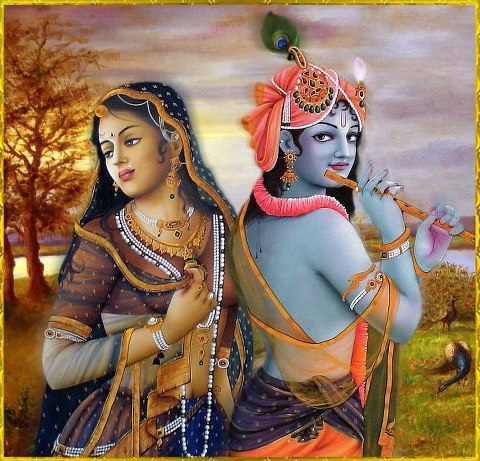
We all worship Lord Krishna with several hymns; but who did Krishna worship? This question was asked by his own wife Rukmini; Krishna answered her question at once without any hesitation!

The answer is in a simple Sanskrit sloka (couplet):

Nithyaanadhaathaa  tarunaagnihotri

Vedhaantha vidh chandrasahasra darsii

Maasopavaasiisa pathivrathaa cha

Shad vandhaniiyaa mama jiivaloke

I worship the following six people: Those who provide food every day, who are well versed in the Vedas, who do fire ceremony, who observe regular fasting every month, who have seen at least 1000 crescent moon in their life time and those women who are chaste.

அக்னியில் க்ருஷ்ணன்

Krishna appeared in Yaga Fire!

Explanation:

(1)Nithyaannadhata: Those who provide food to the needy every day. In those days, people used to do Pancha Maha yajna (Five Daily Sacrifices): They worshipped and “fed” their ancestors, family, guests, close relatives and animals.

They divided their income or the harvest into six portions and gave one sixth as the tax to the king or the government. Other five parts were used to look after the relatives, guests and the priests and the temples. Even today the tax in many countries is around that figure.

Vedas said Athithi devo bhava (guests are equal to gods)

Krishna worshipped such people. (Nithya = everyday+ anna = food+ dhata = provider).

Tamil poet Tiruvalluvar also says it in his Tirukkural (43)

(2)Taruna agnihotri: Who does fire ceremony every day from his early years; in those days Brahmin boys were initiated at the age of seven and then they started doing Samidhadanam (putting peepal sticks into fire with ghee reciting Mantras) every day. When they became adult (taruna), they were married and they started doing Agnihotram. Agnihotram is a daily ritual. Krishna worshipped such people.

(3)Vedhanta vidh: Those who have mastered Vedas and its meaning (Vedanta is the end of the Vedas. That meant the Upanishads. In those days if one is introduced as a learned man, it meant that he followed whatever he learnt. Nowadays we see lot of learned people imprisoned for their immoral activities. They may be bandits but not Pundits.

Krishna worshipped Vedic scholars whose word, deed and thought were one.

Marble_Krishna_

(4)Sahasra Chandra darsi: Those who have seen 1000 crescent moons in their life time. The crescent moon on the third day after new moon day is considered auspicious. It is also seen on the head of Lord Shiva. So they saw the crescent moon and then had dinner. Seeing the moon was a Hindu custom. Later other religions followed the Hindu custom. Crescent moon can be seen every 29th day. A man has to live 81 years to see 1000 crescent moons. Living 81 years is easy nowadays. But seeing the moon without a miss needs dedication. Krishna worshipped such dedicated devotees.

(5) For the followers of other religions fasting is a one off event in a year. But for the Hindus Ekadasi is a must. Ekadasi means 11th day immediately after New moon or Full moon day. It happens twice a month. A lot of Hindus observe fasting on the day. Apart from Ekadasi day, there are many more days for fasting. Krishna worshiped those who follow fasting rules strictly.

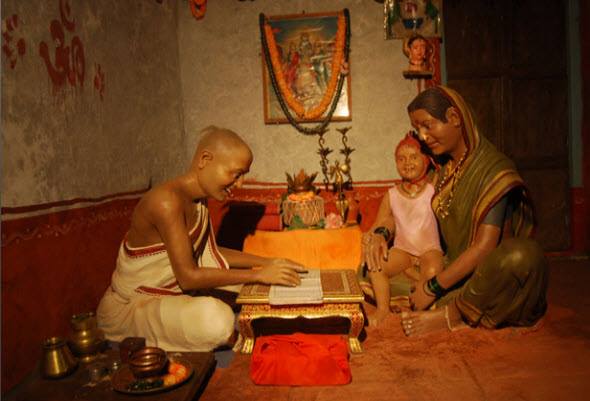
wax museum, near kolhapur

Krishna listens to blind poet Surdas! Wax museum.

6.Pativrataa: Those who are loyal only to their husbands. Pativrata meant chaste women. Hindus believe in three types of chastity or purity; it is called Trikarana suddhi- thought word and deed. It is very difficult in modern days. Tamils and others believed such women can control natural forces. She could even make the rain fall. Tamil poet Tiruvalluvar said it in his Tirukkural (55). Other Tamil poets like Ilango and Siltalai sattanar repeated it in their epics. Krishna worshipped such chaste women.

If Krishna worshipped such great people, can we fall behind him?

Let us salute those six types of people every day.

Contact swami_48@yahoo.com

Hindus’ Respect for Trees and Forests

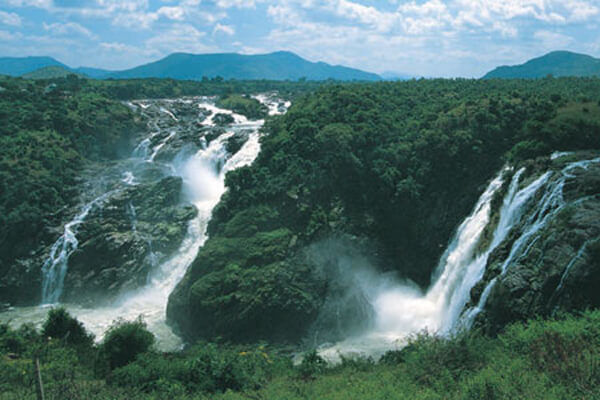
ooty_0

Forests in Tamil Nadu

Research Paper written by London swaminathan

Research Article No.1659; Dated 18th February 2015.

Hindus do Sankalpam (Intention or Purpose of a Ritual) before every ceremony. If it is a big ceremony they do Maha Sankalpam (extensive ) in which they recite the names of Seven Holy Forests, Seven Holy Cities and All the major Holy Rivers in India and all the Major Temples in the country. They give a lot of respect to the trees and forests.

In the Vedas, Lord Shiva is called the Lord of the Forests (Vanaspathi), Lord of the Trees (Vrkshanaam pathi) and Lord of the Animals (Pasupathi) in several hymns. The most important hymn in the Yajur Veda is Rudram and Chamakam which is recited in all the Hindu temples every day when they do Abhishek to Lord Shiva. The Rudram and Chamakam Hymn (Mantra) refers to Shiva as God of Trees and God of the Forests in five or six places. Shiva is described as a big forest and his hair as green! That is, the trees and leaves are his hair.

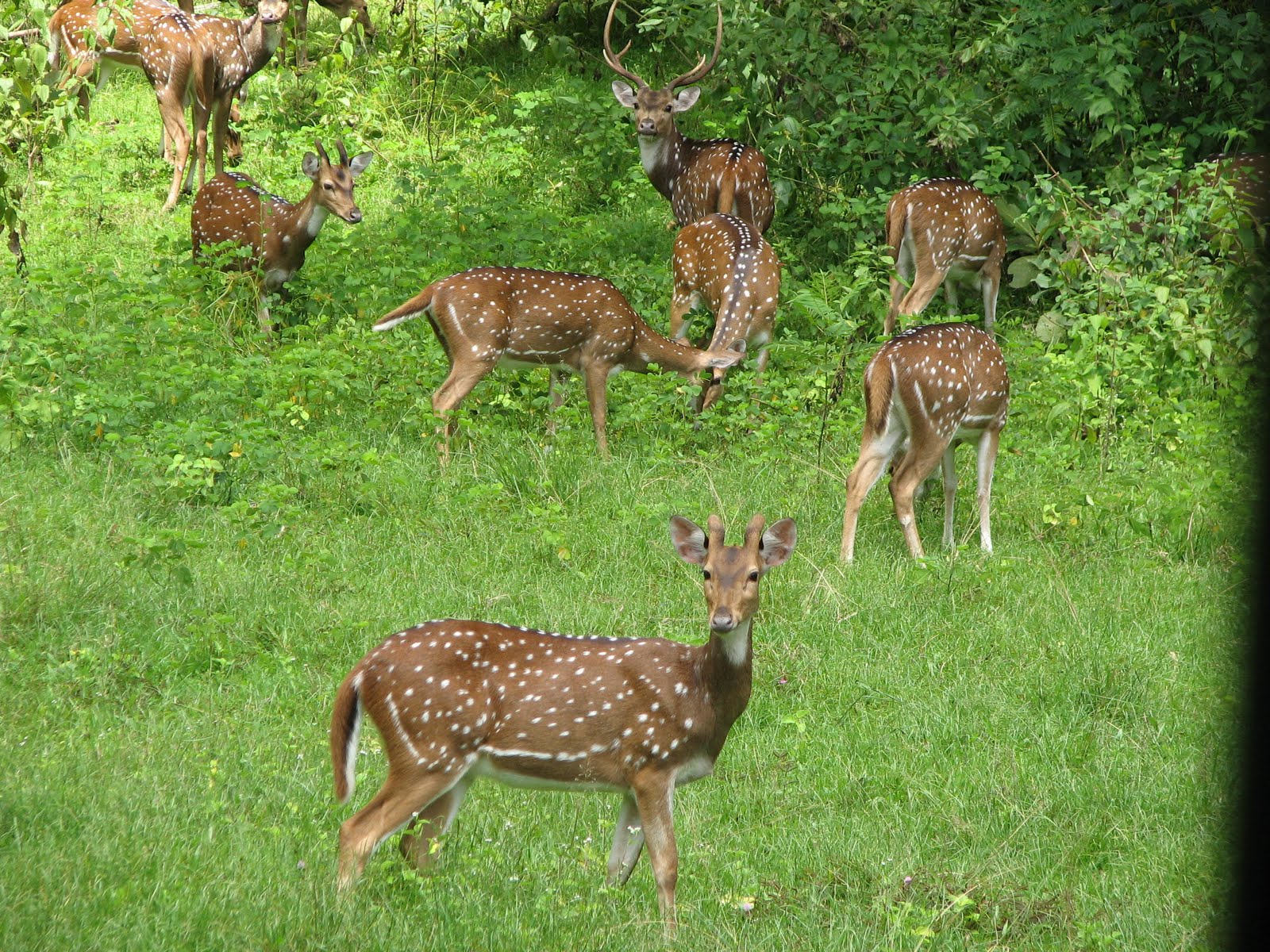
deer-in-india-forest

Indian Deer in the forests

Certain trees belonging to the Ficus group (Family Moraceae) are considered the holiest of the holy trees. They are Banyan Tree, Peepal Tree and Fig Tree (Nyagrodha, Asvatta and Udumbara). Even Vishnu is called by these names in the most famous Visnu Stotra : Vishnu Sahasranama (1000 names of Vishnu).

Yajur Veda References in Rudram and Chamakam:

1.Vrkshebhyo Harikesebhya: Pasunam Pathaye

2.Namo Vrkshebhyo Harikesebhyo

3.Nama Parnyaya Parnasathyaya

4.Namo Vanyaya cha Kakshyaya cha

5.Vrkshanam Pathaye Nama:

6.Aushadeenam Pathaye Nama:

7.Vananam Pathaye Nama:

In addition to these mantras, there are many more places where he is referred to as leaves, herbs, shrubs and trees.

Hindus worship Tulsi (holy basil), Vilva (Bilva), Peepal, Banyan and Vanni (Sami) trees almost every day in the temples.

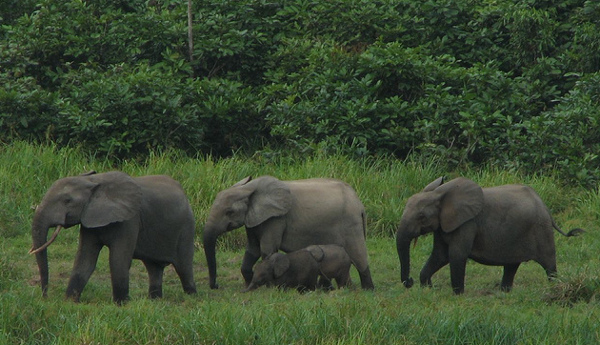
forest-elephants

Varahamihira in Brhat Samhita:

Varahamihira in his Sanskrit Encyclopaedia – Brhat Samhita deals with the Forests in Chapter 59 — Entering Forests. He recommends certain trees for making images of gods.

There are some interesting couplets / slokas:

1.One should go to the desired/selected tree and offer worship to it with food and flowers.

2.The Deodar/ Deva Taru/Divine Tree (Cedrus deodara), Sami (Prosopis spicigera), Sandalwood (santalum album)  and Madhuca (cynometra ramilflora) are good for images installed by Brahmanas;

Arista (Xantium strumarium), Asvatta (Ficus religiosa), Khadira (Acacia catechu) and Bilva (Aegle marmelos) bestow prosperity to Kshatrias;

Jivaka, Khadira, Sindhuka and Syandana are auspicious for Vaisyas; and

Tindulka, Kesara, Sarja, Arjuna (Marutha maram in Tamil), Mango and Sal are good for Sudras.

This verse shows that all the four castes were installing images of God in Varahamihira’s time and before that as well.

Gaur_UllasKaran

Indian Bison (Gaur) in the jungle

In another sloka he says, “ after worshipping the tree at night with milk, porridge, sweet, rice, curds, semi ground sesame seeds, eatables of various kinds, wine, flowers, incenses and perfumes, Gods, Manes, Demons, Goblins, Serpents, Asuras, Siva’s hosts/ Siva Ganas, Ganesa and others should be worshipped. There after touching the tree, one should recite the following hymn:

 “Oh, Tree! You have been selected for the worship (through an image) of the particular deity. Salutation to you! This worship is offered by me in accordance with the scriptural rules may kindly accepted by you. May all those beings that dwell in the tree accept the offerings made according to rules, and then depart to another tree for residing. May they pardon us now! We bow to them!

In the morning the tree should be watered, and then cut on the north eastern side with an axe whose blade has been smeared with honey and ghee. The remaining parts should be cut in a clock wise manner.


Achartha samukasya tvam devasya parikalpita:

Namste vrksha pujeyam vidhivat sampragruhyatam


Yaaniha bhutaani vasanti taani balim grhitvaa vidhivat prayuktam

Anyatra vaasam parikalpayantu kshamantu taanyadya namostu tebhya:

 forest4

These slokas show their attitude towards nature. Great poet Kalidasa projects Shakuntala as a Friend of the Birds and Deer, Flowers and Trees. The very name Shakuntala means Bird Girl!

Hindus, by paying respect to nature, always remembered its value. They never destroyed their environment. Orthodox Hindus even today begs for pardon, before putting their feet on the ground when they wake up in the morning.

They recite the sloka “Samudra vasane devi ……… Padas sparsam kshmasvame.

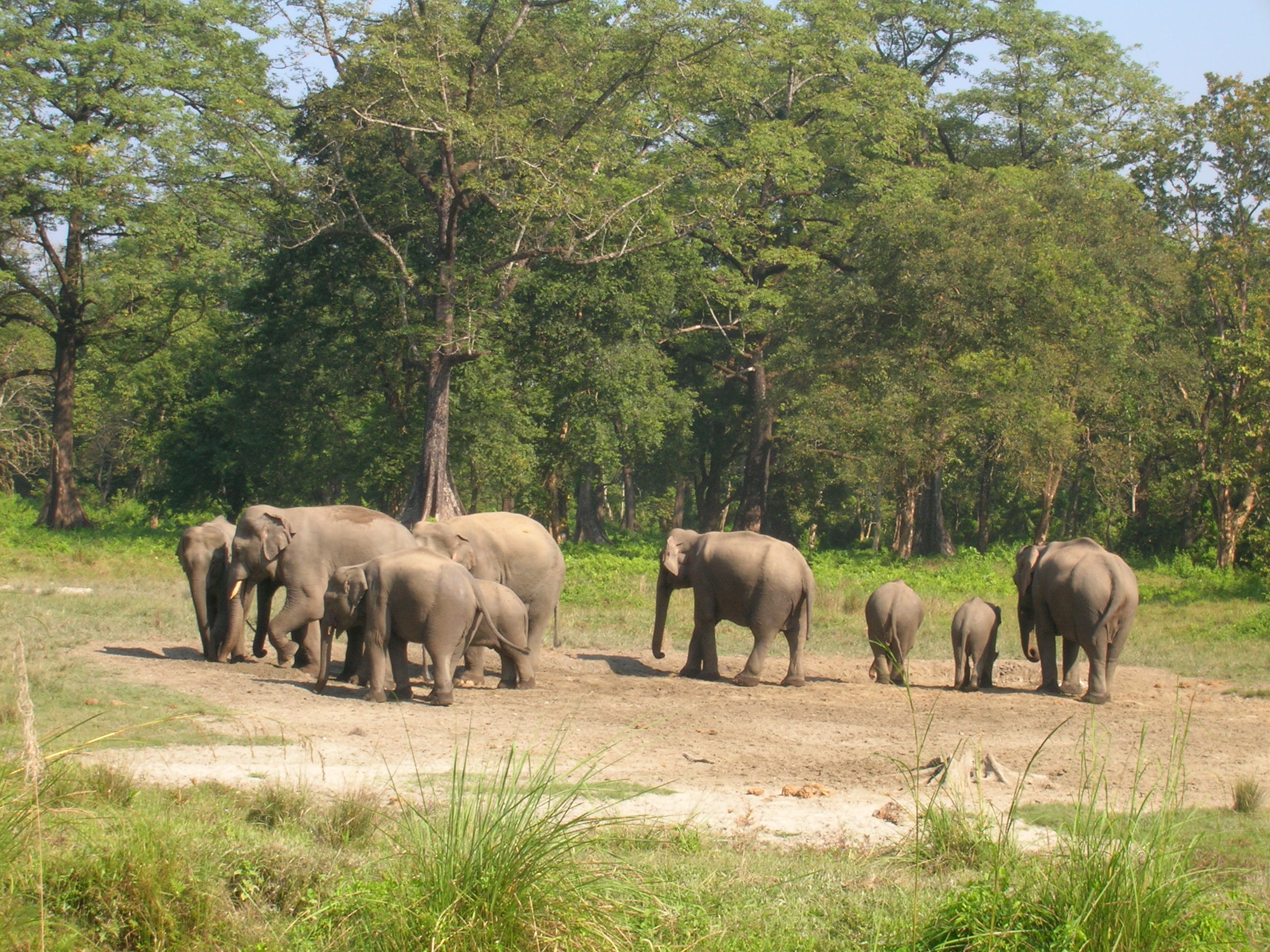
Wild_Elephants_at_Jaldapara

Let us learn to pay respect to nature. Let us preserve ancient Hindu Wisdom.

சிவராத்திரி சபதம்!

Linga-in-Brihadisvara-big

One of the Biggest Lingas, Thanjavur Brhadeeswar Temple, Tamil Nadu

மஹா சிவராத்திரி அன்று சிறப்பான சில சிந்தனைகள்!

சிவராத்திரி சபதம்!

Post No.1655;    Dated 16th February 2015

by ச.நாகராஜன்

எளியவரின் கேள்விகள்

கடவுள் இருக்கிறாரா?

இருக்கிறார் எனில் எங்கே இருக்கிறார்? எப்படி இருக்கிறார்?

அவரை என்னால் ஏன் காணமுடியவில்லை? எப்படிக் காண முடியும்?

யாருடன் நான் சேர்வது? யாரை நான் உதறுவது? சுருக்கமாகச் சொல்லப் போனால் யாருக்கு நான் ஓட்டுப் போடுவது?

இப்படி எல்லாம் கேள்வி எழுவது உலகியல் வாழ்க்கையில் இயல்பான ஒன்று தான்!

இதற்கான பதில்களை அற்புதமாக அருளாளர்கள் தங்கள் அழியாப் பாடல்களில் தந்துள்ளனர்.

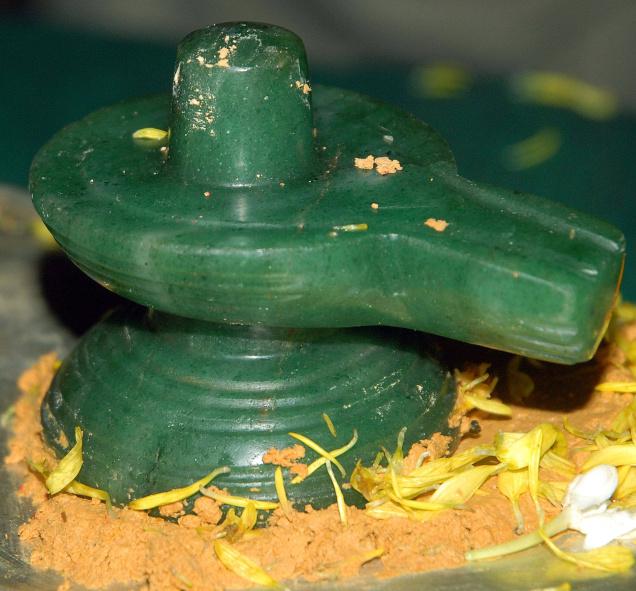
thirukkaravasal maragatha linga

Thirukkaravasal Maragatha (Emerald )Linga

அப்பரின் அற்புத பதில்கள்!

இவற்றிற்கெல்லாம் பதில் கொடுத்துள்ள அழியாத் தவநெறிச் செல்வர் அப்பரின் அருளுரைகளை சிவராத்திரி தினத்தன்று பார்த்துத் தெளிவோம்!

“விறகில் தீயினன்,  பாலில் படு நெய் போல் மறைய நின்றுளன்” என்கிறார் அப்பர். விறகிலே தீ போல பாலிலே நெய் போல மறைந்து நின்று இருக்கிறான் எம் சிவ பிரான் என்பதே கடவுள் இருக்கிறாரா, எங்கே இருக்கிறார் என்று கேட்பவருக்கான பதில்!

மாசில் வீணையும் மாலை மதியமும்

வீசு தென்றலும் வீங்கு இளவேனிலும்                                         

மூசு வண்டறை பொய்கையும் போன்றதே                                    

ஈசன் எந்தை இணையடி நீழலே

எப்படி இருக்கிறார் எனில் மாசு இல்லாத வீணை போல, மாலை  மதியம் போல, வீசுகின்ற தென்றல் போல, வீங்கு வசந்தம் போல மூசு வண்டறை தடாகம் போல அவனது நீழல் உள்ளது என்பதே எப்படி இருக்கிறார் என்பதற்கு அவர் தரும் பதில்!

Amarnath-Linga

One of the Natural wonders of the World-Ice Linga of Amarnath Caves, Kashmir, India

நியூட்டனின் பதில்!


பிரபல விஞ்ஞானி நியூட்டன் ஒரு பெரும் ஆத்திகவாதி. அவரது நண்பர் ஒருவரோ பெரிய நாத்திகர். நியூட்டனின் கடவுள் பக்தியை அவர் ஏற்கவில்லை. ஒரு நாள் நியூட்டன் சூரிய மண்டலத்தின் மாதிரி ஒன்றை ஸ்கேல் மாடலில் அதாவது சிறிய் அளவில் சூரிய மண்டலம் இருப்பது போலவே சுற்றி வரும் கிரகங்களின் தூரம். ஓடு பாதை. அளவு ஆகியவற்றை எல்லாம் நிர்ணயித்து சுழலும்படியான ஒரு அமைப்பில் செய்து வைத்திருந்தார். அற்புதமான அந்தச் சாதனத்தில் ஒரு சிறிய கைப்பிடியைச் சுற்றினால் கிரகங்கள் தனது இயல்பில் சுழல அதனதன் ஓடு பாதையில் அது அது தனது வேகத்தில் சென்று சூரியனைச் சுற்றிக் கொண்டிருக்கும்.

நியூட்டனின் நண்பர் ஒரு நாள் உள்ளே வந்தார். இந்த அபாரமான அமைப்பைப் பார்த்து பிரமித்து நின்று விட்டார். அப்போது அந்த அறையின் ஓரத்தில் தன் மேஜையின் அருகே நாற்காலில் அமர்ந்து நியூட்டன் தீவிரமாக எதையோ சிந்தித்துக் கொண்டிருந்தார். வந்த நண்பர் வியப்புடன் கூவினார்:” ஆஹா! பிரமாதம்! நியூட்டன்! இதை யார் செய்தது?” அவரது ஓங்கிய குரலுக்கு நியூட்டனிடமிருந்து சுவாரசியமின்றி சாந்தமான குரலில்,”ஒருவரும் இல்லை!” என்று பதில் வந்தது. தனது கேள்வியை நியூட்டன் சரியாகப் புரிந்து கொள்ளவில்லை என்று எண்ணிய நண்பர் சற்று உரக்க,”இதை யாரேனும் செய்திருக்க வேண்டுமே! யார் செய்தது என்று நான் கேட்கிறேன்!” என்றார்.

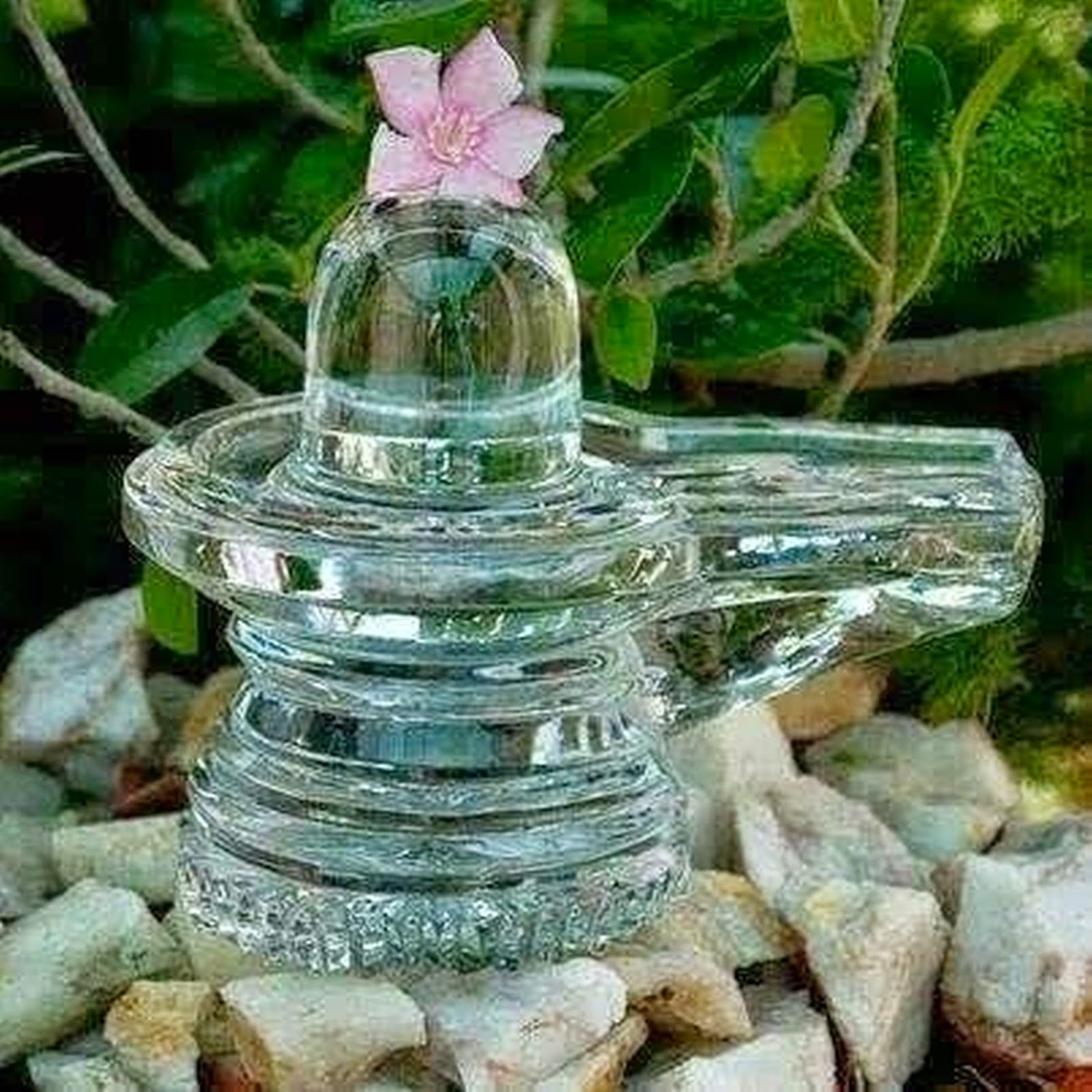
spatika2

Crystal/ Spatika Linga

இன்னும் அமைதியான தாழ்ந்த குரலில் நியூட்டன், “அது தான் ஒருவரும் செய்யவில்லை என்கிறேனே” என்றார்.

இப்போது நண்பருக்குக் கோபம் வந்து விட்டது. தன் நண்பர் இடக்காகப் பதில் சொல்கிறார் என்று நினைத்த அவர் நியூட்டனிடம் சென்று அவரின் தோளைக் குலுக்கி, “ யாரும் செய்யாமல் இது எப்படி உருவானது? தானே தோன்றியதா?” என்று ஆவேசமாகக் கேட்டார்.

அவரைப் பற்றி இழுத்துக் கொண்டு வாசலுக்கு வந்தார் நியூட்டன். வானத்தைச் சுட்டிக் காட்டினார், பிறகு சொன்னார்:” இதோ மேலே பாருங்கள். லட்சக்கணக்கான நட்சத்திரங்கள், கிரகங்கள், அதன் சுழற்சிகள்! இவை எல்லாம் தானே சுற்றுகையில் இந்த வெறும் சாதனம் தன்னைத் தானே தோற்றுவித்திருக்கக் கூடாதா, என்ன!”


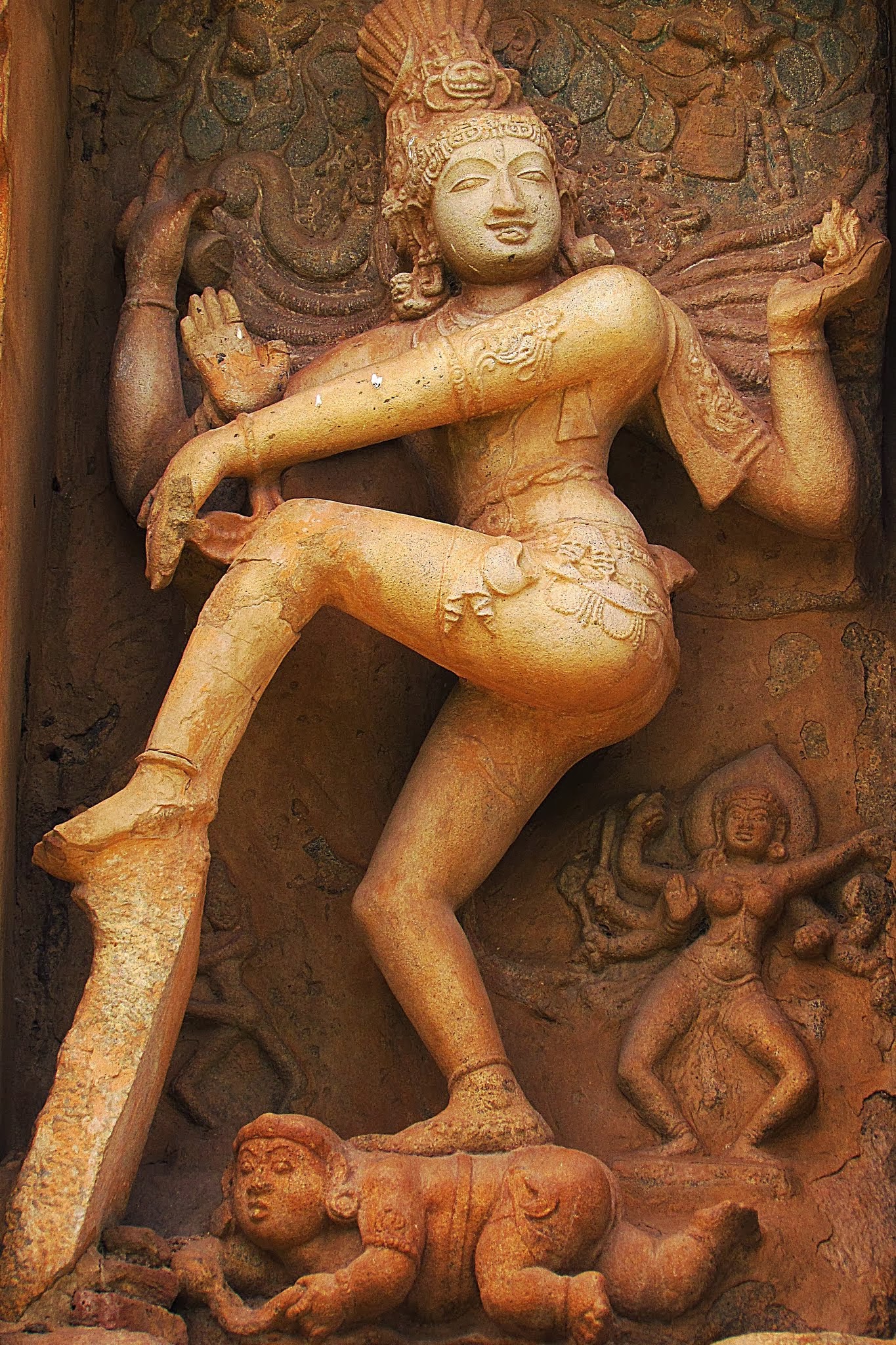
nataraja

One of the most beautiful Natarajas; smiling Nataraja of Gangai Konda Choza Puram, Tamil Nadu

நியூட்டனின் பதிலால் விக்கித்து நின்று விட்டார் அவர். கோடானு கோடி நட்சத்திரங்களையும் கிரகங்களையும் இன்ன பிறவற்றையும் தோற்றுவித்தவன் யார்? அவருக்கு உறைத்தது. அன்று முதல் அவர் சிறந்த ஆத்திகரானார்.

விஞ்ஞானி நியூட்டன் சொன்ன பதிலை பல நூற்றாண்டுகளுக்கு முன்பே “இயற்கையைப் பார்; அதைப் படைத்தவனை அறி” என்று மூசு வண்டறைப் பொய்கையைக் காட்டிக் கூறிய அருளாளர் அப்பர்,

“விறகில் தீ ஆகவும், பாலில் நெய்யாகவும் மறைய நின்றிருப்பவன் ஜோதி ஸ்வரூபமானவன் என்று கூறி அவனைப் பார்க்க – அடைய –  உறவு என்னும் கோலை நட்டு உணர்வு என்னும் கயிற்றினால் முறுக வாங்கிக் கடைந்தால் அவன் நம் முன் வந்து நிற்பான்”

என்கிறார்.

hh-shiva-pooja

Sringeri Acharya’s Abhisheka to Spatika Linga

இதை விட அற்புதமாக எளிமையாக இறைவனை அடையும் வழியை யாரேனும் சொல்லி இருக்கிறார்களா?!

“விறகில் தீயினின் பாலில் படு நெய் போல்

மறைய நின்றுளன் மாமணி ஜோதியான்

உறவு கோல் நட்டு உணர்வு கயிற்றினால்

முறுக வாங்கிக் கடைய முன் நிற்குமே”

தென்னாடுடைய சிவன் அவன்! எந்நாட்டவர்க்கும் இறைவன் அவன்!

வாழ்த்த வாயும் நினைக்க மனநெஞ்சும்                                    

தாழ்த்த சென்னியும் தநத தலைவனைச்                                     


சூழ்த்த மாமலர் தூவித் துதியாதே                                            

first_abhishekam1

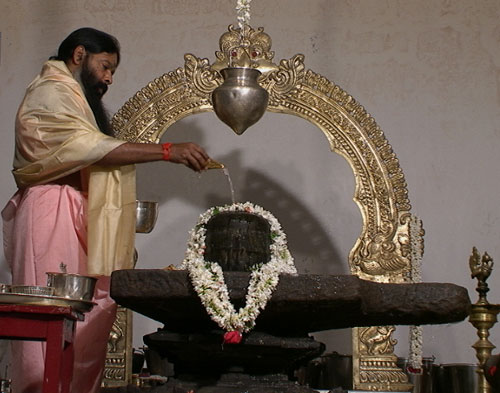
ganapathy Sachidananda Swamiji’s Abhishek to Lord Shiva

வீழ்த்த வாவினையே நெடுங்காலமே என்று பலகாலம் சிவனை எண்ணாமல் காலம் கழித்த தன் வினையை எண்ணி நோகிறார் அப்பர். இப்படி அவர் சொல்வதற்கான காரணம் நம்மை நல் நெறிப் படுத்தவே!

“தேடிச் சென்று திருந்தடி ஏத்துமின்” என்று நம்மை அறை கூவி அழைக்கும் அப்பர் இறைவனை காண முடியாமல் நாம் இருப்பது நம் பண்டை வினைப் பயனாலே என்பதைச் சொல்லி, “ஆடிப்பாடி அண்ணாமலை கை தொழ ஓடிப் போம் நமதுள்ள வினைகளே” என்கிறார்.


2011-01jan-03-nithyananda-photo-1 1008 linga

1008 Lingas at Tiruvannamalai, Tamil Nadu

யாருடன் சேர்வது!

இப்படி அனைத்துக் கேள்விகளுக்கும் பதில் சொல்லும் அப்பர் யாருடன் சேருவது, யாரை உதறுவது, இன்னும் கேட்டால் யாருக்கு ஓட்டுப் போடுவது என்பதைத் தானா சொல்ல மாட்டார்!


“சங்க நிதி பதுமநிதி இரண்டும் தந்து தரணியொடு வான் ஆளத் தருவரேனும் மங்குவார் அவர் செல்வம் மதிப்போம் அல்லோம் மாதேவர்க்கே காந்தர் அல்லர் ஆகில் அங்கமெலாம் குறைந்து அழுகு தொழுநோயராய் ஆ உரித்துத் தின்று உழலும் புலையரேனும்


கங்கை வார் சடைக்கரந்தார்க்கு அன்பர் ஆகில் அவர் கண்டீர் நாம் வணங்கும் கடவுளாரே!”

என்ற அவரது வாக்கு அள்ள அள்ளக் குறையாத சங்க நிதி, பத்ம நிதி இரண்டையும் கொடுத்து பூலோகம் இந்திர லோகம் இரண்டையும் ஆளும் உரிமையையும் தந்தாலும் அவர் சிவனுக்கு அன்பர் இல்லை எனில் அவர் செல்வத்தை உதறி எறிந்து அவரையும் உதறுவோம். மாறாக கொல்லக் கூடாத பசுவைக் கொன்று தின்னும் புலையன் என்றாலும் அவன் சிவனின் அன்பன் எனில் அவனை கடவுளாக வணங்கி அவன் தாள் பணிவோம்” என்கிறார்!


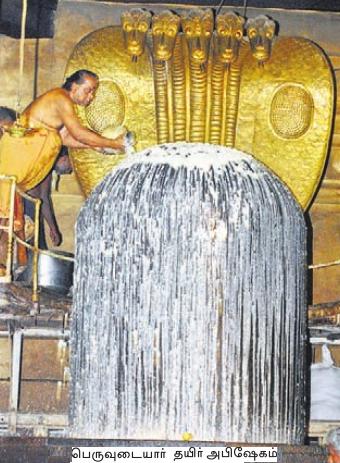
PERUVUDAYAR+THAYIR

Curd/ Yogurt Abhishek

ஆழ்ந்த கருத்து உடைய இந்தப் பாடல் சிவ அன்பர்கள் அனைவரும் வாழ்நாள்  முழுவதும் பேணிக் காப்பதற்கான லட்சியப் பாடல்!

சிவனை வணங்காதார் முகம் பார்க்காதே என்று அவர் சொல்லும் போதே பணத்தையும் சலுகைகளையும் தந்து ஓட்டுக் கேட்கும் நாத்திகர் பக்கம் சேராதே, மாறாக எளியவராக இருந்தாலும் சிவன் கோவிலையும் சிவ பக்தியையும் போற்றும் நல்லோரை நாடு, வணங்கு என்று அவர் கூறுவதில் இக உலக இயலுக்கான உபதேசமும் அதில் அடங்கி இருக்கிறதல்லவா!


nithya1

சிவராத்திரி சபதம்

மஹா சிவராத்திரி அன்று அப்பரின் அருளை வேண்டி மாபெரும் சபதம் ஏற்போம்!

சிவனை வணங்காத நாத்திகரை ஒரு நாளூம் சேரோம்; எம் நண்பர்களையும் சேர விடோம்; சிவ பக்திச் செல்வர்களுடன் இணங்குவோம்; அவர்களை வணங்குவோம் என்ற சபதம் ஏற்று முன்னேறுவோம்.

சிவ பிரானின் தமர் (தமர் – உறவினர்) நாம் , ஆகவே அவர் வாக்குப் படி

“அஞ்சுவது    யாதொன்றும் இல்லை; அஞ்ச வருவதும் இல்லை!”

தென்னாடு உடைய சிவனே போற்றி!

எந்நாட்டவர்க்கும் இறைவா போற்றி!!

abhisheka-bilva

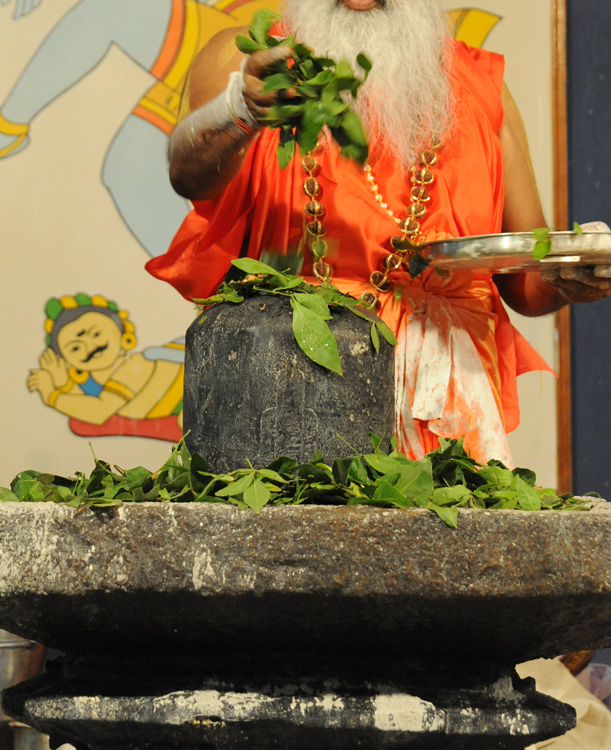
Bilva/ Vilva Archana to Lord Siva

************

contact swami_48@yahoo.com

Disadvantages in Heaven! Mahabharata Description!

fall2

A page from Mahabharata.. ..

This is Heaven – Part II

by S.Nagarajan

Post No 1639; Dated 10th February 2015.


On 8th February (Post No 1633) I posted the first part of This is Heaven. Here is the second part-swami

The celestial messenger, after describing the Heaven started telling the disadvantages of the heaven to Sage Mudgala.


“A person, while reaping the fruit of the acts he had already performed , can not be engaged in any others. Also he must enjoy the consequences of the former until they are completely exhausted. Further, he is subject to fall after he had entirely exhausted his merits.

The fall of a person whose mind had been steeped in happiness must be pronounced as a fault. The discontent and regret that must follow one’s stay at an inferior seat after one had enjoyed more auspicious and brighter regions must be hard to bear.

The consciousness of those about to fall is stupefied and also agitated by emotions. As the garlands of those about to fall fade away, fear invade their hearts. This mighty drawbacks extend even to the regions of Brahma.

falling-298x300

In the celestial regions, the virtues of men who have performed righteous acts are countless.  This is another of the attributes of the fallen that, by reason, they attain to high fortune and happiness.

If one comes by an inferior birth, however, cannot  acquire knowledge in heaven.

The fruits of acts done in this world are reaped in the next.

This world has been declared as one of acts, the others as one of fruit.”

The celestial messenger thus described fully the advantages and disadvantages of the heaven,

Having heard this Sage Mudgala started reflecting in his mind.

Having deliberated well, he told the messenger,” Oh, messenger of the gods, I bow to you. Please depart in peace. I have nothing to do with either happiness or heaven having such prominent defects. Persons who enjoy heaven suffer, huge misery and extreme regret in this world. Therefore, I do not desire heaven. I shall seek for that unfailing region where people have not to lament or to be pained or agitated. You have described to me these great defects belonging to the celestial regions. Please tell me about a region free from these faults”

The messenger then described the Vishnu loka to the sage and left.The sage bade farewell to him and assumed perfect contentment. Praise and dispraise became equal to him. A brickbat , stone, and gold assumed the same aspect in his eyes. He always engaged himself in meditation. By means of knowledge he obtained power and acquired excellent understanding.

Then he attained that supreme state of emancipation which is regarded as Eternal.


This excellent portion in Mahabharata, Vana Parva gives a beautiful description of Heaven.


For full details one may go through the chapters  about  Durvasa’s visit to the sage  Mudgala.

*********  Concluded

Note: Interested persons may download (free) full Mahabharata (18 parvas) in English. (Mr Ganguly’s translation, published in 1896)


swami_48@yahoo.com

This is Heaven! Beautiful Description in Mahabharata!!

??????????????????????????????????

by S.Nagarajan

Post No 1633; Dated 8th February 2015


In Vana Parva of Mahabharata , Heaven is described very beautifully. (Chapter 262 Mahabharata in Tamil) . Given below is a brief description of the chapter.


Once the great Sage Durvasa came to meet Rishi Mudgala. Mudgala received him with great reverence and offered him food. While they were talking a celestial messanger appeared before Mudgala and invited him to come along with him in his chariot to go to Swarka loka.


Mudgala asked him what constitutes happiness in heaven and what are the disadvantages thereof?


The celestial messenger was wonderstruck with these questions because everybody will jump on to his chariot once they are invited whereas this rishi is asking about the merits and demerits of heaven!

the-mahabharata-story-1-728

He addressed him as an unwise person and described him about the Heaven as follows:


” The region called Heaven exists there above us. Those regions tower high and are furnished with excellent paths and are always ranged by celestial cars.  Atheists  and untruthful persons and those that have not practiced ascetic austerities and those that have not performed great sacrifices cannot come there.

Only men of virtuous souls and those of subdued spirits and those that have their faculties in subjection and those that have controlled their senses and those that are free from malice and persons intent on practice of charity ; and heroes and men bearing marks of battle after having with subdued senses and faculties, performed the meritorious rites attain those regions.

There are established separately myriads of beautiful shining and replendent worlds bestowing every object of desire owned by those celestial beings, the gods, the sadhyas, the Vaiswas, the great sages, Yamas, the Dharmas, the Gandharvas and the apsaras.

There is that monarch of mountains the golden Meru extending over a space of thirty-three thousand yojanas.

 atred-free-happiness-

There are sacred gardens of celestials with Nandana at their head where sport the persons of meritorious acts.


And neither hunger, nor thirst, nor lassitude, nor fear, nor anything that is disgusting or inauspicious is there.


And all the odours of that place are delightful and the breezes delicious to the touch.


And all the sounds there are captivating to the ear and heart.

And neither grief, nor decrepitude, nor labour, nor repentance also is there. That world  obtained as the fruit of one’s own acts is of this nature.


Persons come there by virtue of their meritorious deeds. And the persons of those that dwell there look resplendent solely by virtue of their own acts and not owing to the merits of  their father or mothers.

golden himalayas

Who are Ribhus?


There is neither  sweat, stench nor urines.


There no one could soils one’s garments. And their excellent garlands redolent of divine fragrance never fade. They yoke such cars as the one I have brought now. Men live very happily there devoid of envy, grief , fatigue, ignorance and  malice.

Higher and higer over such regions there are others endued with higher celestial virtues – of these the beautiful and resplendent regions of Brahma.

Rishis  sanctified  by meritorious acts come to that  Brahma regions .

And there dwell certain beings named Ribhus. They are the gods of the gods themselves.


Their regions are supremely blessed and are adored even by the deities. These shine by their own light and bestow every object of desire.

They sufer no pangs that women might cause and do not possess worldly wealth and are free from guile.

himalaya-mountain-lake

The Ribhus do not subsist on oblations nor yet on ambrosia. They are endued with such celestial forms that they cannot be perceived by the senses. And these eternal gods of the celestials do not desire happiness for happiness’ sake, nor do they change at the revolution of a Kalpa.


For them there is neither ecstacy, nor joy, nor happiness. They have neither happiness nor misery. The number of those deities is thirty-three. Wise men come to these regions, after observing excellent vows or bestowed gifts according to the ordinance.


– Disadvantages of  the Heaven ,in the next article.

Jesus Mystery! Did he learn in Hindu Gurukula?

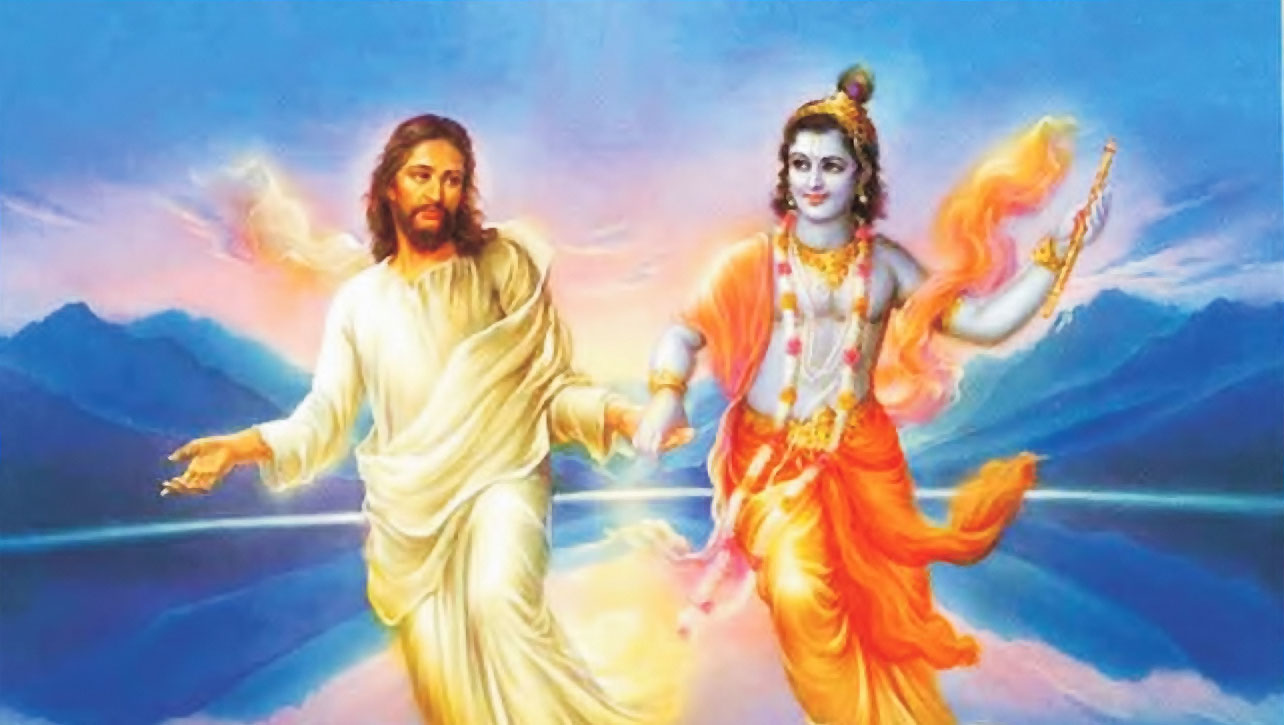
Jesus-Christ-and-Krishna1

Christ and Krishna

Research paper written by London swaminathan

Research article Number 1625; Date 5h February 2015

The greatness of Hinduism is that they believe that messengers of God can appear in any part of the world. Another great thing about Hinduism is that they don’t call anyone Kafir or pagan, but all are called Divine Children (Amrutasya Putraha or Divyatma Swarupalala).  The third great thing about Hinduism is that whatever said in other religions are already found in the vast ocean like Hindu scriptures. Nothing in the world came to them as a surprise or a new thing! So they din’t clash with any one or covert any one.

Bible is silent about the teenage years of Jesus Christ. The New Testament says Jesus went at the age of 12 and came back at the age of 30. Scholars from various fields have discussed this topic for nearly 200 years and have come out with various theories. Teenage years are very important in any human being’s life. Since youths have tremendous energy and turbulent mind, they will go astray very easily if their energy is not properly channelized.

buddha and chirst

Krishna, Christ and the Buddha

Ancient India had a beautiful system to tackle this problem. Children at the age of seven were sent to Teachers (Guru) houses and asked to serve them. While serving at the teachers’ houses they were taught the lessons. When they have mastered the subject by the age of twenty or so they were sent home. Immediately they were married and so there was less opportunities for following bad things. Moreover the military style discipline imparted at Guru’s place made them to fall in a groove. Habits die hard. They followed the good habits they learnt at Guru’s Ashram or Gurukula. Sanskrit scriptures say that certain teachers had hundreds of students and so they were called Kulapatis.

Jesus Christ was a born Yogi and Jnani

Jesus’ life and his teachings point out that he had education at a Hindu Gurukula in the Himalayas. Even before Jesus was born, India had big universities with thousands of students in Takshasheela (Taxila), Nalanda and Kancheepuram. So it was not impossible.

Why should Jesus come to India to learn such things?

Jesus was born in a Jewish sect known as Essenes. Roman writer Pliny the Elder ( 70 CE) gave the details of Essenes’ life. They were ascetics, they took bath every day (like Hindus), they believed in mysticism and they did not marry (Brahmacharys). Readers can find more about Essenes in encyclopaedias. They were like Hindu Yogis. The word Essenes came from Sanskrit word Isa (God). In short they were god men. In India every town has a great soul who we respect as god men.

Though many people have put forward various points to justify that Jesus visited India in his teenage years, they have not given many of the following things:
 

christ and krishna

Adwaita in the Bible: Jesus’ probably learnt Adwaita-Non Dualism from Hindu saints in the Himalayas. Swami Vivekananda spoke about three stages in the preaching of the Christ. When he went to the masses, who could not conceive anything other than a personal God, he said, Pray to your Father in Heaven and he acted like a Messenger of God. To others who could grasp a higher idea, he said, I am the vine, ye are the branches, but to his disciples, to whom he revealed himself fully, he proclaimed the highest truth, I and my father are one. This is what considered as Maha Vakyas in our Upanishads : Aham Brahmasi, Tat twam asi etc.(I am God, You are That).

When he said,’ The Kingdom of Heaven is within you’ and ‘Blessed are the pure in heart for they shall see God’, Jesus meant only the non-dualist principle, which was made popular by the greatest philosopher Adi Sankara.

Jesus Christ= Thera Buddha

Swami Vivekananda also narrated a strange dream about Jesus Christ to his disciples. Read it in his own words:

“I had a curious dream on my return voyage to England. While our ship was passing through the Mediterranean sea, in my sleep, an old and venerable looking person, Rishi-like in appearance, stood before me and said: I am one of the ancient order of Theraputtas which had its origin in the teaching of the Indian Rishis.
 The truths and ideals preached by us have been given out by Christians as taught by Jesus: but for the matter of that there was no such personality by the name of Jesus ever born. Various evidences testifying to this fact will be brought to light by excavating here. By excavating which place can those proofs and relics you speak of be found? I asked. The hoary-headed one pointing to a locality of Turkey, said, see here.
 Immediately after, I woke up, and at once rushed to the upper deck and asked the captain, ‘what neighbourhood is the ship in just now?’. ’Look yonder’, the captain replied, ’there is Turkey and the island of Crete’.”
jesus bhaktas namskar and namste

Hindu Style: Bhaktas prostrate: Namaskar and Namaste (See at the bottom right)

Bhagavad Gita & The Bible: There are many resemblances between the Gita and the New Testament. As an instance of a resemblance between the two scriptures a quotation or two may be given. Krishna says (9-27) ‘whatever thou do; whatever thou eat; whatever thou sacrifice; whatever thou give away; whatever mortification you may perform; do all as if to me.’ With this compare (I.Cor.x.31)’whether therefore ye eat or drink, Whatever ye do, do all to the glory of God.’ Krishna says again ‘Be not sorrowful; from all thy sins I will deliver thee’. While in Mathew ix.2. We read, Be of good cheer; thy sins be forgiven thee.’

Let me add just one further quotation, in which the resemblance is striking: In describing Heaven Krishna says of it that it is a place ‘in which neither sun nor moon need shine, for all the lustre it possess is mine.’

The Heaven described in Revelation xxi.23 is a city which had no need of the sun, neither of the moon to shine in it, for the glory of god did lighten it.’ Quoting all these in his book Indian Philosophy, the learned author J.F.Kennedy says that the writers of the New Testament borrowed all these from Bhagavad Gita.

King Herod= King Kamsa

Mr.J.F.Kennedy adds one more analogy in the above said book that Kamsa who killed all the children is Indian Herod.( Herod was a Roman king who ordered the slaughter of all the children to make sure that Jesus’ is dead.)


Catholic Church and the Buddhist Monastery: All the customs, from the uniform to the convent is copied from the Buddhists who were sent to the West from the days of Asoka. This was noticed and reported by a lot of Western scholars.

‘The Original Jesus’ written by E R Gruber and G Kersten gives hundreds of examples with proof. Asoka sent preachers to different countries and Jesus also arranged for his disciples travel even before his death. The convent, the system of preachers, the uniform for the priests- all copied from the Buddhists and the Buddhists adopted all these from the Hindus. To give one example, Hindu saints wore saffron cloth and the Buddhists wore yellow cloth. Hindu saints went to different parts of the world including South East Asia where there are many statues of Agastya even today.
most of the pictures Yogic white

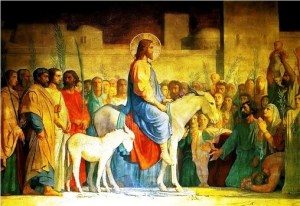
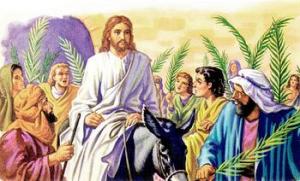
Old Jesus pictures are in Hindu Yogi’s white dress!

Jesus and Fish Symbol

Scholars struggled very hard to justify why Jesus was identified with Fish symbol. At last they found out a circuitous route to explain it. They took him all the way to Greece and named him fish in Greek language! No one can see any logic in this strange link! In Greek “Ichtys” means fish and it was the acronym for” Iseous Christos Theou Hyos Soter” (Jesus Christ, Son of God, Saviour). This is a scholarly invention or concoction. It is like giving the meaning for the word ‘WIFE’ as “Worries Invited Fore Ever”! A senseless joke. The fact of the matter is that in the Bhagavad Gita, Hindus’ holy book, Lord Krishna says, “Jasaanaam makaras ca asmi”. The meaning is “Of the fishes I am Makara”. Makara is translated as shark or alligator or even big fish. Here the Sanskrit word for fish is Jasa. In course of time this sound was used for Isa (God), Yasa/s(fame) and names such as Jason etc.

In short, the Sanskrit word for fish and the name of Jesus sounded similar. But scholars struggled very hard to give umpteen interpretations for Jesus’ link with fish.

Vidura Niti= Jesus Niti

Like Sermon on the Mount and the Buddhist Dhammapada, the Hindu scriptures also teach men to return good for evil. This is what said to have uttered by Vidura, the wise man of Mahabharata in the Vidura Neethi.

Thiruvalluvar, the great Tamil saint in his Thirukkural says:

When a man has experienced pain caused by harm done to him, how can he cause pain to others? (Couplet 318)

‘The best way to punish those who harm you is to make them feel ashamed by doing them well and thinking no more of it’ (couplet 314).

Na tath parasya sandhadyath pratikuulam yadatmana: 7-17
“Do not do unto others as you wish others not to do unto you – Vidura Niti

padapuja

Padapuja : Hindu style! Washing the feet!

Mahabharata Santiparva 167-9 also repeats the same message in a positive way:

Tasmaad dharma praaadheenena bhavitavyam yataatmanaa
Tathaa cha sarvabhuutesu vartitavyam yathaatmani

Hence, by self control and by making right conduct (dharma) your main focus, treat others as you treat yourself.

Jesus Christ also said the same in the Bible,

Therefore all things whatsoever ye would that men should do unto you, do ye even so unto them (Matt.7,12)

Blind Leading the Blind: Many of the parables told by Jesus are similar to the parables in the Upanishads. Even the Upanishad and Vedic phrases such as Honey and Milk, Blind leading the Blind are found in Jesus teachings (Mathew 15:13-14, Luke 6:39-40)

Namaste by Jesus Devotees

Several of Catholic Christian customs such as Baptism, Using Bells, Incense, early paintings  showing Namaste (Joining both hands to show respect), Jesus in simple dress like Hindu yogis, Idol worship in the form of Virgin Mary, Cross  etc. show the influence of Hinduism and Buddhism.

When the people noticed that he was teaching at the age of 30, they were wondering, “is not this the carpenter’s son?” (see Mathew). The word used in Greek bible is Tekton (Sanskrit word Taksha, Tamil Thachan). There are hundreds of Sanskrit words in the Bible. Please see my early articles: Sanskrit in the Bible part 1 and Part 2

Oral Tradition in Kashmir


The oral tradition in Kashmir says that the Biblical king Solomon visited Kashmir. Jesus Christ was said to have spent his last days in Kashmir after resurrection The present Bible was redacted in 3rd century AD in Constantinople and lot of different versions were burnt at that time. Like Hindu Puranas they had various versions of the Bible. To avoid confusion they were burnt by the king Constantine. There is a bible called Sinai Bible in the British Library in London which differs widely from the modern Bible. There are 14,800 differences according to the author of “The Bible Fraud”, Tony Bushby.

There is a grave in Kashmir, which is considered Jesus’ grave. The epitaph on the grave says, “The messenger of peace rests here”. Several scholars have pointed out the similarity between the parables of the Upanishads and Christ.

jesus blessing, Hindu gesture

Hindu blessing : jesus does it with right hand like Hindu Yogis!

Forty Day (Mandalam) Fast: Jesus fasted for 40 days in the desert at the beginning of his ministry.

Even today 40 day fasting period leading up to Easter was followed by orthodox Christians. This 40 day period is called a Mandalam in Hindu scriptures. Even today millions of Hindus visiting Sabarimalai in Kerala and Murugan temples in Tamilnadu (Skantha Shasti) follow this custom.

Washing the feet: When Dharma alias Yudhistra performed the Rajasuya Yagna he allocated the tasks to different people. Krishna chose the work of washing the feet of the worthy Brahmins. One but cannot recall to mind an identical incident in the Life of Jesus, who when he ate the Passover meal with his 12 disciples went round washing their feet. This custom of washing the feet existed in Ancient India even today when great men like Sankaracharyas visit any one, it is done.


Unlucky No.13: The Christians think that number 13 unlucky. This is because that Judas, who betrayed Jesus was the thirteenth person at the Last Supper. But this belief about No13 has a different origin. The ‘Brahmanas’, the books that came immediately after Vedic Samahitas, call No13 a dirty number because the thirteenth month is called a dirty (mala) month. When the Vedic society used a lunar calendar unlike our modern solar calendar there was always a few days left as balance at the end of each year. When it accumulated in to a full month they treated as something dirty and avoided all good activities during that period. Amazing coincidence is that the South American Mayan civilization had also the same belief.

Christ-Yogic aura, buddha

Jesus has aura around his head like Hindu Yogis and Buddha!

Krishna Miracles: There are very many similarities between the miracles done by Jesus Christ, Krishna and Moses. The river Jamuna separated to give way to Krishna and Red Sea separated to give way to Moses and his followers. Jesus fed 5000 people with bread from the basket which contained only a few breads. In the same way Draupati fed a lot of people with Akshayapathram by the grace of Lord Krishna.

(Many of the above things are already reported in my posts at various articles. Now I have put them together:swami)

Contact swami_48@yahoo.com

(Pictures are used from various sites;thanks)

சிவனை நோக்கி கனவில் நடந்த கிருஷ்ணார்ஜுன பயணம்!

Mbharat7a

ஞான ஆலயம்

மஹாசிவராத்திரி 2015 பிப்ரவரி 17ஆம் தேதி வருகிறது. அதையொட்டிய சிறப்புக் கட்டுரை இது. சிவனைப் போற்றித் துதித்து சகல பேறுகளையும் பெறுவோம்.

சிவனை நோக்கி கனவில் நடந்த கிருஷ்ணார்ஜுன பயணம்!

by ச.நாகராஜன்


Post No 1621; Dated 4th February 2015


சிவபக்தன் அர்ஜுனன்

மஹாபாரதம் விளக்கும் தெளிவான ஒரு உண்மை நர நாராயணர்களே அர்ஜுனனாகவும் கிருஷ்ணனாகவும் அவதரித்தனர் என்பது.

அர்ஜுனன் சிறந்த சிவ பக்தன். அர்ஜுனனின் வில்வித்தையைக் கண்டு மகிழ்வதற்காக வேடனாக வந்த சிவன் பன்றியின் பின் பக்கமாக அம்பு எய்ய அர்ஜுனன் அது செல்லாது என்கிறான். ஆனால் தர்ம சாஸ்திரப்படி அது செல்லும் என்று கூறிய சிவன் அர்ஜுனனைப் பலவிதமாக திக்குமுக்காடச் செய்து அவன் வில்வித்தையைக் கண்டு மகிழ்கிறார். ஒரு கட்டத்தில் வில்லைத் தூக்கி எறிந்த பார்த்தன் மல்யுத்தம் செய்ய முன்வர சிவன் மகிழ்ச்சியோடு அவனை எதிர் கொள்கிறார். யுத்தத்தின் ஒரு அங்கமாக சிவனின் காலை அர்ஜுனன் மடக்கிப் பிடிக்கவே தன் காலில் விழுந்த பக்தனுக்கு அனுக்கிரஹம் செய்வதையே கடமையாகக் கொண்ட சிவன் தன் சுய உருவத்தைக் காண்பித்து அவனை ஆசீர்வதிக்கிறார். பிரமித்து நிற்கும் அர்ஜுனன் தனது பெரும் பேறை எண்ணி மகிழ்கிறான். (இன்னொரு கூற்றின் படி வேடனைத் தாக்குப் பிடிக்க முடியாத நிலையில் அர்ஜுனன் சிவலிங்கத்தைத் தொழ கேட்டதை அனுக்ரஹிக்கும் சிவன் வேட உருவத்தை மாற்றி சிவனாக அவன் முன் தோன்றி ஆசீர்வதிக்கிறார்)


Shiva_gave_bow_arjun

அர்ஜுனனின் சபதமும் கவலையும்

இப்படிப்பட்ட மாபெரும் சிவ பக்தன் ஒரு நாள் பெரும் சோதனைக்கு ஆட்பட்டுக் கவலையில் ஆழ்ந்தான். அபிமன்யுவின் அநியாயமான மரணத்திற்கு சிந்து தேச அரசனான ஜயத்ரதனே காரணம் என்பதை அறிந்து பெரும் கோபம் அடைந்த அர்ஜுனன் மறுநாள் சூரிய அஸ்தமனத்திற்குள் அவனைக் கொல்வதாக சபதம் பூணுகிறான். அன்று இரவு தான் அவனுக்குப் பெரும் கவலை ஏற்பட்டது. தனது சபதத்தை அறிந்த கௌரவ சேனை முழுவதும் மறுநாள் ஜயத்ரதனைக் காக்க வருமே, இந்த சோதனையிலிருந்து எப்படி மீள்வது என்று சிந்தித்தவாறே உறக்கத்தில் ஆழ்ந்தான்.

கனவில் நடந்த அதிசயப் பயணம்

அப்போது அவனுக்கு கனவு ஒன்று தோன்றுகிறது. கிருஷ்ணர் அர்ஜுனனிடம் வந்து கவலைக்குக் காரணம் என்ன என்கிறார். மறுநாள் ஜயத்ரதனைக் கொல்வது சாத்தியமா என்கிறான் அர்ஜுனன்..

உடனே கிருஷ்ணர் அர்ஜுனனை அழைத்துக் கொண்டு கைலாயம் செல்கிறார். இருவரையும் கண்ட சிவன் வந்த விஷயம் என்ன என்று கனிவுடன் கேட்கிறார்.

கிருஷ்ணரும் அர்ஜுனனும் அவரைத் துதித்து மறுநாள் நடக்கவிருக்கும் போருக்காக பாசுபத அஸ்திரத்தைப் பெறுவதோடு அதன் பிரயோகத்தையும்  அறிவதற்காக வந்துள்ளதாகவும் சிவன் அனுக்ரஹம் புரியவேண்டுமெனத் துதிப்பதாகவும் தெரிவிக்கின்றனர்.

உடனே சிவ பெருமான் அருகில் உள்ள தடாகத்தில் உள்ள வில்லையும் அம்பையும் எடுத்து வருமாறு பணிக்கிறார். அருகே உள்ள தடாகத்திற்கு கிருஷ்ணார்ஜுனர்கள் சென்ற போது அங்கே பயங்கரமான இரு ஸர்[ப்பங்களை தடாகத்தில் பார்க்கின்றனர். அர்ஜுனன் சதருத்ரியம் என்னும் வேத மந்திரத்தால் துதிக்க அந்தப் பாம்புகள் இரண்டும் ஒன்று வில்லாகவும் இன்னொன்று அம்பாகவும் மாறவே வியப்படைந்து அவை இரண்டையும் எடுத்துக் கொண்டு சிவபிரானிடம் வருகிறான்.

arjuna

அந்த வில்லையும் அம்பையும் சிவபிரான் பெற்றவுடன் அங்கு ஒரு பிரம்மச்சாரி எழுகிறான். அவன் வில்லிலே அம்பைப் பூட்டிக் காண்பிக்க அர்ஜுனன் அந்த நிலையை நன்கு கற்றுக் கொண்டு ருத்ரன் கொடுத்த மந்திரத்தையும் பெற்றுக் கொள்கிறான்.

இப்படியாக, சிவன் பாசுபாதாஸ்திரத்தை அர்ஜுனனிடம் கொடுத்து ஆசீர்வதிக்கிறார்.. கனவிலேயே நடக்கும் இந்த அதிசயப் பயணமும் பாசுபதாஸ்திரத்தைப் பெறும் நிகழ்ச்சியும் மஹாபாரதம் துரோண பர்வத்தில் வேத வியாஸரால் விவரிக்கப்படுகிறது. படிப்போரைப் புல்லரிக்க வைக்கும் அதிசய நிகழ்வு இது! (துரோண பர்வத்தில் 80, 81 அத்தியாயங்களிலும் 147,148ஆம் அத்தியாயங்களிலும் விவரிக்கப்படுகிறது – 1922ஆம் ஆண்டு பதிப்பிக்கப்பட்ட ம.வீ.ராமானுஜாசாரியார் பதிப்பு).கனவில் இப்படியொரு அற்புத அஸ்திரம் பெறும் நிகழ்வைச் சுட்டிக் காட்டும் ஒரே இலக்கியம் மஹாபாரதமே!

பாசுபதாஸ்திரம்

பாசுபதாஸ்திரம் சாதாரணமாக மனிதர்கள் மேல் பிரயோகிக்கப்படக் கூடாத தெய்வீக அஸ்திரம். மனம் பரிசுத்தமான, பாவமற்ற ஒருவனே அதைப் பெற முடியும். சிவன் அர்ஜுனனை மனிதர்களிலேயே உத்தமமான ஒருவனாக அங்கீகரித்து அதை உலகிற்குக் காட்டிய சம்பவம் இது. கிருஷ்ணரும் அர்ஜுனனை கீதையில் ‘பாவமற்றவனே’ என அழைப்பதையும் காணலாம்.

மந்திரம் கூறி வெறும் கண்களினால் எய்யப்படும் ஆச்சரியமான பாசுபதாஸ்திரத்தை ஜயத்ரதன் மீது கிருஷ்ணரின் ஆணையால் அர்ஜுனன் பதினான்காம் நாள் நடந்த போரில் பிரயோகிக்க அவன் தலை அறுந்து ஆகாயத்தில் பறக்கிறது.

உடனே கிருஷ்ணர், ‘”அர்ஜுனா! அதைக் கீழே விழ விடாதே. அவனது தகப்பன் விருத்தக்ஷத்திரன் அந்தத் தலை யார் மீது விழுகிறதோ அவன் தலை சுக்கு நூறாக வெடிக்க வரம் வாங்கியுள்ளான். இப்போது தவத்தில் ஆழ்ந்துள்ள அவன் மீது தலையை விழச் செய்” என்று கட்டளை இடுகிறான்.


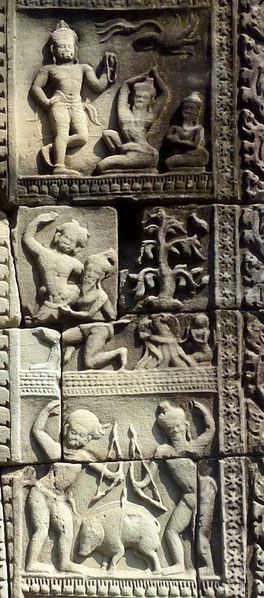
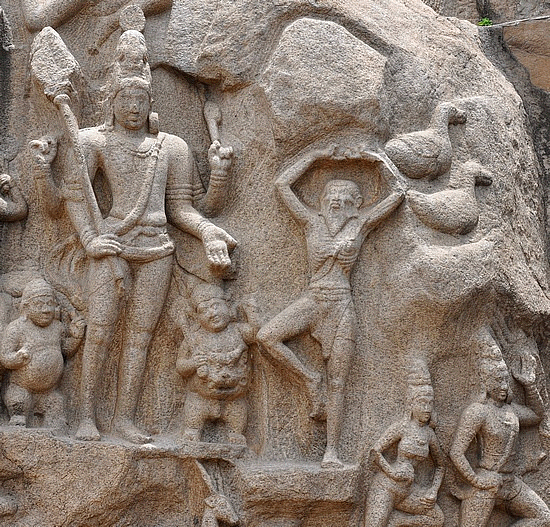
shivaarujuna

Baphuon, Cambodia

அர்ஜுனன் தலையை ஆகாயத்தில் பந்தாடிச் சுழலவிட்டு அதை விருத்தக்ஷத்திரன் மடியில் விழச் செய்யவே அவன் தலை சுக்கு நூறாக வெடிக்கிறது.

ஒரே கல்லில் இரண்டு மாங்காய்! சிவ, கிருஷ்ணரின் அனுக்ரஹம் சேர்ந்து இருக்கும் போது அர்ஜுனனால் எதைத் தான் சாதிக்க முடியாது!

மகாபாரதம் விவரிக்கும் அற்புதமான சிவானுக்ரஹத்தை கதை நெடுகிலும் ஆங்காங்கே காணலாம். சிவ பக்தியின் மஹிமையையும் பயனையும் உணர்ந்து மெய் சிலிர்க்கலாம்.


mahabalipuram

சிவன் வழி நடத்திச் சென்ற மஹாபாரதப் போர்

இன்னொரு மாபெரும் ரகசியத்தையும் துரோண பர்வத்தின் இறுதி அத்தியாயத்தில் (263ஆம் அத்தியாயம்) காணலாம்.துரோண வதம் முடிகிறது. அர்ஜுனன் தற்செயலாக அங்கு வந்து சேர்ந்த மஹரிஷி வியாஸரிடம், “மஹரிஷியே! பகைவர்களைக் கொன்றேன். ஆனால் எனது முன்னால் அக்னி போன்று பிரகாசிக்கும் ஒரு மஹாபுருஷர் சென்று கொண்டிருப்பதைக் காண்கிறேன். அவர் சென்ற வழியே நான் செல்கிறேன். அவர் செல்லும் வழியெல்லாம் பகைவர் அழிகின்றனர். எல்லோரும் நான் தான் பகைவரைக் கொன்று கொண்டிருப்பதாக எண்ணுகின்றனர். அவர் யார்?” என்று விளங்காத மர்மத்தைத் தெரிந்து கொள்ளூம் ஆவலில் கேட்கிறான்.

மஹரிஷி வியாஸர்,” அவரே சங்கரர். பக்தர்களுக்கு அழியாத வரம் கொடுத்து அனுக்ரஹிக்கும் மகாதேவனைச் சரண் அடை” என்று அருளுகிறார்.

மஹாபாரதப் போரில் அர்ஜுனனைக் கருவியாகக் கொண்டு சிவனே யுத்தத்தை முன் நின்று நடத்திய மாபெரும் அதிசயச் செய்தியை அர்ஜுனன் மற்றும் வியாஸ முனிவரின் வார்த்தைகளால் தெரிந்து கொள்ள முடிகிறது.


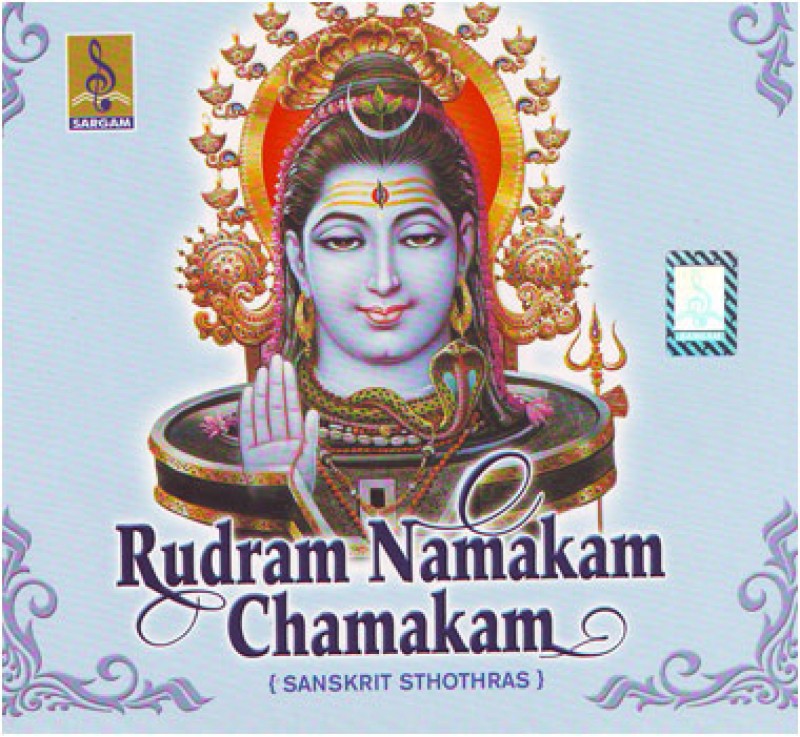
Rudram-Namakam-Chamkam-800x737

சிவ ரகசியம்:சத ருத்ரியம்

சிவனின் மஹிமைகளை வியாஸர் அர்ஜுனனுக்குத் தெளிவாக விவரிக்கையில் பல ரகசியங்கள் நமக்குப் புலப்பட ஆரம்பிக்கின்றன. அவற்றில் முக்கியமான சில:-

1)ஆயிரம் வருட காலம் இடைவிடாமல் சொன்னாலும் சிவனின் குணங்களின் பெருமையை என்னால் சொல்ல முடியாது – வியாஸர்

2)பக்தர்களை அவரே எல்லா இடுக்கண்களிலிருந்தும் விடுவிக்கிறார். நீண்ட ஆயுளும், ஆரோக்யமும், ஐஸ்வர்யமும், தனமும்,புஷ்களமான அபீஷ்டங்களையும் அவரே பக்தர்களுக்கு அனுக்ரஹிக்கிறார்.

3)அபீஷ்டங்களுக்கு பிரபு ஆதலின் அவர் ஈஸ்வரர் (எனப்படுகிறார்).மஹா பூதங்களுக்கு ஈஸ்வரராக இருப்பதால் அவர் மஹேஸ்வரர்.

4)பிரம்மா, வருணன், இந்திரன், யமன்,  குபேரன் இவர்களைத் தண்டித்து சம்ஹரித்தலால் அவர் ஹரன். பலாத்காரமாக இரண்டு கண்களும் மூடப்பட்டபோது மூன்றாவதாக ஒரு கண்ணை உருவாக்கிக் கொண்டதால் அவர் முக்கண்ணர்.

5) அவரது மங்களரூபமானது  தொடைகள் வரை அக்னி மயமானது. மறு பாதி சந்திரமயமானது. யார் ஒருவர் அவரைத் தொழுகிறாரோ அவர் சகல ஐஸ்வர்ங்களையும் பெறுகிறார்.

இப்படி சத ருத்ரியமாக சிவனின் பெருமைகளை வேத வியாஸர் விவரிப்பது பிரமிக்க வைக்கும் பெரும் வேத ரகசிய விளக்கமாகத் திகழ்கிறது.

rudram

சிவன், சக்தி, விநாயகர், முருகன் விஷ்ணு என அனைவரின் மஹிமைகளையும் விளக்கும் அபூர்வமான இலக்கியமான மஹாபாரதம் உலகின் தலையாய அற நூல். இதைப் பரப்புவதன் மூலம் அறத்தை தலை நிறுத்தி பாரதத்தை உலகின் உன்னத ஸ்தானத்தில் ஏற்ற முடியும் என்பது மட்டும் மறுக்க முடியாத உண்மை!


contact swami_48@yahoo.com

1621 articles are available in English and Tamil. Absolutely Free!!!!

om namashivaya

****************

God performs Funeral Rites: Strange Custom in Tiruvannamalai

Hoysala_emblem

Hoysala means Lion Killer

Research Paper written by London swaminathan

Research article No. 1620; Date: 3rd February 2015

Veera Vallala also known as Ballalan III (1291-1343 CE) ruled the Hoysala kingdom for over half a century. But it was a turbulent period in South India. Sultan Alauddin Khilji from Delhi started attacking the south. His commander Malikafur came with a big force and pillaged all the temples and palaces along his way up to Madurai, the capital of Pandya Kingdom. It happened in 1311. Without knowing Malik Kafur’s invasion, Vallalan tried to take advantage of the infighting between the sons of Maravarman Kulasekara Pandya. When Vallala was not in the capital, Malik Kafur defeated the Hoysala army easily and advanced further south. In fact the Hoysalas were unaware and unprepared for the impending attack.

Hoysala kingdom was returned to Vallalan under some compromising formula. In 1327 CE, next Sultan of Delhi, Muhammed bin Tughluk attacked the Hoysalas. Vallala was a very powerful king at that time. He was assisted by Harihara and Bukka,two efficient commanders, who later established the Vijayanagar Empire. It drove the Muslim invaders back to Delhi and left the task to Veera Shivaji to finish them off.

King Vallalan was a great devotee of Lord Shiva and used to visit Tiruvannamalai, one of the Panchabhuta (five elements) Shrines. Tiruvannamalai represented Fire in the five elements. Vallala faced another attack from Madurai Sultan Alauddin Udauji in 1341. Udauji was killed in the battle field by a mysterious arrow. Then came another attack from Ghiasuddin Damghani. Now Vallala was caught by surprise and taken as a prisoner. He was beheaded and his head was hung from the walls of Madurai fort according to Ibn Batuda. The Arab traveller visited Madurai and saw it with his own eyes.

vallala

King Veera Vallala in Tiruvannamalai Temple

During his life time, King Vallala did a great service to the Tiruvannamalai and even today the main tower is known as Vallala Gopuram (tower built by Vallala). His statues in different styles are found in the temple. Flowers are offered to the great king every day. In addition to the tower, he built many buildings in the temple.  The temple still honours him through a strange ceremony. Vallala died in the month of Masi (February in English calendar). Every year on the king’s death anniversary, the priests gather there to announce the death of King Vallala. When they did it for the first time, when the king actually died, Lord Shiva announced that he would do the funeral rites

(It is said that since the king had no children, Lord Shiva promised him that he would do all his funeral ceremony. Some historians believe that he had sons.)

Every year when the priests announce the death of Veera Vallala, his image is taken in a procession and is taken to Pallikonda Pattu. That is where the king was buried. It is said that Shiva himself ordered to do this ceremony. Shiva performs the funeral rites. Nowadays the priests represent Lord Shiva. Ellappa Nayanar, a fourteenth century poet has written about the great devotion of Veera Vallalan in his Arunachaleswarar Puranam.

Nine inscriptions of Vallala are found in the temple. One interesting fact has come out of these inscriptions – that Tiruvannamalai was his Southern capital with the name of Aruna Samudra Vallala Pattana. Another inscription dated 1317 gives all the titles of the great king. It is written in Tamil and Sanskrit. King and the queen have given lot of gifts to the temple for proper maintenance of the temple. Wages to priests, food offering, repair works, construction of a temple wall were some of the items found in the inscription.

OLYMPUS DIGITAL CAMERA

Temple photo by Lalgudi C Vedanarayanan of London

Part of the inscription runs like this:

“The illustrious king Vallala Deva ruling over the whole earth and possessing physique like the killer of elephants, is victorious. This Vallala Deva possessing all auspicious things was staying at his capital which was distinguished by the name Aruna Samudra belonging to the Hoysala kingdom which was established with love by his father ………

hoysala king

Hoysala king with his queens

Lesson of Modesty

There is another interesting story about King Vallala. After constructing the tower he became very conceited and proud of his achievement. Lord Shiva wanted to teach him a lesson. When the ten day annual festival was held, the procession of statues could not leave through that tower gateway. So they had to take the ornate palanquin of God Shiva through a different gate. This happened every day for nine days during the ten day festival. The procession was using a different route. The king got distressed and prayed to Lord Siva for forgiveness. Immediately the temple workers found it easier to go through the tower gate built by Vallala. This custom is followed even now. Only on the tenth day of the festival, God’s procession use the Veera Vallalan Gate Way (Tiruvasal). God wants to teach us to be modest even after achieving great things in life!

These two strange customs are the special things about this temple. By performing funeral rites God acted as the son of king Vallala. By refusing to leave the temple through king’s tower, he taught him modesty.

Source Book: The Light of Arunachaleswarar written by Iswari Kamalabaskaran of London.

contact swami_48@yahoo.com

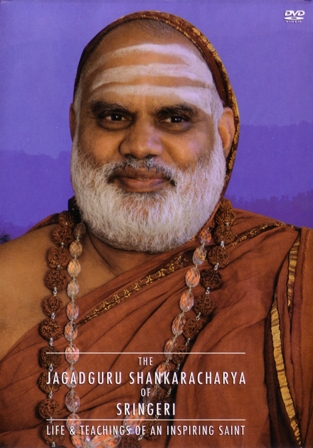
A Day in Sringeri Jagadguru’s Life.

the-jagadguru-shankaracharya-of-sringeri

Received  via email from D Narayanan, Bangalore

Posted by london swaminathan

Post No 1614; Dated 31 january 2015


A Day in Sringeri Jagadguru’s Life.


He does not sleep or rest during day.

Relaxation is a word that does not exist for him.

He is constantly reading whenever he has time.


3:45 am– Arises

4:30 am– First Bath,Anushtana, worship and meditation,puja to the padukas of his guru and paramaguru,Parayana of Adi shankara Bramha sutra bhashya

7 am– visits Samadhi temples of his gurus, goshala and feeds the cows.

8 am– Conducts classes for the students-Vedanta or tarka

9:30 am-Guides religious observences in peetham-Darshan to visiting heads of other mutts.

10:30 am– Darshan to devotees

sringeri 10a

12:00– 2 nd Bath-midday prayers and meditation

2:00 pm– Bhiksha(Lunch)

3:00 pm-Teaches a class for scholars and guides research activities.Brainstorming intellectual sessions on various subjects.

5:30 pm– Darshan to devotees.

6:30 pm– Discusses math affairs with administrator

7:30 pm– 3rd Bath-Evening worship and meditation.

8:15 pm– Sri chandramouleeshwara puja

10:00 pm– retires to his chamber and continues his personal study.

Food: A Glass of Milk in the morning and Night and one meal a day.

gurupuja

No fruits, snacks or other food.

On Ekadasi, observes silence and does not even partake water.

contact swami_48@yahoo.com

Lord Krishna’s Generous Donations!

beauiful-krishna-radha

Compiled by london swaminathan

Post No: 1600: Dated 24 January 2015

Lot of us who read Bagavatha Purana and Maha Bharata miss one important point. That is, Krishna was very generous and a great philanthrophist.


He have Sudama, a poor old friend, immense wealth. Sudama who was a class mate of Krishna at school, took just a few handfuls of pounded rice (powa), when he went to see him at his palace. Krishna took one handful and tasted it. Atonce Sudama’s hut became a palatial building. He went from rags to rich.


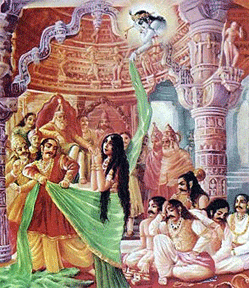
When Draupadi was almost disrobed by Duschasana and his team in the assembly, Lord Krishna gave her saree. When Duschasana tried to remove her cloth,  one after another appeared. It grew longer and longer that they could not do any harm to her. Her honour was saved.


When Duryodhana and Arjuna went for Lord Krishna’s help to win the war, Krishna gave the first chance to Duryodhana. Poor Duryodhana underestimated Krishna and asked for all his his army and weapons. Krishna smiled at him andsaid,Dadastu! ‘pease take it’. Arjuna was satisfied when Krishna said, “I will be your driver”. And he did drove his chariot to victory!


When the Symantaka diamond led to many frauds and murders he gave it to Akrura!

(Please read my research paper on Krishna’s Diamond in USA? — posted here on 23 April 2012).


When Gopis, girls from the cowherd community, gave him boundless love, he showered them with love thousand times more!


(Please read my post ‘Swami Vivekananda on Krishna and Gopis’ – posted here on March 8, 2014)

Was Draupadi Disrobed

Lord Krishna gave Viswarupa Darsanam to Arjuna and then to Bhisma.


When there was very heavy rain and the cowherd boys ran helter shelter, he gave them an umbrella made up of Govardhana Hill !!


Righto! Draupadi got X, Gopis got Y, Akrura got Z; you may wonder what do I get?

He has already given to you —  the entire humanity — a small and wonderful book called Bhagawad Gita– just 700 couplets — only 1400 lines! but the concentrated juice of Hinduism!

Drinking the juice in diluted form or concentrated form or not using it is in your own hands.


Here is a quote from Swami Vivekananda:-


“Krishna can never be understood until you have studied the Gita, for he was the embodiment of his own teaching. Everyone of these incarnations came as a living illustration of what they came to preach. Krishna, the preacher of the Gita, was all his life the embodiment of the Song Celestial; he was the great illustration of non attachment. He gives up his throne and never cares for it. He, the leader of India, at whose words kings come down from their thrones, never wants to be a king. He is the simple Krishna, ever the same Krishna who played with the Gopis.Ah, that marvellous passage of his life, the most difficult to understand, and which none ought to attempt to understand until he has become perfectly chaste and pure.” — Swami Vivekananda


Please read my two part post, Atom Bomb to Zoo of the Bhagavad Gita — posted here on November 22 and November 23 ,2011).


contact swami_48@yahoo.com