COMPARISON BETWEEN TAMIL POET AND ROMAN POET HORACE (Post No.5427)

Written by London Swaminathan

swami_48@yahoo.com

Date: 13 September 2018


Time uploaded in London – 21-22 (British Summer Time)


Post No. 5427

Pictures shown here are taken from various sources including google, Wikipedia, Facebook friends and newspapers. This is a non- commercial blog.


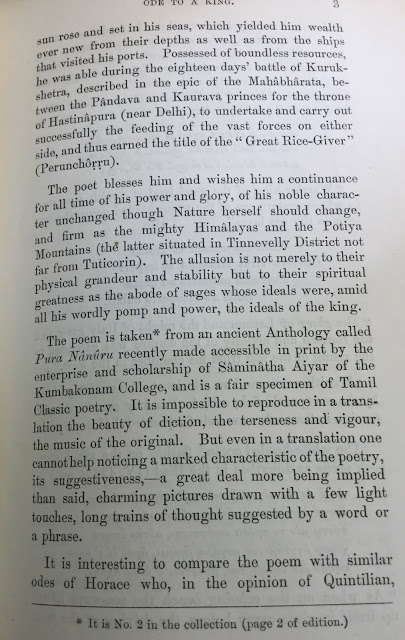
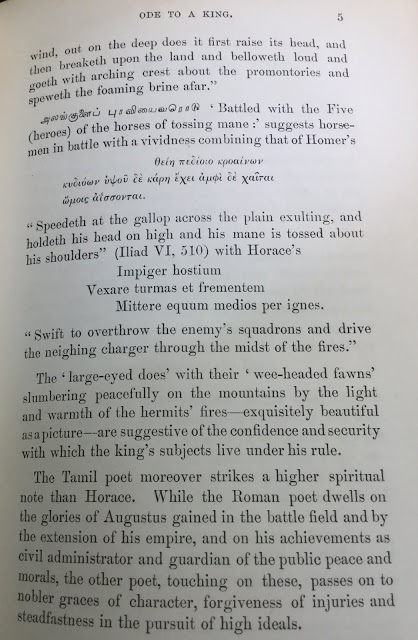
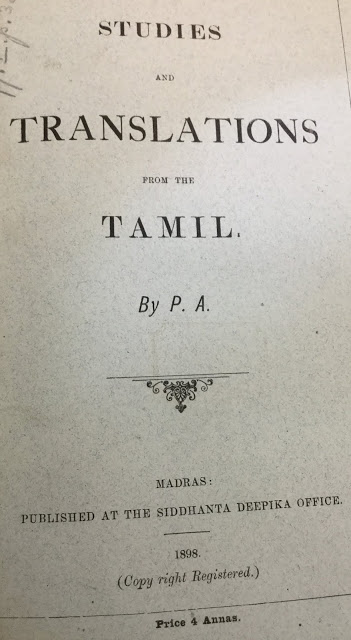
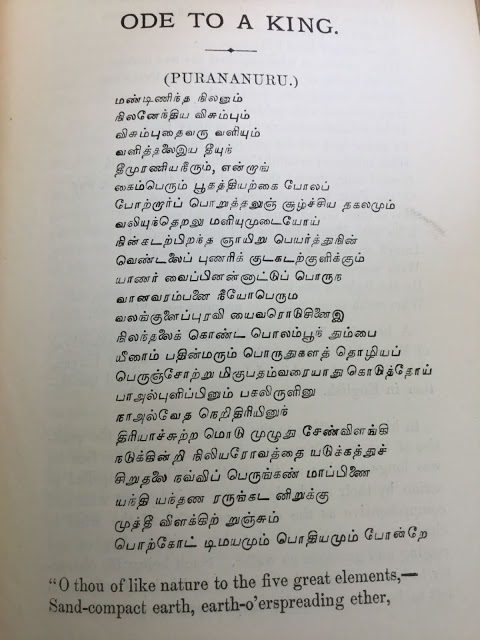
Two thousand years ago Muranchiyur Mudingarayar sang about Tamil Chera King Uthiyan Cheralathan. Around that time Roman poet Horace who composed poems in Latin also sang about kings. P Arunachalam compared both the poets and published an article in 1898. Before you read the comparison, I wanted to make some points on the same poem (verse 2 in Purananuru).


Muranchiyur Mudinagarayar’s poem is part of the oldest part of Purananuru, one of the 18 books of Sangam Tamil literature.

There are some interesting historical information as well as similes. This poem explodes all the Aryan- Dravidian myths. There was no such division.

1.The poet’s name is in Sanskrit Mudi Nagarajan. ‘The one who has snake on the head’- is the literal translation. It may be Lord Shiva or just Naga king. Since we have many Purananuru poets with pure Sanskrit names such as Damodaran,Valmiki, Brahama, Lochana, Parana, Kannadasan (Dayan Kannanar) and Maha chitran, it was not uncommon in those days.

2.Poet Nagarajan refers to Four Vedas and Brahmin’s Three Fires (Garhapatya, Ahavaniyam and Dakshinagniyam) which shows Vedic culture was strongly rooted in Tamil Nadu ( we have other refences to Yupa pillar everywhere, Rajasuyam, eagle shaped fire altar of Karikalan)

  1. The poem reflects Kalidasa’s description of the Himalayas in Kumarasambhavam and other works. The deer are taking rest in the Ahramas of seers where they enjoy the warmth of Sacred fire.

4.Another very interesting point is the reference to Pancha  bhutas. We see it in the Vedas. And the ancient Sanskrit literature always compare the Pancha Bhutas with five qualities of a King. It shows that the thought process was the same from Kanyakumari to Kashmir.

5.There is a debatable reference to Mahabharata war. Chera King praised as one who provided food for the combatants during the great war. The Tamil word used in the poem is ‘Perun Choru’ (Big food or feast). The word is not found nowhere else. Since Mudi Nagarajan was part of Second Tamil Sangam, commentator thought that the king lived during very old time. Linguistics or historic chronology wouldn’t allow any such interpretation. Language is very simple and it cannot be as old as 3102 BCE. If Uthiyan Cheran lived around that time we need a long list of Chera kings to fill the time gap. We didn’t  have such a king list. Chera king Uthiyan cheral was also sung by Mamulanar, another popular poet.


Then what is Big Rice or Big Food or Big Feast

Actually, on the death anniversary of big leaders,  people are fed to keep their memory or sacrifice alive It is just an Anna Dana like Saivite Guru pujas. Since the word is not used anywhere else in Tamil, no one could say whether it is right or wrong. But the language of the poem and the history of Tamil kings provide us enough clues.


6.The order of or the origin of Five elements (Pancha Bhutas) is in ‘Andhati’ style. Not only the style, the matter agrees with the Sanskrit scriptures.


  1. The golden Himalayas (Kanchan Srnga which is called Kanchen Janga now) is mentioned in Kalidasa’s work. Elsewhere I have given it as a proof for Kalidasa’s age. He lived before Sangam Tamil period.

8.There are references to bad omens: a)milk becoming sour b) day time becoming dark (solar eclipse; eclipses are considered bad omens)


9.Last but not the least there is an indirect reference to Agastya in the poem. Why did the poet compare Himalayas and Pothiya Hills? Pothiya Hills is the southern residence of the great seer Agastya who was sent by Lord Shiva to codify a grammar to Tamil language. Researchers say that it happened around 1000 BCE or 700 BCE. So the comparison between Pothiya and Himalayas is a veiled reference to Agastya Muni. Kalidasa refers to Pothiyam and the Himalayas in his Ragu vamsam.


Following is taken from a magazine published in 1898:-


–subham–

TAMIL BOY WHO COMPOSED POEMS WHILE PLAYING MARBLES! (Post No.5423)

WRITTEN by London Swaminathan


swami_48@yahoo.com

Date: 12 September 2018


Time uploaded in London – 19-16 (British Summer Time)


Post No. 5423

Pictures shown here are taken from various sources including google, Wikipedia, Facebook friends and newspapers. This is a non- commercial blog.


The are many unsung heroes among Indian poets and one of them was Murugadasa Swamigal of Tamil Nadu. He composed about 100,000 poems. Among them is a remarkable work called ‘Pulavar Purana’ meaning a Purana of Poets. He composed 2828 stanzas on 72 Hindu Poets of Tamil Nadu. He was born in Tirunelveli in 1838 and lived for 60 years. His family gave all the manuscripts to Tamil Pundit of Madras (Chennai) who published all his poems on 72 Tamil poets starting from the legendary Vedic seer Agastya.


Krishnmachari in his first part published in 1901, introduced Murugadasa swamikal with two interesting anecdotes :-

“ Though trustworthy information respecting the gifted poet is wanting, yet the date of his birth in Tirunelveli about 1838 harmonises with what is known of his career and death in the Tamil Vilambi year (1898). The young poet seems to have been a popular favourite and a leader of sports where he resided, but study and writing of poetry were nevertheless more attractive to him than play. He is a remarkable instance of intellectual precocity for he always carried with him his iron pen or stylus and palm leaf ready for use. It is said that he composed, at intervals of play at marbles, before he was ten years old, a short poem ‘Pannirumaalai’ in praise of the 12 powerful arms of the war god Subrahmanya.


When Murugadasa was old enough to leavehome,he visited all famous shrines in India and Sri Lanka and met many religious leaders in  monasteries.


Krishnamachari adds,

“ He was cultured and thoughtful and his delicate tact, piety and prudence well fitted him for the task of a biogrpaher. He covered imporatant Saivite and Vaishnavite poets andshowed no hositility towards any sect.He gave the history of Hindu poets leaving out Buddhist and Jain Tamil scholars.


He is known to have visited Madras before he was twenty years old and to have astonished a earned audience in Kandaswami Temple by his elquent exposition and ready powers of versification.


He is said to have composed no less than a lakh of verses consisting mainly of hymns and sacred legends of gods. I have given the list of Tamil Books in my Tamil version of this article). His greatest and most original work is ‘Pulavar Puranam’ (Legend of the Poets). It may be placed as a monumental work by itself, charming in all freshness and vivecity.


In short Murugadsa seems to have offended none and instructed many till his demise in sixtieth year in his clay built cloister in a little village of Tiruvamaattur in South Arcot.

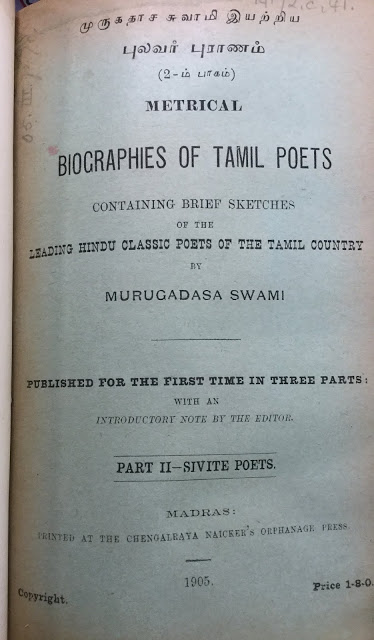
Metrical Biographies of Tamil Poets

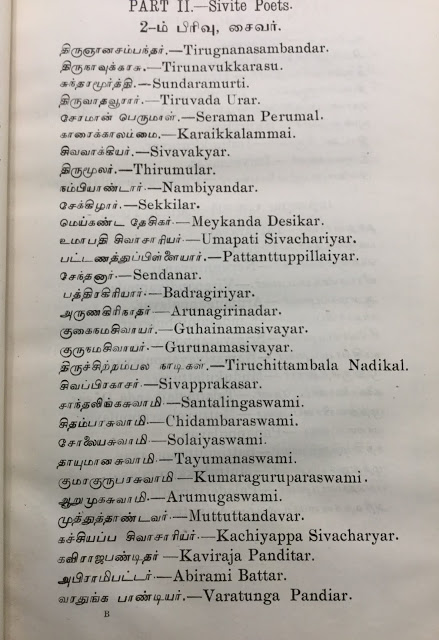
V Krishnamachariar published all the 2828 veses in three volumes from 1901 to 1906. Here is the list of all the 72 poets covered in his work:-


–subham–


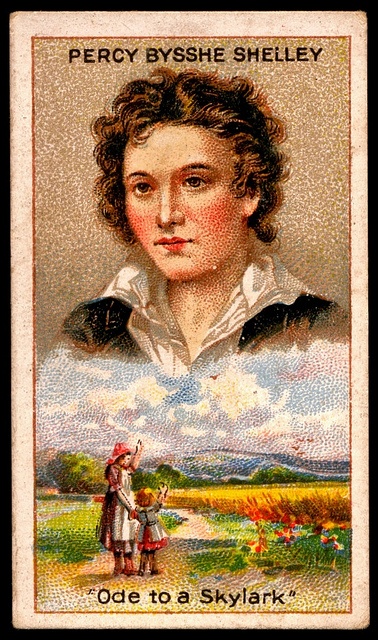
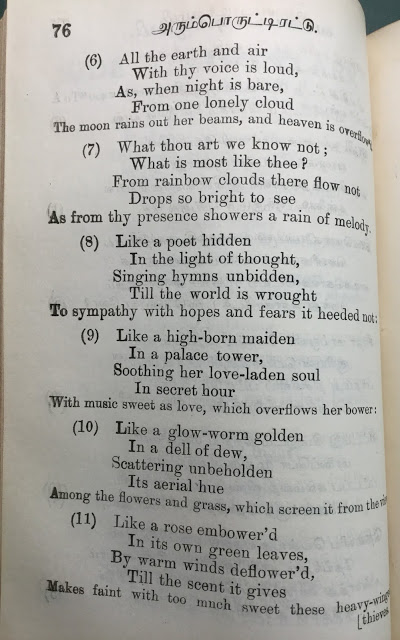
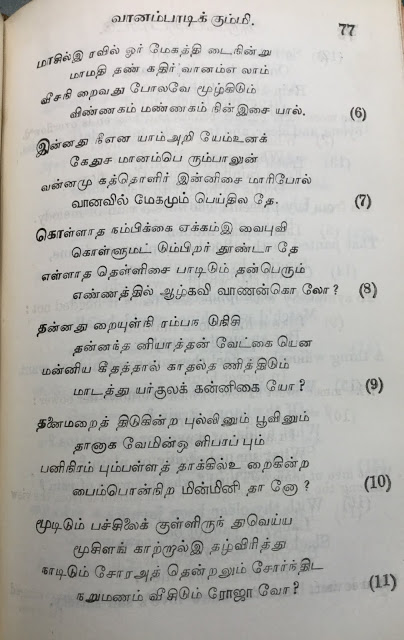
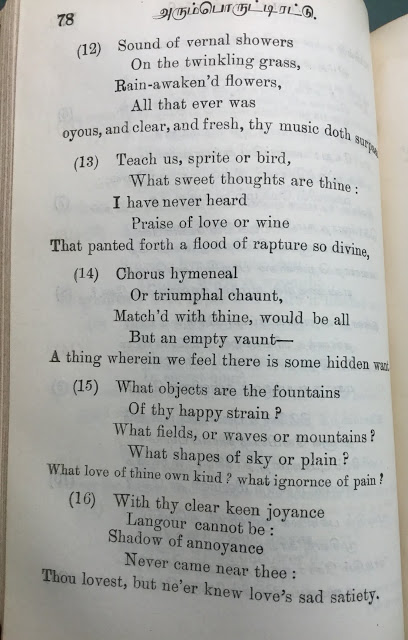
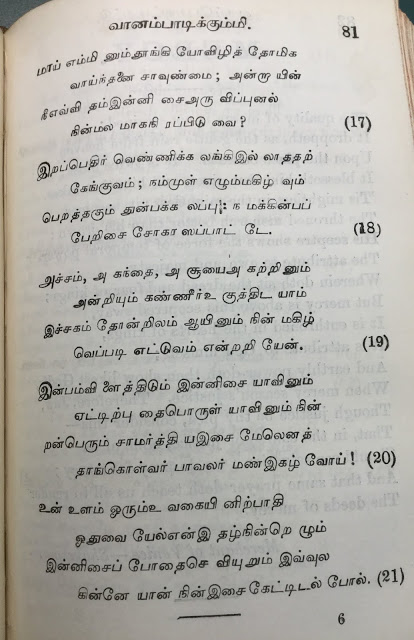
Shelley’s Sky Lark in Tamil (Post No.5355)

Compiled by London swaminathan

Date: 23 August 2018


Time uploaded in London – 7-09 am  (British Summer Time)


Post No. 5355


Pictures shown here are taken from various sources including google, Wikipedia, Facebook friends and newspapers. This is a non- commercial blog.


Translated by M Gopalakrishnan of Madurai 100 years ago!

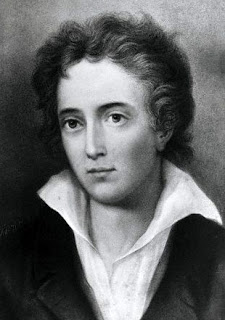
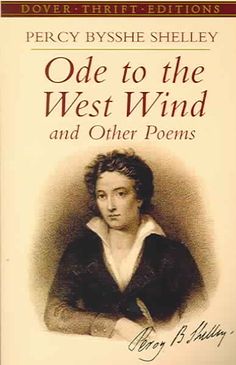
PERCY BYSSHE SHELLEY PROFILE

SHELLYEY, English Poet, Novelist and Essayist

Born August 4, 1792

Died July 8, 1822

Age at death 29

P B Shelley was one of England’s greatest Romantic poets. He was born into a wealthy noble family. He was educated at Eton college, where his radical views on politics and religion earned him a nick name ‘Mad Shelley’. While still at Eton and aged just 18, he published his first book, a gothic horror novel called Zastrozzi. In 1811 he was expelled from Oxford University for writing an anti-Christian pamphlet.


The same year 19 year old Shelley shocked his family even more by secretly marrying 16 year old Harriet Westbrook. This was the start of Shelly’s adventurous life of elopements and restless travels. Three year later Shelley eloped with Mary Wollstonecraft Godwin, who became Mary Shelley and who wrote the famous novel Frankenstein. Harriet killed herself in 1816, and Shelley married his new love. Mary and Shelley moved around constantly; they travelled around Europe and lived in many different towns in England. Shelley wrote his poetry in short bursts of intense creativity. His poems such as Alastor and Ozymandias, overflow with intense emotion and radical ideas that were not always appreciated by readers of his time.


In 1818 Shelley and Mary left England to live in Italy. He completed some of his greatest poetry there, including his masterpiece Prometheus Unbound. A few years later, on a short sea voyage along the Italian coast, Shelly’s small sail boat was caught in a storm and he was drowned. He was just 29 years old, but he had written poetry hat established him as one of the greatest English poets.

Publications

1810 Zastrozzi

1813 Queen Mab

1816 Alastor

1818 The Revolt of Islam

1818 Ozymandias

1819 The Cenci

1820 Prometheus Unbound

1821 Adonais

Published after he died

1824 The Triumph of Life


Shelley was Tamil Poet Bharatiyar’s favourite poet.


பாரதியாரைக் கவர்ந்த ஆங்கிலப் புலவன் ஷெல்லியின் வானம்பாடிக் கும்மி. தமிழில் தருபவர் மதுரை எம். கோபால கிருஷ்ண அய்யர்


–subham–


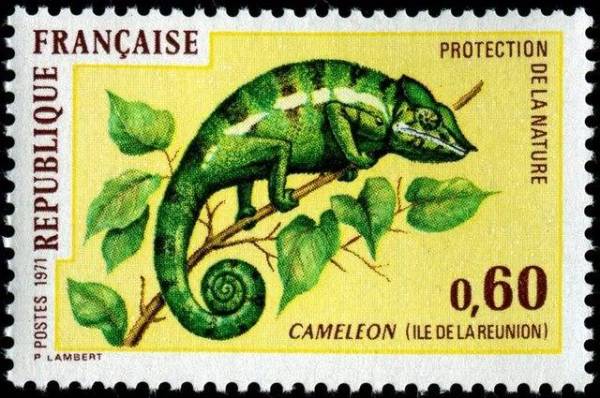
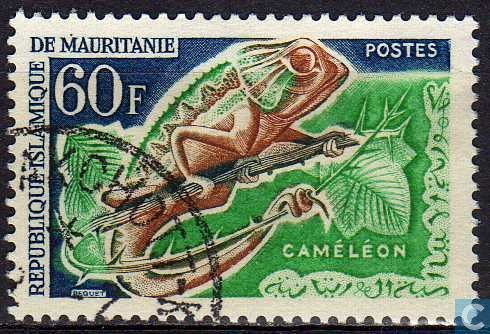
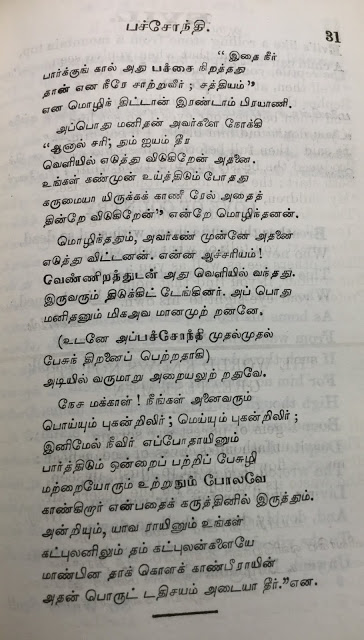
THE CHAMELEON பச்சோந்தி (Tamil and English) (Post NO.5340)

Compiled by london swaminathan

Date: 19 August 2018


Time uploaded in London – 18-08 (British Summer Time)


Post No. 5340


Pictures shown here are taken from various sources including google, Wikipedia, Facebook friends and newspapers. This is a non- commercial blog.


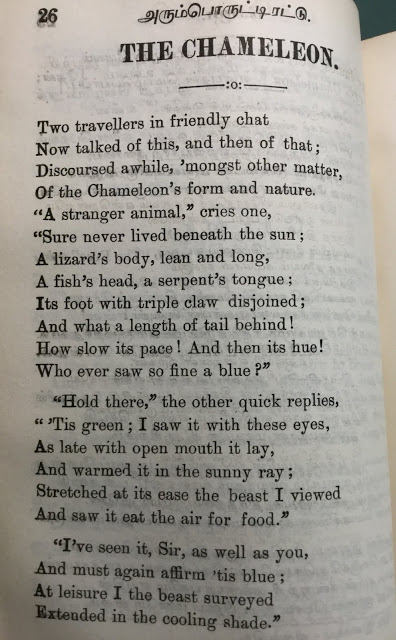
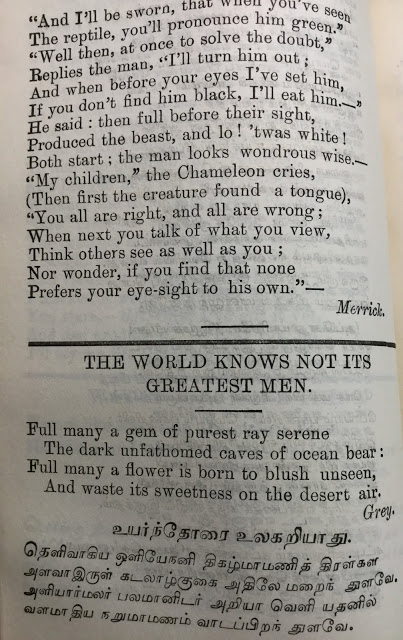
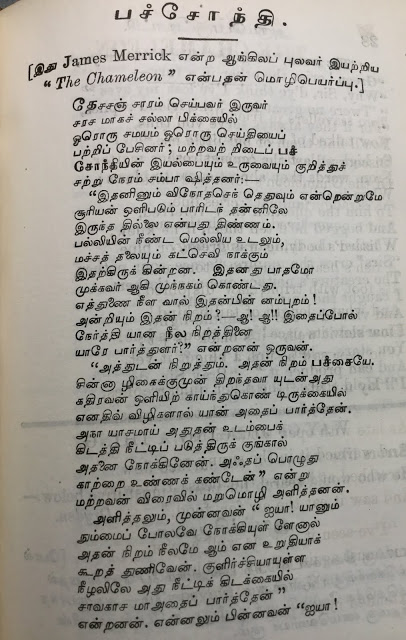
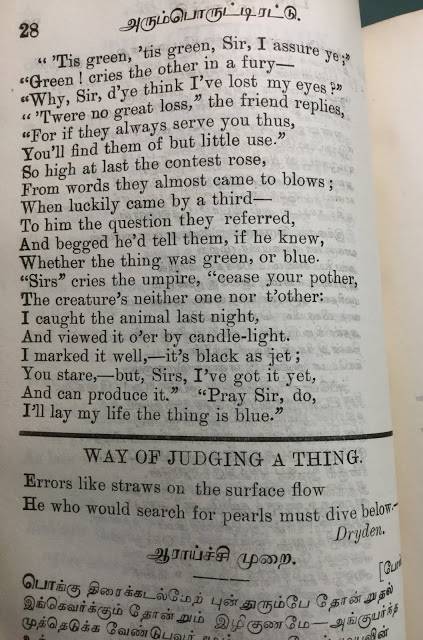
THE CHAMELEON was written by English poet and scholar James Merrick (1720-1769). He translated the chameleon from Greek. His poems are featured in Oxford Religious Poetry anthologies.

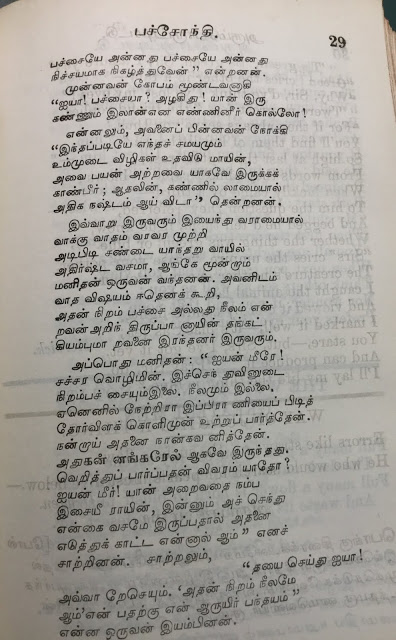
The verse is translated into Tamil by Pundit M Gopalakrishnan of Madurai, Tamil Nadu and was published in his anthology in 1915.

Following is the original poem in English and the translation in Tamil.

It is similar to the story of a five blind men and an elephant found in Hindu and Buddhist literature.


ஜேம்ஸ் மெர்ரிக் (1720-1769) என்பவர் ஒரு சிறந்த ஆங்கிலக் கவிஞர்; ஆக்ஸ்போர்டு பல்கலைக் கழகத்தில் கற்று ட்ரினிட்டி கல்லூரியில் பணியாற்றினார். கிறிஸ்தவ மத போதகராக மாறியும் கடும் தலைவலி காரணமாக அந்தப் பணியை ஆற்ற முடியவில்லை. ஆனால் இவர் எழுதிய பச்சோந்தி என்னும் கவிதை மிகவும் கருத்தாழம் மிக்கது. அந்தக் கவிதையை அவர் கிரேக்க மொழியில் இருந்து மொழி பெயர்த்தார். இவரது கவிதைகள் ஆக்ஸ்போர்டின் சமயக் கவிதைகள் தொகுப்பில் வெளியாகியுள்ளன.


இந்து மத, புத்த மதப் புஸ்தகங்களில் உள்ள அந்தகர்கள் யானையைக் கண்ட கதையுடன் இதை ஒப்பிடலாம். ஆங்கிலக் கவிதையை மதுரை பண்டிதர் கோபால கிருஷ்ணன் தமிழில் மொழிபெயர்த்து 1915ம் ஆண்டில் புஸ்தகமாக வெளியிட்டார்.


–subham–
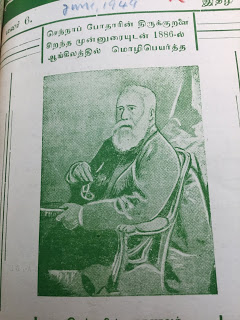
Rev. G U Pope Blasts Bishop Caldwell’s Theories (Post No.5320)


Picture of G U Pope

Compiled  by London swaminathan

Date: 14 August 2018


Time uploaded in London –18-08 (British Summer Time)


Post No. 5320


Pictures shown here are taken from various sources such as Facebook friends, Wikipedia, Books, Google and newspapers; thanks. Pictures may be subject to copyright laws.


“During Bishop Caldwell’s time, Sanskrit enthusiasts argued that Sanskrit was the mother of Tamil language. They showed extraordinary proportion of words of Sanskritic origin in Dravidian vocabulary as a proof. But they did not take into account the dissimilarity of the Dravidian grammatical forms to the Sanskritic forms. Bishop Caldwell had no difficulty in demolishing that theory  but he installed in its stead the equally untenable Scythic theory which it took many years of discussion to dislodge from its position. Subsequent workers in the field discovered serious errors in his work. Dr G U Pope is one of the critics.


Dr G U Pope was a distinguished missionary, well versed in Tamil language and literature and he did not accept Caldwell’s theories; and in a series of articles in in the Indian Antiquary he suggested enquiry as to whether in these theories “certain things have not been taken for granted rather too suddenly in regard to the Dravidian dialects. He was the first to point out that the law of harmonic sequence of vowels did not obtain in most of these dialects. He was further of opinion,


1.”that between the languages of Southern India and those of the Aryan family there are many deeply seated affinities;

2.that the differences between the Dravidian tongues and the Aryan are not so great as between the Celtic (for instance) and the Sanskrit; and

3.that, by consequence, the doctrine that the place of Dravidian dialects is rather with the Aryan than with the Turanian family of languages is still capable of defence. He illustrated these positions by means of copious illustrations and pointed out that the resemblances (appeared) most frequently in the more cultivated Dravidian dialects and that the identity was most striking in the names of instruments, places and acts connected with a simple life.


He also promised to consider derivative words in a future paper and to show that the prefixes and affixes were Aryan; but no such papers have been published.

Scythian and Dravidian

The Scythian affinities referred to are the affinities asserted to exist in the Dravidian languages by Bishop Caldwell, who following the Danish philologist Rask, use the term Scythian in the sense of what we have been generally called Turanian – non Aryan and Non Semitic languages. But the editors of Linguistic Survey of India and most of the scholars have rejected this affinity.


Professor J Kennedy wrote that rice, peacock etc. were known to Greeks in the fifth century BCE by their Dravidian (Tamil) names. This was due to Caldwell’s writing who said that these are Tamil words.


Bishop Caldwell was indeed a great magician! He pronounced a spell and there sprung up a vision of Phoenician sea men voyaging with Solomon’s servants down the West coast of India to Ophir once in three years to bring gold, silver, algum, peacocks and apes. This vision still fascinates some Dravidian scholars, though it had been pointed out that Hebrew ‘algum’ was not wanted for its scent, but to be used as props and pillars for which sandalwood was wholly unfitted, that peacocks could be had in plenty in Gujarat, and that there was no gold or silver for export from India. The whole vision rests on Bishop Caldwell’s opinion that ‘oryza’ (rice) algum and tawas (Tuki=Tokai= tawas=peacock) are derived from Tamil words. It is time that the spell is broken”.


–R Swaminatha Aiyar, Dravidian Theory, Motilal Banarsidass, 1975

Linguists’ bluffing blasted by Tamil Language (Post No.5252)

Compiled by London swaminathan

Date: 24 JULY 2018


Time uploaded in London – 7-19 am  (British Summer Time)


Post No. 5252


Pictures shown here are taken from various sources such as Facebook friends, Wikipedia, Books, Google and newspapers; thanks. Pictures may be subject to copyright laws.


Following is the question and answer from The Guardian Newspaper of London and my comments are added at the end


How do YOU know the correct way to pronounce a dead language?

“Old languages don’t die. They just fade into new languages (at least most of them do). While the entire sound system of ancient language rarely survives intact, fragments can usually be found scattered around its various daughter languages.


For example, many traits of Latin pronunciation are directly observable in Italian French Spanish and Romanian. The job of linguistic historian is to try to piece these various bits together. The most tried and tested technique is comparative reconstruction, which focuses on the systematic sound correspondences that emerge when we compare the same words in different sister languages. Where this exercise turns up different sounds, it is usually possible to trace them back to a common historical source.

For example, many English words beginning with ‘t’ correspond to words beginning with ‘ ts’ ( Spelt z) , in sister language German; compare English ten, to, time with German Zein, zu, zeitgeist.


On the basis of this and many similar correspondences, we can reconstruct a Common Germanic parent language in which the older sound in this particular instance is the knowledge that each type of sound change takes place in one direction only. On the strength of what happens in many other languages, we know that ‘t’ at the beginning of a word can turn into ‘ts’ but not vice versa. The more  widely we cast our comparative net, the further we can reach back into the mists of time. The ‘t’ of early Germanic itself derives from an even older ‘d’ — contrast English two and tooth with, say, Italian ‘due’ and ‘dente’. Ultimately we arrive at the sound system of an ancient Indo-European tongue, the common ancestor of languages as apparently diverse as English, French, Russian, Irish, Greek and Urdu.”

John Harris, Department of Phonetics and Linguistics, University college, London


FROM NOTES AND QUERRIS, GURDIAN NEWSPAPER, VOLUME 5, 1994


MY COMMENTS

Compare changes in Tamil

IN TAMIL also we see ‘S’ of Sanskrit change into ‘T’ in Tamil

I will give some examples though there are hundreds of such words

Purushan– Purutan
Visesham– Visetam
Sishya — Seetan
Joshyam — Jothitam
VishaM —  Vitam
Koshtam — Kottam
Pushpam — Putpam

In my earlier research articles, I have  Exploded all the OLD theories about similarities or changes in Indo- European languages. In fact, those changes or similarities are found even in Pacific Ocean and Mayan languages. In short, all the bluffing of ‘D’ of Aryans changing into ‘L’ after contacting Dravidians, are wrong. Once they study the similarities between Tamil and Sanskrit or other languages they will know all those are nothing but SHEER bluffing.


Tamil and Sanskrit: Rewrite Linguistics Theory

tamilandvedas.com/2014/12/20/tamil-and-sanskrit…

Tamil and Sanskrit: Rewrite Linguistics Theory … But this D/L or R/L changes are natural. They are in Tamil … in Tamil itself. In Sanskrit language Sandhi .

Ja and Ya in Indian languages | Tamil and Vedas

tamilandvedas.com/tag/ja-and-ya-in-indian-languages

Posts about Ja and Ya in Indian languages written by Tamil and … with other languages will rewrite linguistic … this change lies in Tamil and Sanskrit …


Origin of Tamil and Sanskrit | Tamil and Vedas

tamilandvedas.com/…/origin-of-tamil-and-sanskrit

They believed that Siva’s drum Damaruka gave Sanskrit from one side and Tamil from another side. … //tamilandvedas.com/2014/11/13/origin-of-tamil-and-sanskrit/


  1. Vowels = Life, Consonants = Body; Hindu concept of Alphabet …

tamilandvedas.com/2015/06/27/vowels-life…

Research paper No 1958 Written by London swaminathan Date: 27 June 2015 Uploaded in London at 20-15 I have been arguing in my earlier posts that the Western …


Sanskrit Alphabet | Tamil and Vedas

tamilandvedas.com/tag/sanskrit-alphabet

Posts about Sanskrit Alphabet written by Tamil and Vedas


  1. Tamil or Sanskrit: Which is Older? | Tamil and Vedas

tamilandvedas.com/2014/07/16/tamil-or-sanskrit…

Tamil or Sanskrit: Which is Older? … my pet theory is Tamil and Sanskrit originated from a common source on the … comparative reconstruction pays no attention to …

  1. Tamil and Sanskrit | Tamil and Vedas

tamilandvedas.com/tag/tamil-and-sanskrit

Posts about Tamil and Sanskrit written by Tamil and Vedas. … (for old articles go to tamilandvedas.com OR … Tamil and Sanskrit, Tamil Grammar. Posted by Tamil …


–SUBHAM–

முதலை விழுங்கிய பாலகனை உயிர்ப்பித்து மீட்ட தலம்! (post No.5153)

Tiruchengodu temple sculpture

Written by S NAGARAJAN


Date: 27 JUNE 2018


Time uploaded in London –   8-45 AM (British Summer Time)


Post No. 5153


Pictures shown here are taken from various sources such as Facebook friends, Wikipedia, Books, Google and newspapers; thanks. Pictures may be subject to copyright laws.


முதலை விழுங்கிய பாலகனை உயிர்ப்பித்து மீட்ட தலம்!


ச.நாகராஜன்


அற்புதமான வரலாறுகளைக் கொண்டது பாரதம். இங்கு தோன்றிய மகான்கள் பல அற்புதங்களை நிகழ்த்தியுள்ளனர். ஆனாலும் அவற்றையெல்லாம் அவர்கள் பெரிது படுத்தி பெருமை கொண்டாடியதில்லை. இறைவனின் திருவிளையாடல்களில் தாங்கள் ஒரு சிறு கருவி என்ற மட்டில் அதற்கு உரிய மதிப்பைத் தந்தனர்.


ஆனால் அற்புதங்களைப் பார்த்து வியந்தோர் அதைப் பல்வேறு விதமாகப் பதிவு செய்துள்ளனர்.

கொங்கு மண்டல சதகத்தில் வரும் 16ஆம் பாடல் திரு அவிநாசி தலத்தில் நடந்த ஒரு பெரும் அற்புதத்தை விவரிக்கிறது.


பூவென்ற சீரடி யாரூர்ப் பரவைதன் போகங்கொளும்

பாவென்ற செந்தமிழ்ச் சுந்தரன் பாடிப் படர்குளத்தில்

ஆவென்ற வாயின் முதலைகொள் பிள்ளையை யன்றுகொண்டு

வாவென் றழைத்த வவிநாசி சூழ்கொங்கு மண்டலமே.


பாடலின் பொருள் : பிள்ளையைக் கொண்டு வா என்று செந்தமிழ் சுந்தரர் பதிகம் பாட, ஆவென்று பிள்ளையை விழுங்கிய முதலையானது அந்தப் பிள்ளையை கொண்டு வந்த  அவிநாசியை உடையது கொங்கு மண்டலமே.


வரலாறு: திருநாவலூரர் என்று சிறப்பிக்கப்படும் சுந்தர மூர்த்தி நாயனார் அவிநாசிக்கு எழுந்தருளிய சமயம், ஒரு வீட்டில் மங்கல ஒலியும் அடுத்த வீ ட்டில் அழு குரலும் கேட்டது.


மூன்று ஆண்டுகளுக்கு முன்னர் சில சிறுவர்கள் குளக்கரைக்குச் சென்றனர். அங்கிருந்த முதலை ஒரு சிறுவனை விழுங்கி விட்டது.


அச்சிறுவனுடன் சென்றவனுக்கு இன்று உபநயனம். ஆகவே அந்த வீட்டில் மங்கல ஒலி எழுந்தது. அடுத்த வீட்டிலோ தனது குழந்தை இன்று இருந்தால் அவனுக்கும் இது போல உபநயனம் நடந்து கொண்டிருக்குமே என்று அவன் தாயார் ஓவென்று அழுத வண்ணம் இருந்தார்.


இதை சுந்தர மூர்த்தி நாயனார்க்கு அங்குள்ளோர் தெரிவித்தனர்.

மனமிரங்கிய நாயனார் குழந்தையை இழந்த தாயார் படும் துயரத்தைக் கண்டு பொறாதவராக இருந்தார்.

நேராக குளக்கரைக்குச் சென்று ”காலனைக் குழந்தையைக் கொடுக்கச் சொல்” என்று பதிகம் ஓதி அருளினார். மூன்று ஆண்டுக்குரிய வளர்ச்சியுடன் அந்தச் சிறுவனை முதலை கரையில் கக்கிற்று.

இதை அவிநாசிப் புராணமும் சுந்தர மூர்த்தி தேவாரமும் தனது பாடல்களால் அழகுற விளக்குவதை கீழ்க்கண்ட பாடல்கள் மூலம் தெரிந்து கொள்ளலாம்:


உரைப்பாருரையென் றுள்குறவல்லா ருச்சியின்மீதே யொளிவிடுசுடரே

யரைக்காடரவா வாதியு நடுவு மந்தமுமளவு மல்லவுமானாய்

புரைக்காடவை சூழ்புக்கொளியூரா புகழவிநாசிப் புண்ணியமுதலே

கரைக்கான் முதலையைப் பிள்ளைதரச்சொல் காலனையென்றே கட்டுரை செய்தார்

  • அவிநாசிப் புராணம்

உரைப்பாருரையிகந் துள்கவல்வார் தங்களுச்சியா

யரைக்காடரவா வாதியு மந்தமுமானாய்

புரைக்காடு சோலைப் புக்கொளியூ ரவிநாசியே

கரைக்கான் முதலையைப் பிள்ளை தரச்சொல்லு காலனையே

  • சுந்தரமூர்த்தி தேவாரம்


இந்தத் திருவிளையாடலில் மகத்தான விஞ்ஞானப் பேருண்மைகள் அடங்கியுள்ளன.

மூன்று வயது வளர்ச்சியுடன் பாலகன் திரும்பி வந்தான் என்பது ஒரு அரிய செய்தி.

மல்டிவர்ஸ் – Multiverse- என்னும் அரிய நவீன விஞ்ஞானக் கோட்பாட்டின் படி பல்வேறு பிரபஞ்சங்கள் ஒன்றின் மேல் ஒன்று அடுக்கடுக்காக உள்ளன என்பது தெரிகிறது.

W.Dunne  எழுதிய   “Nothing Dies” என்ற நூல் ‘எதுவும் இறக்காத நிலை’ என்ற கோட்பாட்டை அழகுற விளக்குகிறது.

பல்லுயிரும் பல்வேறு உலகங்களில் இருப்பதாலேயே, மகத்தான தன் ஆன்மீக சக்தியின் மூலம் மூன்று வயது வளர்ந்த நிலையில் அந்த பாலகனை சுந்தரர் மீட்டார் என்பது வியப்புறும் விஞ்ஞானத்திற்கொத்த ஒரு செய்தியாகும்.

இந்த அரிய அற்புதத்தை வழங்கிய மண்டலம் கொங்கு மண்டலமே.

***

POLITICAL IDEAS OF TAMIL POETS Vs MANU AND OTHER LAW MAKERS (Post No.5103)

Written by LONDON SWAMINATHAN


Date: 12 JUNE 2018


Time uploaded in London –  21-11  (British Summer Time)


Post No. 5103


Pictures shown here are taken from various sources such as Facebook friends, Books, Google and newspapers; thanks. Pictures may be subject to copyright laws.


POLITICAL IDEAS OF TAMIL POETS Vs MANU AND OTHER LAW MAKERS (Post No.5103)


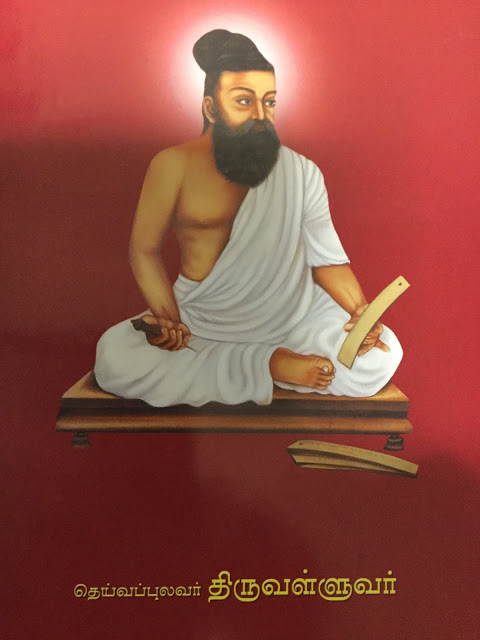
Professor Bency Kumar Sarkar of Calcutta (Kolkata) has written an article about the political ideas of Cendeswara who has dealt with political thought under sixteen topics. When I read that I did my own quick research with the political thoughts of Tamil poet Tiruvalluvar. It is not a comprehensive one but touches all the 16 topics. Ilango of Tamil epic Silappadikaram also make several statements reflecting Tamil political thought.

Candesvara was the author of Raajaniiti Rantnaakaara. He lived in the fourteenth century and served as a minister under king Harisimha deva of Mithila (North Bihar). He was a student of law and so wrote this book. But he never claimed any originality, but collected materials from several ancient authors and produced them as a digest. So his work Rajaniiti Ratnaakara is a digest. In addition to collection Candesvara made comments as well.


Unfortunately, we have no law book in Tamil to compare with Sanskrit law books which are umpteen in number. But Sangam Tamil literature has several verses which deal with the law. Post Sangam works such as Tirukkural and 17 other minor works and Tamil epic Silappadikaram deal with law, but not separately. Tirukkural, a didactic work, may come nearer to a law book and Silappadikaram by Ilango is also useful to compare some points.

It is very interesting to see Tirukkural- a single book of the Tamils, covers almost all the topics except Coronation.

The author of the original article B K Sarkar has given the 16 topics and showed how many times Candesvara quotes the books or authors. I will use it as the base for my research and show how many times Tamil poets touched those topics (only a rough figure):-

1.THE KING

Kulluka Bhatta Rajaniiti Kamadhenu (twice); Guru (Brihaspati or Candesvara’s Guru), Yajnavalkya- thrice; Narada Niti aand Mahabharata- twice, Mahabharata – twice, Manu (4 times); Yasa, Naradiya Smrti, Harita

Tirukkural of Tiruvalluvar- Chapters 70, 39, 55, 56 (Total 40 couplets)


xxx

2.THE MINISTER

Manu (4), Yajnavalkya, Vysa, Amarakosa, Mahabharata, Harita, Nardas smriti.

Tirukkural of Tiruvalluvar -Chapter 64 (Ten couplets)

xxx

3.THE FAMILY PRIEST-

Vyasa, Manu (2), Yanjavalkya (1)

None

xxx

  1. THE JUDGE-

KaatyaayanaBrihaspati, Pallavakara Lakshmidhra, Harita, Vyasa, Manu, Narada.

Tirukkural of Tiruvalluvar -Chapter 12, 108


xxx

5.THE COUNCIL

Manu, Harita, Brhaspati

Tirukkural of Tiruvalluvar – Chapter 99, 100

6.FORTS

Manu, Yajnavalkya, Mahabharata

Tirukkural of Tiruvalluvar – Chapters 74,75


7.DELIBERATIONS

Manu, Yajnavalkya, Mahabharata

Tirukkural of Tiruvalluvar – Chapter 45


8.TREASURE

Manu, Yajnavalkya, Pallava

Tirukkural of Tiruvalluvar -Chapter 76+ couplet 247


9.THE ARMY

Manu (7 times), Kamandaka, Mahabharata

Tirukkural of Tiruvalluvar -Chapter 77, 78


10.THE GENERAL

Manu, Mahabharata, Rajaniti

Tirukkural of Tiruvalluvar -Chapter 77, 78


11.THE AMBASSADOR

Manu, Sukraniti, Yajnavalkya, Mahabharata, Pallava, Kamandaka

Tirukkural of Tiruvalluvar -Chapter 69


12.KING’S  FUNCTIONS

Manu, Yajnavalkya, Maya Maitra

Tirukkural of Tiruvalluvar- Chapter 39, 49, 50, 55, 56


  1. PUNISHMENT

Manu, Yajnavalkya, Narada, Pallava

Chapters 57, 55,44


  1. GIVING THE KINGDOM TO HIS ELDEST SON (THROUGH ABDICATION)

Manu, Kandaki, Harita, Narada, Vyasa, Mahabharata, Ramayana, Brihaspati, Katyayana

N/A

  1. GIVING THE KINGDOM TO HIS ELDEST SON (THROUGH PRIEST)

Manu, Amarakosa, Ramayana, sukraniti, Padmapurana, Lakshmidhara, Narada, Pallavakara

Pathitrupaththu (one of the 18 Major works of Sangam Period)


16.CORONATION

Candesvara cites 42 authors or books under this topic.

He quoted Manu 38 times

Yajnavalkya 19

Mahabharata 14

Narada 13

Kamandaka 2

Pallavakaara 8

Lakshmidhara 7

Katyayana 6 Times

Candesvaea did not consider Arthasastra as a dharma sastra. It is not a Law book but a book on politics and economics.

Tirukkural , Naladiyar and 16 other didactic works are called 18 Minor Works. They contain lot of law points.


–Subham–


பாரதியார் பற்றிய நூல்கள் – 49 (Post No.5037)
Written by S NAGARAJAN


Date: 23 MAY 2018


Time uploaded in London –  5-43 AM   (British Summer Time)


Post No. 5037


Pictures shown here are taken from various sources such as Facebook friends, Books, Google and newspapers; thanks. Pictures may be subject to copyright laws.


மஹாகவி பாரதியார் பற்றிய நூல்கள் – 49

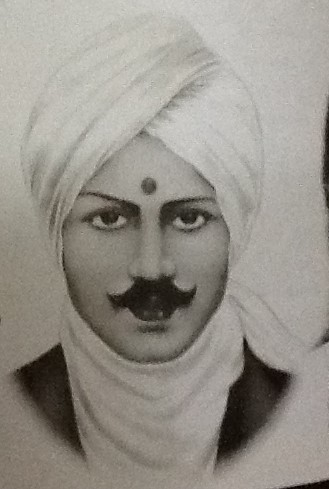
க.கைலாசபதி அவர்களின் ‘இரு மகா கவிகள்


ச.நாகராஜன்

pictures from Taitini Das are used;thanks. 

1

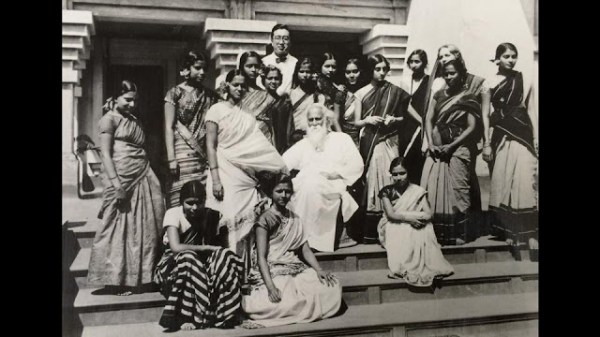
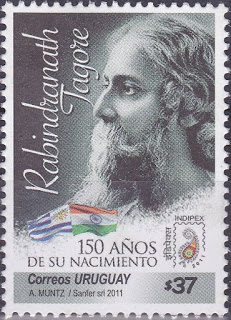
பாரதி ஆர்வலர் .கைலாசபதி அவர்கள் மகாகவி பாரதியாரையும் வங்கக் கவிஞர் இரவீந்திரநாத் தாகூர் பற்றியும் ஒப்பிட்டு எழுதியுள்ள நூல் இது. 114 பக்கங்கள் கொண்ட இந்த நூல் என்சிபிஎச் பிரைவேட் லிமிடெட், சென்னை -2 பதிப்பகத்தாரால் செப்டம்பர் 1962ஆம் ஆண்டு வெளியிடப்பட்டுள்ளது.

மிக அழகாகவும், தெளிவாகவும் இரு கவிஞர்களைப் பற்றிய முக்கிய விஷயங்களை பத்து அத்தியாயங்களில் தருகிறார் நூலாசிரியர்.


Taitinidas Dance Troupe

2

இரவீந்திரநாத் தாகூரைப் பற்றி மகாகவி பாரதியார் எழுதியுள்ள இந்தக் குறிப்புடன் நூல் ஆரம்பிக்கிறது:

கீர்த்தியடைந்தால் மஹான் ரவீந்திரரைப் போலே அடைய வேண்டும். வங்காளத்தில் மாத்திரமா? இந்தியா முழுமையுமா? ஆசியா முழுதுமா? ஜெர்மனி, ஆஸ்திரியா, பிரான்ஸ் பூமண்டல முழுமையும் பரவின கீர்த்தி. இத்தனைக்கும் அவர் பாடிய பாட்டுக்களோ வங்க பாஷையிலே உள்ளன. வெறும் மொழிபெயர்ப்புகளைத்தான் உலகம் பார்த்திருக்கிறது. அதற்குத் தான் இந்தக் கீர்த்தி.

தாகூர் இறப்பதற்கு இருபது ஆண்டுகள் முன்னதாகவே இறந்தவர் பாரதியார். அவரை விட இருபத்தோரு ஆண்டுகள் இளையவர்.

இருவரது கவிதைகளின் ஆழத்தையும், கவிஞர்களின் பார்வையில் உள்ள ஒற்றுமை, வேற்றுமைகளையும் அலசி ஆராய்கிறது இந்த நூல்.

3

ஒரு முக்கிய நிகழ்ச்சியை இந்த நூல் இரண்டாம் அத்தியாயத்தில் பதிவு செய்கிறது. அது வருமாறு:

மகாகவி பாரதியாருடைய சரிதையைத் தமிழில் எழுதியவர்களில் ஒருவரான சுத்தானந்த பாரதியாரும், ஆங்கிலத்தில் எழுதியுள்ள பேராசிரியர் பி.மகாதேவனும்  ஒரு சம்பவத்தைக் குறிப்பிட்டுள்ளனர். பாரதியார் இரவீந்திரநாத் தாகூருடன் கவிதைப் போட்டி நடத்த விரும்பினார் என்பதைக் காட்டும் அந்தச் சம்பவத்தைச் சுத்தானந்தர் பின்வருமாறு எழுதியுள்ளார்.

பாரதி : அப்பா! இப்போது டாகூர் எங்கிருக்கிறார்?

சிஷ்யன் : மதுரையில்.

பாரதி : உடனே புறப்படு. சலோ மதுரை.அவனை ஒரு கை பார்க்கிறேன்.

சிஷ்யன் : நாம் போவதற்குள் டாகூர் சென்று விட்டால்..?

பாரதி : அட அபசகுனமே! நமது தமிழ்நாட்டுக்கு டாகூர் வந்து நம்மைக் காணாமல் செல்லுவதா?

சிஷ்யன் : விலாசம் தெரியாதே!

பாரதி : அட சீ! “டாகூர் மதுரை என்றால் தந்தி பறக்கும் ஐயா!

சிஷ்யன் : சரி, என்ன செய்தி அறிவிக்க?

பாரதி : ‘தமிழ்நாட்டுக் கவியரசர் பாரதி, உம்மைக் கண்டு பேச வருகிறார் என்று உடனே தந்தி அடியும்.

சிஷ்யன் : அங்கே போய் என்ன செய்யப் போகிறீர்?

பாரதி : ஓய் ஓய், நாம் டாகூருக்கு ஒன்று சொல்லுவோம்.நீர் வங்கக் கவி; நாம் தமிழ்க் கவி, விக்டோரியா ஹாலில் கூட்டம் கூட்டுவோம். உமது நோபல் பரிசைச் சபைமுன் வையும். நாமும் பாடுவோம்.நீரும் பாடும். சபையோர் யார் பாட்டுக்கு ‘அப்ளாஸ் கொடுக்கிறார்கள் என்று பார்ப்போம். நமது பாட்டே நயம் என்று சபையோர் மெச்சுவார்கள். உடனே உமது கையால் எமக்கு நோபல் வெகுமதியைத் தந்து செல்ல வேண்டியது என்போம்.

Dancer Taitini Das in Tagore Celebrations

சிஷ்யன் : அதெப்படி? அவர் வங்காளத்தில் பாடுவார். நீர் தமிழில் பாடுவீர். வங்காளத்திற்குக் கிடைத்த நோபல் பரிசு உமது தமிழுக்கு எப்படிக் கிடைக்கும்?

பாரதி : அட, அட ஜெயமே! சர்வேசுவரன் தமிழனுக்கு எல்லாம் வைத்தான்; புத்தி மட்டும் வைக்கவில்லை. நேற்றுப் பிறந்த வங்காளத்தான் நோபல் பரிசு வாங்க வேண்டும். கற்பகோடி காலம் வாழ்ந்த தமிழ் அந்தப் பரிசு லாயக்கில்லையோ?

சிஷ்யன் : மன்னிக்க வேண்டும். தமிழ் வங்கத்திற்குத் தாழ்ந்ததில்லை. ஆனாலும் அவர் உலக மகாகவி, உலகப் புகழ் பெற்றவர்.

பாரதி : நாம் உலகப் புகழ் பெற முடியாதோ? அட தரித்திர மனிதா! அந்த இழவுக்குத் தான் நோபல் வெகுமதியை டாகூரிடமிருந்து வெல்ல வேண்டும் என்கிறோம்!

இந்த மாதிரியே பேசிக் கொண்டு பாரதியார் இரவில் எட்டையபுரம் வந்தார். (1919) பிறகு நன்றாகச் சாப்பிட்டுத் தலையைச் சாய்த்தார்; மறுநாள் காலையில் தான் எழுந்தார். நோபல் வெகுமதி விஷயம் மறந்தே போயிற்று.


இது யோகி சுத்தானந்த பாரதியார் தீட்டிய சித்திரம். 1918-ல் பாரதியார் புதுச்சேரி வாழ்க்கை அலுத்துப் போய்த் தமது மனைவியின் ஊரான கடயத்திற்குச் சென்றார். கடயத்தில் ஈராண்டு வாழ்க்கை; அப்பொழுதுதான் மேற்கூறிய சம்பவம் நிகழ்ந்ததாகத் தெரிகிறது.

நூலாசிரியர் ரவீந்திரரைப் பாரதியார் பாராட்டி எழுதியதையும் அவரது சிறுகதைகள் சிலவற்றை மொழிபெயர்த்திருப்பதையும் இந்த அத்தியாயத்தில் குறிப்பிடுகிறார்.

ஸ்ரீ ரவீந்திர திக் விஜயம் என்னும் கட்டுரையை 1921 ஆகஸ்டு 25ல் சுதேசமித்திரனிலே பாரதியார் எழுதினார்.அதற்கடுத்த மாதம் செப்டம்பர் 11ம் தேதி பாரதி அமரராகிறார்.

புதுச்சேரியில் இருந்த காலத்தில் (1908-1918) தாகூர் சிறுகதைகளில் எட்டைப் பாரதியார் மொழி பெயர்த்தார்.

தாகூருடைய ஐந்து கட்டுரைகளை பாரதியார் மொழி பெயர்த்திருக்கிறார். 1917-ல் ‘மாடர்ன் ரிவியூசஞ்சிகையில் இந்தக் கட்டுரைகள் வெளிவந்தன.


4

மூன்றாம் அத்தியாயத்தில் தாகூர் உலகக் கண்ணோட்டத்தைக் கொண்டிருந்ததையும் பாரதியார் இந்தியாவில் முகிழ்ந்த மறுமலர்ச்சியானது இந்து மதத்தின் அடிப்படையில் இருந்ததை ஏற்றுக் கொண்டதையும் நூலாசிரியர் விவரிக்கிறார்.

மகாத்மா காந்தியை எமது தலைவர் என்று தாகூர் பாராட்டினாலும் அவர் ஆரம்பித்த வெகு ஜன இயக்கத்தைக் கண்டித்தார். ஆனால் பாரதியாரோ, “ஸ்ரீ காந்தியின் நெறியையும் திடசித்தத்தையும் பார்த்தால் இப்படிப்பட தெய்வீக குணங்களமைந்த புருஷனும் உலகத்திலிருக்கிறானாவென்று யோசிக்க வேண்டியதாயிருக்கிறது” என்று மகாத்மாவை வெகுவாகப் பாராட்டினார்.


5

இந்தியா முழுவதையும் கவர்ந்த சக்தி வழிபாட்டை ஏறத்தாழ தாகூர் நிராகரித்தார் என்றே சொல்ல வேண்டும் என்று ஆறாம் அத்தியாயத்தில் விவரிக்கும் நூலாசிரியர் பாரதியார் சிவாஜி உற்சவம் கோலாகலமாக நடைபெற வேண்டும் என்று ‘இந்தியா பத்திரிகையில் வேண்டுகோள் விடுத்ததையும் சக்தி வழிபாட்டை பாரதியார் மேற்கொண்டதையும் விவரிக்கிறார்.இருவருக்கும் உள்ள வேறுபாடு நன்கு விளக்கப்பட்டிருக்கிறது.


6

ஏழாம் அத்தியாயம் தாகூர் இயந்திரங்களைப் பற்றி கருத்துத் தெரிவிக்கையில் அவை சிருஷ்டிக்கு முரணானவை என்று கருத்துக் கொண்டிருந்த போது பாரதியாரோ அதற்கு நேர் முரணான கருத்தைக் கொண்டிருந்ததைச் சுட்டிக் காட்டுகிறது.

7

மகாகவிகள் இருவரும் தமது எழுத்துக்களில் கவிதையே நித்தியத்துவத்தைப் பெறும் என்பதை உணர்ந்திருந்தனர்.இருவரும் மேலான இசை உணர்வு கொண்டவர்கள். இது இருவருக்கும் உள்ள ஒற்றுமை.


இது போன்ற ஒற்றுமைகளைச் சுட்டிக் காட்டும் நூல் அரவிந்தருடனான பாரதியாரின் தொடர்பை விரிவாக இறுதி அத்தியாயங்களில் சுட்டிக் காட்டுகிறது.


நூலாசிரியர் இலங்கையின் பிரபலமான எழுத்தாளர். இலங்கை சர்வகலாசாலையில் விரிவுரையாளராகப் பணியாற்றியவர். இந்த சிறந்த ஆய்வு நூலை எழுதியுள்ளதன் மூலம் இரு கவிஞர்களைப் பற்றிய சிறந்த ஒப்பீடு நமக்குக் கிடைக்கிறது.

பாரதி ஆர்வலர்கள் அவசியம் படிக்க வேண்டிய ஒரு நூலாக இது அமைகிறது.

****

MYTHS ABOUT TAMIL VEDA EXPLODED; DR NAGASAMY’S NEW BOOK ON THIRUKKURAL (Post No.4939)

MYTHS ABOUT TAMIL VEDA EXPLODED; DR NAGASAMY’S NEW BOOK ON THIRUKKURAL (Post No.4939)


WRITTEN by London Swaminathan 


Date: 22 April 2018


Time uploaded in London –  17-22 (British Summer Time)


Post No. 4939


Pictures shown here are taken from various sources such as Facebook friends, Books, Google and newspapers; thanks. Pictures may be subject to copyright laws.


WARNING: PLEASE SHARE MY ARTICLES; BUT DON’T SHARE IT WITHOUT AUTHOR’S NAME AND THE BLOG NAME. BE HONEST; OTHERS WILL BE HONEST WITH YOU.


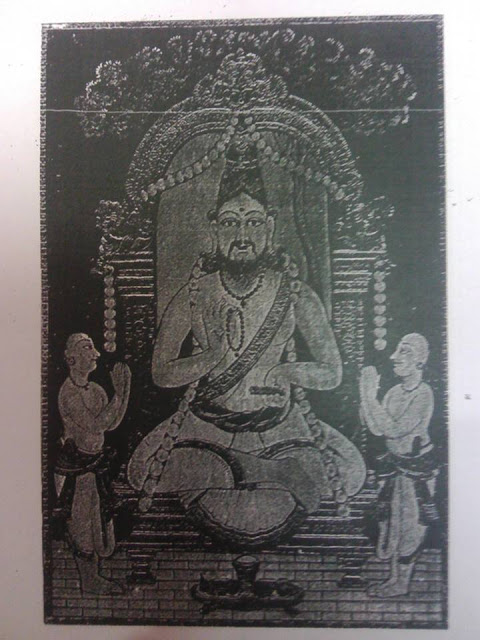
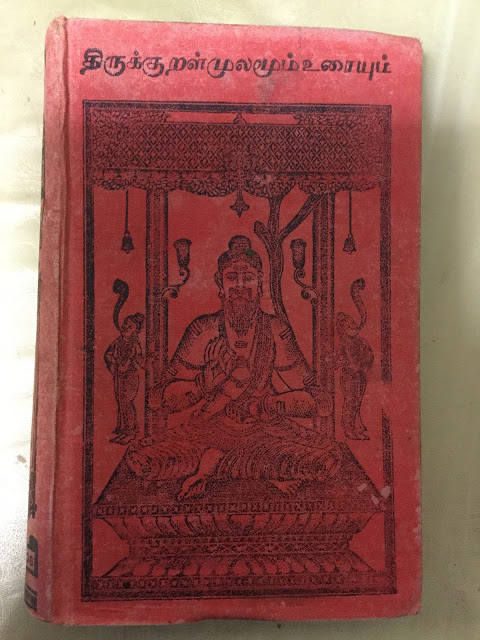
TIRUKKURAL is considered the Tamil Veda; it was written by Thiru Valluvar. One of Valluvar’s contemporary himself said this in Thiruvallauva Malai. He said that Sanskrit has Veda and Tamil has now got Tirukkural. It has 1330 couplets divided into 133 chapters which deal with didactic topics. There are lots of myths about its author Tiruvalluvar and his book. After Dravidian parties came to power in Tamil Nadu fifty years ago, lot of things about Vallauvar’s personal life was changed in the text books. And the accepted commentary of Parimel Azakar is tampered with. Dr R Nagaswamy, eminent historian and famous archaeologist looks at the book from a new angle.


He explodes the myths about G U Pope’s contribution to Tamil literature, Pope’s half- baked statement about Valluvar’s date  (800 to 900 CE) and some people’s attempt to show Tirukkural a text of Jain origin. G U Pope who translated 72 Purananuru verses, deliberately vomited Kapilar’s vesre showing him as an ‘Antana’ (Brahmin) and dubbed him a Pariah. Dr Nagasamy also Shows how hardly Pope tried to show Valluvar as a Christian or influenced by Christianity.

Another myth exploded by Dr R N is the gold coin of Valluvar. The coin said to have been issued by Ellis is not of Valluvar, but of Buddha. It was found in a museum in Calcutta. Ellis’ name was unnecessarily dragged into this matter.

Nagaswamy described in detail the futile colonial attempt to Christianise Tirukkural.

Dr R Nagaswamy needs no introduction. He was the Director of Archaeology in Tamil Nadu from 1966 to 1988. He was the Vice Chancellor of Kancheepuram University. He was the author of over 50 books and hundreds of research articles. He has travelled around the world lecturing on History and culture of Tamil people. Recently he has been awarded Padmabhusan by the Government of India.


He says that there is no gem in the whole field of Tamil literature more precious than Tirukkural. He has compared Tirukkural with lot of similar verses in Sanskrit Dharma sastras, Artha sastra, Natya sastra and Kama Sastra. He has also shown that Valluvar wrote it on the basis of Hindu values Dharma, Artha, Kama and Moksha. Valluvar himself divided his book into three major sections Dharma (Aram), Artha (porul) and Kama (Inbam). Moksha is dealt with in the book under Dharma.


Dr Nagaswamy says that the work of Valluvar is an abridgement of Sanskrit sastras.  Without leaving anyone to guess the authenticity, he has given the relevant passages as well. So no one could challenge him. It is a treasure for the English speakers,  and particularly the Non Tamil speakers in India.

Though scholars like V R Ramachndra Dikshitar has done such a comparative study before Dr Nagasawmy, he has added more materaias from different scriptures such as Dhammapada of Buddha and Bhagavad Giat of Lord Krishna.

Another unique feature is the addition of Sanskrit verses in Devanagari lipi which would be of help to North Indians.

He as beautifully summarised all the relevant data from Sangam literature to prove the ancient character of the Tirukkural. First he deals with the three theories about the age of the work and concludes that it is older than the Tamil epic Silappadikaram of second century CE. He rightly pointed out that the couplets are in Sutra format which is further proof for its age.


About Valluvar’s religion Dr Nagasamy says, after examining the previous arguments, “The examination of the personal religion of Valluvar does not  give us any definite lead in the matter. Valluvar did not wish to give his work a sectarian character. He gives lot of examples to show the striking correspondence between the Kural couplets and the works of Manu, Kautilya and Vatsyayana.


In another chapte,r the author of the current book examines the statement of Nataka Valakku by the doyen of Tamil literature U Ve  Swaminatha Aiyar.

In the concluding chapter hr makes an important statement, “Thirukkural of Thiruvalluvar can be fully understood only with the knowledge of Sanskrit, as it draws heavily from Dharma sastras, Artha sastras, Natya sastra and Kama Sastra and also their commentaries.

Everyone who is interested in Tamil literature  must have this book.


The book is priced only 150 rupees which is very cheap. The book has got great value for money.

Details of the Publication:

Tirukkural- An Abridgement of Sastras

Dr R Nagaswamy

December 2017

Pages 248, Price Rs.150

Published by Tamil Arts Academy and Giri Trading Agency Private Limited

Contact: www.giri.in

sales@giri.in


–SUBHAM-