MYTHS ABOUT TAMIL VEDA EXPLODED; DR NAGASAMY’S NEW BOOK ON THIRUKKURAL (Post No.4939)

MYTHS ABOUT TAMIL VEDA EXPLODED; DR NAGASAMY’S NEW BOOK ON THIRUKKURAL (Post No.4939)


WRITTEN by London Swaminathan 


Date: 22 April 2018


Time uploaded in London –  17-22 (British Summer Time)


Post No. 4939


Pictures shown here are taken from various sources such as Facebook friends, Books, Google and newspapers; thanks. Pictures may be subject to copyright laws.


WARNING: PLEASE SHARE MY ARTICLES; BUT DON’T SHARE IT WITHOUT AUTHOR’S NAME AND THE BLOG NAME. BE HONEST; OTHERS WILL BE HONEST WITH YOU.


TIRUKKURAL is considered the Tamil Veda; it was written by Thiru Valluvar. One of Valluvar’s contemporary himself said this in Thiruvallauva Malai. He said that Sanskrit has Veda and Tamil has now got Tirukkural. It has 1330 couplets divided into 133 chapters which deal with didactic topics. There are lots of myths about its author Tiruvalluvar and his book. After Dravidian parties came to power in Tamil Nadu fifty years ago, lot of things about Vallauvar’s personal life was changed in the text books. And the accepted commentary of Parimel Azakar is tampered with. Dr R Nagaswamy, eminent historian and famous archaeologist looks at the book from a new angle.


He explodes the myths about G U Pope’s contribution to Tamil literature, Pope’s half- baked statement about Valluvar’s date  (800 to 900 CE) and some people’s attempt to show Tirukkural a text of Jain origin. G U Pope who translated 72 Purananuru verses, deliberately vomited Kapilar’s vesre showing him as an ‘Antana’ (Brahmin) and dubbed him a Pariah. Dr Nagasamy also Shows how hardly Pope tried to show Valluvar as a Christian or influenced by Christianity.

Another myth exploded by Dr R N is the gold coin of Valluvar. The coin said to have been issued by Ellis is not of Valluvar, but of Buddha. It was found in a museum in Calcutta. Ellis’ name was unnecessarily dragged into this matter.

Nagaswamy described in detail the futile colonial attempt to Christianise Tirukkural.

Dr R Nagaswamy needs no introduction. He was the Director of Archaeology in Tamil Nadu from 1966 to 1988. He was the Vice Chancellor of Kancheepuram University. He was the author of over 50 books and hundreds of research articles. He has travelled around the world lecturing on History and culture of Tamil people. Recently he has been awarded Padmabhusan by the Government of India.


He says that there is no gem in the whole field of Tamil literature more precious than Tirukkural. He has compared Tirukkural with lot of similar verses in Sanskrit Dharma sastras, Artha sastra, Natya sastra and Kama Sastra. He has also shown that Valluvar wrote it on the basis of Hindu values Dharma, Artha, Kama and Moksha. Valluvar himself divided his book into three major sections Dharma (Aram), Artha (porul) and Kama (Inbam). Moksha is dealt with in the book under Dharma.


Dr Nagaswamy says that the work of Valluvar is an abridgement of Sanskrit sastras.  Without leaving anyone to guess the authenticity, he has given the relevant passages as well. So no one could challenge him. It is a treasure for the English speakers,  and particularly the Non Tamil speakers in India.

Though scholars like V R Ramachndra Dikshitar has done such a comparative study before Dr Nagasawmy, he has added more materaias from different scriptures such as Dhammapada of Buddha and Bhagavad Giat of Lord Krishna.

Another unique feature is the addition of Sanskrit verses in Devanagari lipi which would be of help to North Indians.

He as beautifully summarised all the relevant data from Sangam literature to prove the ancient character of the Tirukkural. First he deals with the three theories about the age of the work and concludes that it is older than the Tamil epic Silappadikaram of second century CE. He rightly pointed out that the couplets are in Sutra format which is further proof for its age.


About Valluvar’s religion Dr Nagasamy says, after examining the previous arguments, “The examination of the personal religion of Valluvar does not  give us any definite lead in the matter. Valluvar did not wish to give his work a sectarian character. He gives lot of examples to show the striking correspondence between the Kural couplets and the works of Manu, Kautilya and Vatsyayana.


In another chapte,r the author of the current book examines the statement of Nataka Valakku by the doyen of Tamil literature U Ve  Swaminatha Aiyar.

In the concluding chapter hr makes an important statement, “Thirukkural of Thiruvalluvar can be fully understood only with the knowledge of Sanskrit, as it draws heavily from Dharma sastras, Artha sastras, Natya sastra and Kama Sastra and also their commentaries.

Everyone who is interested in Tamil literature  must have this book.


The book is priced only 150 rupees which is very cheap. The book has got great value for money.

Details of the Publication:

Tirukkural- An Abridgement of Sastras

Dr R Nagaswamy

December 2017

Pages 248, Price Rs.150

Published by Tamil Arts Academy and Giri Trading Agency Private Limited

Contact: www.giri.in

sales@giri.in


–SUBHAM-

தெய்வத் தமிழ் QUIZ/ கேள்வி-பதில் (Post No.4938)

தெய்வத் தமிழ் QUIZ/ கேள்வி-பதில் (Post No.4938)


WRITTEN by London Swaminathan 


Date: 22 April 2018


Time uploaded in London –  6-48 am (British Summer Time)


Post No. 4938


Pictures shown here are taken from various sources such as Facebook friends, Books, Google and newspapers; thanks. Pictures may be subject to copyright laws.


WARNING: PLEASE SHARE MY ARTICLES; BUT DON’T SHARE IT WITHOUT AUTHOR’S NAME AND THE BLOG NAME. BE HONEST; OTHERS WILL BE HONEST WITH YOU.


கீழ்கண்ட தெய்வீக வசனங்களை யார், எந்த நூலில் சொன்னார்கள்? விடைகள் கீழே கொடுக்கப்பட்டுள்ளன. பாராமல் பகருங்கள். உங்கள் அறிவினைச் சோதித்துக்கொள்ள அரியதோர் வாய்ப்பு!!!

1.பிறவாயாக்கைப் பெரியோன் கோயிலும்

அறுமுகச் செவ்வேள் அணிதிகழ் கோயிலும்

வால்வளை மேனி வாலியோன் கோயிலும்

நீலமேனி நெடியோன் கோயிலும்


2.மாட்டுக்கோன் தங்கை மதுரை விட்டுத் தில்லைநகர்

ஆட்டுக்கோ நுக்குப்பெண்டு ஆயினாள்; கேட்டிலையோ


3.ஏற்று வலன் உயரிய எரிமருள் அவிர்சடை

மாற்று அருங்கணிச்சி, மணிமிடற்றோனும்

கடல் வளர் புரி வளை புரையும் மேனி

அடல் வெந் நாஞ்சில் பனைக் கொடியோனும்


4.பன்னிநீ வேதங்கள், உபநிடதங்கள்

பரவு புகழ்ப் புராணங்கள், இதிகாசங்கள்

இன்னும் பல நூல்களிலே இசைத்த ஞானம்

என்னென்று புகழ்ந்துரைப்போம்


5.ஆழ்வார் பதத்தைச் சிந்திப்பவர்க்கு யாதும் அரியது அன்றே


6.கற்றூணைப் பூட்டியோர் கடலிற் பாய்ச்சினும்

நற்றுணையாவது நமச்சிவயவே


7.உடம்பை வளர்த்தேன் உயிர் வளர்த்தேனே


8.உள்ளே உருகி நைவேனை

உளவோ இலளோ என்னாத

கொள்ளைகொள்ளிக் குறும்பனைக்

கோவர்த்தனனைக் கண்டக்கால்

கொள்ளும் பயன் ஒன்றில்லாத

கொங்கை தன்னைக் கிழங்கோடும்

அள்ளிப் பறித்திட் டவன் மார்பில்

எறிந்தென் அழலைத் தீர்வேனே


9.பெரியாரைப் பேணாது ஒழுகின் பெரியாரால்

பேரா இடும்பை தரும்


10.கங்கையைப் போல் காவிரிபோல் கருத்துக்கள் ஊறுமுள்ளம்

எங்கள் உள்ளம்!


11.தேன்பழச் சோலை பயிலுஞ் சிறுகுயி லேயிது கேள்நீ
வான்பழித் திம்மண் புகுந்து மனிதரை ஆட்கொண்ட வள்ளல்
ஊன்பழித் துள்ளம் புகுந்தென் உணர்வது வாய வொருத்தன்
மான்பழித் தாண்டமெல் நோக்கி மணாளனை நீவரக் கூவாய்.


12.கேடும் ஆக்கமும் கெட்ட திருவினார்

ஓடும் செம்பொன்னும் ஒக்கவே நோக்குவார்


விடைகள்

1.இளங்கோ, சிலப்பதிகாரம்

2.காளமேகம்,  தனிப்பாடல்கள்

3.புறநானூறு, நக்கீரனார் பாடல்

4.பாரதி, பாரதியார் பாடல்கள்

5.கம்பன், கம்ப ராமாயணம்

6.அப்பர் தேவாரம், நாலாம் திருமுறை

7.திருமூலர் எழுதிய திருமந்திரம்

8.ஆண்டாள், நாச்சியார் திருமொழி

9.திருக்குறள், திருவள்ளுவர்

10.பாரதிதாசன்

11.மாணிக்கவாசகர், திருவாசகம்

  1. சேக்கிழார், பெரியபுராணம்


–SUBHAM–


பாரதியார் பற்றிய நூல்கள் – 48 (Post No.4937)

WRITTEN by S NAGARAJAN


Date: 22 April 2018


Time uploaded in London –  5-23  AM  (British Summer Time)


Post No. 4937


Pictures shown here are taken from various sources such as Facebook friends, Books, Google and newspapers; thanks. Pictures may be subject to copyright laws.


WARNING: PLEASE SHARE MY ARTICLES; BUT DON’T SHARE IT WITHOUT AUTHOR’S NAME AND THE BLOG NAME. BE HONEST; OTHERS WILL BE HONEST WITH YOU


பாரதி இயல்


மஹாகவி பாரதியார் பற்றிய நூல்கள் – 48

ப.கோதண்டராமன் அவர்களின் ‘பாரதி யுகம்


ச.நாகராஜன்

1

பாரதி ஆர்வலர் .கோதண்டராமன் அவர்கள் பாரதியார் பற்றி ஐந்து அத்தியாயங்களில் நூறு பக்கங்களில் நன்கு எழுதியுள்ள நூல் பாரதி யுகம்.

1961 பிப்ரவரியில் இமயப் பதிப்பகம், நாகப்பட்டினம்வெளியீடாக இது வந்தது.

மகாகவியின் பெருமை பற்றி முதல் அத்தியாயத்தில் விவரிக்கப் புகுந்த நூலாசிரியர் ஒரு கவியின் லட்சணம் பற்றி நன்கு விளக்கி அது மகாகவிக்கு எப்படிப் பொருந்துகிறது என்பதை விளக்குகிறார்.

அதில் சில பகுதிகள் :
கவி வாழ்க்கையையும் மக்களின் உணர்ச்சிகளையும் பொலிவுடன் பாடுகிறான். அவன் உலகில் நெறி வழியைக் காட்டுகிறான்; தன் கற்பனைத் திறத்தினாலும், கவிதையின் அமைப்பு, அணி, அலங்காரம், இசை, ஒலிநயம், தாள லயங்கள் ஆகியவற்றினாலும் மக்களின் உள்ளத்தை மகிழ்விக்கிறான்.மானிட அனுபவத்திலும் இயற்கையிலும் உள்ளே அடங்கியுள்ள அழகுகளை எடுத்துக்காட்டி மக்களின் மனோபாவங்களையும் அனுதாபங்களையும் தூண்டி விடுகிறான்.


    மன அறிவிலிருந்து படிப்படியாக விடுதலையடைந்து சாதாரண உணர்வுக்கு அப்பாலுள்ள பேருணர்வுடன் உறவேற்படுத்திக் கொள்கிறான். இவ்வுணர்வு நிலையில் அவன் கேட்கும் தொனி தெய்வத்தனமை பொருந்தியது; அவன் காணும் காட்சி தெய்வீக ஆதரிசமாகிறது

2

தேசிய மகாகவி பாரதியார் என்ற இரண்டாம் அத்தியாயத்தில் பாரதியாரின் தேசியப் பணி எப்படி படிப்படியாக மலர்ந்தது என்பது ந்ன்கு விவரிக்கப்படுகிறது. காங்கிரஸில் அரவிந்தரின் தாக்கம் நன்கு விவரிக்கப்பட்டுள்ளது. பாரதியார் 1906ஆம் ஆண்டு கல்கத்தாவில் நடந்த காங்கிரஸ் மகாசபைக் கூட்டத்திற்கு பாரதியார், தமிழர் கோஷ்டியொன்றுடன் சென்றார். தாதாபாய் நௌரோஜியின் தலைமையில் அக்கூட்டம் நடைபெற்றது. அதில் கலந்து கொண்டபின்னர் சகோதரி நிவேதிதாவை அவர் ச்ந்தித்தார்.

இவற்றை நன்கு விவரிக்கும் நூலாசிரியர், அடுத்து ..சிதம்ப்ரம் பிள்ளைபாரதியாரின் நட்பை விவரிக்கிறார். ‘என் உள்ளமே பாரதி நாவில் துடித்தது என்று ..சி. கூறுவதுண்டு என்ற செய்தியையும் தருகிறார்.

1907 டிசம்பர் மாதம் மிதவாதிகளின் கோட்டையான் சூரத்தில் காங்கிரஸ் கூடியது. அதில் கலந்து கொண்ட பாரதியார் அங்கு நடந்த ரகளையையும் அதில் கலநது கொண்ட தமிழர் பங்கையும் நகைச்சுவையுடன்எங்கள் காங்கிரஸ் யாத்திரை என்ற நூலில் விவரிக்கிறார்.

3

மூன்றாம் அத்தியாயம்புதுவையில் பாரதி என்ற தலைப்பைக் கொண்டது.

பதினேழு மாத காலம் வாரந்தோறும் வந்தஇந்தியா இதழில் பாரதியாரின் கட்டுரைகளைப் பற்றி நூலாசிரியர் விவரிக்கிறார்.

பாரதியாரின் தலையங்கத்தில் சில பகுதிகள்:

முதற் பிரயத்தினம் என்ற தலையங்கத்தில் (21-11-1908) ‘சுதந்திரத்தின் பொருட்டுத் தலைமுறை தலைமுறையாக ரத்தத்தில் வீழ்ந்து மாள்வரேனும், நம் சந்ததியார் நடத்திச் செல்லுமாறு தந்து விட்டுப் போகிற சுதந்திர யுத்தம் பல முறை தோற்றுப் போயினும் கடைசி வரை ஜயங்கொண்டே முடிவதாகும்:

நூலாசிரியர் கவி பைரனின் மொழிகளை பாரதியார் இப்படி தமிழில் தருவதைச் சுட்டிக் காட்டுகிறார்.

இன்னொரு தலையங்கம்பாரதியார் எழுதியது:

ஸ்வதந்திரமடைய விரும்புவோர் செல்லவேண்டிய பாதை மல்லிகையிதழ்கள் தூவிய பாதையன்று, கல்லும் முள்ளும் பரப்பிய பாதை, செங்குத்தான வழி.

அரவிந்தரின் புதுவை வருகை, அவருடனான பார்தியாரின் உறவு பற்றி இந்த நூலின் ஆசிரியர் அழகுற விளக்குவதில் ஒரு பகுதி இது:

பாரதியார்  ஸ்ரீ அரவிந்தரின் மகா மேதையையும் ஆத்மீகத் துறையில் அவர் அடைந்துள்ள  தேர்ச்சியையும் நன்குணர்ந்தவர். இவ்விஷயங்களைப் பற்றிஇந்தியாவில் கட்டுரைகள் பல வெளியாகியுள்ளன. தாம் புதுவையில் வாடிக் கொண்டிருந்தபோது தம்மிலும் பல துறைகளில் சிறந்து விளங்கிய ஒரு பெரியார் தமக்கு நட்புரிமை அளித்ததை ஒரு பாக்கியமாகவே கருதினார். பாரதியார் அரவிந்தரை மதித்துப் போற்றியதைப் போலவே, அரவிந்தரும் தேசாபிமானியும் அருந்தமிழ்ப் புலவருமான பாரதியை உரிய முறையில் மதித்து வந்தார்.

புதுவையில் மலர்ந்த பாரதியின் படைப்புகளைப் பற்றி மிக விரிவாக இந்த நூலில் திரு .கோதண்டராமன் அழகுற விளக்குகிறார்.

4

நான்காம் அத்தியாயமானஇறுதிக் காலம் அத்தியாயத்தில் பாரதியாரின் கடய வாழ்க்கை மற்றும் சென்னை வாழ்க்கையைக் காண்கிறோம்.

காந்திஜியுடனான சந்திப்பு, கூடலூரில் 1921 மார்ச் மாதம் 25ஆம் தேதி பாரதியார் நிகழ்த்தியமனிதனுக்கு மரணமில்ல என்ற சொற்பொழிவு, பார்த்தசாரதி கோயில் யானை பாரதியாரைத் தன் துதிக்கையால் தூக்கிப் போட்டது, .வே.சு ஐயர் பாரதியாரை சிறைக்குச் செல்லும் முன்னர் பாரதியாரைச் சந்தித்தது, மறுநாள் இரவு சுமார் 1-30 மணிக்கு பாரதியாரின் ஆவி பிரிந்தது ஆகியவை பற்றிக் காண்கிறோம்.

5

பாரதி யுகம் என்ற ஐந்தாம் அத்தியாயத்துடன் நூல் முடிகிறது.

பாரதியாரின் சிறப்புகள் அனைத்தும் சுருக்கமாக இதில் விளக்கப்படுகிறது.

நூலின் இறுதி பாரா:

பாரதியார் இத்தகைய வாழ்க்கையின் மூலமாகவும் இதனின்று எழுந்த அமர இலக்கியங்களின் மூலமாகவும் ஒரு புதிய சகாப்தத்தையே, ஒரு புதிய யுகத்தையே ஆரம்பித்தார். பாரதியுகம் இன்றும் நடக்கிறது. இந்த நூற்றாண்டின் பாதிக்கு மேல் முடிந்து விட்டது. ஆயினும் இன்னும் பாரதியாரை வெல்ல வல்ல யாதொரு பாவாணனையும் காணோம். இளங்கவிகள் தம்மைப் பாரதி பரம்பரை எனக் கூறிக் கொள்கின்றனர். அவர்களுடைய பாடல்கள் பெரிதும் பாரதியாரைத் தழுவியனவாகவே காண்கின்றன. பாரதியார் வாழ்க!

அருமையான இந்த நூல் பாரதி ஆர்வலர்களை நிச்சயம் கவரும் என்பதில் ஐயமில்லை!

***


இந்து அரசர்களின் பட்டாபிஷேகக் காட்சிகள் (Post No.4936)

இந்து அரசர்களின் பட்டாபிஷேகக் காட்சிகள் (Post No.4936)


WRITTEN by London Swaminathan 


Date: 21 April 2018


Time uploaded in London –  21-20 (British Summer Time)


Post No. 4936


Pictures shown here are taken from various sources such as Facebook friends, Books, Google and newspapers; thanks. Pictures may be subject to copyright laws.


WARNING: PLEASE SHARE MY ARTICLES; BUT DON’T SHARE IT WITHOUT AUTHOR’S NAME AND THE BLOG NAME. BE HONEST; OTHERS WILL BE HONEST WITH YOU.


பல்லாயிரம் ஆண்டுகளுக்கு முன்னர் இந்து அரசர்கள் எப்படிப் பட்டாபிஷேகம் செய்து கொண்டனர் என்பதை ரிக் வேதத்துக்குருரிய பிராஹ்மண நூலான ஐதரேய பிராஹ்மணமும் மஹாபாரதமும் ராமாயணமும் படம் பிடித்துக் காட்டுகின்றன. சில சுவையான விஷயங்களை மட்டும் காண்போம்.


உலகின்  மிகப்பழைய நூல் ரிக் வேதம் என்பதில் இரு வேறு கருத்துக்கு இடமில்லை. ஒவ்வொரு வேதத்துக்கும் யாக யக்ஞ முறைகளை விரிவாவக் கூறும் பிராஹ்மணம் என்ற துணை நூலும் உண்டு. ரிக் வேதத்தின் சாகல ஷாகாவின் நூல் ஐதரேய பிராஹ்மணம். அது ராஜசூய யக்ஞம் எப்படிச் செய்யப்படுகிறது என்று விளக்குகிறது.


அத்தி மர அற்புதம் புலித்தோல் மஹிமை, புனித நீர் அபிஷேகம் , பெண்கள் மாடி வீட்டு ஜன்னல்களின் வழியாகக் காணும் காட்சி முதலியன பட்டாபிஷேக வர்ணனையில் அடிபடுகின்றன.


பட்டாபிஷேகத்துக்கான ஆசனத்தை அத்தி மரம் கொண்டு செய்தனர். இதை உடும்பரா என்று ஸம்ஸ்க்ருத நூல்களும் விஷ்ணு சஹஸ்ர நாமமும் அழைக்கும். மூன்று புனித மரங்கள் — ஆல், அரசு, அத்தி– ஆகிய மூன்றும் விஷ்ணுவின் பெயர்களாக சஹஸ்ரநாமத்தில் வருகின்றன. பெரிய அற்புதம் என்னவென்றால் மூன்றும் FICUS பைகஸ் வகை மரங்கள் என்றும் அவை மூன்றும் மோரேஸி (Moraceae)  என்னும் ஒரே குடும்பத்தைச் சேர்ந்தவை என்றும் இன்றைய தாவரவியல் நூல்கள் இயம்பும். இதைப் பல்லாயிரம் வருடங்களுக்கு முன்னரே கண்டுபிடித்த இந்துக்கள் அவைகளை தெய்வப்  பட்டியலில் சேர்த்துவிட்டனர். அதர்வ வேதத்திலேயே அத்தி மரத்தின் (உடும்பர) அற்புத சக்திகள் வருணிக்கப்படுகின்றன.

ஐதரேய பிராஹ்மணம் செப்புவதாவது:


உடும்பர மரத்தைக் கொண்டு  ஒன்பது அங்குல உயரத்துக்கு ஒரு ஆசனம் செய்ய வேண்டும்; அதற்கு நான்கு கால்கள் இருக்க வேண்டும் . அதன் மீது பல பலகைகள் அடுக்கப்படும். மூன்று புறமும் பலகைகள் அடிக்கப்படும் ஆசனத்தின் பல பகுதிகள் புனித மூஞ்சைப் புல்லினால் கட்டப்படும்; அதில் புலியின் தலைப் பகுதி கிழக்கு நோக்கிய வண்ணம் புலித்தோல் வைக்கப்படும்; அதில் மன்னன் மண்டியிட்டு ஏறுவார. அப்போது கடவுளரையும் அந்த ஆசனத்தில் ஏறும் படி பிரார்த்திப்பார்.


பின்னர் மன்னர் மீது தங்க சல்லடை வழியாக அபிஷேக நீர் ஊற்றப்படும்; இந்த நீர் புனித நீர் நிலைகளில் இருந்தும் நாற்கடல்களில் இருந்தும் கொணரப்படும்; மந்திர உரு ஏற்றப்பட்ட தண்ணீரை மன்னர் தலையில் அபிஷேகம் செய்வர். மன்னருக்கு மேலும் கீழும் தங்கத்தகடு வைக்கப்படும், இந்த தங்கத் தகடு அவருக்கு அழியாத் தன்மையை அளிக்கும் என்று மந்திரங்கள் சொல்லுகின்றன.


சிந்து சமவெளி- வேதகால நாகரீகம்

மன்னரின் தலை மீது உடும்பர மரக்கிளை வைக்கப்படும்; அது ஒரு தங்க வட்டத்தில் பொருத்தப்படும். சிந்து சமவெளி முத்திரைகளில் இப்படிக் கடவுளர்/ மன்னர் தலையில் கிளையைப் பார்க்கலாம்.


மன்னரின் ராஜ சூய யக்ஜம் என்பது அவர் முடிசூட்டப்பட்ட காலத்தில் நடத்தப்பட்ட சடங்குகள் அனைத்தையும் மீண்டும் செய்வதாகும். சோழ மன்னன் பெருநற்கிள்ளியும் ராஜ சூய யாகம் செய்தான்; அதற்கு சேர- பாண்டிய மன்னர்கள் வந்தனர். மூவேந்தரும் அமர்ந்த அரிய காட்சியைக் கண்ட அவ்வையார் அசந்தே போனார். ஆயிரக் கணக்கான ஆண்டுகளாகச் சண்டைபோட்டே அழியும் தமிழ் மன்னர் மூவரும் அமர்ந்த காட்சியைக் கண்டு இன்று போல் என்றும் வாழ்க என்று பாடியது புறநானூற்றில் உளது.


யுதிஷ்டிரன் என்னும் தர்மர் செய்த ராஜசூயம் மஹாபாரதத்தில் மிகவும் விரிவாகக் காணப்படுகிறது. அப்போது பிற நாட்டு மன்னர்கள் வந்து பரிசுப் பொருள்களைக் குவிப்பர். இதன் பொருள் என்ன வென்றால் அந்த மன்னரின் இறையாண்மையை தாங்கள் ஏற்றுக் கொள்வதாகச் சொல்லுவதாகும்.


இந்த ராஜசூய யாகத்தில் முக்கியச் சடங்கு வேள்வியாகும். அதில் சோம பானம் பருகுதலும் உண்டு; சோமபானம் என்பது காப்பி போல, ஹெர்பல் டீ/ மூலிகை தேநீர் போல உற்சாகம் தரும் ஒரு மூலிகை பானம்; சுரா பானம் என்பது சாராயம். அது பற்றியும் வேதத்தில் உளது. சோமபானத்தைப் புகழும் வேதங்கள் சுரா பானத்தைக் கண்டிக்கின்றன.


மன்னரின் பட்டாபிஷேகத்தைக் காண பல நாட்டு மன்னர்களும் ரிஷி முனிவர்களும் பொது மக்களும் அலைகடல் எனத் திரளுவதால் பிரம்மாண்டமான பந்தல்கள் எழுப்பப்படும். அதுவும் வேள்விக்கூடமும், யாகம் முடிந்தவுடன் எரித்து அழிக்கப்படும்


ராஜசூய யாகத்தில் சுனஸ்சேபன் கதை வாசிக்கப்படும். சுனஸ்சேபன் என்பவன் புருஷமேதம் என்ப்படும் நரபலி யாகம் போல பலி கொடுக்கக் கட்டப்பட்டவன் அவனை விஸ்வாமித்ரர் மீட்ட கதையை ஒவ்வொரு சடங்கிலும் படிக்க வேண்டும் என்று வேதம் கட்டாயப்படுத்துகிறது; .ஆனால் மனிதனோ மிருகங்களோ பலியிடப்படாமல் விடுவிக்கப்பட்டதாகவும் வேதமே விளம்பும்; ஆகவே பல்லாயிரக் கணக்கான ஆண்டுகளுக்கு முன்னர் இருந்த வழக்கத்தை நினைவுபடுத்த மட்டுமே இச்சடங்குகள்- உண்மைப் பலி அல்ல என்பதும் தெளிவாகிறது.


பெண்கள் பார்வை

ராமாயணத்தில் முதலில் பட்டாபிஷேக ஆயத்தக் காட்சிகளும் கடைசி காண்டத்தில் உண்மையில் நடந்த ராமர் பட்டாபிஷேகக் காட்சிகளும் வருணிக்கப்படுகின்றன. மஹாபரதத்தில் யுதிஷ்டிரனின் பட்டாபிஷேகக் காட்சிகள் உள. அவனுக்குக் கிடைத்த நீண்ட பரிசுப் பட்டியலையும் காணலாம்


மனைவி இல்லாமல் ஒரு இந்து, எந்த வேதச் சடங்கையோ பூஜையையோ செய்ய முடியாது; பெண்களுக்கு அவ்வளவு முக்கியம் கொடுக்கும் மதம் இந்து மதம்; ராம பட்டாபிஷேகத்தில் வசிட்ட முனிவன் ராமனையும் சீதையையும் ஆசனத்தில் அமர்த்திய காட்சியை வால்மீகி பாடுகிறார்.

பட்டாபிஷேகத்துக்கு அருகில் வரமுடியாத பெண்கள் மாடிப் பலகணியின் வழியாகக் கண்டதை ராமாயணம் முதலியன காட்டும். சூழ்ச்சிமிக்க மந்தரை அதை மாடியில் இருந்து பார்த்தவுடன் சூழ்ச்சியில் இறங்கியதாக ராமாயணம் சொல்லும். சங்கத் தமிழ் இலக்கியத்திலும் ஏழு மாடி கட்டிடம் பற்றிய குறிப்புகள் வருகின்றன.


ஆக தங்கம், புலித்தோல், புனித நீர் அபிஷேகம், உடும்பர மர ஆசனம், ரிஷி முனிவர், அயல் மன்னர்கள் வருகை, மக்களின் பெருங்கூட்டம், பெண்களின் ஜன்னல் வழிப்பார்வை பற்றிய சுவையான செய்திகளை சம்ஸ்க்ருத நூல்கள் சுவைபட  உரைக்கின்றன.


–சுபம்-


CORONATION OF HINDU KINGS IN ANCIENT INDIA (Post No.4935)

WRITTEN by London Swaminathan 


Date: 21 April 2018


Time uploaded in London –  15-13 (British Summer Time)


Post No. 4935


Pictures shown here are taken from various sources such as Facebook friends, Books, Google and newspapers; thanks. Pictures may be subject to copyright laws.


WARNING: PLEASE SHARE MY ARTICLES; BUT DON’T SHARE IT WITHOUT AUTHOR’S NAME AND THE BLOG NAME. BE HONEST; OTHERS WILL BE HONEST WITH YOU.

Ancient Hindu coronations are explained in the Hindu Epics Ramayana and Mahabharata. They followed the rituals prescribed in the Brahmanas (Vedic Literature). They used to recite the story of Sunashepa. It was a symbolic human sacrifice. The Brahmana literature says in very clear terms that all the animals tied to the sacrifice poles are released before the fire sacrifice.


Ramayana and Mahabharata describe the state and the pageantry of the great coronation (Rajasuya) of Rama and Yudhishthira respectively. They were consulted as precedents for like ceremonies in later ages. 2000 years ago  Tamil Choza king Perunarkilli performed Rajasuya Yajna for which the other two Tamil Kings of Chera and Pandya countries came. Tamil poetess Avvaiyaar attended the Rajasuya and praised all the three great kings (Ref.Purananuru)


Like Hindus recite the story of Sunashepa in Hindu coronations, the British read/recited the Bible. In the coronations of British sovereigns at Westminster, the Holy Bible is brought from off the altar by the Dean of Westminster, and handed to the Archbishop, who “with the rest of the bishops going along with him, shall present it to the Queen/King, saying these words to her/him ‘ Our gracious Queen/King we present you with this Book, the most valuable thing that this world affords; Here is wisdom; This is the Royal Law ; These are the lively Oracles of God; Blessed is he that readeth, and  they that hear the words of this book, that keep and do the things contained in it…etc.”


The Rajasuya (King making) ceremony was specially used for the inauguration of a king, who by conquest or through influence had supremacy over other kings.


It was partly a repetition of the Abisheka or bathing (with holy water) ceremony with which every king was crowned at his accession.; and lasted at least one whole year, sometimes for several years. It included many rites, civil and religious peculiar to the various peoples of India.

Aitareya Brahmana

Aitareya Brahmana belongs to the Shakala Shaka of the Rig Veda, the oldest book in the world. It describes the heavenly coronation ceremony in detail. Santi Parva of Mahabharata, the oldest and longest epic in the world; says that it is the chief duty of the people of a country to inaugurate a king, because the Devas performed a similar ceremony for Indra.


India was the first democracy in the world according to the Rig Veda. The reference to Sabhas and Samitis and the words ‘Chosen’ ‘elected’ prove this.


Every king in India was chosen by the ministers and elders of the capital city. Even Valmiki shows this in his Ramayana where Dasaratha consulted his senior citizens. Even Indra, the celestial type of earthly sovereignty was ‘chosen’ by the Devas, for their king.


In ancient India, there were two capital cities for two different races. Hasinapura and newly constructed  Indraprastha near modern Delhi was the capital of Bharata Kings of the Lunar Race. Ayodhya was the capital of Ikshvakus of the Solar Race. It is also not far from Delhi.

Abisheka / Anointment

The main ceremony in the coronation of a Hindu king was Abisheka or bathing with holy water. For this the water from all the holy rivers of India and the sea water from four different corners of India was brought and filled in golden pots. After uttering the Vedic mantras the king was bathed with that water. During the repeat ceremonies (Punar Abisheka) it is done again.

Ordinary people also had this type of abisheka during their 60th, 70th, 80th and 100th birth anniversaries. For Brahmins the golden pots, for Kshatrias the silver pot, for Vaisyas copper pots and for Shudras the earthen pots were used in ancient India.


Invitation was sent to all the kings and they came with big presents for the new king. We have a very long list of presents that Yudhisthira received in the Mahabharata. According to Vedic scriptures the ceremony took place in an open air. Fixed erections such as altars and open sheds were demolished at the end of the ceremony.

Women watching from Multi Story Buildings

The interest with which Hindu ladies watched such ceremonies from the latticed windows of multi story buildings are described in Sanskrit literature. Nala Charita (History of King Nala) mentions a lofty balcony from which men and women watched the ceremony. In the Ramayana the mischief making Manthara observed the preparations for installation of Rama as Yuva Raja (prince) from an upper window and at his final installation the women are referred to as watching the ceremonies from the upper windows of overlooking mansions.  Sangam Tamil literature mentions seven storied buildings.

The general arrangements of the coronation ground were the same as other sacrifices. The Aitareya Brahmana explains the symbolism of plan, by comparing its three divisions to Earth (a sitting room) Air (fire place) and Sky (two repositories for food (Sadas, Agnidhriya and Havirdhana respectively). With reference to the last word it is further said Heaven and Earth are the two havirdhanas of the Gods for every offering is made between them.

But there were some modifications for accommodating vast crowds and display the coronation pageants. Kings from neighbouring countries also attended it.

The Brahmana literature says “And that sacrificial mansion crowded with kings and Brahmins and great rishis/seers, looked, O King, as handsome as heaven itself, crowded with the gods.”

Ficus Glomerata Tree and Gold

The throne seat was made of Udumbara wood (Ficus glomerata). It rested on four legs with boards placed on them, just one foot high. It had side boards two feet high. It was well fastened with sacred Munja grass (sachcharum munja).


A tiger skin was placed on the seat with hair side upward, and the neck to the east, typical of royal, military, power, the tiger being the hero of Indian beasts.

Ramayana and Venkateswara Suprabada praise Rama as Tiger among men ( Narasardula).

Vishnu Sahasranama refers to three trees of Ficus family (Moraceae) as God Vishnu:

Asvatta (Ficus religiosa)

Vata (Ficus indica)

Udumbara (Ficus glomerata)


The king ascended it on his knees, praying to gods to ascend it with him, and they were believed, though unseen, to do so.

According to Vedic literature, every sacrifice must be accompanied by his wife. The Queen-consort, also took part in the coronation ceremony. Ramayana says,

Vasistha, chief for revered age,

High on a throne, with jewels graced,

King Rama, and his Sita placed

–Ramayana 6-130

Soma feast was part of coronation; soma drink is different from Sura (alcoholic drinks) drinks. It may be compared to something like strong coffee (Expresso) or a herbal coffee.

The crown was a small branch of the Udumbara tree set in a circlet of gold (Indus valley seals show it ). The crown was sprinkled with the holy waters.


Two strainers are used for bathing the king. He (the priest)  weaves gold (threads) into them. With them he purifies these consecration waters… Gold is immortal life (Satapata 5-3-5-15)

Below the king’s foot the priest throws a small gold plate with “Save him from death’; Gold is immortal life; he thus takes his stand on immortal life” mantra.

Then there is another gold plate with a hundred or nine holes. That gold plate is laid upon king’s head; The king thus lays immortal life into him (Satapata 5-4-12-14)

The signal to the chorus through the response to a verse chanted by the chief reciter, of the sacred syllable Aum to a Vedic verse and of Evam tathaa (so it is), the exact equivalent o modern Amen in Christian church.

Rig Vedic mantras and Yajur Vedic formulas are used in the coronation mantras.

–Collected from  (year 1898) an old book ‘The Golden Legend of India’ by William Henry Robinson and added my own inputs.


–Subham–


ஆரோக்கிய மேம்பாட்டிற்கான மந்திரங்கள்! (Post No.4934)

WRITTEN by S NAGARAJAN


Date: 21 April 2018


Time uploaded in London –  7-29  AM  (British Summer Time)


Post No. 4934


Pictures shown here are taken from various sources such as Facebook friends, Books, Google and newspapers; thanks. Pictures may be subject to copyright laws.


WARNING: PLEASE SHARE MY ARTICLES; BUT DON’T SHARE IT WITHOUT AUTHOR’S NAME AND THE BLOG NAME. BE HONEST; OTHERS WILL BE HONEST WITH YOU


திருநெல்வேலியிலிருந்து மாதந்தோறும் வெளிவரும் ஹெல்த்கேர் பத்திரிகையில் ஏப்ரல் 2018 இதழில் வெளியாகியுள்ள கட்டுரை


லலிதா சஹஸ்ரநாமத்தில் ஆரோக்கிய மேம்பாட்டிற்கான மந்திரங்கள்!


.நாகராஜன்


1

நம்முடைய நுல்கள் எல்லாம் உலகினரின் ஒட்டு மொத்த நன்மைக்காக எழுதப்பட்டிருப்பது ஹிந்துத்வத்தின் தனிச் சிறப்பாகும். எந்த சாஸ்திரத்தை எடுத்துக் கொண்டாலும் அந்த சாஸ்திரத்தின் ஆரம்பத்தில் ம்ங்களாசாஸன ஸ்லோகம் ஒன்று இருக்கும். அது அனைவருக்கும் பொதுவானதாக அமைந்திருக்கும்.

வாக்படர் எழுதிய அஷ்டாங்க ஹிருதயம் என்னும் நூலில் உள்ள் மங்களாசாஸன ஸ்லோகம் ராகாதி ரோகான்’ என்று ஆரம்பிக்கிறது.

ஆசை முதலிய ரோகங்கள் சதாகாலமும் சரீரமெங்கும் வியாபித்துள்ள்ன. விஷய விருப்பம்,, அறிவின்மை, ஆறுதலற்ற நிலை ஆகிய விசாரங்களை உண்டு பண்ணுகின்றன.

இத்தையகையவற்றை எந்த ஒரு அபூர்வ வைத்தியர் அடியோடு அழிக்கின்றாரோ அவரை வணங்குவேனாக!

(அந்த வைத்தியரது  குணங்கள் ந்மக்கும் வரும் படி பிரார்த்திப்போம்)


இதே போல் சரக சம்ஹிதையில் ஆரம்ப ஸ்லோகங்கள் பாரத்வாஜ ரிஷியிடமிருந்து தோன்றிய அற்புத உண்மைகள் அக்னிவேசர் வாயிலாக மனித குல நன்மைக்காகத் தரப்படுவதைச் சுட்டிக் காட்டுகின்றன.


2

லலிதா சஹஸ்ரநாமத்தில் பல நாமாக்கள் ஆகாரத்தைப் பற்றிக் காணப்படுகின்றன.

  • புஷ்டி (444வது நாமம்) தேகத்திற்குப் புஷ்டி தருவன
  • ருதிர ஸம்ஸ்திதா (420வது நாமம்) ரக்த தாதுவில் உறைபவள்.
  • ஸ்நிக்தௌன ப்ரியா (492வது நாமம்) தைலம், கிருதம், வாஸா, மஜ்ஜா இவை க்லந்த அன்னத்தில் பிரியமானவள்
  • மாம்ஸ நிஷ்டா ( 500வது நாமம்) மாம்ஸ தாதுவில் இருப்பவள்.
  • மேதா நிஷ்டா (507வது நாமம்) மேதா தாதுவில் இருப்பவள்
  • மதுப்ரீதா (510வது நாமம்) மதுவில் பிரியம் கொண்டவள்
  • த்த்யன்னாஸக்த ஹ்ருதய: (512வது நாமம்) தயிர்சாதத்தில் பிரியமானவள்.
  • அஸ்திஸம்ஸ்திதா (516வது நாமம்) அஸ்தி தாதுவில் இருப்பவள்
  • முத்கௌதனா ஸக்தசித்தா (517வது நாமம்) அரிசி, புயத்தம் பருப்பு, வெல்லம், தேங்காய், சீரகம், நெய், பால், முதலியவை சேர்த்துச் சமைத்த முக்தாச அன்னத்தில் மனம் கொண்டவள்.
  • மஜ்ஜா ஸம்ஸ்தா ( 524வது நாமம்) மஜ்ஜா தாதுவில் இருப்பவள்.
  • ஹரித்ரான்னைகரஸிகா (526வது நாமம்) மஞ்சள் பொங்கலை ரஸிப்பவள்
  • சுக்ல ஸம்ஸ்திதா ( 531வது நாமம்) சுக்ல தாதுவில் இருப்பவள்.
  • ஸர்வௌ தன ப்ரீத ஸித்தா ( 533வது நாமம்) எல்லா அன்ன வகைகளிலும் விருப்பமுடையவள்.
  • தாம்பூல பூரித முகி ( 557வது நாமம்) தாம்பூலம் நிறைந்த வாயினள்.
  • அன்னதா (667வது நாமம்) அன்னத்தை அளிப்பவள்
  • ம்ஹாக்ராஸா ( 752வது நாமம்) பெருங் கவளம் கொள்பவள்

17)  மஹாசனா ( 753வது நாமம்) பெருந்தீனி உள்ளவள்

 18) த்ன தான்ய விவர்த்தனீ (886வது நாமம்) தனத்தையும் தான்யத்தையும் விருத்தி செய்பவள்.


4

தேவதைகளுக்கு நிவேதனம் செய்யும் போது வெற்றிலை, பாக்கு, தேங்காய், பழம் ஆகியவற்றுடன் அந்த தேவதைக்கு உரிய பிரியப்பட்ட தனிப்பட்ட வஸ்துக்களையும் படைப்பதால் நமது உடலில் புஷ்டி ஏற்படும்.

இதர ஆரோக்கிய நலங்கள் அனைத்தும் தோன்றும்.

தொன்று தொட்டு லலிதா ஸஹஸ்ர நாமத்தை இல்லந்தோறும் வெள்ளிக்கிழமைகள், பௌர்ணமியில் ( சிலர் அன்றாடம்)  சொல்லி வருவது மரபாக இருந்து வருகிறது.

இதனால் சகல சௌபாக்கியங்களையும் காலம் காலமாக ஹிந்து குடும்பங்கள் அடைந்து வருவது கண்கூடு.

இதோ போல விஷ்ணு சஹஸ்ர நாமத்திலும் ஆரோக்கியத்திற்கு அடிப்படையான ஏராளமான நாமங்கள் உள்ளன. அன்றாடம் ஒதும் போது அடிப்படையான ஆரோக்கியத்தையும், தீர்க்க ஆயுளையும் இது தருவது அனுபவத்தால் உணரப்படும் ஒன்று!

ஓதுவோம்; உய்ர்வோம்.

*****


SECOND PART- MURDEROUS QUEENS OF ANCIENT INDIA (Post.4933)

SECOND PART- MURDEROUS QUEENS OF ANCIENT INDIA (Post.4933)


WRITTEN by London Swaminathan 


Date: 20 April 2018


Time uploaded in London –  8-47 am (British Summer Time)


Post No. 4933


Pictures shown here are taken from various sources such as Facebook friends, Books, Google and newspapers; thanks. Pictures may be subject to copyright laws.


WARNING: PLEASE SHARE MY ARTICLES; BUT DON’T SHARE IT WITHOUT AUTHOR’S NAME AND THE BLOG NAME. BE HONEST; OTHERS WILL BE HONEST WITH YOU.


Chanakya adds more details in his work Arthasastra; let us look at them in bullet points:


Chanakya says that greed, lust and other follies will destroy a king. He gives the following examples: Bhoja Dandakya perished with his state and relations for making lascivious attempt on a Brahmana girl. Karaala Viadeha perished because of lust Various other kings paid the penalty for different vices (Artha Sastra 13-2)


Kautilya’s Tricks

Kautilya/Chanakya suggested that the spy should spin out a story of the queen’s love for the minister. That the fabrications are likely to be believed suggests the probability of such incidents. Conversely, when, according to Kautilya the minister’s wife is likely to have liaison with the king, who might send her love letters and presents to invite her into the harem, the luckless husband will merely fret and await his opportunity to take revenge (AS 12-2).


A story of confidence trick is suggested by Kautilya. Dressed as a merchant, a spy is to pick up friendship with a beautiful servant maid of the queen, feign love with the new sweetheart, give her presents and jilt her with an ulterior motive. Another spy is to give her love charm to regain her lover who in turn purports to yield to the woman. Prompted by the immediate success of the love charm, the maid naturally conveys its efficacy to the queen. The queen in turn seeks to repeat the performance on the king. This the poisoned charm kills the king.

The Divyaavadaana narrates the legend of Prince Kunala and his step mother queen Tisyaraksitaa, which indicates palace intrigues. A similar legend finds place in the Jain Parisistaparvan. Here the step mother wanted to sponsor the claim of her own son to the throne. Both ‘Parisistaparvan’ and ‘Mudrarakshasa’ record the tradition of the death of Chandragupta’s ally Parvataka through his contact with poison maid.


Chanakya ‘poisoned’ Chandragupta

As a safeguard against a poison, Parisistaparvan states: On Chanakya’s order, the food of Chandra Gupta was mixed with a gradual dose of poison, so that in the end even the strongest poison had no effect upon him. Once the Queen Durdhara who was big with child was dining with the king, when Chanakya came upon them. Observing that the poison almost immediately killed the queen, he ripped upon her womb and extracted the child.  He had been nearly too late ; for already a drop (bindu) of the poison had reached the boy’s head, who, from his circumstance, was called Bindusara.


Manu also adds how the bad rulers were thrown out in his Manu Smrti:

“Many kings have been destroyed, together with their entourages, through lack f humility, while even forest dwellers have gained kingdoms through humility.

Vena was destroyed through lack of humility, and so was King nahusa, Sudas, the son of Pijavana, Sumukha and Nimi.

But through humility Prthu won a kingdom, and so did Manu and Kubra become Lord of Wealth and Visvamitra, son of Gadhi, became a priest.

Manu 7-40/42

Manu’s Gem Therapy


Manu also warns the king against oisoning. “The king should partake of food that is well examined and prepared by servants that are trust worthy, that know the proper times for dining, that cannot be won over, and over the food spells/mantras destroying poison should have been muttered. He should fix in all that he partakes medicines that are antidotes against poison and should always wear gems that work against poison”.

Manu- 7-217/218


Megasthanes says,

King cannot even sleep in peace, for Megasthenes states: “By night he is obliged to change his couch from time to time with a view to defeat plots against his life”.


Safety First was the code advised by Chanakya and Manu. We did not read any such incidents except one or two in Mahabharata where Duryodana tried to kill the Pandavas in an arson attack by setting fire to the lac palace.


But after the contact with Persians and Greeks from the sixth century BCE, the political scene in India changed completely.


–Subham–


கொலைகார மஹா ராணிகள்- சாணக்கியன் திடுக்கிடும் தகவல்- PART 2 (Post No.4932)

கொலைகார மஹா ராணிகள்- சாணக்கியன் திடுக்கிடும் தகவல்- PART 2 (Post No.4932)


WRITTEN by London Swaminathan 


Date: 20 April 2018


Time uploaded in London –  7-29 am (British Summer Time)


Post No. 4932


Pictures shown here are taken from various sources such as Facebook friends, Books, Google and newspapers; thanks. Pictures may be subject to copyright laws.


WARNING: PLEASE SHARE MY ARTICLES; BUT DON’T SHARE IT WITHOUT AUTHOR’S NAME AND THE BLOG NAME. BE HONEST; OTHERS WILL BE HONEST WITH YOU.


WRITTEN by London Swaminathan 


Date: 20 April 2018


Time uploaded in London –  6-39 am (British Summer Time)


Post No. 4933


Pictures shown here are taken from various sources such as Facebook friends, Books, Google and newspapers; thanks. Pictures may be subject to copyright laws.


WARNING: PLEASE SHARE MY ARTICLES; BUT DON’T SHARE IT WITHOUT AUTHOR’S NAME AND THE BLOG NAME. BE HONEST; OTHERS WILL BE HONEST WITH YOU.


அந்தப்புர ஆபத்துகள்!

மன்னரின் அரண்மனையில் உள்ள அந்தப்புரம் ஒரு ஆபத்தான இடம் என்று சாணக்கியன் எச்சரிக்கிறான். அது சதித்திட்டங்களின் உறைவிடம் . ஆகையால் முன் எச்சரிக்கை அவஸியம் என்று சாணக்கியன் நுவல்கிறான். அந்தப்புரம் என்பது அகழி, மதில் சுவர் ஆகியவற்றால் பாதுக்காக்கப்பட வேண்டும்; பாம்பு,தீ, விஷம் ஆகியன வராத இடமாக இருக்க வேண்டும். ( பாண்டவர்களை அரக்கு மாளிகையில் வைத்து தீயினால் கொலை செய்ய துரியோதணன் முயன்றது சாணக்கியனுக்கும் தெரியும்)


அந்தப்புரத்தில் பல ரஹஸிய அறைகள், கதவுகள், மருந்து மூலிகைகள் இருத்தல் நலம்; தாதியர் இருக்க வேண்டும்;   அந்தப்புர அதிகாரியின் கட்டுப்பாட்டில் அனைத்தும் இருக்க வேண்டும்.


அசோகன் இதற்கென ஒரு அதிகாரியை நியமித்ததும் அவர் பெயர் ‘ஸ்த்ரீ அத்யக்ஷ மாஹாமாத்ரா’ என்றும் அறிகிறோம்.


அந்த அதிகாரி காதல் பரீக்ஷையில் (தேர்வில்) தேறியவராக இருக்க வேண்டும் என்பான் கௌடில்யன்.


அதிகாரிகளின் சம்பளம்


அந்தர்வம்ஸிகா என்ற அந்தப்புர அதிகாரி க்கு அதிக சம்பளம் கொடுக்க கௌடில்யன் யோஜனை கூறுகிறான். அவருக்கு 24,000 பணம். அதாவது பிரதம மந்திரி, மஹாராணி, இளவரசர்,  ராஜாவின் அம்மா, தலைமைக் குருக்கள் ஆகியோருக்கு அடுத்த நிலை. இவர்கள் ஒவ்வொருவருக்கும் 48,000 பணம் சம்பளம் (அர்த்த சாஸ்திரம் 5-3)


அந்தப்புரத்தை காவலர்கள், அலிகள், உளவாளிகள் , வயதானவர்கள் கண்காணிக்க வேண்டும். துறவிகள், கோமாளிகள், பொது மகளிர் உள்ளே செல்லக்கூடாது. குளித்துவிட்டு, சுத்தமாக வரும் பொது மகளிர் உள்ளே அனுமதிக்கப்படலாம். மஹாராணியின் உறவினர்களுக்குக் கூட அனுமதி கிடை யாது. யாரேனும் நோய்வாய்ப்பட்டால மட்டும் அனுமதி உண்டு. (அர்த்த சாஸ்திரம் 5-3)

மன்னரைச் சந்திப்பதற்கு முன்னர் மன்னரின் தோழியர்கள் மஹாராணியை உடல் பரிசோதனை (Body Search) செய்ய வேண்டும் விமான நிலயத்தில் கத்தி, வெடிகுண்டுகள் இருக்கிறதா என்பதை சோதிப்பது போன்ற Body Search  பாடி செர்ச்.

2300 ஆண்டுகளுக்கு முன்னர் சாணக்கியன் இதை எழுதி இருப்பதைப் பார்த்தால் ஜேம்ஸ் பாண்டு (007 James Bond Films) திரைப்படம் எல்லாம் தோற்றுவிடும் போலத் தோன்றுகிறது. மஹாராணிகள் உடல் சுத்தமும் பரிசீலிக்கப்படும்.


கௌடில்யன் சொல்கிறான்:-

மஹாராணியின் அறையில் மறைந்திருந்த  சொந்த சஹோதரனே  பத்ர சேனன் என்ற மன்னரைக் கொன்றதை அறிக .


அன்னையின் படுக்கைக்குக் கீழே ஒளிந்திருந்து மகனே தந்தையும் மன்னனும் ஆன  காருசாவைக் கொன்றதை மறவாதே.

பொறியுடன் தேன் கலந்து தருவதாகச் சொல்லி காசி ராஜனை மஹாராணியே விஷம் வைத்துக்  கொன்றதையும் அறிக.


காற் சிலம்பு, ரத்தினக் கல், கண்ணாடி ஆகியவற்றில் தடவிய விஷத்தால் மன்னர்களைக் கொலை செய்த செய்திகளையும் மறவாதே.


தலை முடியில் மறைத்து வைத்த கத்தியால் மன்னர்களைக் கொலை செய்த மஹாரணிகளையும் வரலாறு சொல்கிறது– அர்த்த சாஸ்திரம்1-20, காம சுத்திரம் 7-51/54

கீழ்ஜாதி நந்த வம்சம்


சாணக்கியன் இவ்வளவு விஷயங்களைச் சொல்வதற்குக் காரணம், அவர் தூக்கி எறிந்த நந்த வம்சத்தினர் மஹா அட்டஹாசம் செய்துவிட்டனர். ஒர் மஹாராணி, கீழ் ஜாதி அம்பட்டனுடன் தொடர்புகொண்டதால் அந்தப் பேரரசு தோன்றியது என கிரேக்க, ரோமானிய வரலாற்றாசிரியர்கள் எழுதிவைத்துச் சென்றனர். அவர்களுடைய பெயர்கள்

கிரேக்கர் டயடோரஸ் சிகுலஸ் Diodoros Siculus (கி.மு. முதல் நூற்றாண்டு);

ரோமானியர் கர்டியஸ் ரூபஸ் Curtius Rufus (கிபி. முதல் நூற்றாண்டு)


சமண மாத நூல்கள் நந்த வம்ச மன்னன் ஒரு வேசிக்கும் அம்பட்டனுக்கும் பிறந்தவன் என்று எழுதிவைத்துள்ளன.


அசோகன் தனது அந்த்ப்புரத்தை மிகவும் கண்காணித்தானாம். ஒரு இளவரசனும் அந்தப்புர அழகியும் அரட்டை அடித்ததை அறிந்து இருவரையும் அடித்தே கொன்றதாக ‘திவ்யாவதானா’ சொல்கிறது.


‘முத்ராராக்ஷசம்’ என்ற ஸம்ஸ்க்ருத நாடகமும் அரண்மனைச் சதித் திட்டங்களை எழுதியுள்ளன.


நம்பத்தகுந்த, பாதுகாப்புச் சோதனைக்களுக்கு உடப்பட்ட பெண்களைக் கொண்டே அரசனைக் குளிப்பாட்ட வேண்டும். எண்ணெய்  மஸாஜ் Oil Massage  செய்ய வேண்டும்; சாமரம் வீசச் செய்யவேண்டும் என்று மநுஸ்மிருதியும் இயம்பும் (7-219)


பொய்க்கதைகள் மூலம் காதல் டெஸ்ட்

ராணிக்கும்   மற்றொரு மந்திரிக்கும் கள்ளத் தொடர்பு இருப்பதாக உளவாளி மூலம் வதந்தி பரப்புதல் முதலியன பற்றி கௌடில்யன் பேசுகிறான். மற்றொரு வழிமுறையையும் கௌடில்யன் விவாதிக்கிறான். அதாவது உளவாளி ஒருவன் வணிகன் போல வந்து மஹாராணியின் நெருங்கிய தோழியுடன் காதல் கொள்ளுதல்; அவளுக்கு விலை உயர்ந்த பரிசுகளை அள்ளி வீசுதல்; பெண்கள் எப்போதுமே பரிசு, நகை என்றால் மயங்கி விடுவார்கள். மற்றொரு உளவாளி அந்தப் பெண்ணுக்கு காதல் குளிகை தர வேண்டும் அதை அவள் பிரயோகித்தால், அந்த வணிகன் அவளுக்கு அடிமையாகி விடுவான் என்று சொல்ல வேண்டும். அதை அவள் நம்பி வாங்கி விட்டால் அந்த வணிகன் அவளுக்கு வசப்பட்டது போல நடிக்க வேண்டும்.


அவள் மஹாராணிக்கு மிக நெருக்கமானவள் என்பதால் மஹாரணிக்கும் செய்தி எட்டும். தோழி மூலம் அவளுக்கும் காதல் குளிகை தரவேண்டும்; ஆனால் அதில் பயங்கர விஷம் இருக்கும். மஹாராணி அதை நம்பி மன்னனுக்கு படுக்கை அறையில் கொடுத்தால் மன்னன் சாவான்.

இப்படியெல்லாம் நடக்கலாம் என்பதால்தான் மன்னர்களை எச்சரிக்கிறான் சாணக்கியன்.


அரண்மனைச் சதி நடந்த, ‘குனாலா- அவனது மாற்றாந்தாய் திஷ்ய ரக்ஷிதா சம்பவத்தை’ திவ்யாவதான என்ற நூல் காட்டுவதால் அக்காலத்தில் இவை எல்லாம் உண்மையில் நடந்ததாகவே தோன்றுகிறது.

சந்திர குப்தனின் நெருங்கிய நண்பனான பர்வதக, ஒரு விஷ கன்னிகை மூலம் இறந்ததை ‘முத்ராராக்ஷசம்’ என்னும் ஸம்ஸ்க்ருத நாடகமும், ‘பரிசிஷ்டபர்வன்’ என்ற சமண மத நூலும் காட்டுகின்றன. மாற்றாந்தாய் தனது மகனுக்குப் பட்டம் வேண்டி இப்படிச் செய்ததாக அறிகிறோம்.


சாணக்கியன் கொடுத்த விஷம்


விஷத்துக்கு விஷமே முறிவு- என்ற நம்பிக்கை இந்தியாவில் உண்டு. ஒருவர் கொஞ்சம் கொஞ்சமாக விஷம் சாப்பிட்டால் நாளடைவில் விஷத்தை முறிக்கும் சக்தி வந்துவிம். ஹோமியோபதியும் இதே அடிப்படையில்தான் சிகிச்சை கொடுக்கிறது  மௌர்யப்

பேரரசனான சந்திர குப்தனுக்கு சாணக்கியன் தினமும் கொஞ்சம் கொஞ்சமாக விஷம் கொடுத்தானாம். அப்போதுதான் அவன் விஷத்தினால் இறக்கமாட்டான் என்று.


ஆயினும் துர்தரா என்ற மஹாராணி கர்ப்பமாக இருந்தபோது இது நடந்ததால் அவள் உடம்பில் விஷம் ஏறி இறக்கும் தருவாய் வந்துவிட்டது. உடனே கருவில் இருந்த சிசுவை caesarean operation சிசேரியன் ஆபரேஷன் மூலம் சாணக் கியன் எடுக்க வழி செய்தான். அப்படியும் அந்த குழந்தையின் உடலில் ஒரு சொட்டு (பிந்து) விஷம் ஏறியதால் அவனுக்கு பிந்துசாரன் என்று பெயர் வந்ததாக ‘பரிசிஷ்டபர்வன்’ என்ற சமண நூல் சொல்லும்.


மனுவும் கூட மனுதர்ம சாஸ்திரத்தில் விஷம் பற்றி எச்சரிக்கிறான்.

நம்பத் தகுந்த பரிசாரகர் செய்த உணவை, மற்றவர்களைச் சாப்பிடச் செய்து பரிசோதித்த பின்னரே மன்னன் சாப்பிட வேண்டும். மந்திரம் ஜபித்து விஷம் போனவுடன் சாப்பிட வேண்டும். விஷ முறிவு மூலிகைகளை உணவுடன் சேர்க்க வேண்டும். விஷத்தை முறிக்கும் ரத்தினக் கற்களை எபோதும் அணிந்திருக்க வேண்டும்.

-மநு 7-217/218


மன்னர்கள் ஒழுக்கம் தவறி நடந்தால் அழிவார்கள் என்பதையும் சாணக்கியன் விளம்புவான். ஒரு பிராஹ்மணப் பெண் மீது கை வைத்த மன்னன் போஜ தண்டக்யா கூண்டோடு அழிந்தான். காமத்தினால் கரால வைதேஹன் என்ற அரசன் ஒழிந்தான் (அர்த்த சாஸ்திரம் 1-6)

மநுவும், அடக்கமில்லாது ஆட்டம்போட்டு அழிந்த மன்னர்களின் பட்டியலைத் தருகிறான்- வேனன், நஹுஷன், பிஜாவன் மகனான சுதாஸ்; மநு 7-41/42)

.


–SUBHAM–


பாரதி போற்றி ஆயிரம்– 80 (Post No.4931)

COMPILED by S NAGARAJAN


Date: 20 April 2018


Time uploaded in London –  6-23  AM  (British Summer Time)


Post No. 4931


Pictures shown here are taken from various sources such as Facebook friends, Books, Google and newspapers; thanks. Pictures may be subject to copyright laws.


WARNING: PLEASE SHARE MY ARTICLES; BUT DON’T SHARE IT WITHOUT AUTHOR’S NAME AND THE BLOG NAME. BE HONEST; OTHERS WILL BE HONEST WITH YOU


பாரதி போற்றி ஆயிரம் – 80

  பாடல்கள் 692 முதல் 701


கவிதை இயற்றியோர்: பல்வேறு கவிஞர்கள்

தொகுப்பு : ச.நாகராஜன்

புலவர் கு.ப. பெருமாள் இயற்றிய       பாரதியின் “பா”ரதம்

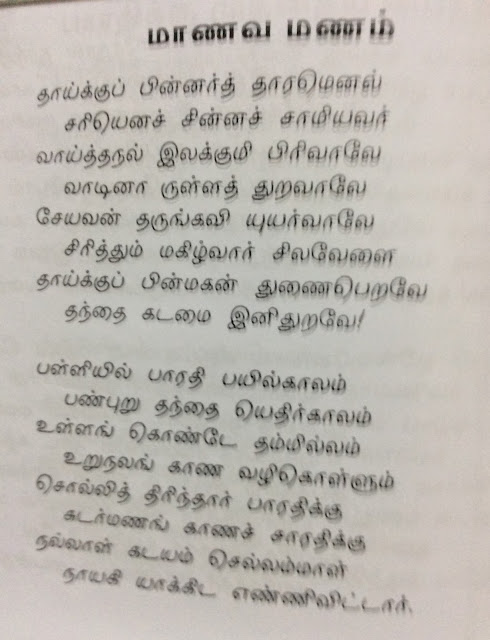
இந்த பாரதியாரின் வரலாற்று நூலில் பல அத்தியாயங்கள் உள்ளன. நூலை முழுவதுமாகத் தர இயலாத நிலையில் தேர்ந்தெடுத்த கவிதைகள் இங்கு அளிக்கப்படுகின்றன. இங்கு மாணவ மணம் என்ற அத்தியாயத்தில் உள்ள 10 பாடல்களைப் படித்து மகிழலாம்.

அத்துடன் நூலை அப்படியே புகைப்படங்களாக எடுத்து அளிக்கும் உத்தி கையாளப்படுகிறது.

ஆகவே நூலின் பக்கங்களை அப்படியே காணலாம்.

இணைப்பாகத் தரப்படுபவை :

மாணவ மணம் – 10 பாடல்கள்


தொகுப்பாளர் குறிப்பு:
புலவர் கு.பொ.பெருமாள் பல்வேறு சந்தங்களில் மரபு நிலை மாறாது பாடல்களை யாத்துள்ளார்.

இவர் தன்னைப் பற்றிக் கூறுவதில் ஒரு சிறு பகுதி: “ உயர் பள்ளி சென்று ஒரு நாளும் கல்லாத யான் கறைப்பட்டவனாகச் சிறைப் (ஆயுட்சிறை) பட்ட காலத்தில் இருபத்து ஏழாம் அகவையில் இருட்டறையில் தவித்த எனக்கு, அணையா ஒளிவிளக்காகக் கல்வி அறிவூட்டிப் புலவனாக வெளியில் வரும் நிறைவுற்றவனாகச் செய்தவர், இதயத்துள் என்றும் நிற்கும் என் ஆசிரியர் ஆவார்கள்.”

இவரது ஆசிரியர் நக்கீரன்.

திண்டுக்கல் மாவட்டம் வேடசந்தூர் மாவட்டம் புளியம்பட்டியில் இருக்கும் புலவர் பதிப்பகம் இந்த நூலை வெளியிட்டுள்ளது.

முதற் பதிப்பு டிசம்பர் 2003. விலை ரூ 35/ (144 பக்கங்கள்)

கவிஞர் கு.பொ.பெருமாள் அவர்களுக்கும் புலவர் பதிப்பக உரிமையாளருக்கும் நமது நன்றி

***

MURDEROUS QUEENS OF ANCIENT INDIA! (Post No.4930)

WRITTEN by London Swaminathan 


Date: 19 April 2018


Time uploaded in London –  16.42 (British Summer Time)


Post No. 4930


Pictures shown here are taken from various sources such as Facebook friends, Books, Google and newspapers; thanks. Pictures may be subject to copyright laws.


WARNING: PLEASE SHARE MY ARTICLES; BUT DON’T SHARE IT WITHOUT AUTHOR’S NAME AND THE BLOG NAME. BE HONEST; OTHERS WILL BE HONEST WITH YOU.


MURDEROUS QUEENS OF ANCIENT INDIA! (Post No.4930)

Chanakya gives very interesting details of the lady Macbeths of ancient India. after the Non Kshatriya rule in Magada empire, the morality had gone down very much. Kalidasa in the first chapter of his Raguvamsam describes the excellent qualities of the kings of the Solar Dynasty. But after the invasion of Persians and Greeks, the situation had changed.


Kautilya alias Chanakya in his monumental work Artha sastra warns against the conspiracies in the harem of the kings. Here are some interesting tit bits:-


P C Chunder in his book Kautilya on Love and Morals says,

“The royal harem stinks with an air of suspicion and concealed dangers. The Artha sastra mentions detailed precautions against palace intrigues. Provided with many compartments, enclosed by parapet and ditch, furnished with delusive chamber, underground rooms, secret doors, passages and hollow pillars, the harem is sought to be made proof against snake, fire and poison (Artha sastra 1-20)

women’s compartments are provided with medicines and herbs useful in midwifery and diseases. Guards under the command of Antarvamsika (harem chief) stand on watch between two compartments. Asoka mentions a minister if charge of affairs of women-folk. The officer is called Stri-Adyaksha- Mahaamaatra.


According to Kautilya, a minster who has passed the ‘Love Test’ may find employment in the royal harem. It is interesting to note that Antarvamsika is a highly paid officer. According to Kautilya he draws 24,000 Panas, second in rank in the matter of pay to the Prime Minster, Chief Priest, Commander-in-chief, the Crown Prince, the Queen and the Queen Mother who receive 48,000 Panas each(AS 5-3).

Pana= ancient coinage in gold or silver

With spies in various garbs, ole men and eunuchs watching the inmates including the palace guards, the harem is sealed off from inside. Ascetics, buffoons and public prostitutes are not allowed to go in. Even queen’s relatives are not allowed in unless someone falls sick.


Vatasyayan too observes in Kamasutra: No woman of place should be allowed to go out of the palace nor any outside to enter except who are known to be of good character. (KS 4-2-83)

According to Kautilya, before meeting the king even the queen has to submit to body searches by old maid servants. The proof of personal purity must be established before the king could touch any woman.


Kautilya cites number of instances in which the king was surprised by assassins in the harem, “for hidden in queen’s chamber, his own brother slew king Bhadrasena; hiding himself under the bed of his mother the son killed king Kaaruusa; mixing fried rice with poison, as though honey, his own queen poisoned Kaaasiraaja . Similarly, many other queens slew their husbands with poison painted an ankletor coated on a gem or her zone, or a looking glass or with a weapon hidden under her tuft of hair (AS 1-20; also Kamandaka 7-51-54.

Kautilya’s apprehension for the personal safety of the king is justified by other sources.

Both Roman historian Curtius Rufus (first century CE) and Greek author Diodoros Siculus (fierst century BCE) refer to the episode of an eastern queen who fell in love with  a low born person, a handsome barber, advanced him in the court circle, murdered or caused to be murdered her first husband, the reigning and king and finally, set up the paramour on the throne. She was the mother of Agrammes, ruler of Prasii and Gangaridae.


The Jain traditions also record a similar story. They describe Nanda as the son f a barber by a courtesan (Parisistaparvan 6-232)


The Divyaavadaana reports that Asoka kept a close watch on his harem. once a royal lady gossiped with a prince. Both were beaten to death at the king’s order (Divya.377)


The Mudraaraaksasa also confirms the tradition of intrigues and palace revolutions. According to Manu, only women devoted to him and well examined and found  safe as regards their dress and ornaments should be allowed to touch him when fanning or bathing him or applying perfumes to his body (Manu 7-219) Even the Mahabharata states that the king should trust nobody, not even his sons (Santi parva 85-33

-to be continued………………….

–Subham–