காலத்தை உறைய வைக்கும் புகைப்பட நிபுணர்! – 3 (Post No.5133)

Written by S NAGARAJAN


Date: 21 JUNE 2018


Time uploaded in London –  6-45 am  (British Summer Time)


Post No. 5133


Pictures shown here are taken from various sources such as Facebook friends, Books, Google and newspapers; thanks. Pictures may be subject to copyright laws.


பாக்யா 22-6-18 இதழில் அறிவியல் துளிகள் தொடரில் வெளியாகியுள்ள (எட்டாம் ஆண்டு பதினாறாம்) கட்டுரை

காலத்தை உறைய வைக்கும் அதிசய அறிவியல் புகைப்பட நிபுணர்! – 3

.நாகராஜன்


மனிதனின் புலன்கள் வழியாக அவன் பெறும் அறிவு மிகவும் குறைவு என்று கூறுகிறார் மக்யார். அவர்கள் எப்படி சூழ்நிலைக்குத் தக்கபடி இருக்கிறார்கள் என்பதை அவர் உன்னிப்பாகக் கவனித்தார். எதைச் செய்தாலும் கூட நமது அறிவு மிக மிகக் குறைந்த அளவாகவே இருக்கிறது என்பது அவரது அனுபவ உரை.

தனது ஸ்கேனர், கேமரா ஆகியவற்றை அவரே தயாரித்துக் கொள்ள ஆரம்பித்தார். ஒரு மனிதரின் உடல் பாகங்களை பல முறை துண்டு துண்டாகப் போட்டோ எடுத்து அதைப் பின்னர் முழு மனிதனாக அசெம்பிள் செய்ய ஆரம்பித்தார். மக்கள் கூட்டம் அலை அலையாக ஊர்ந்து செல்லும் போது அவரது ஸ்கேனரும் கேமராவும் விளையாட ஆரம்பித்தது.

ஒலிம்பிக் போட்டிகளில் இறுதியாக வென்றவரைக் கண்டு பிடிக்கும் ‘ஸ்லிட் ஸ்கேன்’ கேமரா பல்லாயிரம் டாலர் விலை கொண்டது. இதைத் தானே தயாரிக்க எண்ணினார் மக்யார். மீடியம் ஃபார்மட் கேமரா லென்ஸுடன் இன்னொரு சென்ஸரை இணைத்து அதற்கான கணினியின் மென்பொருளைத் தானே எழுதித் தயாரித்தார் அவர். மொத்தச் செலவு ஐம்பதே டாலர் தான்!

ஸ்கேன் செய்ய வேண்டிய ஒரு ஆவணத்தை ஸ்கேனரில் நிலையாக வைத்து விட்டு ஸ்கேனர் அந்த ஆவணத்தின் மீது ஊர்ந்து செல்லும். இது தான் சாதாரணமான ஸ்கேனரின் செயல்பாட்டு முறை. ஆனால் மக்யாரோ இதை மாற்றி, சென்ஸரை நிலையாக வைத்து ஸ்கேன் செய்யப்பட வேண்டிய விஷயத்தை இயக்கத்தில் இருக்கும் படி மாற்றினார்.

ஷாங்காய் நகரத்தில் அவர் சாலை வழியே செல்லும் பயணிகளை இப்படி ஸ்கேன் செய்ய ஆரம்பித்தார். ஒரு லட்சம் தொடர் காட்சிகளை துண்டு துண்டாக எடுத்து அதை ஒரு முழுப் புகைப்படமாக்கினார். இதன் விளைவாக அர்பன் ஃப்ளோ (Urban Flow) என்ற ஒரு அடி உயரமும் எட்டு அடி நீளமும் உள்ள போட்டோக்கள் உருவாக ஆரம்பித்தன. இதில் வேகமாகச் செல்லும் பஸ்கள் கார்களாக சுருங்கின. பஸ்களோ மெட்ரோ ரயில் போல நீளமானது. மெதுவாக நடந்த மனிதர்களின் கால்கள் பெரிதாக ஆனது.

ஷாங்காய் நகரில் மக்யாரைச் சந்தித்த தோர்குல் என்பவர் இப்படிப்பட்ட போட்டோ விசித்திரங்களைக் கண்டு மயங்கிப் போனார். மக்களோ அசத்தலான போட்டோக்களை போட்டி போட்டு வாங்கலாயினர். நம்ப முடியாத விலையான 700 டாலர் (சுமார் 46900 ரூபாய்கள்) முதல் 1400 டாலர் வரை கொடுத்து ஒவ்வொரு போட்டோவையும் அனைவரும் வாங்கினர்.

இதனால் உற்சாகமடைந்த மக்யார் தனது அடுத்த ப்ராஜெக்டாக ஸ்டெயின்லெஸ் என்ற திட்டத்தைத் தொடங்கி பாரிஸ், டோக்யோ, நியூயார்க் முதலிய நகரங்களில் உள்ள சப்-வே ஸ்டேஷன்களில் படம் எடுக்கலானார். இதில் பிரம்மாண்டமானஒரு உண்மை வெளியானது. எந்த நாடானாலும் சரி, எந்த ஸ்டேஷனாலும் சரி மக்கள் ஒரே விதமான உருவத்துடனும், ஒரே விதமான முக பாவத்துடனும், அணுகு முறையுடனும் இருக்கின்றனர். நாடு, இனம்.மொழி இவற்றிற்கு அப்பாற்பட்ட ஒற்றுமையைக் காண முடிகிறது என்பதே அந்த உண்மை!

தனது படப்பிடிப்பிற்காக சரியான வெளிச்சத்தை நிர்ணயிக்க தனது லைட்-மீட்டருடன் 290 ஸ்டேஷன்களிலும் அவர் ஒரு வாரம் அலைந்தார். ஐந்து ஸ்டேஷன்களில் மட்டுமே ஹை – ஃப்ரீக்வென்ஸி லைட் இருந்தது.அங்கு தன் வேலையை அவர் தொடங்கினார். ரயிலுக்குள் அவரது போட்டோவிற்கான போதுமான வெளிச்சம் இல்லை; அதற்காக மூன்று மாத காலம் ஆராய்ந்து ஒரு மென்பொருளைத் தயாரித்தார். பிறகு வெற்றி பெற்றார். இவரது நலம் விரும்பியான தோர்குல், “ ஜென் புத்தமதப் பிரிவில் ஐந்து வருட காலப் பயிற்சிக்குப் பின்னரே ஒரு அம்பை குறி பார்த்து விட அனுமதி கிடைக்கும். ஐந்து வருட காலம் குறி பார்த்துக் கொண்டே இருக்க வேண்டியது தான்! அதுவரை பயிற்சி பெற வேண்டியது தான்!! அது போலத்தான் மக்யாரும்! நன்கு தயாரான பின்னரே அவர் களத்தில் இறங்குவார்” என்கிறார்.

தனது ஸ்டெயின்லெஸ் திட்டத்திற்கு அடுத்தபடியாக ஜெர்மானிய கேமரா உற்பத்தியாளரான ஆப்ட்ரானிஸ் என்ற நிறுவனத்தை அணுகிய மக்யார் 16000 டாலர் பெறுமான ஒரு இண்டஸ்ட்ரியல் வீடியோ கேமராவைக் கடனாகத் தருமாறு கேட்டார். ஆப்ட்ரானிஸ் நிறுவனக் கேமராக்கள் ஒரு வினாடிக்கு ஒரு லட்சம் ப்ரேம்களை எடுக்கும் வேகத் திறன் படைத்தவை. சாதாரண கேமராக்களால் ஒரு வினாடிக்கு 24 ப்ரேம்கள் மட்டுமே எடுக்க முடியும்.

அதை வைத்து படங்களை எடுத்தார். மக்யார் சாதாரண வேகத்தை விட 56 மடங்கு அதிக வேகத்தில் தனது படங்களைப் பிடிப்பது வழக்கம். இதனால் 12 வினாடி படங்களை 12 நிமிட படங்களாக நீட்டிக்க முடியும். போனை உதடுக்குக் கொண்டு செல்லும் போது உதடு சுழலும் அசைவு கூட அவரது கேமராவில் துல்லியமாகப் பதியும்.

மில்லி செகண்ட் படப்பிடிப்பு அவருடையது. நிகழ்காலத்தை தத்ரூபமாகக் காட்டுகிறேன் என்கிறார் அவர்.

இப்போது அவரது படங்கள் ஒவ்வொன்றும் 14000 டாலர் (சுமார் 9,24000 ரூபாய்) என்ற விலையை எட்டி விட்டது.

காலத்தை உறைய வைத்து அனைவரையும் குதூகலப்படுத்தும் அற்புத புகைப்பட நிபுணராக இருக்கும் மக்யார் இன்னும் பல சாதனைகளை நிகழ்த்துவார் என்பதில் ஐயமில்லை!


அறிவியல் அறிஞர் வாழ்வில் .. ..

வில்லியம் ஹால்ஸ்டெட் (William Halsted) என்பவர் அமெரிக்காவில் ஜான் ஹாப்கின்ஸ் மெடிகல் ஸ்கூலில் தலைமை அறுவைசிகிச்சை நிபுணராகப் பணியாற்றி வந்தார். 33 ஆண்டு அனுபவத்தால் அனைவராலும் மதிக்கப்பட்டு வந்த அவர் சற்று கண்டிப்பானவர். நர்ஸ்கள் மற்றும் டாக்டர்கள் அனைவரும் மருத்துவ மனையில் பணியாற்றும் சமயம் தங்கள் கைகளை மெர்குரிக் க்ளோரைட் கரைசலால் நன்கு கழுவிக் கொண்டே ஆபரேஷன் செய்யத் தயாராக வேண்டும் என்று அறிவுறுத்தி வந்தார். ஆபரேஷன் செய்யப்படும் நோயாளிகளுக்கு இவர்கள் மூலமாக எந்த விதமான தொற்றும் ஏற்பட்டு விடக் கூடாது என்பதாலேயே அவர் இதை வற்புறுத்தி வந்தார்.

1889ஆம் ஆண்டு ஒரு நாள் கரோலின் ஹாம்ப்டன் என்ற நர்ஸ் தனக்கு அந்த கரைசலைப் பயன்படுத்தினால் கையில் அரிப்பு ஏற்படுகிறது என்று அவரிடம் வந்து புகார் செய்தார். உடனே ஹால்ஸ்டெட் குட் இயர் ரப்பர் கம்பெனியிடம் ஒரு ரப்பர் க்ளவ்ஸை – கையுறையை – தயாரித்துத் தருமாறு கேட்டுக் கொண்டார். கையுறையும் வந்தது. நர்ஸின் பிரச்சினையும் தீர்ந்தது.

இதைப் பார்த்த மற்ற நர்ஸ்கள் அனைவரும் தங்களுக்கும் அது போன்ற க்ளவ்ஸ் தேவை என்றனர். ஆகவே ஹால்ஸ்டெட் அனைவருக்கும் அதை ஆர்டர் செய்து வாங்கித் தந்தார். இந்தப் பழக்கம் தொடர ஆரம்பித்தது. இதை அறிந்த ஏனைய மருத்துவ மனைகளும் இந்த நடைமுறையைப் பின்பற்ற ஆரம்பித்தன.

சர்ஜிகல் க்ளவ்ஸ் நாளடைவில் பிரசித்தமாயிற்று. இன்றோ ரப்பர் க்ளவ்ஸ்கள் ஆம்புலன்ஸ் ஊழியர்கள், பல் டாக்டர்கள், சாதாரண நோயாளிகளுக்குச் சிகிச்சை தரும் டாக்டர்கள் என்று அனைவராலும் பயன்படுத்தப்படும்  இன்றியமையாத ஒன்றாக ஆகி விட்டது!

***
 

96 Diseases in Buddhist Works! (Post No.5132)


Written by LONDON SWAMINATHAN


Date: 20 JUNE 2018


Time uploaded in London –  15-02  (British Summer Time)


Post No. 5132


Pictures shown here are taken from various sources such as Facebook friends, Wikipedia, Books, Google and newspapers; thanks. Pictures may be subject to copyright laws.


We come to know about ancient Indian medical system through Buddhist works in Pali language. The Charaka Samhita and Susruta Samhita books are ancient medical treatises in Sanskrit language. If one collect and compare the details from both the sources, we get a very good picture of ancient Hindu medical system that existed 2600 years. One must remember neither Buddha nor Buddhist scholars wrote any medical books. They only narrate what existed in those days. So we can broadly classify them as Hindu Medical system.


Here are some interesting facts:-

In the days of Buddha, 2600 years ago, Magadha Empire (Modern Bihar and surrounding states) suffered from five diseases; they were leprosy, dry leprosy, boils , consumption (T.B) and fits.


Emperor Bimbisara had Jeevaka , the most famous physician of those days. He got a medical degree from the Taxila (Thatchaseelam) University.

The boils were cut and mustard powder was applied. Bandages were used to cover the boils. Decoctions of herbs and lime (calcium) were used.


For headaches oil was used. Nose spoon and double nose spoon were used to give medicine through nose. A pipe was used to send aromatic vapour. Administration of medicine through nose was mentioned in Brahmajaala Sutta of the Digha Nikaya.

Cow’s Urine

For jaundice, a decoction (Kashaaya) made with cows urine was given. For skin diseases, oil was massaged on the body. Purgatives were also used.

A Brahmin named Mogharaaja (Maharaja) had pimples. As he knew that the house was infected he took shelter in the fields though it was winter. A Brahmin named Samitigutta was attacked by leprosy and his limbs were crumbling.


Steam bath

In case of acute rheumatism, steam bath was prescribed. A pit six feet deep was filled with charcoal and covered with a coating of sand. Some herbs were spread over it. The patient’s affected limbs were applied with herbal oil and asked to show it over the charcoal pit.  They were asked to turn over and over until the whole body was steamed.

In case of fever blood is let out with the help of a horn.


Buddha was treated by a Brahmana Doctor!

Once the Exalted Buddha suffered from disorderly humours (Vaata, Pitta, Kapha) and sent Elder Upavaana to Brahmin Devahita for hot water. The Elder caused Buddha to bathe in hot water and then mixing the molasses with hot water gave it to the Exalted Buddha to drink. He got better soon.

The word Roga denoting various diseases has been defined in the Buddhist commentaries. The diseases were enumerated and classified with reference to the parts of the body affected by them e.g. Diseases of the eye, ear etc.


A’ gaathaa’ in the Sutta Nipata says at first there were three diseases, namely Iccha (Desire) anasana (Hunger) and Jaraa (Aging). The diseases , gradually increased in number and the gaathaa fixing the total number as ninety eight. But the editors of Pali-English could not find all the 98 diseases. Dhammapala in his commentary on the Mahaaniddesa speaks of 96 diseases the roots of which lie in the three humours Vaata, Pitta, semhaa (kapha). Out of the 96, thirty two kinds arise from each humour.

Source:- Dr Bimala Churn Law, Calcutta, Year 1940


–SUBHAM–


பாரதியார் பற்றிய நூல்கள் – 51 (Post No.5130)

Written by S NAGARAJAN


Date: 20 JUNE 2018


Time uploaded in London –  7-31 am  (British Summer Time)


Post No. 5130


Pictures shown here are taken from various sources such as Facebook friends, Books, Google and newspapers; thanks. Pictures may be subject to copyright laws.


பாரதி இயல்


மஹாகவி பாரதியார் பற்றிய நூல்கள் – 51

மது.ச.விமலானந்தம் அவர்களின் ‘பாரதி சபதம்


ச.நாகராஜன்


1

பாரதி ஆர்வலர் மது.ச.விமலானந்தம் அவர்கள் தஞ்சாவூரில் சரபோசி மன்னர் கல்லூரியில் தமிழ் விரிவுரையாளராகப் பணியாற்றியவர். அவர் பாஞ்சாலி சபதத்தை ஆய்வு செய்து எழுதிய நூல் இது. முதற் பதிப்பு 1963ஆம் ஆண்டு டிசம்பர் மாதம் தஞ்சவூர் பைந்தமிழ்ப் பண்ணை வெளியீடாக வெளி வந்தது. 122 பக்கங்கள் கொண்ட இந்த நூலை காரைக்குடி வி.ஆர்.எம் செட்டியார்,அவ்வை டி.கே.சண்முகம், பாரதியாரின் பேத்தி திருமதி விஜய பாரதி, தமிழ்ப் பேராசிரியர் புலவர் வி..அரங்கசாமி ஆகியோர் பாராட்டியுள்ளனர்.


“In his interesting criticism amounting to research, there is a vivid clarity of presentation, emphasizing the acme of central dramatic situations, the glory of the characterization, and the changing medium of expression.”என்று

நூலாசிரியரை வி.ஆர்.எம் செட்டியார் புகழ்ந்துரைக்கிறார்.

தேசியத் திருக்காப்பியம் என்றும், எக்காலத்திற்கும் ஏற்றதற்காலத் தன்மை வாய்ந்தது என்றும், ‘பாஞ்சாலி சபதம் என்பது பாரதியின் சபதமே என்றும் ஆசிரியர் மெய்ம்மறந்து பாராட்டும் பண்பு சுவைக்கத் தகக்து என்று அவ்வை டி.கே.சண்முகம் பாராட்டுகிறார்.


திருமதி விஜயபாரதி ஆசிரியரைப் பாராட்டுவதுடன் அவர் பாஞ்சாலியின் சபதம் பாரதியின் சபதமே என்று கூறுவதை ஏற்றுக் கொள்ள இயலாது என்பதையும் நாசுக்காகத் தெரிவிக்கிறார்.


 ஆக, பலரது பாராட்டையும் பெற்ற இந்த நூல் தகுதியுடைய ஆராய்ச்சி நூலாக மிளிர்கிறது.


2

நூலாசிரியர் வியாச பாரதத்தையும் வில்லி பாரதத்தையும் நன்கு ஆய்ந்து படித்தவர். பாஞ்சாலி சபதத்தைக் கரைத்துக் குடித்தவர்.


வியாச பாரதத்தில் உள்ள குறைகளாக ஐந்து குறைகளை அவர் சுட்டிக் காட்டுகிறார்.


1)வஞ்சனையே உருவான சகுனி துரியோதனனுக்கு பாண்டவர் குறித்து பொறாமை கொள்ளலாகாது என்று கூறுகிறான். வஞ்சக சகுனி இப்படி உரைப்பானா?


2)திருதராஷ்டிரன் சூதாட்ட சமயத்தில் திரௌபதியை பணையமாக வைக்கப்பட்ட போது வென்றாகி விட்டதா என்று பலமுறை கேட்டதாக வியாசர் கதையை அமைத்திருக்கிறார்.சூதாட வேண்டாம் என்று துரியோதனனுக்கு நல்லறிவு சொன்ன முதியவரா இப்படிக் கேட்டிருப்பார்?


3) தர்மன், ‘திரௌபதி மாதவிடாயாய் இருப்பதால் அவள் ஒற்றாடை அணிந்து வரட்டும்; அதைப் பார்த்து அவையோர் துரியோதனனைத் தூற்றட்டும் என்று ஒருவன் மூலம் சொல்லி அனுப்புவதாக வியாசர் கூறுகிறார். எந்த கணவனாவது இப்படிச் சொல்லி அனுப்புவானா?


4) தேர்ப்பாகன் – ஒரு ஏவலன் – திரௌபதியைச் சென்று அழைக்கிறான். இது நடக்கக் கூடிய ஒன்றா?


5) தேர்ப்பாகனான பிரதிகாமியையும் துச்சாதனனையும் நோக்கி, ‘பாண்டவர்களைக் கண்டு பயப்படுகிறீர்களா, பயப்பட வேண்டாம், அவர்கள் யாது செய்வர்? என்கிறான் துரியோதனன்.இது துரியனின் ஆற்றலுக்கு இழுக்கு சேர்வதாக அல்லவா அமைகிறது.

ஆக இந்த ஐந்து குறைகளையும் வியாசர் குறைகளாகக் காண்கிறார் நூலாசிரியர்.

வில்லிப்புத்தூராரின் நான்கு குறைகளையும் சுட்டிக் காட்டுகிறார் நூலாசிரியர்.


3

“அடுத்து பாரதி சபதம் – பாஞ்சாலி சபதம் என்ற அத்தியாயத்தில் தமிழ்த் திறத்தால் நாட்டுப் பற்றை ஊட்டியவர், கண்ணன் புகழ் பாடியவர், பெண்ணின் பெருமையைப் பேசியவர் பாரதியார்.

இந்த மூன்றையும் தனித்தனியே பாடிப் போந்த பாரதிக்கு மூன்றையும் இணைத்துப் பாடும் வாய்ப்பு பாரதக் கதை மூலம் கிடைத்தது.


“பாஞ்சாலி சபதம் பாரதி சபதமே என்பதற்கு ஒரு எடுத்துக்காட்டு: தருமன், பாஞ்சாலியைப் பணையப் பொருளாக வைத்துச் சூதாடிய கொடுமையைப் பொறுக்காது பொங்கி எழுந்தான் வீமன். அங்கே பாரத அன்னையை மனதில் எண்ணிய பாரதியின் வெகுளி தலை காட்டுதல் காணலாம்.


   இரு பகடை என்றாய் – ஐயகோ!

       இவர்க் கடிமை யென்றாய்!

   இது பொறுப்ப தில்லை – தம்பி!

       எரி தழல் கொண்டு வா

   கதிரை வைத் திழந்தான் – அண்ணன்

       கையை எரித்திடுவோம்


என்பதில் பொருளும் சொல்லும் பழையதாகலாம். ஆனால் பொருளோடு பொருந்திய தொனியும், சொல்லோடு அமைந்த துடிப்பும் அங்கே சீற்றமுற்றுச் சாற்றியது வீமன் அல்லன், வரகவியே என விளங்கும்.


“பாரதிக்குக் கண்ணனும் பெண்மையும் இரு கண்கள்; வலக்கண் ஆற்றல் நிலையது – அது தான் ஞாயிறு – வெம்மையது. அதுவே கண்ணன். இடக்கண் அமைதி நிலையது – அது தான் திங்கள் – தண்மையது – அதுவே பெண்.

இரண்டும் வேண்டும். ஆற்றலும் வேண்டும்; அமைதியும் வேண்டும். இதனைத் தான் ‘பாஞ்சாலி சபத வாயிலாக பாரதி உணர்த்துகின்றார்.


இப்படி பல விதமாக பாஞ்சாலி சபதத்தை ஆய்வுக் கண்ணுடன் அலசி தன் கருத்துக்களைத் தருகிறார் விமலானந்தம்.


4

இப்படி நூலை நுணுகி ஆராய்ந்து பல்வேறு மேற்கோள்களைச் சுட்டிக் காட்டி பாரத அன்னையை மனதில் வைத்து எழுதப்பட்ட  பாஞ்சாலி சபதம் உண்மையில் பாரதியின் சபதமே என்று நிறுவுகிறார் நூலாசிரியர்.

மறுக்க முடியாது.


“பாஞ்சாலி சபதம் தரும் இன்பம் இணையற்றது; துயர நிகழ்ச்சி தான்; துயரவுணர்வு தான்; ஆயினும் அந்நிகழ்ச்சியை அனுபவிப்பதால் வரும் இலக்கிய இன்பத்திற்கோ ஈடில்லை

‘பாஞ்சாலி சபதத்தைப் படித்தேன். தேனுண்டேன். தேனுண்ணும் வண்டாகவே நின்றிருக்கலாம். தேனுண்ட மயக்கில் தேனிலேயே வீழ்ந்து விட்டேன். ஆனாலும் திளைத்தேன். அந்தக் கிறுக்கில் தோன்றிய உளறு மொழிகளைத் தான் உங்கள் முன் கொட்டினேன். என்கிறார் மது.ச.விமலானந்தம்.

கிறுக்கு மொழிகளாக இருப்பினும் தேன் மொழிகளாகவே அமைகிறது.


பாரதியின் பாஞ்சாலி சபதத்தை பாரதத்துடன் இணைத்துக் காணும் ஆய்வு நூல் இது.

பாரதி அன்பர்கள் விரும்பி ஏற்கும் நூலாகவும் இது அமைகிறது.


படியுங்கள்; பாஞ்சாலி சபதத்தை ரசியுங்கள்.

***

MANU’S STRANGE RULES ON HOSPITALITY! (Post No.5129)

Written by LONDON SWAMINATHAN


Date: 19 JUNE 2018


Time uploaded in London –  21-08  (British Summer Time)


Post No. 5129


Pictures shown here are taken from various sources such as Facebook friends, Wikipedia, Books, Google and newspapers; thanks. Pictures may be subject to copyright laws.


Manu Smrti- Third Chapter continued….

My Comments

1.Hospitality is a unique feature of Hindu culture. It is found in Sanskrit and Tamil scriptures with equal emphasize only among the ancient languages. Sita of Ramayana and Kannaki of Tamil epic Silappadikaram worried about their inability to feed and honour the guests. The concept of feeding complete strangers to get religious merits is unknown in other ancient cultures. This shows that Hindus are the sons of the soil and they developed the culture in their own land. This explodes the theory of Vedic Hindus coming from outside.

Another aspect coming to light in the slokas is that the culture and the values were same from Kanyakumari Kashmir. It is equally empahsized in both Sanskrit and Tamil scriptures.

2.Manu Smrti is the oldest law book, older than Hammurabi’s (I have pointed out the reasons for my conclusion already). Here is one more point: The Vedic deities are mentioned in the slokas quoted here. If it is composed in second century BCE we would not have come across Vedic Kuhu and Anumati

  1. The five sacrifices given to five groups include trees, dogs, crows and people of Four Castes. That shows Manu is compassionate towards all living beings. Feeding dogs and crows as part of religious sacrifice is unknown in other cultures. This shows the uniqueness of Hindu culture. Feeding the crows and watering the plants as sacred thing is found in ancient Tamil books; it is one more proof to show that the culture in one from Kanyakumari to Kashmir.
  2. Sacrificing to goblins along with Vedic deities is also strange. But when we consider trees, crows and dogs are included in the list, it is not strange.


5.Manu asked the Hindus to give four things: Mat, Water, Room and KIND WORDS. It shows his high thoughts.

6.His definition of a GUEST is good; those who stay one night only are considered guests; he asks everyone to feed all the four castes; This does not correlate with the 40 or odd slokas/couplets which the Dravidians and Marxists use for their Anti Manu propaganda. They are later interpolations.

  1. Another strange thing is ‘newly married’ get priority in eating; he wants them to enjoy life fully!

8.Manu says the householder can eat only after feeding kinsmen, servants and the guests! This is unknown in any part of the world except the Hindus from Kanyakumari to Kashmir.

  1. Ancient Tamil literature also confirm all the oblations to manes who live in SOUTHERN Direction. So Tamils were ardent Hindus as others in the North. It is in Tirukkural and Purananuru. This explodes the theory of half -baked theories of Vedic Hindus coming from outside India. No other ancient culture has such belief about SOUTH or daily oblations to manes with WATER. Use of water in every ceremony shows that it is a tropical culture.
  2. He who prepares food for himself is a sinner is in Manu and Bhagavad Gita.
  3. Last but not the least, Manu asks to honour people who comes once a year! Good Advice!!


Third Chapter continues……………………..

Sacrifice to Vedic Deities

3-83. Let him feed even one Brahmana in honour of the manes at the Sraddha which belongs to the five great sacrifices; but let him not feed on that occasion any Brahmana on account of the Vaisvadeva offering.

3-84. A Brahmana shall offer according to the rule (of his Grihya-sutra a portion) of the cooked food destined for the Vaisvadeva in the sacred domestic fire to the following deities:

3-85. First to Agni, and next to Soma, then to both these gods conjointly, further to all the gods Visve Devah, and then to Dhanvantari,

3-86. Further to Kuhu (the goddess of the new-moon day), to Anumati (the goddess of the full-moon day), to Pragapati (the lord of creatures), to heaven and earth conjointly, and finally to Agni Svishtakrit (the fire which performs the sacrifice well).

  1. After having thus duly offered the sacrificial food, let him throw Bali offerings in all directions of the compass, proceeding (from the east) to the south, to Indra, Yama, Varuna, and Soma, as well as to the servants (of these deities).


To the Trees

3-88. Saying, ‘Adoration to the Maruts,’ he shall scatter some food near the door, and some in water, saying, ‘Adoration to the waters;’ he shall throw some on the pestle and the mortar, speaking thus, ‘Adoration to the trees.’

  1. Near the head of the bed he shall make an offering to Sri fortune, and near the foot of his bed to Bhadrakali; in the centre of the house let him place a Bali for Brahman and for Vastoshpati (the lord of the dwelling) conjointly.


Goblins- Ghosts

3-90. Let him throw up into the air a Bali for all the gods, and in the day-time one for the goblins roaming about by day, and in the evening one for the goblins that walk at night.

  1. In the upper story let him offer a Bali to Sarvatmabhuti; but let him throw what remains from these offerings in a southerly direction for the manes.


To the Crows

3-92. Let him gently place on the ground (some food) for dogs, outcasts, Candalas (Svapak), those afflicted with diseases that are punishments of former sins, crows, and insects.

  1. That Brahmana who thus daily honours all beings, goes, endowed with a resplendent body, by a straight road to the highest dwelling-place (i.e. Brahman).
  2. Having performed this Bali offering, he shall first feed his guest and, according to the rule, give alms to an ascetic (and) to a student.


Equal to Cow Donation/ Go Daana

3-95. A twice-born householder gains, by giving alms, the same reward for his meritorious act which (a student) obtains for presenting, in accordance with the rule, a cow to his teacher.

  1. Let him give, in accordance with the rule, to a Brahmana who knows the true meaning of the Veda, even a small portion of food as alms, or a pot full of water, having garnished the food with seasoning, or the pot with flowers and fruit.
  2. The oblations to gods and manes, made by men ignorant (of the law of gifts), are lost, if the givers in their folly present (shares of them) to Brahmanas who are mere ashes.
  3. An offering made in the mouth-fire of Brahmanas rich in sacred learning and austerities, saves from misfortune and from great guilt.
  4. But let him offer, in accordance with the rule, to a guest who has come (of his own accord) a seat and water, as well as food, garnished (with seasoning), according to his ability.
  5. A Brahmana who stays unhonoured (in the house), takes away (with him) all the spiritual merit even of a man who subsists by gleaning ears of corn, or offers oblations in five fires.

Give Four Things!

  1. Grass, room for resting, water, and fourthly a kind word; these (things) never fail in the houses of good men.


One Night Stay is a Guest

  1. But a Brahmana who stays one night only is declared to be a guest (atithi); for because he stays (sthita) not long (anityam), he is called atithi (a guest).
  2. One must not consider as a guest a Brahmana who dwells in the same village, nor one who seeks his livelihood by social intercourse, even though he has come to a house where there is a wife, and where sacred fires are kept.
  3. Those foolish householders who constantly seek (to live on) the food of others, become, in consequence of that (baseness), after death the cattle of those who give them food.
  4. A guest who is sent by the setting sun in the evening, must not be driven away by a householder; whether he have come at supper- time or at an inopportune moment, he must not stay in the house without entertainment.

Hospitality to Guests

  1. Let him not eat any dainty food which he does not offer to his guest; the hospitable reception of guests procures wealth, fame, long life, and heavenly bliss.
  2. Let him offer to his guests seats, rooms, beds, attendance on departure and honour while they stay, to the most distinguished in the best form, to the lower ones in a lower form, to equals in an equal manner.
  3. But if another guest comes after the Vaisvadeva offering has been finished, the householder must give him food according to his ability, but not repeat the Bali offering.

Non Brahmin Guests

  1. A Brahmana shall not name his family and (Vedic) gotra in order to obtain a meal; for he who boasts of them for the sake of a meal, is called by the wise a foul feeder (vantasin).
  2. But a Kshatriya who comes to the house of a Brahmana is not called a guest (atithi), nor a Vaisya, nor a Sudra, nor a personal friend, nor a relative, nor the teacher.
  3. But if a Kshatriya comes to the house of a Brahmana in the manner of a guest, (the house-holder) may feed him according to his desire, after the above-mentioned Brahmanas have eaten.


Feed all the Four Castes

  1. Even a Vaisya and a Sudra who have approached his house in the manner of guests, he may allow to eat with his servants, showing (thereby) his compassionate disposition.
  2. Even to others, personal friends and so forth, who have come to his house out of affection, he may give food, garnished with seasoning according to his ability, at the same time with his wife.

Newly Married Get Priority

  1. Without hesitation he may give food, even before his guests, to the following persons, (viz.) to newly-married women, to infants, to the sick, and to pregnant women.
  2. But the foolish man who eats first without having given food to these (persons) does, while he crams, not know that (after death) he himself will be devoured by dogs and vultures.
  3. After the Brahmanas, the kinsmen, and the servants have dined, the householder and his wife may afterwards eat what remains.
  4. Having honoured the gods, the sages, men, the manes, and the guardian deities of the house, the householder shall eat afterwards what remains.
  5. He who prepares food for himself (alone), eats nothing but sin; for it is ordained that the food which remains after (the performance of) the sacrifices shall be the meal of virtuous men. (It is in Bhagavad Gita)


Once a Year!

  1. Let him honour with the honey-mixture a king, an officiating priest, a Snataka, the teacher, a son-in-law, a father-in-law, and a maternal uncle, (if they come) again after a full year has elapsed since their last visit.
  2. A king and a Srotriya, who come on the performance of a sacrifice, must be honoured with the honey-mixture, but not if no sacrifice is being performed; that is a settled rule.

to be continued………………….

ஜப்பானில் பிள்ளையார் & ஸரஸ்வதி கோவில்கள்! (Post No.5128)

Written by LONDON SWAMINATHAN


Date: 19 JUNE 2018


Time uploaded in London –  11-55 am (British Summer Time)


Post No. 5128


Pictures shown here are taken from various sources such as Facebook friends, Wikipedia, Books, Google and newspapers; thanks. Pictures may be subject to copyright laws.


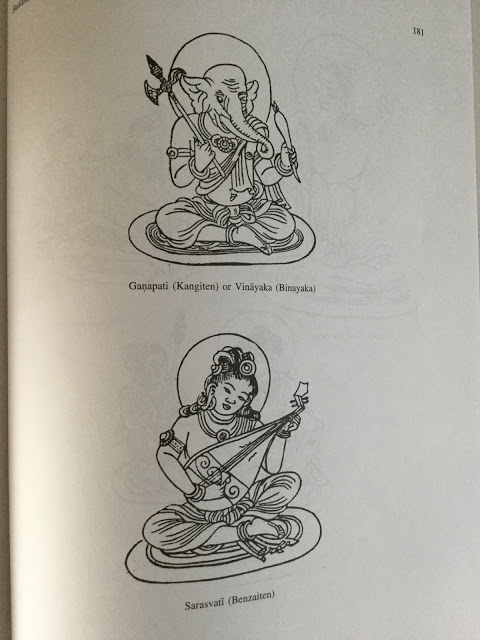
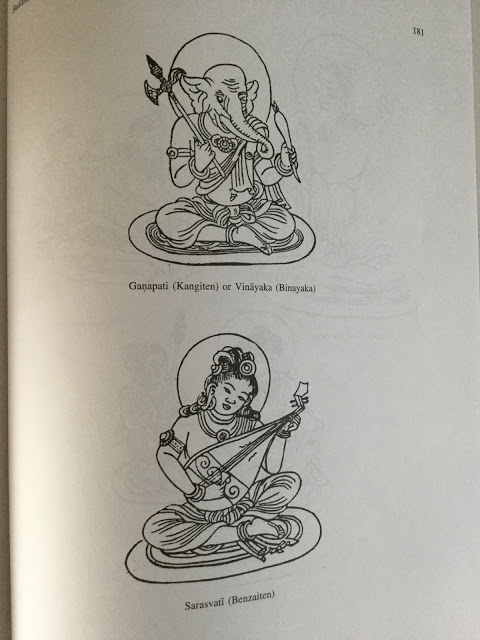
ஜப்பானில் 131 ஸரஸ்வதி கோவில்கள் இருக்கின்றன. டோக்கியோ, கொயசான், டகாவோ முதலிய இடங்களில் கணபதி (பிள்ளைஐயார்) கோவில்கள் இருக்கின்றன.


ஜப்பானில் எடொ (Edo) என்னும் ஊரில் ஜெர்மன் டாக்டர் பிலிப் ப்ரன்ஸ் வோன் சீபோல்ட் (1823-28) வாழ்ந்தார். அங்கு கணபதி என்னும் கடவுள் எவ்வளவு பிரஸித்தமானவர் என்று அவர் எழுதிய ஜப்பானிய கடவுள்கள்  (1832) என்ற நூலில் எழுதியுள்ளார். கணபதிக்குப் பல கோவில்கள் இருந்தமை குறித்தும் ஒரு பேட்டை அவர் பெயரில் ஷோடன் சோ என்று அழைக்கப்படாதாகவும் எழுதுகிறார்.

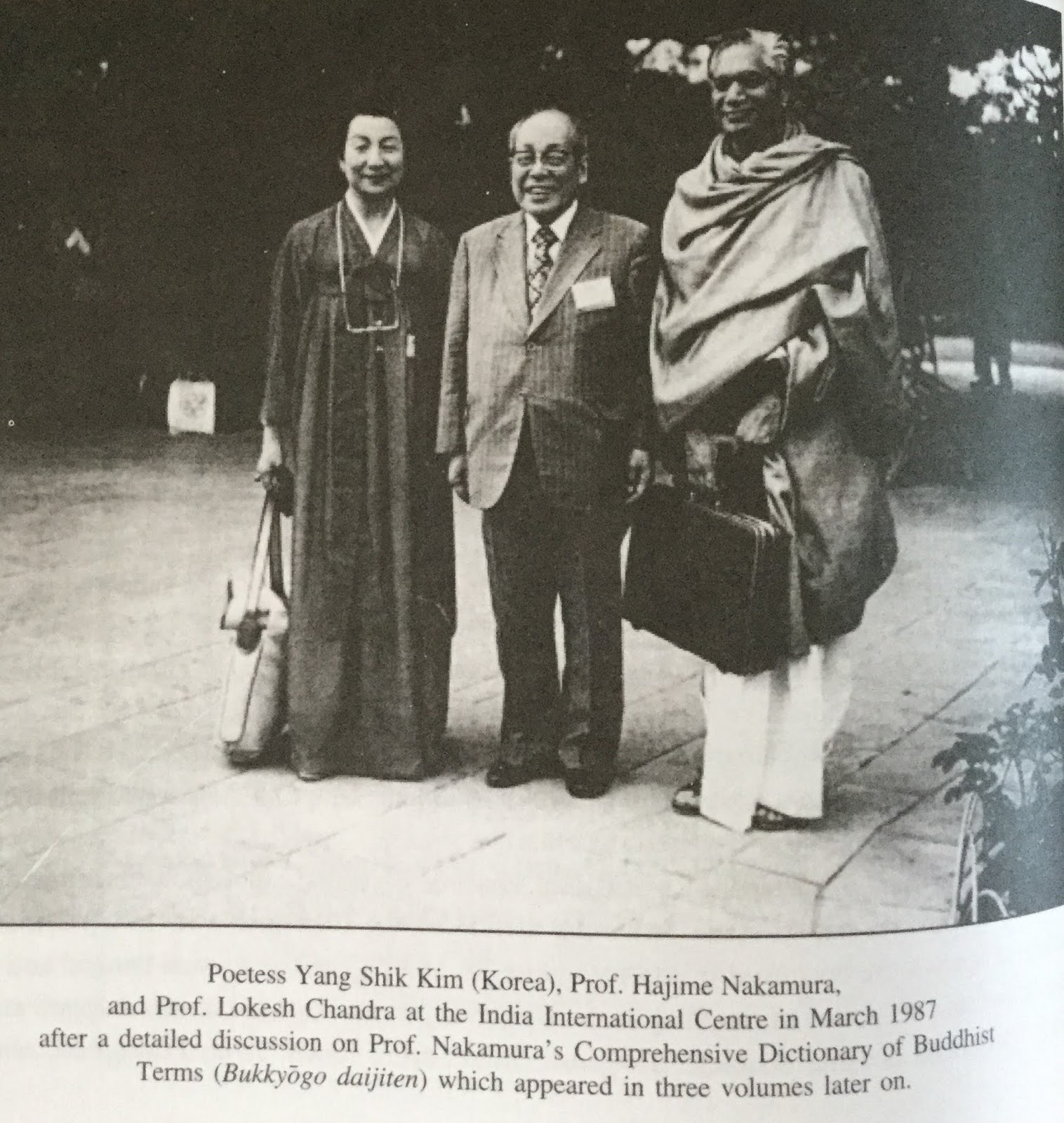
1970 ஆம் ஆண்டில் அந்த கோவிலுக்கு லோகேஷ் சந்திரா என்ற இந்திய-ஜப்பானிய அறிஞர் சென்றார். அப்பொழுதும் அங்கு வழிபாடு நடந்தது. 1200 ஆண்டுகளாகத் தொடர்ந்து வழிபாடு நடக்கிறது. அந்த ஒன்பதாம் நூற்றாண்டு ஆலயத்தில்!


லோகேஷ் சந்திரா அங்கு சென்றபோது ஏராளமான தம்பதியர் இல்லற இன்பம் வேண்டியும், மூத்தவர்கள் சந்தோஷத்தையும் வணிகத்தில் வெற்றியையும் நாடி வந்தனர் என்றும் கூறுகிறார். அவரை நந்திகேஸ்வரர் (காங்கிடென்) என்றும் சொல்லுவர்.


ஸரஸ்வதி தேவிக்கு 131 கோவில்கள் உள. ஜெர்மானிய புஸ்தகத்தை மொழிபெயர்த்தால் அக்கலத்தில் அங்கு இருந்த உயிர்த் துடிப்புள்ள பௌத்த, இந்து சமய வழிபாடுகளை அறியலாம்.


புயற்காற்றுத் தாகுதல்களைத் தடுக்க 1836-ல் வருண பகவானுக்கு ஒரு ஆலயம் சமைக்கப்பட்டதாம். அரசு வேலையில் உயர பிரம்மாவையும், மழைக்காக வருணனையும், விஷ முறிவுக்காக கருடனையும், நல்ல வர்த்தகம்- போர் வெற்றிக்காக மஹா காலனையும் அவர்கள் வழிபட்டதாக எழுதியுள்ளார். இந்தியாவுக்கு வெளியேயுள்ள பிள்ளையார் கோவில்களில் மிகவும் பழமையானது எடோ நகர கோவில்தான்.

தத்துவ வித்தகர்களுக்கு கோவில்கள்

நரா என்னும் இடத்தில் இந்தியாவின் புகழ்பெற்ற தத்துவ வித்தகர்களுக்கு  சிலைகள் உள்ளன. 1208ல் புகழ்பெற்ற சிற்பி உன்கேய் (Unkei) செதுக்கிய வசு பந்துவின் சிலையும், ஆசங்கரின் சிலையும் அங்கே உள்ளன. அவற்றின் ஜப்பானிய பெயர்கள்- செய்ஷின், முசாக்கு


நாளந்தா ஈ அற்புதம்!

818 ஆம் ஆண்டில் கோங்கோ சம்மை (வஜ்ரஸமாதி), சீனா வழியாக நாளந்தாவுக்கு வந்தார். பீஹார் மாநிலத்திலுள்ள நாளந்தாவில் சாப்பாடு அறைகளில் லட்சக் கணக்கில் ஈக்கள் இருக்கும் என்றும் ஆனால் புத்த பிக்ஷுக்கள் வந்து சாப்பிடத் துவங்கியவுடன் அவை மாயமாய் மறைந்து விடும் என்றும் எழுதி வைத்துள்ளார்.


ஜப்பானில் மஹாபாரதம்

ரிஷ்யஸ்ருங்கர் கதை ஜப்பானில் நடித்துக் காட்டப்படுகிறது (kabuki drama Naru-kami) . இது சீனா  வழியாக ஜப்பான வந்தது. ஒரு பிரெஞ்சு ஆசிரியரின்  (Edouard Chavanes ) மொழிபெயர்ப்பு இதற்கு அடிப்படையாக அமைந்தது. அவர் ஏக ஸ்ருங்க என்ற (இக்காகு சென்னின்) மஹாபாரதக் கதையை ஜப்பானிய மொழியில் மொழிபெயர்த்தார். 1400 ஆண்டுகளுக்கு முன்னர் இந்தியாவுக்கு வந்த சீன யாத்ரீகன் யுவாங் சுவாங்கும் காந்தாரத்திலுள்ள ஏக ஸ்ருங்க ஆஸ்ரமத்தைப் பற்றி எழுதினார். இது காந்தாரத்தில் ஸ்வாட் மலை அடிவாரத்திலுள்ளது.


ஹோம குண்டம் படம்


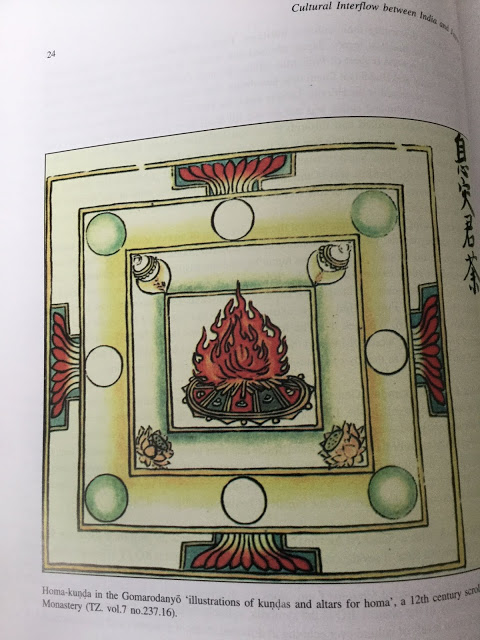
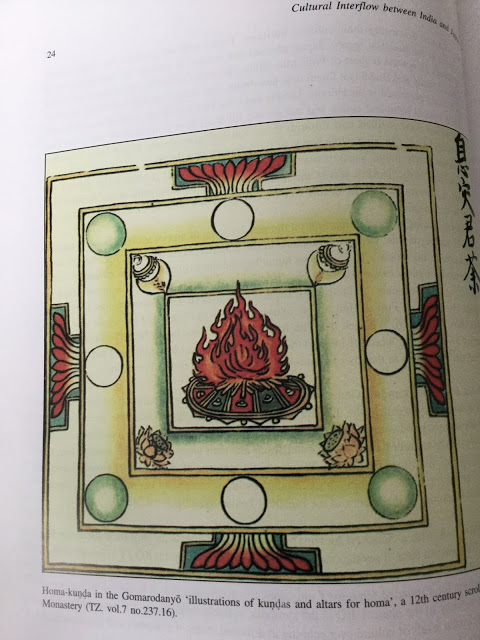
டோஜி மடாலயத்தில் ஹோம குண்டம் படம் உள்ளது. நவக்ரஹங்களையும் 28 நக்ஷத்ரங்களையும் வழிபட பல்வேறு வகை ஹோமங்கள் ஒரு சுவடியில் காணப்படுகின்றன. இது ஒன்பதாம் நூற்றாண்டு சுவடி.


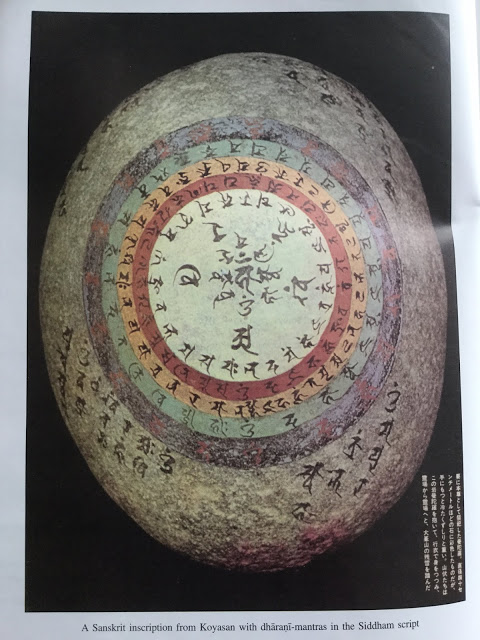
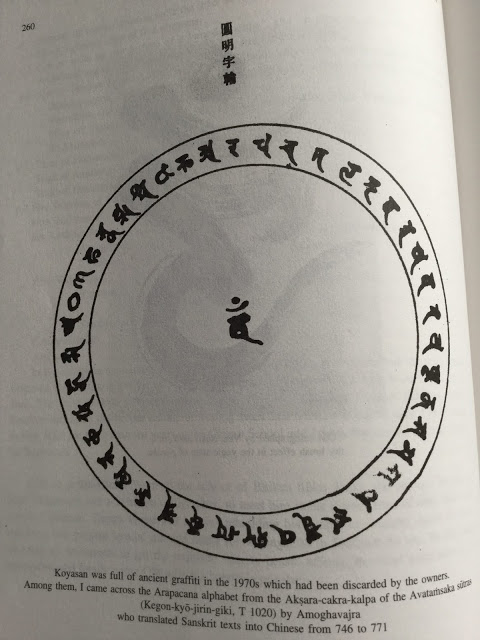
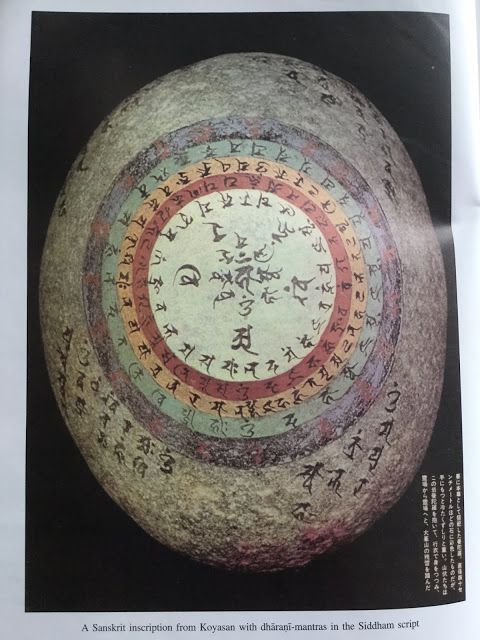
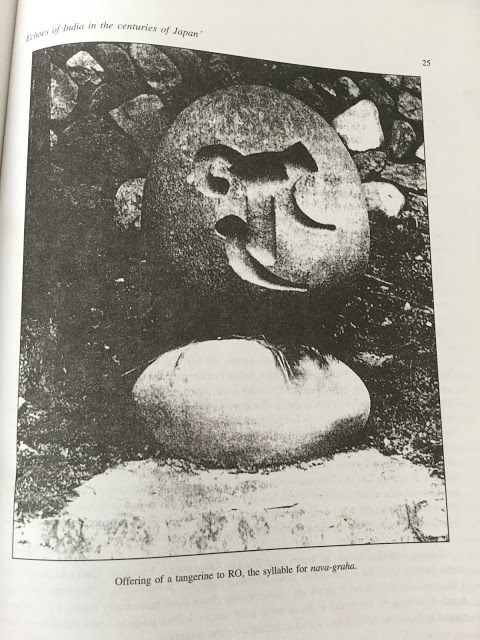
சாலையில் ஒரு பிரம்மாண்டமான வட்ட வடிவப் பாறையில் நவக்ரஹங்களுக்கான பீஜாக்ஷர மந்திரம் பொறிக்கப்பட்டுள்ளது. ஸம்ஸ்க்ருத ஓரெழுத்தான ரோ இதில் உள்ளது. இதை நமது ஆசிரியர் பார்த்துக் கொண்டு இருக்கையில் ஒரு நவீன உடை அணிந்த இளம் பெண் வந்து ஒரு காகிதத்தை வைத்து அதன் மீது ஒரு ஆரஞ்சுப் பழத்தை வைத்து நைவேத்யம் செய்ததைக் கண்டார்.

புகாகு, ஜிகாகு

ஜப்பானில் ஒரு  ஏரியின் பெயர் பீவா; இதன் பொருள் வீணை. அது வீணை வடிவில் இருப்பதால் அந்தப் பெயர். இதே போல ஜிகாகு புகாகு என்ற நாட்டிய வகைகளில் இந்தியக் கதைகளும் நகைச் சுவைக் கதைகளும் இடம் பெறுகின்றன. இந்தக் கதைகள் பாரத நாட்டுக் கதைகள் என்பதால் அதன் தாக்கம் நன்றாகத் தெரிகிறது.


–SUBHAM–


நான் புத்தர்! (Post No.5126)

Written by S NAGARAJAN


Date: 19 JUNE 2018


Time uploaded in London –  6-29 am  (British Summer Time)


Post No. 5126


Pictures shown here are taken from various sources such as Facebook friends, Books, Google and newspapers; thanks. Pictures may be subject to copyright laws.


புத்த தரிசனம்


நான் புத்தர்!


ச.நாகராஜன்

துரோணர் என்று ஒரு பிராம்மணர். நல்ல விஷயங்கள் அறிந்த பிராம்மணர். உக்கதம் என்ற நகரிலிருந்து சேதவ்யம் என்ற நகரை நோக்கி விரைந்து நடந்து கொண்டிருந்தார்.


புத்தர் சற்று முன்னர் தான் அந்தப் பாதையில் நடந்து சென்றிருந்தார். அவரது கால் தடங்கள் சாலையிலே பதிந்து இருந்தன.


துரோணர் அந்தத் தடங்களைப் பார்த்தார். இது மனித தடங்கள் அல்ல என்ற முடிவுக்கு வந்தார் அந்த கற்றறிந்த பிராம்மணர்.

அந்தத் தடங்களை அடியொட்டி முன்னேறலானார்.

புத்தர் சற்று இளைப்பாற சாலை ஓரத்தில் இருந்த மரத்தின் அடியில் அமர்ந்தார்.


துரோணர் அவரை நோக்கி நடந்து அவர் அருகில் வந்தார்.

புத்தரின் முகம் எல்லையற்ற அமைதியுடனும் பிரகாசத்துடனும் தூய்மையுடனும் விகசித்தது. துரோணர் பரவசமடைந்தார்.

அவரை நோக்கிக் கேட்டார் :


துரோணர் : நீங்கள் கடவுளா?

புத்தர் : பிராம்மணரே! நான் கடவுள் இல்லை.


துரோணர் : நீங்கள் கந்தர்வரா? (இசையில் வல்ல தேவதைகள்)

புத்தர் : பிராம்மணரே! நான் கந்தர்வன் இல்லை.


துரோணர் : நீங்கள் யக்ஷரா?

புத்தர் : பிராம்மணரே! நான் யக்ஷன் இல்லை.


துரோணர் : அப்படியானால் நீங்கள் மனிதரா?

புத்தர் : பிராம்மணரே! நான் மனிதன் இல்லை.


துரோணர் : நீங்கள் கடவுளா என்று கேட்டேன். இல்லை என்றீர்கள். நீங்கள் கந்தர்வரா என்று கேட்டேன். இல்லை

என்றீர்கள். நீங்கள் யக்ஷரா என்று கேட்டேன். இல்லை என்றீர்கள்.

நீங்கள் மனிதரா என்று கேட்டேன். அதற்கும் இல்லை என்று பதில் சொன்னீர்கள். அப்படியானால் நீங்கள் யார்?


புத்தர் : ஓ, பிராம்மணரே! நான் கடவுள் என்றால் புலன்கள் பற்றிய ஆசை இருந்திருக்கும். ஆனால் நானோ புலன்கள் ஆசையை முற்றிலுமாக ஒழித்து விட்டேன். ஆகவே நான் கடவுள் இல்லை. நான் கந்தர்வன் என்றால் புலன்கள் பற்றிய ஆசை இருந்திருக்கும். ஆனால் நானோ புலன்கள் ஆசையை  ஒழித்து விட்டேன். ஆகவே நான் கந்தர்வனும் இல்லை.நான் யக்ஷன் என்றால் புலன்கள் பற்றிய ஆசை இருந்திருக்கும். ஆனால் நானோ புலன்கள் ஆசையை ஒழித்து விட்டேன். ஆகவே நான் யக்ஷனும் இல்லை.நான் மனிதன் என்றால் புலன்கள் பற்றிய ஆசை இருந்திருக்கும். ஆனால் நானோ புலன்கள் ஆசையை ஒழித்து விட்டேன். ஆகவே நான் மனிதன் இல்லை.


ஓ! பிராம்மணரே! நீரில் நீலத் தாமரை, வெள்ளைத் தாமரை, செந்தாமரை பூத்திருக்கும். அவை நீரிலேயே வளர்கின்றன.என்றாலும் கூட நீரைப் பற்றாமல்,படாமலிருக்கும். நீரினால் அது பாதிக்கப்படாது. அது போலவே நானும் மனிதர்களில் ஒருவனாக இந்த உலகத்தில் பிறந்தேன். அவர்களில் ஒருவனாகவே நானும் வளர்ந்தேன். ஆனால்  இதர ஆண்களைப் போலவோ அல்லது பெண்களைப் போலவோ அல்லாமல் அவர்களிடமிருந்து உயர்ந்திருக்கிறேன். உலகத்தின் மீது நான் பற்று கொள்ளவில்லை. ஆகவே சாதாரண மனிதர்களுக்கு உள்ள பலஹீனங்களைக் களைந்து விட்டு உயர்ந்த மனிதனாக – உத்தர மனுஷனாக – இருக்கிறேன்.

சுருக்கமாகச் சொல்லப் போனால் நான் ஒரு புத்தன். என்னை மிகச் சரியாகச் சொல்ல வேண்டுமானால் புத்தன் என்று சொல்லலாம். ஓ! பிராம்மணரே, என்னை புத்தன் என்று அழையுங்கள்.


பிராம்மணருக்கும் புத்தருக்கும் இடையே நடந்த இந்த சம்வாதம் உலகியல் புலனிபங்களில் திளைப்பவரை மனிதர் என்றும் அதற்கு அப்பாற்பட்டு அனைத்தையும் துறந்த உயர் நிலையில் இருப்பவரை புத்தர் என்றும் இனம் பிரித்துக் காட்டுகிறது.

சுரர், அசுரர், நாகர், நரர் என்று பலரையும் இனம் பிரித்துக் காட்டுகிறோம். புத்தர் தான் யார் என்பதை விளக்கிக் காட்டினார்.


சித்தார்த்தனாகப் பிறந்து ராஜகுமாரனாக வளர்ந்த இளவரசன் மனிதனே. ஆனால் பூரண ஞானத்தை போதி மரத்தடியில் அடைந்தவுடன் அவனே புத்தனாக உருவெடுத்தான்.

எல்லா ராகங்களையும் துறந்ததால் அவர் புத்தரானார்.

புத்தரானவுடன் மக்களோடு மக்களாக இணைந்து அவர்களுக்கு நல்லுபதேசங்களைத் தந்தார்.


அதையும் எளிமையாக அவர்கள் மொழியிலேயே அவர்களுக்குப் புரியுமாறு எடுத்துரைத்தார்.

மக்கள் வியப்புடன் அவரை மதித்து வணங்கி அந்தச் சொற்களை பயபக்தியுடன் கேட்டு உயர்ந்தனர்.


கடைசி நாட்களில் ஓரிடத்தில் கூடியிருந்த மக்களிடையே பேசுகையில் அவர் கூறினார்:


“இப்போது நான் வயதானவனாக ஆகி விட்டேன். வாழ்வதற்கு, எனக்கு இன்னும் சொற்ப காலமே இருக்கிறது. பின்னர் உங்களை விட்டுப் பிரிந்திடுவேன். நான் உங்களுக்கான எனது கடமையைச் செய்து விட்டேன்.”


அப்பா மரண காலத்தில் மரணப் படுக்கையில் இருக்கும் போது சுற்றி இருக்கும் தன் பிள்ளைகளுக்குச் சொல்லும் அன்புரை போல அறவுரை போல அவரது கூற்று இருக்கிறது.

நெகிழ்ந்து போன மக்கள் உருகி அவரது உரைகளை சிரமேற் கொண்டனர்.


புத்தர் புத்தர் என்று அவரைப் போற்றி வணங்கினர்.

மனித குலம் கண்ட மகத்தான உத்தர புருஷன் – உத்தர மனுஷ்யன் – புத்தர் என்றால் அதுவே சத்தியம்!

***
Ganesh and Navagraha in Japan!! (Post No.5125)

Compiled by LONDON SWAMINATHAN


Date: 18 JUNE 2018


Time uploaded in London –  16-26  (British Summer Time)


Post No. 5125


Pictures shown here are taken from various sources such as Facebook friends, Wikipedia, Books, Google and newspapers; thanks. Pictures may be subject to copyright laws.


Those who are interested in the ancient history of India and Japan must buy Lokesh Chandra’s book

‘Cultural Interflow Between Indian and Japan’ (published by International Academy of Indian Culture and Aditya Prakashan , New Delhi, 2014) It is in A 4 size with lots of pictures an diagrams. It contains lot of information which is not known to the outside world. Mr Lokesh Chandra and his father Dr Raghuvira are renowned scholars and authority on Indo- Japanese relations of ancient periods.


I am going to give you some interesting information only in bullet points; for full information one must read the book.

Mahbaharata in the Kabuki Theatre

The well known kabuki drama Naru-kami is derived from the legend of Rsyasrnga known in Japanese as Ikkaku Sennin, that is Ekasrnga. The whole legend has been translated from Chinese into French by Edouard Chavanes. Hsuan tsang mentions a hermitage in Gandhara where Ekasrnga lived near the foot hills of Swat mountains

Homa and Homa Kundas in Japan

Goma (homa in Sanskrit) is lit in metallic vessel on a wooden altar. A ninth century scroll in the Toji monastery has different homa altars for the worship of planets (Nava Graha) and 28 constellations (naksatra- isti). This Goma- ro – dan -yo scroll has coloured illustrations of the planets, constellations and their altars. Goma is the esoteric fire, the calm and the fury of the ritual rhythms in the cosmic counterpoint of invocations with Sanskrit mantras.

Gigantic Rock with Sanskrit hieronym

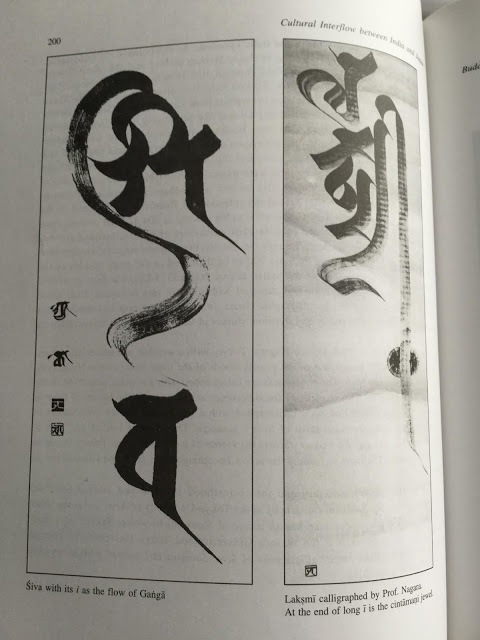
Along a road stands an oval rock about ten feet high on flat roundish base of another rock, with the Sanskrit monogram RO. Sanskrit letters implying deeper levels. A modern Japanese girl in mini, her hair dyed blonde and perhaps with a styrene injection for a round feminine form, stops by, graciously puts a tangerine on a piece of paper, as an offering to the planets. RO is the symbolic syllable of the Biijaakshara for Nava Graha Puja (Nava Graha= Nine Planets). Such are the frozen levels of culture ever echoing at different strata of existence and consciousness.

Bugaku and Gigaku

Bugaku and Gigaku dances are performed on the occasion of the Great Consecration ceremony at the Todaiji temple. Indian cultural influence is very easily recognised in bugaku’s structure. For instance one of the popular stories of Bugaku is the Bali Dance, which reproduces Ramayana’s famous story of the fight between Vali and Sugriva in the Kishkinda forest.

Gigaku, introduced twelve centuries ago, reproduces Indian legendary stories. Gigaku was also performed at the Great Buddha Consecration ceremony and moved spectators to laughter. Gikaku, masked comical dance, was believed to have been very popularly performed at the Todaji and other temples in Nara in those times.


Biwa= Veena

The largest lake in Japan, Lake Biwa,  is named after its close resemblance to the shape of a biwa. Thus, the Indian Viina, became the origin of Japan’s largest lake.

Buddhism in Japan

In 552 CE, the monarch of Paekche (Kudara/Korea) presented a gilt bronze image of Saakyamuni, Sutras, banners and umbrellas to the Japanese emperor Kimmei. The emperor replied that, “never from former days until now have we had the opportunity of listening to so wonderful a doctrine”.

Korea sent monks, a nun, a Buddhist image maker and an architect to the Japanese emperor in 577.

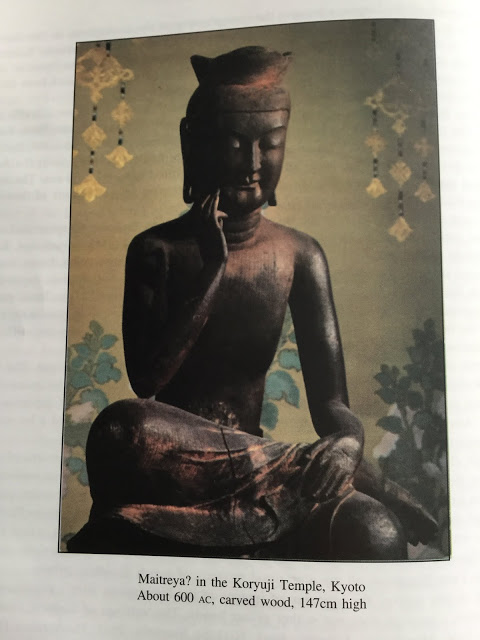
In 584, a stone image of Maitreya was brought from Paekche.

Dharmabodhi

Indian monk Dharmabodhi (Hoodoo) came via China and settled in Hokkezan.

The Brahmin Archbishop

Floating in a sea of verdant woods in the golden ornament of the imposing roof of the Daibutsu-den “Hall of the Great Buddha” of the Todaiji temple. It enshrines the Viraat Rupa of Rocana, in the form of a gigantic statue, in the national temple eighth century Japan. Emperor Shomu had vowed to raise this statue to a height of 48 feet to symbolise the power of the profane and profound. Twelve years and immense materials were spent in casting the Daibutsu.


on 9th April 752 it was consecrated in a sumptuous ceremony, which was presided over by Bodhisena, the first historic Indian to have visited Japan. He was a Brahmin of Bharadvaja Gotra. Inspired by Manju Sri, he went to China to Wutai shan mountains sacred to Manju sri. At Imperial invitation, he arrived in Japan in 736 CE where he was warmly welcomed. The people knew him as the Baramon(Brahmin) Archbishop. He attained Samadhi on 25 February 760.


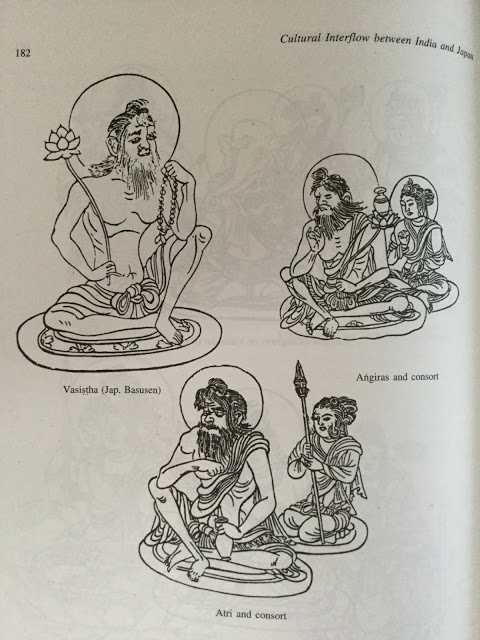
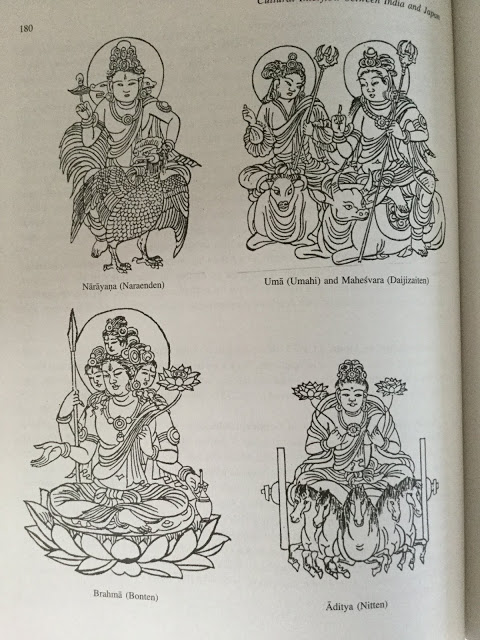
In Todaiji temple consecrated by the Brahmin Archbishop, we can view an expressive range of Nara sculptures of Brahma, Indra, Four Lokapaalass, Surya, Candra, Sarasvati and Sri Mahaadevi. Among them is a Krishna like figure playing the flute.


In front of the Great Hall of Buddha stands the eighth century octagonal bronze lantern adorned with musicians.


Largest Buddha statue in the largest wooden building is found here.


Bodhisena had rescued a  monk shipwrecked in the ocean on his way to China. This monk came to Japan along with him where he received a cordial welcome from monk Gyogi and was taken to the capital Nara in 736. His name was Buttestu (Buddhasthira??) He introduced music from his native land of Champa. He introduced Hindu- Buddhist music dances and dramas in Sanskrit.


Indian Cotton

Praajnaa (born 744 CE) was a monk from Kapisa who had studied at Nalanda University. In 781 he went to China and translated several Sutras. His writings in palm leaves were brought to Japan


In 799 an Indian was washed ashore somewhere in the Makawa province. A young man of twenty years, with nothing to cover his body except a straw coat and short drawers, he was stranded in a country where none understood him. Years later when he became conversant with Japanese, he said that he had come from India. He had seeds of cotton with him. He lived at the Kawadera temple at Nara. Two ancient chronicles Nihon -koki, and Ruiju-kokushi mention that he introduced the cultivation of cotton which became the most important clothing material. The Japanese words WATA or HATA for cotton are derived from Sanskrit ‘Pata’.

Ka, ka, ki, ki, ko, ku


India and Japan drink from common springs of culture. I go to children’s school and hear the Goju-on

a i u e o

ka ki ke, ke ko

It reminds me of my childhood when I recited, in like manner, the syllabary

Ka, Kaa, Ki, Kii, Ku, Kuu, Ke Kai …..

The Japanese language is written in the kana syllabary along with Kanji or Chinese characters. The kanji unites India and Japan at the deepest levels.

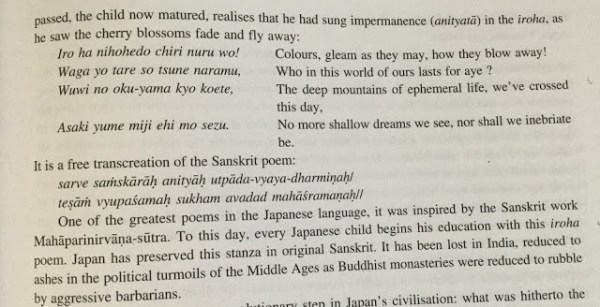
A Japanese child recites the IROHA poem, which has all the fifty sounds of the alphabet and every syllable occurs only once It is called Citrakaavya in  Sanskrit.

When many decades have passed, the child now matured, realises that he had sung impermanence in the IROHA, as he saw the cherry blossoms fade and fly away. It is a free translation of the Sanskrit poem.


One of the greatest poems in Japanese language, it was inspired by the Sanskrit work, Mahapari nirvana Sutra. To this day every Japanese child begins his education with this IROHA poem. Japan has preserved this stanza in original Sanskrit. It has been lost in India.

Ganesh Temples in Edo

The German doctor Phillip Franz von Siebold lived in Edo, Japan during he years 1823-28. He wrote Pantheon von Nippon (1832). He notes that Ganapati was popular among the masses in the Edo period, and there were several temples. The area is known as  Shoten Choo, Ganapati Township, to this day. I visited the Ganapati Temple Shotengu in the frequented area of Asakusa.  In 1970 I saw a huge gathering of young boys and girls who had come to pray for success in their courtship as he is Nandikesvara (Kangiten). Senior people too thronged for all kinds success.

There were 131 shrines to Sarasvati. The German text deserved to be translated into English to get vivid picture of vibrant Buddhism in Edo. In 1836 a shrine to Varuna was consecrated to prevent typhoons. The Japanese worshipped Indra for long life, Brahma to succeed in Imperial service, Varuna for rain, Garuda to cure poisoning and Mahaa  kaala (Good Time) for good business and for victory in war. Japan has the oldest functioning temple of Ganapati in the world.


My comments

The book by Lokesh Chandra has about 400 pages. It is an encyclopaedia on Indo-Japanese Cultural Links. If I give all the information in the book, it will be a gross violation of copyright rules. Everyone must buy the book and read it.


After reading the book, I feel Japan is a fertile field for spreading Hinduism. There we see a mixture of Hindu and Buddhist beliefs.


Enku made 100,000 Chip Buddhas (see my article posted yesterday)

–Subham–


ஸந்யாஸி செய்த ஒரு லக்ஷம் பொம்மைகள்! (Post No.5124)

Huge Navagraha Inscription

Written by LONDON SWAMINATHAN


Date: 18 JUNE 2018


Time uploaded in London –  10-47 am  (British Summer Time)


Post No. 5124


Pictures shown here are taken from various sources such as Facebook friends, Books, Google and newspapers; thanks. Pictures may be subject to copyright laws.


ஸந்யாஸி செய்த ஒரு லக்ஷம் பொம்மைகள்! (Post No.5124)

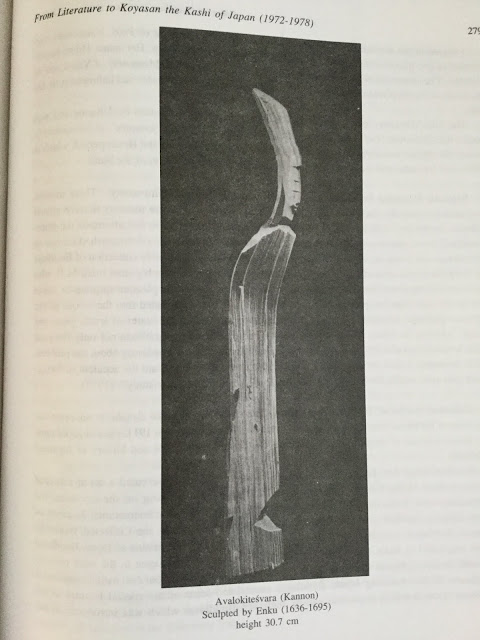
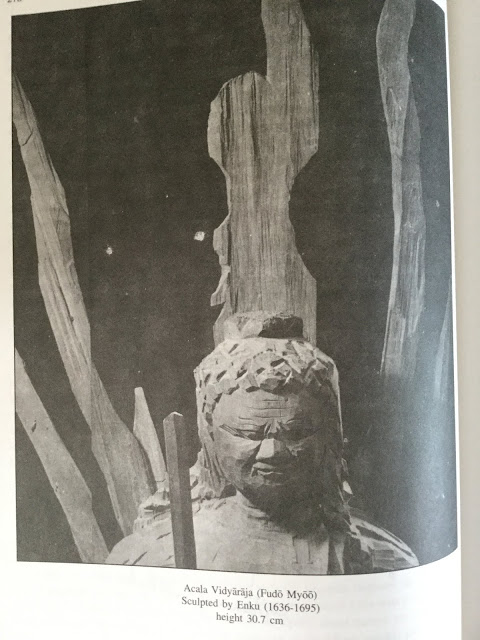
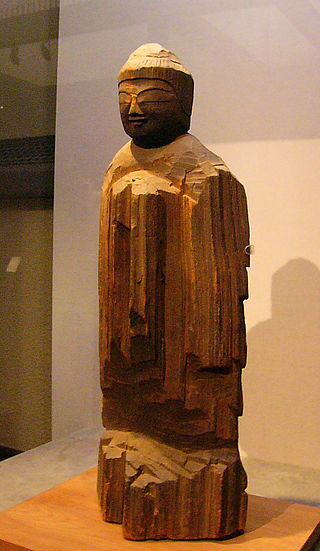
ஜப்பானிய புத்த மத சந்யாஸி (Enku) என்கு (1632- 1695) ஒரு லட்சம் பொம்மைகள் செய்து உலக சாதனை படைத்தார். அவரது வாழ்க்கை அற்புதமான ஒன்று.


என்கு(Enku) என்பவர் சுமார் 400 ஆண்டுகளுக்கு முன் வாழ்ந்தவர். அவர் ஒரு புத்தமதத் துறவி. இந்துக்கள் லக்ஷார்ச்சனை, லக்ஷ தீபம், லக்ஷ ஹோமம் என்றெல்லாம் செய்து இறைவனைப் போற்றுவர். ஒரு இலக்ஷம் முறை ராம நாமம் அல்லது ஓம் நம சிவாய எழுதுவதாக வேண்டிக் கொள்வர். இதே பாணியில் என்கு என்ற சாதுவும் நான் மரத்தில் ஒரு லக்ஷம் புத்தர் உருவங்களைச் செய்யும் தவத்தை மேற்கொள்வேன் என்று சபதம் செய்தார்; அந்த சபதம் நிறைவேற அவருக்கு 28 ஆண்டுகள் ஆயின. போகும் போதும் வரும்போதும் பார்த்த மரத்துண்டுகளை எல்லாம்

உளியால் செதுக்கி புத்தர் உருவங்களை உருவாக்கினார்.


ஒரு லக்ஷம் புத்தர் உருவங்களை செதுக்கியபோது கடைசி பொம்மையின் பின்புறத்தில் அவரே எழுதினார்- ‘ஒரு லக்ஷம் புத்தர்கள் நிறைவு பெற்றது- என்று. எத்தகைய அரிய தவம் பாருங்கள். அத்தோடு அவர் நிற்கவில்லை. அவர் புத்தர் உருவங்களை செதுக்கிக் கொண்டே இருந்தார்.

பொம்மை செய்வது ‘சாகாரம்’ என்னும் முதல் படிதான்; தவத்தின் அடுத்த படியில் ஏற முயன்றார்.அது ‘நிராகாரம்’ ஆகும்; அதாவது புத்தமத பாஷையில் சமாதி அடைதல். இது அடையாளபூர்வ சமாதி ஆகும்.


நாகரா நதியின் கரையில் ஒரு குழி வெட்டும்படி கூறினார். அதற்குள் இறங்கிக் கொண்டு ஒரு மூங்கில் குழாய் மூலம் சுவாஸிக்க ஏற்பாடு செய்துகொண்டார். குழாய் தவிர மற்ற எல்லா இடமும் குழியை மூடச் செய்தார். பூமிக்கடியில் உண்ணாவிரதம், ஜபம், மணி அடித்தல் மூலம் அவர் இருப்பது மற்றவர்களுக்குத் தெரியும். அப்படியே பல ஆண்டுகள் கழித்து சமாதி ஆனார்.


அவர் சமாதி உள்ள இடத்தில் மிக உயர்ந்த ஓக் மரங்களும் செர்ரி மரங்களும் பூங்கொடிகளும் அமைதியாகத் தவழ்ந்து கொண்டிருக்கின்றன. அந்த கிராமத்தில் உள்ள மக்கள் அந்த செடிகொடிகளைத் தொட யாரையும் அனுமதிப்பதில்லை. யாரேனும் அவைகளை வெட்டினால் அதிலிரு ந்து ரத்தம் வரும் என்பர்.


புகழ்பெற்ற துறவி என்கு Enku , ஒரு கவிஞரும் கூட. பல கவிதைகளை இயற்றியுள்ளார்.


அவர் எழுதிய ஒரு கவிதையின் வரிகள்:–


“நாள் தோறும் தூய்மை பெறுகிறது மனது

வானத்தில் உலவும் நிலவும் நானும்

வட்டமாகி முழுமை பெறுகிறோம்”.


அவரது பௌர்ணமி நிலவு ஒளி இன்றும் வீசிக் கொண்டே இருக்கிறது!

Homa (Havan) Kunda in Japan

துறவிக்கு ஸம்ஸ்க்ருதம் கற்றுத் தந்தாள் ஸரஸ்வதி தேவி!


ஜப்பானில் 300 ஆண்டுகளுக்கு முன்னர் வாழ்ந்த துறவியின் பெயர் ஜியுன் சோஞ்சா (Jiun Sonja1718-1804). அவர் குணக் குன்று. அவரை ‘ஆர்ய’, ‘அர்ஹத்’ என்ற அடைமொழிகளுடன் அழைப்பர்.


(ஆர்யன் என்றால் ‘பண்பாடுமிக்கவன்’ என்று பொருள்; பாரதியார் பாடல் முழுதும் ‘ஆரிய’ என்பது இப்பொருளிலேயே பயன்படுத்தப்படுகிறது; மாக்ஸ்முல்லர், கால்டுவெல் போன்ற மதப் பிரசாரகர்களின் பொருள் அன்று.)


ஜப்பானில் கிடைக்கும் எல்லா ஸம்ஸ்க்ருத சுவடிகளின் தொகுப்பை ஆயிரம் பகுதிகளாக வெளியிட அவர் விரதம் பூண்டார். அவைகளில் 300 பகுதிகள் கோகிஜி (Kokiji) பௌத்த மடாலயத்தில் இருக்கின்றன. அவர் தமிழ் தாத்தா உ.வே. சுவாமிநாத அய்யர் போல ஹோர்யூஜி, ஷோர்யோஜி, சுய்செஞ்சி முதலிய மடாலயங்களில் உள்ள சம்ஸ்க்ருத சுவடிகளைத் திரட்டினார். அவைகளில் 59 பகுதிகளை இந்திய- ஜப்பானிய அறிஞர் லோகேஷ்  சந்திரா வெளியிட்டுள்ளார்.

ஜியுன் சோஞ்சா தன்னைப் பற்றிச் சொல்லுவது அற்புதமான விஷயங்களாகும்.


“ஸரஸ்வதி தேவியே எனக்கு ஸம்ஸ்க்ருதம் கற்பித்தாள்; அவள் ஸம்ஸ்க்ருதம் சொல்லுவது என் காதுகளில் விழும். என் பேனாவைக் கையில் எடுத்தால் நான் எழுதுவது ஸம்ஸ்க்ருதம் ஆகத்தான் இருக்கும்”.


சித்தம் லிபியில் அவர் ஸம்ஸ்க்ருதம் எழுதினார். தர்ம அலைகள்  ஜியுன் சோஞ்சா என்ற கரையில் மோதின என்றால் மிகப் பொருத்தமே. சாந்தமான சொற்கள் அவருடைய இறகுப் பேனா வழியே பாய்ந்தன .இது இந்திய- ஜப்பானிய உறவுப் பாலமாகத் திகழ்கின்றது என்றால் மிகையாகாது.

அவருடைய ஆயிரம் பகுதி ஸம்ஸ்க்ருதம் கலை க்களஞ்சியத்துக்கு ‘போங்காக்கு ஷின்ரியோ’ என்று பெயர் (ஜப்பானிய மொழியில் ஸம்ஸ்க்ருதம் பெயர் போங்கோ). கந்தல் ஆடையுடன் காட்சி தந்த துறவி மூலம் ஸ் தேவியே  ஸம்ஸ்க்ருத நூல்களைப் பரப்பியதாக ஜப்பானியர் நம்புகின்றனர். கோகிஜி மடாலயத்தில் முப்பது ஆண்டுகள் தங்கி அறப்பணி ஆற்றினார். இன்றும் அந்த மடத்தில் ஸரஸ்வதி வியே பிரதான தெய்வம். ஆண்டுதோறும் அவளுக்கு விழா எடுக்கின்றனர்.


-Subham–

பிள்ளைமார் வாழ்க! – 2 (Post No.5123)

Written by S NAGARAJAN


Date: 18 JUNE 2018


Time uploaded in London –  7-32 am  (British Summer Time)


Post No. 5123


Pictures shown here are taken from various sources such as Facebook friends, Books, Google and newspapers; thanks. Pictures may be subject to copyright laws.


தேசம், தெய்வம், தமிழ் போற்றிய உத்தமர்கள்


பிள்ளைமார் வாழ்க! – 2


ச.நாகராஜன்


6

பிள்ளைமார் வாழ்க என்ற தலைப்பில் எழுதிய கட்டுரை (எண் 4566) 31-12-2017 அன்று வெளியிடப்பட்டது.


வந்தது ஒரு விமரிசனக் கடிதம்.


சரியாகத் தெரிந்து கொண்டு எழுதுங்கள் என்பது தான் சாரம்.

உத்தமர்களைப் புகழ்ந்து எழுதப் போய் வாங்கிக் கட்டிக் கொண்டேன்.

விவரம் என்ன என்று ஆராய ஆரம்பித்ததில் பிள்ளைமார் என்பதில் சுமார் 20க்கும் மேற்பட்ட உட்பிரிவுகள் உள்ளன என்று தெரிய வந்தது.


நல்லவர்கள் எல்லோரையும் இனம் காட்டி அவர்களைப் போற்றுவதற்காக எழுதப்பட்ட கட்டுரை அது.

வேற்றுமைகள் இருப்பின் அதை மறந்து புகழ வேண்டிய குணங்களை இனம் கண்டு புகழ வேண்டும்; போற்ற வேண்டும் என்பதே எனது வேண்டுகோள்.

விக்கிபீடியாவில் பிள்ளைமார் பற்றி நிறைய விஷயங்கள் உள்ளது.


7

பிள்ளைமார் என்ற பட்டியலை எடுத்துக் கொண்டால் போற்ற வேண்டியவர்களின் பட்டியல் மிக நீளமானது. (தயவுசெய்து உட்பிரிவுகள் இருப்பின் அதை மறக்க வேண்டுகிறேன்.)

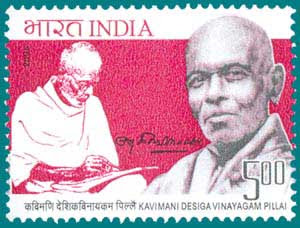
மனோன்மணீயம் எழுதிய சுந்தரம் பிள்ளை, ரா.பி.சேதுப்பிள்ளை, எஸ்.வையாபுரி பிள்ளை, வ.சு.செங்கல்வராயன் பிள்ளை, வ.உ.சிதம்பரம் பிள்ளை, ஆறுமுக நாவலர், அகிலன், ஜெயகாந்தன், பட்டுக்கோட்டை கல்யாண சுந்தரம், கவிமணி தேசிக விநாயகம் பிள்ளை, நாமக்கல் கவிஞர் வெ.ராமலிங்கம் பிள்ளை, பரலி சு.நெல்லையப்பர், செண்பகராமன் பிள்ளை, சி.வை.தாமோதரம் பிள்ளை, மறைமலை அடிகள் என நீண்டு கொண்டே போகும் இந்தப் பட்டியல்.

தேசத்திற்கும், தெய்வீகத்திற்கும், தமிழுக்கும் பிள்ளைமார் சமூகம் ஆற்றிய தொண்டைப் புகழ வார்த்தைகளே இல்லை.

பிள்ளை என்று சொல்வதில் பெருமைப்படுகிறேன் என்றார் ஜெயகாந்தன்.


இதையே  பிள்ளைமார் குலத்தில் பிறந்த அனைவரும் சொல்வார்கள் – ஏனெனில் குலப் பெருமை அப்படி இருப்பதால்!

எல்லோரையும் பற்றி எழுதுவது என்றால் அது ஒரு பிள்ளைமார் என்சைக்ளோபீடியா ஆகி விடும்.

ஆகவே சுருக்கமாகச் சிலரைப் பற்றி இங்கு பார்க்கலாம். இந்தத் தொடர் கட்டுரையை இத்துடன் முடிக்கலாம்.


8


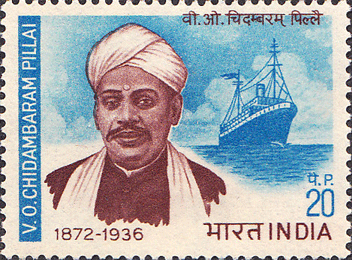
வ.உ.சி. (தோற்றம் 5-9-1872 மறைவு 18-11-1936)


கப்பலோட்டிய தமிழன் திரைப்படத்தில் நடிகர் திலகம் சிவாஜிகணேசன் தத்ரூபமாக வ.உ.சி-ஐ நம் மனக்கண் முன்னே நிறுத்தினார்.


பார்த்தவர்கள் மனம் கலங்கியது.

செக்கிழுத்த செம்மலை எப்படிப் புகழ்வது?

மஹாகவி பாரதியாருடனான அவரது நெருங்கிய தொடர்பை யாரும் மறக்க முடியாது.

அழியாத அமர வரிகளால் பாரதியார் அவரை தனது பாடல்களில் சித்தரித்து விட்டார்:

கலெக்டர் விஞ்ச்  ஸ்ரீ சிதம்பரம் பிள்ளைக்குச் சொல்லியது


ராகம் – தாண்டகம் தாளம் – ஆதி

நாட்டி லெங்கும் சுதந்திர வாஞ்சையை

நாட்டினாய், கனல் மூட்டினாய்,

வாட்டி யுன்னை மடக்கிச் சிறைக்குள்ளே

மாட்டுவேன்; – வலி காட்டுவேன். (நாட்டி)

கூட்டம் கூடி வந்தே மாதரமென்று

கோஷித்தாய், – எமை தூஷித்தாய்,

ஓட்டம் நாங்க ளெடுக்க வென்றே கப்பல்

ஓட்டினாய், – பொருள் ஈட்டினாய் (நாட்டி)

கோழைப்பட்ட ஜனங்களுக் குண்மைகள்

கூறினாய், – சட்டம் மீறினாய்,

ஏழைப்பட் டிங்கு இறத்தல் இழிவென்றே

ஏசினாய், – வீரம் பேசினாய் (நாட்டி)

அடிமைப் பேடிகள் தம்மை மனிதர்கள்

ஆக்கினாய், – புன்மை போக்கினாய்,

மிடிமை போதும் நமக்கென் றிருந்தோரை

மீட்டினாய், – ஆசை ஊட்டினாய் (நாட்டி)

தொண்டொன் றேதொழிலாக் கொண்டிருந்தோரைத்

தூண்டினாய், – புகழ் வேண்டினாய்,

கண்கண்ட தொழில் கற்க மார்க்கங்கள்

காட்டினாய். – சோர்வை ஓட்டினாய் (நாட்டி)

எங்கும் இந்த சுயராஜ்ய விருப்பத்தை

ஏவினாய், – விதை தூவினாய்,

சிங்கம் செய்யும் தொழிலைச் சிறுமுயல்

செய்யவோ? – நீங்கள் உய்யவோ? (நாட்டி)

சுட்டு வீழ்த்தியே புத்தி வருத்திச்

சொல்லுவேன், – குத்திக் கொல்லுவேன்

தடிப் பேசுவோ ருண்டோ ? சிறைக்குள்ளே

தள்ளுவேன், – பழி கொள்ளுவேன். (நாட்டி)


கலெக்டர் வின்சுக்கு  ஸ்ரீ சிதம்பரம் பிள்ளை சொல்லிய மறுமொழி

சொந்த நாட்டிற் பரர்க்கடிமை செய்தே

துஞ்சிடோ ம் – இனி அஞ்சிடோ ம்

எந்த நாட்டினும் இந்த அநீதிகள்

ஏற்குமோ? – தெய்வம் பார்க்குமோ?

வந்தே மாதரம் என்றுயிர் போம்வரை

வாழ்த்துவோம் – முடி தாழ்த்துவோம்

எந்த மாருயி ரன்னையைப் போற்றுதல்

ஈனமோ? – அவ மானமோ?

பொழுதெல்லாம் எங்கள் செல்வங் கொள்ளை கொண்டு

போகவோ? – நாங்கள் சாகவோ?

அழுது கொண்டிருப் போமோ? ஆண்பிள்ளைகள்

அல்லமோ? – உயிர் வெல்லமோ?

நாங்கள் முப்பது கோடி ஜனங்களும்

நாய்களோ? – பன்றிச் சேய்களோ?

நீங்கள் மட்டும் மனிதர்களோ? – இத்

நீதமோ? – பிடி வாதமோ?

பார தத்திடை அன்பு செலுத்துதல்

பாபமோ? – மனஸ் தாபமோ?

கூறும் எங்கள் மிடிமையைத் தீர்ப்பது

குற்றமோ? – இதில் செற்றமோ?

ஒற்றுமை வழி யொன்றே வழியென்பது

ஓர்ந்திட்டோ ம் – நன்கு தேர்ந்திட்டோ ம்

மற்று நீங்கள் செய்யுங்கொடு மைக்கெல்லாம்

மலைவு றோம்; – சித்தம் கலைவுறோம்.

சதையைத் துண்டுதுண் டாக்கினும் உன்னெண்ணம்

சாயுமோ? – ஜீவன் ஓயுமோ?

இதயத் துள்ளே இலங்கு மஹாபக்தி

ஏகுமோ? – நெஞ்சம் வேகுமோ?


பாடலை விளக்கவும் வேண்டுமோ?

நாட்டிற்காக அனைத்தையும் தியாகம் செய்த பிள்ளை அவர்களை இந்தியர்கள் – குறிப்பாகத் தமிழர்கள் ஒருநாளும் மறக்க மாட்டார்கள்.


*

நாமக்கல் கவிஞர் வெ.ராமலிங்கம் பிள்ளை (தோற்றம் 19-10-1888 மறைவு 24-8-1972)

காந்தியக் கவிஞர் என்று புகழ் பெற்ற இவரது பாடல்கள் ஏராளமானோரை பரவசப்படுத்தியது; ஊக்கப்படுத்தியது!


*


கவிமணி தேசிக விநாயகம் பிள்ளை (தோற்றம் 27-7-1876 மறைவு 26-9-1954) குமரி மாவட்டத்தில் தேரூரில் வாழ்ந்த தமிழ்க் கவிஞர். ஏராளமான தேசியப் பாடல்கள், குழந்தை இலக்கியப் பாடல்கள் என பல துறைகளிலும் தன் முத்திரையைப் பதித்தவர்


*

ஆக தமிழுக்குத் தொண்டு செய்த பிள்ளைமார் சமூகத்தைச் சேர்ந்தவர்களைப் பற்றிச் சொல்லிக் கொண்டே போகலாம்.


தமிழர்கள் மறக்க முடியாத சமூகம் பிள்ளைமார் குலம் என்று கூறலாம்.


இறுதியாக கட்டுரையை இந்த வரிகள் மூலம் முடிக்கலாம்:


நல்ல நல்ல ‘பிள்ளைகளை’ நம்பி

இந்த நாடே இருக்குது தம்பி!

***


One Lakh Buddhas in Wood by Enku!(Post No.5122)

Compiled by LONDON SWAMINATHAN


Date: 17 JUNE 2018


Time uploaded in London –  20-13  (British Summer Time)


Post No. 5122


Pictures shown here are taken from various sources such as Facebook friends, Books, Google and newspapers; thanks. Pictures may be subject to copyright laws.


Like Hindus do Laksha archanai (Laksha= 100,000, Archanai- Puja with flowers), like some devotees write name of Ram or Siva 100, 000 times, Enku (1632-1695) made 100,000 wooden sculptures of Buddha. Japanese monk Enku did ‘Chip Buddhas’ with the stroke of a chisel. They were carved on chips and splinters of wood and were known as ‘koppa bustu’ (chip buddhas). In the economy of strokes and a rough and direct style they seem extremely modern.

Enku took 28 years to fulfil his vow of making 100,000 Buddhas. He was 59 when he finished the last Buddha and he wrote on the last Buddha- ‘one hundred thousand Buddhas completed’.


This was his first part of worship ’Saakaara’. It had to culminate in the Niraakaara -an iconic of Samadhi. Enku asked a hole to be dug in the ground beside the Nagara river. He sat in it, had it covered thick with earth, and put a bamboo tube to breathe. Fasting, chanting prayers, ringing a bell he remained interred and passed away. He attained supramundane Samadhi of Suunyataa, animitta and nirvana.


Tall oak and cherry trees entwined with wisteria vines stand at the spot. People in the village say that these wines will bleed if anyone cuts them.

To cite monk Enku himself:

“Each day the mind grows purer

The moon in the sky and myself

Round and full”

Japanese Saint learnt Sanskrit from Saraswati

In the eighteenth century lived a saint of noble virtue and great learning whom the tradition has honoured with the highest epithet of ‘sonja’ ‘aarya’, ‘arhat’.

He was Jiun Sonja (1718-1804), the last Sanskritist in the traditional style’. He planned a corpus of all Sanskrit texts found in Japan in 1000 fascicules, of which 300 fasciculi are preserved in his Kokiji monastery. He tried to reconstruct the Nayasuutra in Sanskrit. He collected palm leaves preserved in the Horyuuji, Kairyuoji, Shoryoji, Zuissenji and other monasteries. I published 59 Sanskrit texts from his writings in Sanskrit Manuscripts from Japan Parts 1 and 2—writes Lokesh Chandra in his book


Jiun Sonja used to say, “Sarasvati had manifested Herself to teach me Sanskrit and I have heard Sanskrit pronounced by  her. When I take up my pen, it is very likely that I am scribling in Sanskrit”.

Sanskrit was the waves of Dharma and Jiun Sonja the shore, the shadow of palm leaf sutras falling in his scriptorium, his mind dancing on the ripples of Bongo (Sanskrit) and  Sanskrit  words blooming in the serenity of his calamus in the flow and flourishes of the Siddham script: all unified India and Japan in the glimmer of the divine.

He undertook the 1000 fasciculed encyclopaedia of texts ‘Bongaku Shinryo’. Tradition has it that goddess Sarasvati had herself appeared to the sage Jiun and initialled him into the mysteries of the divine language Sanskrit. He spent his 30 years at the Kokiji Monastery to deepen his moral excellence to cultivate Dharma. No wonder Sarasvati is the presiding deity of the Kokiji where annual prayers are offered to Her.


–SUBHAM–