Important Upanishad Mantras in English and Devanagari- Part 4 (Post.15,923)

Written by London Swaminathan

Post No. 15,923

Date uploaded in London –27 June 2026

Contact – swami_48@yahoo.com

Pictures are taken from various sources for spreading knowledge.

this is a non- commercial blog. Thanks for your great pictures.

tamilandvedas.com, swamiindology.blogspot.com

xxxx 

Part 4

26

Taittiriya Upanishad (Brahmananda Valli, Chapter 2, Section 1) of the Krishna Yajurveda

It outlines the creation of the universe, explaining how all elements and life emerged sequentially from the Supreme Brahman (the ultimate cosmic reality).

तस्माद्वा एतस्मादात्मन आकाशः सम्भूतः ।
आकाशाद्वायुः । वायोरग्निः । अग्नेरापः ।
अद्भ्यः पृथिवी । पृथिव्या ओषधयः ।
ओषधिभ्योऽन्नम् । अन्नात्पुरुषः ॥

Tasmād-vā etasmād-ātmana ākāśah sambhūtah |
Ākāśād-vāyuh | Vāyor-agnih | Agner-āpah |
Adbhyah prithivī | Prithivyā oshadhayah |
Oshadhibhyo-‘nnam | Annāt-purushah ||

“From that (Supreme) Atman, space (Akasha) was born. From space, air (Vayu). From air, fire (Agni). From fire, water (Apah). From water, earth (Prithivi). From earth, herbs and plants (Oshadhayah). From plants, food (Annam). From food, the human being (Purushah).”

Space – air—fire—water—earth- -plants—food- man .

27

यत्र नान्यत्पश्यति नान्यच्छृणोति नान्यद्विजानाति स भूमाथ यत्रान्यत्पश्यत्यन्यच्छृणोत्यन्यद्विजानाति तदल्पं यो वै भूमा तदमृतमथ यदल्पं तन्मर्त्य्ं स भगवः कस्मिन्प्रतिष्ठित इति स्वे महिम्नि यदि वा न महिम्नीति ॥ ७.२४.१ ॥

yatra nānyatpaśyati nānyacchṛṇoti nānyadvijānāti sa bhūmātha yatrānyatpaśyatyanyacchṛṇotyanyadvijānāti tadalpaṃ yo vai bhūmā tadamṛtamatha yadalpaṃ tanmartyṃ sa bhagavaḥ kasminpratiṣṭhita iti sve mahimni yadi vā na mahimnīti || 7.24.1 || Chandogya Upanishad (Chapter 7, Verse 24.1).

1.     Sanatkumāra said: ‘Bhūmā [the infinite] is that in which one sees nothing else, hears nothing else, and knows [i.e., finds] nothing else. But alpa [the finite] is that in which one sees something else, hears something else, and knows something else. That which is infinite is immortal, and that which is finite is mortal.’ Nārada asked, ‘Sir, what does bhūmā rest on?’ Sanatkumāra replied, ‘It rests on its own power—or not even on that power [i.e., it depends on nothing else]’. Chandogya Upanishad (Chapter 7, Verse 24.1).

28

ॐ आप्यायन्तु ममाङ्गानि वाक्प्राणश्चक्षुः श्रोतमथो बलमिन्द्रियाणि च सर्वाणि।सर्वं ब्रह्मोपनिषदं माऽहं ब्रह्म निराकुर्यां मा मा ब्रह्म निराकरोदनिराकरणमस्त्वनिराकरणं मेऽस्त्वत्।तदात्मनि निरते या उपनिषत्सु धर्मास्ते मयि सन्तु ते मयि सन्तु।ॐ शान्तिः शान्तिः शान्तिः

OM Aapyayantu Mama-Angani Vaak Praanah-Chakshu

Shrotram-Atho Balam-Indriyaani Cha Sarvaani!

Sarvam Brahma-Upanishadam

Ma-Aham Brahma Niraakuryaam Maa maa

Bhahman Niraakarot,

Aniraakaranam-Astu Aniraakaranam Me Astu

Tat-Aatmani Nirate Ya Upanishatsu Dharmaah

Te Mayi Santu Te Mayi Santu

OM Shanti Shanti Shanti Hi!Kenopanishad (embedded in the Sama Veda)

Meaning of the Shanti Mantra

1. “OM Aapyayantu Mama-Angani Vaak”:

We invoke to the Supreme God that may we grow very vigorous, with joyful interest and enthusiasm. May our limbs become vigorous. May our speech become vigorous with affirmations and conviction.

2. “Praanah-Chakshu Shrotram-Atho”:

May the vital air or energy, our eyes and ears become vigorous too.

3. “Balam-Indriyaani Cha Sarvaani”:

May there be strength in our senses and everything in us.

We are thus asking for our energy, vitality, vehicles, senses, mind and emotions to become vigorous and are also asking for strength.

4. “Sarvam Brahma-Upanishadam”:

All is Brahman of the Upanishads. It implies that in Upanishads itself, Brahman is there.

5. “Ma-Aham Brahma Niraakuryaam Maa maa”:

May we never reject Brahman. Never, never!

Never may we reject anyone. May we not reject any aspect of Brahman. Brhaman is in everyone!

6. “Bhahman Niraakarot”:

Also, may Brahman not reject us.

7. “Aniraakaranam Astu, Aniraakaranam Me Astu”:

May there be no denial by Brahman. And may there be no denial of Brahman by me. May Brahman, including everyone, not reject or deny existence of each other (all are part of Brahman).

8. “Tat-Aatmani Nirate Ya Upanishatsu Dharmaah”:

Delighting in the Atman, may all the virtues that are mentioned in the Upanishads… (continued in next line)

9. “Te Mayi Santu”:

May they (all these virtues) be present or fostered in me by my effort. May I acquire all that by being vigorous by all my senses, energy, vitality, body and mind.

10. “Te Mayi Santu”:

Reaffirming the same. May we acquire and internalize them.

11. “OM Shanti Shanti Shanti Hi”:

By chanting OM, we request Supreme Parabrahman to bestow us with peace on all the lower three planes of physical, emotional and mental, as peace is already permeating in all the planes higher. Thus, the word shanti here is repeated three times and is not a mere coincidence.

29

Mundaka Upanishad Mantra 3.1.5,

सत्येन लभ्यस्तपसा ह्येष आत्मा सम्यग्ज्ञानेन ब्रह्मचर्य्येण नित्यम् ।अन्तःशरीरे ज्योतिर्मयो हि शुभ्रो यं पश्यन्ति यतयः क्षीणदोषाः ॥

satyena labhyas tapasā hy eṣa ātmā samyag-jñānena brahmacaryeṇa nityam |antaḥ-śarīre jyotir-mayo hi śubhro yaṃ paśyanti yatayaḥ kṣīṇa-doṣāḥ ||

Meaning

Satyena (Truthfulness): Living a life of absolute truth in thought, word, and deed.

Tapasa (Austerity/Penance): Engaging in concentrated spiritual discipline, self-restraint, and meditation.

Samyag-jñānena (Right Knowledge): Cultivating the correct understanding of the Self and distinguishing the eternal from the transient.

Brahmacaryeṇa (Celibacy/Self-Control): Practicing continuous self-control and directing one’s energy toward spiritual pursuits.

antaḥ-śarīre jyotir-mayo hi śubhro – When these virtues are practiced constantly and without interruption, the radiant, pure Atman shines forth within the heart.

yaṃ paśyanti yatayaḥ kṣīṇa-doṣāḥ – It is beheld by the sages who have cleansed themselves of all impurities, defects, and sins.

30

Shvetashvatara Upanishad (Chapter 3, Verse 12).

mahān prabhur vai puruṣaḥ sattvasyaiṣa pravartakaḥsunirmalam imāṃ prāptim īśāno jyotir avyayaḥ

महान् प्रभुर वै पुरुषः, सत्त्वस्यैष प्रवर्तकः

The Supreme Person is the great controller, the source of light, and the prime mover of the inner consciousness. He is the ruler who bestows ultimate purity and liberation. He is the imperishable Lord and the source of all illumination.

Tags- Important Upanishad mantras, Part 4

TO BE CONTINUED……………………….
On Marxism, Jesus and Advaita

Hindu Thinker on Marxism, Jesus and Advaita
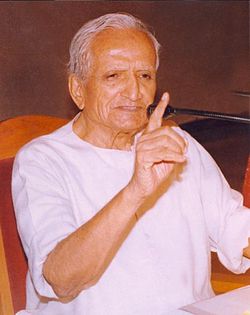
D.B.Thengadi’s (1920-2004) Quotations

250px-Thengadijee

Dattopant Bapurao Thengadi was born at Arvi (Maharashtra) on 10th November 1920. He studied up to BA.,LLB. He was a thinker, linguist, writer, parliamentarian and a trade unionist. He was the Founder of Baharatiya Mazdoor Sang, Bharatiya Kisan Sang and Swadeshi Jagran Manch. He was a full time RSS worker (pracharak).

Advaita Summit
All religions lead to Advaita Darsan. One can climb a mountain from any side. But once the top is reached the pathways merge. In Hindusthan our seers started from the Dvaita, proceeded through the Vishsitadvaita, and reached ultimately the summit of the Advaita The spiritual journey of Jesus has also been along the same path.

First he said, “Our Father which are in Heaven, hallowed be thy name”. This is Dvaita.
In the second stage, he said, “ I am in my Father. He in you and You in me”
Finally he said, “I and My Father are one. I am the way, the truth and the life” (This is Advaita).

Two Hours Bible
According to Houston Smith, “All the words of Jesus as reported in the New Testament can be spoken in two hours”.

Shankara

Shankaracharya in Arab Land
Had Shri Shankaracharya been required to address the Arab tribes of the sixth century, he would not have delivered the message to them through the Shankara Bhasya. The oft quoted “ Padma Patram iva ambasi”( Like a Lotus in the Water) is the most appropriate simile to illustrate the ideal of Detachment. But it would convey no sense to those who have seen neither a lake nor a lotus. To an average European mind strength is symbolised by Hercules—not by Hanuman. Had Lord Buddha appeared in Palestine before nineteen centuries, his teachings would have been clothed in different imagery, different similes and different metaphors. But such superficial differences in the form of expression notwithstanding, the Message essentially would have remained the same.

True seekers care only for the gold; they do not indulge in superfluous controversies over the nature of the dross.

jesus

Teachings of Jesus
Ethics is an integral part of religion. Christian ethics is in no way different from the ethics of the Hindu sages. There is no teachings of Jesus that cannot be found in the Hindu scriptures.
A true Hindu is automatically a true Christian, and a true Christian is already a true Hindu.
Bharatiya Christians must study Christ through the seers and sages of this Dharma Bhoomi, if they aspire to understand him correctly and completely.

The late Jagadguru Shankaracharya Swami Shri Bharati Krishna Theertha observed, “ We may note that the Bible does not devote much space to this question (metaphysics); and we are compelled to infer that this because the persons, to whom the biblical teachings were given were Adikaris, not for metaphysical disquisitions but only for elementary ethical precepts and were consequently given only the latter. But, in those rare passages where the Bible does touch hereon, we find it too, preaching in reality, the same doctrine, i.e., the Advaita (Monism); for example, we see Christ himself saying:

‘The Kingdom of God is within you’!
‘Ye are Gods’
There are some other similar passages, especially in St.John’s Gospel, his Epistles and his Revelation that clearly show, what a lot of Greek and Roman historical records too prove, that it was India’s Advaita Vedanta which Christ carried from India and preached in Palestine………. It is interesting to note that it was only his favourite disciple St.John who could assimilate such Philosophical teachings.”
—The Perspective by D.B.Thengadi

On Sanatana Dharma (Eternal Religion)
Sanatana Dharma is the Universal law. It is not man made. It is described as Hindu Dharma because the Hindus were the first to ‘see’ it, even as in the West, Newton was the first one to ‘see’ the Law of Gravitation or Einstein the Law of Relativity. Hindus ‘saw’ the Dharma and based their socio economic order on the foundation of its tenets.

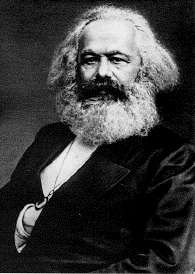
marx-bio

On Marxism
Events have proved that the data upon which Marx worked was insufficient, his information inaccurate, his attitude unscientific, his conclusions incorrect, his predictions untrue, his theories untenable…… Marxism is an intellectual parasite on Newtonian science, Darwenian evolutionism and Hegelian dialecticism…. Those who try to compare Marxism with Hinduism betray their ignorance of both.
If workers succeed communists would fail; prosperity of the former is the adversity of the latter; failures of the proletariat are the pillars of communist success.

On Muslims
Fanatical Muslims assert that Islam does not permit of any kind of nation-worship and that Muslims must fight against nationalism. But the nationalists in the so called Muslim countries successfully combated this evil. The original tenets of Islam are quite combatable with the spirit of patriotism.

On Hindu Laws
Various are the sources of Hindu Law. Firstly Four Vedas and their six subsidiary sciences. Then, the Dharma Shastras. The compilers of Dharma Shastras flourished during different periods. They were Manu, Atri, Vishnu, Harita, Yajnavalkya, Usanas, Angiras, Yama, Apastamba, Sambarta, Katyayana, Brhaspati, Parasara, Vyasa, Sankha, Likhita, Daksha, Gautama, Satatapa and Vashishta. Other ancient sources being the Meemasa, the Nyaya and the Puranas. The Smritis, the current usage, good conscience—in absence of any other guide—and desire resulting from thorough deliberation are also important as sources of Hindu Law.

It is curious to note that the above authorities have been considerably overshadowed by subsequent commentaries or digests (Nibandhas). The work of compiling Nibhandhas was going on from the ninth to the nineteenth century.

Hindus never formulated any Code of Law. The Smritis are not the codes. One Smriti does not exclude the other, nor does One Smriti repeal the others. They are like the American Restatement of Law or English Digests of Case law. All the Smritis are sources of Law.

Another interesting feature of Hindu Law is the fact that in case of any inconsistency between the usage and the Smriti, the usage is supposed to carry with it greater validity.

Brhaspati, who founded the School of Materialism in India thousands of years Demokrites, the Father of Western Materialism, was accepted by even the theist Hindus as their preceptor. Kapila who challenged the authority of previous scriptures was also a Hindu. According to Dr Babasaheb Ambedkar, at the time when Gautama took Parivraja, besides the Brahmanic philosophy, there were as many as sixty two different schools of philosophy (in India).

The Hindu Law can embrace the entire mankind with the exception of those who denythemselves its magnificent benefits. It is significant Manu described his Smriti as the ‘ Manava Dharma Shastra’ (Law Book for Mankind).

Complied by London Swaminathan
Contact swami_48@yahoo.com