8-201. He who obtains a chattel in the market before a number of
witnesses, acquires that chattel with a clear legal title by purchase.
202. If the original seller be not producible, the buyer being
exculpated by a public sale, must be dismissed by the king without punishment,
but the former owner who lost the chattel shall receive it back from the buyer.
ADULTERATION
203. One commodity mixed with another must not be sold as pure, nor a
bad one as good, nor less than the proper quantity or weight, nor anything that
is not at hand or that is concealed.
MARRIAGE
204. If, after one damsel has been shown, another be given to the
bridegroom, he may marry them both for the same price; that Manu ordained.
205. He who gives a damsel in marriage, having first openly declared her
blemishes, whether she be insane, or afflicted with leprosy, or have lost her
virginity, is not liable to punishment.
HALF WORK- HALF FEE
206. If an officiating priest, chosen to perform a sacrifice, abandons
his work, a share only of the fee in proportion to the work done shall be given
to him by those who work with him.
207. But he who abandons his work after the sacrificial fees have been
given, shall obtain his full share and cause to be performed what remains by
another priest.
208. But if (specific) fees are ordained for the several parts of a
rite, shall he (who performs the part) receive them, or shall they all share
them?
HORSE, CHARIOT, CART
209. The Adhvaryu priest shall take the chariot, and the Brahman at the
kindling of the fires (Agnyadhana) a horse, the Hotri priest shall also take a
horse, and the Udgatri the cart, used when the Soma is purchased.
SHARE OF 16 PRIESTS
210. The four chief priests among all the sixteen, who are entitled to
one half, shall receive a moiety of the fee, the next four one half of that,
the set entitled to a third share, one third, and those entitled to a fourth a
quarter.
211. By the application of these principles the allotment of shares must
be made among those men who here below perform their work conjointly.
212. Should money be given or promised for a pious purpose by one man to
another who asks for it, the gift shall be void, if the money is afterwards not
(used) in the manner stated.
SUVARNA COIN
213. But if the recipient through pride or greed tries to enforce the
fulfilment of the promise, he shall be compelled by the king to pay one suvarna
as an expiation for his theft.
214. Thus the lawful subtraction of a gift has been fully explained; I
will next propound the law for the non-payment of wages.
WAGES AND LABOUR RULES
215. A hired servant or workman who, without being ill, out of pride
fails to perform his work according to the agreement, shall be fined eight
krishnalas and no wages shall be paid to him.
216. But if he is really ill, and after recovery performs his work
according to the original agreement, he shall receive his wages even after the
lapse of a very long time.
217. But if he, whether sick or well, does not perform or cause to be
performed (by others) his work according to his agreement, the wages for that work
shall not be given to him, even if it be only slightly incomplete.
218. Thus the law for the non-payment of wages has been completely
stated; I will next explain the law concerning men who break an agreement.
BREACH OF CONTRACT
219. If a man belonging to a corporation inhabiting a village or a
district, after swearing to an agreement, breaks it through avarice, (the king)
shall banish him from his realm,
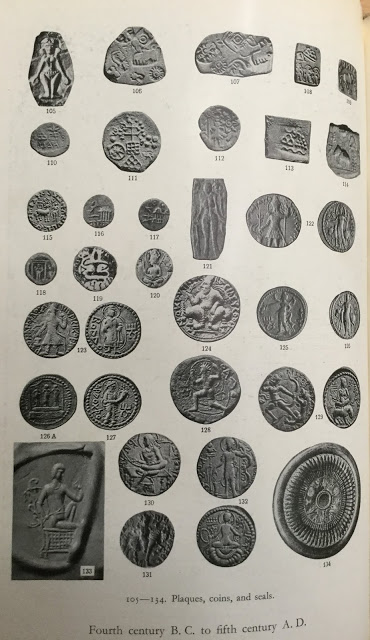
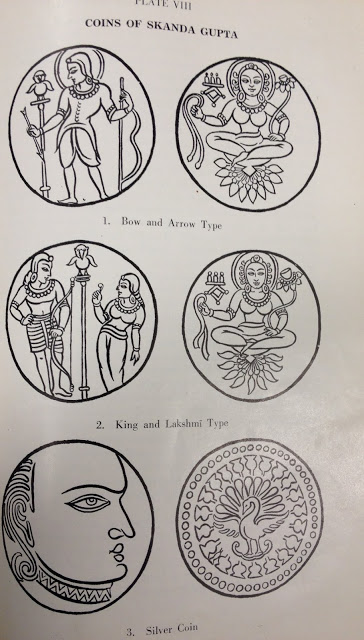
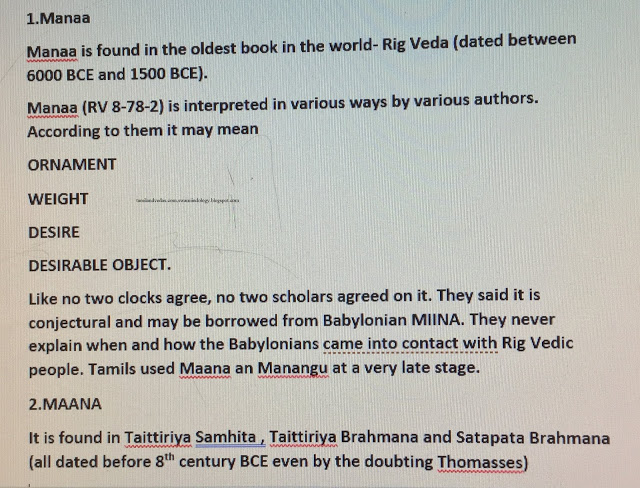
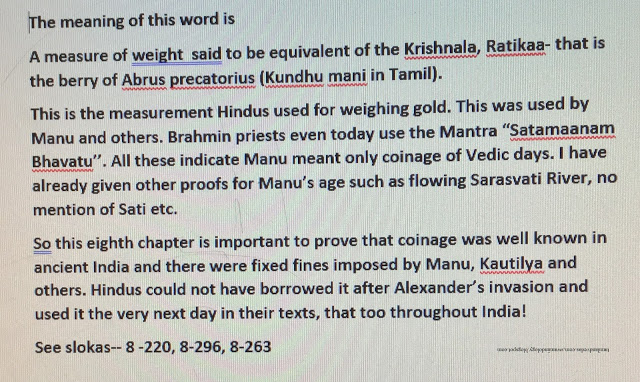
COINAGE OF ANCIENT INDIA- NISHKA, SUVARNA, SATAMANA
220. And having imprisoned such a breaker of an agreement, he shall
compel him to pay six nishkas, each of four suvarnas, and one satamana of
silver.
221. A righteous king shall apply this law of fines in villages and
castes (Jati) to those who break an agreement.
222. If anybody in this world, after buying or selling anything, repent
of his bargain, he may return or take back that chattel within ten days.
223. But after (the lapse of) ten days he may neither give nor cause it
to be given (back); both he who takes it (back) and he who gives it (back,
except by consent) shall be fined by the king six hundred panas.
224. But the king himself shall impose a fine of ninety-six panas on him
who gives a blemished damsel to a suitor without informing him of the blemish.
225. But that man who, out of malice, says of a maiden, ‘She is not a
maiden,’ shall be fined one hundred panas, if he cannot prove her blemish.
226. The nuptial texts are applied solely to virgins, (and) nowhere among men to females who have lost their virginity, for such females are excluded from religious ceremonies.
NUPTIAL TESTS ; SEVEN STEPS
227. The nuptial texts are a certain proof (that a maiden has been made
a lawful) wife; but the learned should know that they (and the marriage
ceremony are complete with the seventh step of the bride around the sacred
fire.
228. If anybody in this (world) repent of any completed transaction, the
king shall keep him on the road of rectitude in accordance with the rules given
above.
TRANSGRESSION LAWS
229. I will fully declare in accordance with the true law (the rules
concerning) the disputes, arising from the transgressions of owners of cattle
and of herdsmen.
230. During the day the responsibility for the safety (of the cattle
rests) on the herdsman, during the night on the owner, (provided they are) in
his house; (if it be) otherwise, the herdsman will be responsible (for them
also during the night).
231. A hired herdsman who is paid with milk, may milk with the consent
of the owner the best (cow) out of ten; such shall be his hire if no (other)
wages (are paid).
232. The herdsman alone shall make good the loss of a beast strayed,
destroyed by worms, killed by dogs or by falling into a pit, if he did not duly
exert himself (to prevent it).
233. But for (an animal) stolen by thieves, though he raised an alarm,
the herdsman shall not pay, provided he gives notice to his master at the
proper place and time.
234. If cattle die, let him carry to his master their ears, skin, tails,
bladders, tendons, and the yellow concrete bile, and let him point out their
particular. marks.
235. But if goats or sheep are surrounded by wolves and the herdsman
does not hasten (to their assistance), lie shall be responsible for any
(animal) which a wolf may attack and kill.
236. But if they, kept in (proper) order, graze together in the forest, and a wolf, suddenly jumping on one of them, kills it, the herdsman shall bear in that case no responsibility.
PASTURE- ENVIRONMENTAL CONCERN
237. On all sides of a village a space, one hundred dhanus or three
samya-throws (in breadth), shall be reserved (for pasture), and thrice (that
space) round a town.
(A bow length is app. Six feet; throwing distance is 200 feet)
238. If the cattle do damage to unfenced crops on that (common), the
king shall in that case not punish the herdsmen.
239. The owner of the field shall make there a hedge over which a camel
cannot look, and stop every gap through which a dog or a boar can thrust his
head.
240. If cattle do mischief in an enclosed field near a highway or near a
village, the herdsman shall be fined one hundred (panas);
(but cattle), unattended by a herdsman, (the watchman in the field)
shall drive away.
241. (For damage) in other fields (each head of) cattle shall (pay a
fine of one (pana) and a quarter, and in all (cases the value of) the crop
(destroyed) shall be made good to the owner of the field; that is the settled
rule.
242. But Manu has declared that no fine shall be paid for (damage done
by) a cow within ten days after her calving, by bulls and by cattle sacred to
the gods, whether they are attended by a herdsman or not.
243. If (the crops are destroyed by) the husbandman’s (own) fault, the
fine shall amount to ten times as much as (the king’s) share; but the fine
(shall be) only half that amount if (the fault lay) with the servants and the
farmer had no knowledge of it.
244. To these rules a righteous king shall keep in (all cases of) transgressions by masters, their cattle, and herdsmen.
BOUNDARY DISPUTES- TREE PLANTING
245. If a dispute has arisen between two villages concerning a boundary,
the king shall settle the limits in the month of Gyaishtha, when the landmarks
are most distinctly visible.
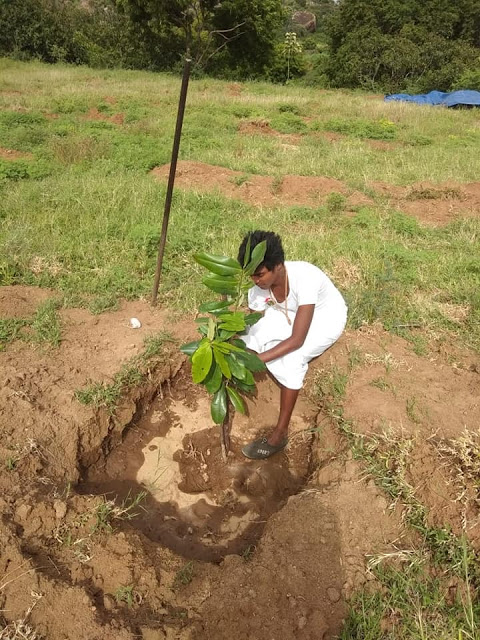
246. Let him mark the boundaries (by) trees, (e.g.) Nyagrodhas,
Asvatthas, Kimsukas, cotton-trees, Salas, Palmyra palms, and trees with milky
juice,
247. By clustering shrubs, bamboos of different kinds, Samis, creepers
and raised mounds, reeds, thickets of Kubgaka; thus the boundary will not be
forgotten.
248. Tanks, wells, cisterns, and fountains should be built where
boundaries meet, as well as temples,
249. And as he will see that through men’s ignorance of the boundaries
trespasses constantly occur in the world, let him cause to be made other hidden
marks for boundaries,
251. And whatever other things of a similar kind the earth does not
corrode even after a long time, those he should cause to be buried where one
boundary joins (the other).
252. By these signs, by long continued possession, and by constantly
flowing streams of water the king shall ascertain the boundary (of the land) of
two disputing parties.
253. If there be a doubt even on inspection of the marks, the settlement
of a dispute regarding boundaries shall depend on witnesses.
254. The witnesses, (giving evidence) regarding a boundary, shall be
examined concerning the landmarks in the presence of the crowd of the villagers
and also of the two litigants.
255. As they, being questioned, unanimously decide, even so he shall record the boundary (in writing), together with their names.
SWEAR WEARING RED DRESS
256. Let them, putting earth on their heads, wearing chaplets (of red
flowers) and red dresses, being sworn each by the rewards for his meritorious
deeds, settle the boundary in accordance with the truth.
257. If they determine the boundary in the manner stated, they are
guiltless being veracious witnesses; but if they determine it unjustly, they
shall be compelled to pay a fine of two hundred panas.
258. On failure of witnesses (from the two villages, men of) the four
neighbouring villages, who are pure, shall make (as witnesses) a decision
concerning the boundary in the presence of the king.
259. On failure of neighbours (who are) original inhabitants (of the country and can be) witnesses with respect to the boundary, the king may hear the evidence even of the following inhabitants of the forest.
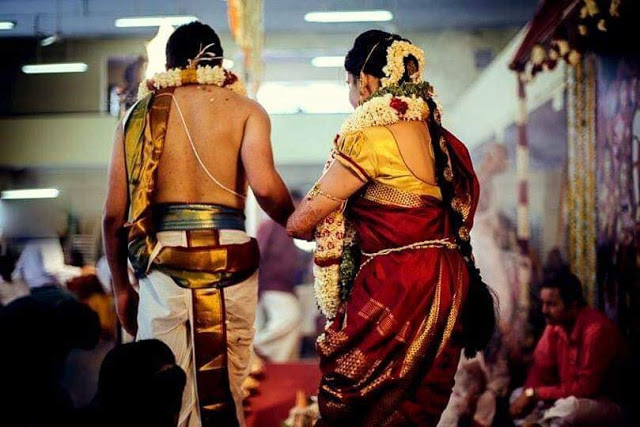
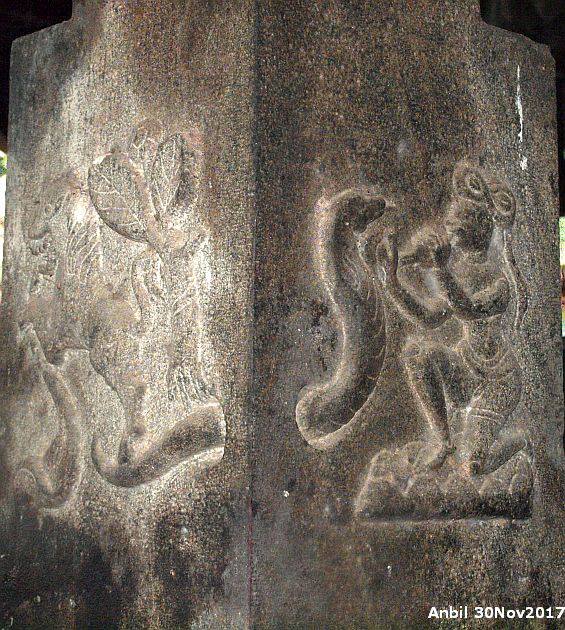
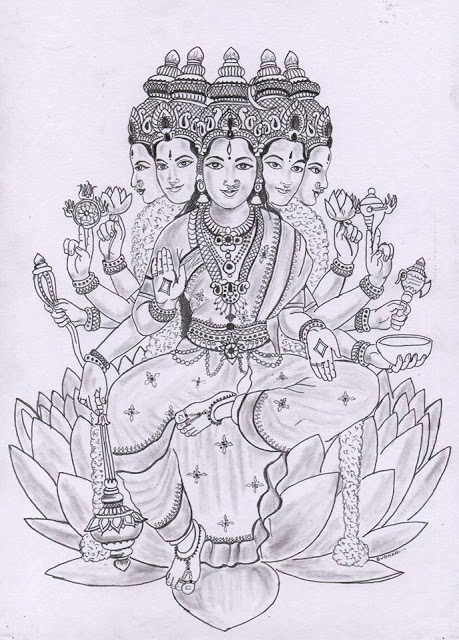
picture by Lalgudi Veda from Anbil
SNAKE CATCHERS
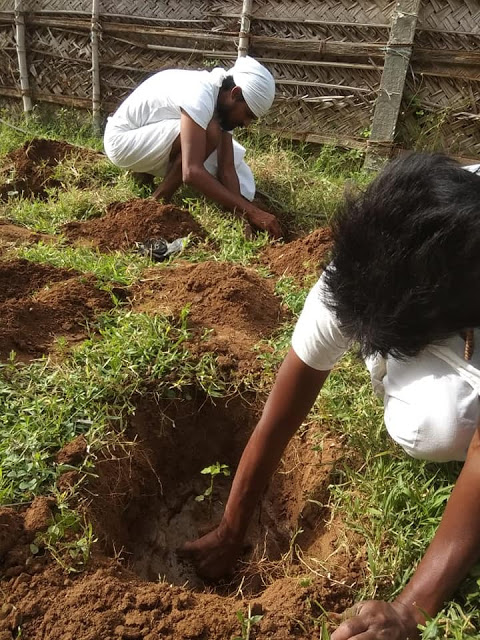
260. (Viz.) hunters, fowlers, herdsmen, fishermen, root-diggers,
snake-catchers, gleaners, and other foresters.
261. As they, being examined, declare the marks for the meeting of the
boundaries to be, even so the king shall justly cause them to be fixed between
the two villages.
262. The decision concerning the boundary-marks of fields, wells, tanks,
of gardens and houses depends upon the evidence of the neighbours.
263. Should the neighbours give false evidence, when men dispute about a
boundary-mark, the king shall make each of them pay the middlemost amercement
as a fine.
264. He who by intimidation possesses himself of a house, a tank, a
garden, or a field, shall be fined five hundred (panas); (if he trespassed)
through ignorance, the fine (shall be) two hundred (panas).
265. If the boundary cannot be ascertained (by any evidence), let a
righteous king with (the intention of) benefiting them (all), himself assign
(his) land (to each); that is the settled rule.
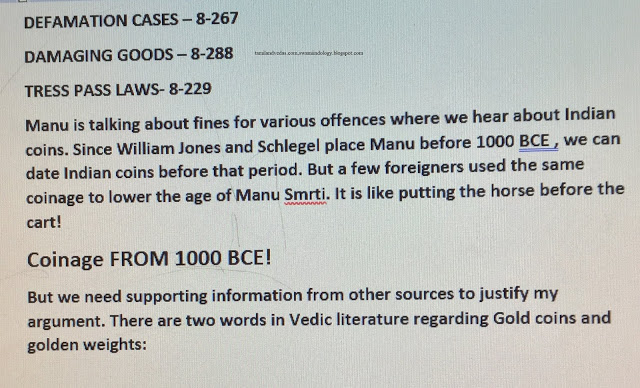
266. Thus the law for deciding boundary (disputes) has been fully declared, I will next propound the (manner of) deciding cases of defamation.
DEFAMATION CASES/ VERBAL ASSAULTS
267. A Kshatriya, having defamed a Brahmana, shall be fined one hundred
(panas); a Vaisya one hundred and fifty or two hundred; a Sudra shall suffer
corporal punishment.
268. A Brahmana shall be fined fifty (panas) for defaming a Kshatriya;
in (the case of) a Vaisya the fine shall be twenty-five (panas); in (the case
of) a Sudra twelve.
269. For offences of twice-born men against those of equal caste (varna,
the fine shall be) also twelve (panas); for speeches which ought not to be
uttered, that (and every fine shall be) double.
270. A once-born man (a Sudra), who insults a twice-born man with gross
invective, shall have his tongue cut out; for he is of low origin.
271. If he mentions the names and castes (Jati) of the (twice-born) with
contumely, an iron nail, ten fingers long, shall be thrust red-hot into his
mouth.
272. If he arrogantly teaches Brahmanas their duty, the king shall cause
hot oil to be poured into his mouth and into his ears.
273. He who through arrogance makes false statements regarding the
learning (of a caste-fellow), his country, his caste (Jati), or the rites by
which his body was sanctified, shall be compelled to pay a fine of two hundred
(panas).
274. He who even in accordance with the true facts (contemptuously)
calls another man one-eyed, lame, or the like (names), shall be fined at least
one karshapana.
100 PANAS FINE
275. He who defames his mother, his father, his wife, his brother, his
son, or his teacher, and he who gives not the way to his preceptor, shall be
compelled to pay one hundred (panas).
276. (For mutual abuse) by a Brahmana and a Kshatriya a fine must be
imposed by a discerning (king), on the Brahmana the lowest amercement, but on
the Kshatriya the middlemost.
277. A Vaisya and a Sudra must be punished exactly in the same manner
according to their respective castes, but the tongue (of the Sudra) shall not
be cut out; that is the decision.
278. Thus the rules for punishments (applicable to cases) of defamation
have been truly declared; I will next propound the decision (of cases) of
assault.
279. With whatever limb a man of a low caste does hurt to (a man of the
three) highest (castes), even that limb shall be cut off; that is the teaching
of Manu.
280. He who raises his hand or a stick, shall have his hand cut off; he
who in anger kicks with his foot, shall have his foot cut off.
281. A low-caste man who tries to place himself on the same seat with a
man of a high caste, shall be branded on his hip and be banished, or (the king)
shall cause his buttock to be gashed.
282. If out of arrogance he spits (on a superior), the king shall cause
both his lips to be cut off; if he urines (on him), the penis; if he breaks
wind (against him), the anus.
283. If he lays hold of the hair (of a superior), let the (king)
unhesitatingly cut off his hands, likewise (if he takes him) by the feet, the
beard, the neck, or the scrotum.
284. He who breaks the skin (of an equal) or fetches blood (from him)
shall be fined one hundred (panas), he who cuts a muscle six nishkas, he who
breaks a bone shall be banished.
285. According to the usefulness of the several (kinds of) trees a fine
must be inflicted for injuring them; that is the settled rule.
286. If a blow is struck against men or animals in order to (give them)
pain, (the judge) shall inflict a fine in proportion to the amount of pain
(caused).
287. If a limb is injured, a wound (is caused), or blood (flows, the assailant) shall be made to pay (to the sufferer) the expenses of the cure, or the whole (both the usual amercement and the expenses of the cure as a) fine (to the king).
DAMAGING GOODS
288. He who damages the goods of another, be it intentionally or
unintentionally, shall give satisfaction to the (owner) and pay to the king a
fine equal to the (damage).
289. In the case of (damage done to) leather, or to utensils of leather,
of wood, or of clay, the fine (shall be) five times their value; likewise in
the case of (damage to) flowers, roots, and fruit.
290. They declare with respect to a carriage, its driver and its owner,
(that there are) ten cases in which no punishment (for damage done) can be
inflicted; in other cases a fine is prescribed.
291. When the nose-string is snapped, when the yoke is broken, when the
carriage turns sideways or back, when the axle or a wheel is broken,
292. When the leather-thongs, the rope around the neck or the bridle are
broken, and when (the driver) has loudly called out, ‘Make way,’ Manu has
declared (that in all these cases) no punishment (shall be inflicted).
293. But if the cart turns off (the road) through the driver’s want of
skill, the owner shall be fined, if damage (is done), two hundred (panas).
294. If the driver is skilful (but negligent), he alone shall be fined;
if the driver is unskilful, the occupants of the carriage (also) shall be each
fined one hundred (panas).
295. But if he is stopped on his way by cattle or by (another) carriage,
and he causes the death of any living being, a fine shall without doubt be
imposed.
296. If a man is killed, his guilt will be at once the same as (that of)
a thief; for large animals such as cows, elephants, camels or horses, half of
that.
297. For injuring small cattle the fine (shall be) two hundred (panas);
the fine for beautiful wild quadrupeds and birds shall amount to fifty (panas).
298. For donkeys, sheep, and goats the fine shall be five mashas; but
the punishment for killing a dog or a pig shall be one masha.
299. A wife, a son, a slave, a pupil, and a (younger) brother of the
full blood, who have committed faults, may be beaten with a rope or a split
bamboo,
300. But on the back part of the body (only), never on a noble part; he
who strikes them otherwise will incur the same guilt as a thief.
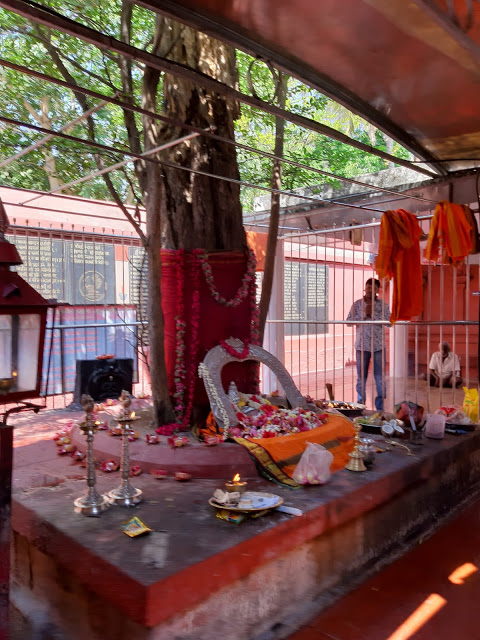
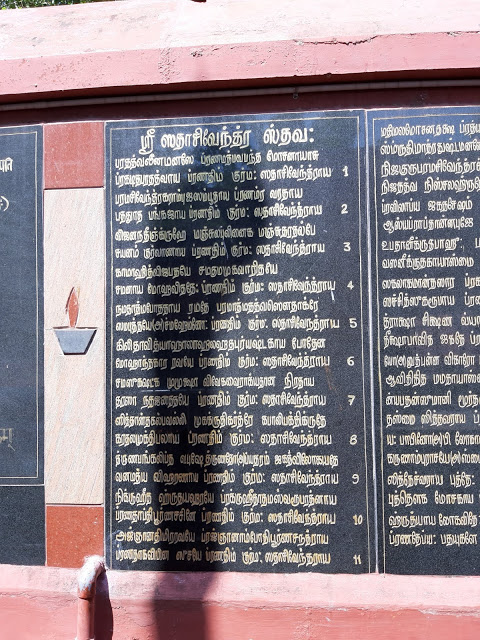
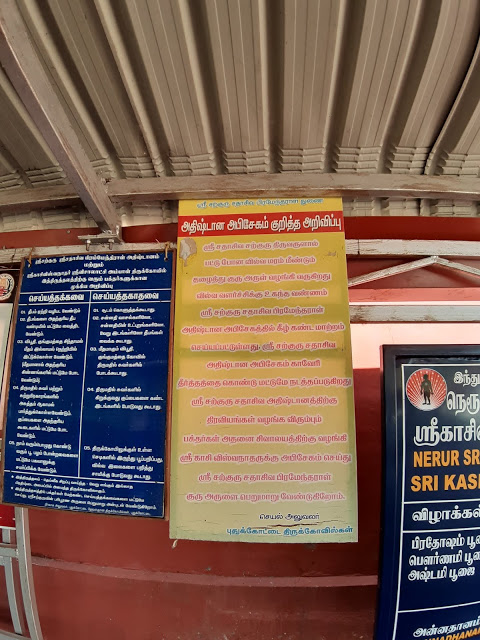
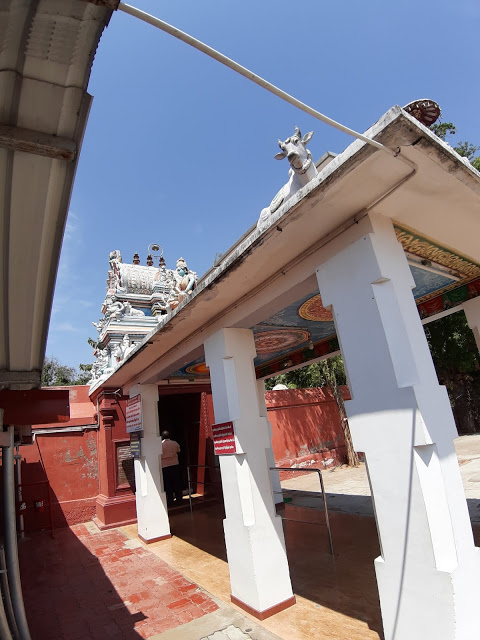
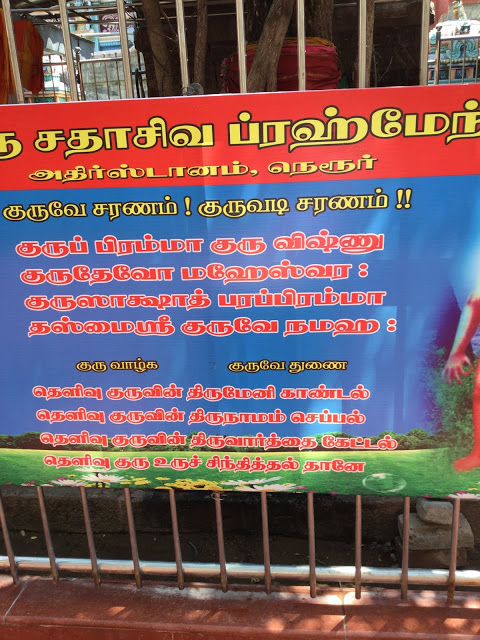
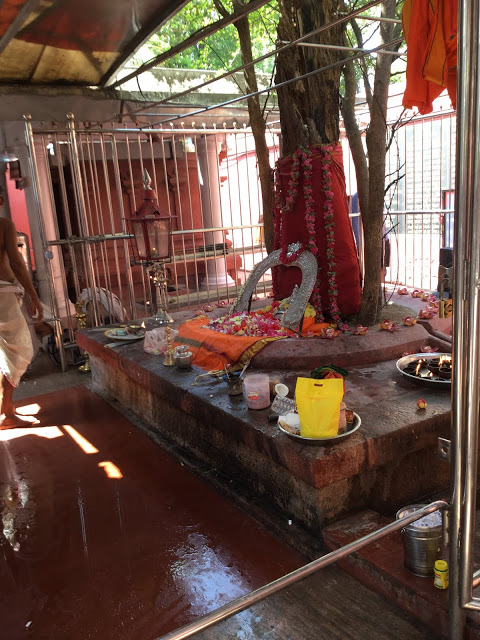
We were
lucky to go to Nerur Sadhasiva Brahmendral’s Jeeva Samadhi, which is 13
kilometres from Karur on 27th March 2019. We went there around 11
am, right at the Puja time. Even the priest who did the Puja told us many
people come at wrong time and see the Samadhi though the protective fence
around the enclosure. He told us whoever come at Puja time are the lucky ones.
About the great saint , I have written in 2013 and 2014; Please see the links
below.
Sringeri
Acharya and Kanchi Pramacharya have visited this place . Kanchi Paramacharya came to Nerur in 1923
after doing the Thadanga Prathista in Jambukeswara (Thiru Anaikka) Akilandeswari
Temple on 29-4-1923.
He stayed in
Nerur for a week . Sadhasiva’s guru was the 57th Kanchi
Shankaracharya Sri Parama Sivendra Saraswathy. Kanchi Paramacharya spent
several hours every day doing meditation inside the temple. Next to the Samadhi
is Shiva temple. Paramacharya arranged Puja at both the places.
Miracles of
Sadhasiva Brahmendra
1.He
surprised a Muslim who cut off his hand by just attaching it to his arm and
walked away as if nothing happened.
2.He
appeared in several places at the same time.
3.He took
some children to Madurai to see the festival by Teletransportation.
4.He
predicted his last day to his disciples. He told them that a Brahmin will bring
a Shiva linga the next day from Varanasi and he will enter Samadhi on that day
and then they can grow a Bilva tree over it and install the linga nearby and erect
a Shiva temple over it. It all happened
250 years ago.
Sadhasiva’s
brief and beautiful Sanskrit compositions are sung in music concerts and
Bhajans. All his compositions have his signature Mudra/seal ‘Paramahamsa’.
Since we
sing the Bhajans in our monthly congregations in London, I have been planning a
visit for very long. After reading the book Jagadguru Divya Charitam (Year
1957) by Ramachandrapuram S Sambaasiva Murthy I wished that I should have the
darshan. It is about Kanchi Paramacharya’s life. During his Vijaya Yatra he
visited Neur.
More in my
previous posts. See the pictures taken by me:–
Sweet Pongal Prasadam was given to everyone who attended the Puja. Books, CDs, Pictures etc are sold in the Adhistanam.
13 Nov 2011 – British judges and several others who preside over the courts of justice … King Karikalan removed his white hair wig (Narai Mudi in Tamil) and …
25 Mar 2014 – Another story told about Agastya is that he travelled to south at the behest of Lord Siva. It is true that either Siva or a Saivaite saint requested …
14 Jan 2012 – Karikal Choza and Eagle shaped Fire Altar. –S Swaminathan. Fire altar, Kerala, April 2004. Ancient Tamil kings followed Vedic customs in their …
Paranar narrated a sad story where in Karikal Chola’s daughter Adi Manthi lost her husband Attanathi in the river Kaveri. She cried and cried and ran along the …
2 Feb 2013 – The oldest reference to a population explosionissue is in Hindu scriptures! … The pre independent trend in India was to see the ‘ghost of …
10 Sep 2014 – b)Famous Tamil king Karikalan was made a king by an elephant. … d)Tamil Choza king ordered beheading of a child, but a bold poet stopped it
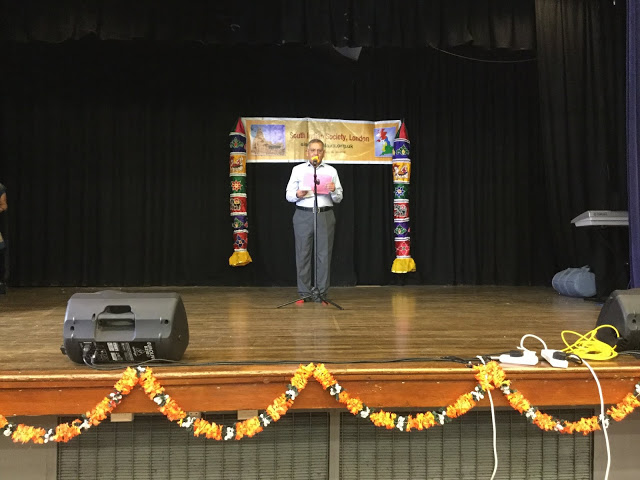
I (London swaminathan) spoke at the South Indian
Society event in London yesterday about the significance of ‘Panchang Reading
on New Year’s day’. Tamil New Year Day fell on 14th April this year
and the SIS celebrated it yesterday. Following is the rough translation of my
Tamil speech: –
“It is good
that the SIS is following the good old tradition of Reading the New Year
Panchangam/almanac.
What is
Panhangam ?
It has got five parts in it and so it is called Panchang: Day, Thithi, Nakshatra/star, Yoga and Karana. We do use Day (Sunday to Saturday) Thithi (Prathamai to Purnima or Amavasya) Nakshatra (27 Stars from Asvini to Revathi) in our day to day rituals; but Yoga and Karana are mostly used by astrologers.
Why is this
year called Vikaari?
Vikaari is
one among the Sixty years. Vikari means changed, Transformed. We use Vikaaram
for faces that are not clean in our day today conversation.
Panchang
has A to Z
Hindu
almanac, i.e. Panchangam deals with many subjects from Astronomy to Zoology. Hindus
read the new Panchangam on the New year day in a public place and the priest or
astrologer used to explain the forecasts for the new year for 2 or 3 hours.
Since I am given only seven minutes, I will do it in Express Speed in Bullet
Points.
The eclipses
are predicted correctly on par with the astronomical observatories. This shows
that we are far advanced in science. The sixty year cycle found in Panchang is
based on the movement of Jupiter. It takes 12 years to make one orbit around the
Sun. Five such rounds make 60 years and the human life span is 60+60=120 years.
We have great saints who have lived for 120 years or more.
Democracy
in Panchang
We see Saturn
as the King this year. Last year we had a different planet as king. We see
democracy even in this. There is no family rule here! The nine planets take
different roles every year. Democracy is found even in the oldest book Rik Veda
where we see Sabha and Samiti.
Z for
Zoology
I said A to
Z is in Panchang. We have the Lizard predictions in our almanac. For every
click noise of house lizard we have one prediction. The surprising thing about
Lizard Click noises is that it is even in 2000 year old Sangam Tamil book Akanaanuru.
More surprising is that a wild boar in the forest followed the lizard astrology.
When it was about to leave its cave it heard the clicks of a lizard. Then it
went back into its den knowing that the hunter is waiting with a trap. This
2000 year old Tamil belief is documented until today in the almanac.
The almanac
has also predictions about Five Birds. The very word we use for Omens, ‘Sakunam’
means Bird. We have been watching the bird movements and predicted forecasts on
the basis of it. We have been keen observers of nature. This is part of
Zoology.
History
in Panchang
The panchang
that all of you holding now in your hand say in the very first page this is
Kali Yuga 5120. (SIS distribute free printed Panchang every year to its members).The
Kaliyuga began after the end of Mahabharta war. So we have some history information here. This shows how
ancient our civilization has been.
Every page
of Hindu almanac has got lot of information. We can write a Ph.D thesis on
every page.
Geography
and Concept of Time
Foreigners
wrote and criticized that Hindus have no sense of time or no sense of history.
It is wrong. On the contrary we have the utmost sense of Time and History. In every Puja (ritual) we do Sankalpa saying that
in which Manvantara, Yuga, Ayana, Month we do it. We have a larger Time cycle
than westerners. Ours is very big compared to their CE or BCE. Not only that. We do say whether we do such a
Puja in the Northern part of Meru or the southern part and in which continent etc.
This sort of historical and geographical sense are not found in any other
culture in the world. And we follow it
with the help of this Panchangam until today.
What is
the Prediction for You?
I know that
all of you are eagerly waiting to hear the predictions for you. It is on page
seven of the book you are holding. This gives predictions for 27 stars. But I
am going to tell you very briefly about zodiacal predictions.
This year
the lucky zodiacal signs are
(warning:
Hindu astrology is different from western astrology. So don’t go by your English
birth date and the zodiacal sign on the basis of it. Following is based on your
horoscope)
Mithunam,
Kanya, Makara and Kumbah (Gemini, Virgo, Capricorn and Aquarius) are LUCKY ones
Simha,
Dhanus and Meena are UNLUCKY ones (Leo, Sagittarius and Pisces)
For other
five signs No gain -No Loss.
Having said
that I wanted to add that these are relative terms. When you compare your
status last year it may be better or worse this year. But that is not the end
of it. In your own house hold you may have some lucky and unlucky ones. If you
join with the lucky ones, you may be compensated. It is like the Tamil proverb ‘That
even the string gets the fragrance of flowers in a garland’. .
The second
thing is that for every effort you will be rewarded. Tamil Veda Tirukkural says
that ‘even if God is not on your side, your efforts will be rewarded. Hindu gods
obey this universal law and that is how even the demons Ravana and Pasmasura
got their boons by their severe penance.
So all your
prayers will be answered.
Let me
conclude with an anecdote and a joke;
When I was
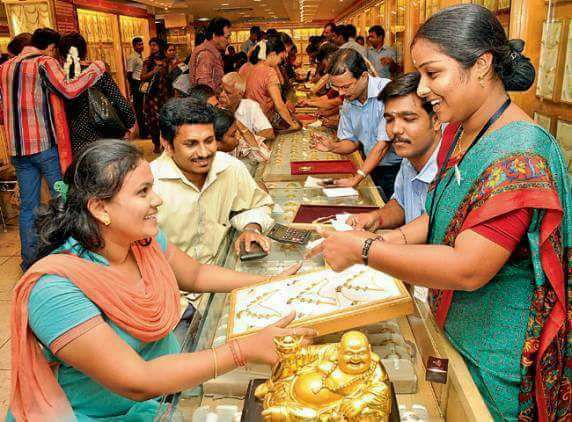
working for Dinamani News paper in Madurai for sixteen years I used to cycle
4+4 miles every day. Whenever I felt tired I used to enter my friends’ shop and
spend some time gossiping. He had a small jewellery shop on my way to office. One
day I saw him in a sorrowful mood. When I asked him the reason for it, he told
me that the business was not as good as the previous year. When I asked him
probing questions he told me that he made Rs 50,000 profit the previous year and this year he made
only Rs.49,500 .
I was
surprised and told him , so what? You made a good profit. Why are you feeling
depressed?
He told me
He expected
a profit of Rs 100 000 this year and so this is a loss!!
I wanted to
laugh, but decided not to offend my friend. So the Panchang prediction of loss
and gain for your Rasi (zodiacal sign) may be similar to that. So nothing to
worry about negative predictions. More our great saints sing that the nine
planets can never harm any worshipper. Have faith in it.
Last but not
the least, on 14th of this month
I read Panchang in one of the houses and spoke . At the end of the
speech one my friends asked jokingly, What does the Panchang say about BREXIT?
( a big topic and issue in Britain that has been going for a year)
(14-4-19
Tamil speech is already posted here in Tamil)
I told him
‘The God is
equally confused like Therese May (British PM) . So he dared not say anything. Not only that God is not sure
about future BREXIT predictions as well He didn’t even have a clue whether it
would happen at any future year or Not at all!
Let me
conclude my speech with a positive note
Swasthi
Prajaabya Paripaalayantaam
Nyaayena maargena
Mahim mahisaaha
Go Braahmanebhya
Subhamastu Nityam
Lokaas
samasthaa Sukhino Bhavantu!
(Let there be
a rule of justice; let all the people and animals be happy and healthy for ever;
let the whole world enjoy prosperity and happiness).



































 Tamil and Vedas