Comments by London swaminathan
swami_48@yahoo.com
Date: 2 March 2019
GMT Time uploaded in London – 18-46
Post No. 6143
Pictures shown here are taken from various sources including google, Wikipedia, Facebook friends and newspapers. This is a non- commercial blog. ((posted by swamiindology.blogspot.com AND tamilandvedas.com))
My comments
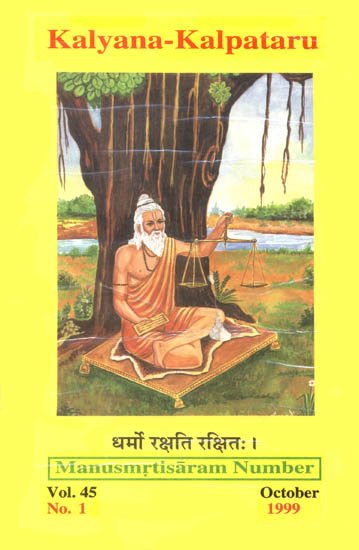
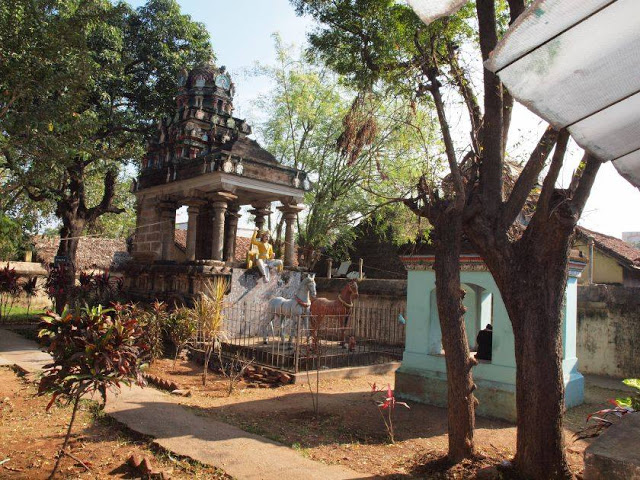
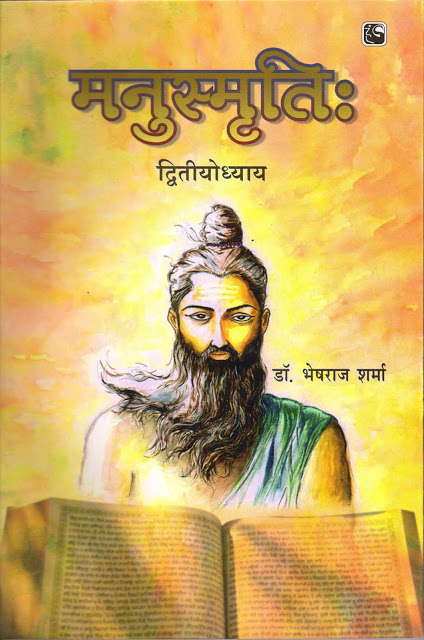
We have already seen first seven chapters of Manu Smrti known as Manava Dharma Shastra. Now let us look at 106 verses of the Eighth chapter. Some may wonder or get agitated when they read discrimination against Shudras in some issues. We dont know whether they were followed verbatim at any time. Even Hammurabi’s strict Code of Law, they say, was not followed verbatim. But we know for sure that until 25 years ago, blacks in South Africa were treated as animals without basic rights. We know for sure that blacks were treated as animals in America till Abraham Lincoln, Martin Luther King and others fought for their rights. We know for sure that Romans and Greeks denied others even the basic rights. We know for sure that England gave special privileges to Lords. So, when one reads these verses, one must see the world that existed at least 2500 years ago and compare it with them. The reason being that we don’t see the practise of these strict rules against a particular community in 2500 year old Jataka tales or other literature. Only one incident in Valmiki Ramayana against a shudra is an interpolation, according to scholars.
INTERESTING BULLET POINTS
1.BRAHMINS ARE SHUDRAS : see verse8-102
2)-18 TITLES OF LAW- See verses 8: 3 to 7
3.WHAT IS JUSTICE- see quotations in verses 8: 14-17
4.LIE DETECTOR- modern lie detector follows what Manu says in verse 8-25, 26
5.TREASURE TROVE- these are interesting- see 8: 35-39
6.EQUAL RIGHTS TO 4 CASTES- see verse 8-40
7.WOMEN ARE NOT GOOD WITNESSES- see verse 8-77
8.FALSE WITNESS- Varuna will punish; see verse 8- 82
9.GOOD SEES EVERYTHING- see verse 8- 85
10.UNGRATEFUL MEN AND WOMEN SLAYERS- see 8-89; it is in Tamil verse Purananuru 34; also in Valmiki Ramayana and Panchatantra
11.EQUAL TO KILLING 1000 PEOPLE- see verse 8-98;false witness about men
12.YOU MAY TELL A LIE TO SAVE A SHUDRA- see verse 8-104; to save a life of a good person you may tell a lie; Tamil poet Tiru valluvar also justifies lies- see Kural 291 and 292
xxxx
MANU SMRTI -CHAPTER VIII.

APPEARANCE IN THE COURT OF LAW
8-1. A king, desirous of investigating law cases, must enter his court of justice, preserving a dignified demeanour, together with Brahmanas and with experienced councillors.
2. There, either seated or standing, raising his right arm, without ostentation in his dress and ornaments, let him examine the business of suitors,
18 TITLES OF LAW
8-3. Daily (deciding) one after another (all cases) which fall under the eighteen titles (of the law) according to principles drawn from local usages. and from the Institutes of the sacred law.
4. Of those (titles) the first is the non-payment of debts, (then follow), (2) deposit and pledge, (3) sale without ownership, (4) concerns among partners, and (5) resumption of gifts,
5. (6) Non-payment of wages, (7) non-performance of agreements, (8) rescission of sale and purchase, (9) disputes between the owner (of cattle) and his servants,
6. (10) Disputes regarding boundaries, (11) assault and (12) defamation, (13) theft, (14) robbery and violence, (15) adultery,
7. (16) Duties of man and wife, (17) partition (of inheritance), (18) gambling and betting; these are in this world the eighteen topics which give rise to lawsuits.
8. Depending on the eternal law, let him decide the suits of men who mostly contend on the titles just mentioned.
9. But if the king does not personally investigate the suits, then let him appoint a learned Brahmana to try them.
10. That (man) shall enter that most excellent court, accompanied by three assessors, and fully consider (all) causes (brought) before the (king), either sitting down or standing.
BRAHMINS DECIDING THE CASE
8-11. Where three Brahmanas versed in the Vedas and the learned (judge) appointed by the king sit down, they call that the court of (four-faced) Brahman.
12. But where justice, wounded by injustice, approaches and the judges do not extract the dart, there (they also) are wounded (by that dart of injustice).
13. Either the court must not be entered, or the truth must be spoken; a man who either says nothing or speaks falsely, becomes sinful.
WHAT IS JUSTICE
8-14. Where justice is destroyed by injustice, or truth by falsehood, while the judges look on, there they shall also be destroyed.
15. ‘Justice, being violated, destroys; justice, being preserved, preserves: therefore justice must not be violated, lest violated justice destroy us.’
16. For divine justice is said to be a bull (vrisha); that man who violates it (kurute ‘lam) the gods consider to be a man despicable like a Sudra (vrishala); let him, therefore, beware of violating justice.
8-17. The only friend who follows men even after death is justice; for everything else is lost at the same time when the body (perishes).
18. One quarter of (the guilt of) an unjust (decision) falls on him who committed (the crime), one quarter on the (false) witness, one quarter on all the judges, one quarter on the king.
19. But where he who is worthy of condemnation is condemned, the king is free from guilt, and the judges are saved (from sin); the guilt falls on the perpetrator (of the crime alone).
ANTI SUDRA STATEMENTS
20. A Brahmana who subsists only by the name of his caste (jati), or one who merely calls himself a Brahmana (though his origin be uncertain), may, at the king’s pleasure, interpret the law to him, but never a Sudra.
8-21. The kingdom of that monarch, who looks on while a Sudra settles the law, will sink (low), like a cow in a morass.
8-22. That kingdom where Sudras are very numerous, which is infested by atheists and destitute of twice-born (inhabitants), soon entirely perishes, afflicted by famine and disease.
23. Having occupied the seat of justice, having covered his body, and having worshipped the guardian deities of the world, let him, with a collected mind, begin the trial of causes.
24. Knowing what is expedient or inexpedient, what is pure justice or injustice, let him examine the causes of suitors according to the order of the castes (varna).
LIE DETECTOR TEST
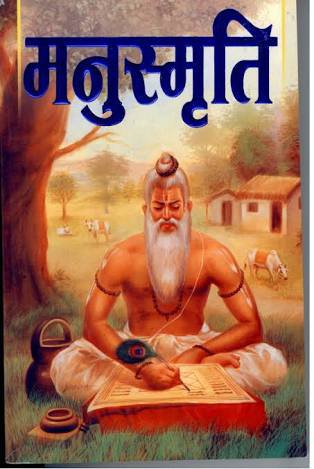
8-25. By external signs let him discover the internal disposition of men, by their voice, their colour, their motions, their aspect, their eyes, and their gestures.
8-26. The internal (working of the) mind is perceived through the aspect, the motions, the gait, the gestures, the speech, and the changes in the eye and of the face.
27. The king shall protect the inherited (and other) property of a minor, until he has returned (from his teacher’s house) or until he has passed his minority.
28. In like manner care must be taken of barren women, of those who have no sons, of those whose family is extinct, of wives and widows faithful to their lords, and of women afflicted with diseases.
PUNISHING THIEVES, protecting females
8-29. A righteous king must punish like thieves those relatives who appropriate the property of such females during their lifetime.
30. Property, the owner of which has disappeared, the king shall cause to be kept as a deposit during three years; within the period of three years the owner may claim it, after (that term) the king may take it.
31. He who says, ‘This belongs to me,’ must be examined according to the rule; if he accurately describes the shape, and the number (of the articles found) and so forth, (he is) the owner, (and) ought (to receive) that property.
32. But if he does not really know the time and the place (where it was) lost, its colour, shape, and size, he is worthy of a fine equal (in value) to the (object claimed).
33. Now the king, remembering the duty of good men, may take one-sixth part of property lost and afterwards found, or one-tenth, or at least one-twelfth.
34. Property lost and afterwards found (by the king’s servants) shall remain in the keeping of (special) officials; those whom the king may convict of stealing it, he shall cause to be slain by an elephant.
ONE SIXTH OF THE TREASURE
8-35. From that man who shall truly say with respect to treasure-trove, ‘This belongs to me,’ the king may take one-sixth or one-twelfth part.
36. But he who falsely says (so), shall be fined in one-eighth of his property, or, a calculation of (the value of) the treasure having been made, in some smaller portion (of that).
37. When a learned Brahmana has found treasure, deposited in former (times), he may take even the whole (of it); for he is master of everything.
38. When the king finds treasure of old concealed in the ground let him give one half to Brahmanas and place the (other) half in his treasury.
39. The king obtains one half of ancient hoards and metals (found) in the ground, by reason of (his giving) protection, (and) because he is the lord of the soil.
FOUR CASTES HAVE EQUAL RIGHTS
8-40. Property stolen by thieves must be restored by the king to (men of) all castes (varna); a king who uses such (property) for himself incurs the guilt of a thief.
41. (A king) who knows the sacred law, must inquire into the laws of castes (jati), of districts, of guilds, and of families, and (thus) settle the peculiar law of each.
42. For men who follow their particular occupations and abide by their particular duty, become dear to people, though they may live at a distance.
43. Neither the king nor any servant of his shall themselves cause a lawsuit to be begun, or hush up one that has been brought (before them) by (some) other (man).
Deer simile
8-44. As a hunter traces the lair of a (wounded) deer by the drops of blood, even so the king shall discover on which side the right lies, by inferences (from the facts).
45. When engaged in judicial proceedings he must pay full attention to the truth, to the object (of the dispute), (and) to himself, next to the witnesses, to the place, to the time, and to the aspect.
46. What may have been practised by the virtuous, by such twice-born men as are devoted to the law, that he shall establish as law, if it be not opposed to the (customs of) countries, families, and castes (gati).
47. When a creditor sues (before the king) for the recovery of money from a debtor, let him make the debtor pay the sum which the creditor proves (to be due).
48. By whatever means a creditor may be able to obtain possession of his property, even by those means may he force the debtor and make him pay.
49. By moral suasion, by suit of law, by artful management, or by the customary proceeding, a creditor may recover property lent; and fifthly, by force.
50. A creditor who himself recovers his property from his debtor, must not be blamed by the king for retaking what is his own.
51. But him who denies a debt which is proved by good evidence, he shall order to pay that debt to the creditor and a small fine according to his circumstances.
52. On the denial (of a debt) by a debtor who has been required in court to pay it, the complainant must call (a witness) who was present (when the loan was made), or adduce other evidence.
53. (The plaintiff) who calls a witness not present at the transaction, who retracts his statements, or does not perceive that his statements (are) confused or contradictory;
54. Or who having stated what he means to prove afterwards varies (his case), or who being questioned on a fact duly stated by himself does not abide by it;
55. Or who converses with the witnesses in a place improper for such conversation; or who declines to answer a question, properly put, or leaves (the court);
56. Or who, being ordered to speak, does not answer, or does not prove what he has alleged; or who does not know what is the first (point), and what the second, fails in his suit.
57. Him also who says ‘I have witnesses,’ and, being ordered to produce them, produces them not, the judge must on these (same) grounds declare to be non-suited.
58. If a plaintiff does not speak, he may be punished corporally or fined according to the law; if (a defendant) does not plead within three fortnights, he has lost his cause.
59. In the double of that sum which (a defendant) falsely denies or on which (the plaintiff) falsely declares, shall those two (men) offending against justice be fined by the king.
60. (A defendant) who, being brought (into court) by the creditor, (and) being questioned, denies (the debt), shall be convicted (of his falsehood) by at least three witnesses (who must depose) in the presence of the Brahmana (appointed by) the king.
61. I will fully declare what kind of men may be made witnesses in suits by creditors, and in what manner those (witnesses) must give true (evidence).
GIVING EVIDENCE
8-62. Householders, men with male issue, and indigenous (inhabitants of the country, be they) Kshatriyas, Vaisyas, or Sudras, are competent, when called by a suitor, to give evidence, not any persons whatever (their condition may be) except in cases of urgency.
63. Trustworthy men of all the (four) castes (varna) may be made witnesses in lawsuits, (men) who know (their) whole duty, and are free from covetousness; but let him reject those (of an) opposite (character).
64. Those must not be made (witnesses) who have an interest in the suit, nor familiar (friends), companions, and enemies (of the parties), nor (men) formerly convicted (of perjury), nor (persons) suffering under (severe) illness, nor (those) tainted (by mortal sin).
65. The king cannot be made a witness, nor mechanics and actors, nor a: Srotriya, nor a student of the Veda, nor (an ascetic) who has given up (all) connexion (with the world),
66. Nor one wholly dependent, nor one of bad fame, nor a Dasyu, nor one who follows forbidden occupations, nor an aged (man), nor an infant, nor one (man alone), nor a man of the lowest castes, nor one deficient in organs of sense,
67. Nor one extremely grieved, nor one intoxicated, nor a madman, nor one tormented by hunger or thirst, nor one oppressed by fatigue, nor one tormented by desire, nor a wrathful man, nor a thief.
ROLE OF WOMEN
8-68. Women should give evidence for women, and for twice-born men twice-born men (of the) same (kind), virtuous Sudras for Sudras, and men of the lowest castes for the lowest.
69. But any person whatsoever, who has personal knowledge (of an act committed) in the interior apartments (of a house), or in a forest, or of (a crime causing) loss of life, may give evidence between the parties.
70. On failure (of qualified witnesses, evidence) may given (in such cases) by a woman, by an infant, by an aged man, by a pupil, by a relative, by a slave, or by a hired servant.
71. But the (judge) should consider the evidence of infants, aged and diseased men, who (are apt to) speak untruly, as untrustworthy, likewise that of men with disordered minds.
72. In all cases of violence, of theft and adultery, of defamation and assault, he must not examine the (competence of) witnesses (too strictly).
73. On a conflict of the witnesses the king shall accept (as true) the evidence of the) majority; if (the conflicting parties are) equal in number, (that of) those distinguished by good qualities; on a difference between (equally) distinguished (witnesses, that of) the best among the twice-born.
74. Evidence in accordance with what has actually been seen or heard, is admissible; a witness who speaks truth in those (cases), neither loses spiritual merit nor wealth.
75. A witness who deposes in an assembly of honourable men (Arya) anything else but what he has seen or heard, falls after death headlong into hell and loses heaven.
76. When a man (originally) not appointed to be a witness sees or hears anything and is (afterwards) examined regarding it, he must declare it (exactly) as he saw or heard it.
DON’T TRUST WOMEN AS WITNESSES
8-77. One man who is free from covetousness may be (accepted as) witness; but not even many pure women, because the understanding of females is apt to waver, nor even many other men, who are tainted with sin.
78. What witnesses declare quite naturally, that must be received on trials; (depositions) differing from that, which they make improperly, are worthless for (the purposes of) justice.
79. The witnesses being assembled in the court in the presence of the plaintiff and of the defendant, let the judge examine them, kindly exhorting them in the following manner:
80. ‘What ye know to have been mutually transacted in this matter between the two men before us, declare all that in accordance with the truth; for ye are witnesses in this (cause).
81. ‘A witness who speaks the truth in his evidence, gains (after death) the most excellent regions (of bliss) and here (below) unsurpassable fame; such testimony is revered by Brahman (himself).
VARUNA WILL PUNISH
8-82. ‘He who gives false evidence is firmly bound by Varuna’s fetters, helpless during one hundred existences; let (men therefore) give true evidence.
83. ‘By truthfulness a witness is purified, through truthfulness his merit grows, truth must, therefore, be spoken by witnesses of all castes (varna).
84. ‘The Soul itself is the witness of the Soul, and the Soul is the refuge of the Soul; despise not thy own Soul, the supreme witness of men.
GOD SEES EVERYTHING
8-85. ‘The wicked, indeed, say in their hearts, “Nobody sees us;” but the gods distinctly see them and the male within their own breasts.
86. ‘The sky, the earth, the waters, (the male in) the heart, the moon, the sun, the fire, Yama and the wind, the night, the two twilights, and justice know the conduct of all corporeal beings.’
87. The (judge), being purified, shall ask in the forenoon the twice-born (witnesses) who (also have been) purified, (and stand) facing the north or the east, to give true evidence in the presence of (images of) the gods and of Brahmanas.
88. Let him examine a Brahmana (beginning with) ‘Speak,’ a Kshatriya (beginning with) ‘Speak the truth,’ a Vaisya (admonishing him) by (mentioning) his kine, grain, and gold, a Sudra (threatening him) with (the guilt of) every crime that causes loss of caste;
PURANANURU (SANGAM TAMIL BOOK)
8-89. (Saying), ‘Whatever places of torment (hell) are assigned by the sages to the slayer of a Brahmana, to the murderer of women and children, to him who betrays a friend, and to an ungrateful man, those shall be thy (portion), if thou speakest falsely.
90. ‘(The reward) of all meritorious deeds which thou, good man, hast done since thy birth, shall become the share of the dogs, if in thy speech thou departest from the truth.
91. ‘If thou thinkest, O friend of virtue, with respect to thyself, “I am alone,” (know that) that sage who witnesses all virtuous acts and all crimes, ever resides in thy heart.
92. ‘If thou art not at variance with that divine Yama, the son of Vivasvat, who dwells in thy heart, thou needest neither visit the Ganges nor the (land of the) Kurus.
93. ‘Naked and shorn, tormented with hunger and thirst, and deprived of sight, shall the man who gives false evidence, go with a potsherd to beg food at the door of his enemy.
94. ‘Headlong, in utter darkness shall the sinful man tumble into hell, who being interrogated in a judicial inquiry answers one question falsely.
Fish eating simile
8-95. ‘That man who in a court (of justice) gives an untrue account of a transaction (or asserts a fact) of which he was not an eye-witness, resembles a blind man who swallows fish with the bones.
96. ‘The gods are acquainted with no better man in this world than him, of whom his conscious Soul has no distrust, when he gives evidence.
97. ‘Learn now, O friend, from an enumeration in due order, how many relatives he destroys who gives false evidence in several particular cases.
EQUAL TO KILLING 1000 PEOPLE
8-98. ‘He kills five by false Testimony regarding (small) cattle, he kills ten by false testimony regarding kine, he kills a hundred by false evidence concerning horses, and a thousand by false evidence concerning men.
99. ‘By speaking falsely in a cause regarding gold, he kills the born and the unborn; by false evidence concerning land, he kills everything; beware, therefore, of false evidence concerning land.
100. ‘They declare (false evidence) concerning water, concerning the carnal enjoyment of women, and concerning all gems, produced in water, or consisting of stones (to be) equally (wicked) as a lie concerning land.
101. ‘Marking well all the evils (which are produced) by perjury, declare thou openly everything as (thou hast) heard or seen (it).’
BRAHMINS BRCOME SUDRAS
8-102. Brahmanas who tend cattle, who trade, who are mechanics, actors (or singers), menial servants or usurers, the (judge) shall treat like Sudras.
103. In (some) cases a man who, though knowing (the facts to be) different, gives such (false evidence) from a pious motive, does not lose heaven; such (evidence) they call the speech of the gods.
TIRUKURAL OF TIRUVALLUVAR
8-104. Whenever the death of a Sudra, of a Vaisya, of a Kshatriya, or of a Brahmana would be (caused) by a declaration of the truth, a falsehood may be spoken; for such (falsehood) is preferable to the truth.
105. Such (witnesses) must offer to Sarasvati oblations of boiled rice (karu) which are sacred to the goddess of speech, (thus) performing the best penance in order to expiate the guilt of that falsehood.
106. Or such (a witness) may offer according to the rule, clarified butter in the fire, reciting the Kushmanda texts, or the Rik, sacred to Varuna, ‘Untie, O Varuna, the uppermost fetter,’ or the three verses addressed to the Waters.
–to be continued
XXXXXXXXXXXXXXXXXXX

















 Tamil and Vedas