HINDU AND BUDDHIST WONDERS IN JAPAN (Post No.5118)

Bodhi Daruma doll

Compiled by LONDON SWAMINATHAN


Date: 16 JUNE 2018


Time uploaded in London –  18-36  (British Summer Time)


Post No. 5118


Pictures shown here are taken from various sources such as Facebook friends, Books, Google and newspapers; thanks. Pictures may be subject to copyright laws.


SUGAR
Sugar was invented by Ikshvaku dynasty, Ikshvaku means sugarcane. Sugar was found in the Sarasvati -Indus Valley civilisation . Sugar went to to China from India. It was brought to Japan by Chinese priest Gangin of the Tang Dynasty in 753. Kobo Daishi brought sweets from China. From 15th century sweets of all kinds were manufactured in Japan.

Uruchi
India and Japan shared uruchi I.e. rice which is ARISI (in Tamil).
Oryza sativa in botanical term= Vrihi in Sanskrit.
xxx


Daruma Doll
Bodhidarma who introduced Zen Buddhism to China in early part of sixth century lives in the daily life of Japan as Daruma doll.


In 1978 the Conservative Yukon Hayashida won the gubernatorial election in Kyoto ending 28 years of communist administration in their traditional stronghold. As a sign of victory, he daubed in the other eye of Daruma doll, and one eye had already been painted before the elections.


On 21 February 1990, prime minister Toshiku Kaifu inked an eye to a huge Daruma doll, to celebrate the victory of the ruling Liberal Democratic Party in the National elections.

The stylised mask of Daruma-san emphasises the fierce mien of Bodhidharma . From the fire of his meditation arose the martial arts as well as from his training as a young prince Kanchi .
The roundish Daruma doll is a must for success in life. Bodhidaruma spent eight years in uninterrupted meditation. At last when he tried to stand up, he found that his legs atrophied. That is how the round doll came up.


Margaret Thatcher and Bodhi Daruma Doll

British Prime Minister David Cameron has praised Nissan’s production of their new 100% Electric car, the Nissan LEAF, at its Sunderland plant. The Japanese company has invested £420million in the production of the car, which will support 2,000 jobs in the UK’s automotive industry.

David Cameron also got the chance to take part in a traditional Japanese ceremony, when he coloured in the eye of a Daruma doll, which late former Prime Minister Margaret Thatcher had done when the plant first opened in 1986. Since then the plant has went on to produce over seven million cars.

Xxx

Lakshmi came to Japan

Japanese Lakshmi in British Museum
The British museum sent 300 treasures to Japan in celebration of the 50 years of India in independence in 1997. A star attraction of the e hibition was the eleventh century Heian wooden image of Kichijoten or Lakshmi. She wore the robe s of the Heian period, her right hand in Varada Mudra of granting affluence, and the left hand held a Cintamani jewel.


Lakshmi in Japan

Source Lokesh Chandra Book- CULTURAL INTER FLOW BETWEEN INDIA AND JAPAN

–subham-

SANSKRIT WORDS IN JAPANESE (Post No.5114)

Compiled by LONDON SWAMINATHAN


Date: 15 JUNE 2018


Time uploaded in London –  18-13  (British Summer Time)


Post No. 5114


Pictures shown here are taken from various sources such as Facebook friends, Books, Google and newspapers; thanks. Pictures may be subject to copyright laws.


Sri Lokesh Chandra in his book CULTURAL INTEFLOW BETWEEN INDIA AND JAPAN gives some interesting information about Sanskrit words in Japanese language.

It is very interesting to see how they are spelt and pronounced in Japan.

Sanskrit is BONGO in Japanese.

Bon means Brahman

Go means language

Prince Shotoku consecrated the First Constitution of Japan with the Sanskrit hymn Usniisavijayaa- dhaaranii written in the Gupta script in palm leaf.

Monk Gyoogi welcomed the Indian Bodhisena in 736 in mixed language of Sanskrit and Japanese.

Bodhisena and Buddhasthira taught Sanskrit to Japanese monks at the Daianji Temple. Abbot Ono showed me the room where Sanskrit was taught 1300 years ago.

Kobo Daishi (806) laid emphasis on a knowledge of Sanskrit to understand the texts correctly.

Sanskrit mantras sanctify the Homa (Goma in Japanese) ceremonies in Shingon temples every day.

Japanese scholars studied Sanskrit in England and Germany as part of modernisation after Meiji restoration (1868)


Prof. JunjiroTakakusu wrote a series of seven articles What Japan owes to India in the Young East in 1925. Seven articles covered 1,2 Ascetics; 3 Hindu Pantheon; 4 Music and Dance; 5 Cotton and Chess; 6 Names and Words; and 7 More names and words.


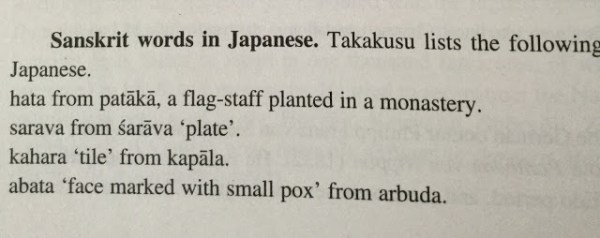
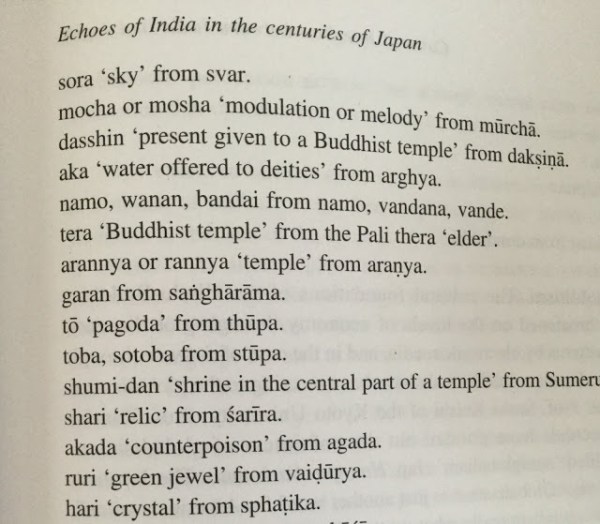
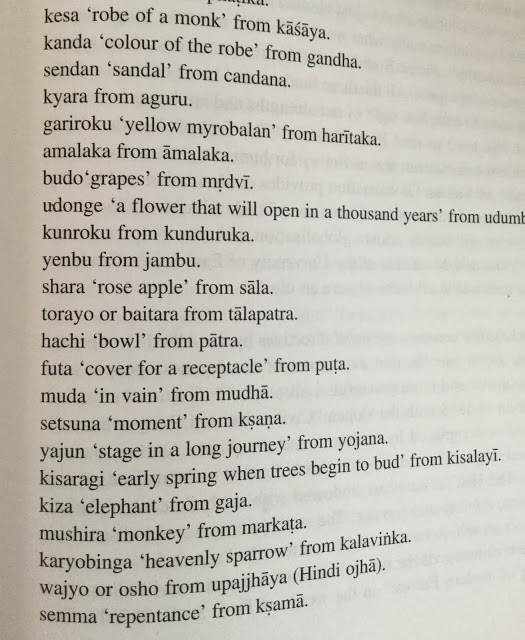
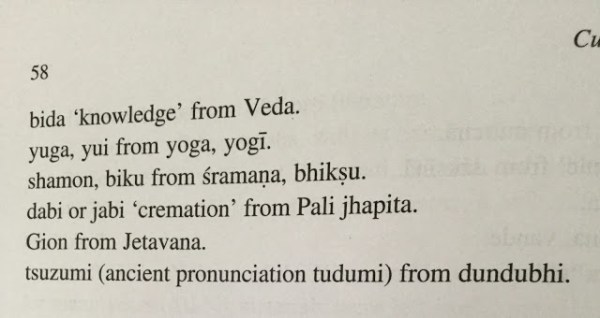
Takakusu lists the following Sanskrit words in daily use in Japanese:–


–SUBHAM–


SEXUAL INTERCOURSE: MANU’S RECOMMENDATION (Post no.5107)

Written by LONDON SWAMINATHAN


Date: 13 JUNE 2018


Time uploaded in London –  21- 16 (British Summer Time)


Post No. 5107


Pictures shown here are taken from various sources such as Facebook friends, Books, Google and newspapers; thanks. Pictures may be subject to copyright laws.


MY COMMENTS:

1.Manu is the only one ancient law maker in the world who praises women sky high. He says that families will be destroyed completely if they don’t respect women. Gods are pleased only where women are honoured.

2.Foreigners and Marxists chose one or two couplets from Manu out of 2600+ and do anti Manu propaganda. If one compares the couplets in several other chapters on women and with those slokas quoted by the  Marxist, they will know that Manu was the only one ancient man that respected women.

3.His recommendation of the days for sexual intercourse, the ways to get male children etc. should be tested scientifically. What he says in an ancient and obscure language must be written in modern language. Words like sixteen days etc should be explained. Fortunately several ancient commentaries are available

4.His warning against dowry also shows his progressive /modern thinking.

5.His ban on certain professions may not be applicable today.

  1. His condition for domestic happiness shows that his respect for women. Women must also feel happy only then family happiness is obtained, he says.

7.His concept of Five Slaughter Houses and Five daily rituals for expiation is a very good concept.

  1. His linking of Fire rituals with producing rain is scientifically proved. Smoke and hot air triggers rain. Cloud seeding is one of them.
  2. His Pancha Yajna (Five rituals everyday) is in several Tamil books including Tirukkural of Thiruvalluvar


THIRD CHAPTER CONTINUED……………

MANU AND WOMEN

3-45. Let (the husband) approach his wife in due season, being constantly satisfied with her (alone); he may also, being intent on pleasing her, approach her with a desire for conjugal union (on any day) excepting the Parvans.

(The Lunar junctures are parvans—the new moon day and full moon days and sometimes the eighth and fourteenth day of each lunar fortnight; Purnima, Amavasya, Ashtami, Chaturdasi are prohibited days for sex.)

  1. Sixteen (days and) nights in each month, including four days which differ from the rest and are censured by the virtuous, are called the natural (fertile) season of women.

(The Special days are the four days after the beginning of her menstrual period

  1. But among these the first four, the eleventh and the thirteenth are (declared to be) forbidden; the remaining nights are recommended.


DO YOU WANT MALE CHILD?

3-48. On the even nights sons are conceived and daughters on the uneven ones; hence a man who desires to have sons should approach his wife in due season on the even (nights).

  1. A male child is produced by a greater quantity of male seed, a female child by the prevalence of the female; if both are equal, a hermaphrodite or a boy and a girl; if both are weak or deficient in quantity, a failure of conception results.
  2. He who avoids women on the six forbidden nights and on eight others, is (equal in chastity to) a student, in whichever order he may live.


DON’T GET DOWRY- DON’T SELL YOUR DAUGHTER

3-51. No father who knows the law must take even the smallest gratuity for his daughter; for a man who, through avarice, takes a gratuity, is a seller of his offspring.

  1. But those male relations who, in their folly, live on the separate property of women, (e.g. appropriate) the beasts of burden, carriages, and clothes of women, commit sin and will sink into hell.
  2. Some call the cow and the bull given at an Arsha wedding ‘a gratuity;’ but that is wrong, since the acceptance of a fee, be it small or great, is a sale of the daughter.
  3. When the relatives do not appropriate for their use the gratuity given, it is not a sale;(in that case the gift is only a token of respect and of kindness towards the maidens.

WHERE WOMEN ARE HONOURED GODS ARE PLEASED

3-55. Women must be honoured and adorned by their fathers, brothers, husbands, and brothers-in-law, who desire their own welfare.

  1. Where women are honoured, there the gods are pleased; but where they are not honoured, no sacred rite yields rewards.
  2. Where the female relations live in grief, the family soon wholly perishes; but that family where they are not unhappy ever prospers.
  3. The houses on which female relations, not being duly honoured, pronounce a curse, perish completely, as if destroyed by magic.
  4. Hence men who seek their own welfare, should always honour women on holidays and festivals with gifts of ornaments, clothes, and dainty food.


WHERE IS HAPPINESS?

3-60. In that family, where the husband is pleased with his wife and the wife with her husband, happiness will assuredly be lasting.

  1. For if the wife is not radiant with beauty, she will not attract her husband; but if she has no attractions for him, no children will be born.
  2. If the wife is radiant with beauty, the whole house is bright; but if she is destitute of beauty, all will appear dismal.

BANNED JOBS

3-63. By low marriages, by omitting (the performance of) sacred rites, by neglecting the study of the Veda, and by irreverence towards Brahmanas, great families sink low.

  1. By practising handicrafts, by pecuniary transactions, by begetting children on Sudra females only, by trading in cows, horses, and carriages, by (the pursuit of) agriculture and by taking service under a king,
  2. By sacrificing for men unworthy to offer sacrifices and by denying (the future rewards for good) works, families, deficient in the knowledge of the Veda, quickly perish.
  3. But families that are rich in the knowledge of the Veda, though possessing little wealth, are numbered among the great, and acquire great fame.
  4. With the sacred fire, kindled at the wedding, a householder shall perform according to the law the domestic ceremonies and the five greaT sacrifices, and (with that) he shall daily cook his food.

FIVE SLAUGHTER HOUSES AND FIVE GREAT SACRIFICES

3-68. A householder has five slaughter-houses (as it were, viz.) the hearth, the grinding-stone, the broom, the pestle and mortar, the water-vessel, by using which he is bound (with the fetters of sin).

  1. In order to successively expiate the offences committed by means of all these (five) the great sages have prescribed for householders the daily (performance of the five) great sacrifices.
  2. Teaching and studying is the sacrifice offered) to Brahman, the (offerings of water and food called Tarpana the sacrifice to the manes, the burnt oblation the sacrifice offered to the gods, the Bali offering that offered to the Bhutas, and the hospitable reception of guests the offering to men.
  3. He who neglects not these five great sacrifices, while he is able to perform them, is not tainted by the sins committed in the five places of slaughter, though he constantly lives in the order of house -holders.
  4. But he who does not feed these five, the gods, his guests, those whom he is bound to maintain, the manes, and himself, lives not, though he breathes.
  5. They call (these) five sacrifices also, Ahuta, Huta, Prahuta, Brahmya-huta, and Prasita.
  6. Ahuta not offered in the fire is the muttering of Vedic texts, Huta the burnt oblation offered to the gods, Prahuta offered by scattering it on the ground the Bali offering given to the Bhutas, Brahmya-huta (offered in the digestive fire of Brahmanas), the respectful reception of Brahmana (guests), and Prasita (eaten) the (daily oblation to the manes, called) Tarpana.
  7. Let (every man) in this (second order, at least) daily apply himself to the private recitation of the Veda, and also to the performance of the offering to the gods; for he who is diligent in the performance of sacrifices, supports both the movable and the immovable creation.


YAGA AND RAIN

3-76. An oblation duly thrown into the fire, reaches the sun; from the sun comes rain, from rain food, therefrom the living creatures derive their subsistence.

  1. As all living creatures subsist by receiving support from air, even so the members of all orders subsist by receiving support from the householder.
  2. Because men of the three other orders are daily supported by the householder with gifts of sacred knowledge and food, therefore the order of householders is the most excellent order.
  3. The duties o) this order, which cannot be practised by men with weak organs, must be carefully observed by him who desires imperishable bliss in heaven, and constant happiness in this life.
  4. The sages, the manes, the gods, the Bhutas, and guests ask the householders for offerings and gifts; hence he who knows the law, must give to them what is due to each.
  5. Let him worship, according to the rule, the sages by the private recitation of the Veda, the gods by burnt oblations, the manes by funeral offerings (Sraddha), men by (gifts of) food, and the Bhutas by the Bali offering.
  6. Let him daily perform a funeral sacrifice with food, or with water, or also with milk, roots, and fruits, and thus please the manes.

–TO BE CONTINUED………………


English Man’s Tomb with Upanishad Mantra! (Post No.5088)

Written by london swaminathan


Date: 8 JUNE 2018


Time uploaded in London –  11-59 am  (British Summer Time)


Post No. 5088


Pictures shown here are taken from various sources such as Facebook friends, Books, Google and newspapers; thanks. Pictures may be subject to copyright laws.


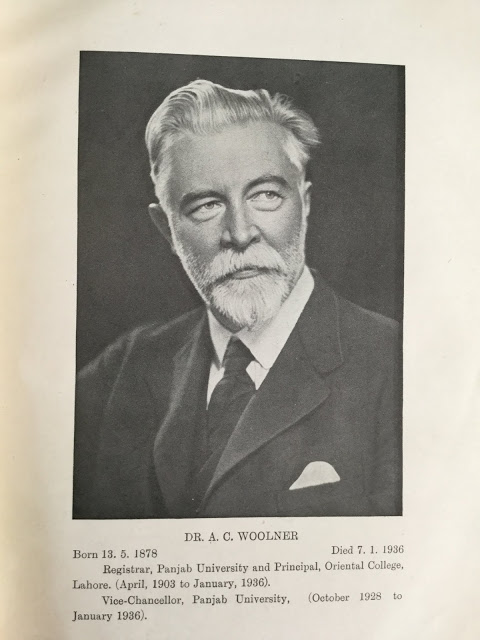
I was reading the Woolner Commemoration Volume published in Lahore (now in Pakistan) in 1940. I found some interesting details about him:


Dr Alfred Cooper Woolner was born on May 13,  1878 at a place called Etruria Hall in Staffordshire in England. In 1897, he won an open Classical Exhibition at Trinity College, Oxford and was also awarded Ford Studentship. At Oxford he studies Sanskrit and Persian along with the classics and in 1901 ,was awarded the Boden Scholarship for Sanskrit. He studied Sanskrit, Pali and Chinese. He was appointed Principal of Oriental college in Lahore.


He was equally interested in almost all branches of Sanskrit studies. Linguistics had a special charm for him. He worked for 33 years in Punjab University. In spite of heavy administrative works, he was able to produce a good amount of valuable work. Besides his contribution to various research journals of research, he published the following:

  1. Introduction to Prakrit (Year 1917)
  2. Asoka Text and Glossary (1925)
  3. Thirteen Trivandrum Plays attributed to Bhasa (Translated into English with Dr L Sarup, 1930, 1931)
  4. Jasmine Garland or Kundamala, translated into English in 1935 (but published after his death)
  5. Indian Students’ Handbook of Philology (incomplete)

He always enjoyed a good health. He never suffered from a long illness except one occasion when an attack of malta fever (Brucellosis) made him to take rest for several weeks. He fell ill of malaria on December 17, 1935, which after a week developed into pneumonia and he died in Mayo Hospital on January 7, 1936.


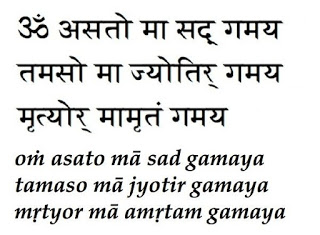
He was buried the next day, in the new cemetery on the Ferozepur Road (in Lahore). His body takes eternal rest in tomb 125, under a black marble slab, on which are engraved, besides the usual inscription, the following Vedic lines in Devanagari script, perhaps for the first on the tomb of an European

“Out of non being lead me into being;

out of darkness into light

out of death into life eternal.”


(First line is translated in other books Lead me as ‘From unreal to rea’l—Brihat Aranyaka Upanishad)

(These lines are taken from elsewhere; NOT from his tomb)

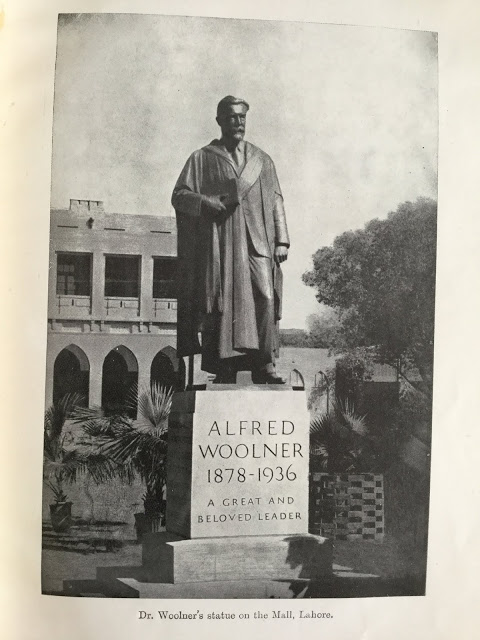
A bust of his has been enshrined in the Woolner Hall of the University Union, and a statue erected on the roadside in front of the hall. Mrs Woolner (Mary Emily Bland) was his constant companion.

Sir George Anderson Said,

“Dr Woolner was tall, well built, and, of somewhat massive proportions; his presence was dignified and stately; and his beard, which he wore even in his Oxford days, seemed both natural and imposing. He could not pass unnoticed in any company, but he gave often the impression of extremes austerity. Then, all of a sudden, his face would be lit up with by the merry twinkle in his and the real man that was within him would appear.”


Dr G U Pope and Tamil

Dr Rev.G U Pope translated Tiruvasakam, Naladiyar and several Sangam verses from Tamil into English when he was in Tamil Nadu. People very often read about his intention to engrave that ‘I am a Tamil Student’ on his tombstone. But THERE IS NO SUCH THING ENGRAVED ON HIS TOMB STONE IN OXFORD. I don’t know how the false notion was spread by the Tamils.

— Subham—


36 YEAR VEDIC STUDY & EIGHT TYPES OF MARRAIAGES IN MANU (Post No.5081)

Written by London Swaminathan 


Date: 6 JUNE 2018


Time uploaded in London – 16-31


Post No. 5081


Pictures shown here are taken from various sources such as Facebook friends, Books, Google and newspapers; thanks. Pictures may be subject to copyright laws.


WARNING: PLEASE SHARE MY ARTICLES; BUT DON’T SHARE IT WITHOUT AUTHOR’S NAME AND THE BLOG NAME. BE HONEST; OTHERS WILL BE HONEST WITH YOU


36 YEAR VEDIC STUDY & EIGHT TYPES OF MARRAIAGES IN MANU (Post No.5081)


Let us continue our study of Manu Smrti; We have already finished first two chapters out of the 12 chapters. Now look at the salient features of first 44 slokas/couplets in the Third chapter.


My Comments
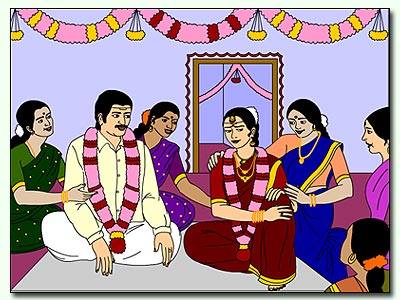
The interesting points are….

1.Brahmins studied the Vedas for 36 years or 18 or 9 years; If it is three Vedas it took 36 years. Now we know the surnames such as Trivedi, Chaturvedi, Dwivedi mean study of three Vedas, or four Vedas or two Vedas. Those who are born in those families still keep those surnames. In Tamil Nakkirar, author of Tiru Murugatrup Padai said to have mastered the Vedas in 48 years. Indra advised one sage that he cant even finish the Vedas in three lifetime.’ what we learnt is of the size of a stone and what we have not learnt is the size of earth’ is a saying that came of the story. Each one studied only one ‘shaka’ i.e. branch from each Veda. Vedas has over thousand shakas/branches in the ancient days.


2.Coming to marriages, Manu wants one to choose a girl with good name, good body marks (samudrika Lakshnam). It is strange Manu bans girls with Nakshatra/Stars and Rivers’ names. Now a days it is common to see Ganga, Narmada, Sindhu, Kavei Swati, Krithika, Asvini, Bharani etc.

3.Gait of Hamsa or Elephant for a girl is typical Indian. It is found through out Tamil and Sanskrit literature. All these show our culture is indigenous not imported from outside the country.


4.Eight Types of marriages is also found in oldest Tamil book Tolkaappiam and other books. We see plenty of examples in Mahabharata, Ramayana and other scriptures for these types of marraiges.

5.Love marriage is known as Gandharva marriage.

  1. Manu discusses second marriage and so it was in practice in the ancient times. The inter-caste marriages also were in vogue from the days of epics.


7.Another interesting point is neither Swayamvaram marriage of Kshatriays nor eight different types of marriages were practised in any other culture ouside India. This is another proof that the Hindu culture originated and developed in this country. No one came from outside.


8.The study of Vedas or study of any other subject under Gurukula for 48 years also unique to Hindus. This is also another proof that the sons of the soil developed the culture here. No one came from outside. The use of water for marriages, boons, curses, rituals also show that this is a tropical culture.

9.Talking about 100 years life (decimal number) is also typical Vedic and not found in any other culture. One more proof to show that this culture evolved here in Bharat.Decimal system is found in every chapter of the Vedas.


  1. There is a reference to other Smrtis. If it is not an interpolation, we come to know Manu Smrti is not the only smrti that was followed in his times. If it is true one cannot blame the society only on the basis of Manu Smrti. When people were given choices, no one can find fault with Manu for certain slokas or rules.

11.Some of the rites (see 44) were not followed anywhere in India as far as we know. So Manu Smrti must be very ancient and later enlarged with more couplets. Particularly the slokas about the fourth caste- Shudra might have been later interpolations.

  1. The Hindu society was very health conscious. Manu warns about some diseases and advised people not to marry form those families.


xxx

THIRD CHAPTER OF MANAVA DHARMA

3-1. The vow of studying the three Vedas under a teacher must be kept for thirty-six years, or for half that time (18 YEARS), or for a quarter (9 YEARS), or until the (student) has perfectly learnt them.

  1. A student who has studied in due order the three Vedas, or two, or even one only, without breaking the rules of studentship, shall enter the order of householders.
  2. He who is famous for (the strict performance of) his duties and has received his heritage, the Veda, from his father, shall be honoured, sitting on a couch and adorned with a garland, with the present of a cow and the honey-mixture/MADHUPARKA.

WHO TO MARRY?

3-4. Having bathed, with the permission of his teacher, and performed according to the rule the Samavartana the rite on returning home, a twice-born man shall marry a wife of equal caste who is endowed with auspicious bodily marks.

  1. A damsel who is neither a Sapinda on the mother’s side, nor belongs to the same family on the father’s side, is recommended to twice-born men for wedlock and conjugal union.
  2. In connecting himself with a wife, let him carefully avoid the ten following families, be they ever so great, or rich in kine, horses, sheep, grain, or (other) property,

NO DISEASES OR THICK BODY HAIR OR RED HAIR
 

3-7. (Viz.) one which neglects the sacred rites, one in which no male children (are born), one in which the Veda is not studied, one (the members of) which have thick hair on the body, those which are subject to hemorrhoids, phthisis, weakness of digestion, epilepsy, or white or black leprosy.

  1. Let him not marry a maiden with reddish hair, nor one who has a redundant member, nor one who is sickly, nor one either with no hair on the bod) or too much, nor one who is garrulous or has red eyes,


NO RIVER NAME!! NO STAR NAME!!

3-9. Nor one named after a constellation, a tree, or a river, nor one bearing the name of a low caste, or of a mountain, nor one named after a bird, a snake, or a slave, nor one whose name inspires terror.
GAIT OF HAMSA

3-10. Let him wed a female free from bodily defects, who has an agreeable name, the (graceful) gait of a Hamsa or of an elephant, a moderate (quantity of) hair on the body and on the head, small teeth, and soft limbs.

  1. But a prudent man should not marry a maiden who has no brother, nor one whose father is not known, through fear lest (in the former case she be made) an appointed daughter and in the latter lest he should commit sin.


SECOND MARRIAGE

3-12. For the first marriage of twice-born men wives of equal caste are recommended; but for those who through desire proceed to marry again the following females, chosen according to the direct order of the castes, are most approved.

  1. It is declared that a Sudra woman alone can be)the wife of a Sudra, she and one of his own caste the wives of a Vaisya, those two and one of his own caste the wives of a Kshatriya, those three and one of his own caste the wives of a Brahmana.
  2. A Sudra woman is not mentioned even in any ancient story as the first wife of a Brahmana or of a Kshatriya, though they lived in the greatest distress.
  3. Twice-born men who, in their folly, wed wives of the low caste, soon degrade their families and their children to the state of Sudras.

 

OTHER SMRTIS/ LAW BOOKS!!!

3-16. According to Atri and to (Gautama) the son of Utathya, he who weds a Sudra woman becomes an outcast, according to Saunaka on the birth of a son, and according to Bhrigu he who has (male) offspring from a (Sudra female, alone).

  1. A Brahmana who takes a Sudra wife to his bed, will ( after death) sink into hell; if he begets a child by her, he will lose the rank of a Brahmana.
  2. The manes and the gods will not eat the offerings of that man who performs the rites in honour of the gods, of the manes, and of guests chiefly with a LOW CASTE wife’s assistance, and such a ma) will not go to heaven.
  3. For him who drinks the moisture of a Sudra’s lips, who is tainted by her breath, and who begets a son on her, no expiation is prescribed.


EIGHT TYPES OF MARRIAGES

3-20. Now listen to (the) brief (description of) the following eight marriage-rites used by the four castes (varna) which partly secure benefits and partly produce evil both in this life and after death.

  1. (They are) the rite of Brahman (Brahma), that of the gods (Daiva), that of the Rishis (Arsha), that of Pragapati (Pragapatya), that of the Asuras (Asura), that of the Gandharvas (Gandharva), that of the Rhashasas (Rakshasa), and that of the Pisakas (Paisaka).
  2. Which is lawful for each caste/ varna and which are the virtues or faults of each (rite), all this I will declare to you, as well as their good and evil results with respect to the offspring.
  3. One may know that the first six according to the order followed above are lawful for a Brahmana, the four last for a Kshatriya, and the same four, excepting the Rakshasa rite, for a Vaisya and a Sudra.
  4. The sages state that the first four are approved (in the case) of a Brahmana, one, the Rakshasa rite in the case of a Kshatriya, and the Asura (marriage in that) of a Vaisya and of a Sudra.
  5. But in these Institutes of the sacred law three of the five (last) are declared to be lawful and two unlawful; the Paisaka and the Asura (rites) must never be used.
  6. For Kshatriyas those before-mentioned two rites, the Gandharva and the Rakshasa, whether separate or mixed, are permitted by the sacred tradition.
  7. The gift of a daughter, after decking her (with costly garments) and honouring (her by presents of jewels), to a man learned in the Veda and of good conduct, whom (the father) himself invites, is called the Brahma rite.

GIFT OF DAUGHTER/ KANYAA DAANAM

3-28. The gift of a daughter who has been decked with ornaments, to a priest who duly officiates at a sacrifice, during the course of its performance, they call the Daiva rite.

  1. When (the father) gives away his daughter according to the rule, after receiving from the bridegroom, for (the fulfilment of) the sacred law, a cow and a bull or two pairs, that is named the Arsha rite.
  2. The gift of a daughter (by her father) after he has addressed (the couple) with the text, ‘May both of you perform together your duties,’ and has shown honour (to the bridegroom), is called in the Smriti the Pragapatya rite.
  3. When (the bridegroom) receives a maiden, after having given as much wealth as he can afford, to the kinsmen and to the bride herself, according to his own will, that is called the Asura rite.

LOVE MARRIAGE

3-32. The voluntary union of a maiden and her lover one must know (to be) the Gandharva rite, which springs from desire and has sexual intercourse for its purpose.

  1. The forcible abduction of a maiden from her home, while she cries out and weeps, after (her kinsmen) have been slain or wounded and (their houses) broken open, is called the Rakshasa rite.
  2. When (a man) by stealth seduces a girl who is sleeping, intoxicated, or disordered in intellect, that is the eighth, the most base and sinful rite of the Pisakas.


USE OF WATER

3-35. The gift of daughters among Brahmanas is most approved, (if it is preceded) by a libation of water; but in the case of other castes it may be performed by the expression of mutual consent.

  1. Listen now to me, ye Brahmanas, while I fully declare what quality has been ascribed by Manu to each of these marriage-rites.

TEN GENERATIONS (decimal system)

3-37. The son of a wife wedded according to the Brahma rite, if he performs meritorious acts, liberates from sin ten ancestors, ten descendants and himself as the twenty-first.

  1. The son born of a wife, wedded according to the Daiva rite, likewise (saves) seven ancestors and seven descendants, the son of a wife married by the Arsha rite three (in the ascending and descending lines), and the son of a wife married by the rite of Ka (Pragapati) six (in either line).
  2. From the four marriages, (enumerated) successively, which begin with the Brahma rite spring sons, radiant with knowledge of the Veda and honoured by the Sishtas (good men).

100 YEARS LIFE! (Decimal System)

3-40. Endowded with the qualities of beauty and goodness, possessing wealth and fame, obtaining as many enjoyments as they desire and being most righteous, they will live a hundred years.

  1. But from the remaining (four) blamable marriages spring sons who are cruel and speakers of untruth, who hate the Veda and the sacred law.
  2. In the blameless marriages blameless children are born to men, in blamable (marriages) blamable (offspring); one should therefore avoid the blamable (forms of marriage).
  3. The ceremony of joining the hands is prescribed for (marriages with) women of equal caste (varna); know that the following rule (applies) to weddings with females of a different caste (varna).

STRANGE RITES

3-44. On marrying a man of a higher caste a Kshatriya bride must take hold of an arrow, a Vaisya bride of a goad, and a Sudra female of the hem of the bridegroom’s garment.


to be continued…………

–SUBHAM–

TAMIL GODDESS MANIMEGALAI AND MANIBHADRA (Post No.5078)

Yaksha Manibhadra

Written by London Swaminathan 


Date: 5 JUNE 2018


Time uploaded in London – 16-42


Post No. 5078


Pictures shown here are taken from various sources such as Facebook friends, Books, Google and newspapers; thanks. Pictures may be subject to copyright laws.


WARNING: PLEASE SHARE MY ARTICLES; BUT DON’T SHARE IT WITHOUT AUTHOR’S NAME AND THE BLOG NAME. BE HONEST; OTHERS WILL BE HONEST WITH YOU


Tamils have five epics and two of them, Silappadikaram and Manimegalai are called twin epics. Manimegalai followed the story of Silappadikaram. The heroine of Manimegalai was named after the goddess of sea travellers, particularly the business community. Her counter part in Northern India was Manibhadra, a male deity.


There is a very interesting conversation of Manimeghala and a shipwrecked traveller in the Mahajanaka Jataka. These Jataka stories are at least 2300 years old.


Those who travelled together on ships were known as Saamyaatrikaa. In the Maha Janaka Jataka story, Mahajanaka was swimming for his life after a shipwreck. He was addressed by the goddess Manimekhalaa. The dialogue between the two proves the indomitable courage and power of ancient Hindu sailors.

Mani:

“Who is the fellow who in the vast ocean is ineffectively beating his hands. Depending upon whom you are making this effort?

Sailor Janaka:

“O Goddess! It is my firm belief that in life one should exert as far as possible, and, therefore, even though the shore is not visible, I am continuing my effort to reach it.

M:- “It is useless to show your courage in the sea. You are bound to perish before reaching the shore.

S:- “O Goddess, why do you say like this? Even if I perish making effort then I will be saved at least from calumny. One who exerts  like me has not to repent afterwards.

M:_But an effort which is destined not to succeed, of which there is no end in sight, what is the use of such an effort when  death is inevitable?”

Sailor Janaka:-

“The fellow taking it for granted that he will not be able to cross the ocean ceases his efforts then it is due to his own weakness. Whether success accrues or not a man who draws up his programme and tries for its success then he is sure to succeed. It is evident from the fact that all my comrades have drowned but I am still swimming and alive. So far as any energy is left in me I shall certainly make efforts to cross the ocean”—Mahajanaka Jataka


North Indian merchants had Yaksha Manibhadra as the presiding deity of caravan leaders (saarthavaahana). All over North India they had temples for Manibhadra. The colossal statue of Yaksha discovered in Parkham in Mathura district represented him. Padmavati in Gwalior district was a great centre of Manibhadra cult.

Story of Caravan Leaders

Saarthavahanas were the source of travellers’ tales. Seamen had stories of Yakshas, Nagas, Spirits, demons and aquatic animals. Samudra Vanija Jataka story has one such story.

“Once upon a time carpenters borrowed money from some people to make some furniture. But they could not finish the work on time. The creditors pestered them for their money. When the carpenters realised that they could not do it on time, they decided to migrate to some foreign land. After constructing a large ship they sailed to a far off place. Favourable winds helped them to reach a beautiful island with coconut trees and fruit trees. Even before they went to the island, there was already a sailor from a wrecked ship, who sang joyously, ‘they are simpletons who eke out their living by farming and the sweat of labour. They are not required in my domain. This land is far better my mother land”.


This island was like the island described by Homer in his Odyssey. Lazy men who were known as lotus eaters lived there on honey. When they invited Odyssus to live that kind of lazy life, he refused to join them. The jataka tale referred to the same kind of life.

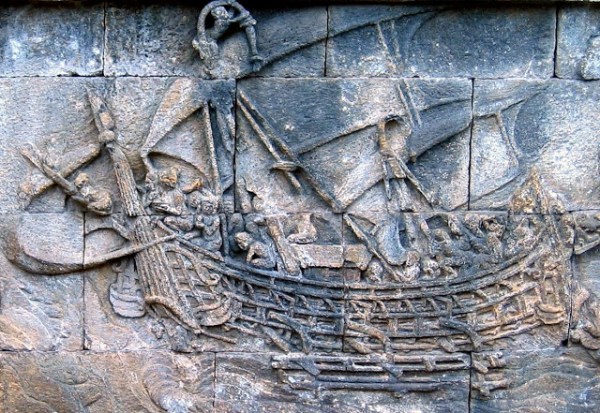
Indian Ship in Indonesia (Borobudur, Java)

From the 2300 year old Jataka stories, we come to know a lot about the land and sea merchants of ancient India.


–subham–


ANCIENT TAMIL HINDU SAINT WHO BURNT HIMSELF IN ATHENS! (Post No.5072)

Statue of Augustus

Written by London Swaminathan 


Date: 3 JUNE 2018


Time uploaded in London – 14-05


Post No. 5072


Pictures shown here are taken from various sources such as Facebook friends, Books, Google and newspapers; thanks. Pictures may be subject to copyright laws.


WARNING: PLEASE SHARE MY ARTICLES; BUT DON’T SHARE IT WITHOUT AUTHOR’S NAME AND THE BLOG NAME. BE HONEST; OTHERS WILL BE HONEST WITH YOU


ANCIENT TAMIL HINDU SAINT WHO BURNT HIMSELF IN ATHENS! (Post No.5072)

Monk Zarmanochegas who accompanied an Indian embassy from King Pandion to Roman Emperor Augustus  (63 BCE to 14 CE) reached Rome by 19 BCE. Later this Monk Zarmanochegas amazed Athens by burning himself to death publicly. Some people thought that he was a Buddhist. They changed the name Zarmanochegas into Sramanacharya. The identification is not certain. The Greeks did horrible things to the words they borrowed and the names they reproduced.


My research shows that he was a Hindu saints from Tamil Nadu. The reason being we don’t have enough evidence in ancient Buddhist literature to show that they burnt themselves when their life mission was finished. But in Hindu literature we have umpteen references to show that they ended their life in this way when their mission was fulfilled.

Kabila, the Brahmin poet who contributed highest number of Tamil verses in the Sangam literature, burnt himself to death after he married two daughters of ancient Tamil philanthropist Pari of Pa

rambu country. Even today we can visit his memorial Kabila Rock near Thirukkovilur in Tamil Nadu. He lived around First century BCE or CE. At the same time this Hindu burning himself in Greece also happened. So Kabilar might have inspired him. Moreover the saint/monk accompanied a Tamil ambassador from Pandya King. So the saint must be a Tamil one.


saints burning themselves happened from Ramayana Times. Sabari a hunter woman saint and many other saints of Ramayana days burnt themselves after seeing Rama, thinking that they can straight away go to heaven or attain salvation.


Kumarila Bhatta, a great scholar and contemporary of Adi Shankara burnt himself to death. When Adi Shankara came for a debate , Kumarila told him that it was too late and sent him to another scholar.

A Hindu saint visited Mayan civilization , taught them good things and burnt himself to death. He told them that he would come back again. After several centuries when he Christian robbers came from Spain that generation thought that he must be the expected saint. But those plunderers looted the innocent Mayan civilization and took all the gold to Spain.


Following is my article posted on 12 July 2014:-

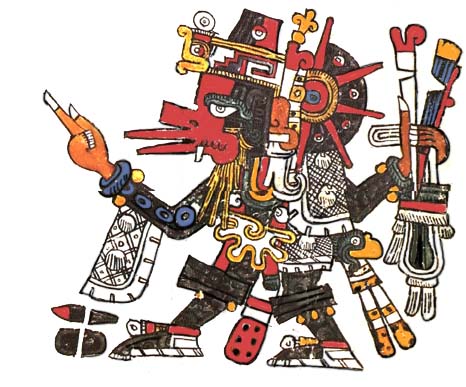
Five Ascetics who Entered Fire: Vedavati, Sabhari, Sarabhanga,Kabila, Quetzalcoatl


Five Ascetics who Entered Fire: Vedavati, Sabhari, Sarabhanga,Kabila, Quetzalcoatl

Research Article Written by London Swaminathan
Post No. 1168; Dated 12th July 2014.

Hindu epic Ramayana is unique in many ways. One of the unique things about the Ramyana is “self immolation”. It is very interesting to know that women ascetics existed in the days of Ramayana and they did enter the fire and sacrificed their lives when they thought that the date of their departure had come. This is one the boldest things, we can see only in the Hindu world. Here we see a continuity of Upanishadic age sages like Gargi and Maitreyi. They did not feel any body pain when they entered the fire due to their Yogic practice.

Sita did not fear to enter fire to prove her purity. Kumarila Bhatta, contemporary of Adi Shankara, did not hesitate to burn his body slowly in the middle of husk lighted on all four sides. Tamil poet Kabila did enter fire after fulfilling his noble mission. Aztec saint Quetzalcoatl (may be a Hindu saint) did sacrifice his life in fire.

Goddess Uma did penance by standing in the middle of Five Fires (Panchagni). Many a saints including Bhageeratha did Panchagni penance. Bharata and Angatha tried to enter the fire thinking that they lost their in their mission. This is a Hindu ritual. When one completes something noble, one enters fire. When one failed to achieve to fulfil something, they enter the fire ritually.

There is a big difference between suicide and this ritual sacrifice. Here they enter the fire after announcing to the whole wide world that on such and such day they would do it for a particular noble cause. It is not because of depression or agitated mind. There is another type known as Sati, where in the women who lost their husbands climb the funeral pyre. There is another type of sacrifice where women like Chitoor Rani Padmini along with her friends entered the fire to save their modesty.
Here is a short list of great ascetics who immolated themselves:

Sharabhanga :

Rama, after slaying the demon Viradha, visited the hermitage of Sharabhanga. He told Rama that he rejected Indra’s invitation to visit Brahmaloka, knowing that Rama was visiting the place. He also directed Rama to Sutikshna’s dwelling. He requested Rama to stay with him till he casts off his body as a snake casts off its slough. Then Sharabhanga prepared a fire and poured clarified butter therein. The sage entered the flames and assumed a youthful form and ascended to Brahma’s abode (Source: Aranya Kanda, Chapter 5)

Sabhari:

She was waiting to see Rama. When Rama went to her in the middle of the forest; she gave him berry fruits and roots which were bitten by her. She did this to give the sweetest ones to Rama. Since Rama knew her motherly love, he did not reject it. She belonged to the caste of hunters. That tribal woman guided Rama and Lakshmana to lake Pampa an Rishyamuka mountain.
“Having received permission from Rama to depart, Sabhari, wearing matted locks, robes of bark and a black antelope skin, cast herself into the fire, thereafter rising into the air like a bright flame. (Chapter 74, Aranya Kanda).

Vedavati:

Vedavati was the daughter of Rishi Kusadhwaja. When Ravana was passing through the forests in the Himalaya he met Vedavati, a damsel of great beauty dressed in acetic garb. When Ravana wanted to marry her she told him that she would marry only Vishnu. But Ravana boasted to her about his heroic deeds and touched her hair with a bad intention. Enraged by this, she cursed him that he would be destroyed by her in her next birth (as Sita) and entered fire before him. When she entered the fire celestial flowers fell around her (Uttara Kanda, Ramayana)

Tamil Poet Kabilar:

Kabilar, a Brahmin poet of great character, who lived in the Sangam Age ( First three centuries CE) was a good friend of a generous chieftain Pari. When the mighty Tamil kingdoms laid a siege around his kingdom Kabilar boldly supported Pari. The three Tamil kings of Sera, Choaza, Pandya kingdoms killed him by deceit. Then Kabilar took his two daughters to all the chieftains begging them to marry them. No one dared to earn the enmity of the powerful Tamil kings. At last, one chieftain took care of those girls and Kabilar, having fulfilled his mission, entered the fire. There was a memorial stone in the place known as Kabilar Stone near Tirukoyilur on the banks of River Pennai. There is an inscription with this story in verse (Source Dr R Nagasamy’s Tamil book ‘Paamaalai’).

Bharatha, Rama’s brother, was desperate to see Rama after his 14 year banishment. When he did not arrive on the appointed day Bharat was about to jump in to ceremonial fire. But Rama arrived by his divine Supersonic jet from Sri Lanka and saved his life. When Angathan and other monkeys could not find Sita in their search mission, they contemplated sacrificing themselves in fire. This is a typical Hindu approach.


Aztec Saint’s Self Immolation

Aztec civilization (750 CE to 1500 CE) in South and Central America had a mysterious person with the name Quetzalcoatl. There were two people with the same name which resulted in lot of confusion. He was a demiurge, priest, ruler conceived by virginal birth years after his father’s death. He was ruler of Toltecs for twenty two years. He lived in Tula, lost a civil war, fled with a good sized Toltec force. He set sail into the open sea on a particular date Aztec calendar with a prophecy that he would come back on the recurrence of that date.

Centuries after this date, Spanish man Herman Cortes landed on the coast of Mexico on 4th March 1519. Aztec king Montezuma believed that god and saint Quetzalcoatl had come back in the form of a white man. He was given royal welcome. But Cortes, Columbus and his band of explorers brought disease, death and destruction to the wonderful Mayan, Aztec and Inca civilizations. They plundered the whole of South America and took tons of gold to Spain and Portugal.

Quetzalcoatl means ‘feathered serpent’ or ‘precious twin’. He is one of the most important Aztec deities, although he has origins in pre Aztec cultures. There was a historical king in the same name that was expelled from Tula, the Toltec capital in 987 CE. According to one version he reached the Gulf of Mexico and immolated himself, to be reborn as the planet Venus. He predicted that he would come back. He may be a Hindu saint who practised such rituals in ancient India.


–Subham–

Animal Emblems of Indian Kings (Post No.5070)

Written by London Swaminathan 


Date: 2 JUNE 2018


Time uploaded in London – 21-32


Post No. 5070


Pictures shown here are taken from various sources such as Facebook friends, Books, Google and newspapers; thanks. Pictures may be subject to copyright laws.


WARNING: PLEASE SHARE MY ARTICLES; BUT DON’T SHARE IT WITHOUT AUTHOR’S NAME AND THE BLOG NAME. BE HONEST; OTHERS WILL BE HONEST WITH YOU


Indian kings, mostly used animals and birds as their royal emblems. This shows their interest in nature and staright forward thinking. They did not have mythical animals as Yali or Kamadhenu cow or four headed Airavata. They used the symbols which are recognised easily by general public.

Lion
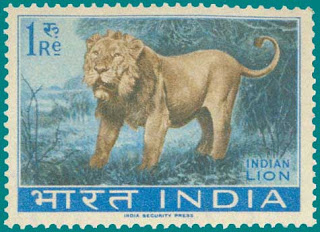
Lion was the royal emblem of the Satavahanas
Kadambas of Banavasi
Dynastic crest of Western Chalukyas of Kalyana
Ikshvakus of Eastern Deccan
Senavas of Kudalurupura

Singalese of Sri Lanka

Lion Capital of Modern India (from Asoka Pillar)

Tiger
Tiger was the royal emblem of Chozas of Thanjavur region
Hoysalas of Dwarasamudra
Sindas of Bagadage

Elephant
Elephant was the royal crest of Cheras
Bow was also on the flag of Cheras

Boar
Boar was the royal emblem of the Chalukyas


Bull, Nandhi

Bull was the royal emblem of the Nava Nagas of Narwar
Nandobhavas of Joypore
Maukharis of the Western Magadas
White Huns
May be Indus Valley Kings
Pallavas Of Kancheepuram

Eagle
Eagle was the royal emblem of the Guptas of Maghada
Gurjara Pratiharas of Kanauj
Rashtrakutas of Malked
Silaharas of Northern Konkan

Fish
Fish was the royal emblem of the Pandyas of Madurai

Double headed Eagle

Vijayanagara Emperors (Ganda Beranda Pakshi)

Kingdom of Mysore

Mouse
Mushikas of Kerala


Conch

Cochinn/ Travancore Kings

–subham–

EFFECTIVE MEDICINE TO KILL YOUR MOTHER IN LAW! (Post No.5067)

Written by London Swaminathan 


Date: 1 JUNE 2018


Time uploaded in London – 13-25


Post No. 5067


Pictures shown here are taken from various sources such as Facebook friends, Books, Google and newspapers; thanks. Pictures may be subject to copyright laws.


WARNING: PLEASE SHARE MY ARTICLES; BUT DON’T SHARE IT WITHOUT AUTHOR’S NAME AND THE BLOG NAME. BE HONEST; OTHERS WILL BE HONEST WITH YOU


VERY EFFECTIVE MEDICINE WHICH KILLS MOTHERS IN LAW IS AVALABLE AROUND THE WORLD AND THE SURPRISING THING IS THAT IT IS FREE!  t


The following anecdote is the proof; I will narrate it very briefly.


A newly married couple enjoyed their life for the first one year and there came a thorn in the beautiful rose plant- that is the mother in law thorn! The thorn became sharper and stronger every time the husband called his wire @  Hi, Honey!”.


Mother in law was boiling when he heard her son saying, ‘Hi Honey I have never tasted such a tasty food in my life’ (about her cooking). Now the jealousy mother in law was fed with more fuel. She used all that fuel to torture her daughter in law. Every evening when her son came back from the office she boy’s mother submitted a list of the ‘crimes’ she did on that day; but he never listened to them; just ignored his mother.

In the meantime, the torture of mother in law went beyond the tolerance level and so the daughter in law approached a spiritual Guru. Guru listened to her patiently and said to her,

“This is no problem; I have solved lot of cases like yours. I will give a bottle of medicine. But keep it away from children; it is a slow killing poison; it will solve the problem in nine months; just add one drop of this medicine to her favourite food. and it is absolutely free. You may come to my Ashram whenever you need my help”.


She was very happy and literally snatched the medicine from the Guru and was about to rush outside. Guru called her and said to her there two important conditions which she must strictly follow them:

  1. She must prostrate to her Mother in Law every morning and cook her favourite dish

2.She must ask her the favourite dish and then cook it.

Guru told her to pretend like a very kind and caring person so that mother in law wont suspect her. Daughter in law said to swamiji:-


“Guru! you don’t need to worry about me. I have been watching  lot of T V Serials and films; So I can easily act like a good girl.”


Months went by. The mother in law started praising her sky high to every one who visited the house. Friends of the daughter in law phoned her and asked about the secret potion which made her mother in law soft. But she did not tell anyone the 9 month project.

One day mother in law called her daughter in law and praised her as ‘Maha Lakshmi (Goddess of wealth)’, most beautiful girl she ever saw and her son was lucky to get her. She also whispered into her ear that she asked her son to give her a diamond necklace very soon. She sent her old jewellery for recycling into a diamond necklace.

Now the daughter in aw felt very guilty for mixing the slow killing poison in her food. Next day she ran to Guru’s ashram and started talking. Guru interrupted, “I knew everything; the medicine is working very well; she will have to wait for a few more months to finish her off”.


But the girl said, No, Guruji, I don’t want to kill my mother in law.

Guu said to her that he cant stop it half way through. It would create more problems for her, because the poison has already started working. When she felt sad, Guru promised her to give her a better medicine which will make her happier and take away her guilt after ‘project mother in law’ finish . Half heartedly she went back.

In course of time, she got her diamond necklace  and there was a big function to celebrate her birth day—it was a surprise party!


Now she felt guiltier. Next day she ran to her Guru and told him in stronger terms. She even threated the Guru that if he did not stop the slow killing poison she would commit suicide on the day her mother in law dies and both the sins would come to the Guru.

As soon as the Guru heard this, he burst into laughter.- Big laughter- It went through the roof. And he said

Hello, my girl! your mother in law will never die; she will for long. The medicine—the slow killing poison- was nothing but sugar syrup. The real medicine was given to you (the girl)  in the form of two conditions to prostrate to mother in law every morning and cook her favourite dish. Actually, that was the medicine which worked very well”. Saying this, Guru gave her Kunkum, flowers and blessings to her.

Tears of Joy rolled over her cheek. She couldn’t speak a single word.

Be the change you wish to see in others- Mahatma Gandhi.

( This story was told by Mr M K Angajan in a spiritual talk held yesterday in London; I have given it in my words)

–subham–

VEDIC GODS INDRA, VARUNA, YAMA IN THAILAND (Post No.5055)

Written by London Swaminathan 


Date: 28 May 2018


Time uploaded in London – 18-59


Post No. 5055


Pictures shown here are taken from various sources such as Facebook friends, Books, Google and newspapers; thanks. Pictures may be subject to copyright laws.


WARNING: PLEASE SHARE MY ARTICLES; BUT DON’T SHARE IT WITHOUT AUTHOR’S NAME AND THE BLOG NAME. BE HONEST; OTHERS WILL BE HONEST WITH YOU


HINDU GODS IN THAILAND-2

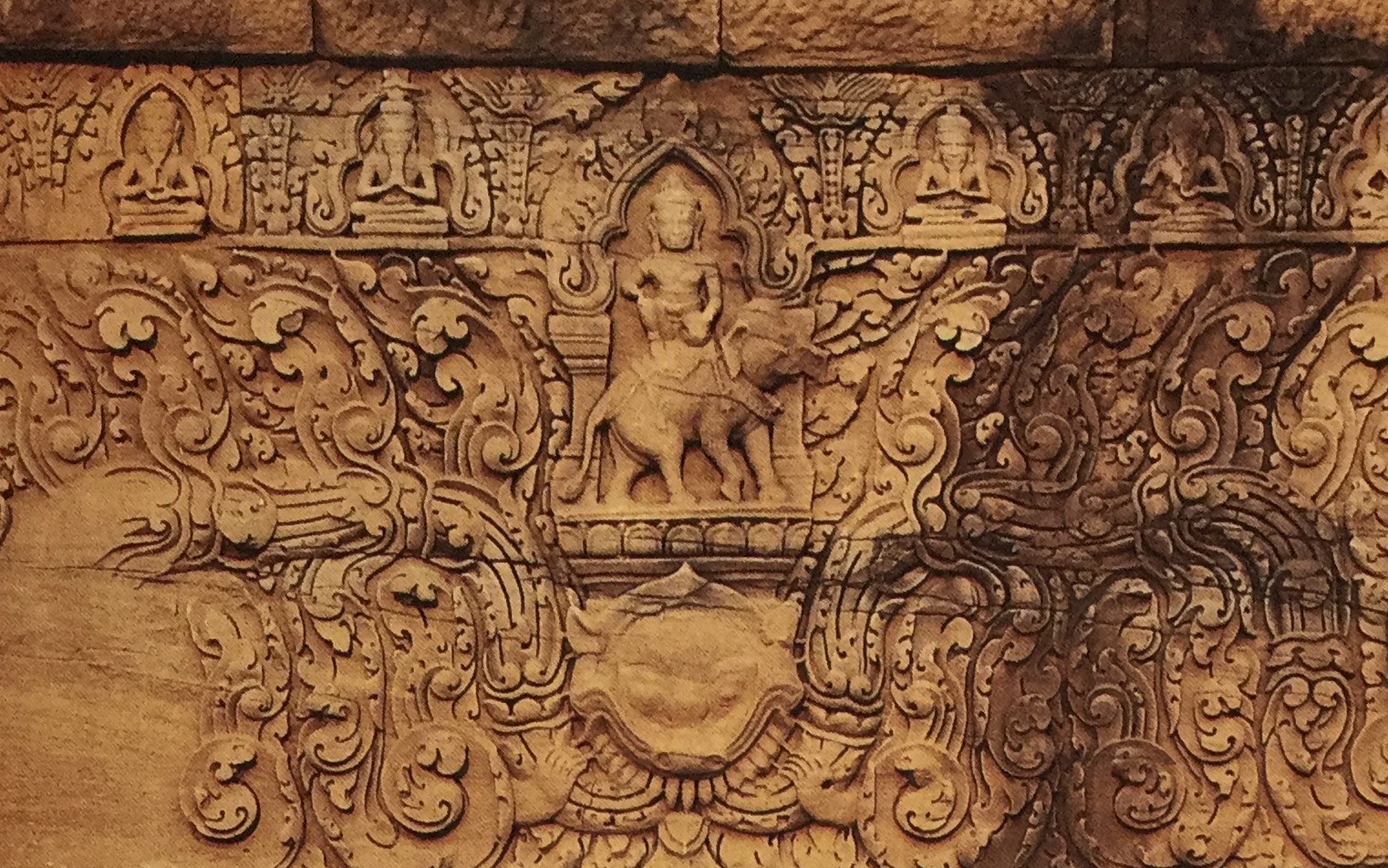
Sculptures of Vedic Gods Indra, Varuna, Yama and Kubera are found in many temples in Thailand. They are sculpted on the panels, gable and bas reliefs. Indra is more prominent than other gods. In some places he is portrayed with three headed Airavata, his elephant vehicle. In other places he is riding Airavata with one head. Varuna is sculpted with three Hamsas/swans. In India his vehicle was Makara (Crocodile or fish). Yam is riding his vehicle buffalo. It is very rare to see Kubera in India in temples. In Thailand we see him with goddess.


Along with the trinities Brahma, Vishnu and Shiva we see the Vedic Gods. But there is no temple for them. Kala, a strange figure is also found in Thai temples. Let us look at some beautiful sculptures of those Vedic Gods.


Indra

Indra with mysterious Kala with a big mouth


Indra with three headed Airavata


Varuna with three swans

Kubera with goddess of wealth

Locations

Varuna: Prasat Phimai, 12th Century

Kubera: Temple at Mo Ee Daeng

Yama:Prasat Phnom Rung

Indra: Prasat Narai Jaeng Waeng, Prasat muang khaek, Khao Phra Viharn and many more places

Source book for pictures: Palace of Gods


–Subham–