Techniques of Secret Writing in India

Techniques of Secret Writing in India

During war times and military expeditions, army personnel use coded language so that the enemies wouldn‘t understand the message. But in the ancient world this secret language was used for different purposes. According to encyclopaedias it was used in Egypt 5000 years ago followed by Greece. Though the Vedic seers sang that they delight speaking in secret language we are not able to give concrete examples. Scholars have acknowledged the symbolism in the Vedas, but not the encrypted language.


When Vyasa requested Lord Ganesh to write the longest epic in the world, Lord Ganesh agreed to do it on a condition. He will have to write it without stopping. If it all Vyasa couldn’t compose the couplets that fast, he has to find another person to do the job. Clever Vyasa agreed to do it, but put one condition to Lord Ganesh that he should write only when he understood what he wrote. There started the puzzles, encrypted language etc. Once again we have no proof for the puzzles or encrypted language from Mahabharata, though this story is popular. Ancient Hindus followed a system called Katapayadi system to remember the words  and numbers easily. This system assigned letters to numerals. No 18= JaYa (old name of Mahabharata).

Personally I think the coded language evolved in India and I will attribute the above facts as a proof for this.

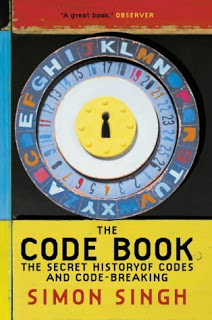
But Dr.Simon Sing, a London based author, gives concrete example of encrypted language in his book ‘The Code Book’. It is very interesting that we have the first example in the sex manual- Kama Sutra!

64 Arts for Women

Following is an excerpt from his book:

“ One of the earliest descriptions of encryption by substitution appears in the Kama Sutra, a text written in the fourth century AD by the Brahmin scholar Vatsyayana, but based on manuscripts dating back to fourth century BC. The Kama sutra recommends that women should study 64 arts, such as cooking dressing, massage and preparation of perfumes. The list also includes some less obvious arts, namely conjuring, chess, book binding and carpentry. Number 45 on the list is Mlechita-vikalpa, the art of secret writing, advocated in order to help women conceal the details of their liaisons. One of the recommended techniques is to pair letters of the alphabet at random, then substitute each letter in the original message with its partner. If we apply the principle to the Roman alphabet, we could pair letters as follows:

A D H I K M O R S U W Y Z

V X B G J C  Q L  N E  F P  T

Then, instead of MEET AT MIDNIGHT, the sender would write CU UZ VZ CGXSGIBZ. This form of secret writing is called a substitution cipher because each letter in the plaintext is substituted for a different letter, thus acting in a complimentary way to the transposition of cipher. In transposition each letter retains its identity but changes its position, where as in substitution each letter change its identity but retains its position.


The first documented use of substitution cipher for military purposes appears in Julius Caesar’s Gallic Wars. Caesar describes how he sent a message to Cicero, who was besieged and on the verge of surrendering”.

Lot of interesting anecdotes are in the book. Simon Sing’s another popular book is The Fermat’s Last theorem.

Please read my earlier posts

  1. Hindu’s Magic Numbers 18, 108, 1008
  2. Love Letters from Ancient India
  3. பார்ப்பனிக்கு வடமொழிச் சீட்டு


கழுதைக்குத் தெரியுமா கற்பூர வாசனை?

Picture of Jesus riding into Jerusalem on a donkey


கழுதைக்குத் தெரியுமா கற்பூர வாசனை?

‘’எல்லா மிருகங்களும் சமம்; ஆனால் சில மிருகங்கள் மற்ற மிருகங்களை விட கூடுதல் சமம்’’ (‘’All animals are equal, but some animals are more equal than others—George Orwell’s Animal Farm) என்று ஆங்கிலத்தில் ஒரு சொற்றொடர் உண்டு. எல்லா மிருகங்களும் சமம்தான். ஆனால் சிங்கத்துக்கு ஏன் ராஜா பதவி? கழுதைக்கு ஏன் இந்த இழி நிலை? பழமொழிகளிலும் சரி, கல்வெட்டுகளிலும் சரி, சங்க இலக்கியத்திலும் சரி—கழுதை என்றால் கொஞ்சம் இளக்காரம் தான். ஆனால் வெளிநாடுகளில் கழுதைக்கு கொஞ்சம் மதிப்பு அதிகம். இவ்வளவுக்கும் இது ஒரு ‘வெஜிடேரியன்’.


உலகப் பேரழகி கிளியோபாட்ரா, தனது அழகைப் பராமரிக்க கழுதைப் பாலில் குடித்ததாகப் படிக்கிறோம். ஏசு கிறிஸ்து ஜெரூசேலம் நகருக்குள் கழுதை மீது வெற்றிகரமாக ஊர்வலமாக வரும் படத்தைப் பார்த்துள்ளோம். மத்தேயு சுவிசேஷத்தில் படித்டுள்ளோம். ஆனால் இந்தியாவில் இதற்கு நேர்மாறான நிலை.

கழுதைக்குத் தெரியுமா கற்பூர வாசனை?

கழுதை கெட்டால் குட்டிச் சுவரு

இப்படிப் பல பழமொழிகள். எல்லாம் ‘கழுதை எதிர்ப்புப் பழமொழிகள்’தான். இது இன்று நேற்று துவங்கியது அல்ல. 2000 ஆண்டுகளுக்கும் மேலாக இப்படி ‘கழுதை எதிர்ப்பு உணர்வு’ இருப்பதை சம்ஸ்கிருத, தமிழ் காவியங்களும், கல்வெட்டுகளும் காட்டுகின்றன. சில சுவையான எடுத்துக் காட்டுகளை மட்டும் பார்ப்போம்.


சங்க இலக்கியத்தில் கழுதை

பாண்டியன் பல்யாகசாலை முதுகுடுமிப் பெருவழுதியை புலவர் நெட்டிமையார் பாடிய பாடலில் கழுதையைப் பூட்டி ஏர் உழுதல் பற்றிப் பாடுகிறார். இதையே காரவேலன் ( 193 BC to 170 BC) கல்வெட்டும் கூறுகிறது.

கடுந்தேர் குழித்த ஞெள்ளல் ஆங்கண்

வெள் வாய்க் கழுதைப் புல் இனம் பூட்டி

பாழ் செய்தனை, அவர் நனதலை நல் எயில்;

(புறம் பாடல் 15, நெட்டிமையார்)

முது குடுமிப் பெருவழுதி தன் பகைவர் நாடுகளை வென்று, தேரோடிய தெருக்கள் வழியாக ஏர்பூட்டிய கழுதைகளை நடத்திச் சென்று உழுதான் என்று புலவர் பாடுகிறார்.

அதியமான் நெடுமான் அஞ்சியின் மகன் பொகுட்டெழினியின் புகழ் பாடிய அவ்வையாரும் இதையே கூறுகிறார்:

அணங்குடை மரபின் இருங்களந்தோறும்,

வெள் வாய்க் கழுதைப் புல் இனம் பூட்டி

வெள்ளை வரகும் கொள்ளும் வித்தும்

வைகல் உழவ!  (புறம் 392, அவ்வையார் )


இதன் பொருள்: திறை கொடாத மன்னரின் மதில்களை வஞ்சனையின்றிப் பொருது அழித்துப், போர்க்களத்திலே கடும் போர் இயற்றிக், கழுதை பூட்டி உழுது, கவடியும் வேலும் விதைக்கும் இடையறாத போர் வெற்றி நிறைந்த வேந்தனே!

இதிலிருந்து ஒரு மன்னனை அவமானப்படுத்த, அவன் ஊரைப் பாழ்படுத்துவதோடு, அங்கே கழுதைகளை அனுப்பி ஏர்பூட்டி உழுதல் வழக்கம் என்றும் அதிலும்  வெள்ளை வரகு, கொள்ளு பயிரிடுதல் வழக்கம் என்றும் தெரிகிறது. இது நாடு முழுதும் இருந்த பாரதீய பண்பாட்டின் ஒரு அம்சம்.

எல்லோரும் வெறுக்கும் மூதேவியின் வாஹனம் கழுதை!

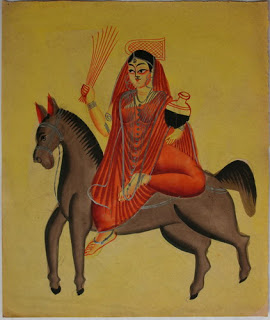
Shitala Devi on donkey

ஹத்திகும்பா கல்வெட்டு

கலிங்க நாட்டு மன்னன் காரவேலன் சமண மததைப் பின்பற்றிய ஒரு மாமன்னன். அவனுடைய ஹத்திகும்பா கல்வெட்டு அரிய தகவல்களை அளிக்கிறது. 2200 ஆண்டுகளுக்கு முன் மூன்று தமிழரசர்களும் வடக்கத்திய படைஎடுப்பைத் தடுக்க வைத்திருந்த கூட்டணியை முறிஅடித்ததாகப் பெருமை பேசுகிறான். அப்போதைய தமிழ்நாட்டின் அரசியல் நிலையை இவன் கல்வெட்டு எடுத்துக் காட்டுகிறது. காரவேலன் சத்தியம் தவறாத நீதிக்கும் நேர்மைக்கும் பெயர்போன ஒரு தலைவன். சுநீதிமான் என்று நூல்கள் போற்றிய மன்னன்.. ஆன்றோராலும் சான்றோராலும் போற்றப்பட்ட பெருந்தகை. அவனுடைய ஹத்திகும்பா கல்வெட்டும் பாடலிபுத்ரம், ராஜகிரி, தமிழர்களின் துறைமுக நகரம் ஆகியவற்றை கழுதையில் ஏர்பூட்டி உழுததைக் கூறுகிறது. பாண்டிய நாடு வரை அவன் ஆட்சி பரவியதையும் கல்வெட்டு குறிப்பிடுகிறது. குதிரைகள், யானைகள், ரத்தினக் கற்களை பாண்டிய மன்னன் அனுப்பினான்.


கரும் புள்ளி செம்புள்ளியுடன் ஊர்வலம்

பழைய காலத்தில் குற்றவாளிகளையும், பெண்களுக்கு எதிராக தவறிழைத்தோரையும் கழுதை மீது உட்கார வைத்து, அவன் முகத்தில் கருப்பு, வெள்ளை வர்ணங்களால் புள்ளிகளை வைத்து நகர் வழியாகக் கூட்டிச் செல்வர். இப்போதும் வட இந்தியாவில் இது நடக்கிறது. கழுதைகளை பாரம் சுமக்கப் பயன்படுத்தியதும் நீண்ட காலமாக வழக்கத்தில் உள்ளது. அக நானூறு (89) இது பற்றிப் பாடுகிறது பதிற்றுப்பத்து, பெரும்பாணாற்றுபடையிலும் கழுதையின் ‘’புகழ்’’ உள்ளது. மிளகு பொதி சுமக்கும் கழுதை பற்றியும் கழுதை பூட்டிய ஏர் (ப.பத்து 25) உழுதல் பற்றியும் பாடுகின்றனர்.

Napolean was exiled to Elba; a cartoon makes fun of his exile.


கல்வெட்டுச் சாபங்களில் கழுதை

பல கல்வெட்டுகளில் கழுதைச் சாபமும் காணப்படுகிறது. கல்வெட்டுகளில் சொன்ன விஷயங்களை மீறினாலோ, பின்பற்றாவிடிலோ அவர்கள் கழுதைகளைப் புணர்ந்த பாபத்தை அடைவார்கள் என்றும் கல்வெட்டுகளில் எழுதப்பட்டுள்ளன.


வேத காலத்தில் கழுதை

வேத காலத்தில் கழுதைக்கு மதிப்பு இருந்ததாகத் தோன்றுகிறது. அதர்வ வேதமும் (9-6-4), ஐதரேய பிராமணமும் (4-9-1) முறையே இந்திரனும் அக்னியும் கழுதை வாகனத்தில் சென்றதகக் கூறும். கிரேக்க நாட்டில் ஒலிம்பிய தெய்வமன ஹெபைஸ்டோஸ், டயோனிசிஸ் இந்திய கிராம தேவதையான சீதளா தேவி ஆகியோருக்கும் கழுதையே வாகனம்.


இனிமேலாவது பெற்றோர்கள் தங்கள் பிள்ளைகளைக் கூப்பிடும்போது ‘’அடச் சீ, கழுதை, இங்கே வா, புத்தகத்தை எடுத்துப் படி ’’ என்று சொல்லாமல் இருப்பார்களாக!!

swami_48@yahoo.com

Philippines- A Tamil Hindu Colony?

The Pre Spanish history of Philippines was shrouded in mystery. Now the mist around the Philippines is clearing thanks to recent discoveries. The Spaniards, wherever they went, destroyed the local culture, plundered their gold and massacred the people. They spared those people who converted to Christianity.

The Philippines is a country of 7000 islands. Nobody asked or wondered what those places were called before they named it “ Philippines” just 400 years ago. They had their own names, their own culture, but they were ignored as primitive and uncivilized. Fortunately one inscription and one golden statue escaped the wrath of the religious fanatics.

One important Tamil inscription of Rajendra Chola was not properly explained. Half of the place names mentioned in the inscription is not properly identified. The East Indies were known to Kalidasa of 1st century BC. Parasurama was linked with Aparanta.  Kalidasa used to mention Indonesia and the islands beyond as Dwipantara.  Rajendra Cholas inscription mentioned Parasurama.

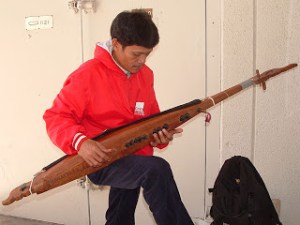
Hindu music instrument Kadjabi is still played in the Philippines. Hundreds of Sanskrit words are used in the islands even today.

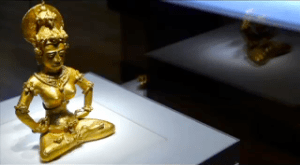
Golden Statue

A  five and a half inch tall golden statue recovered from Mindanao in 1917 is kept in the Field Museum of Natural History in Chicago. Vishnu’s vehicle Garuda was found in Palawan. The gold statue is that of a Buddhist goddess known as Tara. It weighs 4 pounds (approximately 2 Kilos). It is dated 1200 to 1300 AD. It was found in Wawa River after heavy rains. Lot of gold was taken back to Spain and melted. Only a few escaped from the invaders.

Laguna Copper Plate inscription

Luzon in the Philippines was ruled by Lakans (local chieftains)  from 900 AD until 1571. An inscription found there known as Laguna copperplate inscription dated 900 AD contains Sanskrit words and place names. The inscription which was found in 1989 contains information about debts cleared by the ruler of Tondo. Namwaran along with his children Lady Angkatana and Buka were cleared of debts. It was written in Kawi script. Lord Minister Jayadewa issued the order. The inscription is kept in the National Museum of the Philippines  in Manila. A lot of Sanskrit words such as Swasti, Visaka,Chathurthi, Suwarna, Krishnapaksha, Somawara, Dewata, Jyotisa  are in the text. Full text and translation is available in Wikipedia.

Language

Wikipedia article says 25 percent of words in Philippines native language are from Sanskrit and Tamil. Look at the list given by Wikipedia:

From Tagalog:

* budhi “conscience” from the Sanskrit bodhi
* dukha “one who suffers” from the Sanskrit dukkha
* guro “teacher” from the Sanskrit guru
* sampalataya “faith” from the Sanskrit sampratyaya
* mukha “face” from the Sanskrit mukha
* laho “eclipse” from the Sanskrit rahu
* maharlika “noble” from Sanskrit mahardikka

From Kapampangan:

* kalma “fate” from the Sanskrit karma
* damla “divine law” from the Sanskrit dharma
* mantala -“magic formulas” from the Sanskrit mantra
* upaya “power” from the Sanskrit upaya
* lupa “face” from the Sanskrit rupa
* sabla “every” from the Sanskrit sarva
* lawu “eclipse” from the Sanskrit rahu
* Galura “giant eagle (a surname)” from the Sanskrit garuda
* Laksina -“south (a surname)” from the Sanskrit dakshin
* Laksamana/Lacsamana “admiral (a surname)” from the Sanskrit lakshmana

From Tausug:

* suarga “heaven”; compare “sorga” in modern Indonesian [1]
* neraka “hell”
* agama “religion”

Sanskrit and Sanskrit-derived words common to most Philippine languages:

* sutla “silk” from the Sanskrit sutra
* kapas “cotton” from the Sanskrit kerpas
* naga “dragon or serpent” from the Sanskrit naga

Ramayana in the islands

Ramayana and Mahabharata are popular in all the South East Asian countries. Philippines also have its own version of Ramayana. The Maranao version is Maharadia lawana ( Maharaja Ravana). Lam- Ang is the version of the Llocanos. Many verses of Hud Hud are from Ramyana and Mahabharata.

Musical Instruments

Several musical instruments of the Philippines are similar to Indian musical instruments and Kutiyapi is a corrupted word of Kadjabi, a Sanskrit word.
Rajendra Chola Inscription

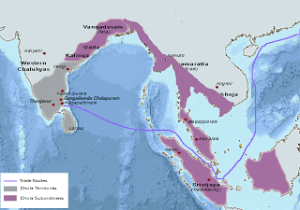
Rajendra Chola, son of the Raja Raja won many countries in South East Asia. The inscription named all the countries and islands he won around 1025 AD. K.A.Nilakanta Sastri, the greatest authority on South Indian History has written about his conquests. But when he wrote about the Cholas 75 years ago Laguna inscription was not discovere. Only Rajendra’s Tamil inscription was known. Now we know Philippine islands were under Hindu rulers even before Rajendra invaded S.E. Asian countries.

Scholars identify the following places in the inscription:

Sri Vijaya= Palembang, Pannai= North Sumatra, Malaiyur= Jambi, Mayirudingam= Thai-Malay peninsula, Ilangasokam= Langkasuka, Mappalam= Pegu, Mavimbangam= Isthumus of Ligor or Thai-Malay peninsula, Valaipanduru= Vietnam?, Talaitakkolam= Takoba, Madamalingam= Tambralinga, Ilamuridesam= Lamri in Aceh, Manakkavaram= Nicobar islands, Kadaram= Kedah.

Some of the above places are confirmed by secondary evidence. My research shows that the place names such as Mayirudingam, Mavimbangam are islands of Philippines. The reason for this is the trade roués to China went through these islands. During 1300 year rule, the countries established trade and political contacts with China which is confirmed by the Chinese writers. A patient decoding of Chinese transliterations may reveal more truths. Sanskrit and Tamil words are corrupted beyond recognition Eg. Liang Shu (Langkasoka).

Kaundinya from South India established the Hindu empire in the First century AD in Funan. Chinese writers have written about the rulers and their relationship with China. Agastya cult was deep rooted in Java, Sumatra and Bali islands. I have already written about it and Mulavarman’s Sanskrit inscription in Borneo.

More From History of Indian Culture by B.M.Luniy

“ Modern researchers have proved that the people of South India had established their colonies in the Philippines and they had considerably influenced all aspects of daily life. Handicrafts, coins, folk songs, traditions and many religious customs exhibit the Hindu influence there. The scripts of the people of Philippines bear striking resemblance with those of South India. In the realm of religious rites, rituals and assigning names, the natives of Philippines followed Indians closely. The names of the places on the Luzon coast and the shores of Manila bay indicate their Sanskrit origin. The discovery of Ganesh statue proves that the people followed Brahmanism. The hill tribes of Luzon worship early Vedic Gods even to this day.

The people of many islands in the Pacific Ocean have physical appearance similar to that of Indo Aryans. Their languages have resemblance with those of the pre Aryan Indians like Santhals. Their religious and social customs and beliefs betray traces of Hindu cultural influences. The Hula dance of Hawai islands and Shiva dance of Samoa are similar to the folk dances of Bengal


Their use of conch shell, nose flute, musical bones, staple food stuffs and animals reveal Indian origin. Many of their decorative designs, crafts, traditions, ideas of phallic symbolism and images are examples of old Polynesian cultural traits derived from the Brahmanical civilization”.
Please read my earlier posts

1.Pandya King who Ruled Vietnam 2.Ancient Sanskrit inscriptions in strange places 3.Sanskrit inscriptions in Mosques and on Coins 4.Sanskrit inscription and Magic Square on Tortoise 5.Ancient Tamil Dress 6.Pallankuzi (mancala) mystery 7.India- Madagascar Link 8.Is Brahmastra a Nuclear Weapon? 9.Great Engineers of Ancient India 10. The Mysterious Link between Karnataka and Cambodia

I have given below part of the text of Rajendra Chola’s inscription for the benefit of Tamil readers:

தொல்பெருங் காவற் பல்பழந் தீவும்

செருவிற் சினவி யிருபத் தொருகால்

அரசுகளை கட்ட பரசு ராமன்

மேவருஞ் சாந்திமத் தீவரண் கருதி

இருத்திய செம்பொற் றிருத்தகு முடியும் (20)

********

அலைகடல் நடுவுட் பலகலஞ் செலுத்திச்

சங்கிராம விசையோத் துங்க வர்ம

னாகிய கடாரத் தரசனை வாகையும்

பொருகடல் கும்பக் கரியொடு மகப்படுத் (50)

துரிமையிற் பிறக்கிய பருநிதிப் பிறக்கமும்

ஆர்த்தவ னகநகர்ப் போர்த்தொழில் வாசலில்

விச்சா திரத்தோ ரணமு மொய்த்தொளிர்

புனைமணிப் புதவமுங் கனமணிக் கதவமும்

நிறைசீர் விசயமுந் துறைநீர்ப் பண்ணையும்

வன்மலை யூரெயிற் றொன்மலை யூரும்

ஆழ்கட லகழ்சூழ் மாயிரு டிங்கமும்

கலங்கா வல்வினை இலங்கா சோகமும்

காப்புறு நிறைபுனல் மாப்பப் பாளமும்

காவலம் புரிசை மேவிலிம் பங்கமும் (60)

விளைப்பந் தூருடை வளைப்பந் தூரும்

கலைத்தக் கோர்புகழ் தலைத்தக் கோலமும்

தீதமர் பல்வினை மாதமா லிங்கமும்

கலாமுதிர் கடந்திற லிலாமுரி தேசமும்

தேனக்க வார்பொழில் மானக்க வாரமும் (65)

தொடுகடற் காவற் கடுமுரட் கடாரமும்

மாப்பொரு தண்டாற் கொண்ட கோப்பரகேசரி வன்மரான

உடையார் ஸ்ரீராசேந்திர சோழதேவர்க்கு யாண்டு…”

Contact for further details: swami_48@yahoo.com

சங்கீத ரகசியம்: இளமையில் கல்

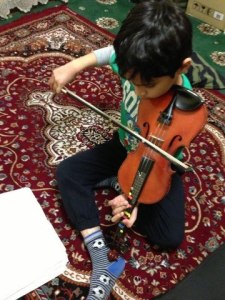
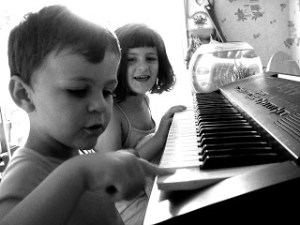
Picture: My Friend Violinist Nagaraju’s son

சங்கீத ரகசியம்: இளமையில் கல்


தேர்வில் நல்ல மதிப்பெண்கள் பெற வேண்டுமா? சங்கீதம் கற்றுக் கொள்ளுங்கள்.

ஞாபக சக்தி வளர வேண்டுமா? சங்கீதம் கற்றுக் கொள்ளுங்கள்.

வயதான போதும் இளமை திரும்ப வேண்டுமா? சங்கீதம் கற்றுக் கொள்ளுங்கள்.

அதுவும் இளமையில் இசையைக் கற்கவேண்டும்!!!

பிரிட்டனில் இருந்து வெளியாகும் ‘நியூ சை ன்டிஸ்ட்’ New Scientist பத்திரிக்கை ஒரு நல்ல சுவையான செய்தியை வெளியிட்டிருக்கிறது. இதற்கு முன்பாக ‘சைன் டிFபிக் அமெரிக்கன்’, ‘நேச்சர்’ Nature, Scientific American ஆகிய பத்திரிக்கைகளிலும் நியுரோ சை ன்டிஸ்ட்’ பத்திரிக்கைகளிலும் இதே கருத்து வெளியாகி இருக்கிறது.

பார்ப்பனச் சிறுவர்களை ஐந்து வயதிலேயே வேதத்தின் ஒரு ஷாகையயும் வேதத்தின் ஆறு அங்கங்களையும் (ஷட்+ அங்கம்= சடங்கு) கற்க அனுப்பியதால், அவர்கள் பெரிய அறிவாளிகளாக விளங்கினர். நீண்ட ஆயுளுடனும் நல்ல ஞாபக சக்தியுடனும் விளங்கினர். இதே முறையை சங்கீதப் பயிற்சிக்கும் பின்பற்றினர். வேதமும் இசையை அடிப்படையாக உடையது. இரண்டும் பய பக்தி கலந்த, மரியாதை மிக்க குரு குல வாச முறையில் பயிலப் பட்டன.

பள்ளிக்கூடத்தில் சேர வருவோருக்கு கணிதமும் சங்கீதமும் தெரிந்திருக்க வேண்டும் என்று கிரேக்க அறிஞர் பிளாட்டோ வலியுறுத்தினார்.

இசை என்பது காதோடு மட்டும் நிற்பதல்ல. இசையின் நுண்ணலைகள் நம்முள் பெரிய மாற்றங்களை ஏற்படுத்தும் வல்லமை படைத்ததவை.

முதலில் புதிய செய்தியைப் பார்ப்போம்:

சங்கீதத்தில் புகழ்பெற்ற, திறமைமிக்க 36 பேர்களைத் தேர்ந்தெடுத்தனர். அவர்களில் பாதிப்பேர் ஏழு வயதுக்கு முன்னரே இசையைக் கற்கத் துவங்கினர். மீதி பாதிப்பேர் ஏழு வயதுக்குப் பின்னர் இசையைக் கற்கத் துவங்கினர். எல்லோரையும் எம்.ஆர். ஐ. ஸ்கேன் (Magnetic Resonance Imaging Scan) செய்து பார்த்தனர். ஒரு அதிசயமான உண்மை அம்பலத்துக்கு வந்தது.

மனிதர்களின் மூளையில் இரண்டு பிரிவுகள் உள்ளன. இதை இணைக்கும் வெள்ளைத் திசுவுக்கு கார்ப்பஸ் கல்லோசம் என்று பெயர். நாம் ரேடியோ அல்லது கம்ப்யூட்டர் ஆகியவற்றைப் பிரித்துப் பார்த்தால் பினபக்கத்தில் ஏராளமான இணைப்புகளைப் பார்க்கலாம். அது போல முளையின் இரண்டு பகுதிகளை இணக்கும் பகுதியே கார்பஸ் கல்லோசம். யார் சின்ன வயதிலேயே இசையைக் கற்கச் சென்றார்களோ அவர்களுக்கு இந்தப் பகுதி நன்றாக வளர்ச்சி பெற்று இருக்கிறது. ஏழு வயதுக்குப் பின்னர் பயின்றவர்களுக்கு இசைப் பயிற்சி இல்லாதவர்களின் அளவுக்கு இந்த வெண்ணிறப் பகுதி இருக்கிறது.

இந்த வெண்ணிறப் பகுதியின் வளர்ச்சி எதைக் காட்டுகிறது? இடது கையும் வலது கையும் ஒருங்கிணைந்து செயல்படுவதைக் காட்டுகிறது. சங்கீதம் கற்பவர்கள் ஒரு கருவியைக் கற்கவோ கைகளால் தாளம் போடவோ இது மிகவும் அவசியம்

இதை ஜெர்மனியில் லைப்சிக் நகரில் இருக்கும் மூளை, மனித அறிவு ஆராய்ச்சி நிலையம் வெளியிட்டுள்ளது. இதை கிறிஸ்டோபர் ஸ்டீல்,

( மாக்ஸ் பிளன்க் நிறுவனம் Max Planck Institute for Human Cognitive and Brain Sciences, Leipzig, Germany) அறிவித்தார். இளமையில் சங்கீதம் கற்போர் மற்றவர்களை விஞ்சிவிடுவர் என்பது இந்த ஆய்வின் துணிபு.

நம் முன்னோர்கள் “இளமையில் கல்” என்றும் “ஐந்தில் வளையாதது ஐம்பதில் வளையாது” என்றும் சொன்னது எவ்வளவு உண்மை?

****

இசையும் செயல்பாடும்

இதோ இன்னொரு செய்தி:

வெளிநாடுகளில் இருந்து மூன்று பிரபல விஞ்ஞானப் பத்திரிக்கைகள் வருகின்றன.: New Scientist, Nature, Scientific American. இந்த மூன்று பத்திரிக்கைகளில் வெளியாகும் செய்திகளுக்கு தனி மதிப்பு உண்டு.

பாட்டுக் கேட்டாலே போதும். மூளை வளர்ச்சி பெறும் என்று இந்த செய்தி கூறுகிறது! சங்கீதம் கற்போருக்கு பல மொழிகளைக் கற்கும் திறன் அதிகரிக்கும் என்றும் பெரும் இரைச்சலில் இருந்து சொற்களைப் பிரித்தெடுக்கும் சக்தி அதிகம் என்றும் இந்த ஆய்வுகள் காட்டின. 45 பேரைத் தேர்ந்தெடுத்து  பல உரையாடல்களை பயங்கர இரைச்சலுக்கு இடையே ஒலிபரப்பினர். சங்கீதம் கற்றோர் மற்றவர்களை விட உரையாடல்களை நன்கு கேட்க முடிந்தது.  Journal of Neuroscience இந்தச் செய்தியை வெளியிட்டது.

பிரபல இசை மேதை மோசார்ட்டின் இசையை ரசிப்போருக்கு சில விஷயங்களில் அறிவும் திறமையும் கூடுதலாக இருப்பதாக 1993ல் நேச்சர் பத்திரிக்கை ஒரு ஆய்வை வெளியிட்டது. இளம் வயதில் சிறிது இசைப் பயிற்சி பெற்றாலும் வயதான பின்னரும் அவர்களின் கேள்வி ஞானம் சிறப்பாக இருக்கிறது என்று நார்த் வெஸ்டர்ன் பல்கலைக்கழகம் (அமெரிக்கா) 2012ல் இதை உறுதி செய்துள்ளது. (A Little Music Training Goes a Long Way: Practicing Music for Only Few Years in Childhood Helps Improve Adult Brain)


வயது ஆக ஆக ஆக மூளையின் செயல்பாடு குறையும் என்பது பொது விதி. ஆனால் சங்கீதம் கற்றுத் தொடர்ந்து பயிற்சி செய்வோரிடம் இந்த தேய்மானம் அந்த வேகத்தில் இல்லை. ஞாபக சக்தித் தேர்விலும், வேகமாக எதையும் புரிந்து கொள்ளும் தேர்விலும் சங்கீதக்காரர்கள் அதிகம் மதிப்பெண் பெறுகிறார்கள் (ஆதாரம்: 2012 July issue of Frontiers in Human Neuroscience).

*****

இதை எழுதும்போது, எனக்கு 1960களில் என் பெரிய அண்ணன் செய்த ஒரு செயல் நினைவுக்கு வருகிறது. மதியம் ஒலிபரப்பாகும் ‘விவித் பாரதி’ ஹிந்தி பாட்டுகளைக் கேட்டுகொண்டேதான் பாடங்களைப் படிப்பான். அவன் ஏமாற்றுவதாக அம்மாவும் சகோதரர்களும் அவனைக் கேலி செய்வோம். இப்போது நிறைய பேர் காதில் ‘இயர் போனை’ வைத்து பாட்டுக் கேட்டுக்கொண்டு பாடப் புத்தகங்களைப் படிப்பதைப் பார்க்கிறோம். இதிலும் பலன் உண்டு என்றே சொல்லத் தோன்றுகிறது!

மோட்சார்ட் இசையைக் கேட்ட பின்னர் புத்திசாலித்தன (ஐ.க்யூ) சோதனைய்ல் மானவர்கள் அதிகம் மதிப்பெண் பெற்றதாக முதலில் கலிபோர்னியா பல்கலைகழகம் செய்தி வெளியிட்டது ஆனால் பின்னர் மற்ற பல்கலைகழகங்கள் இதே சோதனையைச் செய்து பார்த்தபோது அந்தப் பல்ன்கள் கிடைக்கவில்லை . ஆகவே இந்த சோதனை ஒத்துக்கொள்ளப் படவில்லை.

*****

இசையும் பிராணிகளும்

25/05/1983ல் ஹிந்து நாளேடு வெளியிட்ட செய்தி என் கோப்பில் இருக்கிறது. அதில் பக்திப் பாடல்கலைக் கேட்ட பசு மாடுகள் அதிகம் பால் சுரந்ததாக ஆராய்ச்சி முடிவு வெளியானது. இன்று வரை அது நடக்கிறதா என்று தெரியவில்லை. அன்னமாசார்யா கீர்த்தனைகள், வெங்கடேஸ்வர சுப்ரபாதம் ஆகியன பாடப்பட்டபோது பால் உற்பத்தி அதிகரித்தது.

சங்க இலக்கியத்தில் தினைப்புனத்தை மேயவந்த யானை கூட இசைக்குக் கட்டுபட்டு நின்ற செய்தி உளது. பிருந்தாவனத்தில் ஆநிரைகள் கண்ணனின் புல்லாங்குழலுக்குக் கட்டுப்பட்டு மெய்மறந்து நின்றதையும் நினைவு கூறுவோமாக.

Contact London Swaminathan at swami_48@yahoo.com
The Great Lamp Festival- Karthikai Deepam

3500 kilos of Melted Butter Burnt!

1000 ft Wick!

10 Days continuous burning!

2 Million People See the Lamp!

40 Kilometres Visibility!

Celebrated for 2000 years without a Break!

Ten feet high Huge Cauldron with a diameter of 5 feet lamp

(27th November 2012 is Karthikai Deepam Festival in Tamil Nadu)

A wonderful festival known as KARTHIKAI DEEPAM is celebrated in Tiruvannamalai near Chennai, Tamil Nadu( India) every year. It is always held on the full moon day of the Hindu month Karthikai corresponding to November. One million people visit the town on that day to witness the lighting of the Maha Deepam (Great Lamp). Another million follow suit in the ten day Karthikai festival at the Arunachaleswar Temple which is considered one of the Pancha Bhuta Sthalas (Five Elements Centres). Lord Shiva is in the form of Fire in this temple.


The beauty of Karthikai festival is that it has a 2000 year continuous history. Sangam Tamil literature which is dated to first three centuries of Common Era has several references to this festival. Millions and millions of earthern lamps ( Ahal Vilakku in Tamil) are lighted throughout Tamil Nadu like Diwali in North India. Every hut, every bungalow, every temple light the mud lamps with a special type of medicinal oil called Iuppai Ennei and arrange them in rows. Around six pm nearer to sunset the whole of Tamil Nadu will be burning billions of lamps. Anyone who sees it once in his/her life time will never forget it. The culmination of the day’s festival is a big bonfire in front of the temples (Please read my post “Science Behind Deepavali” for the scientific reason for Bonfire Festivals around the World).

3500 Kilo Ghee!

At Tiruvannamalai, there is a hill which is considered Hill of Fire (Agni Hill). On top of the 2668 feet hill, a huge lamp is lit on the Karthikai deepa day. The lamp is burnt for 10 days and put off on the 11th day. This is visible up to 40 Kilometres day and night. People throng the place to see the light and wash (burn) their sins. They contribute money or oil to burn the lamp. Temple makes millions of rupees by selling the holy ingredients.1000 feet long wick is prepared for this huge lamp at Tiruppur. The wick is very thick. The brass cauldron which is used as the lamp is ten feet high and five feet wide! 3500 kilo ghee (melted butter over three tons) is sent from Madurai to Tiruvannamalai to burn the lamp. With great difficulty temple staff carries the heavy cauldron through a seven kilometre route to the top of the hill.

The temple priests light Barani Deepam in the early hours in the temple and the Maha Deepam (lamp) is lighted on top of the hills in the evening. (Barani and Karthikai are all part of the 27 stars of Hindu Zodiac)

What is Karthikai Festival?

There are two reasons to celebrate Karthikai Festival:

  1. Lord Shiva is worshipped as five elements in five different shrines in Tamil Nadu. He is worshipped as fire at Tiruvannamalai. When Vishnu and Brahma, the other two gods in the Trinity, wanted to find out the top and bottom (head and feet= end and beginning) of Shiva he appeared to them as flame which has no top or bottom.
  2. Lord Subramanya was raised by six Karthikai girls. The Pleiades constellation in the sky is a six star system according to Hindus and Seven Sisters according to the Greeks. With binoculars we can see seven stars. Still Hindus can interpret it as Lord Kartikeya + six women/foster mothers. Lighting the lamps is like offering prayers to Skanda= Subramanya=Kartikeya. Lord Subramanya (popularly known as Murugan in Tamil) is itself Fire that came out of the Third Eye of Lord Shiva.
  3. Though Saivaite colour is given to this festival now, Vishnu temples also celebrate it under the term Vishnu Deepam linking Mahavishnu-Mahabali episode. During Sangam Age every Tamil celebrated it irrespective of their sectarian affiliation.
  4. Higher and lower castes celebrate it like Deepavali. Sisters and brothers exchange gifts. Women wear new clothes before lighting the lamps in their houses. Left over fire crackers from Deepavali are used to lit the sky.

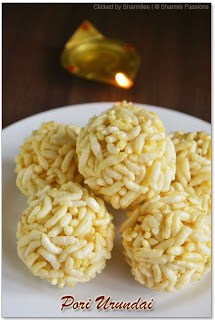
Like any other Hindu festival Karthikai is associated with its own special delicacies like Appam, Pori and Adai. Appam is a sweet cake made up of flour and fried. Pori Urunadi is sweet balls of puffed rice in jiggery. Adai is lentil pancake, like a thick Dosai. Plenty of Tamil and Sanskrit hymns are available on Lord Shiva to sing on this day.

If anyone can see Tamil Nadu from a low flying plane on Karthikai day, whole of Tamil Nadu will shine brilliantly with millions of lamps.

Of late Tiruvannamalai is becoming more popular for full moon day Giri Pradakshina. Every full moon day hundreds of thousands of people go round the hill all through the night. Several decades ago people were afraid to go round the hill even during day time for the fear of attacks by wild animals . Tigers and panthers were roaming the foothills at one time.

Tamil References to Karthikai:

Sangam Literature: Ahanananuru 141 describes how the lamps were lit in the evening of Karthikai Full Moon Day. Aham verse 185 compares the lamps to flowers on Silk cotton Tree. Natrinai 202 describes Karthikai as the month fit for good and charitable acts. We may take it as a reference to Karthikai Viratham (Fasting like Ayyappa devotees) and festival.

Post Sangam Literature: Kar Narpathu 63; Seevaka Sinthamani 256

Kar Narpathu says that the lamps were lit on Karthikai Full Moon Day evening; Seevaka Sinthamani says that the lamps were lit on top of the mountain.

Pictures are from Facebook, The Hindu and other websites.Thanks (contact: swami_48@yahoo.com)

***********

Vahanas on Coins and in Sculptures

(Please  read other articles on Vahanas  posted already: swami)

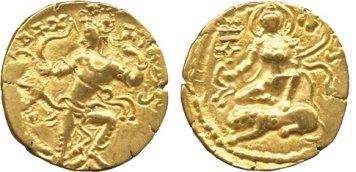
Picture: Gupta gold coin with goddess on lion.

Art Historian Sri Sivaramamurthi and others have done lot of research into Vahanas and sculptures. We have got Vahanas on coins from 3rd or 2nd century BC and beautiful sculptures from Gupta period. Gupta gold coins depict Vahanas. Following coins are well known specimens with Vahanas:

1.Shiva and Bull on coins issued by Wima Khadpises (95 AD)

2.Vasudeva also issued coins with Bull and Shiva (190 AD)

3.Samudra Gupta issued coins with Makara at the Goddess Ganga’s feet (335 AD)

4. Goddess seated on lion on coins issued by Chandra Gupta II and Kumara Gupta (380 and 455 AD)

Picture: Kushana gold coin with Kartikeya


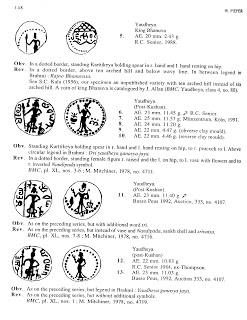
5.Kartikeya is shown seated on peacock on a coin which is exclusive to Kumara Gupta (455 AD)

6. Mother or Earth Goddess seated on (Nana/ Nanna/ Nanasao) a lion on coins issued by Kanishka (127 AD).

7. Hamsa and Goddess on a coin issued by Samachara Deva (early 6th Century AD)

(The above information was furnished by Biswajeet  Rath in his publication Deities on Indian coins).

8. Yaudheya  Coins with Kartikeya on Peacock (2nd Century BC)

Yaudheya dynasty in North West India issued coins of Kartikeya with peacock vahans.

Gupta gold coin with Kartikeya and peacock


On sculptures:

Gupta period sculptures in the caves of Deogarh show several Gods on Vahanas. So Kalidasa must have lived well before this time. Anything that comes in literature takes the shape of coins or sculptures on a later date. This is finding of art historians and archaeologists. References in literature comes first, sculptures come next.

Following Vahanas are on stone scultures:

1.Shiva and Parvati on Bull: Dashavatara Temple, Deogarh, 5rh century AD

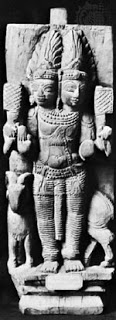
Picture: Agni on ram, Paris Museum

2.Agni on the Ram: Bhoganandiswara Temple, Nandi, 9th century AD

3.Figure on Fish  (Ascetic or Varuna?): Jalakandeswara Temple,16th Century

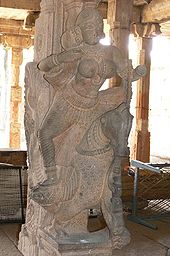
4.Rati on Parrot: Gwalior Museum, 9th Century AD


Yaudheya coin details with Skanda and peacock

5.Varuna on Makara: Delhi National Museum, 13th Century AD

6.Indra on Elephant: Nandi, 9th Century AD

7. Rati on swan: Meenakshi Temple,Madurai, 16th Century AD

8. Agni on Ram, 9th Century AD, Calcutta Archaeological gallery

The above only re examples of Vahana sculptures spanning over 1000 years. It is not a comprehensive list. Indra on elephant Airavata is found in many of the world including South East Asian countries. Vishnu on Garuda Vahana is also found from Gupta or earlier times.

 Rati on Anna Vahana

If we consider figures on coins and sculptures together, the Vahanas cover a period of 2200 years without a break! We see coins with Hindu gods on vahanas up to East India Company period. It disappeared completely from those things only after the “Secular Indian Government” started ruling India from 1947!

Next post will cover the mythological stories about Vahanas: swami.


*********************

The Great Scorpion Mystery in History


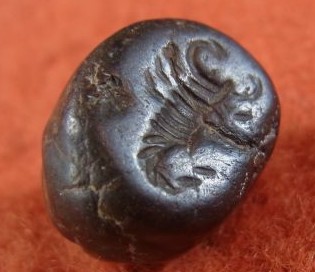
Picture: scorpion seal from Indus valley

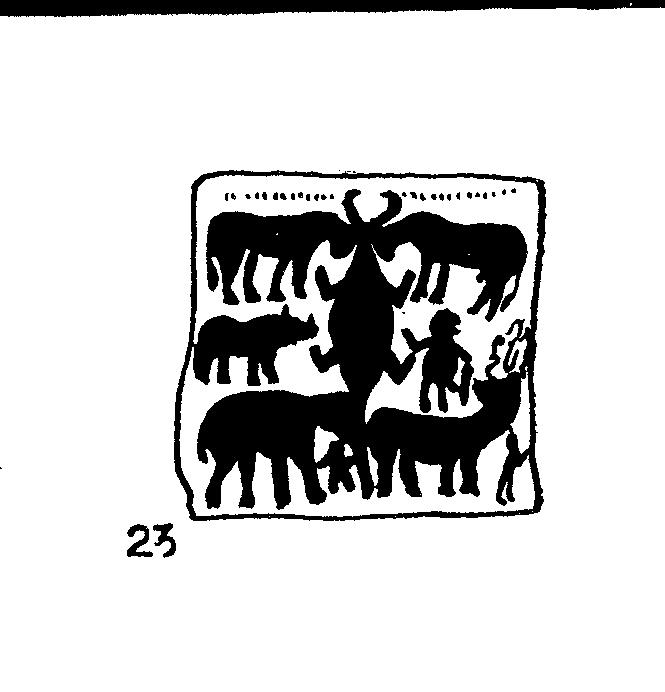
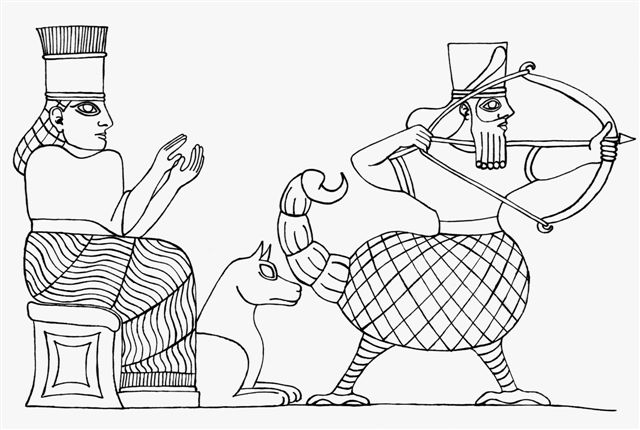
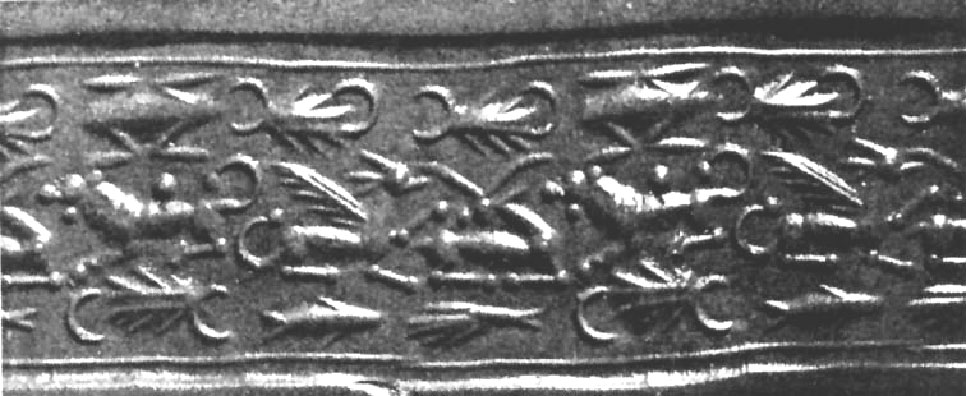
Seals with Scorpion images are discovered in Indus Valley, Dilmun (Bahrain), Middle East (Iran, Iraq) and a few other places. Scorpion God was worshipped in Egypt. Even today Scorpion goddess is worshipped in two places in India. Scorpio is one of the twelve zodiac signs. Scorpion is a symbol for sex. Scorpion is used as people’s names in Sanskrit (Vrischikan) and heaven is called ‘scorpion world’ (puth Thel Ulaku) in Tamil. Of the Tamil dances one of them is a dance by goddess on stilts to escape from scorpion demons. In spite of all these references, still the mystery about scorpion seals continues.

Why did ancient cultures use scorpion on seals? What is the meaning of those seals? Is it like snake goddess? We have lots of references about snake gods and goddesses. All Hindu Gods and goddesses have snake with them. But scorpion is a rare creature in the scriptures.

Vrischika/Scorpion in the Vedas

Scorpion appears in Rig Veda and Atharva Veda. Its poison was feared like that of serpents. It is described as lying torpid in the earth during winter (RV I.191.16; AV xii.1-46)

Urvasi Island in Assam

Urvasi Island also known as Peacock Island is in the middle of Brahmaputra river in Guwahati.  In the Shiva temple known as Umananda Temple, Devi is represented by an emblem of scorpion. People worship the emblem.

Playing with scorpions

Kandakoor village near Gulbarga in Karnataka has a strange goddess. The villagers celebrate Nagapanchami as Chelina Jatre (festival of scorpion). The villages worship an idol of scorpion goddess Kondammai and play with live scorpions as well. Children put the scorpions all over their bodies and the scorpions never harm them. The villagers queue up to climb the nearby hill where scorpions are found in plenty. Even the university zoology department is surprised at the behaviour of scorpions. Though they won’t sting unless provoked, they don’t even sting anyone when they are playing with them.


Picture shows a beauty with scorpion on her thigh, Khajuraho, MP.

Khajuraho in Madya Pradesh has beautiful temples with lot of erotic sculptures. A voluptuous beauty is sculpted with a scorpion on her thigh. No one knows why.

Madhavi, famous danseuse in the Tamil epic Silappadikaram did 11 types of dances. One of them is Marakkal (wooden legs) where goddess danced with stilts to avoid snakes and scorpions sent by the demons.

(Please read my Article in this blog Matavi’s 11 Types of  Classical dances, மாதவியின் 11 வகை நடனங்கள்)

Scorpion goddess Ishara

In Babylonia , two seals representing ritual marriage that takes place during the new year time show scorpions. The scorpion may symbolise goddess Ishara, the goddess of love.

Scorpion men are found in many Akkadian language myths including the Enuma Elish and  the Babylonian version of Epic of Gilgamesh. They were known as Aqrabuamelu and Girtablilu. They stand as guards in the temple of Shamash.

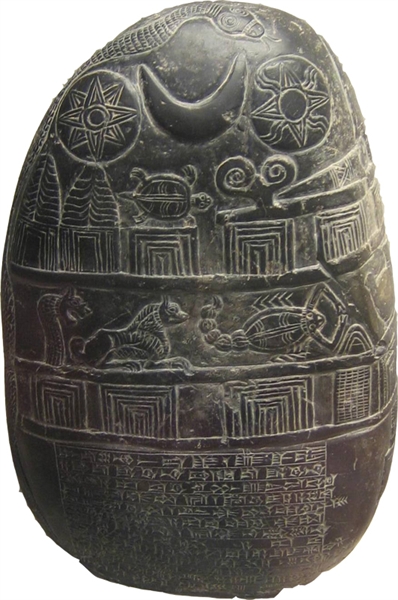
Kudurru stones in Sumerian culture have divine symbols including scorpion. These are documents that record land donations to loyal servants by kings. Though we hear about them from 3000 BC, the Kudurrus we have now are from Kassite kings from 1500 BC. Hindus have lots of similarities with Kassite kings.

Scorpion king of Egypt


Picture: Scorpion seal from Rehman Dehri 3000 BC

In Egypt Selket is the name of the old scorpion goddess who was depicted as a woman wearing on her head a scorpion, the animal sacred to her. She was also at times a scorpion with a woman’s head. She was the guardian of Conjugal union.

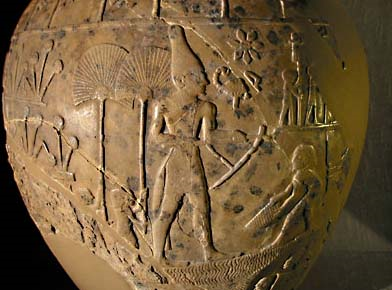
A king of ancient Egypt, ruling before Menes united the country and formed the first dynasty , was named Scorpion/ Selek (3000 BC) and the feminine form of the word selket named the patroness of magical healers.


The Egyptian mother goddess Isis/ Eset fleeing from Seth/ Sutech, the slayer of Osiris , took seven scorpions with her.

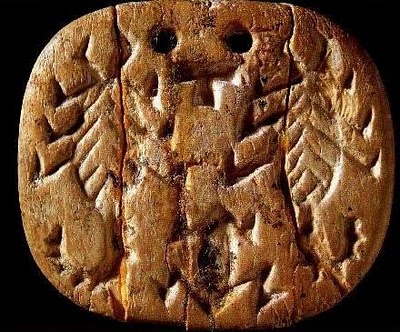
The scorpion had a powerful appeal to the ivory carvers of Hierakonpolis. We see scorpion symbol on large number of ivory artefacts. Thousand years later it appeared in the design of the Gulf seals.

Kannada word in Egypt!

Kannada word Chelina and Egyptian word Selek are similar in sounds, both mean scorpions. Both saw scorpion in the goddess form.

One of the Yoga poses is called Vrischika Asana (scorpion posture).


Picture shows Kudurru stone for Sumeria 1200 BC with scorpion

******

The Great Scorpion Mystery in History-2


Picture shows boundary stone with scorpion god,Sumerian.

This is part 2 of Scorpion mystery: swami

Persian prayers

Persians had a curious custom of charming scorpions like we see in today’s Karnataka. They believed that by making use of a prayer, a person gifted with certain powers can deprive the scorpion of its sting. To do this the charmer turned his face towards Scorpio in the heavens, repeating a special prayer, and at the conclusion of each sentence clapped his hands. Then he and his followers handled scorpions without any fear. Greeks and Romans believed the gem stone agate can cure stings of scorpions.

In astrology the zodiacal sign Scorpio is associated with all that is red. It was ruled by the red planet Mars and red star Antares. In Hindu astrology the symbol for Star Anusham (Anuradha) is scorpion.

According to Greek mythology the scorpion was placed in the heaven by Juno the queen of Gods because it carried out her wishes by stinging Orion, who had offended goddess by boasting he could outrun  and subdue the wildest and fiercest of the beasts. Orion died from the effects of the sting and scorpion was transferred to the heavens. Goddess Artemis sent scorpions to kill Orion. Actually what they meant by this story was when Scorpio rises in the horizon, Orion disappears from the sky.

Picture: scorpion seal from the Middle East


Dilmun seals

In Dilmun (Bahrain), scorpion is found on 36 seals. Historians think that it is one of the animals that have significance in the rites of Dilmun. In one of the seals interlocked squares are visible. They are surrounded by four scorpions with one on each side. This maze like fort is ‘protected’ by the scorpions. Stamp seals representing erotic scenes are discovered in Bahrain. One of the erotic seals has a scorpion behind a woman. There is an antelope behind the man who is involved in sexual act with the woman. Going by this seal we may conclude that woman is represented by scorpion and man is represented by antelope.


Mayan

In the religion of the Mayas the black god of war Ek-chuah was portrayed with the tail of a scorpion.

Tamil names

In Tamil ‘puththel ulaku’ (New Scorpion World) means Heaven or paradise.

Other names for scorpion in Tamil: Thel, alam, viruschikam, nalividam, therukkaal, thuttan, parappan, nail; also anusham or anuradha natachaththiram.

Please read my earlier posts:

1.Serpent Queen: From Indus Valley to Sabarimalai 2.The Sugarcane Mystery: Indus valley and Ikshvaku Dynasty 3. Vishnu seal In Indus Valley 4. Indus Valley –New Approach required 5.Indra in Indus valley seals+ Symbols for Vedic Gods and 6.Ghost in Indus seals and Indian literature7. Karnataka-Indus Valley Connection 8.Human sacrifice in Indus Valley and Egypt 9.Tiger Goddess of  Indus Valley: Aryan or Dravidian? 10.Flags: Indus valley –Egypt similarities 11. Fish God around the World 12.சிந்து சமவெளி-எகிப்தில் நரபலி 13.சிந்து சமவெளியில் ஒரு புலிப் பெண் 14. சிந்து சமவெளியில் பேய் முத்திரை 15. நாகராணி: சிந்து சமவெளி முதல் சபரிமலை வரை 16.கொடி ஊர்வலம்: சிந்துசமவெளி-எகிப்து அதிசய ஒற்றுமை. Contact London Swaminathan at swami_48@yahoo.com
Picture: Sassanian scorpion seal

Following is taken from Spoken Sanskrit website:

वृश्चिक vRzcika m. scorpio edit
वस्कराटिका vaskarATikA f. scorpion edit
खर्जूर kharjUra m. scorpion edit
अलि ali m. scorpion edit
अलिन् alin m. scorpion edit
आलि Ali m. scorpion edit
आलिन् Alin m. scorpion edit
कण्डोष kaNDoSa m. scorpion edit
कालक kAlaka m. scorpion edit
खर्जूरक kharjUraka m. scorpion edit
द्रुण druNa m. scorpion edit
द्रुत druta m. scorpion edit
द्रूण drUNa m. scorpion edit
द्रोण droNa m. scorpion edit
पुच्छकण्टक pucchakaNTaka m. scorpion edit
बलीन balIna m. scorpion edit
वृश्चन vRzcana m. scorpion edit
वृश्चिक vRzcika m. scorpion edit
शीतक zItaka m. scorpion edit
जलवृश्चिक jalavRzcika m. water-scorpion edit
वृश्चिकी vRzcikI f. female scorpion edit
शतघ्नी zataghnI f. female scorpion edit
स्वरु svaru m. kind of scorpion edit
वृश्चिकाली vRzcikAlI f. line of scorpions edit
लूम lUma n. sting of a scorpion edit
अजकाव ajakAva adj. centipede or scorpion edit
कीट kITa m. scorpion in the zodiac edit
मल mala n. tip of a scorpion’s tail edit
अल ala n. sting in the tail of a scorpion edit
विश्वम्भर vizvambhara adj. kind of scorpion or similar animal edit
विश्वम्भरक vizvambharaka m. kind of scorpion or similar animal edit
सर्पवृश्चिकरोमवत् sarpavRzcikaromavat adj. having snake and scorpions forhair edit
अलायुध alAyudha m. whose weapon is the sting from thetail of a scorpion


SCIENCE BEHIND DEEPAVALI- Part 1


Science behind Deepavali (swaminathan’s Talk delivered today 03/11/2012) Actual Diwali falls on 13-11-2012

Good Evening,Namsthe,Vankkam,Namskaram

Wish You all a Very Happy Deepavali

First of all I want to THANK the organisers for arranging nice Desi Diwali events successfully year after year. Thanks for inviting me to give a talk for ten minutes On Science Behind Deepavali.

What is Deepavali:

‘Deepa’ means light or lamp, ‘aavali’ means a row. Deepavali means a ROW OF LIGHTS. It is Festival of Lights.

Diwali is the spoken form of the word Deepavali.

We celebrate the Victory of Good over Evil. Good is light and Evil is darkness. It is the most famous festivals of the Hindu festivals. In some parts of India, they celebrate it for four days.

A lot of things about Deepavali are available on websites and encyclopaedias. They give the reasons for celebrating Deepavali.

  1. Lord Krishna Killed a demon called Narakasura. So we call that day Naraka Chathurdasi, literally Naraka’s 14th day.
  2. Goddess Lakshmi came out of the Milky ocean when Devas and Asuras churned the ocean for Amrutha, i.e. ambrosia
  3. Rama returned to Ayodhya after defeating Ravana of Sri Lanka who abducted Rama’s wife Sita.
  4. Pandavas came out of the forest after their 12 year banishment. So to celebrate all these things they decorated the houses and streets with row of lamps. The reason being, it was Amavasya-new moon day where there was no light. Most of other Hindu festivals fall on Full Moon day, so there is natural moon light. We have to remember there was no electric light thousands of years ago.


The above four episodes give us a Big lesson. Victory of Good doesn’t come that easily. Rama suffered for 14 years, Pandavas suffered for 12+1 years. Goddess Lakshmi, that is wealth, doesn’t come easily. You will have to churn the ocean, that isthrough hard work. Krishna had to travel all the way from Dwaraka in Gujarat to Kamaroop in Assam to kill Narakasura. To achieve success in anything, you have to struggle hard, but final victory will be yours.

  1. Jains also celebrate Diwali, because one of the greatest Thirthankaras, Mahavira, a contemporary of Buddha, attained Niravana- equivalent to Hidnu Yogi’s Samadhi on a Diwali day.
  2. Sikhs also celebrate Diwali because the foundation for Golden Temple in Amritsar was laid on the day. Guru Amardas called all Sikhs to get Gurus’s blessings on that day, like Hindu’s Vyasa Purnima. One of the ten Sikh gurus Hari  Govinda Sing was released from imprisonment by Mughal emperor Jehangir on that day.
  3. Arya Samaj followers consider it a holy day because its founder Dayananda Sarswati attained Samadhi on that day.
  4. There are many more reasons. Greatest of the Hindu Kings Vikramaditya was crowned on a Diwali day.
  5. For Gujaratis and other business men it is a NEW YEAR DAY. They start their Financial year on that day.

Lakshmi Puja and Kubra Puja are conducted during the four day celebrations. Gujaratis heap food and sweets like mountains in a festival called Annakut festival.

But I am going to give you some new information on Diwali


10.A for astronomy:

Why do we celebrate Diwali on different dates every year? Diwali doesn’t  fall on the same day like New Years day or Makara sankaranti (Pongal). Why?

Most of the Hindu festivals are based on Lunar Calendar. That is, they are based on the movements of Moon. Diwali is one of them.

But other festivals are based on solar calendar. That is to say they are based on the movement of Sun. So they will fall on almost same date every year except in leap years.

Thithi & Nakshatra

Some people are very keen to do a festival on a particular Thithi like Amavasya, Paurnami, Ashtami Navami etc. Some Hindus are very keen to do it on Nakshatra, that is the star under which one born or one event happened. So even birthdays like Rama, Krishna, Adi Shankara differ slightly between Hindus.

11. Why do we light lamps?

The philosophical explanation for this is light symbolises all good things in the world. Darkness stands for evil, fear and death. So we always need light. But the scientific explanation for this is in winter months a lot of insects multiply and destroy crops. When you light lamps in millions they come and fall in it. You don’t kill them and so you don’t earn sin/demerits. It is the innate nature of the insects that they are attracted to light and die.

Bonfire nights are celebrated around the world. Even in England coinciding with Diwali comes Guy Fawkes Day on 5th November every year. This story was invented recently. Bonfires are lighted throughout Northern Hemisphere in November even before Guy Fawkes. It is in most of the cultures. We see it even in African and Australian aboriginal cultures.

Other than killing insects, it gives warmth during the cold winter. It gives them an opportunity to gather together, think together and act together. They sing and dance in groups. Music and dance originated around fire in the caves millions of years ago.

Even the oldest religious book Rig Veda begins with Fire/Agni and ends with Fire/Agni.

In South India, one month after Diwali on Karhtikai Pournami day (Full Moon Day), every town and village do the bonfires. Millions of lamps are lighted in Houses and Temples. They are made up of recyclable materials like clay. The oil used for those lamps is special oil called ILUPPA ENNEI with some medicinal properties.

12.Why do we do fireworks?

We, human beings, are pyromaniacs. What is pyromania?

According to Oxford Dictionary Pyromania is AN OBSESSIVE DESIRE TO SET FIRE TO THINGS. This is in our genes. If it is not properly controlled or channelized this becomes a mental disease. Since we all lived in caves millions of years ago, the only help we had from nature is FIRE. The Greek word for fire is Pyro.

In August 2010, Londoners saw big riots. Youths enraged by the police action set fire to buildings, houses and shops. Properties worth millions of pounds were lost. In India, during each Bandh or Hartal day we see such arson attacks. The reason for this, according to social scientists, is we have NOT channelized this pyromania. Youths have tremendous energy to spend. If you ask them to do controlled destruction like setting fire to bonfires or fireworks, they would not do it to buildings. Hinduism is based fully on science. Knowing this pyromania our forefathers allowed you to do controlled destruction and arson. You can burn old things without affecting your neighbourhood on Diwali day, Karthikai Day or Bogi Day. Bogi is celebrated a day before Makara Sankaranti called Pongal in Tamil Nadu.

Parents would have noticed their children messing around with fire or lamps. Smelling smoke, elders would rush to the place and chastise children shouting “ Stop it. You are going to burn down the house”. In fact most of us have done it when we were young!

Nowadays children and youths are not given that opportunity. So they misbehave during riots.

One may wonder why western countries are spending billions of dollars in doing fireworks during Olympics or Independence Days or Bonfire Nights. Laser lights can do the same magic without contributing to pollution at a minimum cost. The reason is as I mentioned earlier we are still pyromaniacs. The habit we had millions of years ago in the caves to protect ourselves from animals, to cook food for us and to get warmth is still in our genes.

This is the reason we encourage our children to do fireworks, bonfires and lighting lamps under the supervision of elders.

There are minor reasons as well. In certain cultures they believe the fireworks such as crackers will scare away evil spirits. In place like Sabarimalai Ayyappan temple, they even use it for scaring away the wild animals. In Tamil Nadu they do use explosives to announce the Gods procession. Hearing that, people from distant streets come to the streets where Gods chariot or procession in is on its way.

Chinese discovered the effect of some chemicals and started making fireworks. In Tamil Nadu the minor crackers are still called Chini Charam/chini vedi meaning China crackers.

Continued in Second Part…….

Hindu Vahanas in Italy and Greece


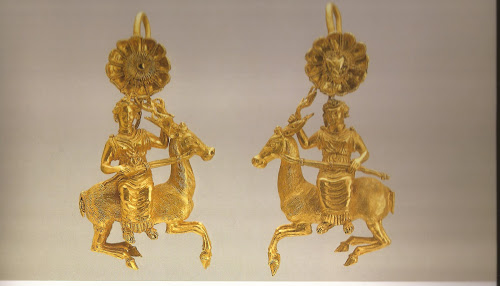
Picture shows Greek Ear Rings with Artemis on Stag

By Santanam Swaminathan; contact swami_48@yahoo.com or Swaminathan.santanam@gmail.com

Hindu Vahanas (Mounts of Gods) are found in different parts of the world. We have already seen them in Afghanistan, Iraq, Syria, Iran, Egypt, Turkey and other places. Since the Middle Eastern countries were under the Kassites, Hittites and Mitanni from 1800 BC, who followed  Vedic Religions, we see the Vahanas of gods there in sculptures and inscriptions. I have given the proofs in my earlier articles. Now I furnish more details about how the European countries adapted Hindu Gods’ vahanas with new stories.

We have sculptures showing Hindu Vahanas in Rome (Italy) and various parts of Greece or in the countries where Romans and Greeks extended their rule. Most of these sculptures were from First few centuries before Christ.

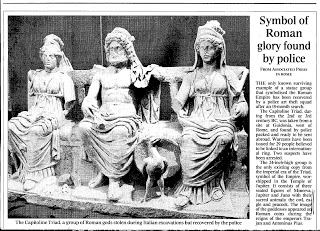
Times News Paper published a story on 23the February 1994 (see the picture in the paper cutting which I have preserving for 20 years in my file) detailing the symbols of three Roman Gods: “It consists of three seated figures of Minerva, Jupiter and Juno with their sacred animals the owl, eagle and peacock. The image of the goddesses appeared on Roman coins during the reigns of the emperors Trajan and Antonius Pius.” The statues belong to 3rd century BC. It shows that before the spread of Christianity and Islam, people worshipped different forms Gods like the Hindus of today.

In course three thousand long years, all the Gods and Goddesses got mixed up in their forms and interpretations. Any one opening the Encyclopaedias of Gods and Goddesses ( I have four different books on Gods and three different books on Symbols) will get confused when  they say this  god was worshipped as XXXX in this country, this god may be from XXXX country etc. The scholars are more confused than the people who worshipped them!

All the tales of ancient heroes and gods are full of violence, one killing another, cutting the body into many pieces and throwing them into different areas. Most of them may be interpreted as some natural phenomenon or astronomical events. We see it in Rig Veda from the story of Indra slaying Vritra etc. So called scholars with motive interpret them as Aryan-Dravidian fight. We know them as absurd theories because such fights are found in every ancient culture. There is no religious book or ancient literature without such clashes. Only in India the so called scholars deliberately mislead the general public for political gains.


Aphrodite (Greek and Cypriot)

Aphrodite on Hamsa Vahana and Hindu Anna Vahana of Sarsvati

Aphrodite is goddess of sexual love, worshipped from 1300 BC. She is equated with Ishtar (Akkadian), Astarte (Syrian), Astoreth (Phoenician), Dione, Cytherea, Venus (roman). She came from the foam of the ocean. In fact it was a distorted story of Hindu Samudra Marthan (Churning of the ocean) where Goddess Lakshmi, Heavenly nymph Apasaras and Jyeshta come out of the ocean. Aphrodite is shown as riding a swan, like goddess Saraswati. Egyptian Goddess Neith also emerged from the primeval ocean to create the world. She was depicted as the great celestial cow, like Hindu Kamadhenu. Neith is the goddess of weavers. I have already explained Neith–al means ‘weaving’ in Tamil in my earlier posts.

Hindu God Brahma and goddess Saraswati are shown riding swan.


Apollo (Greece and Rome)

Apollo was god of light, music and medicine. He was the son of the Titan Leto and the god Zeus (Latona and Jupiter to Romans) and the twin brother of the goddess Artemis (the Roman Diana). Apollo was often depicted with a lyre riding a swan. Known period of worship is circa 1300 BC. He is drawn as a god of hunters carrying a bow and arrow and associated with a stag. He is also pictured with lions. Apollo is strongly associated with the mystical number seven. Artemis rides a stag like Hindu Goddess Durga.


Hephaistos: Donkey Vahana In Atharva Veda (A.V.)

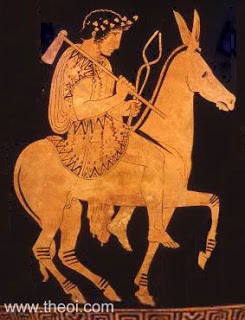
Picture: Hindu Goddess and Greek God on Donkeys

Hephaistos is an Olympian God in Greece. He rides a donkey. Donkey is Vahana for Hindu Gods and Goddesses as well:

Donkey Vahana for Indra: A.V. 9-6-4

Donkey vahana for Agni: Aitareya Brahmana 4-9-1

Donkey Vahana for other Gods: AV 8-8-22

Jyeshta or Muthevi or Seetala Devi have donkey has her Vahana.


Henrich Zimmer (1890-1943) wrong!

German Scholar, like most foreign Indologists misled the world by mixing the poison of Aryan –Dravidian theory in his interpretation of Vahanas. He said,

“ Animal symbol carrying the human is the duplicate representation of the energy, character of that god. They are the tutelary deities of the Indian household derived from the pre-Aryan aboriginal tradition and playing a considerable role in the Hindu and Early Buddhist lore”. Those who read about Vahanas from 3000 BC in Sumerian culture to 3rd BC in Greek culture can see the absurdity in Zimmer’s theory. If Indian Vahanas are pre Aryan, what about the Vahanas of other cultures? Moreover we see Vahanas as negative forces that is controlled by the Gods, not duplicate as Zimmer described.

Foreign scholars caused a big havoc by poisoning the Indian history with their own invented theories of Aryan-Dravidian divide wherever possible. Tamil Kings Chera ,Choza and Pandyas  fought for 1500 years without any break! They deserve a place in Guinness Book of Records for the longest fight in the world. But nobody saw any Aryan-Dravidian division in those fights. But if there was a fight between a Northern kingdom and Southern Kingdom, immediately they described it as Aryan-Dravidian clashes. If two kings or kingdoms fought during Vedic period, immediately they described it as Aryan-Dravidian!! But we see such clashes in Greece, Rome and Egypt.

Rati and Manmatha on Parrot Vahana

Also read my earlier posts:

1.Iraq: 7 Gods Procession on Vahanas, 2.Deer Chariot: Rig Veda to Santa Claus, 3.Hindu Vahanas around the World,4.Vahanas in Kalidasa and Tamil Literature,5.Who Rides What Vahanas?,6.உலகம் முழுதும் இந்து தெய்வ வாகனங்கள்,7.சங்கத் தமிழ் இலக்கியத்தில் வாகனங்கள், 8.வாகனங்கள் தோன்றியது எங்கே?ஏன்? எப்போது?, 9.எந்தக் கடவுளுக்கு என்ன வாகனங்கள்? 10.Interesting Facts on Vahanas,11.Hindu Vahanas In Italy and Greece