சிந்து சமவெளியில் ஒரு புலிப் பெண்

By London Swaminathan (This post has already been uploaded in English)

சிந்து சம்வெளியில் கண்டுபிடிக்கப்பட்ட 4000க்கும் மேலான முத்திரைகளில் உள்ள எழுத்துக்கள் இதுவரை எல்லோரும் ஒப்புக்கொள்ளும் விதத்தில் படிக்கப்படவில்லை. சாண் ஏறினால் முழம் சறுக்குகிறது. அமெரிக்காவில் உள்ள ஒரு பிரபல ஆராய்ச்சியாளர் இது எழுத்தே அல்ல ,வெறும் சித்திர முத்திரை என்று சொல்லி பெரிய சர்ச்சையைக் கூடக் கிளப்பிவிட்டார். இதுவரை சிந்து சமவெளி எழுத்துக்களுக்கு ஐம்பத்துக்கும் மேலான வினோத விளக்கங்கள் வந்துள்ளன.


எழுத்துக்கள் புரியாவிடிலும் அதிலிருக்கும் தெய்வங்களையாவது புரிந்துகொள்ள முடியுமா என்று பார்த்தால் அதுவும் முடியவில்லை. ஒரு முத்திரையில் ஒரு உருவத்தைச் சுற்றி 4 மிருகங்கள் இருப்பதை பசுபதி முத்திரை என்றும் இது ஆதி சிவன் என்றும் ஆரிய சிவனுக்கு முந்திய திராவிட சிவன் என்றும் தவறான விளக்கங்களைக் கொடுத்து இந்து மதத்தைக் குழப்பிவிடவும் மாற்று மத ஆராய்ச்சியாளர்கள் முயன்றனர்.


இவர்கள் ஆரிய திராவிடப் புதை மணலில் சிந்து சம்வெளி நாகரீகத்தைச் சிக்க வைத்திருப்பதால் அது வெளியே வரமுடியாமல் திணறிக் கொண்டிருக்கிறது. இது திராவிட எழுத்து அமைப்பு உடைய எழுத்துவகையைச் சேர்ந்தது என்று சொல்லி திசை திருப்பியும் விட்டனர். ஆனால் இதைச் சொல்லி ஐம்பது ஆண்டுகள் பறந்தோடிவிட்டன. ஒரு அங்குலம் கூட முன்னேற முடியவில்லை.

ஆரிய திராவிட விஷத்தை அகற்றிவிட்டு இந்த முத்திரைகளை ஆராய்ந்தால் நாளைக்கே கூட தீர்வுகாணமுடியும். இதை உணர்ச்சிக் கொந்தளிப்பால் எழுதவில்லை. பசுபதி முத்திரை மத்திய கிழக்கு நாட்டிலும், டென்மார்க்கிலும் கிடைத்திருப்பதால் அதை சிவன் என்று முத்திரை குத்த முடியாது. பாம்பு ராணி முத்திரை கிரேக்க நாட்டிலும் மற்ற நாடுகளிலும் கிடைத்திருப்பதால் அதையும் சிந்துவெளிக்கு மட்டுமே சொந்தம் என்றும் சொல்ல முடியாது. இன்றைய கட்டுரையில் வரும் 2 புலிகளுடன் சண்டை இடும் காட்சியும் உலகம் முழுதும் கிடைத்திருப்பதால் ஆரிய திராவிட மாயையை ஒதுக்கிவிட்டு ஆராய வேண்டும். சிந்துவெளி நகரங்களில் உள்ள வட்டக் கற்களும் ம்த்தியக் கிழக்கு, நீலகிரி பழங்குடி மக்கள், ஐரொப்பிய நாடுகளில் காணக் கிடக்கின்றன.


இந்திரனும் வருணனும் விஷ்ணுவும் தமிழ்க் கடவுள்கள் என்று “ஒல்காப் பகழ் தொல்காப்பியன்” கூறுவதையும், தொல்காப்பியன் ஒரு பிராமணன் என்று “உச்சிமேற் புலவர் கொள் நச்சினார்க்கினியர்” கூறுவதையும், “நான்முறை முற்றிய அதங்கோட்டு ஆசான்” என்னும் வேதப் பிராமணன் தலைமையில் தொல்காப்பியம் நிறைவேறியதாக பனம்பாரனார் கூறுவதையும் கருத்திற் கொண்டால் ஆரிய திராவிட மாயை, சூரியனைக் கண்ட பனிபோல விலகி ஓடி விடும்.

யார் இந்தப் புலி மகள்?

சிந்து சமவெளியில் கண்டுபிடிக்கப்பட்ட வினோதமான முத்திரைகளில் பேய் முத்திரைகள் பற்றியும், பாம்பு ராணி முத்திரை பற்றியும், பசுபதி/விஷ்ணு முத்திரை பற்றியும், ஐராவதம் மேல் பவனி வரும் இந்திரன் பற்றியும் முந்திய கட்டுரைகளில் கண்டோம். இன்று புலி மகள், புலி ராணி, புலி தேவி யார் என்று ஆராய்வோம்.

ஒரு புலித் தெய்வ முத்திரையில் ஒரு பெண்ணின் பாதி உடல் புலியாகவும் மறு பாதி பெண்ணாகவும் இருக்கிறது.

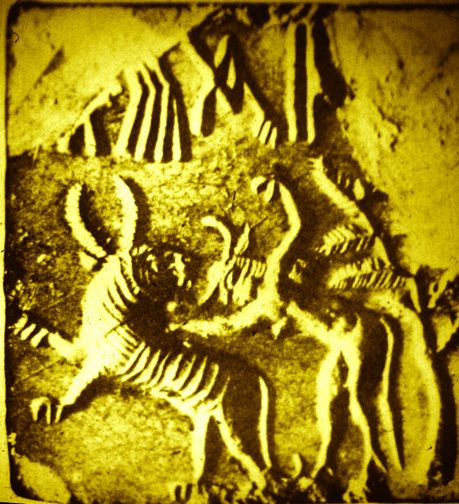
இன்னொரு புலி முத்திரையில் கொம்புள்ள புலி இருக்கிறது. மற்றுமொரு முத்திரையில் கொம்புப் புலியுடன் ஒரு கொம்பு மனிதன் சண்டை போடுகிறான். சிலர் இதை நடனம் ஆடுவதாகவும் எழுதி இருக்கிறார்கள்.

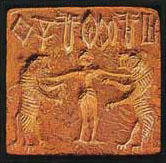
வேறு ஒரு புலி முத்திரையில் ஒருவன் புலிக்குப் பயந்து மரத்தின் மேல் இருந்து கொண்டே ஏதோ சைகை செய்கிறான். இன்னும் ஒரு முத்திரையில் ஒருவன் இரண்டு புலிகளுடன் சண்டை போடுகிறான்.

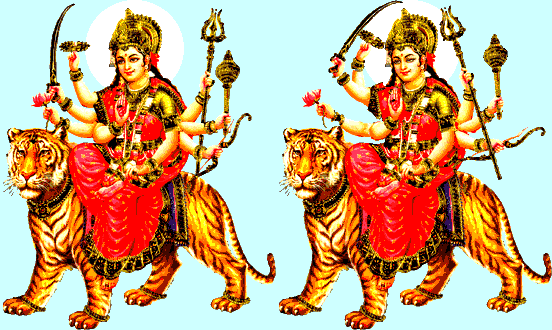
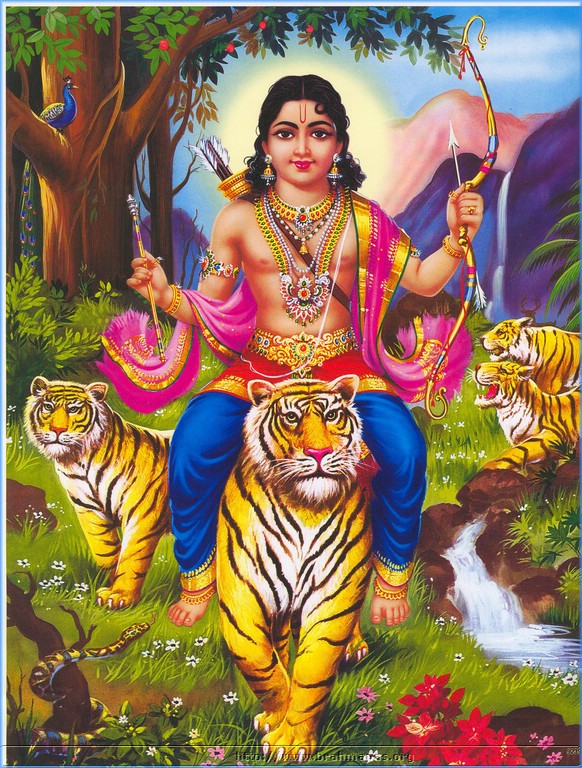
யார் இந்தப் புலிப் பெண்? துர்க்கையா? இந்தியாவில் புலி வாகனம் உடைய இரண்டு கடவுளர் உண்டு: ஒன்று துர்க்கா தேவி மற்றொன்று சபரிமலை ஐயப்பன்.

திபெத்தில் புத்த மதத்தைப் பரப்பிய இந்திய சாது பத்ம சம்பவர் புலியில் சவாரி செய்வது போல உருவங்கள் இருக்கின்றன.

சோழர்களின் சின்னம் புலிச்சின்னம் என்று சங்கத் தமிழ் நூல்கள் பாடுகின்றன. சோழர்கள் வடமேற்கு இந்தியாவிலிருந்து வந்தவர்கள் என்று அவர்களுடைய மெய்க்கீர்த்திகளும் சிலப்பதிகாரமும் மணிமேகலையும் மறைமுகமாகச் சொல்லுகின்றன. உத்தர குருவை ஆண்ட சிபிச் சக்கரவர்த்தி, முது மக்கள் தழியை உண்டக்கிய முசுகுந்தன் மற்றும் சூரிய குல மன்னர்களை– தங்கள் முன்னோர்கள் என்று சோழர்கள் பெருமை பேசுகின்றனர். இதுதவிர, புலிகள் க்ஷத்ரியர்களின் சின்னம் என்று வேதகால இலக்கியங்கள் கூறுகின்றன.

மஹாபாரத்தில் வீரர்களைப் புகழ்கையில் அடிக்கடி, “ஓ, மனிதர்களில் புலி போன்றவனே!” என்று வியாசர் புகழ்கிறார்.

சிவ பெருமான் புலித்தோல் அணிந்திருக்கிறார். பதஞ்சலி முனிவரை புலிக்கால் முனிவர் என்று அழைத்தனர். தமிழர்கள் புலி நகத்தை வீரத்துக்காக அணிந்தனர். சகுந்தலை – துஷ்யந்தன் பெற்றெடுத்த பரதன் சிங்கம் புலி ஆகியவற்றுடன் விளையாடினான். புருஷாமிருகம் என்னும் மிருகம் பற்றிய கதை மகாபாரத்தில் வருகிறது.பாதி சிங்கம் பாதி மனிதனான நரசிங்காவதாரம் நாம் அனைவரும் அறிந்ததே. வேதத்தில் கழுதைப் புலி பற்றிய குறிப்பு வருகிறது.

ஆக இந்த எல்லாப் புலிகளையும் கணக்கில் எடுத்துக் கொண்டாலும் சிந்து சமவெளிப் புலி மகள் கொஞ்சம் விலகியே நிற்கிறாள். வெளி நாட்டு அறிஞர்கள் இவளையும் ஆதி துர்க்கா (புரோட்டோ ஷிவா என்று கதை விட்டது போல இவளை புரோட்டோ துர்க்கா) என்று கதை கட்டி விடுவார்கள்.


சப்த மாதர் முத்திரை நரபலியா?

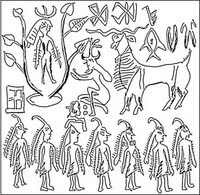
ஒரு முத்திரையில் அரசமரத்துக்குள் ஒரு தெய்வம் நிற்க ஒருவன் மிகப் பெரிய ஆட்டைக் கொண்டுவந்து அவள் முன்னே நிறுத்தி மண்டியிட்டு வணங்குகிறான். ஒரு ஸ்டூலின் மீது மனித தலை மட்டும் இருக்கிறது. இது நரபலியா?

அதற்குக் கீழே ஏழு பெண்கள் கைகோர்த்து நடனம் ஆடுகின்றனர். இந்த ஏழு பெண்கள் உலகில் பல இடங்களில் இருக்கின்றன. தென் ஆப்பிரிக்கா குகைச் சிற்பங்களில் ஆஸ்திரேலியப் பழங்குடி ஓவியங்களில், கிரேக்க நட்சத்திரக் கதைகளில், வடமொழியில் சப்த மாதர் கதைகளில் ஏழு பெண்களைக் காணலாம்.

ஒரிஸ்ஸாவில் கோண்டு இனமக்கள் வழிபடும் தரைப் பெண்ணு என்னும் கடவுள் பூராப் பெண்ணு என்னும் கடவுளைப் படைத்ததாகக் கதை உண்டு. இந்த தரைப் பெண்ணுக்கு கொடுரமான முறையில் பலிகள் இடுவதுண்டு.

சுருக்கமாகச் சொல்லப் போனால் சிந்து முத்திரைகளில் காணப்படும் அதே கருத்து உலகம் முழுதும் இருப்பதால இதை ஆரிய திராவிட நீர்ச் சுழலில் இருந்து மீட்டு காய்தல் உவத்தல் இன்றி ஆராய்தல் நலம் பயக்கும்.

Please read my earlier posts:1.Serpent Queen: From Indus Valley to Sabarimalai 2.Sugarcane Mystery: Indus valley and Ikshvaku Dynasty 3. Vishnu seal In Indus Valley 4. Indus Valley –New Approach required 5.Indra in Indus valley seals+ Symbols for Vedic Gods and 6.Ghost in Indus seals.

Contact swami_48@yahoo.com or swaminathan.santanam@gmail.com

*******************

Tiger Goddess of Indus Valley

Tiger Goddess of Indus Valley: Aryan or Dravidian?

Scholars who study Indus valley civilization are struggling to identify the Indus Valley Gods and goddesses. At present scholars don’t agree on their identification. They could not place them in the modern Hindu pantheon. They are fighting among themselves to name them as Aryan or Dravidian. Each scholar has his own or her own interpretation. All the confusion is the result of one Himalayan blunder of unprofessional archaeologists who identified the so called Pasupati seal with Proto Shiva. Unless and until the scholars come out of the Aryan Dravidian quagmire, the Indus Valley script can’t be deciphered.

Now look at the following Indus Gods and Goddesses and you yourself decide who is Aryan or Who is Dravidian who is Universal, Pan World:

TIGER GODDESS

A seal discovered in Mohenja-daro is at National Museum, Karachi(D392). This square seal depicts a tiger looking back a human figure on a tree. The person with hair tied in double bun style holds the tree with one hand and makes some gestures to the tiger with the other hand.

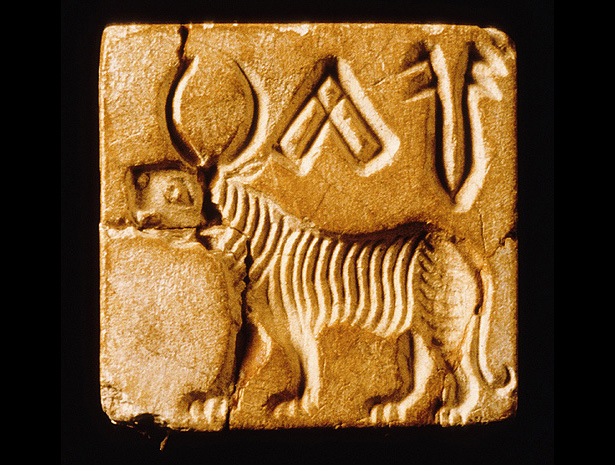
Another seal shows a tiger with a horn (DK 12897, Karachi Museum)

Photoconvex moulded tablet in Harappa museum shows a female figure fighting two tigers standing above an elephant ( I have interpreted this as Indra on Irawatha or Bharata who played with lions even when he was young. A chakra sign on top of the head may denote Indra’s name=chakra or Bharata= Eka Chakratipati). On the reverse we see a person spearing a buffalo. a figure seated in yogic position is looking at the buffalo sacrifice. A crocodile is above this scene.

On another seal a mythical female figure half human half tiger is portrayed .This seal is in national Museum ,New Delhi

A seal depicting a man holding a tiger was also found at Mohenja-daro. It is in Delhi Museum. The man fighting or holding the tiger is not an ordinary human being. It looks like a devil with horns.

What is puzzling is that there is not even a close resemblance to any of these scenes in our mythology. But villagers have got many stories about tiger gods or tiger angels in different parts of India. People living in forest areas naturally will have many juicy stories like this.

But who ever attributes the script to Aryan or Dravidian languages have failed to explain these seals satisfactorily. Then who is this Tiger Goddess or Tiger God? We have some contestants for this post.

Tiger Riders

Tribals in Indian jungles have different beliefs about tigers and tiger gods. When we look at the Indus seals with tiger men and tiger women we are reminded of these tribal stories. Kollong and Ullatar tribes of Kerala consider tiger as the son of goddess Parasakthi. They call the tigers, granddad. They rarely kill tigers. If the tigers kill many people and cattle, then one of the tribal will kill the tiger and asks for pardon in a public place. Then he has to live outside the village for a year and eat food given by others. This shows the respect they had for tigers. (Source 31-11-1963 article in Jayakeralam).

Tiger in Hinduism

Lord Ayyappa (Sabarimalai in Kerala, India) rides a tiger.

Hindu goddess Durga/Kali rides a tiger or lion.

Padmasambhava is worshipped in Tibet and Mongolia. He was the Indian ascetic who brought Buddhism to Tibet in 762 AD. He was shown riding a tiger.

Patanjali (Pulikkal Munivar) Human with legs of a tiger.

Shiva wears a tiger skin. Mahabharata very often uses the epithet “tiger among men”. People wear tiger nails in their chains. Vedas mention only hyena, not tigers.

The Brahmana literature describes Kshatriyas as tigers. Perhaps the four animals in the Pasupati seal means four castes of Hinduism.

Narasimhavatar: Half man, Half lion;Purusha Mrugam ; Sarabeswarar: Saraba bird+ man;Kim Purusha and Kinnara

Seven Women/ Sapta Kanya

Seven is the most sacred number for Hindus. Anything holy, they count in seven, whether it is hills, rivers, forests, cities, holy women or holy men to remember (sapta kanya, sapta nadhi, sapta Rishi, sapta mokshapuri, sapta aranya etc). Seven is found in largest number of seals in Indus valley. The Seven Sister seal in the Indus is a famous one. Most of the Hindu temples have Sapt Kanya/ seven women statues in South India. The story of Seven Sisters is there in several parts of the world from Australian aborigines to ancient Greeks. Mr Dave even identified seven birds in Rig Veda as seven sisters known to Bengalis (Bengalis call these seven birds as seven sisters).

Varunan with seven sisters is found in Rik Veda 8-41

Story from Australia:

Seven wandering ancestral heroines of the Dream time, also referred to their aboriginal name KUNGARANKALPA. The complete route of the sisters has been pieced together from stories told about them by different aboriginal clans living along its course. On reaching the southern coast, the seven sisters went in to the sea and then leaped in to the sky. Once in the sky they became the constellation KURIYALA (The Pleiades). Hindus call this six Krithikas. Westerners call this constellation Seven Sisters. This tallies somewhat with Hindu counting One Skanda+looked after by six sisters=seven).

Ancient San Rock paintings in South Africa have seven women as a group.

Take any Indus seal, we have parallel stories around the world to interpret it differently.

Human Sacrifice: Boora Pennu (God of light in Khond)

A local deity in the Orissa who created the earth goddess Tari Pennu as his consort is called Boora Pennu. Until recently this deity was the subject of sacrifice in notorious meriah rituals, which involved violent human sacrifice (reminds us of Mayan sacrifice)

Tari pennu in Tamil will mean the same. Tarai=earth or floor, pennu=woman.

But Tarai=terra-dharani are of Indo European origin.

A scene in a Mohenja daro seal also looks like a human sacrifice. A deity is depicted standing in a papal tree with bangles on both arms. A human head rests on a stool. A giant ram and seven figures in a procession are very prominent. A man in kneeling position is worshipping the papal deity. May be he has brought the ram for sacrifice. This seal is in Islamabad Museum.

For each and every seal found in Harappa and Mohenja daro, the scholars give different interpretations. Most of the scenes on seals are seen in other parts of the world too. So we need to piece them together and look at them from a different angle. The Pasupati seal (Deity surrounded by animals), the snake queen ( a deity with snakes on either side),  a deity fighting two animals, arrangement of stones in a circle, Swastika symbol etc. are seen in different cultures. We have to find out who borrowed from whom. If they are universal there is no question of attributing them to Aryan or Dravidian.

Contact swami_48@yahoo.com or swaminathan.santanam@gmail.com

Please read my previous articles on Indus/Saraswati Valley civilisation:

Please read my earlier posts:1.Serpent Queen: From Indus Valley to Sabarimalai 2.Sugarcane Mystery: Indus valley and Ikshvaku Dynasty 3. Vishnu seal In Indus Valley 4. Indus Valley –New Approach required 5.Indra in Indus valley seals+ Symbols for Vedic Gods and 6.Ghost in Indus seals

சிந்து சமவெளியில் பேய் முத்திரை

லண்டன் சுவாமிநாதன் (English translation of this article has been posted earler)

சிந்து சமவெளி நாகரீகம் என்றும் சரஸ்வதி நதி தீர நாகரீகம் என்றும் போற்றப்படும் நாகரீக அகழ்வாரய்ச்சியில் கண்டு பிடிக்கப்பட்ட பல வியப்பான, புதிரான, புரியாத முத்திரைகளில் ஒன்று பேய் முத்திரை. இதைத் தோண்டி எடுத்த மார்ஷல் என்பவர் இதையும் பதிவு செய்து வைத்திருக்கிறார். இதை ஆய்வாளர்கள் ‘டெவில்’ பேய் என்று குறித்துள்ளனர். இரண்டு பக்கம் உடைய இம்முத்திரையில் வால் உடன் கூடிய ஒரு சாத்தான் போன்ற ஒரு உருவமும் சில எழுத்துகளும் உள்ளன. இது பேயை ஓட்டுவதற்கான தாயத்தா அல்லது பேய்களை வழிபடும் தாயத்தா எனபது தெரியவில்லை.


எதற்கெடுத்தாலும் ஆரிய, திராவிட முத்திரை குத்தும் பகுத்தறிவுப் பகலவர்கள் இதுவரை இது ஆரியப் பேயா அல்லது திராவிடப் பேயா என்று தீர்மானித்து முத்திரை குத்தவில்லை. இது மட்டுமல்ல. ஆடு அல்லது மாடு போன்ற முகத்துடன் கையில் வில்லுடன் செல்லும் ஒரு உருவம், பாதிப் புலி, பாதிப் பெண் உருவம், புலிக்குப் பயந்து மரத்தின் மீது ஏறி அமர்ந்த உருவம், பெரிய ஆட்டுடன் பலி கொடுக்கும் முத்திரை, ஏழு நடனமாதர்கள் ஆடும் உருவம் போன்ற பல தெய்வங்கள் இருக்கின்றன.

சிந்து சமவெளி எழுத்துக்களை இதுவரை யாரும் படிக்கவில்லை. அவரவர் மனம் போல விளக்கம் அளித்து வருகின்றனர். நாளுக்கு நாள் ஆரிய திராவிட உளறல்கள் அதிகரித்து வருகின்றன. ஆனால் இந்த தெய்வ முத்திரைகளைப் பற்றி மட்டும் பலரும் ‘கப்சிப்’ என்று இருந்து விடுகின்றனர். உலகில் மூட நம்பிக்கை இல்லாத சமுதாயமே இல்லை. ஆனால் பகுத்தறிவு, பகுத்தறிவு என்று புலம்பும் சில தமிழர்களுக்கு இந்த உண்மையை ஜீரணிப்பது கொஞ்சம் கடினமே.


மார்ஷல் போன்றோர் சிந்து சமவெளி முத்திரைகளை எந்தெந்த அடுக்குகளில் எடுத்தோம் என்று எழுதி வைக்காததால் பல உண்மைகளை அறியமுடியவில்லை. அது மட்டுமல்ல. ஏற்கனவே மதத்தைப் பரப்ப வந்தவர்களும் நாட்டை ஆளவந்தவர்களும் கட்டிவிட்ட ஆரிய திராவிட வாதத்தை சிந்து சமவெளி ஆய்விலும் நுழைத்துவிட்டார்கள். முதல் கோணல் முற்றும் கோணல் என்ற முது மொழிக்கேற்ப ஆராய்ச்சியாளர்கள் இந்த ஆரிய திராவிட சகதியில் சிக்கியதால்  இன்றுவரை சிந்து சமவெளி பற்றிய உண்மைகள் வெளிப்படவில்லை.

இந்து மதத்தில் உள்ள முப்பத்து முக்கோடி தேவாதி தேவர்கள் போதாது என்று எண்ணி மார்ஷல் போன்றோர் புதுக் கரடிகளையும் புகுத்திவிட்டனர். வேதத்தில் உள்ள உக்கிரமான ருத்திரன் வேறு, தமிழர்கள் போற்றும் சாந்தமான சிவன் வேறு. சிந்து சமவெளி சிவன் ப்ரோட்டோ சிவன்- அதாவது இந்த சிவனுக்கெல்லாம் மூல சிவன் என்று புதிய தெய்வம் ஒன்றைக் “கண்டுபிடித்து” ஏற்கனவே குழம்பிக் கிடக்கும் இந்துவை இன்னும் குழப்பினர்.


இதுவும் போதாது என்று தமிழ் முருகன் வேறு, ஆரிய ஸ்கந்தன் வேறு என்று மேலும் ஒரு புதுக் கரடியைக் கிளப்பி இந்துமதத்தை ஒழித்துகட்டும் வாதங்களையும் பரப்பி வருகின்றனர். தேவார மூவரும், திருவாசகம் அருளிய மாணிக்கவாசகரும், திருப்புகழ் அருணகிரிநாதரும், கந்தபுராண கச்சியப்ப சிவாச்சாரியரும் இதை எல்லாம் படித்தால் மலையிலிருந்து விழுந்து தற்கொலை செய்துகொள்வார்கள். 2000+ சங்க இலக்கியப் பாடல்களிலும் 30000 சங்க இலக்கிய வரிகளிலும் இல்லாத ஆரிய திராவிடக் கடவுள்களை எல்லாம் இவர்கள ஆராய்ச்சிக் கட்டுரைகளில் காணலாம்.

சிந்து சமவெளியில் தோண்டி எடுக்கப்பட்ட ஒட்டக எலும்புக் கூடு எங்கிருந்து வந்தது? போன்ற விஷயங்களை கவனமாக மறைத்தும் மறந்தும் விடுவார்கள். ருக் வேதத்தின் காலம் கி.மு 1500. சிந்து சமவெளி நாக்ரீகத்தின் முடிவுக் காலம் கி.மு.1800. ஆகவே ஏதேனும் தடயம் கிடைத்தாலும் அது வேத கால இலக்கியங்களிலேயே கிடைக்க முடியும்.


தொல்காப்பியத்தில் இந்திரன், வருணன்

இது ஒரு புறம் இருக்க தமிழனின் மிகப் பழைய நூலான தொல்காப்பியம் “ஆரியக் கடவுளான” இந்திரனையும் வருணனையும், விஷ்ணுவையும் தமிழர் கடவுள் என்று உறுதியாகக் கூறுகிறது. மேலும் தொல்காப்பியத்தை அரங்கேற்றியதே நாலு வேதத்திலும் கரைகண்ட அதங்கோட்டு ஆசான் என்றும் பாயிரம் கூறுகிறது. பலராமனின் பனைக்கொடி பற்றிவேறு தொல்காப்பியர் பேசுகிறார். ஆரிய திராவிட வாதக்காரர்களுக்கு இது எல்லாம் செமை அடி கொடுப்பது போல இருக்கிறது.

அது சரி, சிந்து சமவெளி முத்திரையில் காணப்படும் பேய் ஆரியப் பேயா? திராவிடப் பேயா என்று சிறிது பார்ப்போம். பேய் பிசாசுகள் இல்லாத இலக்கியம் உலகில் எம்மொழியிலும் இல்லை. அதர்வண வேதத்தில் பேயோட்டும் மந்திரங்கள் உண்டு. சங்க இலக்கியத்தில் நூற்றுக் கணக்கான இடங்களில் பேய் பிசாசுகள் உண்டு. இந்தியாவின் வட கோடியில் இருந்து தென் கோடி குமரி முனை வரை பேய்க் கதைகளும் பேய் பற்றிய நம்பிக்கைகளும் இருக்கின்றன.

உலகிலேயே நீண்ட இதிஹாசமான மஹாபரதத்தில் பேயின் கேள்வி என்ற பகுதியில் (யக்ஷப் பிரஸ்னம்) பேய் கேட்ட 130 கேள்விகளுக்கும் தர்மபுத்திரன் சரியான பதில் கூறவே இறந்து போன நாலு சகோதரர்களையும் பேய் உயிர்ப்பித்தது. இந்த 130 கேள்விகளுக்கான பதில்கள் சம்ஸ்கிருத மொழியில் இந்து மத தத்துவங்களை பழச் சாறு போல பிழிந்து கொடுக்கிறது. இதே போல சம்ஸ்கிருதத்தில் உள்ள விக்ரமாத்தித்தன்  வேதாளக் கதைகளும் உலகப் பிரசித்தம். இந்த வேதாளம் , யக்ஷன் எல்லாம் தமிழ் இலக்கியத்திலும் உண்டு. காடு மலை, மேடு பள்ளம், ஆறு குளம் மரம் செடி, கர்ப்பிணிகள், குழந்தைகள் ஆகிய அனைத்திலும் உள்ள அணங்குகள் பற்றி சங்கத்தமிழ் நுல்கள் நிறையவே பேசுகின்றன.

போர்க்களத்தில் பேய்கள் அடிக்கும் கூத்துகளையும் கொட்டங்களையும் கலிங்கத்துப் பரணியும், காரைக்கால் அம்மையாரின் பாடல்களும் கூறும். சுடுகாட்டில் திரும்பிப் பார்க்கக்கூடாது என்று புற நானூறும் குறுந்தொகையும் பாடுகின்றன. ஆக பேய்கள் இல்லாத கலாசாரம் இல்லை. அணங்கு என்ற சம்ஸ்கிருதச் சொல்லுக்கு “உருவம் இல்லாத” என்று பொருள். (டாக்டர் இரா. நாகசாமி அவர்கள் எழுதிய முருகன் கட்டுரையில் காண்க)

திருவள்ளுவர் கூறிய பேய்க்கதை, ராமகிருஷ்ண பரமஹம்சர் சொன்ன எழு ஜாடித் தங்கமும் நாவிதனும் என்ற பேய்க்கதையை நினைவுபடுத்துகிறது.


ஷேக்ஸ்பியரில் பேய்கள்

இந்தியக் கதைகளை அராபியர்கள் ‘காப்பி’ அடிக்க அது அராபிய இரவுக் கதைகள் மூலம் மேலை நாடுகளுக்கும் பரவின. ஷேக்ஸ்பியர், மாக்பெத், ஹாம்லெட் முதலிய நாடகங்களில் இறந்தவர்கள் பேயாக வரும் காட்சிகளைப் படைத்திருக்கிறார்.

Picture: please see No 14, a figure with bow (click on the picture to enlarge it)


வேடன் உருவம் முருகனா?

சிந்துவெளி முத்திரைகளில் வில்லுடன் தோன்றும் ஒரு வேடன் போன்ற உருவம் உள்ளது. இந்து மத நூல்களில் தக்ஷனுக்கு சிவன் ஆட்டுத்தலை வைத்த கதையை இது நினைவுபடுத்தும். புருஷா மிருகம், கிம்புருஷன், கின்னரர்கள், சரபேஸ்வரர், நந்திகேச்வரர், தேவியரால் கொல்லப்பட்ட மஹிஷாசுரன், சமண மத நூல்களில் வரும் கோமுக யக்ஷன் போன்றோருக்கு ஆட்டுத்தலையும் மாட்டுதலையும் உண்டு. முருகனுக்கு ஆடு வாகனம் உண்டு. முருகனின் கையில் வில்லுடன் தோன்றும் பல கோவில்கள் தமிழ்நாட்டில் இருக்கின்றன.சூரபத்மனை வில் போட்டு சம்ஹரிக்கும் காட்சி இன்றும் திருவண்ணாமலையில் நடக்கிறது. ஆக கையில் வில்லுடன் திரியும் வேடன் முருகனா?

வில்லுடம் முருகன் தோன்றும் தமிழ்நாட்டுக் கோவில்கள்: திருவேட்டக்குடி, திருகொள்ளிக்காடு, நெய்வேலி, திருச்சாய்க்காடு,திருவிடைகழி, வில்லுடையான்பட்டு,போளக்குறிச்சி, அனந்தமங்கலம், விளாநகர், திருமயிலாடி முதலிய கோவில்களில் வேல் முருகனுக்குப் பதில் வில் முருகன் இருக்கிறார்.

இந்திரனை ஏறு/காளை என்று 20 இடங்களில் ருக் வேதம் புகழ்கிறது இதைத் தொடர்ந்து தமிழர்களும் ஏறு என்ற சொல்லை பல சொற்களுடன் பயன்படுத்துகின்றனர்.


முருகன் தமிழ் சொல் அல்ல

டாக்டர் இரா நாகசாமி அவர்கள் தமிழ் சம்ஸ்கிருதம் ஆங்கிலம் மூன்றிலும் புலமை பெற்ற பேரறிஞர். ஆதாரமில்லாத எதையும் கூறமாட்டார். அவர் முருகன் என்ற சொல் ம்ருகயா (வேட்டைகாரன்) என்ற வடமொழிச் சொல்லில் இருந்து வதிருக்கிறது என்பதை அழகாக எடுத்துரைத்துள்ளார். ஆனால் சிந்துவெளியில் பேய் வடிவில் இருப்பது முருகன் அல்ல என்பதையும் எடுத்துக் காட்டுகிறார். ஆக வில் வீரன் முருகனா என்பது ஆய்வுக்குரிய விஷயமே. (Dr R Nagaswamy’s article: “ Murukan-The origin of the word” from Tamil Arts Academy.org)

Please read my earlier posts:

1.Serpent Queen: From Indus Valley to Sabarimalai

2.Sugarcane Mystery: Indus valley and Ikshvaku Dynasty

3. Vishnu seal In Indus Valley

4. Indus Valley –New Approach required

5.Indra in Indus valley seals+ Symbols for Vedic Gods

Contact swami_48@yaoo.com or swaminathan.santanam@gmail.com

******************

Ghost in Indus Seals

By London swaminathan

A seal with a ghost or devil was recovered from Indus valley. This is a puzzle for many research scholars. Indeed all the gods and goddesses are puzzles and not yet explained satisfactorily. Many seals with tiger goddesses or half tiger or half woman also remain a puzzle. Marshall and other westerners mislead the entire world by introducing Aryan-Dravidian division in this field. Had they not introduced any absurd theories like that scholars would have solved the puzzle by this time. Scholars would have deciphered the script by this time.


Please read my earlier posts:

1.Serpent Queen: From Indus Valley to Sabarimalai

2.Sugarcane Mystery: Indus valley and Ikshvaku Dynasty

3. Vishnu seal In Indus Valley

4. Indus Valley –New Approach required

5.Indra in Indus valley seals+ Symbols for Vedic Gods

Since scholars have discovered new gods such as “Proto Shiva”, “Murugan before Aryanisation”, “Skanda after Aryanisation”, “Rudra diluted into pacific Shiva”, new scholars also fell into this blind alley and are struggling still. Some scholars even discovered “Dravidian structure” in the script and by publicising this theory, mislead the entire world and not a single inch of progress has been made because of these absurd statements. With all the powerful computers in the world and all the discoveries available via google at the press of a button or by the movement of a computer mouse, we have achieved nothing. Reason? The same old Aryan Dravidian absurdity.

When it comes to Indus Gods they keep quiet, because they can’t see any Aryan or Dravidian  in the tiger Gods or Goat faced or Bull faced Gods. When it comes to the camel skeleton discovered in the Indus valley they turn a blind eye. It is said that the early discoverers did not do the job properly. They did not record the layers from which the artefacts were recovered. If one is able to explain the Indus Gods and Goddesses satisfactorily, without worrying much about what is written on the seals, then we can claim some achievement. But whoever reads all the books by the so called scholars on Indus seals can see they still do not agree on gods or goddesses.

The closest records to Indus period (2500 BC to 1800BC) are the world’s oldest religious book Rig Veda (1500 BC). No other language or books come nearer to this book. The oldest Tamil book, Tolkappiam (1st Century BC), baffled the scholars by giving the Vedic Gods as Tamil Gods. Tolkappiam says INDRA and VARUNA are Tamils’ gods. The other Gods mentioned by Tolkappiam, Seyon (SKKANDA/MURUGAN), Mayon (VISHNU) and Kotravai (DURGA) are also Vedic Gods. Those who wanted to explain Indus Gods conveniently forget or hide this reference. Tolkappiam also refers to the Palmyra Flag of Balarama, Lord Krishna’s brother, elsewhere. In short it is a slap on the face of Aryan-Dravidian theory supporters.

Now we will look at the devil seal recovered and recorded by Marshall. Who are these devils? Are they Devils or Gods? Now we have to go to the closest records to Indus period. Mahabharata, the longest epic in the world, with 200000 lines and one million words has the record of many ghost stories. The people of the Indian sub continent from one end to other end believe in spirits that occupy the lakes, ponds, rivers, mountains, hills and trees. Sanskrit and Tamil literature have hundreds of references to them. Tamils call it Anangu, a Sanskrit word, meaning that which has no form. Sanskrit literature has lot of references to Yaksha, the semi divine, semi human, ghost or devil.

The most famous ghost story of Mahabharat is the Yaksha Prasna. It is a spirit that which occupied a water source where it killed four of the five Pandava brothers. When the fifth person, Dharma came and challenged it, it asked him 130 questions and he answered all of them to the satisfaction of the ghost or Yaksha. Then the Yaksha became very happy and revived all the other four brothers. This is a beautiful ghost story giving a gist of moral values that which Hindus held high.

The other ghost story is the famous Vikram and Vedal story. A just and heroic king Vikramaditya answers all the questions of the ghosts correctly. Vikramaditya is a historic figure and he inspired hundreds of kings who named themselves as Vikramadityas. The Arabs and other cultures copied all the ghost stories and wrote Arabian Nights and other stories.

Sangam Tamil literature, which is two thousand year old, has hundreds of references to ghosts and spirits in the lakes,hills, trees, dark nights ,crematoriums, pregnant women. The Tamil literature prescribe anti dotes for ghost attacks throughout its 2000+ poems running to 27,000 + lines composed by 470+ poets.

Sangam literature says that children should wear Aimpatai Thali, and should use Aiyavi (white mustard) to scare away the evil spirits. Tiruvalluvar knows about these ghost stories and refers to them in his Kural couplets. Pura Nanuru and Kuruntokai say that we should not turn back in the crematoriums after burning a body. Anangu references are too many in Sangam works to refer here.

Now we have to decide whether the Indus ghost is Aryan Ghost or Dravidian Ghost. Since it is a ghost seal, Rationalist Tamils won’t compete with anyone else to claim that it is their own ghost.

We have some Indus seals with a goat or bull faced figure. It carries bow and arrow. The earliest form of Murugan carried bow and arrows. Then came the spear what the Tamils called VEL. In Tamil Nadu we have six or seven temples with Murugan statues carrying Bow and Arrows. Murugan defeated demon Sura Padman with bow and arrow.


Murugan Temples wth Bow and Arrow Murugan statues:

Tirukkollikkadu Agneeswarar Temple,Thiruvettakkudi Sundareswarar Temple,Thiruvidaikazi (near Mayiladuthurai),Villumaiyan pattu,Thiru Sayakkadu,Vilanagar,Thirumayiladi,Ananthamangalam,Neyveli, Polakurichi (as hunter)

Gomukha Yakshan

Jain literature talks about Gomukha Yakshan (bull faced). Saivaite Puranas talk about Shiva replacing Taksha with goat head. We have bull faced vehicle of Shiva, Nandikeswara, and Purusha mruga. We have also Sarabeswara, Kinnara, Kimpurusha – all with half human and half animal features. So the Sanskrit literature give us plenty of materials to identify the devil or bull/goat faced figures of Indus valley.

Atharva Veda has got lot of mantras (spells) to drive away the ghosts or devil or evil spirits. Grtsamada in his hymn to Asvins speak about treasure under trees (RV 2-39). Please read my post “27 SIMILES IN ONE VEDIC HYMN”. This treasure under trees is a familiar theme handled by poets like Tiruvalluvar and saints like Ramakrishna Paramahamsa (The barber and the seven Jars of Gold story).

Goddess Devi killed Mahisasura, the buffalo faced demon which is the most famous theme for sculptors from Gupta caves to Pallava caves. Greeks called it Minotaur.

The full impact of Tamil ghosts is in Parani genre literature and the most famous Parani is Kalingathu Parani. Karaikal Ammaiyar of fifth century AD has also described the dance of ghosts in her poems.

Rig Veda describes Gods as Bulls in at least twenty places. Following this Tamils also used the word ERU (bull) as suffix for several words.


Picture: please see No 14, a figure with bow (click on the picture to enlarge it)

Dr Nagaswamy’s View on Murukan

Dr R Nagaswamy, eminent historian and archaeologist says, “There is a word in Tamil  ‘Anangu’ which is taken to refer to Demon. The real meaning of the Word is “One without a form” or “invisible“ Na angah iti anangah. The Murukan is derived from Murukku “Pey”, is an absudidty. Muruka is not a demon in literature but a destroyer of demon.”

“Please note the name of the drum they (Kurinji people) use during hunting is Murukiyam. It clearly indicates that the term Murukiyam is connected with hunting. That gives us the clue to the origin of the word Murukan givien to Ceyon. The word for hunting in Sanskrit is “Mrg” or “Mrgyana+.It is known Mrga stands for animal and hunting is “mrgyam”. Mrgya changes into “Muruku” in Sanskrit. Such a change is quite commonly found from the Rk vedic times onwards. The word “kru” to do is changed into “kuru” in the age of Rk veda itself. see  Karoti – kurutah-  kurvanti” See Monier Williams Just as  krit becomes kurut – Kurute etc in Sanskrit Mrig becomes Muruk in Sanskrit. Muruka stands for hunter, also the lord of hunters. Chief of hunters.. Thus it is proved beyond doubt that the Muruku standing for Ceyon (Kumara) is a direct  word from Sanskrit as Varuna, Vendan Kaman, Durga etc. This has nothing to do with “Pey”, or “Bhuta”  or “skeleton” as proposed by Mahadevan. Once this is understood then all the other iconographic details of Ceyon fall into position. For example Ceyon’s flag is peacock, the bird of the Kurunci region, his  mount is Elephant, Yanai again of Kurunci, his weapon is spear the hunting weapon per excellence, he married a hunter’s daughter Valli, and he was given honey and Tinai mavu etc. “ Murukan-The origin of the word from Tamil Arts Academy.org)

Devil is Not Murugan

So the seal of devil is not Murugan, according to scholars like Dr R Nagaswamy. Who is the devil then? It may be a Kinnara or Kimpurusa or Gomuka Yakshan.

No culture in the world is without superstitions. Probably the Indus Valley people also had such superstitions. When we look at the half human half tiger seals we can come to that conclusion only.

But a hunter seal may be Mrugya= Murugan.


European Ghosts

Ghosts have travelled to Europe, probably from India, and Shakespeare used them in at least two of his dramas Hamlet and Macbeth.

Romans have half man, half goat in Silvanus or faunas and Greeks have it Pan.

Please contact for more research swami_48@yahoo.com or swaminathan.santanam@gmail.com

*************

நாக ராணி: சிந்துவெளி முதல் சபரிமலை வரை


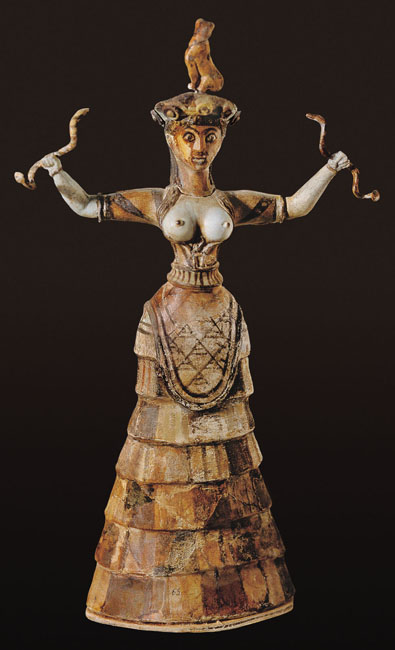
Minoan Snake Goddess 1600 BC

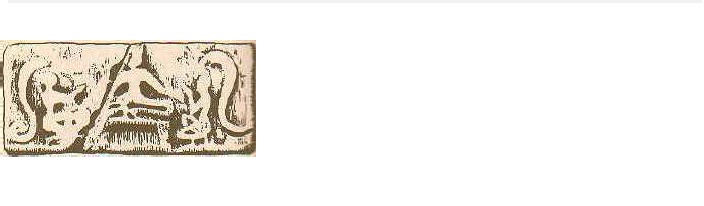
சிந்து சமவெளியில் கிடைத்த முத்திரையில் ஒரு கடவுளுக்கு இரு புறமும் இரண்டு நாகங்கள் படம் எடுத்த நிலையில் இருக்கின்றன. வேதங்களில் நாக ராணியைப் பற்றி பல குறிப்புகள் உள்ளன. இப்போது நடை பெறும் வேத ஆராய்ச்சிகள் பல புதிய உண்மைகளைத் தெரிவிக்கின்றன.
உலகத்தில் பாம்புகளைப் போற்றாத பழைய நாகரீகங்களே இல்லை. வேத காலம், சிந்து சமவெளி, கிரேக்க, எகிப்திய, சுமேரிய ,பாபிலோனிய, மாயா பண்பாடுகள் அனைத்திலும் நாக உருவில் தெய்வங்கள் உண்டு. ஆயினும் இந்துக்களுக்கு இதில் மிகவும் சிறப்பான இடம் இருக்கிறது. வேத காலத்தில் போற்றப்பட்ட நாகங்களுக்கு இன்றுவரை கோவில்கள் இருப்பதைப் பார்க்கிறோம். உலகில் வேறு எங்கும் காணாத புதுமை என்னவென்றால் உயிருள்ள பாம்புகளுக்கே நாக பஞ்சமி அன்று பூஜையும் செய்கிறோம். எல்லா இந்து தெய்வங்களும் பாம்புடன் சம்பந்தப்பட்டவை.

Indus Valley Snake God

ஆர்தர் ஈவான்ஸ் என்ற தொல்பொருள் துறை நிபுணர் கிரீட் தீவில் நாசோஸ் என்னும் நகரில் பெரிய மினோவன் நாகரீக அரண்மனையை அகழ்வாராய்ச்சியில் கண்டுபிடித்தார். அதில் ஒரு பெண் இரு கைகளிலும் பாம்புடன் நிற்கிறார். அவர் தெய்வமா பூசாரினியா என்று தெரியவில்லை. அந்தச் சிலை மேலை உலகில் மிகவும் பிரசித்தி பெற்றுவிட்டது.

மானசா தேவி, நாகராஜன், நாக யக்ஷி முதலிய பல வடிவங்களில் சபரிமலை முதல் சிந்து சமவெளி வரை கோவில்கள் அல்லது பாம்பு ராணி சிலைகள் இருக்கின்றன. அன்று போல் இன்றும் நாகங்களைத் தெய்வமாக வழிபடும் தொடர்ச்சியையும் காண்கிறோம்.

Naga Yakshi

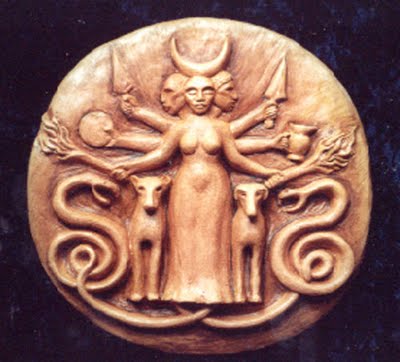
அயர்லாந்தில் ஹெகடெ (சக்தி என்ற சொல்லின் மருவு) என்ற நாகராணியை வணங்கினர். சுமேரியாவில் 5000 ஆண்டுகளுக்கு முன் கபஜா என்னும் இடத்தில் இரண்டு கைகளில் இரண்டு பாம்புகள் உடைய தெய்வத்தைக் காணலாம். இதே தெய்வம் நாக யட்சி என்ற பெயரில் கர்நாடகம் கேரளம் முழுதும் உள்ளன. ஒரிசா, வங்காளம் ஆகியவற்றில் மானசா தேவி இதே உருவத்தில் வழிபடப்படுகிறாள்.

அதிசயச் செய்தி: சுமேரியாவில் தமிழ்?

ரிகவேதத்தில் 27 பெண் கவிஞர்களின் பெயர்களைக் காணலாம். அவர்களில் ஒருவர் பெயர் சர்ப்பராக்ஞி (பாம்பு ராணி). சர்ப்பராக்ஞீ என்ற தெய்வமும் பலவித தைத்ரீயம் முதலிய பிராமண நூல்களில் வருகிறது. தைமத என்ற பாம்புத் தெய்வத்தின் பெயரும் இருக்கிறது. இதை டியாமத் என்ற பாம்புத் தெய்வமாக பாபிலோனியர்கள் வணங்கினர். ஆக வேத கால தெய்வங்கள் 5000 ஆண்டு பழமை உடையவை என்பது நிரூபணம ஆகிவிட்டது.

அதர்வண வேதத்தில் வரும் அலிகி, விலிகி என்ற சொற்களுக்கு பொருள் விளங்காமல் இருந்தது. வேதங்களைப் பற்றி ஆராய்ந்த சுதந்திரப் போராட்ட வீரர் பால கங்காதர திலகர் வேதங்கள் 6000 ஆண்டுப் பழமை உடையவை என்று நிரூபிக்கும் புத்தகத்தில் அலிகி, விலிகி ஆகியன சம்ஸ்கிருதம் அல்ல, அவை அக்கடியன் மொழிச் சொற்கள் என்று எழுதி இருந்தார். இதை இப்போது ஆராய்ந்த டாக்டர் பகவத்சரண் உபாத்யாயா, டாக்டர் நாவல் வியோகி முதலானோர் இந்தச் சொற்கள் கி.மு 3000இல் ஆட்சி செய்த ஆலால, வேலால (தமிழ் பெயர்களாகவும் இருக்கலாம்) என்ற இரண்டு அசீரிய மன்னர்கள் என்று கண்டுபிடித்தனர். இவைகள் உண்மை என்றால் அதர்வண வேதத்தின் காலம் 5000 ஆண்டுகளுக்கு முன் என்றாகிவிடும். மொழி இயல் ரீதியில் இதற்கு மிகவும் முற்பட்டது ரிக் வேதம். உலகின் மிகப் பழைய மத நூல். ஆகவே அது 6000, 7000 ஆண்டுகளுக்கு முந்தியது என்று திலகர் எழுதியது சரி என்றாகிறது.

வேதத்தில் குறிப்பிடப்படும் சரஸ்வதி நதி மறைந்து 5000 ஆண்டுகள் ஆகியதை பாபா அணுசக்தி ஆய்வு மையமும் அமெரிக்க விண்வெளி நாஸா- வும் உறுதி செய்ததாலும் வேத காலத்தின் பழமை உறுதியாகிறது.

(இந்தக் கட்டுரை ஆங்கிலத்திலும் Serpent Queen: Indus Valley to Sabarimalai எழுதியுள்ளேன், பெயர்களின் சரியான ஸ்பெல்லிங் முதலியன தேவைப்பட்டால் ஆங்கிலக் கட்டுரையை வாசித்து கூகிள் செய்தால் மேலும் ஆழமான தகல்களைப் பெறலாம்)

சுமேரியாவின் வரலாற்றை எழுதிய பெரோருஸ் என்ற கிரேக்க ஆசிரியர் ஆதிகால மன்னர்களின் பெயர்களை அளிக்கிறார். ஊர்த்வரேதஸ் (ஒட்டரடெஸ்) மற்றும் துமுசி என்ற பெயரில் இரண்டு மன்னர்கள் சுமேரியாவை ஆண்டனர். ஒரு துமுசி இடையர், மற்றொரு துமுசி மீனவர். ராமன், கண்ணன் ஆகிய மன்னர்களை நாம் எப்படி தெய்வம் ஆக்கினோமோ அப்படி இவர்களை அவர்கள் தெய்வ நிலைக்கு உயர்த்திவிட்டார்கள். இவர்கள் தமிழர்களாக இருக்கலாம். ஏனெனில் துமுசி என்பதை தமிழி என்று வாசிக்கும்படி ஆங்கிலத்தில் எழுதபட்டிருக்கிறது. அதைப் பிற்காலத்தில் டம்முஸ் என்றும் சம்மட என்றும் பல வகையாக எழுதினர். டம்முஸ் என்பதும் தமிழன் என்பதை ஒட்டி வருகிறது.

இது தவிர சுமேரிய மொழிக்கு சிறிதும் தொடர்பில்லாத சுமுகன் என்ற தெய்வப் பெயரும் இருக்கிறது. இது விநாயகப் பெருமானைக் குறிக்கும் தூய சம்ஸ்கிருதச் சொல். பெரோரஸ் என்ற ஆசிரியரின் பெயரையும் வர ருசி என்றும் படிக்கலாம். அவர் சில மன்னர்களின் தலைநகரம் பத்தர்குரு என்று எழுதிவைத்தார். இந்த பத்தர்குரு புராணங்களில் மிகவும் போற்றப்படும் உத்தரகுரு ஆகவும் இருக்கக் கூடும்.

5000 ஆண்டுகளுக்கு முன் இப்படி சுமேரியாவில் தமிழும் சம்ஸ்கிருதமும் இருப்பதை நோக்கும் போது இரண்டு மொழிகளும் ஒரே மூலத்திலிருந்து வந்தவை என்ற பழைய கோட்பாடும் உயிர் பெறுகிறது. இத்துடன் இணைத்திருக்கும் படங்களைக் காண்போருக்கு, உண்மைகள் சொல்லாமலே விளங்கும்.

கீழ்கண்ட எனது கட்டுரைகளையும் படித்தால் முழு சித்திரம் கிடைக்கும்:

1. Bull Fighting: Indus Valley to Spain via Tamil Nadu
2. The Sugarcane Mystery: Ikshwaku Dynasty and Indus Valley
3. Mysterious link between Karnataka and Indus Valley
4. Vishnu in Indus valley seal
5. Indra on Airavata in Indus valley)
*******************

Serpent Queen:Indus Valley to Sabarimalai


Picture shows Indus Snake seal

The most famous snake queen figure came from the Minoan Civilization in the island of Crete. British archaeologist Arthur Evans excavated at the palace of Knossos in Crete and revealed to the world the fascinating details of a new civilization that existed between 2700 BC and 1500 BC coinciding with the Indus Valley Civilization. The famous serpent queen figure is of a priestess holding two snakes in her two hands. The same motif is found throughout in India from Vedic times to modern day. We have a faience figure in Indus Valley with two snakes.


Minoan Goddess 1600 BC

Rig Veda, the oldest religious book in the world, refers to a Sarpa Ranji (serpent queen). Atharva Veda also mentioned two snakes called Aligi and Viligi. Modern research by scholars showed that these were actually the names of two Assyrian Kings who lived in 3000 BC. If it is correct the Atharva Veda predates Indus Valley civilization. The fact that the Vedic civilization is older than the Indus valley is confirmed by the BARC (Bhaba Atomic Research Centre) research on Saraswati River that had frequent references in the Vedas. Saraswati River dried even before Indus culture reached its peak. May be the Indus culture was the continuation of Vedic culture. Now we have two proofs, one from the Assyrian sources and the other from the Vedas to prove its antiquity.

Manasa Devi

The serpent worship is universal. There is no ancient culture without a serpent God. Whether it is Egyptian or Mayan, Indus or Vedic, Minoan or Babylonian we see serpents with Gods and Goddesses. But Hindus are the only race in the world who maintains this culture until today. We have Nagapanchami celebrations celebrated throughout India where live snakes are worshipped. Hindus respect Nature and Environment and use the natural resorces to the minimum.

Snake Goddesses such as Manasa Devi and Naga Yakshi are worshipped in India. The Vedas has an authoress named as Serpent Queen. She was one of the 27 women poets of Rig Veda and her poem is in the Tenth Mandala (10-189). We have two more references to this lady in Taitriya and Aitareya Brahmanas. Sarpa Vidya (science of snakes) is mentioned in Satapatha and Gopatha Brahmanas. (see Vedic Index of name and subjects by authors AB Keith and AA Macdonell,page 438 for more details).

Aligi is the name of a kind of snake in the Atharva Veda (V-13-7) and Viligi, another snake, is also mentioned in the same hymn. Earlier scholars like AA Macdonell and AB Keith mentioned them as snakes in their Vedic Index Volumes. Bala Gangadhara Tilak did lot of research and told us that these were from the Akkadian languages. He dated the Vedas to 6000 BC. Modern research by scholars Dr Bhagawatsharan Upadhyaya and Dr Naval Viyogi showed that they were not snakes, but kings of Assyria- Aligi (Alalu) and Viligi (balalu) of 3000 BC.

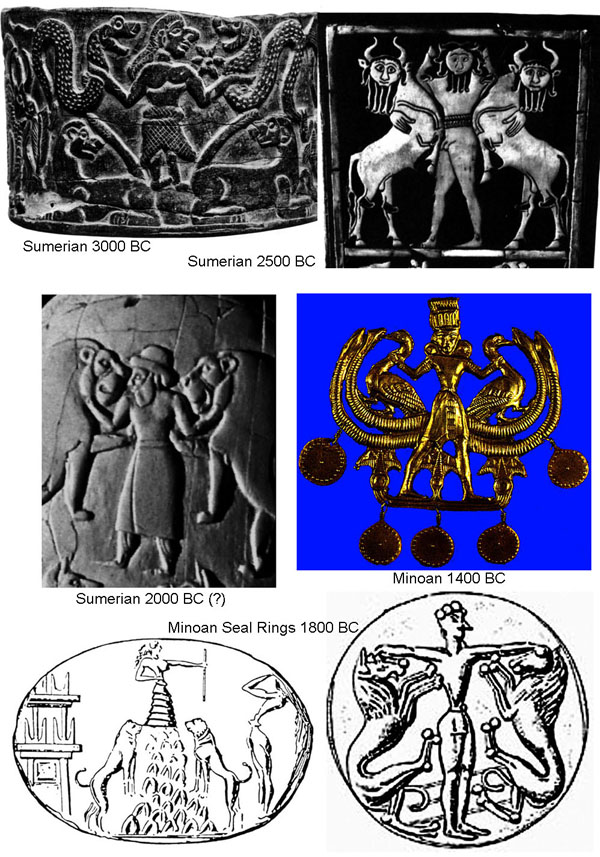
Sumeria 3000 BC (see the top left)

Taimata is twice mentioned in Atharva Veda (V-13-66; V-18-4) as a species of snake according to Whitney and Bloomsfield. Once again the old Vedic translations are wrong. Actually Taimata is nothing but Tiamat found in Babylonian literature as a Goddess. May be it is the corrupted form of Sanskrit DEVA MATA (Goddess). More and more research shows many Sanskrit words in Sumerian and Babylonian literature such as Berorus (Vara Ruci), Ottaretas (Urdhwaretas), Mesopotamian god Dumuzi/Tammuz/Sammata (fish God). They are pure Sanskrit words. One and the same god was called in different names by different cultures at different times and that too in corrupted forms. When we read Sumerian names we have to remove prefixes Nan, Nin,Sin. They are equal to Sri, Sow etc. Future research will prove that they have migrated from India in the remotest time.

Naga Yakshi worshipped in all the Ayyappan temples including Sabarimalai and other goddess temples found in the Middle Eastern countries around 3000BC. We see them in Indus valley and the Vedas as well. (Please see the attached pictures and compare them). A goddess or a god will be holding two snakes in their hans on either side or will be flanked by two snakes. This is nothing new for a Hindu. All the Hindu gods are associated with snakes in one or other form.

My conclusion can be summarized as follows:

1. Vedic translations of Aligi, Viligi and Taimata are wrong and they were all really people, may be people with snake totem (Nagas).
2. Since Atharva Veda mentions Kings who lived around 3000 BC, it must be dated around that period. Rig Veda is (linguistically) older than Atharva Veda.
3. We see snake gods or goddesses in all ancient cultures. In India, we see it from Vedic days. They are worshiped until today proving that Indian culture is the oldest living culture.
4. Last but not the least; such continuity is possible only when this worship originated in India. So we can safely conclude that Hindus went to different parts of the world taking their culture. Like we lost the whole of South East Asia after 1300 year Hindu rule, we lost the Middle East long before that.

Irish Goddess Hekate (Shakti)

(Please read my other articles on Indus Valley 1. Bull Fighting: Indus Valley to Spain via Tamil Nadu 2. The Sugarcane Mystery: Ikshwaku Dynasty and Indus Valley 3. Mysterious link between Karnataka and Indus Valley 4.Vishnu in Indus valley seal 5.Indra on Airavata in Indus valley)

***************

Karnataka- Indus Valley Connection

Sangam Tamil poets composed over 2000 poems. Purananuru is an encyclopaedia of Tamil culture. It has got less than 400 verses. Purananuru verse 201 was composed by Kapilar two thousand years ago. This is a very important verse in Purananuru. It throws much light on early Indian History. Kapilar talks about 49th generation of Irungovel. Famous Tamil Commentator Nachinarkiniyar , who lived several hundred years ago, gave a very interesting story about this verse.

(49th generation: Please read my article How Old is India?)


Nachinarkiniyar said that Agastya brought 12 tribes from Dwaraka ruled by Lord Krishna. Another city in the name of Dwaraka was founded in Karnataka (Mysore) state in the twelfth century. There is an interesting story about how and who founded this city. Hoychalas were the kings who ruled from this city. Hoychala is translated into Tamil as Pulikadimal which is found in verse 201.

Chala was a king belonging to Yadu dynasty. While he was hunting in the Western Ghats, he saw a hare heroically fighting with a tiger. This made him to think that this place must have some special importance. When he followed the fighting tiger and hare, an ascetic who was doing penance ordered king Chala to kill the tiger. The ascetic’s order in Sanskrit was “Hatham Hoy Chala”. So from that day on wards the king and his descendants were called Hoychalas. If the verse 201 refers to this anecdote then it must have happened 2000 years ago.


The story was found in the inscription belonging to Narasimha Hoychala found in Pelavadi in Belur area of Karnataka. Only the detail about the hare is missing in it. But the name of the city mentioned in the inscription was Sasakapuram. In Sanskrit Sasanka is hare. When the area under Sasakapuram was given to King Chala, the goddess belonging to Sasakapuram “Vasanthika” came in the form of a tiger. When the king killed the tiger he became Hoychala. This was confirmed in the Arisikare inscription of Veera Vallala Deva.

Another interesting co incidence is we see tiger goddess in Indus Valley Seals as well. A seal with Half woman Half tiger was discovered. Some people think it may be Proto Durga. Durga was shown riding tiger or lion in later day iconography. She was shown as a forest deity with plants on her head or in her surroundings. Indus Valley has several  female deities. In one of the seals we see seven women dance hand in hand. Sapta matha (Seven sisters or seven women) is found in Hindu scriptures. Seven women dancing together is known as Kuavai Kuthu in Tamil. Seven is a sacred number in Hinduism. But the tiger goddess comes very close to Vasanthika story in Hoychala inscription.

(Also read my article Karnataka-Cambodia connection in Sahasralingam statues)

******************
 

BULL FIGHTING: Indus Valley to Spain via Tamil Nadu


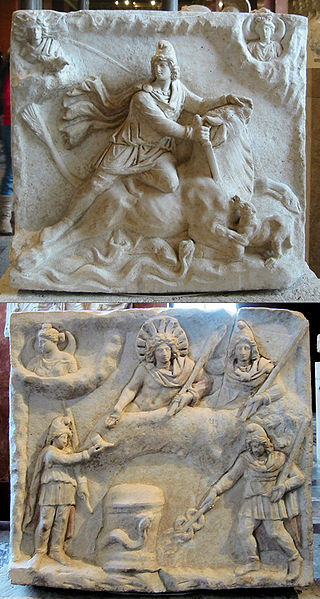
Bull fighting is practised till this day in two different parts of the world- Tamil Nadu in India and Spain in Europe. Both are poles apart culturally and geographically. Bull fighting in Europe is at least two thousand years old. It has its origin in Mithraism cult. They have 2000 year old Roman sculptures showing killing bulls. Mitra is a Vedic God of friendship. We have archaeological evidence about Vedic Mitra from the Bogakoy (Turkey) inscription dated to 1400 BC. All the important Vedic gods Indra, Mitra, Varuna and Ashwins find their place in the inscription of Hittite Friendship treaty with the Mittannis. But the Mithraic cult has nothing to do with the Vedic Mitra. It has come to Europe from Persian Mithra. We did not know how it got corrupted to killing bulls. In the Vedas, Indra was identified with the bull. Probably the Zoroastrians who opposed the Vedic hierarchy of gods and changed them upside down (Asura as Sura and Sura as Asura) might have done it to avenge Indra (bull).


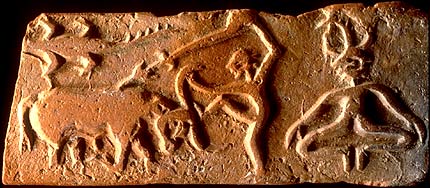
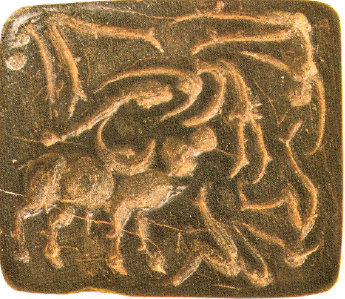
In India the earliest archaeological evidence comes from the Indus Valley seals according to some scholars. But it is doubtful. It looks like a ritual killing of a buffalo to satisfy a god or a goddess. Those who argued that it was the most ancient bull fighting figure did not put together all the available seals. Other available seals clearly show it was a ritual killing of a buffalo to a god or goddess(Please see the pictures) . Bengalis sacrifice buffaloes to goddess Durga during Durga Puja.


If we consider our Hindu mythology pre dates the Indus seals we have the earliest reference of a killing of buffalo in the story of Mahisasuramardhani. Probably this is the only reference to a woman killing a buffalo in the world. In Indus seals men kill buffaloes for the gods. In the story of Mahisasura, it was a demon that comes in the form of a buffalo and got killed by the goddess. There are beautiful sculptures portraying this episode from Mahabalipuram in Tamil Nadu to Ellora in the North.


Bull fighting in Spain started around 18th century. There are different versions of bull fighting. In Spain the bull is killed ,that too with a weapon like we see in the Indus seals. This type of bull fighting has spread to Latin America and Mexico when the Spanish culture was introduced.


Whether it is Tamil Nadu or Spain special kind of bulls are raised exclusively for this purpose with a special type of diet and special training. Tamils have practised this ancient sport for at least two thousand years. They call it Jalli kattu or Manju Virattu or Eru Thazuvuthal. It means chasing the bull or tackling the bull. In ancient Tamil Nadu the horns of the bulls were tied with coins, may be gold coins. Whoever tackled the bull took it and in some places the owner of the bull gave his daughter to the person who tackled the bull. They were considered heroes. Like the Kshatriyas practised Swayamvaram ( a princess choosing her own husband from among the kings and princes), the Yadava Chief’s girls (cowherd community) choose their husbands from among the heroic bull fighters.


Now the bull fighting is conducted every year in Alanganallur, Palamedu, Avaniapuram and several other places around Madurai. Huge crowds gather to watch such events. After protest from animal welfare groups the government has introduced new laws for the safety of the animas and the bull fighters.

Lord Krishna started Bull Fighting


We have lot of proof to believe that the Bull fighting was started by Lord Krishna who was the most popular cowherd (Yadava Kula Tilaka) in the world. Kaliyuga started in 3102 BC after the death of Krishna. But Mahabharata war took place between 1000 and 1500 BC according to majority of the scholars. Even if we go by this date, Krishna was the first one to have a fight with almost all the animals. He fought with an elephant, a bull, a python, a horse, a cran , a donkey and many more . All were set up by his uncle Kamsa according to Hindu mythology. These anecdotes have produced huge literature in Tamil and Sanskrit which has got no parallel in any part of the world. Krishna’s episodes are mentioned in film songs even today in almost all the Indian languages. The bull Krishna fought was Aristasura.


The proof for Krishna starting this comes from 2000 year old Sangam Tamil literature. Kalitokai is one of the eight anthologies of Sangam (Cankam) period. Nalluruthtiranar who sang Mullai Kali gave a graphic description of bull fighting. Justifying his name Shiva (Rudra), the poet mentioned Lord Siva in all his poems. Justifying that it was started during Mahabaharata days the poet gave lot of references to Mahabharata episodes. He said that it was practised by the Ayar community (cowherds)in the pastoral areas.


The poet mentioned how the bulls tear the bull fighters apart like the buffalo riding Yama, God of Death. The colourful bulls are described and compared to various personalities -white bull to Balarama and black bull to Krishna and so on. The Mullaik Kali has got 16 poems beautifully describing the pastoral culture of ancient Tamilnadu. Anyone who reads this Mullaik Kali will get a better picture of how it was practised in ancient Tamil Nadu. All the suspense, gossip, flirting, amorous desires of Ayar girls are dealt with in hundreds of lines- a feast to Tamil lovers.

*****************
 

The Sugarcane Mystery: Indus valley and the Ikshvaku Dynasty

Ikshvaku was the founder of the Solar Dynasty. Lord Sri Rama, Bhageeratha and other great kings of the solar dynasty are well known to the Hindus. What is interesting is that we get more and more evidence to link him with the Indus Valley Civilisation, first Jain Thirthankara, Rishabadeva, the Rik Veda and a Tamil king called Adhiyamaan.

Ikshvaku was mentioned in Rik Veda. The meaning of his name is SUGARCANE. The plant sugarcane (Saccharum officinarum) is mentioned in the Atharva Veda. Ayurvedic authors Charaka and Susruta mentioned the sugarcane in many places. The word ‘sugar’ and the words for sugar in other European languages came from the Sanskrit word ‘Sharkara’. Columbus introduced the sugarcane to the Americas in 1439. Arabs took it from India to other parts of Asia around 8th century AD.

Encyclopaedias say that the people of New Guinea were the first to cultivate sugarcane around 6000 BC. But they did not extract sugar from it. They just chewed it to get the juice out of it. But King Ikshvaku was the first one to show the people of extracting sugar from the sugarcane. That is how he got this name Mr Sugarcane.

Who was Ikshvaku?

Ikshvaku was the son of Vaivasvata Manu who is equated with the King Satyavrata of Dravidian country in whose time the first avatar of Lord Vishnu- Matsyavatara (Fish incarnation) – took place. So all the facts lead us to the remotest period. Ikshvaku was more famous for his just rule rather than sugarcane juice.

Jains have another interesting story about the sugarcane. Their first Thirthankara Rishabadeva (Adi Nath) was the one who taught the people of extraction of sugarcane juice. So he was known as Ikshvaku. Another version is that he took sugarcane juice after a year of fasting. Both the Hindu and Jain Ikshvakus are probably one and the same.

Indus Valley civilisation has evidence to show that they knew sugarcane and sugar extraction. Crystallised sugar was used by the Indus Valley people. Hindu Gods and Goddesses such as Lalitha (Ref. Lalitha Sahasranamam), Kamakshi, Tripura Sundari and the Hindu Cupid Manmatha are depicted holding a sugarcane in one hand. The Sanskrit word Sharkara and these Hindu goddesses prove that sugarcane was very much Hindu and Indian.

Tamil King Adhiyamaan Nedumaan Anji

Another interesting fact about sugarcane is in Tamil literature. The word for sugarcane in Tamil is ‘Karumbu’.The grand old lady of Tamil literature Avvaiyar praised chieftain Adhiyamaan  Nedumaan Anji of Thagadur (modern Dharmapuri in Tamil Nadu)  for his philanthropy in Puranaanuru verse 99. Avvaiyar lived two thousand years ago. While praising him she made a passing remark. She said that the forefathers of Adhiyamaan were the one who introduced sugarcane to the people. If we get all these facts together we get a good picture of sugarcane cultivation in India. Ikshvaku or Rishabadeva was the one who taught people how to get the juice and make sugar. But if Indus valley had it by 3000 BC then we had to push the date of Ikshvaku dynasty or Rishabadeva to 3000 BC as well. Tamils also say indirectly that Adhiyamaan was related to him. The South Indian Tamils corroborate what their North Indian counterparts said about the sugarcane. The idea that it was ‘introduced’ by some king is undeniable. The sugarcane mystery pushes back the date of Ikshvaku dynasty and the Jain Thirthankara to the remotest periods of Indian history.

Other Sanskrit words for sugarcane are Mahashira, Mahapushpaka and for jaggery ‘Gur’ or ‘Gud’ (Tamil word Vellam).

Send comments and feedback to swami_48@yahoo.com.


Vishnu Seal in Indus Valley Civilization

By S Swaminathan

The Dilmun Bahrain Seal

The Dilmun-Bahrain Seal

From the very beginning the westerners who excavated the Indus valley civilization misled the general public by attributing their personal opinions to the seals and objects. Because of their misleading interpretations, we couldn’t decipher the Indus script till today. They put forth some divisive theories such as Aryan Invasion theory. The Aryan –Dravidian theory was   rejected by Swami Vivekananda, Mahatma Gandhi and the great Harijan leader Dr B.R Ambedkar. The other prominent people who rejected the Aryan invasion theory include Kanchi Sankaracharya Swami Sri Chandrasekarendra Saraswathy and Sri Aurobindo.  When the foreigners saw the so called Pasupathy seal they jumped to conclusion that the Indus people were Shaivaites. They never got of this grew and started inventing ‘Lingam’ and ‘Yoni’ in other objects

.


The Indus seal with a figure (god) surrounded by animals was interpreted as Lord Shiva or Proto Shiva (please see the picture). It is true that Shiva was called Pasupathy meaning Lord of the animals. But we could not read the words Shiva or Pasupathy on the seal. What is written on the seals remains a mystery till today. The day the seals are deciphered to the satisfaction of world scholars, most of the Indian History books will be thrown in to Indian Ocean and a new chapter will be written in Indian history.
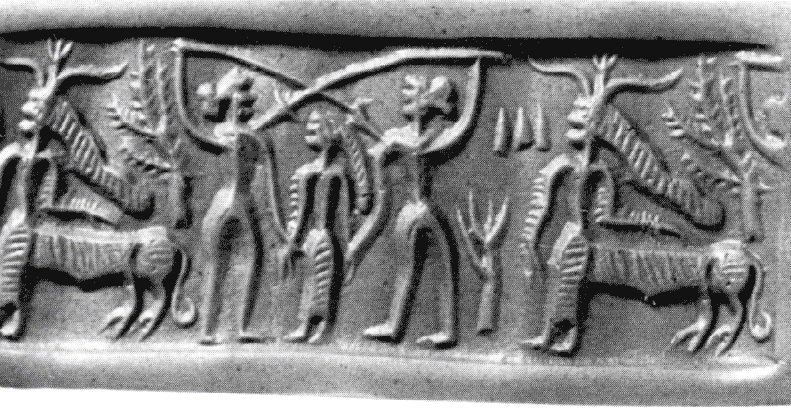
The godly figure surrounded by the animals can be interpreted as Vishnu or any god. We have found seals of gods surrounded with animals even in the Middle East and Denmark. It was common in many ancient cultures (Please see the pictures of Gundestrup cauldron and the Middle Eastern god).

The Gundestrup Cauldron

Indus god has crowns made by horns. In Sanskrit and Tamil, a horned person means a great person. Tamils have a saying ‘Are you a big Komban (horned person) to expect a royal treatment?’ (Tamil: Nee Enna Periya Kombano?). Sanskrit poets also have used this expression. They call horned person as a Sringan. The greatest of the Indian poets Kalidasa even plays pun on this word in his Raghuvamsa Kavya. Kings are described as Veerya Sringan. (Komban in Tamil has another meaning i.e. a single male elephant with big tusks).
Vishnu  Sahasra Namam ( 1008 names of Lord Vishnu) describes Lord Vishnu as Maha Sringan (Name 536) meaning the great horned one.  Adi Sankara commenting on this word quotes another name from Rik Veda  4.38.3 and Taitriya Aranyaka 1.10.17 which describe god as ‘Chathwari Sringa: ‘meaning a person with four horns. Name 139 ‘Chathur Dhamstraya’ means four horns or one who with four teeth. Adi Sankara mentions both in his commentary.
In another place in the Sahasranama (1008 names) Vishnu is described as god with more than one horn ( Name 763 ‘Na Eka sringaya ‘meaning not with one horn).
One who looks at the Indus god with horns after reading Kalidasa, Rik Veda and Vishnu Sahasra Nama along with the Tamil saying ‘Nee Enna Periya kombano’ can’t but think of Lord Vishnu.  The figure of an Irish God and the Middle Eastern God were also surrounded by the animals. No one had commented upon them as Shiva!
Indus Fish symbol and Vishnu
Another interesting coincidence is ‘Vishnu Sahasra nama ‘ describes Vishnu as a Red Colour Fish –‘Rohithaya’ (name 364). More over Lord Vishnu’s first incarnation was a Fish ( Matsya Avatar) and many Indus scholars agree that the Indus fish symbol denotes god.
Interestingly the peepal leaf (Arasa Maram in Tamil,Aswatha in Sanskrit, Ficus Indica in Latin) is drawn on many seals and objects in the Indus valley. This tree is worshipped by the Hindus for thousands of years. In Tamilnadu most of the Ganesh temples are under the Peepal tree (arasa maram). Vishnu Sahasranama associates Lord Vishnu with three trees and one of them is Aswatham (name 824 ‘Aswathaya Nama:).
In the Viswarupa Darshan chapter of Bagawat Gita, Lord Krishna says that he is Surabhi among the cows, Lion among the animals, Airavatam among the elephants, Uchairsravas among the horses, Garuda/eagle among the birds and shark among the fishes. Among the Avatars, fish, tortoise, pig and goose (Hamsa) figure. This proves the link between the animals and Lord Vishnu.
In conclusion we see Lord Vishnu in the Fish symbol, in the tree symbol and in the animal seal symbol of Indus valley.
How many horned Gods are in Indus?
My study shows there are at least three different horned gods in the Indus valley. Apart from the ‘pasupathi seal’ there are other seals where the gods or the godly men sit in yogic posture. Their horns are different. We have to study them closely to identify them. The writing on the seals is also different. May be they are different gods. The fish symbols in all the three seals also differ in one or two details.
Vishnu Sahasranama in Cankam Literature
Tamil Cankam (also spelled Sangam) literature mentions Hindu Gods and the Vedas in hundreds of places. The oldest Tamil book Tolkappiyam even mentions Indra and Varuna as gods of the Tamil lands. (Ref. ‘Mayon meya kadurai ulakamaum———-‘).
Vendhan (Indra) is the god of Marutham and Varunan is the god of NeithalMarutham is cultivated field and its surrounding areas and Neithal means sea and its surrounding areas.
Old Tamil scholars have already pointed out that Natrinai,one of the Tamil anthologies of Cankam period has a verbatim translation of a Vishnu Sahasranama sloka. The Sahasranama dyana sloka starting ‘’bu padau yasya nabir————‘’ compares Lord Vishnu to earth and the heavenly objects. The same lines appear in the prayer song of Natrinai starting with ‘’Maanilam sevadiyaaka——————–‘’.Both describe sun and moon as the eyes of Lord Vishnu. The Natrinai prayer song was composed by Bharatham paadiya perunthevanaar.
Pictures sourced from Wikipedia.
Please email me at: swami_48@yahoo.com with comments or feedback. Alternatively, follow me on Twitter @swami_48 and through Facebook.