Nature in Indian Villages (Post No.2978)


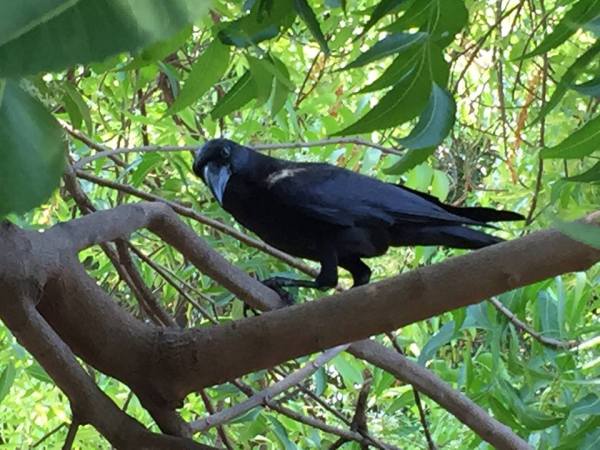
crow kaka

Compiled by London swaminathan

Date:17 July 2016

Post No. 2978

Time uploaded in London :– 7-45 AM

( Thanks for the Pictures)


DON’T REBLOG IT AT LEAST FOR A WEEK!  DON’T USE THE PICTURES; THEY ARE COPYRIGHTED BY SOMEONE.


(for old articles go to tamilandvedas.com OR swamiindology.blogspot.com)


Following piece is an interesting excerpt from a 100-year-old book written by a Muslim scholar: –


Source : Life and Labour of the People of India by Abdullah Yusuf Ali, Barrister at Law, London, 1907
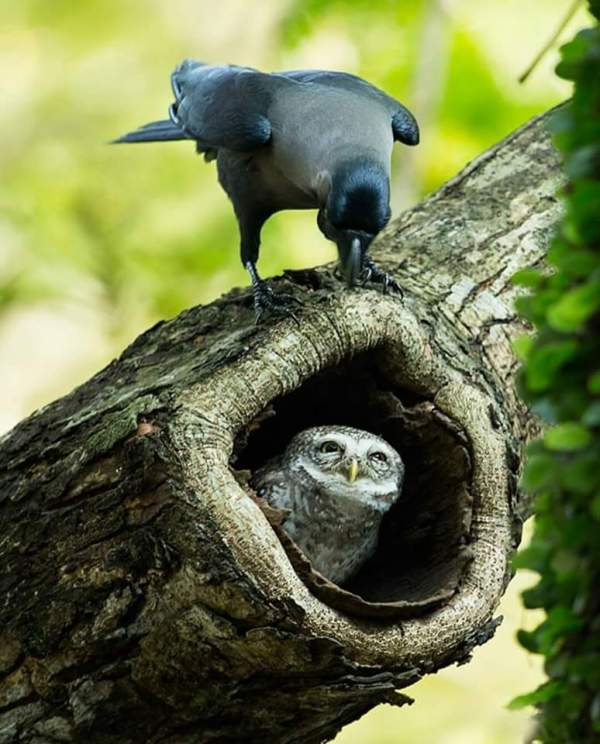
owl and crow

“It will be noticed that there are very few trees in the village. Those which do exist cluster together in well-defined groves. The largest tree area is that within or surrounding the village site. Among the fields here and there are two or three groves of mango trees. There are isolated trees of that kind that yield timber, such as the tun, the shisham, or the niim. The mango tree itself yields timber, but it is principally grown for the sake of its fruit, and on that account is very valuable. Usually if there is an isolated tree, its shade is detrimental to the crops in the immediate vicinity, and therefore agriculturists always try to plant clumps or clusters in those parts of the village which are not very fertile for ordinary crops.


Snakes and Banyan Trees


The shade trees such as the banyan or the pipal, are generally in or around the village site. They often mark the shrine of a tribal or local god, and sometimes harbour snakes in their hollow trunks. As the snake, however, is considered sacred, and is sometimes looked upon as the guardian genius of the village, the villagers entertain no fear on that account. They sometimes feed them with milk, and therefore the snakes themselves rarely molest the human beings around them.


In the branches of these spreading trees there is a large quantity of bird life. Pigeons, doves, mainas, gree pigeons, sparrows, crows, and owls find a habitation there; while the pretty striped squirrel that skips with such wonderful agility from branch to branch, and playfully descends to the ground to snatch, it may be, a piece of bread from a village urchin, serves to diversify and render lively the ordinarily sober and lazy animal life around.
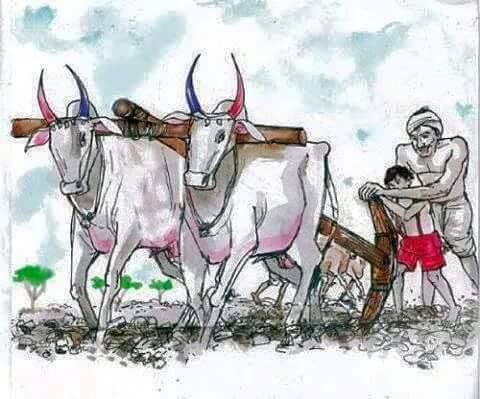
er uzavan picture

Herds of antelope – the famous black buck of India – roam wild from village to village. They are so tame to the villager that they will allow him to approach within ten yards of them; but with sportsmen they enter into the spirit os sport, and “play the game”. Lucky would be the sportsman who can get within rifle-shot of three fine heads of a morning. In spite of their long, straight spiral horns, which attain a length of 18 to 28 inches, they can make their way through dense sugarcane fields with ease. The villager look them upon as harmless friends, except when they approach too near the village site, and begin to nibble at the young green shoots of valuable crops in the immediate vicinity of habitations. Here the land is freely and specially manured, and the crops are more valuable; but as soon as the villagers have driven off the black buck, there comes a troop of monkeys who begin to help themselves to the more advanced corn. These cannot be quite driven away. On the approach of men they climb up into the branches of the trees, but descend again immediately the danger is past.”
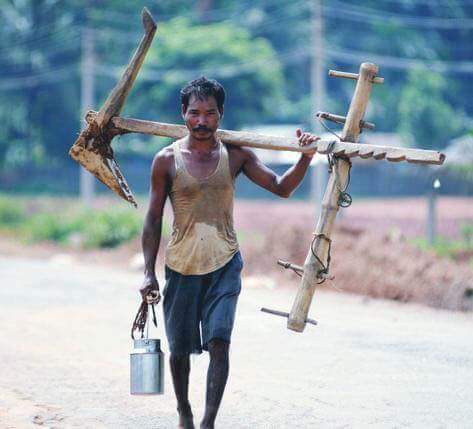
Er, plough

—Subham–
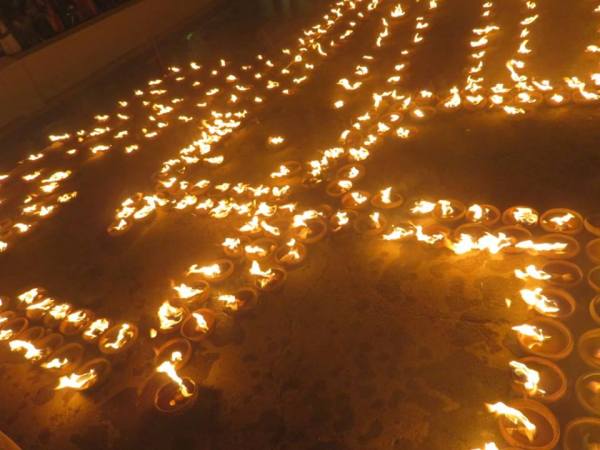
Manasarovar-Himalayan Beauty

12-gurla-mandhata-and-lake-manasarovar-from-seralung-gompa

Mysteries of Himalayan Lake Manasarovar

Compiled by London Swaminathan
Date 25 June 2016
Post no 2918

Source book:- Kailas Manasarovar by Swami Pranavananda,
240 miles from Almora in UttarPradesh and 800 miles from Lhasa in Tibet stand Mount Kailash and Lake Manasarovar constituting one of the grandest of the Himalayan beauty spots.

The holy Manasarovar or Manasa Sarivar , the Tso Maphang or Tso Mavang of Tibetans , is the holiest, the most fascinating, the most inspiring, the most famous of all the lakes in the world and the most ancient that civilisation knows.

She is majestically calm and dignified like a bluish green emerald or a pure torquoise set between the two mighty and equally majestic silvery mountains, the Kailash on the north and the Gurla Mandhata on the south and between the sister lake Rakshas Tal or Ravana Hrada (Langake Tso) on the west and some hills on the east.

From the spiritual point of view, it has a most vibration of the supreme order that can soothe and lull even the most wandering mind into sublime serenity and can transplant it into involuntary ecstasies.

The circumference of Manasarovar is 54 miles. The vast expanse of the lake is on the Tibetan plateau,14,950 feet above the sea level. It is 300 feet deep and covers an area of 200 square miles.

There stands eight monasteries on the holy shores , wherein Buddhist monks strive all their lives to attain the sublimity of the eternal silence of Nirvana.

Two versions of Kangri Karchak – the Tibetan Kailasa Purana have been published in Tibetan.

manasarowar-see

The water of Manasarovar is as sweet as that of any river. The holy Manas provides fine caves on her shores. One comes across boulders as smooth and round as pebbles and also slabs as finely cut and shaped as slates. It is warm on Gossed sides and cold on other sides. In spite of the existence of hot springs the Chiu hill side is very cold.

From one monastery the lake presents fine view of her northern neighbour, the Kailash, and from another the Rakshas Tal is presented beautifully.

On full moon nights, with the full moon over head, the scene is simply indescribable. At sunset the whole of the Kailash range on the north becomes a fiery region all of a sudden, throwing an observer into a spell of trance, and by the time he returns to consciousness, he sees only the silvery peak in his front.

One of the wonders is snow fall from a clear blue sky. You will see a clear blue sky and bright sun above and a bed of pearl like hail and white snow on the ground. Hence the oft quoted Hindi couplet:

Manasarovar main parase
Bin basal him barse

“who can approach Manasarovar where snow falls without clouds? Such phenomena form sufficient material for the ecstatic outbursts of a poet”

At night time people see “stars” falling into the lake. Astronomers say that they are meteorites. Devotees believe that they are holy souls descending to earth.

Royal Swans
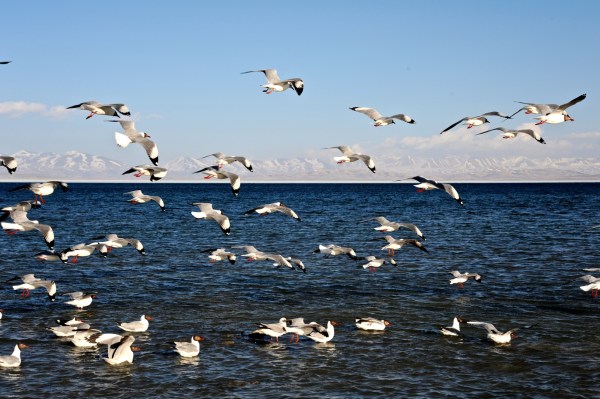
There are three varieties of aquatic birds in Manasarovar area. One type of birds go up to Chilka lake in Orissa on the east and on the west up to Surat and Malwa. Kalidasa also sang about the Himalayan swans.

simikot-to-kailash-manasarowar-trekking

Pressure and Sounds
From January first, occasional sounds and rumblings began to be heard now and then and from seventh they become more disturbing and terrible for about a monthly. When the lake is frozen during winter there appears fissures and chasms 3 to 6 feet broad, partitioning the entire lake. Within a day or two water in fissures freeze and slabs and blocks of ice pile upto six feet.

A series of peculiar phenomenon takes place on the frozen lake which is impossible to describe fully. In some places due to coastal explosions huge blocks of ice 20 to 50 cubic feet in volume get hurled and cast ashore to distances ranging upto sixty feet .

Rakshas Tal
At a distance of 2 to 5 miles to the west of Manasarovar is the Rakshas Tal, also known as Ravana Hrdda where Ravana of Lanka fame was said to have done penance to propitiate Lord Shiva . It is called Langake Tso in Tibetan. La means mountain Nga means five and Tso means lake. It means that there are five mountains drowned in it. (My opinion is that five hills were drowned during an earth quake)

Tempestuous winds we’re blowing and the paths were full of sharp stones. The water is crystal clear and swimming fishes can be seen. Brahmins ducks are seen in the lake. Kiangs are seen grazing in the nearby grass land. Holy Kailash with all its majesty and sublime serenity was reflecting in it, as if in a mirror.

The main three perennial rivers of India Ganga, Sindhu and Brahmaputra originate from this area. That is the main feeder streams are coming from this area. No wonder it is sung by poets and saints for at least 3500 years.

There are three Thermal Springs near Manasarovar.
On the shores of the lake a wonder drug called Thuma is found. It has aphrodisiac quality. Wild rats collect it and store it. It is difficult to collect even half a pound in one day.

–Subham–
Circus Elephant: Gratitude Anecdotes (Post No.2906)

snoring

Compiled by London swaminathan


Date: 18  June 2016


Post No. 2906


Time uploaded in London :– 14-05


( Pictures are taken by London swaminathan)


DON’T REBLOG IT AT LEAST FOR A WEEK!  DON’T USE THE PICTURES; THEY ARE COPYRIGHTED BY SOMEONE.


(for old articles go to tamilandvedas.com OR swamiindology.blogspot.com


me-snoring

An old deacon, having occasion to spend a night at a hotel, was assigned a room containing three single beds, two of which already had occupants. Soon after the light was extinguished one of these began to snore so loudly as to prevent the deacon from getting to sleep. The tumult increased as the night wore away, until it became absolutely fearful. Some two or three hours after midnight the snorer turned himself in bed, gave a hideous groan, and became silent. The deacon had supposed the third gentle man asleep, but at this juncture he heard him exclaim,

He is dead! Thank god. He is dead!

Xxxx


Are you fond of lobster salad? Asked the hostess of the Doctor.


No, he replied, I am not fond of it but I am grateful to it.


Xxx

It is my Corn!

You have much to be grateful for, said the clergyman to the old farmer,

Providence cares for us all . Even the birds of the air are fed each day.

Yeah, growled the farmer, off my corn.


Xxx


Hot_Springs_13546

Complaint: God is not giving us soap!

In some parts of Mexico hot springs and cold springs are found side by side. The women often boil their clothes in the hot springs and rinse them in the cold springs. A tourist who had been watching the procedure, remarked to his Mexican friend, I guess

They think old Mother Nature is pretty generous.


No, senor, the other replied,

There is much grumbling because she supplies no soap.


Xxx


Not withstanding his long career of snatching killers out of the clutches of the law, Samuel Leibowitz is not an admirer of the class. He considers them unlovable natures and born ingrates. Demonstrating this, he notes that no single one of the 78 men whom he has saved from the chair ever sent him a Christmas card.


Xxx


elephamts

Dr Walter Adams elephant story (posted by me here on 11/7/2015)

Indians are very familiar with the stories of gratitude. We have such stories in the Panchatantra fables. But I am not going to repeat those fables. Here is a real life story:

Dr.Walter Adams, astronomer at Mount Wilson Observatory told a story of gratitude:

“A hunter in the jungle came across an elephant limping. The hunter followed it. Finally it toppled over. The hunter examined its feet. In one there was a large thorn. This he removed

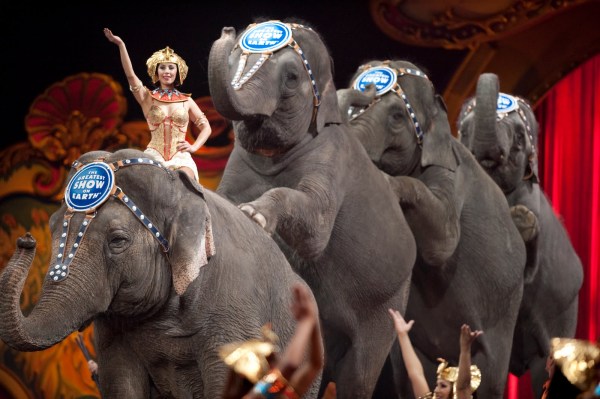
Years passed and the hunter was in a cheap seat at a circus. A turn was given by a troupe of performing elephants. One of these elephants reached in its trunk, encircled his waist, and lifted from his cheap seat and set him down in a seat in a private box.


Xxx

Snake and Frog

Snake and Frog

frog-_1837515b

While fishing one day, said the old timer, I ran short of bait and and temporarily at loss as to what to do. Upon looking down near my feet, I noticed a small snake which held a frog in its mouth I removed the frog and cut it up for bait, feeling very fortunate that my eyes had lighted on the snake at that moment.

I did, however feel a bit guilty at relieving the poor reptile of his meal, and in order to give him a slight recompense for my supply of bait, I poured a few drops of whisky into its mouth. Fortunately for my conscience, the snake seemed to leave in a contented mood, and I turned and went on fishing.

Sometime had passed when something hitting against the leg of my boot. Looking down I saw the identical snake, laden with three more frogs.

–Subham–
7 Types of Rains, 7 Types of Winds: Meteorology in Hindu Scriptures! (Post No.2879)

earth-atmosphere-layers

Research Article written by London swaminathan


Date: 8 June 2016


Post No. 2879


Time uploaded in London :–  18-58


( Thanks for the Pictures)


DON’T REBLOG IT AT LEAST FOR A WEEK!  DON’T USE THE PICTURES; THEY ARE COPYRIGHTED BY SOMEONE.


(for old articles go to tamilandvedas.com OR swamiindology.blogspot.com


15 names for cloud in Sanskrit

Amarakosa, world’s first thesaurus, gives fifteen names for clouds. They are:–

Abram, Meghah ,Vaarivaahah, Stanayitnuh, Bhalaahakah, Dhaaraadharah, Jaladharah, Thadithwaan, Vaaaridah,Ambhubrth, Ganah, Jiimutah,Mudirah, Jalamuga, Dhuumayonih

chart-cloud-types

Seven types of Rains

Following seven types of clouds bring sven types of rains:

Samvartam-  Rain of gems

Avartam- water (we experience it)

Pushkalaavartam- gold (kanakadhara Stotram)

Sangaaritam –flower (Devas)

Dronam- sand (Sahara desert sand storm)

Kalamukhi- stone (hailstorm, meteorite shower)

Neelavarnam- fire (volcanoes, Tsunami)


We have some evidence for the six types of rains in the above list.

Rain that pours down water from the sky is known to everyone.

Tungurahua-volcano-

Rain of fire is seen by people living nearby volcanoes. Tsunami waves and worst storms also produce electricity over waves and cause fire accidents. Hindu scriptures describe the Great floods and Armageddon fire.

Rain of stone is caused by meteorite belt, when the earth crosses it every year; but the atmosphere burns most of the meteorites. Yet some areas on earth experience rain of stones. Hailstorms are also described as rain of stones.

Rain of gold: This happened in the life of the greatest of the Indian philosophers Adi Sankara. When he went begging for food (as was the custom for ascetics), a poor lady did not have anything except a gooseberry in her pickle bottle. When she placed it in his begging bowl, he shed tears and prayed wholeheartedly to Goddess to shower wealth on her. And there was a shower of golden gooseberries! Hindus even today sing that hymn Kanagadara Stotra meaning hymn of golden rain.

sandstorm

Sand rain

Sand rain is very common in the Middle East and North African countries. Very often flights are cancelled due to sand storms. Weather is also affected by the dust from the Sahara desert. Two Tamil cities were destroyed by sand rain according to legends authenticated by Tamil literature.


Please read my earlier article in this blog:-

Sand Storms destroyed Two Tamil Towns! (7-12-2013)


Hindu scriptures describe the rain of flowers by angels in hundreds of places. Whether it is true or not, Indian politicians very often experience rain of flowers from their supporters. During weddings, Hindus shower flowers on the couples. Brahmin priests recite a flower mantra (Yo paam pushpam vedaa) in all the Pujas and shower flowers on the statues. So rain of flowers is a common sight in India.

Rain of gems is known in the heaven.


How rain is produced –

Kalidas and other ancient poets knew that water from the sea and other water sources on earth gets evaporated into steam and form rainy clouds. Kalidas has used it in his similes.

cloud_types

Names for Thick Clouds:- Megamaalaa, Kadambhini

Ten words for Lightning:–Sampaa, Satahrtaa, Hraadini, Airavatii, Kshanaprabaa,Thadith, Saudaaminii, Vidyut,Sanchalaa,Sapalaa


Seven types of Atmospheric Layers

Sakuntala drama of Kalidasa has a reference to the different pathways in the heaven (Act 7-5); commentators explain all the seven paths as follows:

“According to Hindu mythology, the heavenly region is divided into Seven Paths, with a particular Vayu/wind is assigned for each.


The first of these Vayupathas or vayu margas is identical with the bhuvar loha., or atmospheric region, extending from earth to sun. The wind assigned to this area is AVAHA.


The other six make up the Swar loka or heavenly region with which Swarga (paradise) is often identified in the following order:-

The second marga/path is that of the sun; and its wind called PRAVAHA, causes the sun to revolve.

Third path is that of moon and its wind is SAMVAHA impels the moon

Fourth is that of the stars or lunar constellations and its wind is known as UDVAGA; this causes the stars to revolve.

Fifth path is that of the planets and its wind is VIVAHA

Sixth is that of the Saptarishi or Greta Bear Constellation and the Milky Way; its wind PARIVAHA bears along these luminaries.

And the last- seventh- is that of the Dhruva or Pole Star; the pivot or axis of the whole planetary system; its wind is PARAVAHA, causing the revolution of the Pole Star (Dhruva Star).


Scientific Facts

These divisions may not correlate with the modern divisions; but yet it shows the scientific bent of mind of our forefathers; dividing them into different types or categories, assigning them different roles – show their keen observation and deep study. What they said about ‘winds’ may be different rays, pulses and waves from the sky.


Rain plays a key role in Hindu scriptures. They worship water and its God Varuna from the Vedic days. Tamil books also give at least ten names for clouds and a prayer to Rain (god).

–subham–


இந்துக்களின் கண்டுபிடிப்பு: ஏழு வகை மழை, ஏழு வகை காற்று (Post No 2878)

earth-atmosphere-layers

Research Article written  by London swaminathan


Date: 8 June 2016


Post No. 2878


Time uploaded in London :–  17-45


( Thanks for the Pictures)


DON’T REBLOG IT AT LEAST FOR A WEEK!  DON’T USE THE PICTURES; THEY ARE COPYRIGHTED BY SOMEONE.


(for old articles go to tamilandvedas.com OR swamiindology.blogspot.com


உலகின் முதல் நிகண்டான அமரகோசத்தில் மேகத்துக்கு 15 சம்ஸ்கிருத சொற்கள் கொடுக்கப்பட்டுள்ளன. ஏழு வகை அதிசய மழைகளையும் சம்ஸ்கிருத நூல்கள் உரைக்கின்றன. காளிதாசனின் சாகுந்தல நாடகத்துக்கு உரை எழுதியோர் ஏழு வகை ஆகாய மார்கங்களையும் எடுத்துக் காட்டுகின்றனர். இவைகளில் 75 விழுக்காட்டுக்கு விஞ்ஞான விளக்கம் கிடைக்கிறது. மீதியை இனித்தான் விஞ்ஞானம் கண்டுபிடிக்குமோ!


ஏழுவகை மழைகள்:-

சம்வர்த்தம் – மணி (ரத்தினக் கற்கள்)

ஆவர்த்தம்- நீர் மழை

புஷ்கலாவர்த்தம்- பொன் (தங்க) மழை

சங்காரித்தம் – பூ மழை (பூ மாரி)

துரோணம் – மண் மழை

காளமுகி- கல் மழை

நீலவருணம் – தீ மழை (எரிமலை, சுனாமி)

cloud_types

இந்த ஏழு வகை மழைகளில் நாம் எல்லோரும் அறிந்தது நீரைப் பொழியும் மழை.

மற்ற மழைகளைப் பற்றி பத்திரிக்கைகளிலும் புத்தகங்களிலும் படித்து வியக்கிறோம். சில எடுத்துக் காட்டுகளைப் பார்ப்போம்.

தங்க மழை:

ஆதி சங்கரர் சிறு வயதில் ஒரு வீட்டு வாயிலில் நின்று “பவதி பிக்ஷாம் தேஹி” (தாயே! பிச்சை போடுங்கள்) என்று சொன்னார். அந்த வீட்டுப் பெண்மணி, பரம ஏழை. ஓடிப்போய் சமையல் அறையில் பார்த்தாள்; ஒன்றும் கிடைக்கவில்லை. பாத்திரங்களை உருட்டினாள். ஒரு ஊறுகாய் ஜாடியின் கீழே ஒரே ஒரு நெல்லிக்காய் ஒட்டிக்கொண்டிருந்தது. ஓடோடி வந்து அதைப் பிச்சைப் பாத்திரத்தில் போட்டார். சங்கரனின் கண்களில் இருந்து கண்ணீர் ‘பொல பொல’ என்று உருண்டோடியது. பரம கருணை மிக்க தாயே! உனது நல்லாட்சியில் இப்படி ஒரு வறுமையா? என்று அம்பாளை வேண்டி ஒரு துதி பாடினார். தங்க நெல்லிக்காய்கள் மழையாகப் பொழிந்தது. அந்தத் துதியின் பெயர், ‘தங்க மழை போற்றி’ (கனகதாரா தோத்திரம்).

பூ மழை

தேவர்கள் சந்தோஷப் படும்போதெல்லாம் பூ மாரி பெய்ததாக நமது புராணங்கள் பேசுகின்றன. அது உண்மையோ இல்லையோ நாம் அரசியல் தலைவர்கள் மீது பூ மாரி பெய்யும் பல படங்கள் அவ்வப்போது வெளி வருகின்றன. இதுபோல உற்சவ காலங்களில் கடவுள் சிலை மீது பூ மாரி பெய்கிறோம். திருமணத்தில் ஆசீர்வாத காலத்தில் மணமக்கள் மீது பூ மழை பெய்கிறோம். பிராமணர்கள் ‘யோபாம் புஷ்பம் வேதா’ – என்ற நீண்ட மந்திரம் சொல்லி இறைவனுக்கு பூமாரி பெய்வதுமுண்டு.

sandstorm


மண்மழை

உறையூரும், திருமலைராயன் பட்டிணமும் எப்படி மண்மழையில் அழிந்தது என்று முன்னரே எழுதிவிட்டேன். கீழ்கண்ட எனது கட்டுரையைப் படிக்கவும்.

மணலில் புதைந்த இரண்டு தமிழ் நகரங்கள் ( 7 டிசம்பர் 2013)

Sand Storms destroyed Two Tamil Towns! (7-12-2013)


பாலைவனத்தில் அவ்வப்பொழுது மணற் புயல் ஏற்பட்டு விமான சர்வீஸ் ரத்தாவது வட ஆப்பிரிக்க நாடுகளிலும் மத்திய கிழக்கு நாடுகளிலும் வசிப்போருக்குத் தெரியும். சஹாரா பாலவன மண், ஐரோப்பா வரை வந்து வானிலை மாற்றங்களை உண்டாக்குவதையும் பத்திரிக்கைகளில் காணலாம்.

கல் மழை

சில நேரங்களில் ஐஸ்கட்டி மழை பெய்கையில் அதை ஆலங்கட்டி மழை என்போம். பெரிய பெரிய கூழாங்கற்கள் அளவுக்கு பனிக்கட்டி விழும். ஆனால் சில நேரங்களில் காற்றின் சுழற்சி காரணாமாக மேகங்கள் நீர் நிலைகளிலுள்ள மீன்கள், தவளைகள், கற்களுடன் மழை பெய்த செய்திகளையும் நாளேடுகளில் படிக்கிறோம்.


எரிமலை அருகில் வசிப்போருக்கு கல் மழை மிகவும் சர்வ சாதாரணம். இது தவிர பூமி தனது வட்டப் பாதையில் செல்கையில் ஆண்டுதோறும், சில குட்டி கிரகங்கள், விண்கற்கள் ‘பெல்ட்’டைக் கடக்கையில் எரிகற்கள் மழை பெய்வதுண்டு. அவைகளில் பெரும்பாலானவை காற்று மண்டலத்தில் எரிந்து விடும்.


Tungurahua-volcano-

தீ மழை

சுனாமி வருகையிலும், எரிமலை பொங்குகையிலும் தீ மழை பொழிகிறது. சுனாமி பேரலைகள் மிகவும் அதிக மின்சாரத்தை உற்பத்தி செய்வதால், கடலில் தீ தோன்றும் அதிசயச் செய்திகளுமுண்டு.

காளிதாசர் தரும் அற்புதச் செய்தி

காளிதாசர், சாகுந்தலம் என்ற நாடகம் செய்திருக்கிறார். அதில் (7-5) காற்று மண்டலம் ஏழு பிரிவுகளாகப் பிரிக்கப்பட்டதில் நமது விமானம் எந்தப் பிரிவில் உள்ளது என்று மன்னர் கேட்கிறார். அதற்கு உரைகாரர்கள் எழுதிய உரையில் இந்து புராணங்கள் வாயு மண்டலத்தை ஏழு பிரிவுகளாகப் பிரித்து ஒவ்வொன்றுக்கும் ஒரு பெயர் கொடுத்திருப்பதை எடுத்துக் காட்டுகின்றனர்.

முதலாவது வாயு ஆவாஹ என்றும் அது  புவர்லோகத்தில் பாயும் என்றும் அந்தப்பிரிவில் பூலோகம், பாதாள லோகம், மற்றும் சூரியன் வரையுள்ள வாயு மண்டலம் அடங்கும் என்றும் உரைகாரர் கூறுவர். மற்ற ஆறு வாயு மண்டலங்களும் சுவர் லோகத்தில் (சுவர்க) இருப்பதாகவும் சொல்லுவர். இதிலுள்ள இரண்டாவது வழி ப்ரவாக என்றும் இந்த வாயுதான் சூரியனைச் சுற்றச் செய்கிறது என்றும் சொல்கின்றனர். மூன்றாவது வாயு சம்வாஹ- அது சந்திரனை இயங்கச் செய்கிறது. நாலாவது நட்சத்திர மண்டலம்; அங்கே உத்வாஹ என்னும் காற்றுள்ளது. ஐந்தாவது கிரகங்கள் அருகிலுள்ள காற்று; அதன் பெயர் விவாஹ; ஆறாவது காற்று சப்தரிஷி மண்டலத்தில் இயங்கும் அதன் பெயர் பரிவாஹ. அதுதான் பால்வளி மண்டலம் – மில்கி வே –  நட்சத்திரப் பகுதி. அங்கேதான் இப்பொழுது இந்திரனுடைய விமானம் சென்று கொண்டிருக்கிறது.


ஏழாவது வாயு துருவ நட்சத்திரப் பகுதியில் உள்ளது. அந்த துருவன் தான் எல்லா நட்சத்திரங்களியும் கிரகங்களையும்  சக்கரத்திலுள்ள ஆரம் எல்லாம் அச்சாணியில் இணைக்கப்பட்டிருப்பது போல கட்டி வைத்திருக்கிறான்.  அங்கே இயங்கும் காற்று பரவாஹ.

chart-cloud-types

அறிவியல் சிந்தனை:

விஷ்ணு புராணத்திலும் இக்கருத்துள்ளதால் 2000 ஆண்டுகளுக்கு முன்பே அவர்கள் மில்கி வே, சப்தரிஷி மண்டலம் வரை சிந்தித்துள்ளனர் என்று தெரிகிறது. எல்லாம் ஓவியத்தில் வரைந்த படங்கள் போலில்லாமல் இயங்குவதையும் அறிந்திருந்தனர். அவர்கள் சொல்லும் வாயுவை நாம் காற்று என்று மொழிபெயர்க்காமல்  பலவித கதிர்கள், அலைகள், ஒலிகள் என்று பொருள் கொள்ள வேண்டும். முதலில் இப்படி மேகங்களையும் காற்று மண்டலத்தையும் பிரித்த முதல் விஞ்ஞானிகள் இந்துக்களே. இப்போது நாம் மேகங்களை வேறுவிதமாகப் பிரிப்ப்தை வானிலை இயல் நூல்களில் காண்கிறோம். அறிவியல் சிந்தனை இருந்தால்தான் இப்படிப் பலவகை பிரிவுகளைச் செய்திருக்க முடியும்.

அமரகோசத்தில் 15 பெயர்கள்

உலகின் முதல் நிகண்டான (திசாரஸ்) அமரத்தில் கீழ்கண்ட பெயர்கள் மேகம் என்ற பொருளில் வழங்கப் படுவதாக அமர சிம்மன் சமஸ்கிருதத்தில் எழுதியுள்ளார்:–

அப்ரம், மேக:, வாரிவாஹ:, ஸ்தனயுத்னு:,

பலாஹக:, தாராதர:, ஜலதர:, தடித்வான், வாரித:, அம்புப்ருத், கண:, ஜீமூத:, முதிர:, ஜலமுக், தூமயோணி:.

மேகக் கூட்டத்துக்கு மேக மாலா, காதம்பினி என்று பெயர்.


தமிழில்:– கொண்டல், கொண்மூ, புயல், கார், மாரி, முகில், மங்குல், விண்டு, ஊரி, மாசு, மஞ்சு, எழில், செல், மை என்ற சொற்கள் மேகத்துக்கு உண்டு.

சிலப்பதிகாரத்தில் கடவுள் வாழ்த்தில், ஞாயிறு, திங்கள் ஆகியவற்றுடன் மழைக்கும் வாழ்த்து தெரிவிக்கப்பட்டுள்ளது.


வள்ளுவர் வான் சிறப்பு என்று பத்து குறள் பாடி கடவுள் வாழ்த்துக்கு அடுத்த அதிகாரமாக வைத்திருப்பதும் மேகத்தின், மழையின் சிறப்பை விளக்கும்.

காளிதாசனும் தமிழ் புலவர்களும் கடல், ஆறு, ஏரி, குளம் ஆகியவற்றின் நீர்தான் ஆவியாகி, மேகமாகி, மழையாகப் பொழிகிறது என்று தெள்ளத் தெளிவாகப் பாடி வைத்துள்ளனர். ஓரிடத்தில் அல்லது ஈரிடத்தில் மட்டுமல்ல. பல நூறு இடங்களில் பாடிவைத்துள்ளனர்.அவர்கள் முதல் முதல் தோன்றிய வானிலை இயல்துறை நிபுணர்கள் என்றால் மிகையாகாது!!

ஆராய்ச்சிக் கட்டுரை எழுதியவர்- லண்டன் சுவாமிநாதன்.

–சுபம்–


Chinese and Indian Parables of the Turtles and Frogs (Post No.2854)

turtle-03

Compiled by london swaminathan


Date: 30 May 2016


Post No. 2854


Time uploaded in London :– 9-43 AM


(Thanks for the Pictures)


DON’T REBLOG IT AT LEAST FOR A WEEK!  DON’T USE THE PICTURES; THEY ARE COPYRIGHTED BY SOMEONE.


(for old articles go to tamilandvedas.com OR swamiindology.blogspot.com)


Contact : swami_48@yahoo.com


The philosopher Chuang Tzu was fishing on the bank of a river when a messenger appeared with an invitation form the king of Ch’u offering him the post of prime minister.

Without taking his eyes from the river, the philosopher replied,

“They say that the King has in his treasury a shell of a supernatural tortoise. If the tortoise had been allowed to choose, would it have preferred to adorn a king’s treasury or to continue to wag its tail in the mud of its native marsh?”

“It would have preferred to remain wagging its tail in the mud”, said the messenger.

“And I, too”, answered Chuang Tzu, “Prefer to live obscure but free. To be in the office often costs a man his life and always costs his peace of mind. Go back to the king and say that I will continue to wag my tail in the mud”.

XXX


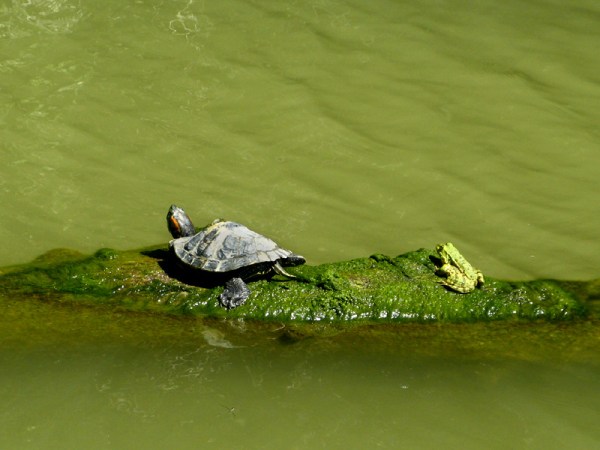
turtle frog, croc

Tuttle and Frog on the back of a Crocodile


The Frog and the Turtle


A certain frog lived in an abandoned well.

“How you must envy my delightful existence!”, he said to a Giant Turtle of the Eastern Sea. “When I go into the water I can make it hold me up under the armpits and support my chin; when I jump into the mud, I can make it bury my feet and cover my ankles.  As for the baby crabs and tadpoles, none of them can compete with me………..To have at one’s command all the delights of a disused well, that surely is the most that life can give.”


The Giant Turtle tried to get into the well, but before his left foot was well in, the right got wedged fast. So he wriggled free and retired, saying, “As you have been kind enough to tell me about your well, allow me to tell you about the sea. Imagine a distance of a 1000 leagues, and you will still have no idea of its size; imagine a height of a thousand times man’s stature, and you will still have no notion of its depth. Not to be harried by the moments that flash by nor changed by the ages of the pass; to receive much, yet not increase, to receive little, yet not to diminish; this is the Great Joy of the Eastern Sea.”

—-Chuang Tzu (China)


Compare it with the Frog in the Well story of Swami Vivekananda’s Chicago Address at the Parliament of Religions.


Why We Disagree: Swami Vivekananda (from my post  ‘The Blind men and the Elephant: known Story, Unknown Facts’ (posted on 14 March 2014)

Swami Vivekananda expressed the somewhat a similar theme through his story Frog in the Well in the very second lecture in Chicago about 125 years ago:

I will tell you a little story. You have heard the eloquent speaker who has just finished say, “Let us cease from abusing each other,” and he was very sorry that there should be always so much variance.

But I think I should tell you a story that would illustrate the cause of this variance. A frog lived in a well. It had lived there for a long time. It was born there and brought up there, and yet was a little, small frog. Of course the evolutionists were not there then to tell us whether the frog lost its eyes or not but, for our story’s sake, we must take it for granted that it had its eyes, and that it every day cleansed the water of all the worms and bacilli that lived in it with an energy that would do credit to our modern bacteriologists. In this way it went on and became a little sleek and fat. Well, one day another frog that lived in the sea came and fell into the well.

“Where are you from?”

“I am from the sea.”

“The sea! How big is that? Is it as big as my well?” and he took a leap from one side of the well to the other.

“My friend,” said the frog of the sea, “how do you compare the sea with your little well?”

Then the frog took another leap and asked, “Is your sea so big?”

“What nonsense you speak, to compare the sea with your well!”

“Well, then,” said the frog of the well, “nothing can be bigger than my well. There can be nothing bigger than this. This fellow is a liar, so turn him out

XXX

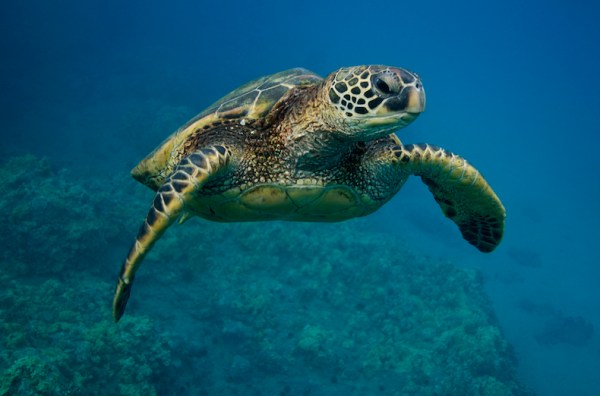
Green Sea Turtle. Chelonia mydas. Maui, Hawaii, USA.

Green Sea Turtle. Chelonia mydas. Maui, Hawaii, USA.

Appar’s Turtle Story!

Appar, Tamil Saint of seventh century, saw another scene along his travel route. In a village he saw people boiling turtle for their food. It was a big vessel with cool water. The turtle is swimming happily, but below the vessel firewood is just lighted. The flames are growing bigger and bigger. The happily swimming turtle is going to be boiled and eaten in an hour. Stupid turtle does not know the danger to its life and enjoyed the momentary pleasure. Such is our impermanent life, he says.


My previous posts:–

Frog in the mouth of a snake (posted on 9 March 2014)

In Tamil

கிணற்றுத் தவளை: அப்பரும் விவேகாநந்தரும் சொன்ன கதைகள் (9 மார்ச் 2014)


–Subham–
Animals in Buddha’s Dhammapada (Post No 2851)

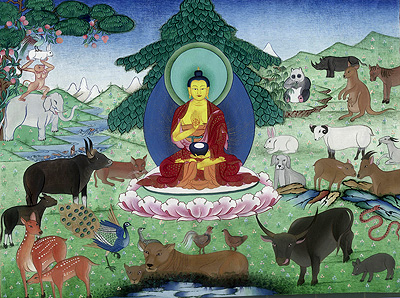
animals1.jpgbuddha

Research Article written by london swaminathan


Date: 28 May 2016


Post No. 2851


Time uploaded in London :– 11-25 AM


(Thanks for the Pictures)


DON’T REBLOG IT AT LEAST FOR A WEEK!  DON’T USE THE PICTURES; THEY ARE COPYRIGHTED BY SOMEONE.


(for old articles go to tamilandvedas.com OR swamiindology.blogspot.com)


Contact : swami_48@yahoo.com


Ancient Rishis (saints) used animals and birds as similes from the Vedic days to teach their disciples. I have never seen so many animals used by the Hindu saints in any other religious literature. Though we see animal similes in many scriptures and literatures around the world, the number of similes are more in Sanskrit and Tamil writings. Our forefathers have observed the birds and animals closely and used them to teach higher values to their followers. I have dealt with them in at least 50 articles in my blog.

Buddha also used animals to teach his followers. There are many books where Buddha refers to them and but in the Dhammapada, the Veda of the Buddhists, there are not many. Let us look at them:–

Bees

As the bee takes the essence of a flower and flies away without destroying its beauty and perfume, so let the sage wander in this life (verse 49).

Fish

Like fish which is thrown on dry land, taken from his home in waters, the mind strives and struggles to get free from the power of death (verse 34).

Birds

Who can trace the invisible path of the man who soars in the sky of liberation, the infinite void without beginning, whose passions are peace, and over whom pleasures have no power? His path is difficult to trace as  that of the birds in the air (verse 93).

swan-8

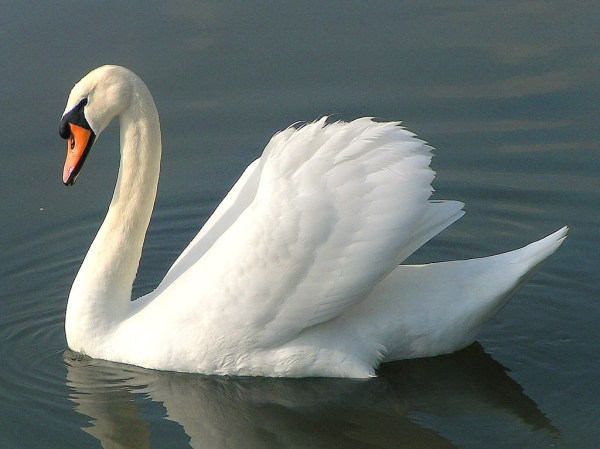
Swan

Those who have high thoughts are ever striving; they are not happy to remain in the same place. Like swans that leave their lake and rise into the air, they leave their home for a higher home (verse 91).

Swans follow the path of the sun by the miracle of flying through the air. Men who are strong conquer evil and its armies; and then they arise far above the world (verse 175).

Horse

The men who wisely controls his senses as a good driver controls his horses and who is free from lower passions and pride, is admired even by the gods (verse 4).

Have fire like a noble horse touched by the whip. By faith, by virtues and energy, by deep contemplation and vision, by wisdom and by right action, you shall overcome the sorrows of life (verse 144)


Ox

If a man tries not to learn he grows old just like an ox. His body indeed grows old but his wisdom does not grow (verse 152).

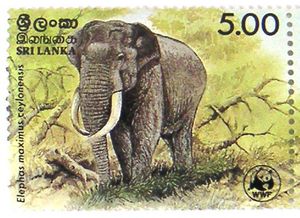
Elephant

I will endure words that hurt in silent peace as the strong elephant endures in battle arrows sent by the bow, for many people lack self-control (verse 320).

They take trained elephants to battle, and kings ride on royal trained elephants. The best of men are self- trained men, those who can endure abuse in peace (verse 321).

The great elephant called Dhana-palaka is hard to control when in rut, and he will not eat his food when captive, for he remembers the elephant grove (verse 324).

In the days gone by this mind of mine used to stray wherever selfish desire or lust or pleasure would lead it. Today this mind does not stray and is under the harmony of control, even as a wild elephant is controlled by the trainer (verse 326).

Mules

Mules when trained are good, and so noble horses of Sindh. Strong elephants when trained are good; but the best is the man who trains himself (verse 322).

Pig

The man who is lazy and a glutton, who eats large meals and rolls in sleep, who is like a pig which is fed in the sty, this, this fool is reborn to a life of death (verse 325).

hare hunting

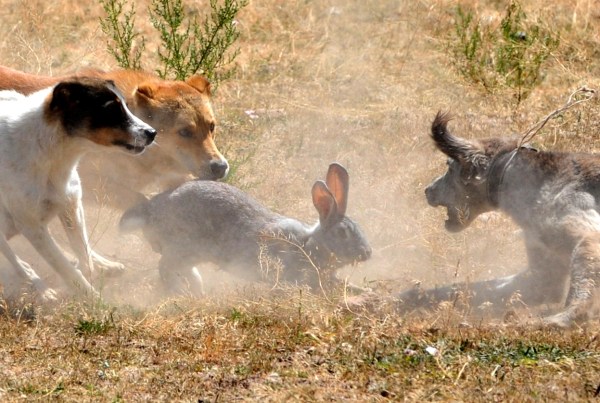
Hare

Men who are pursued by lust run around like a hunted hare. Held in fetters and in bonds they suffer and suffer again (verse 342).

Antelope

Of what use is your tangled hair, foolish man, of what use your antelope garment, if within you have tangled cravings, and without ascetic ornaments? (verse 394).

In addition to birds and animals, Buddha used objects from plant kingdom as well.

–subham—


buddha elephant

My Previous Research Articles:–

The connection between William Wordsworth and Dattareya (10 November 2011)

13 Saints in Nature (7 November 2013)

Four Birds in One Sloka of Adi Shankara (9 July 2012)

Kapinjala Bird Mystery in Rig Veda ( 23 May 2014)

Strange Bird in Mahabharata- Bhulinga Bird (29 June 2014)

Strange Bird Stories in Mahabharata (12 March 2015)

Ode to Skylark: Shelley, Kalidasa and Vedic Poet Grtsamada

Bird Migration in Kalidasa and Tamil Literature ( 5 February 2012)

Dogs at Sringeri and Kanchi Mutts ( 19 August 2013)

Snake and snake Bites in Mahabharata (10 March 2015)

Animals in the Bhagavad Gita ( 8 July 2015)

Alexander’s Dog and Horse (24 November 2014)

Businessman- born as cow, dog and snake before got liberated (26 December 2015)


For other Animal stories and animal miracles, please read my earlier posts:

1.Animal Einsteins (Part 1 and Part 2) 2. Can parrots recite Vedas? 3. Why do animals worship Gods? 4. Mysterious Messengers for Ajanta, Angkor Wat and Sringeri 5. Elephant Miracles 6). 45 Words for Elephant 7. Can Birds Predict your Future? 8. Two Little Animals That Inspired Indians 9. Three Wise Monkeys from India 10. Mysterious Tamil Bird Man 11.Vedic Dog and Church Dog 11. Deer Chariot:  Rig Veda to Santa Claus 12. Mysterious Fish Gods around the World 13.  Serpent  (Snake) Queen: Indus Valley to Sabarimalai 14.Who Rides What Vahanas (Animal or Bird)? 15. Vahanas in Kalidasa and Tamil Literature 16. Vahanas on coins and in sculptures 17. Gajendra Moksha in Africa 18. The Tortoise Mystery: Can We live for 300 years? 18.Gods and Birds 19.வேத நாயும் மாதா கோவில் நாயும் 20.கழுதைக்குத் தெரியுமா கற்பூர வாசனை 21.Bird Migration in Kalidasa and Tamil Lterature 22.Double Headed Eagle: Sumerian- Indian Connection 23.Karikal Choza and Eagle Shaped Fire Altar 24.Four Birds in One Sloka 25.Hindu Eagle Mystery Deepens 26.Multi lingual parrot mimics Hindi, Arabic and English Word 27.Indian Crow by Mark Twain 28.அதிசய பறவைத் தமிழன்


No Bees no Honey, No Work no Money (Post No.2848)

honey-bee-640x517

Article written by london swaminathan


Date: 28 May 2016


Post No. 2848


Time uploaded in London :– 17-37


(Thanks for the Pictures)


DON’T REBLOG IT AT LEAST FOR A WEEK!  DON’T USE THE PICTURES; THEY ARE COPYRIGHTED BY SOMEONE.


(for old articles go to tamilandvedas.com OR swamiindology.blogspot.com)


Contact ; swami_48@yahoo.com

ANIMAL PROVERBS;WHAT DO THEY TEACH US?

Proverbs are telescopic and kaleidoscopic; you can extend and expand the meaning; you can make it colourful and meaningful by interpreting them. The words are flexy and the meaning can be bent according to your needs. Our forefathers summarised their accumulated wisdom in pithy sayings. They observed nature closely and used them to teach us their discovery of truths. Here are some proverbs which use animals and birds to teach us something.

A for ant

The ant had wings to her hurt ( a warning against aspiring  to higher positions than one is equipped to cope with)

A for an ass

Better ride an ass that carries me than a horse that throws me

ass

A for an ape

An ape is an ape, a varlet’s a varlet, though they be clad in silk or scarlet

B for bear

Call the bear ‘uncle’ till you are safe across the bridge (Turkish proverb)

B for bee

The bee sucks honey out of the bitterest flowers

C for cat

A cat in gloves catches no mice (warning against over cautiousness)

D for donkey

Send a donkey to Paris, he will return no wiser than he went.

E for elephant

An elephant is worth 1000 gold coins whether it is alive or dead (Tamil Proverb)

Big-Elephant

F for fox

A fox should not be of the jury at a goose’s trial

G for goat

The goat must browse where it is tied

H for hare

The hare always returns to her form

I for Insect

Neither the insect nor the worm dies (Tamil proverb)

J for jackdaw

Jackdaw always perches by jackdaw

K for Kingfisher

The grasshopper flies about, but the kingfisher watches him (Samoan Proverb)

L for lamb

Lamb on the shoulder, looking for it in the forest (Tamil proverb)

monkey-images-14

M for Monkey

What will happen if a drunken monkey is stung by a scorpion and possessed by a ghost? (Tamil Proverb)

N for nightingale

Everybody thinks that his own cuckoo sings better than another’s nightingale (German proverb


O for ox

An ox is taken by the horns and a man by his word

P for peacock

The peacock has fair feathers, but foul feet.


Peacocks in Pak 2.jpg

Q for quail

The parrot utters one cry and the quail another

The quail waits for the stick, the idle loiterer about a place waits for a kick from an old boot.

R for rats

Rats desert a sinking ship

S for snail

When black snails on the road you see, then on the morrow rain will be

T for tiger

If you do not enter tiger’s den, you cannot get his cubs (Chinese proverb)

U for (M)ule

He who wants a mule without fault must walk on foot

V for vulture

No matter how hungry the vulture, it will never eat grass (African Proverb)

W for wolf

A thief knows a thief as a wolf knows a wolf

X for fox

Old foxes want no tutors

zebra

Y for yak

Don’t notice the tiny flea in the other person’s hair and overlook the lumbering yak on your own nose- Tibetan Proverb

Z for zebra

When you shoot a zebra in the black stripe, white dies too (South African Proverb)


–Subham–

Auspicious Words in Sanskrit and Tamil Books (Post No.2825)

08.08.67.earth.med

Research article written by London swaminathan


Date: 20 May 2016


Post No. 2825


Time uploaded in London :–  13-49


( Thanks for the Pictures)


DON’T REBLOG IT AT LEAST FOR A WEEK!  DON’T USE THE PICTURES; THEY ARE COPYRIGHTED BY SOMEONE.


(for old articles go to tamilandvedas.com OR swamiindology.blogspot.com)


Ancient Hindu writers who wrote in Sanskrit and Tamil had some wrting traditions which were not found anywhere else in the world. They had a set of rules about the opening sentence or opening word of a great work in literature. They always started with some auspicious words or with the name of God. Either the prayer in the book or the first verse had that Mangala or auspicious words.


Here is a simple sloka which gives the rule:-

Omkaarascha atha sabdascha dvaavethau brahmanah puraa

Kandam bitwaa viniyaartau tasmaan maangalikaavubau

-Paatanjala darsanam


The sounds ‘Om’ and ‘Atha’ came first from the mouth of Brahma. So both these are considered auspicious words.

moon night

This ancient tradition lead the poets and compilers to begin a book with these words. The first letter of the alphabet in most of the old languages is ‘A’. Tamils and Sanskritists used this word as well.

Om or Aum has got a mystical meaning; it is the primordial sound from which everything came out/ originated

‘Atha’ means now

Here are some examples to illustrate the tradition:-

Atha yogaanusaasanam – Opening line of Patanjali Yogasutram

Atha Srimad Bhagavd Gita – Bhagavad Gita

Athaatho brahmajijnaasaa – Brahmasutra

Agni meele – Rig Veda (Om is also added with every mantra in the Vedas).

When the Guru opens the book in front of the students, he would say

Atha Valmiki Ramayana, Atha Rik Vedah etc. and then teaches the students.

Kalidasa, the greatest of Indian poets, prays to god with various words. If god is not directly referred to then the poets used words like ‘Viswa’, ‘Loka/world’.


Vishu Sahsranama begins with ‘Viswam’ vishnur Vashatkaro……..

tricolour om

But all the Sanskrit religious texts used Om or Atha in the beginning.

Amarakosa also says ‘Atha’ is an auspicious word. So we know that it has been in vogue for thousands of years.

Tamil Rule

Tamils have used the following words as the initial word in their works if it does not contain a direct Prayer to God:–

Siir(Sri), Ezuthu(word),Pon(gold), Puu(flower), Thiru (Sri/Lakshmi), Mani(Gem/Bell), Yaanai (Elephnt),Ther(chariot), Pari(horse), kadal(Sea), Malai(hill) Pukaz(fame), Mathi(Moon), Neer (water) Aaranam(Vedas) ,Sol(wprd), Puyal (rain/storm), Nilam (Earth), Ganga (Holy Ganges River), Ulakam(world),Parithi(Sun), Amirham (Ambrosia/Amrut).

Ulakam/World

Famous Tamil works such as Tirumurukatruppadai, Manimekalai, Valayapathy, Periya Puranam, Kamba Ramayanam, Mullaippaattu, Mudumozikanchi, Seevaka Chintamani, Villi Bharatam begin with the word ‘Ulakam’.

Other books such as Sirupaanatrupadai, Natrinai, Tirikaduka used the synonyms of world (Maanilam)

Oldest Tamil book Tokaappiam begins with Ezuthu(Word).

Tamil Epic Silappathikaram begins with Moon, Sun and Rain.

swastik, om lamps, kotipali shivratri

Tamil Veda Tirukkuran begins with ‘Akara’.

All the ancient Sanskrit and Tamil inscriptions begin with Swasti Sri, another auspicious word.

All the literary works ended with the word SUBHAM ( meaning Well, Good, Prosperity)

No other ancient culture except the Hindus had this literary tradition.

sheep, sun

–Subham_


Three Tamil Kings fast unto Death! (Post No 2820)

bow arrow

Research article written by London swaminathan

Date: 17 May 2016


Post No. 2820


Time uploaded in London :– 20-49


( Thanks for the Pictures)


DON’T REBLOG IT AT LEAST FOR A WEEK!  DON’T USE THE PICTURES; THEY ARE COPYRIGHTED BY SOMEONE.


(for old articles go to tamilandvedas.com OR swamiindology.blogspot.com)


Tamils who lived 2000 years ago valued good reputation and family honour. They thought that it was better to die than to live in disgrace. This is a typical Hindu thinking. Throughout Valmiki Ramayana we come across several references to losing one’s life just to save their name and fame. Rama, Lakshmana, Bharata and Hanuman thought of killing themselves once or twice because they couldn’t do what they were supposed to do. The popular method of losing one’s life was jumping into a ritual fire. Alternative method was fast unto death.

IMG_3325

Tamil literature has listed at least three kings who lost their lives by ritual fasting.

Popular Tamil poet Tiruvalluvar says in his

Tirukkural (970)

The world will admire the glory of men, who give up their life,

When overtaken by dishonour

Purananuru, part of Sangam literature, has a verse sung by the Chera king Kanaikal Irumporai (Puram 74). He was defeated by the Chola king Chenganan. After his defeat hhe was thrown into the prison. Suddenly he felt thirsty and he asked for some cold water. The prison guards delayed t under some false excuses. He fasted unto death and refused to take the water which was brought to him after a deliberate delay.

He sang the verse when he was insulted by the prison guards:–

“Royal babies that die and even moles delivered from the womb of queens, even though they are not men, are cut to pieces with swords (warriors are supposed to die in battle fields; so it is done symbolically as if they died in battle fields). When this is so, could any king beget a son, when tied like a chained dog, would be so weak to drink  water charitably offered by his jailor, for allying the  fire in his stomach?”


When he got the water after a long delay, he composed this poem, holding the water in his hand. He never drank it. He starved him to death.

Tiruvalluvar says in another couplet

Hair lost, the yak lives not

Honour lost, noble men leave their life(969)

Ike hair that is fallen from the head are men athat have fallen from their height (964)

Pandya_territories

Asi Dhara Vrata (Sharp Sword Edge Vow)


It is like standing on the sharp edge of a sword. The meaning is  it is difficult to maintain that balance or it would hurt if slipped. A bachelor can lie in the same bed with a beautiful girl but yet never swerve from the vow of chastity. It is said that a sword will be placed in between them in the bed according to the commentator (Raghuvamsa 13-67).


When Rama returned to Ayodhya after 14 year stay in the forest, he saw Bharata walking towards him. He praised Bharata as practising Asidhara Vratam, without enjoying the Rajyalakshmi  (Kingdom or Earth is praised as Lakshmi, Goddess of Wealth in Hindu scriptures).


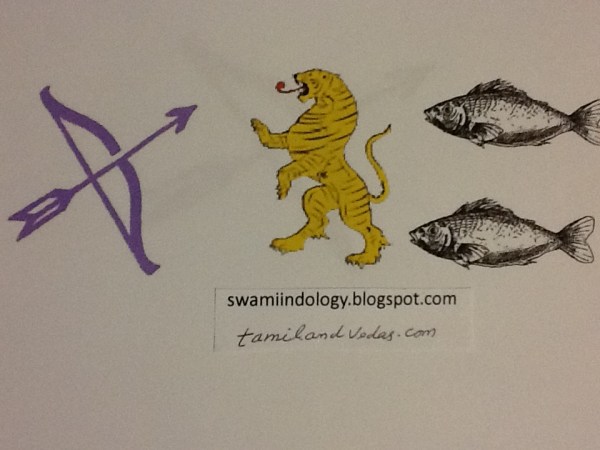
Tamil Kings Kopperum Choza and Neduncheralatha


Tamil Kings Kopperum Choza and Neduncheralatha of Sangam age also followed similar type of vow. They sat facing North on the banks of a river and fast unto death. They were also holding a sword in their hands, probably meaning the same, i.e. sharp edged vow. Verses in Purananuru 65 (by Kazath thalaiyar) and Akananuru  55 (by Mamulanar) are about the Chera King Neduncheralathan who died facing North. When such a great person sacrificed his life, scholars and general public joined them and made it a “mass suicide”. We see it when Lord Rama drowned himself in the Sarayu River and in the Tamil Kings’ deaths. Lot of Tamil poets and scholars joined them in the fast unto death ceremony. In Tamil it is called “Vaal Vatakkiruthal”, meaning Facing North with a Sword.


When the greatest of the Chola kings, Karikalan fought with Chera King Nedunseralathan, Chera king was wounded on his back. No Tamil king tolerated a wound on his back. Those who were injured on the back were called cowards. So Chera king decided to die through fasting. Several poets sang in praise of both the kings ( see Puram verses 65 and 66).


In another episode we read about a family feud where the sons of Chola king Kopperuncholan revolted against their dad. Immediately a poet advised him to go into fasting. When he decided to die through fasting, several famous poets joined him and died with him. One of them, Pisiranthaiyar, has never met him but considered him as his best friend (see Puram 214 to 223).


IMG_3459

Apart from Jain’s Sallekhana we come across several examples in Sanskrit scriptures. Kishkinda Kanda of Valmiki Ramayana has one such episode. Angatha, son of Vali, went in search of Sita, but in vain. He decided to sit tight on Dharba grass and die. Only minor difference was he faced east but not north.

Alexander and Purushottama

When Alexander the Great conquered the valiant Hindu King Purushottama alias Porous, he asked him how he would like to be treated, Purushottama said,

“I am King. Treat me like a king”.

Alexander was greatly impressed with his bold answer and treated him like a king. When Alexander saw this little king fighting valiantly, he had second thoughts attacking the mighty Mauryan army.

Honour was valued and no king could live in disgrace. Chittor Queen Padmini jumped into fire with hundreds of her loyal servants just the avoid the disgrace from the cruel Alauddin Khilji.


Honour in Animal World

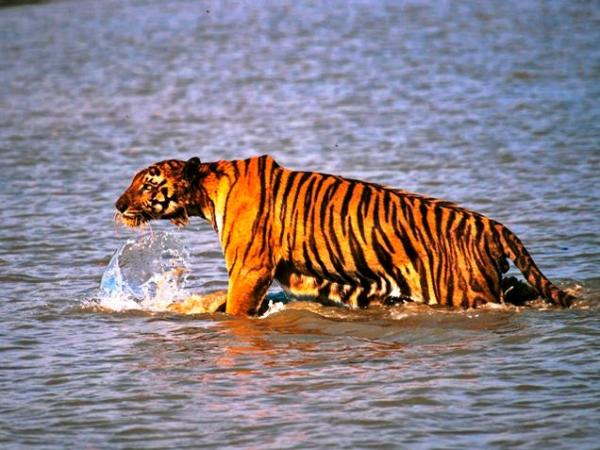
Sangam Tamil literature gives some interesting details about Tigers. Tamil poets say that the tigers wont eat their prey if it falls on its left side. It will eat the animal only when it falls on its right side. In Hindu culture left is inauspicious and right is auspicious. All the auspicious things are done in clockwise direction (right turn) and inauspicious or funeral rites are done in leftward direction/anti clockwise direction. This simile is always used to illustrate the greatness of honour.

Tiger_2504157f

–subham–